


Little Tern
Little Sea Swallow · Sternula albifrons
By the Birdfact teamChecked by Nathan Cope
On this page13 sections
How to recognise it
What do Little Terns look like?
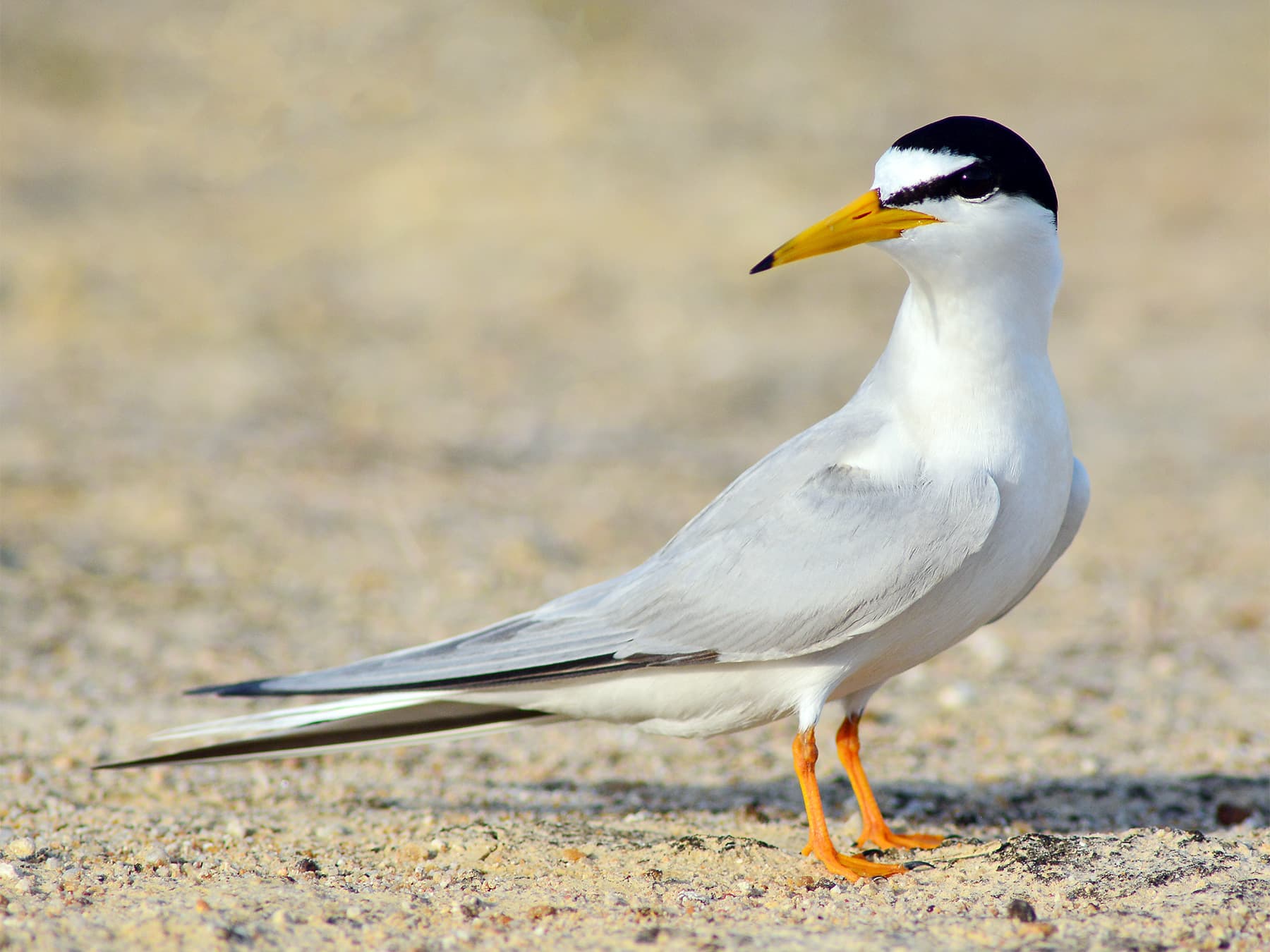
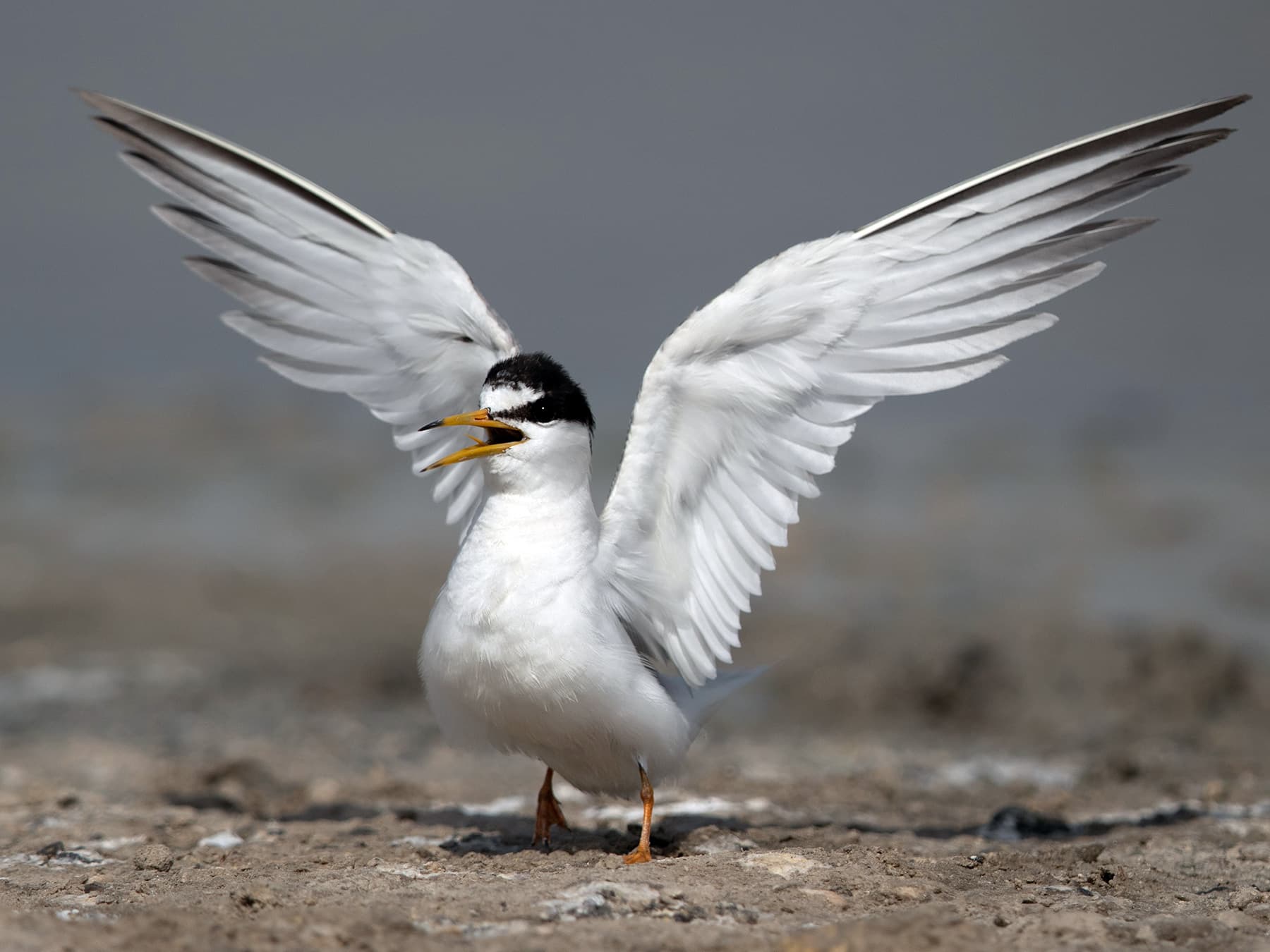
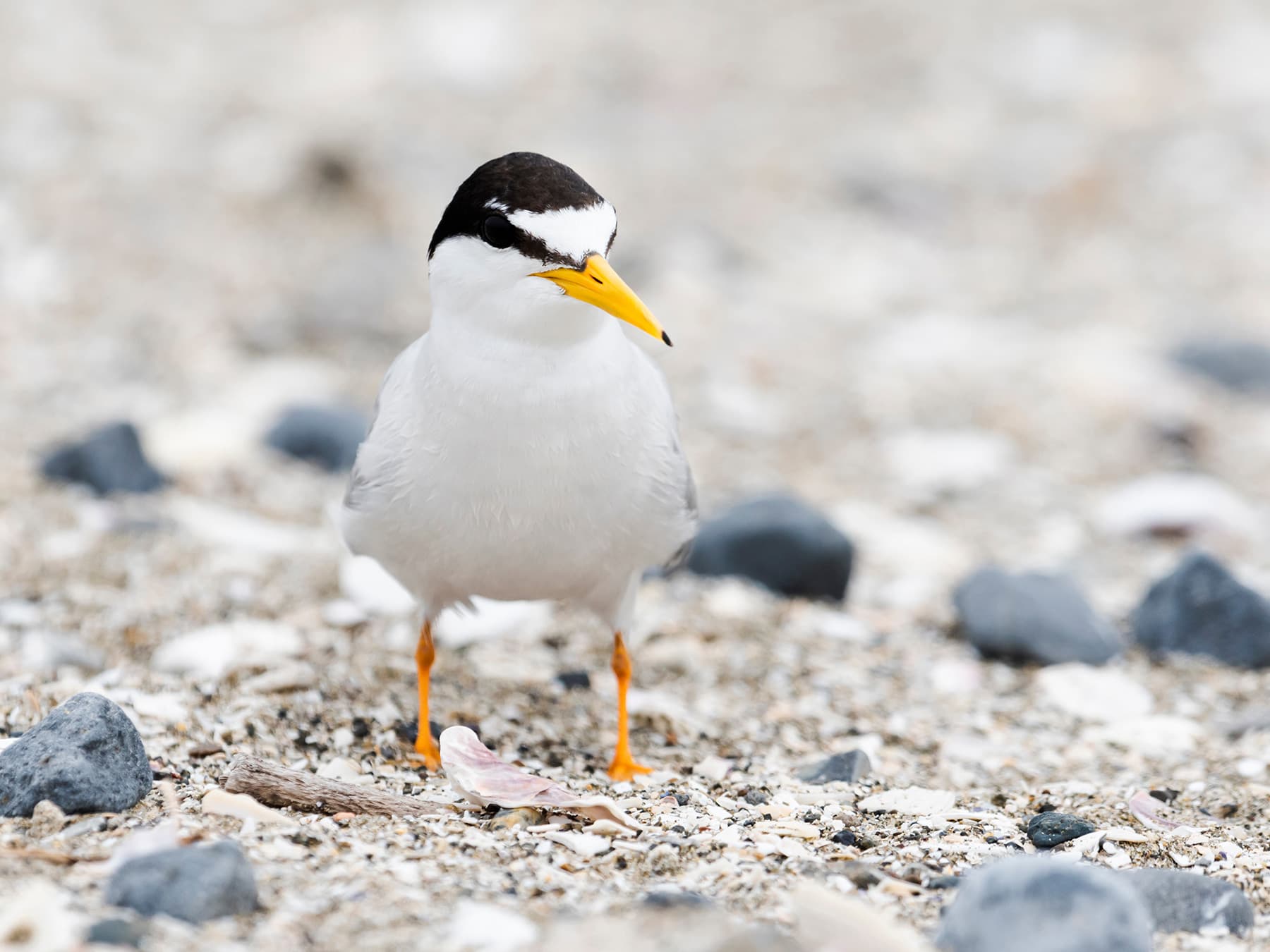
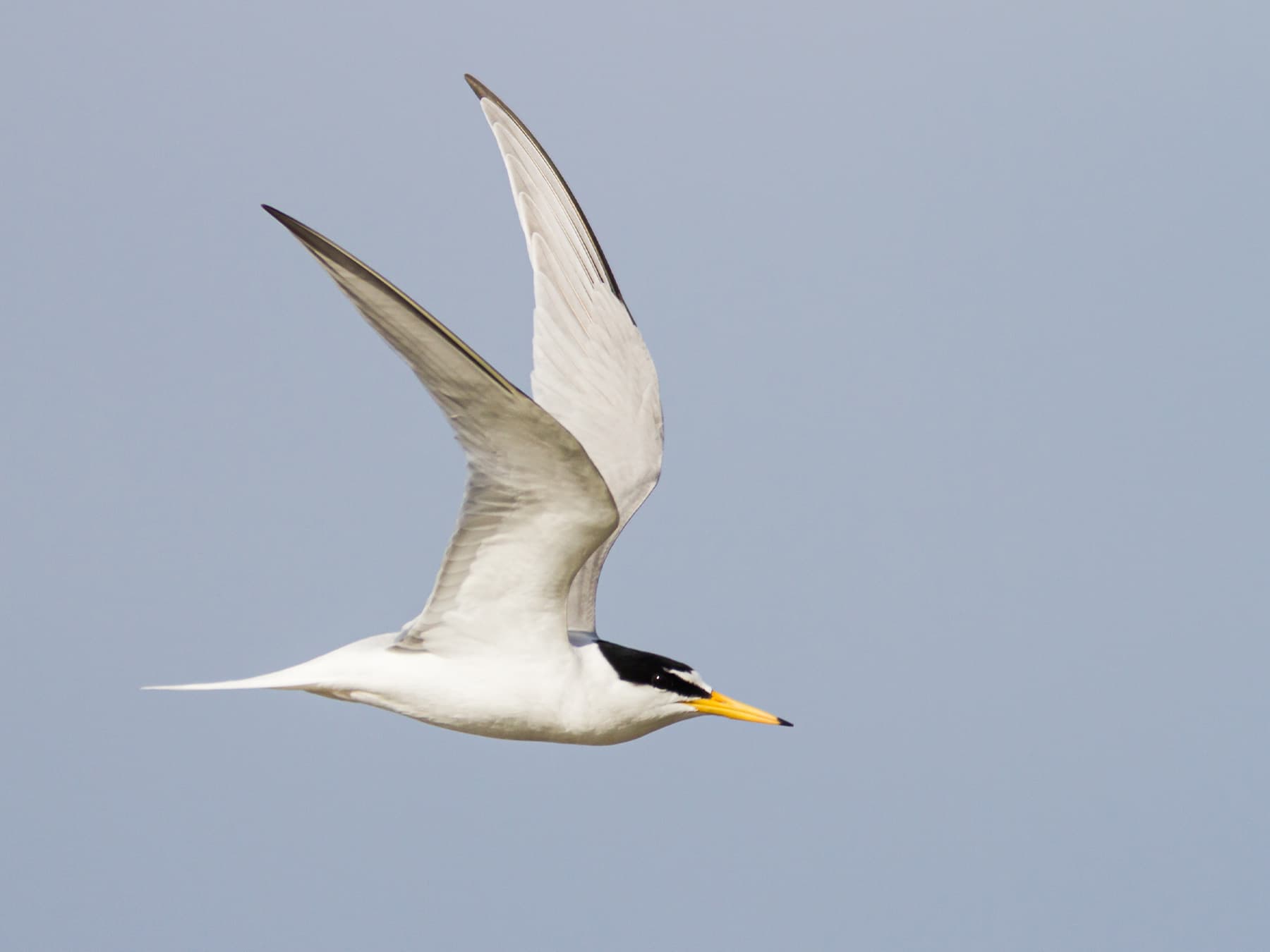
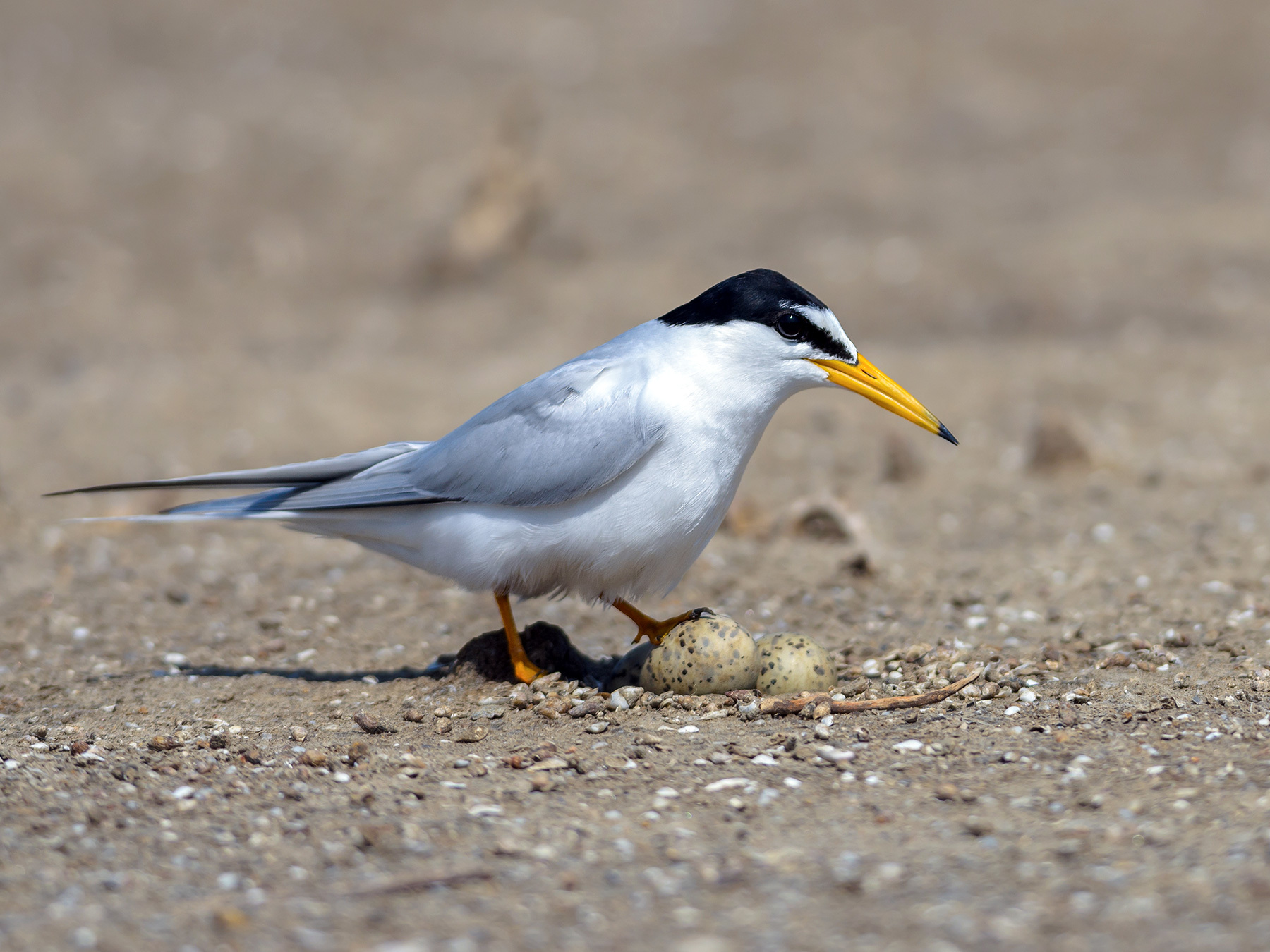
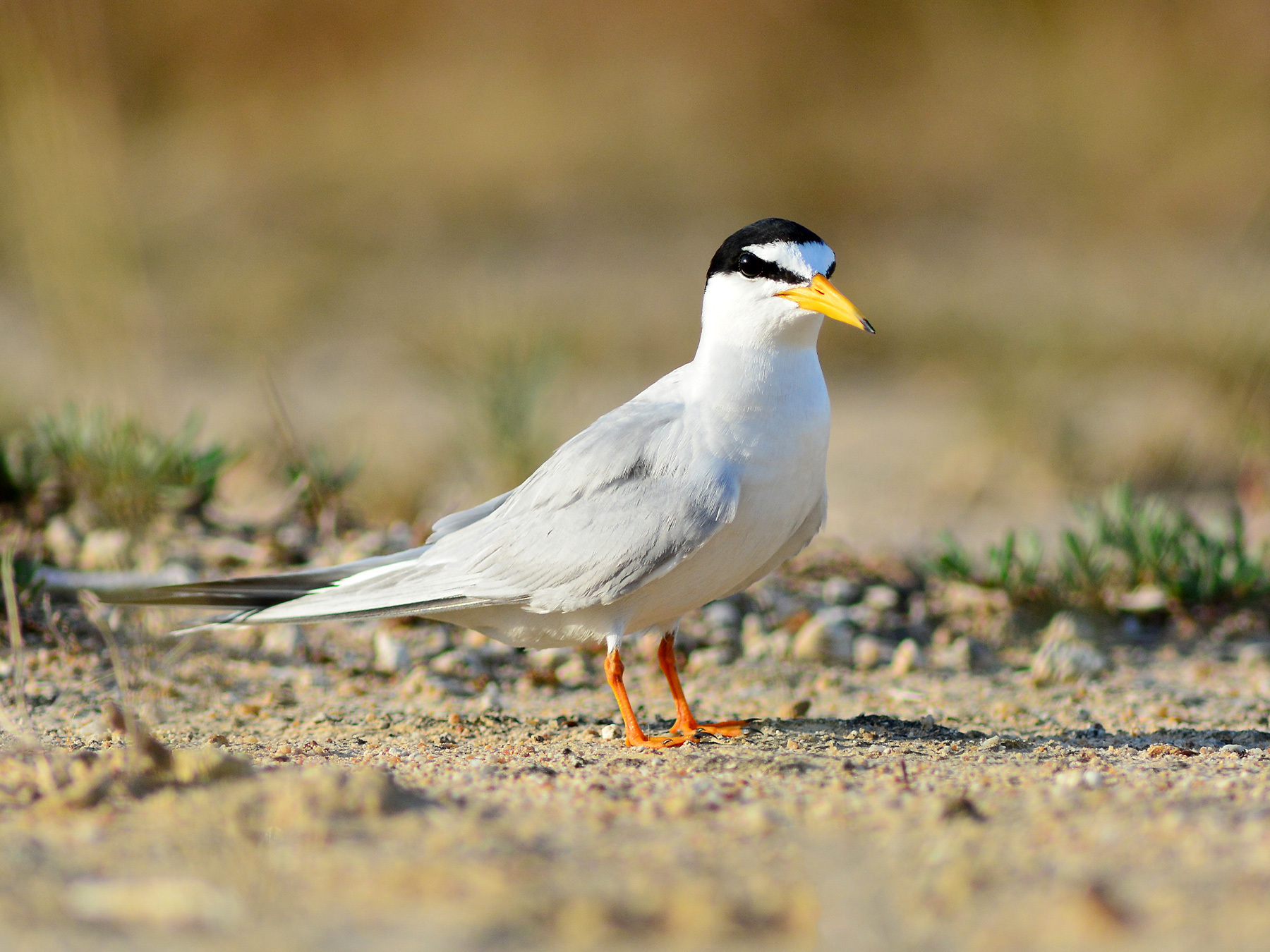
In breeding season, little terns have white underparts, breast and rump, and a grey upper back and wings. Their outer wing feathers are black, and their short, forked tail is white. Their distinctive facial markings include a black cap that extends to the neck, a white forehead, and a wide black stripe running from their bill to behind their eyes. Their bill is yellow, tipped with black, and their legs are orange-yellow.
Once breeding is complete, little terns moult into alternative winter plumage, losing the deep black cap and facial stripe, instead showing a black spot in front of the eye and a streaky black crown, receding into a smaller blackish patch to the rear of the head. Non-breeding adults have black bills and black legs.
Male and female little terns are alike in both breeding and non-breeding plumage.
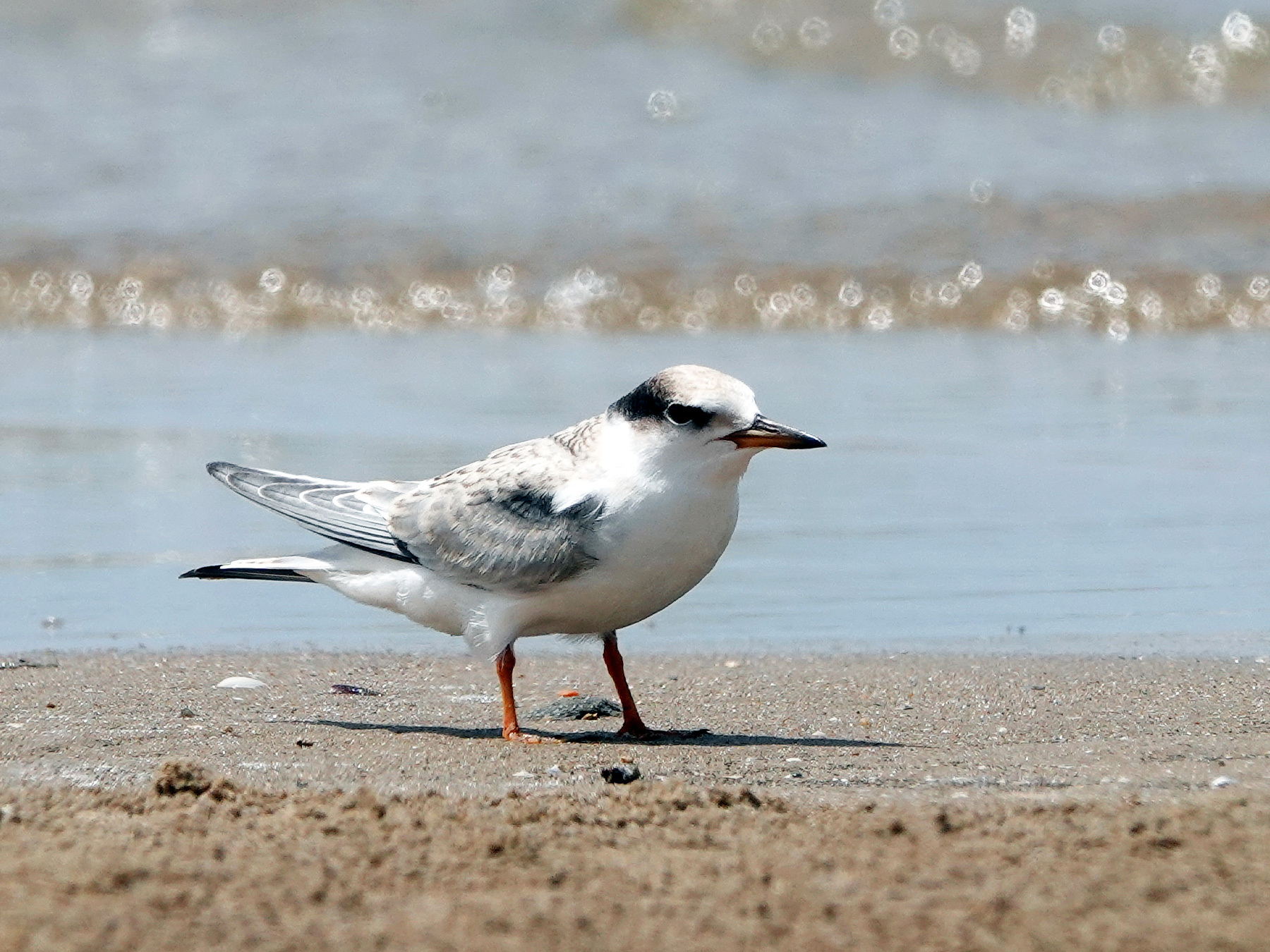
Juvenile little terns are mainly white, with scaled black edges to their upper back feathers giving a chevron pattern. Their outer wing feathers are dark brownish grey and their legs are yellow-orange. As they enter their first winter, juvenile little terns begin to resemble non-breeding adults.
How big are Little Terns?
Little terns are the smallest tern species found in the UK. Males and females are roughly the same size, although research data shows that males may be slightly heavier than females.
- Length: 22 cm to 24 cm (8.7 in to 9.4 in)
- Wingspan: 48 cm to 55 cm (19 in to 22 in)
- Weight: 49 g to 63 g (1.7 oz to 2.2 oz)

Its size
Adults- Length
- 21–25 cm
- Wingspan
- 41–47 cm
- Weight
- 45–60 g
Its song and calls
What sound does a Little Tern make?
A rasping ‘kri-ett, kri-ett’ is the most common call of a little tern, heard in flight and when feeding. A warning chattering call of ‘kerre, kri-ett, kerre, kri-ett’ is used to signal danger or to see off approaching predators around the nest site.
- Call0:00 / 0:15
Recorded in Kalmar County, Sweden · May 2024
When and where to see it
OctoberMostly absent
Most recorded in October
- 1. Cornwallunder 0.1%
- 2. Aberdeenshireunder 0.1%
- 3. Kentunder 0.1%
- 4. East Lothianunder 0.1%
- 5. Buckinghamshireunder 0.1%
Each dot is a county, state or province: the bigger and darker, the larger the bird’s share of that place’s bird records that month. Grey dots: no regular records. The ringed point is the centre of the bird’s records this month; the arrow shows how it moved since last month, and the dashed loop its path through the year. “Arrivals” colours places where it becomes regular this month (orange) or is in its last regular month (grey). GBIF eBird Observation Dataset, 2019–2024. Map data: Natural Earth, US Census Bureau; place centres © OpenStreetMap contributors.
In your area
See when the Little Tern is recorded in your county, state or province.
How often the Little Tern turns up in the UK and Ireland through the year, from birdwatchers' records.
United Kingdom
Summer visitor · regularly Apr–Sep · most records in July
Ireland
Summer visitor · regularly Apr–Aug · most records in July
Show as a table
| Month | United Kingdom | Ireland |
|---|---|---|
| January | – | – |
| February | – | – |
| March | – | – |
| April | 0.018% (regular) | 0.10% (regular) |
| May | 0.088% (regular) | 0.21% (regular) |
| June | 0.096% (regular) | 0.27% (regular) |
| July | 0.11% (regular) | 0.28% (regular) |
| August | 0.061% (regular) | 0.13% (regular) |
| September | 0.011% (regular) | 0.005% |
| October | 0.002% | – |
| November | – | – |
| December | – | – |
Recorded regularly in
Worldwide: recorded regularly in 96 countries
Countries where it was recorded in at least 3 of the 6 years 2019–2024. Linked countries have their own bird list.
Europe (33)
Africa (15)
- Djibouti
- Egypt
- Gabon
- Gambia
- Ghana
- Guinea-Bissau
- Kenya
- Liberia
- Morocco
- Mozambique
- Namibia
- Senegal
- South Africa
- Tanzania
- Tunisia
Asia (40)
- Armenia
- Azerbaijan
- Bahrain
- Bangladesh
- Brunei
- Cambodia
- China
- Cyprus
- Georgia
- Hong Kong SAR China
- India
- Indonesia
- Iran
- Iraq
- Israel
- Japan
- Jordan
- Kazakhstan
- Kuwait
- Kyrgyzstan
- Malaysia
- Mongolia
- Myanmar (Burma)
- Nepal
- Oman
- Pakistan
- Philippines
- Qatar
- Saudi Arabia
- Singapore
- South Korea
- Sri Lanka
- Taiwan
- Tajikistan
- Thailand
- Timor-Leste
- Turkey
- United Arab Emirates
- Uzbekistan
- Vietnam
Oceania (8)
- Australia
- Cocos (Keeling) Islands
- New Zealand
- Northern Mariana Islands
- Palau
- Papua New Guinea
- Solomon Islands
- US Outlying Islands
Data: EOD – eBird Observation Dataset (Cornell Lab of Ornithology), accessed via GBIF.org, CC BY 4.0. Records from 2019–2024, aggregated and filtered by Birdfact. How these lists are made
What is the habitat of a Little Tern?
During the breeding season, little terns can be spotted nesting on beaches with little or no vegetation, including areas of shingle, sand, pebble, and shell-covered shoreline. They are also not uncommon at estuaries, or sometimes slightly further inland, at reservoirs, lakes, and along rivers, as well as out to sea at coral reefs and coastal saltpans.
Foraging grounds are usually located nearby, so nest spots are never far from either a saltwater or freshwater source.
During the non-breeding season, little terns visit tidal creeks and coastal lagoons. They may spend long periods foraging at sea, up to 15 km (9 mi) from land, and may also regularly feed on mudflats and saltpans.
What is the range of a Little Tern?
Little terns that breed in Europe are found across the continent’s coastlines, from the British Isles and Portugal in the west, around the coasts of France, Italy, and Greece, and deeper inland into western Asia, through Turkey and Afghanistan.
Breeding also occurs along North Africa’s Mediterranean coast and along the Atlantic coast of Morocco. From here, little terns migrate south to spend winters on Africa’s coasts, as far south as South Africa on occasion.
Further east, into south Asia, south-east Russia, China, Japan, and south-east Asia, the range of the eastern population of little terns extends as far as Australia’s north and eastern coasts. Some Australian populations are resident all year round, while many birds that breed in these regions spend winters in Malaysia, the Philippines, Indonesia, and into southern Australia.
Where do Little Terns live?
Up to 100,000 pairs of little terns breed in China, while between 50,000 and 100,000 birds live in northern India. Within Europe, up to 18,000 pairs are in Russia, 5,000 to 8,000 pairs in Turkey and up to 4,000 pairs in Ukraine. The Australian population of little terns is estimated at around 10,000 individuals.
How rare are Little Terns?
Globally, little terns are a fairly common seabird species, with between 190,000 and 410,000 individuals, of which up to 53,000 pairs are in Europe. Populations are scattered around coastlines across the continent, and sightings are not uncommon. In the UK, however, little terns are considered one of the rarest breeding seabirds.
Where can you see Little Terns in the UK?
In summer, between 14,50 and 1,900 pairs of little terns breed in colonies along the UK coastline. The largest nesting grounds are located on the east and south coasts of Scotland and England. Sites with the largest colonies include Blakeney Point and Great Yarmouth in Norfolk, Minsmere in Suffolk, and Langstone Harbour in Hampshire.
Where can you see Little Terns in Australia?
In Australia, little terns breed along the stretch of coastline from north-western Australia, through the Northern Territory into northern Queensland. Breeding grounds also line the country’s east coast to Victoria and around Tasmania. In recent years, breeding has also become established in South Australia.

Migration
Do Little Terns migrate?
Little terns are migratory, breeding in coastal regions of Europe and Asia, and spending winters in tropical oceans, reaching South Africa and Australia.
Where do Little Terns migrate to?
Little terns that breed in eastern Europe and south-west Asia spend winters around the Red Sea and Arabian Sea, with some reaching as far south as South Africa. The south-western coast of the Caspian Sea is an important staging point for passage migrants, with thousands of birds gathering ahead of their onward migration.
The little tern population that breeds around the Caspian Sea heads to the coasts of the Persian Gulf and the coast of west India once they have raised their young. Those that breed in East Asia migrate southwards, to the seas around coastal South East Asia and some reach as far south as Australia.
Some small regions of the north coast of Australia are home to breeding populations of little terns and these move to the ocean waters around Indonesia, as well as other parts of Australia and sometimes as far south as New Zealand.
Why do Little Terns migrate?
Little terns’ migrations to and from breeding grounds are timed to coincide with peak fish seasons in both the northern and southern hemisphere oceans.
Tips for seeing it
- Look for Little Terns along coastal areas, especially near estuaries and sandy beaches.
- Listen for their distinctive high-pitched 'kik-kik' calls.
- Observe their characteristic hovering and plunge-diving behaviour.
- In the UK, visit coastal reserves during the summer months for the best chance of sightings.
What it eats
What do Little Terns eat?
Small fish, up to 6 cm in length, form the main part of a little tern’s diet, with sand eels, roach, carp, anchovies, sand smelts and perch among the top species caught. Small crustaceans and some aquatic insects are also eaten. Prey is caught by diving into shallow water or picking insects from the water’s surface.
What do Little Tern chicks eat?
Sand smelts are the main fish fed to little tern chicks, with high-energy foods also a key part of their diet, including sardines, garfish and killifish.

Nesting and breeding
Where do Little Terns nest?
Little terns nest on the ground, using a shallow scrape built by the female directly on the shingle, sand, or pebble shore of a beach above the high tide line. Breeding sites may also be chosen in marshy wetlands, where a platform nest is built using plant matter.
Nest colonies usually consist of no more than 100 pairs, with island sites a popular choice to protect against disturbance by land predators.
When do Little Terns nest?
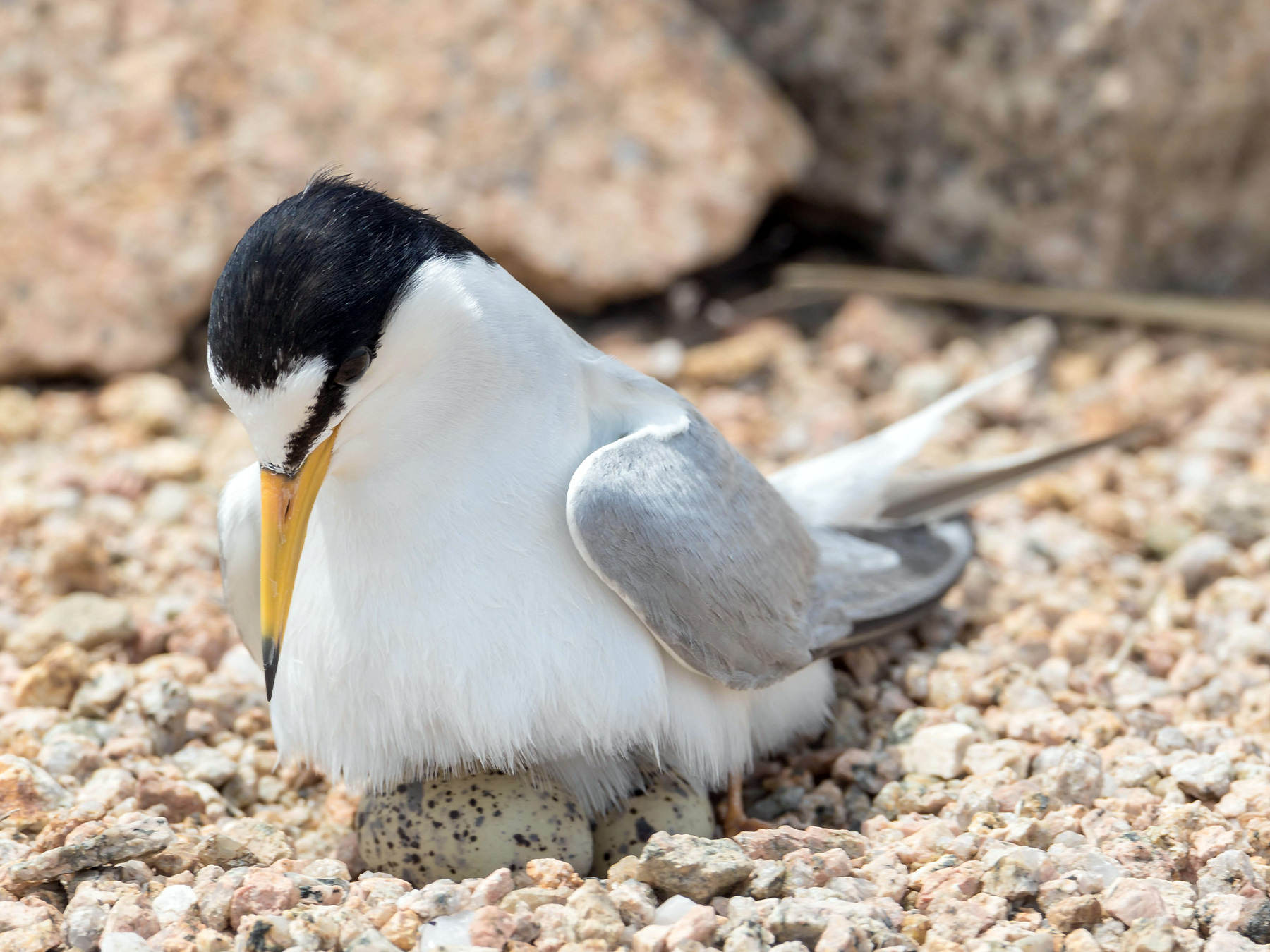
Little terns arrive on European breeding grounds from April onwards, with eggs usually laid in May and June. Incubation is shared between males and females relatively evenly for between 21 and 24 days. After hatching, parental care continues to be shared, with both parents feeding their young until they are 2 months old.
For little terns native to Australia, the breeding season lasts from October to March.
What do Little Tern eggs look like?
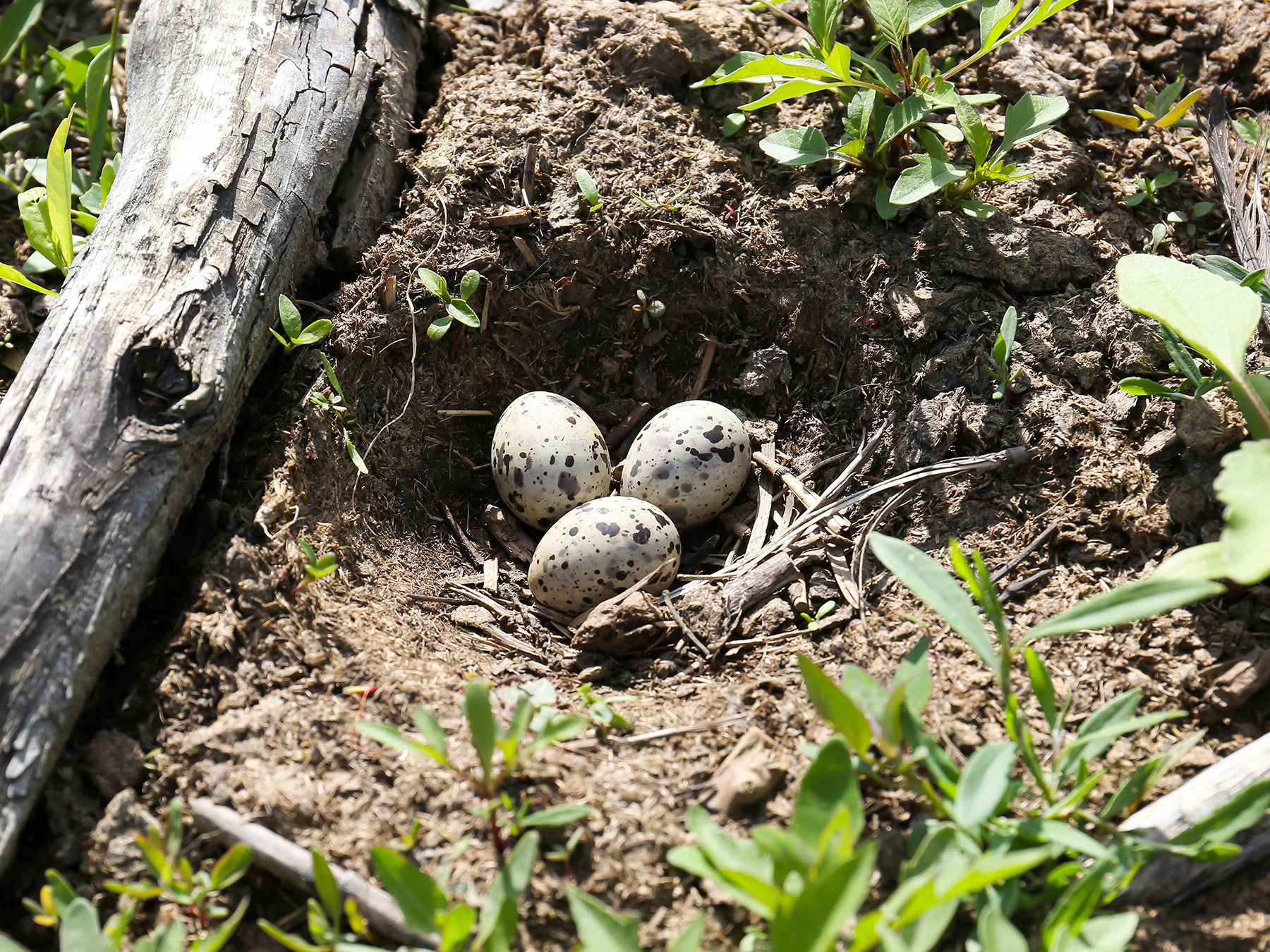
Little terns’ eggs are well camouflaged against the shingle landscapes on which they build their nests. A typical clutch contains two or three cream to olive-brown eggs, which are marked with dark brown and grey blotches and measure 32 mm by 24 mm (1.3 in by 0.9 in).
Do Little Terns mate for life?
Little terns are monogamous during the breeding season, with a spectacular courtship display signalling the beginning of a strong pair formation. The male presents the female with a fish, following an impressive aerial flight display. If the female is interested, she accepts the fish and pursues the male high into the air, before he then divebombs with a swooping gliding flight.
Pairs separate ahead of winter migration but may reform on the return to breeding grounds the following spring.
Behaviour
Are Little Terns aggressive?
A common trait among white terns is severe aggression when defending their nests, and little terns are no exception, with fierce displays and attacks against any intruder that approaches too closely while during the breeding season.
Lifespan and predators
How long do Little Terns live?
The typical life expectancy of a little tern is approximately 12 years, with occasional records of much older birds identified through ringing schemes, including one that reached 25 years in 2018.
Breeding is thought to occur from the age of three years, although birds breeding in their second year have sometimes been observed.
What are the predators of Little Terns?
As ground nesters, little terns and their eggs and young are vulnerable to a number of land predators, including foxes and badgers. Avian predators include gulls, kestrels, carrion crows, and stone curlews.
Are Little Terns protected?
As a Schedule I species under the Wildlife and Countryside Act, 1981, little terns’ nest sites and eggs are protected against being destroyed, disturbed, or damaged. The same legislation also states that it is an offence to knowingly kill or injure a little tern, or to take one into captivity.
Are Little Terns endangered?
In Europe, the population of little terns has witnessed significant declines, due to development in coastal regions and loss of suitable nesting habitats.
In the 19th century, little terns were common inland birds, breeding along rivers across Europe, but these populations have almost entirely died out because of damming of waterways and industrial development along many major rivers.
In their wider global range, little tern numbers are stable enough to be classified as a species of least concern. In the UK, they are rated as Amber on the British Birds of Conservation Concern list.

Conservation
Despite being listed as Least Concern globally, Little Tern populations face local threats. Habitat loss due to coastal development and disturbance at breeding sites are significant concerns. Conservation efforts focus on protecting nesting areas and raising public awareness about beach-nesting birds.
More photos
9 photos Non-breeding Little Tern in-flight
 An immature Little Tern in the marshes
 Little Tern on the sand with a fish in its beak
 Juvenile Little Tern in-flight
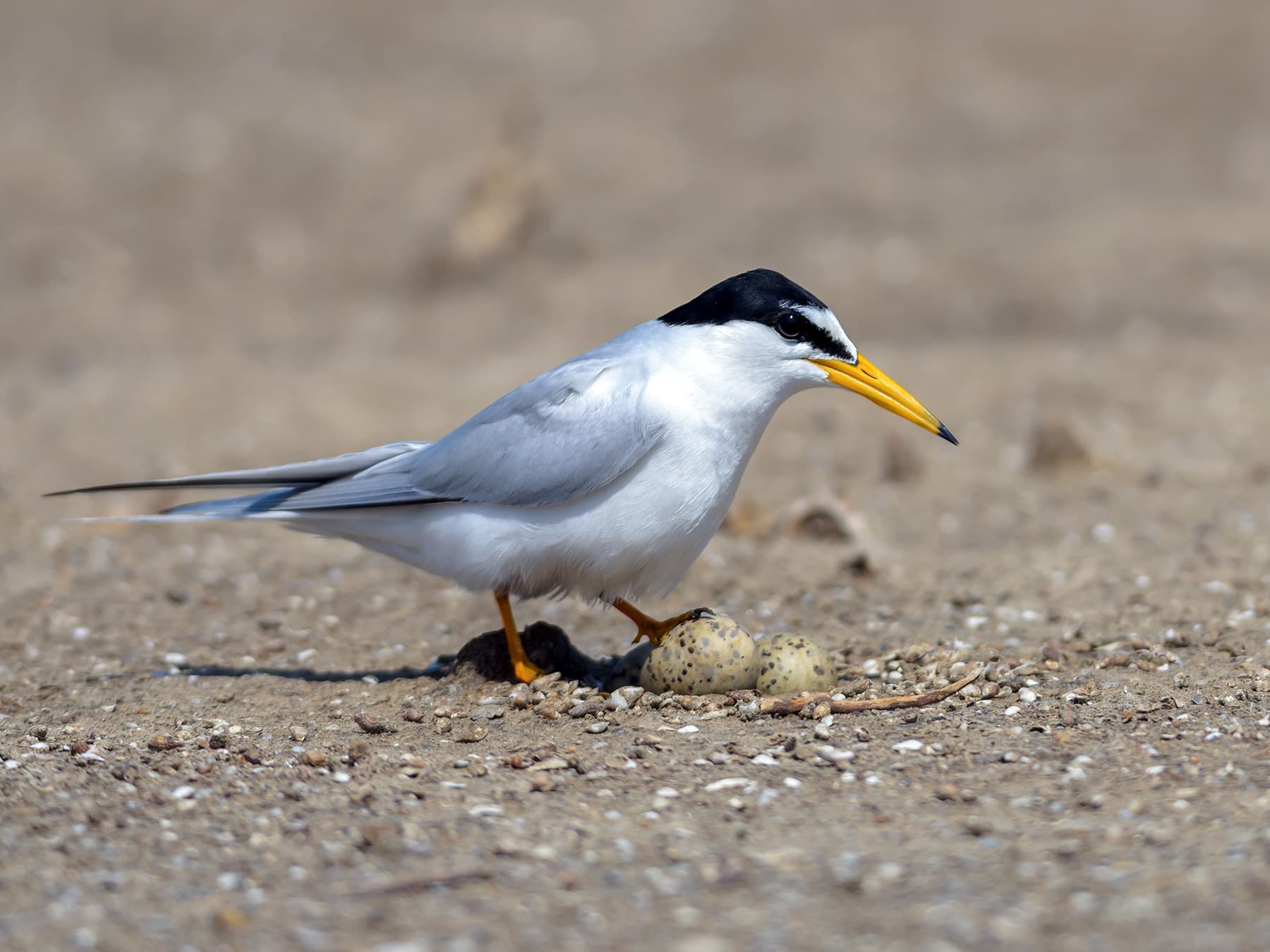 Little Tern at its nest
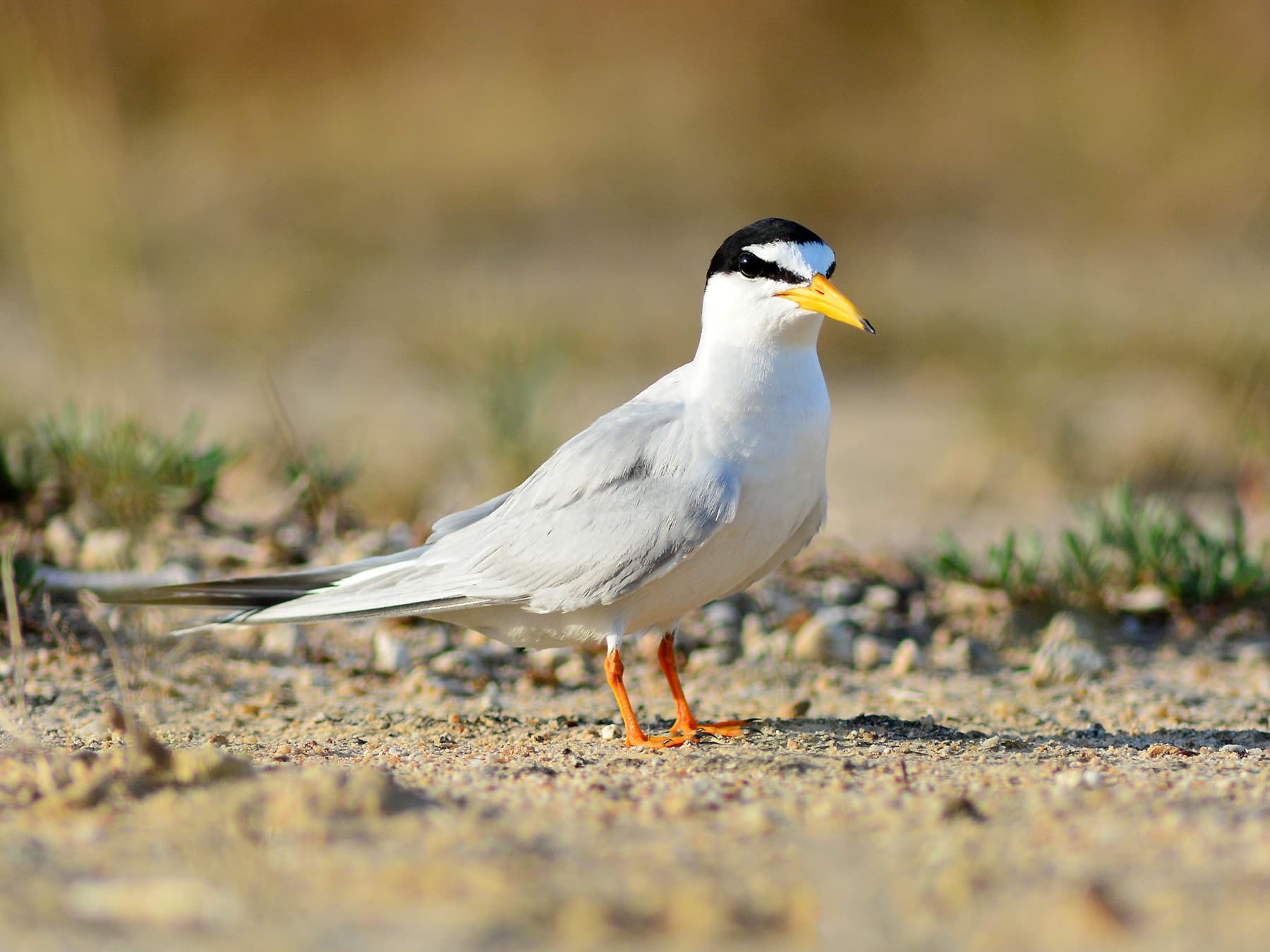 Little Tern in breeding plumage
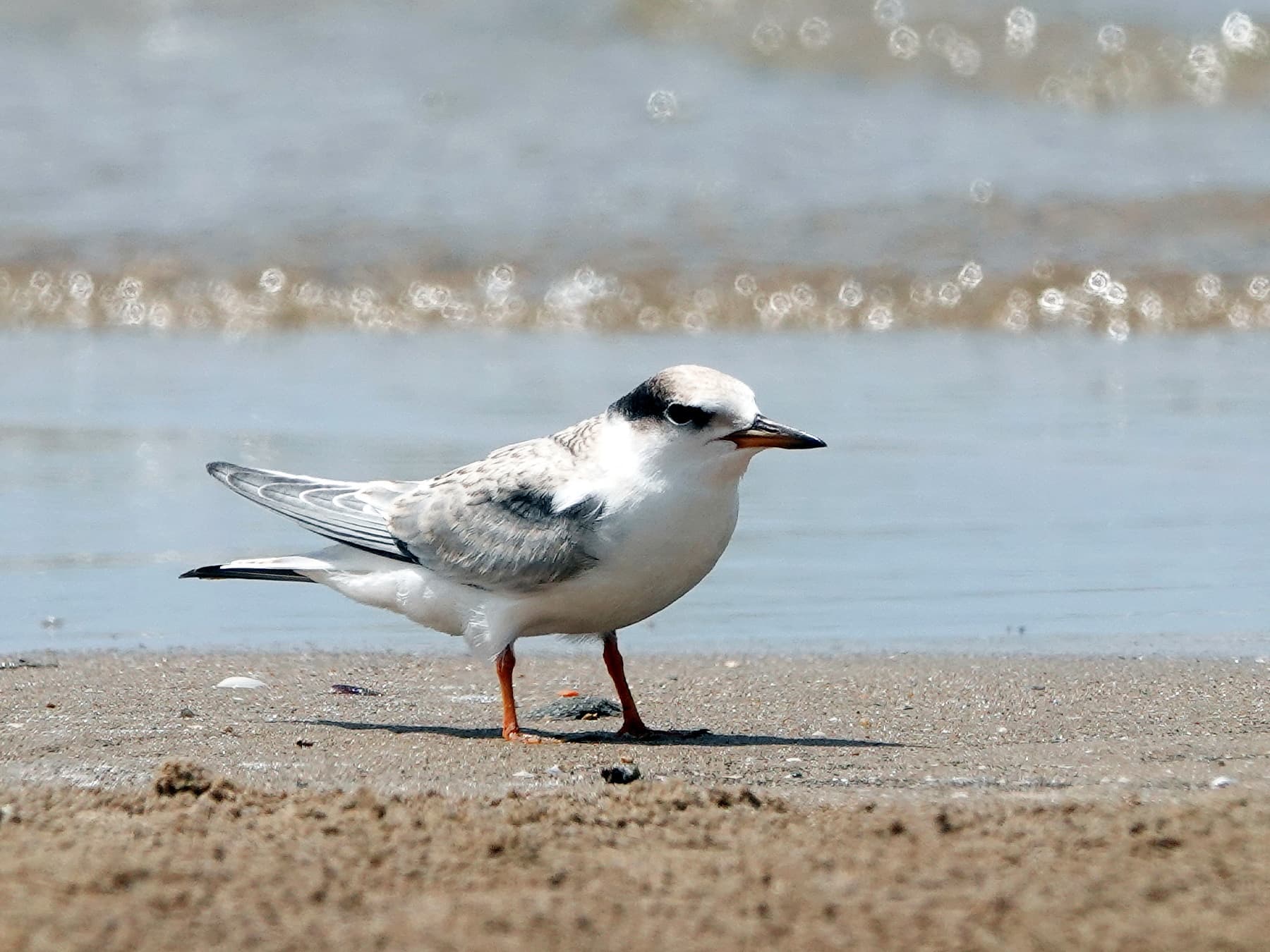 Little Tern non-breeding plumage
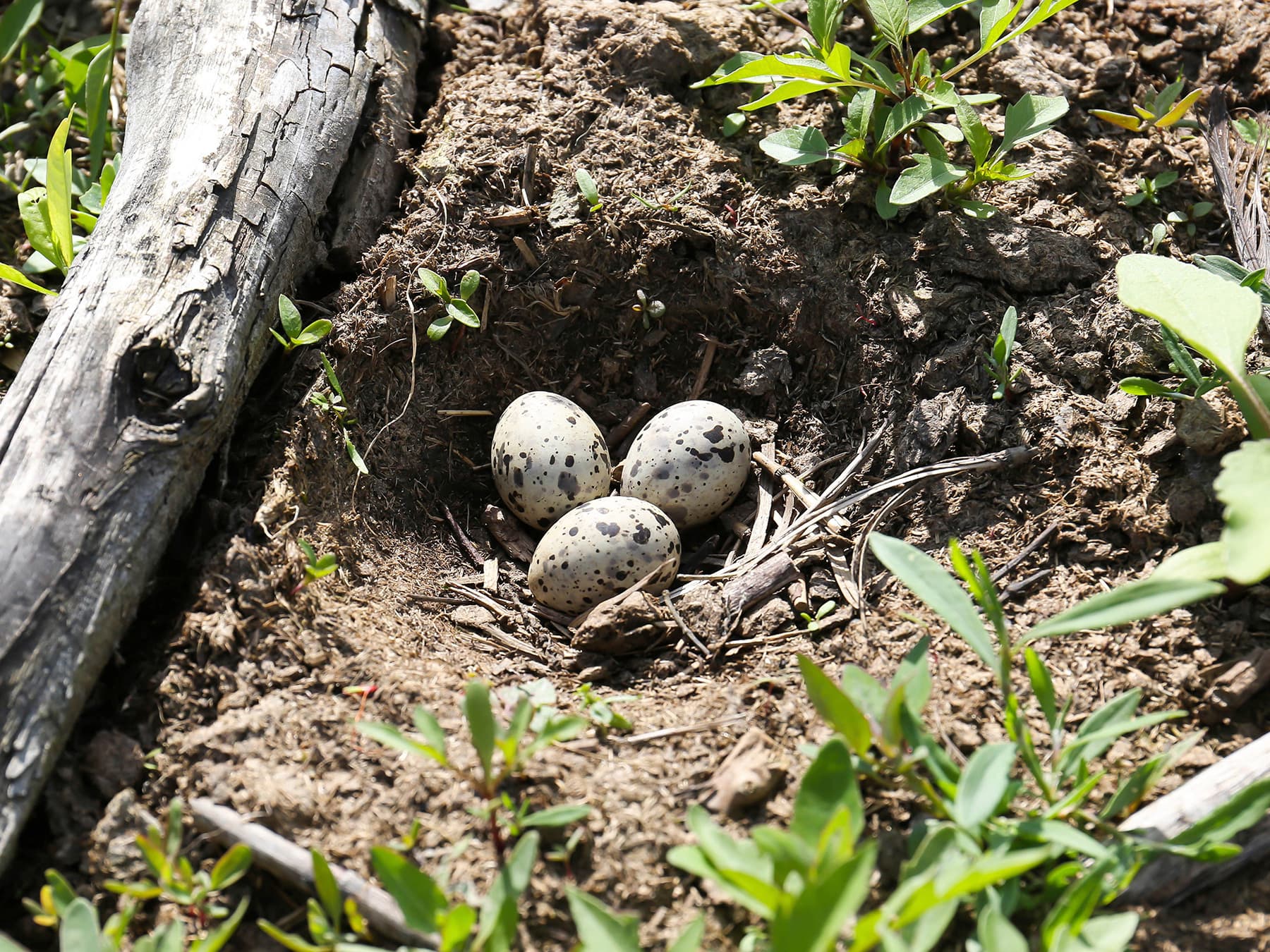 Nest of a Little Tern with two eggs
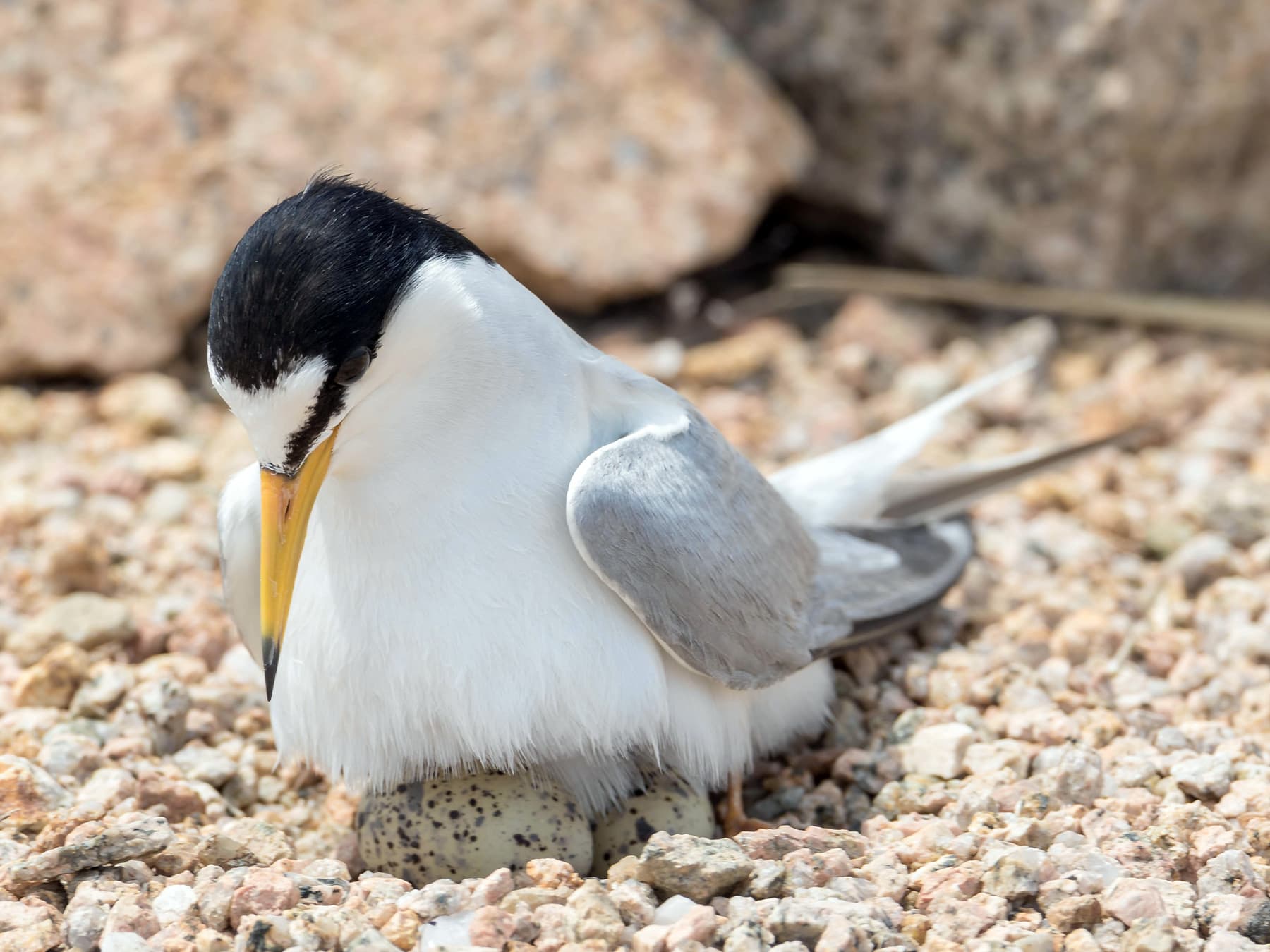 Little Tern parent sitting on eggs in the nest




Little Tern guides
3 guidesQuick facts
- Length
- 21–25 cm
- Wingspan
- 41–47 cm
- Weight
- 45–60 g
- Lifespan
- 10–15 years
- Family
- Gulls & Terns
- Migration
- Long-distance Migrant
- Global status (IUCN)
- Least Concern
- World population
- 190,000 - 410,000 mature individuals
- Population trend
- Decreasing
- Also called
- Little Sea Swallow
- Scientific name
- Sternula albifrons
Sources
3- 1BirdLife International. 2019. Sternula albifrons (amended version of 2018 assessment). The IUCN Red List of Threatened Species 2019: e.T22694656A155476219. Source (opens in a new tab)
- 2Wetlands International (2015)
- 3Wetlands International (2015)

Checked by
Nathan Cope, founder and editor
Nathan founded Birdfact and leads its writers and contributors in the UK, the US and Canada. He has watched and studied birds for more than ten years, and checks every article and species guide before it’s published.