


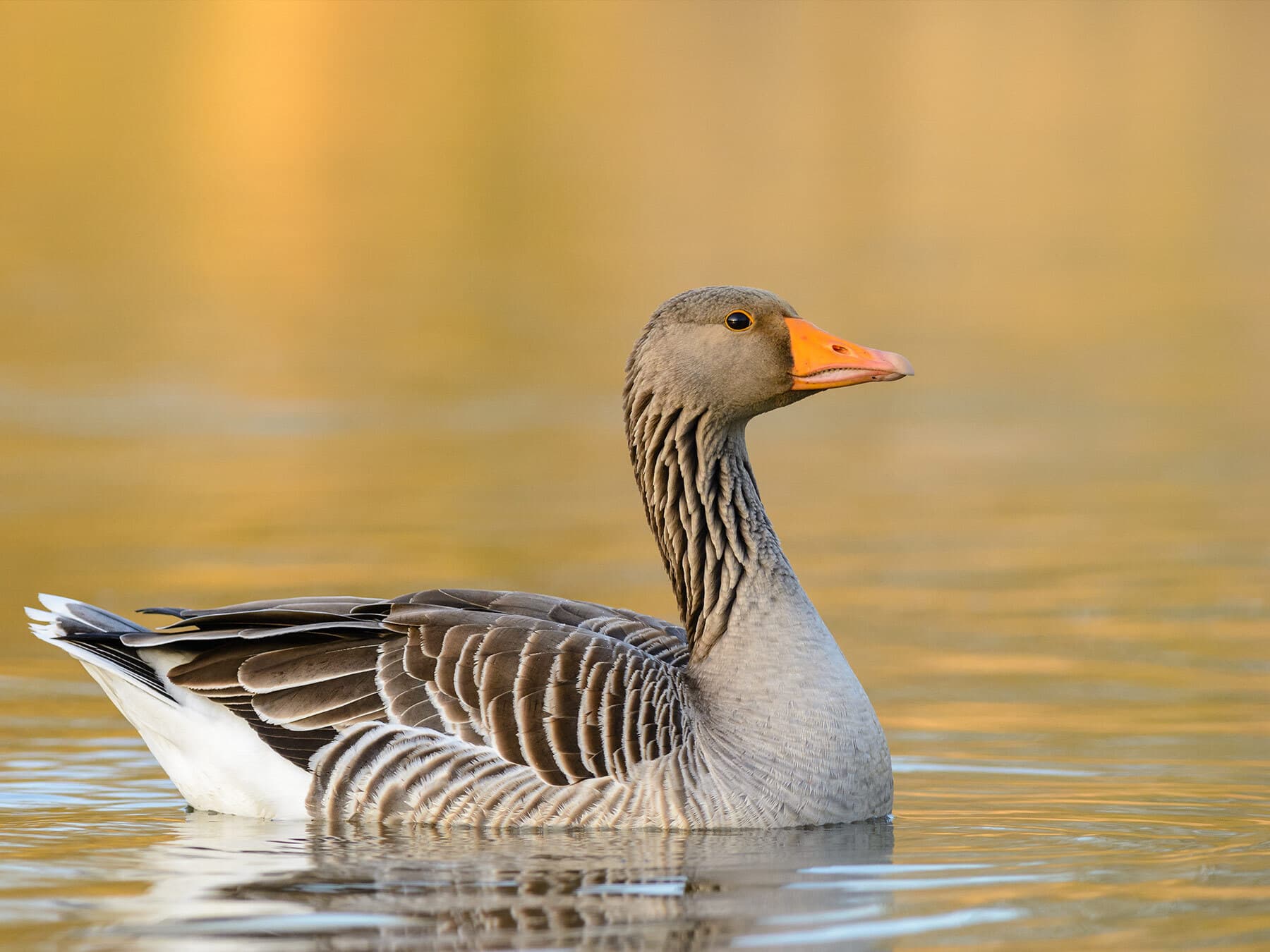
Greylag Goose
Grey Goose, Wild Goose · Anser anser
By the Birdfact teamChecked by Nathan Cope
On this page13 sections
How to recognise it
Greylag geese are large, heavy birds from the grey goose Anser genus. They measure 74 to 91cm (29 to 36in) long with a wingspan of 147 to 180cm (58 to 71in). Greylags weigh between 2.16 to 4.75kg, with some exceptional males reaching 5kg.
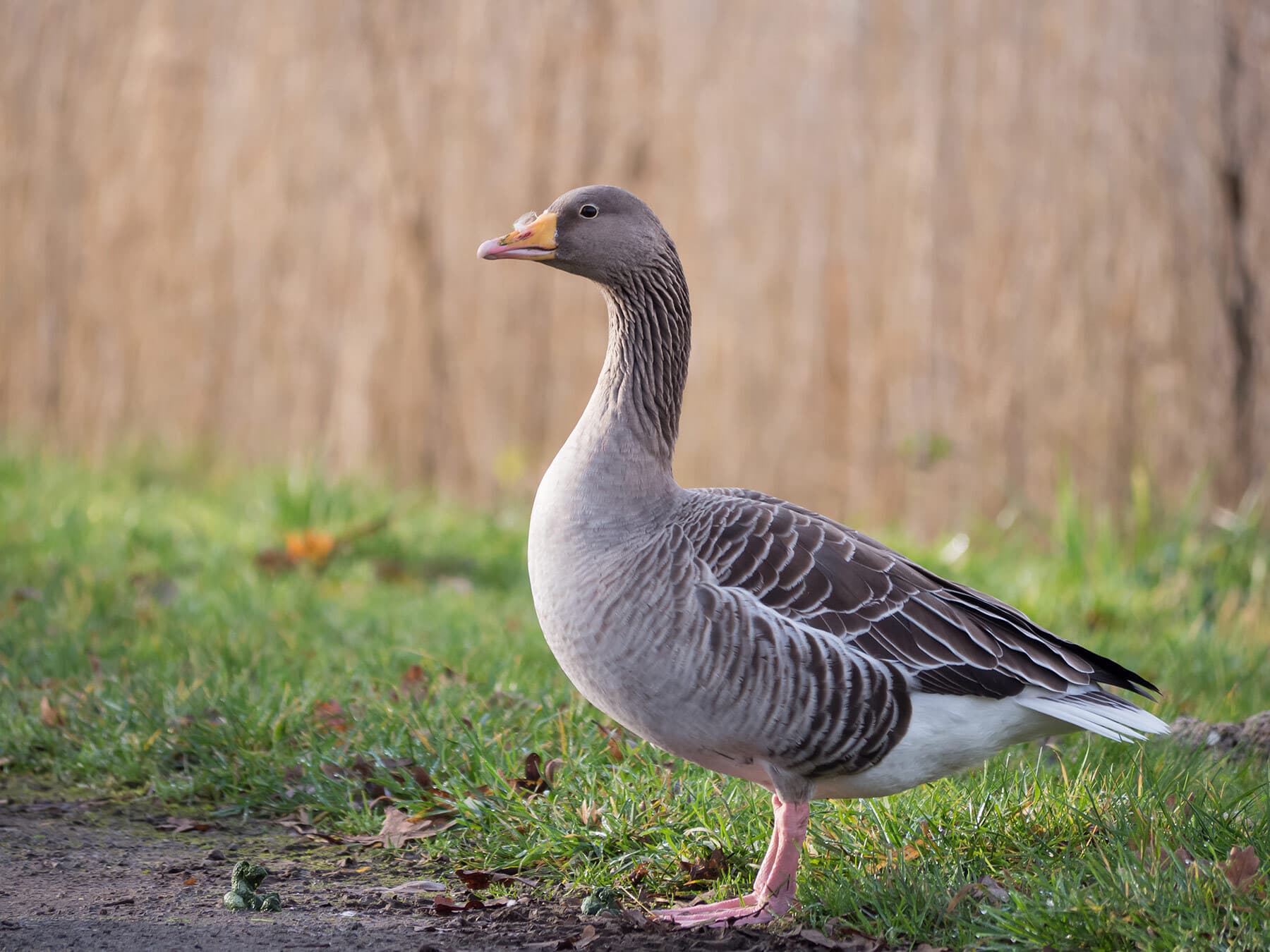
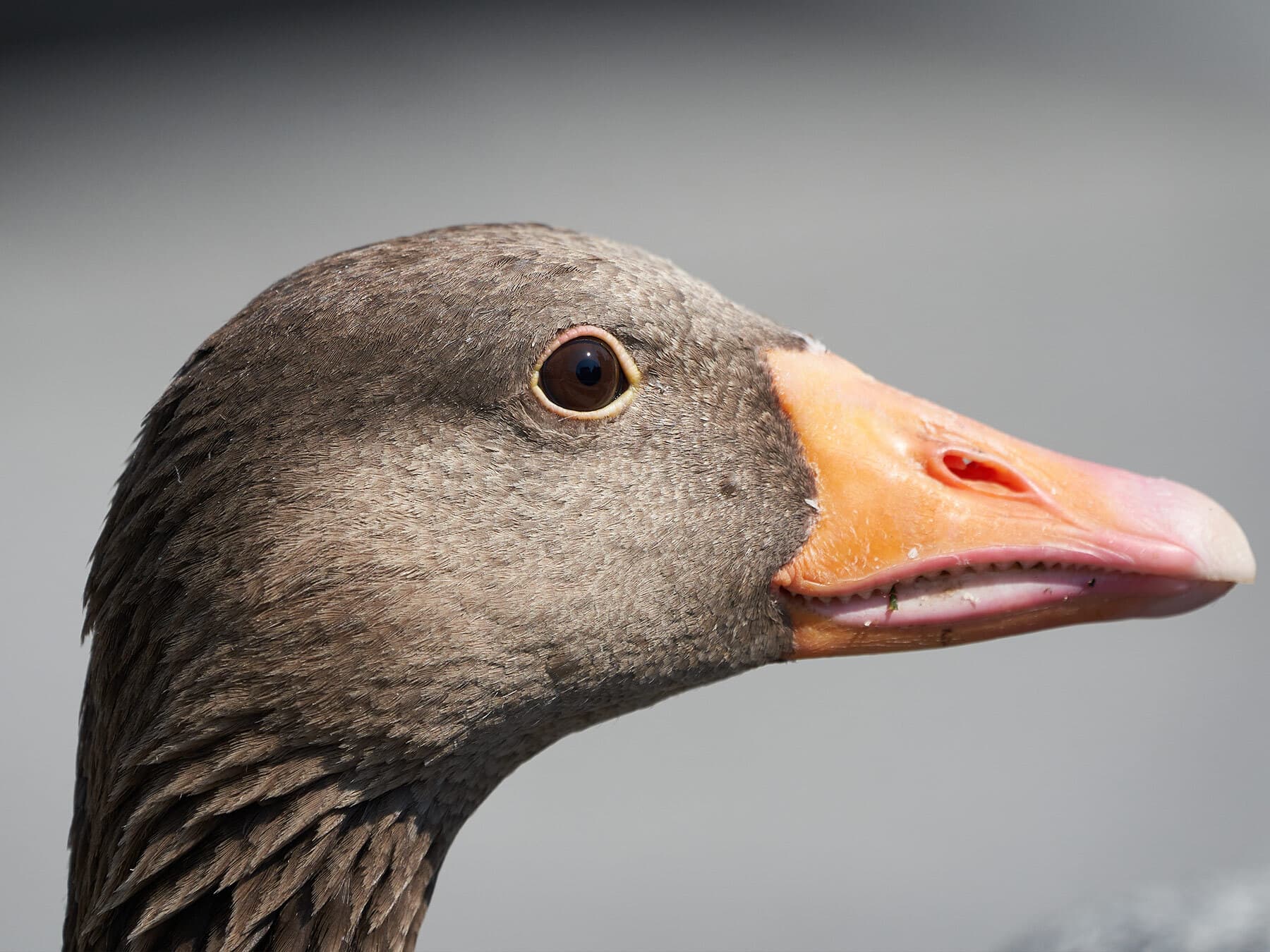
Adults are predominantly grey-brown, with a dark head and paler stomach. The stomach and breast feature variable black spots or blotches. Greylags have a white line that divides their upper and lower bodies, with darker upperwings edged in white. They have a white undertail and thick, pink legs with large pinkish feet. The bill is orange, with a yellowish tip.
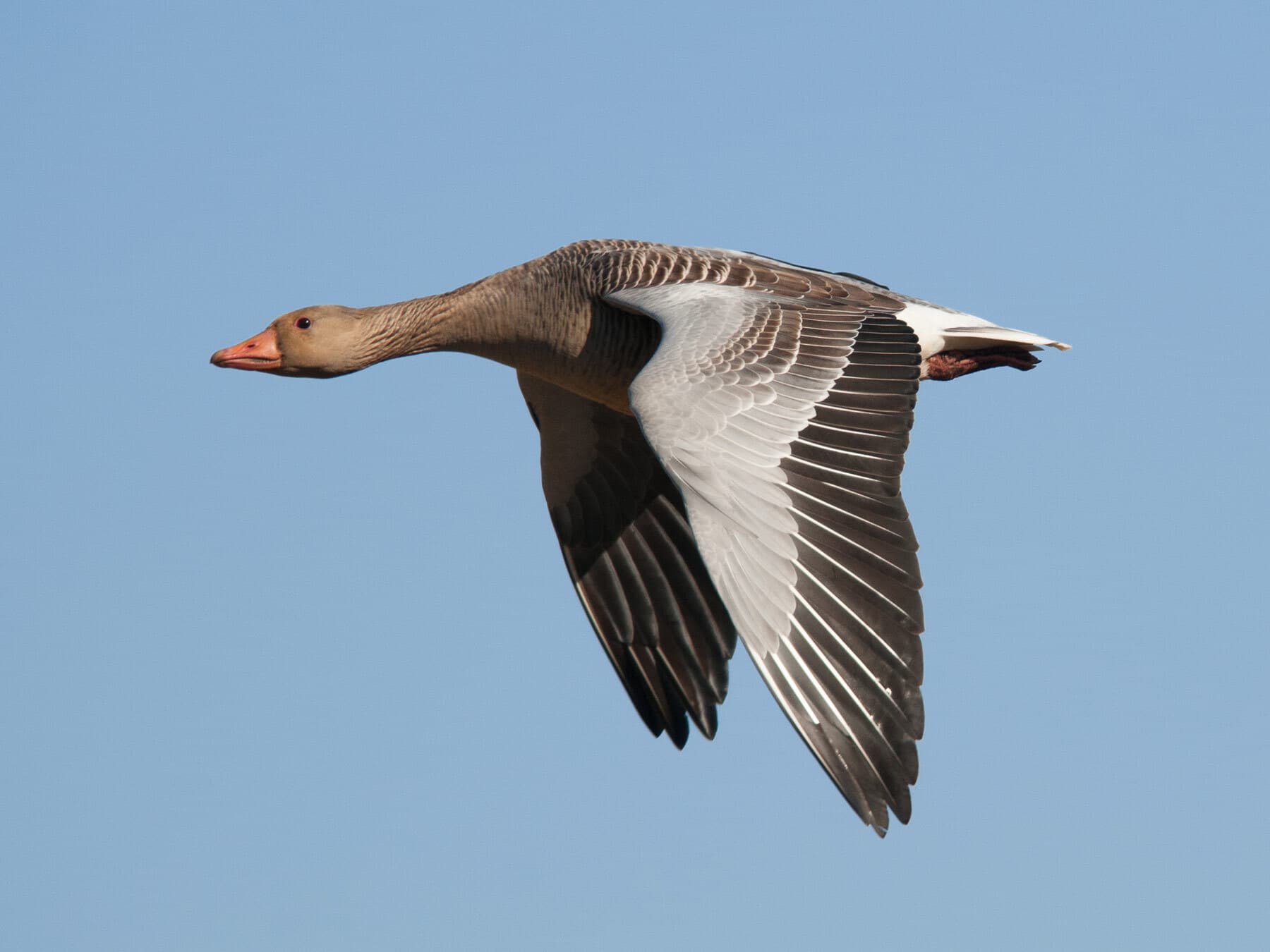
Female greylag geese
Female Greylag geese look the same as males, but are smaller on average. Their plumage may be slightly duller overall.
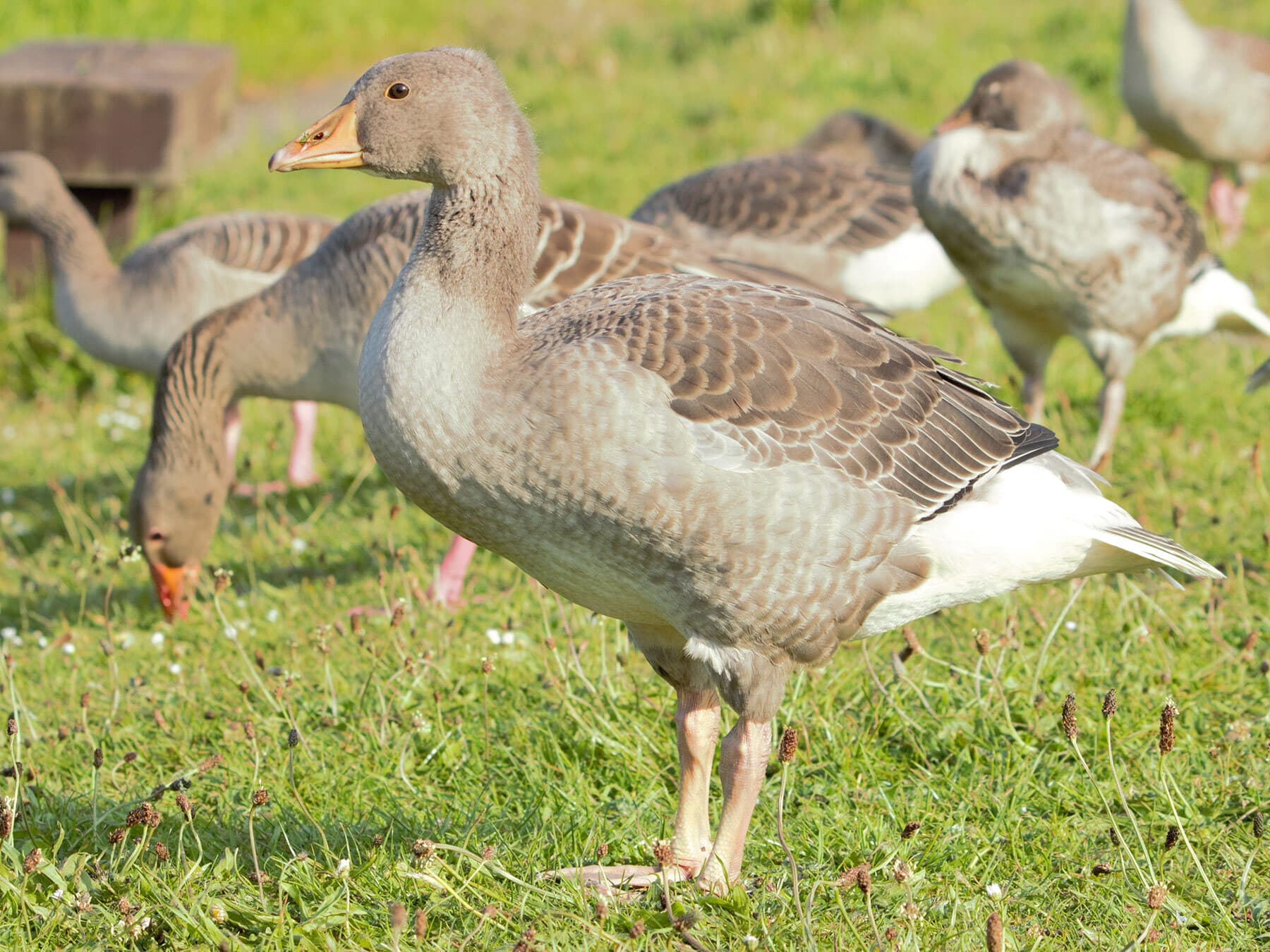
Juvenile greylag geese
Juveniles have less defined plumage, with much duller colouration overall. Their plumage is more mottled and less refined or contrasting. Young juveniles may retain patches of fluffy down until they moult into their adult plumage.
How big are greylag geese?
Greylag geese are the largest, bulkiest members of the Anser genus. On average, they measure around 74 to 91cm (29 to 36in) long with a wingspan of 147 to 180cm (58 to 71in) and weigh between 2.16 to 4.75kg, with some of the largest males reaching 5kg.
Females are around 15% lighter than males on average. These are heavy, rotund birds that are well-adapted to cold weather climates.
Its size
Adults- Length
- 75–90 cm
- Wingspan
- 147–180 cm
- Weight
- 2500–4100 g
Its song and calls
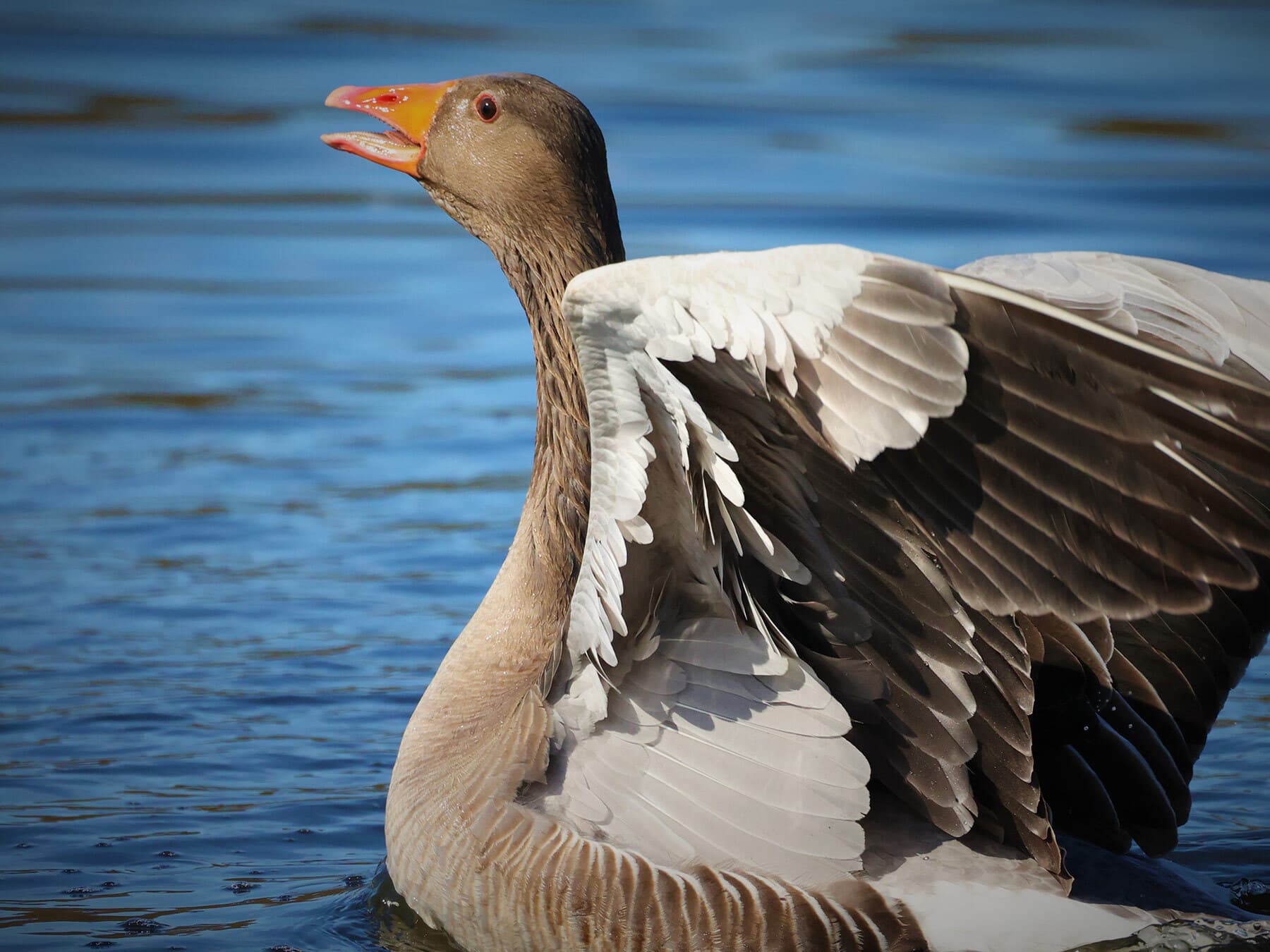
Like many geese, Greylags are loud but tend to be even more nasal than other geese. They have around nine types of honk-like sounds and cackles, ranging from softer calls in family groups to loud, high-pitched alarm calls and gregarious honks.
The female is also capable of an aggressive hiss that she uses when defending her nest or chicks. One of the main syllables is a honk-like gur or gruhh, which the geese repeat in descending or ascending patterns.
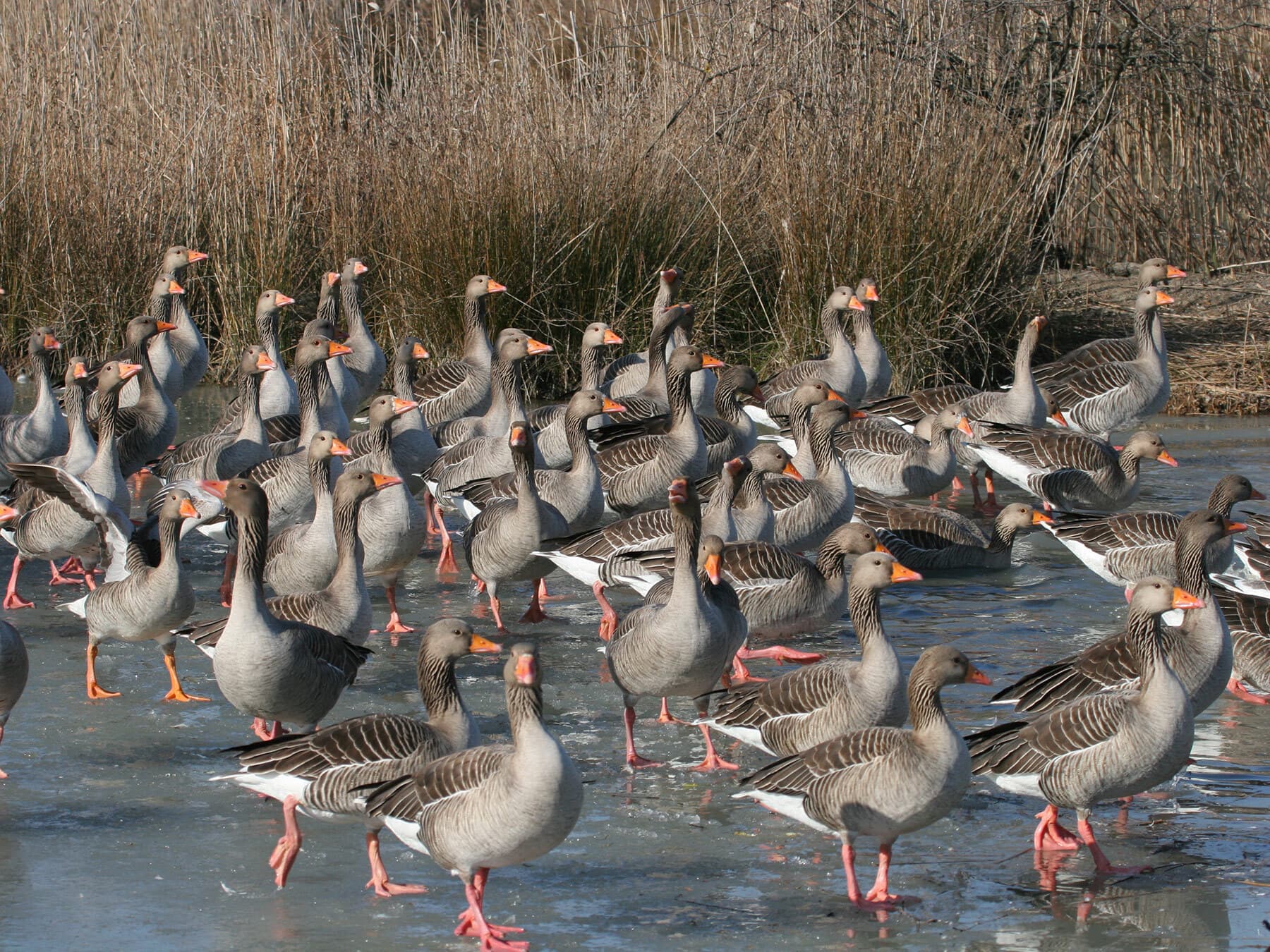
Large flocks of wintering Greylag geese are usually host to a wide range of loud honking and trumpeting calls. These are social birds that communicate avidly during migration and wintering. They also have a distinctive “triumph call” that the male and female vocalise when successfully warding off a predator or other intruder during the breeding season.
- Flight call0:00 / 0:12
Recorded in Normandie, France · February 2023
When and where to see it
OctoberHere all year
Most recorded in October
- 1. Eilean Siar2.6%
- 2. Shetland Islands2.1%
- 3. Stockton-on-Tees2.1%
- 4. Argyll and Bute1.9%
- 5. Orkney Islands1.9%
Each dot is a county, state or province: the bigger and darker, the larger the bird’s share of that place’s bird records that month. Grey dots: no regular records. The ringed point is the centre of the bird’s records this month; the arrow shows how it moved since last month, and the dashed loop its path through the year. “Arrivals” colours places where it becomes regular this month (orange) or is in its last regular month (grey). GBIF eBird Observation Dataset, 2019–2024. Map data: Natural Earth, US Census Bureau; place centres © OpenStreetMap contributors.
In your area
See when the Greylag Goose is recorded in your county, state or province.
How often the Greylag Goose turns up in the UK, Ireland, the United States and Canada through the year, from birdwatchers' records.
United Kingdom
Resident · all year · most records in April
Ireland
Resident · all year · most records in November
United States
Resident · all year · most records in January
Canada
Winter visitor · regularly Jun–Apr · most records in December
Show as a table
| Month | United Kingdom | Ireland | United States | Canada |
|---|---|---|---|---|
| January | 0.91% (regular) | 0.23% (regular) | 0.009% (regular) | 0.003% (regular) |
| February | 0.92% (regular) | 0.29% (regular) | 0.008% (regular) | 0.003% (regular) |
| March | 1.1% (regular) | 0.27% (regular) | 0.006% (regular) | 0.001% (regular) |
| April | 1.1% (regular) | 0.19% (regular) | 0.003% (regular) | <0.001% (regular) |
| May | 1.1% (regular) | 0.20% (regular) | 0.002% (regular) | <0.001% |
| June | 0.87% (regular) | 0.18% (regular) | 0.002% (regular) | <0.001% (regular) |
| July | 0.96% (regular) | 0.17% (regular) | 0.003% (regular) | <0.001% |
| August | 0.92% (regular) | 0.19% (regular) | 0.004% (regular) | <0.001% (regular) |
| September | 0.88% (regular) | 0.18% (regular) | 0.004% (regular) | <0.001% (regular) |
| October | 0.89% (regular) | 0.26% (regular) | 0.005% (regular) | <0.001% (regular) |
| November | 0.83% (regular) | 0.33% (regular) | 0.006% (regular) | 0.001% (regular) |
| December | 0.84% (regular) | 0.24% (regular) | 0.007% (regular) | 0.003% (regular) |
Recorded regularly in
Worldwide: recorded regularly in 88 countries
Countries where it was recorded in at least 3 of the 6 years 2019–2024. Linked countries have their own bird list.
Europe (41)
- Åland Islands
- Albania
- Austria
- Belarus
- Belgium
- Bulgaria
- Croatia
- Czechia
- Denmark
- Estonia
- Faroe Islands
- Finland
- France
- Germany
- Greece
- Guernsey
- Hungary
- Iceland
- Ireland
- Isle of Man
- Italy
- Jersey
- Latvia
- Lithuania
- Luxembourg
- Moldova
- Netherlands
- North Macedonia
- Norway
- Poland
- Portugal
- Romania
- Russia
- Serbia
- Slovakia
- Slovenia
- Spain
- Sweden
- Switzerland
- Ukraine
- United Kingdom
Africa (5)
Asia (26)
- Armenia
- Azerbaijan
- Bangladesh
- Bhutan
- China
- Georgia
- India
- Iran
- Iraq
- Israel
- Japan
- Kazakhstan
- Kyrgyzstan
- Mongolia
- Myanmar (Burma)
- Nepal
- Oman
- Pakistan
- Qatar
- Saudi Arabia
- South Korea
- Taiwan
- Thailand
- Turkey
- United Arab Emirates
- Uzbekistan
North America (5)
- Canada
- Dominican Republic
- Mexico
- Puerto Rico
- United States
Oceania (3)
- Australia
- New Zealand
- Norfolk Island
Data: EOD – eBird Observation Dataset (Cornell Lab of Ornithology), accessed via GBIF.org, CC BY 4.0. Records from 2019–2024, aggregated and filtered by Birdfact. How these lists are made
What is the habitat of a greylag goose?
Greylag geese prefer semi-aquatic habitats, including floodplains, marshes, estuaries and the calmer lower courses of rivers. However, semi-tame Greylags also live in urban and suburban parklands.
Greylags prefer isolated freshwater habitats in the wild but often stay near agricultural crops to feed. They occasionally live near coastlines, but usually remain more than 1km from the coast itself.
What is the range of a greylag goose?
Greylag geese are distributed in the Palearctic and are most numerous in Iceland, Norway, Sweden, Finland, Russia, Poland, Estonia, Lithuania, Latvia, Hungary and Romania.
They also breed across Western and Central Europe; the UK, Denmark, Germany, France, the Netherlands, Austria and the Czech Republic. In addition, small populations of Greylag geese breed in Turkey, but breed less commonly in Southern Europe and the Mediterranean.
In Asia, Greylags breed across most of northern Russia, China, Kazakhstan and Mongolia.
During migration, European Greylag geese often head to Southern Europe and North Africa, whereas Asian populations head to China, India and South Asia.
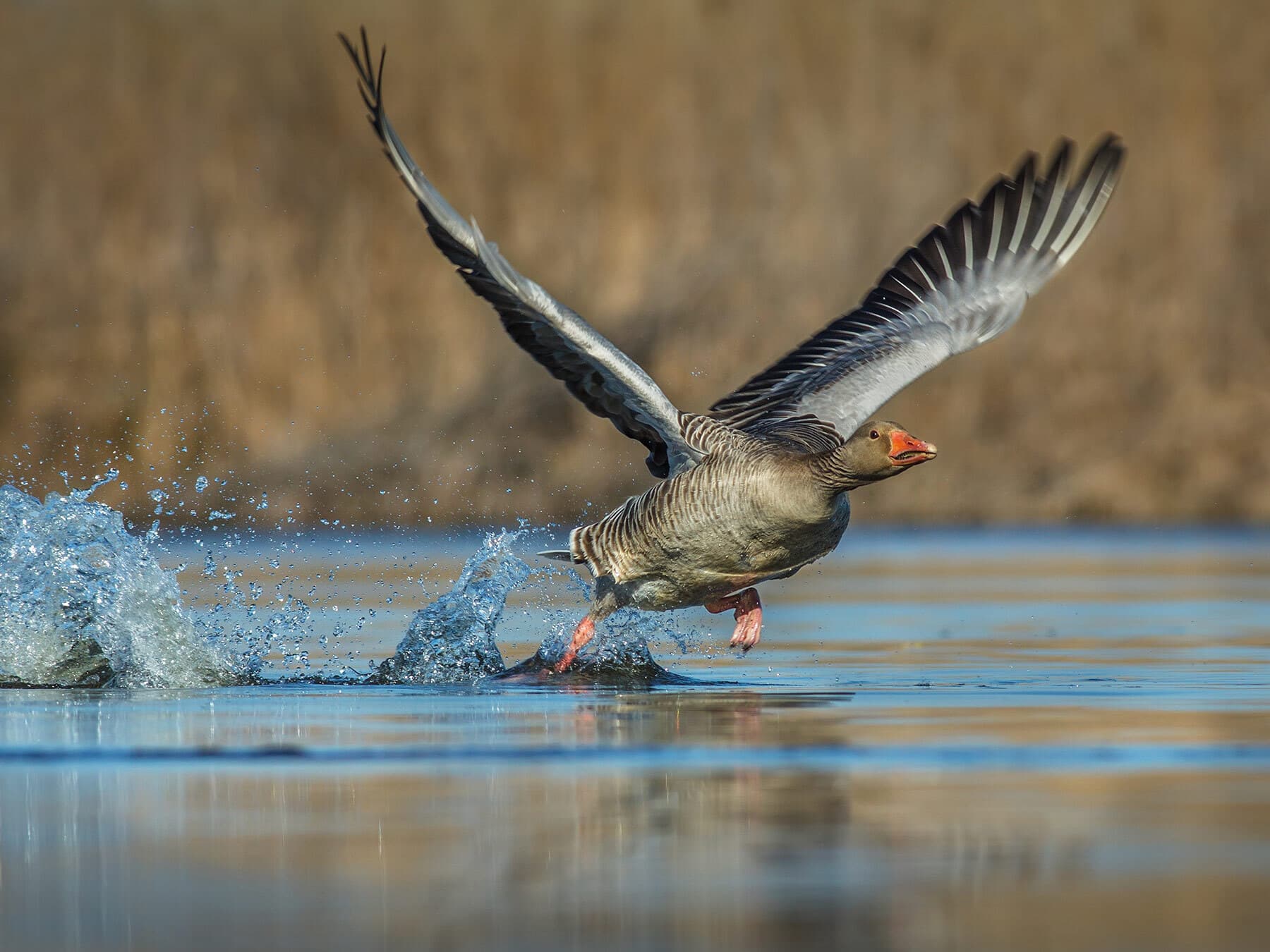
Where do greylag geese live?
Greylag geese are native to the Palearctic, covering all of Europe, Asia north of the Himalayas, and Africa north of the Sahara desert. During migration, some Asia populations of Greylag geese migrate beyond the Himalayas to India and South Asia.
Where to see greylag geese in the UK?
It’s possible to see Greylag geese practically anywhere in the UK, but they’re most common north of the Solway. Mersehead (Dumfries & Galloway), Vane Farm (Fife) and Loch of Strathbeg (Grampian) are three popular spots for observing truly wild Greylags.
They can also be seen in urban and suburban parks, most famously St. James's Park in London.
Migration
Do greylag geese migrate?
Greylag geese are largely migratory, but are becoming more sedentary across most of Central Europe. Populations as far north as Iceland, Scandinavia and Siberia nearly always migrate, with western populations heading through Western and Central Europe to Scotland, the Netherlands, Germany, Spain and Western France. Sedentary and semi-tame resident populations are found throughout much of Europe.
Some continue through the Mediterranean and North Africa. In addition, small numbers of wintering geese are found in the Middle East and Africa as far south as Egypt.
In Asia, migratory Greylags head to India, China, Mongolia and the Middle East. There are also records from Southeast Asia; Laos, Myanmar, Thailand, Vietnam and Cambodia, as well as Japan and Taiwan.
Migrations take place primarily in October and November. The geese may remain north on a mild winter or head south on a particularly cold winter.
Tips for seeing it
- Look for Greylag Geese in open wetlands, lakes, and agricultural fields.
- Listen for their loud, honking calls, especially when in flight.
- Observe their distinctive V-shaped flying formations during migration periods.
- In the UK, check coastal areas and inland wetlands year-round.
What it eats
What do greylag geese eat?
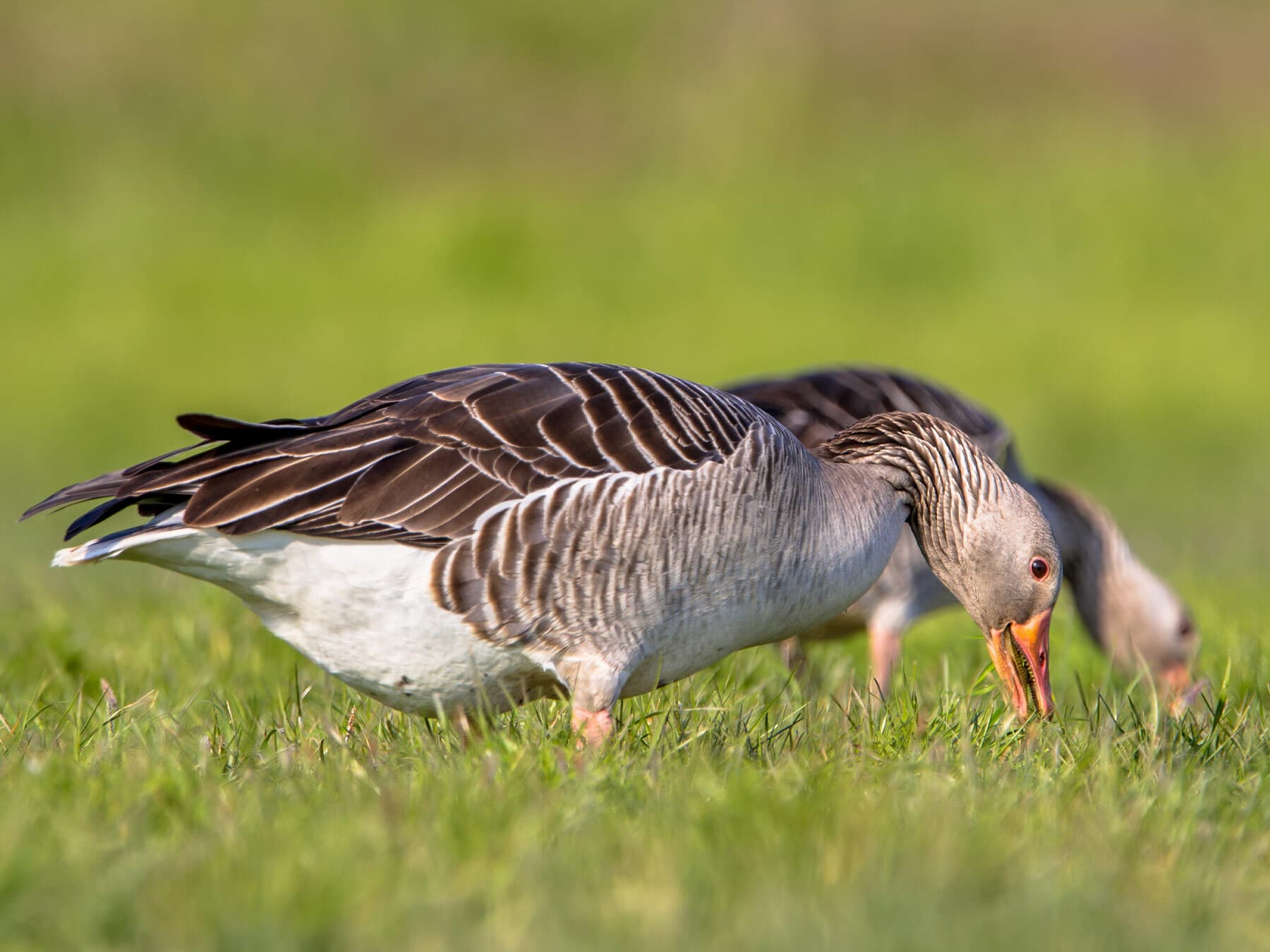
Greylag geese are primarily vegetarian. They eat seeds, stems, roots, leaves, buds and fruits from various plants. Their diets are flexible and depend on what’s available seasonally and in their habitat.
In winter, they enrich their diets with grains and vegetables when available. Greylags also feed in fields where they eat excess grain and cereals.
These large birds graze on large fields alongside other birds and livestock such as cows and sheep. They’re quite content consuming mainly grasses, leaves, stems and roots, but do sometimes eat insects, molluscs and small fish.
Greylag geese feed throughout the morning and afternoon, and tend to up their protein-rich food intake during summer in preparation for migration.
What do baby greylag geese eat?
Baby greylag geese feed themselves after just a few days. The young chicks are born precocial, meaning they’ve obtained an advanced state of growth and are already covered in a feathery down. They’re led by their parents, who indicate what they can and can’t eat by pecking at it.
Nesting and breeding
Where do greylag geese nest?
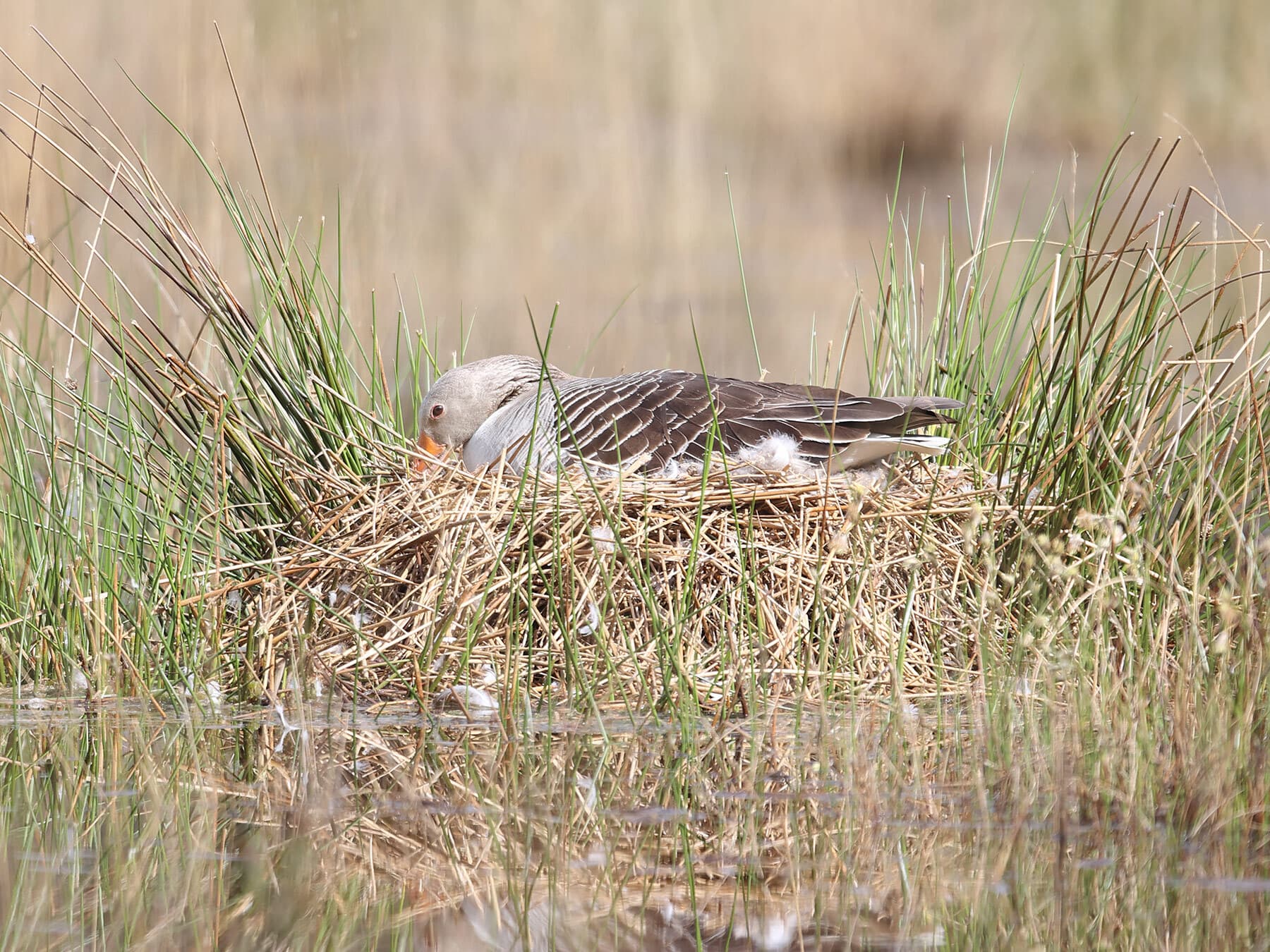
Greylag geese often nest on the ground, amongst reedbeds and aquatic vegetation, but they’ve also been recorded nesting up large trees. Nests on rocky escarpments and cliff sides are also fairly common.
What do greylag goose eggs look like?
Greylag goose eggs are large, measuring approximately 86 x 58mm and weighing 160g. They’re creamy-white in colour.
Do greylag geese mate for life?
Greylag geese typically form strong, monogamous bonds that last for life. Both parents aid with incubating and rearing the chicks. Young geese can stay with their parents for most of the year, completing at least one migration with them before becoming truly independent.
Behaviour
Are greylag geese aggressive?
Greylag geese are aggressive and territorial in the breeding season, when they’re on high alert to protect their partners, nests, eggs and chicks. This is the norm amongst birds, but since Greylags are quite large, they can be imposing when exhibiting aggressive behaviour.
Lifespan and predators
How long do greylag geese live?
In the wild, greylag geese live for around 8 to 14 years on average. However, in captivity, some have been recorded living into their 30s. The oldest wild Greylag geese lived for over 20-years.
What are the predators of greylag geese?
Greylag geese are large birds with few natural predators across most of their European range. However, they face threats from foxes, mink and polecats. The White-tailed eagle and Golden eagle occasionally target young and juvenile birds.
Are greylag geese protected?
As of 2021, in the UK, Greylag geese are listed as Amber under the Birds of Conservation Concern 4: the Red List for Birds. This is because resident Greylag geese numbers have declined in recent years.
They are also protected under the Wildlife and Countryside Act, 1981.
Are greylag geese endangered?
Greylag geese are a successful and abundant species whose numbers are generally trending upwards. As a result, there are more Greylag geese in many parts of Western and Northern Europe than there were in the 1980s and 1990s.
Conservation
While the Greylag Goose is currently listed as Least Concern, it faces localised threats from habitat loss and hunting. Conservation efforts focus on protecting wetland habitats and managing populations in areas where they may conflict with agriculture.
Greylag Goose guides
5 guidesQuick facts
- Length
- 75–90 cm
- Wingspan
- 147–180 cm
- Weight
- 2500–4100 g
- Lifespan
- 15–20 years
- Family
- Ducks, Geese & Swans
- Migration
- Partial migrant
- Global status (IUCN)
- Least Concern
- World population
- 1,000,000 - 1,100,000 mature individuals
- Population trend
- Increasing
- Also called
- Grey Goose, Wild Goose
- Scientific name
- Anser anser
Questions
3Why are they called greylag geese?
Greylag geese are reportedly named so because they’re grey geese from the Anser genus that migrate after many other geese, hence “lagging” behind. Some Greylag geese don’t migrate until December.
Are there greylag geese in the US?
There are occasional records of wild Greylag geese in the USA, but these are presumed escapees and/or vagrants from Europe (probably Iceland). Domestic or semi-domestic Greylag geese are common in the USA, New Zealand and Australia.
Can greylag geese be white?
Domesticated Greylag geese can be any colour ranging from true wild Greylag plumage to completely white. So, in a sense, Greylag geese can be white, but not in their wild form.
Sources
3- 1BirdLife International. 2018. Anser anser. The IUCN Red List of Threatened Species 2018: e.T22679889A131907747. Source (opens in a new tab)
- 2Wetlands International (2015)
- 3Wetlands International (2015)

Checked by
Nathan Cope, founder and editor
Nathan founded Birdfact and leads its writers and contributors in the UK, the US and Canada. He has watched and studied birds for more than ten years, and checks every article and species guide before it’s published.