


Dipper
White-throated Dipper, European Dipper · Cinclus cinclus
By the Birdfact teamChecked by Nathan Cope
On this page14 sections
How to recognise it
The White-throated Dipper is a distinctive bird, easily identified by its appearance and habits.
What do Dippers look like?
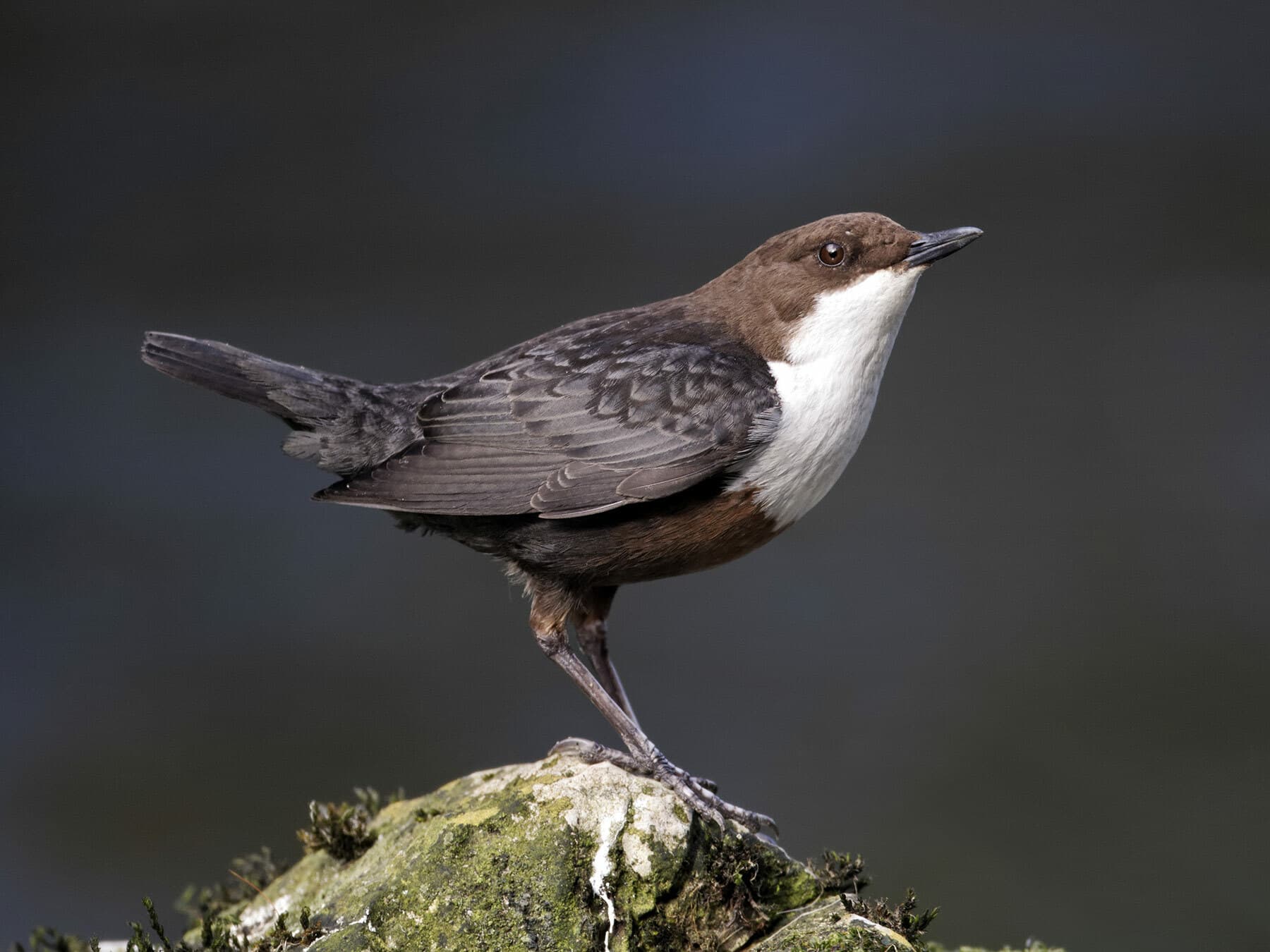
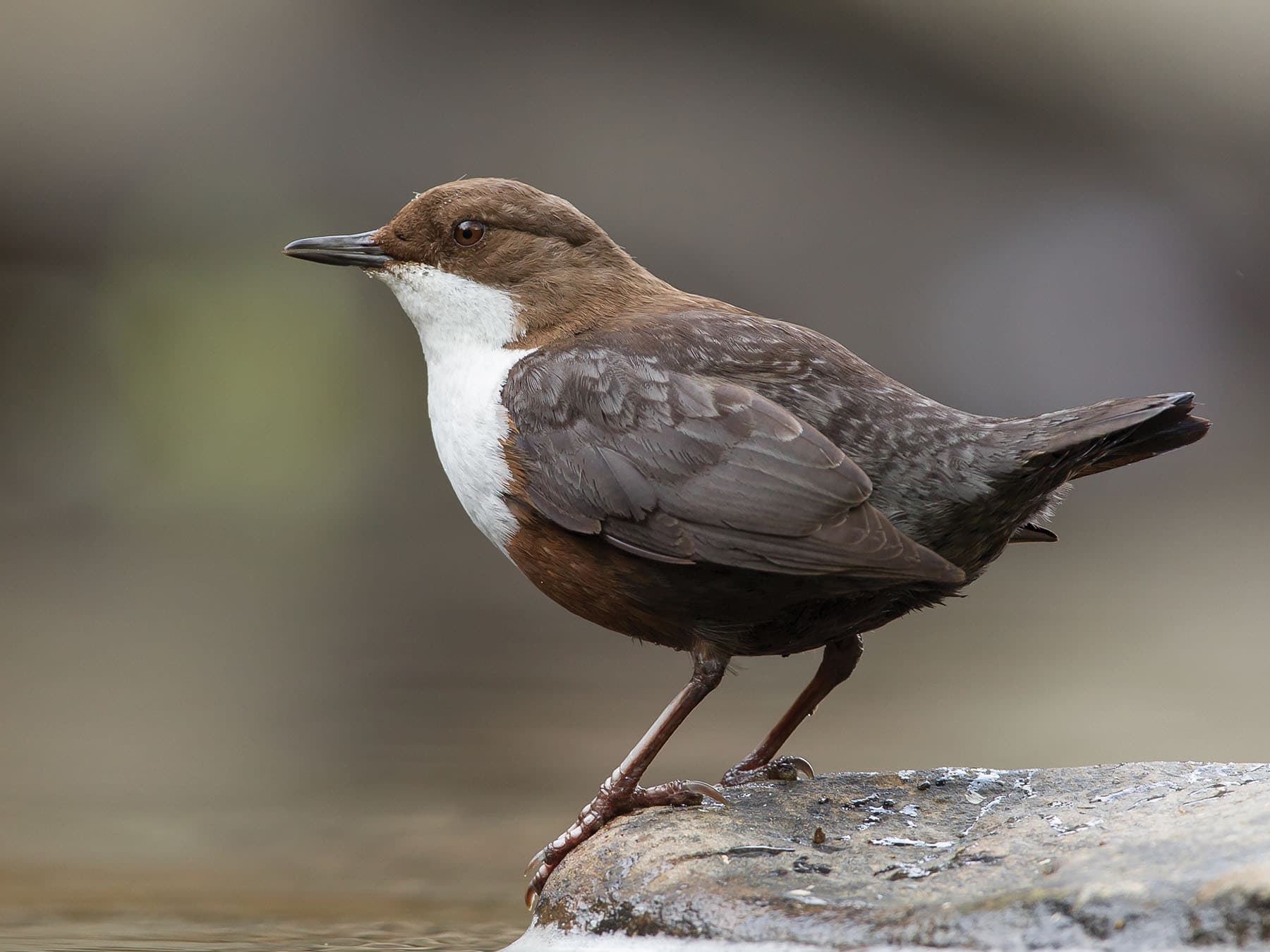
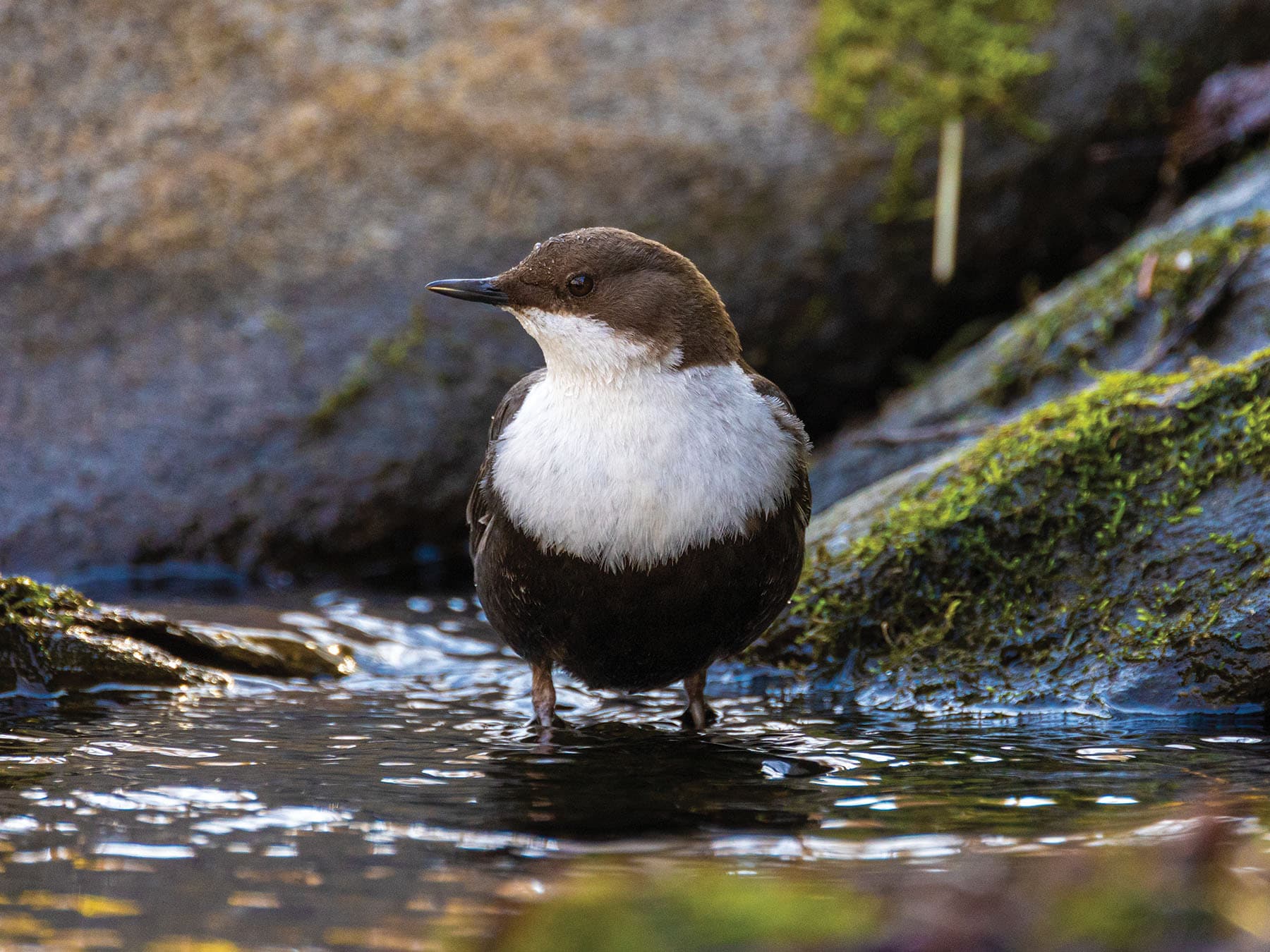
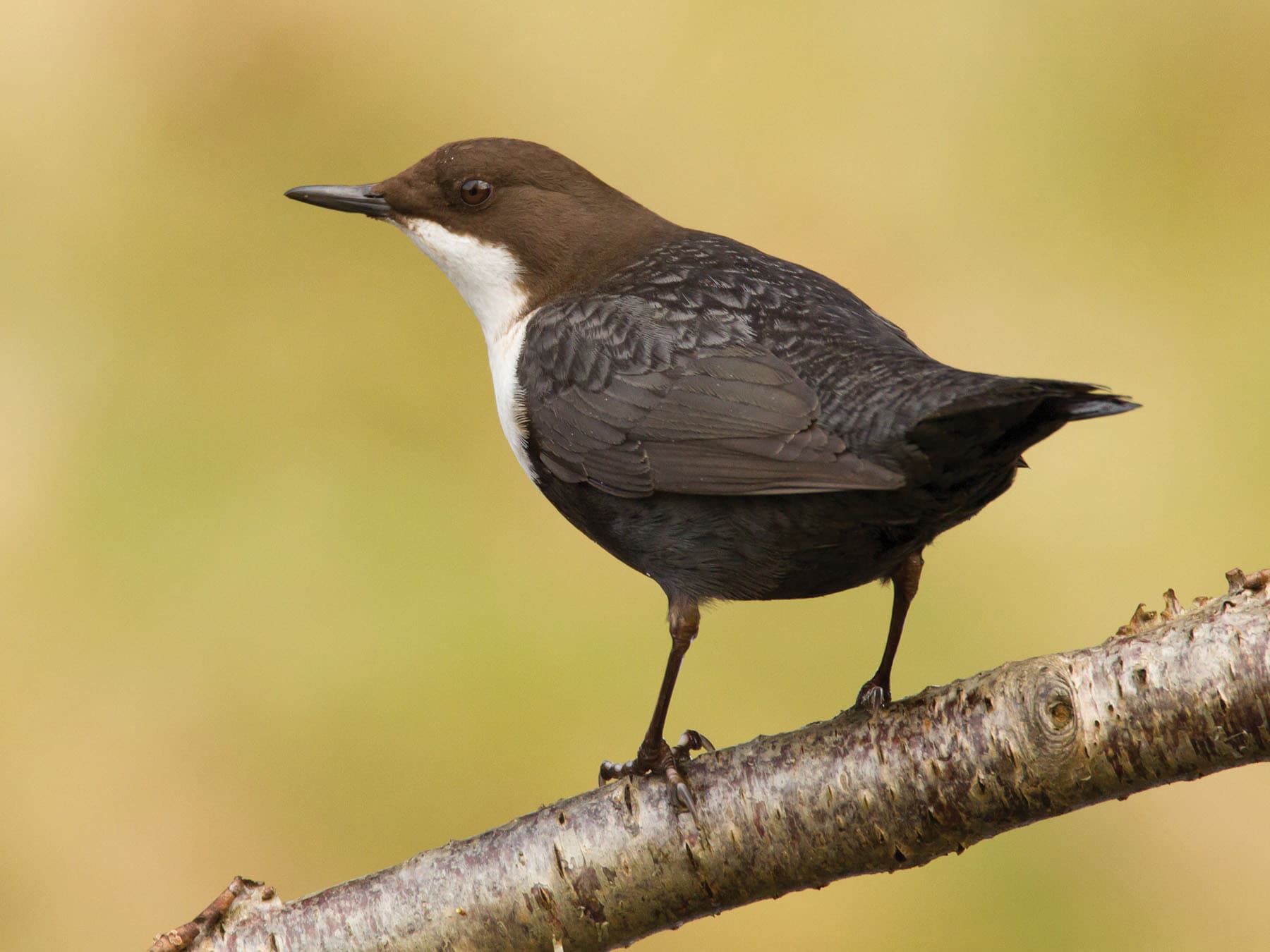
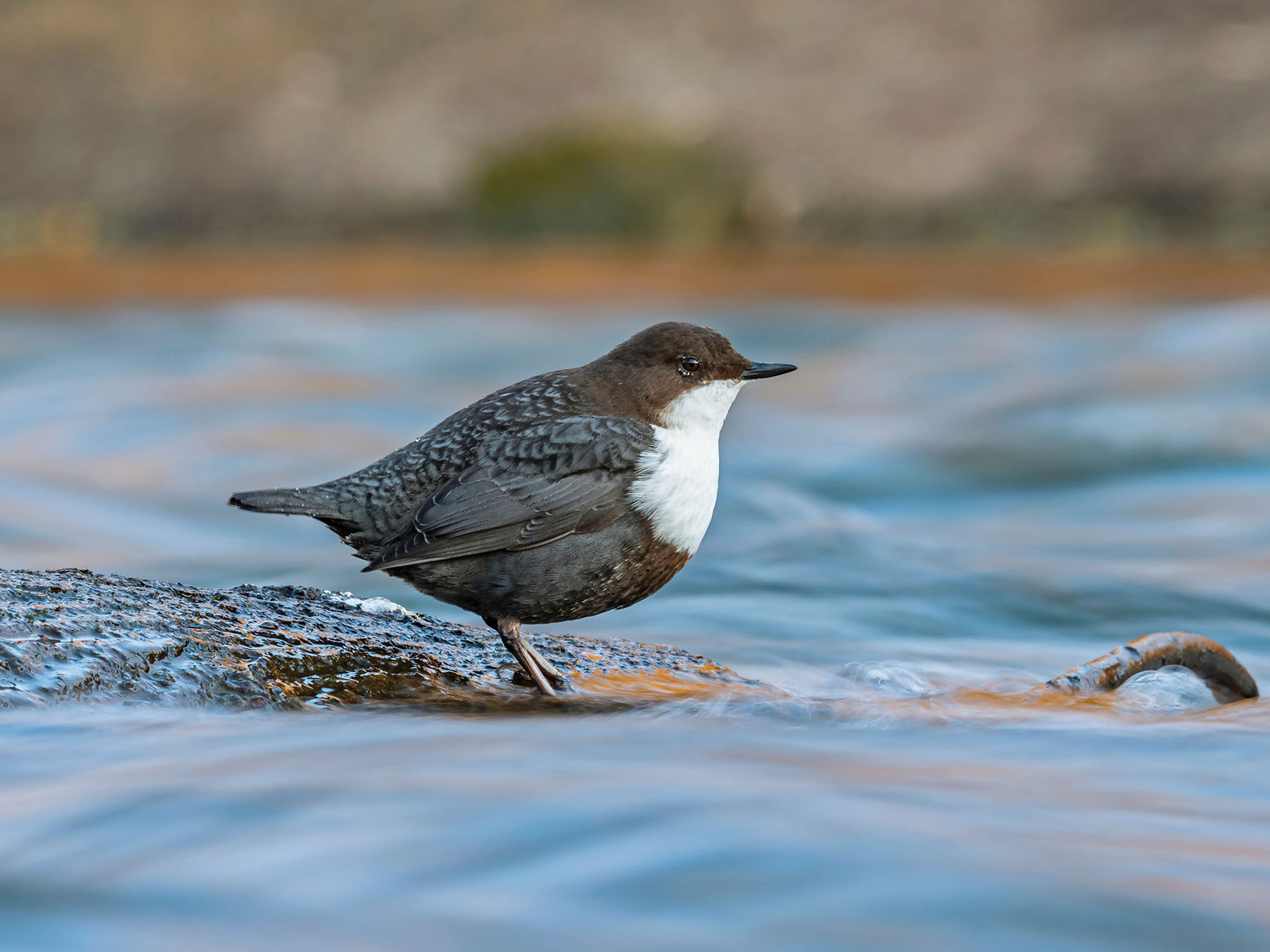
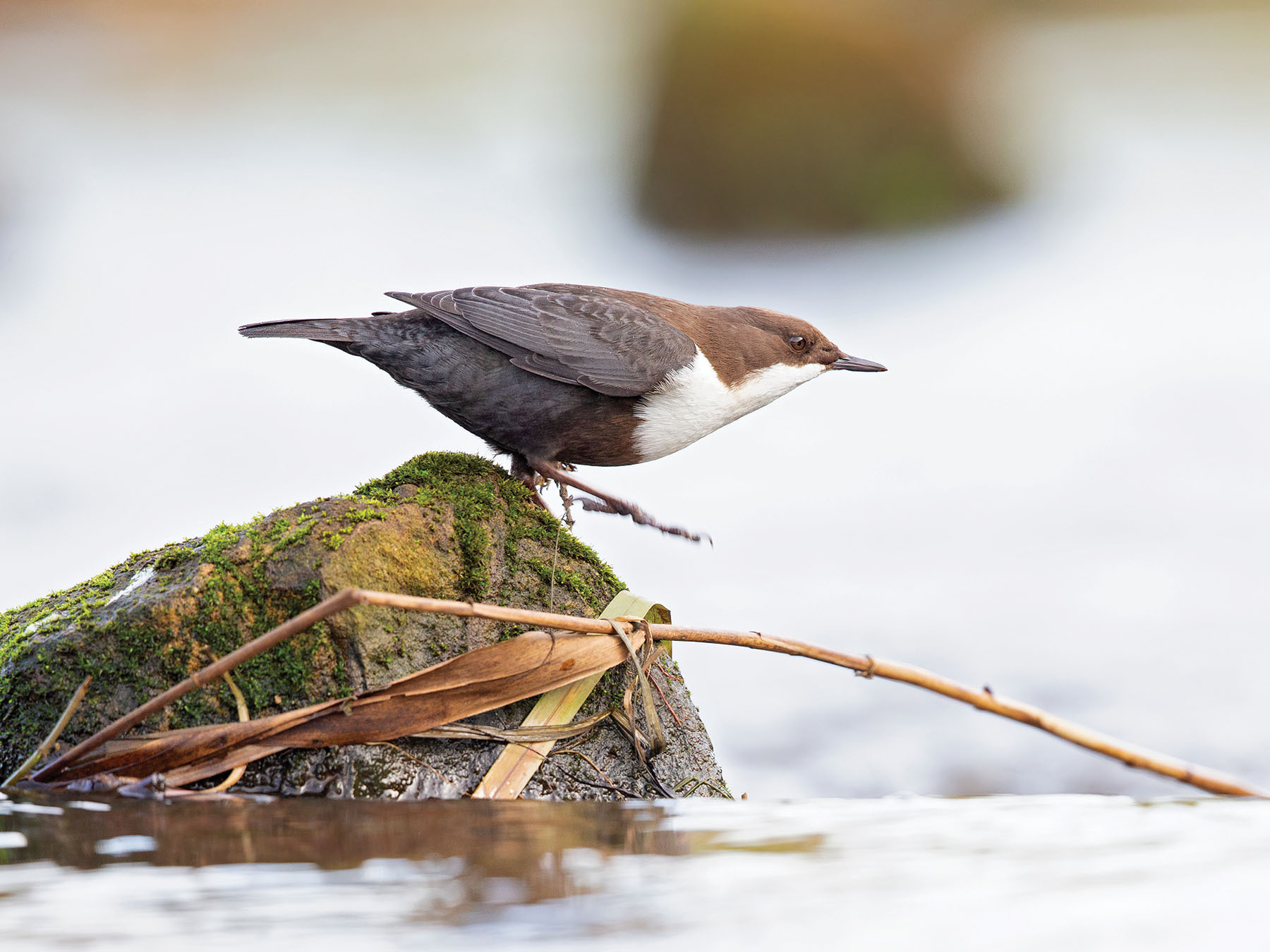
Dippers are identified by their chocolate brown plumage and white chin, throat, and breast. Their short tail is often held up at a 45-degree angle to their back. These are stocky birds with large, well-developed legs and feet. Their eyes are brown, and they have straight black bills.
Dippers can also be identified by their characteristic habit of bobbing up and down when perched. The sexes appear similar, although females are generally smaller and have shorter wings.
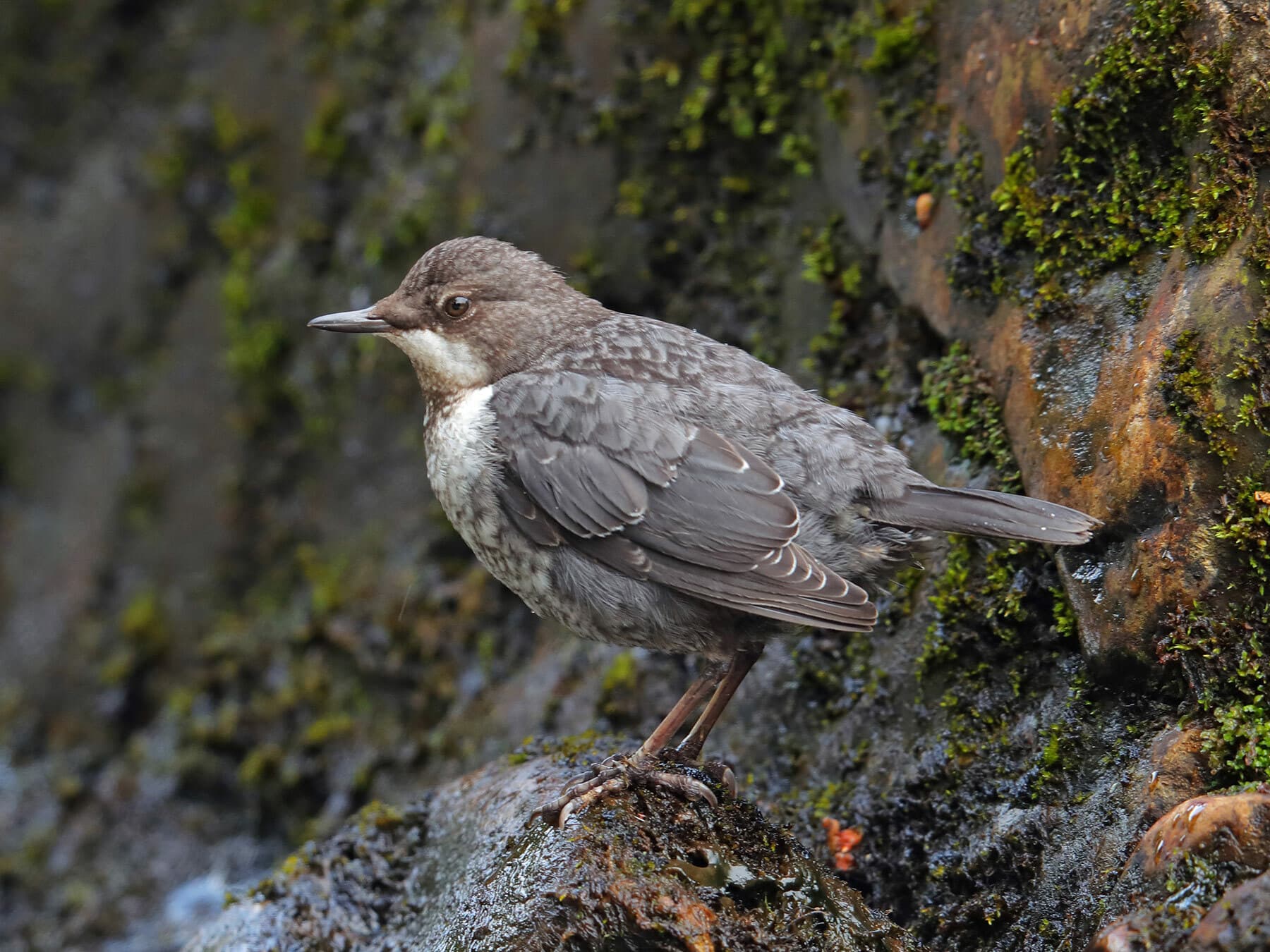
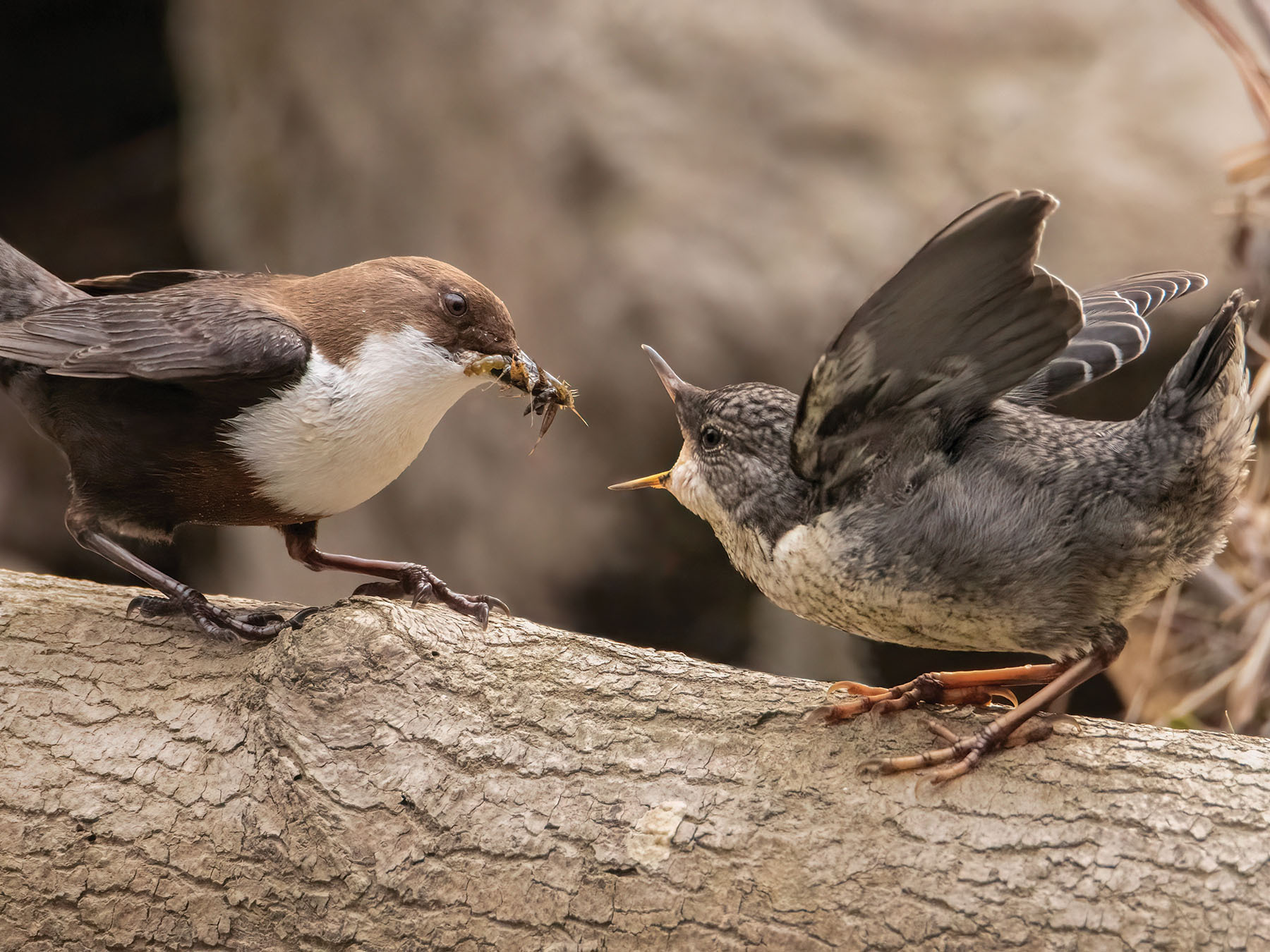
Juvenile Dippers are paler above, appearing grey-brown. Their underparts are dirty grey, although still much lighter than their upperparts. Young birds also have pinkish-brown legs and feet.
How big are Dippers?
Dippers are stout little birds, slightly smaller but more rotund than the Starling.
Length
Dippers have a relatively short, compact build. Adults have a total body length of 17 to 20 centimetres.
Weight
Male Dippers weigh 60 to 76 grams. They are heavier than females on average, although there is some overlap. Females weigh 50 to 67 grams.
Wingspan
Adult Dippers have a wingspan of 25 - 30 centimetres.
Its size
Adults- Length
- 17–20 cm
- Wingspan
- 25–30 cm
- Weight
- 50–75 g
Its song and calls
Dippers call loudly to carry above the often noisy sound of the streams where they live.
What sound does a Dipper make?
The male Dipper produces a loud and variable wren-like song. Females also sing, although their song is more discordant. Both sexes also utter rattling and zitting calls, frequently heard as they fly past low to the water.
- Song0:00 / 0:27
Recorded in Nord-Trøndelag, Norway · March 2018
When and where to see it
OctoberHere all year
Most recorded in October
- 1. Rhondda, Cynon, Taff1.1%
- 2. Powys0.86%
- 3. Midlothian0.74%
- 4. Denbighshire0.63%
- 5. Stirling0.49%
Each dot is a county, state or province: the bigger and darker, the larger the bird’s share of that place’s bird records that month. Grey dots: no regular records. The ringed point is the centre of the bird’s records this month; the arrow shows how it moved since last month, and the dashed loop its path through the year. “Arrivals” colours places where it becomes regular this month (orange) or is in its last regular month (grey). GBIF eBird Observation Dataset, 2019–2024. Map data: Natural Earth, US Census Bureau; place centres © OpenStreetMap contributors.
In your area
See when the Dipper is recorded in your county, state or province.
How often the Dipper turns up in the UK and Ireland through the year, from birdwatchers' records.
United Kingdom
Resident · all year · most records in May
Ireland
Resident · all year · most records in April
Show as a table
| Month | United Kingdom | Ireland |
|---|---|---|
| January | 0.056% (regular) | 0.16% (regular) |
| February | 0.059% (regular) | 0.15% (regular) |
| March | 0.058% (regular) | 0.15% (regular) |
| April | 0.055% (regular) | 0.17% (regular) |
| May | 0.063% (regular) | 0.16% (regular) |
| June | 0.054% (regular) | 0.11% (regular) |
| July | 0.042% (regular) | 0.068% (regular) |
| August | 0.041% (regular) | 0.082% (regular) |
| September | 0.045% (regular) | 0.088% (regular) |
| October | 0.041% (regular) | 0.13% (regular) |
| November | 0.041% (regular) | 0.12% (regular) |
| December | 0.044% (regular) | 0.15% (regular) |
Recorded regularly in
Worldwide: recorded regularly in 54 countries
Countries where it was recorded in at least 3 of the 6 years 2019–2024. Linked countries have their own bird list.
Europe (38)
- Albania
- Andorra
- Austria
- Belgium
- Bosnia & Herzegovina
- Bulgaria
- Croatia
- Czechia
- Denmark
- Estonia
- Finland
- France
- Germany
- Greece
- Hungary
- Ireland
- Italy
- Kosovo
- Latvia
- Liechtenstein
- Lithuania
- Luxembourg
- Montenegro
- Netherlands
- North Macedonia
- Norway
- Poland
- Portugal
- Romania
- Russia
- Serbia
- Slovakia
- Slovenia
- Spain
- Sweden
- Switzerland
- Ukraine
- United Kingdom
Africa (1)
Asia (15)
- Armenia
- Azerbaijan
- Bhutan
- China
- Georgia
- India
- Iran
- Iraq
- Kazakhstan
- Kyrgyzstan
- Mongolia
- Nepal
- Pakistan
- Tajikistan
- Turkey
Data: EOD – eBird Observation Dataset (Cornell Lab of Ornithology), accessed via GBIF.org, CC BY 4.0. Records from 2019–2024, aggregated and filtered by Birdfact. How these lists are made
Dippers have specific habitat requirements and a patchy distribution in the UK. Read this section to learn where to find these fascinating aquatic birds.
What is the habitat of a Dipper?
Dippers live along fast-flowing streams with rocky bottoms. They may visit lakes and even coastal areas if forced by freezing weather, but they are never found far from the water.
What is the range of a Dipper?
Dippers are most common in upland areas of Scotland, Northern Ireland, and Northern England, although they are also widespread in Wales and southwestern England. The species has a discontinuous range elsewhere in Mainland Europe and Central Asia.
Where do Dippers live?
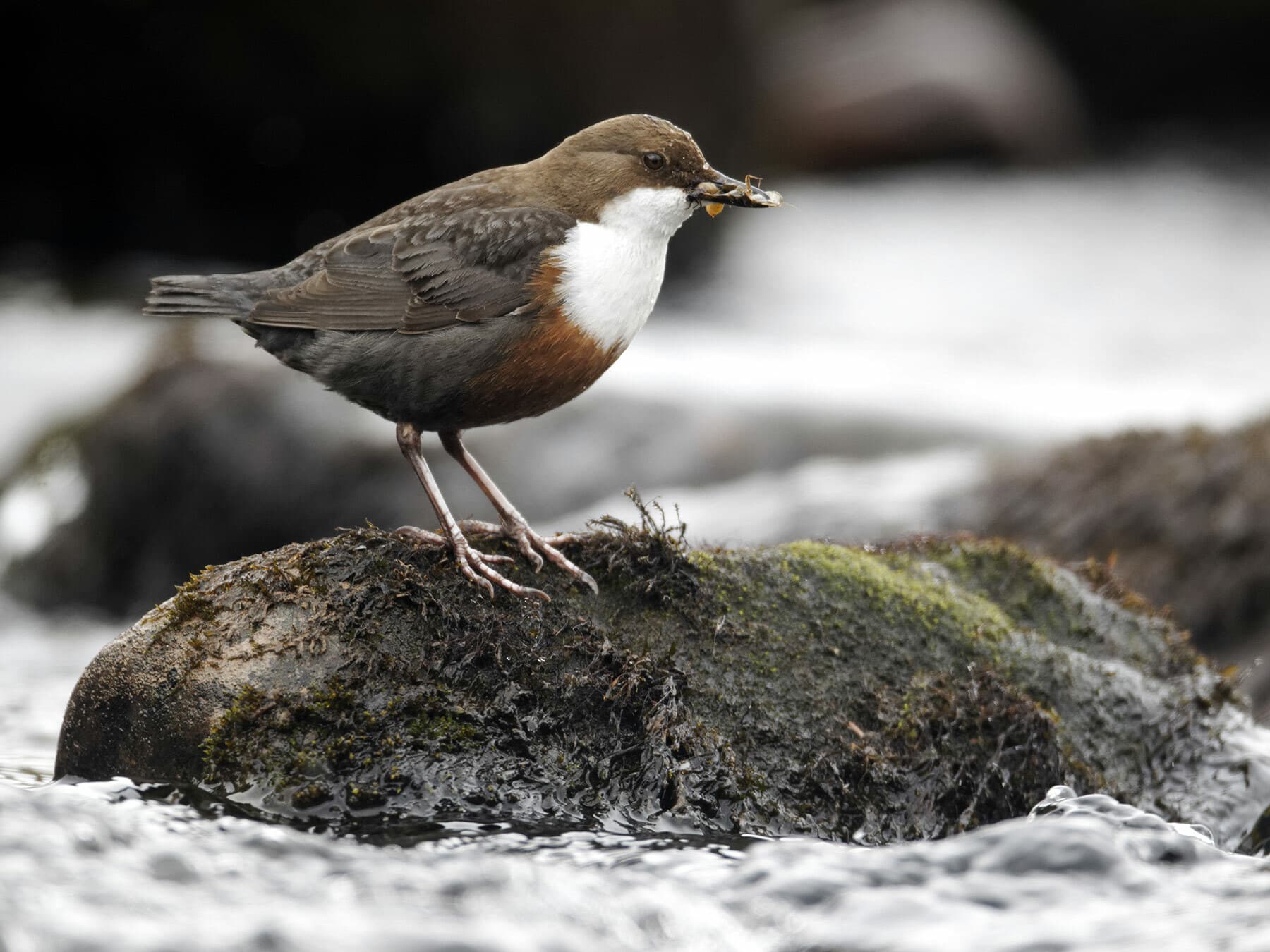
Dippers live along streams, spending most of their time on stones and boulders in the riverbed. These unusual birds forage under the water by walking along the bottom. They typically occupy territories of about 0.4 to 2.5 kilometres.
Living in such a wet environment and dealing with strong currents requires some rather special adaptations. These birds can seal their nostrils to keep water out, and they preen regularly with an oily secretion to keep their feathers waterproof.
Dippers swim well and cling to the bottom with powerful claws, angling their body and wings to maintain a downward force.
How rare are Dippers?
There were an estimated 6900 pairs of Dippers in the UK in 2016. These birds occur in low numbers due to their territorial nature and specific habitat requirements. Unfortunately, the species has declined by over a third in the UK since the mid-1990s.
Where can you see Dippers in the UK?
Dippers are most common along stony streams in upland areas. Look for them along clear, faster-flowing sections. Their territories may be over two kilometres long, but looking out for their droppings on exposed stones and boulders in the stream can confirm their presence.
Signs and spotting tips
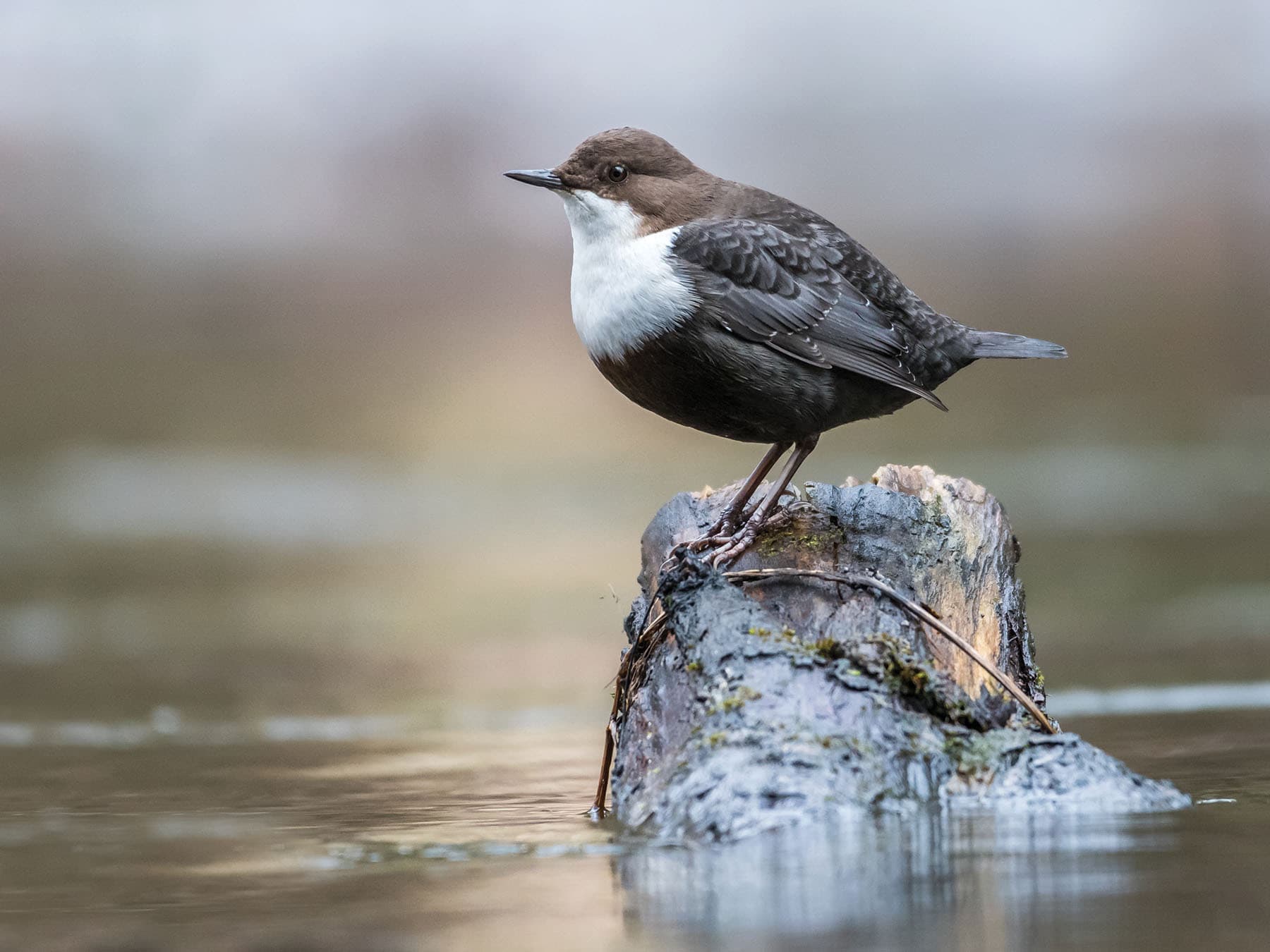
Dippers are often seen perching on rocks and boulders mid-stream, bobbing in characteristically spasmodic fashion, then suddenly disappearing underwater. They will also swim on the surface of the river with their body low and wings open.
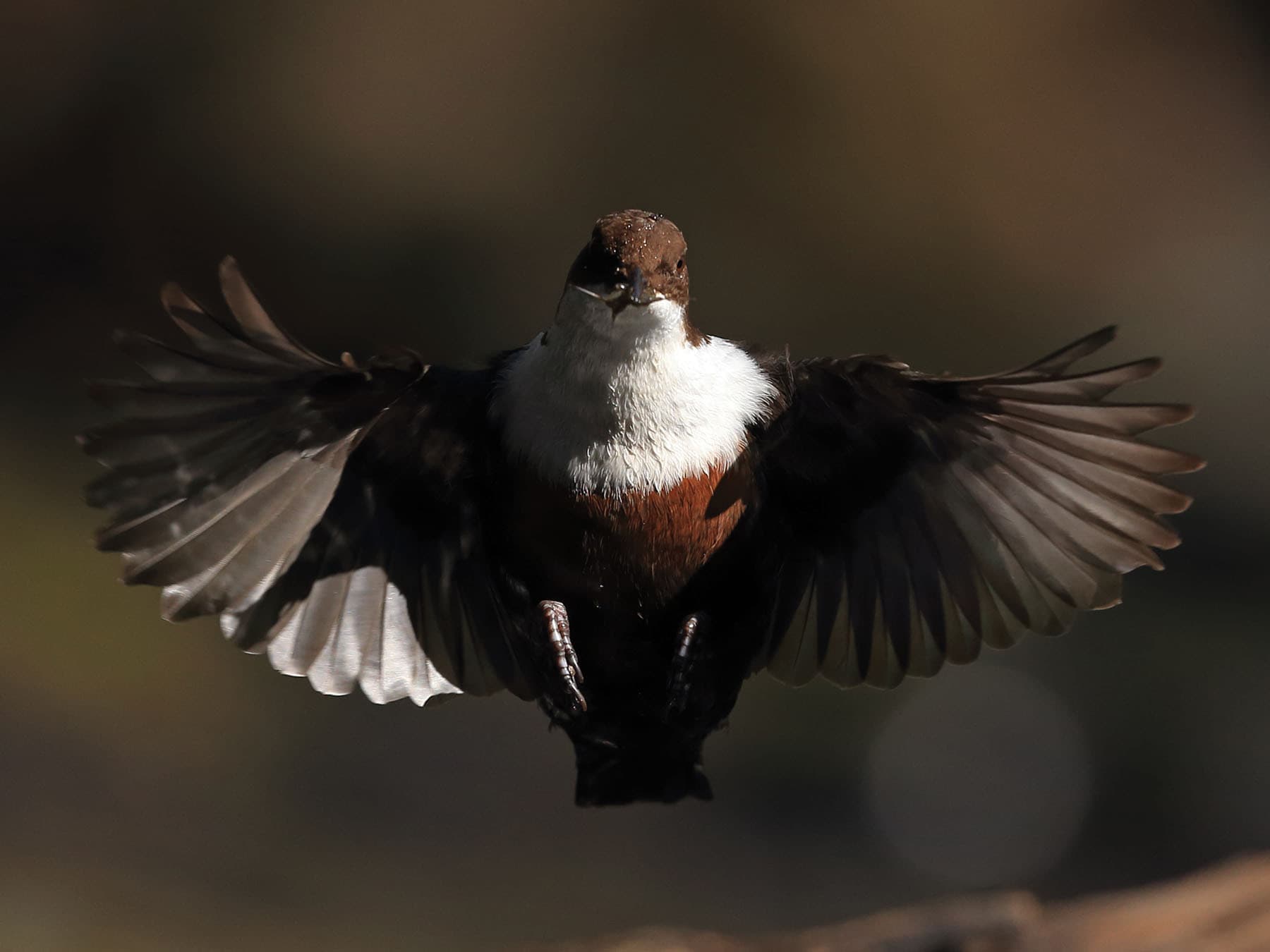
The dipper’s short, rounded wings give it a characteristic whirring sound during its flight, which is straight and fast. The main clue that a dipper is nearby is the tell-tale droppings it leaves on rocks in the river.
Migration
Dippers are not exactly built for long-distance travel, although harsh winters may necessitate local movements.
Do Dippers migrate?
Dippers are non-migratory birds in the United Kingdom that can be seen all year. There are two resident sub-species, namely Cinclus cinclus hibernicus of Ireland and Western Scotland and C. c. gularis of England, Wales, and the rest of Scotland.
Occasionally, a third subspecies (C. c. cinclus) migrates to the east coast to escape the harsh winters of Northern Europe.
Are Dippers native to the UK?
Dippers are native to the United Kingdom.
What it eats
Dippers hunt by walking underwater. A typical dive lasts just a few seconds, although they can stay under for half a minute in exceptional circumstances.
What do Dippers eat?
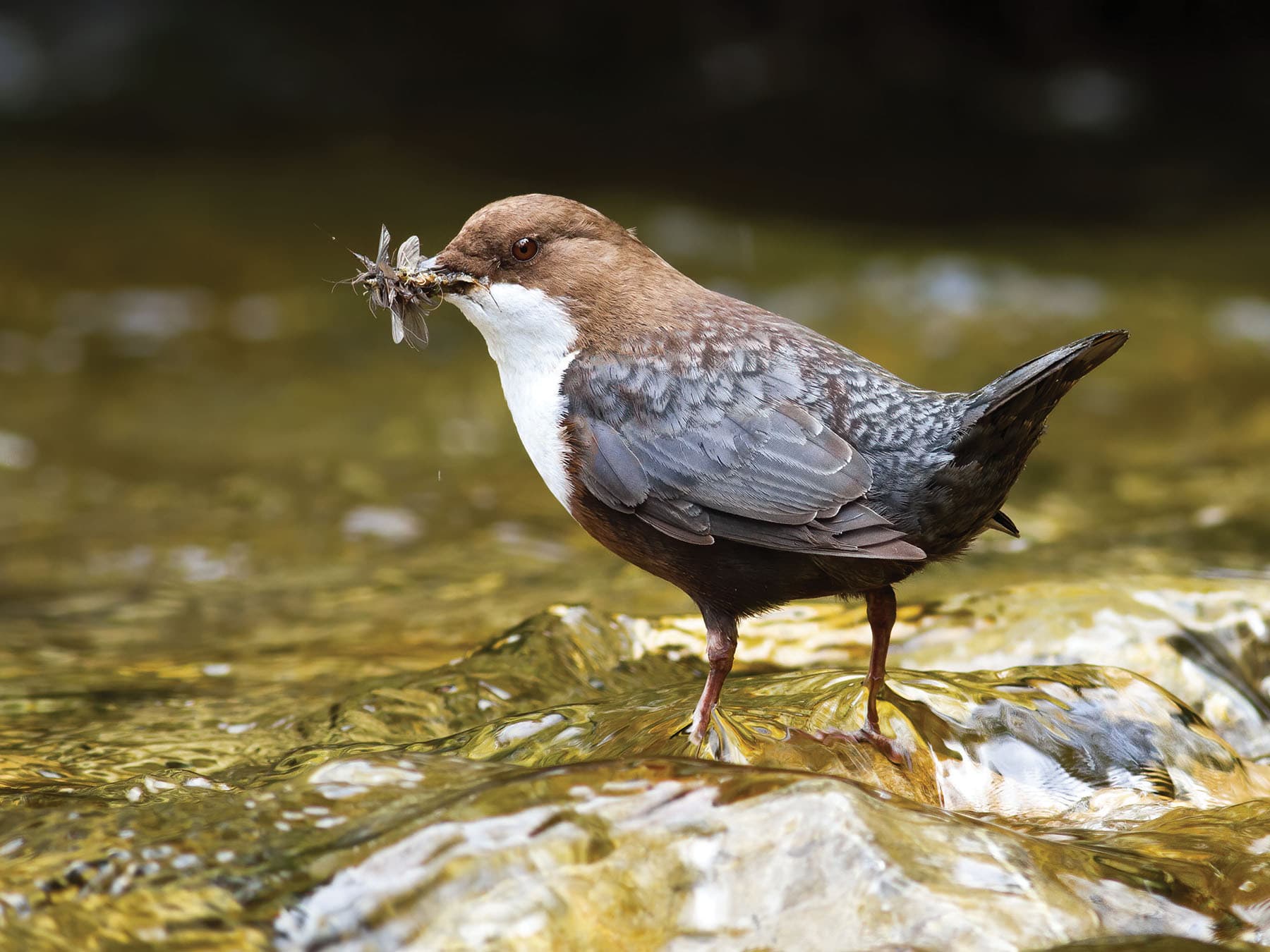
Dippers search for small aquatic insects and crustaceans on the riverbed. Their major prey items are caddisfly, dragonfly, mayfly, and stonefly nymphs, and they occasionally take small fish.
Their specialised diet prevents competition with other bird species in their preferred habitats and allows them to feed throughout the year, provided their stream does not freeze over.
What do Dipper chicks eat?
Dipper chicks eat the same food as their parents. The young first leave the nest after about three weeks and are fed for another week or two before gaining independence.
Nesting and breeding
Dippers are resident breeding birds in the United Kingdom. Pairs raise one or two broods each year, usually starting in early April.
Where do Dippers nest?
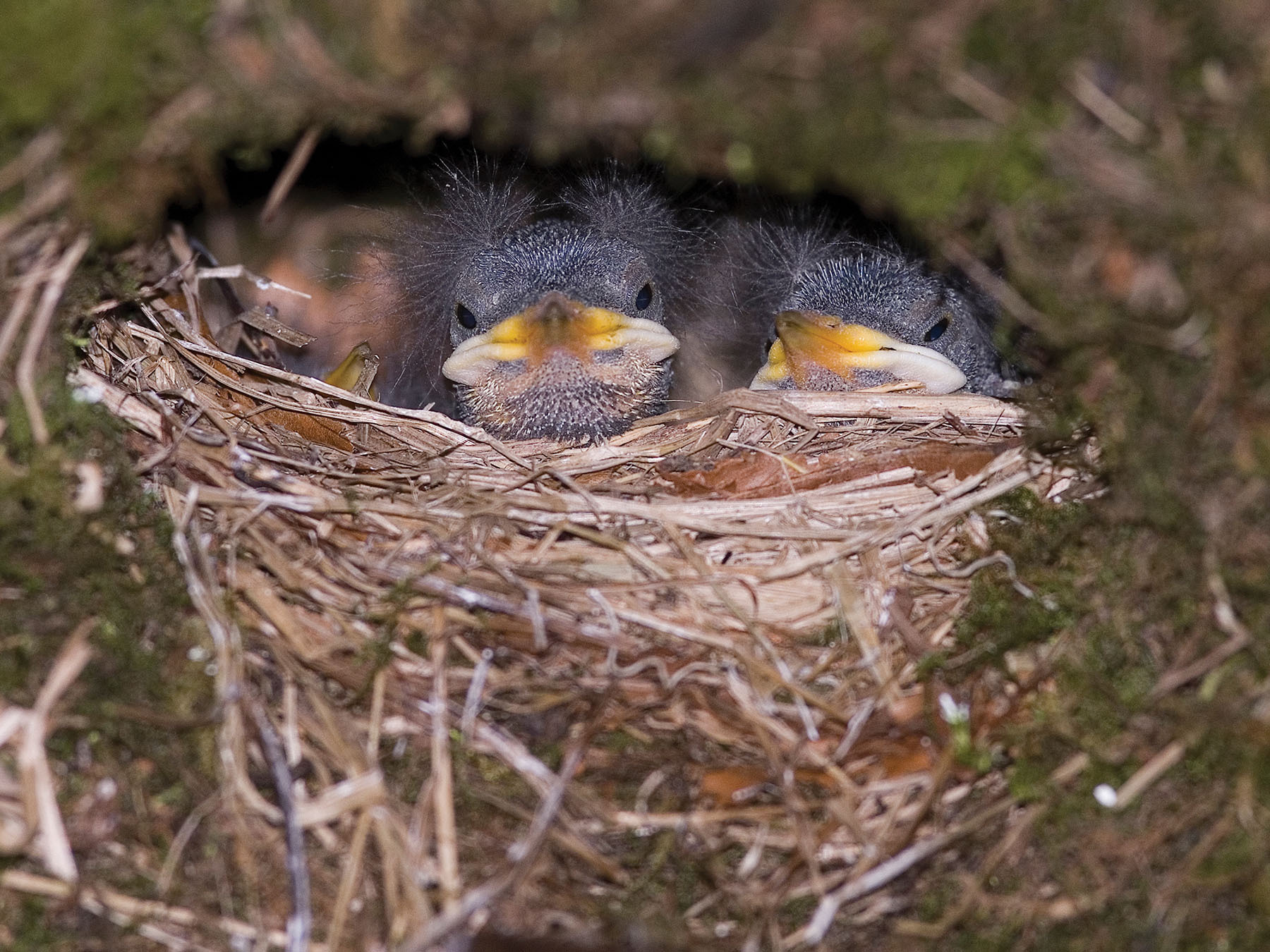
Dippers nest along streams in crevices, rock walls, behind waterfalls, and beneath bridges. They use the same sites year after year, although they rarely reuse old nests. The Dipper's nest is a large dome of moss and other vegetation with a side entrance.
What do Dipper eggs look like?
Dippers lay one or two clutches of four or five white eggs, each measuring approximately 26mm long and 19 millimetres wide.
Do Dippers mate for life?
Dippers are usually monogamous in the breeding season, although some males pair with more than one female.
Behaviour
Dippers are unique and fascinating birds to observe, particularly as they forage for food.
Are Dippers aggressive?
Dippers are highly territorial and will not hesitate to fight with one another to defend their limited habitats. However, they are known to let their guard down on cold winter nights when several birds may roost together in sheltered places like bridges.
Where do Dippers sleep at night?
Dippers roost in or near their nest sites. These sites are important areas within their territory, and some have even been used continuously by different birds for over a century.
Lifespan and predators
How long do Dippers live?
Dippers have a typical lifespan of about three years, although the oldest recorded specimen was eight years and nine months old.
What are the predators of Dippers?
Dippers could be preyed upon by various carnivores in their natural habitat. Female Sparrowhawks and Goshawks could take adults, while eggs and nestlings are vulnerable to corvids like Carrion Crows and mammals like rats, mink, and otters.
Are Dippers protected?
Dippers are protected by the Wildlife and Countryside Act of 1981.
Are Dippers endangered?
Dippers are not endangered. However, they have an amber conservation status in the United Kingdom due to a continued decline in breeding birds. The White-throated Dipper is listed as ‘Least Concern’ on the IUCN Red List.
Conservation
While the Dipper is currently listed as Least Concern, it faces threats from water pollution and habitat degradation. Conservation efforts focus on maintaining clean, healthy river systems and protecting riparian habitats. Climate change may also impact their distribution in the future.
Similar birds
Often mistaken for
More photos
5 photos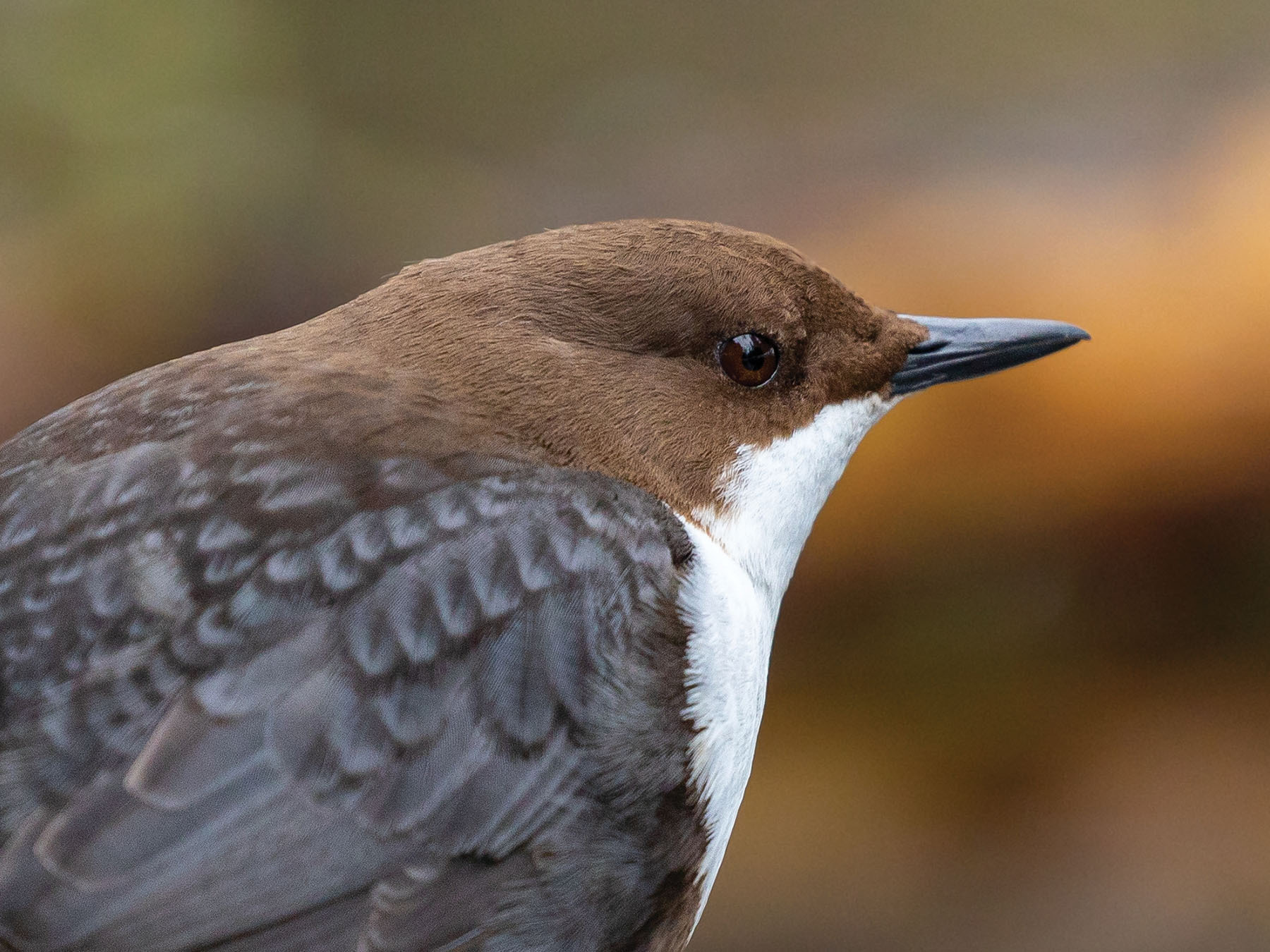
Quick facts
- Length
- 17–20 cm
- Wingspan
- 25–30 cm
- Weight
- 50–75 g
- Lifespan
- 7–10 years
- Family
- Dippers
- Migration
- Resident
- Global status (IUCN)
- Least Concern
- World population
- 740,000 - 1,700,000 mature individuals
- Population trend
- Decreasing
- Also called
- White-throated Dipper, European Dipper
- Scientific name
- Cinclus cinclus
Questions
4Why are they called Dippers?
Dippers take their name for their constant habit of bobbing their bodies up and down while perched. We don’t know exactly why they perform this seemingly energy-wasting activity, although some suggest it may signal health and vitality to their predators and competitors.
Is a Dipper a songbird?
Dippers are the United Kingdom’s only aquatic songbird. They belong to the order Passeriformes and the suborder Passeri, which includes the singing perching birds.
What kind of bird is a Dipper?
The Dipper is an aquatic songbird, one of just five species in the Cinclidae family.
What is a group of Dippers called?
Known collective nouns for a group of Dippers are as follows:
- a ladle of dippers
Sources
3- 1BirdLife International. 2018. Cinclus cinclus. The IUCN Red List of Threatened Species 2018: e.T22708156A131946814. Source (opens in a new tab)
- 2BirdLife International. 2018. Cinclus cinclus. The IUCN Red List of Threatened Species 2018: e.T22708156A131946814. Source (opens in a new tab)
- 3BirdLife International. 2018. Cinclus cinclus. The IUCN Red List of Threatened Species 2018: e.T22708156A131946814. Source (opens in a new tab)

Checked by
Nathan Cope, founder and editor
Nathan founded Birdfact and leads its writers and contributors in the UK, the US and Canada. He has watched and studied birds for more than ten years, and checks every article and species guide before it’s published.