


Citril Finch
Alpine Citril Finch · Carduelis citrinella
By the Birdfact teamChecked by Nathan Cope
On this page12 sections
How to recognise it
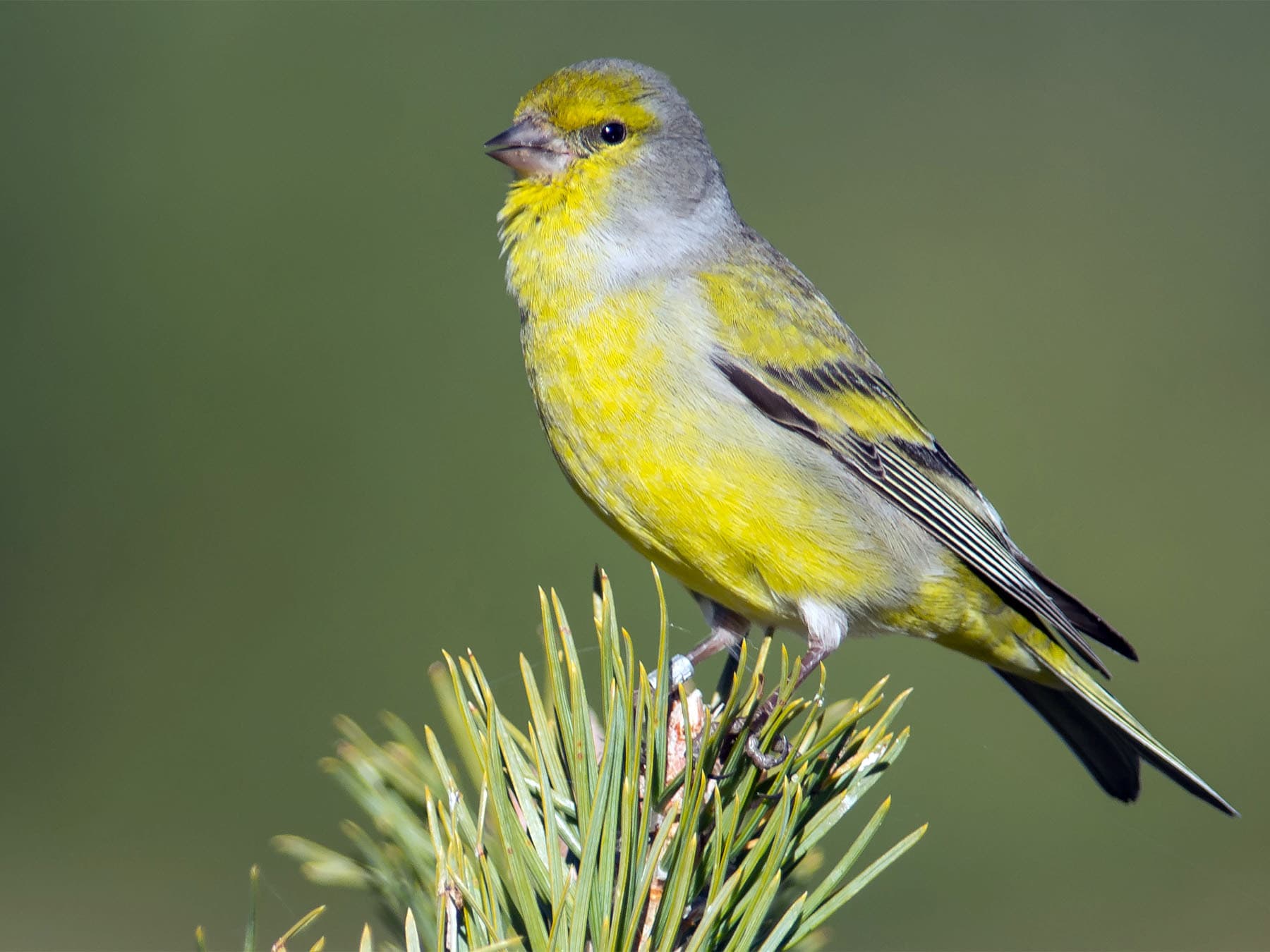
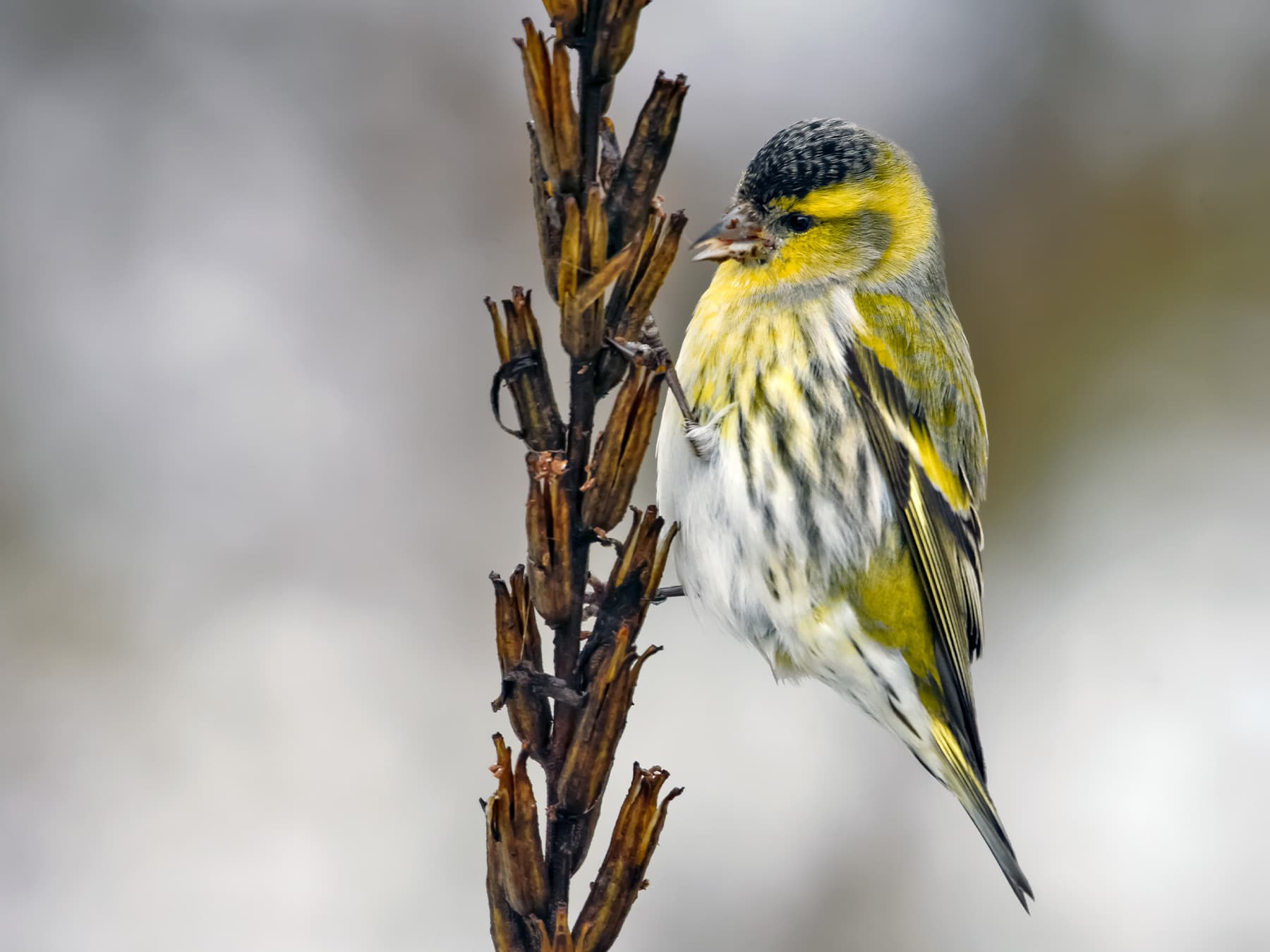
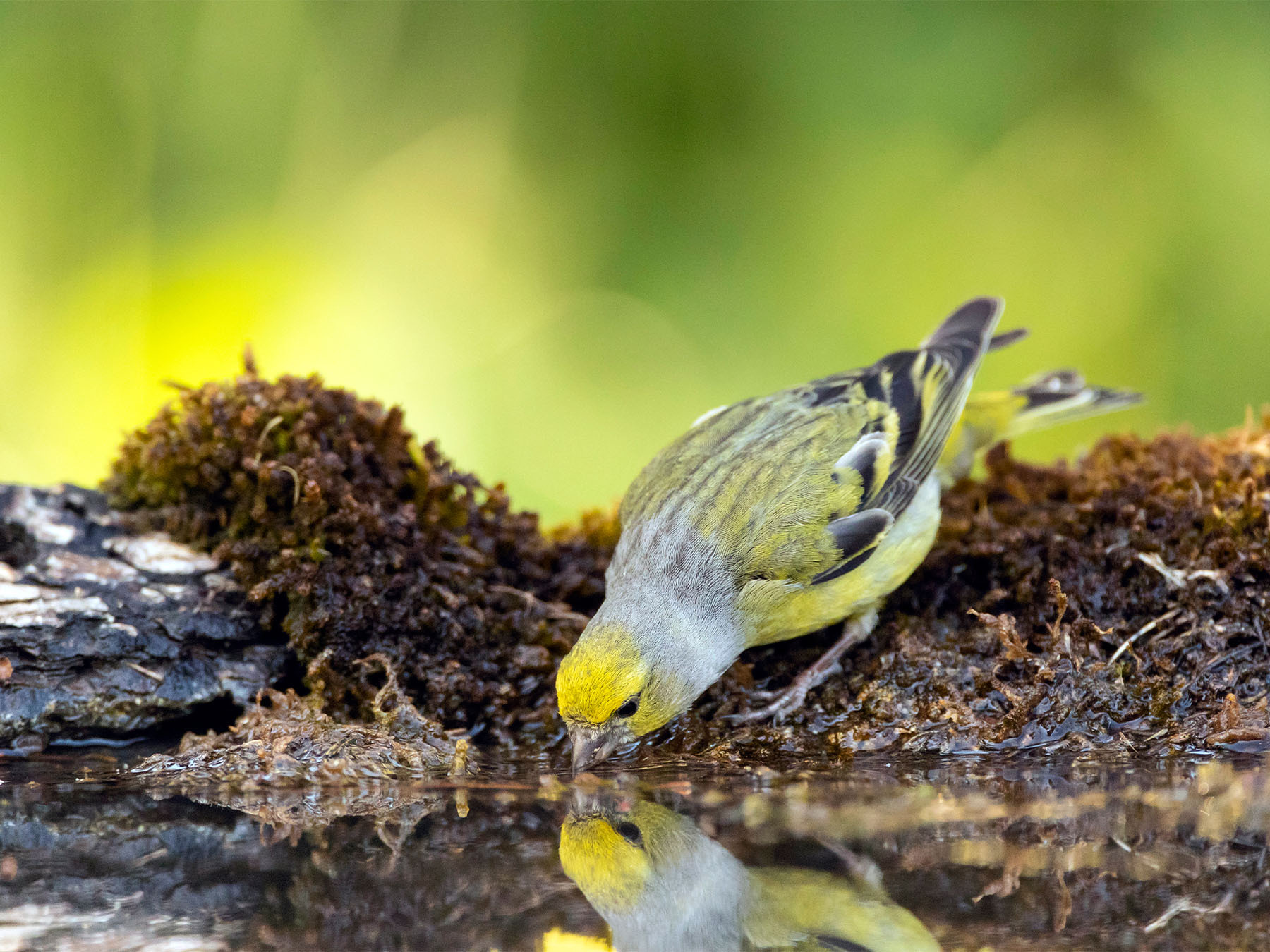
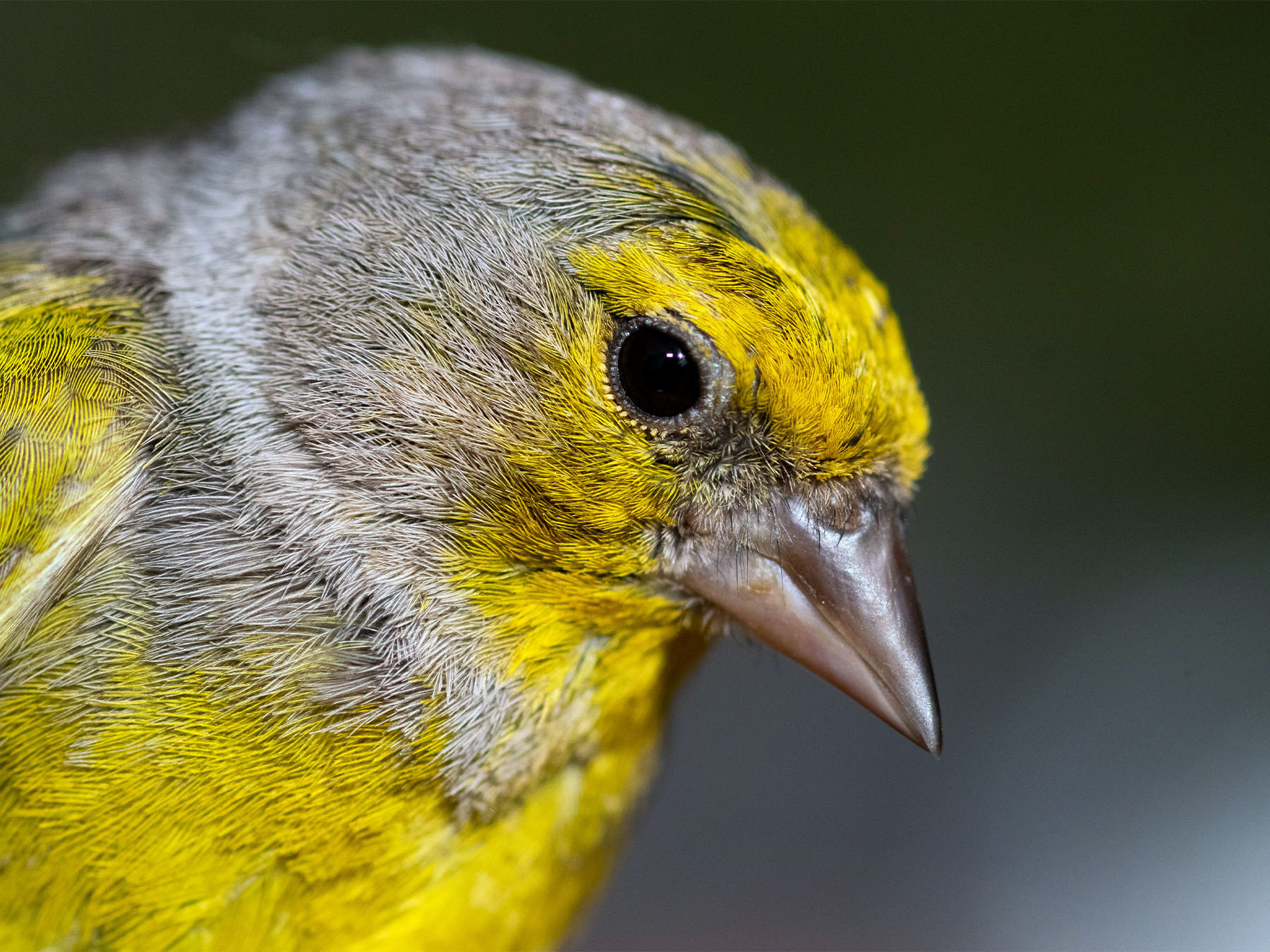
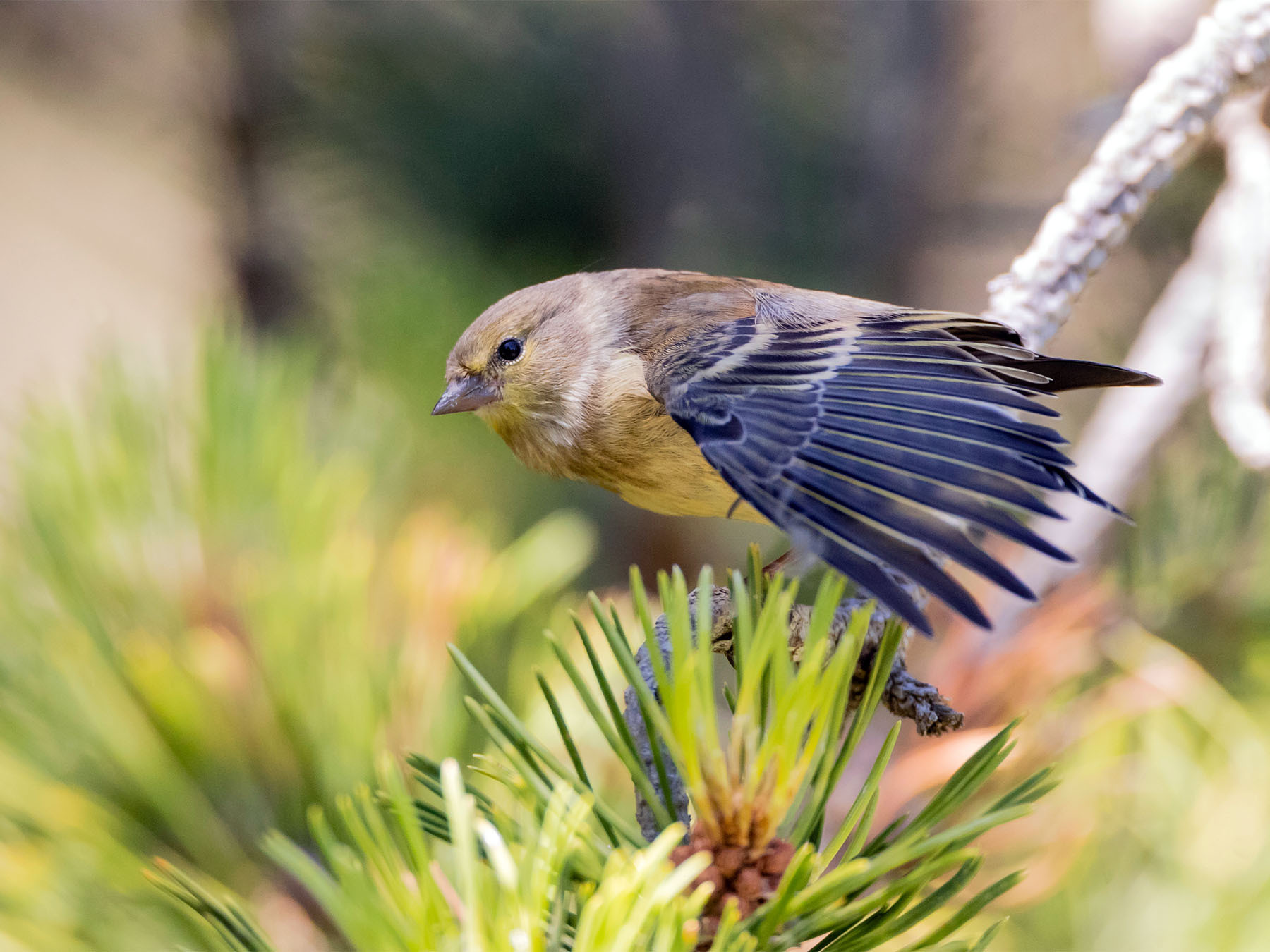
The Citril Finch is a small, vibrant finch with a distinctive greenish-yellow plumage. Its body is primarily olive-green, brightened by a yellow rump and breast. The wings and tail feature dark feathers edged with yellow, creating a striking pattern.
Males are more brightly coloured than females, with a more intense yellow on the face and underparts. Juveniles resemble females but have streaked underparts. The bird's appearance remains consistent year-round, with no significant seasonal changes.
Its size
Adults- Length
- 12–13 cm
- Wingspan
- 22–26 cm
- Weight
- 11–14 g
Its song and calls
The Citril Finch's song is a pleasant, high-pitched warbling trill, often described as 'tsi-tsi-tsi-tsrrrrr'. Their call is a sharp, metallic 'tsit' or 'tswit', frequently given in flight.
During courtship, males produce a more elaborate and continuous version of their song.
- Song0:00 / 0:48
Recorded in Bern, Switzerland · June 2023
- Call0:00 / 0:16
Recorded in Lombardy, Italy · January 2023
When and where to see it
The Citril Finch is not recorded regularly in the UK, Ireland, the United States or Canada.
Worldwide: recorded regularly in 7 countries
Countries where it was recorded in at least 3 of the 6 years 2019–2024. Linked countries have their own bird list.
Data: EOD – eBird Observation Dataset (Cornell Lab of Ornithology), accessed via GBIF.org, CC BY 4.0. Records from 2019–2024, aggregated and filtered by Birdfact. How these lists are made
Tips for seeing it
- Look for Citril Finches in high-altitude coniferous forests and alpine meadows
- Listen for their distinctive trilling call, which can help locate them in dense vegetation
- Observe their feeding behaviour on conifer cones and seed heads of plants
- Visit suitable habitats in the Alps or Pyrenees during the summer months for the best chances of sighting
What it eats
The Citril Finch primarily feeds on small seeds from conifers, especially spruce and pine. They also consume seeds from various plants, such as dandelions and thistles.
During the breeding season, they supplement their diet with small insects and spiders, particularly when feeding their young.
Nesting and breeding
Breeding season for Citril Finches typically begins in late April or early May. Males perform courtship displays, including singing and aerial chases, to attract females. Pairs form monogamous bonds for the breeding season.
Nests are built by the female, usually in conifer trees, well-concealed among dense branches. The nest is a compact cup made of twigs, grass, and moss, lined with feathers and plant down. The female lays 3-5 pale blue eggs with dark spots.
Incubation lasts about 13 days, primarily carried out by the female. Both parents feed the nestlings, which fledge after approximately 15-17 days. Pairs may raise two broods in a season if conditions are favourable.
Behaviour
Citril Finches are social birds, often seen in small flocks outside the breeding season. They have an agile flight pattern, characterised by undulating movements.
When foraging, they skilfully cling to conifer cones and branches, extracting seeds with their specialised beaks.
Conservation
While the Citril Finch is currently listed as Least Concern, it faces potential threats from climate change affecting its alpine habitats.
Conservation efforts focus on preserving high-altitude coniferous forests and monitoring population trends in response to environmental changes.
Similar birds
Often mistaken for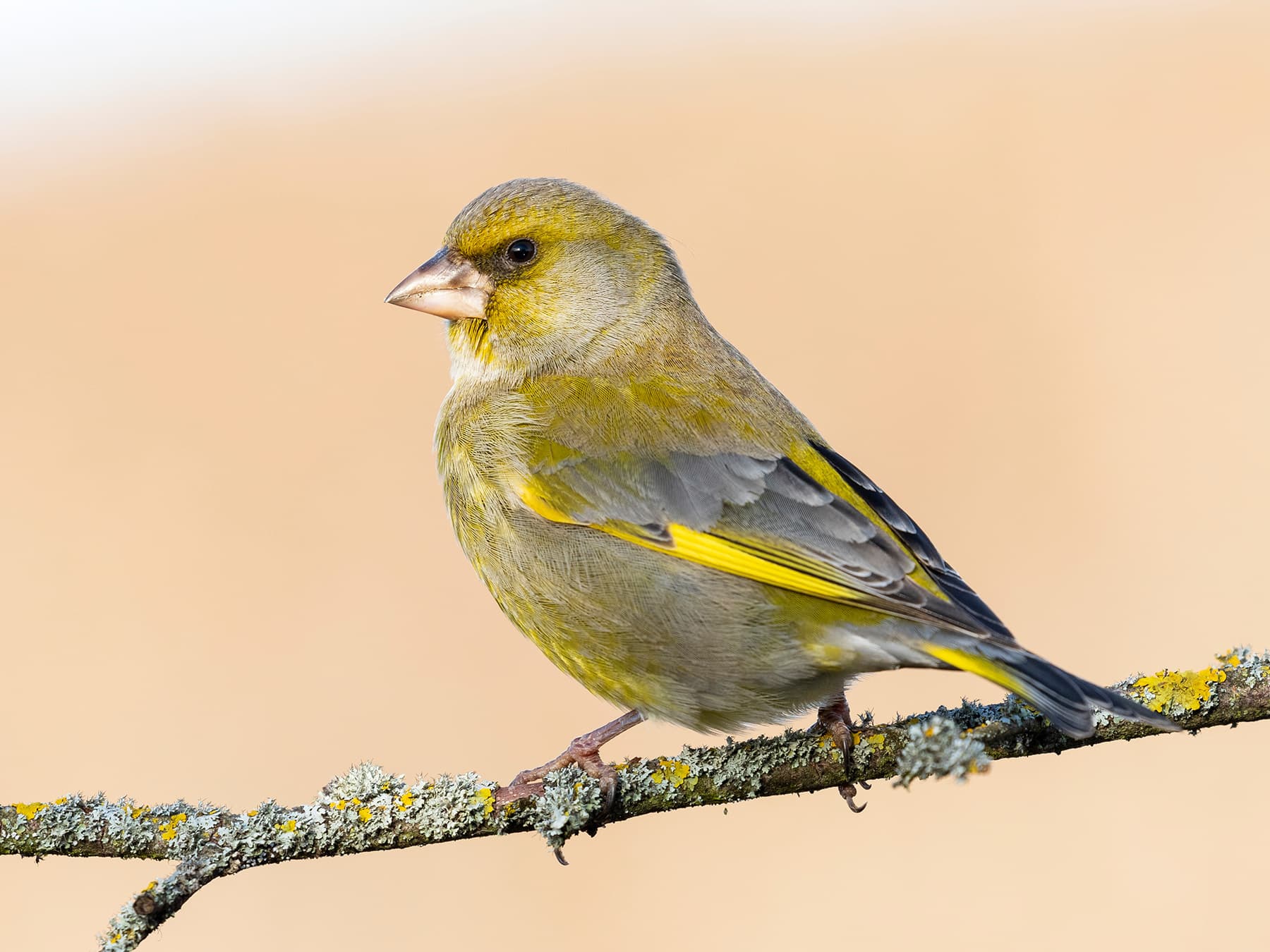
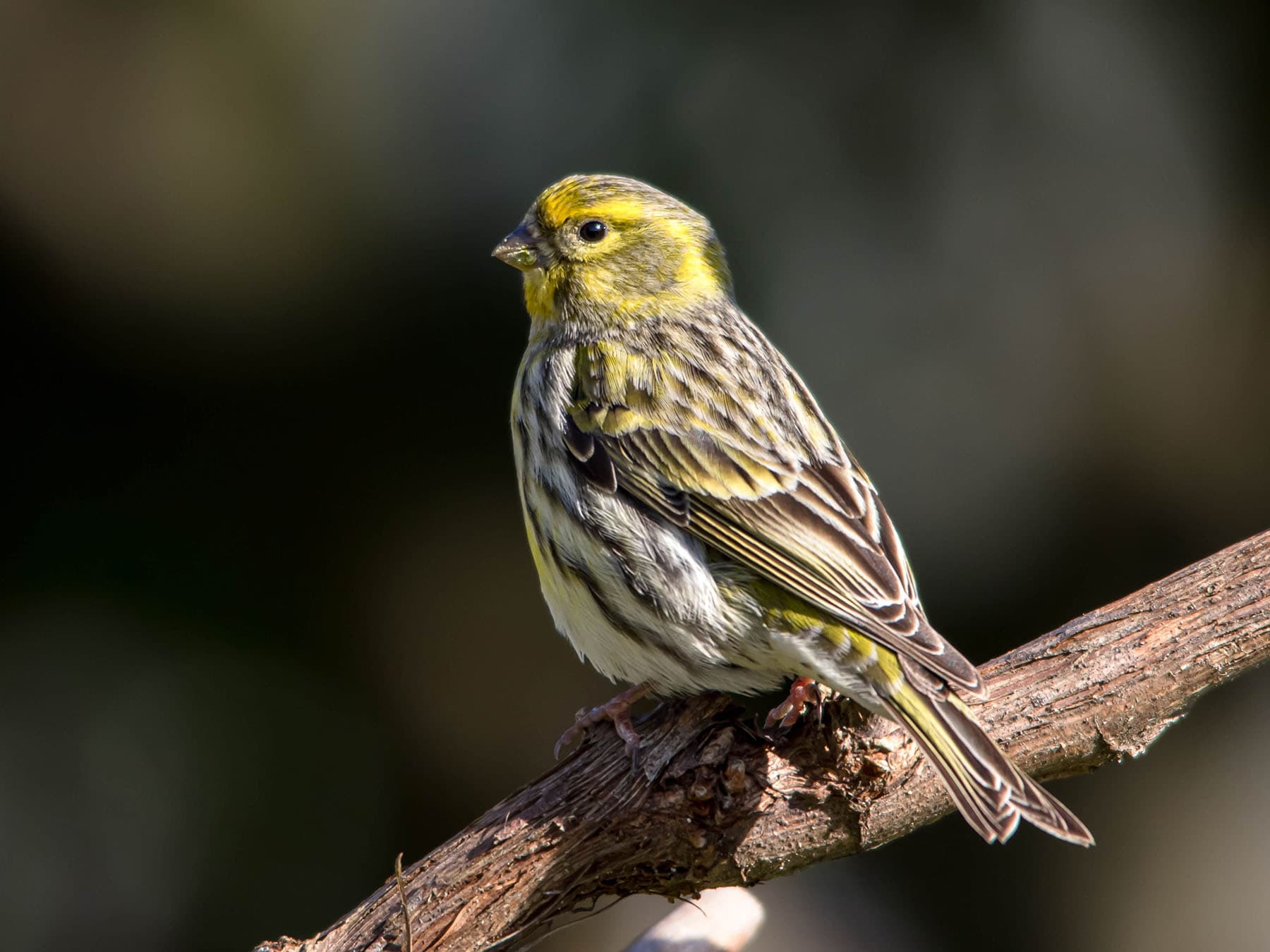
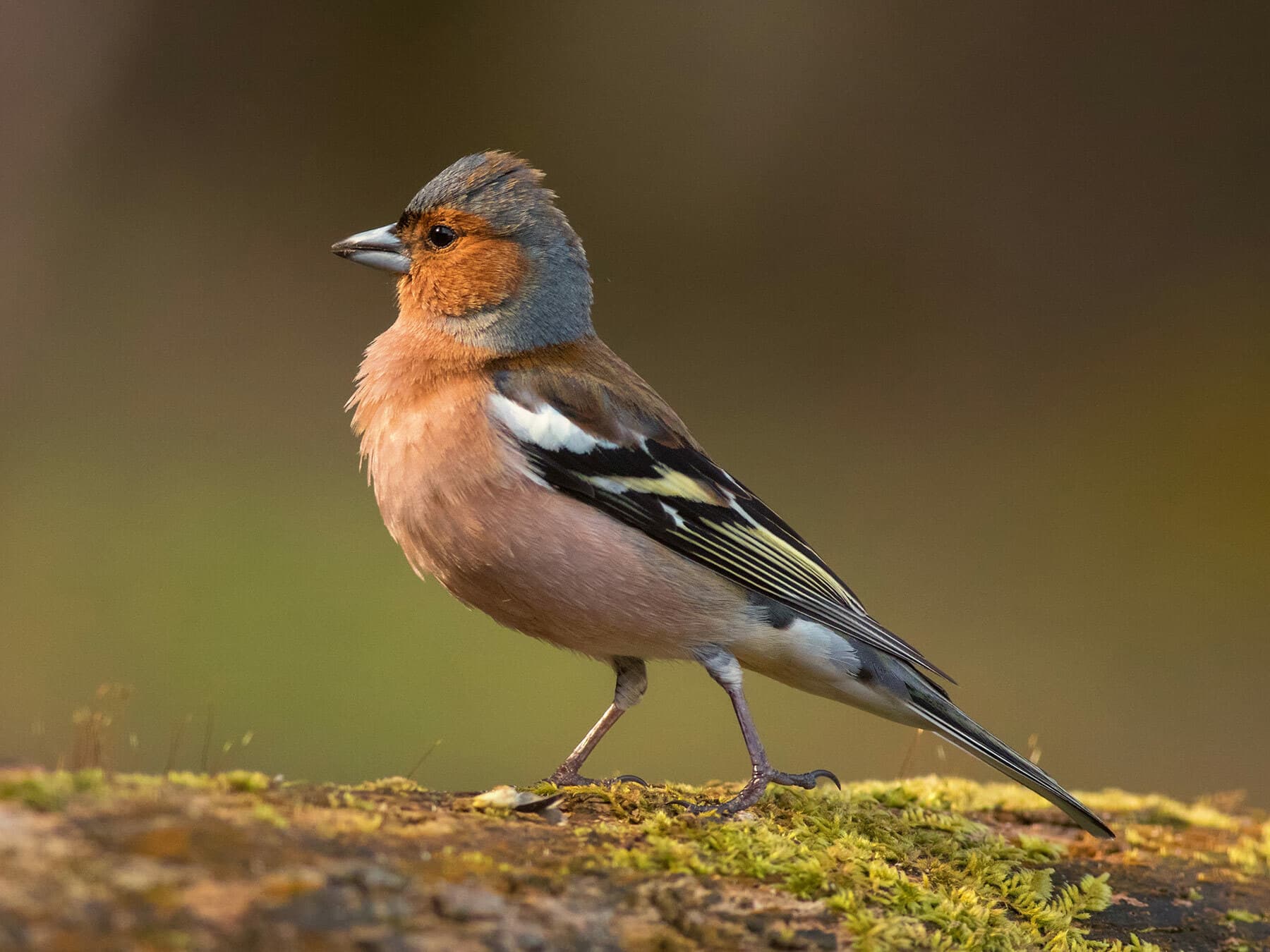
More photos
4 photos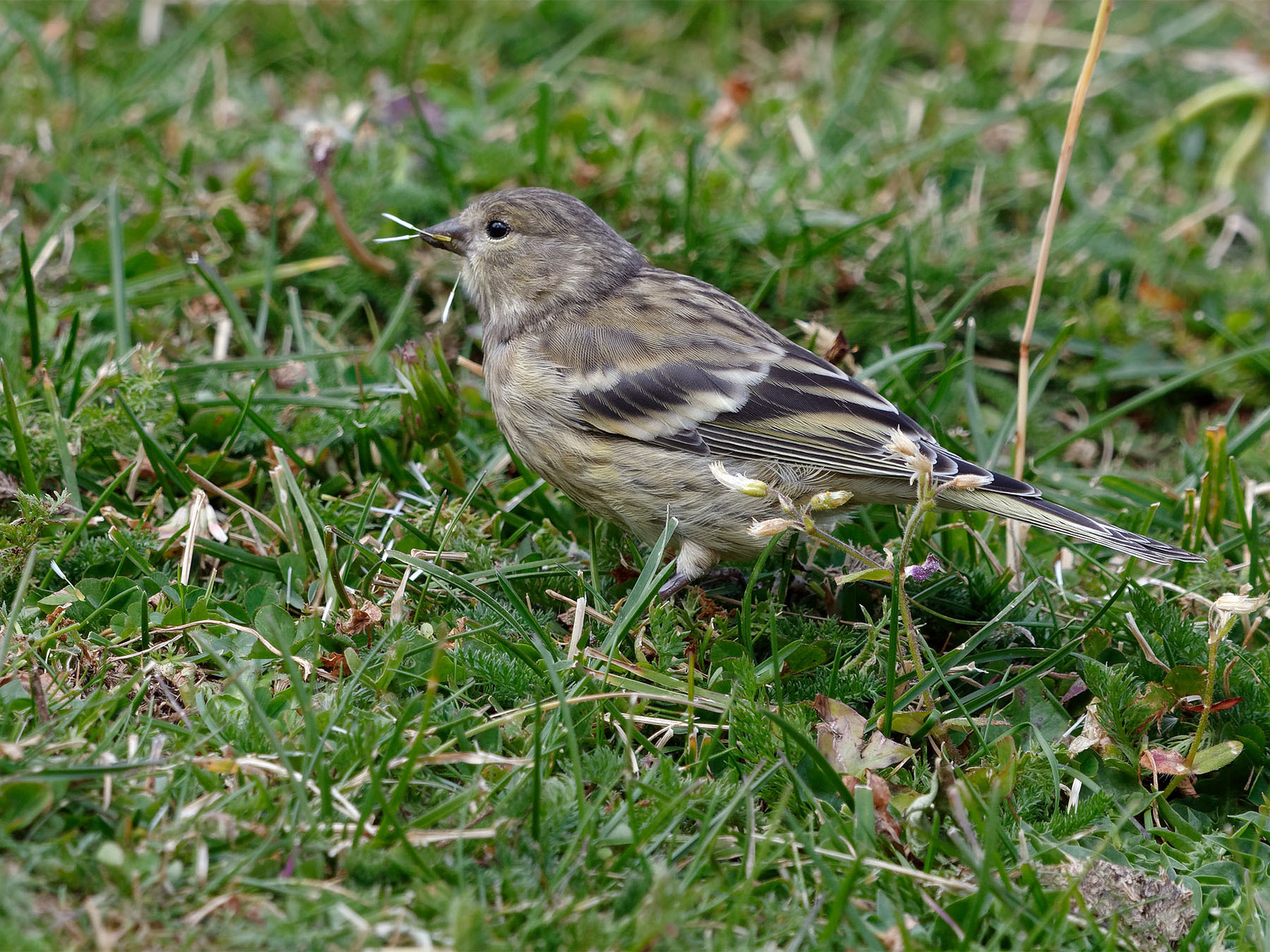
Quick facts
- Length
- 12–13 cm
- Wingspan
- 22–26 cm
- Weight
- 11–14 g
- Lifespan
- 5 years · oldest recorded 5.7 years
- Family
- Finches
- Migration
- Partial migrant
- Global status (IUCN)
- Least Concern
- World population
- 500,000 - 565,000 mature individuals
- Population trend
- Decreasing
- Also called
- Alpine Citril Finch
- Scientific name
- Carduelis citrinella
Sources
4- 1BirdLife International. 2017. Carduelis citrinella (amended version of 2016 assessment). The IUCN Red List of Threatened Species 2017: e.T22720062A111124877. Source (opens in a new tab)
- 2BirdLife International. 2017. Carduelis citrinella (amended version of 2016 assessment). The IUCN Red List of Threatened Species 2017: e.T22720062A111124877. Source (opens in a new tab)
- 3BirdLife International. 2017. Carduelis citrinella (amended version of 2016 assessment). The IUCN Red List of Threatened Species 2017: e.T22720062A111124877. Source (opens in a new tab)
- 4Moller, Sociality, age at first reproduction and senescence: comparative analyses of birds, J Evol Biol, 19:682-689 (2006) Source (opens in a new tab)

Checked by
Nathan Cope, founder and editor
Nathan founded Birdfact and leads its writers and contributors in the UK, the US and Canada. He has watched and studied birds for more than ten years, and checks every article and species guide before it’s published.