


Bobolink
Ricebird, Butterbird, Skunk Blackbird · Dolichonyx oryzivorus
By the Birdfact teamChecked by Nathan Cope
On this page11 sections
How to recognise it
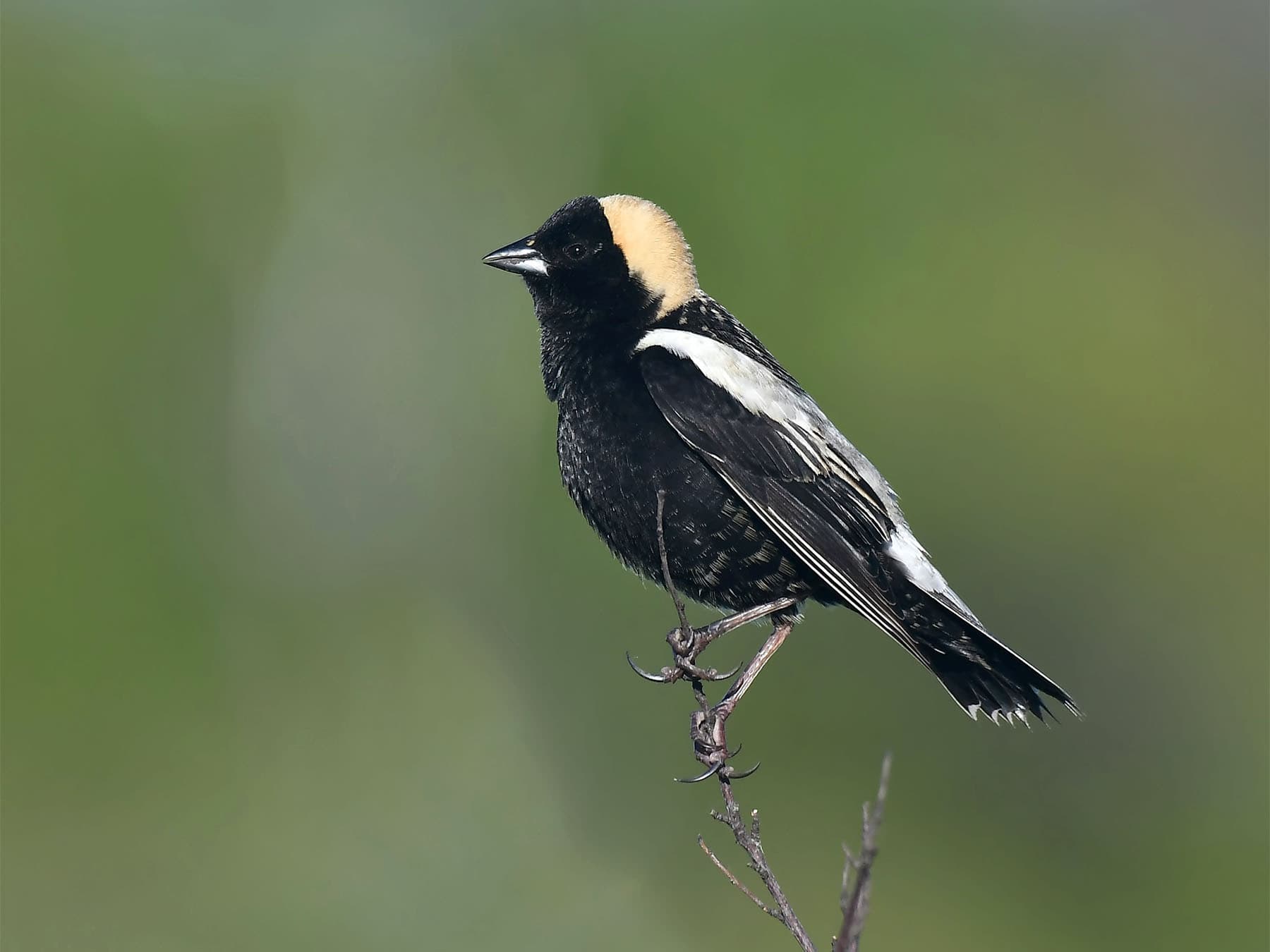
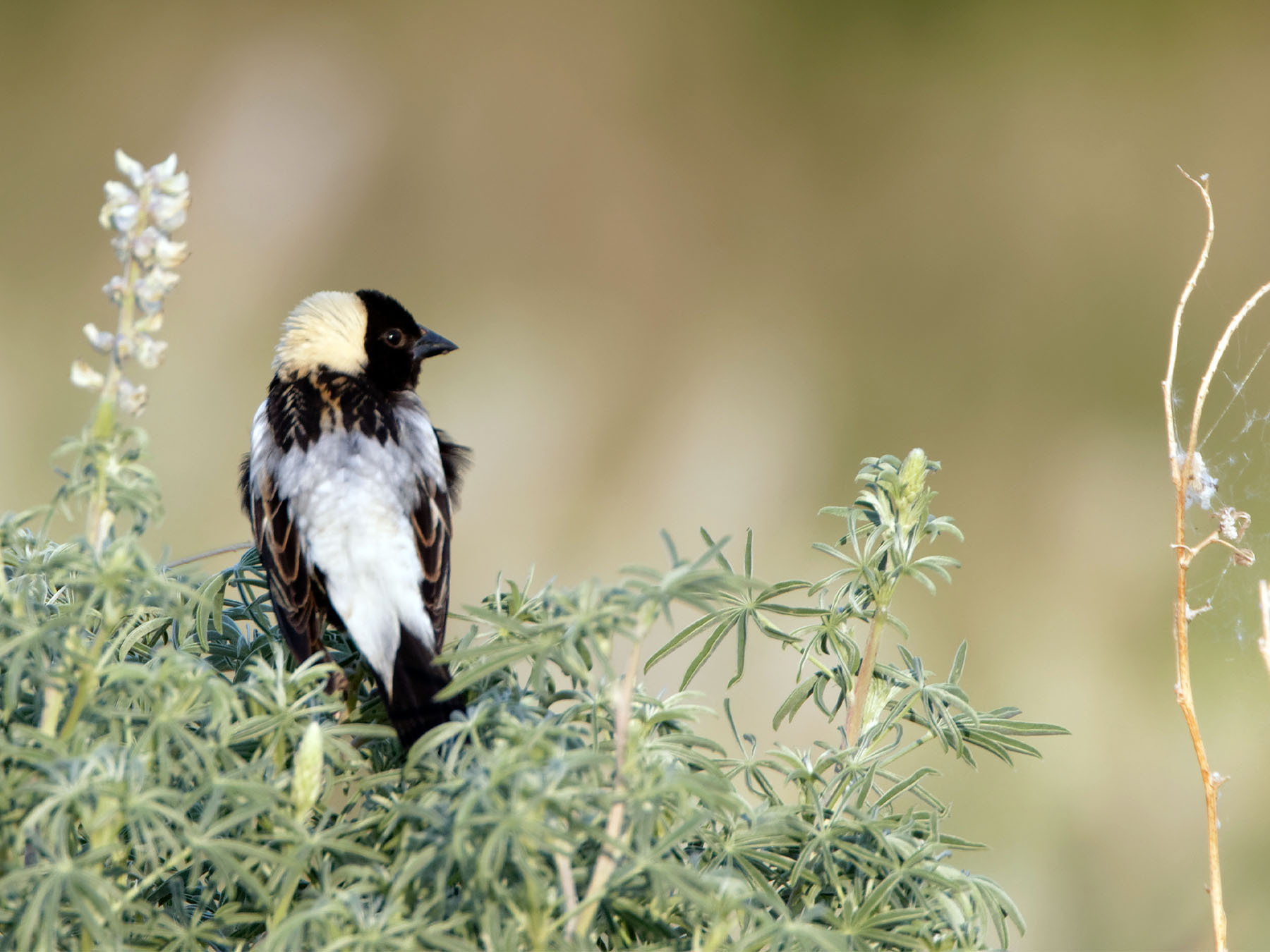
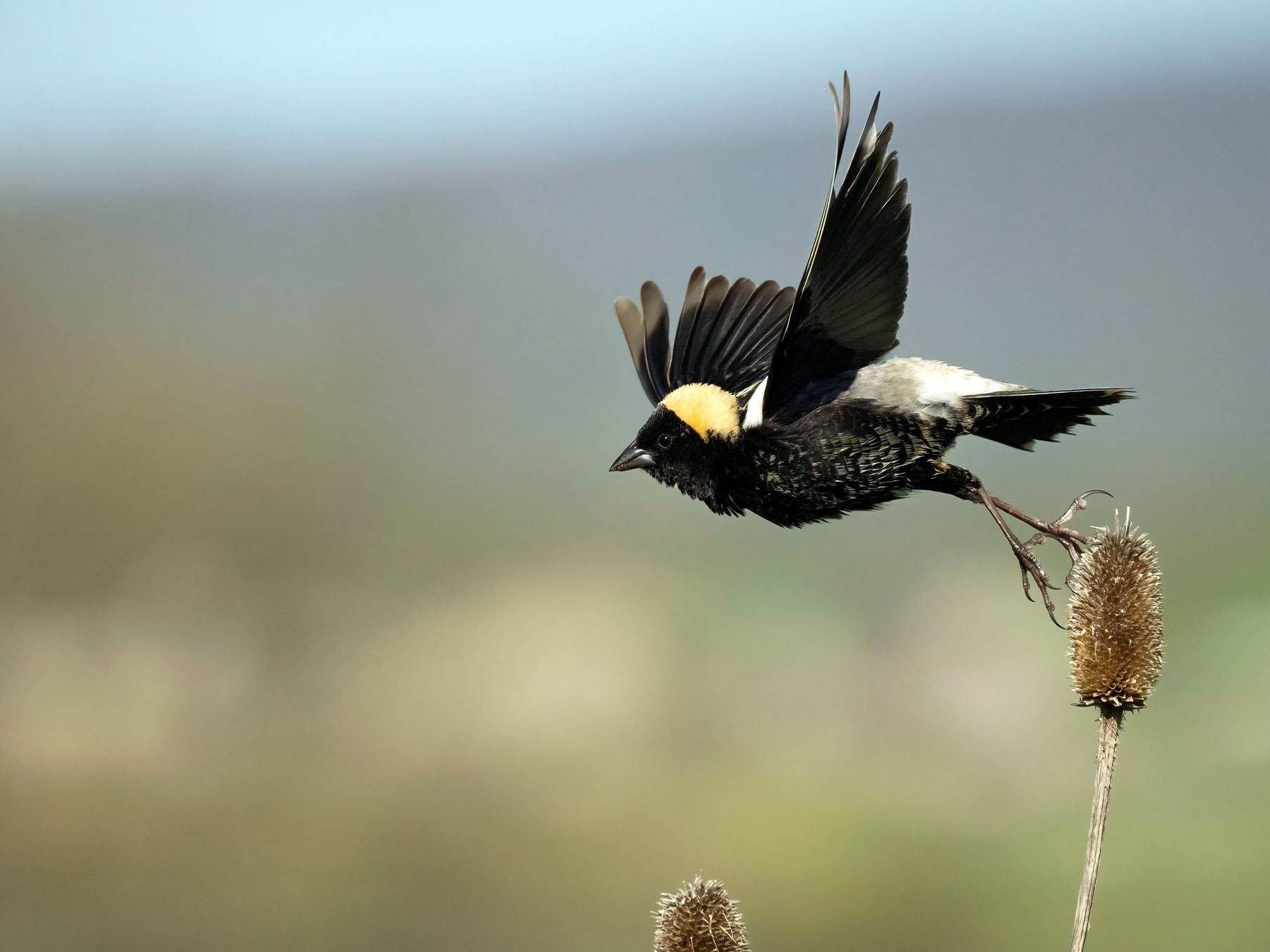
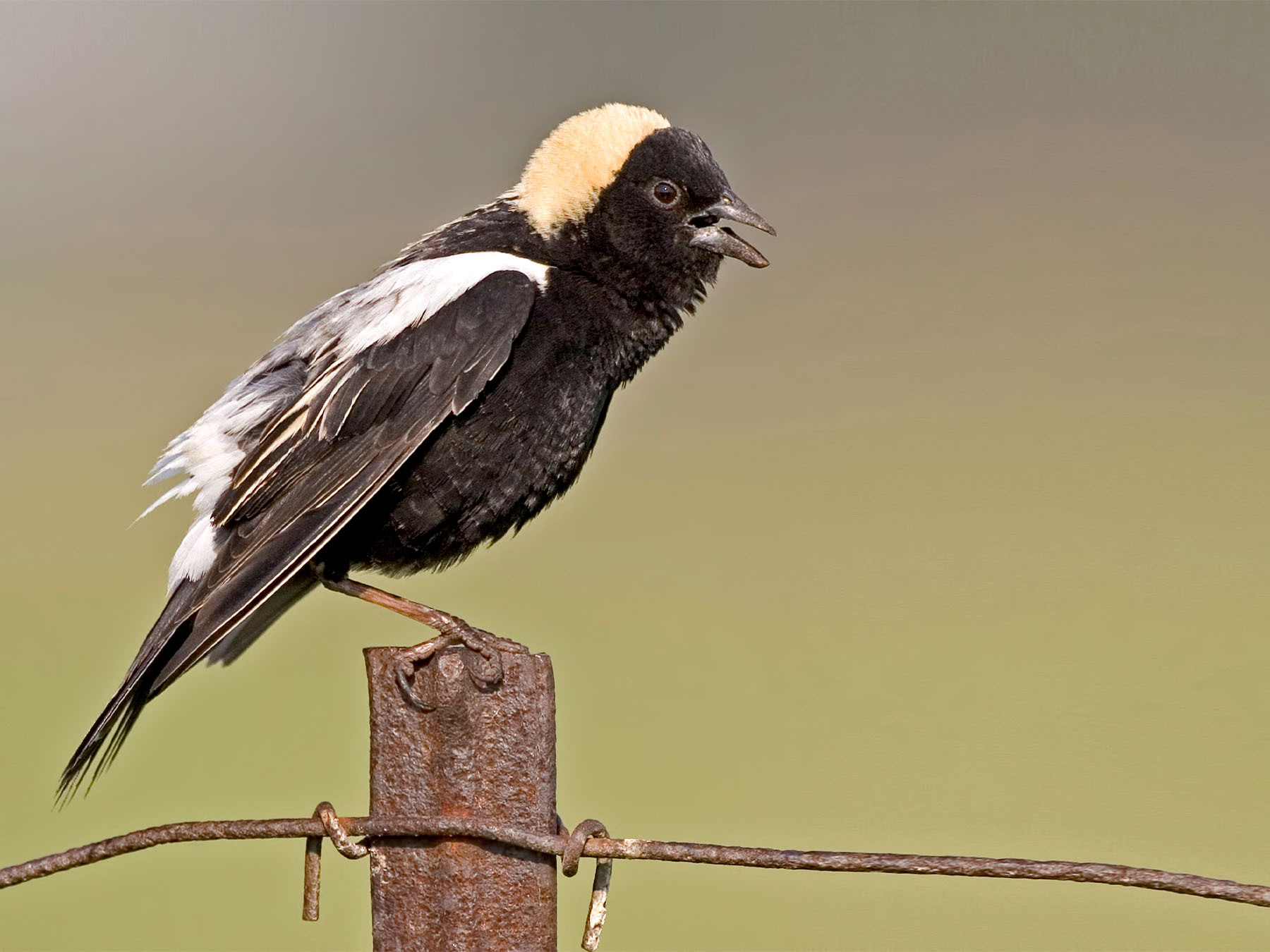
The Bobolink is a small songbird with a unique appearance. Breeding males display a bold black plumage with white shoulders and back and a distinctive buff-yellow patch on the nape (back of the head). Their bill is short and conical, and dark in color during the breeding season.
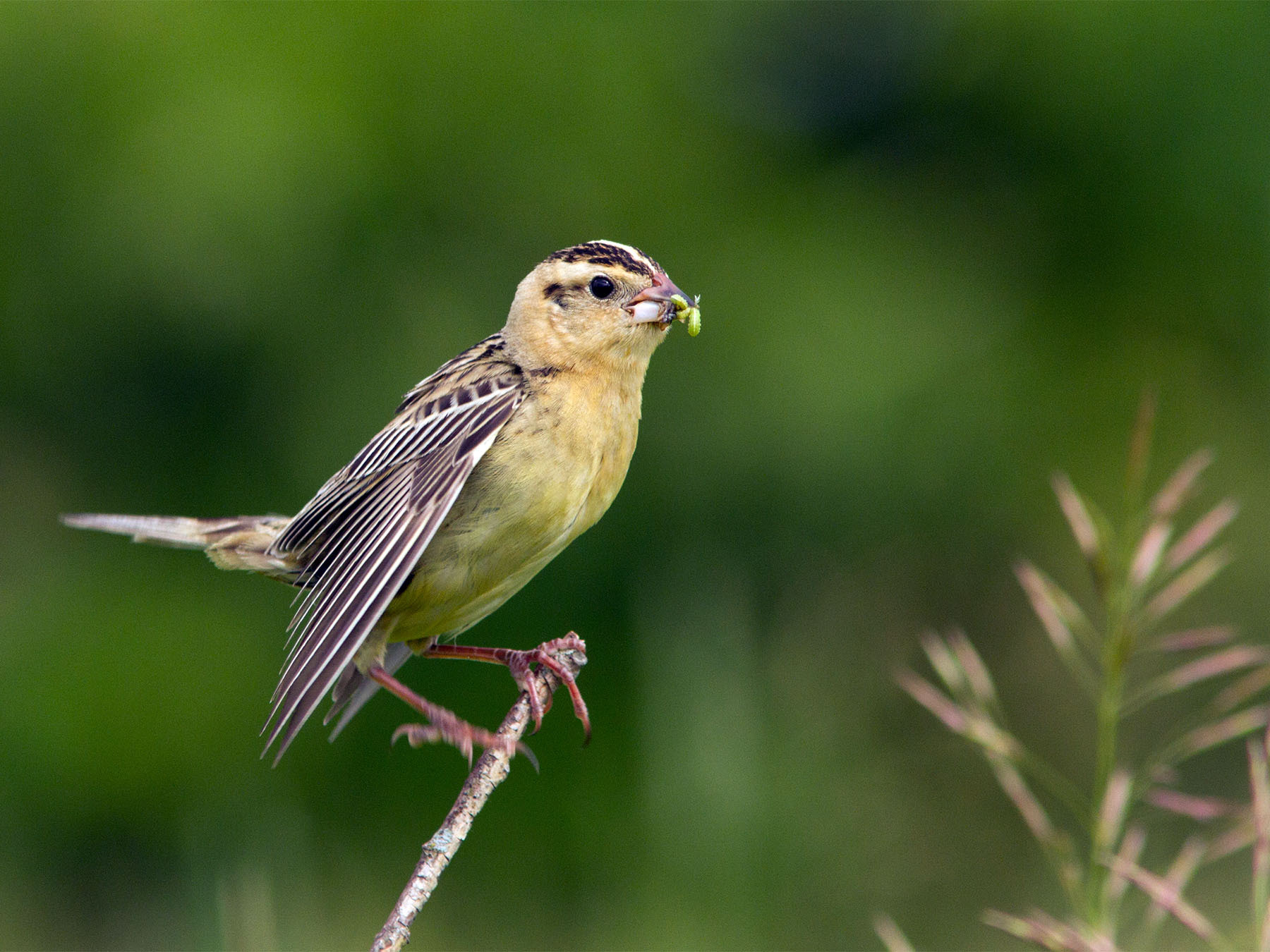
Females and winter males are more subdued, with light brown feathers streaked with darker brown, resembling large sparrows. They have a distinctive pale stripe on the crown (top of the head) bordered by darker stripes, and their bill is pale in color.
Its size
Adults- Length
- 16–20 cm
- Wingspan
- 25–30 cm
- Weight
- 29–56 g
Its song and calls
The Bobolink's song is a unique, bubbling cascade of notes often described as 'bob-o-link' or 'bink, bink, bobolink'.
Males sing enthusiastically during the breeding season, both while perched and in flight. Their call is a sharp 'pink' or 'chink' sound, often heard in flocks.
- Song0:00 / 0:31
Recorded in Wisconsin, United States · May 2025
When and where to see it
OctoberLeaving
Most recorded in October
- 1. New Jersey0.11%
- 2. Rhode Islandunder 0.1%
- 3. Connecticutunder 0.1%
- 4. New Hampshireunder 0.1%
- 5. Massachusettsunder 0.1%
Each dot is a county, state or province: the bigger and darker, the larger the bird’s share of that place’s bird records that month. Grey dots: no regular records. The ringed point is the centre of the bird’s records this month; the arrow shows how it moved since last month, and the dashed loop its path through the year. “Arrivals” colours places where it becomes regular this month (orange) or is in its last regular month (grey). GBIF eBird Observation Dataset, 2019–2024. Map data: Natural Earth, US Census Bureau; place centres © OpenStreetMap contributors.
In your area
See when the Bobolink is recorded in your county, state or province.
How often the Bobolink turns up in the United States and Canada through the year, from birdwatchers' records.
United States
Summer visitor · regularly Apr–Oct · most records in June
Canada
Summer visitor · regularly May–Sep · most records in June
Show as a table
| Month | United States | Canada |
|---|---|---|
| January | <0.001% | – |
| February | <0.001% | – |
| March | <0.001% | <0.001% |
| April | 0.012% (regular) | <0.001% |
| May | 0.13% (regular) | 0.21% (regular) |
| June | 0.16% (regular) | 0.32% (regular) |
| July | 0.068% (regular) | 0.12% (regular) |
| August | 0.072% (regular) | 0.094% (regular) |
| September | 0.081% (regular) | 0.033% (regular) |
| October | 0.023% (regular) | 0.004% |
| November | <0.001% | <0.001% |
| December | <0.001% | – |
Worldwide: recorded regularly in 28 countries
Countries where it was recorded in at least 3 of the 6 years 2019–2024. Linked countries have their own bird list.
North America (20)
- Aruba
- Bahamas
- Barbados
- Belize
- Bermuda
- Canada
- Caribbean Netherlands
- Cayman Islands
- Costa Rica
- Cuba
- Curaçao
- Grenada
- Guadeloupe
- Honduras
- Mexico
- Panama
- Puerto Rico
- Trinidad & Tobago
- Turks & Caicos Islands
- United States
Data: EOD – eBird Observation Dataset (Cornell Lab of Ornithology), accessed via GBIF.org, CC BY 4.0. Records from 2019–2024, aggregated and filtered by Birdfact. How these lists are made
Tips for seeing it
- Look for Bobolinks in open grasslands and hayfields during the breeding season
- Listen for their distinctive bubbling song, often given in flight
- Observe early morning or late afternoon when they're most active
- In the US, watch for large flocks during spring and fall migration
What it eats
Bobolinks are primarily granivorous, feeding on seeds of grasses and weeds. During the breeding season, they supplement their diet with insects, including grasshoppers, caterpillars, and beetles.
In rice-growing regions, they may feed on cultivated grains, leading to their nickname 'ricebird'.
Nesting and breeding
Bobolinks breed once annually, typically from May to July. Males perform elaborate flight displays to attract females, singing their bubbling song while hovering over territories.
Females construct cup-shaped nests on the ground, hidden in dense vegetation. They lay 5-7 eggs, which are pale gray to reddish brown with dark blotches.
Incubation lasts about 11-13 days, performed solely by the female. Both parents feed the nestlings, which fledge after 10-14 days but remain dependent on adults for another 1-2 weeks.
Behaviour
Bobolinks are known for their bubbly, tinkling song delivered during hovering flight displays over their territories. They often perch on tall grass stems or fence posts.
During migration, they form large flocks, sometimes numbering in the thousands, and can be seen feeding in rice fields or grasslands.
Conservation
While currently listed as Least Concern, Bobolink populations have declined significantly due to habitat loss and agricultural practices.
Conservation efforts focus on preserving grasslands and promoting bird-friendly farming methods, particularly in their breeding grounds across North America.
More photos
5 photos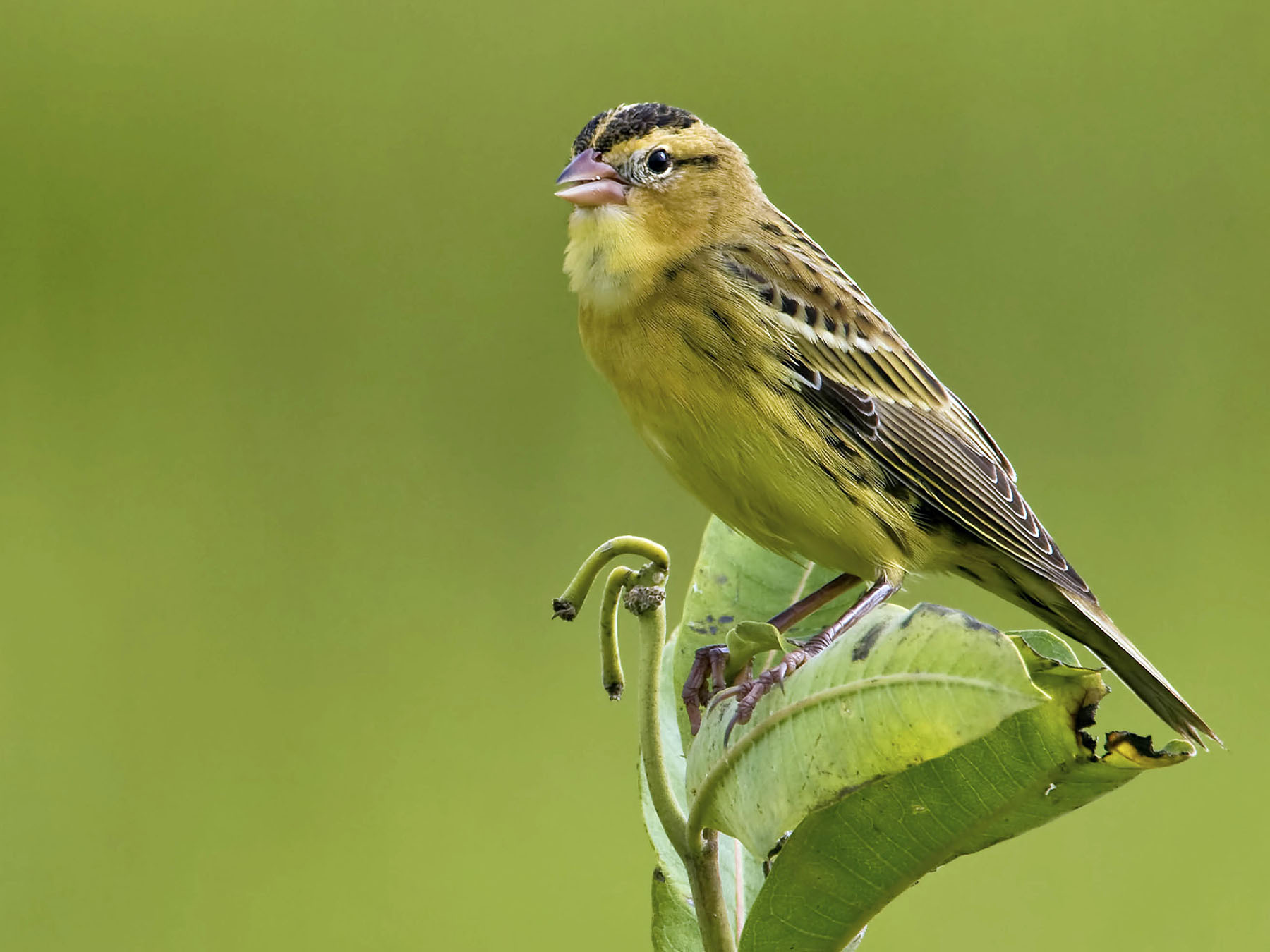
Quick facts
- Length
- 16–20 cm
- Wingspan
- 25–30 cm
- Weight
- 29–56 g
- Lifespan
- 4–5 years · oldest recorded 9 years
- Family
- New World Blackbirds
- Migration
- Long-distance Migrant
- Global status (IUCN)
- Least Concern
- World population
- 10,000,000 mature individuals
- Population trend
- Decreasing
- Also called
- Ricebird, Butterbird, Skunk Blackbird
- Scientific name
- Dolichonyx oryzivorus
Sources
4- 1BirdLife International. 2016. Dolichonyx oryzivorus. The IUCN Red List of Threatened Species 2016: e.T22724367A94863313. Source (opens in a new tab)
- 2data from Breeding Bird Survey and/or Christmas Bird Count: Butcher and Niven (2007)
- 3Partners in Flight (2020) Source (opens in a new tab)
- 4Carey and Judge, Longevity Records: Life Spans of Mammals, Birds, Amphibians, Reptiles, and Fish (2000)

Checked by
Nathan Cope, founder and editor
Nathan founded Birdfact and leads its writers and contributors in the UK, the US and Canada. He has watched and studied birds for more than ten years, and checks every article and species guide before it’s published.