


Arctic Tern
Sea Swallow, Arctic Sea Tern · Sterna paradisaea
By the Birdfact teamChecked by Nathan Cope
On this page15 sections
How to recognise it
What do Arctic Terns look like?
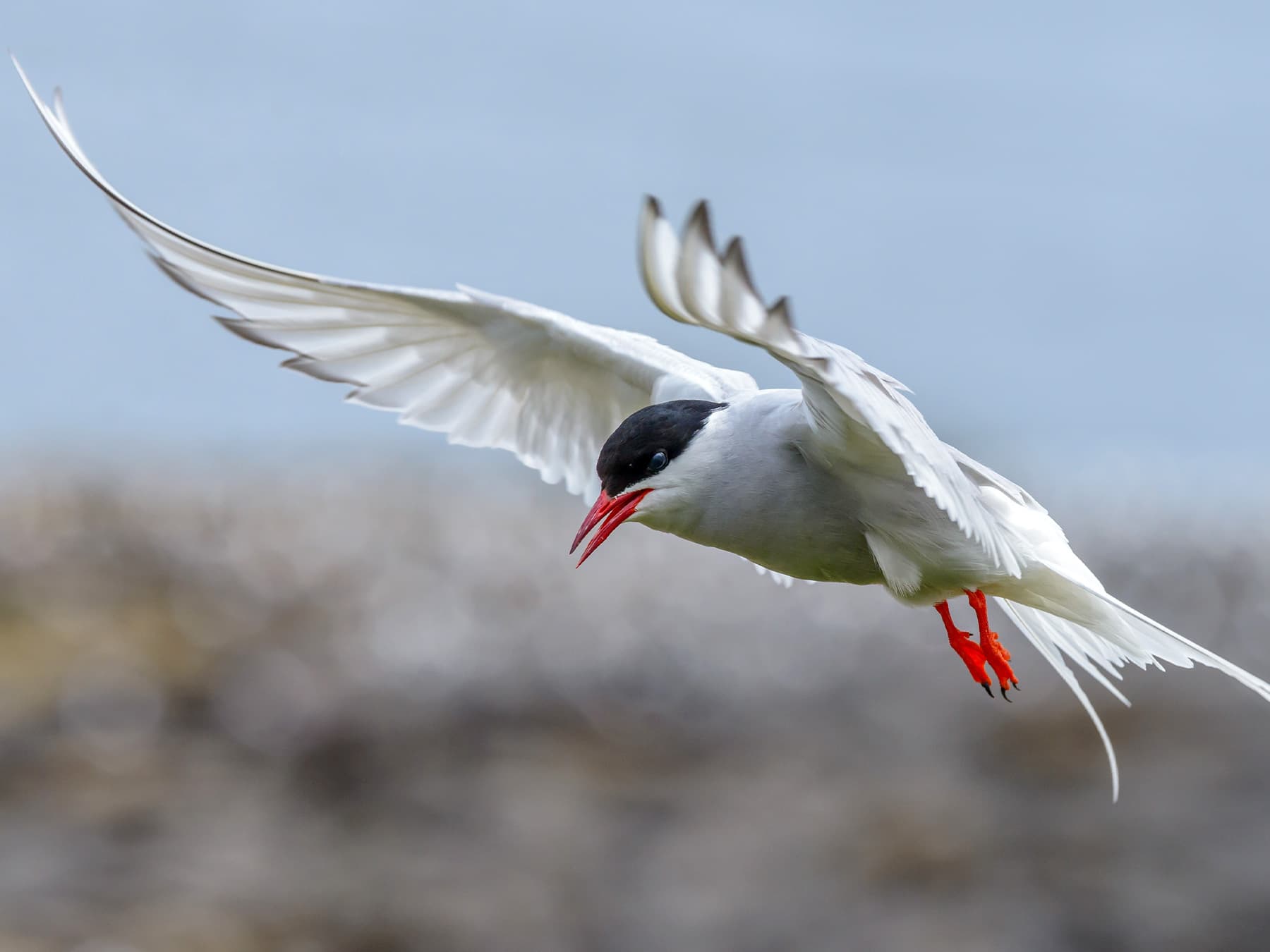
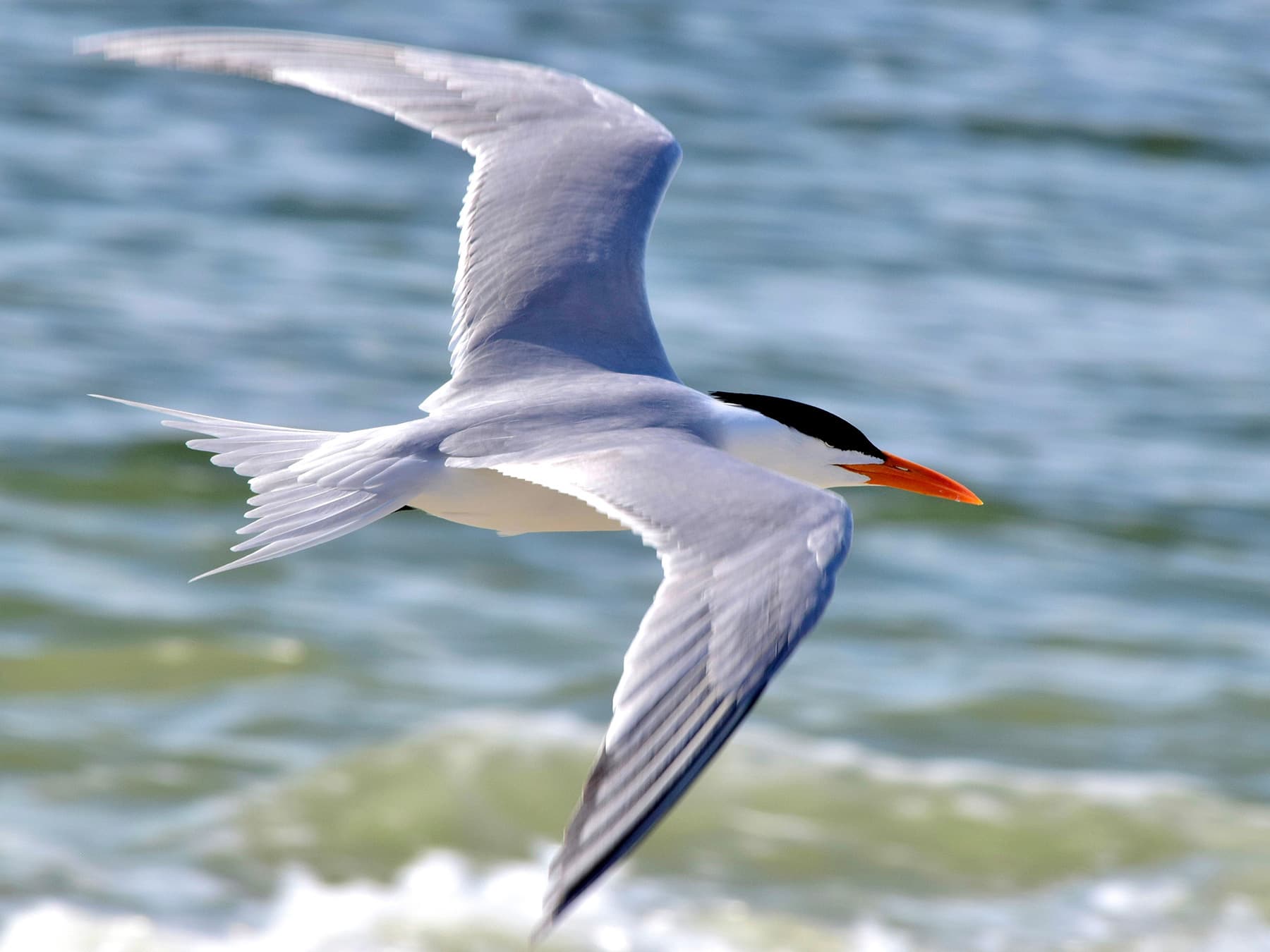
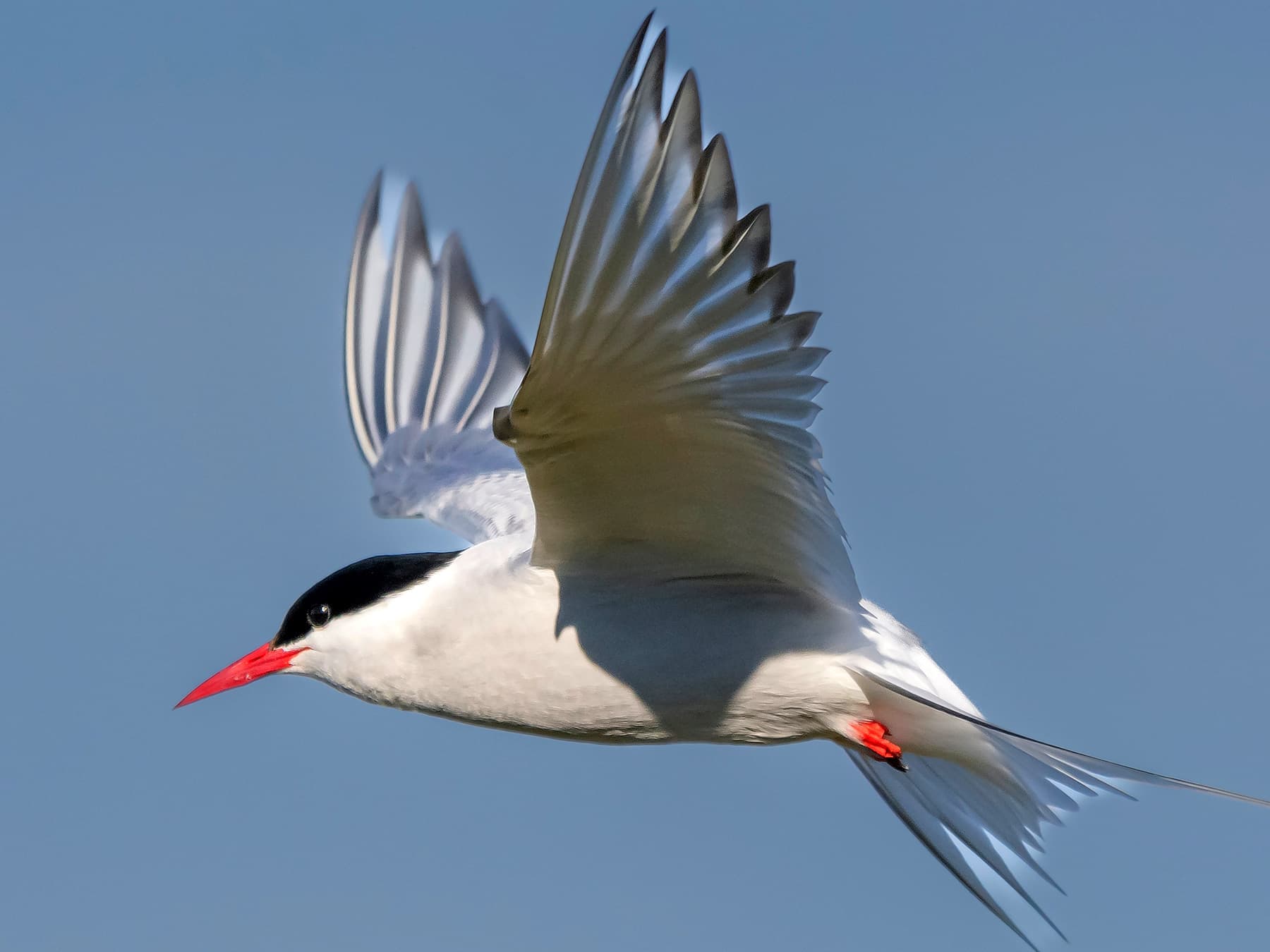
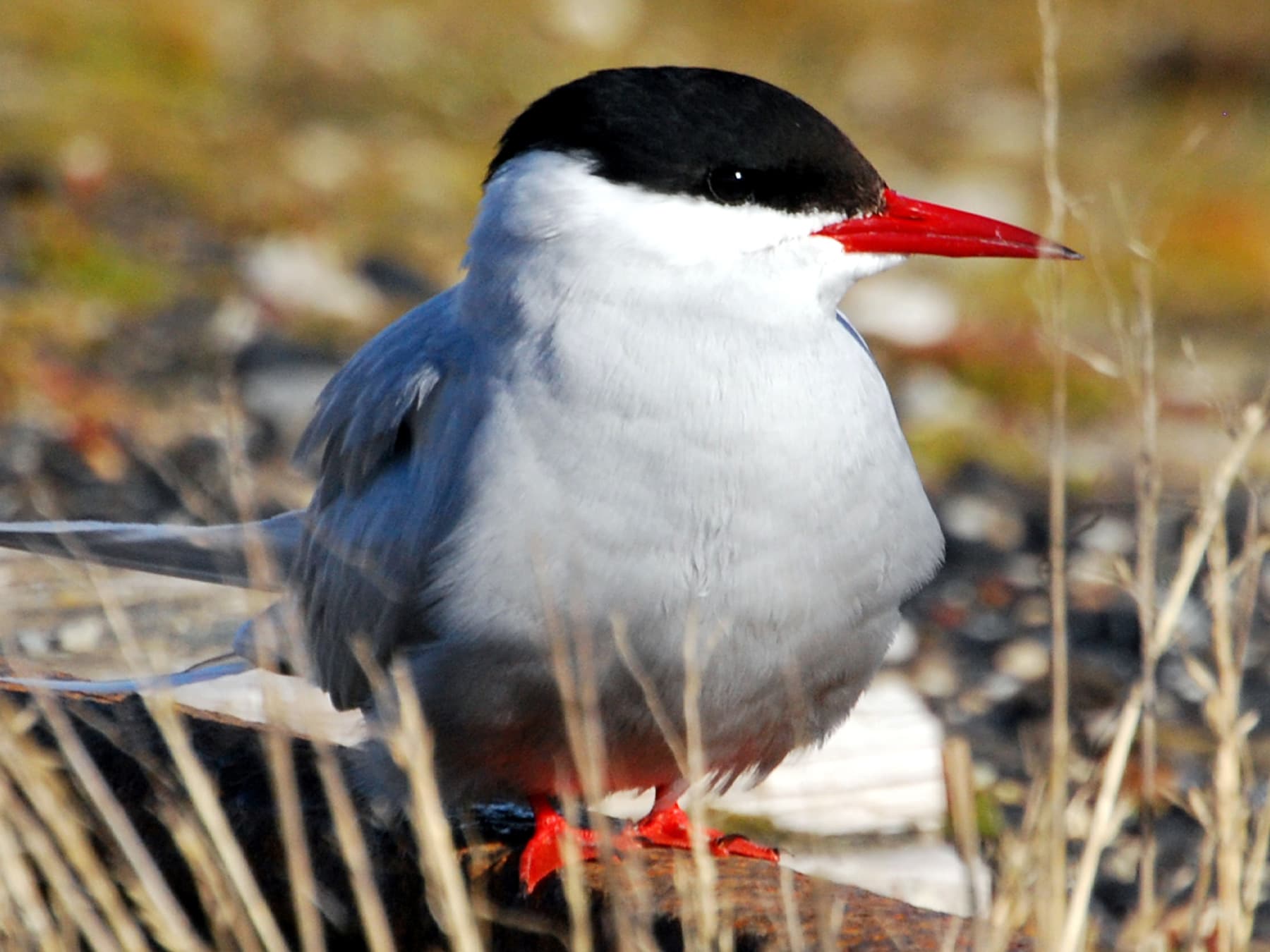
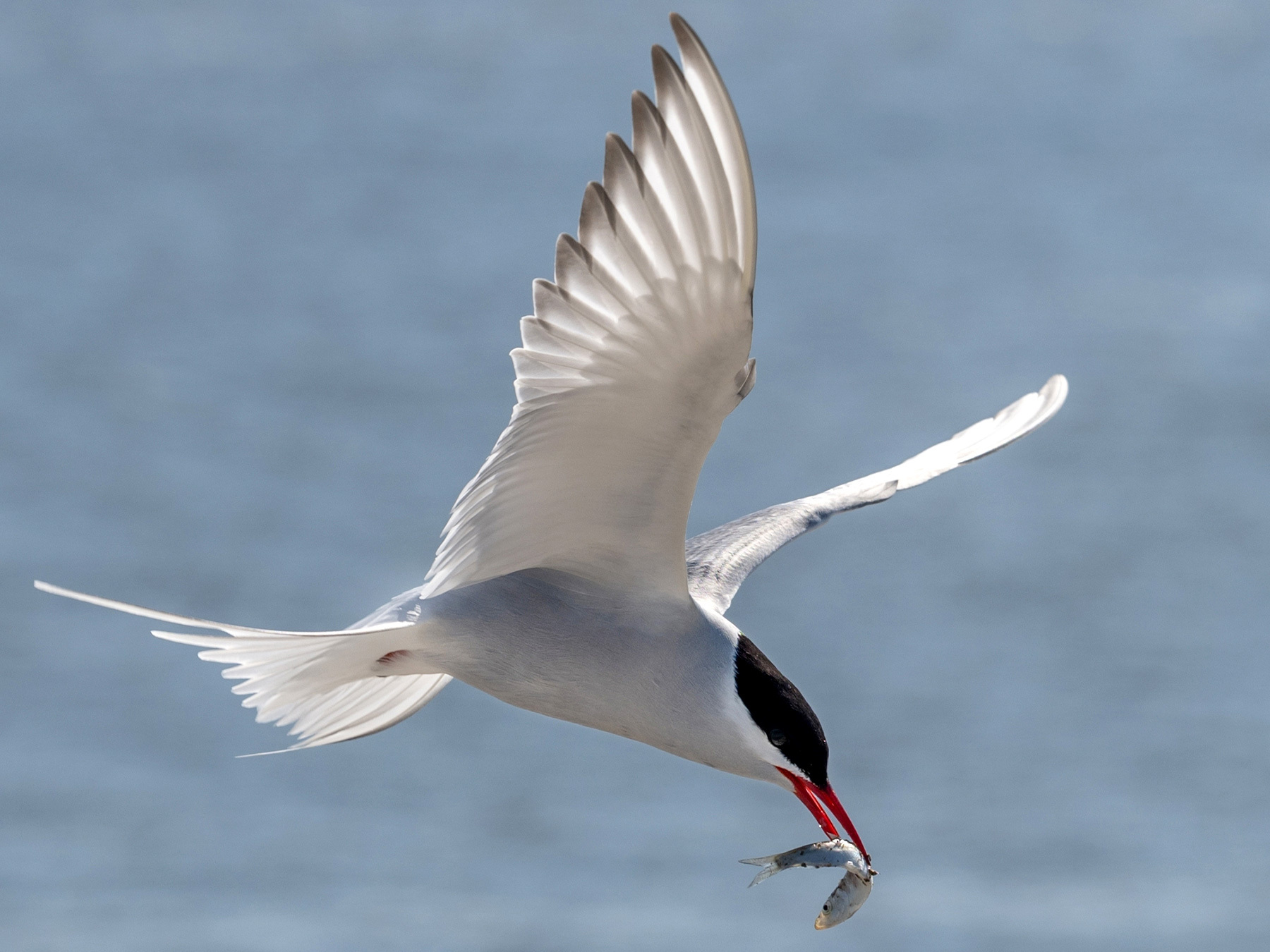
The Arctic Tern is a medium-sized seabird with a long, deeply forked tail and long wings that end in a sharp point. They have short legs, set far forward on their bodies, and a fairly long pointed bill. Males and females look alike, although their plumage varies between the breeding and non-breeding seasons.
Breeding Plumage
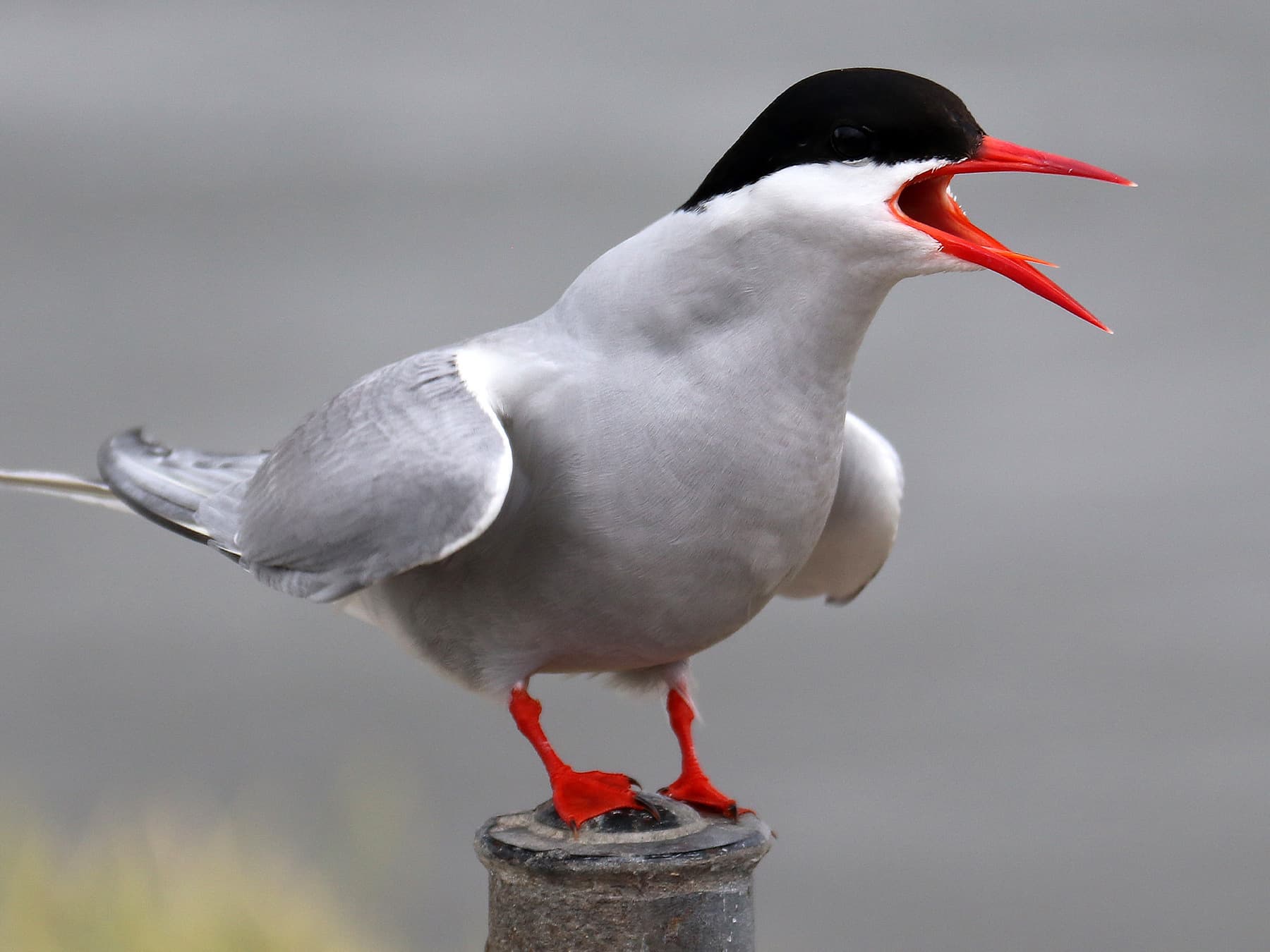
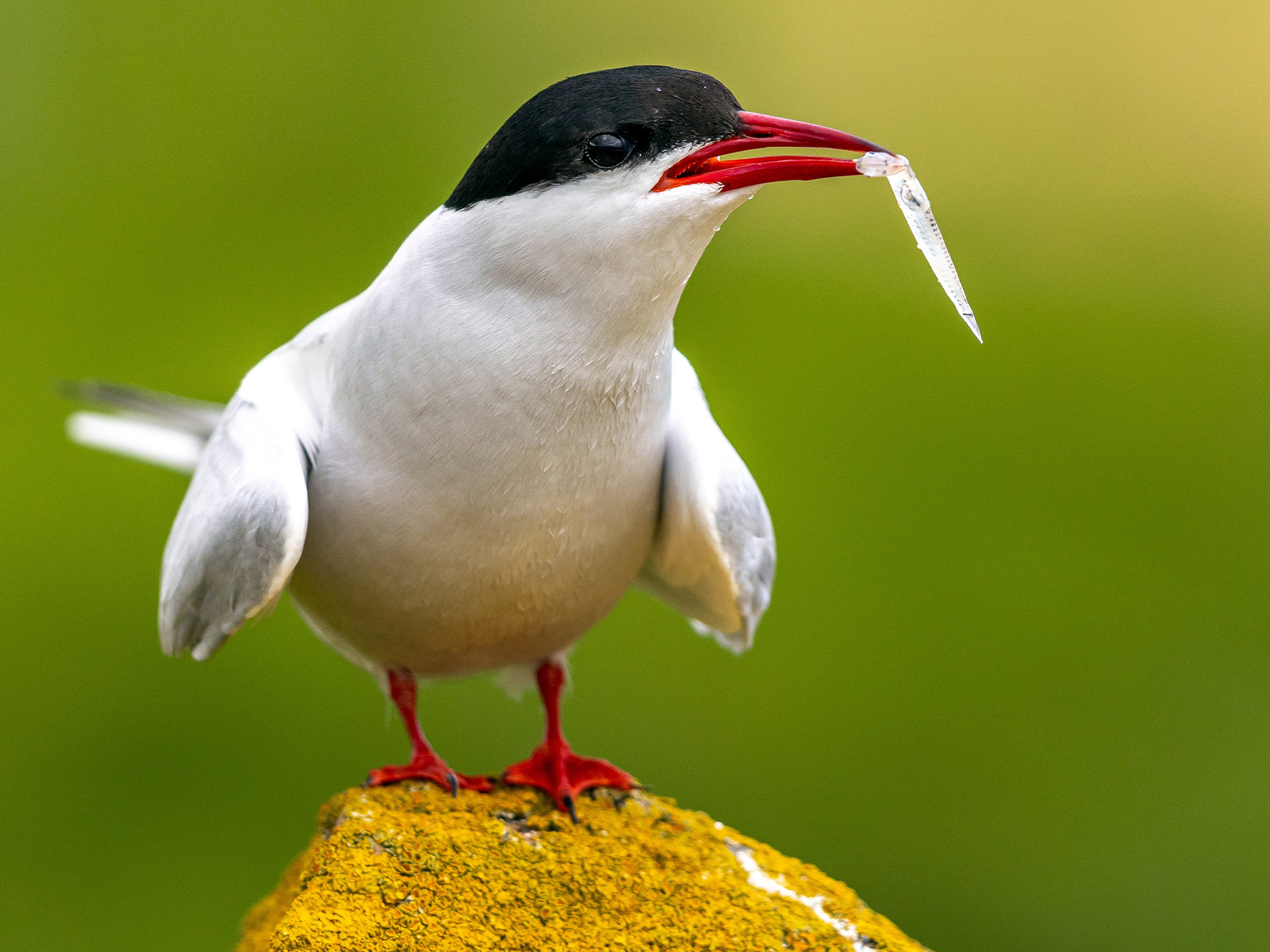
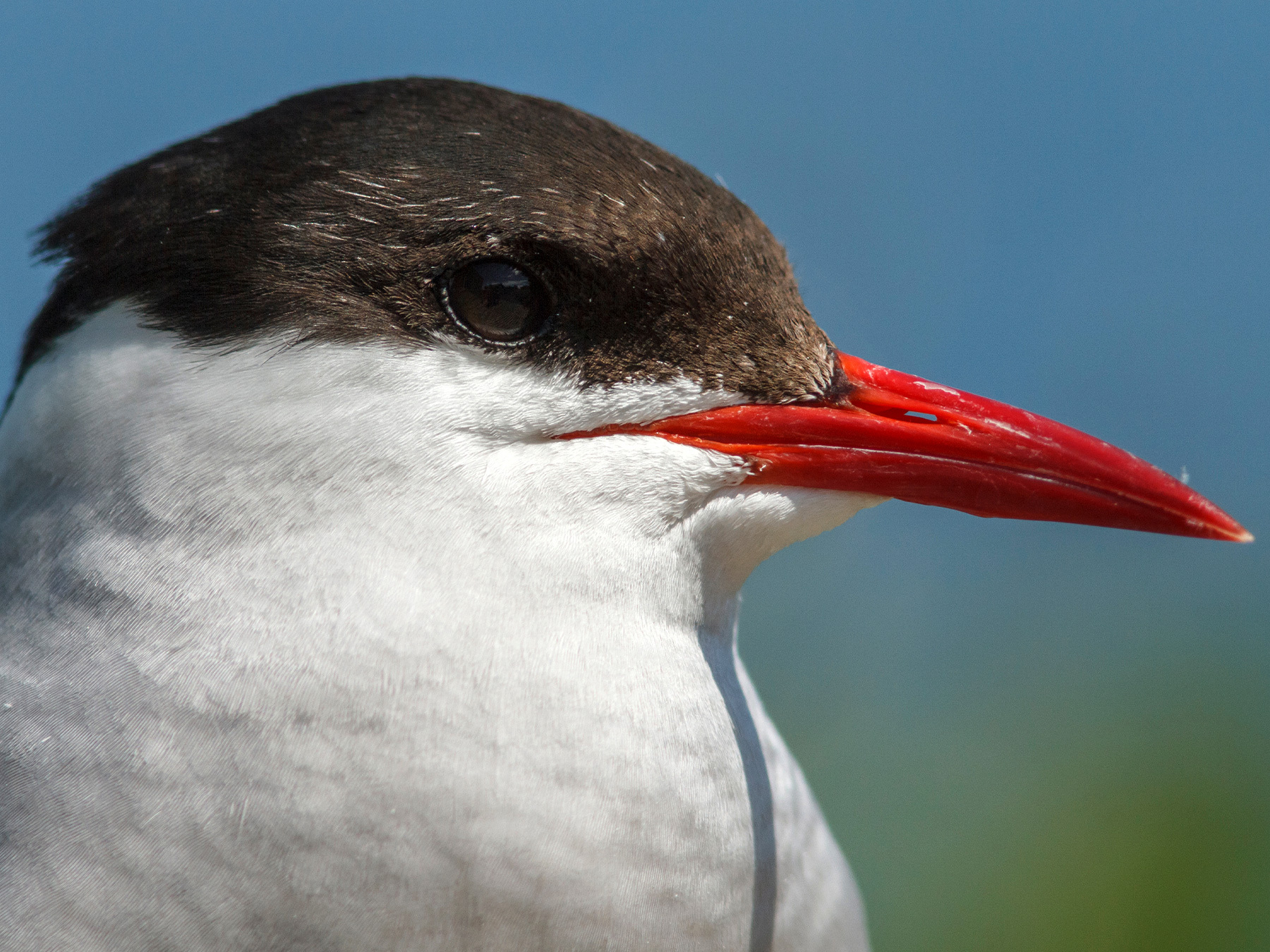
Breeding birds are silver-gray over most of their body, with a white tail and rump. They have a bold black cap from bill to nape, bordered below by white plumage. Their legs and bill are bright red.
Non-breeding Plumage
Non-breeding Arctic Terns have black bills and legs. They are whiter below and have a dark bar across the upper wing. They have a white forehead and black cap from their crown to their nape.
Juveniles
Young birds appear more compact, with shorter bills, wings, and tails. Their bills and legs are black, and they have crescent-shaped markings on their backs, which create a scaled appearance.
Similar Species
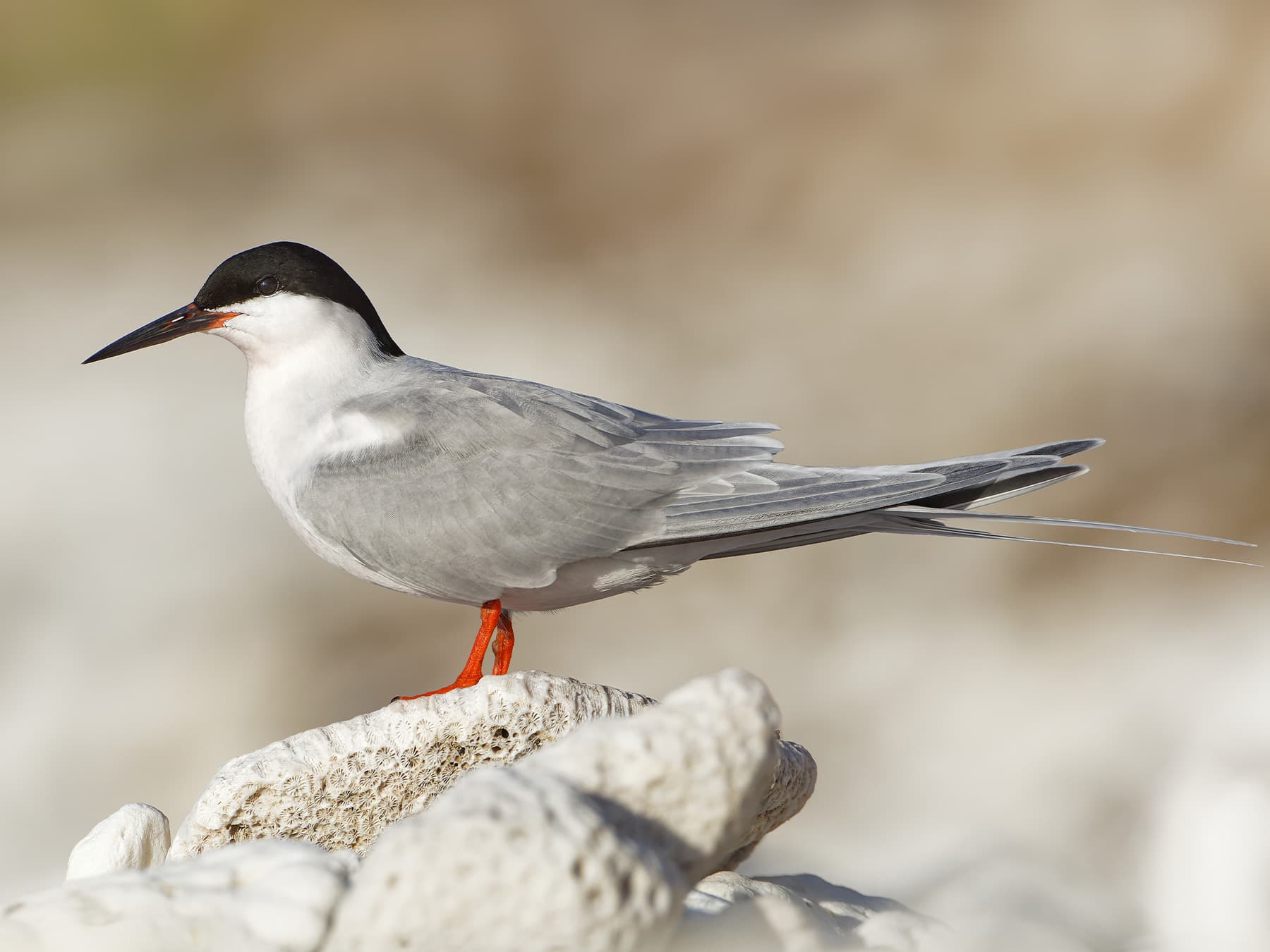
Arctic Terns are easily confused with several other species, including the Common Tern, Antarctic Tern, Roseate Tern, and South American Tern.
How big are Arctic Terns?
Arctic Terns are medium-sized Terns. The sexes are similar-sized, although males are generally longer.
Length
Arctic Terns are 11 to 15 inches (28 - 39cm) long, including their long forked tail, which measures nearly 5 inches (12.5cm) on some birds.
Weight
Arctic Terns weigh three to four ounces (90 - 120g). They are heaviest before breeding but lose mass while incubating and caring for their young.
Wingspan
Arctic Terns have long, narrow wings ideally suited to long-distance travel. They have an impressive wingspan of 25 and a half to 29 and a half inches (65 - 75cm).
Its size
Adults- Length
- 33–39 cm
- Wingspan
- 76–85 cm
- Weight
- 86–127 g
Its song and calls
What sound does an Arctic Tern make?
Arctic Terns make a variety of high-pitched calls. These harsh screams and cries include ‘kee-aa,’ ‘pi-pi-pi,’ and ‘kik’ notes. They are most vocal around their breeding colonies but vocalize in many social contexts and when alarmed or distressed.
- Call0:00 / 0:11
Recorded in Manitoba, Canada · June 2010
When and where to see it
OctoberLeaving
Most recorded in October
- 1. Clare0.20%
- 2. Northumberland0.18%
- 3. Belfast0.17%
- 4. Kerry0.16%
- 5. Aberdeen0.14%
Each dot is a county, state or province: the bigger and darker, the larger the bird’s share of that place’s bird records that month. Grey dots: no regular records. The ringed point is the centre of the bird’s records this month; the arrow shows how it moved since last month, and the dashed loop its path through the year. “Arrivals” colours places where it becomes regular this month (orange) or is in its last regular month (grey). GBIF eBird Observation Dataset, 2019–2024. Map data: Natural Earth, US Census Bureau; place centres © OpenStreetMap contributors.
In your area
See when the Arctic Tern is recorded in your county, state or province.
How often the Arctic Tern turns up in the UK, Ireland, the United States and Canada through the year, from birdwatchers' records.
United Kingdom
Summer visitor · regularly Apr–Oct · most records in July
Ireland
Summer visitor · regularly Apr–Oct · most records in August
United States
Summer visitor · regularly May–Sep · most records in June
Canada
Summer visitor · regularly May–Sep · most records in July
Show as a table
| Month | United Kingdom | Ireland | United States | Canada |
|---|---|---|---|---|
| January | – | – | – | – |
| February | – | – | – | – |
| March | <0.001% | – | – | – |
| April | 0.045% (regular) | 0.045% (regular) | 0.001% | <0.001% |
| May | 0.10% (regular) | 0.17% (regular) | 0.015% (regular) | 0.010% (regular) |
| June | 0.15% (regular) | 0.24% (regular) | 0.049% (regular) | 0.042% (regular) |
| July | 0.15% (regular) | 0.35% (regular) | 0.022% (regular) | 0.045% (regular) |
| August | 0.13% (regular) | 0.43% (regular) | 0.018% (regular) | 0.019% (regular) |
| September | 0.051% (regular) | 0.14% (regular) | 0.014% (regular) | 0.005% (regular) |
| October | 0.024% (regular) | 0.046% (regular) | 0.002% | <0.001% |
| November | 0.005% | 0.002% | <0.001% | <0.001% |
| December | – | 0.002% | <0.001% | – |
Recorded regularly in
Worldwide: recorded regularly in 50 countries
Countries where it was recorded in at least 3 of the 6 years 2019–2024. Linked countries have their own bird list.
Europe (26)
Africa (6)
- Gabon
- Morocco
- Namibia
- Senegal
- South Africa
- St Helena
Asia (1)
- Israel
North America (8)
South America (5)
- Argentina
- Chile
- Ecuador
- Falkland Islands
- Peru
Oceania (2)
Antarctica (2)
- Antarctica
- South Georgia & South Sandwich Islands
Data: EOD – eBird Observation Dataset (Cornell Lab of Ornithology), accessed via GBIF.org, CC BY 4.0. Records from 2019–2024, aggregated and filtered by Birdfact. How these lists are made
What is the habitat of an Arctic Tern?
Arctic Terns are a marine species in the non-breeding season when they forage in coastal and offshore waters. They are adaptable to many environments (including freshwater habitats) during the breeding season when they nest in coastal and inland areas. They survive in an incredible range of latitudes, although they spend most of their days between temperate and polar regions.
What is the range of an Arctic Tern?
Arctic Terns have a circumpolar distribution in both the Northern and Southern Hemispheres. They migrate between these extremes each year by crossing the lengths of the Atlantic and Pacific Oceans.
In the summer breeding season, Arctic Terns nest in coastal and inland colonies in Alaska, Canada, Greenland, Iceland, northern Europe, and Northern Asia. The non-breeding season is spent in the waters between Antarctica and southern Africa and South America.
Where do Arctic Terns live?
Arctic Terns are true travelers. Individuals spend their lives everywhere, from the ice sheets of Antarctica and the open waters of the middle of the Atlantic to ponds and meadows in their northern breeding grounds, sometimes hundreds of miles from the ocean.
How rare are Arctic Terns?
The world population of Arctic Terns is thought to exceed two million, although you are not likely to see these common migratory birds very often unless you visit a breeding colony.
Where can you see Arctic Terns in the US?
Arctic Terns reach the southern limit of their North American breeding range off the coast of Massachusetts, although birdwatchers are more likely to see them off Maine, where they currently nest on several islands. Smaller numbers breed in the Northwest, where there are records from Washington and Montana.
Where can you see Arctic Terns in Canada?
An estimated 100,000 to 200,000 Arctic Terns nest in Canada. Minchan Archipelago National Park Reserve and Terra Nova National Park are great places to look out for these extraordinary seabirds.
Where can you see Arctic Terns in the UK?
Arctic Terns nest at many sites in the United Kingdom, particularly around the coast of Scotland. The Outer Hebrides and the Farne, Orkney, and Shetland Islands are hotspots, although they may be seen virtually anywhere along the coast or around inland waters during spring and autumn migrations.

Migration
Do Arctic Terns migrate?
Arctic Terns are extreme long-distance migrants that nest in the Arctic and temperate zones of the Northern Hemisphere and overwinter in the Southern Hemisphere. Tracking studies show that they take a wandering route south, with long pauses along the way, but hurry back with a more direct route. All in all, the journey can span a jaw-dropping 56,000 miles (90,000 km) in a single year.
There’s a lot more to learn about Arctic Tern migration. Check out our in-depth guide for more about their amazing journey.
Why do Arctic Terns migrate?
Arctic Terns are said to chase the sunshine. This may sound romantic, but these birds hunt by sight, and the long summer days at higher latitudes provide excellent fishing opportunities. However, the summer is short-lived in the Arctic and Antarctic zones, which keeps them migrating back and forth.
Are Arctic Terns native to North America?
Arctic Terns are a native species in North America. These long-distance migrants nest across Alaska and Canada, just reaching the contiguous United States around Maine. They may be seen off both the Atlantic and Pacific coasts on migration.
Are Arctic Terns native to the UK?
Arctic Terns are native breeding visitors to the United Kingdom.

Tips for seeing it
- Look for Arctic Terns along coastal areas, especially near nesting colonies during summer months.
- Observe their distinctive, graceful flight pattern and listen for their sharp, high-pitched calls.
- In the UK, visit coastal areas in Scotland and Northern England for the best chances of spotting them.
- Use binoculars to distinguish their red bills and legs, which sets them apart from similar tern species.
What it eats
What do Arctic Terns eat?
Arctic Terns are carnivorous. They feed on small fish up to about 6 inches long, crustaceans, insects, and their larvae. These agile birds catch most of their prey near the surface by picking them off the water or diving to depths of a little over a foot (up to about 50cm).
What do Arctic Tern chicks eat?
Arctic Tern chicks are fed by both parents. Small fish such as sand eels and juveniles of many larger fish species are their most important food source, although they also eat insects and marine invertebrates. Individual prey items are delivered singly in their parent’s beak rather than regurgitated.

Nesting and breeding
Where do Arctic Terns nest?
Arctic Terns nest on the ground near water, usually in a scrape on sandy or gravelly soil but occasionally on low vegetation or rock. Only after they have laid their eggs will they add nesting materials such as vegetation, shells, wool, or plastic to the rim of the nest.
These birds nest in Northern Europe, the north of North America, and Asia. They usually nest in small groups (2 -25), although they also nest alone or in colonies that may contain hundreds of pairs.
When do Arctic Terns nest?
Arctic Terns nest in the spring and summer. At lower latitudes, they may lay their eggs as early as May, while High Arctic nesters must wait until July before conditions are suitable.
What do Arctic Tern eggs look like?
Arctic Terns typically lay two heavily blotched and speckled eggs with a grayish, greenish, or brownish background color. Their eggs measure about 41 millimeters long and 29 millimeters at their widest.
Do Arctic Terns mate for life?
Arctic Terns form monogamous pairs, and they are believed to mate for life.
Behaviour
Are Arctic Terns aggressive?
Arctic Terns usually avoid humans, but researchers on their breeding grounds have found them to be quite fearless in defense of their nest. Aggression towards other intruding birds is more commonplace and usually results in a mid-air or dive-bombing attack. These terns are known to steal food from other terns and seabirds, but they are also stolen from in turn.
Where do Arctic Terns sleep at night?
Arctic Terns sleep in flocks or on their nest (breeding season), perched on the ground with their head turned back and their bill under their feathers. These graceful birds are so comfortable in flight that they can even sleep on the wing out over the open ocean where there’s nowhere to land.
Lifespan and predators
How long do Arctic Terns live?
Arctic Terns are long-lived birds that can survive for an impressive 34 years. They first breed when they are three or four years old, and their typical lifespan is around 13 years.
What are the predators of Arctic Terns?
Adult Arctic Terns are most vulnerable to birds of prey like Peregrine Falcons, Gyrfalcons, Great Horned Owls, and Snowy Owls. Magpies, ravens, crows, and gulls take eggs and chicks. Red and Arctic foxes, otters, rats, and mink also prey on eggs and young birds.
Are Arctic Terns protected?
Arctic Terns enjoy the protection of the 1918 Migratory Bird Treaty Act in the United States and the Migratory Birds Convention Act in Canada. They have an Amber status in the UK, where they are protected by the Wildlife and Countryside Act. Arctic Terns in Europe are also protected by the Convention on Migratory Species, the EU Birds Directive, and the Bern Convention.
Are Arctic Terns endangered?
Arctic Tern numbers are thought to be in decline, although they are not endangered. These widespread seabirds are evaluated as a ‘Least Concern’ species on the IUCN Red List.

Conservation
While currently listed as Least Concern, Arctic Terns face threats from climate change, which affects their breeding habitats and food sources.
Ocean pollution, particularly plastic waste, poses a significant risk. Conservation efforts focus on protecting breeding sites and marine ecosystems along their extensive migratory routes.
Similar birds
Often mistaken for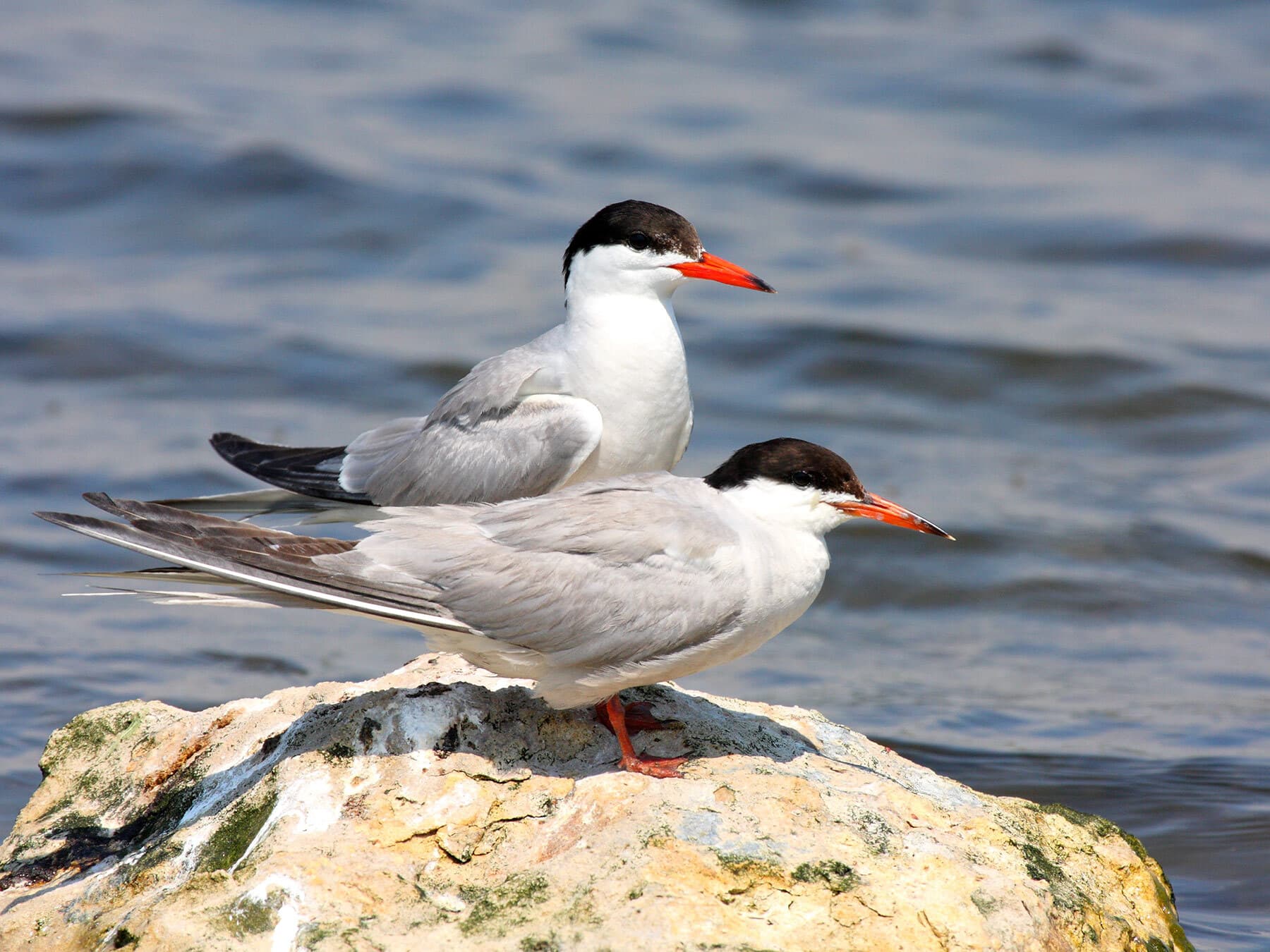
More photos
4 photos
Arctic Tern guides
4 guidesQuick facts
- Length
- 33–39 cm
- Wingspan
- 76–85 cm
- Weight
- 86–127 g
- Lifespan
- 13 years · oldest recorded 34 years
- Family
- Gulls & Terns
- Migration
- Long-distance Migrant
- Global status (IUCN)
- Least Concern
- World population
- 2,000,000 mature individuals
- Population trend
- Stable but vulnerable to environmental changes
- Also called
- Sea Swallow, Arctic Sea Tern
- Scientific name
- Sterna paradisaea
Questions
3What is special about Arctic Tern?
Arctic Terns are remarkable for the distances they travel on migration. They migrate far further than any other species, and during their lifetime, they may cover a distance equivalent to the moon and back three times.
How long can Arctic Tern fly without stopping?
A study on Arctic Terns breeding in the United Kingdom revealed that they can fly as much as 5,000 miles nonstop (while feeding) as they cross the Indian Ocean.
Why do Arctic Terns migrate to Antarctica?
Arctic Terns migrate south to escape the cold and dark of the northern winter. The rich waters off the coastline of Antarctica provide an abundant food source, and the extreme day length of the polar summer means there’s no shortage of foraging time either.
Sources
4- 1BirdLife International. 2018. Sterna paradisaea. The IUCN Red List of Threatened Species 2018: e.T22694629A132065195. Source (opens in a new tab)
- 2BirdLife International. 2018. Sterna paradisaea. The IUCN Red List of Threatened Species 2018: e.T22694629A132065195. Source (opens in a new tab)
- 3Wetlands International (2015)
- 4Clapp et al., Longevity records of North American birds: Gaviidae through Alcidae, J Field Ornithol, 53:81-124 (1982)

Checked by
Nathan Cope, founder and editor
Nathan founded Birdfact and leads its writers and contributors in the UK, the US and Canada. He has watched and studied birds for more than ten years, and checks every article and species guide before it’s published.