


Black Tern
Short-tailed Tern · Chlidonias niger
By the Birdfact teamChecked by Nathan Cope
On this page13 sections
How to recognise it
What do Black Terns look like?
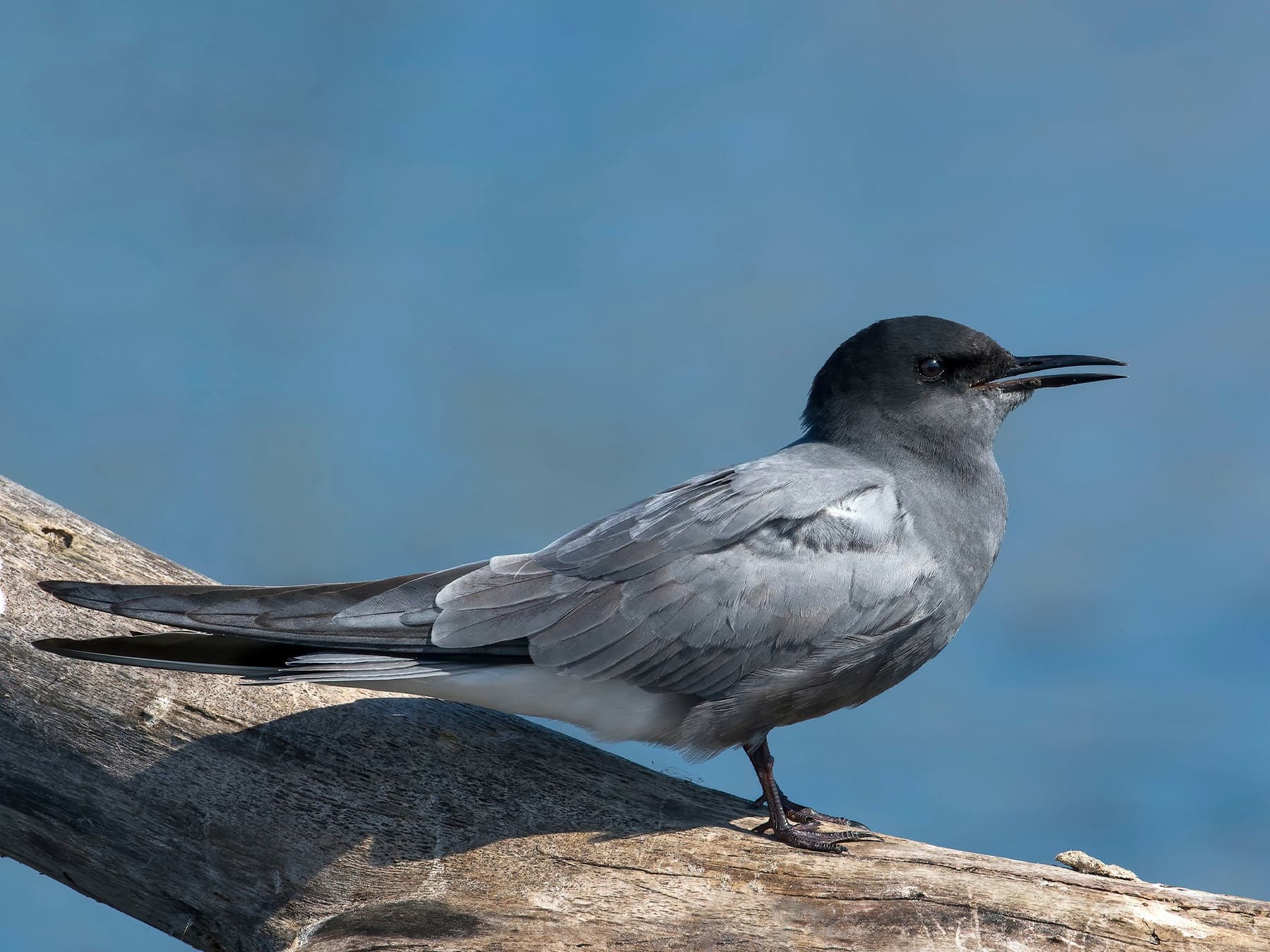
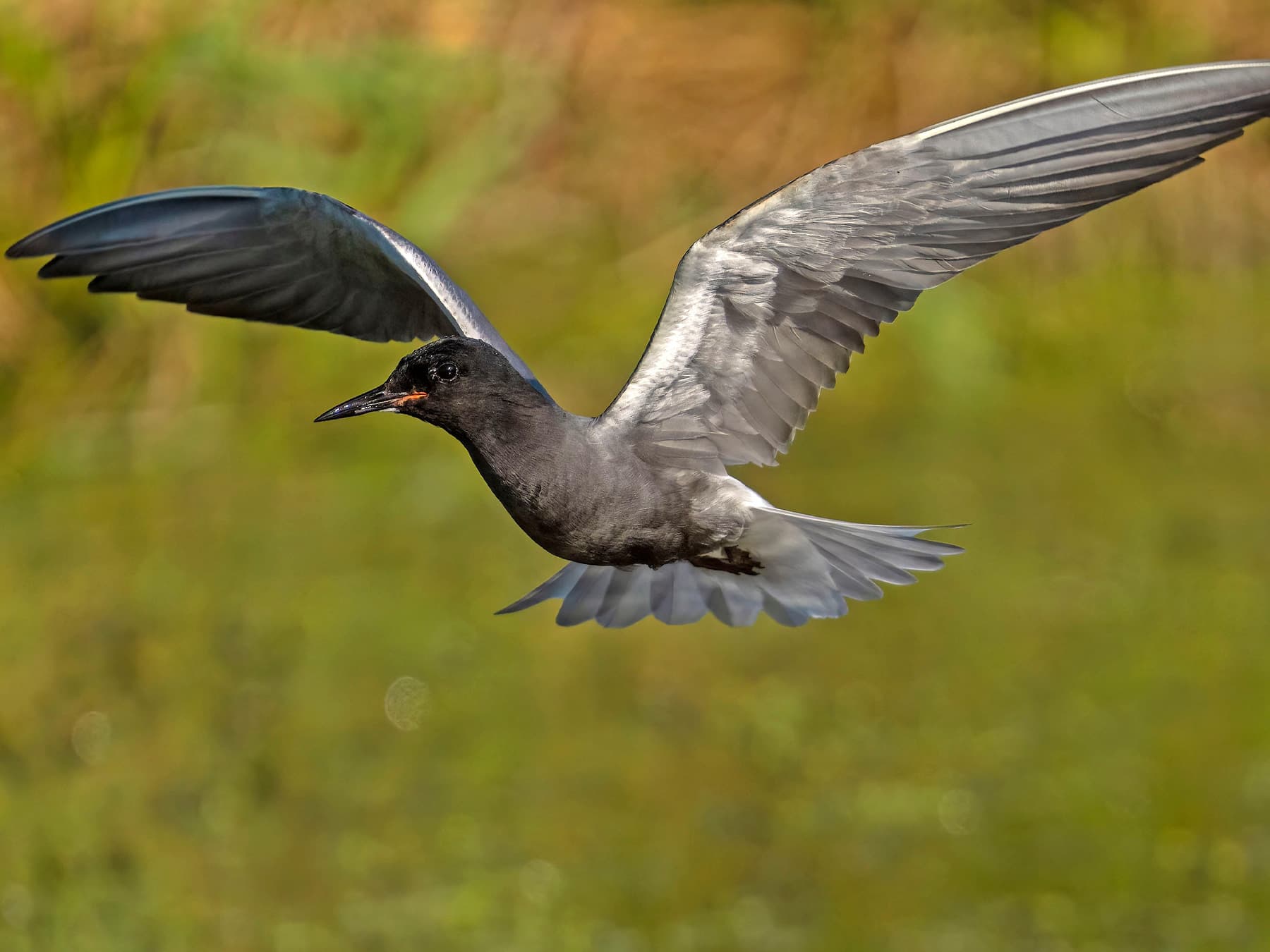
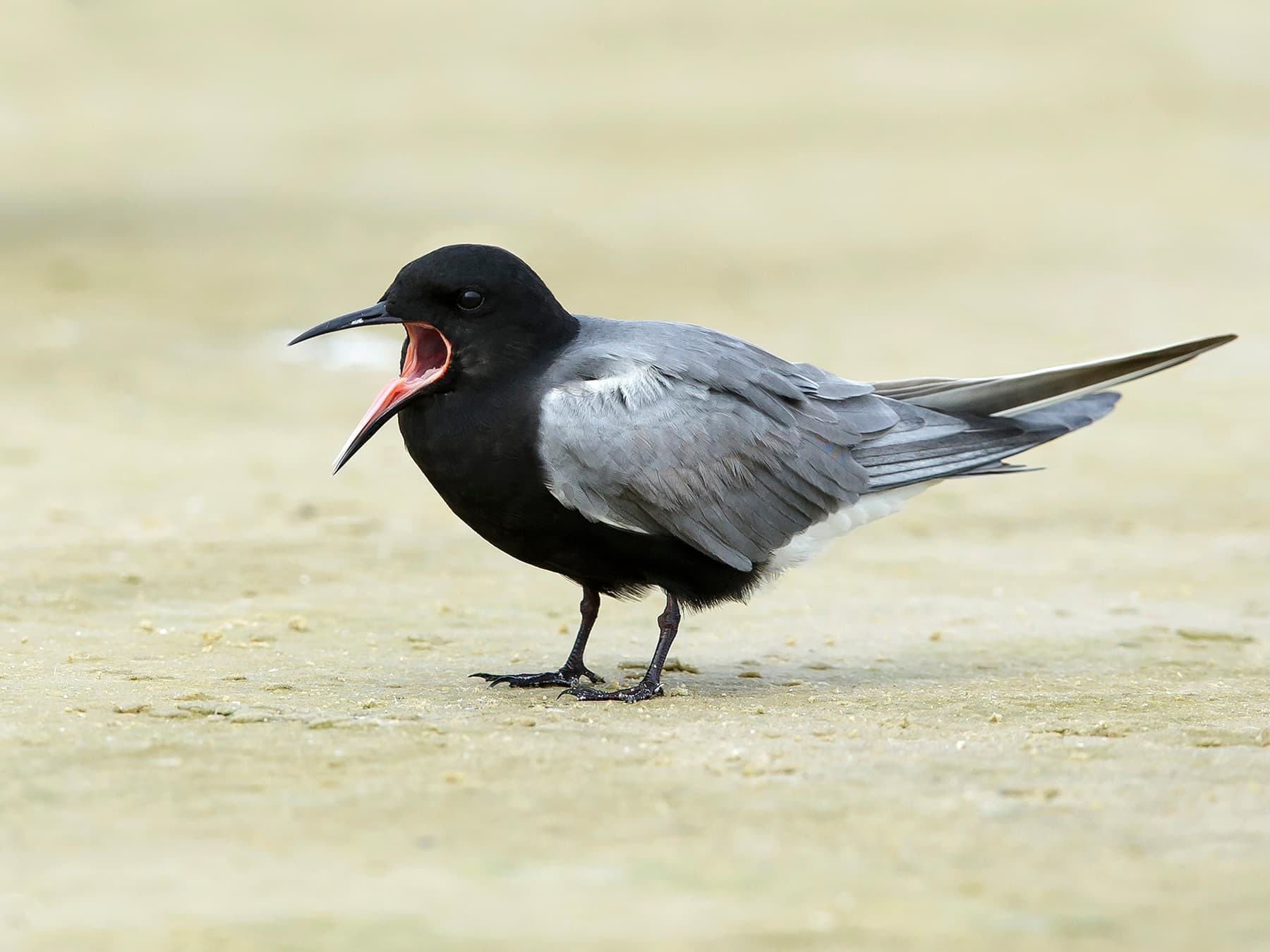
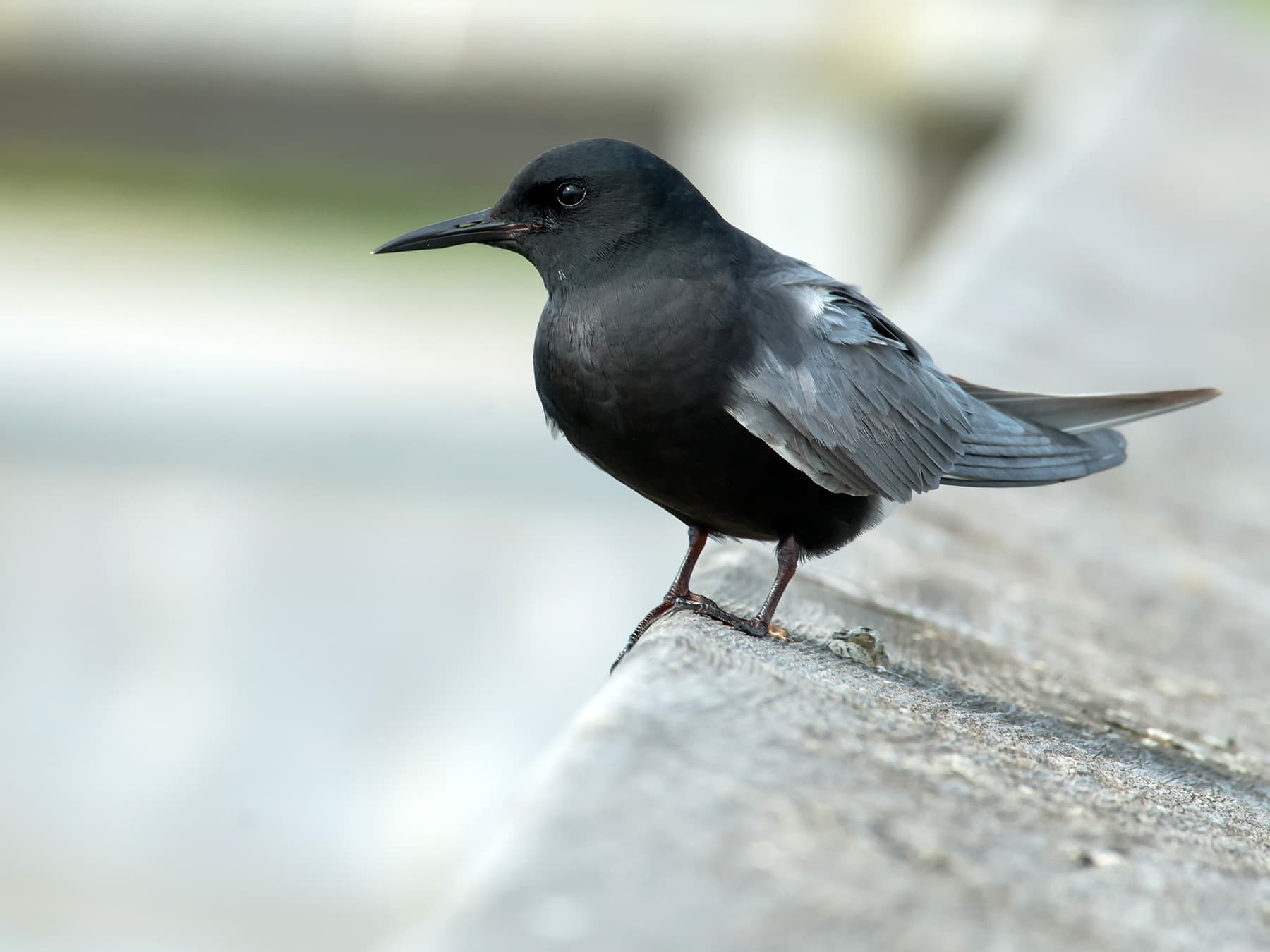
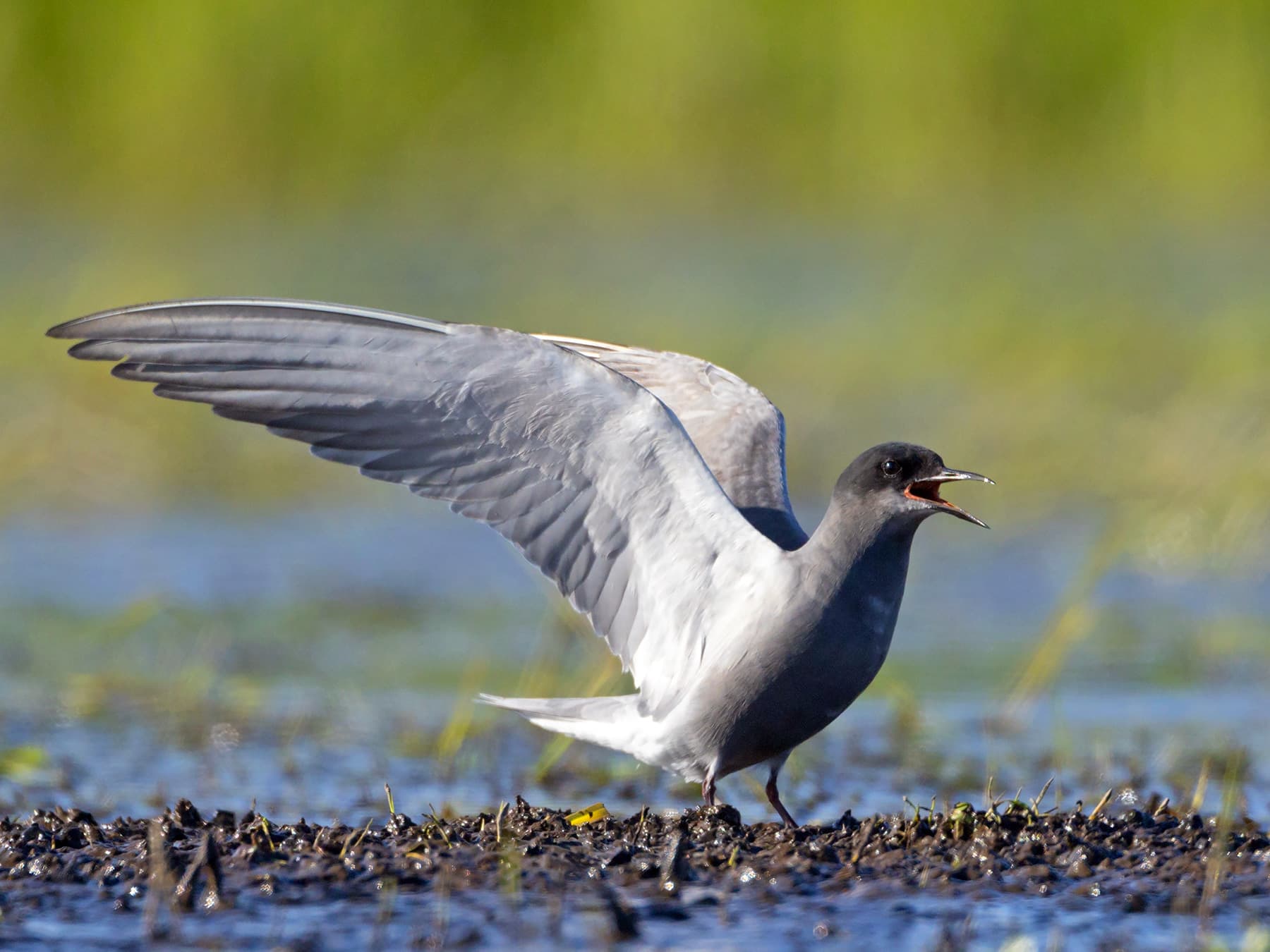
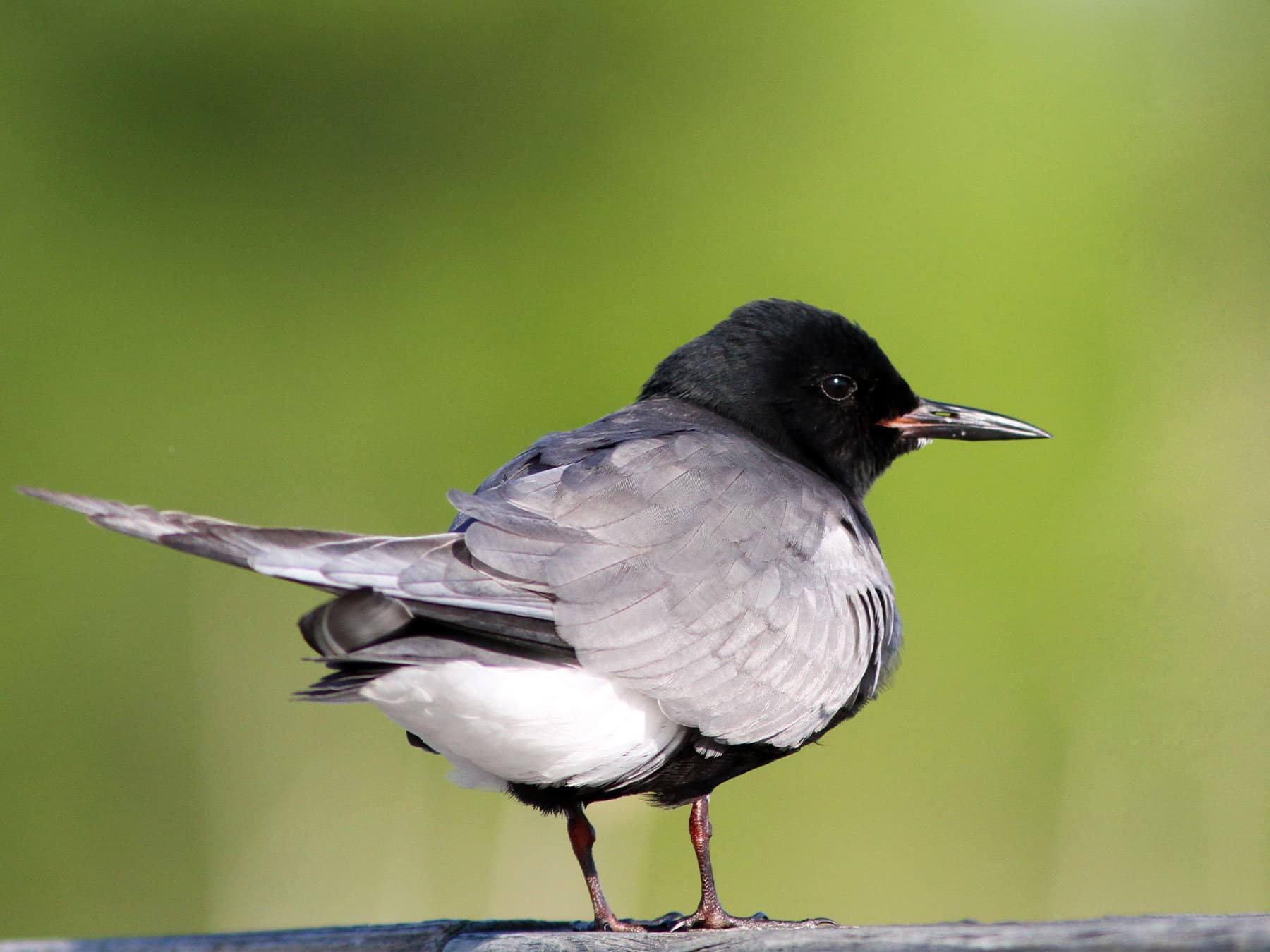
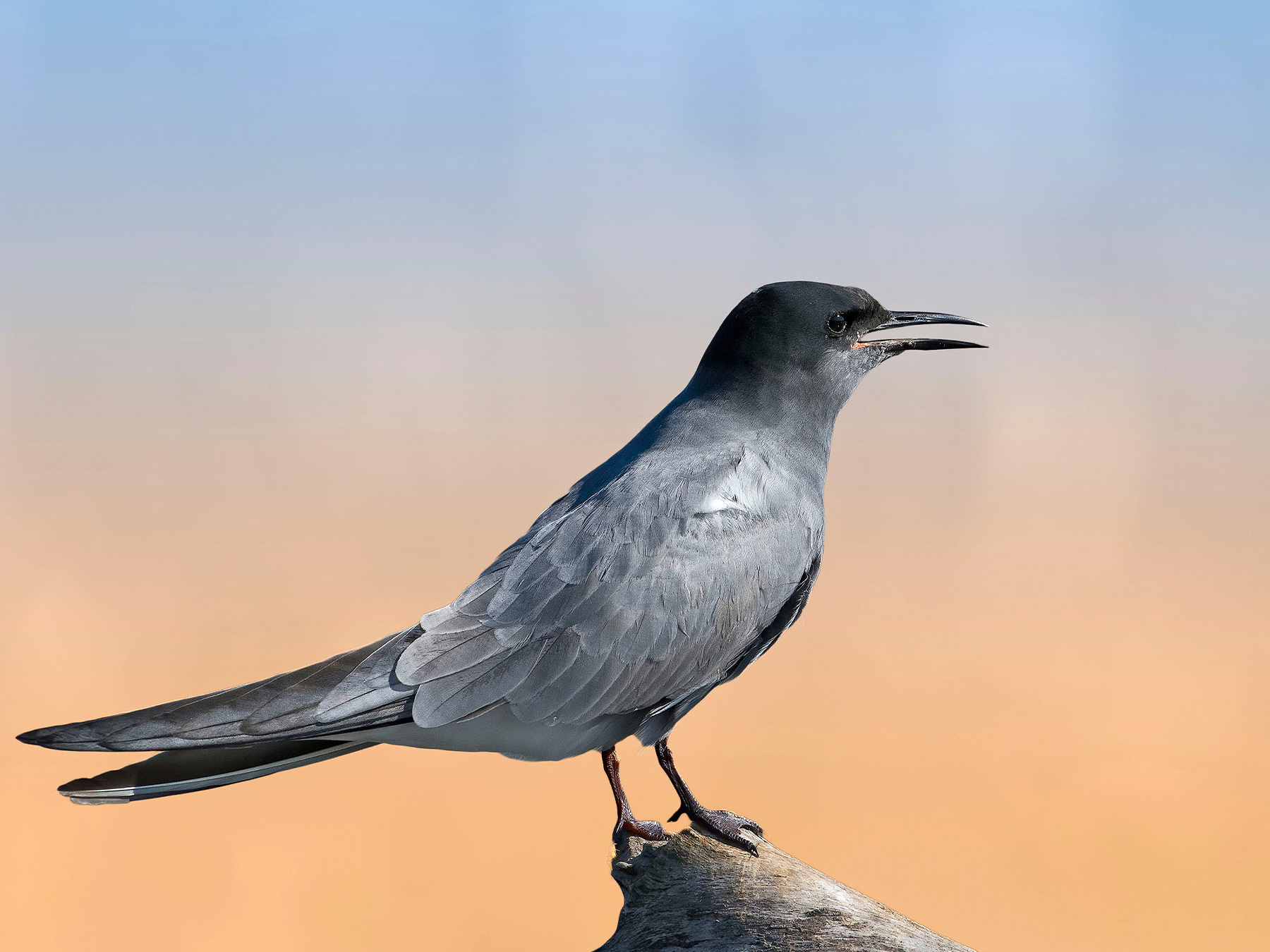
The Black Tern is a slender, graceful species, slightly smaller than an American Robin but with very long, pointed wings and a slightly forked tail. In breeding plumage, they have all-black underparts and heads but gray wings, backs, and tails. Their bills, legs, and webbed feet are black.
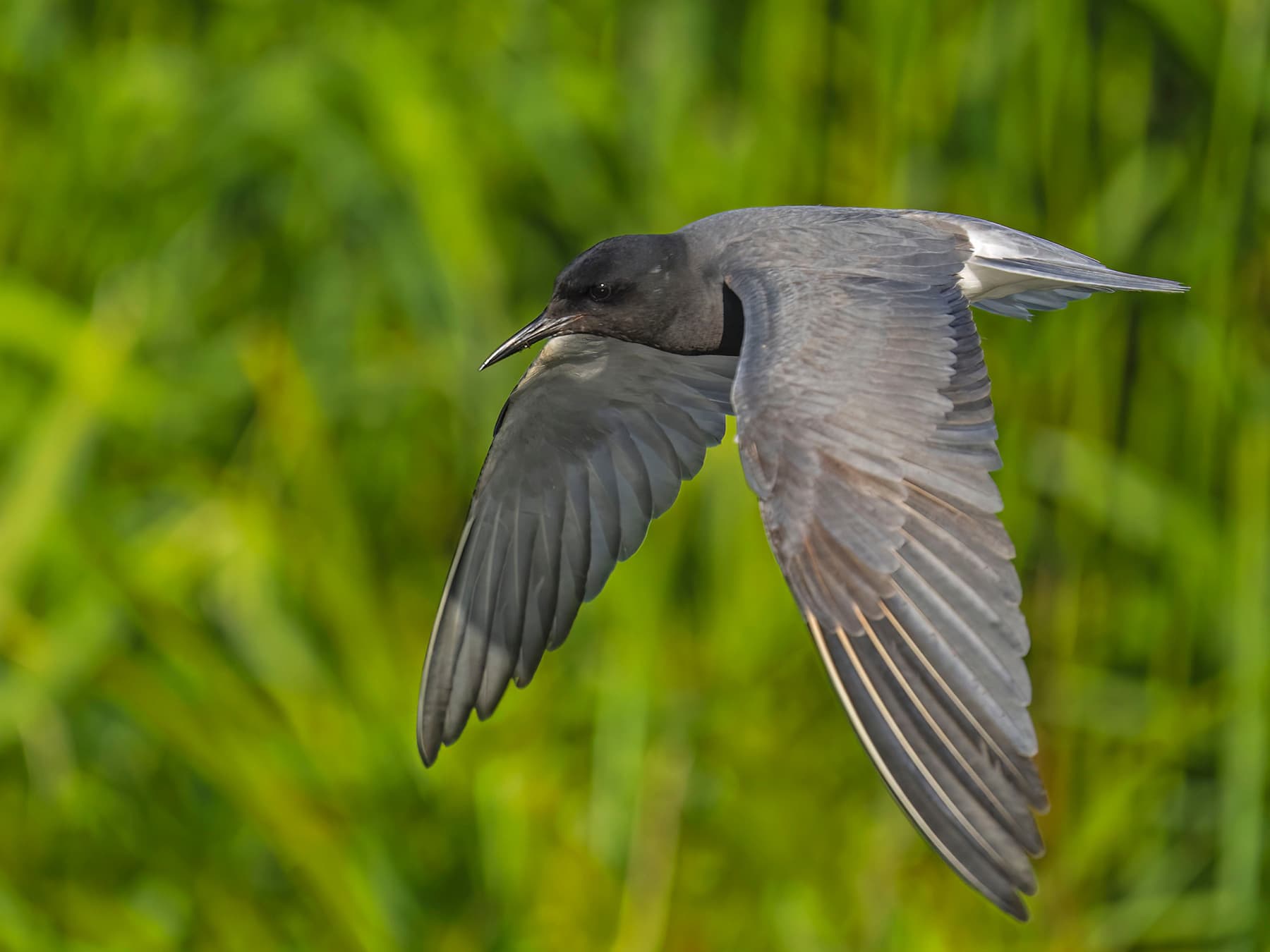
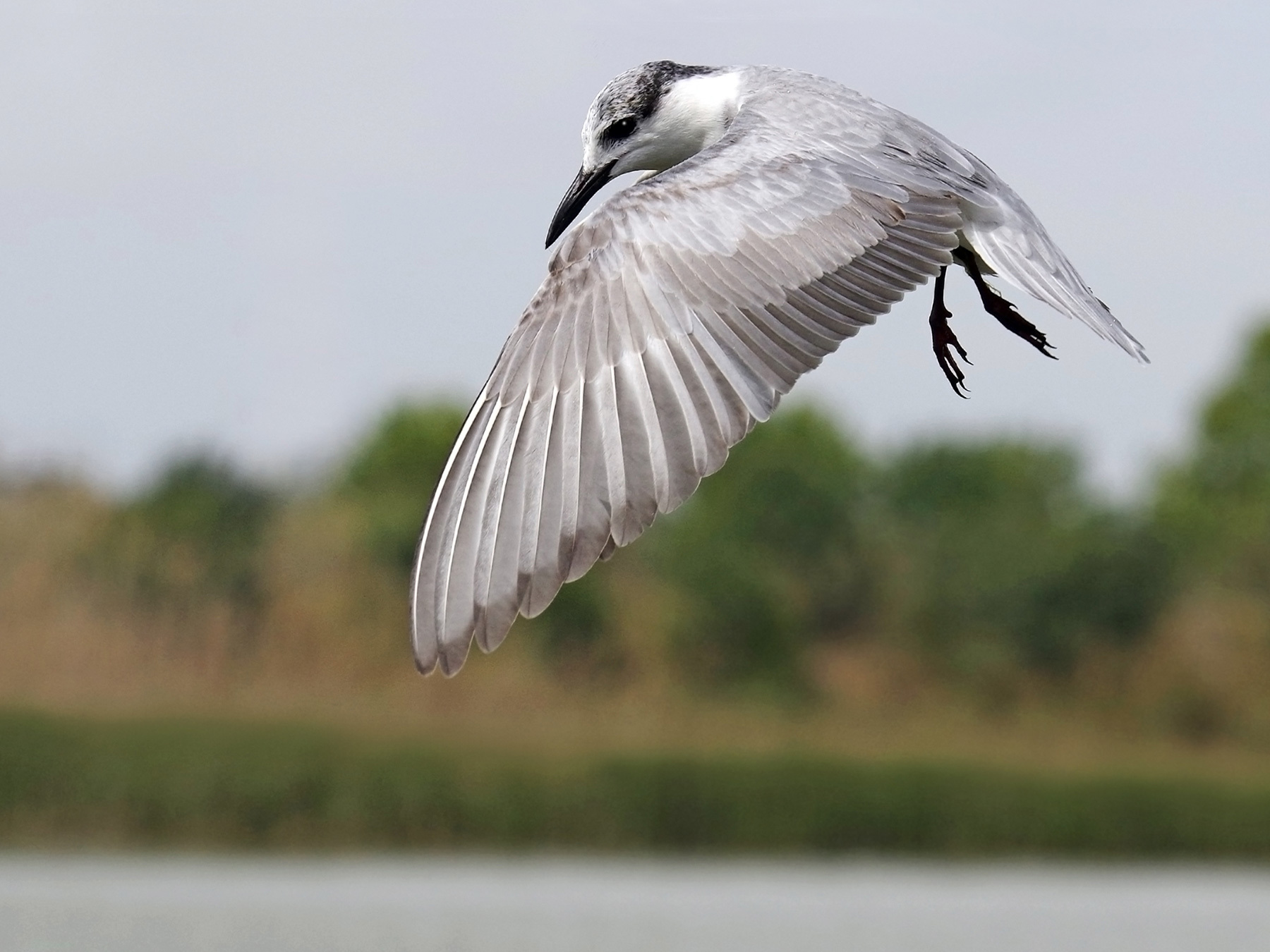
These birds are buoyant and agile in flight. Their pale gray underwings and whitish rump contrast with the pure black head and body in flight, and the leading edges of their wings are silvery white.
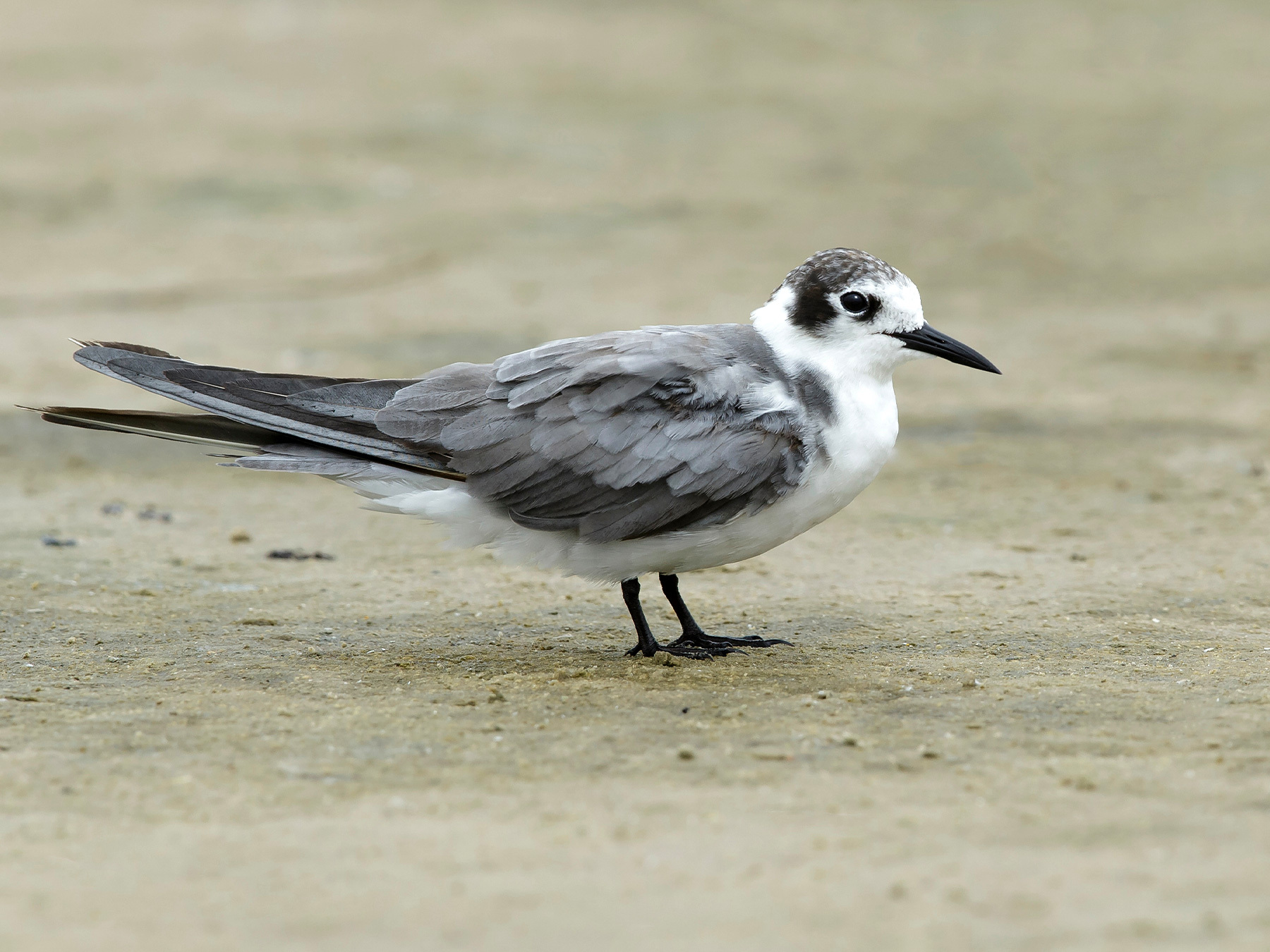
They are much paler in non-breeding plumage, with whitish underparts and pale gray upperparts. Their most distinctive features are a black crown that extends down behind the eye and dark bars on either side of the breast.
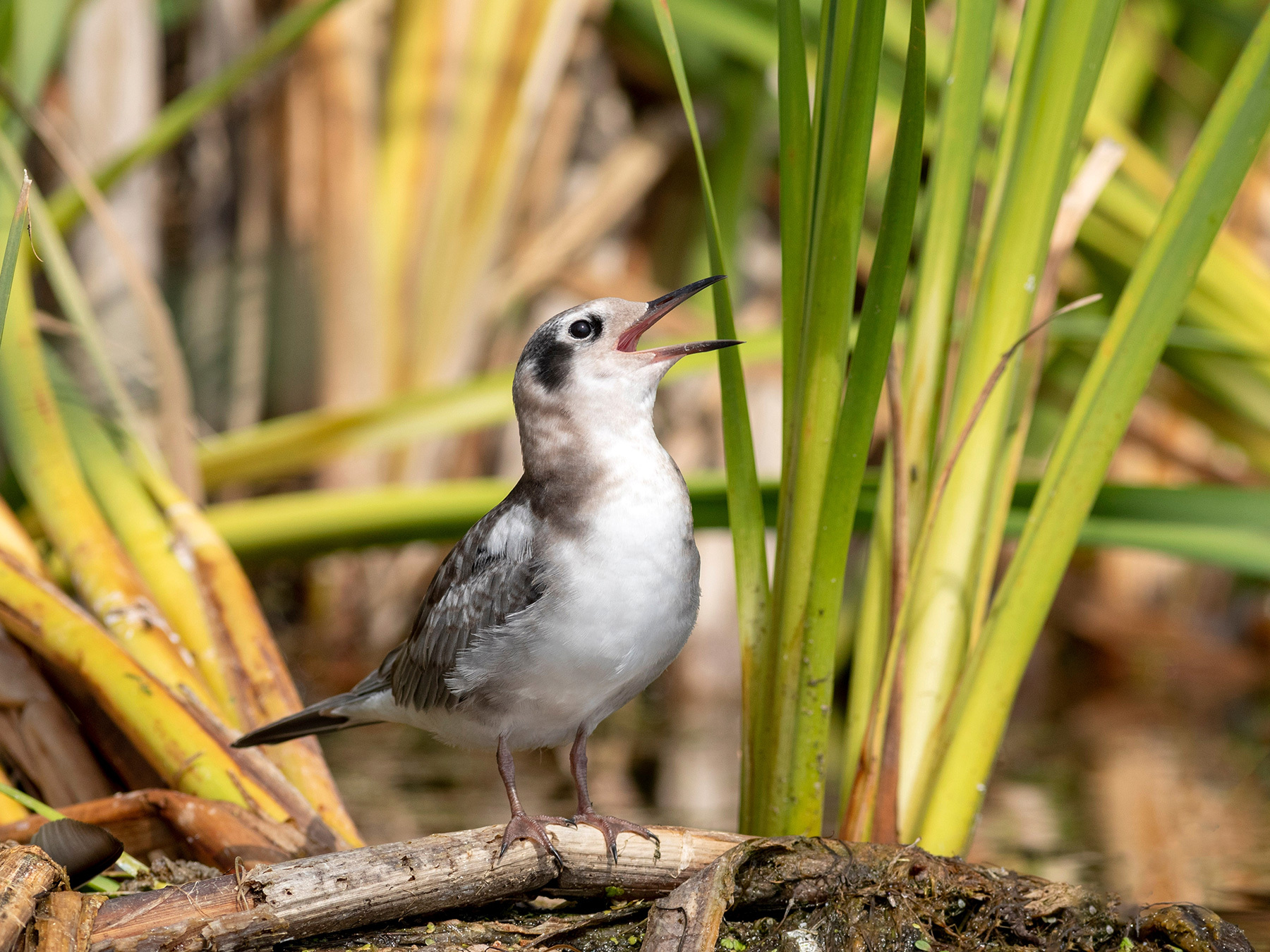
Females Black Terns are similar to males but can be identified by their slightly paler breeding plumage. Juveniles are similar to adults in their pale non-breeding plumage but have brown back feathers with lighter edges. The forehead and base of the bill may be browner than on adults.
How big are Black Terns?
Length
Black Terns are slender birds with a body length of 8⅔ to 11 inches or 22 to 28 centimeters.
Weight
Most adults weigh 1¾ to 2⅛ ounces or 50 to 60 grams, although some reach 3 ounces or 86 grams.
Wingspan
Despite their small body size, these birds have large wings with an impressive wingspan of 22½ to 26¾ inches or 57 to 68 centimeters.
Its size
Adults- Length
- 22–26 cm
- Wingspan
- 56–62 cm
- Weight
- 50–75 g
Its song and calls
What sound does a Black Tern make?
Black Terns produce high-pitched squeaky ‘kik’ or ‘kip’ contact calls in flight. They make longer two or three-syllable calls during courtship and before returning to the nest. They also call frantically when a predator or person approaches their eggs or young.
- Call0:00 / 0:20
Recorded in Minnesota, United States · July 2018
When and where to see it
OctoberLeaving
Most recorded in October
- 1. Cardiffunder 0.1%
- 2. Belfastunder 0.1%
- 3. Dorsetunder 0.1%
- 4. Northumberlandunder 0.1%
- 5. Pembrokeshireunder 0.1%
Each dot is a county, state or province: the bigger and darker, the larger the bird’s share of that place’s bird records that month. Grey dots: no regular records. The ringed point is the centre of the bird’s records this month; the arrow shows how it moved since last month, and the dashed loop its path through the year. “Arrivals” colours places where it becomes regular this month (orange) or is in its last regular month (grey). GBIF eBird Observation Dataset, 2019–2024. Map data: Natural Earth, US Census Bureau; place centres © OpenStreetMap contributors.
In your area
See when the Black Tern is recorded in your county, state or province.
How often the Black Tern turns up in the UK, Ireland, the United States and Canada through the year, from birdwatchers' records.
United Kingdom
Summer visitor · regularly Apr–Oct · most records in August
Ireland
Passage migrant · regularly Aug–Oct · most records in September
United States
Summer visitor · regularly Apr–Sep · most records in August
Canada
Summer visitor · regularly May–Sep · most records in July
Show as a table
| Month | United Kingdom | Ireland | United States | Canada |
|---|---|---|---|---|
| January | – | – | <0.001% | – |
| February | – | – | <0.001% | – |
| March | – | – | <0.001% | – |
| April | 0.012% (regular) | – | 0.009% (regular) | <0.001% |
| May | 0.023% (regular) | <0.001% | 0.042% (regular) | 0.087% (regular) |
| June | 0.015% (regular) | 0.002% | 0.048% (regular) | 0.13% (regular) |
| July | 0.011% (regular) | 0.002% | 0.060% (regular) | 0.14% (regular) |
| August | 0.052% (regular) | 0.028% (regular) | 0.089% (regular) | 0.054% (regular) |
| September | 0.042% (regular) | 0.039% (regular) | 0.039% (regular) | 0.009% (regular) |
| October | 0.006% (regular) | 0.006% (regular) | 0.002% | <0.001% |
| November | 0.001% | – | <0.001% | <0.001% |
| December | – | – | <0.001% | – |
Recorded regularly in
Worldwide: recorded regularly in 83 countries
Countries where it was recorded in at least 3 of the 6 years 2019–2024. Linked countries have their own bird list.
Europe (38)
Africa (14)
Asia (11)
- Armenia
- Azerbaijan
- China
- Cyprus
- Georgia
- Iran
- Israel
- Kazakhstan
- Kyrgyzstan
- Mongolia
- Turkey
North America (15)
- Belize
- Canada
- Cayman Islands
- Costa Rica
- Cuba
- Curaçao
- Dominican Republic
- El Salvador
- Guatemala
- Honduras
- Mexico
- Nicaragua
- Panama
- Puerto Rico
- United States
South America (5)
- Colombia
- Ecuador
- French Guiana
- Peru
- Venezuela
Data: EOD – eBird Observation Dataset (Cornell Lab of Ornithology), accessed via GBIF.org, CC BY 4.0. Records from 2019–2024, aggregated and filtered by Birdfact. How these lists are made
What is the habitat of a Black Tern?
Black Terns inhabit shallow freshwater wetlands and marshes in the spring and summer but shift to marine environments in the winter. They are usually found within about 18 miles (30 km) of the coast, but some have been seen thousands of miles out to sea.
What is the range of a Black Tern?
Black Terns occur in North and South America, Europe, Asia, and Africa. Their North American breeding range includes much of the northern half of the United States and the southern half of Canada. This population winters around Mexico, Central America, and South America to Peru. The Old World population occurs widely in Eastern Europe, Western and Central Asia. They overwinter along the west coast of Africa.
Where do Black Terns live?
Black Terns are highly adaptable creatures that manage to survive in diverse habitats, from shallow ponds to the open ocean. They are primarily associated with water, although they spend much time flying and rarely land on the water.
How rare are Black Terns?
Black Terns can be very common in suitable habitats, although they are sparsely distributed, and their species is in decline. The world population is estimated at 0.8 to 1.75 million individuals.
Where can you see Black Terns in the US?
Black Terns are widespread breeding visitors to the northern half of the lower 48 states, particularly around the Great Lakes and Upper Mid-West. Look out for them flying over large, shallow marshes with emergent vegetation.
Where can you see Black Terns in Canada?
Black Terns are widespread but uncommon in the south of Canada, reaching the south of the Northwest Territories in summer. They are most numerous in the Canadian Prairie region of the west.
Where can you see Black Terns in the UK?
Hundreds of Black Terns migrate through the United Kingdom each spring and autumn. Although scarce, they could be seen over practically any freshwater habitat.
Migration
Do Black Terns migrate?
Black Terns are highly migratory across their range. These birds migrate between equatorial and southern hemisphere coastal overwintering grounds and nesting areas on freshwater wetlands in the temperate zone of the Northern Hemisphere.
Are Black Terns native to North America?
Black Terns are native breeding and overwintering birds in North America. The subspecies found in North and South America are known scientifically as Chlidonias niger surinamensis.
Are Black Terns native to the UK?
Black Terns do not normally live or breed in the United Kingdom. They once bred there in large numbers, but sadly they are now extinct as a breeding visitor due to widespread wetland drainage. Today they occur as passage migrants between Continental Europe and Africa. The specimens seen in the UK are of the subspecies C. n. niger.
Tips for seeing it
- Look for Black Terns over freshwater marshes and lakes during summer months.
- Observe their distinctive dipping flight as they feed on insects above the water.
- Listen for their sharp, high-pitched 'kik' or 'kik-kik' calls.
- In the US and Canada, visit wetland areas from May to August for the best chance of sightings.
What it eats
What do Black Terns eat?
Black Terns are carnivores that prey on small fish, insects, and amphibians. They snatch food near the water’s surface or from the air but do not dive.
What do Black Tern chicks eat?
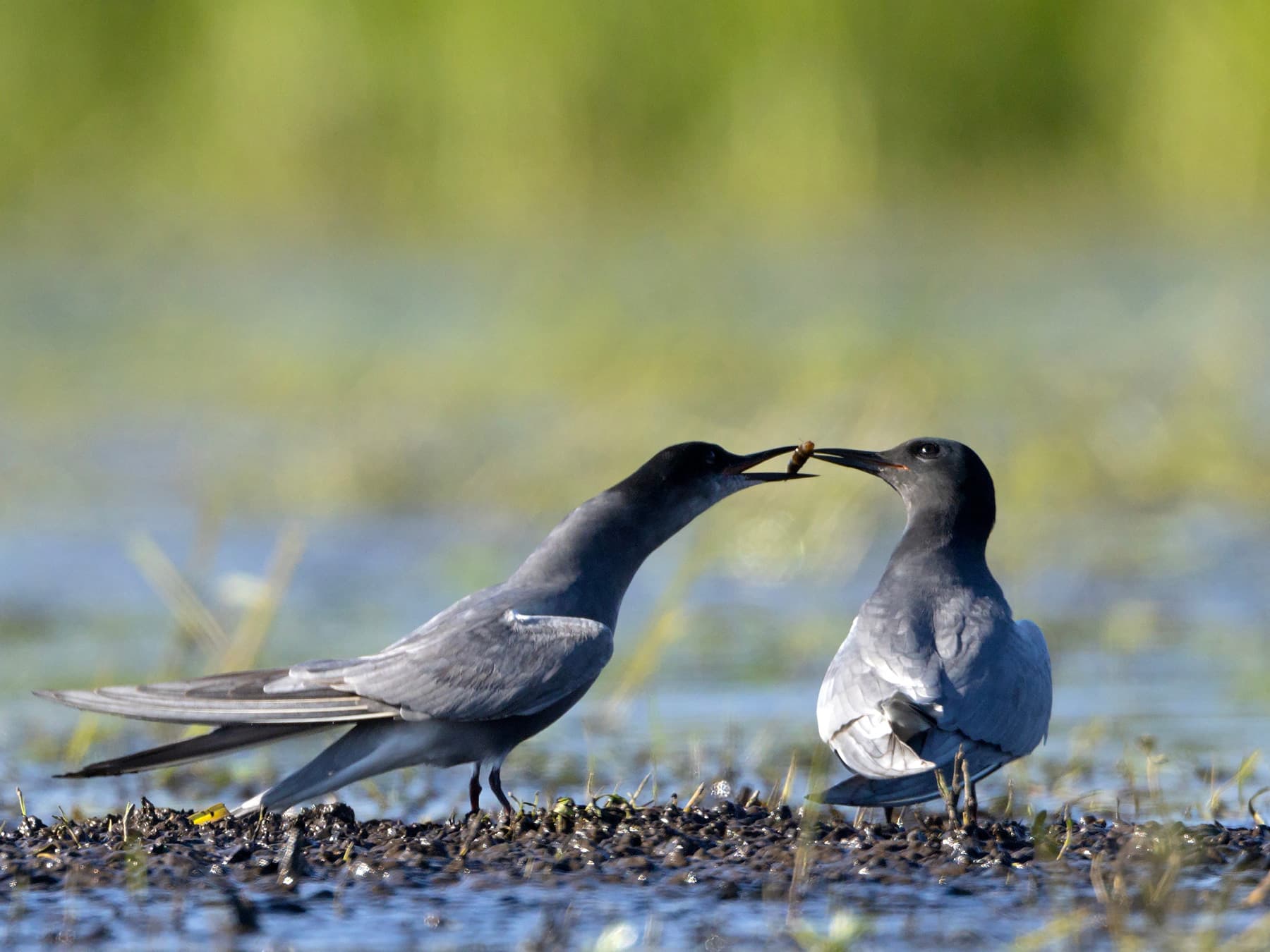
Black Tern chicks eat insects and small fish provided by their parents for up to five weeks. Both parents deliver food, bringing one meal at a time.
Nesting and breeding
Where do Black Terns nest?
Black Terns nest on extensive marshes with plenty of emergent vegetation like cattails and bulrushes. The nest is usually made on top of floating plant material, just a few inches above the water. The nest is made from similar materials arranged to form a shallow bowl. Floating plants may seem like a very risky place to nest, but the habitat reduces the threat of mammal predators like raccoons.
When do Black Terns nest?
Black Terns nest in the spring and summer, usually producing a single brood each year. They lay their eggs in late May or June, and incubation lasts about three weeks (20 - 23 days). The chicks fledge about three weeks later.
What do Black Tern eggs look like?
Black Terns typically lay three speckled and blotched eggs with an olive to pale brownish background color. The eggs measure approximately 34 millimeters long and 24 millimeters wide.
Do Black Terns mate for life?
These birds are monogamous during the nesting season. Pairs may reunite at the nest site in successive years, but most will find a new partner.
Behaviour
Are Black Terns aggressive?
Black Terns are rarely aggressive toward their own kind, although they are courageous in protecting their eggs and young from predators. They will divebomb and peck humans and predators that approach their nest.
Where do Black Terns sleep at night?
Black Terns roost in colonies on mudflats and beaches when not breeding. On the nesting grounds, they may sleep on floating vegetation, fallen tree branches, or their nest. They perch on floating debris and seaweed out at sea.
Lifespan and predators
How long do Black Terns live?
Black Terns can live for up to 17 years.
What are the predators of Black Terns?
Black Tern eggs and chicks are vulnerable to many predators, including:
- Great Blue Heron
- Northern Harrier
- Black-crowned Night-Heron
- Great Horned Owl
- Mink
- Rats
- Raccoons
Are Black Terns protected?
Black Terns are federally protected by the Migratory Bird Treaty Act of 1918 in the United States and the Migratory Birds Convention Act in Canada. Migrating birds in the United Kingdom are protected by the Wildlife and Countryside Act 1981.
Are Black Terns endangered?
Black Terns are not globally endangered, although they have suffered alarming declines and are listed as endangered locally in many US states, including New York, Wisconsin, and Pennsylvania.
Why are Black Terns endangered?
Black Terns rely on extensive shallow wetlands for breeding and a variety of other freshwater habitats during migration. Habitat loss through wetland drainage and degradation are the major causes of their decline.
Conservation
While currently listed as Least Concern globally, Black Tern populations have declined in parts of North America due to wetland habitat loss and degradation.
Conservation efforts focus on protecting and restoring breeding habitats, particularly in the Great Lakes region and prairie pothole areas.
More photos
5 photos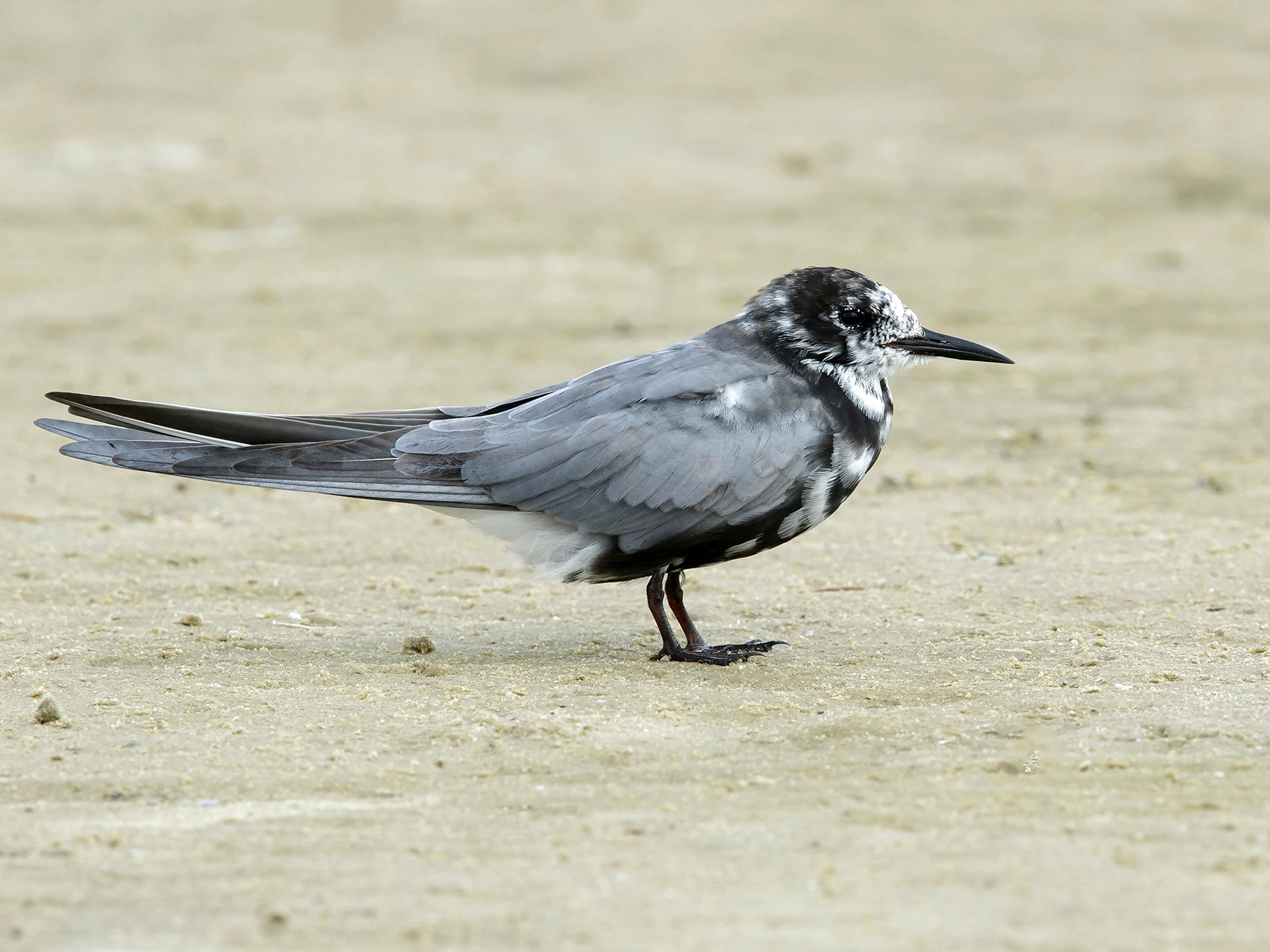
Black Tern guides
3 guidesQuick facts
- Length
- 22–26 cm
- Wingspan
- 56–62 cm
- Weight
- 50–75 g
- Lifespan
- 8 years · oldest recorded 21 years
- Family
- Gulls & Terns
- Migration
- Long-distance Migrant
- Global status (IUCN)
- Least Concern
- World population
- 800,000 - 1,750,000 mature individuals
- Population trend
- Decreasing
- Also called
- Short-tailed Tern
- Scientific name
- Chlidonias niger
Sources
4- 1BirdLife International. 2019. Chlidonias niger (amended version of 2018 assessment). The IUCN Red List of Threatened Species 2019: e.T22694787A155491450. Source (opens in a new tab)
- 2BirdLife International. 2019. Chlidonias niger (amended version of 2018 assessment). The IUCN Red List of Threatened Species 2019: e.T22694787A155491450. Source (opens in a new tab)
- 3Wetlands International (2015)
- 4Fransson et al., EURING list of longevity records for European birds (2010) Source (opens in a new tab)

Checked by
Nathan Cope, founder and editor
Nathan founded Birdfact and leads its writers and contributors in the UK, the US and Canada. He has watched and studied birds for more than ten years, and checks every article and species guide before it’s published.