


Yellow-legged Gull
Larus michahellis
By the Birdfact teamChecked by Nathan Cope
On this page14 sections
How to recognise it
What do Yellow-legged Gulls look like?
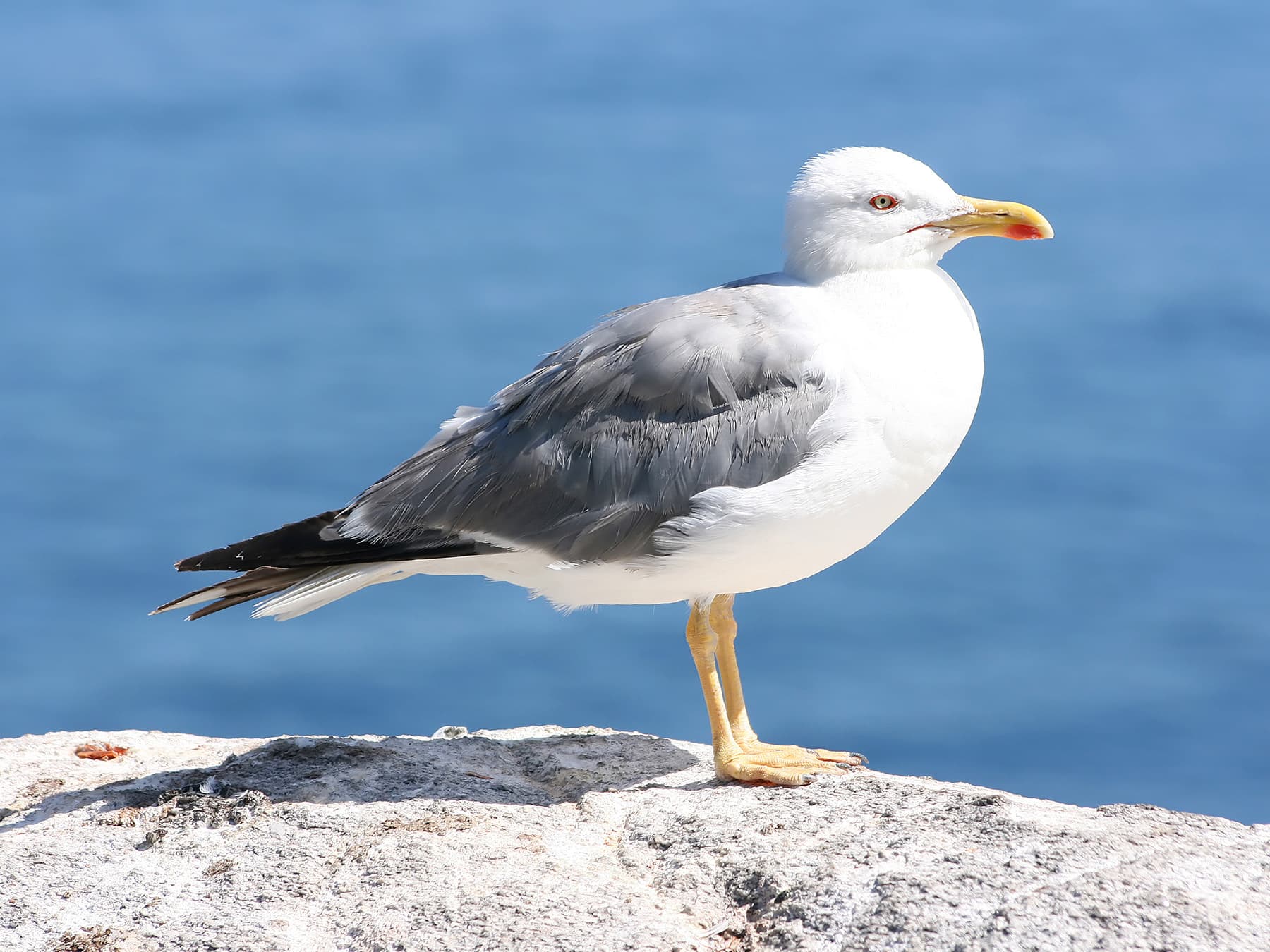
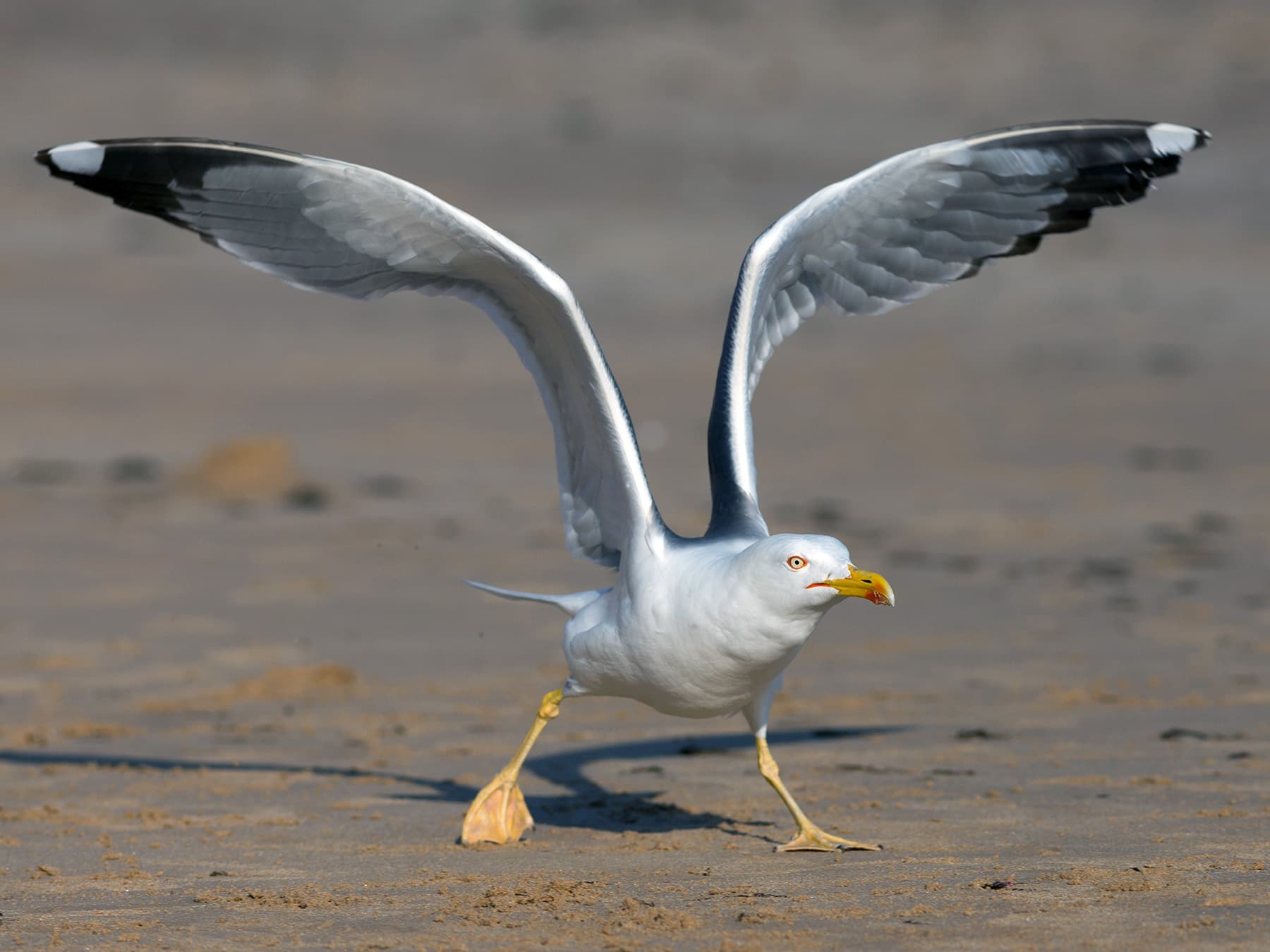
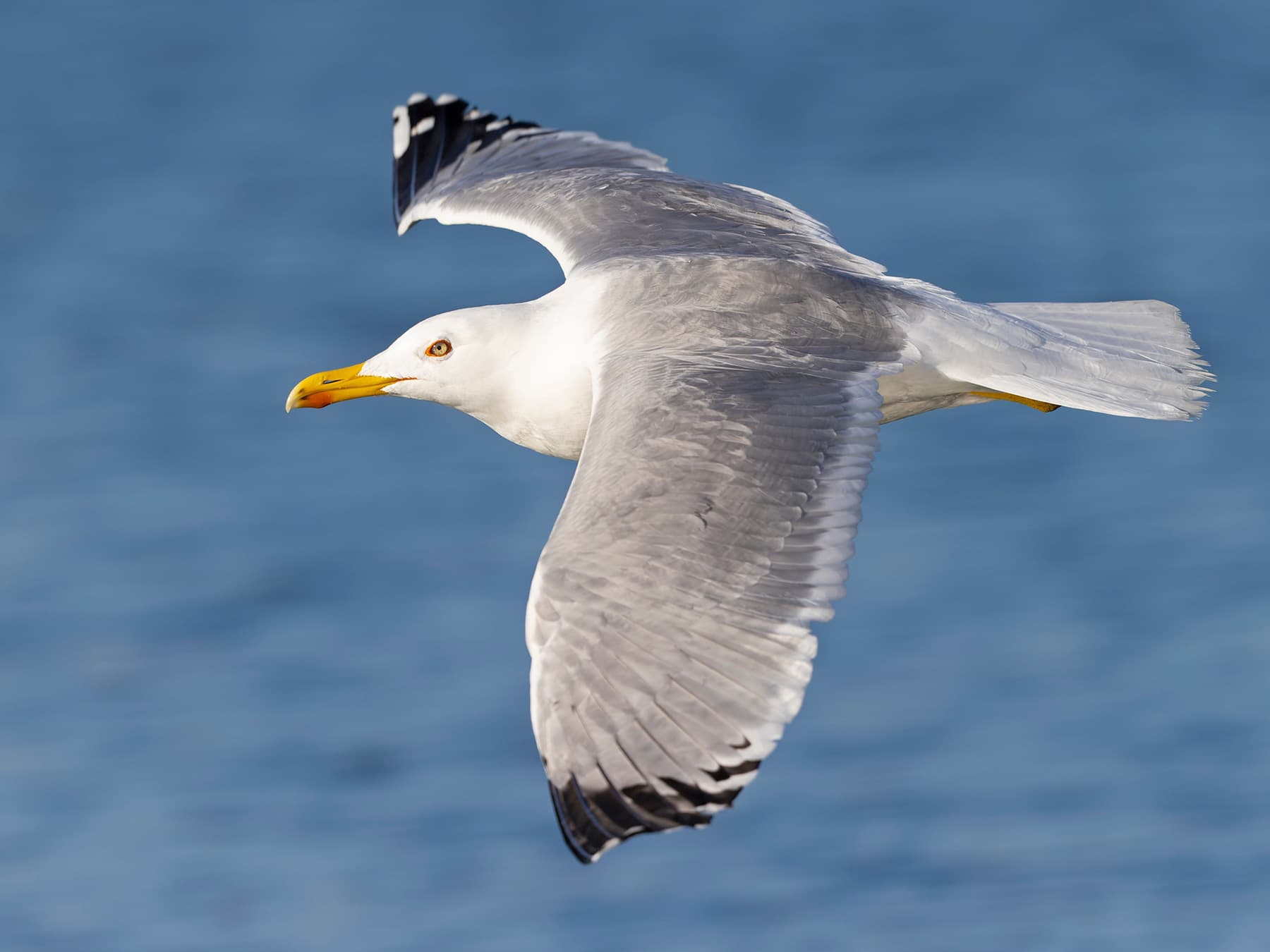
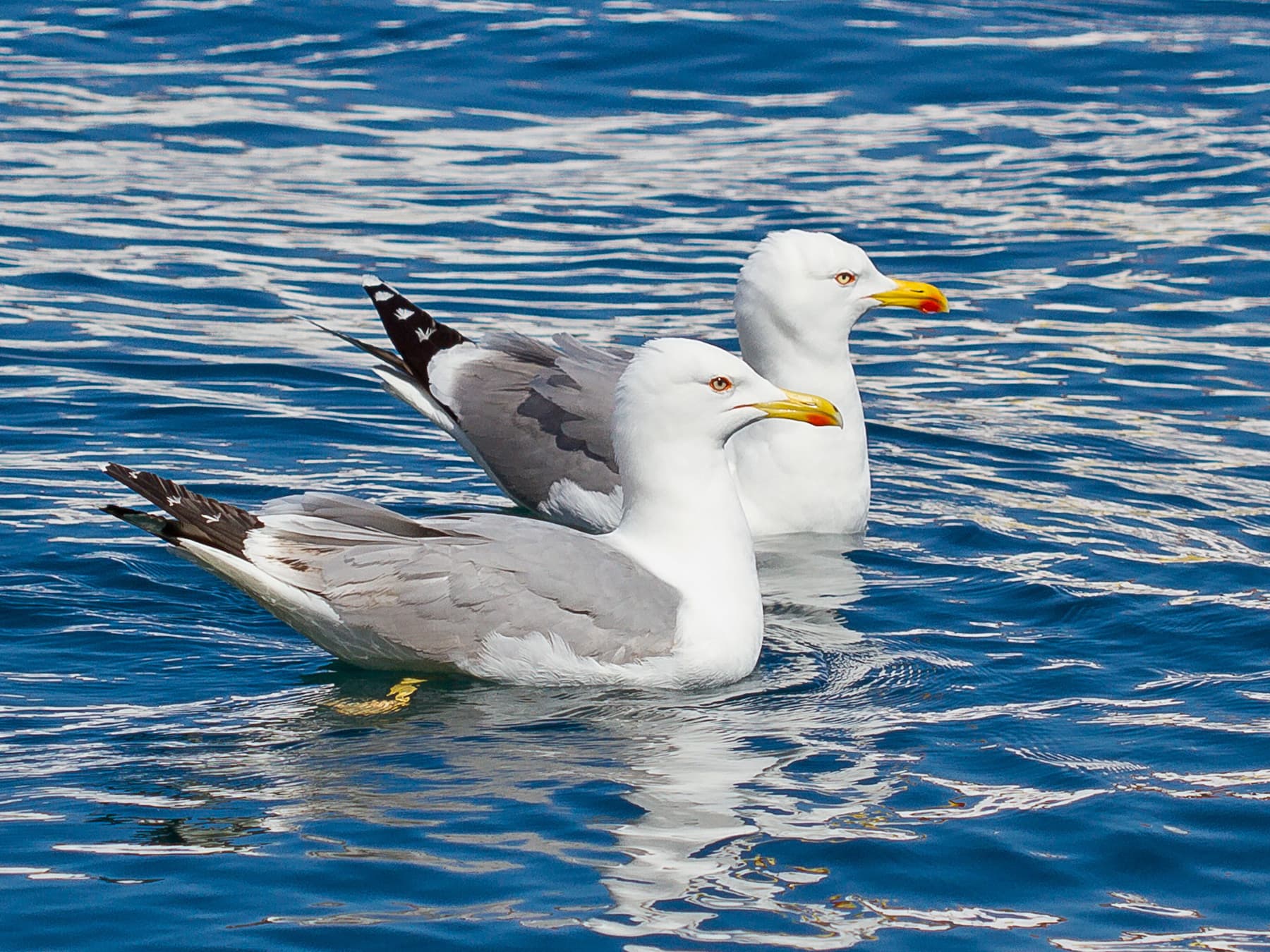
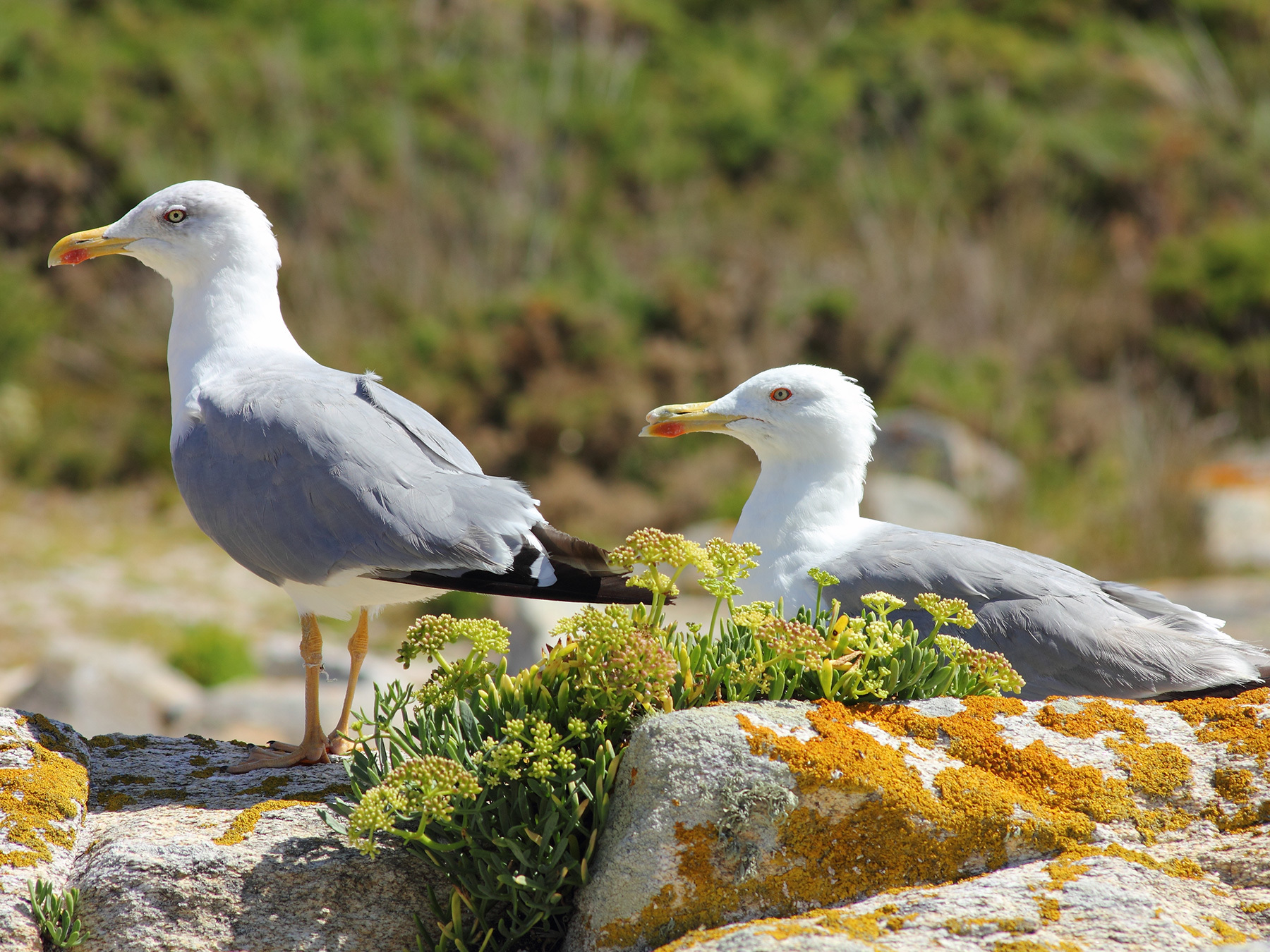
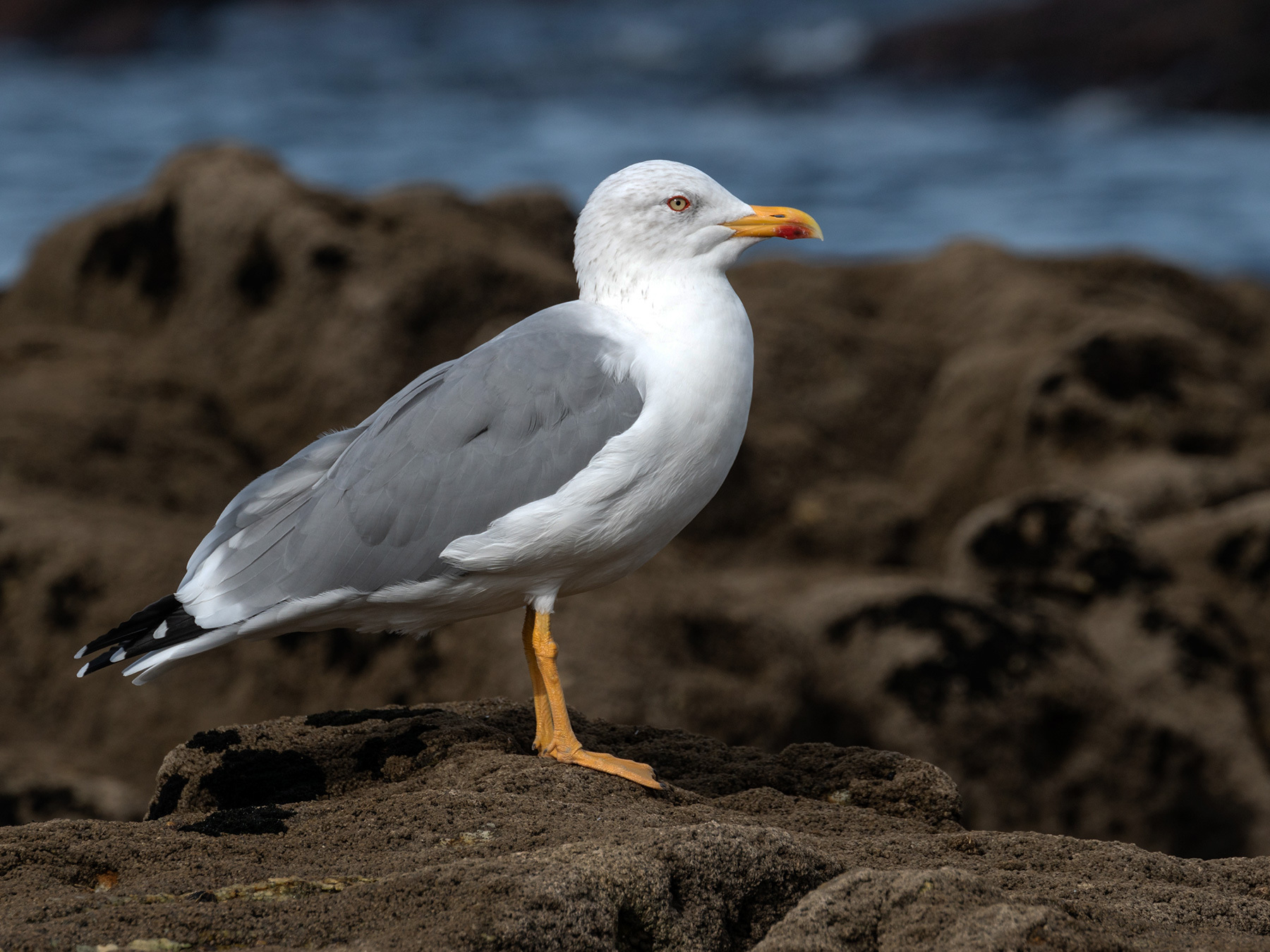
The breeding plumage of adult yellow-legged gulls is very similar to that of herring gulls, although can be told apart as the back and wings of a yellow-legged gull are a darker shade of grey. They are white all over, except for grey upper wings, and black wing tips, which feature boldly contrasting round white markings.
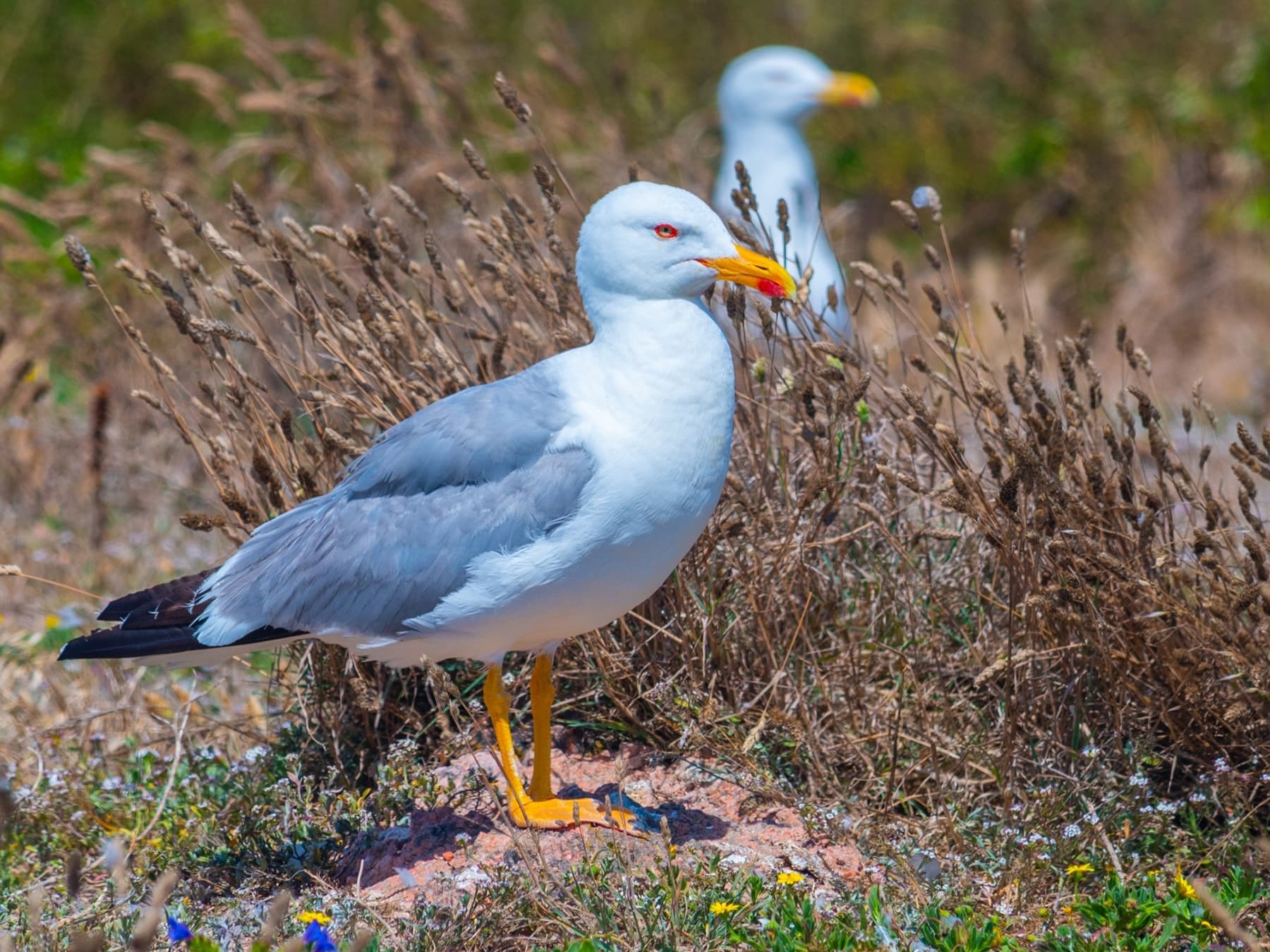
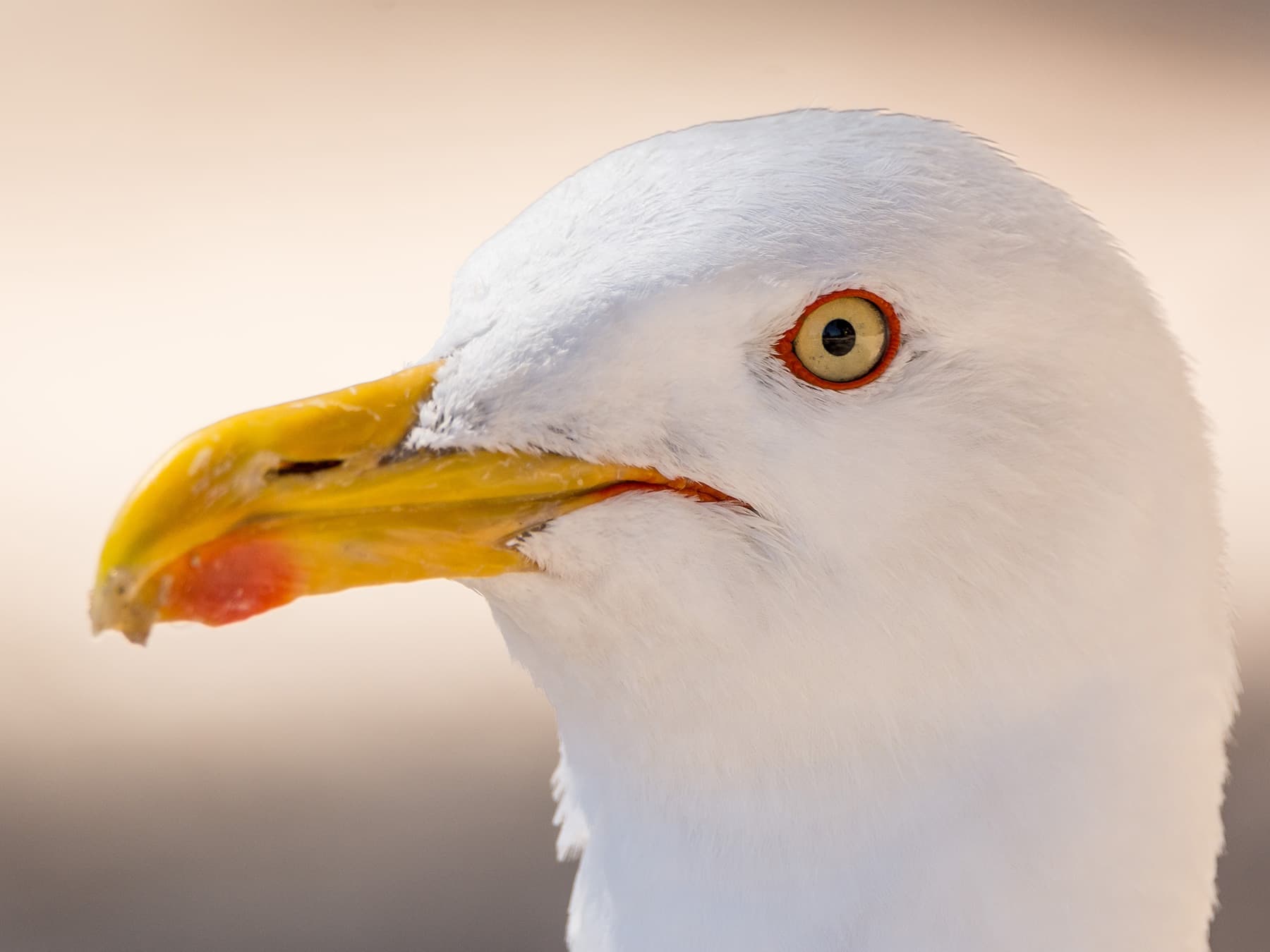
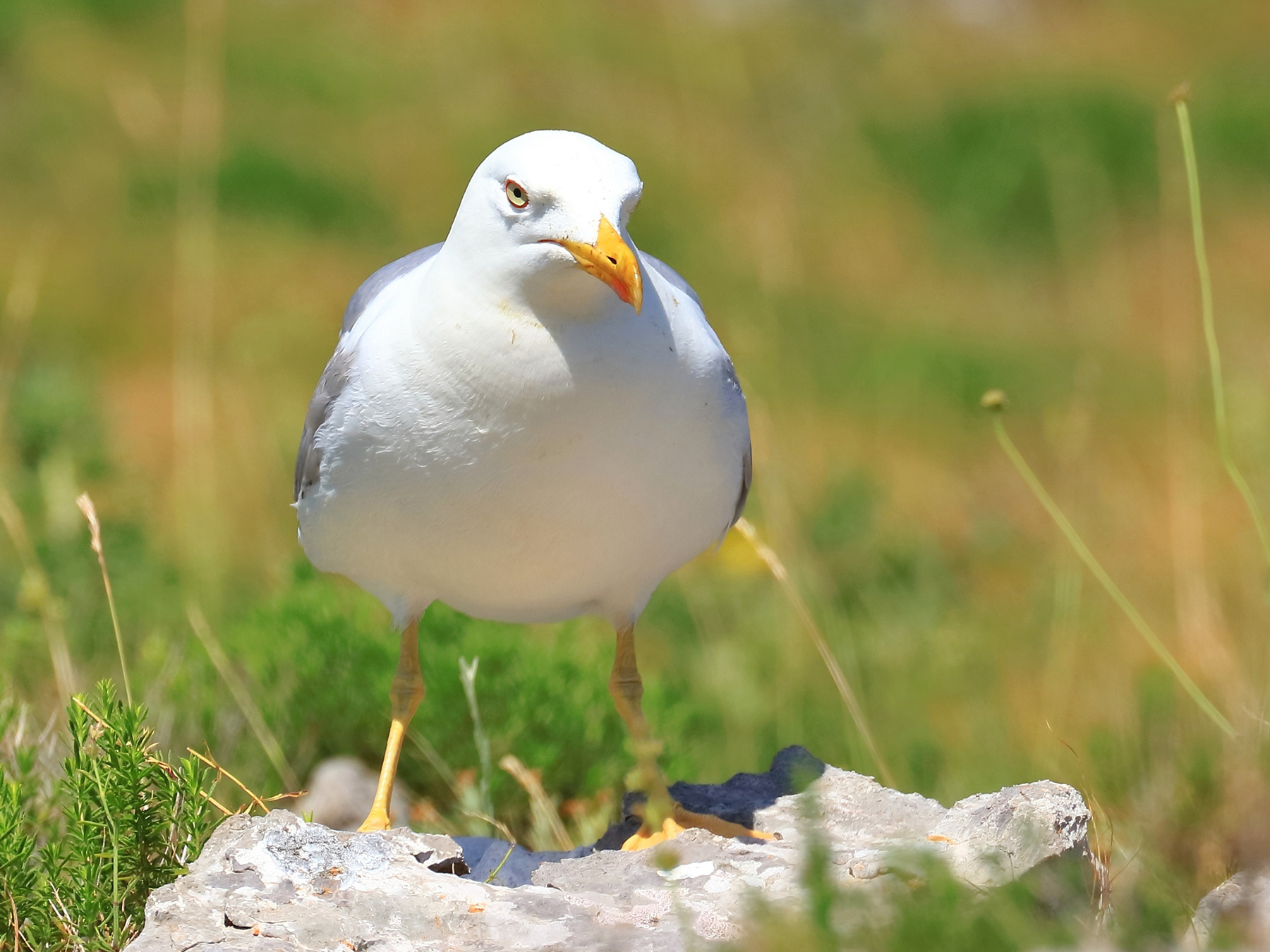
Yellow-legged gulls have yellow eyes that are ringed with red. Their yellow bill is stout and powerful, with a downward hook at the end, and features a large red spot towards the tip.
In non-breeding season, some streaky markings may be visible on the head, and the grey back feathers become darker in tone.
Despite their name, not all birds have bright yellow legs, with small numbers of Spain’s resident yellow-legged gulls actually having pink legs and feet. In winter, a yellow-legged gull’s legs darken.
Males and females are alike in appearance, with no obvious differences between the two, although side-by-side it may be possible to distinguish between sexes as the female’s bill is slightly narrower and shorter.
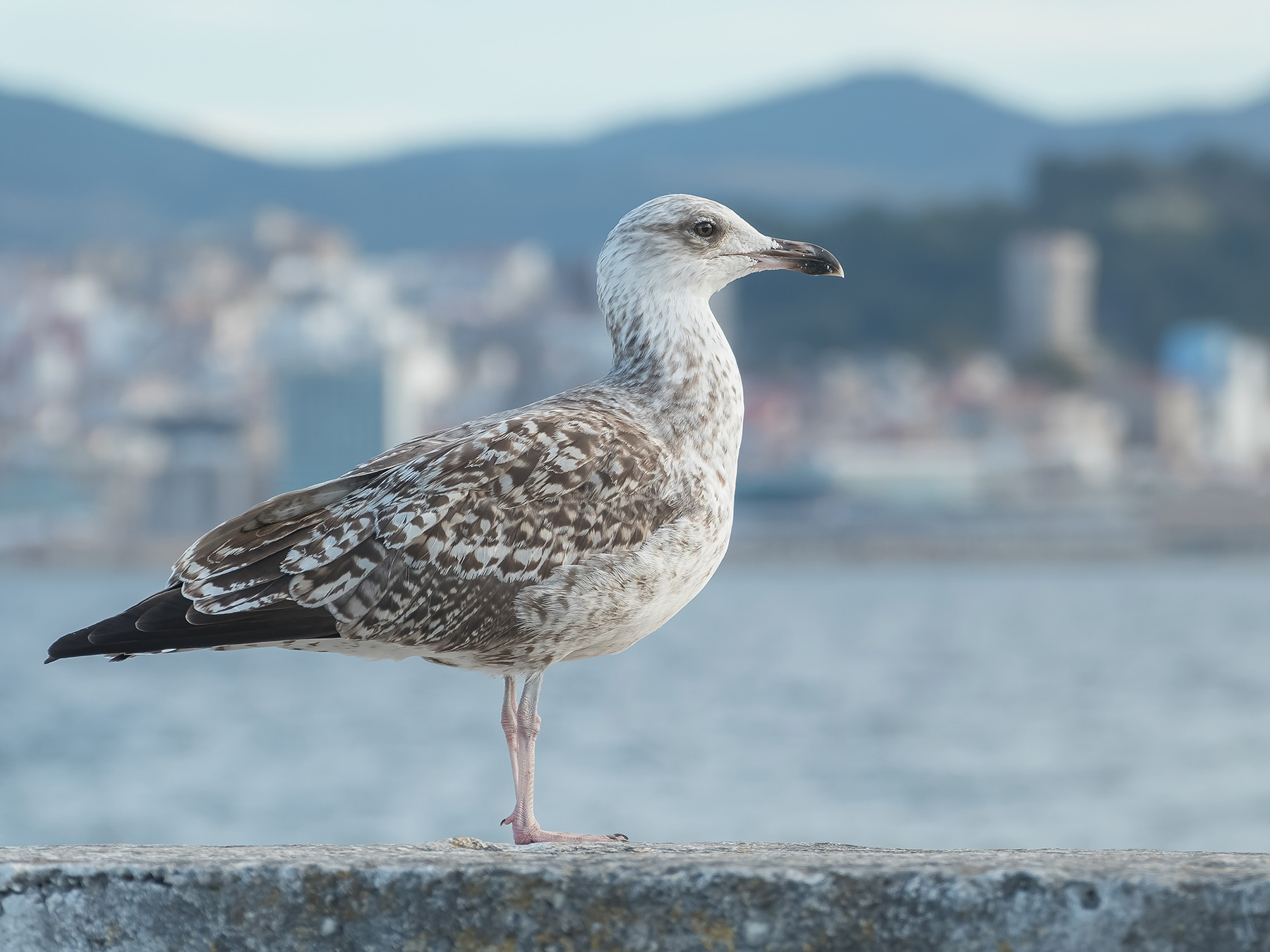
Juvenile yellow-legged gulls develop their full adult plumage over the course of the first five years of their life. First-winter birds are large and brownish-grey, with a whiter face and dark eye mask. Their backs and wings are mottled darker brown and they have a black tail band, while their breast and belly is creamy buff, streaked with lighter brown. The bill of young yellow-legged birds is black and their legs are brownish-pink.
By their second winter, juvenile birds have acquired a white plumage, with a grey back and dark brown wings, and their bill remains dark. Year after year, their plumage gradually changes to mirror that of an adult bird, with the colour of bill and the legs being a giveaway sign that a yellow-legged bird is not fully mature.
How big are Yellow-legged Gulls?
Male yellow-legged gulls are larger than females, in head size, bill length and width and overall mass. They are a large gull species, similar in size to herring gulls.
- Length: 52 cm to 67 cm (20 in to 27 in)
- Weight: 420 g to 1600 g (14.9 oz to 56.4 oz)
- Wingspan 120 cm to 155 cm (47 in to 51 in)
Its size
Adults- Length
- 52–68 cm
- Wingspan
- 120–155 cm
- Weight
- 550–1600 g
Its song and calls
What sound does a Yellow-legged Gull make?
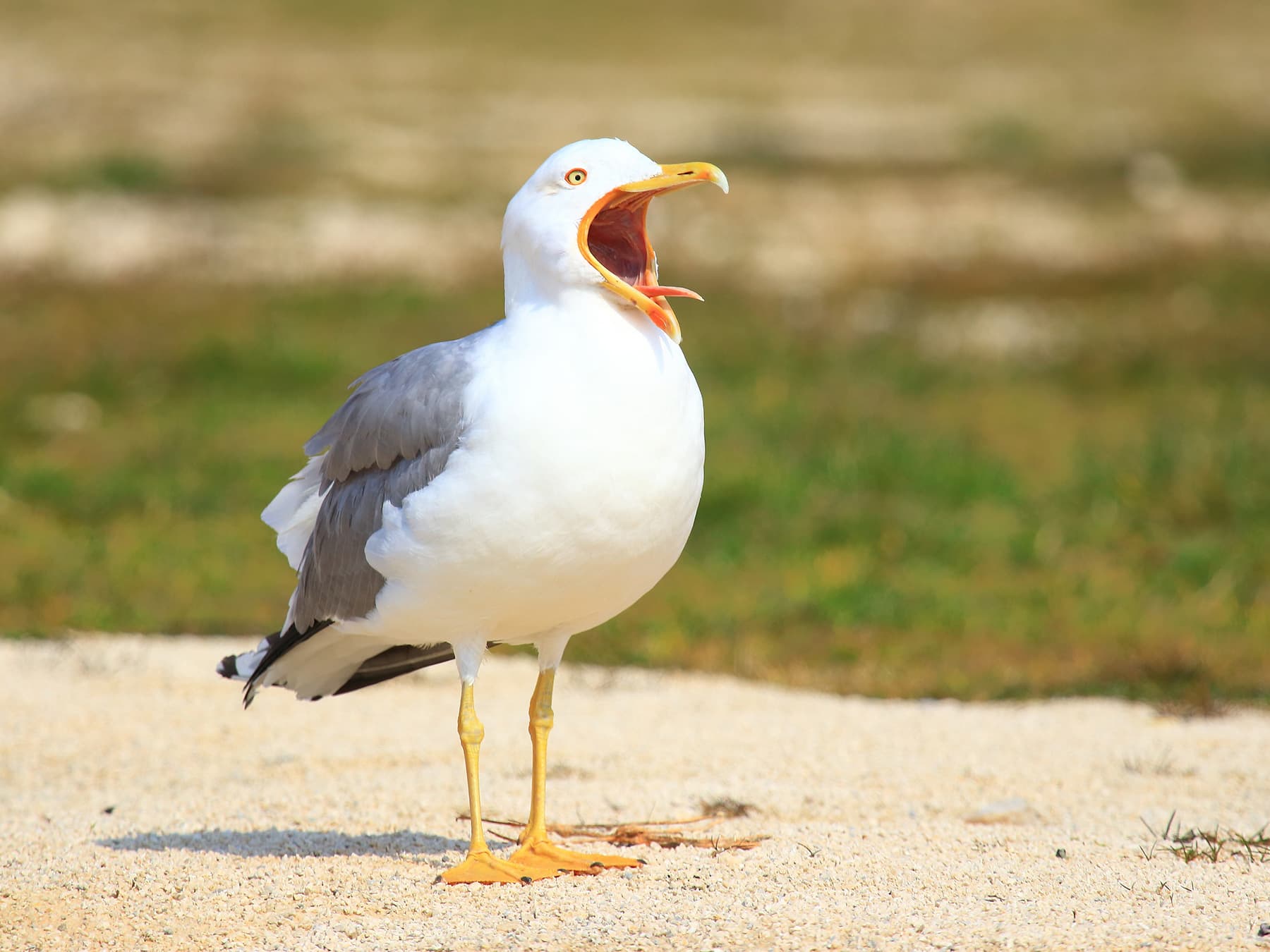
Yellow-legged gulls are quite a vocal species, with a low hoarse ‘kaaw’ call, similar to that of a lesser black-backed gull.
A longer call heard throughout the breeding season consists of up to 25 elements. When threats are sensed, a ‘ow-ow-ow’ call is repeated, and a loud, extended ‘aaooow’ is used as an alarm call.
- Call0:00 / 0:39
Recorded in Toscana, Italy · February 2021
Giovanni Francesco Tartarelli · xeno-canto XC624044 · CC BY 4.0
When and where to see it
OctoberIn season
Most recorded in October
- 1. Carlow1.3%
- 2. Rutland0.64%
- 3. Cambridgeshire0.27%
- 4. Essex0.18%
- 5. Oxfordshire0.16%
Each dot is a county, state or province: the bigger and darker, the larger the bird’s share of that place’s bird records that month. Grey dots: no regular records. The ringed point is the centre of the bird’s records this month; the arrow shows how it moved since last month, and the dashed loop its path through the year. “Arrivals” colours places where it becomes regular this month (orange) or is in its last regular month (grey). GBIF eBird Observation Dataset, 2019–2024. Map data: Natural Earth, US Census Bureau; place centres © OpenStreetMap contributors.
In your area
See when the Yellow-legged Gull is recorded in your county, state or province.
How often the Yellow-legged Gull turns up in the UK and Ireland through the year, from birdwatchers' records.
United Kingdom
Resident · all year · most records in August
Ireland
Resident · all year · most records in October
Show as a table
| Month | United Kingdom | Ireland |
|---|---|---|
| January | 0.049% (regular) | 0.030% (regular) |
| February | 0.043% (regular) | 0.017% (regular) |
| March | 0.028% (regular) | 0.006% (regular) |
| April | 0.017% (regular) | 0.004% (regular) |
| May | 0.015% (regular) | 0.005% (regular) |
| June | 0.024% (regular) | 0.012% (regular) |
| July | 0.098% (regular) | 0.013% (regular) |
| August | 0.13% (regular) | 0.038% (regular) |
| September | 0.085% (regular) | 0.022% (regular) |
| October | 0.065% (regular) | 0.039% (regular) |
| November | 0.063% (regular) | 0.018% (regular) |
| December | 0.056% (regular) | 0.020% (regular) |
Recorded regularly in
Worldwide: recorded regularly in 52 countries
Countries where it was recorded in at least 3 of the 6 years 2019–2024. Linked countries have their own bird list.
Europe (37)
Africa (8)
- Algeria
- Cape Verde
- Egypt
- Libya
- Morocco
- Senegal
- Tunisia
- Western Sahara
Data: EOD – eBird Observation Dataset (Cornell Lab of Ornithology), accessed via GBIF.org, CC BY 4.0. Records from 2019–2024, aggregated and filtered by Birdfact. How these lists are made
What is the habitat of a Yellow-legged Gull?
Yellow-legged gulls are mostly found in coastal habitats, as well as occasionally on lakes and inland rivers, rocky shores of beaches and reservoirs, small islets and lagoons. Increasingly, yellow-legged gulls are moving further inland to urban areas where it thrives of landfill sites and is considered an invasive species.
What is the range of a Yellow-legged Gull?
The distribution range of yellow-legged gulls typically stretches along the coasts of the Mediterranean and Black seas, as well as breeding along the Atlantic coast of France, Spain, Portugal and Morocco. To the north, populations are found in Britain, southern Sweden and eastern Denmark. Vagrant visitors are not entirely uncommon in Norway and Iceland.
To the west, the species is fairly widespread around the coast of Greece and the Greek islands, northern Turkey and western Bulgaria, and as far south as coastal Algeria, Tunisia, Libya and Egypt.
Occasional records of yellow-legged gulls reaching parts of North America, in particular the north-eastern coast of the United States.
Where do Yellow-legged Gulls live?
The European population of yellow-legged gulls is estimated at up to 534,000 pairs. Numbers are increasing in France, Spain and Portugal. Countries with the largest populations include Turkey, France, Spain, Portugal, Italy and Croatia.
How rare are Yellow-legged Gulls?
Across their European range, yellow-legged gulls are relatively common and widespread. In the UK, breeding is rare, with only a handful of pairs raising young in the British Isles each year. However, in late summer and autumn, numbers are boosted by the arrival of migrating birds and around 840 birds are present, with increases shown in recent years due to the northward extension of the species’ range deeper into northwestern Europe.
Where can you see Yellow-legged Gulls in the UK?
The most likely region for year-round yellow-legged gull sightings is southern England, with some breeding established on the south coast.
From a distance, it’s hard to tell the difference between yellow-legged gulls and herring gulls, but spotting the telltale yellow legs and red beak spot helps with accurately confirming a sighting, and UK numbers may be higher than originally thought.
Numbers of verified UK sightings become more widespread in late summer and autumn after the breeding season has ended.
Migration
Do Yellow-legged Gulls migrate?
While yellow-legged gulls are largely sedentary birds, with most birds in western Mediterranean regions and along the Atlantic coast rarely moving more than 100 km from their nesting grounds. However, some movement does occur at the end of the breeding season, with northward dispersal common in late summer, and a return to southern regions by mid-winter.
Are Yellow-legged Gulls native to the UK?
Yellow-legged gulls can be seen in the UK all year round, although are far more numerous in winter months after the breeding season ends and birds disperse from their spring and summer territories. Only a handful of yellow-legged gulls breed in the UK, although individuals or pairs can be spotted at any time of the year.
Tips for seeing it
- Look for Yellow-legged Gulls in coastal areas, particularly around harbours and beaches
- Observe their distinctive yellow legs to differentiate them from similar gull species
- Listen for their loud, harsh 'kyow' call, especially during breeding season
- In the UK, check large gull flocks carefully, as Yellow-legged Gulls are less common but increasing in numbers
What it eats
What do Yellow-legged Gulls eat?
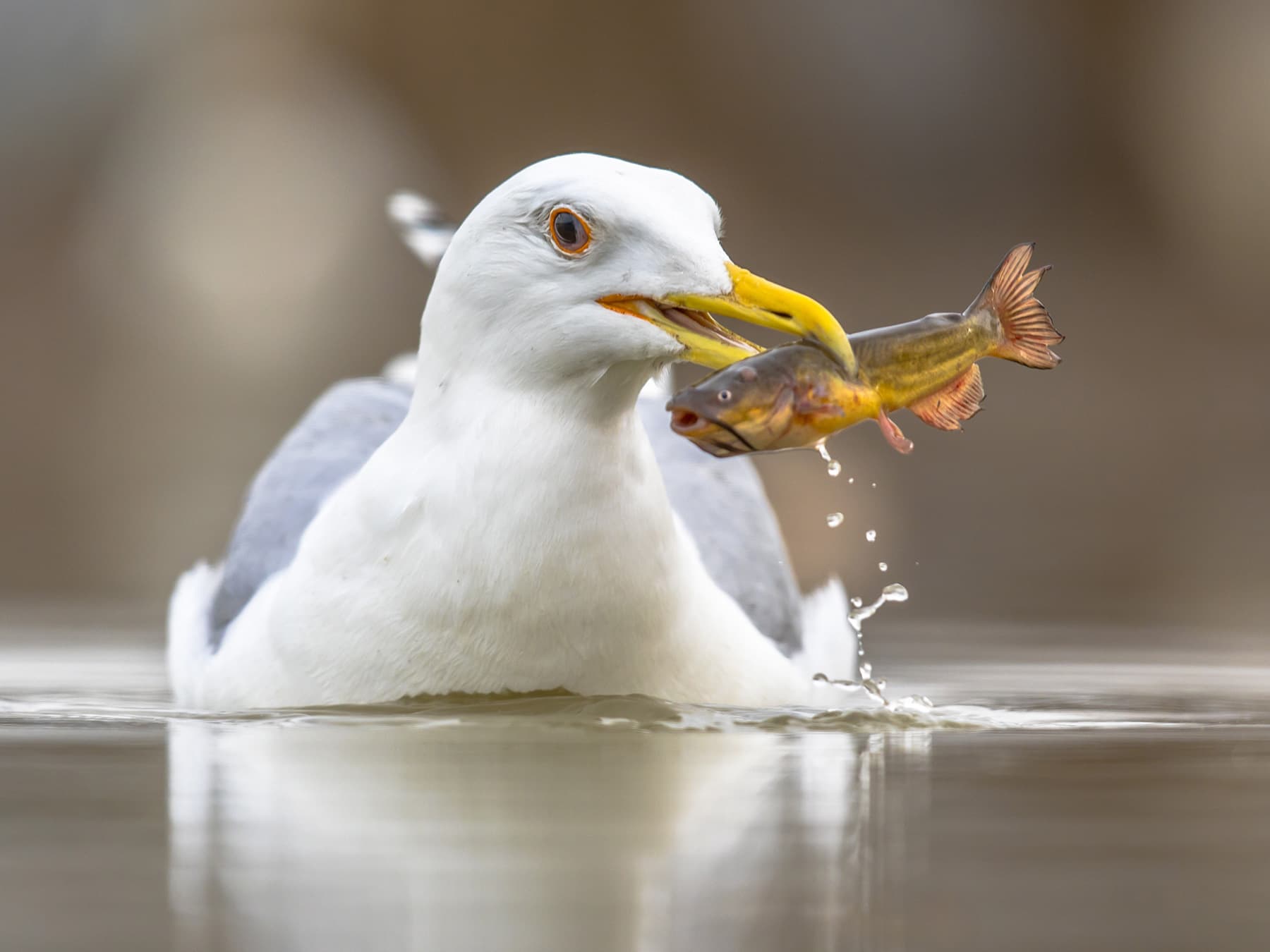
Yellow-legged gulls are opportunistic scavengers and will eat anything they can find, including carrion, roadkill and leftover scraps, as well as the eggs and young of other birds.
They hunt for fish by making shallow dives beneath the ocean surface, but are equally at home mobbing other birds for their prey or picking through landfill sites looking for anything edible.
What do Yellow-legged Gull chicks eat?
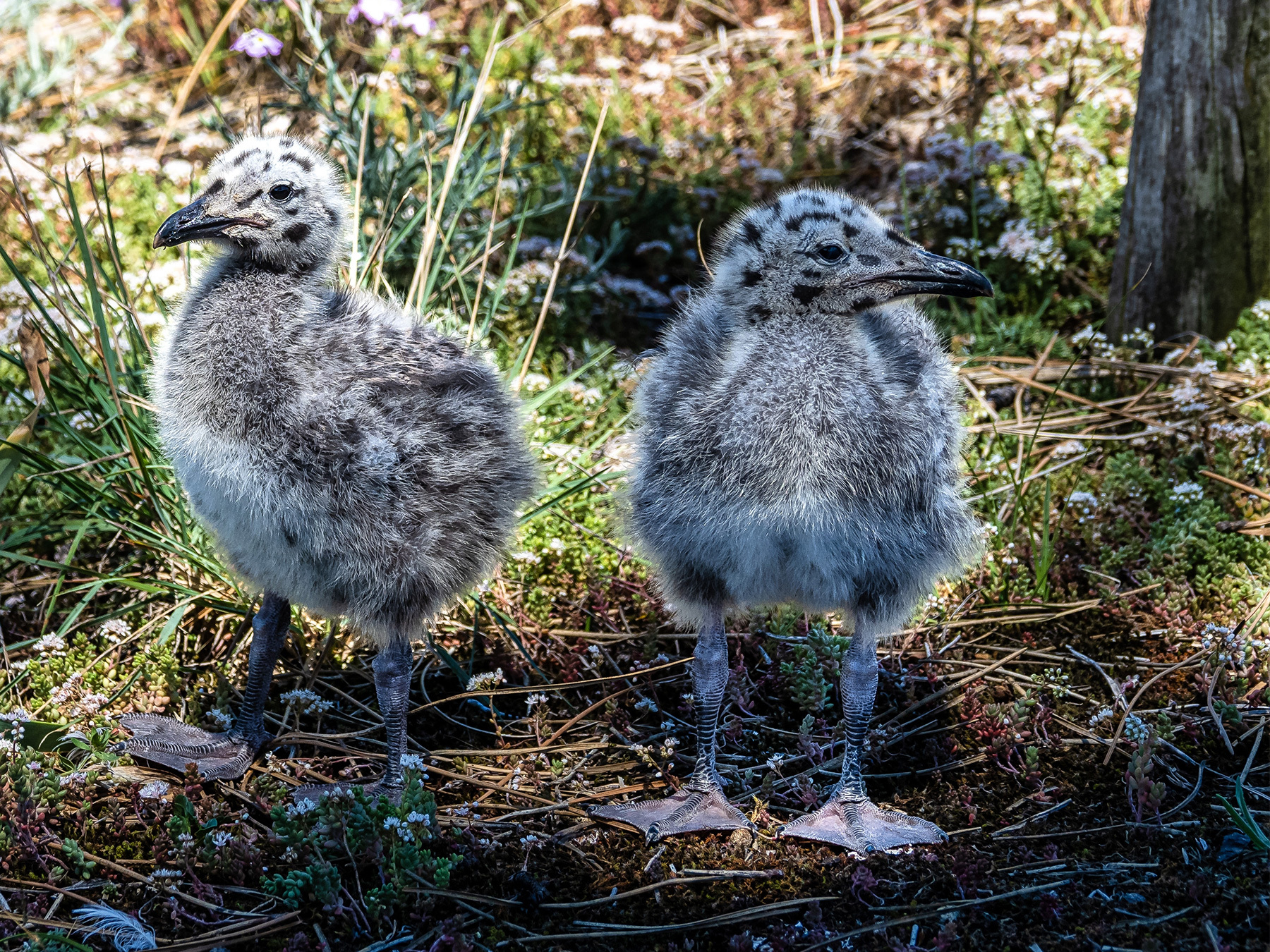
Where possible, yellow-legged gulls feed their young on fish, regurgitating partly digested food into the mouths of their chicks.
If no fish are available, yellow-legged gull chicks will eat whatever their parents can scavenge for them for the first few weeks after fledging, and young birds continue to beg for food for up to 6 months after leaving the nest.
Nesting and breeding
Where do Yellow-legged Gulls nest?
Nests of yellow-legged gulls do not necessarily need to be within close proximity of water, with some sites up to several hundred metres from the coast chosen. A range of different nest sites have been observed, including cliff top colonies with up to 8,000 birds. Nests are commonly located close to or tucked away under shrubs or in small wooded areas with nests placed in the forks of willow trees.
In more urban settings, rooftop nests are becoming increasingly common. Pairs work together to construct a nest from grasses, twigs and debris, which is then lined with feathers and grasses.
When do Yellow-legged Gulls nest?
Eggs are laid from late March to mid-April, depending on location, with later breeding recorded in more northerly latitudes. Incubation lasts for 26 to 30 days and is shared between the male and female.
What do Yellow-legged Gull eggs look like?
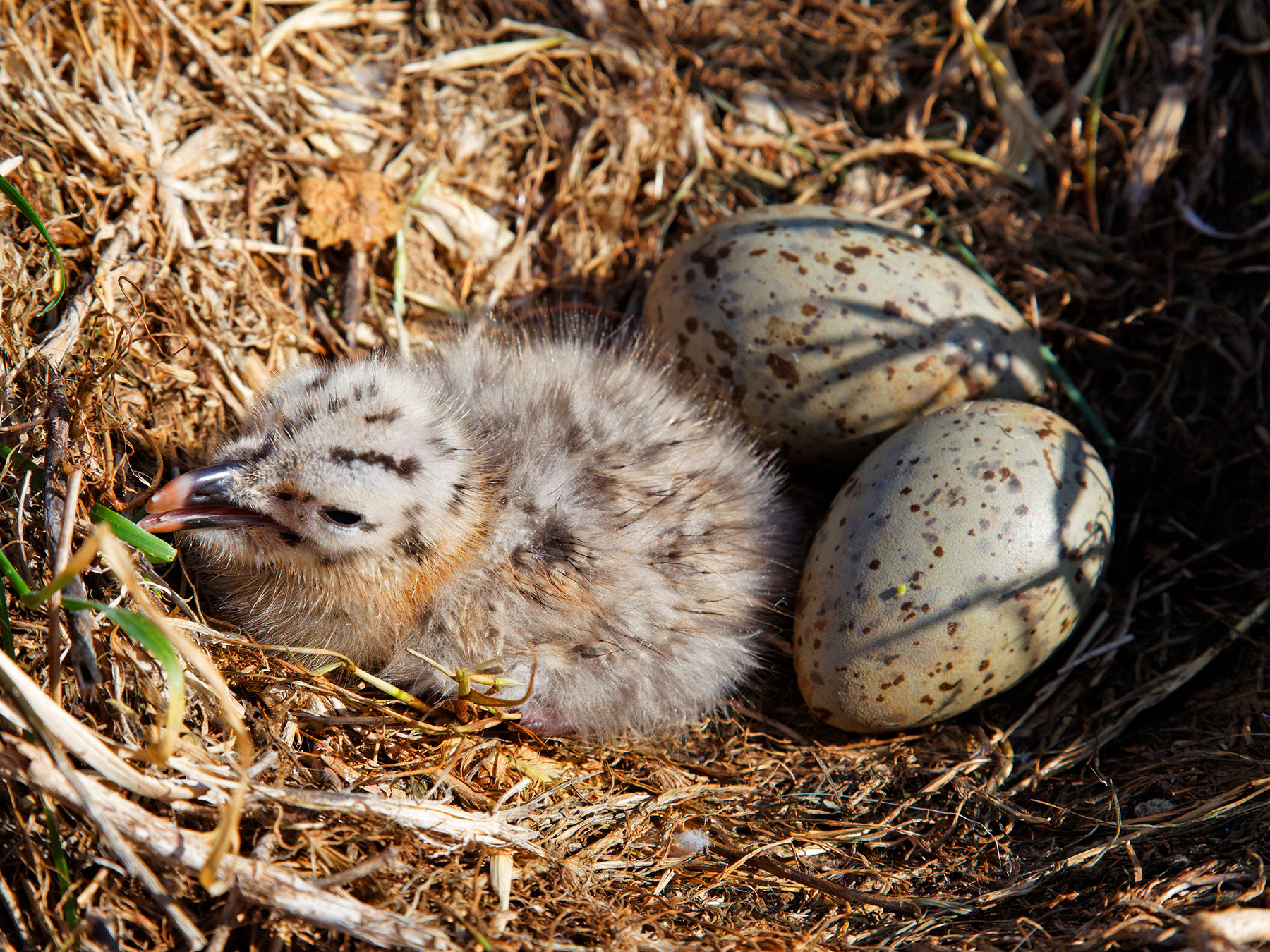
Yellow-legged gulls’ eggs are pale buff-olive in colour and heavily marked with dark scrawls and speckles. They measure 71 mm by 49 mm (2.8 in by 1.9 in). A typical clutch contains 3 eggs, and only one brood is raised in a season.
Do Yellow-legged Gulls mate for life?
It’s usual for yellow-legged gull pairs to mate for life, although if an initial brood fails, pairs may separate and seek a new mate.
Behaviour
Are Yellow-legged Gulls aggressive?
Yellow-legged gulls are colonial nesters, with pairs raising young only a few metres apart. However, they are highly defensive of their nest site, young, and mate, and will noisily attempt to see off any threats, including aggressively flying at much larger birds that encroach on their patch.
Where do Yellow-legged Gulls sleep at night?
Common overnight roosting spots of yellow-legged gulls include clifftops, rooftops, and safely away from land predators on lakes and reservoirs.
Lifespan and predators
How long do Yellow-legged Gulls live?
Yellow-legged gulls take between four and five years to reach breeding age. The oldest individual bird from ringing records was 19.2 years.
What are the predators of Yellow-legged Gulls?
Hawks and falcons are among the biggest threats to yellow-legged seagulls’ nests and young, although it’s not uncommon for the gulls to engage in mobbing behaviour of birds of prey to attempt to scare them away from targeting their eggs and chicks.
Are Yellow-legged Gulls protected?
Yellow-legged gulls are protected in the UK under the Wildlife and Countryside Act, 1981, which makes it an offence to knowingly kill, injure or take one into captivity.
Are Yellow-legged Gulls endangered?
Rather than being endangered, yellow-legged gulls are experiencing a population expansion, adapting well to new environments and moving further inland to areas such as agricultural fields, refuse tips and residential areas, where they feed on human leftovers, landfill, carrion and offal, instead of their traditional coastal diet of fish.
With Amber status on the British Birds of Conservation Concern list, the UK’s population of yellow-legged gulls are low in numbers, although year-on-year increases are being recorded in recent decades.
Conservation
While the Yellow-legged Gull is listed as Least Concern due to its large range and increasing population, it faces localised threats. These include habitat loss in coastal areas, pollution, and competition with other gull species.
Conservation efforts focus on protecting breeding sites and managing urban populations.
Similar birds
Often mistaken for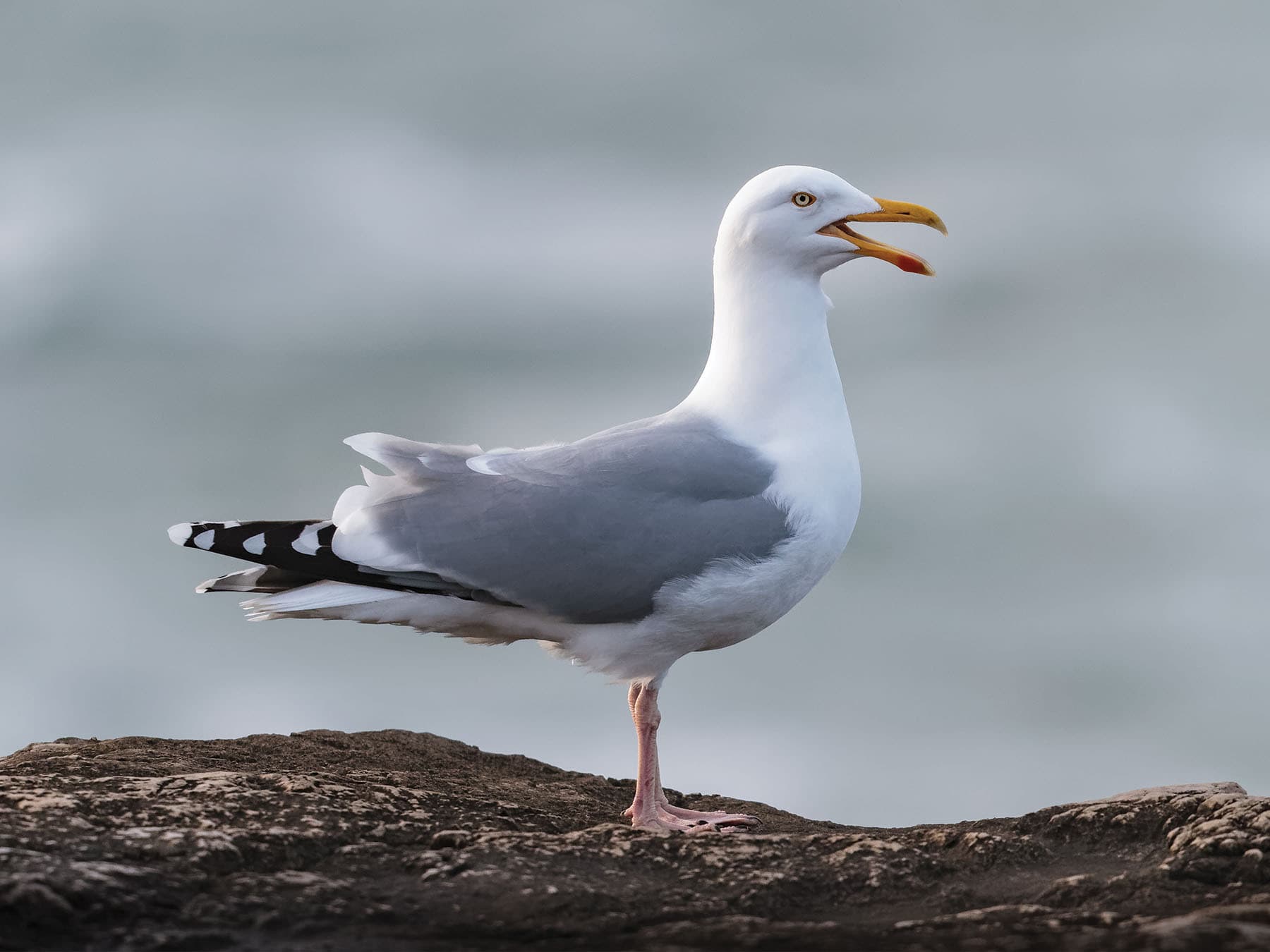
More photos
7 photos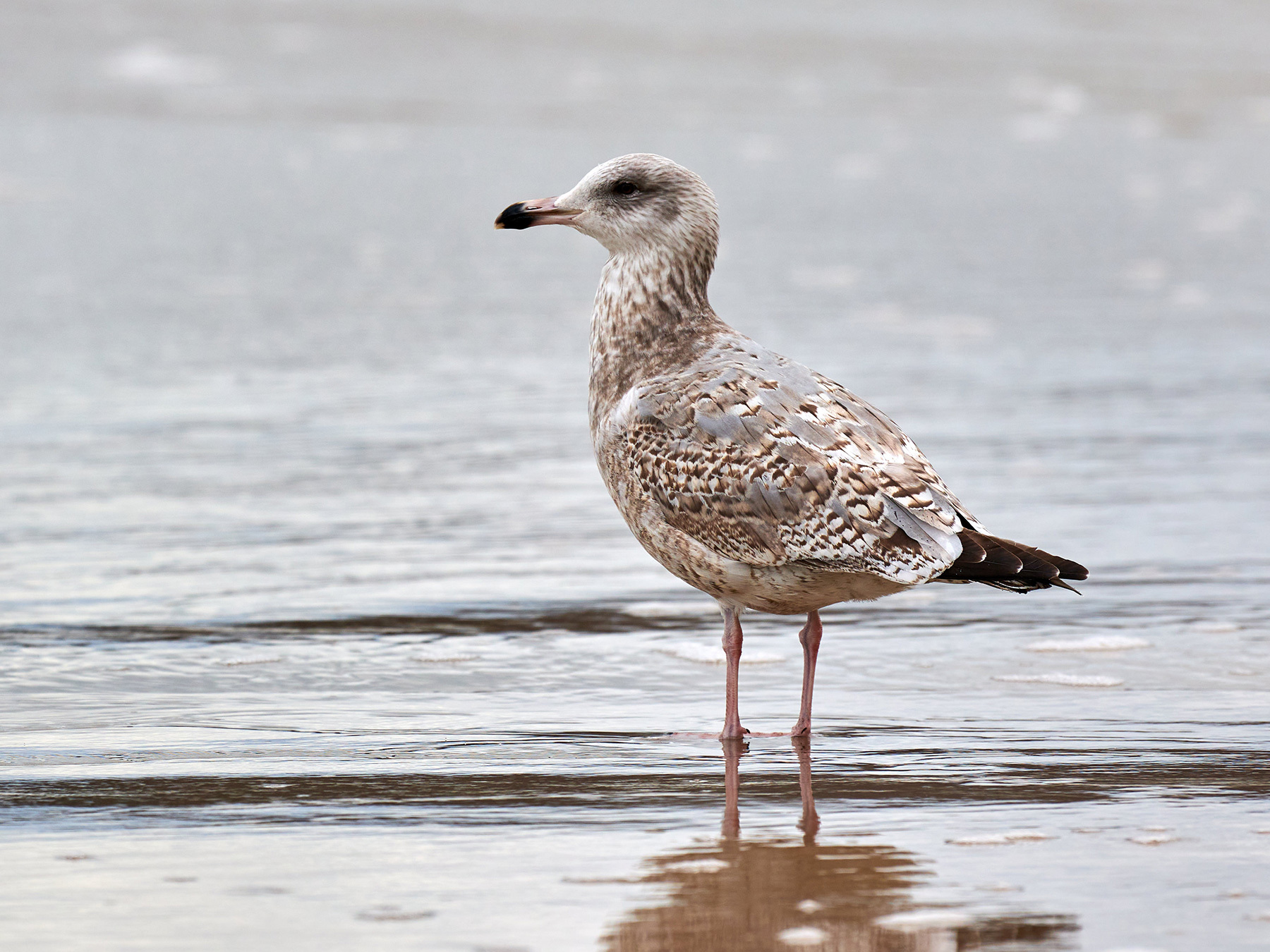
Yellow-legged Gull guides
6 guides- What Do Seagulls Actually Eat? Diet Secrets of These Clever Scavengers
- Do Seagulls Migrate? (All You Need To Know)
- Baby Seagulls: All You Need to Know (with Pictures)
- Seagull Nesting Secrets: Unveiling the Hidden Sanctuaries by the Sea
- What is a Group of Seagulls Called? (Complete List + Why?)
- How Long Do Seagulls Live?
Quick facts
- Length
- 52–68 cm
- Wingspan
- 120–155 cm
- Weight
- 550–1600 g
- Lifespan
- 10 years · oldest recorded 19.2 years
- Family
- Gulls & Terns
- Migration
- Partial migrant
- Global status (IUCN)
- Least Concern
- World population
- 819,000 - 1,070,000 mature individuals (European population)
- Population trend
- Increasing
- Scientific name
- Larus michahellis
Sources
4- 1BirdLife International. 2019. Larus michahellis. The IUCN Red List of Threatened Species 2019: e.T62030970A154522526. Source (opens in a new tab)
- 2Wetlands International (2015)
- 3BirdLife International. 2019. Larus michahellis. The IUCN Red List of Threatened Species 2019: e.T62030970A154522526. Source (opens in a new tab)
- 4Fransson et al., EURING list of longevity records for European birds (2010) Source (opens in a new tab)

Checked by
Nathan Cope, founder and editor
Nathan founded Birdfact and leads its writers and contributors in the UK, the US and Canada. He has watched and studied birds for more than ten years, and checks every article and species guide before it’s published.