


Willow Tit
Brown-capped Tit · Poecile montanus
By the Birdfact teamChecked by Nathan Cope
On this page13 sections
How to recognise it
What do Willow Tits look like?
Willow tits are small, active birds, ranking in size between the larger great tit and smaller blue tit. Males and females are alike in appearance and size.
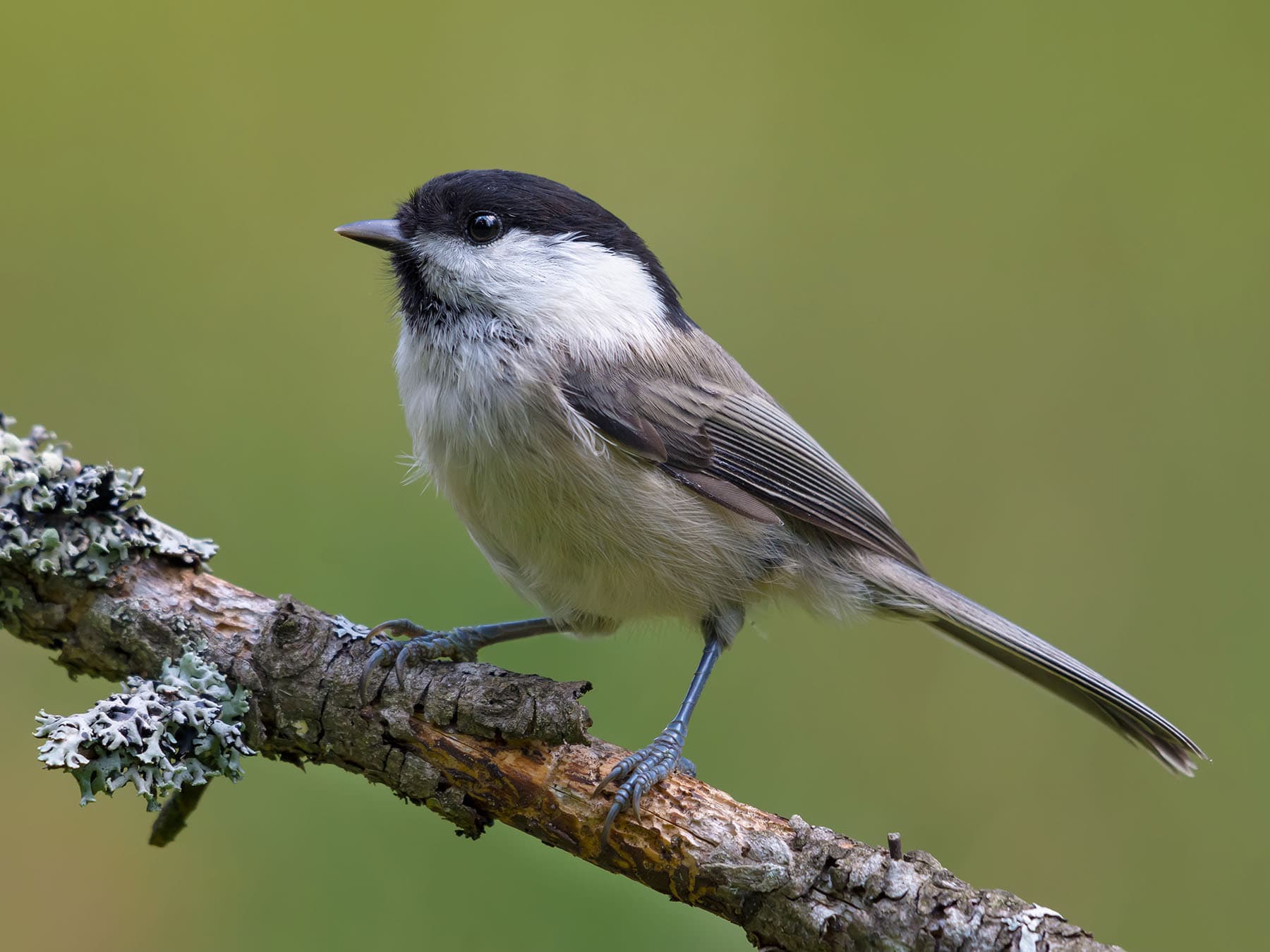
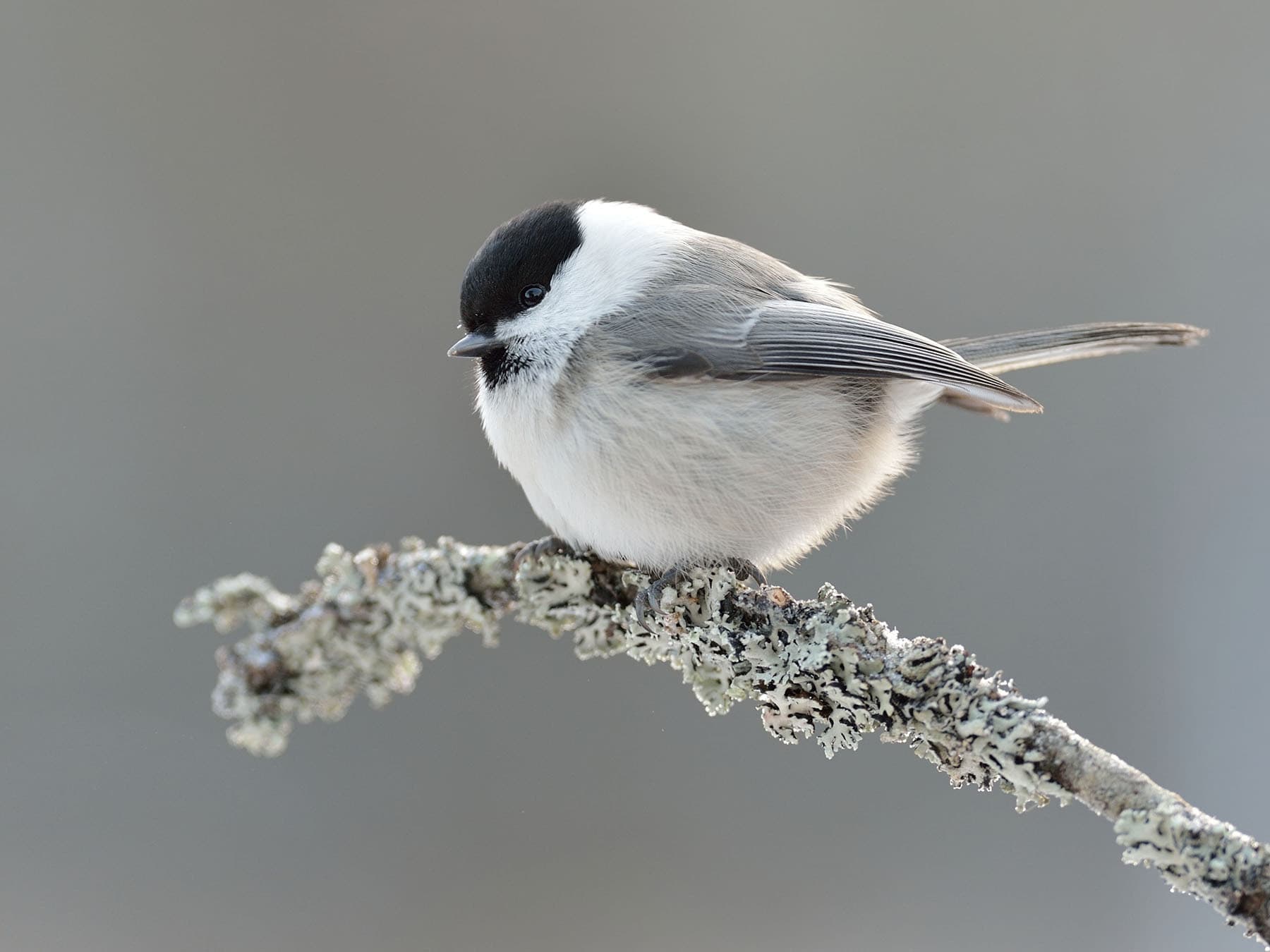
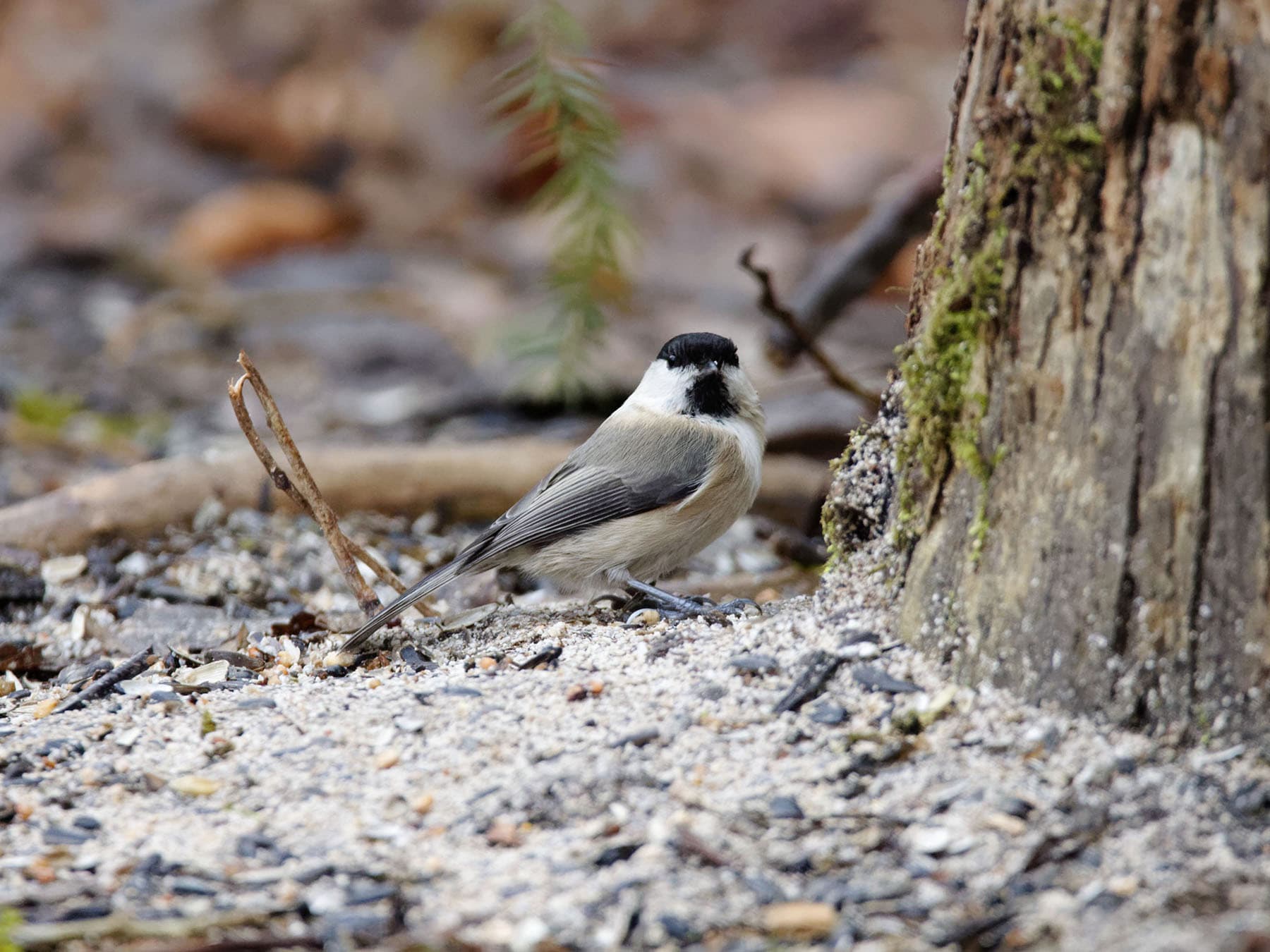
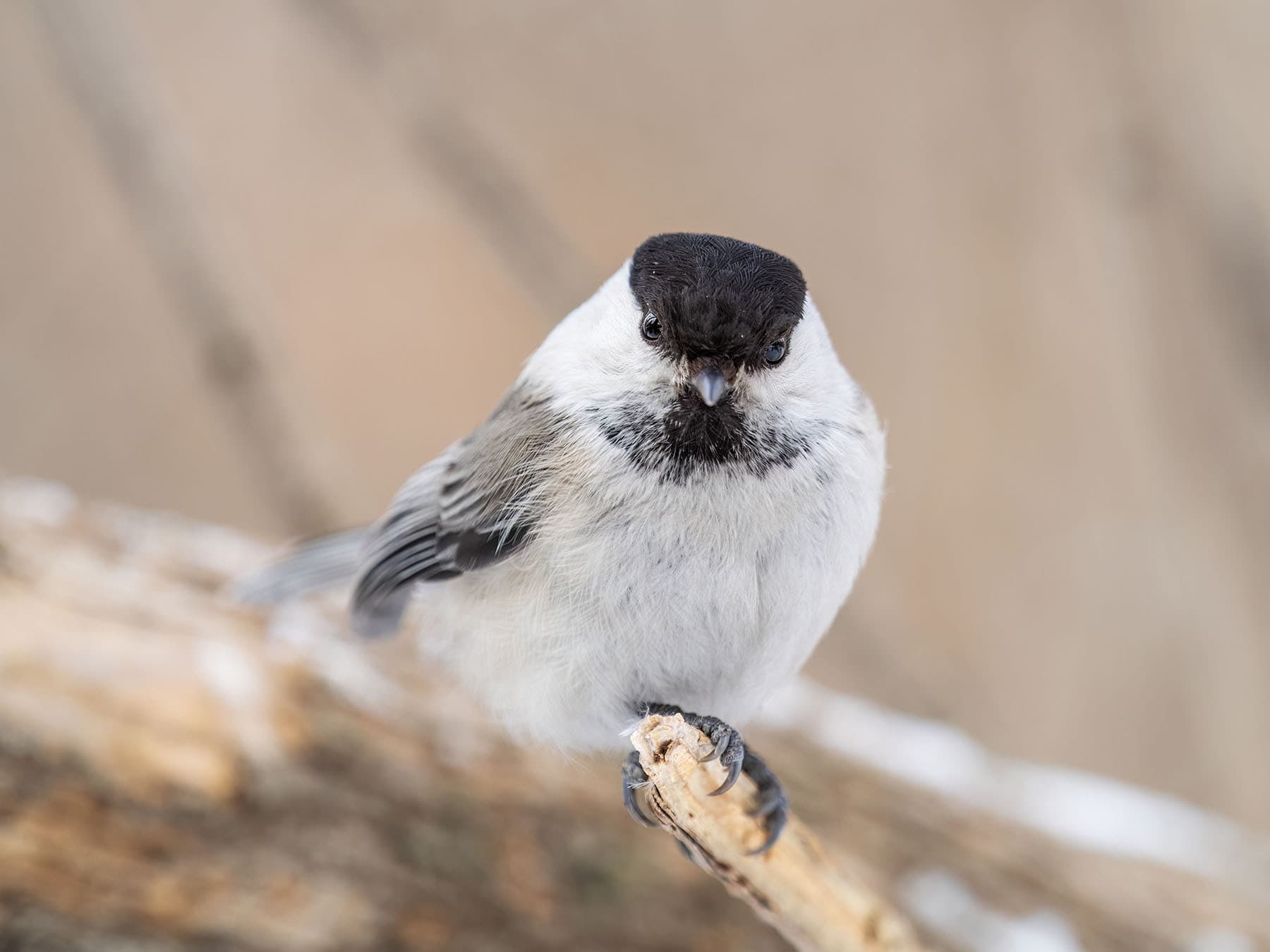
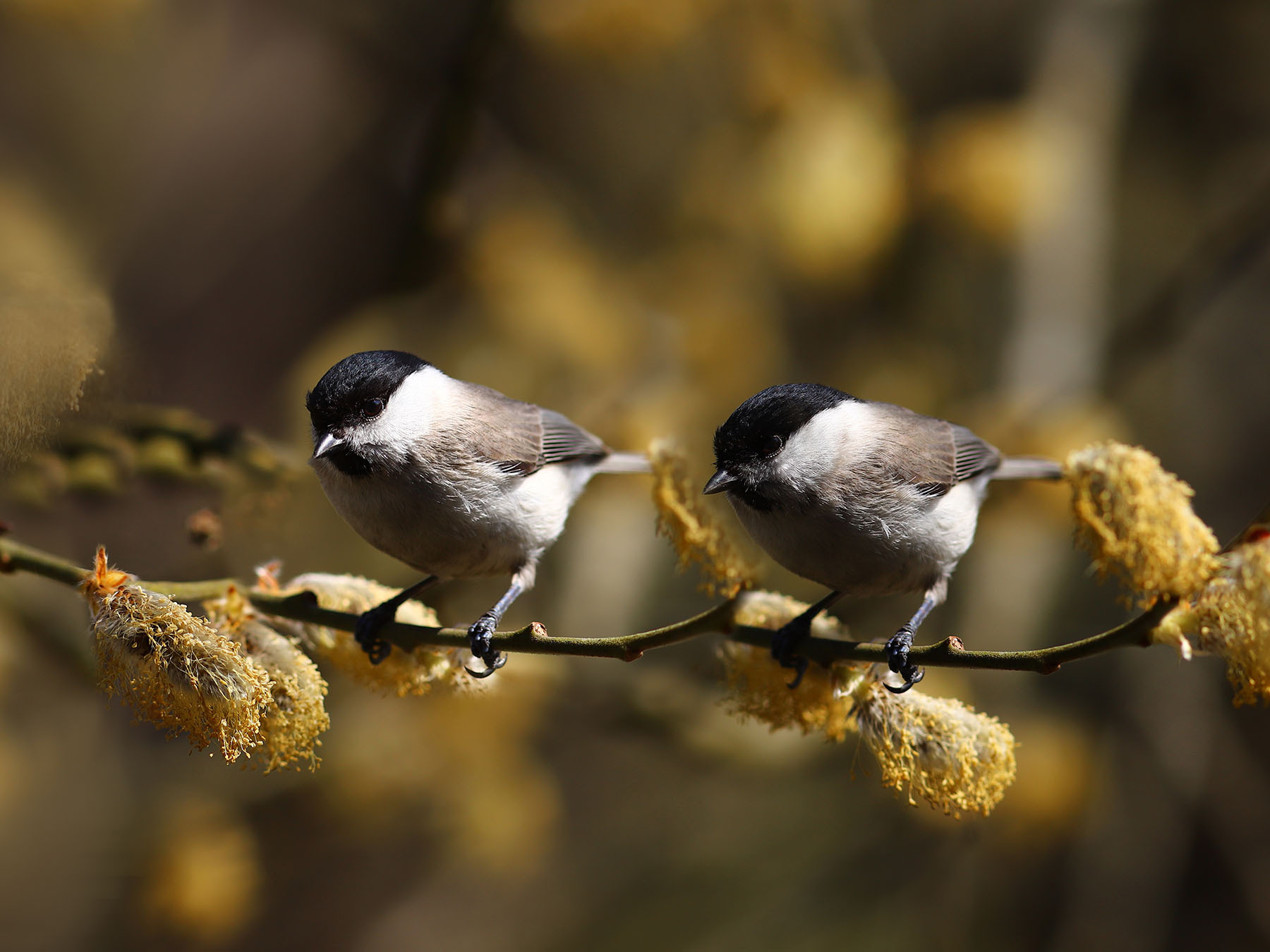
Willow tits have a long, dull sooty brown-black cap that extends down the nape. Under their thin grey bill is a small black bib, and they have large white patches on the sides of their face. Their back is greyish-brown, and their underparts are buff.
A lighter panel on the willow tit’s wings helps to distinguish them from the very similar marsh tit.
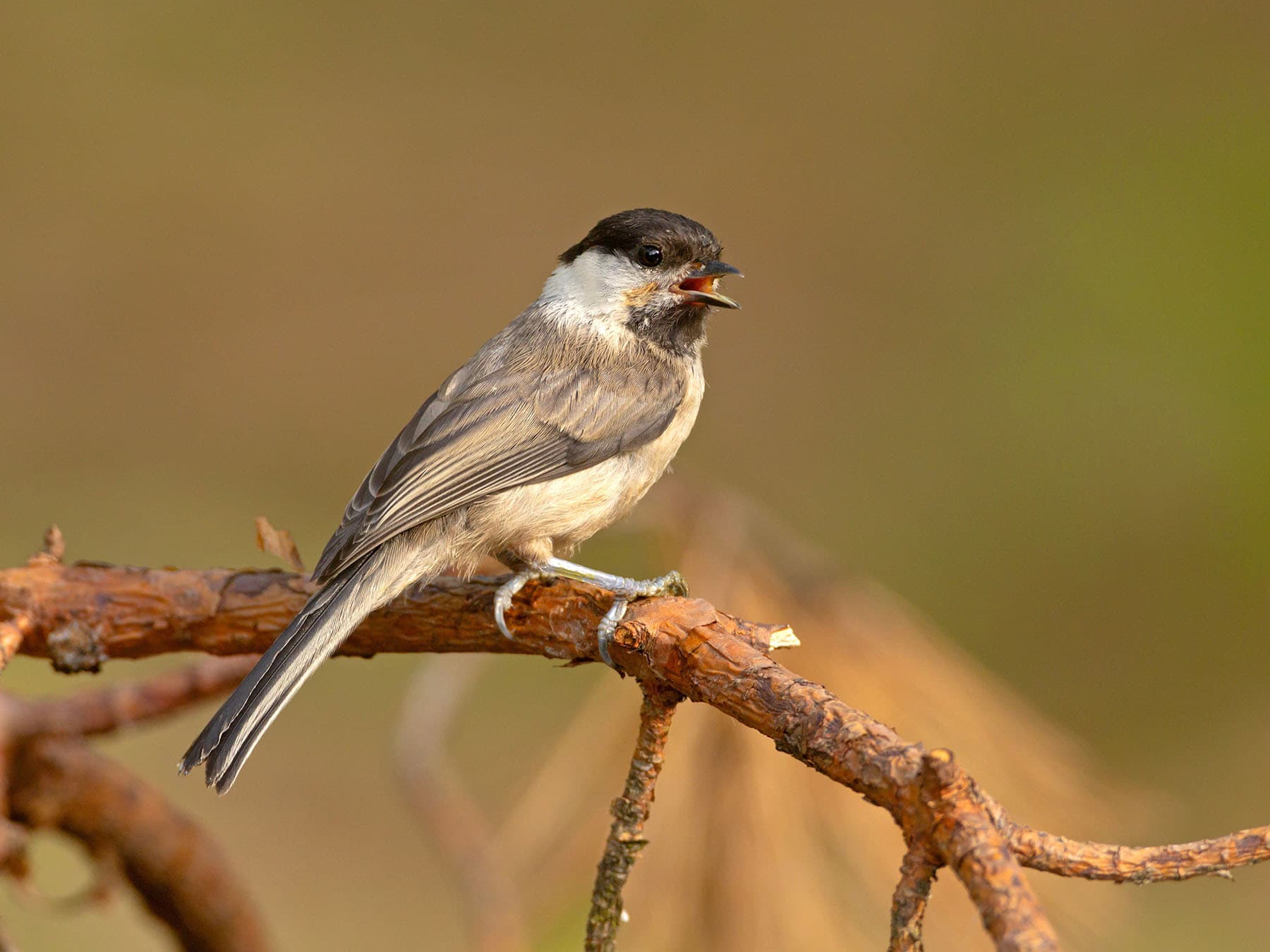
Juvenile willow tits are also very similar in appearance to adults, but their black cap is duller than in adult birds, and their plumage is generally paler all over.
How big are Willow Tits?
Willow tits are small and agile, roughly the same size as a coal tit, but slightly larger than a wren and a blue tit. There is no difference in size or weight between male and female birds.
- Length: 11.5 cm (4.5 in)
- Weight: 11 g (0.39 oz).
- Wingspan: 17 cm to 20.5 cm (6.7 in to 8.1 in)
Its size
Adults- Length
- 11–12 cm
- Wingspan
- 17–19 cm
- Weight
- 9–14 g
Its song and calls
What sound does a Willow Tit make?
The most commonly heard call of a willow tit is a nasal-sounding ‘dzee-dzee-dzee’, which is used as a reliable way of identifying the species. Another frequently heard call repeats an ‘ipsee, ipsee’ sound several times in quick succession.
- Song0:00 / 0:12
Recorded in South Yorkshire, England · March 2019
When and where to see it
OctoberLeaving
Most recorded in October
- 1. Durham0.33%
- 2. Manchester0.29%
- 3. Tyne and Wear0.23%
- 4. Staffordshire0.19%
- 5. Northumberland0.11%
Each dot is a county, state or province: the bigger and darker, the larger the bird’s share of that place’s bird records that month. Grey dots: no regular records. The ringed point is the centre of the bird’s records this month; the arrow shows how it moved since last month, and the dashed loop its path through the year. “Arrivals” colours places where it becomes regular this month (orange) or is in its last regular month (grey). GBIF eBird Observation Dataset, 2019–2024. Map data: Natural Earth, US Census Bureau; place centres © OpenStreetMap contributors.
In your area
See when the Willow Tit is recorded in your county, state or province.
How often the Willow Tit turns up in the UK through the year, from birdwatchers' records.
United Kingdom
Resident · all year · most records in January
Show as a table
| Month | United Kingdom |
|---|---|
| January | 0.041% (regular) |
| February | 0.035% (regular) |
| March | 0.032% (regular) |
| April | 0.021% (regular) |
| May | 0.011% (regular) |
| June | 0.011% (regular) |
| July | 0.017% (regular) |
| August | 0.021% (regular) |
| September | 0.021% (regular) |
| October | 0.021% (regular) |
| November | 0.031% (regular) |
| December | 0.034% (regular) |
Recorded regularly in
Worldwide: recorded regularly in 41 countries
Countries where it was recorded in at least 3 of the 6 years 2019–2024. Linked countries have their own bird list.
Europe (36)
- Åland Islands
- Albania
- Austria
- Belarus
- Belgium
- Bosnia & Herzegovina
- Bulgaria
- Croatia
- Czechia
- Denmark
- Estonia
- Finland
- France
- Germany
- Greece
- Hungary
- Italy
- Kosovo
- Latvia
- Liechtenstein
- Lithuania
- Luxembourg
- Montenegro
- Netherlands
- North Macedonia
- Norway
- Poland
- Romania
- Russia
- Serbia
- Slovakia
- Slovenia
- Sweden
- Switzerland
- Ukraine
- United Kingdom
Asia (5)
- China
- Japan
- Kazakhstan
- Kyrgyzstan
- Mongolia
Data: EOD – eBird Observation Dataset (Cornell Lab of Ornithology), accessed via GBIF.org, CC BY 4.0. Records from 2019–2024, aggregated and filtered by Birdfact. How these lists are made
What is the habitat of a Willow Tit?
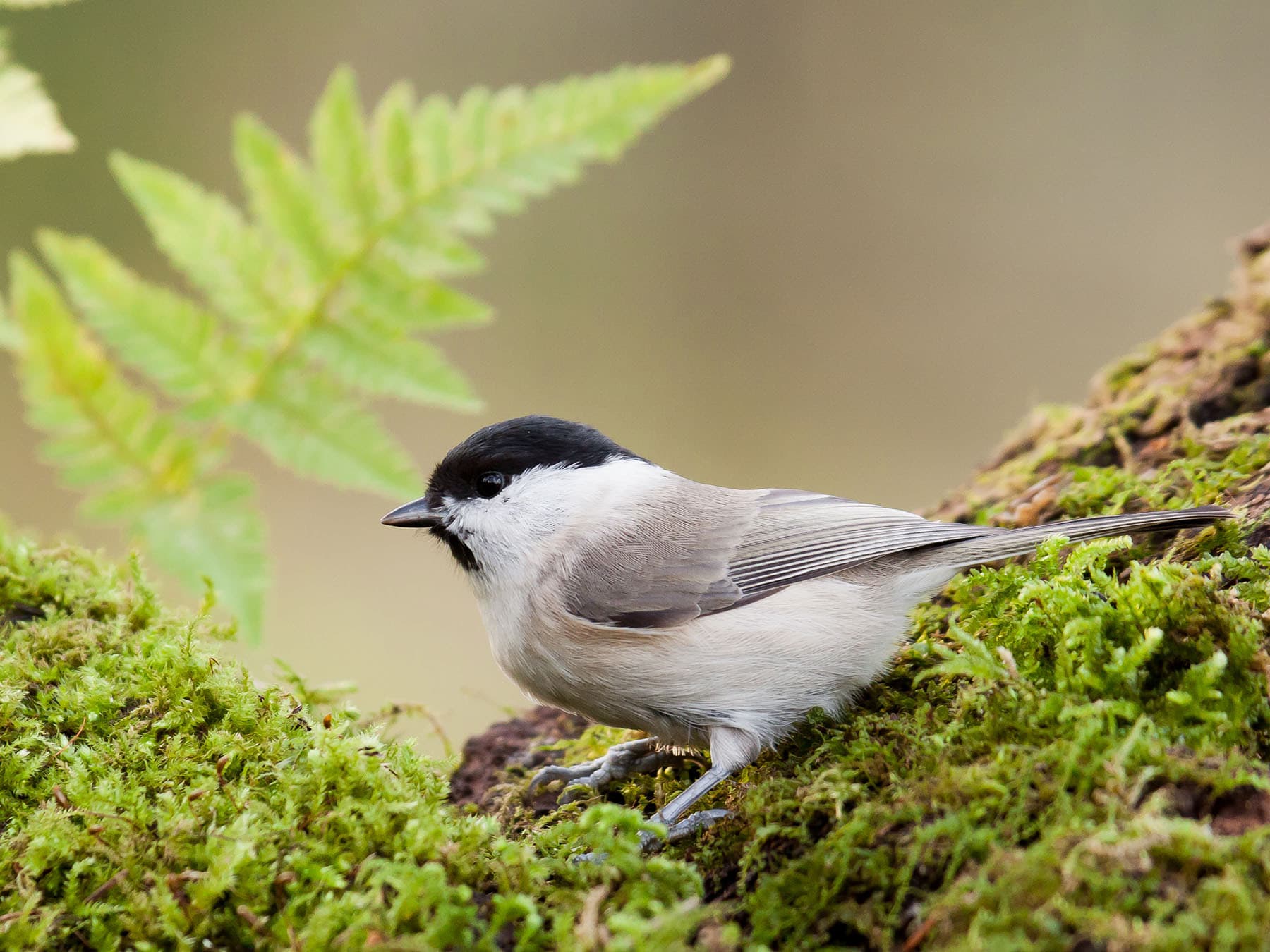
Willow tits are commonly seen in thickets and scrubland in wetland and marsh areas, as well as in willow and alder carr and around gravel pits.
Hedgerows and areas of woodland with vegetation at a height of 2 m to 4 m (6.6 ft to 13.1 ft), are popular spots for willow tits to live, particularly those with plenty of willow, hawthorn, birch and alder.
What is the range of a Willow Tit?
Willow tits are widespread, common residents throughout Europe and across northern Asia. They are found from the United Kingdom and Norway in the west, to Russia and Japan in the east.
Where do Willow Tits live?
Willow tits are most commonly found in woodlands with birch and alder, as well as mixed hedgerows, scrubland and watery gravel pits.
While they used to be a common breeding bird in the UK, their main range is now limited to mid-Wales, northern England, the Midlands, and parts of southern Scotland.
How rare are Willow Tits?
Referred to as Britain’s most threatened breeding bird, willow tit populations are in decline, with numbers estimated at around 2,750 breeding pairs in 2016.
Where can you see Willow Tits in the UK?
Due to their declining numbers, it’s far more unusual to spot a willow tit, although in certain regions, conservation organisations have made huge efforts to improve and preserve habitats in an attempt to eventually lead to a revival of the species.
The Mersey Valley in Cheshire was once a stronghold of the species with nearly 300 pairs, but numbers have now dropped to less than 50 pairs.
Similar habitat improvement projects were carried out in Yorkshire’s Dearne Valley, where conservationists worked to restore wet woodlands to provide a safe environment for breeding willow tits.
Migration
Do Willow Tits migrate?
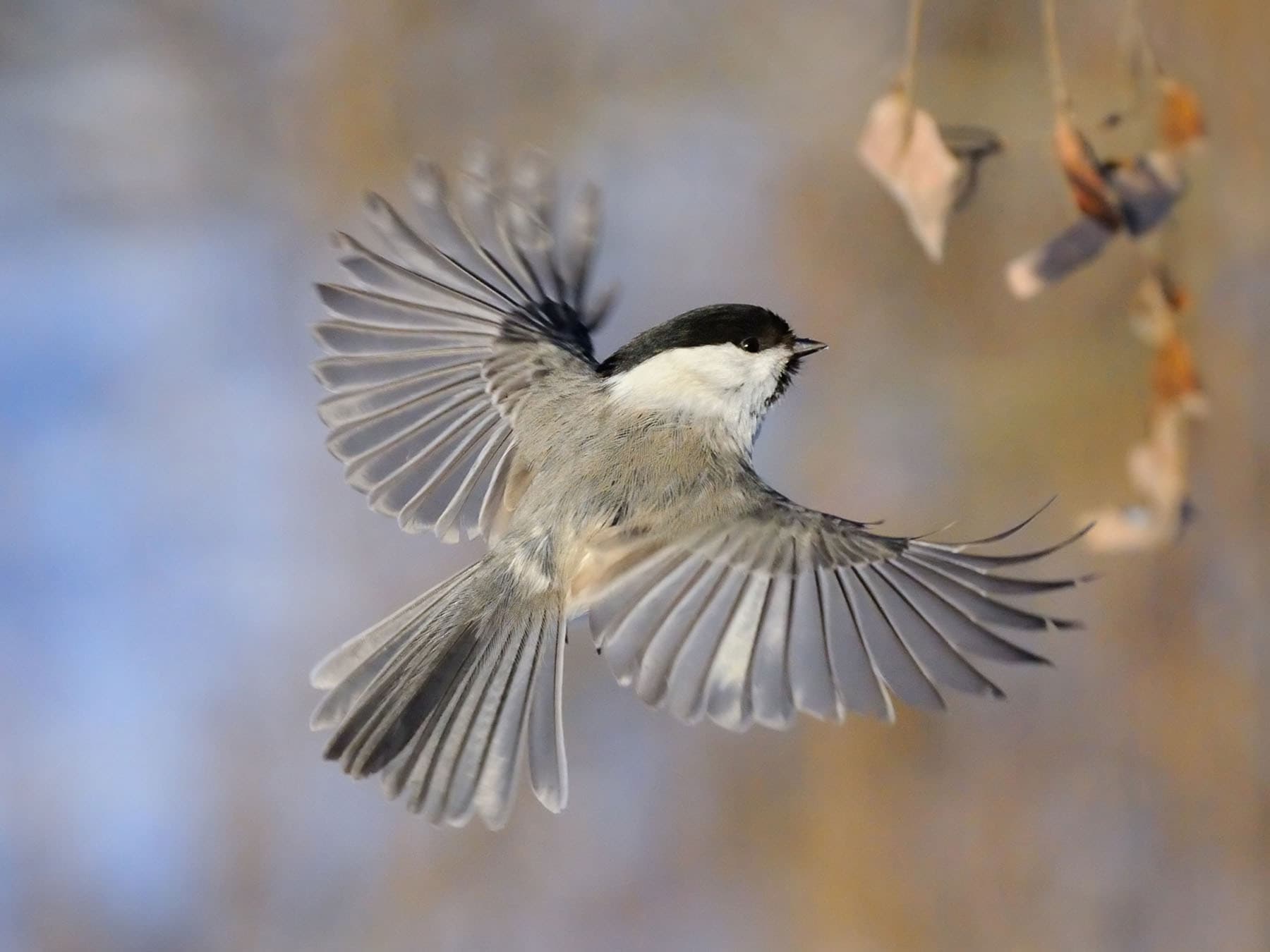
Willow tits are sedentary birds and remain in their territories all year round.
With their tiny size, you might think that they’d struggle to survive in winter months, yet data suggests this is not the case, and as long as food is available, willow tits can cope with plunging temperatures without needing to relocate.
Tips for seeing it
- Look for Willow Tits in damp woodlands and willow thickets
- Listen for their nasal 'zee-zee-zee' call, which is distinctive from other tits
- Observe their behaviour at bird feeders, which they often visit in winter
- In the UK, pay attention to subtle differences from the similar Marsh Tit, such as the Willow Tit's duller cap and pale wing panel
What it eats
What do Willow Tits eat?
The diet of willow tits consists of a mixture of insects, larvae and caterpillars, supplemented with seeds and berries in autumn and winter.
In their natural waterside habitats, crane flies are among the most commonly eaten insect prey. Willow tits do occasionally visit garden feeders in winter, and are observed to store food under bark to eat at a later time.
What do baby Willow Tits eat?
Baby willow tits are fed in the nest by both parents, who bring larvae and tiny insects for their young.
Nesting and breeding
Where do Willow Tits nest?
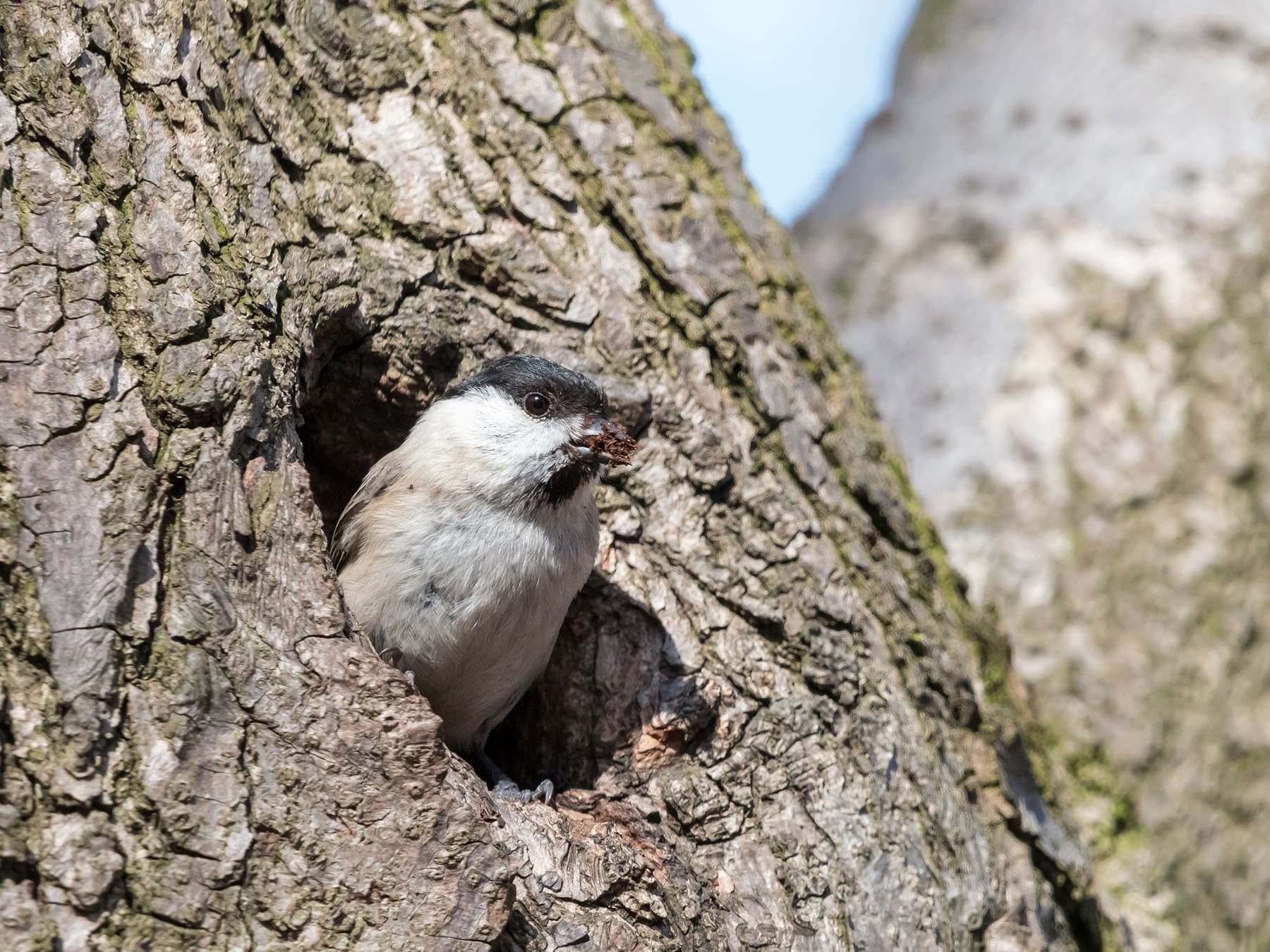
Willow tits build nests in wet woodlands, excavating their own cavities in rotting wood and dead trees.
Males and females both drill out the hollow, with the female doing most of the work. The pair then carries the chippings a short distance away in an attempt to detract attention from the nest site.
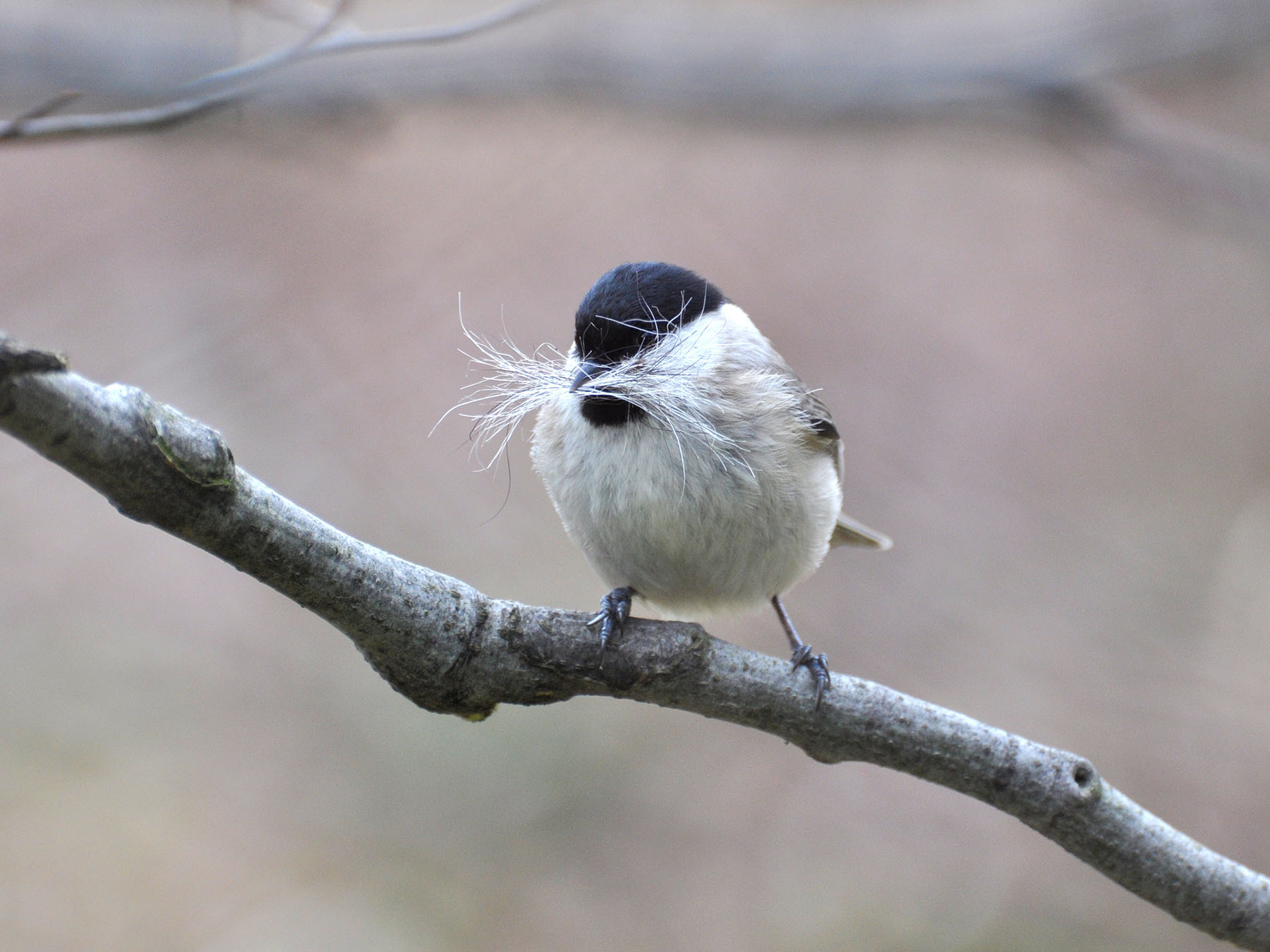
The inner base of the cavity is lined with wood chippings, animal fur and feathers before eggs are laid. Occasionally a nest box may be used by breeding willow tits, but unless it is filled with wood chippings for them to excavate, pairs will be reluctant to move in.
What do Willow Tit eggs look like?
Willow tits’ eggs are white with brownish-red speckles. They are small, measuring 16 mm by 12 mm, and are smooth and glossy. A typical clutch contains 5 to 13 eggs, and is incubated by the female alone for 13 to 15 days.
Do Willow Tits mate for life?
Willow tit pairs mate for life, raising one brood together each year.
Behaviour
Are Willow Tits aggressive?
Due to their diminutive size, willow tits are regularly targeted or evicted from their nest sites by other larger species. They rarely put up any resistance to the intruders and will simply move on and, if it is early enough in the season, attempt to renest elsewhere.
Studies suggest that some degree of aggression may be shown towards other willow tits when loose winter feeding flocks are formed.
Lifespan and predators
How long do Willow Tits live?
The average lifespan of willow tits is 3 years. Ring recovery data from Finland reported a bird in its 11th year, and this grand old age was matched by a banded willow tit found in Nottingham.
What are the predators of Willow Tits?
Willow tit nests are commonly predated by great spotted woodpeckers, and an increase in woodpecker numbers is thought to have contributed significantly to the decline of the UK’s willow tit population.
As willow tits are quite vocal during the nest-construction phase, it leaves them vulnerable to opportunistic predators that inhabit the same woodlands, for example, grey squirrels.
Are Willow Tits protected?
As well as being protected under the Wildlife and Countryside Act, 1981, willow tits have been identified as a priority conservation species on the UK biodiversity action plan.
Legislation exists to safeguard willow tits, their nest sites and their young and eggs from being interfered with, and conservation efforts around the country are aiming to improve and protect their habitats in the wild, in a bid to stop the population from declining further.
Are Willow Tits endangered?
Willow tits have been added to the UK Birds of Conservation Concern Red List following a major decline in numbers in recent decades, falling by 86 percent between 1995 and 2020.
This loss is believed to have been caused partly by degradation in habitat and a lack of available nest sites – willow tits often spend a long time excavating their nest cavity only to be evicted by blue tits or great tits before they can successfully raise their young.
Nest predation by great spotted woodpeckers is another key issue, and the fall in willow tit numbers is matched by corresponding growth in the great spotted woodpecker population.
Conservation
While globally listed as Least Concern, Willow Tit populations have declined significantly in some regions, particularly in the UK. Habitat loss and fragmentation are primary threats.
Conservation efforts focus on preserving and restoring suitable woodland habitats, especially those with decaying wood for nesting.
Similar birds
Often mistaken for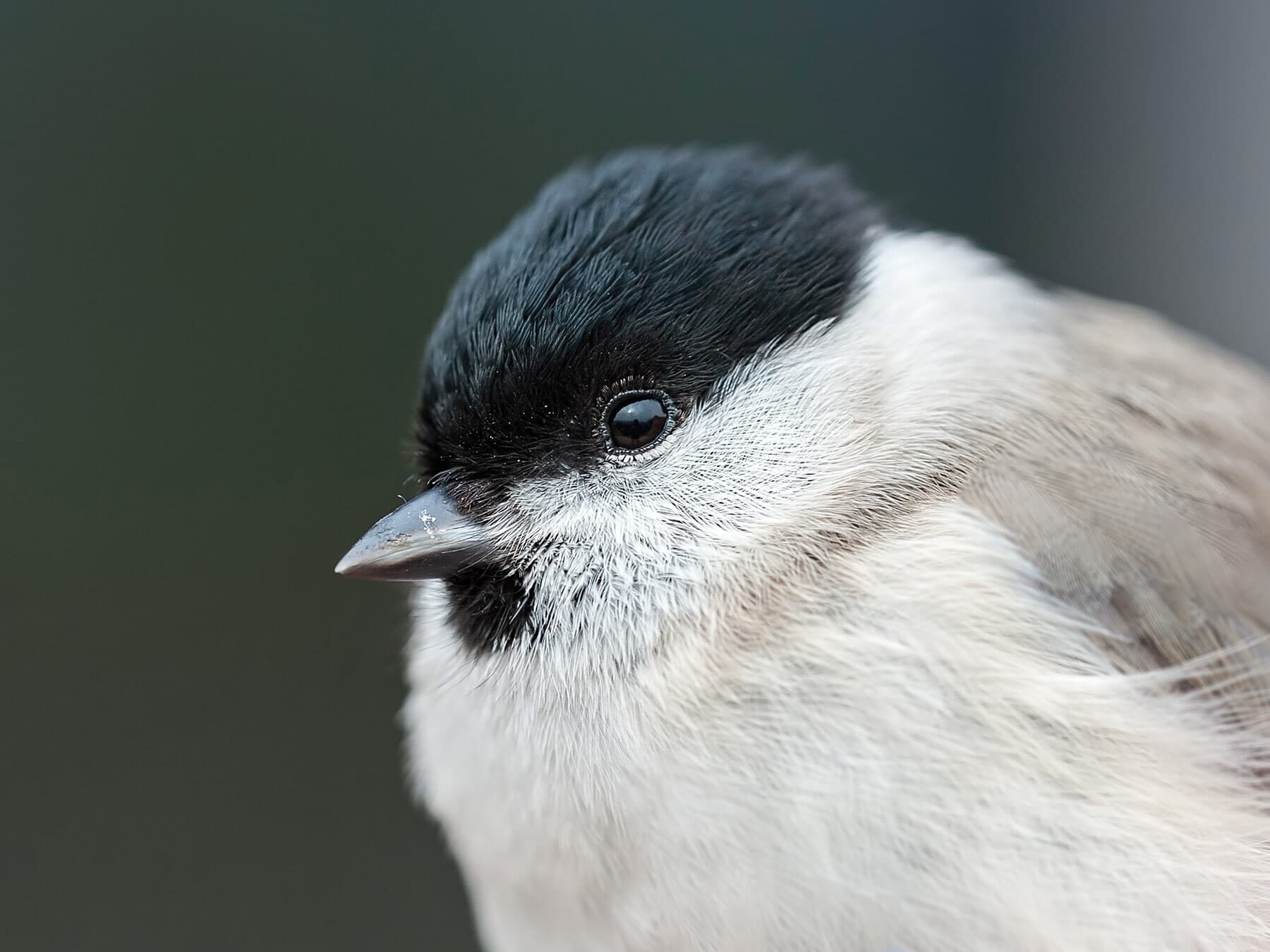
More photos
3 photos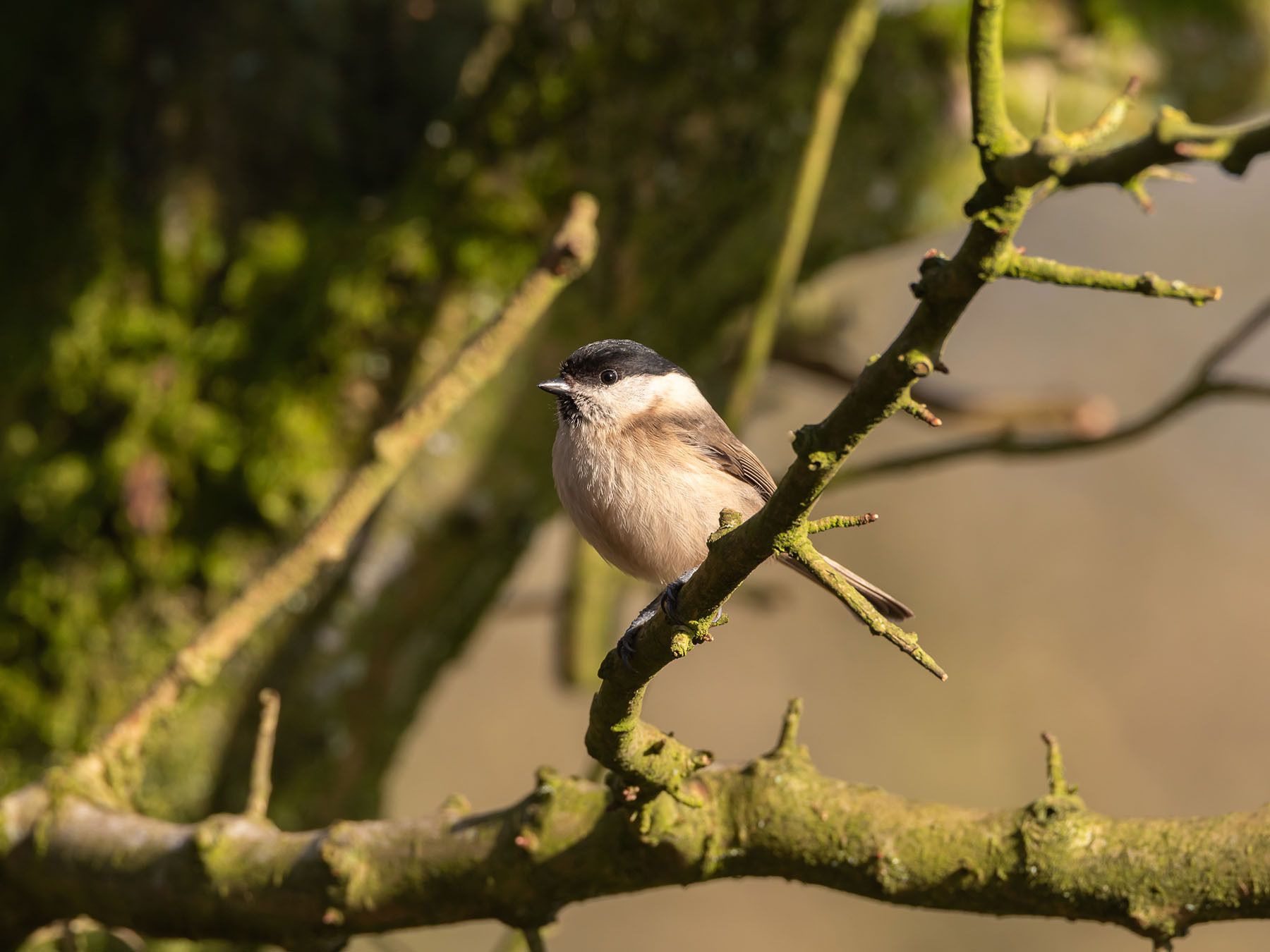
Quick facts
- Length
- 11–12 cm
- Wingspan
- 17–19 cm
- Weight
- 9–14 g
- Lifespan
- 2–3 years · oldest recorded 11.3 years
- Family
- Tits & Chickadees
- Migration
- Resident
- Global status (IUCN)
- Least Concern
- World population
- 175,000,000 - 253,000,000 mature individuals
- Population trend
- Decreasing
- Also called
- Brown-capped Tit
- Scientific name
- Poecile montanus
Sources
4- 1BirdLife International. 2019. Poecile montanus. The IUCN Red List of Threatened Species 2019: e.T155139697A155139155. Source (opens in a new tab)
- 2EBCC (2018)
- 3BirdLife International. 2019. Poecile montanus. The IUCN Red List of Threatened Species 2019: e.T155139697A155139155. Source (opens in a new tab)
- 4Fransson et al., EURING list of longevity records for European birds (2010) Source (opens in a new tab)

Checked by
Nathan Cope, founder and editor
Nathan founded Birdfact and leads its writers and contributors in the UK, the US and Canada. He has watched and studied birds for more than ten years, and checks every article and species guide before it’s published.