


Marsh Tit
European Marsh Tit · Poecile palustris
By the Birdfact teamChecked by Nathan Cope
On this page20 sections
- How to recognise it
- Its size
- Its song and calls
- When and where to see it
- What it eats
- Nesting and breeding
- Behaviour
- Lifespan and predators
- Conservation
- What does a Marsh Tit look like?
- How big is a marsh Tit?
- How much does a Marsh Tit weigh?
- What is the scientific name for a Marsh Tit?
- Are Marsh Tits aggressive or friendly?
- Are Marsh Tits endangered?
- Do Marsh Tits mate for life?
- Are Marsh Tits native to the UK?
- Similar birds
- Quick facts
- Sources
How to recognise it
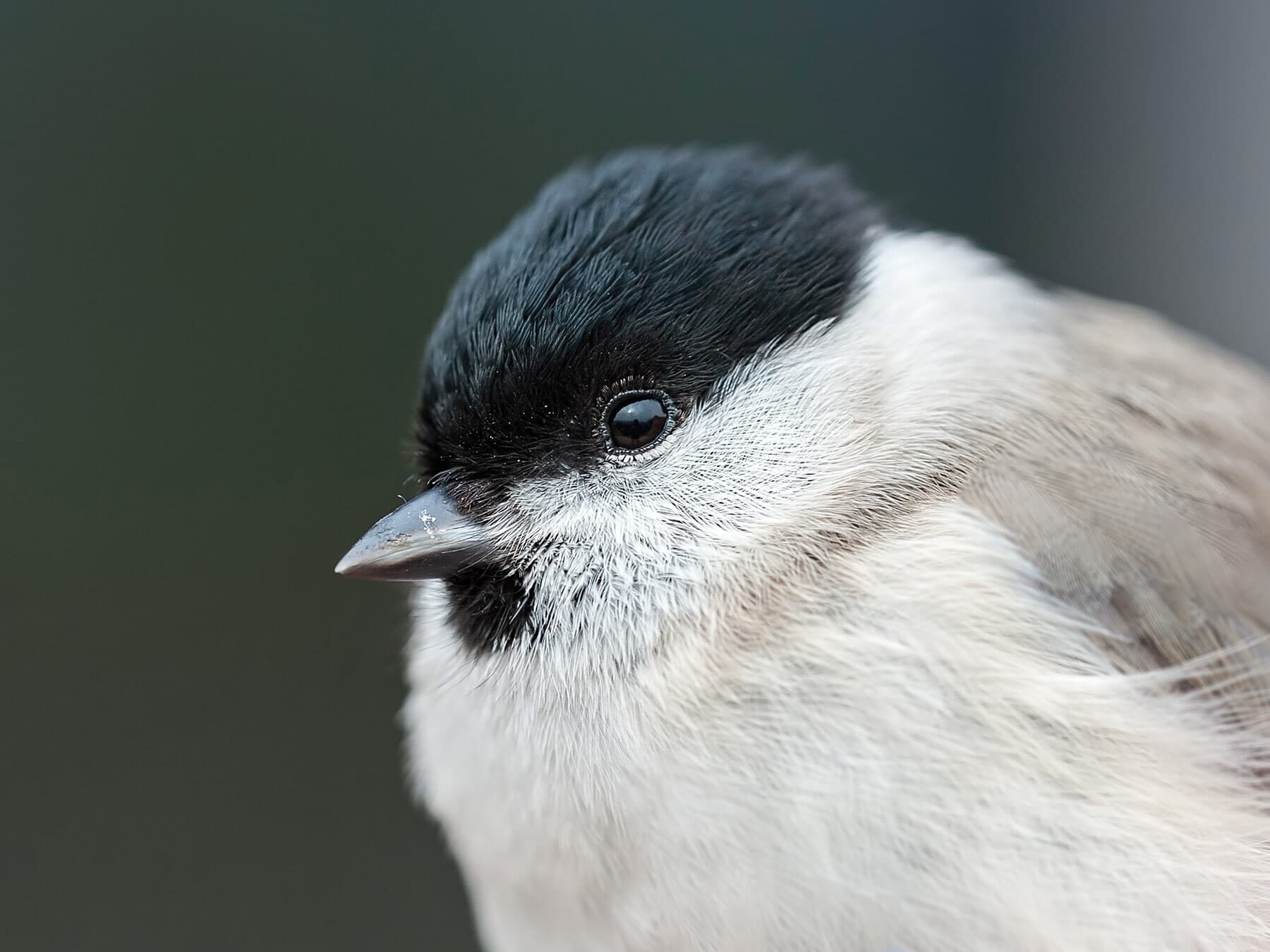
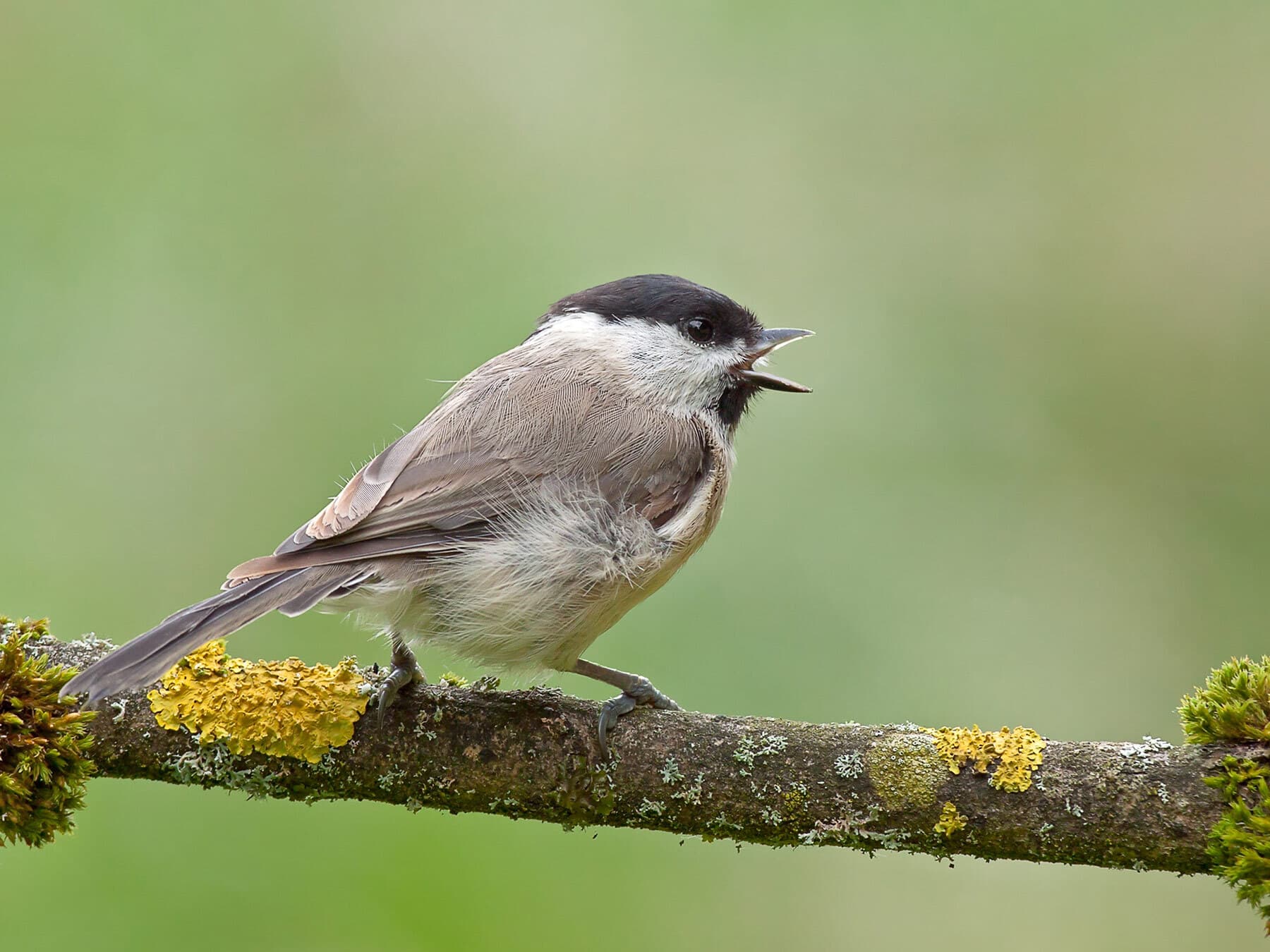
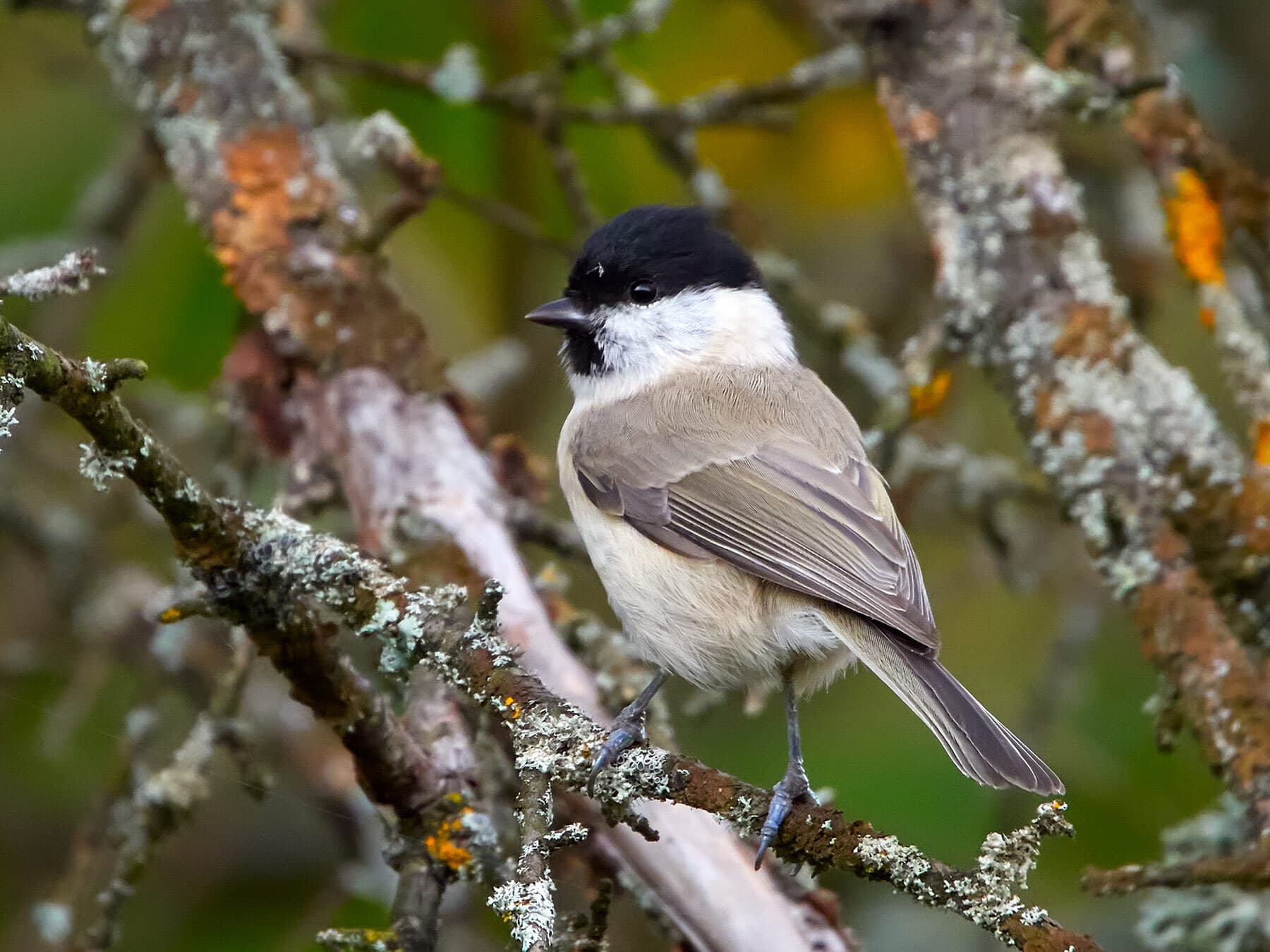
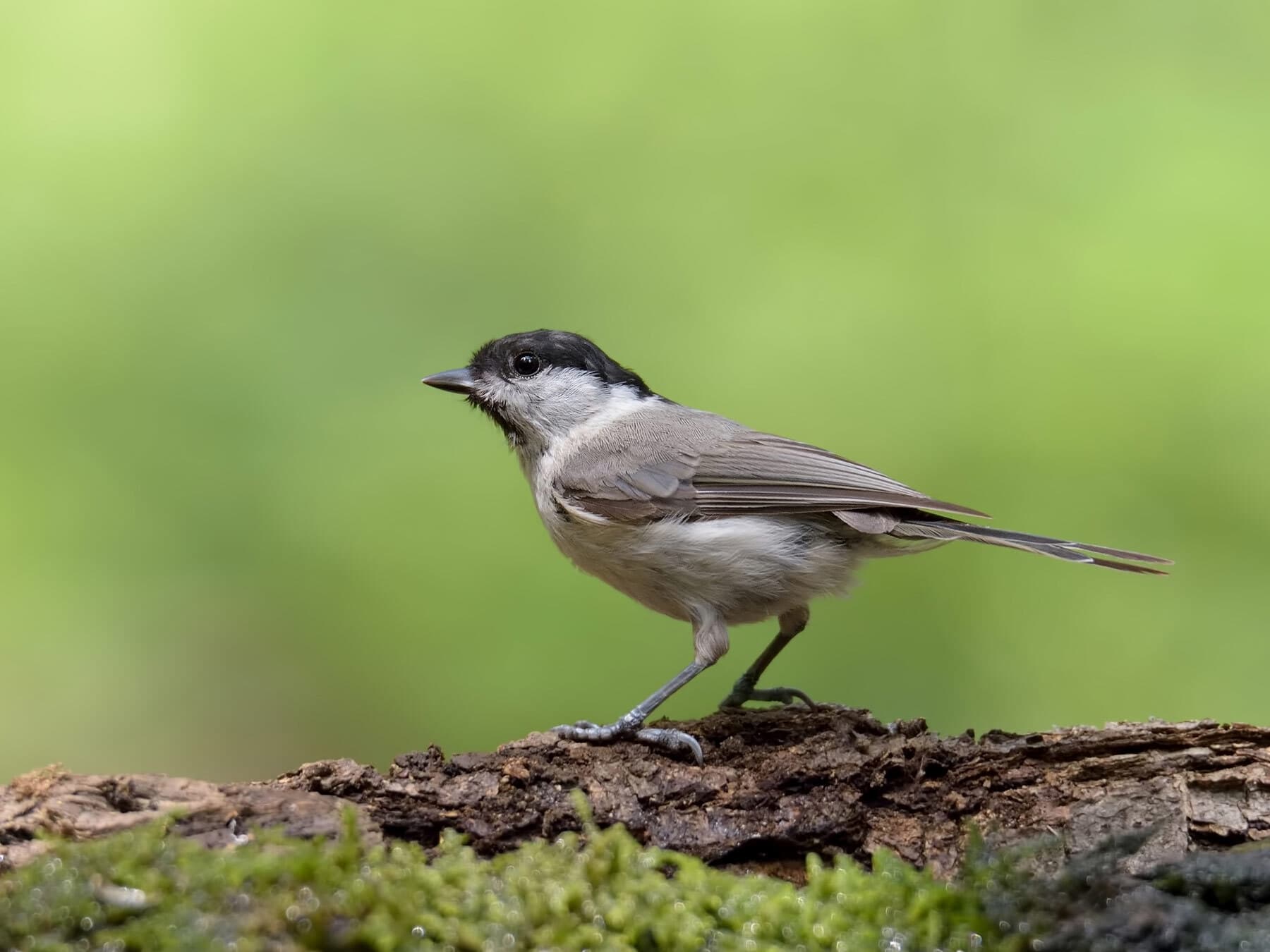
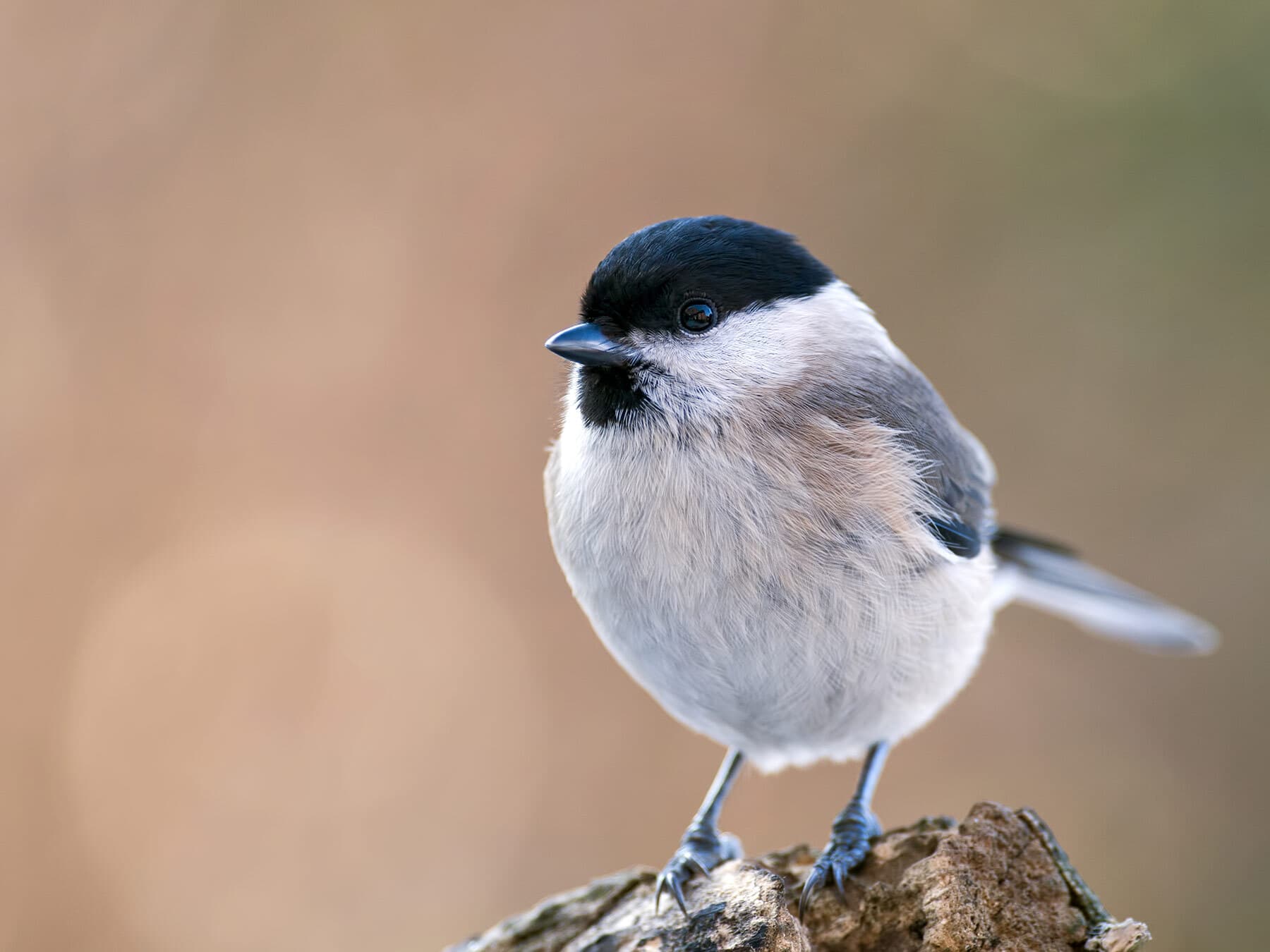
The Marsh Tit is a small, compact bird with a distinctive black cap and bib. Its upperparts are greyish-brown, while the underparts are pale buff to off-white. The cheeks are white, creating a striking contrast with the black head.
Both sexes look alike, with no seasonal variation in plumage. Juveniles resemble adults but have duller colouration and a less defined cap.
Its size
Adults- Length
- 11.5–12.5 cm
- Wingspan
- 18–20 cm
- Weight
- 9–12 g
Its song and calls
The marsh tit call is often a loud ‘titi-zee-zee-zee’, or a single note ‘chare’. They also issue a very distinctive, sharp sound, almost sneeze like, of ‘pit-chew’. This latter sound is unique and helps to differentiate the marsh tit from the almost identical willow tit.
When startled or in danger their alarm call consists of repeated phrases of ‘pitz-its-its’ although whilst nesting and looking after young the female will make a hissing sound to ward off predators.
Both male and female adults will sing, although normally limited to during courtship where songs consist mainly of trilling and chattering sounds.
- Song0:00 / 1:12
Recorded in Norfolk, England · March 2024
- Call0:00 / 0:32
Recorded in Normandie, France · November 2024
When and where to see it
OctoberIn season
Most recorded in October
- 1. Herefordshire0.46%
- 2. Lancashire0.34%
- 3. Rutland0.31%
- 4. Hampshire0.28%
- 5. Suffolk0.26%
Each dot is a county, state or province: the bigger and darker, the larger the bird’s share of that place’s bird records that month. Grey dots: no regular records. The ringed point is the centre of the bird’s records this month; the arrow shows how it moved since last month, and the dashed loop its path through the year. “Arrivals” colours places where it becomes regular this month (orange) or is in its last regular month (grey). GBIF eBird Observation Dataset, 2019–2024. Map data: Natural Earth, US Census Bureau; place centres © OpenStreetMap contributors.
In your area
See when the Marsh Tit is recorded in your county, state or province.
How often the Marsh Tit turns up in the UK through the year, from birdwatchers' records.
United Kingdom
Resident · all year · most records in February
Show as a table
| Month | United Kingdom |
|---|---|
| January | 0.14% (regular) |
| February | 0.14% (regular) |
| March | 0.11% (regular) |
| April | 0.065% (regular) |
| May | 0.052% (regular) |
| June | 0.058% (regular) |
| July | 0.063% (regular) |
| August | 0.075% (regular) |
| September | 0.057% (regular) |
| October | 0.071% (regular) |
| November | 0.10% (regular) |
| December | 0.11% (regular) |
Recorded regularly in
Worldwide: recorded regularly in 44 countries
Countries where it was recorded in at least 3 of the 6 years 2019–2024. Linked countries have their own bird list.
Europe (38)
- Albania
- Andorra
- Austria
- Belarus
- Belgium
- Bosnia & Herzegovina
- Bulgaria
- Croatia
- Czechia
- Denmark
- Estonia
- Finland
- France
- Germany
- Greece
- Hungary
- Italy
- Kosovo
- Latvia
- Liechtenstein
- Lithuania
- Luxembourg
- Moldova
- Montenegro
- Netherlands
- North Macedonia
- Norway
- Poland
- Romania
- Russia
- Serbia
- Slovakia
- Slovenia
- Spain
- Sweden
- Switzerland
- Ukraine
- United Kingdom
Data: EOD – eBird Observation Dataset (Cornell Lab of Ornithology), accessed via GBIF.org, CC BY 4.0. Records from 2019–2024, aggregated and filtered by Birdfact. How these lists are made
Rarely marsh tits will use nesting boxes but in the main, they will choose an existing hole in a tree or wall which the female alone will line with fresh moss, grass, animal hair or leaf matter.
What is the habitat of a Marsh Tit?
The nominate subspecies of marsh tit (Poecile palustris palustris) is a resident breeder within the southern counties of England and Wales, southern Scandinavia and east across Europe to Poland and south into Italy and the Balkans.
The remaining seven subspecies of marsh tit can be found as follows:
- Poecile palustris stagnatilis – Eastern Europe, the southern Urals and Northwest Turkey.
- Poecile palustris kabardensis – The Caucasus and Northeast Turkey.
- Poecile palustris italicus – Italy, Sicily and the French Alps.
- Poecile palustris brevirostris – Siberia, Northern Mongolia, North-East China and North Korea.
- Poecile palustris ernsti – Skahalin, Russia’s largest island located north of Japan in the Pacific. Its land area is 76,400² km which equates to approximately 29,500² miles.
- Poecile palustris hensoni – Northern Japan and South Kuril Island, a Russian archipelago that runs from northern Japan to the Kamchatka Peninsula in Russia’s Far East.
- Poecile palustris hellmayri – Eastern China and South Korea.
Whilst the description of the marsh tit given at the beginning of this article refers to the nominate, the difference in the appearance of the remaining subspecies is subtle and largely down to slight colour differences in plumage or length of the tail feathers.
The preferred locations for nesting, roosting and foraging are in broad leaf deciduous forests or woodland with tall tree cover and established open undergrowth and hedgerows. Occasionally they will also select mixed forests of conifers and broad leaf trees and sites near to reed beds, although this is as close as they come to living up to their name of marsh tit!
Where can I see Marsh Tits?
Within the United Kingdom marsh tits are commonly found in woods, copses, gardens and parks, particularly in southern and eastern areas of England, South Wales and in very limited numbers along the Scottish borders.
Do Marsh Tits Migrate?
Marsh tits rarely move out of their areas and do not migrate in the true sense of the word. In fact, most subspecies of marsh tit will wander no further from their breeding grounds than 50k (30 miles).
Tips for seeing it
- Look for Marsh Tits in deciduous and mixed woodlands, especially near water sources.
- Listen for their distinctive 'pitchou' call, which is louder and more explosive than that of the similar Willow Tit.
- Observe feeders in woodland gardens, where they often visit for seeds and nuts.
- Pay attention to the glossy black cap, which extends further down the nape than in Willow Tits.
What it eats
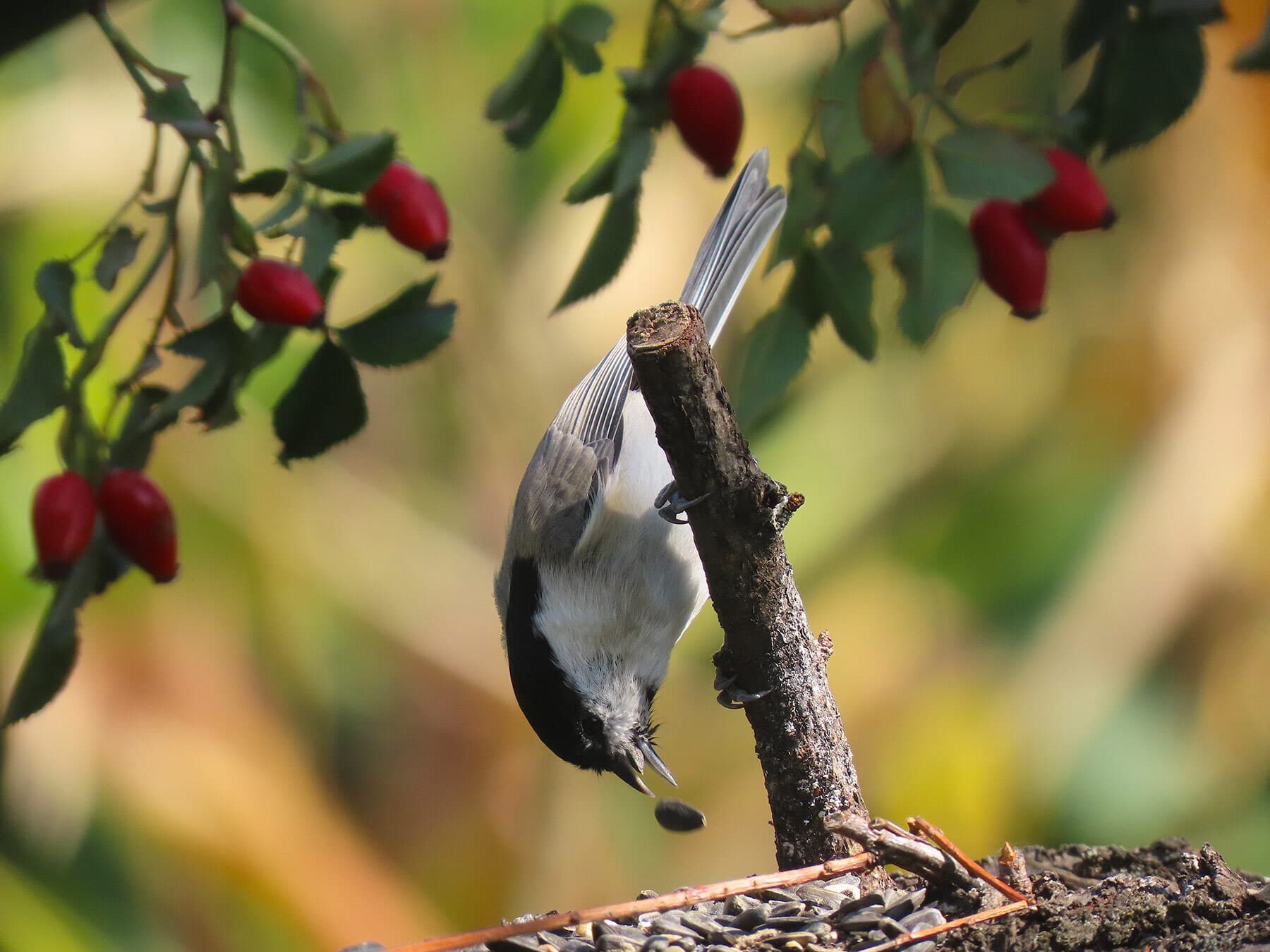
During Spring and Summer months the marsh tit feeds predominantly upon spiders, insects, small snails, grubs and slugs; whilst in Autumn and Winter their diet changes to seeds, nuts berries and orchard fruits. They particularly like beechnuts.
Unlike most tits, marsh tits will only occasionally visit bird tables preferring to forage and find their own food if readily available.
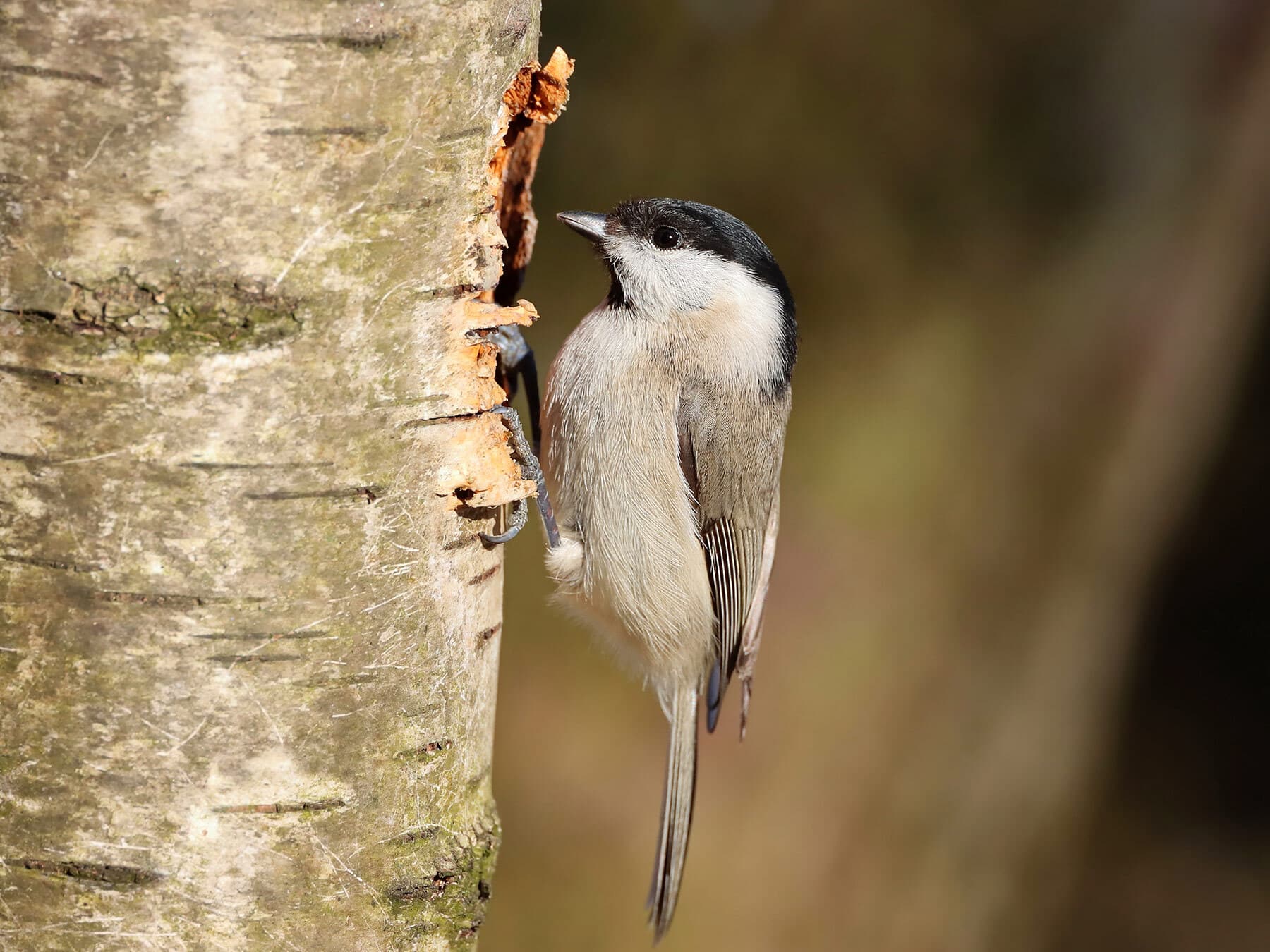
The marsh tit will frequently store food for later in the season hidden in caches such as under the bark of a tree. The brain of this small bird has developed to such an extent that not only can the bird remember where each seed or titbit is secreted but it can retrieve each food item in the order in which it was hidden, a truly remarkable feat!
Nesting and breeding
Although other subspecies of marsh tit may lay up to two broods in a breeding season, those resident breeders within the United Kingdom lay one brood of between 6 – 9 eggs annually, from late April through to early June. Marsh tits breed from the age of one year.
The female incubates the eggs for between 14 – 16 days, and fledging occurs from 18 to 21 days after hatching.
What do Marsh Tit eggs look like?
Weighing just 1.2g (including the shell) marsh tit eggs measure 16mm x 12mm and are white in colour, speckled red.
Behaviour
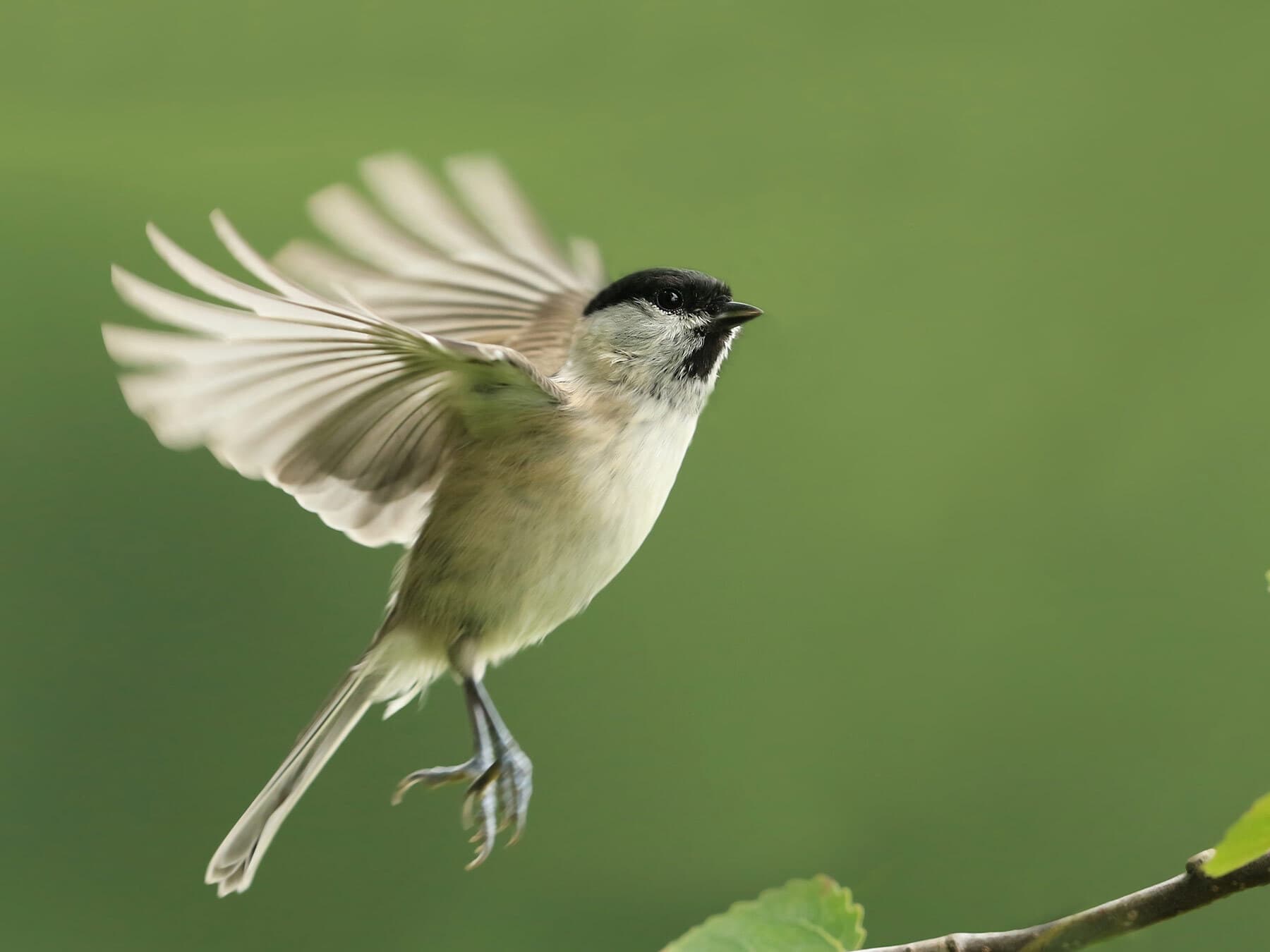
Marsh Tits are agile and active birds, often seen clinging to branches and twigs while foraging. They are known for their habit of caching food and storing seeds and insects in bark crevices for later consumption.
These birds are generally social, forming small flocks with other tit species outside the breeding season.
Lifespan and predators
Under normal conditions, the life expectancy of a marsh tit is generally between 2 to 3 years. However, a record exists of an individual European bird attaining an age just short of 12 years!
According to the British Trust for Ornithology, in 2015, a ringed bird was recorded as having lived for eleven years and three months from the date of ringing.
Conservation
While currently listed as Least Concern globally, Marsh Tit populations have declined in some parts of Europe, including the UK. Habitat loss and fragmentation due to changes in woodland management practices are the main threats.
Conservation efforts focus on maintaining suitable woodland habitats with a diverse understory.
What does a Marsh Tit look like?
Adult marsh tits have a striking glossy black cap that runs from the base of the upper mandible over the head, passing across the bottom of the eye and covering the nape of the neck. The chin is also black, made more prominent by large white cheeks.
The back, upper wing area and tail are a greyish brown and the underside of the bird is pale buff. The iris is black or very dark brown and the bill is black tinged grey at its edges. The legs are slate grey and both male and female birds are similar in overall appearance.
Juvenile marsh tits are similar to the adult birds although the crown is more of a sooty black or brown and the underparts are paler with more of a greyish tint.
Nestlings, newly hatched birds, are initially altricial meaning that they are underdeveloped and rely on their parents for food and protection. They emerge naked and quickly form a pale greyish down covering which they have normally lost at the time of fledging when they resemble a normal juvenile.
How big is a marsh Tit?
Fully grown marsh tits are on average 11.5 cm (4.5in) in length with a wingspan of up to 19cm (7.5in). They are similar in size and shape to other UK resident breeding tits, namely Willow Tits, Crested Tits, Coal Tits and Blue Tits.
How much does a Marsh Tit weigh?
At a weight range for an adult marsh tit as being between 10g and 12g (less than 1oz) they are a quarter of the weight of a fully grown common blackbird.
What is the scientific name for a Marsh Tit?
The scientific name for a marsh tit begins with the species name which is Poecile palustris. Being the nominate subspecies the United Kingdom and north and central European variant is entitled Poecile palustris palustris.
Poecile originates from the ancient Greek word poikilos meaning colourful or spotted and palustris is a Latin word which translates as ‘marshy’. This is a bit of a misnomer as the title marsh tit is misleading due to the fact that the bird generally chooses broad leaf (deciduous) woodland as a habitat as opposed to swampy or marshy terrain.
The scientific name of the family to which the marsh tit is recognised is Paridae. This feathered family consists of 63 species of tits, titmice and chickadees and is predominantly found in forests across the northern hemisphere, including North America, although they also appear throughout southern Africa where they populate arid and scrubland areas. Paridae comes from the Latin word Parus meaning Tit.
The order in which the family belongs is that of Passeriformes the largest order of birds with over 6,500 individual species. Also known as perching birds due to their ability to perch on branches telephone wires and suchlike due to their three forward facing toes and one rearward facing toe which allows them to successfully enclose their feet around an object and hang on whilst maintaining their balance.
Are Marsh Tits aggressive or friendly?
Marsh tits are not aggressive, and whilst not as sociable as most species of tit, often preferring the company of their mate away from other birds, marsh tits in very small numbers will occasionally join other mixed flocks of tits. Juvenile marsh tits that are yet to claim their own small territorial areas will sometimes flock together in small numbers, particularly when foraging.
Are Marsh Tits endangered?
The conservation status of marsh tits globally is classified as being of ‘Least Concern’. However, within the United Kingdom, due to a serious historical decline in numbers by up to 75% since the 1960’s, the UK conservation status for the bird is ‘Red’, indicating the highest conservation priority.
Are Marsh Tits protected in the UK?
Within the United Kingdom marsh tits are protected under the 1981 Wildlife and Countryside Act.
Do Marsh Tits mate for life?
Marsh tits are indeed monogamous, meaning they pair for life. There have been rare instances recorded where male marsh tits will mate with a second female in the same breeding season, although it is believed, on the other hand, that females will only mate with a single male.
Are Marsh Tits native to the UK?
One can definitely say that marsh tits are native to the UK. The first recorded reference to marsh tits within the United Kingdom was in a book by English ornithologist Francis Willughby of Warwickshire, first published in Latin in 1676.
Similar birds
Often mistaken for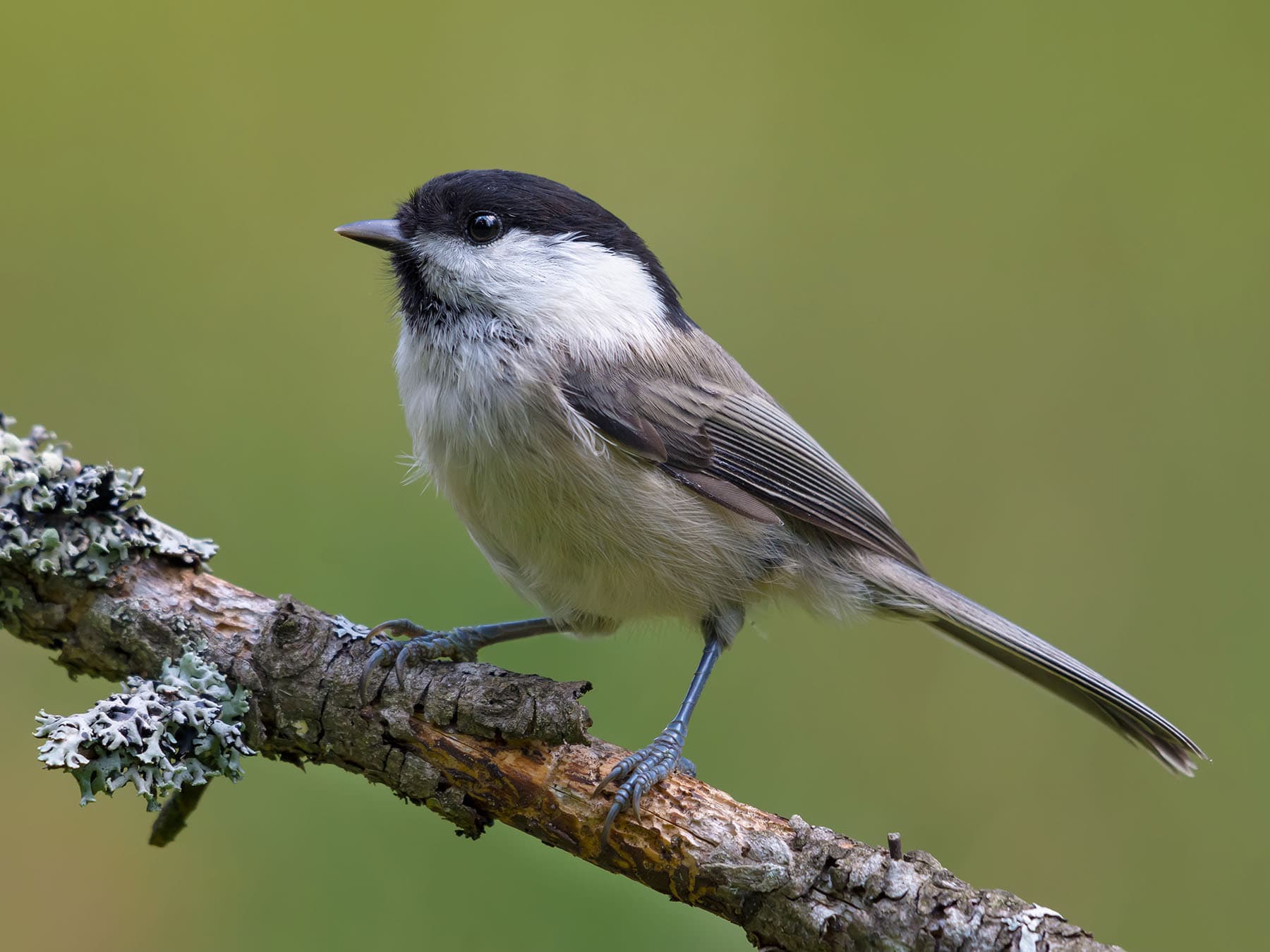
Quick facts
- Length
- 11.5–12.5 cm
- Wingspan
- 18–20 cm
- Weight
- 9–12 g
- Lifespan
- 2–3 years
- Family
- Tits & Chickadees
- Migration
- Resident
- Global status (IUCN)
- Least Concern
- World population
- 10,600,000 - 20,900,000 mature individuals
- Population trend
- Decreasing
- Also called
- European Marsh Tit
- Scientific name
- Poecile palustris
Sources
3- 1BirdLife International. 2017. Poecile palustris (amended version of 2016 assessment). The IUCN Red List of Threatened Species 2017: e.T22735995A118837418. Source (opens in a new tab)
- 2EBCC (2015)
- 3BirdLife International. 2017. Poecile palustris (amended version of 2016 assessment). The IUCN Red List of Threatened Species 2017: e.T22735995A118837418. Source (opens in a new tab)

Checked by
Nathan Cope, founder and editor
Nathan founded Birdfact and leads its writers and contributors in the UK, the US and Canada. He has watched and studied birds for more than ten years, and checks every article and species guide before it’s published.