


Williamson's Sapsucker
Williamson's Woodpecker · Sphyrapicus thyroideus
By the Birdfact teamChecked by Nathan Cope
On this page13 sections
How to recognise it
What do Williamson's Sapsuckers look like?
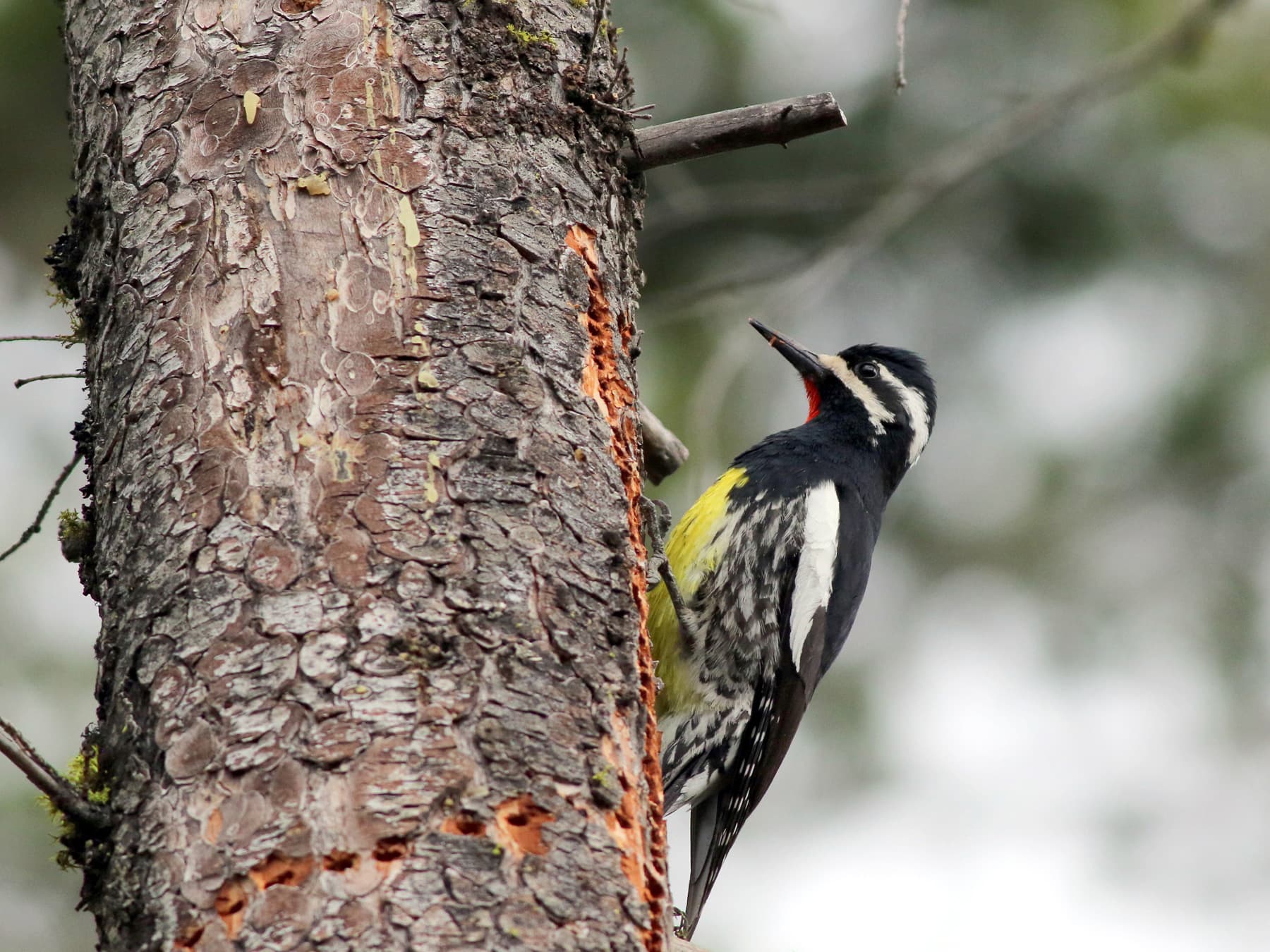
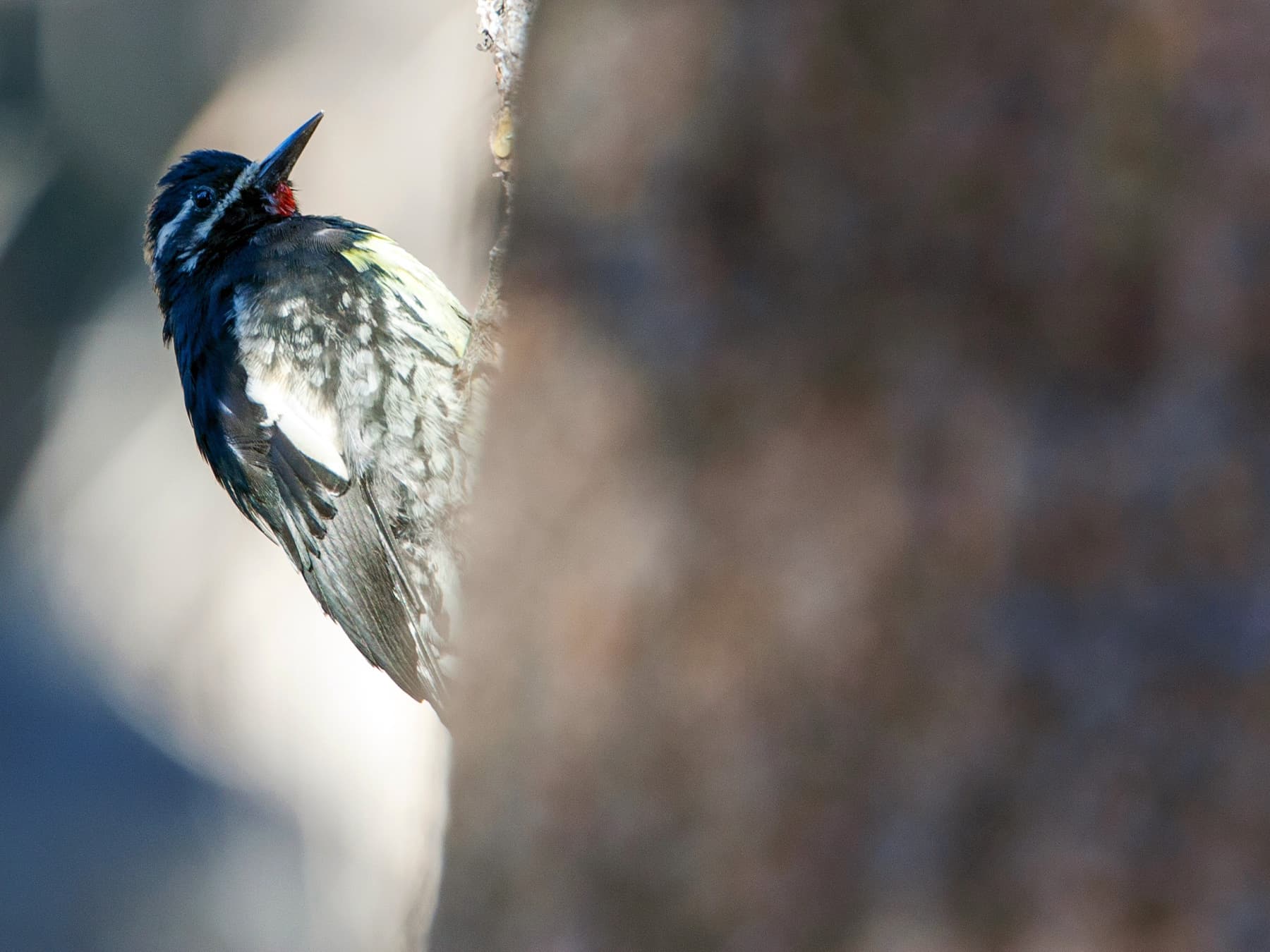
Male Williamson’s sapsuckers have a black back, white rump, black wings with a wide white wing patch, and black and white barred flanks. Their head is mainly black, with a white stripe running from the eye to the back of the head and a white cheek stripe extending from the bill outwards.
A cherry red throat patch is a distinguishing feature, above a solid black breast. Below, the belly is bright yellow.
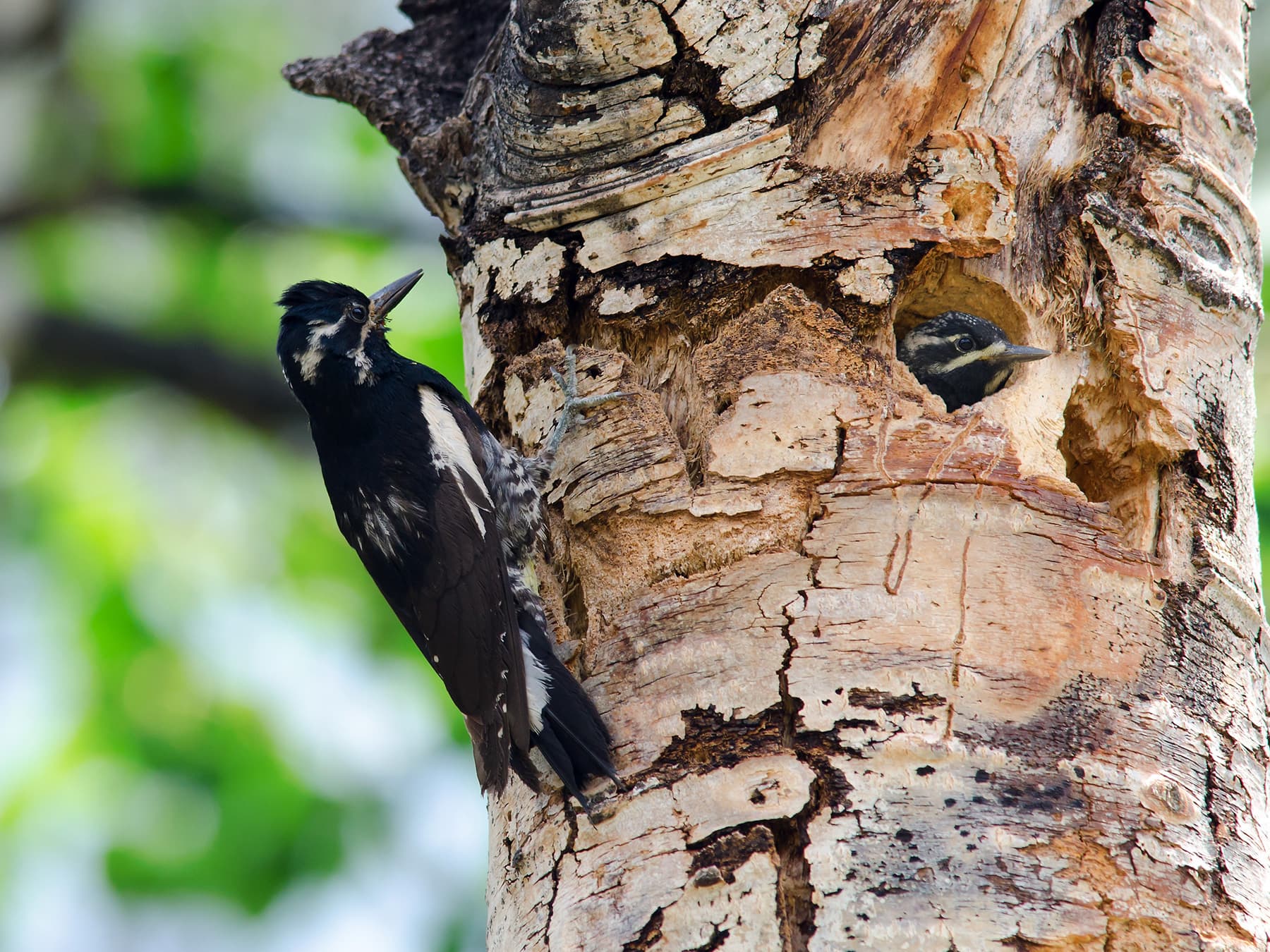
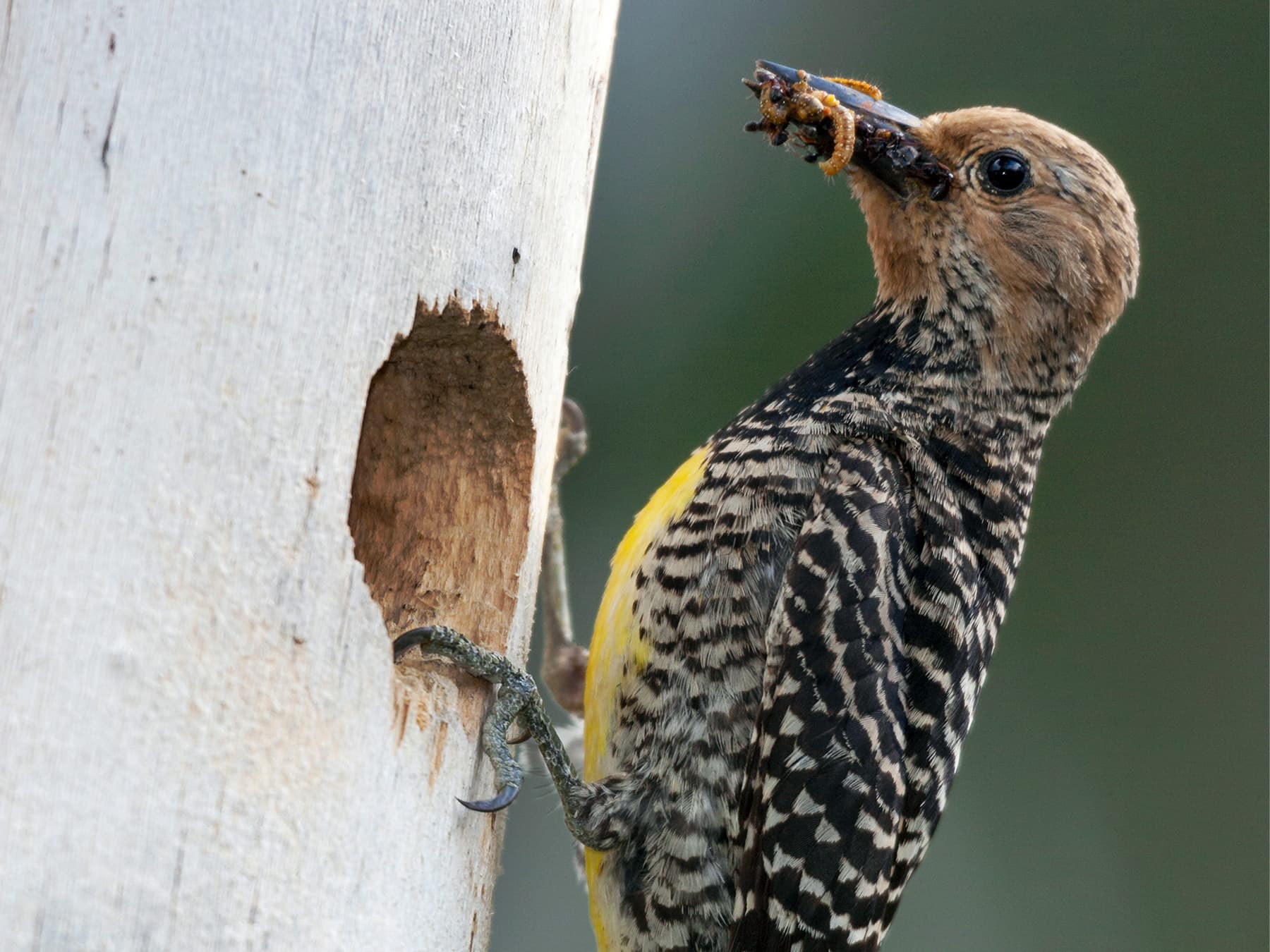
Male and female Williamson’s sapsuckers are so unalike that they were originally thought to be two different species. Females share the yellow belly patch, although theirs is much smaller in size. A small black patch marks the upper breast, but otherwise, their plumage is mottled with white and brownish-black barring, apart from a solid white rump and a brown head with faint lighter streaks.
Juveniles of both sexes resemble adults, although their markings are duller and less clearly defined. In juvenile male Williamson’s sapsuckers, the throat is white, while young females can be told apart by the lack of a black breast patch.
How big are Williamson's Sapsuckers?
Marginally larger in size than the other sapsucker species, the Williamson’s sapsucker is a compact woodpecker, with relatively long wings. There isn’t any noticeable difference in size between males and females.
- Length: 21 cm to 25 cm (8.3 in to 9.8 in)
- Wingspan: 43 cm (17 in)
- Weight: 44 g to 55 g (1.6 oz to 1.9 oz)
Its size
Adults- Length
- 21–25 cm
- Wingspan
- 43–46 cm
- Weight
- 44–66 g
Its song and calls
What sound does a Williamson's Sapsucker make?
Commonly heard calls of a Williamson’s sapsucker include a harsh, shrill raptor-like shriek, given in alarm and distress. A soft nasal “churr”, falling in pitch, is frequently heard as a contact call, and excitable chattering is heard in territorial defense.
Williamson’s sapsuckers also use drumming to communicate, with a series of rapid taps, followed by three or four rhythmic, slower beats.
When and where to see it
OctoberLeaving
Most recorded in October
- 1. New Mexico0.17%
- 2. Arizonaunder 0.1%
- 3. Utahunder 0.1%
- 4. Nevadaunder 0.1%
- 5. Coloradounder 0.1%
Each dot is a county, state or province: the bigger and darker, the larger the bird’s share of that place’s bird records that month. Grey dots: no regular records. The ringed point is the centre of the bird’s records this month; the arrow shows how it moved since last month, and the dashed loop its path through the year. “Arrivals” colours places where it becomes regular this month (orange) or is in its last regular month (grey). GBIF eBird Observation Dataset, 2019–2024. Map data: Natural Earth, US Census Bureau; place centres © OpenStreetMap contributors.
In your area
See when the Williamson's Sapsucker is recorded in your county, state or province.
How often the Williamson's Sapsucker turns up in the United States and Canada through the year, from birdwatchers' records.
United States
Summer visitor · all year · most records in July
Canada
Summer visitor · regularly Mar–Sep · most records in June
Show as a table
| Month | United States | Canada |
|---|---|---|
| January | 0.004% (regular) | – |
| February | 0.003% (regular) | – |
| March | 0.003% (regular) | <0.001% (regular) |
| April | 0.003% (regular) | 0.001% (regular) |
| May | 0.004% (regular) | 0.001% (regular) |
| June | 0.018% (regular) | 0.002% (regular) |
| July | 0.018% (regular) | <0.001% (regular) |
| August | 0.011% (regular) | <0.001% (regular) |
| September | 0.009% (regular) | <0.001% (regular) |
| October | 0.006% (regular) | <0.001% |
| November | 0.005% (regular) | – |
| December | 0.004% (regular) | – |
Worldwide: recorded regularly in 3 countries
Countries where it was recorded in at least 3 of the 6 years 2019–2024. Linked countries have their own bird list.
North America (3)
Data: EOD – eBird Observation Dataset (Cornell Lab of Ornithology), accessed via GBIF.org, CC BY 4.0. Records from 2019–2024, aggregated and filtered by Birdfact. How these lists are made
What is the habitat of a Williamson's Sapsucker?
Middle-to-high elevation mixed woodlands, with both deciduous and coniferous trees, are favored by Williamson’s sapsuckers. Live conifers with decaying heartwood provide the vital sources of fresh sap they depend on for survival, while both deciduous and evergreen species are used for nesting.
Open forests with larch, ponderosa pine, Douglas fir, trembling aspen, and maple are important, offering opportunities for widespread foraging alongside suitable nesting spots. In winter, many populations move to slightly lower elevations and oak scrub is a popular wintering habitat.
What is the range of a Williamson's Sapsucker?
Williamson’s sapsuckers breed in North America, through the Northern and Southern Rocky Mountains. The northern limit of their range is found in a small region of Canada, limited to southern British Columbia and Alberta, where pairs arrive to breed in April each year. Breeding is recorded in regions of the western US, as far south as Colorado, Arizona, and New Mexico, with a patchy and fragmented distribution range.
Further south, populations of Williamson’s sapsuckers are mainly winter visitors, with numbers increasing in Arizona, New Mexico, and western Texas once breeding is complete. Wintering grounds are found further south, into central Mexico, where individuals spend several months foraging in mixed woodlands, before returning north to breed in late March.
To the west, resident populations are found all year round in parts of Washington, Oregon, and northern California.
Where do Williamson's Sapsuckers live?
The estimate for the global population of Williamson’s sapsuckers is around 300,000, of which 290,000 are in the United States and Canada, and 10,000 in Mexico. Colorado and Arizona have recorded relatively high concentrations of the species.
How rare are Williamson's Sapsuckers?
With a global population of around 300,000 individuals and a wide, fragmented distribution range, Williamson’s sapsuckers are considered a relatively rare woodpecker and sightings are uncommon due to their preference for remote, dense woodland habitats for nesting.
They have distinctive raptor-like cries that may alert you to their presence and spotting rows of neatly drilled sap wells in a trunk of a mature conifer is a good indicator that they are nearby.
Where can you see Williamson's Sapsuckers in the US?
In the US, the states with the highest concentrations of Williamson’s sapsuckers include Colorado, Arizona, Idaho, New Mexico, and Montana. Colorado’s Rocky Mountains National Park has extensive pine and aspen forests that offer an ideal habitat for sightings.
A known breeding ground for Williamson’s sapsuckers is the open coniferous landscapes of Montana’s Kootenai National Forest.
Where can you see Williamson's Sapsuckers in Canada?
In the southwest of the country, breeding grounds of Williamson’s sapsuckers are found in the extreme southern regions of British Columbia and in parts of Alberta, along the international border.
Migration
Do Williamson's Sapsuckers migrate?
Some migration occurs from the northern extremes of their range with populations that breed in the far north and through the Rocky Mountains shifting southwards into Arizona, New Mexico, Texas, and further south as far as central Mexico.
Pacific populations of Williamson’s sapsuckers tend to be resident in the same territories all year round, although some movement to lowland landscapes may occur from September to April.
Are Williamson's Sapsuckers native to the US?
Williamson’s sapsuckers are native residents in many parts of the western US, with permanent populations found in the Pacific Northwest and in isolated patches further inland, in Arizona, New Mexico, and Utah.
Breeding occurs from across the border with British Columbia, through both the Northern and Southern Rockies and wintering grounds are found primarily in the southwestern and south-central states.
Tips for seeing it
- Look for their distinctive sap wells on conifer trees
- Listen for their sharp 'chuck' call or rapid drumming
- Observe tree trunks carefully, as their plumage blends well with bark
- In the US, focus on montane conifer forests of the western states
What it eats
What do Williamson's Sapsuckers eat?
Sap is key to the diet of Williamson’s sapsuckers, with individuals drilling rows of holes in conifer trees to access the fresh sap resources, particularly early in the year. The inner moist bark layer of a tree trunk, known as phloem, is also important in their diet.
Ants, aphids, and beetles are also eaten, picked off the surface of the bark of a tree, or extracted, coated in sap, from the wells they have drilled.
In winter, fruits and seeds become more important, with berries and juniper, pine, and madrone among the most popular foods.
What do Williamson's Sapsucker chicks eat?
Hatchlings are fed on invertebrates, including beetles, aphids, flies, and other insects that are carried to the nest cavity by both parents. Insects dipped in sap may also be offered in the earliest days, which gives growing chicks a quick initial energy boost.
Nesting and breeding
Where do Williamson's Sapsuckers nest?
Williamson’s sapsuckers nest in a variety of different tree species and seem to be adaptable to whatever is available in their surroundings. Live trees that have some internal decay developing are chosen, or alternatively, a deadwood snag with softer wood may also be suitable, with common species being aspen, lodgepole pine, and ponderosa pine.
Males are believed to undertake a larger share of the drilling, although females do assist. Nests are usually at a height of between 2.4 m and 13.1 m (8 ft and 43 ft). Inside the chamber, a shallow layer of wood chippings is used as a lining, with no additional material added.
When do Williamson's Sapsuckers nest?
Pair formation begins in March, with migratory Williamson’s sapsuckers arriving back on territories from their wintering grounds, or those that are resident in the same locations all year round reuniting with mates or beginning courtship rituals. Nest building begins after around 3 weeks and can take up to 4 weeks to excavate a suitable cavity.
The peak laying period is from May to June, with eggs in southern regions, e.g. Arizona, laid as early as late April. Incubation, shared between mates, lasts for 12 to 14 days, after which the young are cared for in the nest for a further 31 to 32 days.
What do Williamson's Sapsucker eggs look like?
Williamson’s sapsuckers’ eggs are pure white and slightly glossy. They have no external markings on the shell and measure around 24 mm by 17 mm (0.9 in by 0.7 in).
Do Williamson's Sapsuckers mate for life?
Williamson’s sapsuckers are monogamous during the breeding season, remaining together while they raise their single brood of young.
Once their young have gained independence, pairs separate and do not remain bonded through the winter. However, in spring, while some may reunite with a former mate, others will breed with a different mate in subsequent seasons.
Behaviour
Are Williamson's Sapsuckers aggressive?
Male Williamson’s sapsuckers are observed to show aggression during nest construction and will drive away any intruders.
Both sexes will chase off any birds that approach the nest site, and short bursts of physical combat may occur if a rival is particularly persistent. A chattering call and threatening posturing are used, with wing-flapping and bill-swinging to show dominance.
Where do Williamson's Sapsuckers sleep at night?
Williamson’s sapsuckers will usually find a natural cavity to roost in overnight or may use previously excavated nest chambers that are no longer in use. While caring for young, parents will often find a spot nearby on the side of a tree trunk to rest for a short period.
Lifespan and predators
How long do Williamson's Sapsuckers live?
Little information exists about the expected or maximum lifespan of a Williamson’s sapsucker, but they are estimated to live for between 5 and 7 years. Young birds breed for the first time in their first year and are observed to breed annually.
What are the predators of Williamson's Sapsuckers?
Nest cavities of Williamson’s sapsuckers are a target for opportunistic raiders, including squirrels, weasels, house wrens, garter snakes, and even black bears. Birds of prey, including northern goshawks, Cooper’s hawks, and sharp-shinned hawks, are known to prey on juveniles and adults during the breeding season.
Are Williamson's Sapsuckers protected?
The Migratory Birds Treaty Act of 1918 protects Williamson’s sapsuckers against being hunted and killed, injured, traded, or taken into captivity. The legislation also protects their eggs, nest sites, feathers, and young against being disturbed, sold, or destroyed.
Are Williamson's Sapsuckers endangered?
With an overall global status as a species of least concern, Williamson’s sapsuckers are considered to have a stable and secure population. However, in Canada, the species is listed as endangered, due to a contracting habitat, with extensive loss of mature larch woodlands.
Across different states, there are varying levels of conservation concern for Williamson’s sapsuckers, with the species rated as imperiled in Nevada and vulnerable in British Columbia and Utah.
Conservation
While currently listed as Least Concern, Williamson's Sapsuckers face threats from habitat loss due to logging and climate change.
Conservation efforts focus on protecting mature conifer forests and maintaining snags for nesting sites.
Similar birds
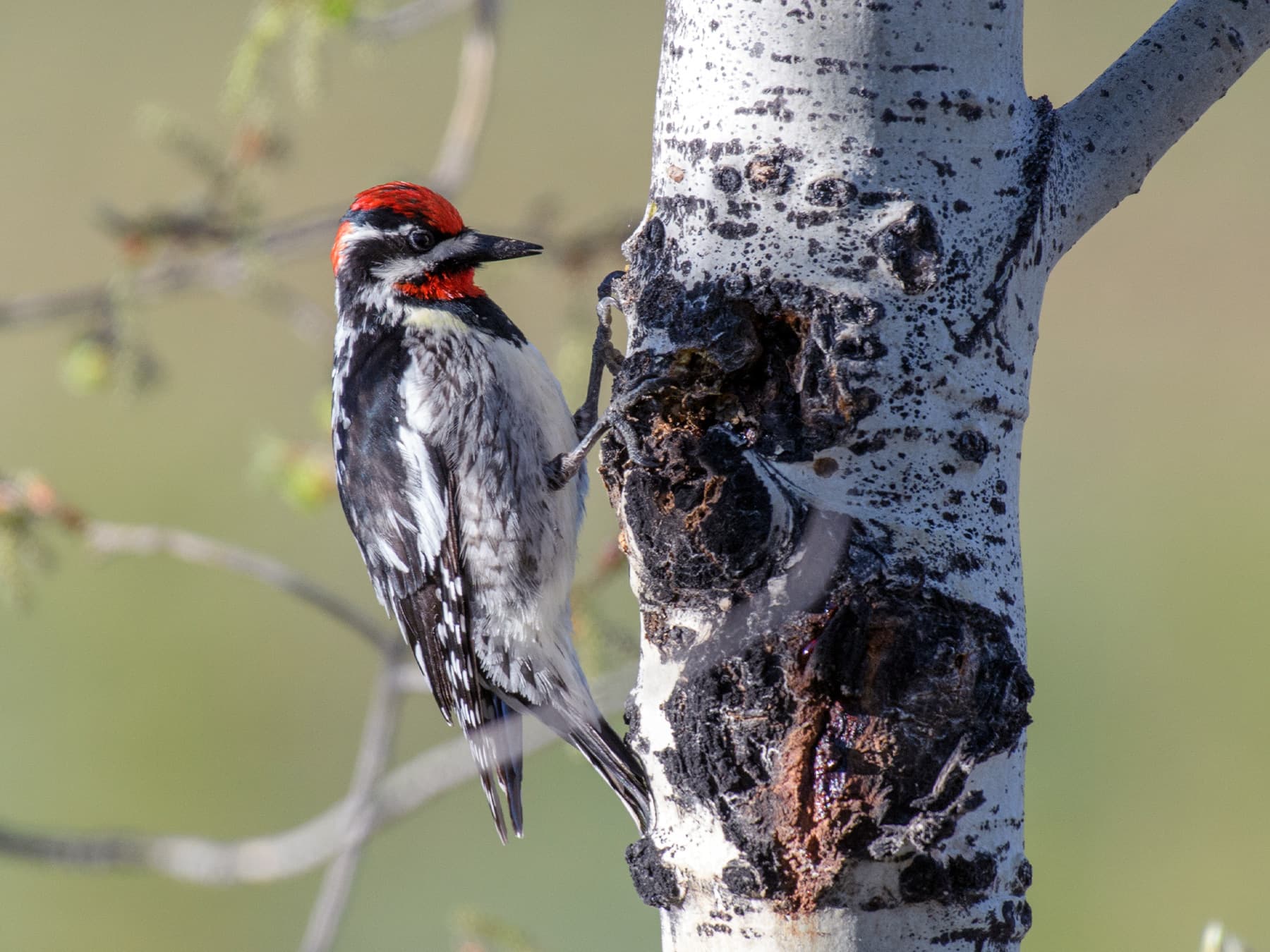
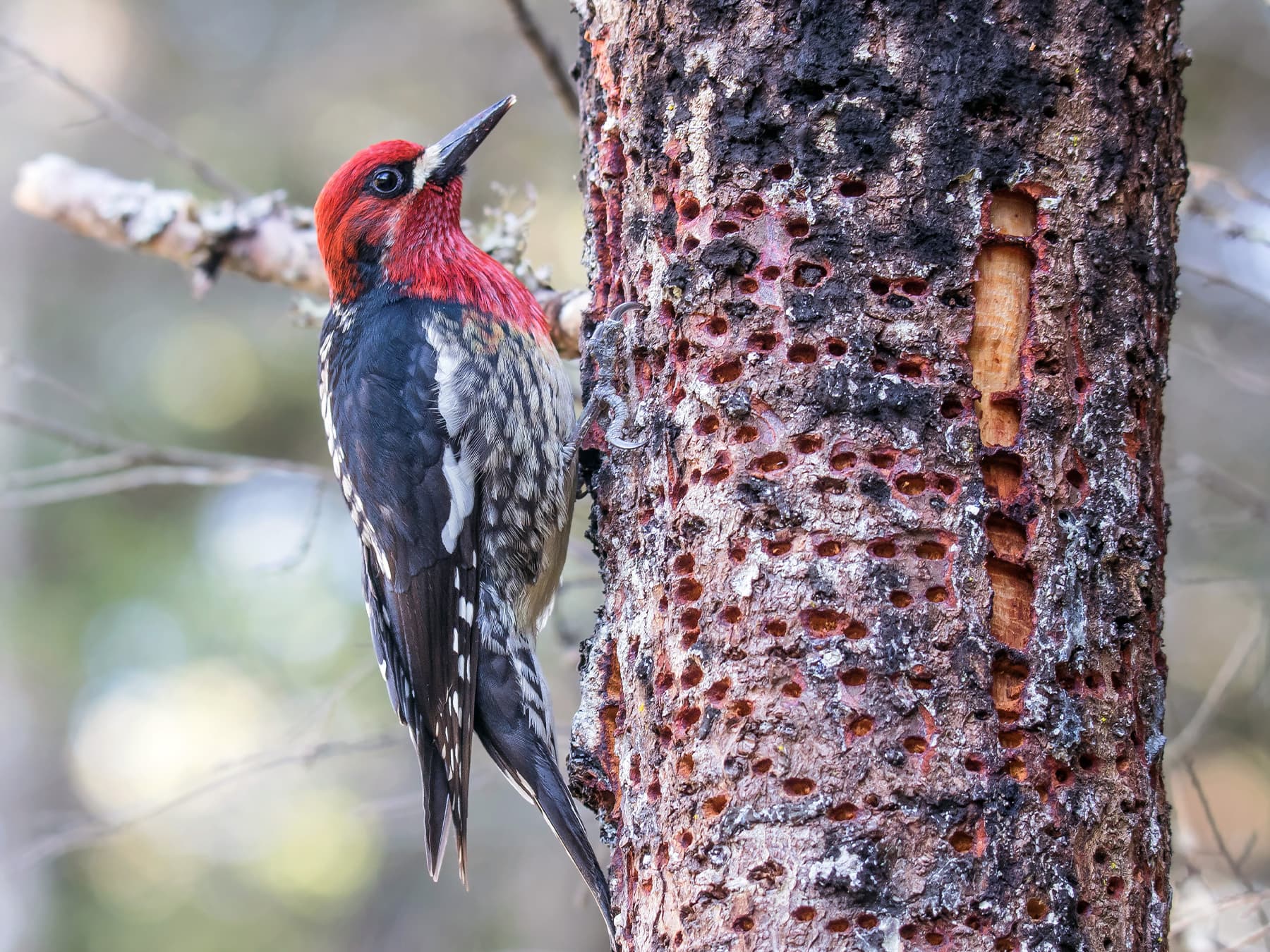
Often mistaken for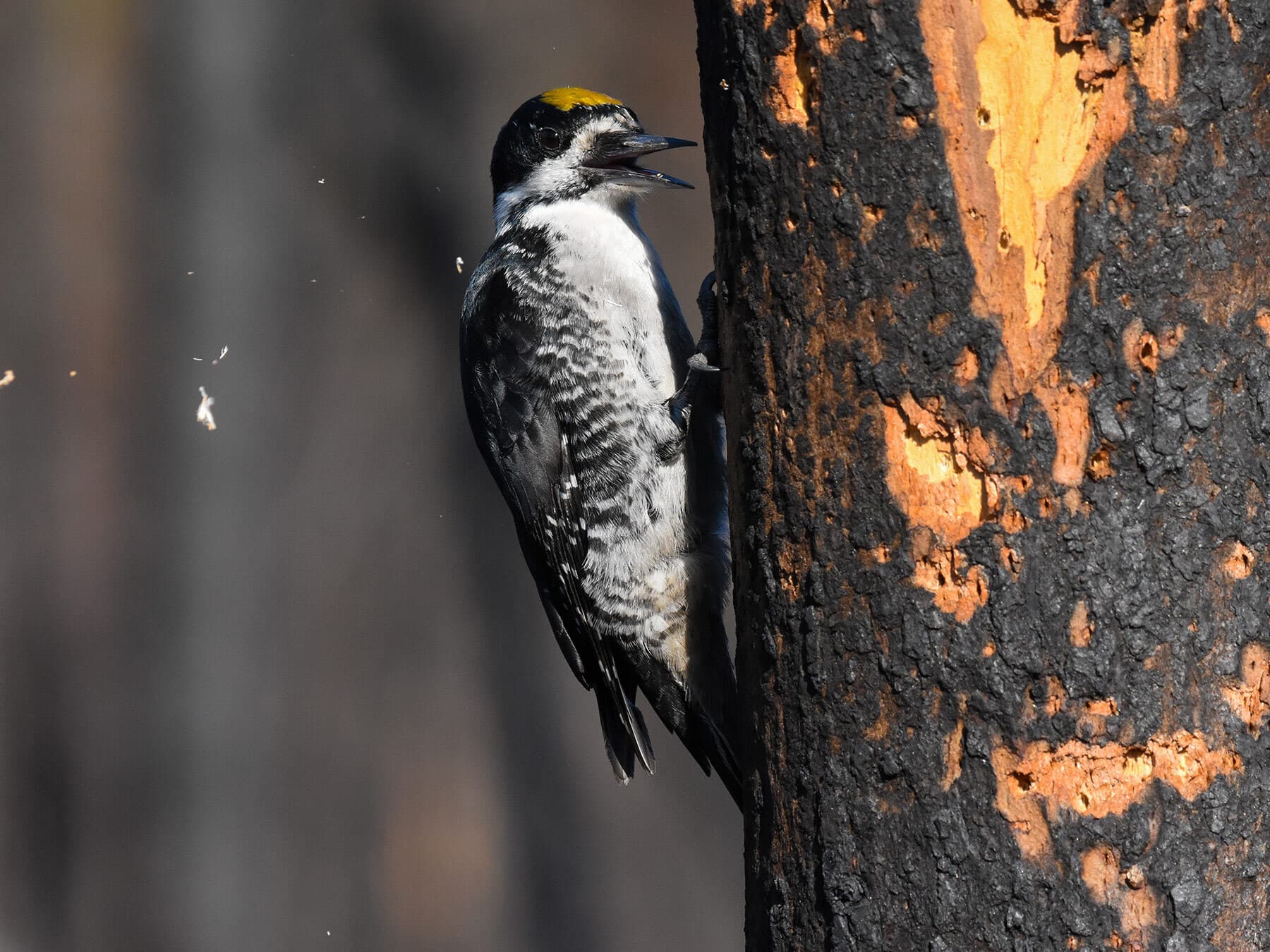
Quick facts
- Length
- 21–25 cm
- Wingspan
- 43–46 cm
- Weight
- 44–66 g
- Lifespan
- 5–7 years
- Family
- Woodpeckers
- Migration
- Short-distance migrant
- Global status (IUCN)
- Least Concern
- World population
- 300,000 mature individuals
- Population trend
- Stable
- Also called
- Williamson's Woodpecker
- Scientific name
- Sphyrapicus thyroideus
Questions
4What attracts Williamson's Sapsuckers?
Rather than supplying seed, suet, or fruit, the most effective way to attract a Williamson’s sapsucker is by providing a suitable habitat, with a variety of mature trees, including aspen, pine, maple, and birch. Foraging opportunities for both sap and insects are a top priority for this species.
What trees do Williamson's Sapsuckers prefer?
Sap wells are only drilled in coniferous trees, with Douglas fir and ponderosa pine being the preferred species. Williamson’s sapsuckers are less choosy over the tree species they nest in, and generally use whatever is available, including lodgepole pine, trembling aspen, and ponderosa pine.
Do Williamson's Sapsuckers harm trees?
Rows of sap wells are drilled into around 4 to 6 different trees by pairs of Williamson’s sapsuckers throughout each breeding season. Drilling is rather extensive but necessary for these birds to access their vital sap resources.
Larger trees will recover, but there is a risk that the small wells drilled into younger or weaker trees may be damaged by insect infestations that may colonize the holes.
Do Williamson's Sapsuckers go to bird feeders?
It’s unlikely that a Williamson’s sapsucker will rock up to your backyard feeder, as their preferred foraging grounds are found deep in forests, where they feed mainly from sapwells they have drilled in a series of conifers.
On rare occasions, sapsuckers may investigate a hummingbird’s sugar water feeder, although such reports are not common.
Sources
3- 1BirdLife International. 2016. Sphyrapicus thyroideus. The IUCN Red List of Threatened Species 2016: e.T22680877A92884201. Source (opens in a new tab)
- 2Breeding Bird Survey and/or Christmas Bird Count: Butcher and Niven (2007)
- 3Partners in Flight (2022) Source (opens in a new tab)

Checked by
Nathan Cope, founder and editor
Nathan founded Birdfact and leads its writers and contributors in the UK, the US and Canada. He has watched and studied birds for more than ten years, and checks every article and species guide before it’s published.