


Red-naped Sapsucker
Red-naped Woodpecker · Sphyrapicus nuchalis
By the Birdfact teamChecked by Nathan Cope
On this page14 sections
How to recognise it
What do Red-naped Sapsuckers look like?
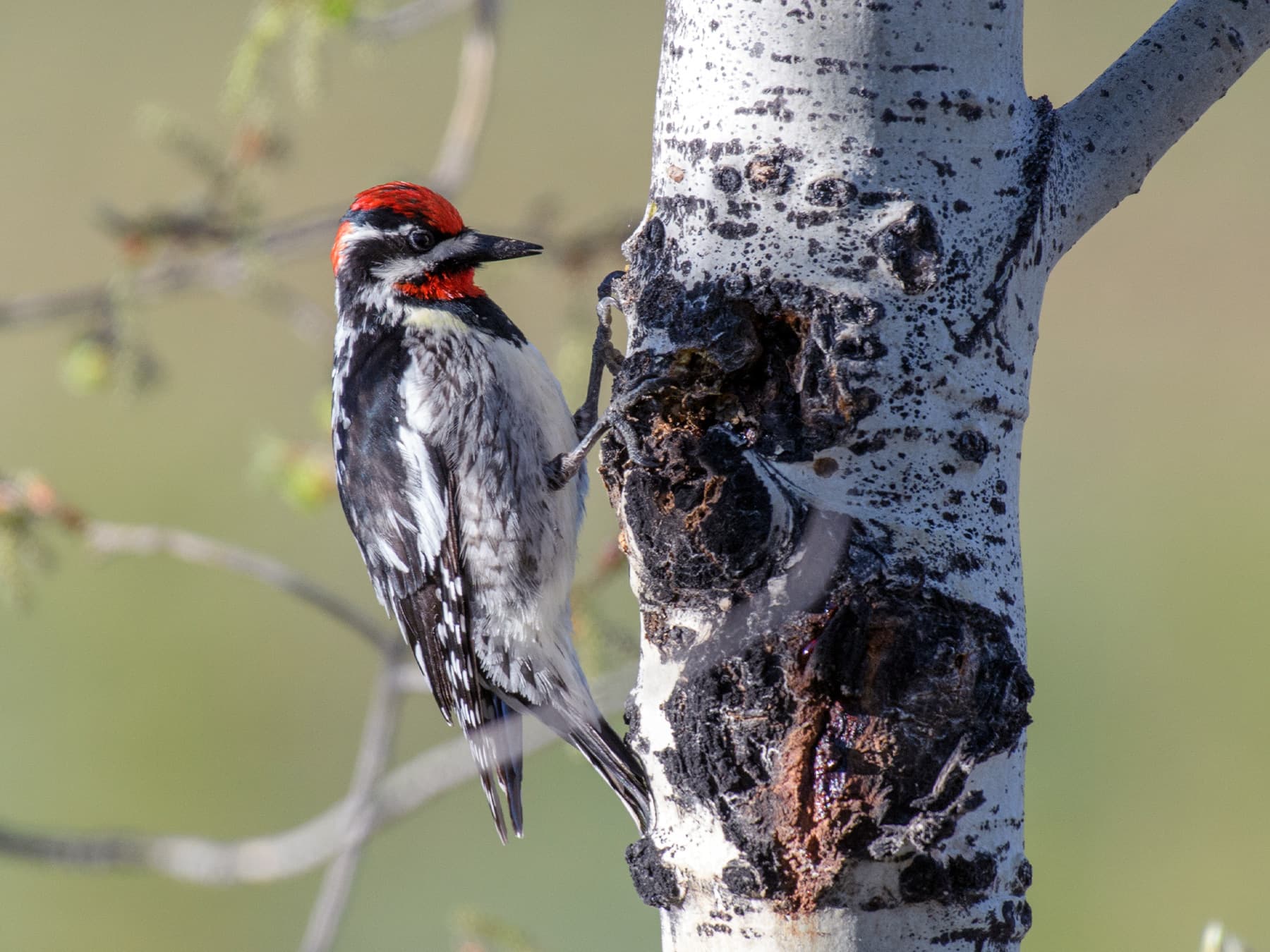
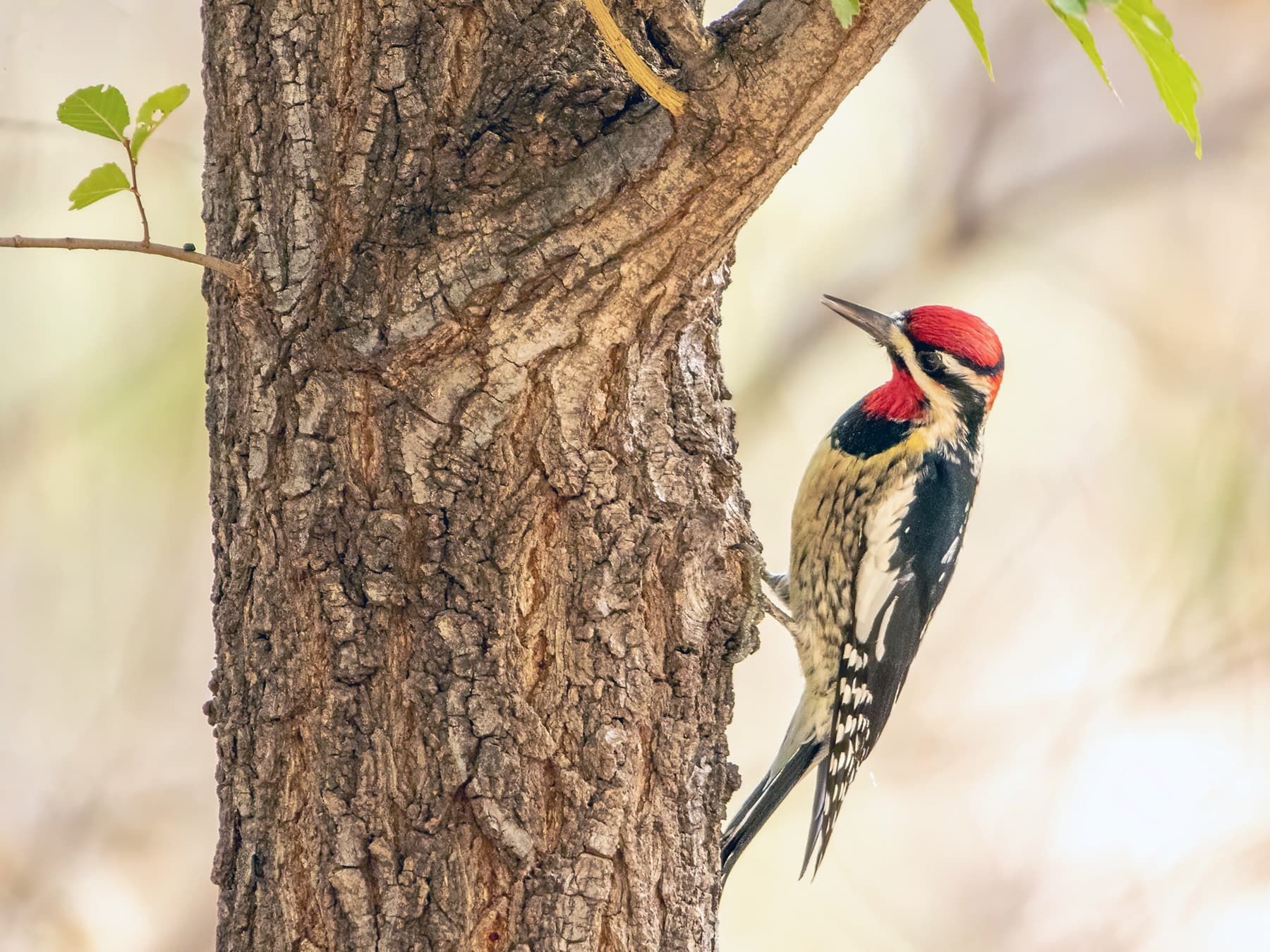
A red, black, white, and yellow member of the woodpecker family, the red-naped sapsucker is named for its patch of crimson feathers at the rear of its head.
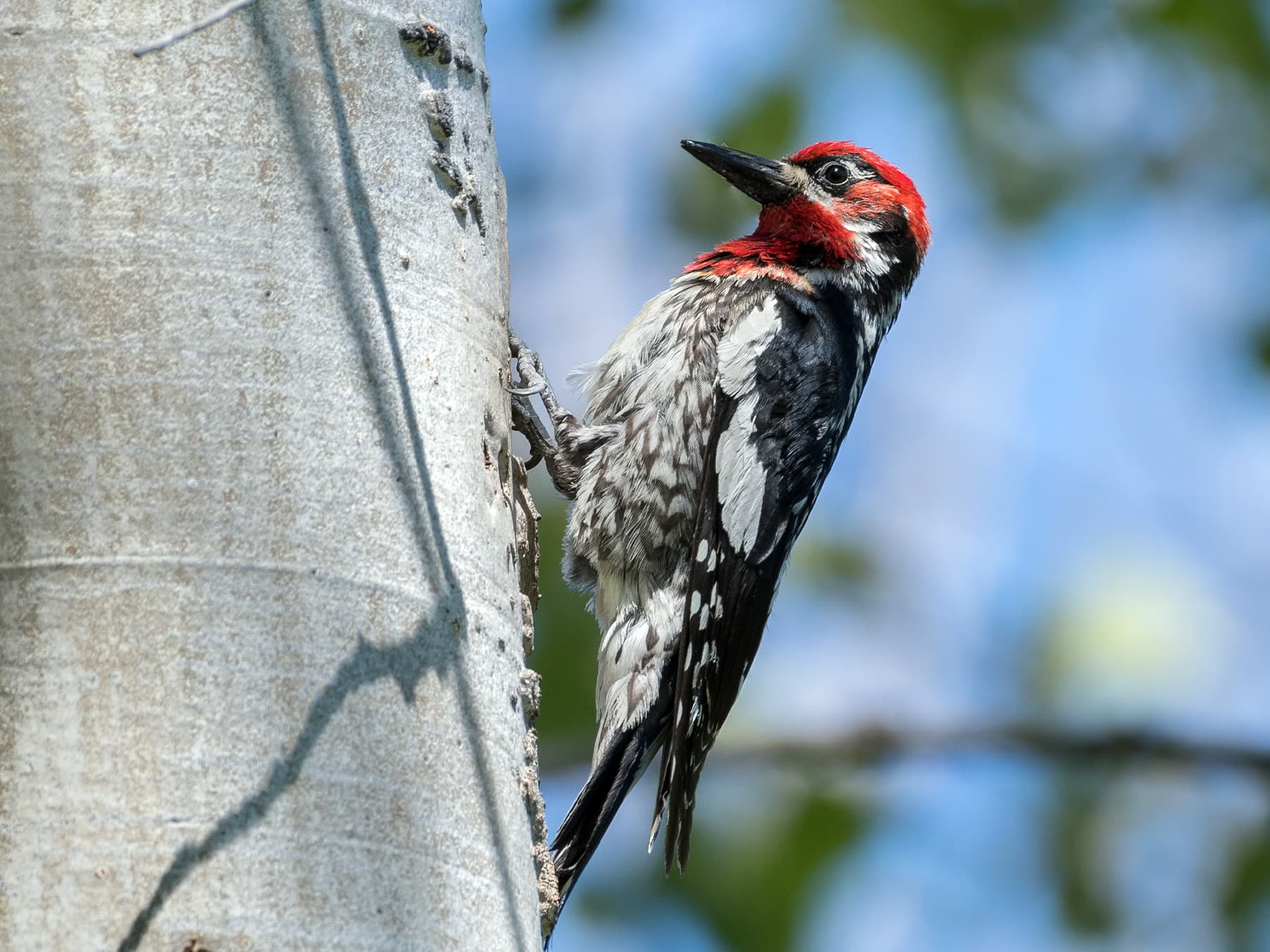
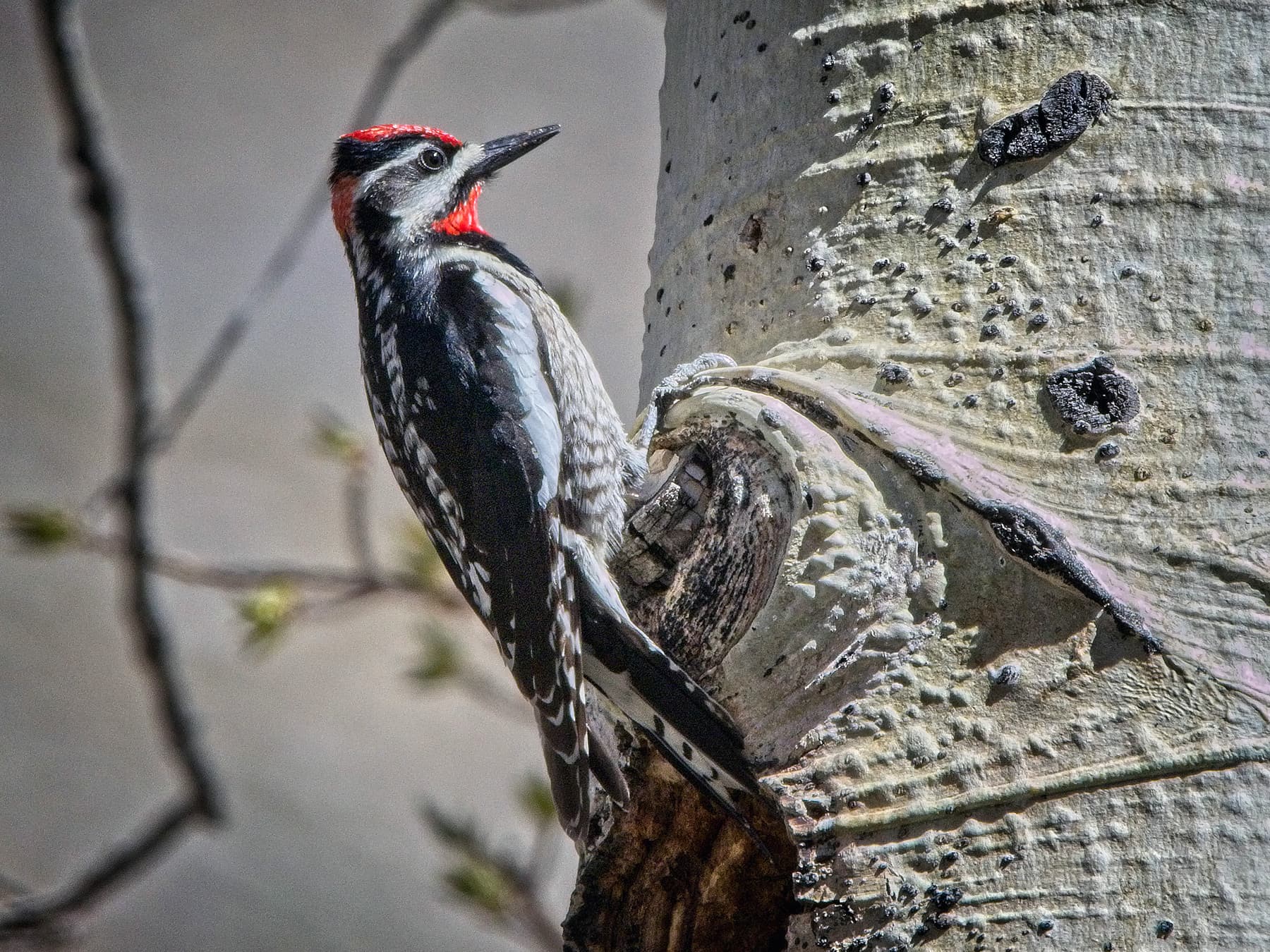
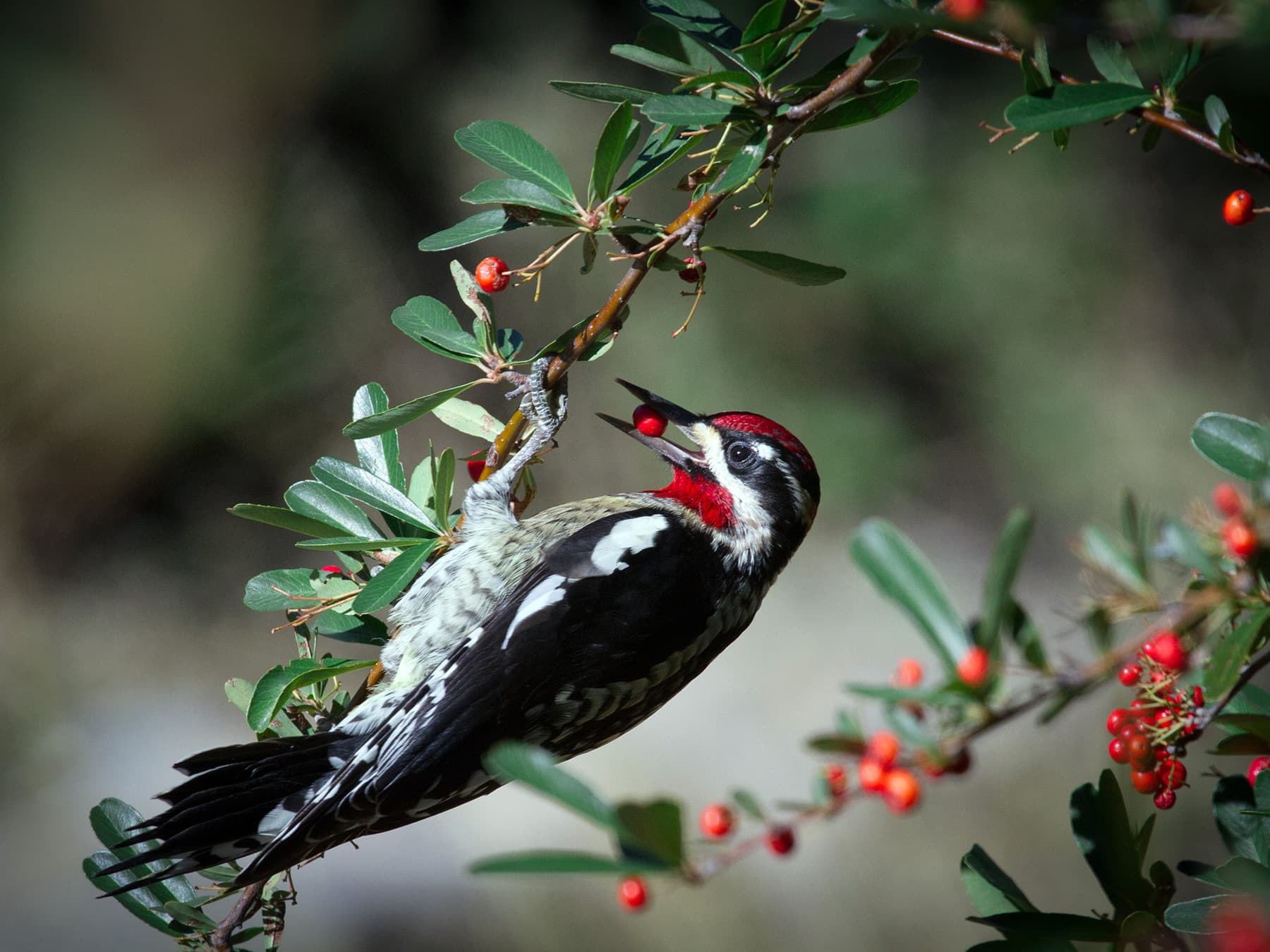
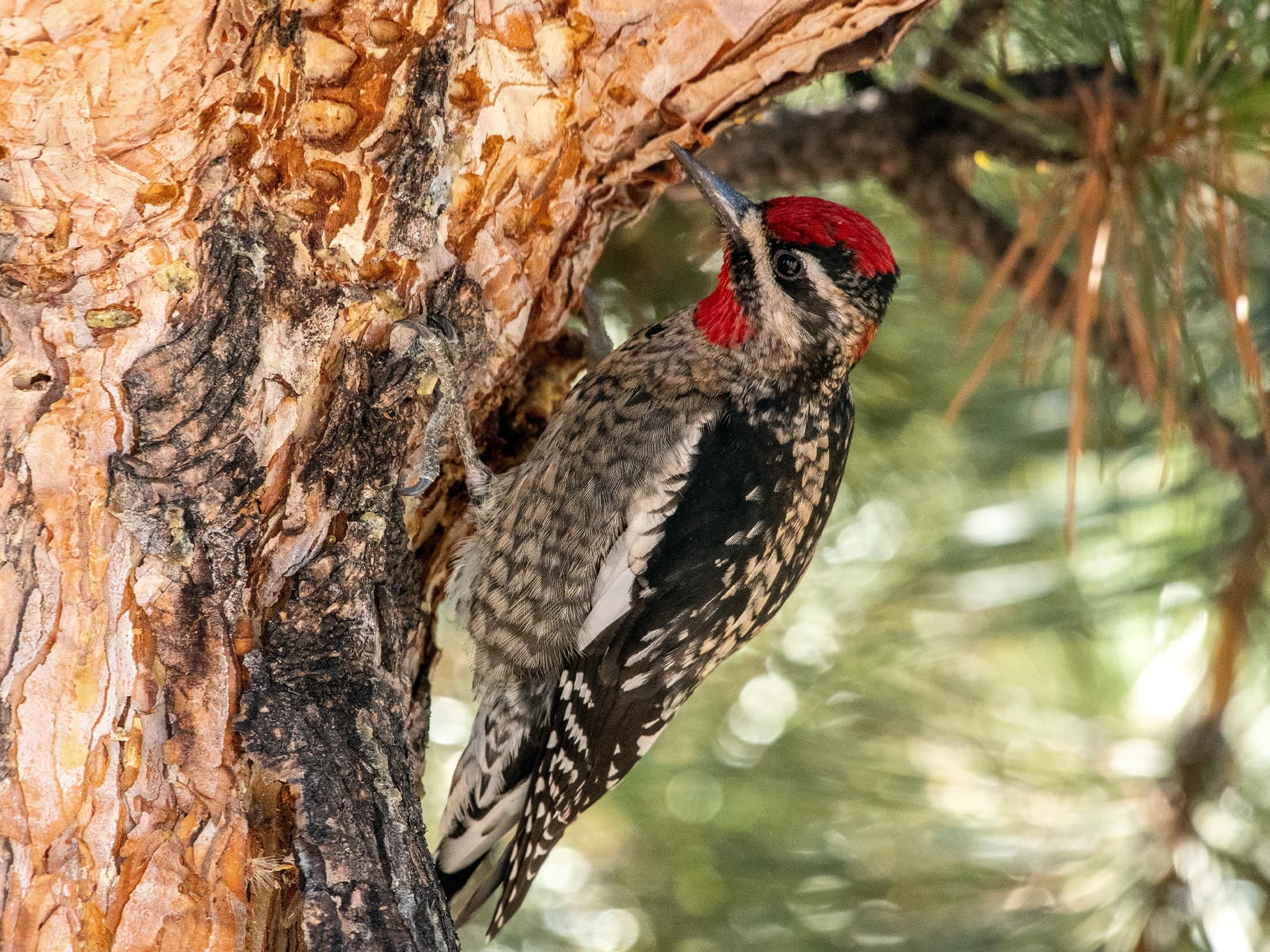
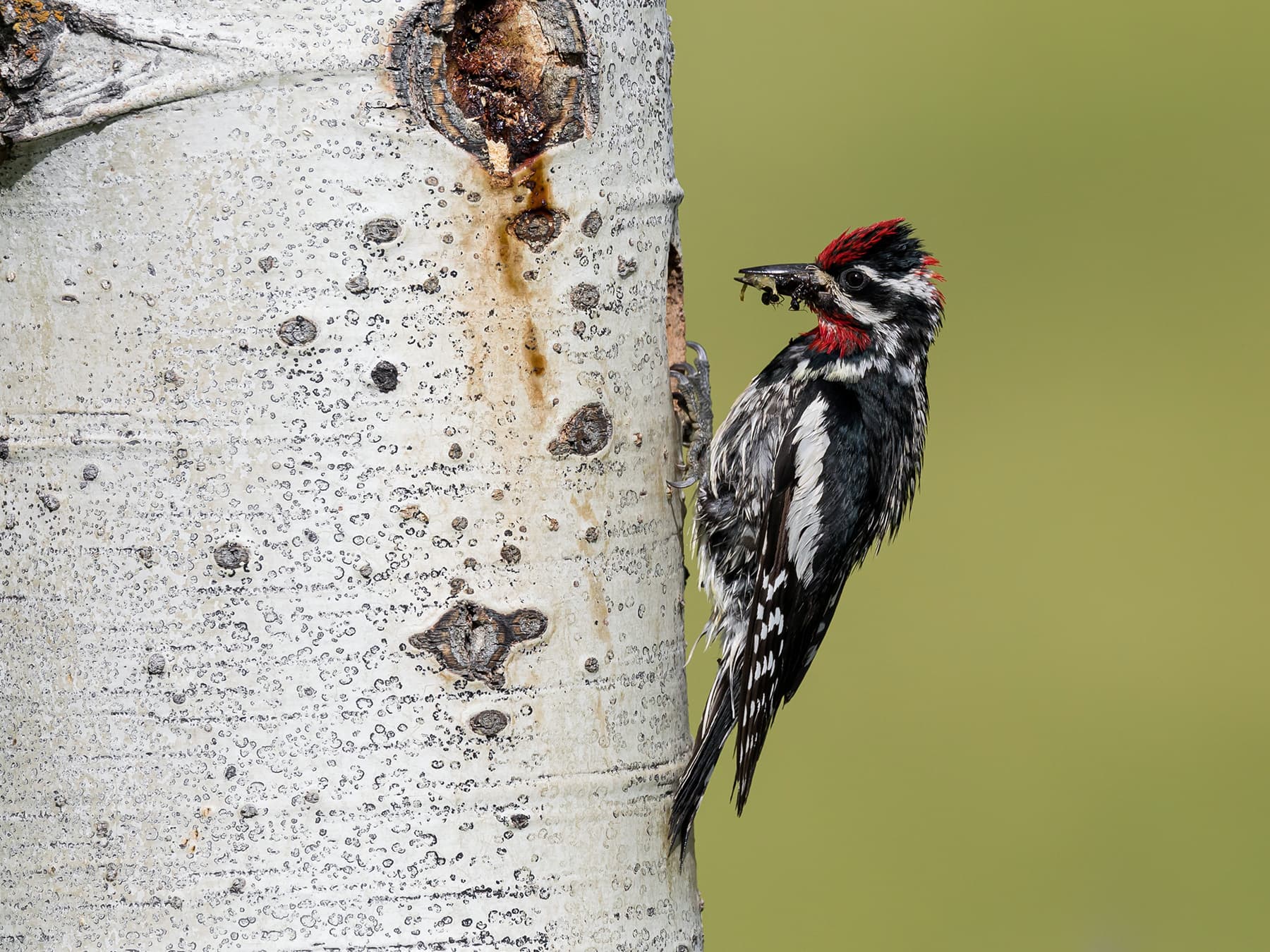
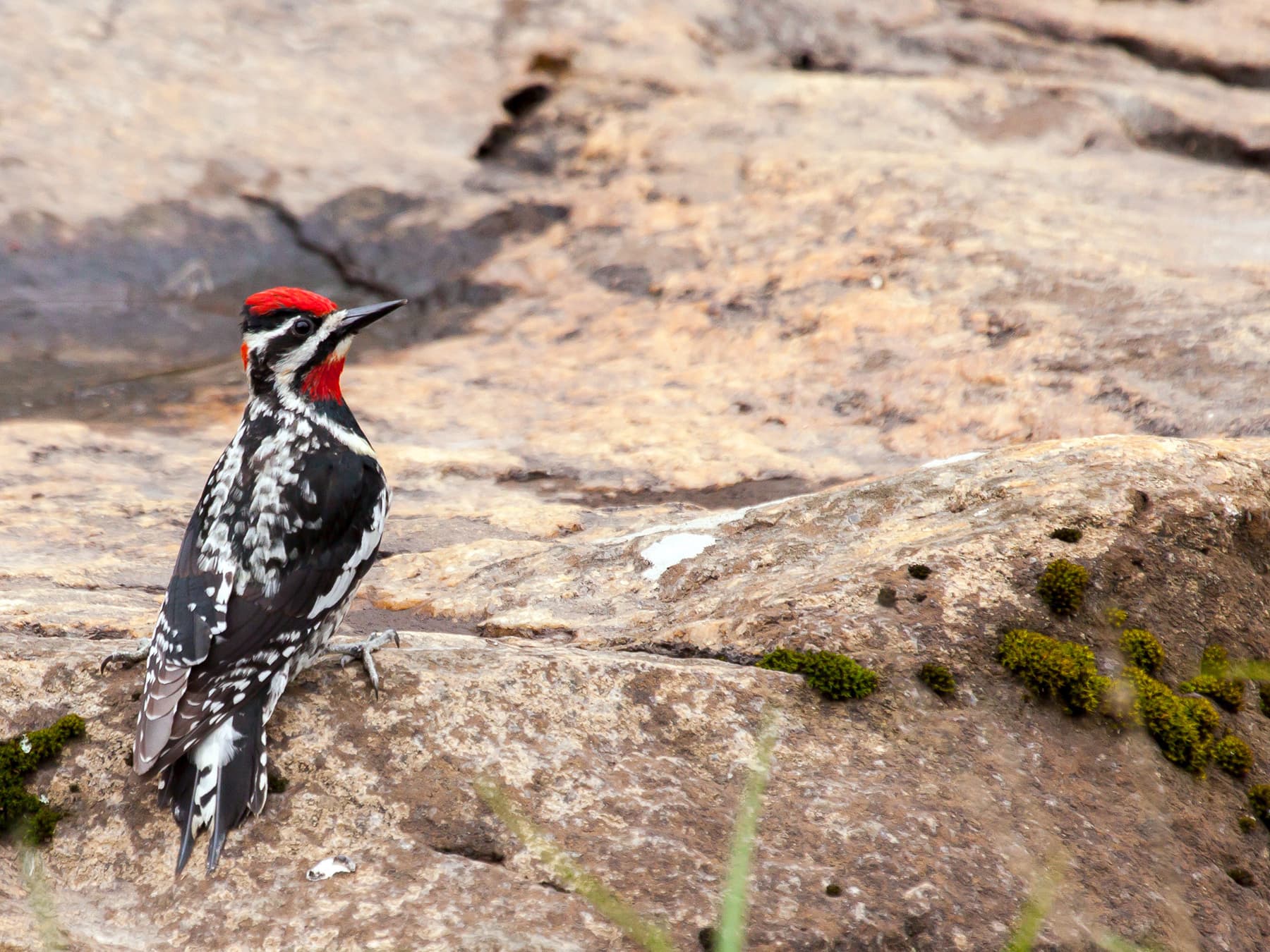
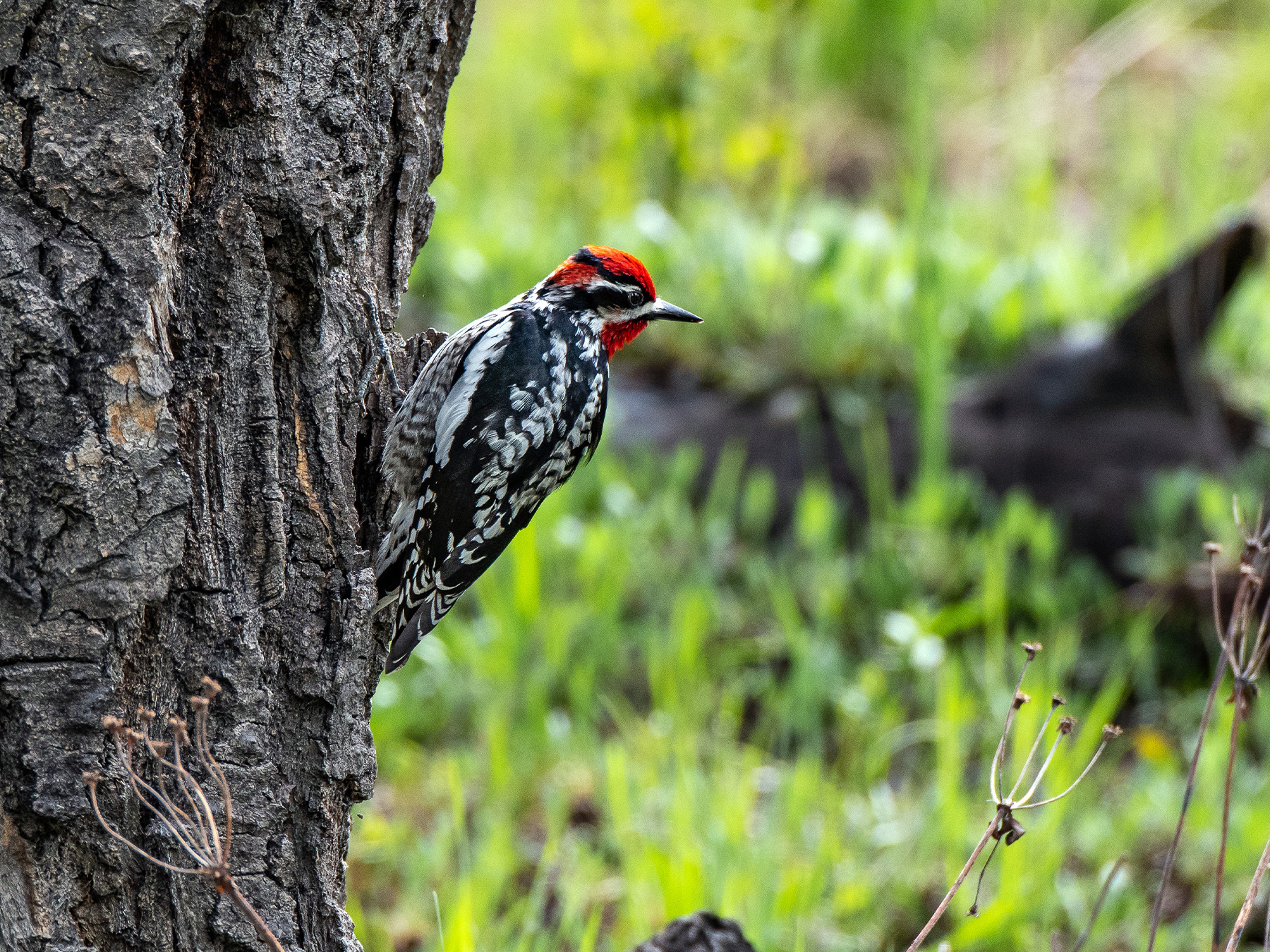
Males have a red crown and forehead, a red chin, black and white striped facial markings, and a yellowish-white stripe under the eye. A narrow black band separates the red forecrown and nape.
Body markings of male red-naped sapsuckers include a rich black bib, a whitish-yellow breast and belly, with black spotting on the flanks, a stiff black tail, and black wings with two rows of white bars.
Females are similar to males but have a smaller reddish patch on their chin and throat, which may sometimes lack any red coloring and be entirely white instead. The female's nape may also be white rather than red.
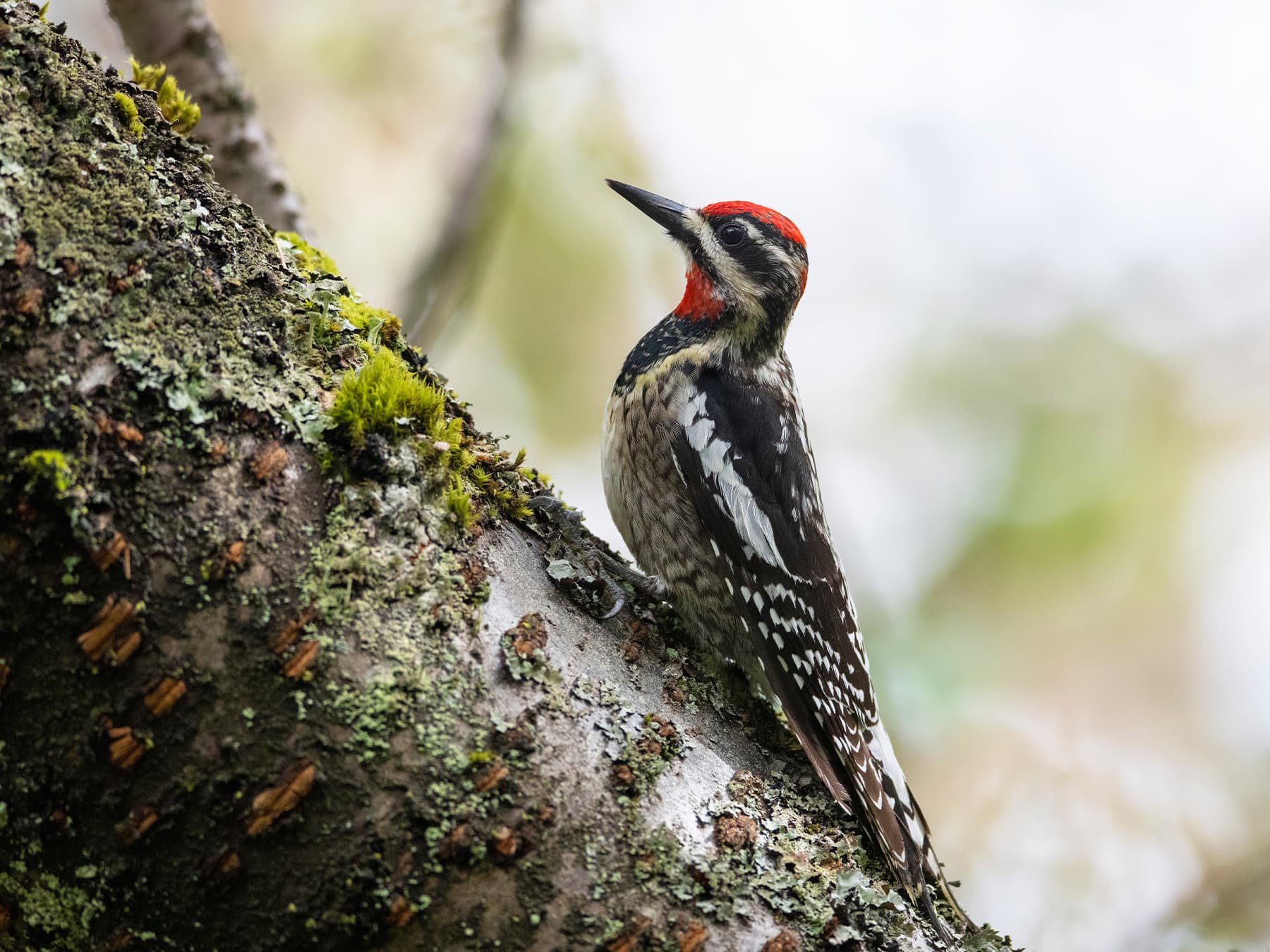
Juvenile red-naped sapsuckers are brownish all over, with dull black-brown markings similar to those of adults on their wings and flanks. Their cap and face are primarily mid-brown, with paler brownish streaks around the eye.
How big are Red-naped Sapsuckers?
Birds of this species are the same size as North America’s other sapsuckers, the red-breasted and yellow-bellied sapsuckers. There is no distinction in size between male and female red-naped sapsuckers.
- Length: 19 cm to 21 cm (7.5 in to 8.3 in)
- Wingspan: 41 cm to 43 cm (16.1 in to 16.9 in)
- Weight: 32 g to 66 g (1.1 oz to 2.3 oz)
Its size
Adults- Length
- 19–21 cm
- Wingspan
- 37–40 cm
- Weight
- 32–66 g
Its song and calls
What sound does a Red-naped Sapsucker make?
A scolding chattering series of descending notes is a typical identifying call of a red-naped sapsucker and is heard mainly at the outset of the breeding season. A low-pitched ‘waa’ is used as an alarm signal.
When and where to see it
OctoberIn season
Most recorded in October
- 1. Arizona0.65%
- 2. Nevada0.47%
- 3. New Mexico0.39%
- 4. Utah0.28%
- 5. Wyoming0.10%
Each dot is a county, state or province: the bigger and darker, the larger the bird’s share of that place’s bird records that month. Grey dots: no regular records. The ringed point is the centre of the bird’s records this month; the arrow shows how it moved since last month, and the dashed loop its path through the year. “Arrivals” colours places where it becomes regular this month (orange) or is in its last regular month (grey). GBIF eBird Observation Dataset, 2019–2024. Map data: Natural Earth, US Census Bureau; place centres © OpenStreetMap contributors.
In your area
See when the Red-naped Sapsucker is recorded in your county, state or province.
How often the Red-naped Sapsucker turns up in the United States and Canada through the year, from birdwatchers' records.
United States
Resident · all year · most records in July
Canada
Summer visitor · regularly Apr–Sep · most records in June
Show as a table
| Month | United States | Canada |
|---|---|---|
| January | 0.020% (regular) | <0.001% |
| February | 0.015% (regular) | <0.001% |
| March | 0.007% (regular) | <0.001% |
| April | 0.011% (regular) | 0.023% (regular) |
| May | 0.013% (regular) | 0.022% (regular) |
| June | 0.032% (regular) | 0.047% (regular) |
| July | 0.039% (regular) | 0.041% (regular) |
| August | 0.016% (regular) | 0.019% (regular) |
| September | 0.023% (regular) | 0.013% (regular) |
| October | 0.035% (regular) | <0.001% |
| November | 0.027% (regular) | – |
| December | 0.024% (regular) | – |
Worldwide: recorded regularly in 3 countries
Countries where it was recorded in at least 3 of the 6 years 2019–2024. Linked countries have their own bird list.
North America (3)
Data: EOD – eBird Observation Dataset (Cornell Lab of Ornithology), accessed via GBIF.org, CC BY 4.0. Records from 2019–2024, aggregated and filtered by Birdfact. How these lists are made
What is the habitat of a Red-naped Sapsucker?
Red-naped sapsuckers select breeding sites in deciduous and mixed woodlands, with aspen groves, ponderosa pine swathes, birch woodlands, and fir forests preferred. Parklands, orchards, and mountainous wooded landscapes up to around 1700 m (5500 ft) are visited during winter.
What is the range of a Red-naped Sapsucker?
Red-naped sapsuckers breed in the Rocky Mountain region of North America, with southern British Columbia forming the northern extent of their range. Breeding grounds spread southwards from southwestern Canada through Idaho as far south as northern Arizona and New Mexico, where some populations are resident year-round.
Further to the south, from southern California in the west to western Texas in the east and across the border into Mexico, wintering grounds used by red-naped sapsuckers are widespread.
Where do Red-naped Sapsuckers live?
The Rocky Mountains and Great Lakes areas of the United States are home to the highest concentrations of red-naped sapsuckers.
How rare are Red-naped Sapsuckers?
The entire population of red-naped sapsuckers is estimated at 2 million mature individuals. They are the most common sapsucker species in the western United States. In mixed and deciduous forests of the Great Basin and the Rocky Mountain ranges, they are both widespread and fairly common.
Where can you see Red-naped Sapsuckers in the US?
Red-naped sapsuckers are widespread birds throughout the western United States. Breeding populations are present from Washington to Montana in the north, reaching Los Angeles and New Mexico.
Strongholds for the species are found in the Rocky Mountains, where aspen stands surrounded by willow are a favorite habitat. Rows of neatly drilled holes are a telltale sign that there are red-naped sapsuckers in the area.
Where can you see Red-naped Sapsuckers in Canada?
Southeastern British Columbia and a small region of Alberta welcome breeding red-naped sapsuckers each spring. The internal plateaus of British Columbia to the east of the Coast Mountains offer a good chance of sightings.
Migration
Do Red-naped Sapsuckers migrate?
A short-distance migrant, the red-naped sapsucker arrives in southern Canada and the northwestern and west-central US each spring, from late March. Once breeding is complete (from August onwards), they head south for winter, mainly settling in southern California, Arizona, New Mexico and over the border into Mexico.
Are Red-naped Sapsuckers native to the US?
Red-naped sapsuckers are native to the US, typically holding distinct breeding and wintering territories, but in some regions, they are year-round residents. Breeding also takes place in parts of southwestern Canada, and wintering grounds extend south into northwestern Mexico.
Tips for seeing it
- Look for neat rows of small holes on tree trunks, indicating sapsucker activity
- Listen for their distinctive 'mew' call or rapid drumming on trees
- Search for them in aspen and coniferous forests, especially near water sources
- Observe trees with fresh sap flows, as sapsuckers often return to these sites
What it eats
What do Red-naped Sapsuckers eat?
Tree sap is the chief food eaten by red-naped sapsuckers, which they access by drilling sap wells in horizontal rows around the trunks of trees, in particular Douglas fir, juniper, and quivering aspen.
Invertebrates also form a major part of their diet: ants, beetles, and spiders are gleaned from bark on tree trunks. Fruit and seeds are also eaten, particularly in winter, as well as aspen buds in spring.
What do Red-naped Sapsucker chicks eat?
Insects, sap, and fruit are brought to the nest to feed red-naped sapsucker young, and parental feeding continues for a further 10 days after the fledglings leave the nest.
Nesting and breeding
Where do Red-naped Sapsuckers nest?
Cavity nests are excavated in both dead and live trees, with quivering aspen a particular favorite species. Other popular tree species include Douglas-fir, grand fir, lodgepole pine, paper birch, ponderosa pine, and western larch. Male red-naped sapsuckers undertake the bulk of the excavation, but the participation of the females increases as it nears completion. A lining of wood chips is added to the base of the chamber.
When do Red-naped Sapsuckers nest?
Red-naped sapsuckers arrive on their breeding grounds from late March to April. Within three weeks, pairs have formed and excavation of a nest cavity begins. Eggs are usually laid in mid-May, followed by an incubation period of between 8 and 12 days. Both parents share incubation, with males taking the night shift. After between 23 and 32 days, nestlings are ready to fledge.
What do Red-naped Sapsucker eggs look like?
Between 3 and 7 pure white eggs are laid, measuring 23 mm by 17 mm (0.9 in by 0.7 in). Eggs are glossy, with no external markings.
Do Red-naped Sapsuckers mate for life?
Red-naped sapsuckers are certainly monogamous for the duration of the breeding season, and bonds may continue in subsequent years although this is not always the case. The species shows a strong fidelity to nesting sites and frequently returns to the same nest cavity several years in a row.
Behaviour
Are Red-naped Sapsuckers aggressive?
Extreme levels of aggression may be observed between rival males early in the breeding season, which may quickly escalate into physical interactions, with bill-gripping and wing strikes. Territorial behavior, including crest raising, throat fluffing, and wing posturing, is also seen around nest cavities and sap wells.
Where do Red-naped Sapsuckers sleep at night?
During cavity excavation, the male sleeps alone in the nest cavity, while the female roosts nearby close to the tree trunk. This continues during incubation, with the male in sole charge of night-time incubation and brooding until the young are around 25 days old. Once young have fledged, adults and juveniles find solitary roosting spots on tree trunks.
Lifespan and predators
How long do Red-naped Sapsuckers live?
No extensive data is available, but it is thought that at least two to three years is the estimated average lifespan of a red-naped sapsucker, with a maximum life expectancy of at least 6 years. Young birds can breed at 1 year, but many delay breeding until they are two years old.
What are the predators of Red-naped Sapsuckers?
Avian predators of red-naped sapsuckers include sharp-shinned and Cooper’s hawks and northern goshawks. Common nest raiders include black bears, weasels, deer mice, and gopher snakes.
Are Red-naped Sapsuckers protected?
The US Migratory Bird Treaty Act of 1918 and Canada’s Migratory Birds Convention Act offer protection to red-naped sapsuckers, making it an offense to kill, injure, trade, or capture birds of the species, or destroy or damage their eggs, nests, or young.
Are Red-naped Sapsuckers endangered?
Moderate declines in the population of red-naped sapsuckers have been observed due to habitat loss and degradation, but overall their numbers are relatively stable, which justifies their conservation status as a species of least concern.
Conservation
While currently listed as Least Concern, Red-naped Sapsuckers face threats from habitat loss due to deforestation and climate change.
Conservation efforts focus on protecting mature forests and maintaining diverse tree species in their range, which is crucial for their feeding and nesting requirements.
Similar birds
Often mistaken for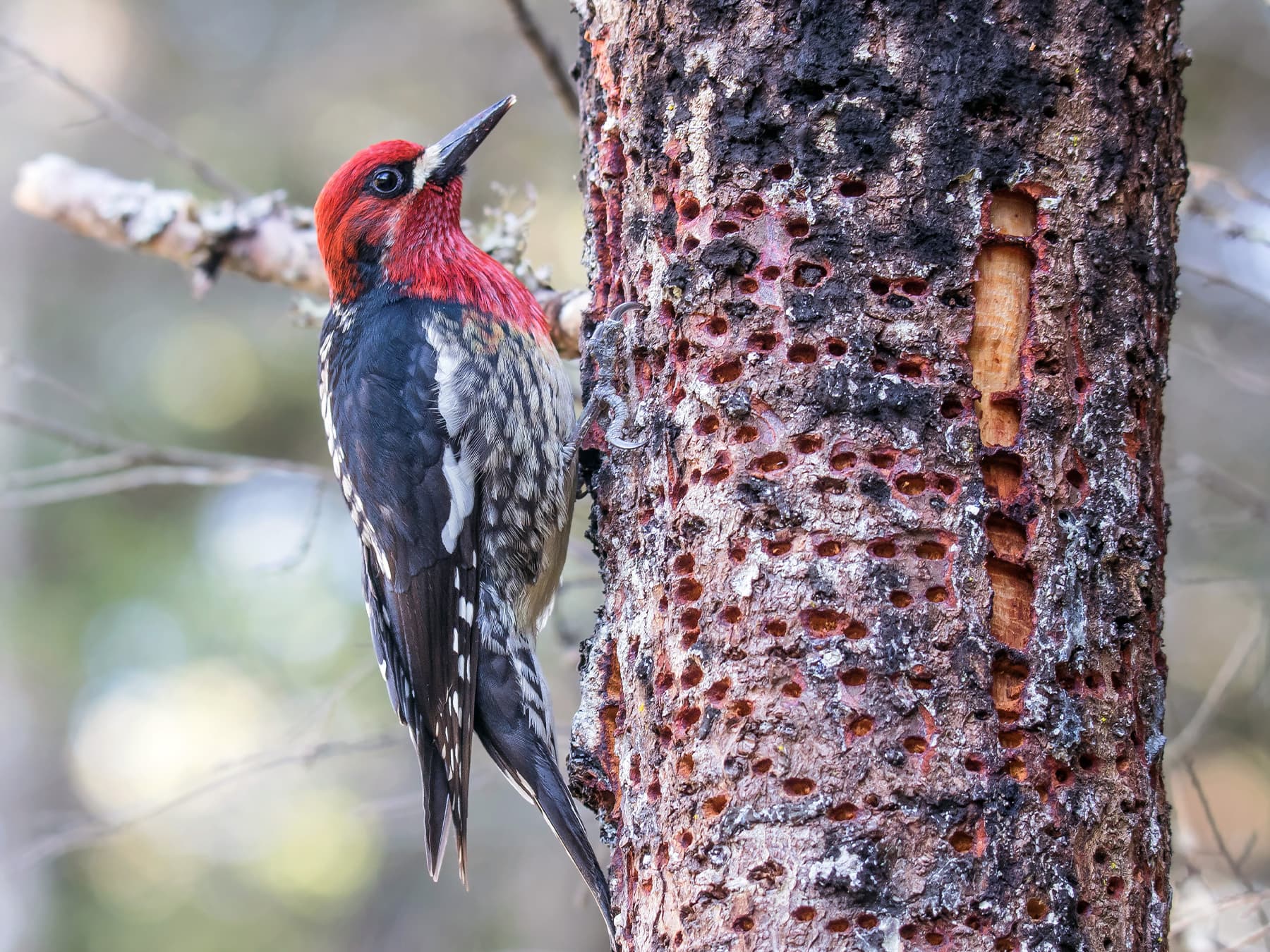
More photos
3 photos
Quick facts
- Length
- 19–21 cm
- Wingspan
- 37–40 cm
- Weight
- 32–66 g
- Lifespan
- 2–3 years · oldest recorded 4.9 years
- Family
- Woodpeckers
- Migration
- Short-distance migrant
- Global status (IUCN)
- Least Concern
- World population
- 2,000,000 mature individuals
- Population trend
- Decreasing
- Also called
- Red-naped Woodpecker
- Scientific name
- Sphyrapicus nuchalis
Questions
3What attracts Red-naped Sapsuckers?
Trees that are favored by red-naped sapsuckers for feeding and nesting include aspen, birch, pine, or juniper. Berry trees and bushes also offer good feeding opportunities, and in winter, they may be attracted by a well-stocked suet feeder.
Do Red-naped Sapsuckers harm trees?
Red-naped sapsuckers drill horizontal lines of holes in tree trunks in search of sap which can leave trees vulnerable to decay, and insect infestations and degrade the quality of the wood.
What is the difference between red-naped and Red-breasted Sapsuckers?
Red-naped and red-breasted sapsuckers are the same size and similar in coloring, with red, white, yellow, and black dominating their plumage. However, red-breasted sapsuckers have a solid red head and upper breast, while in the red-naped species, the extent of red is limited to the crown, chin, and back of the head.
Red-breasted sapsuckers have a smaller range and are limited to coastal areas of western Canada and the Pacific coast of the US, while red-naped sapsuckers are found over a wider area and spread much further inland.
Sources
4- 1BirdLife International. 2018. Sphyrapicus nuchalis. The IUCN Red List of Threatened Species 2018: e.T22680871A130036052. Source (opens in a new tab)
- 2Tracewski et al. (2016)
- 3Partners in Flight (2022) Source (opens in a new tab)
- 4Longevity Records Of North American Birds. Version 2023.1 Source (opens in a new tab)

Checked by
Nathan Cope, founder and editor
Nathan founded Birdfact and leads its writers and contributors in the UK, the US and Canada. He has watched and studied birds for more than ten years, and checks every article and species guide before it’s published.