


Whinchat
Whin chat · Saxicola rubetra
By the Birdfact teamChecked by Nathan Cope
On this page14 sections
How to recognise it
What do Whinchats look like?
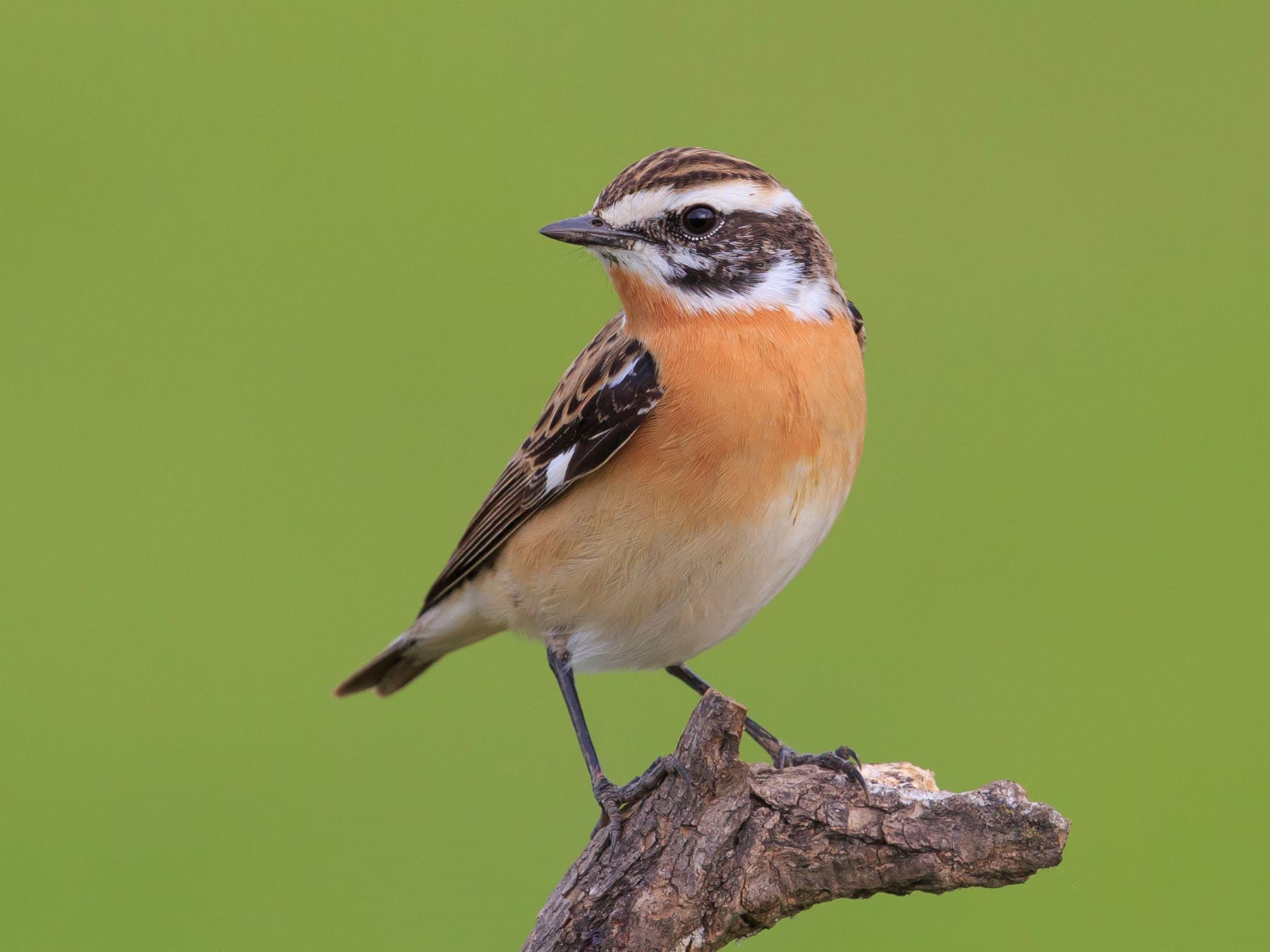
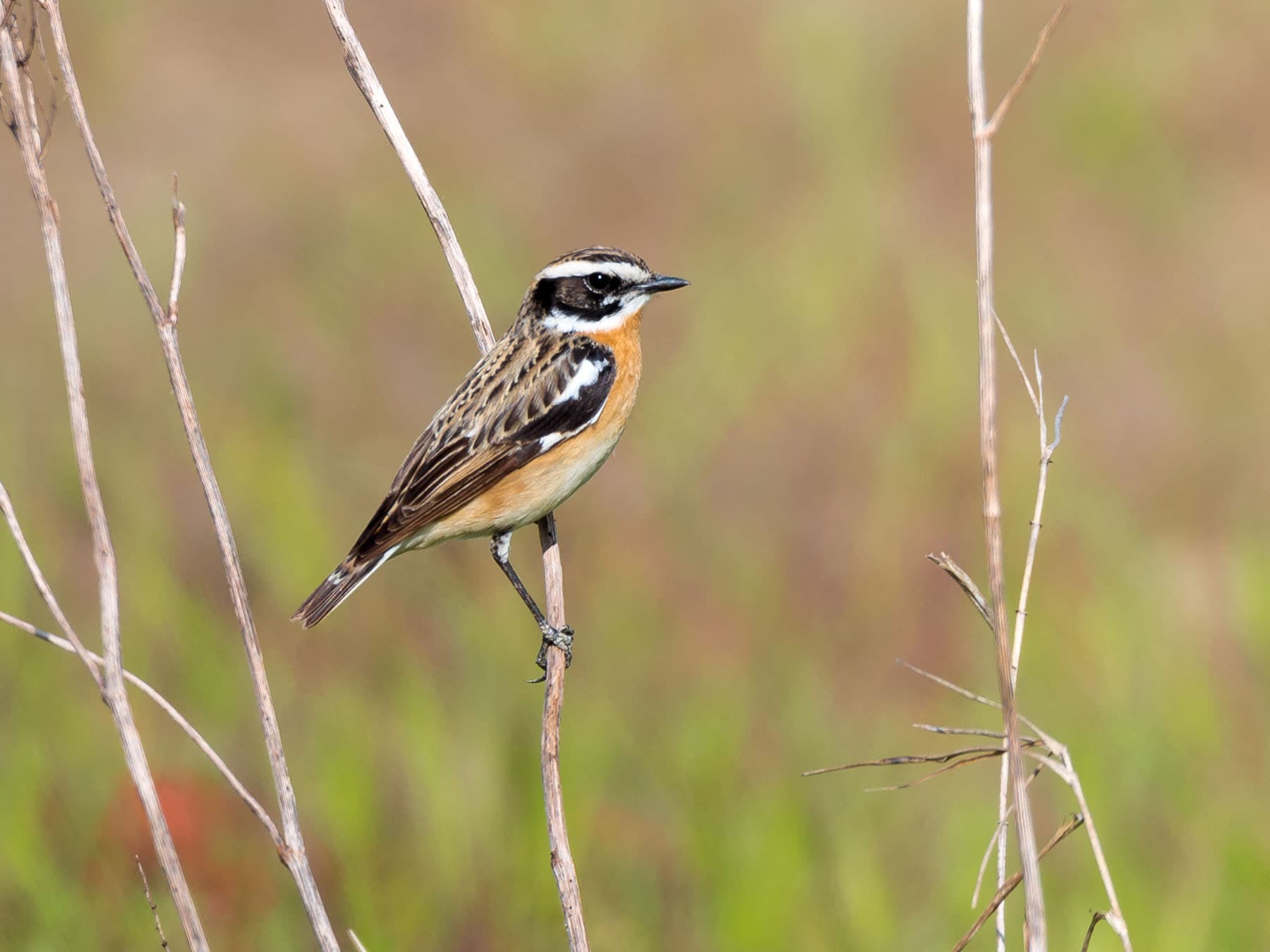
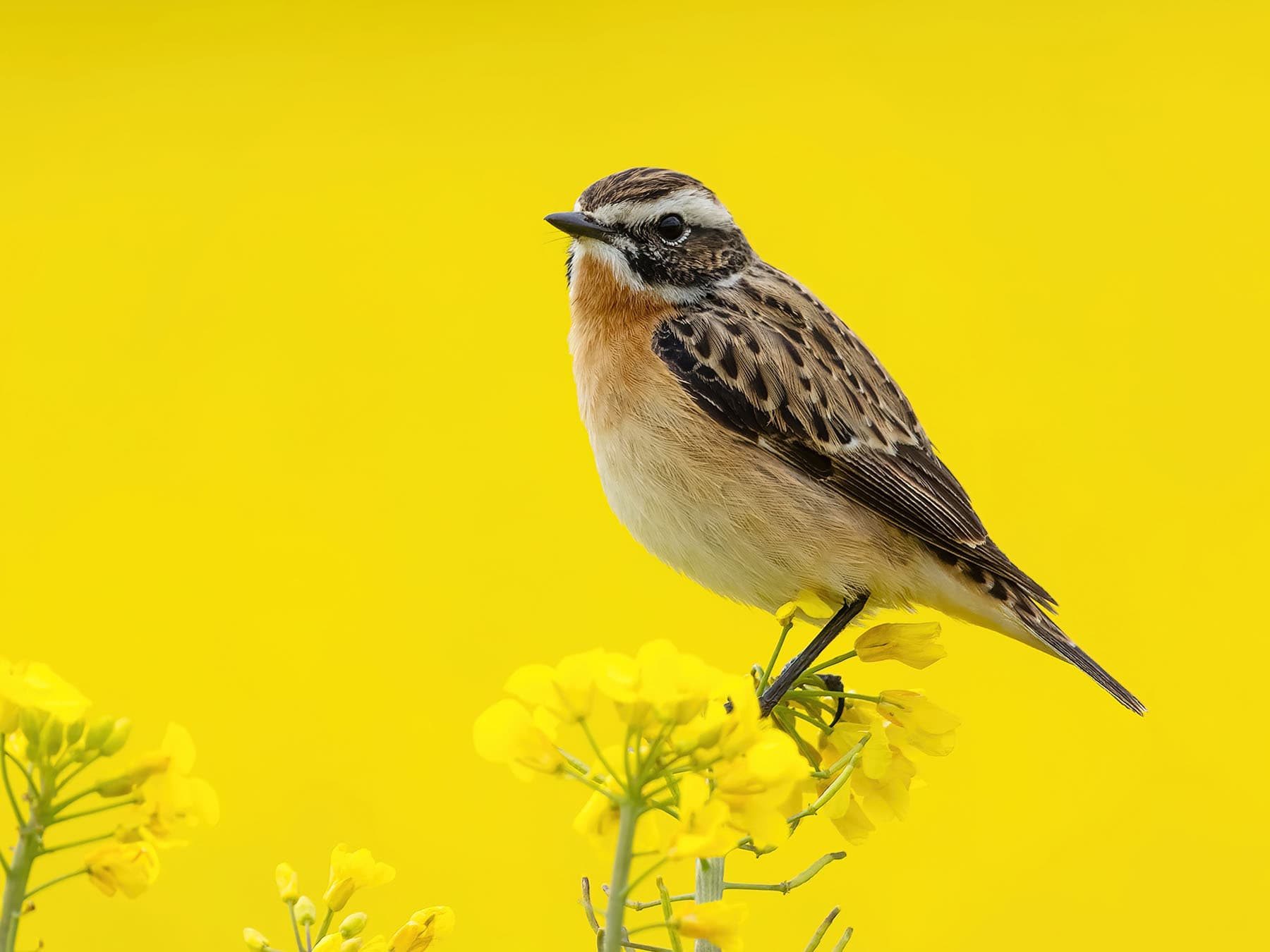
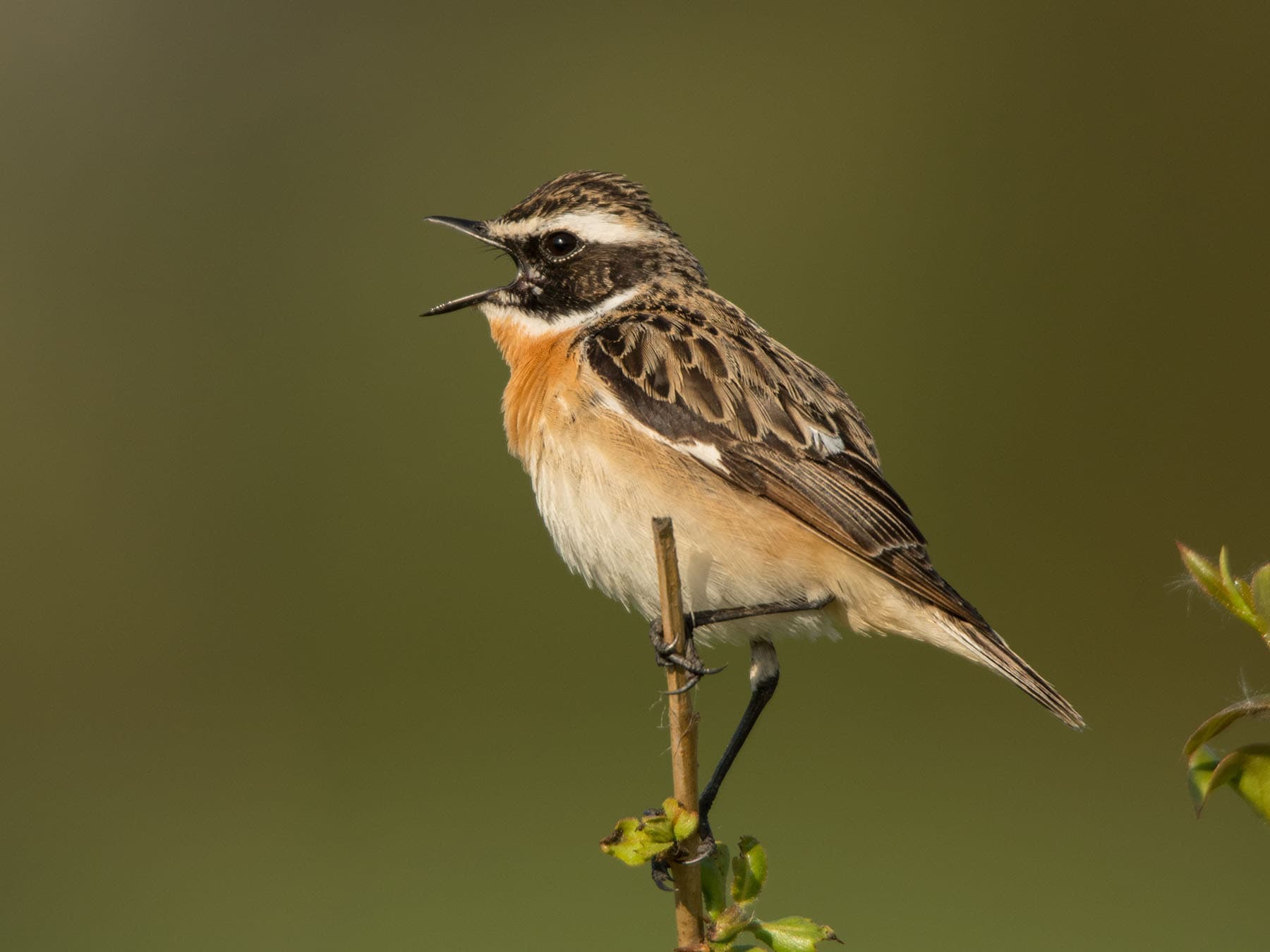
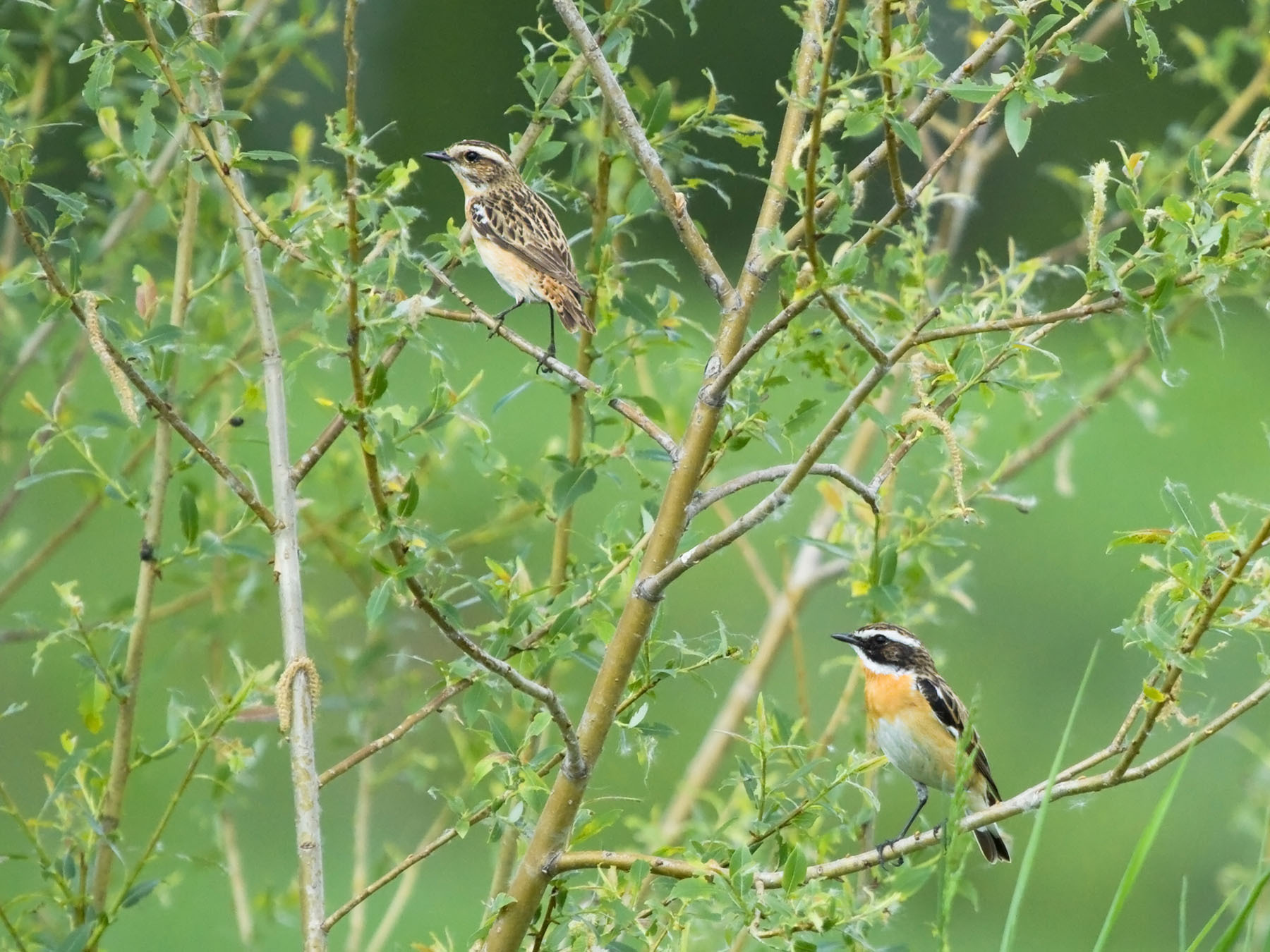
Whinchats are small, short-tailed birds, similar in size to robins, great tits and goldfinches. The plumage of male whinchats features a distinctive, bright orange throat and a bold white stripe above the eye (known as the supercilium).
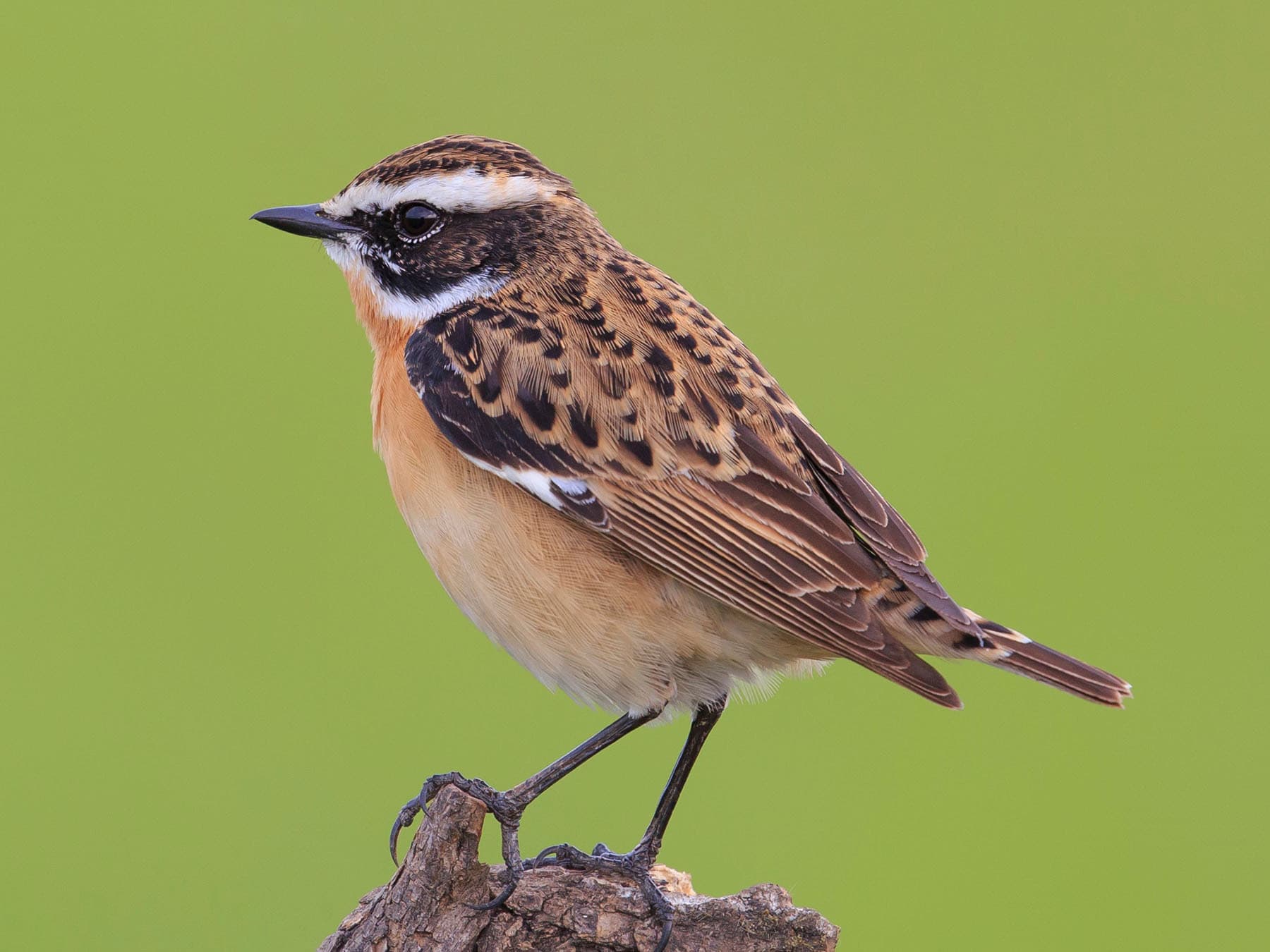
Their back, wings, and crown are mottled dark and lighter shades of brown, and their tail is black. Their breast fades from orange to a buff-white colour. Their strong facial markings include black streaks along the eye and cheeks and a white patch under the bill.
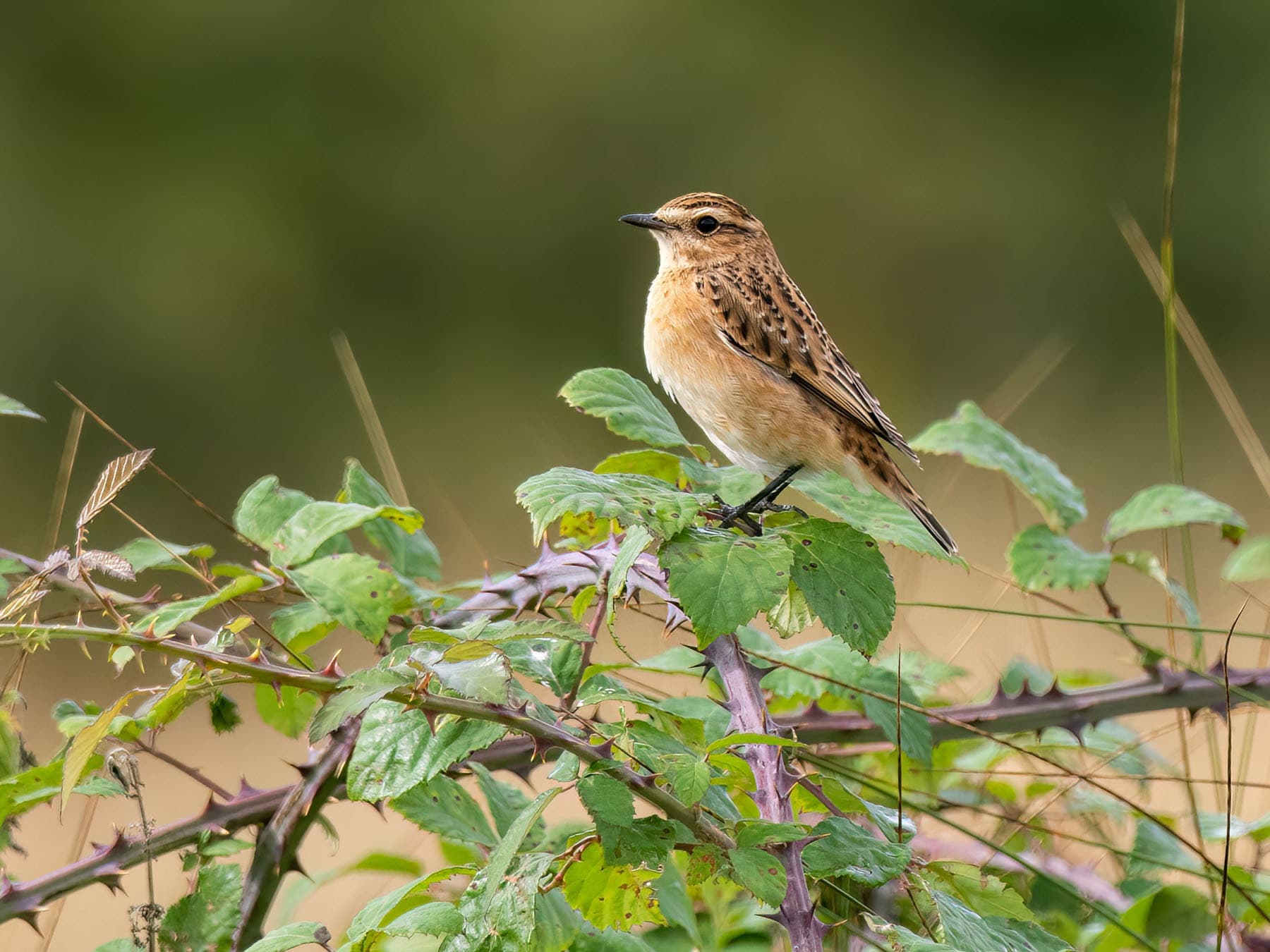
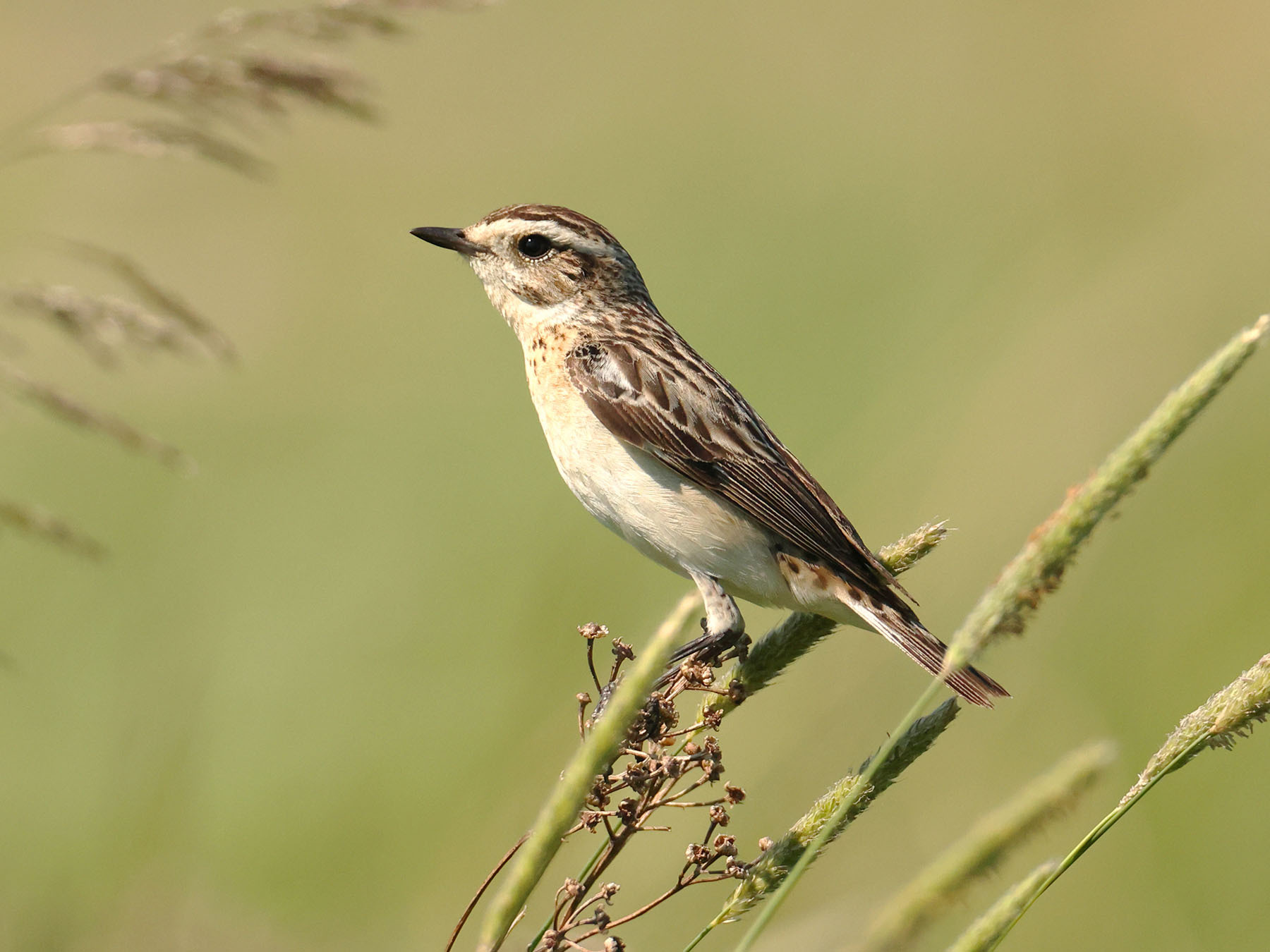
Female whinchats have similar markings to males, but with less vibrant colouring. The facial markings are brown rather than black, and instead of the bright orange seen on males, females have a light honey-brown throat. Females don’t always have white wing patches, or if they are present, they are much smaller than those of males.
Juvenile whinchats are heavily streaked and spotted, and are buff-brown all over, tinged with orange, and heavily speckled.
After breeding, whinchats undergo a full moult, before developing a new plumage ahead of migration. In winter plumage, males look similar to females, but their white wing patch is present all year round.
How big are Whinchats?
Whinchats are about the same size as robins, with little difference in size between males and females.
- Length: 12 cm to 14 cm (4.7 in to 5.5 in)
- Weight: 13 g to 26 g (0.46 oz to 0.92 oz).
- Wingspan: 21 cm to 24 cm (8.3 in to 9.4 in)
Its size
Adults- Length
- 12–14 cm
- Wingspan
- 21–24 cm
- Weight
- 14–22 g
Its song and calls
What sound does a Whinchat make?
Only male whinchats sing, making a warbling melody of fast rattling notes. This can sometimes be heard at night, particularly in spring. It’s less common to hear whinchats singing on their winter territories.
As well as the male’s chirping song, a harsh alarm call that sounds like ‘tec-tec-tec’ can be heard when intruders approach the nest site.
- Song0:00 / 0:22
Recorded in Hauts-de-France, France · June 2025
When and where to see it
OctoberLeaving
Most recorded in October
- 1. Shetland Islands0.25%
- 2. Cornwall0.23%
- 3. Orkney Islands0.21%
- 4. Pembrokeshire0.14%
- 5. Bridgendunder 0.1%
Each dot is a county, state or province: the bigger and darker, the larger the bird’s share of that place’s bird records that month. Grey dots: no regular records. The ringed point is the centre of the bird’s records this month; the arrow shows how it moved since last month, and the dashed loop its path through the year. “Arrivals” colours places where it becomes regular this month (orange) or is in its last regular month (grey). GBIF eBird Observation Dataset, 2019–2024. Map data: Natural Earth, US Census Bureau; place centres © OpenStreetMap contributors.
In your area
See when the Whinchat is recorded in your county, state or province.
How often the Whinchat turns up in the UK and Ireland through the year, from birdwatchers' records.
United Kingdom
Summer visitor · regularly Apr–Oct · most records in September
Ireland
Summer visitor · regularly May–Oct · most records in May
Show as a table
| Month | United Kingdom | Ireland |
|---|---|---|
| January | – | – |
| February | – | – |
| March | – | – |
| April | 0.032% (regular) | 0.002% |
| May | 0.054% (regular) | 0.037% (regular) |
| June | 0.026% (regular) | 0.023% (regular) |
| July | 0.025% (regular) | 0.015% (regular) |
| August | 0.14% (regular) | 0.008% (regular) |
| September | 0.23% (regular) | 0.017% (regular) |
| October | 0.041% (regular) | 0.003% (regular) |
| November | <0.001% | 0.005% |
| December | – | – |
Recorded regularly in
Worldwide: recorded regularly in 88 countries
Countries where it was recorded in at least 3 of the 6 years 2019–2024. Linked countries have their own bird list.
Europe (47)
- Åland Islands
- Albania
- Andorra
- Austria
- Belarus
- Belgium
- Bosnia & Herzegovina
- Bulgaria
- Croatia
- Czechia
- Denmark
- Estonia
- Finland
- France
- Germany
- Gibraltar
- Greece
- Guernsey
- Hungary
- Iceland
- Ireland
- Isle of Man
- Italy
- Jersey
- Kosovo
- Latvia
- Liechtenstein
- Lithuania
- Luxembourg
- Malta
- Moldova
- Montenegro
- Netherlands
- North Macedonia
- Norway
- Poland
- Portugal
- Romania
- Russia
- Serbia
- Slovakia
- Slovenia
- Spain
- Sweden
- Switzerland
- Ukraine
- United Kingdom
Africa (23)
Asia (18)
- Armenia
- Azerbaijan
- Bahrain
- Cyprus
- Georgia
- Iran
- Iraq
- Israel
- Jordan
- Kazakhstan
- Kuwait
- Lebanon
- Palestinian Territories
- Qatar
- Saudi Arabia
- Turkey
- United Arab Emirates
- Uzbekistan
Data: EOD – eBird Observation Dataset (Cornell Lab of Ornithology), accessed via GBIF.org, CC BY 4.0. Records from 2019–2024, aggregated and filtered by Birdfact. How these lists are made
What is the habitat of a Whinchat?
Moorland and heathland are among the landscapes preferred by breeding whinchats, with grasslands, meadows, marshlands and rocky scrublands also being chosen as their nesting spots.
What is the range of a Whinchat?
The breeding range of whinchats extends from parts of Britain and Ireland in the west to eastern Russia, Turkey and Iran, and as far south as Spain, Italy, Greece.
In winter, large numbers of whinchats head to Sub-Saharan Africa, in particular Senegal, Nigeria and Uganda. Passage migrants are regularly spotted in eastern and southern England in spring and autumn, although breeding in these regions is virtually unheard of.
Where do Whinchats live?
In the UK, whinchats sightings are increasingly limited to the Scottish uplands, northern England and central Wales, Exmoor, Dartmoor and the Isle of Man, where they breed in grasslands, heathlands and open meadows.
Further south, breeding whinchats are more uncommon, and the low-lying southern regions do not have established breeding grounds. One exception is Salisbury Plain in southwest England, where small breeding populations exist.
How rare are Whinchats?
Whinchats are increasingly rare in the UK, due to increases in intensive farming activity which has caused their habitat to shrink. Nests are frequently destroyed by mowing, which has led to a steep drop in whinchat populations.
Within its breeding range, during spring and summer, it is not terribly uncommon, with an estimated 49,500 pairs. Outside of the north of England, central Wales and upland regions of Scotland, your chances of spotting one are relatively slim.
Where can you see Whinchats in the UK?
Regions that offer the highest chance of spotting a whinchat are the north and west of England, central Wales, and rocky ground in the Scottish Highlands, as well as in Exmoor, Dartmoor and Salisbury Plain.
Migration
Do Whinchats migrate?
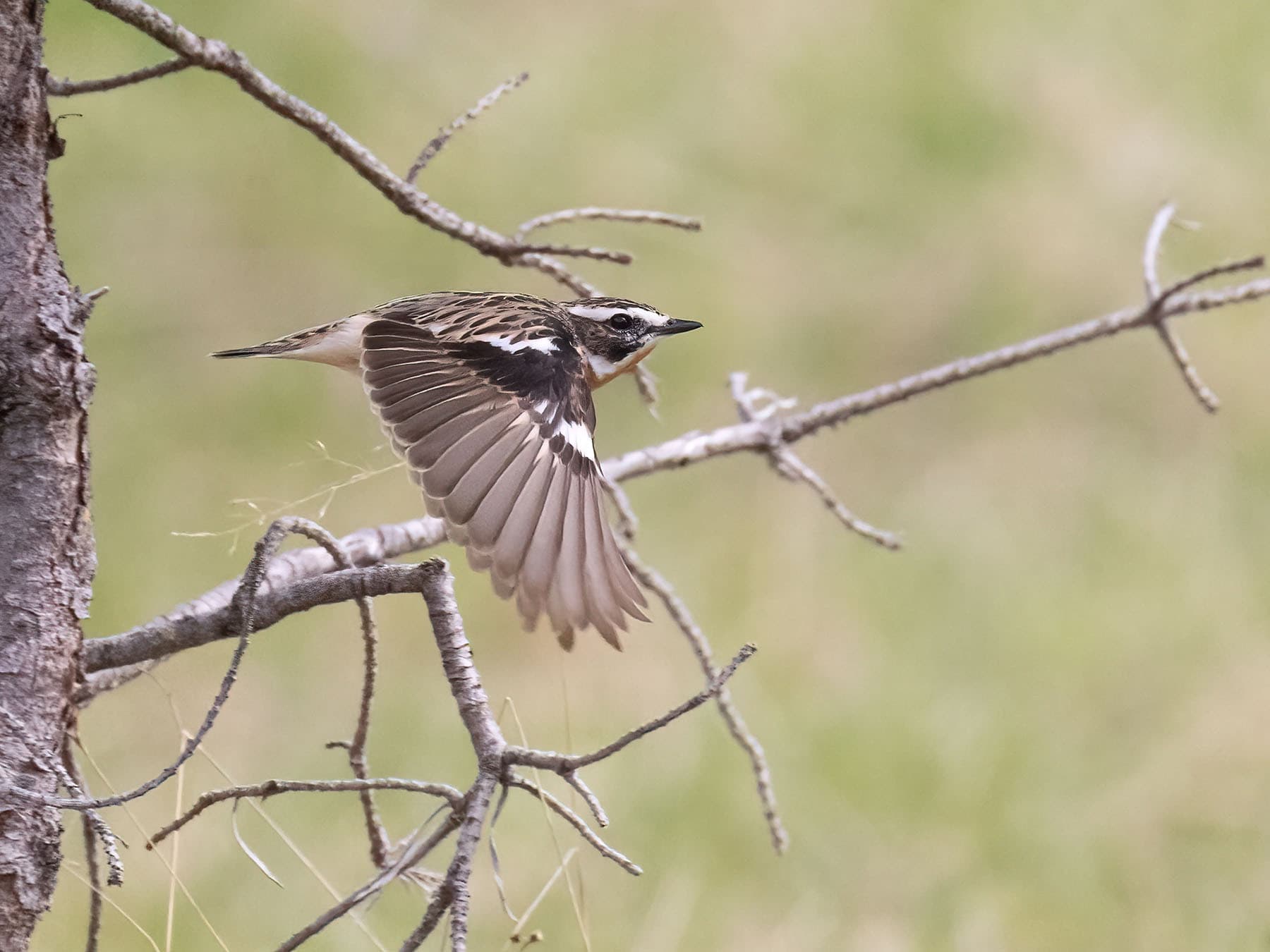
Whinchats arrive in Britain each spring to breed, and after raising their young, head to wintering grounds in central and southern Africa. From mid-September onwards, their long migration south is underway.
Lengthy migration flights are necessary to reach their African overwintering destinations, covering distances of between 8,000 km to 16,000 km (5,000 mi and 10,000 mi).
Tips for seeing it
- Look for Whinchats in open grasslands, meadows, and farmland with scattered bushes
- Listen for their sharp 'tick' call, often given from a prominent perch
- Observe their habit of repeatedly returning to the same perch after foraging flights
- In the UK, watch for them during spring and autumn migrations in coastal areas
What it eats
What do Whinchats eat?
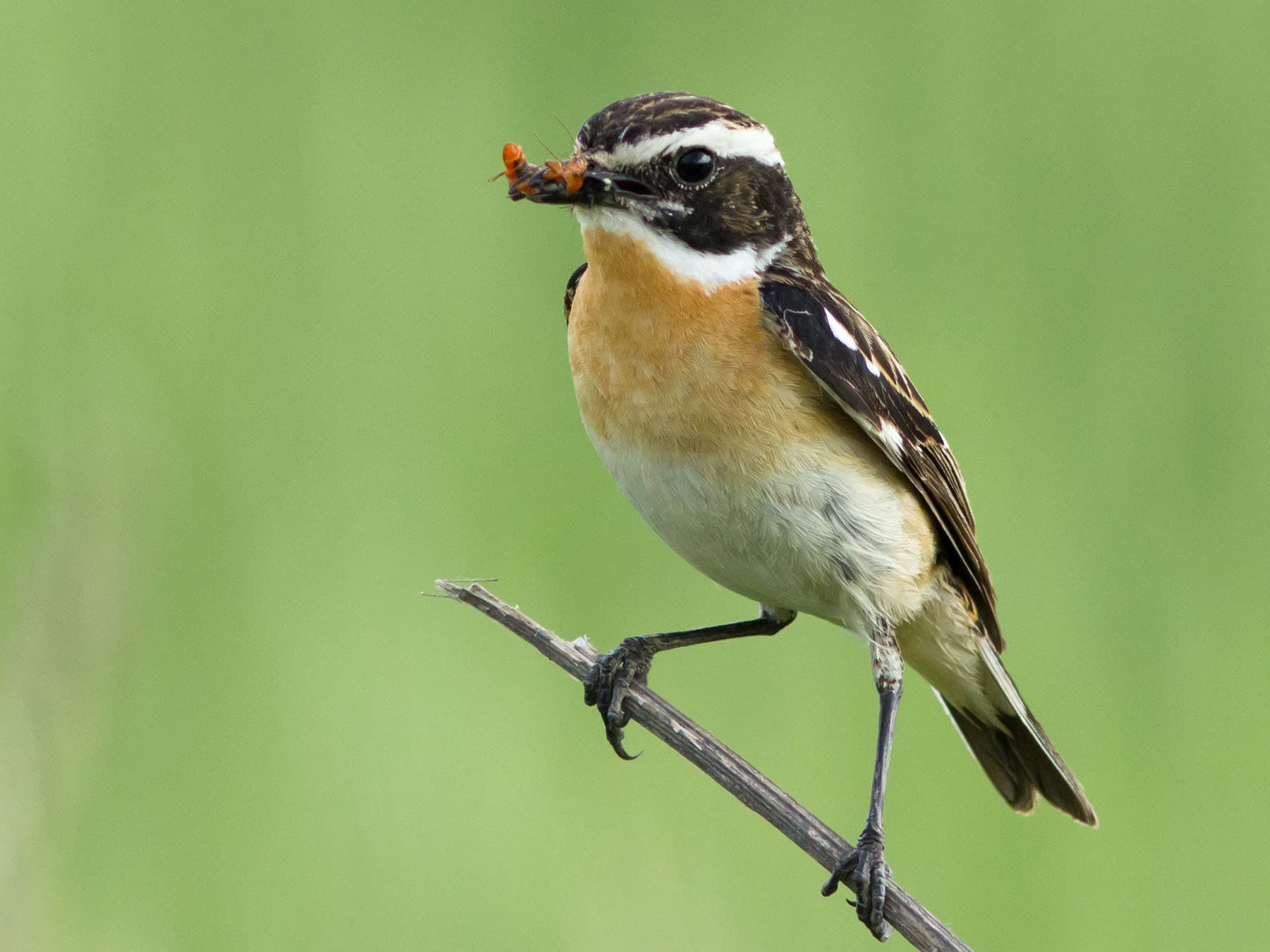
A whinchat’s diet consists mainly of insects, as well as spiders, worms, larvae and snails. Insects, mainly beetles, ants, bugs, grasshoppers, and flies, are foraged from the ground, or occasionally from vegetation or in flight. Seeds and berries are also eaten in autumn and winter.
What do Whinchat chicks eat?
Newly hatched whinchats are brought larvae, insects and other invertebrates, particularly grasshoppers and caterpillars, by both parents.
Nesting and breeding
Where do Whinchats nest?
Whinchats nest at ground level, typically in grassy tussocks or low down in bushy undergrowth, making their nests particularly vulnerable to being destroyed by mowing.
Nests are cup-shaped structures, crafted from grass stems, leaves and moss, and lined with softer grass stems and animal fur.
What do Whinchat eggs look like?
Eggs measure 19 mm by 14 mm (0.7 in by 0.6 in) and weigh on average 2.1 g (0.1 oz). They are pale blue in colour and marked with brown speckling.
Whinchats lay between 2 and 8 eggs, most usually 5 to 6, which they incubate for 12 to 13 days. One brood is typical, laid in late May to early June, although two broods may sometimes be attempted.
Do Whinchats mate for life?
Typically, whinchats will pair up at the start of the breeding season, forming a pair bond that lasts for the duration of their time in the UK. Once breeding is over, pairings dissolve and new mates are found the following year.
Behaviour
Are Whinchats aggressive?
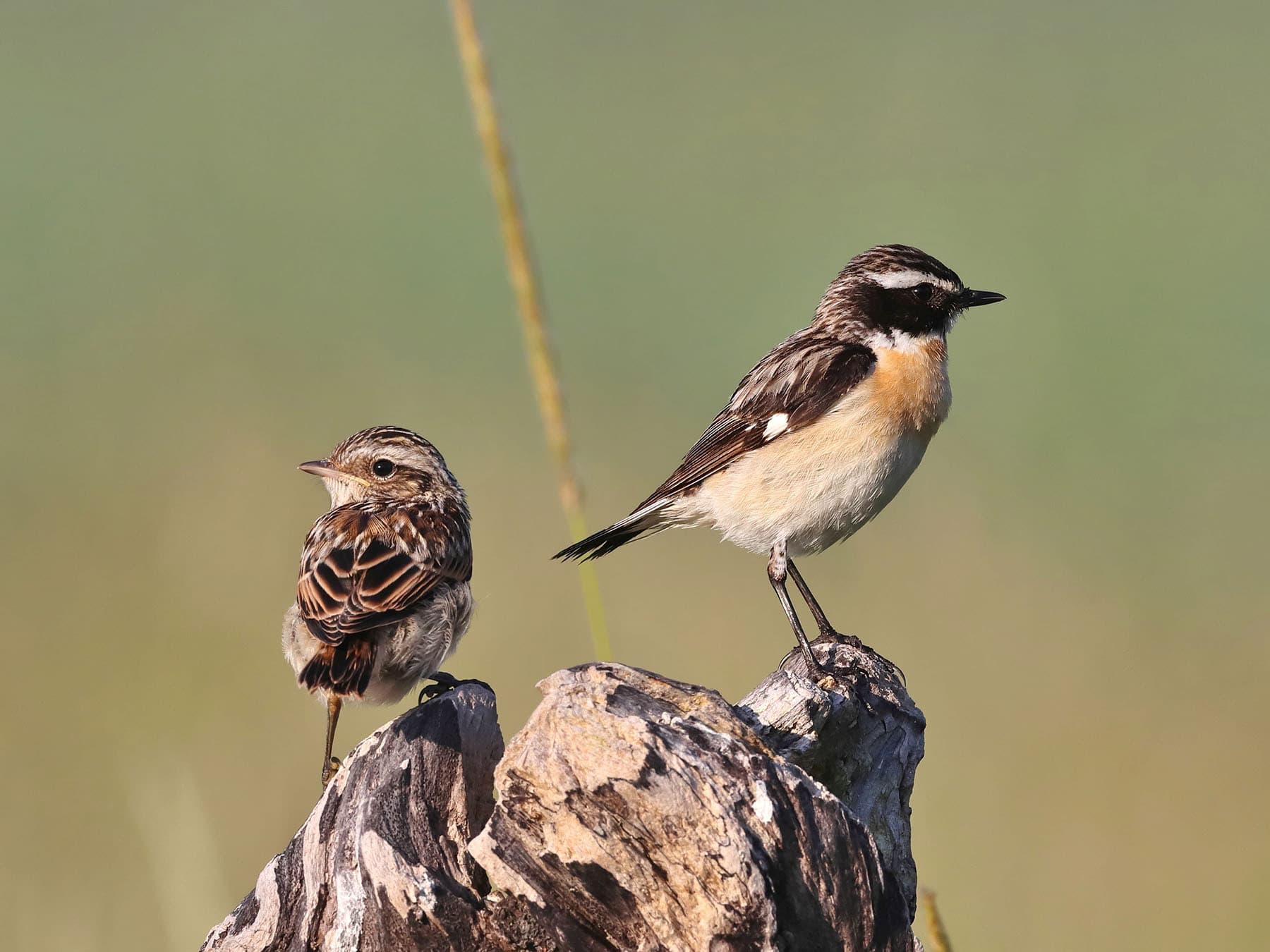
Whinchats are generally solitary birds, but may tolerate forming small groups outside of the breeding season. While breeding, they are known to show high levels of territorial behavior around their nest site, eggs and young.
Lifespan and predators
How long do Whinchats live?
The lifespan of a whinchat is on average around 2 years, with breeding occurring for the first time at a year. A ringed whinchat discovered in 2019 was recorded as being 6 years and 1 month.
What are the predators of Whinchats?
As ground-nesting birds, whinchats are open to predation by a number of animal and bird species, including weasels and stoats, as well as small birds of prey such as the merlin. Whinchat nests are frequently raided by magpies, crows and jays.
Are Whinchats protected?
The Wildlife and Countryside Act, 1981, protects whinchats against being intentionally killed, injured or taken into captivity. The legislation also safeguards the nest, eggs and young of breeding whinchats against being knowingly destroyed or damaged.
Are Whinchats endangered?
The UK breeding population of whinchats fell by 57 percent between 1995 and 2020, prompting the species to be moved to the UK red list as a bird of conservation concern.
European populations, particularly those in Belgium, the Netherlands, Germany and Luxembourg, have also witnessed steep declines since 1980. Throughout their wider range in eastern Europe and parts of Asia, whinchats are considered a species of least concern.
Conservation
While currently listed as Least Concern globally, Whinchat populations are declining in parts of Europe due to agricultural intensification and habitat loss.
Conservation efforts focus on maintaining suitable breeding habitats and promoting wildlife-friendly farming practices.
Similar birds
Often mistaken for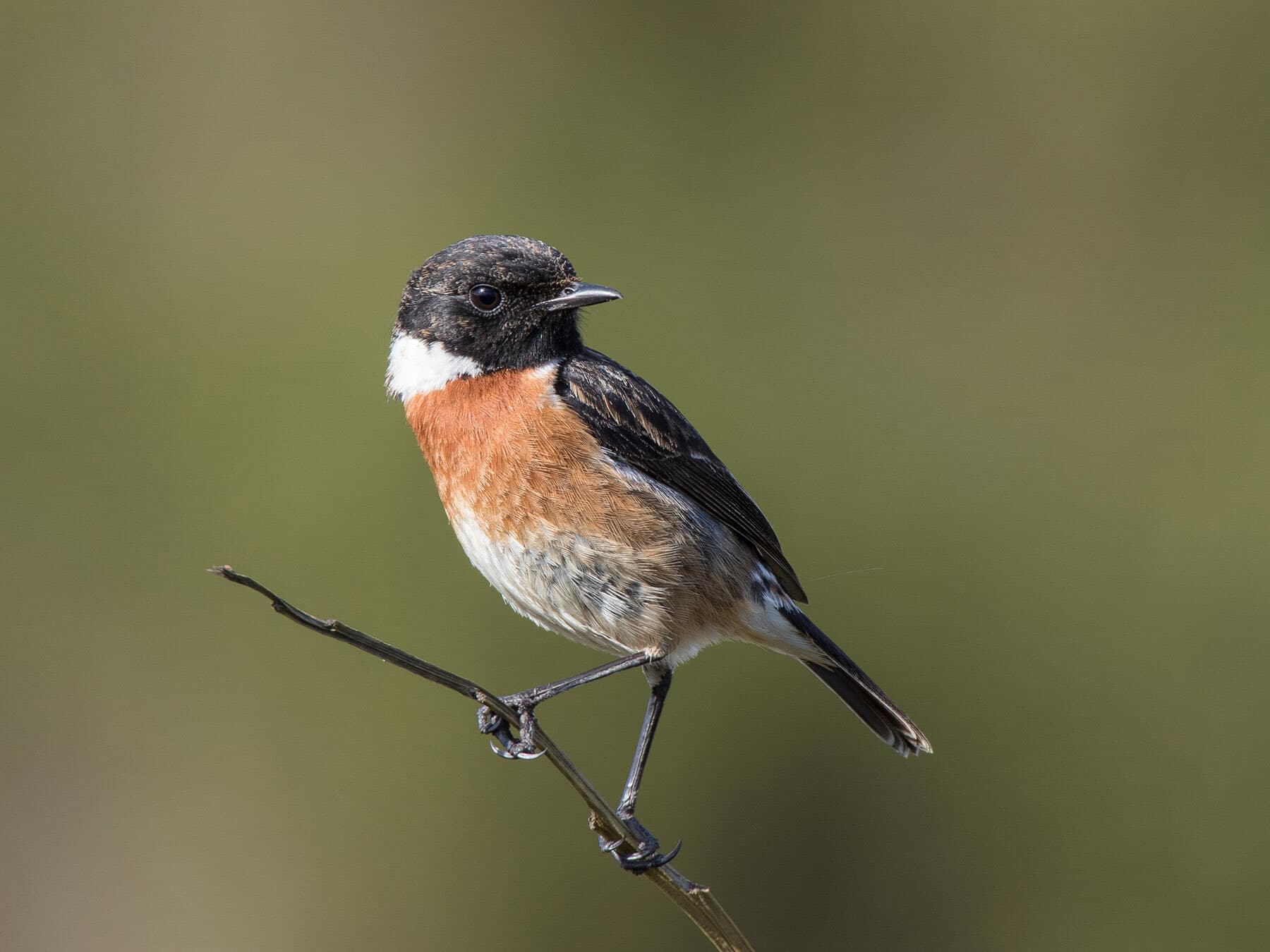
More photos
3 photos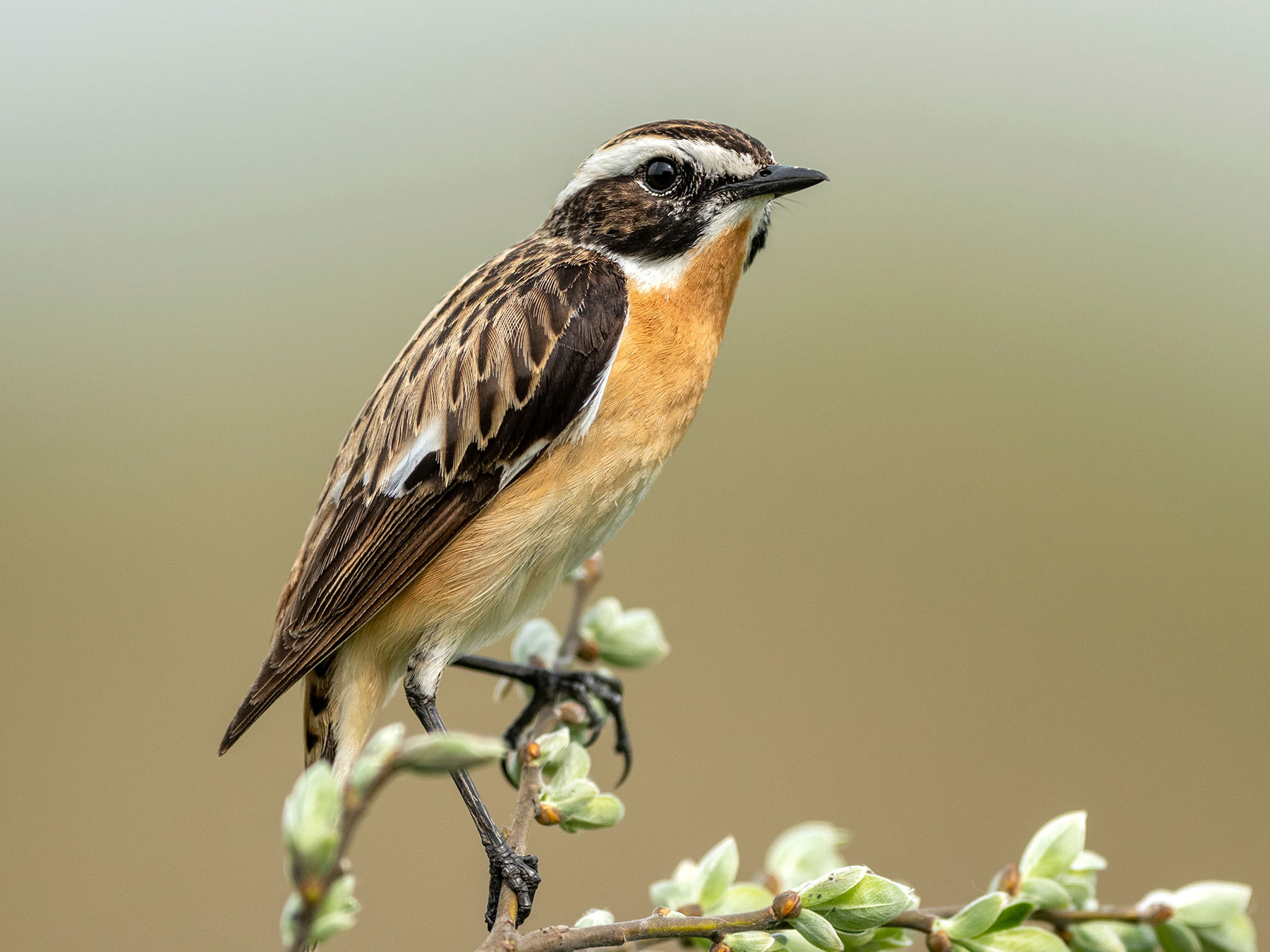
Quick facts
- Length
- 12–14 cm
- Wingspan
- 21–24 cm
- Weight
- 14–22 g
- Lifespan
- 2 years · oldest recorded 6.9 years
- Family
- Old World Flycatchers
- Migration
- Long-distance Migrant
- Global status (IUCN)
- Least Concern
- World population
- 17,200,000 - 28,500,000 individuals
- Population trend
- Decreasing
- Also called
- Whin chat
- Scientific name
- Saxicola rubetra
Questions
2What class does the Whinchat belong to?
Whinchats belong to the Old World flycatcher family of birds, or to give it its scientific name, the Muscicapidae. Other birds in the same family include the bluethroat, the northern wheatear and the stonechat.
he scientific name for the species, Saxicola rubetra, means ‘small rock dweller’, while the English name ‘whinchat’ comes from ‘whin’, another name for the common gorse plant, and ‘chat’ in reference to the chattering call it makes.
Where do Whinchats go in the winter?
Once the breeding season ends, whinchats depart for their wintering grounds in central and southern Africa, and may frequently be seen in passage in eastern and southeastern coastal regions of England.
Sources
4- 1BirdLife International. 2016. Saxicola rubetra. The IUCN Red List of Threatened Species 2016: e.T22710156A87906903. Source (opens in a new tab)
- 2EBCC (2015)
- 3BirdLife International. 2016. Saxicola rubetra. The IUCN Red List of Threatened Species 2016: e.T22710156A87906903. Source (opens in a new tab)
- 4Fransson et al., EURING list of longevity records for European birds (2010) Source (opens in a new tab)

Checked by
Nathan Cope, founder and editor
Nathan founded Birdfact and leads its writers and contributors in the UK, the US and Canada. He has watched and studied birds for more than ten years, and checks every article and species guide before it’s published.