


Trumpeter Swan
Bugler Swan · Cygnus buccinator
By the Birdfact teamChecked by Nathan Cope
On this page13 sections
How to recognise it
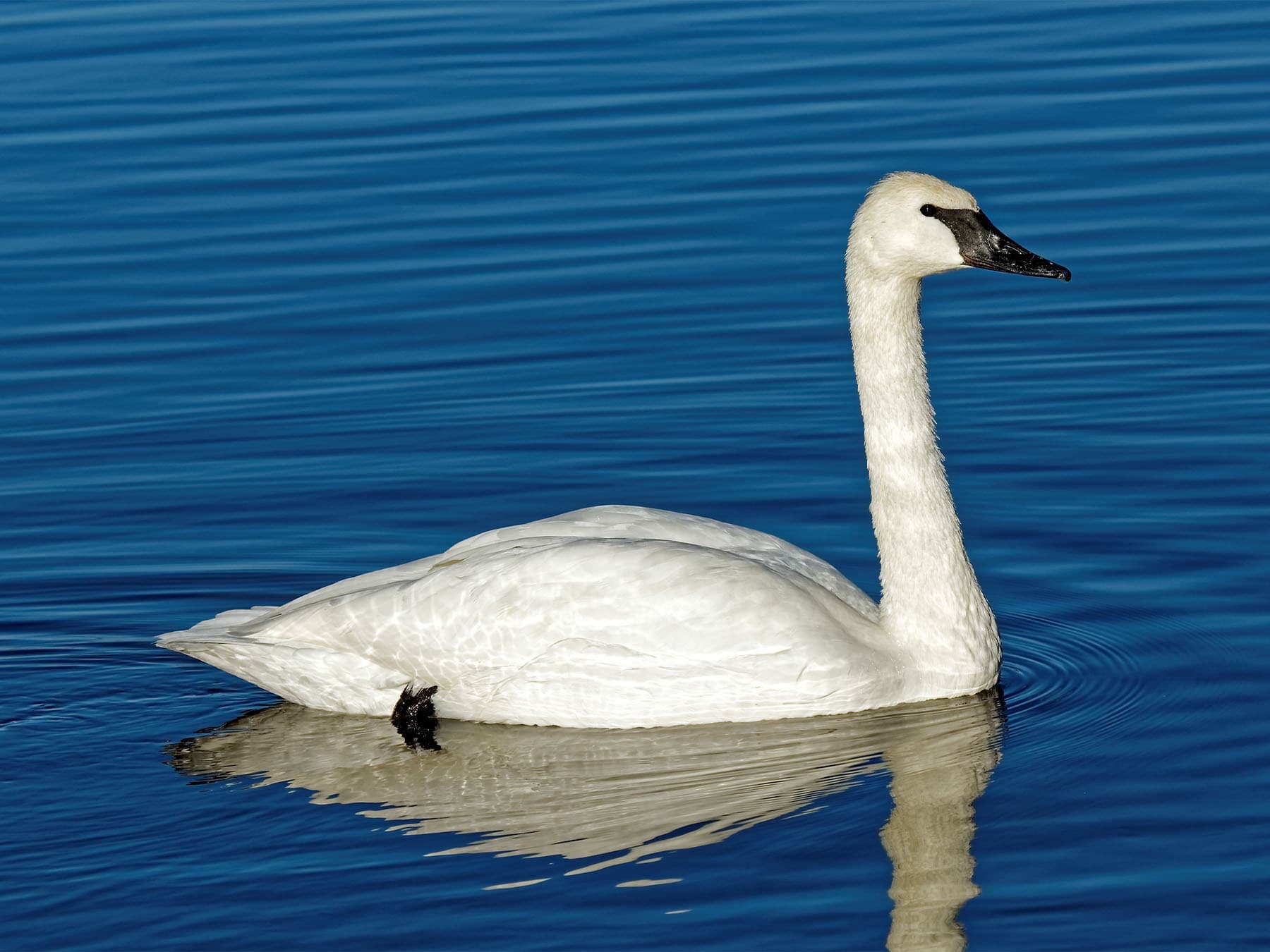
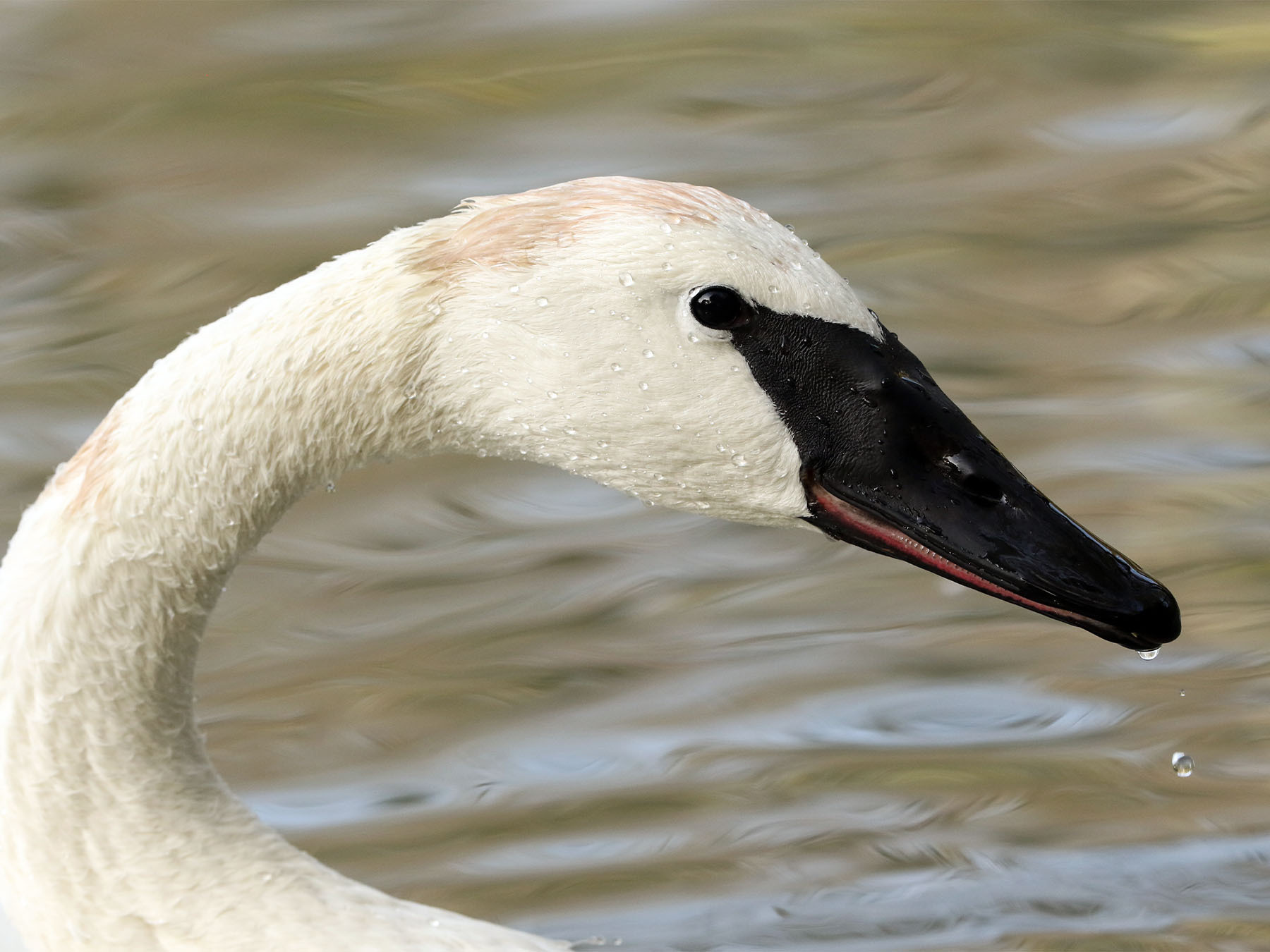
The Trumpeter Swan is North America's largest native waterfowl, with pure white plumage that can sometimes appear rust-stained from feeding in iron-rich waters. The black bill is distinctively straight-edged where it meets the face, and rarely may show small yellow/greenish spots.
Juveniles start with brownish-gray plumage, gradually developing white feathers throughout their first year. The legs and feet are typically black in adults, though some rare leucistic (all-white) birds can have yellow or orange feet. Males and females look identical, though males tend to be slightly larger.
Its size
Adults- Length
- 139–157 cm
- Wingspan
- 185–250 cm
- Weight
- 7700–13600 g
Its song and calls
The Trumpeter Swan's call is a resonant, trumpet-like honk, giving the species its name. Their vocalizations are lower-pitched and more sonorous than other swan species.
They produce a variety of calls, from soft grunts to loud, far-carrying 'oh-OH' sounds, often heard during flight or in territorial displays.
- Call0:00 / 1:52
Recorded in Minnesota, United States · May 2018
When and where to see it
OctoberArriving
Most recorded in October
- 1. Yukon Territory2.4%
- 2. Minnesota1.0%
- 3. Alaska0.79%
- 4. Wyoming0.62%
- 5. Alberta0.57%
Each dot is a county, state or province: the bigger and darker, the larger the bird’s share of that place’s bird records that month. Grey dots: no regular records. The ringed point is the centre of the bird’s records this month; the arrow shows how it moved since last month, and the dashed loop its path through the year. “Arrivals” colours places where it becomes regular this month (orange) or is in its last regular month (grey). GBIF eBird Observation Dataset, 2019–2024. Map data: Natural Earth, US Census Bureau; place centres © OpenStreetMap contributors.
In your area
See when the Trumpeter Swan is recorded in your county, state or province.
How often the Trumpeter Swan turns up in the United States and Canada through the year, from birdwatchers' records.
United States
Resident · all year · most records in March
Canada
Winter visitor · all year · most records in January
Show as a table
| Month | United States | Canada |
|---|---|---|
| January | 0.10% (regular) | 0.44% (regular) |
| February | 0.097% (regular) | 0.39% (regular) |
| March | 0.10% (regular) | 0.38% (regular) |
| April | 0.070% (regular) | 0.21% (regular) |
| May | 0.082% (regular) | 0.11% (regular) |
| June | 0.060% (regular) | 0.085% (regular) |
| July | 0.051% (regular) | 0.074% (regular) |
| August | 0.066% (regular) | 0.11% (regular) |
| September | 0.058% (regular) | 0.13% (regular) |
| October | 0.060% (regular) | 0.23% (regular) |
| November | 0.090% (regular) | 0.39% (regular) |
| December | 0.086% (regular) | 0.38% (regular) |
Worldwide: recorded regularly in 2 countries
Countries where it was recorded in at least 3 of the 6 years 2019–2024. Linked countries have their own bird list.
North America (2)
Data: EOD – eBird Observation Dataset (Cornell Lab of Ornithology), accessed via GBIF.org, CC BY 4.0. Records from 2019–2024, aggregated and filtered by Birdfact. How these lists are made
Tips for seeing it
- Look for Trumpeter Swans in large, shallow wetlands and lakes
- Listen for their distinctive trumpet-like call, especially in flight
- Observe them during winter in their southern range, where they gather in larger numbers
- In the US, visit wildlife refuges in Alaska, Minnesota, or Wyoming for better viewing opportunities
What it eats
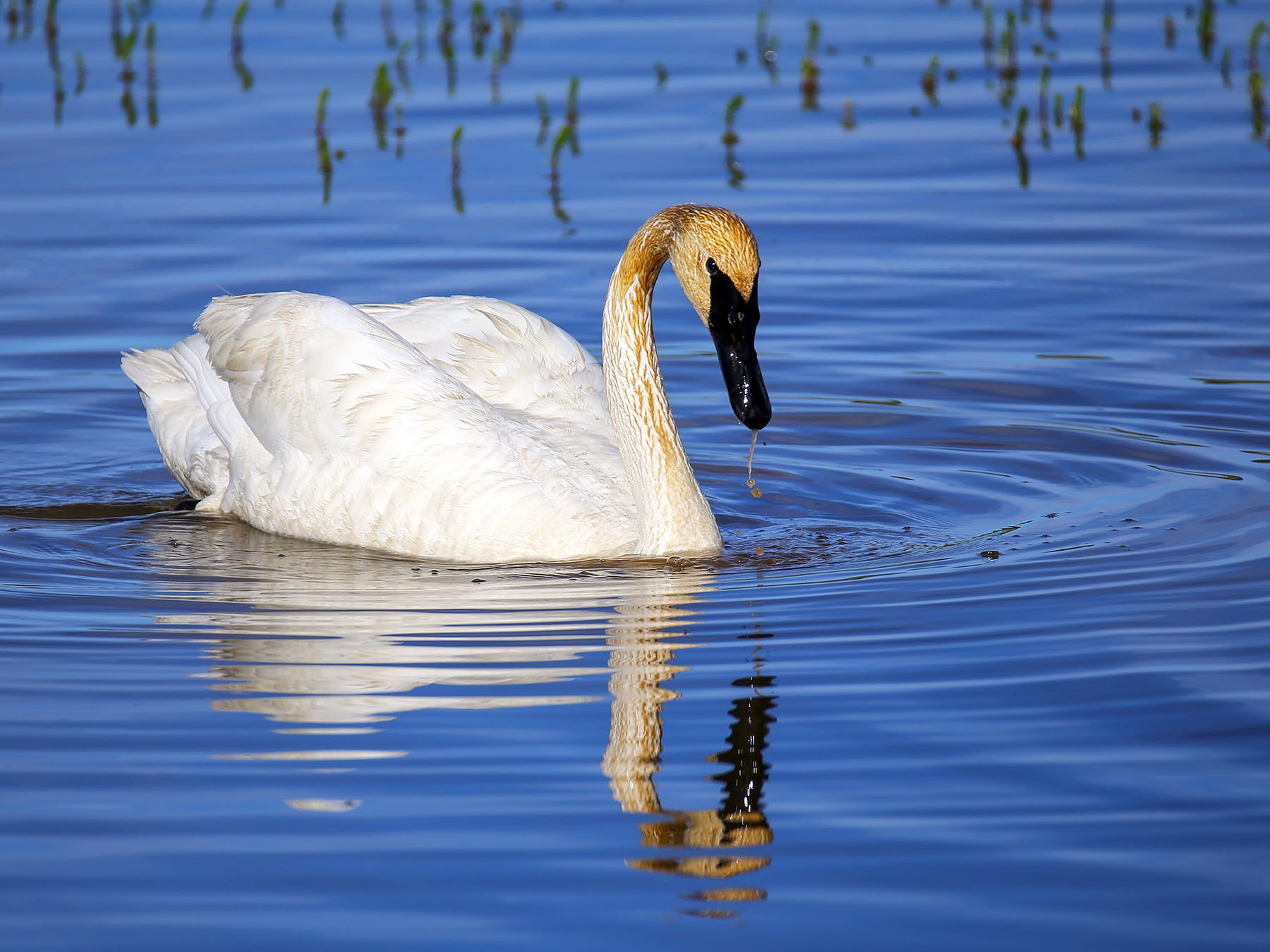
Trumpeter Swans are primarily herbivorous, feeding on aquatic plants, tubers, and roots. They use their long necks to reach underwater vegetation and occasionally consume small aquatic animals.
In agricultural areas, they may forage in fields, eating leftover grains and crops.
Nesting and breeding
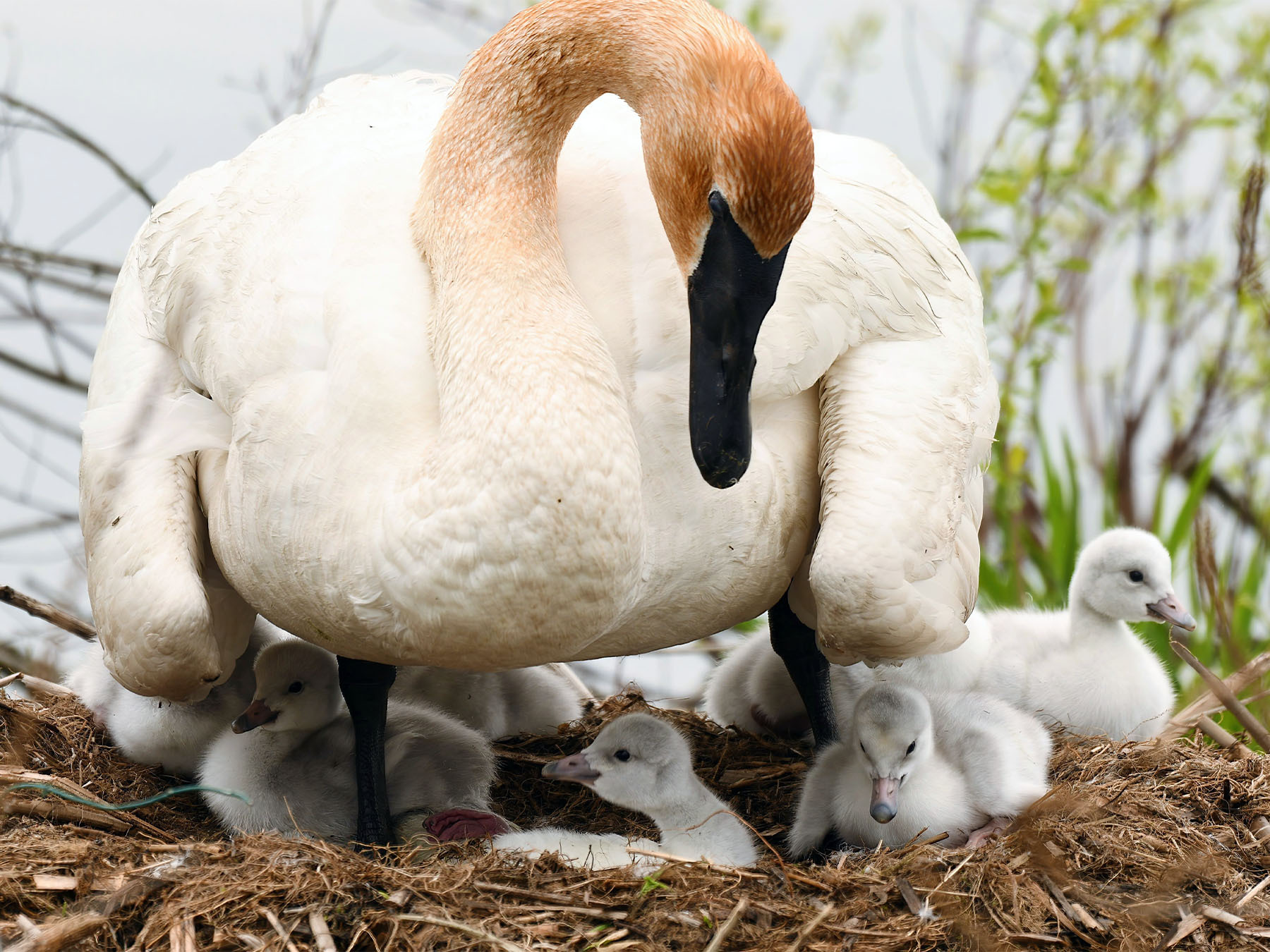
Trumpeter Swans form monogamous pairs that often mate for life. Breeding typically occurs between April and July. They build large mound-like nests of aquatic vegetation and grasses, usually on small islands or near shorelines.
Females lay 4-6 large, off-white eggs. Both parents participate in nest building and aggressively defend their territory. Incubation, primarily done by the female, lasts about 32-37 days.
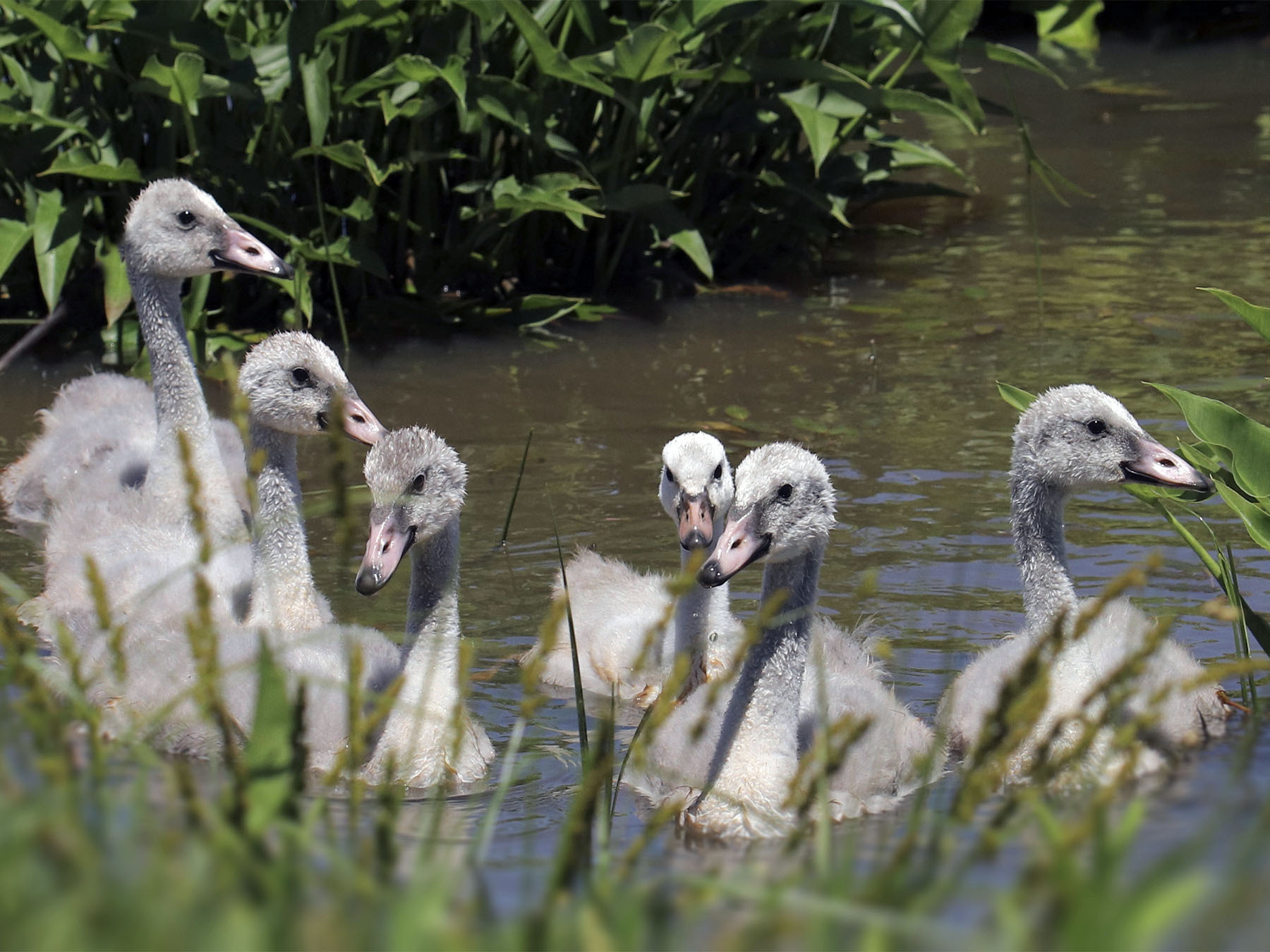
Cygnets (young swans) are precocial, able to swim and feed themselves shortly after hatching. They stay with their parents for the first winter, learning migration routes and feeding grounds.
Behaviour
Trumpeter Swans are highly social, often seen in family groups or larger flocks outside the breeding season. They exhibit strong pair bonds, engaging in synchronized swimming and head bobbing displays.
These swans are powerful fliers, despite their size, capable of long-distance flights during migration.
Conservation
Trumpeter Swans have made a remarkable recovery from near extinction in the early 20th century.
Conservation efforts, including habitat protection and reintroduction programs, have been successful. However, they still face challenges from lead poisoning, habitat loss, and collisions with power lines.
Similar birds
Often mistaken for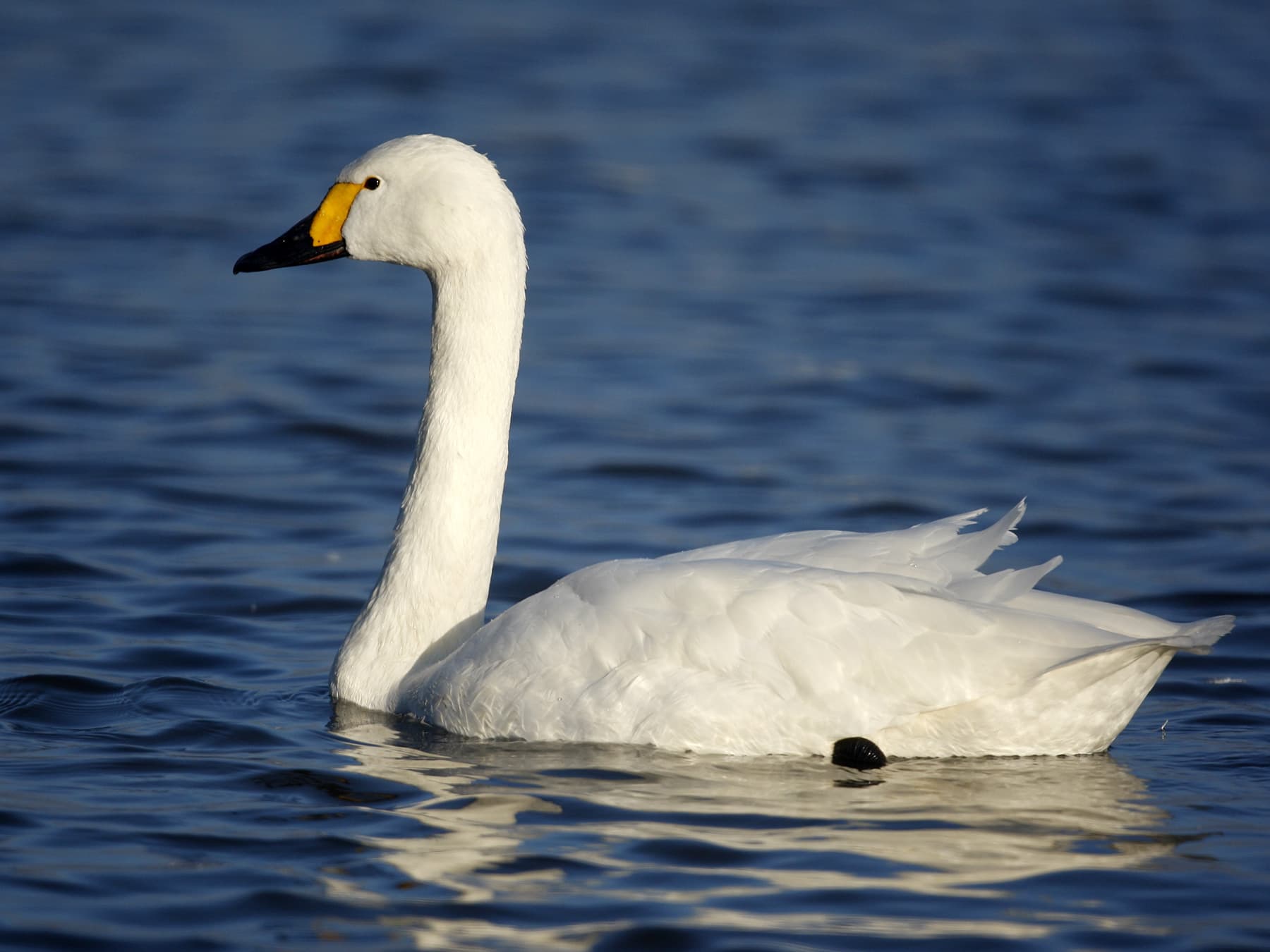
More photos
9 photos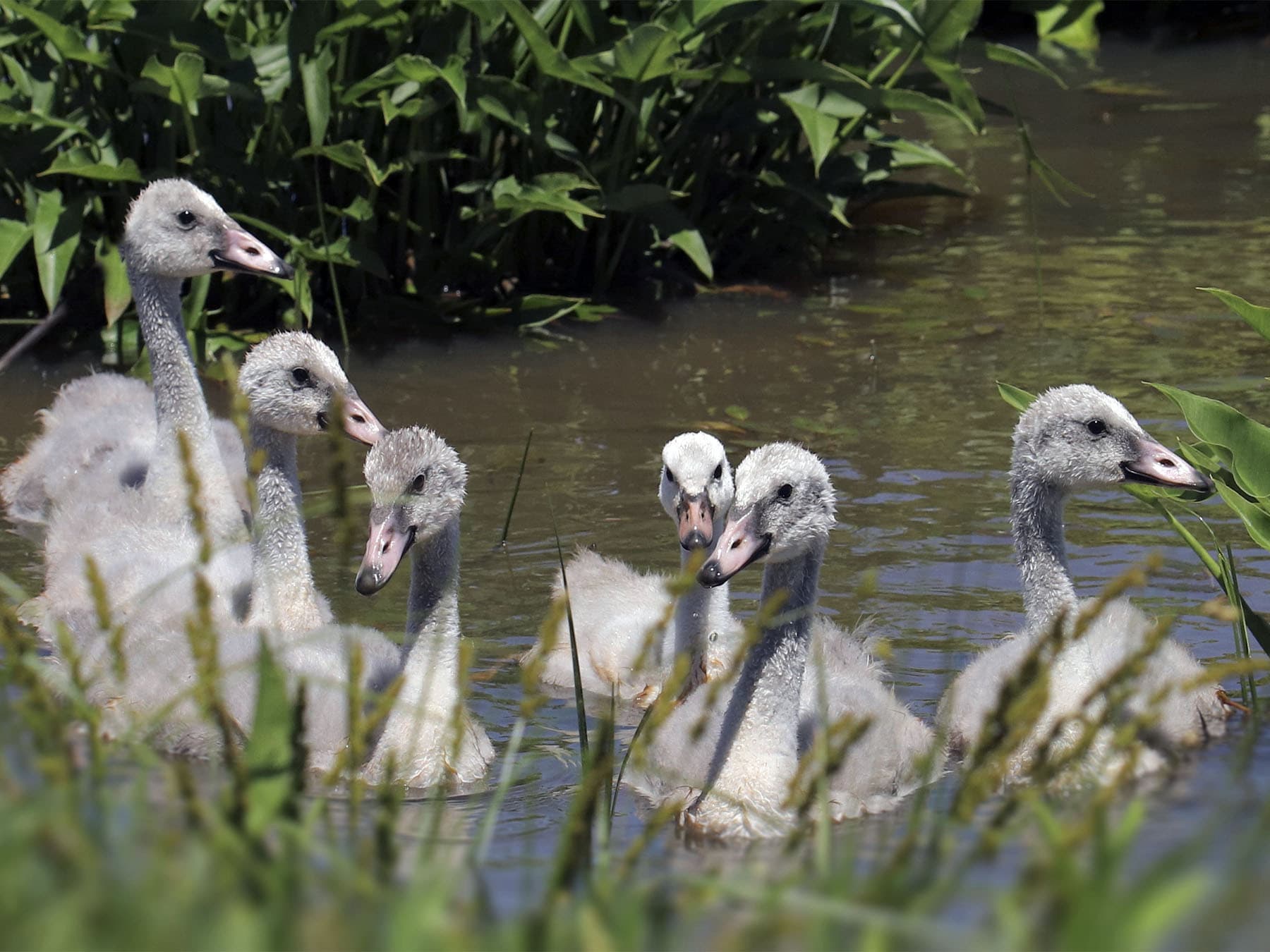 Six Trumpeter Swan Cygnets swimming in a river
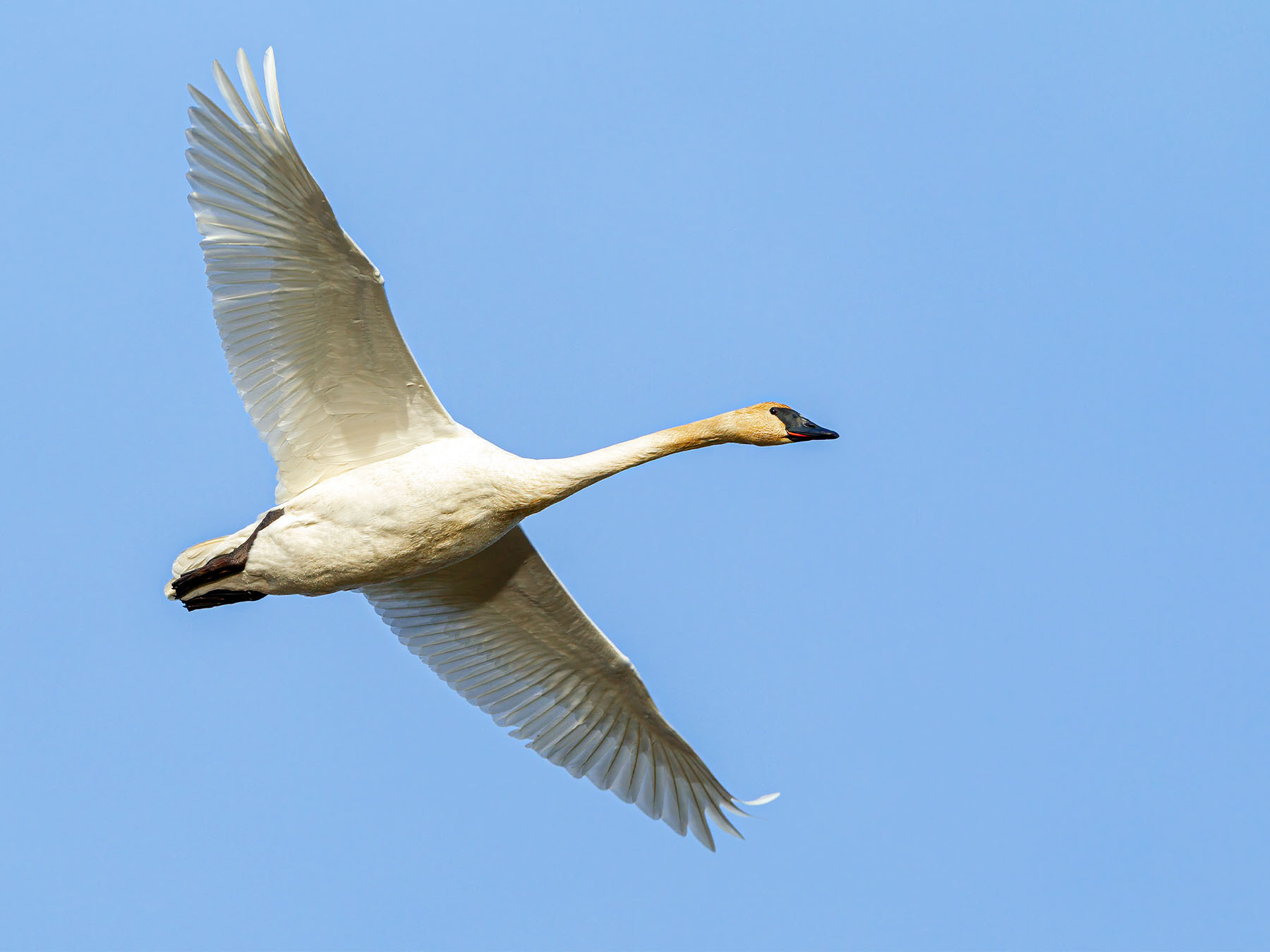
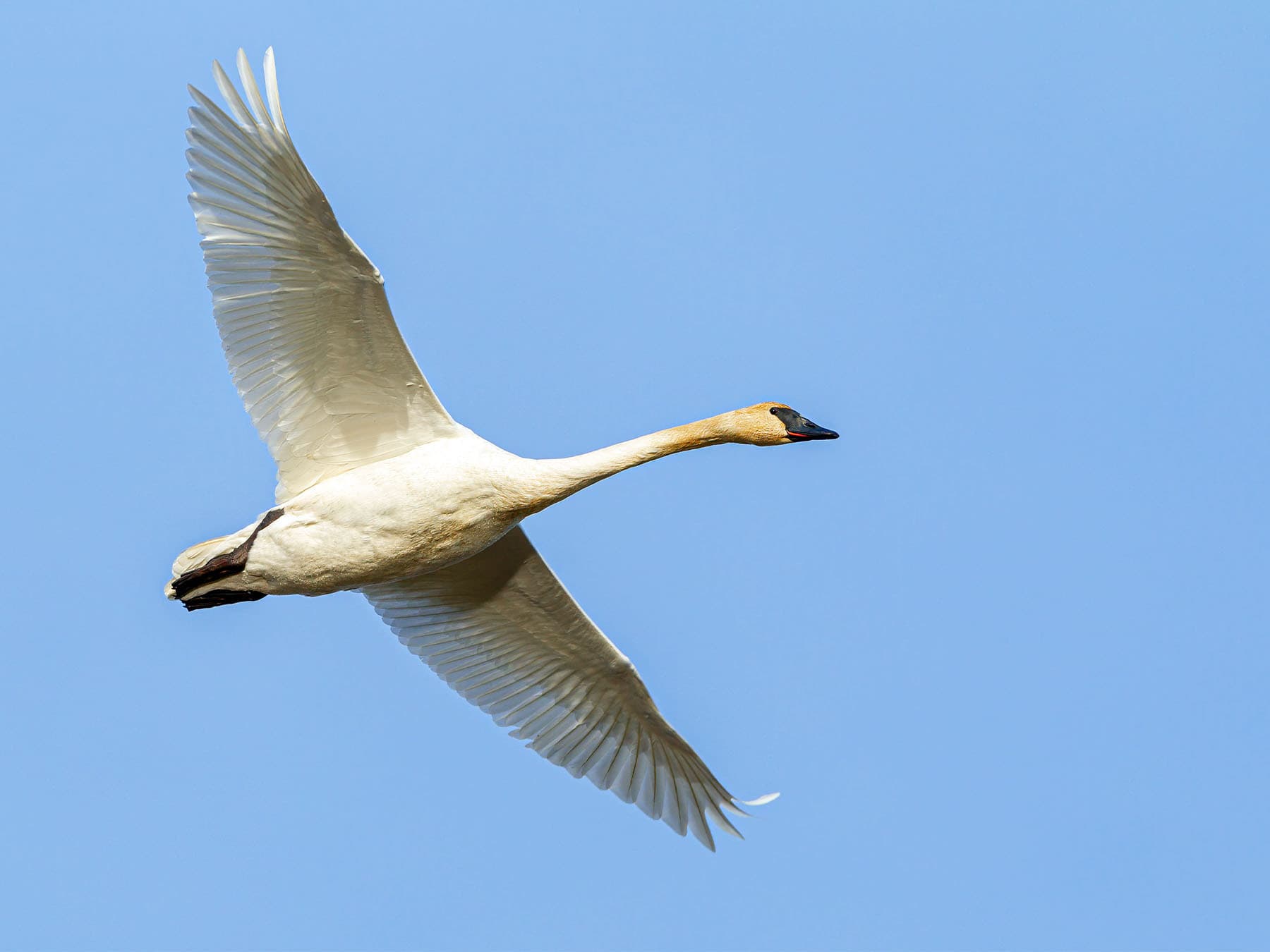 Trumpeter Swan in-flight
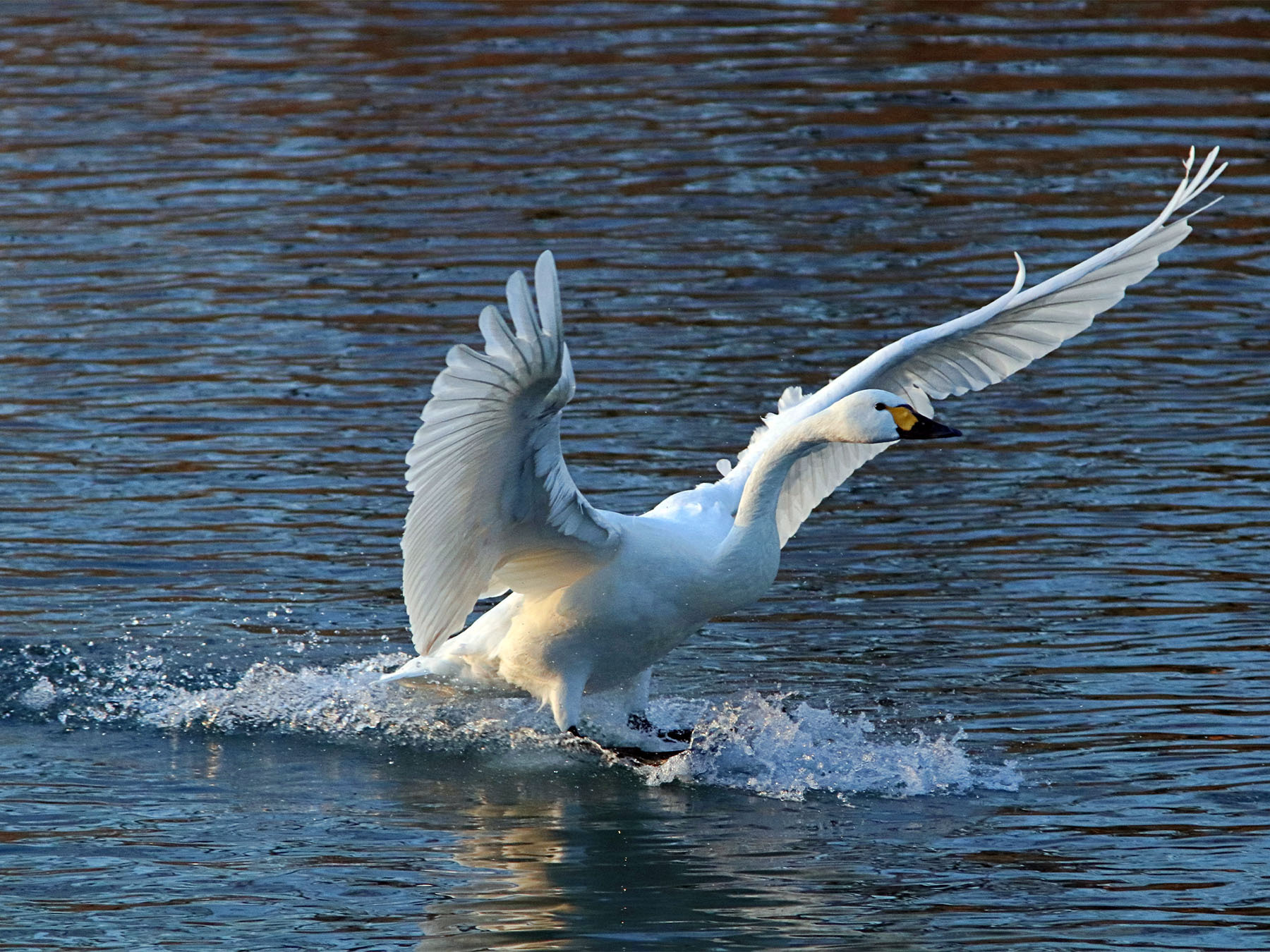
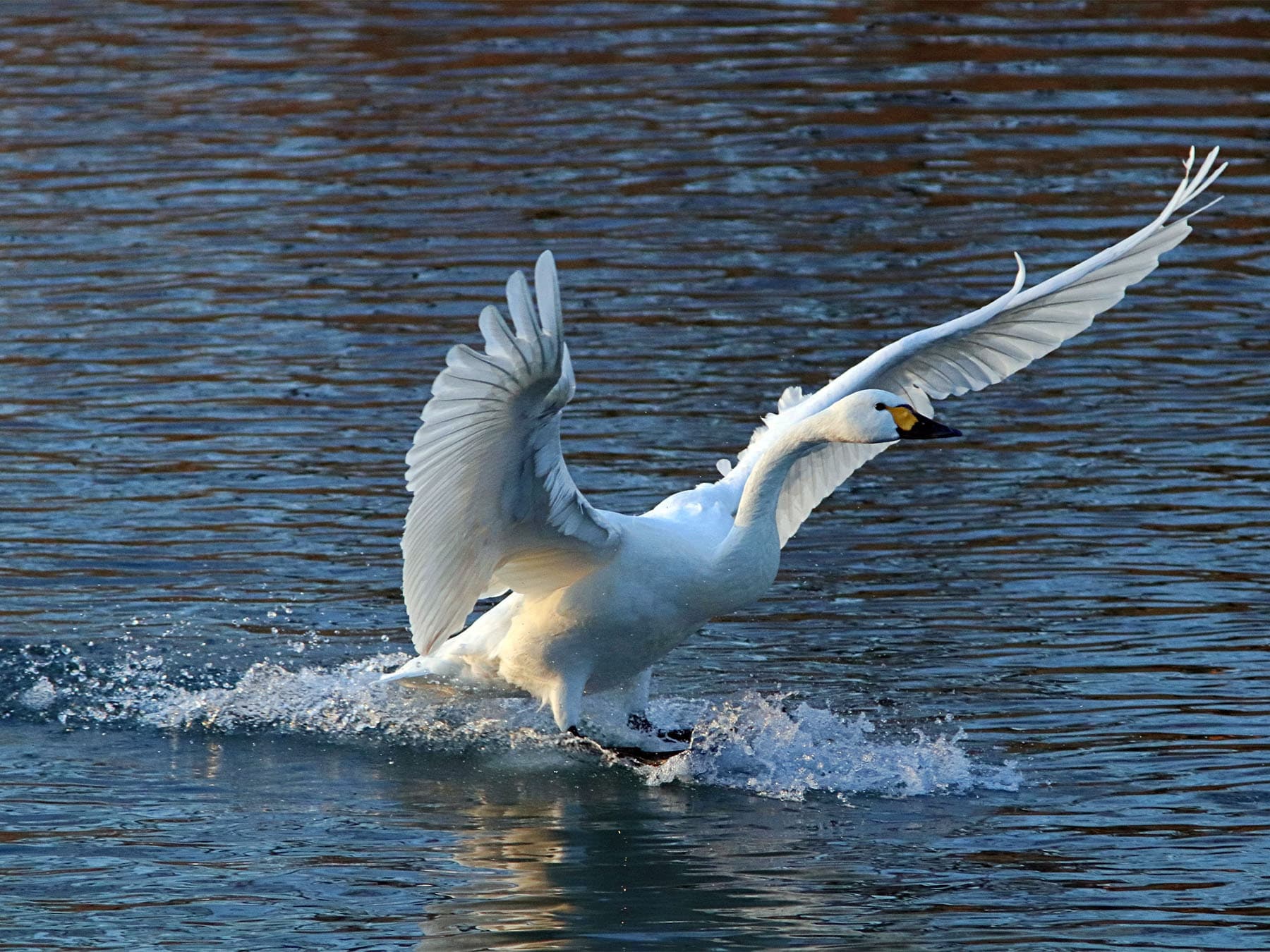 Trumpeter Swan landing on a lake
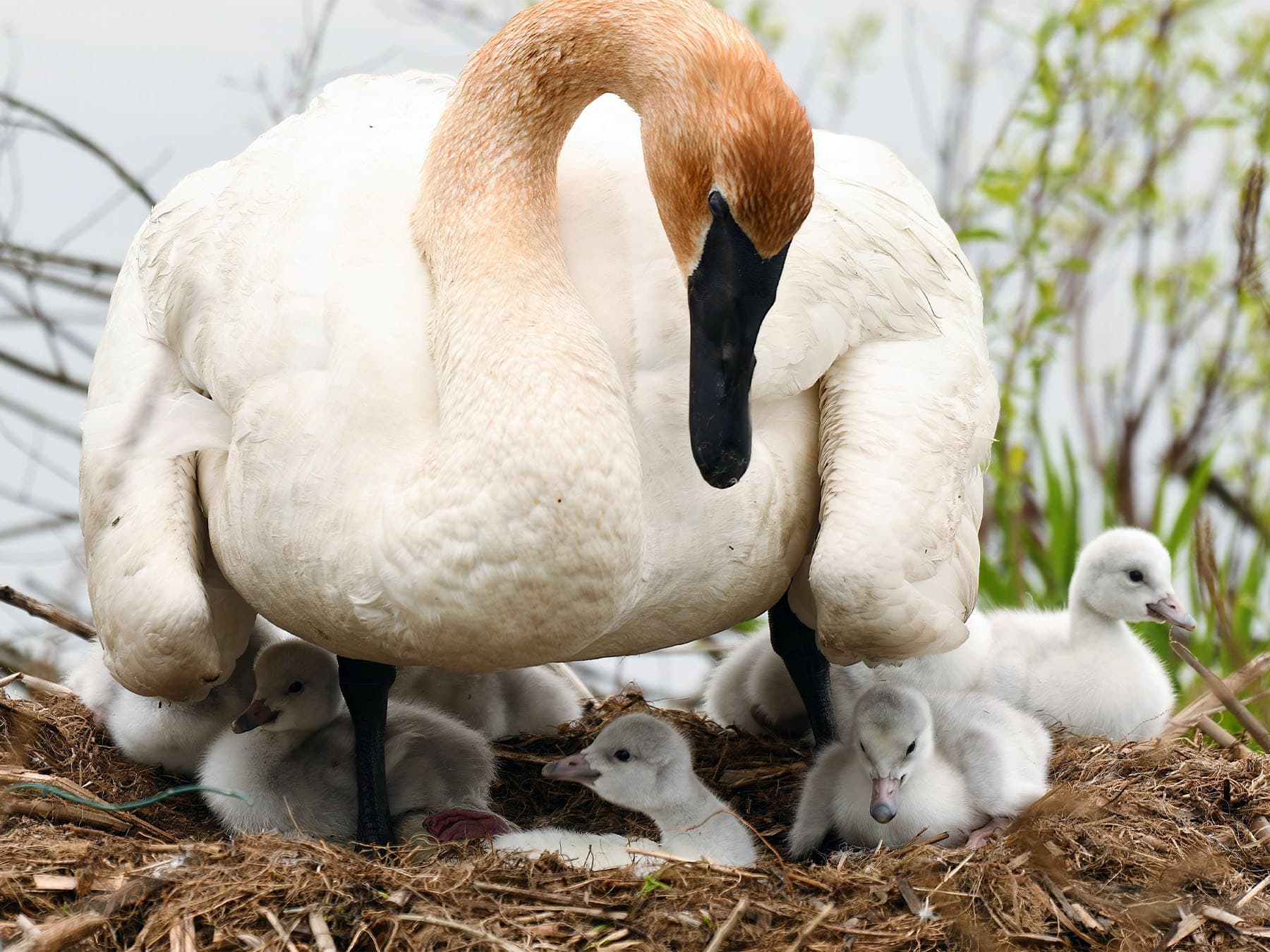 Trumpeter Swan in the nest with cygnets
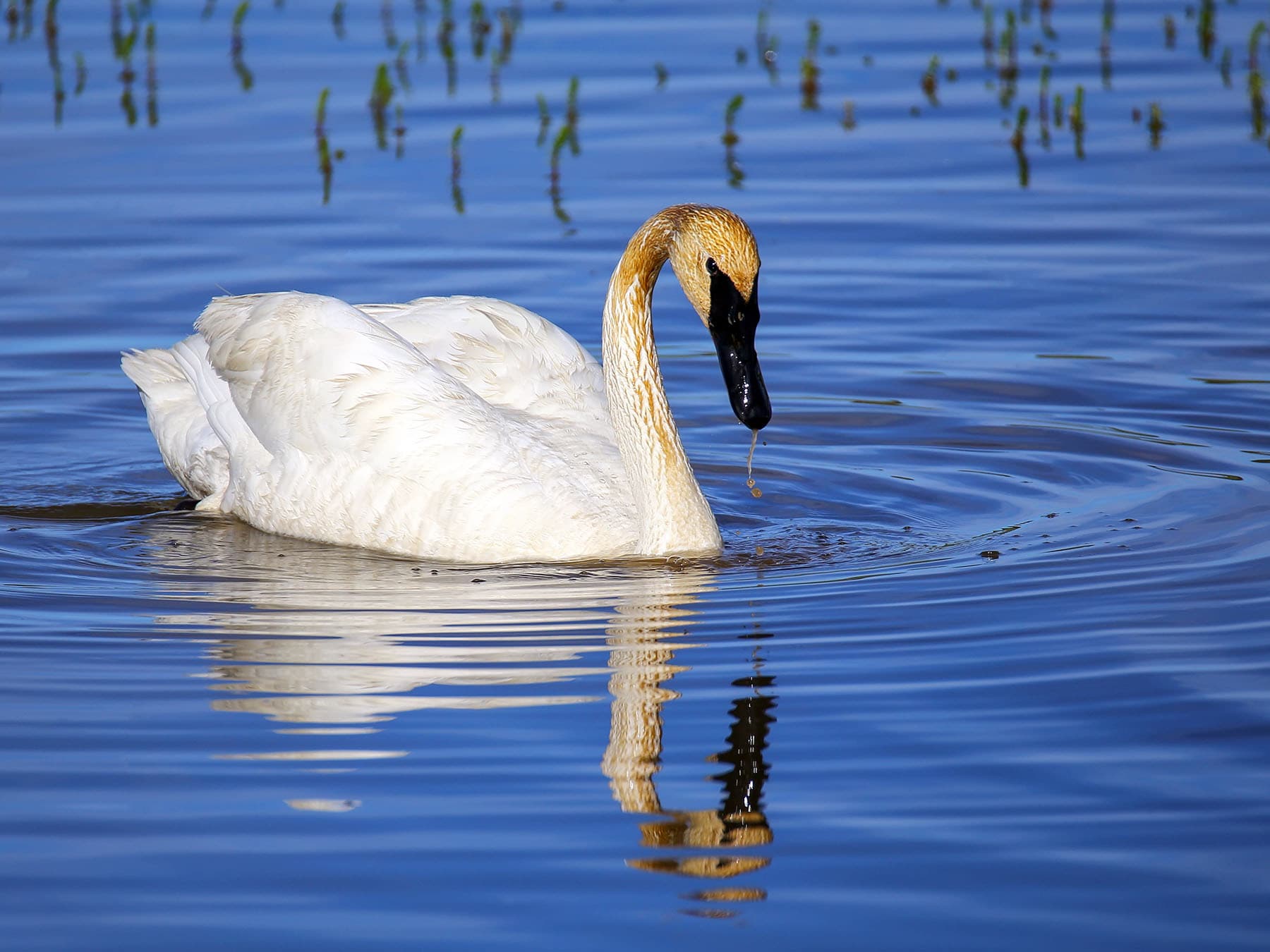 Trumpeter Swan feeding on aquatic plants
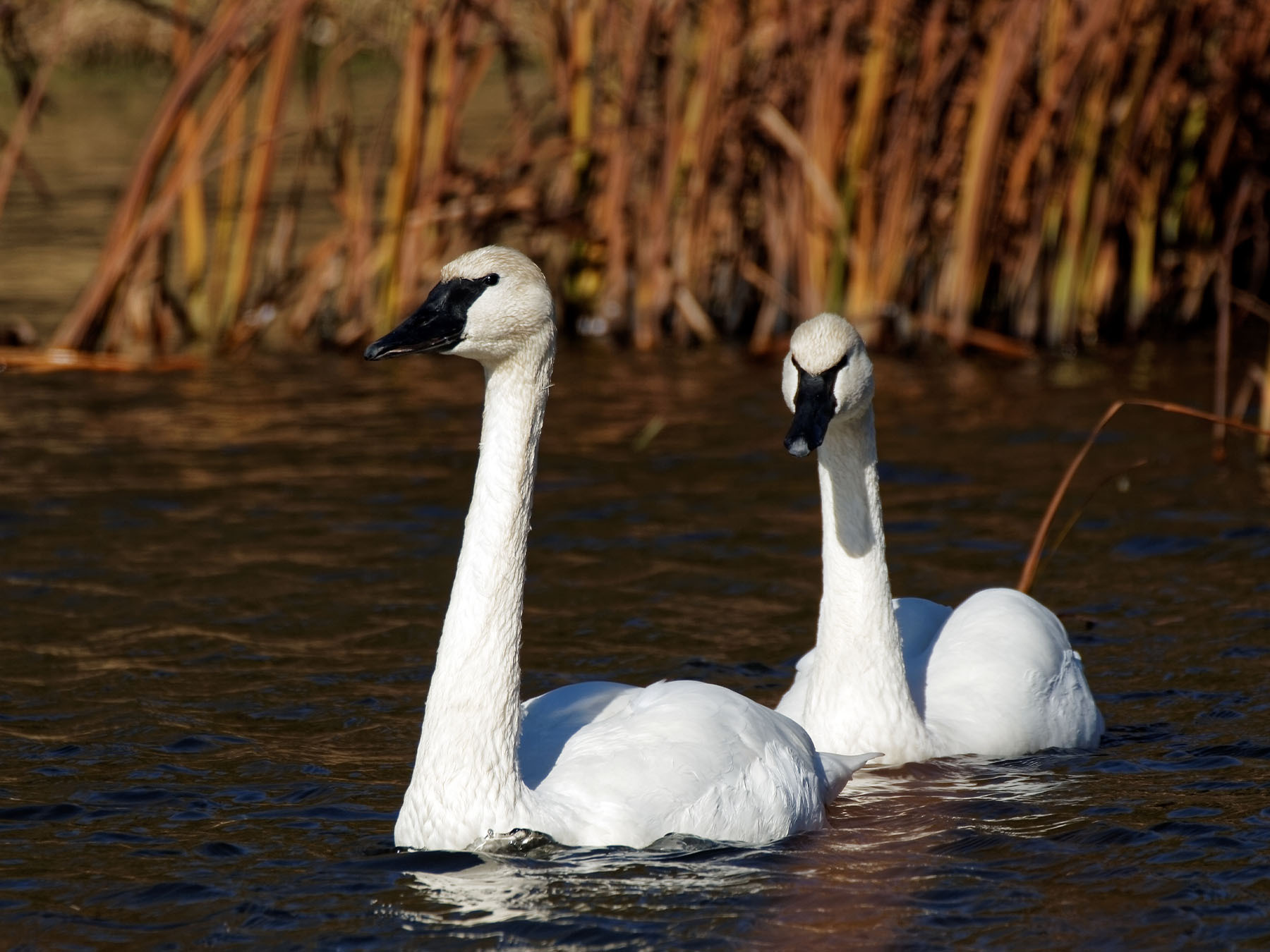
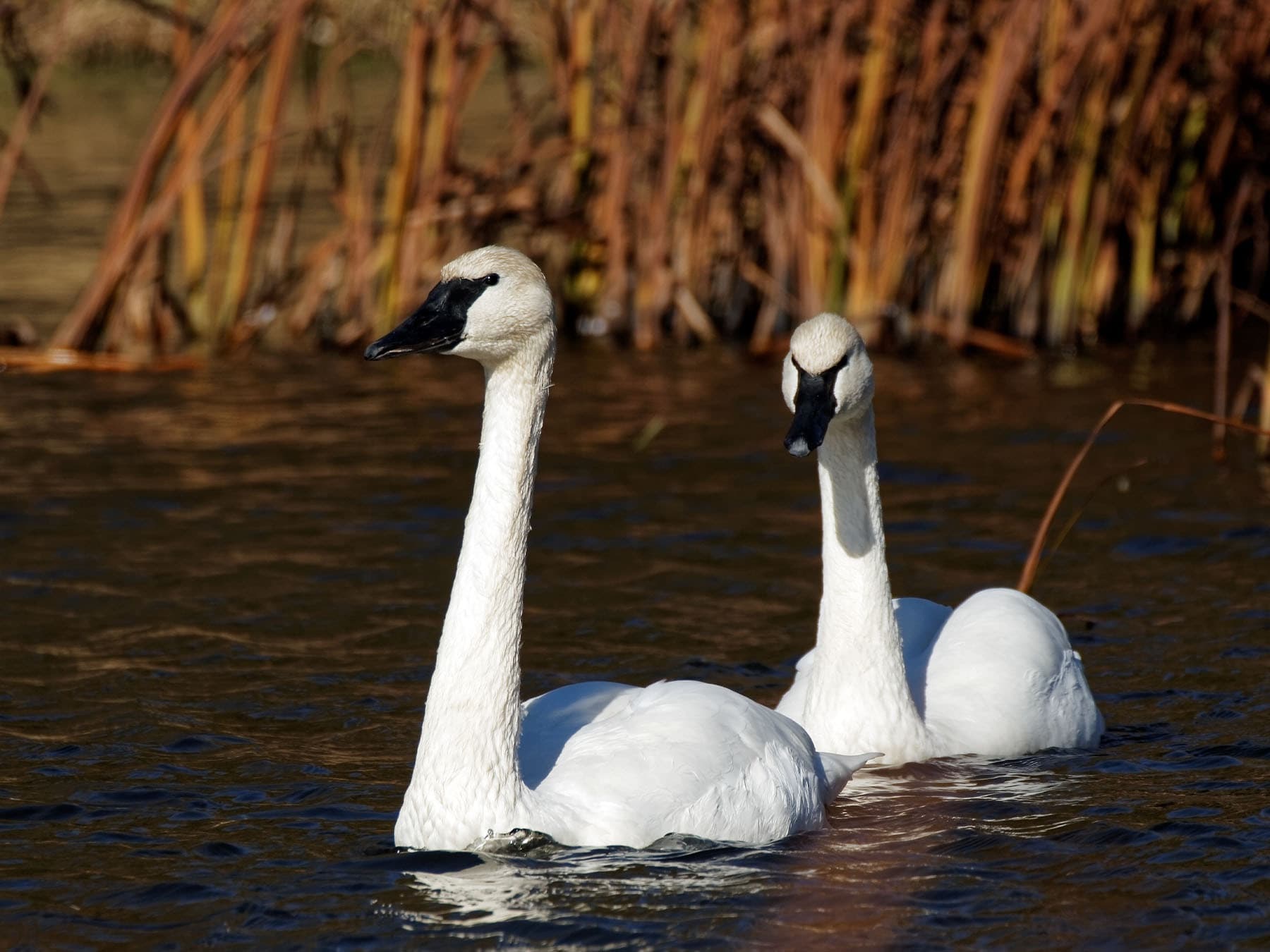 Pair of Trumpeter Swans gliding along on the water
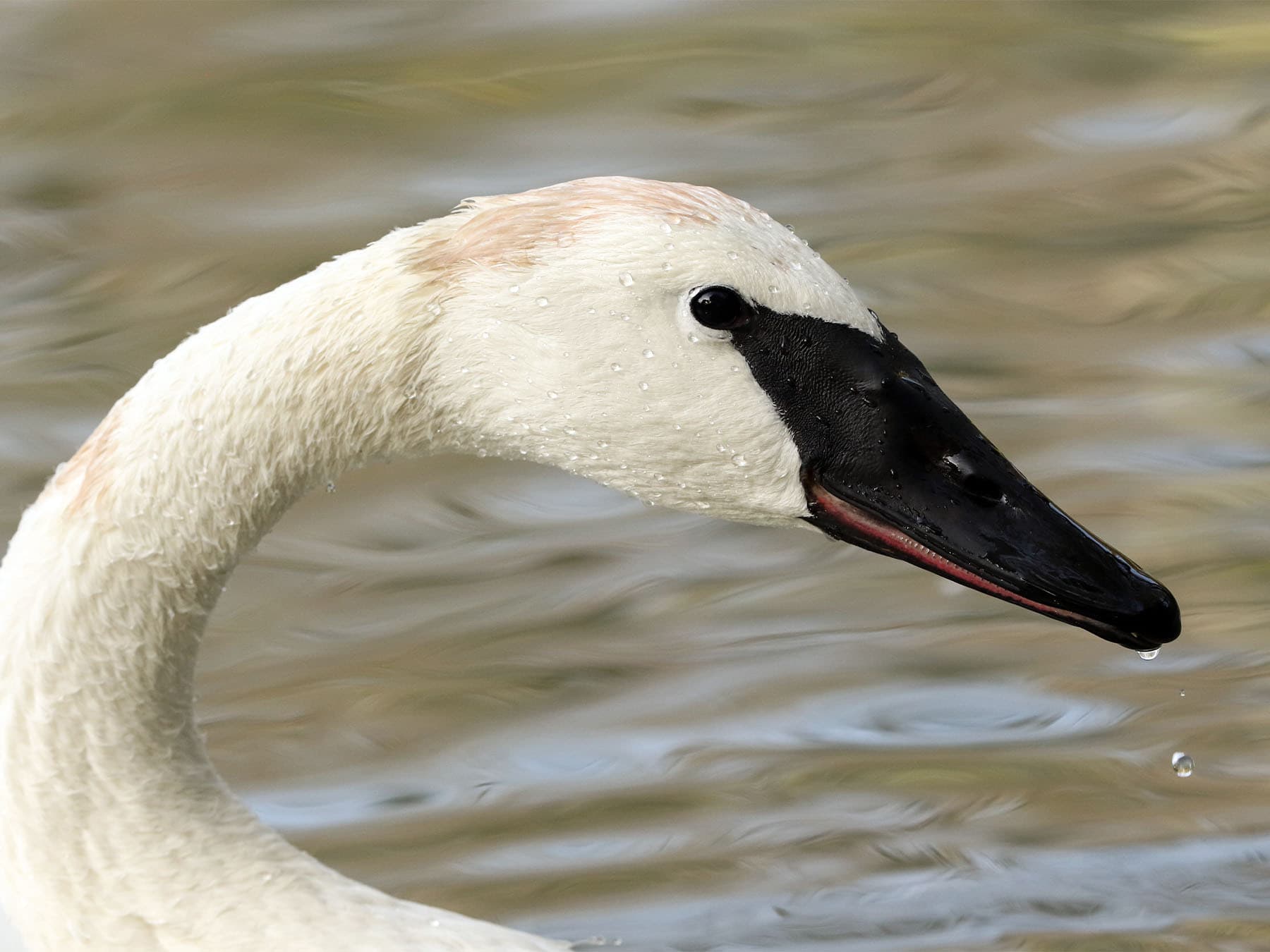 Portrait of a Trumpeter Swan
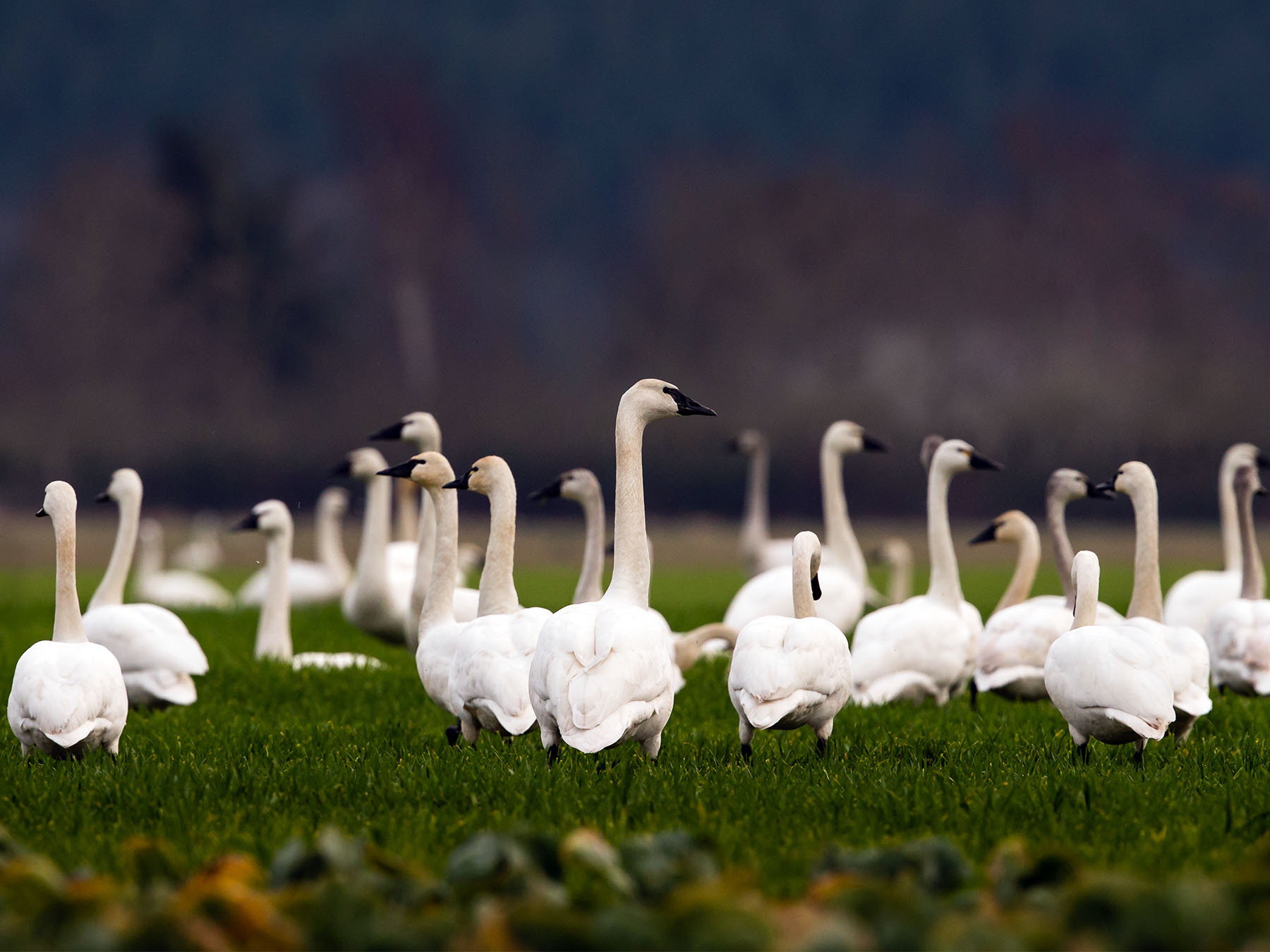
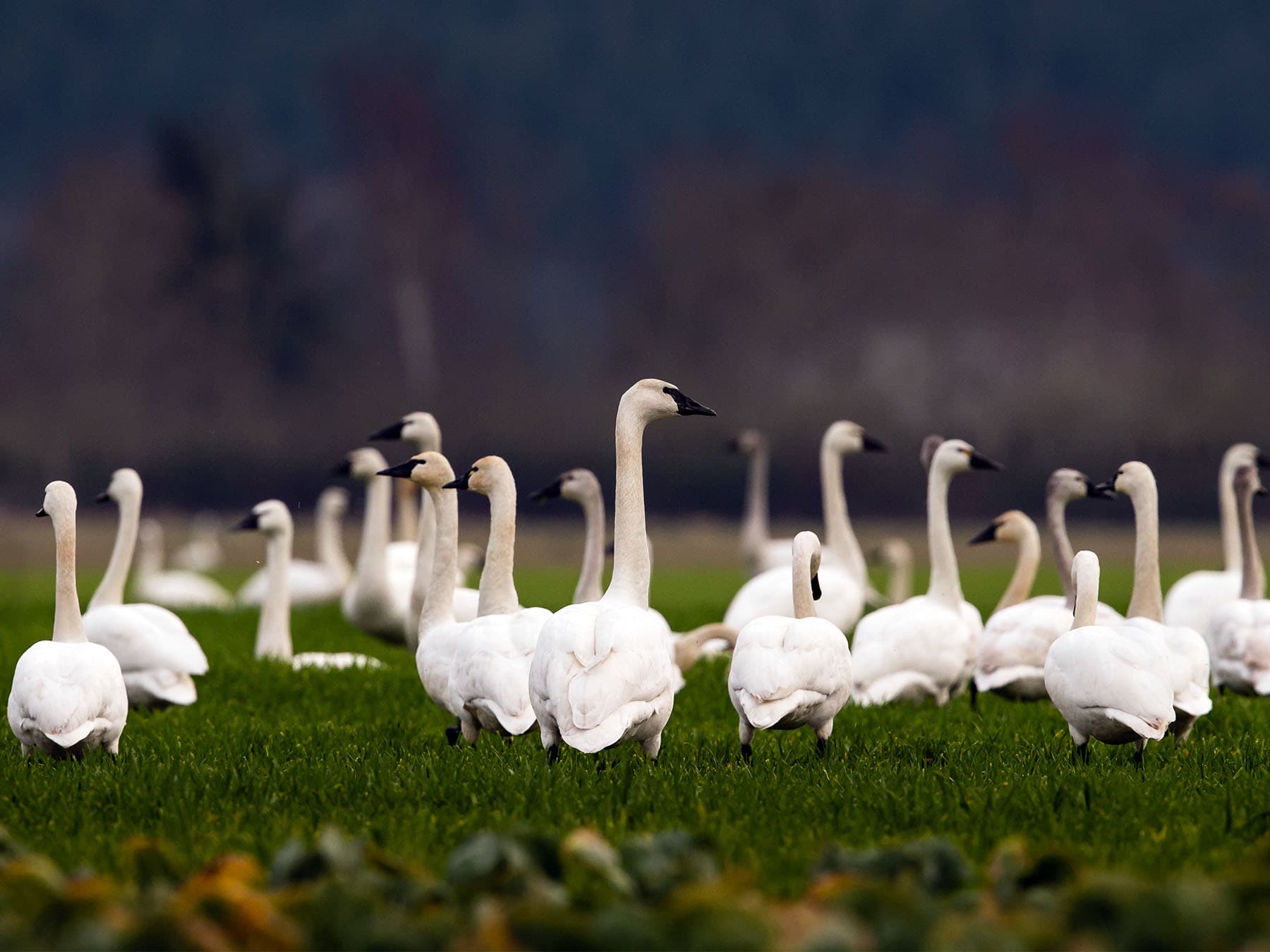 A bank of Trumpeter Swans
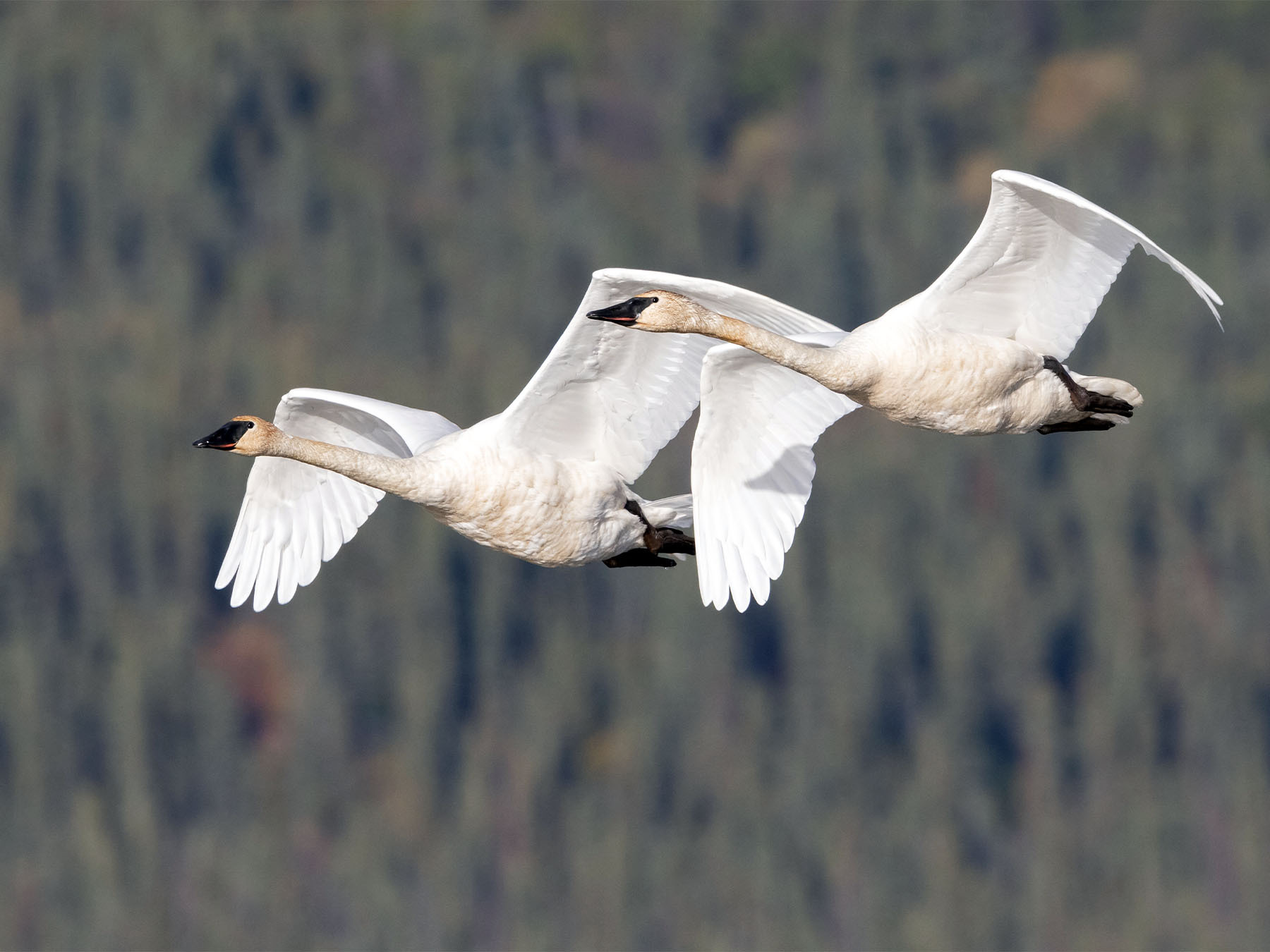
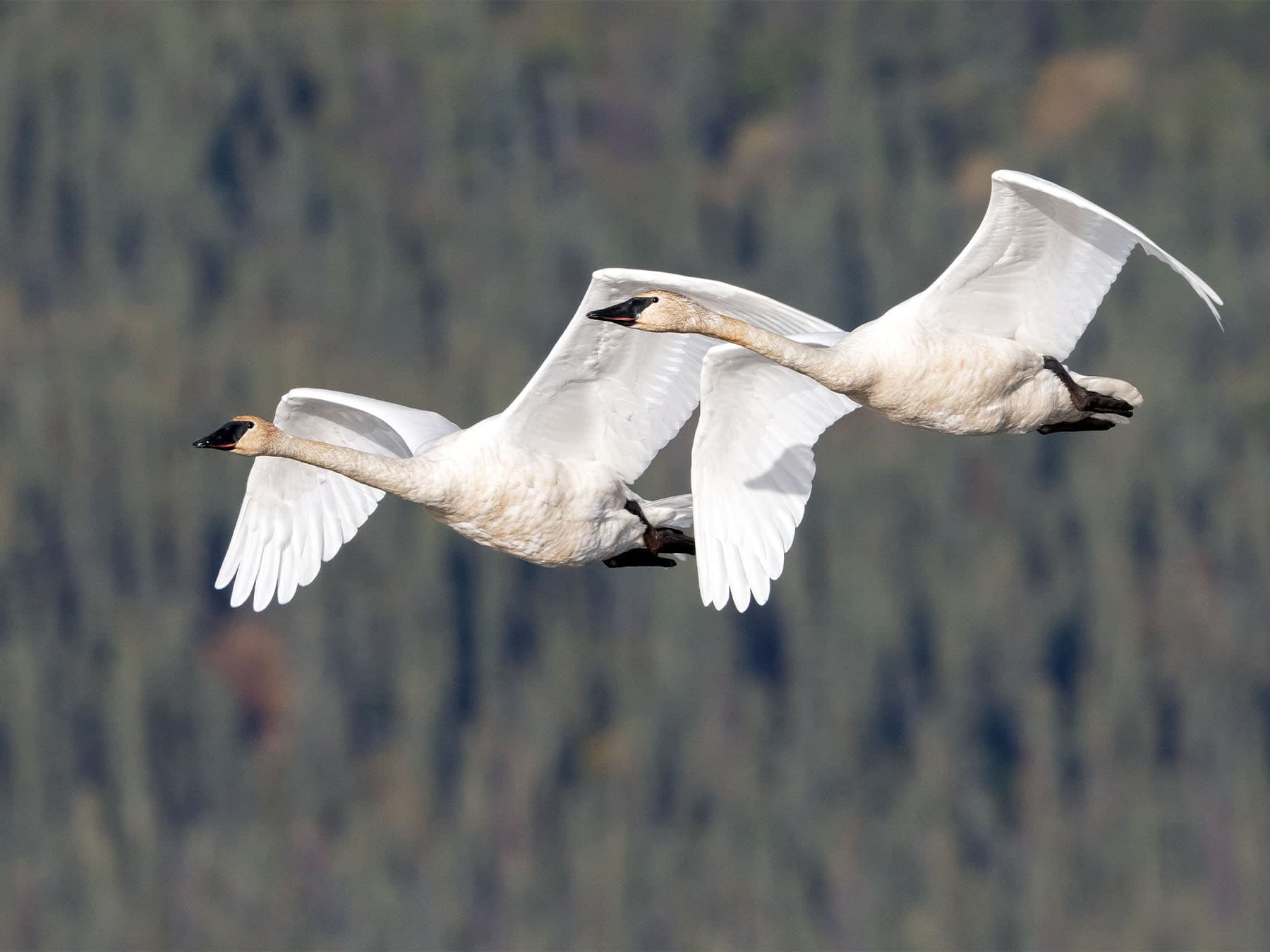 Pair of Trumpeter Swans in-flight
Trumpeter Swan guides
1 guidesQuick facts
- Length
- 139–157 cm
- Wingspan
- 185–250 cm
- Weight
- 7700–13600 g
- Lifespan
- 20–30 years · oldest recorded 32.5 years
- Family
- Ducks, Geese & Swans
- Migration
- Partial migrant
- Global status (IUCN)
- Least Concern
- World population
- 50,000 mature individuals
- Population trend
- Increasing
- Also called
- Bugler Swan
- Scientific name
- Cygnus buccinator
Sources
4- 1BirdLife International. 2021. Cygnus buccinator. The IUCN Red List of Threatened Species 2021: e.T22679859A136992006. Source (opens in a new tab)
- 2Groves 2017; Rees et al. 2019; Mitchell and Eichholz 2020
- 3Groves 2017; Rees et al. 2019
- 4Carey and Judge, Longevity Records: Life Spans of Mammals, Birds, Amphibians, Reptiles, and Fish (2000) Source (opens in a new tab)

Checked by
Nathan Cope, founder and editor
Nathan founded Birdfact and leads its writers and contributors in the UK, the US and Canada. He has watched and studied birds for more than ten years, and checks every article and species guide before it’s published.