


Rough-legged Hawk
Rough-legged Buzzard · Buteo lagopus
By the Birdfact teamChecked by Nathan Cope
On this page15 sections
How to recognise it
What do Rough-legged Hawks look like?
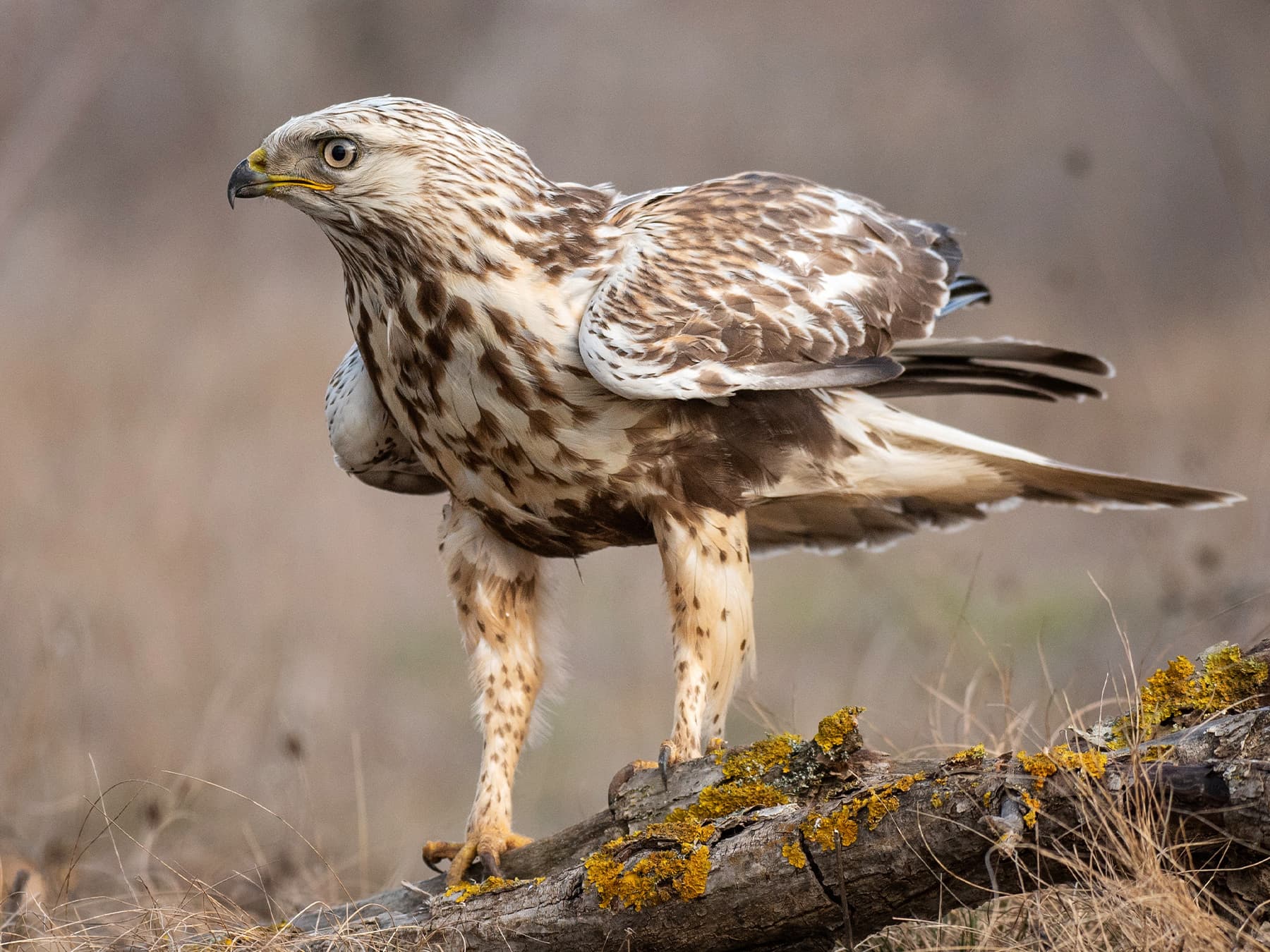
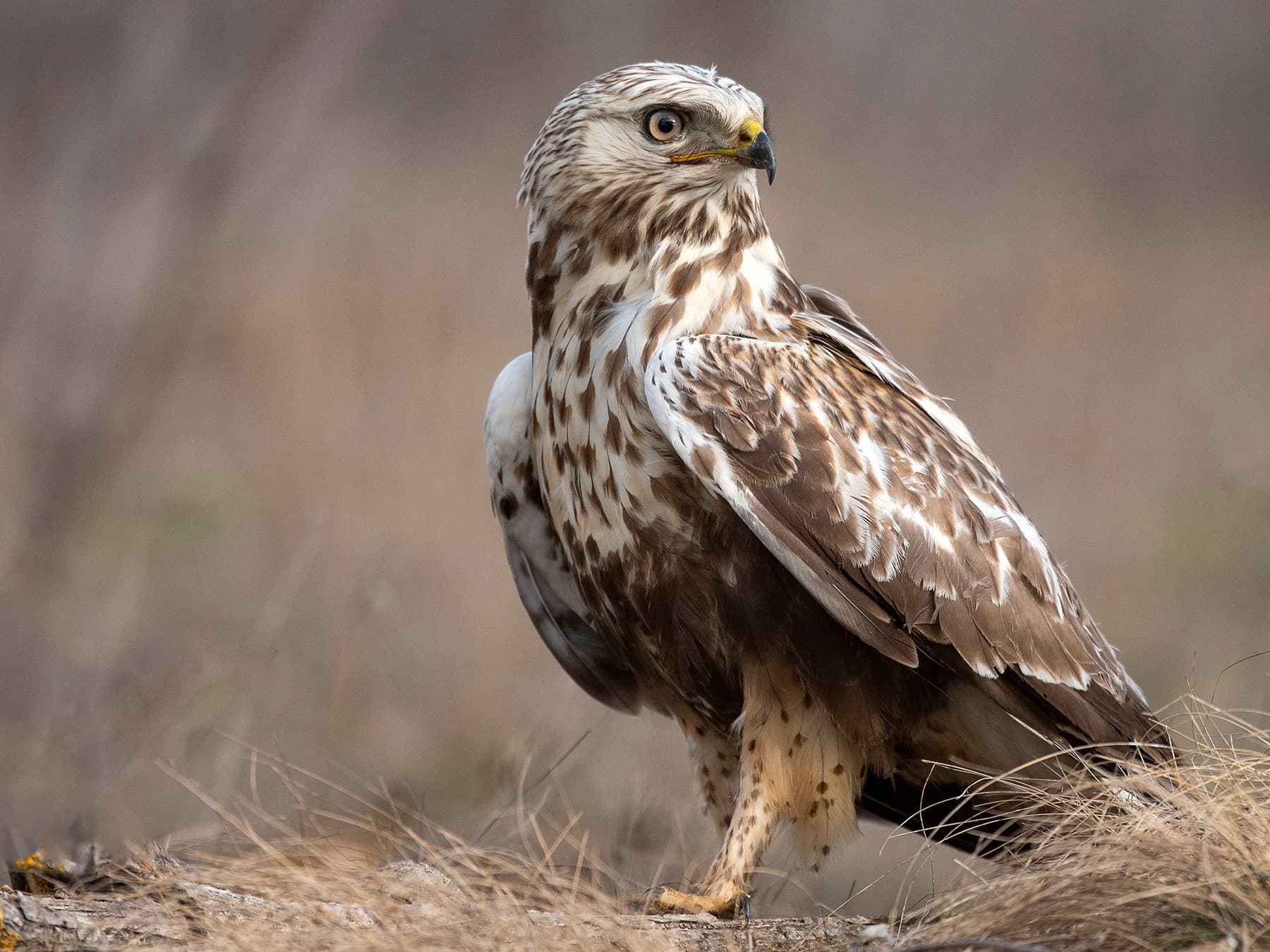
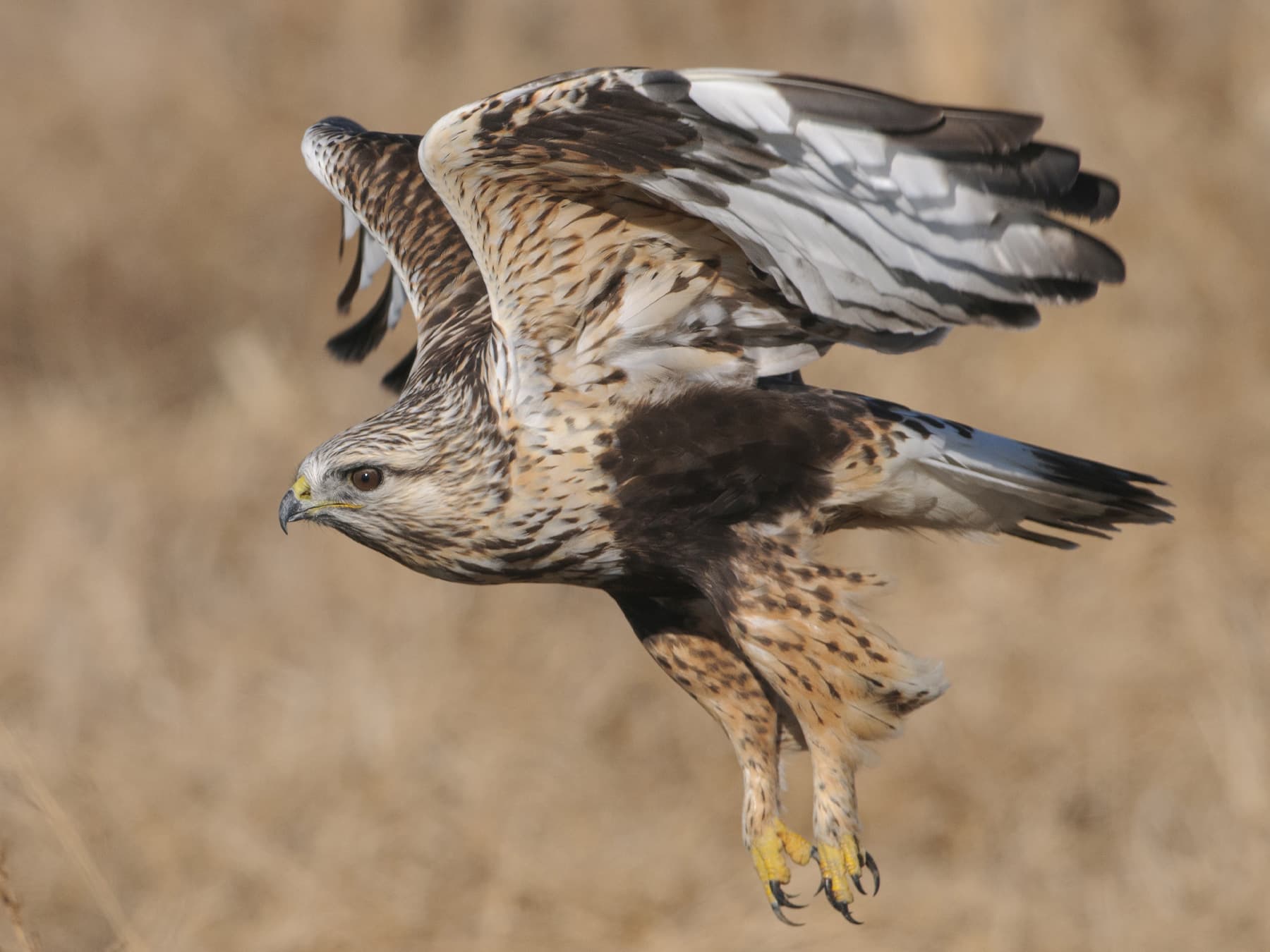
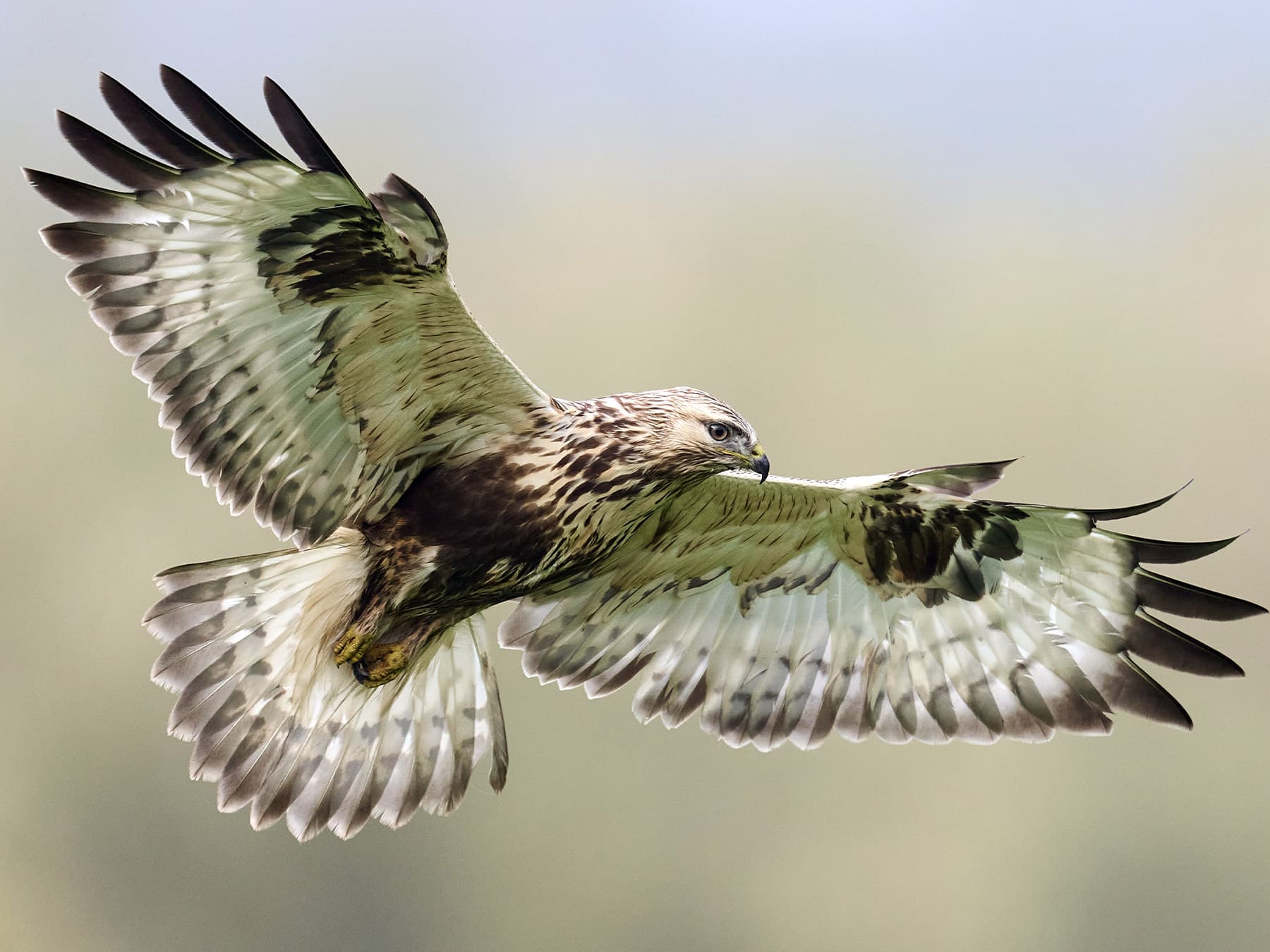
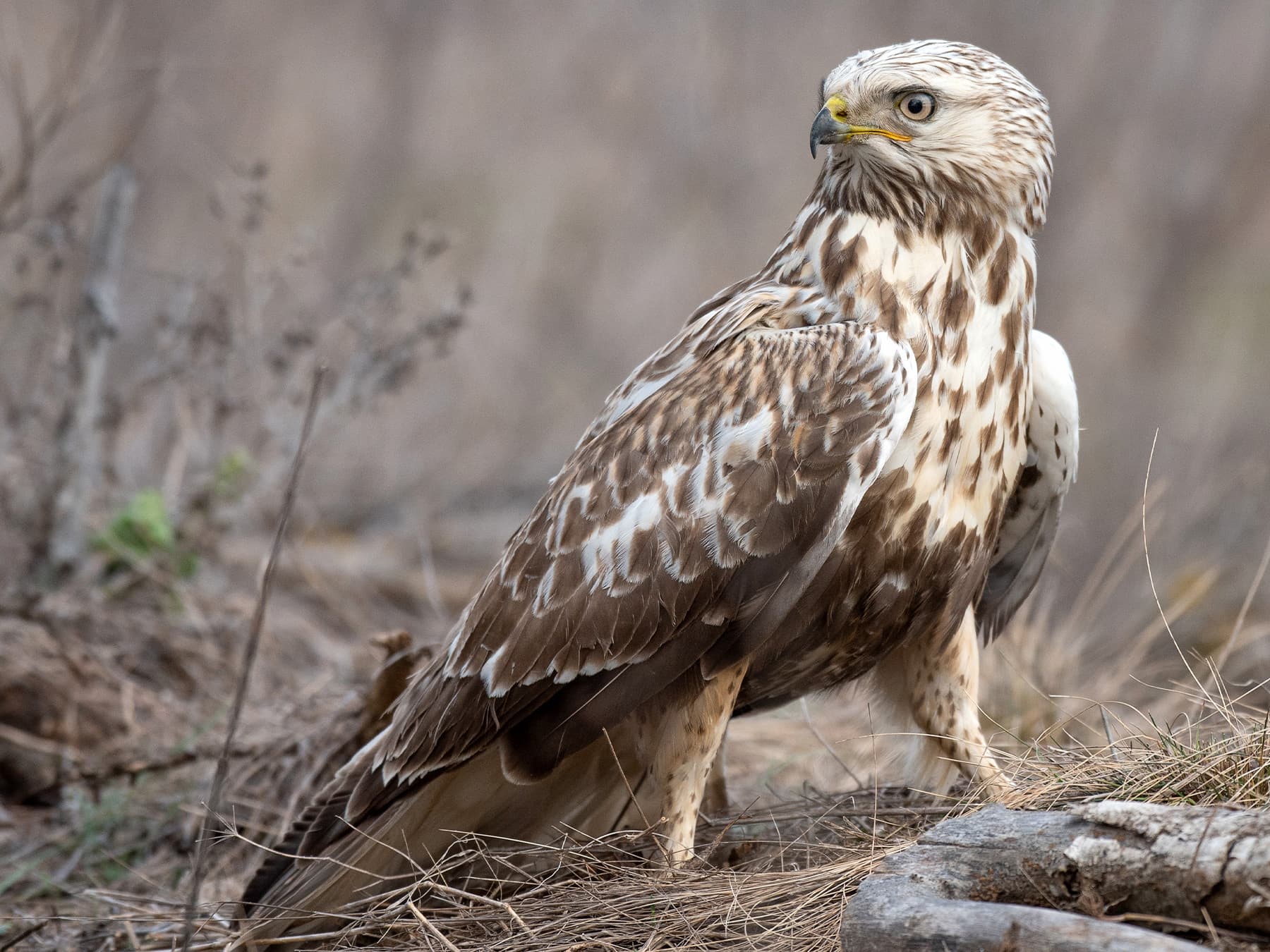
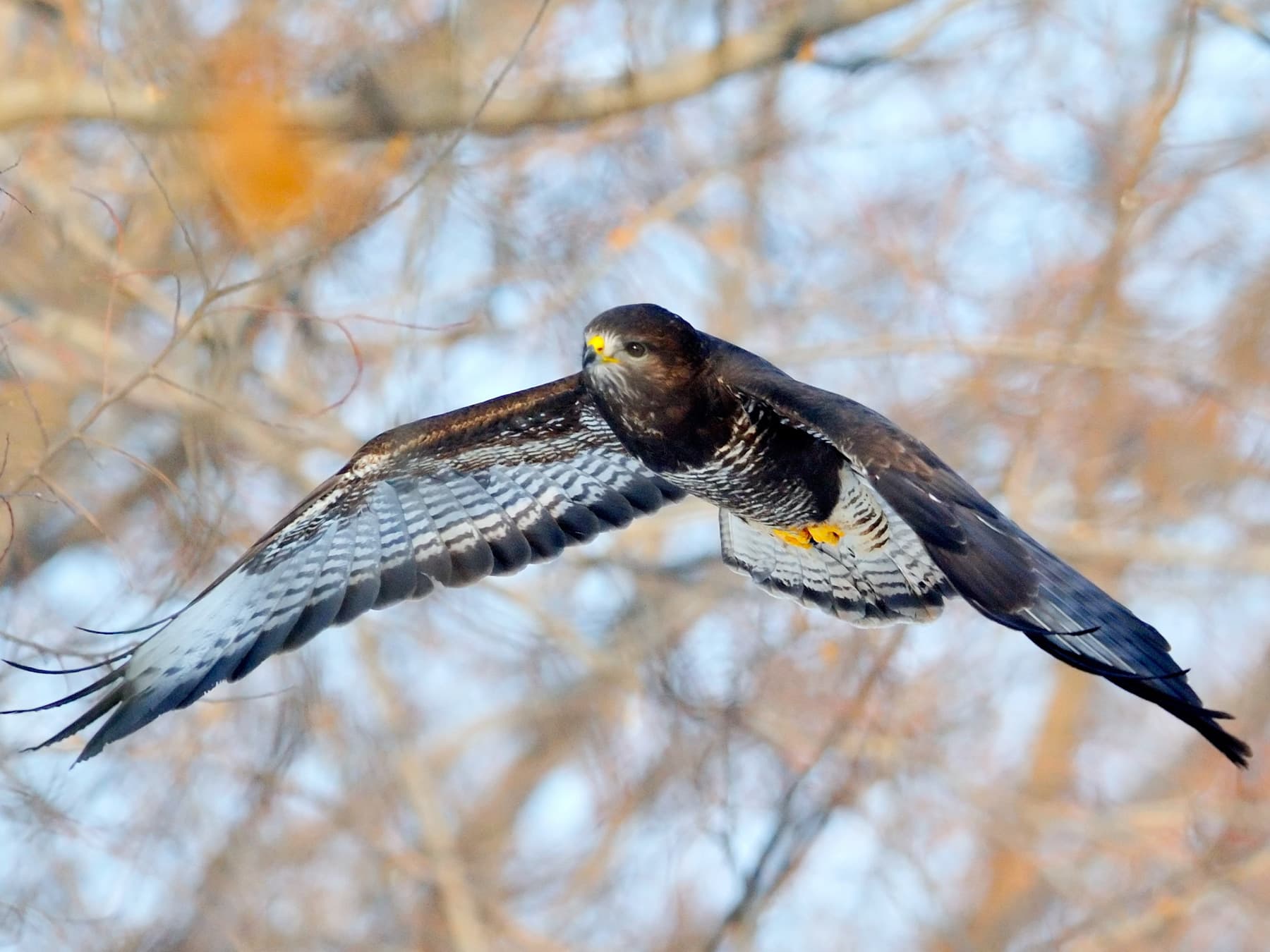
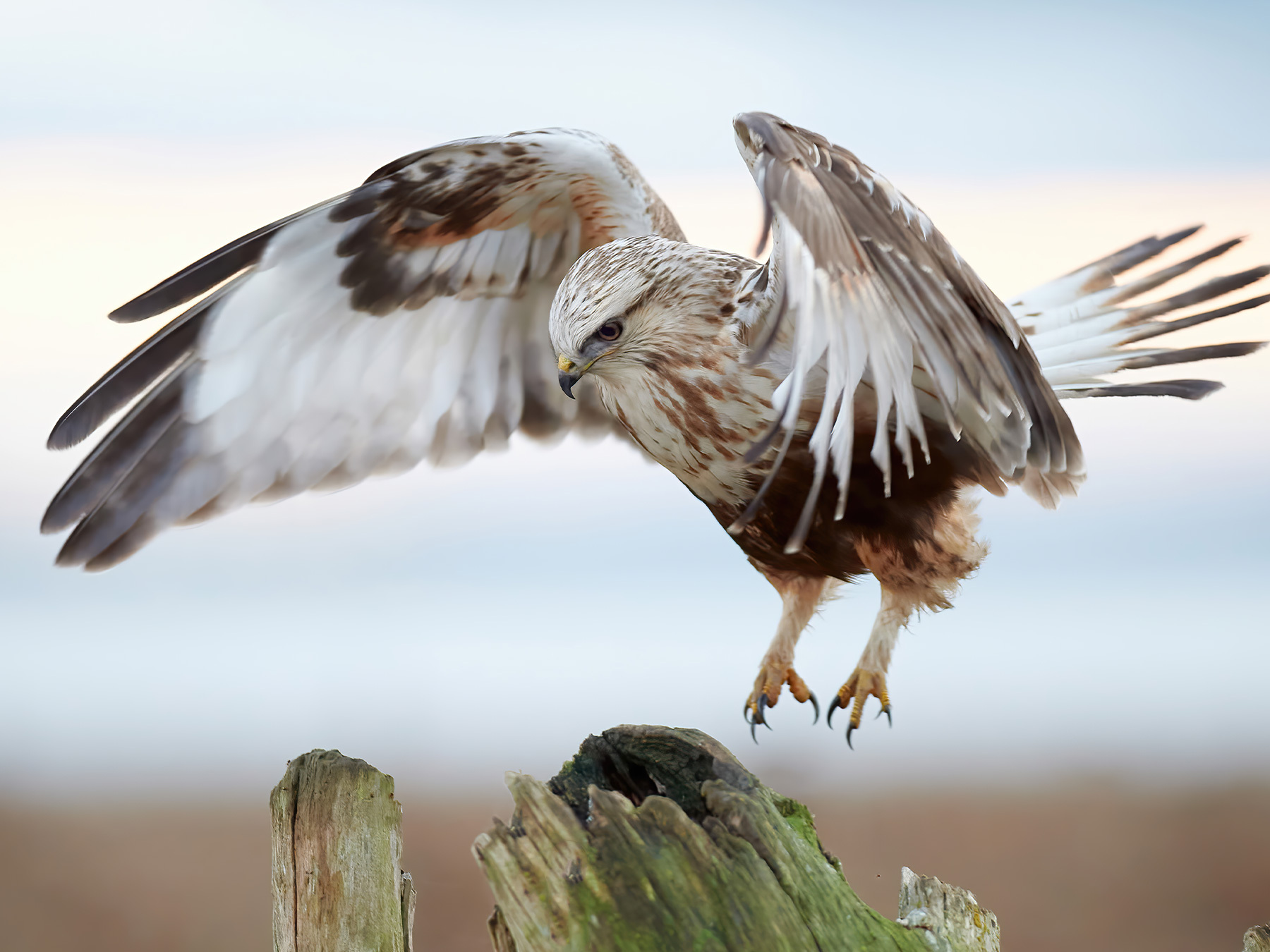
Like many raptors, rough-legged hawks occur in both dark and light color morphs. The light morph variant is more common: a white or cream-colored head, breast, and belly with a brownish-black body. Underwings are pale, with dark patches at the midpoint of the wing, and they have a distinctive dark band across their white tail.
Light morph males and females share the same general coloring although males are more heavily mottled, while the markings of females are more pronounced, with larger dark patches visible on the belly.
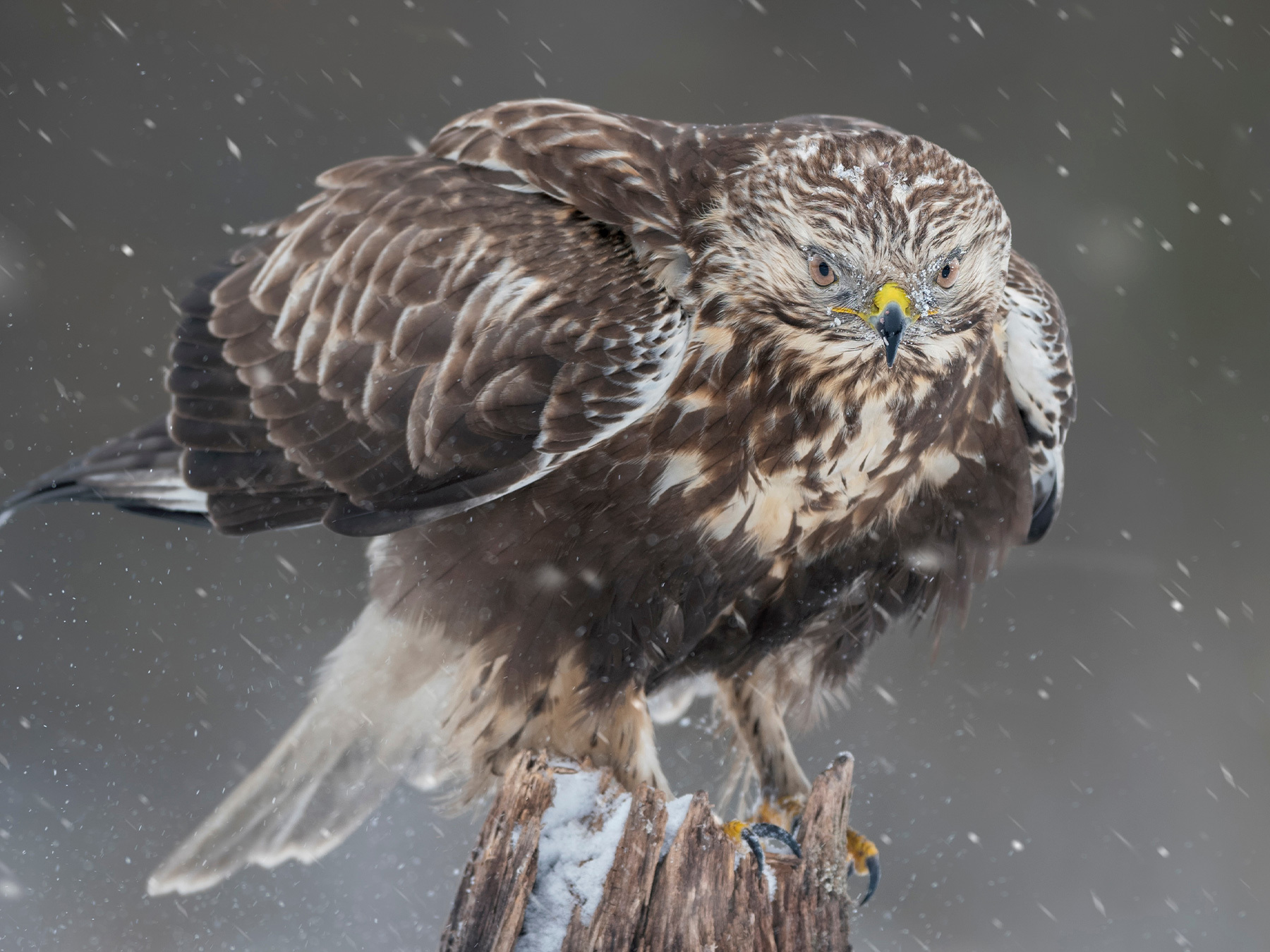
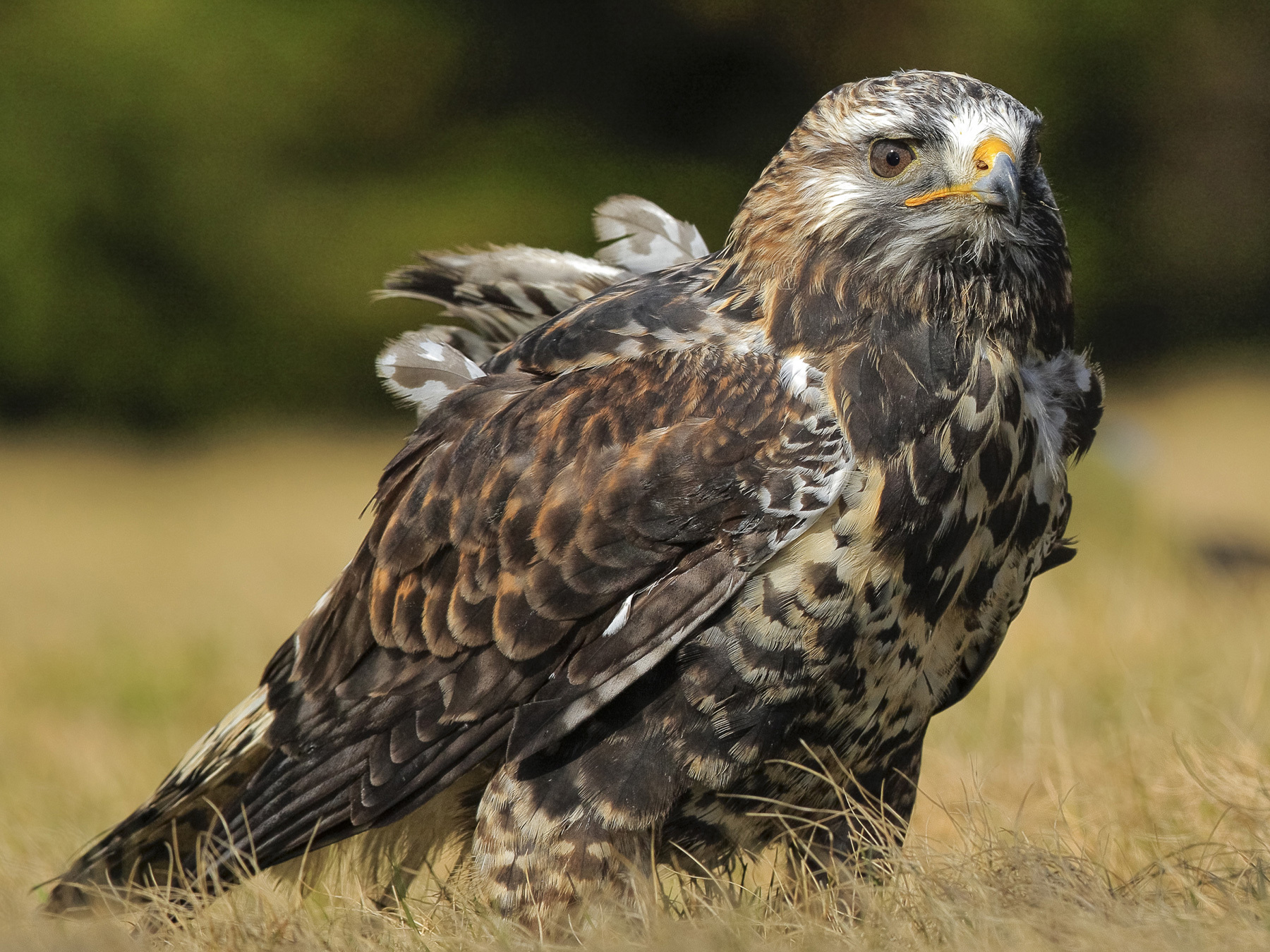
Dark morph rough-legged hawks are mostly dark blackish-brown, with pale trailing edges to the underwing and a heavily barred tail. Dark morph females are browner than males, but otherwise fairly similar in appearance.
In both plumage variations, a major feature is the ‘rough legs’, dense feathering that extends down the legs to the toes.
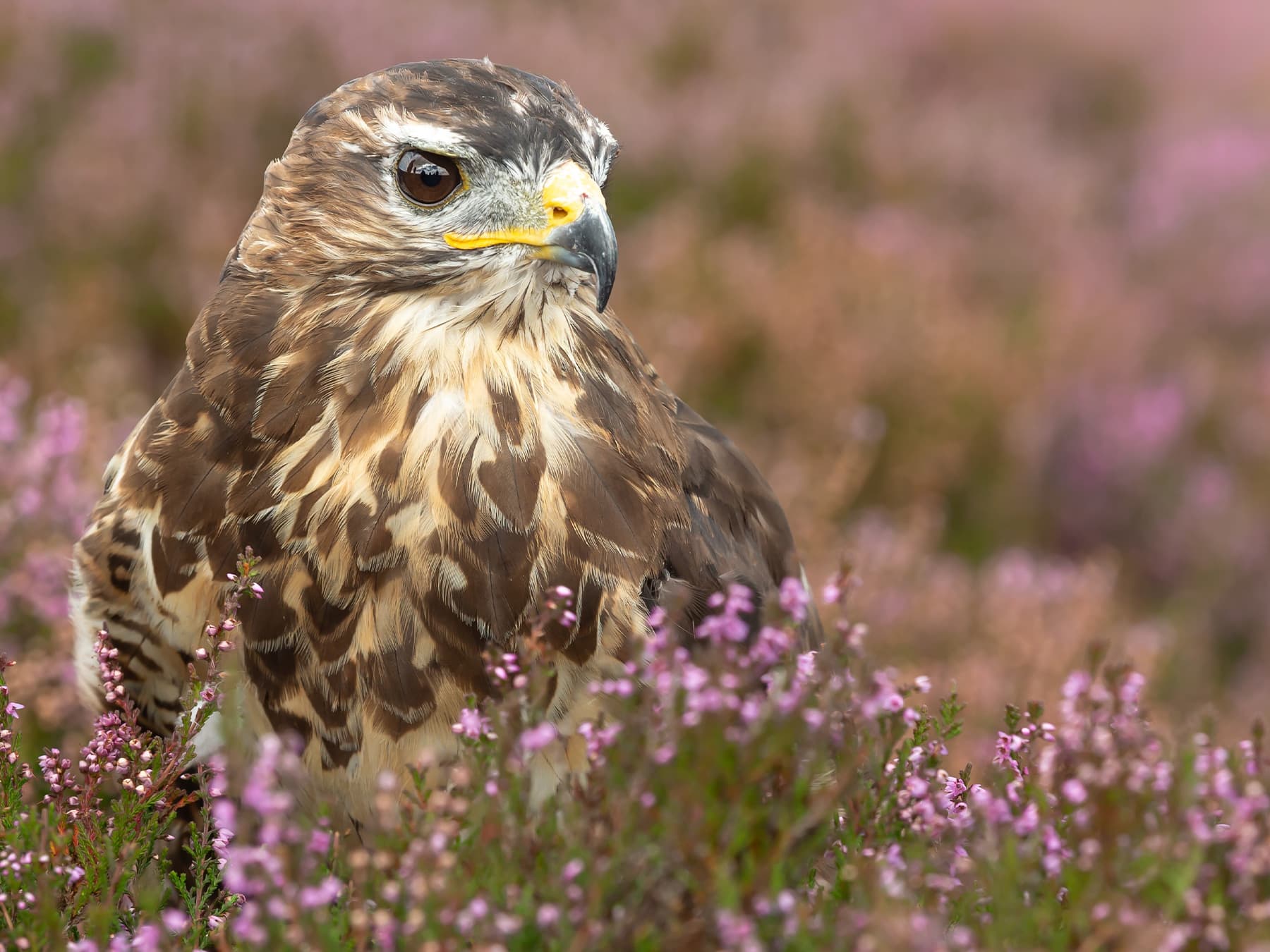
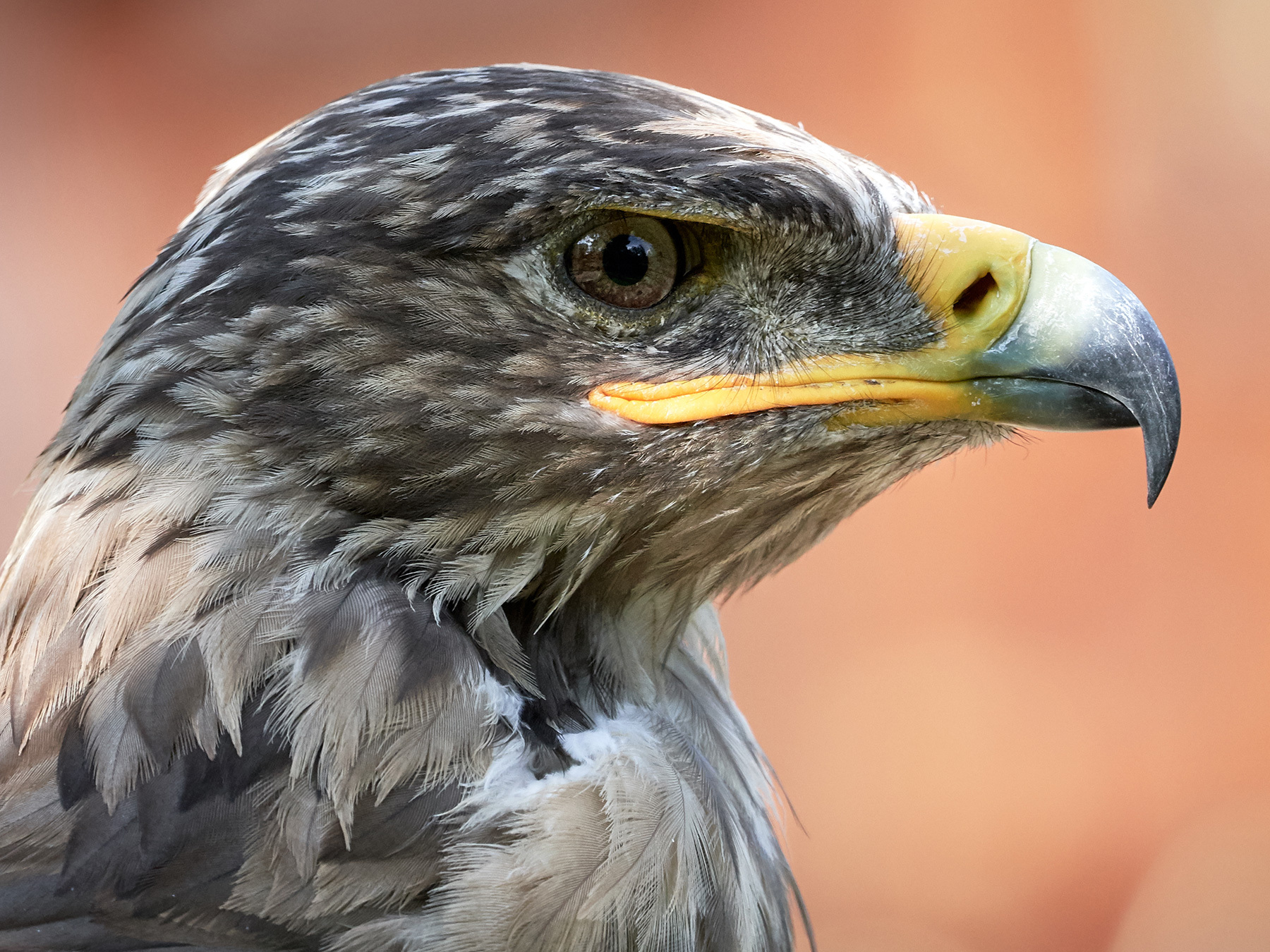
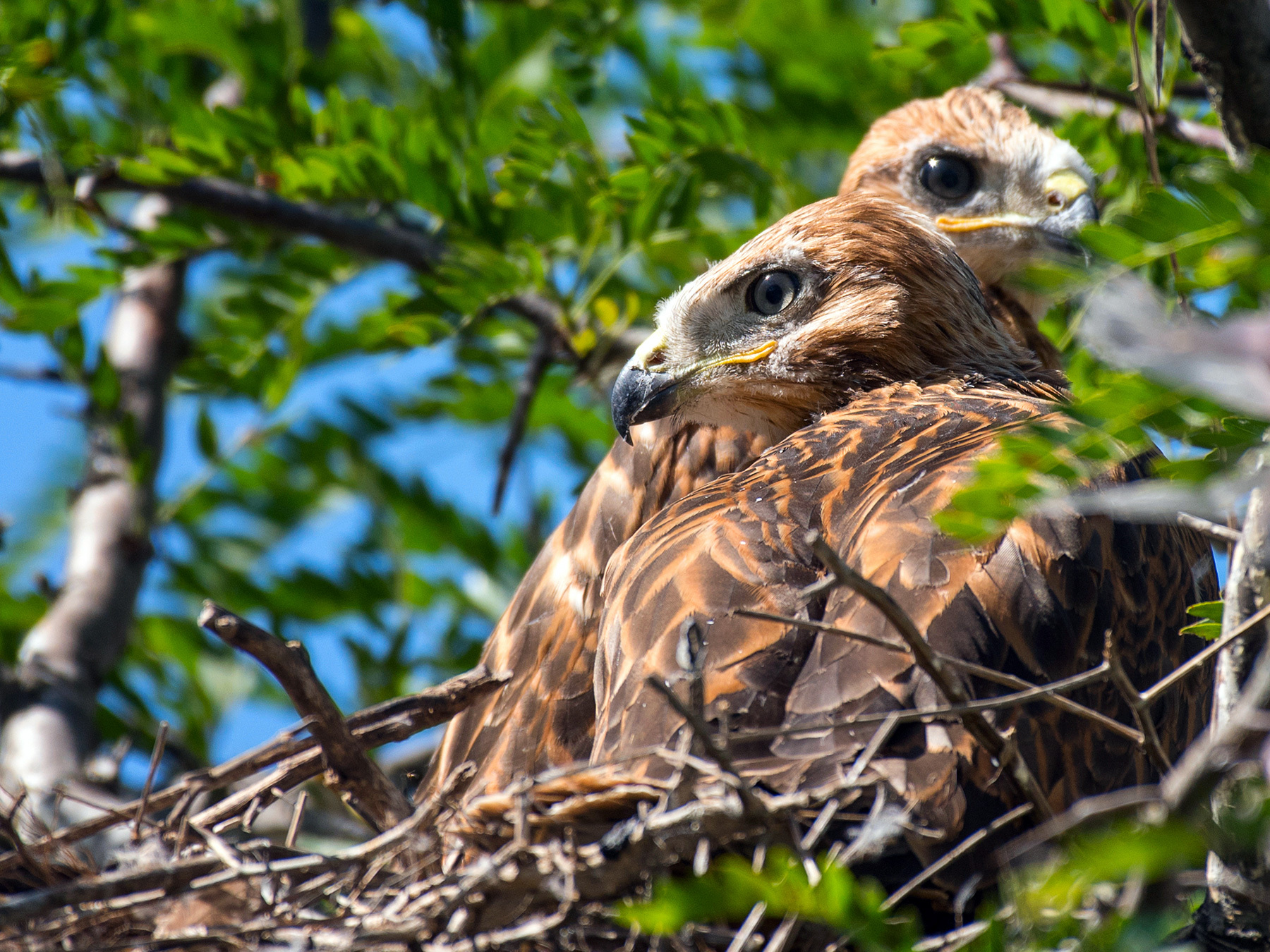
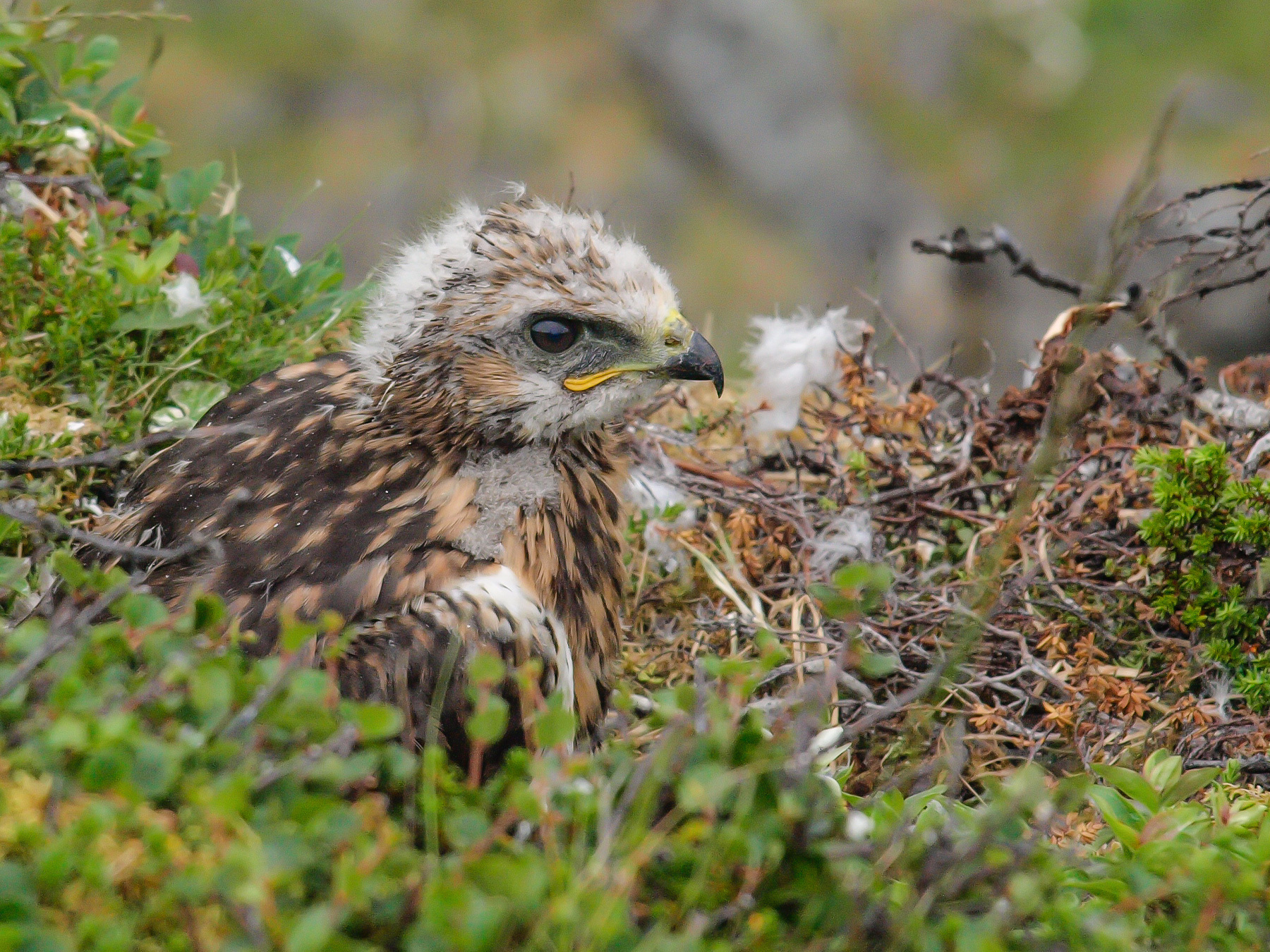
Juvenile rough-legged hawks are similar to adult females, with browner tails and underparts, and less mottling on their bodies.
How big are Rough-legged Hawks?
Rough-legged hawks are classed as medium-large raptors, with females noticeably larger than males, as is usual for birds of prey. In both males and females, body weight increases at the end of the breeding season into winter.
- Length: 50 cm to 60cm (19.7 in to 23.6 in)
- Wingspan: 120 cm to 150 cm (47.2 in to 59.1 in)
- Weight: 600 g to 1300 g (1.3 lb to 2.9 lb)
Its size
Adults- Length
- 46–59 cm
- Wingspan
- 120–153 cm
- Weight
- 715–1400 g
Its song and calls
What sound does a Rough-legged Hawk make?
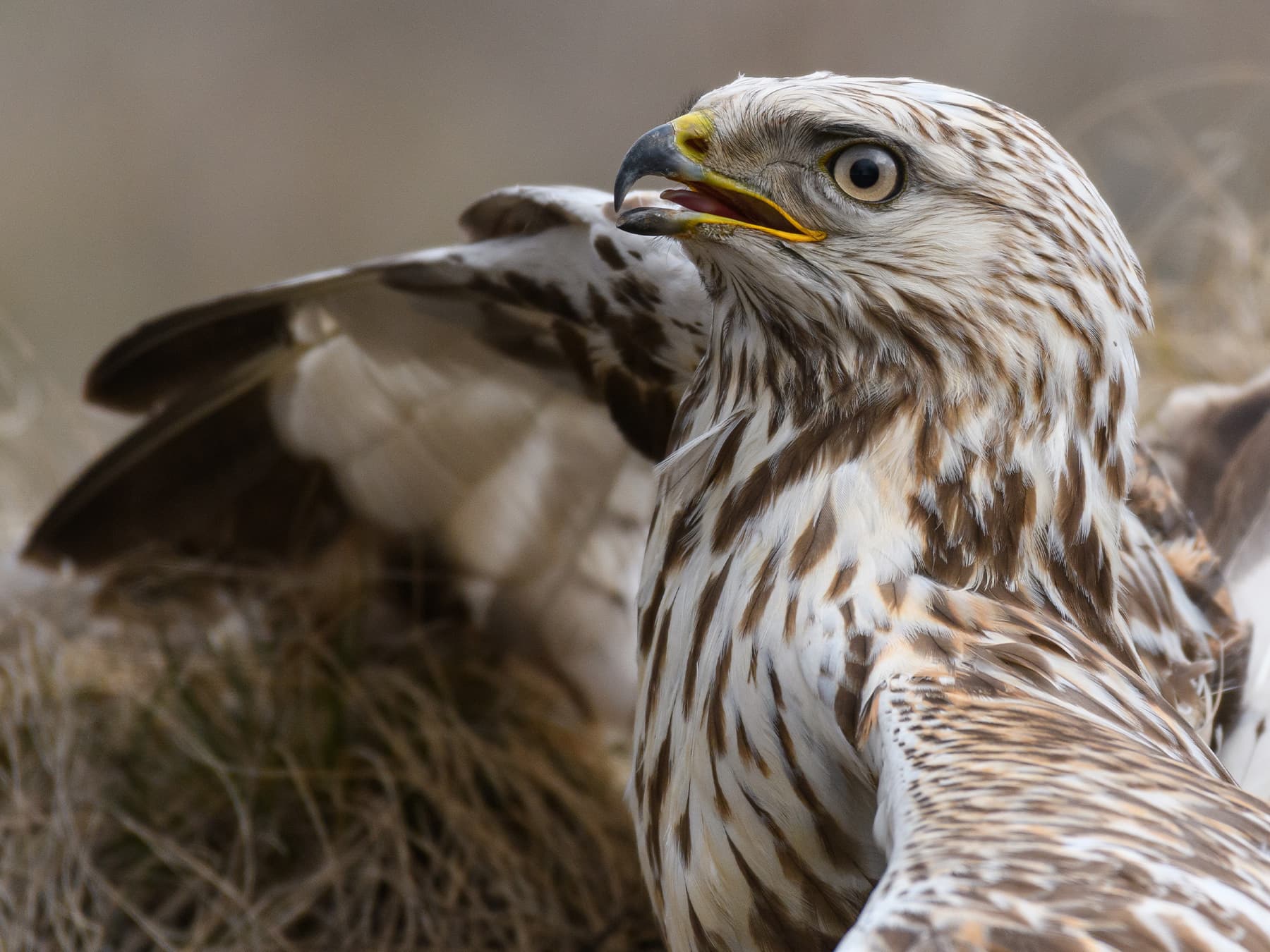
A screaming alarm call, often described as a drawn-out mewing whistle, is heard when rough-legged hawks detect a threat near their nest site or young, or when humans approach. Males and females both make this vocalization, and the male’s cry may be higher in pitch. On wintering grounds, rough-legged hawks are largely silent.
When and where to see it
OctoberArriving
Most recorded in October
- 1. Antrimunder 0.1%
- 2. East Riding of Yorkshireunder 0.1%
- 3. North Yorkshireunder 0.1%
- 4. Norfolkunder 0.1%
- 5. Lincolnshireunder 0.1%
Each dot is a county, state or province: the bigger and darker, the larger the bird’s share of that place’s bird records that month. Grey dots: no regular records. The ringed point is the centre of the bird’s records this month; the arrow shows how it moved since last month, and the dashed loop its path through the year. “Arrivals” colours places where it becomes regular this month (orange) or is in its last regular month (grey). GBIF eBird Observation Dataset, 2019–2024. Map data: Natural Earth, US Census Bureau; place centres © OpenStreetMap contributors.
In your area
See when the Rough-legged Hawk is recorded in your county, state or province.
How often the Rough-legged Hawk turns up in the UK, the United States and Canada through the year, from birdwatchers' records.
United Kingdom
Passage migrant · regularly Oct–Apr · most records in January
United States
Winter visitor · regularly Oct–Apr · most records in January
Canada
Winter visitor · regularly Oct–Apr · most records in January
Show as a table
| Month | United Kingdom | United States | Canada |
|---|---|---|---|
| January | 0.006% (regular) | 0.12% (regular) | 0.28% (regular) |
| February | 0.004% (regular) | 0.097% (regular) | 0.21% (regular) |
| March | 0.002% (regular) | 0.054% (regular) | 0.15% (regular) |
| April | <0.001% (regular) | 0.015% (regular) | 0.11% (regular) |
| May | <0.001% | 0.002% | 0.011% |
| June | <0.001% | 0.003% | 0.005% |
| July | – | <0.001% | 0.008% |
| August | – | <0.001% | 0.002% |
| September | – | 0.002% | 0.006% |
| October | 0.004% (regular) | 0.018% (regular) | 0.11% (regular) |
| November | 0.003% (regular) | 0.065% (regular) | 0.22% (regular) |
| December | 0.003% | 0.081% (regular) | 0.24% (regular) |
Recorded regularly in
Worldwide: recorded regularly in 39 countries
Countries where it was recorded in at least 3 of the 6 years 2019–2024. Linked countries have their own bird list.
Europe (27)
Asia (9)
- Azerbaijan
- China
- Georgia
- Japan
- Kazakhstan
- Kyrgyzstan
- Mongolia
- South Korea
- Turkey
North America (3)
Data: EOD – eBird Observation Dataset (Cornell Lab of Ornithology), accessed via GBIF.org, CC BY 4.0. Records from 2019–2024, aggregated and filtered by Birdfact. How these lists are made
What is the habitat of a Rough-legged Hawk?
Breeding grounds of rough-legged hawks are found on the Arctic tundra, located along coastal plains in northern Europe, Asia, and North America. Largely treeless landscapes in flat lowlands are ideal. In some years, nesting occurs further south, into the taiga zone where dense forests are interspersed with marshy swamplands.
Nests are usually built on rocky cliffs and ledges on hillsides, and on rare occasions in trees.
In winter, habitats preferred by rough-legged hawks include prairies, steppes, pastures, and wet meadows. Dense forests and urban settlements are generally avoided.
What is the range of a Rough-legged Hawk?
Rough-legged hawks breed across the extreme northernmost latitudes of North America, throughout Alaska and along the north coast of continental Canada, and across the entire Arctic Archipelago, although the species is largely absent from Baffin Island.
No breeding occurs on Greenland, but across the Atlantic, breeding populations of rough-legged buzzards are present in northernmost Norway, Swede, Finland, and the entire northernmost regions of Russia to the Bering Sea in the far east.
Winters are spent a short distance to the south of the breeding range, encompassing the southern border regions of Canada south across much of the United States (although missing from the southeast corner) and into parts of northern Mexico.
In Europe and Asia, the wintering grounds of rough-legged buzzards form a solid strip from the east of England in the extreme west, through Belgium, Germany, Denmark and Poland across southern Russia, Kazakhstan, and Mongolia, into north-eastern China in the far east.
Where do Rough-legged Hawks live?
In the US, states with the highest concentrations of wintering individuals are Idaho and Montana. Canada’s population is around 300,000 adults, while in Europe there are thought to be between 57,600 and 117,000 mature individuals, representing around 15 percent of the global population.
How rare are Rough-legged Hawks?
The global population of rough-legged hawks is estimated at between 500,000 and 800,000, of which more than 100,000 pairs breed in Russia. During the breeding season, their remote Arctic habitats make them rare to observe. However, winter sightings are far more common, particularly in northern states of the US.
In the UK, rough-legged buzzards are considered rare visitors with around 10 sightings reported each year both in passage and as longer-term winter residents. In some years, particularly when a strong breeding season in Scandinavia is followed by poor availability of food, a much larger influx – of up to 150 individuals – may occur.
Where can you see Rough-legged Hawks in the US?
Alaska is the only US state in which rough-legged hawks breed, but due to the remote nature of their breeding sites, on rocky outcrops, it’s more likely to spot one later in the year once they have arrived in their wintering grounds across the northern United States.
The best places for a chance of a sighting include along the Connecticut River and in the Great Lakes region during spring migration.
Where can you see Rough-legged Hawks in Canada?
Canada is home to breeding rough-legged hawks (across the far north of the country) and large concentrations of wintering individuals (along the southern border with the United States).
While the inaccessible breeding habitats make sightings there more challenging, winter offers a far greater chance of seeing one, as large numbers are seen each year around the Great Lakes region, with hundreds spotted each year around the shores of Lake Ontario.
Where can you see Rough-legged Buzzards in the UK?
Rough-legged buzzards are scarce and occasional winter visitors to the UK and turn up when food sources are in particularly short supply further north in Scandinavia. Locations on the east coast of England and northeast Scotland offer the best opportunities for a sighting.
Migration
Do Rough-legged Hawks migrate?
All rough-legged hawks are migratory, dividing their time between northern breeding grounds in Arctic and sub-Arctic regions of North America, Europe, and Asia and wintering territories further south, across the United States, central Europe, and north-central Asia.
Why do Rough-legged Hawks migrate?
Once breeding is complete, rough-legged hawks migrate south in order to avoid the harshest conditions and secure access to food sources during winter months when their Arctic nesting territories become too inhospitable to survive in.
Once spring returns, they head back to the Arctic tundras where conditions are once again ideal for raising young.
Are Rough-legged Hawks native to the US?
Rough-legged hawks do breed and spend winters in the United States but move between northern breeding grounds in Alaska to southern wintering territories found across much of the US.
Are Rough-legged Hawks native to Canada?
Canada’s Arctic Archipelago and far north provide suitable breeding habitats for rough-legged hawks.
Once breeding is complete, these populations disperse, heading south with border regions of southern Canada welcoming an influx of rough-legged hawks for the winter months. There are no Canadian locations in which rough-legged hawks are year-round residents.
Are Rough-legged Hawks native to the UK?
Rough-legged buzzards are not native to the UK and are only rare and occasional winter visitors to the British Isles, with between 10 and 150 sightings reported in a year. No breeding takes place on British soil.
Tips for seeing it
- Look for them in open tundra or grasslands during breeding season
- In winter, search near agricultural fields or marshes
- Observe their characteristic hovering flight while hunting
- Note the feathered legs, a key identifying feature
- In North America, they're more common in northern states during winter
What it eats
What do Rough-legged Hawks eat?
Lemmings and voles are the mainstays of a breeding rough-legged hawk’s diet on its breeding territories high in the Arctic tundra landscapes.
Hares, ground squirrels, and weasels are also eaten, particularly in years when lemming populations are low. Birds are also a key element in the spring and summer diet of rough-legged hawks, with Lapland longspur, American tree sparrows, and ptarmigan the most commonly caught species.
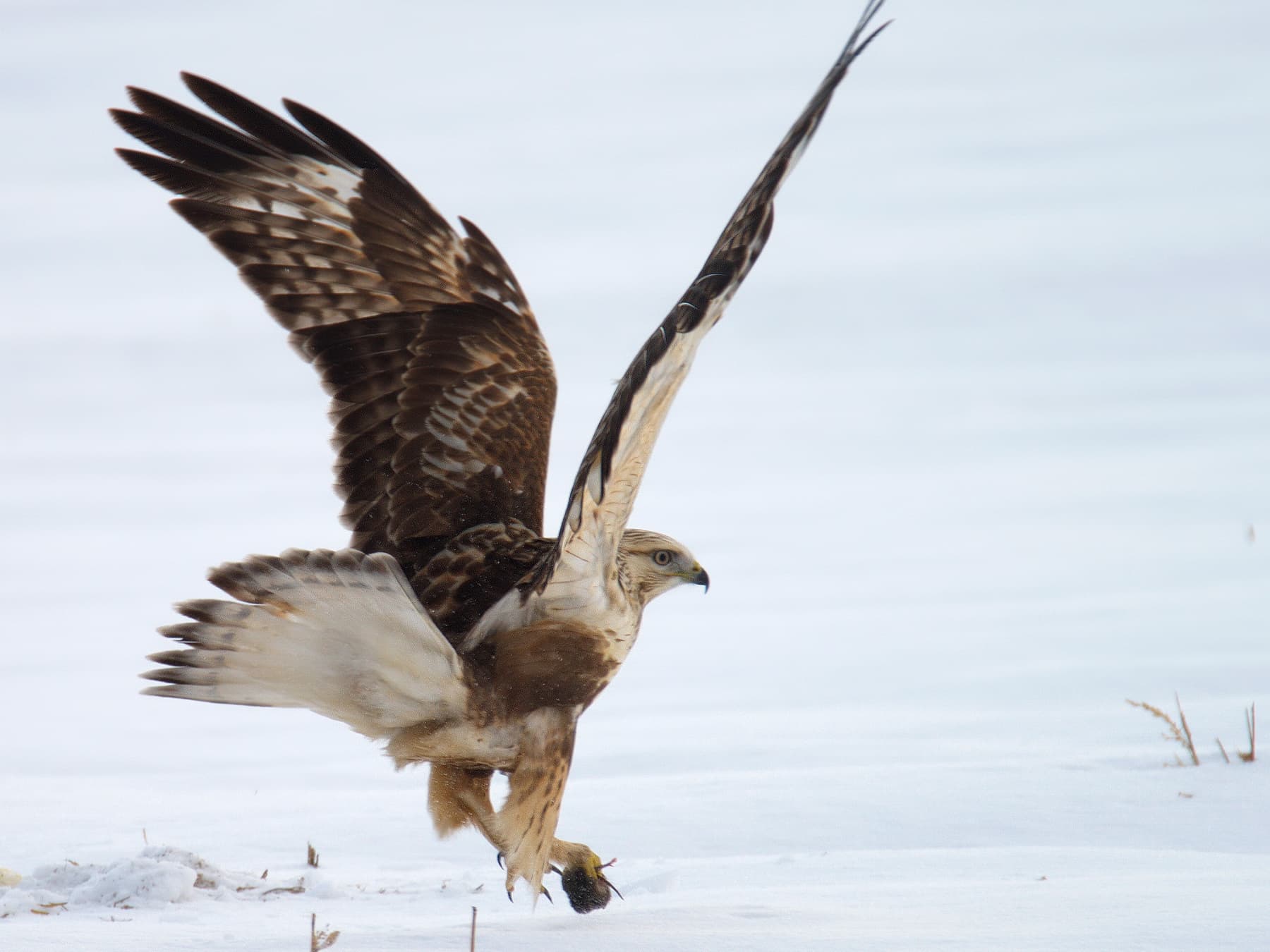
In winter, small mammals are of great importance in a rough-legged hawk’s diet, particularly mice, shrews, rats, weasels, gophers, chipmunks, rabbits, and muskrats. Not as many birds are eaten in winter months, and opportunistic feeding on carrion is also occasionally reported.
What do Rough-legged Hawk chicks eat?
Initially, female rough-legged hawks are brought prey to the nest by the male, which they tear up and feed to their young. Occasionally males may also rip prey into manageable pieces for their chicks to eat.
Lemmings and voles are the main foods, and from 16 days old, young rough-legged hawks are able to swallow lemmings whole.
Nesting and breeding
Where do Rough-legged Hawks nest?
Clifftops, hillside ledges, and rocky outcrops provide suitable nesting spots for rough-legged hawks, as these offer a good vantage point over the surrounding landscape. Occasionally nests in trees may be built, or nests abandoned by other birds may be reused.
Bulky stick nests are built by the female, using material brought to the site by the male. Hair, grasses, sedge, feathers, and bones are added as an internal lining, and repairs are carried out as incubation progresses. Nests may be reused in subsequent years.
When do Rough-legged Hawks nest?
The nesting period for rough-legged hawks lasts from April to June, with May being the peak laying month.
Pairs raise one brood together in a typical year, which is incubated largely by the female for 31 days. If the female leaves the nest briefly, eggs will be covered in her absence by the male, but as the male brings food to the nest for the female, such absences are relatively short-lived.
What do Rough-legged Hawk eggs look like?
An average rough-legged hawk clutch consists of three to five eggs, although clutch size depends heavily on the availability of food – in years with an abundant lemming population nearby, as many as seven eggs may be laid.
Eggs can be pale greenish-blue but are usually a dull white, marked with brownish-purple smudged markings. They measure 56 mm by 45 mm (2.2 in by 1.8 in).
Do Rough-legged Hawks mate for life?
Pair bonds of rough-legged hawks are monogamous and last for the duration of the breeding season, with these bonds possibly continuing for several years. Some research suggests that pairs are formed on breeding grounds or during migration, as many birds arrive on their breeding grounds already paired.
Behaviour
Are Rough-legged Hawks aggressive?
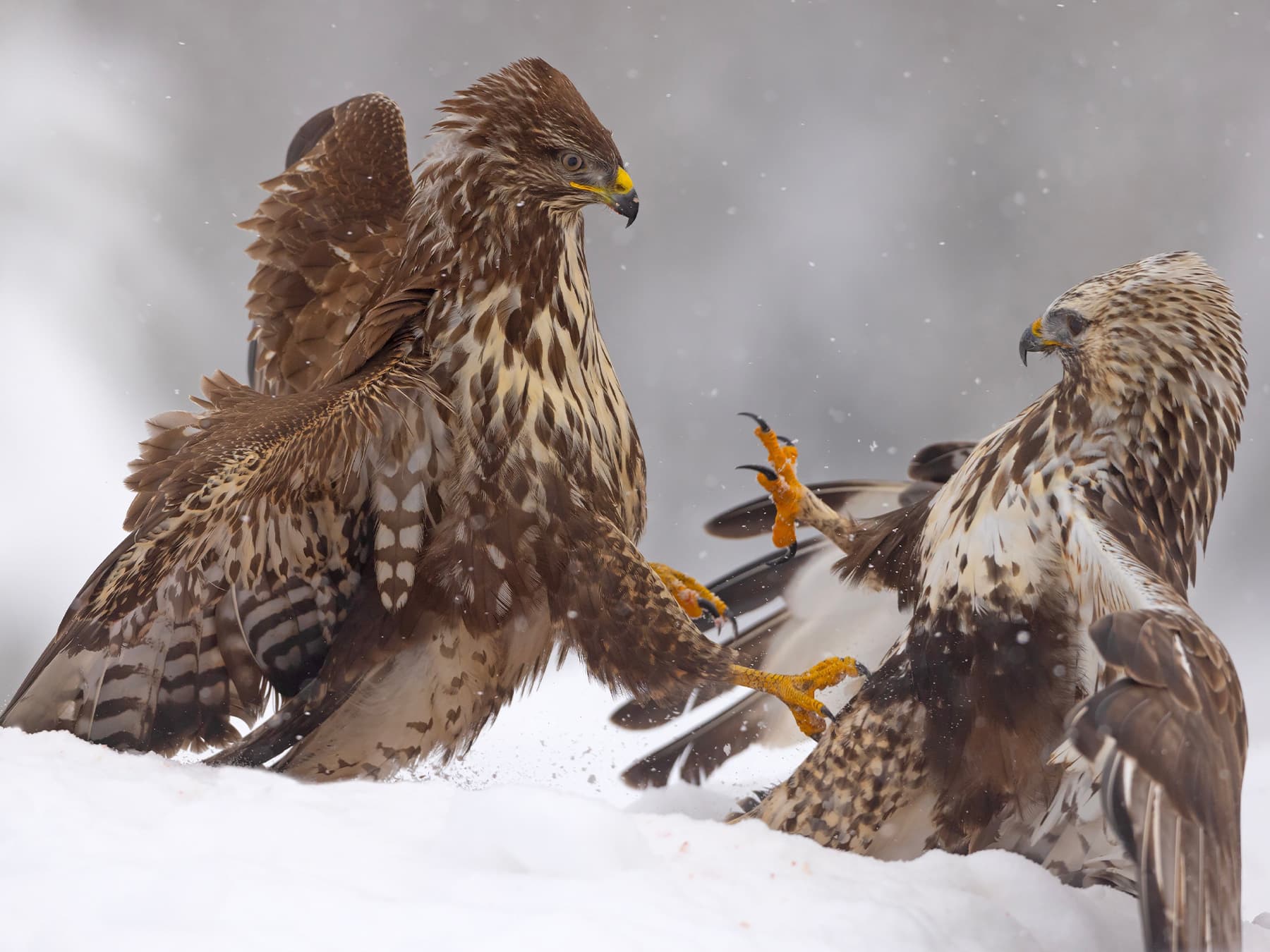
Rough-legged hawks will fiercely defend the area around their nest site, and evidence shows that territorial behavior continues in winter feeding grounds too, with individual birds intolerant of others of the same species entering their patch.
Aggressive behavior includes alarm calls but can escalate into physical attacks and strikes if the threat continues.
Where do Rough-legged Hawks sleep?
Particularly in winter, sizeable overnight roosts of rough-legged hawks can be observed in pine forests and cottonwood trees. Roosts usually consist of more than 15 birds and frequently number into the hundreds.
Birds gather communally before nightfall, earlier when they have had a successful day of foraging, and it’s not uncommon for different species of raptor to be part of the same roost, including great horned owls, red-tailed hawks, and ferruginous hawks.
Lifespan and predators
How long do Rough-legged Hawks live?
The average life expectancy for rough-legged hawks isn’t known, although records of the oldest individuals include a female that reached 17 years and 9 months. Breeding is thought to occur for the first time at two to three years.
What are the predators of Rough-legged Hawks?
Nests are raided by Arctic foxes, wolves, brown bears, jaegers, and snowy owls, with eggs and young rough-legged hawks taken. Occasional reports of adult birds being preyed on by great horned owls exist, but otherwise, fully grown rough-legged hawks have few successful natural predators.
Are Rough-legged Hawks protected?
In the US, rough-legged hawks are protected under the Migratory Bird Treaty Act of 1918 from being killed, injured, taken into captivity or their eggs and feathers being sold. Similar protection exists in the UK, with the species listed for protection under the Wildlife and Countryside Act, of 1981. No additional special designation is given to the species in any part of its breeding or wintering range.
Are Rough-legged Hawks endangered?
Rough-legged hawks are neither endangered nor globally threatened and are classified as a species of least concern. Their habitats are secure and populations are considered stable.
Conservation
While currently listed as Least Concern, Rough-legged Hawks face threats from habitat loss due to climate change in their Arctic breeding grounds. They are also vulnerable to collisions with wind turbines and vehicles.
Conservation efforts focus on protecting their breeding and wintering habitats.
Similar birds
Often mistaken for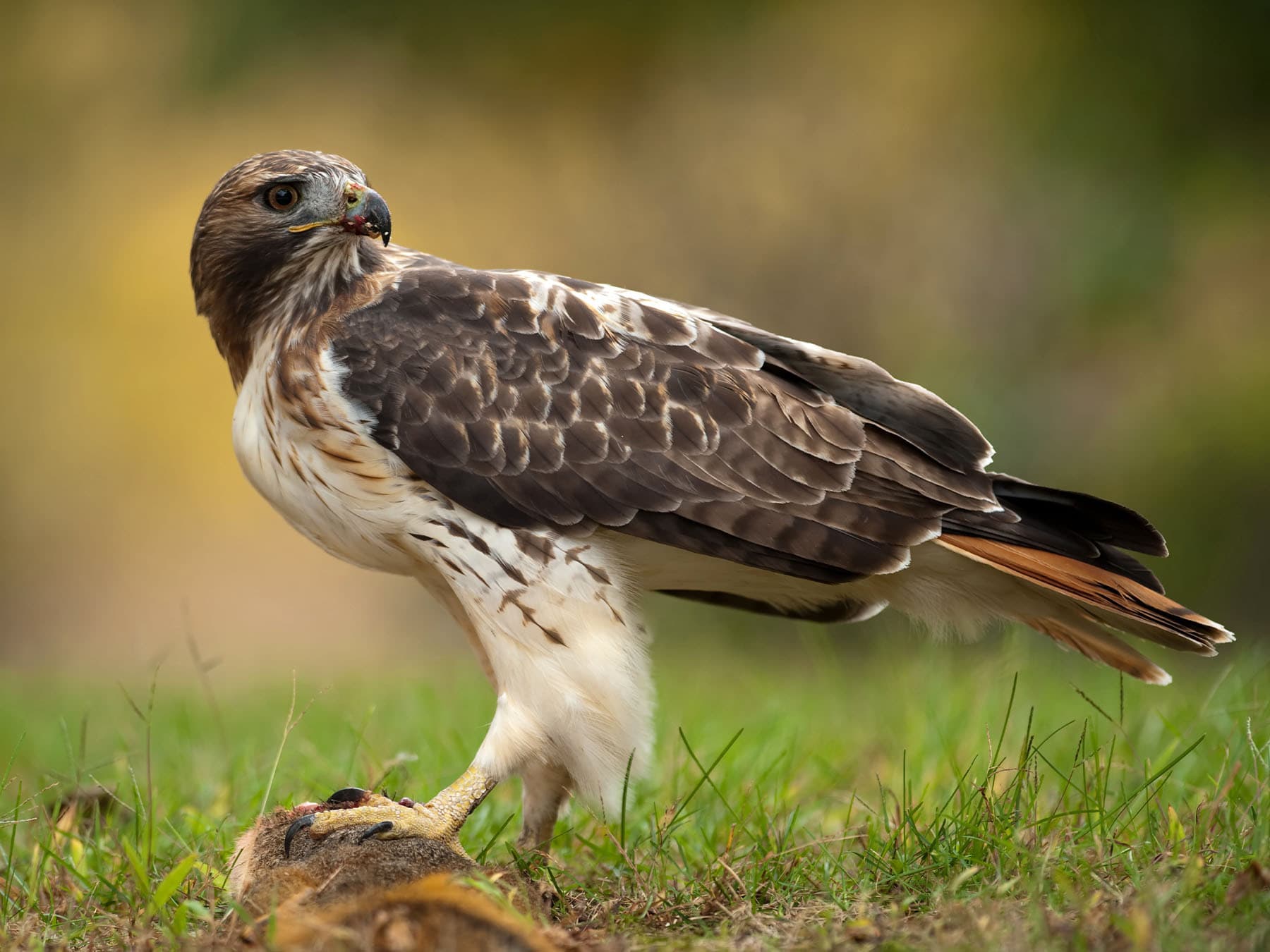
More photos
7 photos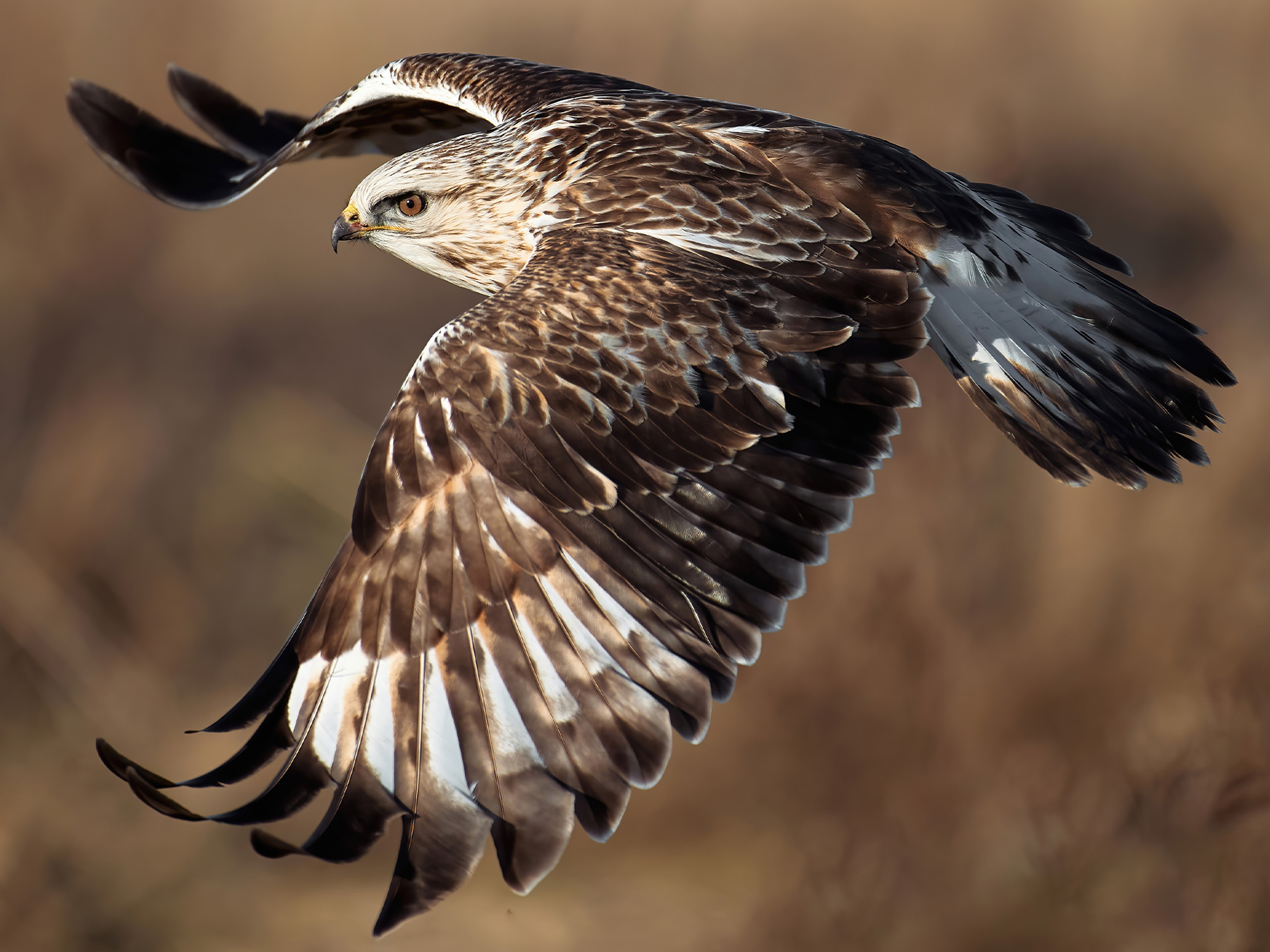
Rough-legged Hawk guides
1 guidesQuick facts
- Length
- 46–59 cm
- Wingspan
- 120–153 cm
- Weight
- 715–1400 g
- Lifespan
- 2 years · oldest recorded 18.8 years
- Family
- Hawks & Eagles
- Migration
- Long-distance Migrant
- Global status (IUCN)
- Least Concern
- World population
- 590,000 mature individuals
- Population trend
- Stable
- Also called
- Rough-legged Buzzard
- Scientific name
- Buteo lagopus
Questions
3Why is a Rough-legged Hawk called a rough-legged?
Rough-legged hawks’ feathered legs give the species its name. It is one of only three North American raptor species that has legs that are covered in feathers to the toes. The other two, in case you’re interested, are the golden eagle and the ferruginous hawk.
Do rough-legged hawks eat birds?
Rough-legged hawks do eat a wide range of birds, both on their wintering grounds and in their breeding habitats. The most commonly eaten species include Lapland longspurs, American tree sparrows, and ptarmigan, with smaller numbers of waterfowl, shorebirds, and short-eared owls.
How can you tell a Red-tailed Hawk from a Rough-legged Hawk?
There are some key differences between red-tailed hawks and rough-legged hawks that should allow you to distinguish between the two species fairly easily. The two species are similar in size, but rough-legged hawks have longer wings and are less stocky. They also have a smaller bill, and their feathered legs, compared to the bare legs of red-tailed hawks, can help to confirm the identification.
Red-tailed hawks are far more widespread and can be spotted in the United States all year round. They are also present in woodland and forest environments, unlike rough-legged hawks which are a lot less common, only visit in winter months, and prefer open country landscapes.
Sources
4- 1BirdLife International. 2021. Buteo lagopus. The IUCN Red List of Threatened Species 2021: e.T22695973A202640529. Source (opens in a new tab)
- 2Partners in Flight (2020)
- 3Partners in Flight (2020) Source (opens in a new tab)
- 4Fransson et al., EURING list of longevity records for European birds (2010) Source (opens in a new tab)

Checked by
Nathan Cope, founder and editor
Nathan founded Birdfact and leads its writers and contributors in the UK, the US and Canada. He has watched and studied birds for more than ten years, and checks every article and species guide before it’s published.