


Pink-footed Goose
Greenland White-fronted Goose · Anser brachyrhynchus
By the Birdfact teamChecked by Nathan Cope
On this page15 sections
How to recognise it
What do Pink-footed Geese look like?
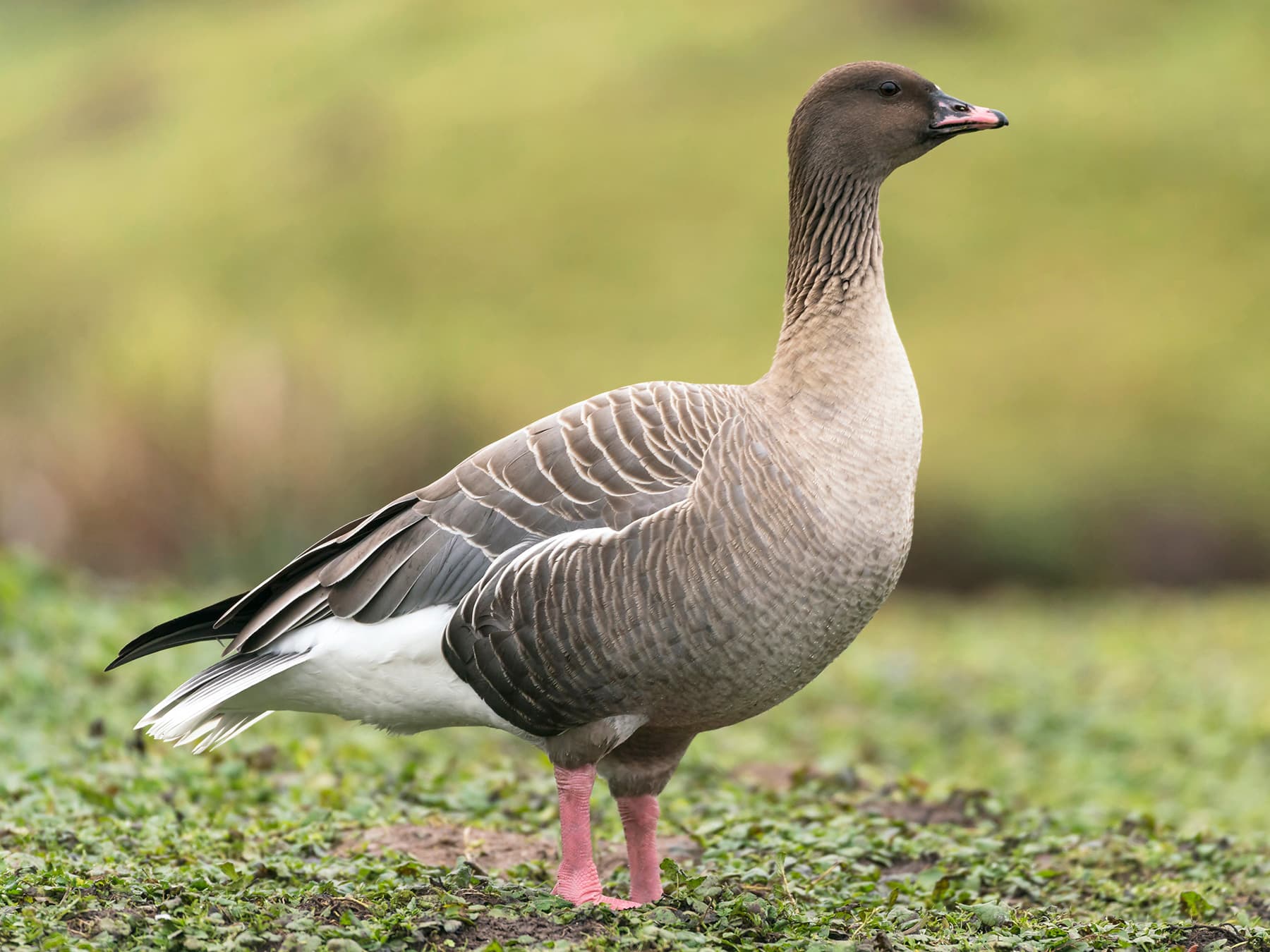
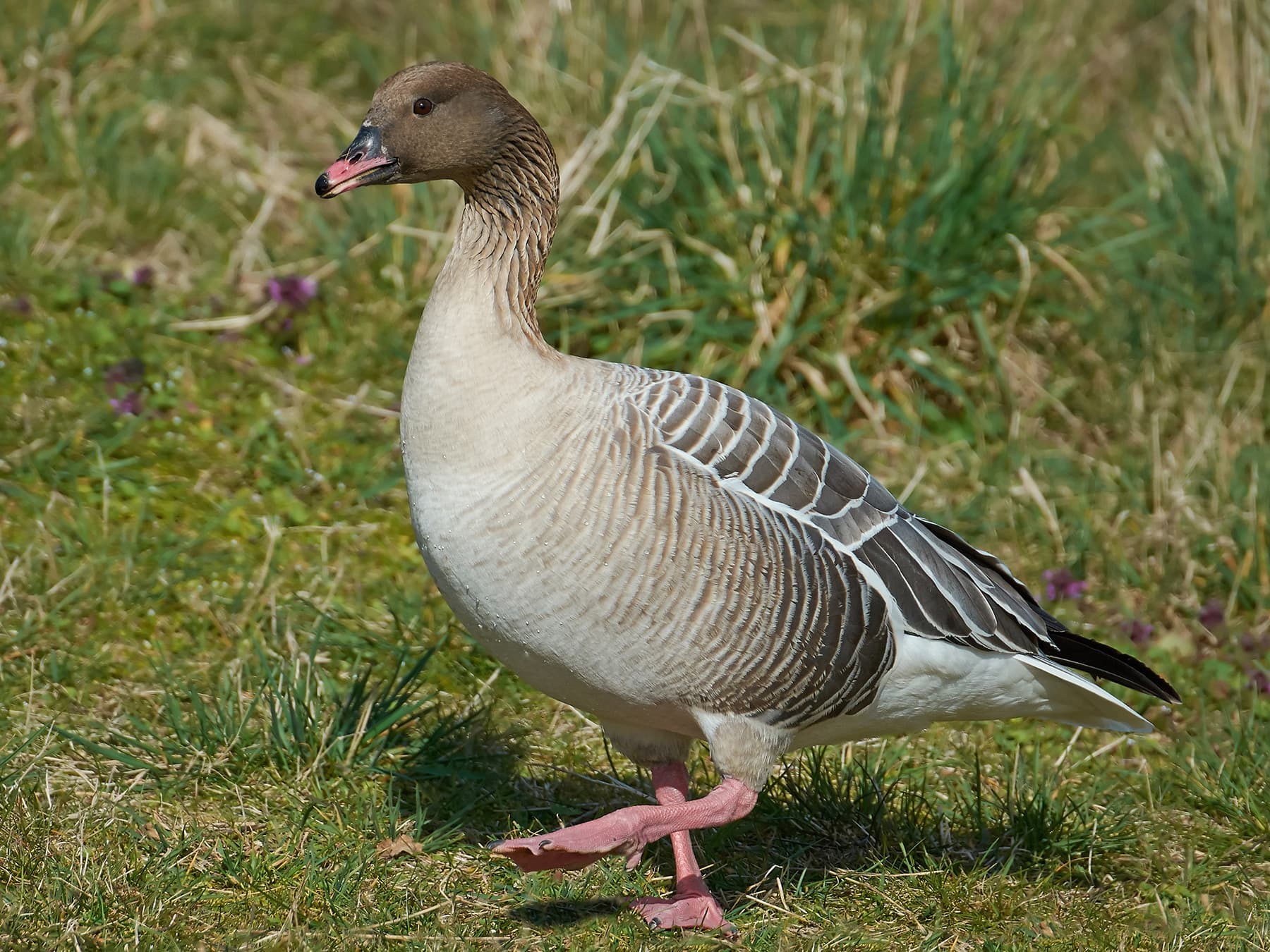
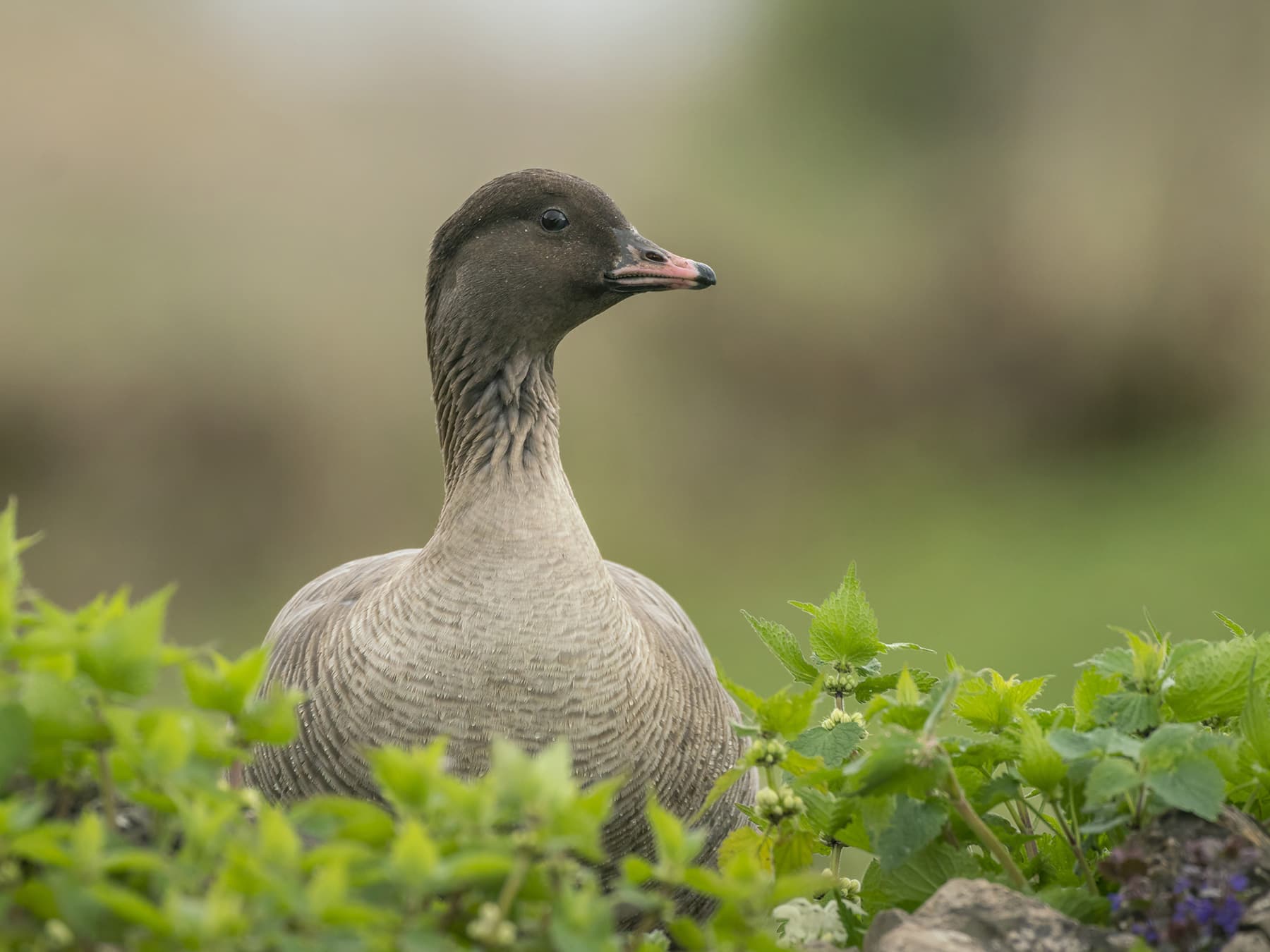
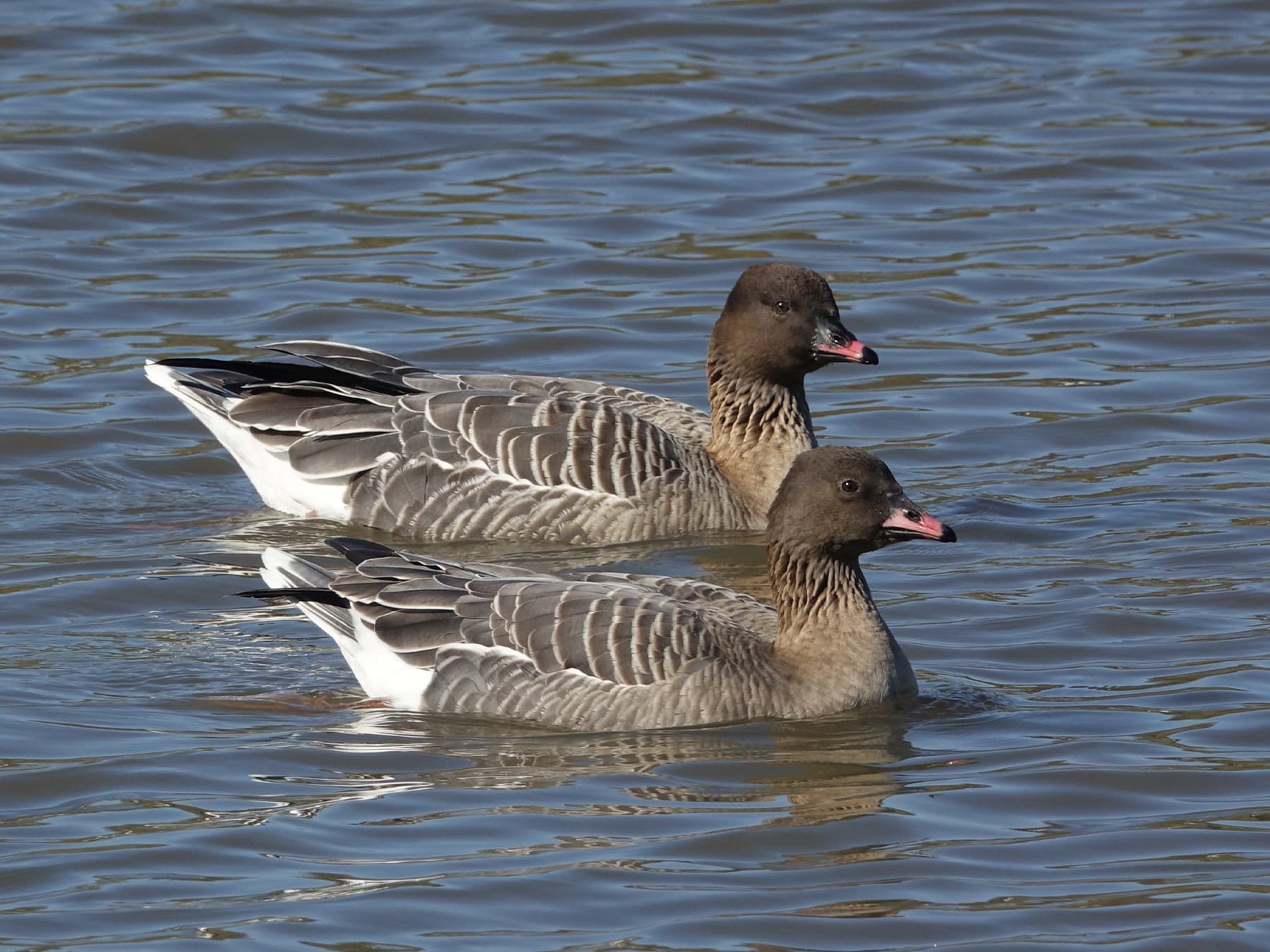
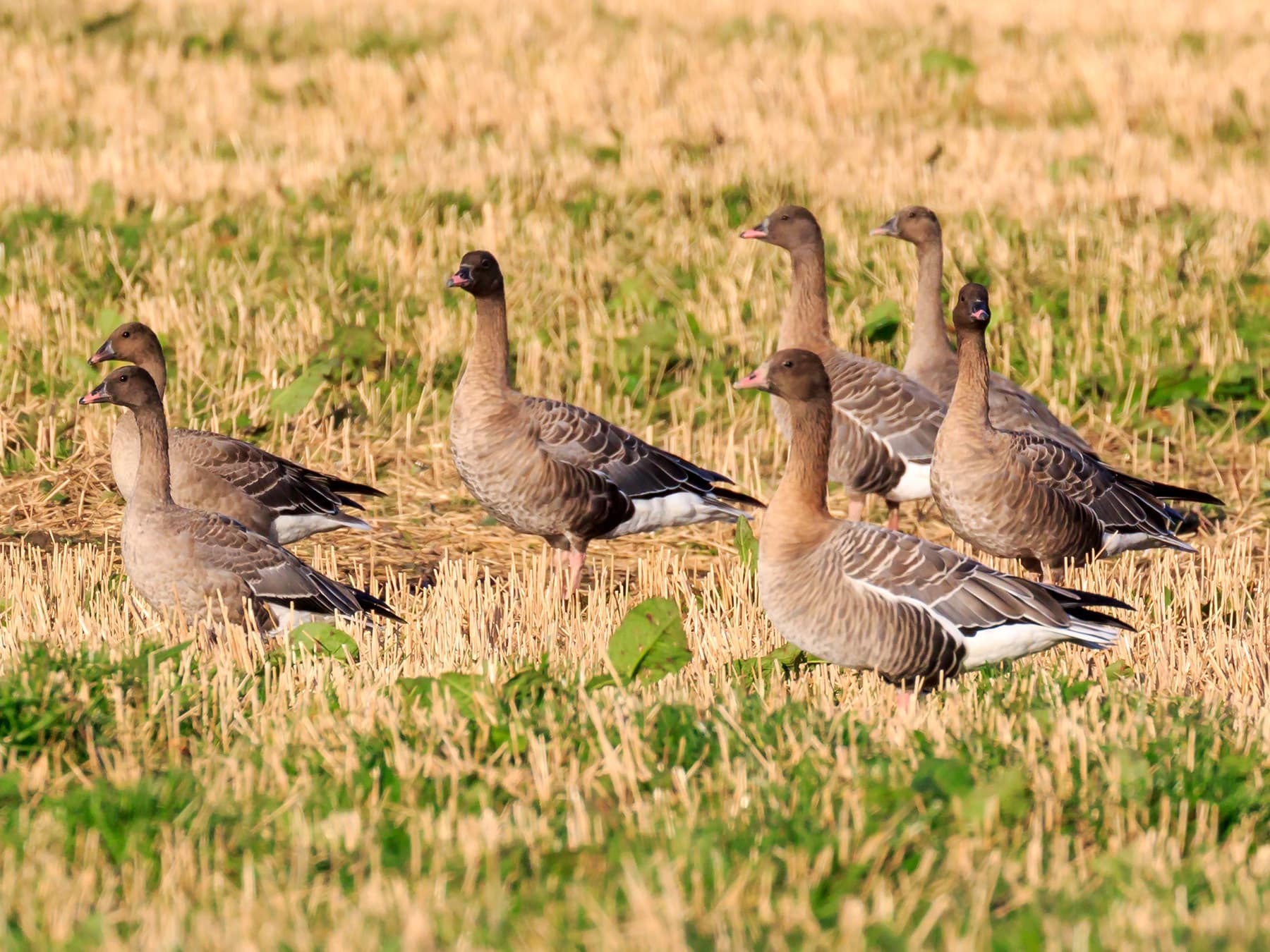
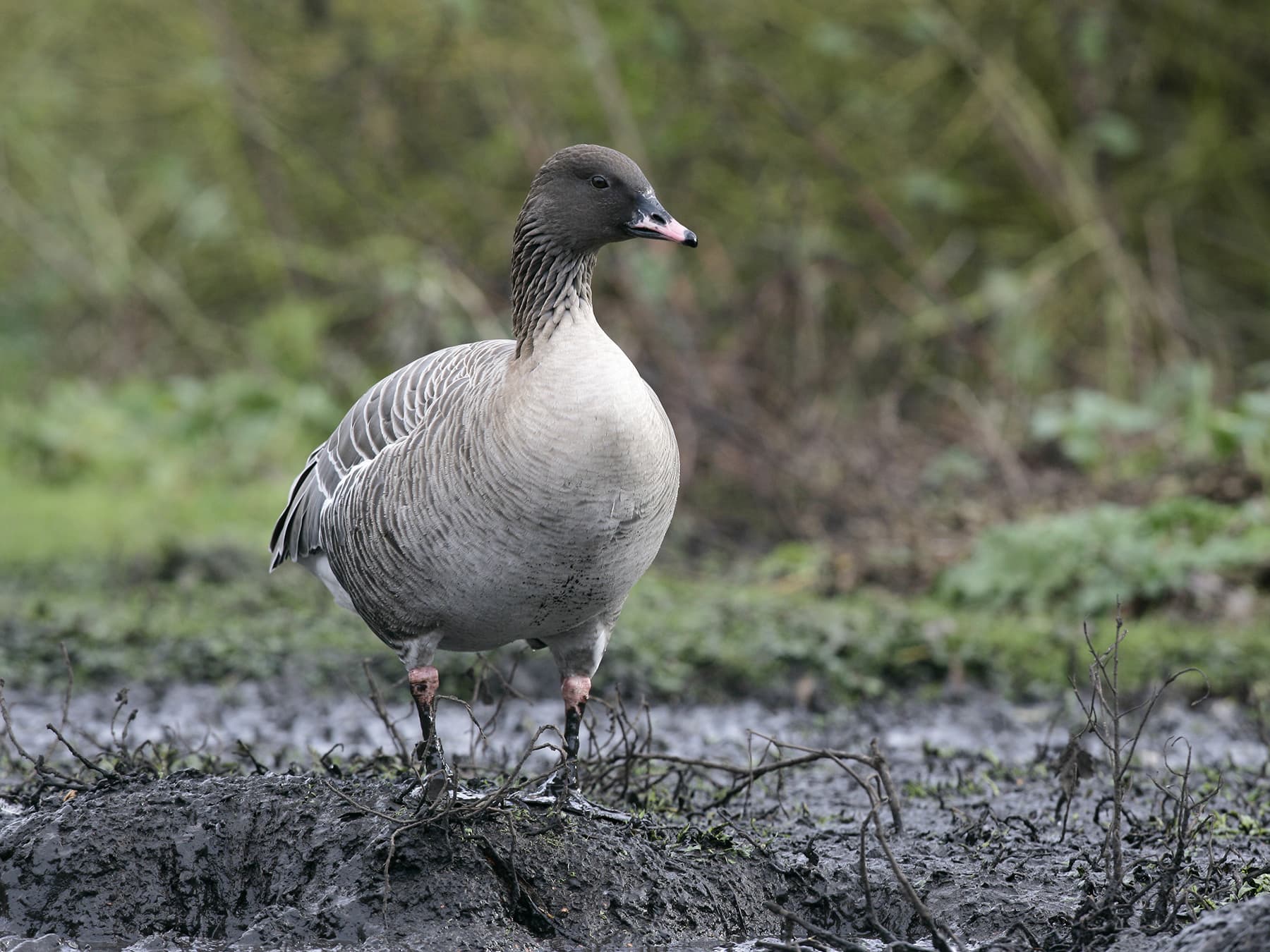
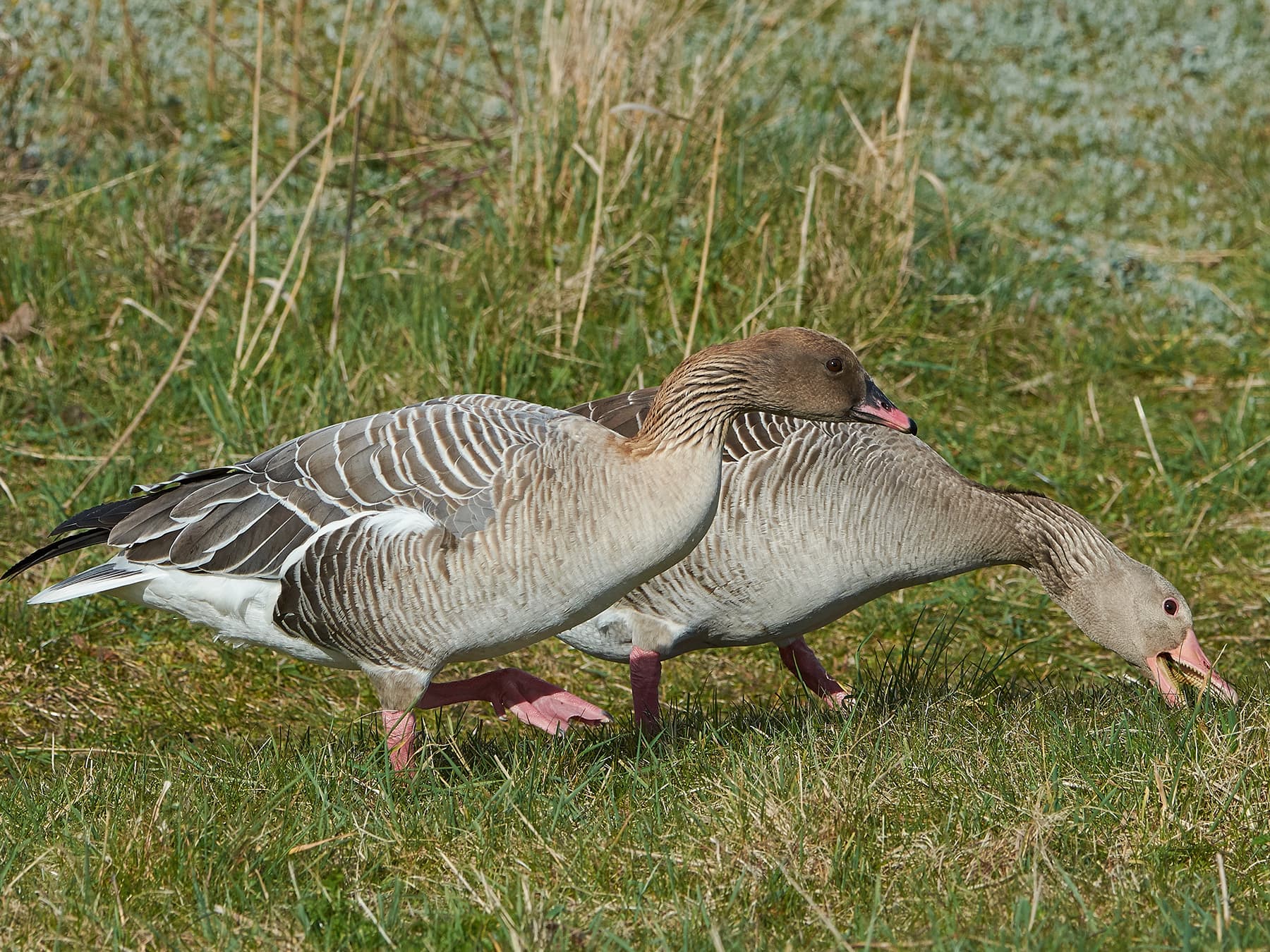
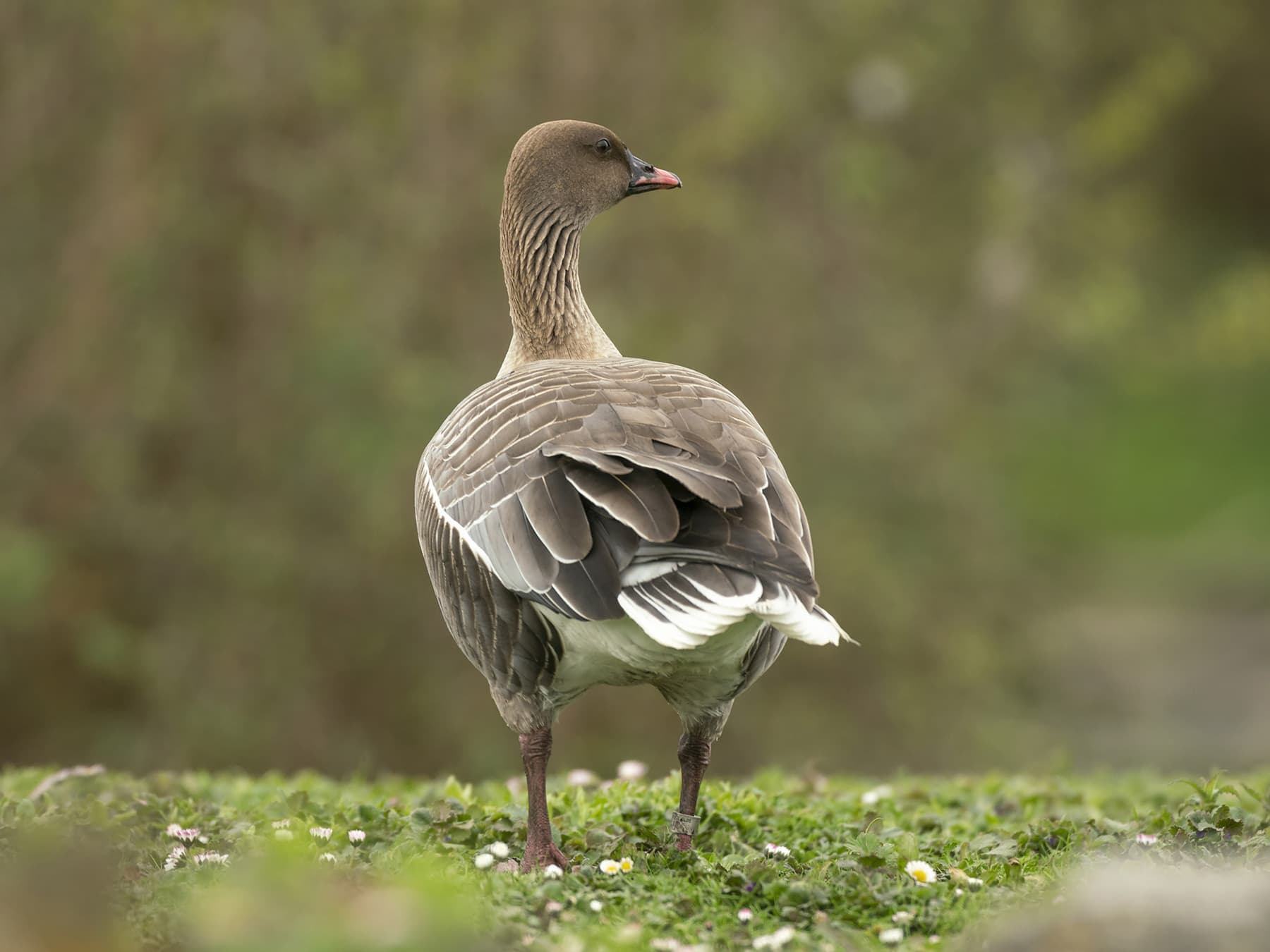
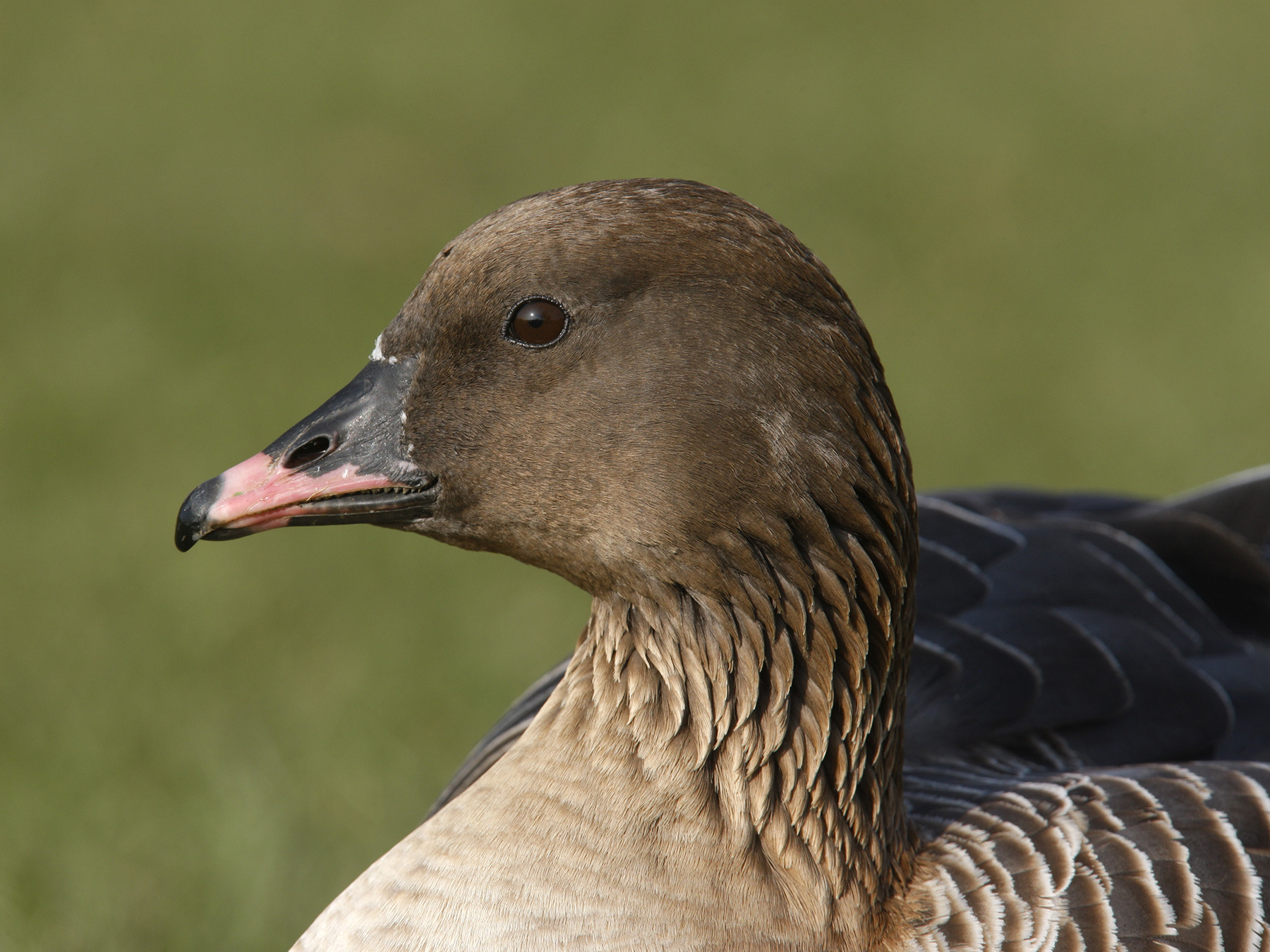
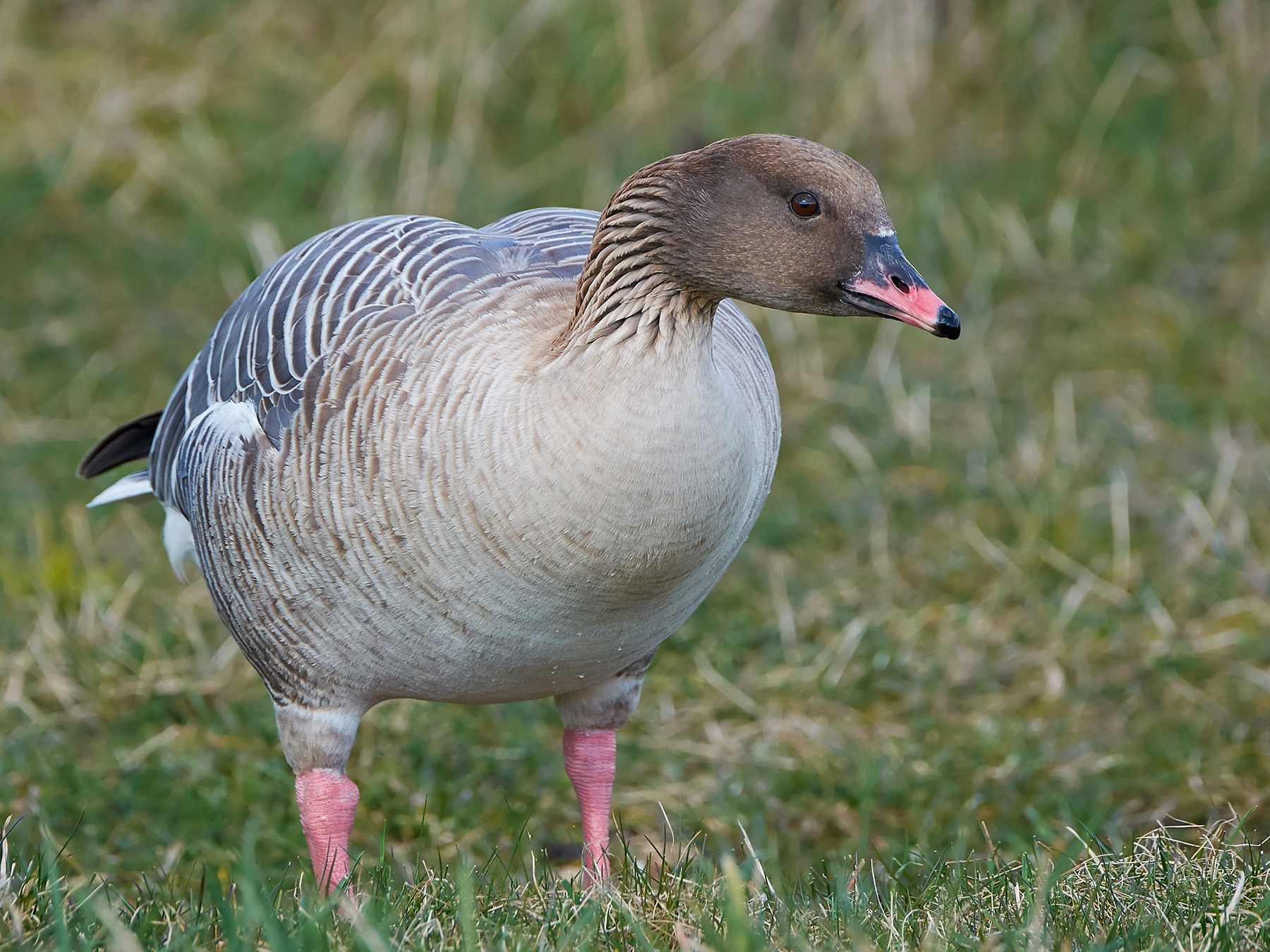
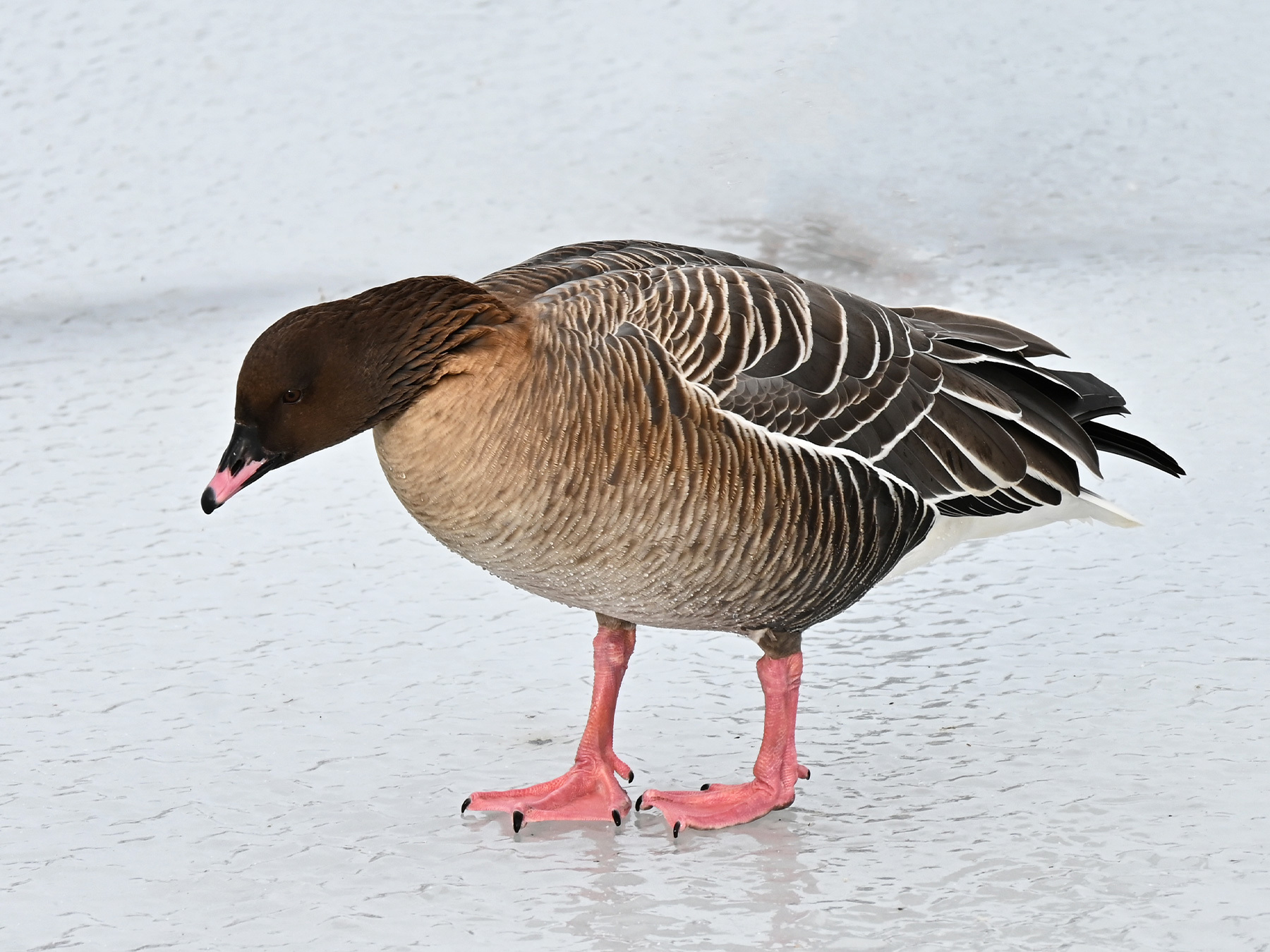
Pink-footed geese have a mid-brown head, a tan neck, and a greyish-brown back. A thin white stripe is visible across their flanks and their chest is buffy-white. Their rump and undertail are both white. As their name suggests, their feet are pink, and they have a short stubby bill, which is mostly black, but features a small pink patch across the centre.
Male and female pink-footed geese are alike in appearance, although females are often noticeably smaller.
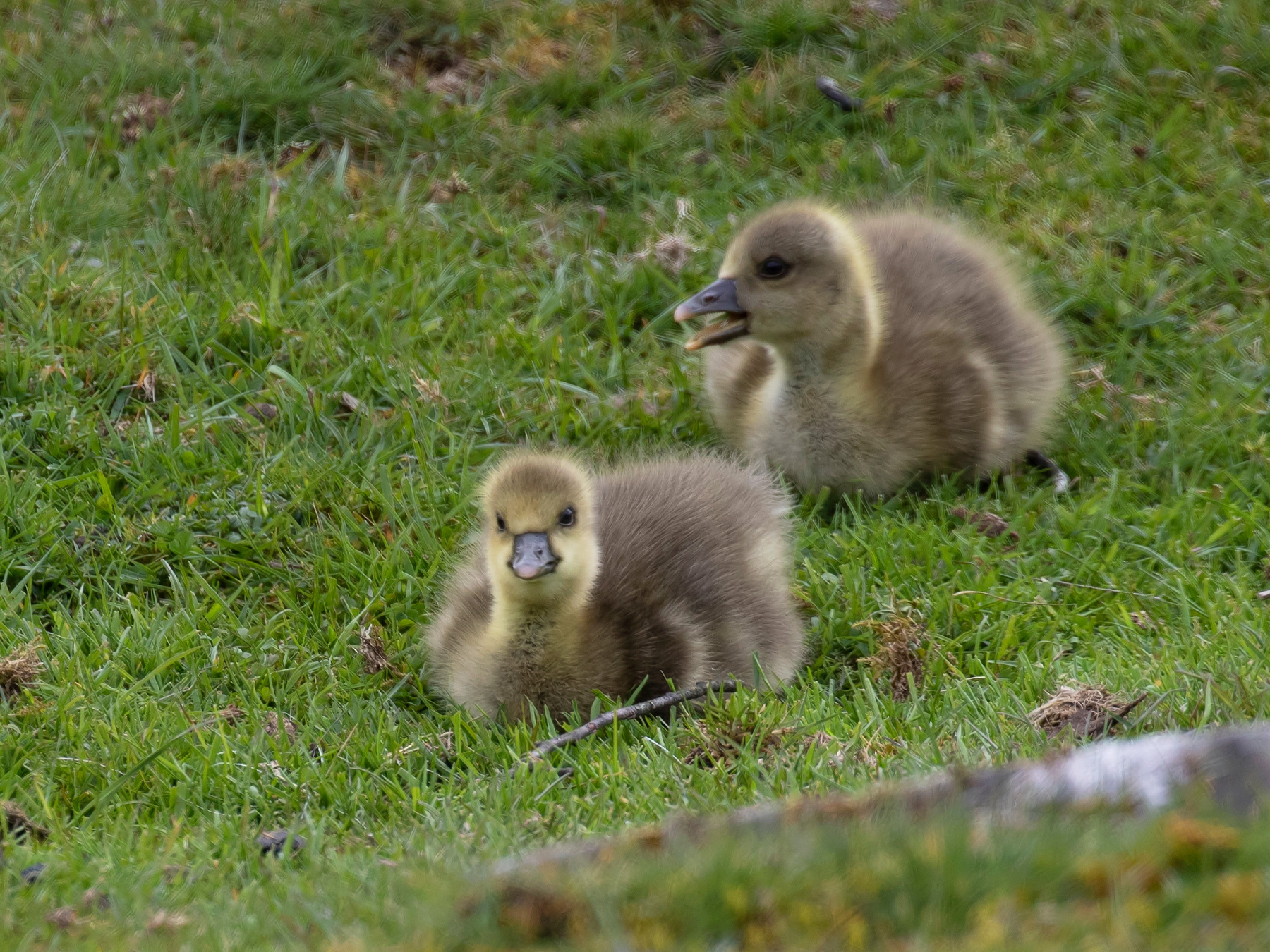
Juveniles are also similar to adults in appearance, but smaller in size with a slightly darker and duller plumage. Their legs and feet are a less vibrant pink than those of adult birds. However, by the end of their first winter, it becomes more difficult to distinguish younger birds from adults.
After the young have fledged, adults undergo a full moult and replace their entire set of flight feathers. Up to a month is spent roosting on water and grazing on fields and tundra until they are capable of flight again.
How big are Pink-footed Geese?
Pink-footed geese are slightly smaller in size and weight than the similar-looking greylag geese. Males are generally larger than females, with measurements across both sexes falling into the range below.
- Length: 60 cm to 76 cm (23 in to 30 in)
- Wingspan: 135 cm to 160 cm (53 in to 63 in)
- Weight: 2.2 kg to 2.7 kg (4.9 lb to 6 lb)
Its size
Adults- Length
- 60–75 cm
- Wingspan
- 135–170 cm
- Weight
- 1800–3300 g
Its song and calls
What sound does a Pink-footed Goose make?
The honking call of a pink-footed goose is relatively high in pitch and sounds squeakier and less cackling than the sounds made by greylag geese and bean geese.
Males have a higher-pitched honk than females, while the calls of juvenile pink-footed geese are especially squeaky-sounding.
- Call0:00 / 1:15
Recorded in Caerlaverock, Scotland
Lawrence Shove / The British Library Board · Wikimedia Commons · CC BY-SA 4.0
When and where to see it
OctoberPeak season
Most recorded in October
- 1. Dundee4.9%
- 2. Angus2.7%
- 3. Perthshire and Kinross2.3%
- 4. Aberdeenshire2.1%
- 5. Falkirk2.0%
Each dot is a county, state or province: the bigger and darker, the larger the bird’s share of that place’s bird records that month. Grey dots: no regular records. The ringed point is the centre of the bird’s records this month; the arrow shows how it moved since last month, and the dashed loop its path through the year. “Arrivals” colours places where it becomes regular this month (orange) or is in its last regular month (grey). GBIF eBird Observation Dataset, 2019–2024. Map data: Natural Earth, US Census Bureau; place centres © OpenStreetMap contributors.
In your area
See when the Pink-footed Goose is recorded in your county, state or province.
How often the Pink-footed Goose turns up in the UK, Ireland, the United States and Canada through the year, from birdwatchers' records.
United Kingdom
Winter visitor · regularly Sep–May · most records in October
Ireland
Winter visitor · regularly Sep–May · most records in October
United States
Winter visitor · regularly Oct–Mar · most records in January
Canada
Winter visitor · all year · most records in November
Show as a table
| Month | United Kingdom | Ireland | United States | Canada |
|---|---|---|---|---|
| January | 0.32% (regular) | 0.077% (regular) | 0.004% (regular) | 0.005% (regular) |
| February | 0.23% (regular) | 0.084% (regular) | 0.001% (regular) | 0.003% (regular) |
| March | 0.13% (regular) | 0.053% (regular) | 0.001% (regular) | 0.005% (regular) |
| April | 0.076% (regular) | 0.010% (regular) | <0.001% | 0.004% (regular) |
| May | 0.033% (regular) | 0.009% (regular) | <0.001% | <0.001% (regular) |
| June | 0.014% | 0.005% | – | 0.002% (regular) |
| July | 0.011% | 0.005% | – | 0.003% (regular) |
| August | 0.013% | – | – | 0.001% (regular) |
| September | 0.24% (regular) | 0.026% (regular) | – | 0.001% (regular) |
| October | 0.46% (regular) | 0.12% (regular) | <0.001% (regular) | 0.007% (regular) |
| November | 0.37% (regular) | 0.11% (regular) | 0.002% (regular) | 0.008% (regular) |
| December | 0.30% (regular) | 0.054% (regular) | 0.003% (regular) | 0.005% (regular) |
Recorded regularly in
Worldwide: recorded regularly in 25 countries
Countries where it was recorded in at least 3 of the 6 years 2019–2024. Linked countries have their own bird list.
Data: EOD – eBird Observation Dataset (Cornell Lab of Ornithology), accessed via GBIF.org, CC BY 4.0. Records from 2019–2024, aggregated and filtered by Birdfact. How these lists are made
What is the habitat of a Pink-footed Goose?
The preferred breeding habitat of pink-footed geese includes rocky Arctic tundra landscapes, small islets and steep ledges alongside seabird colonies.
Feeding grounds are found nearby, particularly flooded meadows and cultivated fields for grazing.
Once breeding is complete, open agricultural land and coastal estuaries become of greater importance, and lowland landscapes are favoured.
What is the range of a Pink-footed Goose?
Pink-footed geese breed exclusively along the east coast of Greenland, across Iceland and throughout the Svalbard archipelago in the Arctic Circle.
In autumn, they leave these northern territories, heading for Britain, Belgium, the Netherlands, northern Germany and Denmark. Passage sightings are common in Norway.
Where do Pink-footed Geese live?
Countries with the largest breeding populations of pink-footed geese are Iceland (up to 50,000 pairs), eastern Greenland, with an estimated 350,000 birds (2008 data) and Norway’s Arctic Svalbard peninsula, with upwards of 80,000 birds.
The British Isles are the species’ chief overwintering destination, welcoming an influx of an estimated 510,000 pink-footed geese each autumn.
How rare are Pink-footed Geese?
During the breeding season, sightings of pink-footed geese anywhere within the UK would be considered incredibly rare, as they do not raise their young here, and only return to Britain in the autumn to spend the winter months there.
During winter, sightings become far more commonplace, with more than half a million pink-footed geese arriving from Iceland, Greenland and the Arctic landscapes of the Svalbard archipelago.
Where can you see Pink-footed Geese in the UK?
Scotland and northern and eastern England are among the most common regions for large numbers of pink-footed geese to congregate in winter months.
Large estuaries along the east Scottish coast are prime spots for a large-scale sighting, for example, the Montrose Basin, where more than 85,000 individuals were recorded in 2015.
Further south into England, regions along The Wash, the Ribble and the Solway offer a good chance of sightings of pink-footed geese as autumn progresses.
Are Pink-footed Geese ever spotted in North America?
On the rarest of occasions, vagrant pink-footed geese have made their way to North America during their winter migrations, ending up in destinations in the north-eastern US and eastern Canada.
Migration
Do Pink-footed Geese migrate?
Pink-footed geese are fully migratory, spending summers breeding in Greenland, Iceland, and the Svalbard islands in the Arctic Ocean.
In winter, populations from all locations move south until the harshest temperatures ease, with Greenland and Iceland’s breeding birds heading to Britain, and pink-footed geese that breed in Svalbard spending winters in mainland Europe, from Belgium to Denmark.
Are Pink-footed Geese native to the UK?
Although pink-footed geese spend winters in the UK, their breeding grounds are located further north, in Iceland and western Greenland. No breeding pairs remain in the wild in Britain all year round.
When do Pink-footed Geese arrive in the UK?
Arrivals of pink-footed geese in the UK increase from September onwards, once their breeding season at northern locations is complete. Wintering birds remain in the UK until the following April when they return north to breed.
Tips for seeing it
- Look for large flocks in coastal areas and farmlands during winter
- Listen for their distinctive high-pitched 'wink-wink' call
- Observe feeding behaviour in stubble fields early morning or late afternoon
- In the UK, visit Norfolk, Lancashire, or the Scottish lowlands for the best viewing opportunities
What it eats
What do Pink-footed Geese eat?
The diet of pink-footed geese consists of cereal crops and grains, as well as roots, shoots, berries and seeds.
In winter, cultivated fields offer prime foraging grounds for root crops such as potatoes, carrots and sugar beet. Stems, leaves, catkins, mosses and grasses are particularly important in spring.
What do Pink-footed Goose chicks eat?
Young pink-footed geese follow their parents to forage for their own food shortly after hatching, surviving on an early diet of grasses and plant matter.
Nesting and breeding
Where do Pink-footed Geese nest?
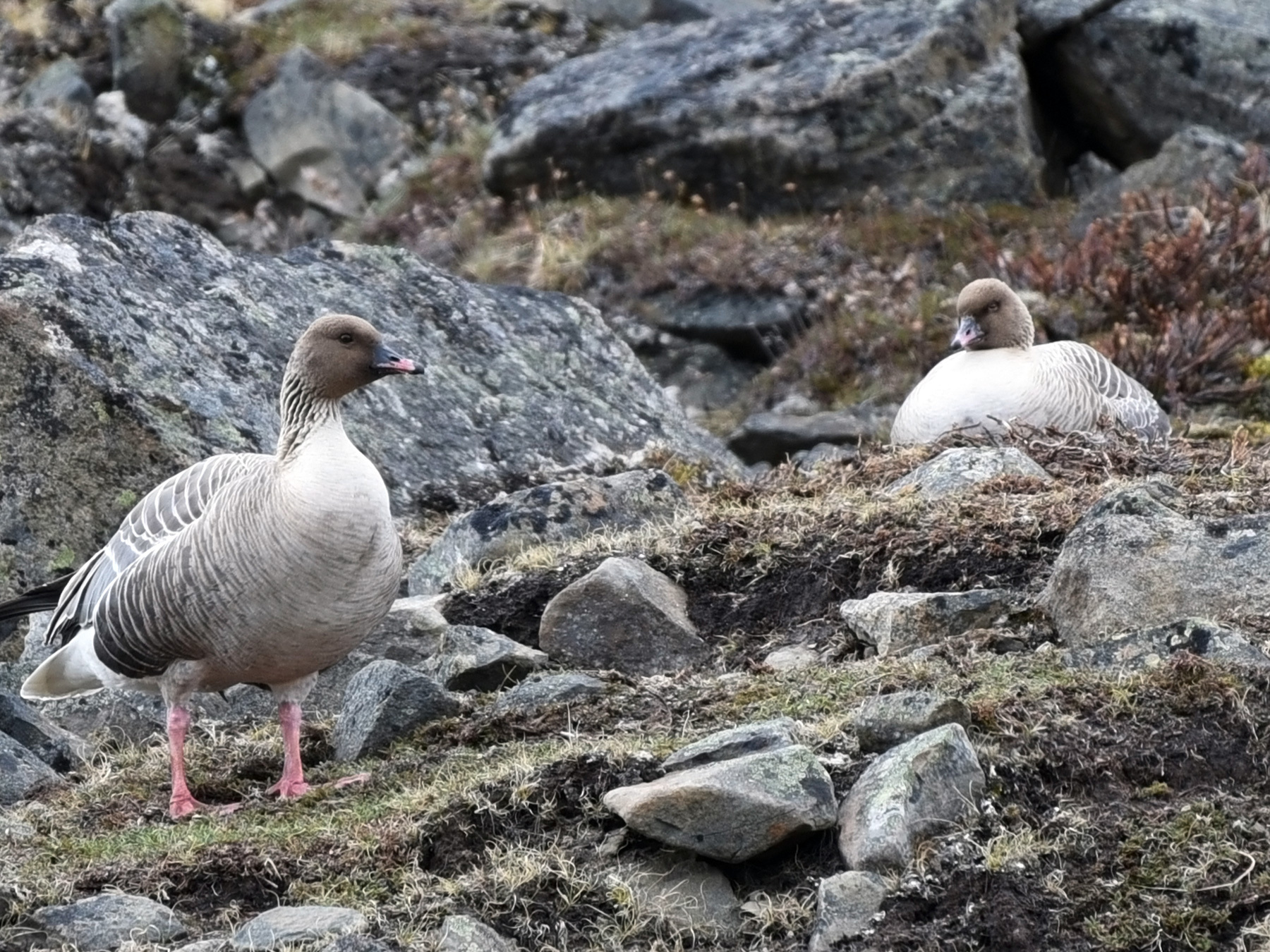
Loose nesting colonies are common for breeding pink-footed geese, with up to 10 pairs establishing nests in fairly close proximity to one another.
Nests are built directly onto ice-free tundra, with shallow scrapes used as a foundation and built up into larger structures of plant matter lined with a thick layer of down.
Cliffs and small islets are popular nest locations, benefitting from some protection against predators.
When do Pink-footed Geese nest?
The breeding season for pink-footed geese changes slightly according to location. In Iceland, laying begins from early May onwards, while in Greenland and Svalbard late May to early June is most common.
Pairs raise one brood a year, and the young remain with their parents in a larger family group until the following spring.
What do Pink-footed Goose eggs look like?
A typical clutch for breeding pink-footed geese consists of 3 to 5 plain white or straw-coloured eggs, which measure 78 mm by 52 mm (3.1 in by 2.0 in).
Eggs are incubated by the female alone for between 25 and 30 days, while the male remains nearby to guard the nest and his mate.
Do Pink-footed Geese mate for life?
Pink-footed geese form monogamous, long-term pair bonds and are thought to mate for life after they find a mate for the first time at the age of three years.
Behaviour
Are Pink-footed Geese aggressive?
In some urban environments, pink-footed geese are considered a pest species due to their aggressive behaviour and the mess they create.
Hissing and aggressive approaches to other geese, as well as to humans, are not uncommon if they feel their nest site, young or mate are under threat.
Once their young have hatched and they have completed their annual summer moult, pink-footed geese are a highly sociable species, gathering in large flocks with other geese, and frequently raising young collectively, offering protection to any goslings that may have become parted from their parents.

Lifespan and predators
How long do Pink-footed Geese live?
The estimated average lifespan for a pink-footed goose range from between 8 and 22 years in the wild, with ringed individuals recorded to have reached an age of 38 years and 7 months.
Pink-footed geese are not kept or bred in captivity. First-time breeding occurs at 3 years of age, with rare reports of breeding in the second year.
What are the predators of Pink-footed Geese?
Arctic foxes are the leading predator of pink-footed geese nests. Opportunistic raids on nests may also be carried out by corvids and gulls.
Are Pink-footed Geese protected in the UK?
The Wildlife and Countryside Act, 1981, offers protection to the species in the UK, making it an offence to knowingly kill, injure or take an individual pink-footed goose into captivity.
Additionally, pink-footed geese are listed as Schedule I birds under the same act, which means that if breeding does occur, it is illegal to disturb, destroy or damage a pink-footed goose’s nest site and eggs.
Are Pink-footed Geese endangered?
Despite being considered a species of least concern worldwide, pink-footed geese are classified with Amber status on the list of British Birds of Conservation Concern in the UK due to the importance of the country as a wintering ground for the entire population of the species.
Conservation
While currently listed as Least Concern, Pink-footed Geese face threats from habitat loss and climate change.
Conservation efforts focus on protecting key wintering sites and managing agricultural landscapes to provide suitable feeding areas.
Similar birds
Often mistaken for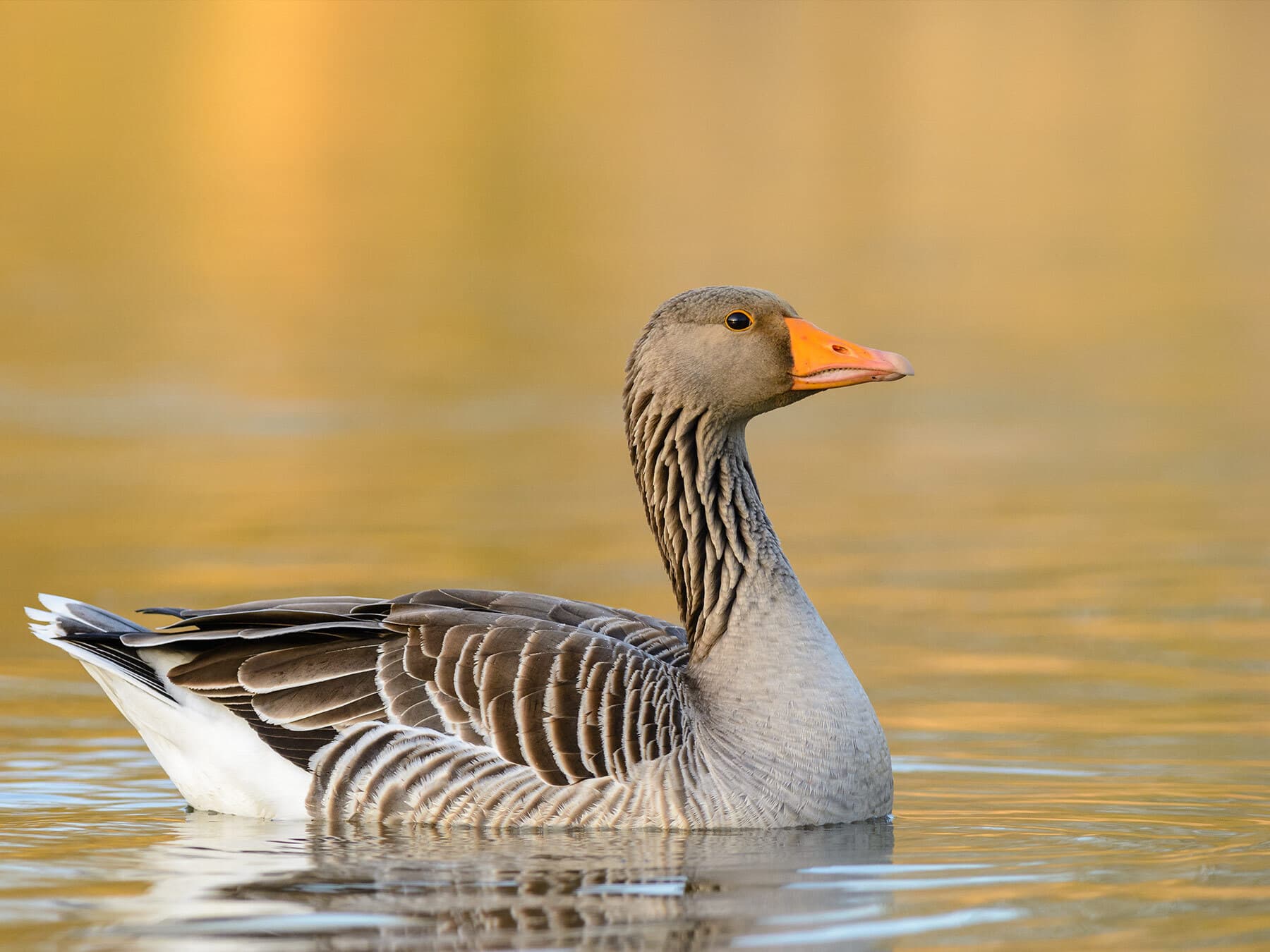
More photos
6 photos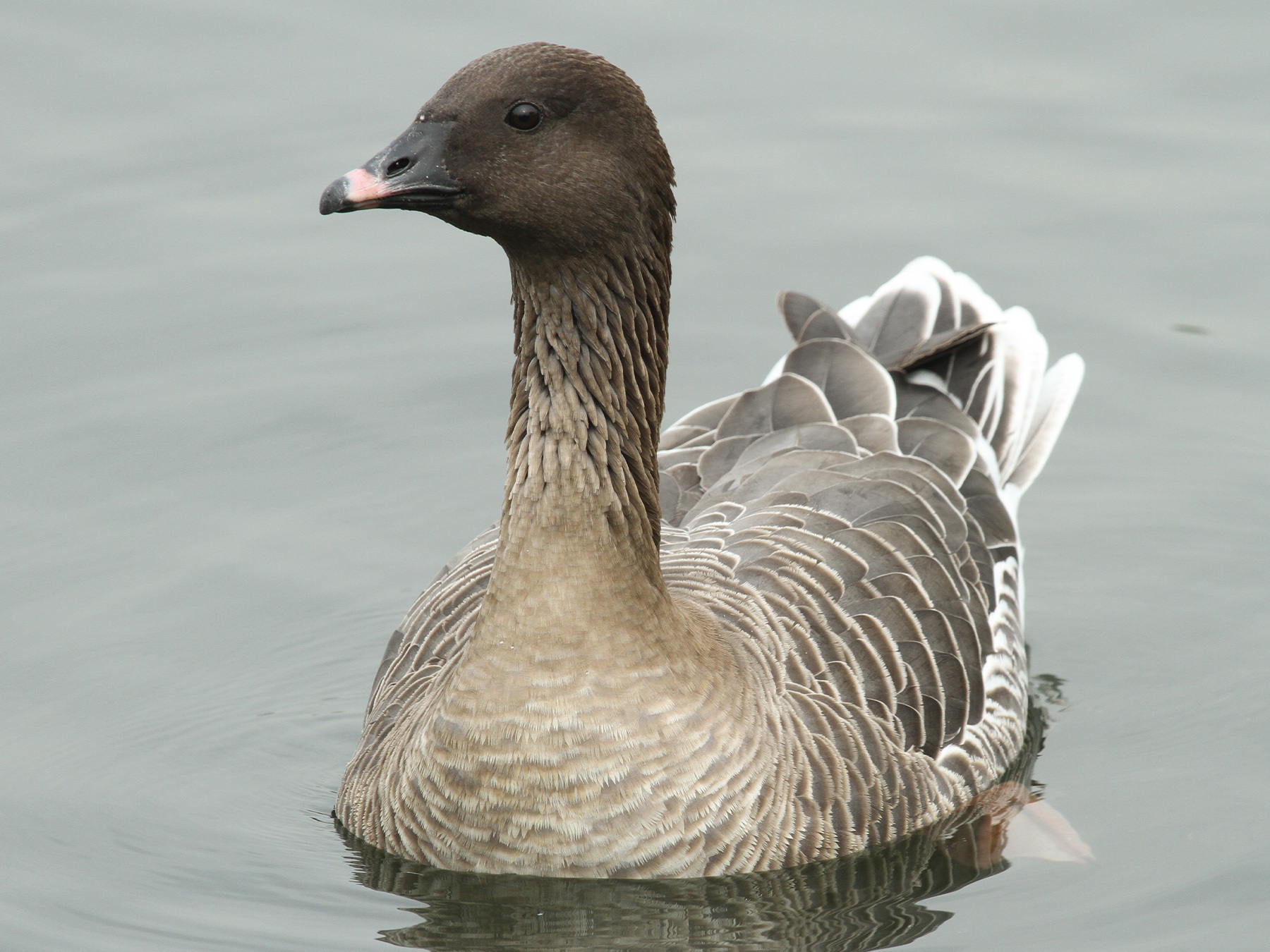
Pink-footed Goose guides
4 guidesQuick facts
- Length
- 60–75 cm
- Wingspan
- 135–170 cm
- Weight
- 1800–3300 g
- Lifespan
- 8–22 years · oldest recorded 40 years
- Family
- Ducks, Geese & Swans
- Migration
- Long-distance Migrant
- Global status (IUCN)
- Least Concern
- World population
- 410,000 individuals
- Population trend
- Increasing
- Also called
- Greenland White-fronted Goose
- Scientific name
- Anser brachyrhynchus
Questions
1What is the difference between a greylag goose and a pink-footed goose?
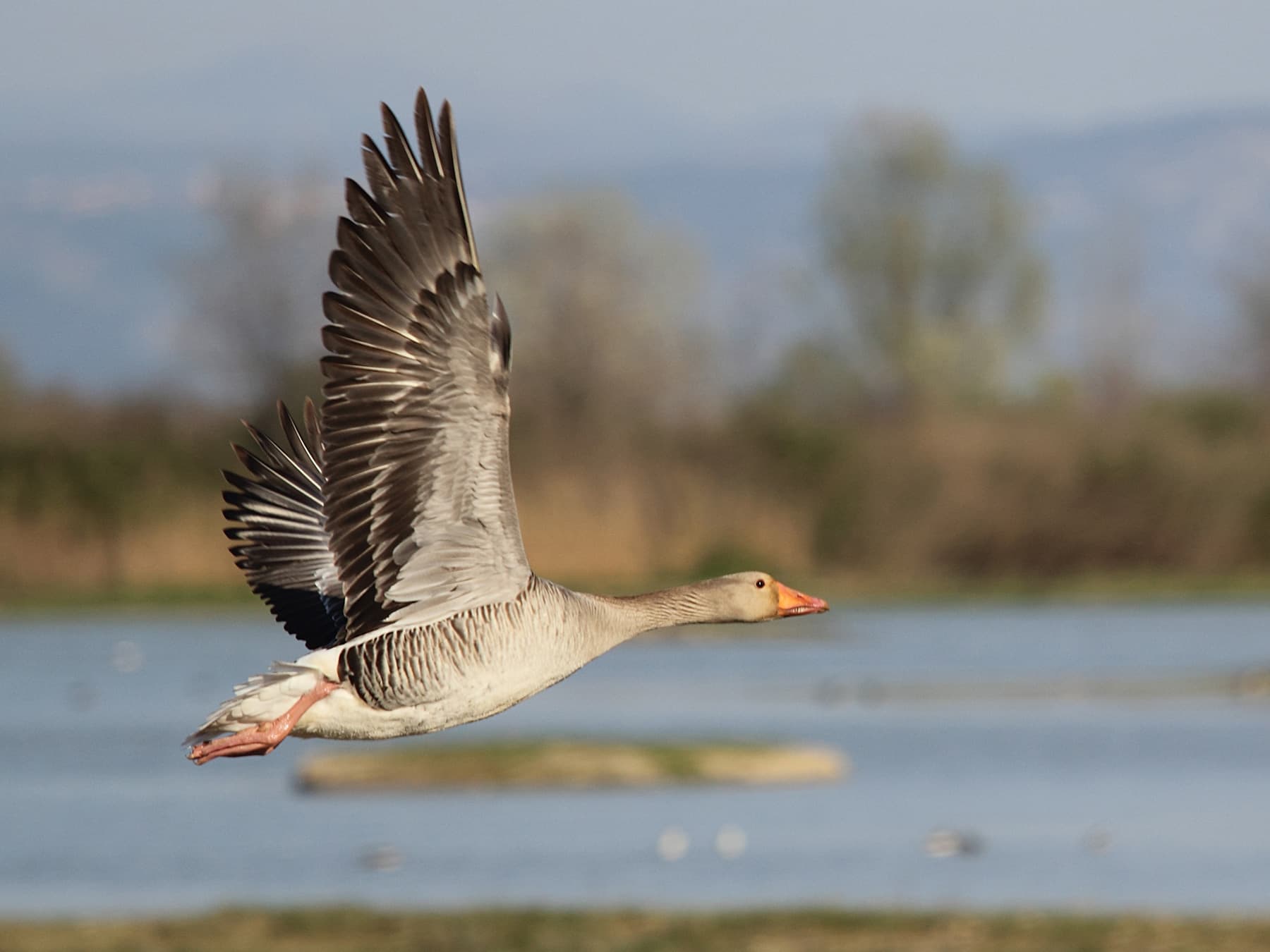
Pink-footed geese are smaller and more compact than greylag geese and have a higher-pitched call.
Greylag geese are present in the UK all year round, while pink-footed geese are temporary winter residents, arriving from northern breeding grounds each autumn. Greylag geese are also far more common than pink-footed geese.
In terms of appearance, the two species are similar and easily confused in the field, particularly from a distance.
Close up, the difference between the two is more obvious: greylag geese have a solid orange-pink bill, while in pink-footed geese, the bill is shorter and mainly black, with a small pink section in the middle.
Sources
4- 1BirdLife International. 2016. Anser brachyrhynchus. The IUCN Red List of Threatened Species 2016: e.T22679872A85978254. Source (opens in a new tab)
- 2Wetlands International (2015)
- 3Wetlands International (2015)
- 4Fransson et al., EURING list of longevity records for European birds (2010) Source (opens in a new tab)

Checked by
Nathan Cope, founder and editor
Nathan founded Birdfact and leads its writers and contributors in the UK, the US and Canada. He has watched and studied birds for more than ten years, and checks every article and species guide before it’s published.