


Magellanic Penguin
Spheniscus magellanicus
By the Birdfact teamChecked by Nathan Cope
On this page12 sections
How to recognise it
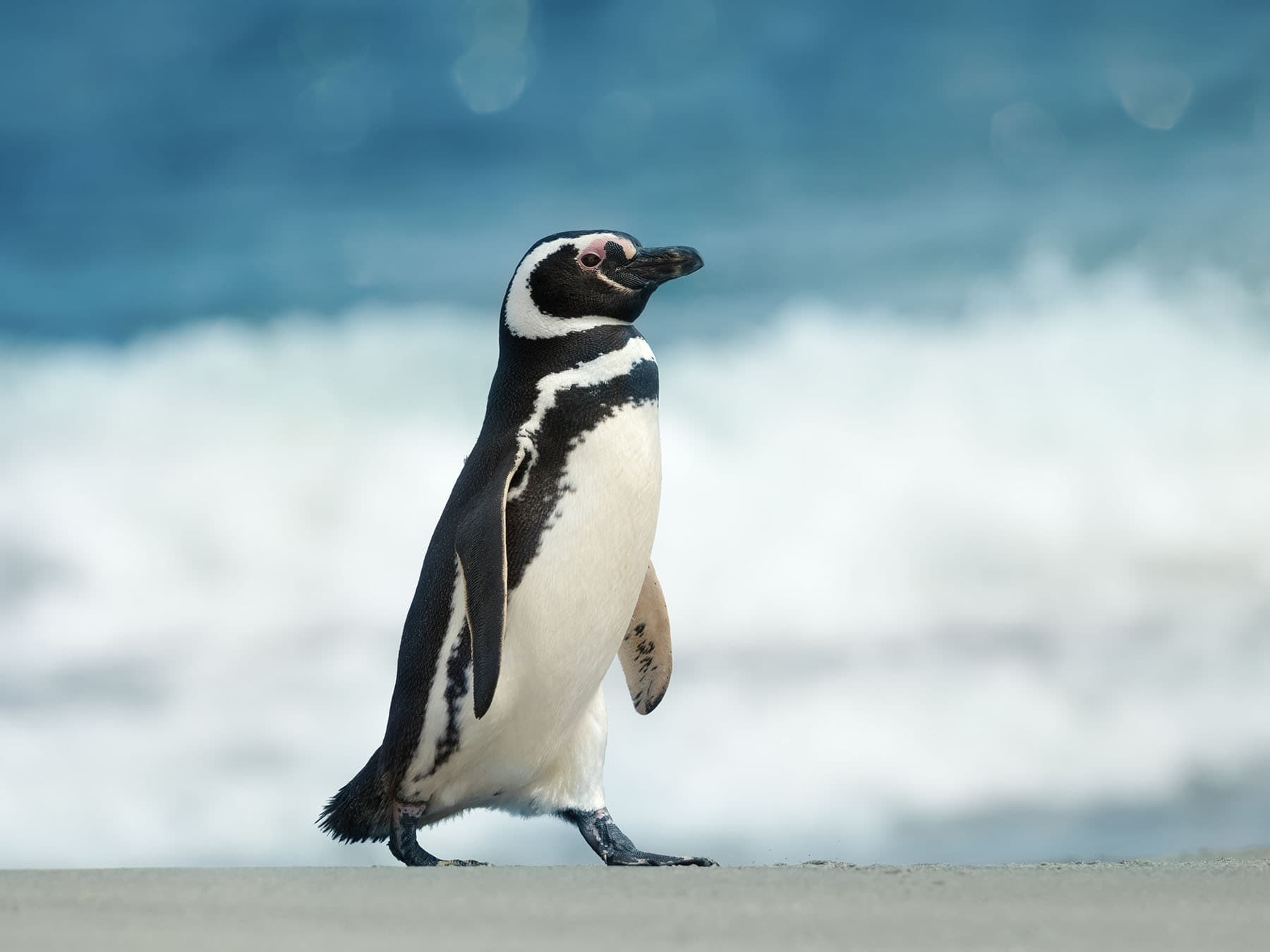
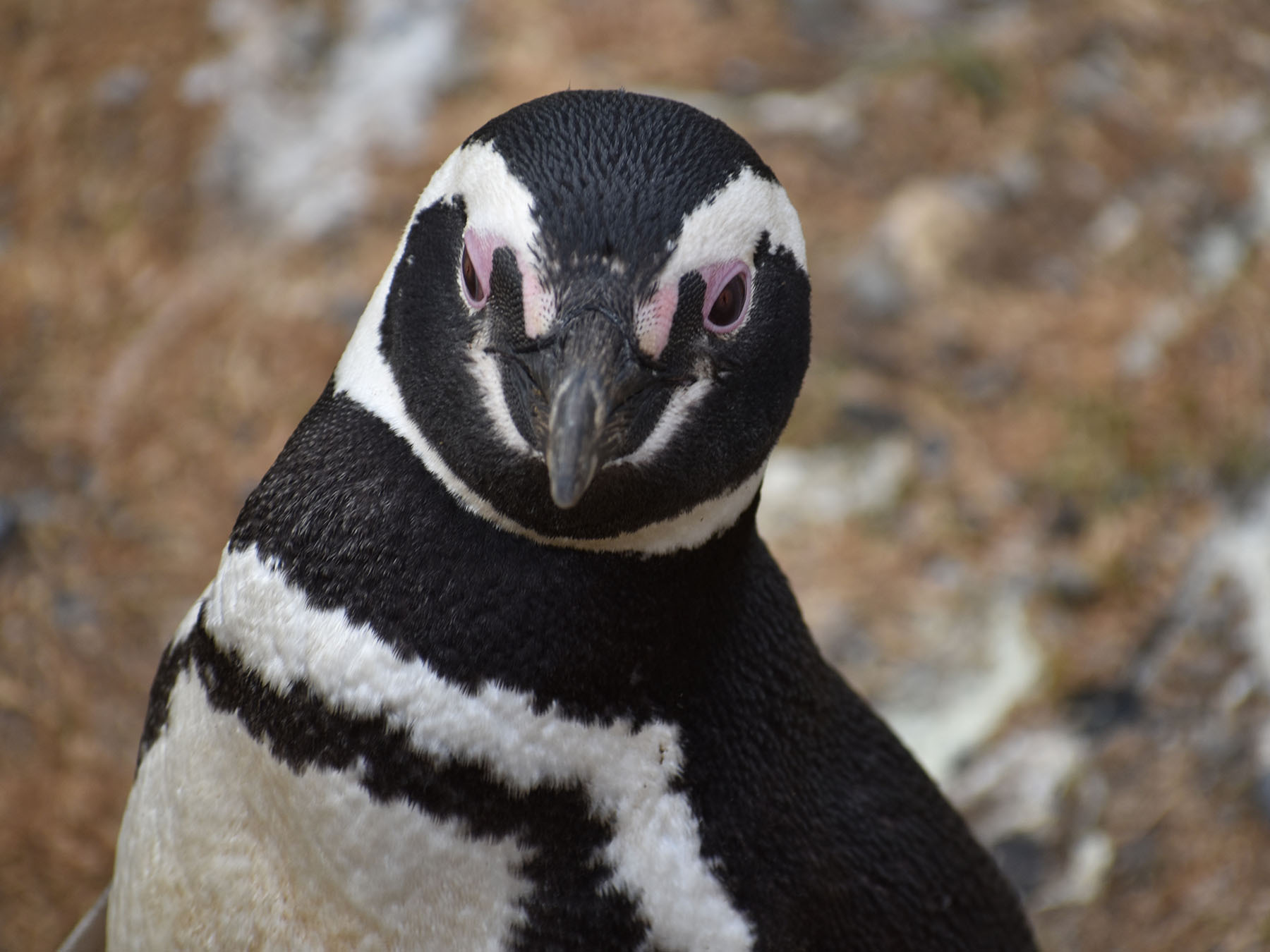
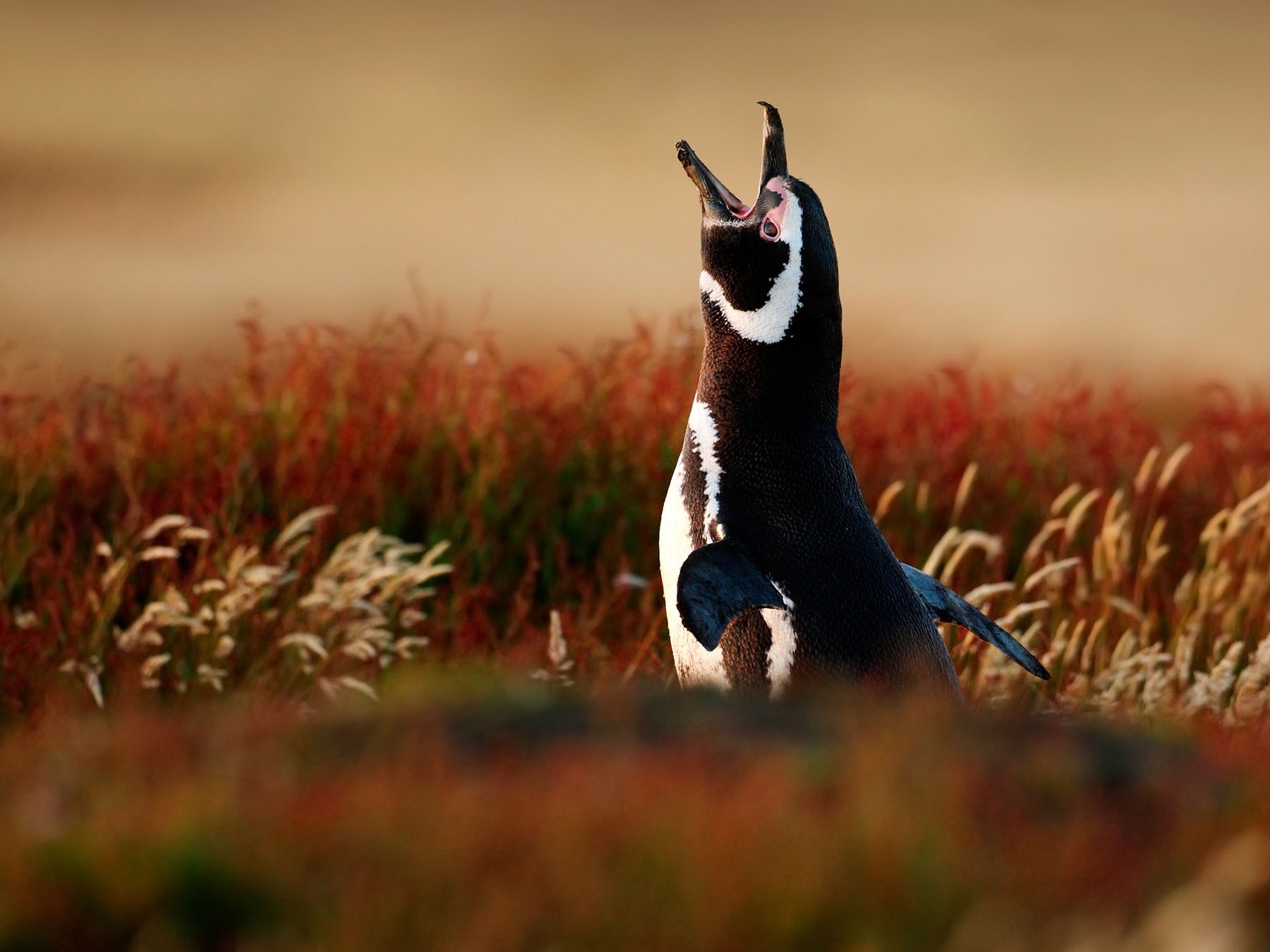
Magellanic Penguins are medium-sized penguins with distinctive black and white plumage. They have a black back and head, with a white belly and a horseshoe-shaped band of white feathers extending from their throat to behind their eyes.
Adults have two black bands across their chest, while juveniles have a single, less defined band. Their flippers are black on the outer side and white underneath, adapted for swimming rather than flying.
Its size
Adults- Length
- 60–75 cm
- Wingspan
- 76–91 cm
- Weight
- 2700–6500 g
Its song and calls
Magellanic Penguins are known for their loud, braying calls that sound similar to a donkey's bray. Their vocalisations include a series of short, sharp 'ah-ah-ah' sounds, often used in territorial disputes or to locate mates and chicks in crowded colonies.
When and where to see it
The Magellanic Penguin is not recorded regularly in the UK, Ireland, the United States or Canada.
Worldwide: recorded regularly in 5 countries
Countries where it was recorded in at least 3 of the 6 years 2019–2024. Linked countries have their own bird list.
Data: EOD – eBird Observation Dataset (Cornell Lab of Ornithology), accessed via GBIF.org, CC BY 4.0. Records from 2019–2024, aggregated and filtered by Birdfact. How these lists are made
Tips for seeing it
- Visit coastal areas of southern South America during breeding season (September to March)
- Look for large colonies on rocky or sandy shores
- Observe their distinctive waddling gait on land
- Listen for their loud, donkey-like braying calls
- Watch for their swift, graceful movements when swimming
What it eats
Magellanic Penguins primarily feed on small fish such as anchovies, sardines, and squid. They are skilled hunters, diving to depths of up to 70 meters to catch their prey.
During the breeding season, they often forage closer to their nesting sites, making shorter trips to feed their chicks.
Nesting and breeding
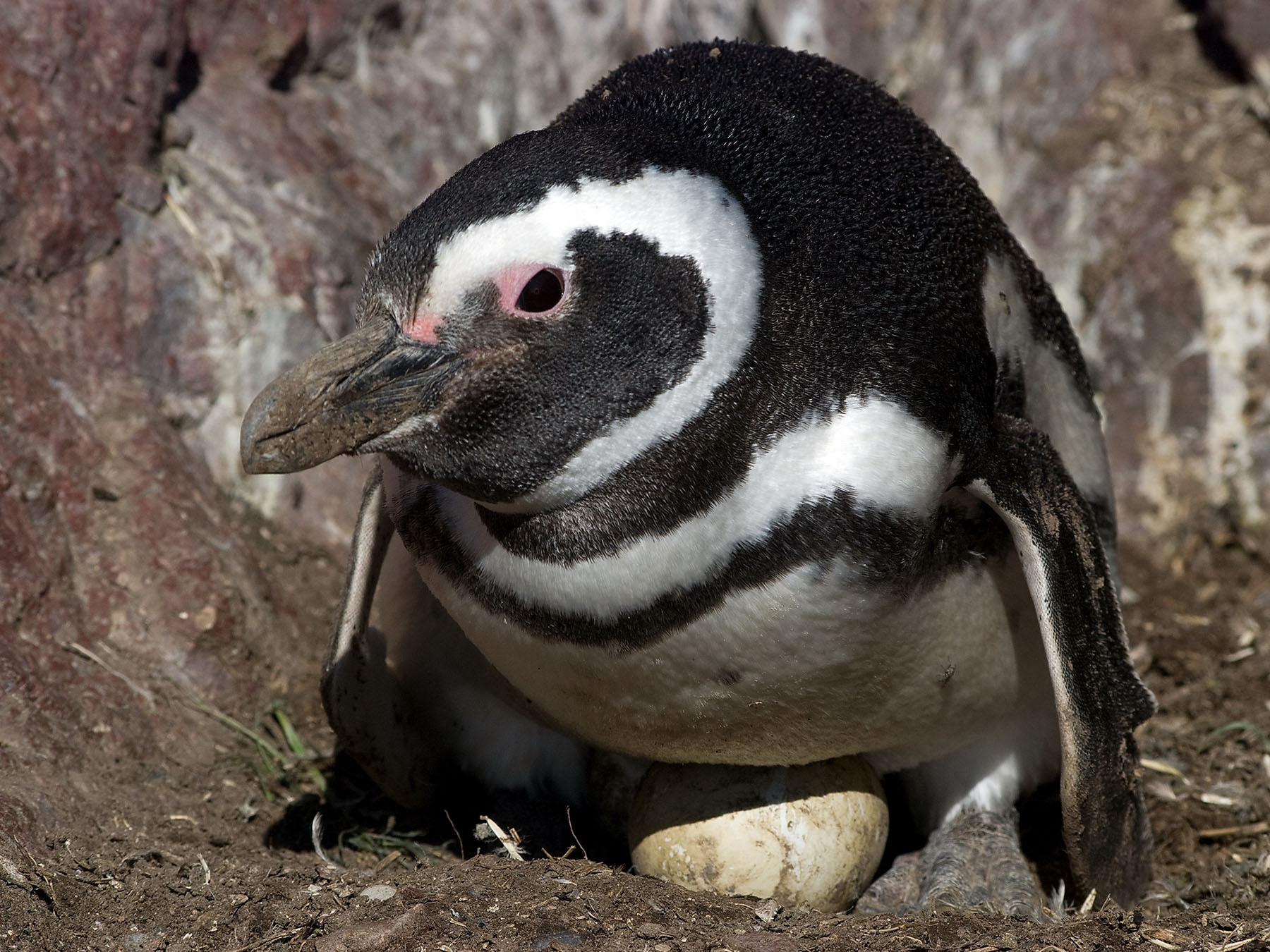
Breeding season for Magellanic Penguins typically begins in September. They form monogamous pairs and often return to the same nesting site year after year. Nests are built in burrows or under bushes, providing protection from predators and harsh weather.
Females usually lay two eggs, which are incubated by both parents for about 40 days. The eggs are pale green or blue-green in colour and slightly larger than chicken eggs.
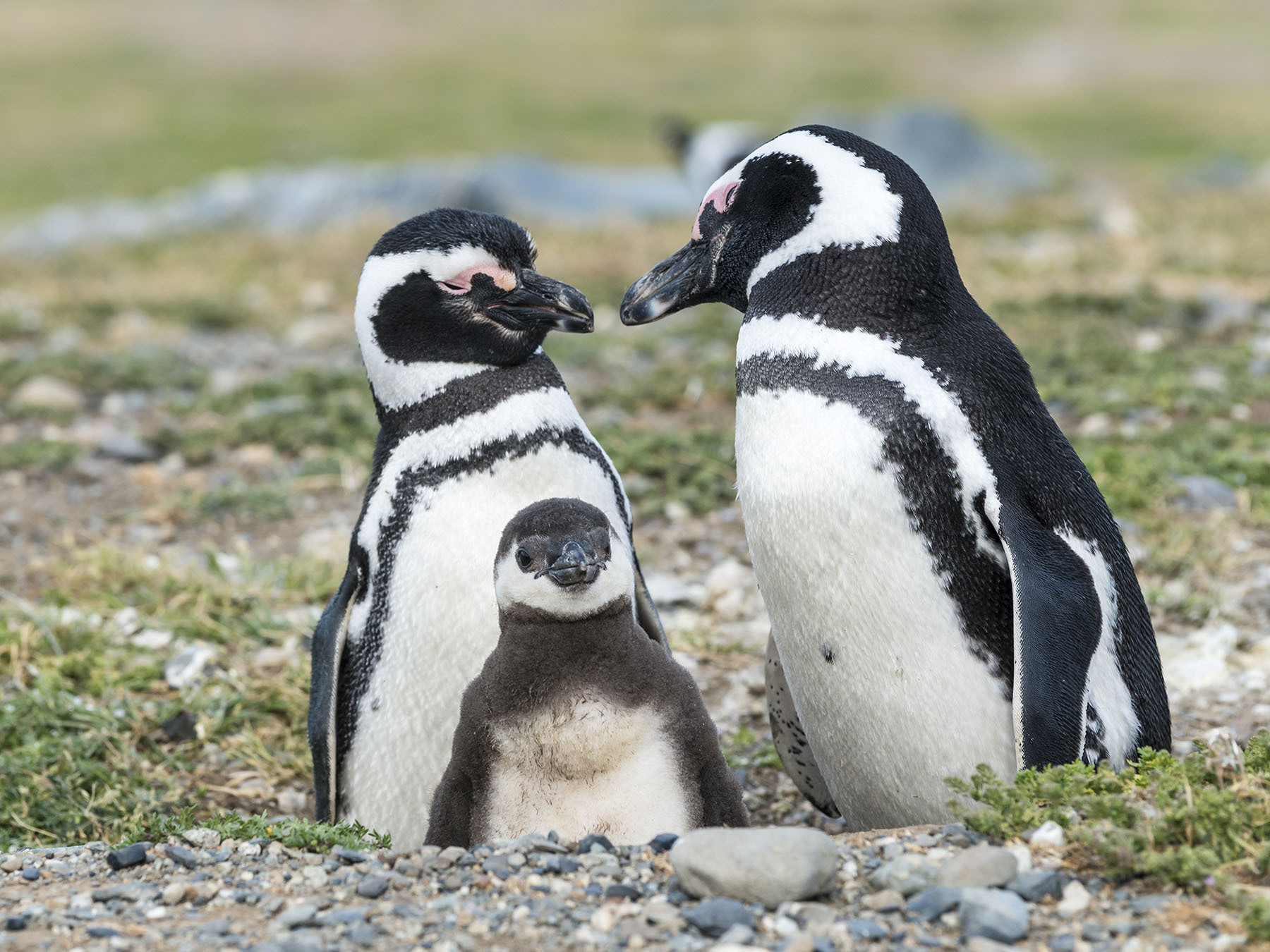
Chicks are cared for by both parents, who take turns guarding the nest and foraging for food. The young penguins fledge after about 70 days, usually in late January or February.
Behaviour
Magellanic Penguins are excellent swimmers, using their flippers to 'fly' underwater at speeds up to 15 mph.
They form large breeding colonies in coastal areas, often returning to the same nesting site each year. These penguins are known for their distinctive braying call.
Conservation
Magellanic Penguins face threats from oil spills, overfishing, and climate change. Conservation efforts focus on protecting breeding sites, regulating fishing practices, and mitigating the impacts of oil pollution.
Several organisations work to rehabilitate penguins affected by oil spills and monitor population trends.
Similar birds
Often mistaken for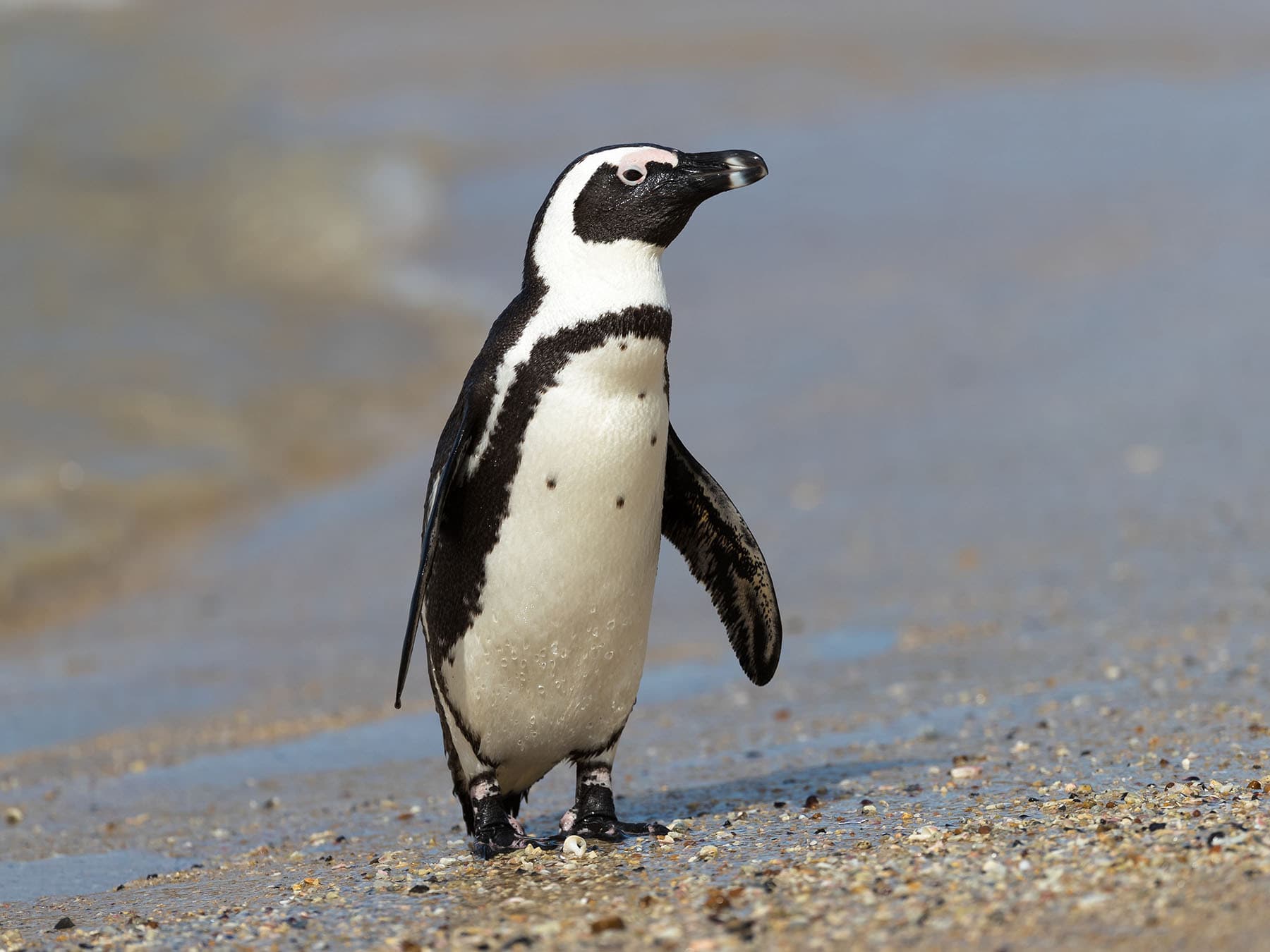
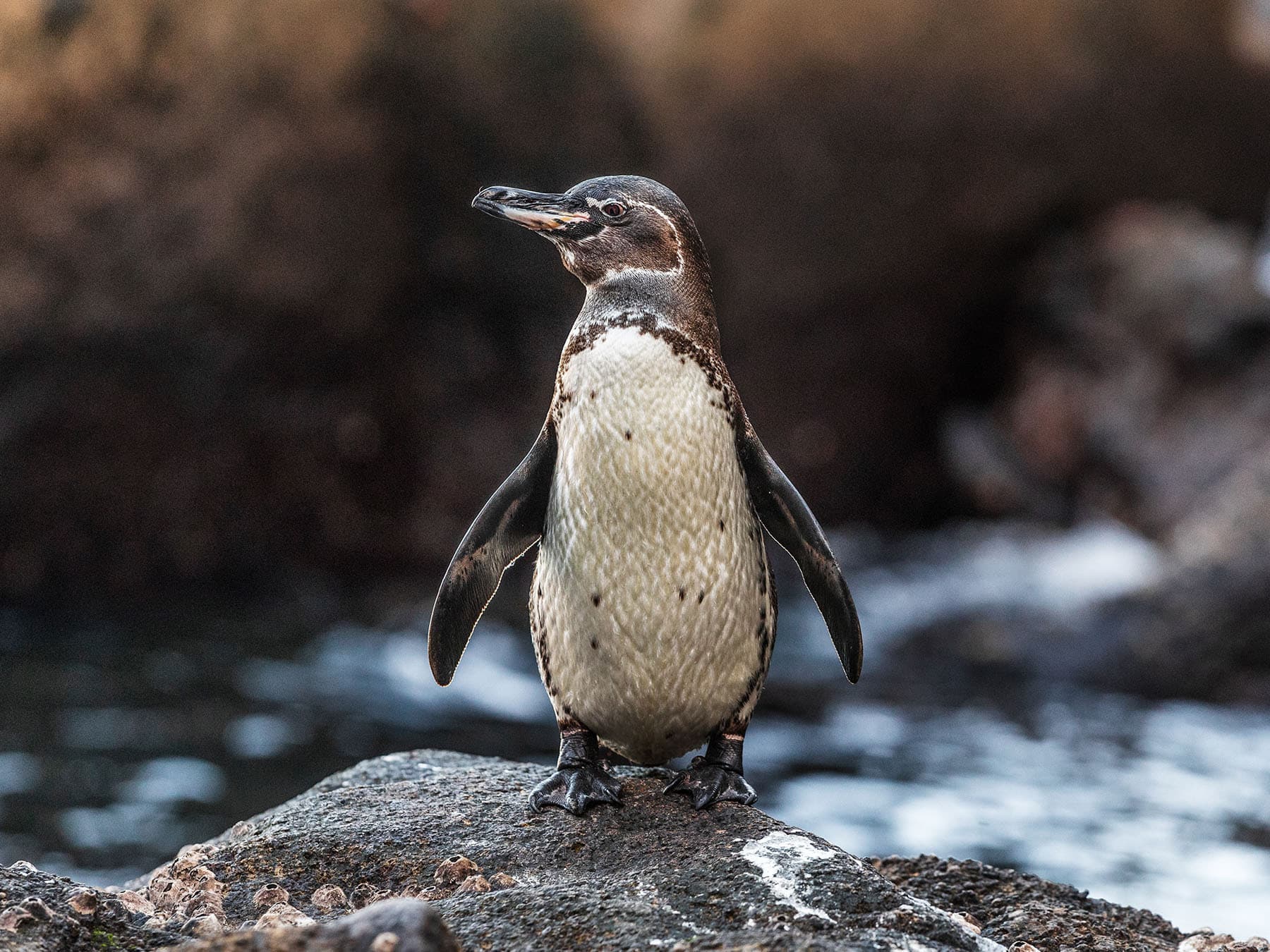
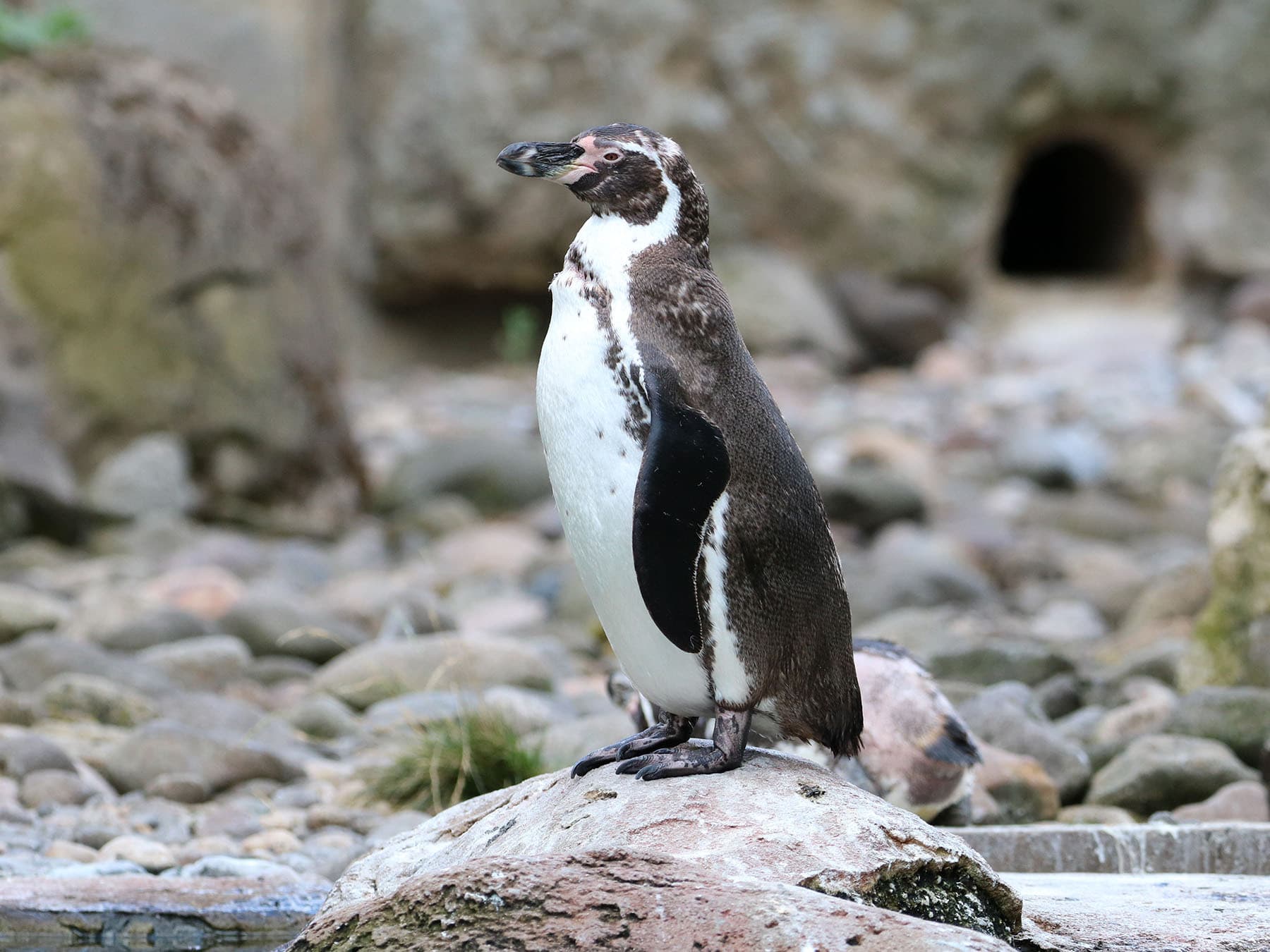
More photos
5 photos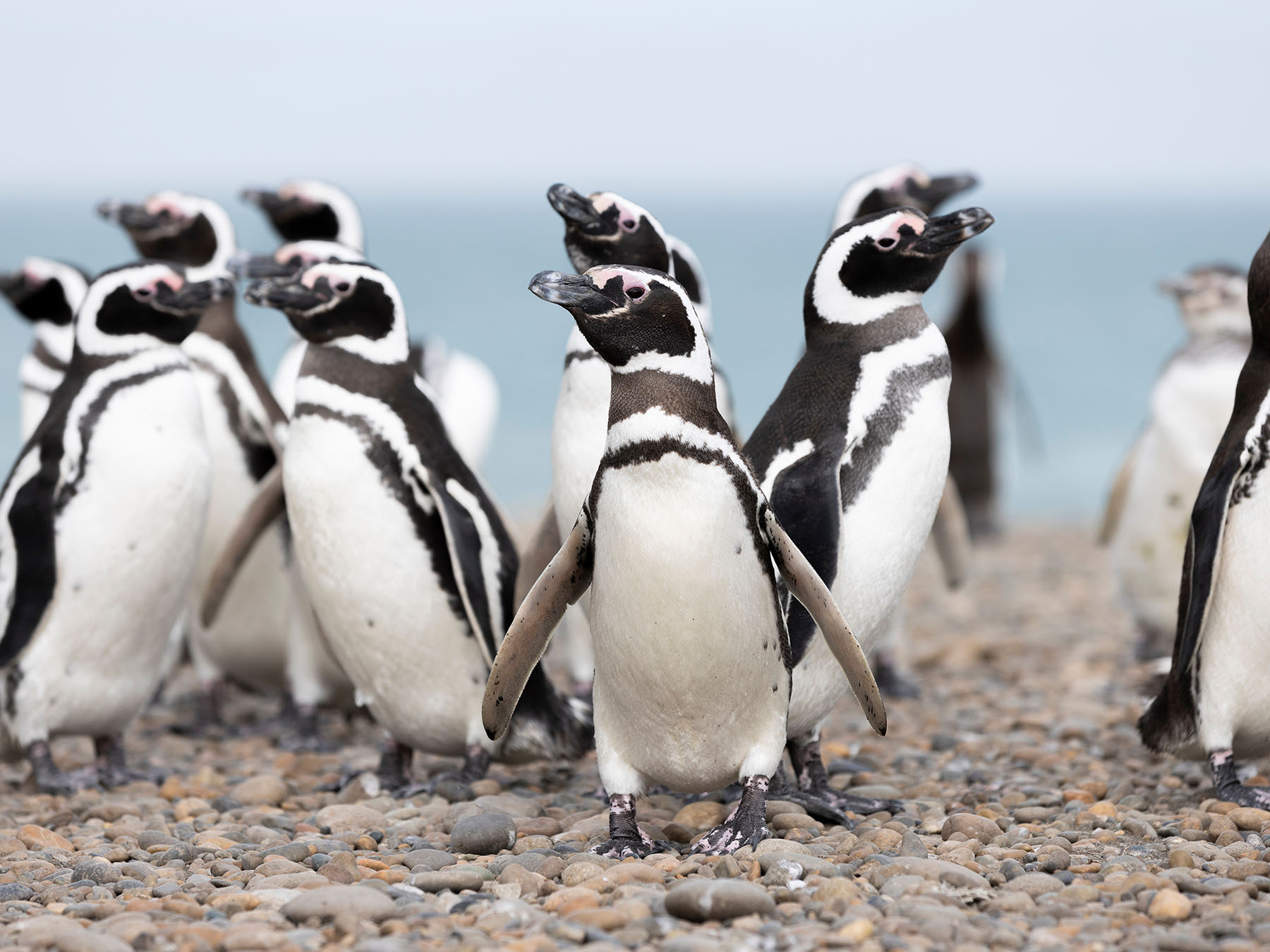
Quick facts
- Length
- 60–75 cm
- Wingspan
- 76–91 cm
- Weight
- 2700–6500 g
- Lifespan
- 15–20 years · oldest recorded 30 years
- Family
- Penguins
- Migration
- Partial migrant
- Global status (IUCN)
- Least Concern
- World population
- 2,200,000 - 3,200,000 mature individuals
- Population trend
- Decreasing
- Scientific name
- Spheniscus magellanicus
Sources
4- 1BirdLife International. 2020. Spheniscus magellanicus. The IUCN Red List of Threatened Species 2020: e.T22697822A157428850. Source (opens in a new tab)
- 2BirdLife International. 2020. Spheniscus magellanicus. The IUCN Red List of Threatened Species 2020: e.T22697822A157428850. Source (opens in a new tab)
- 3BirdLife International. 2020. Spheniscus magellanicus. The IUCN Red List of Threatened Species 2020: e.T22697822A157428850. Source (opens in a new tab)
- 4Scolaro, On a longevity record of the Magellanic penguin, J Field Ornithol, 61:377-484 (1990)

Checked by
Nathan Cope, founder and editor
Nathan founded Birdfact and leads its writers and contributors in the UK, the US and Canada. He has watched and studied birds for more than ten years, and checks every article and species guide before it’s published.