


Kittiwake
Black-legged Kittiwake · Rissa tridactyla
By the Birdfact teamChecked by Nathan Cope
On this page15 sections
How to recognise it
What do Kittiwakes look like?
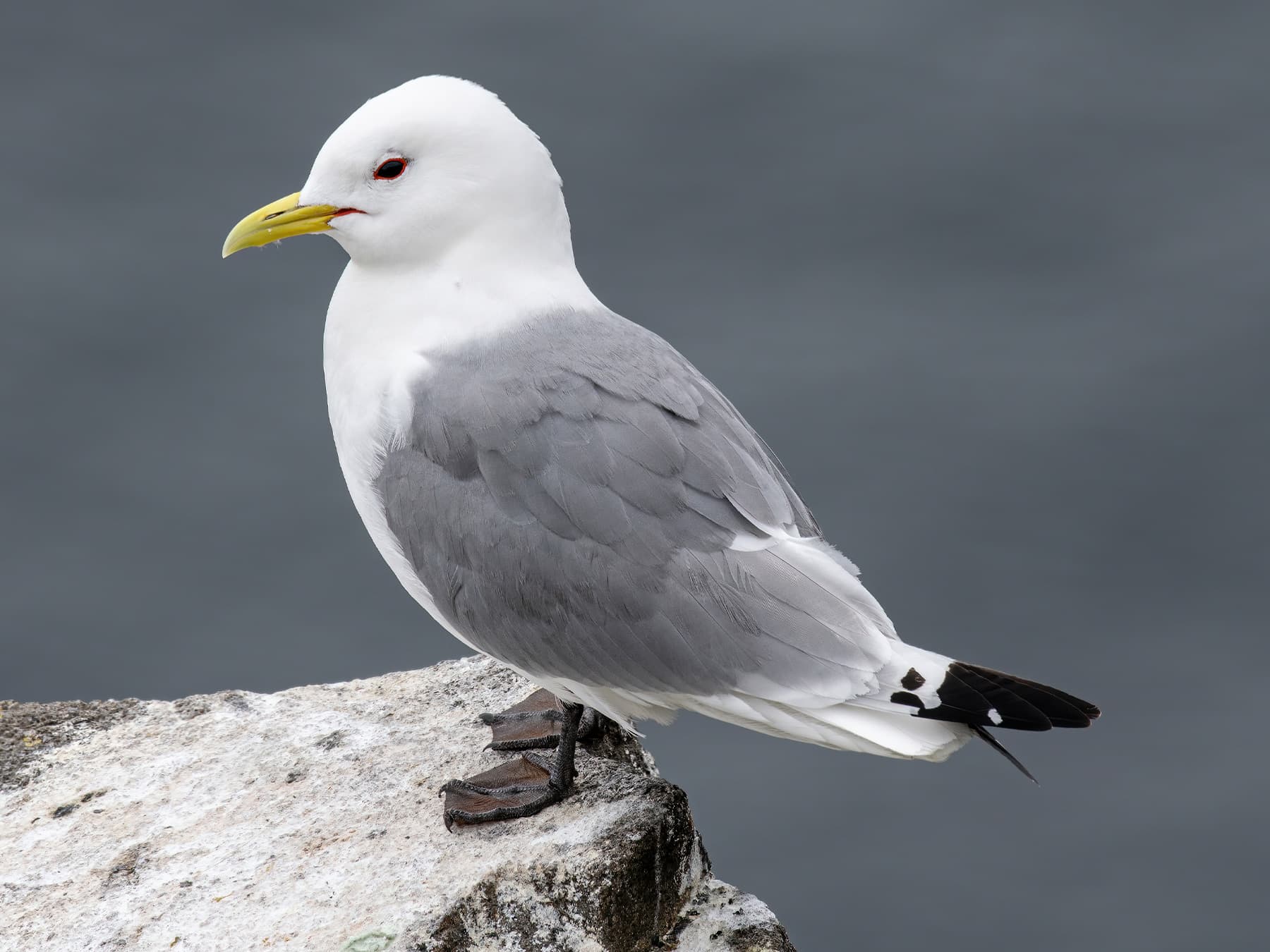
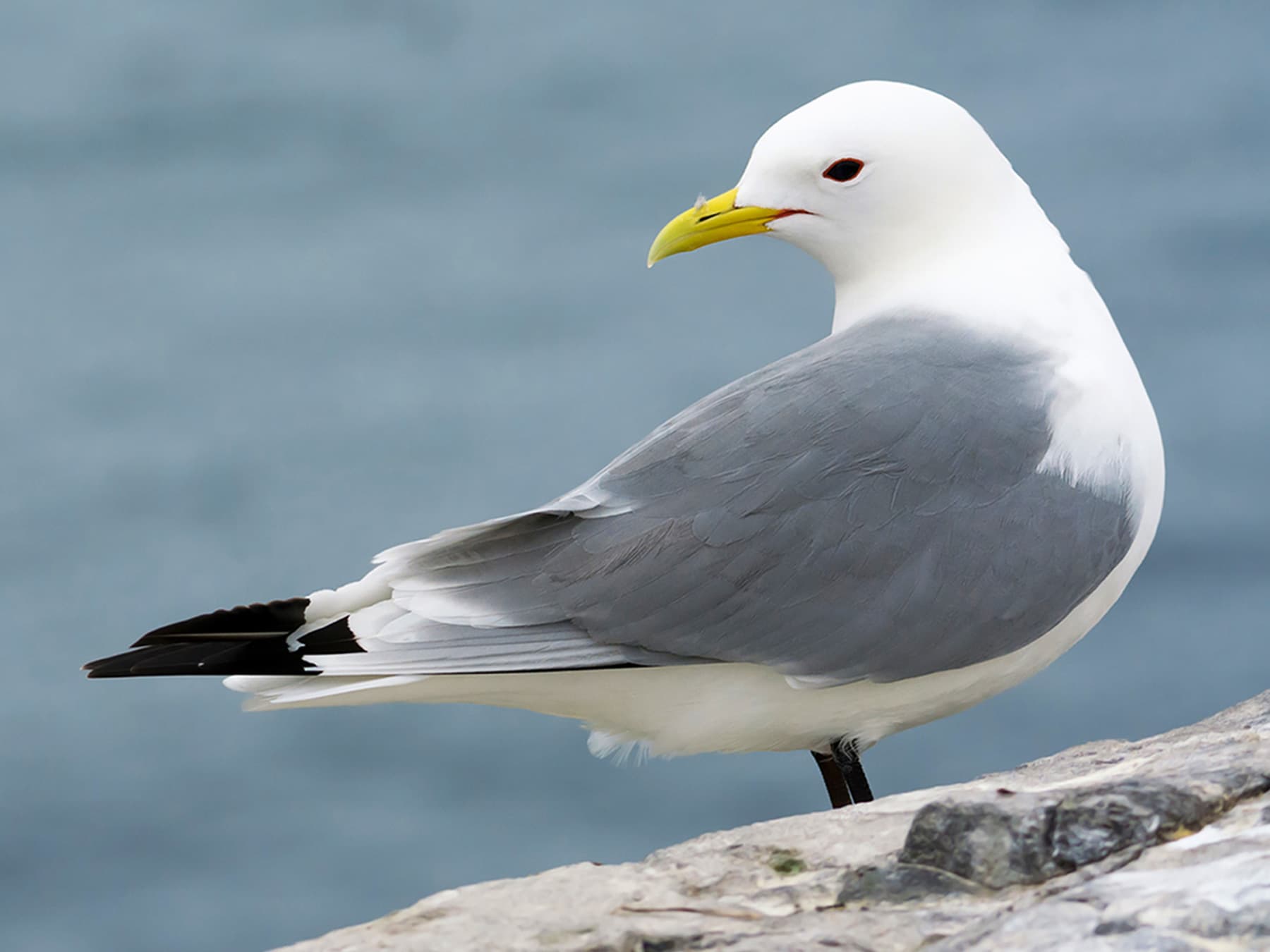
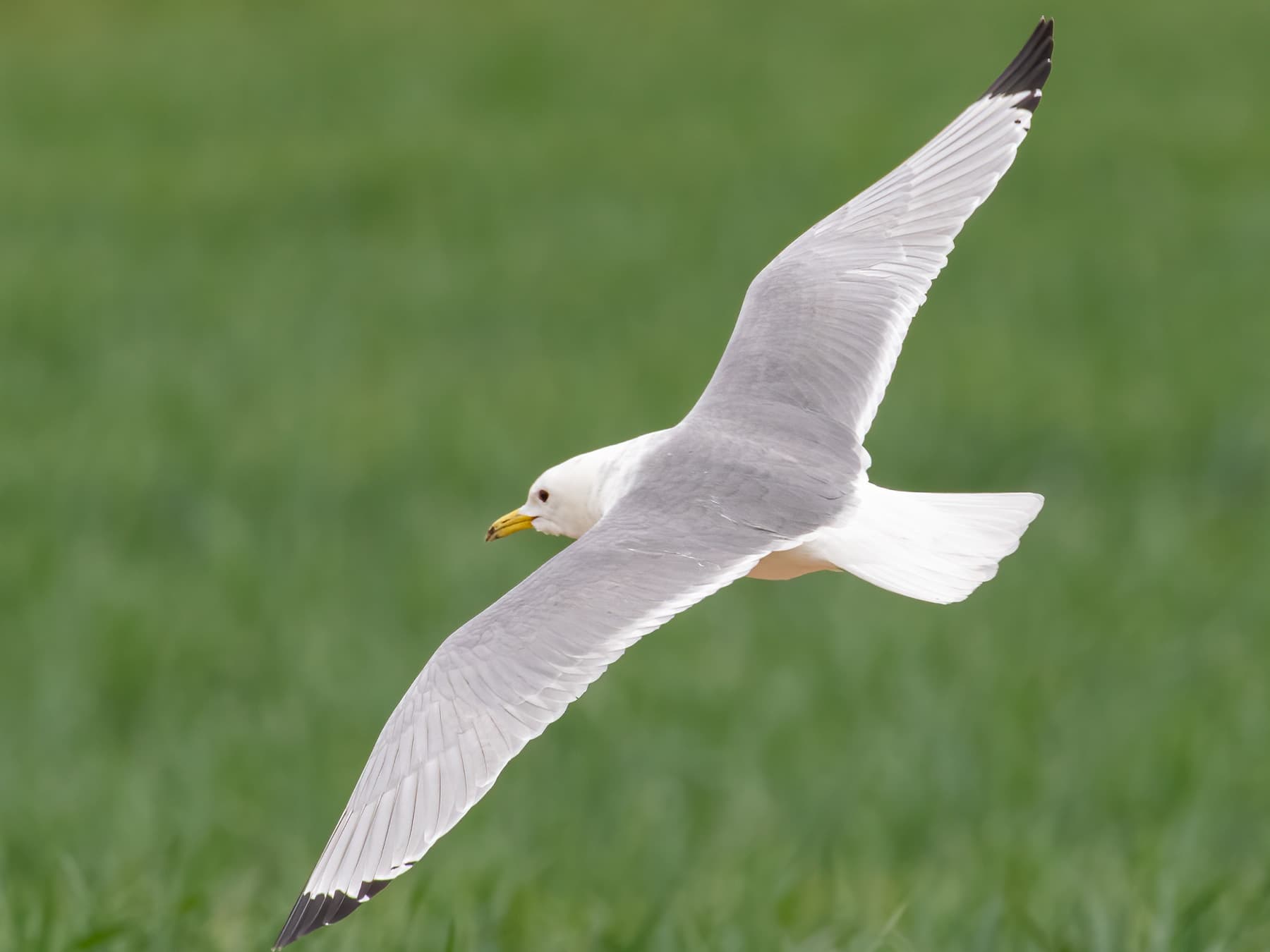
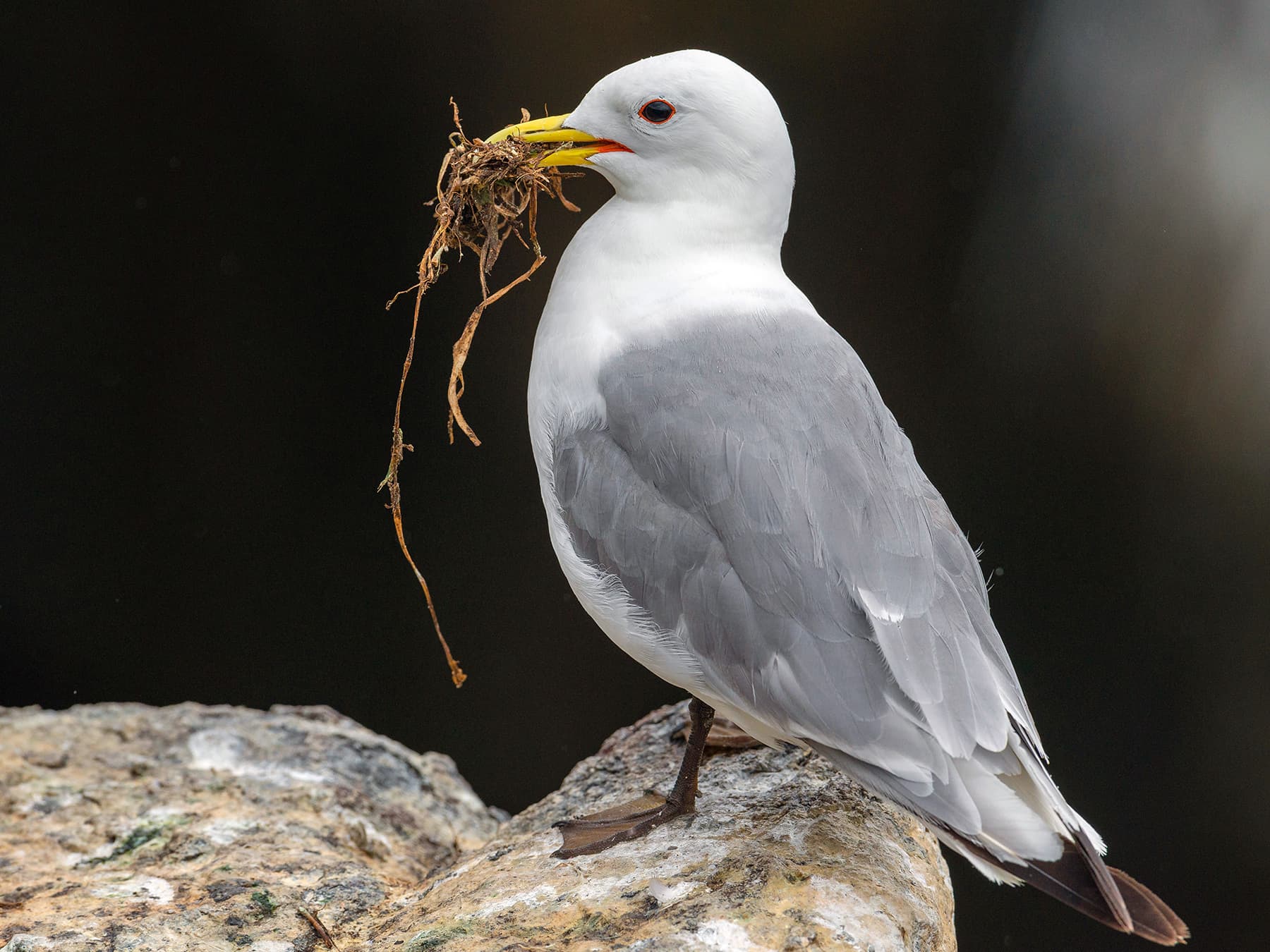
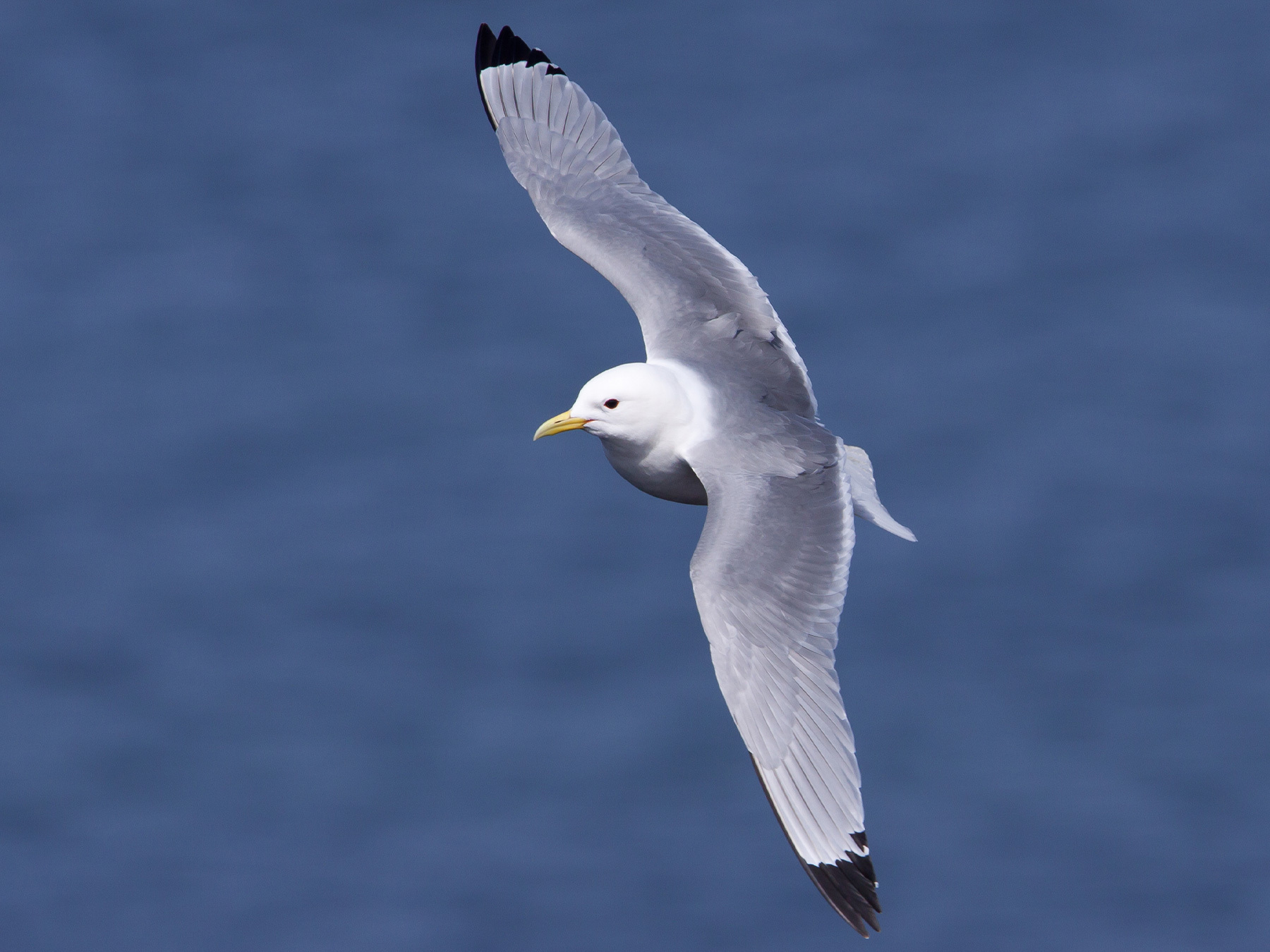
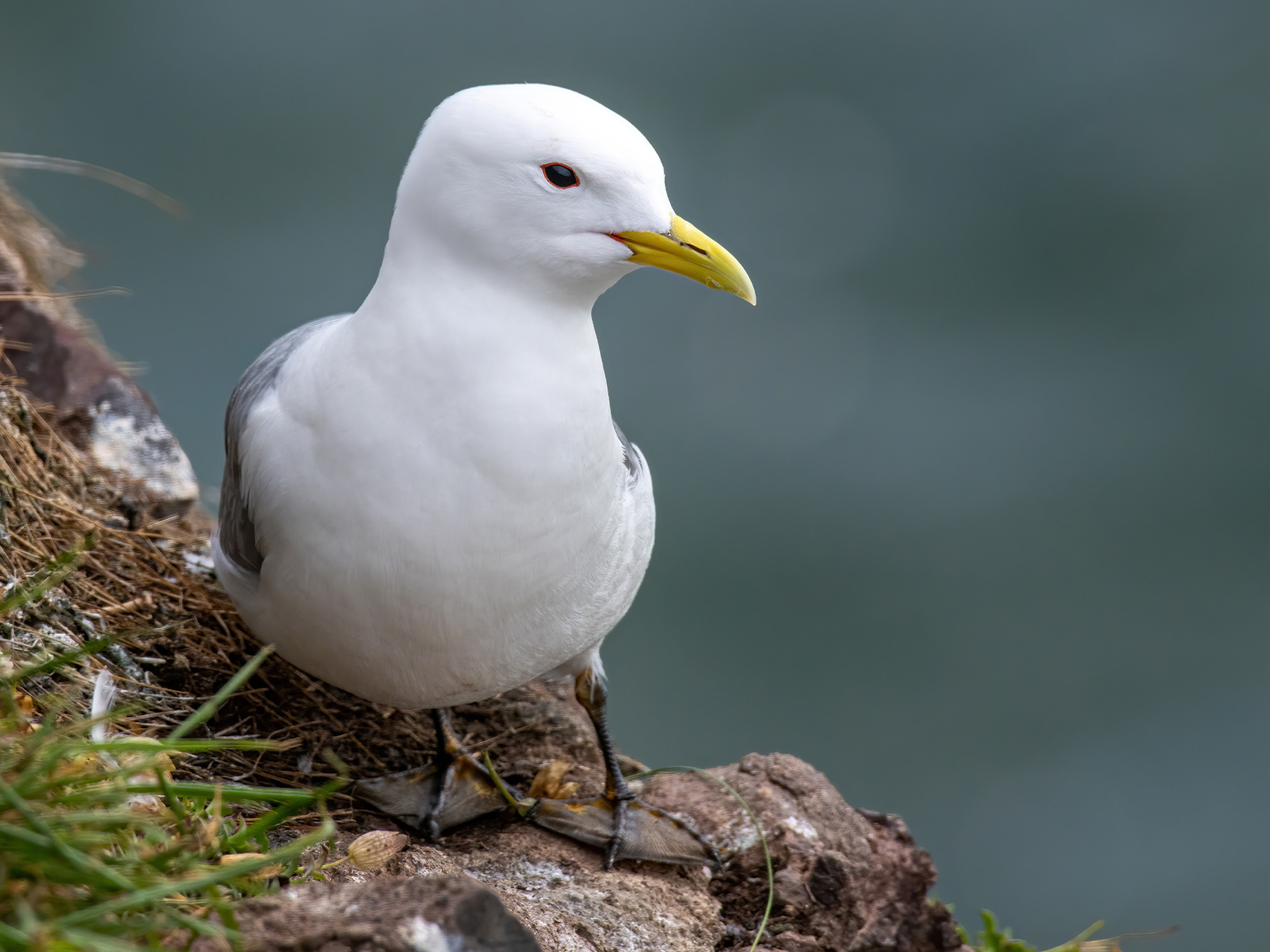
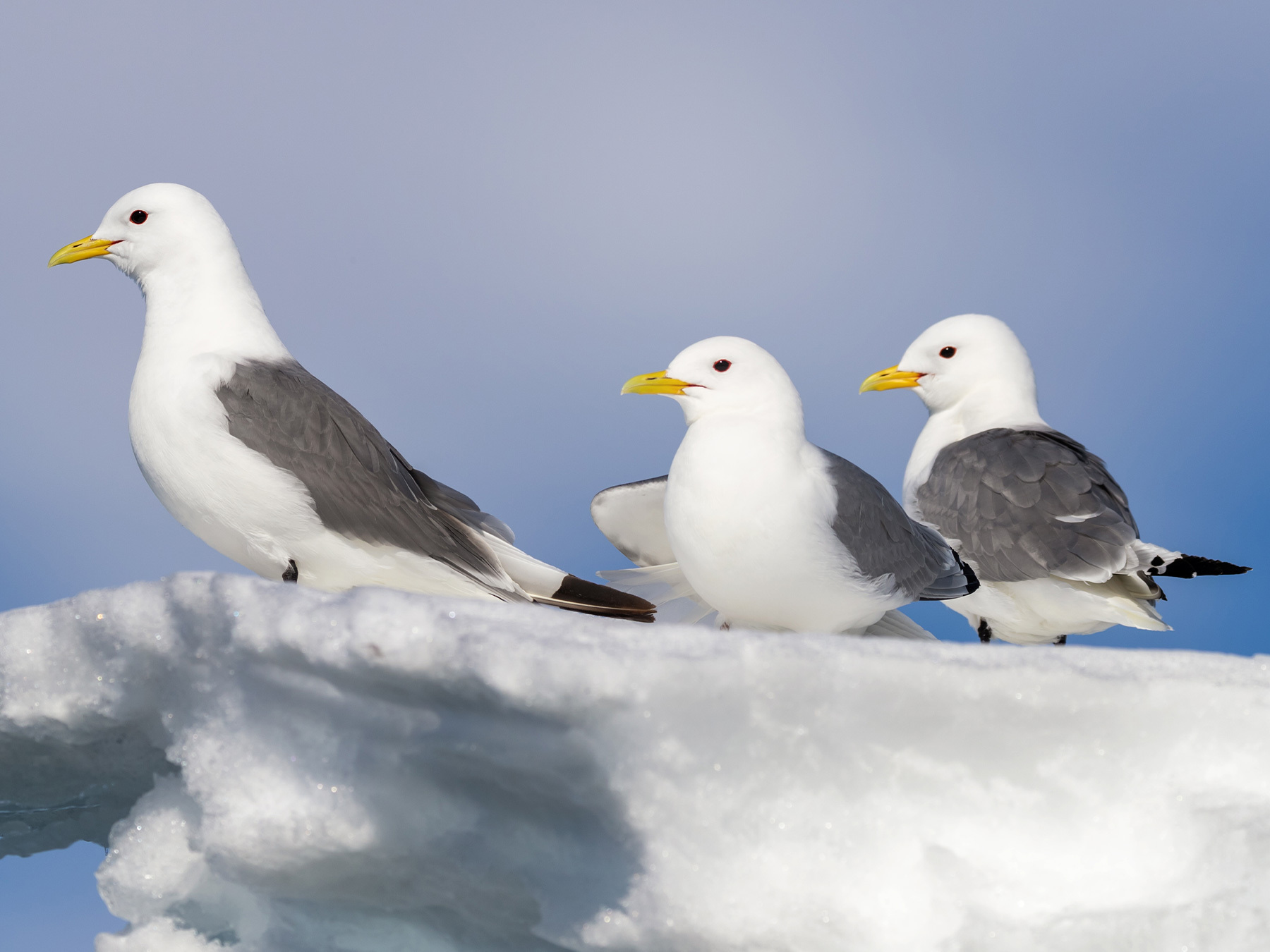
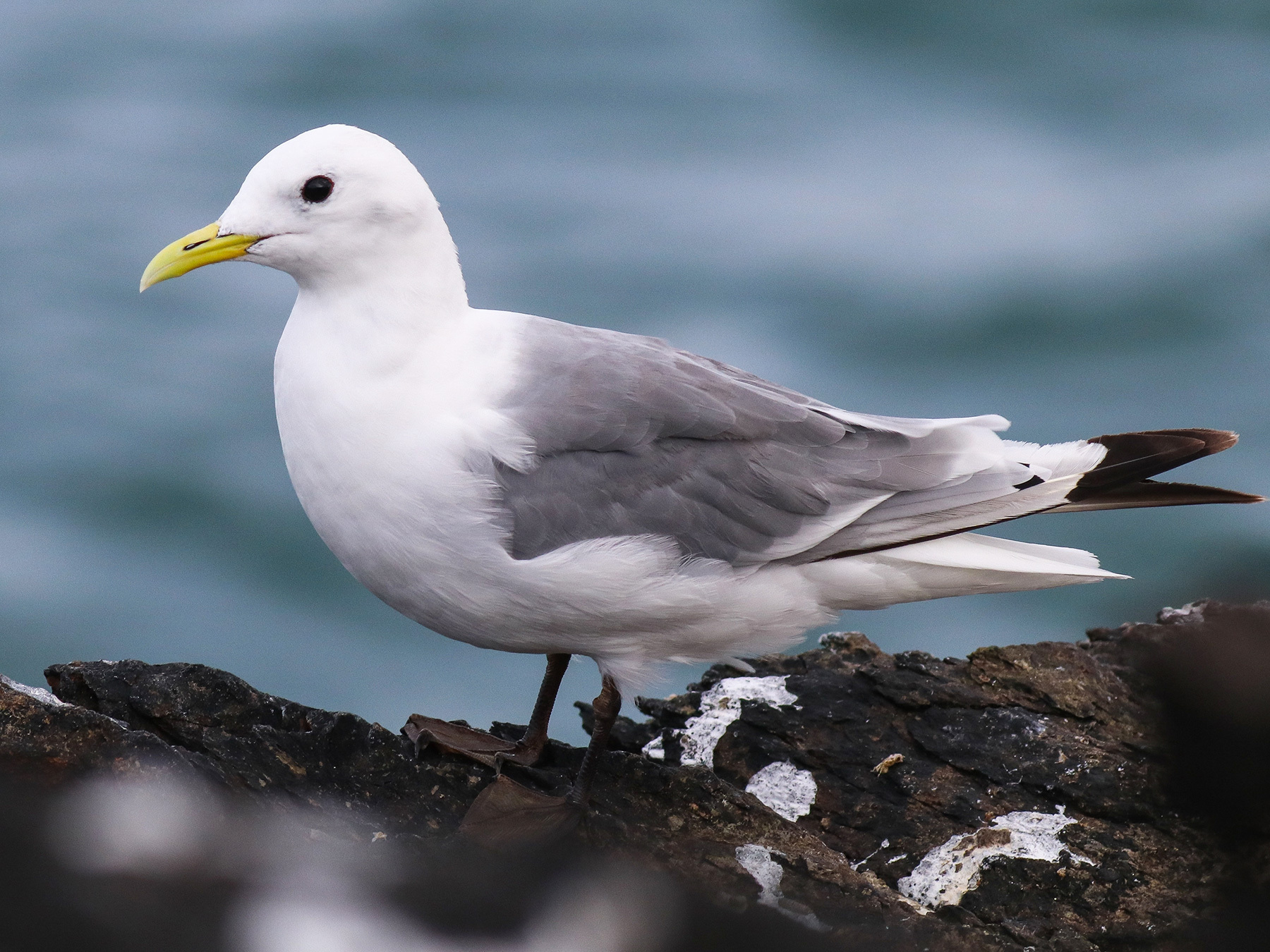
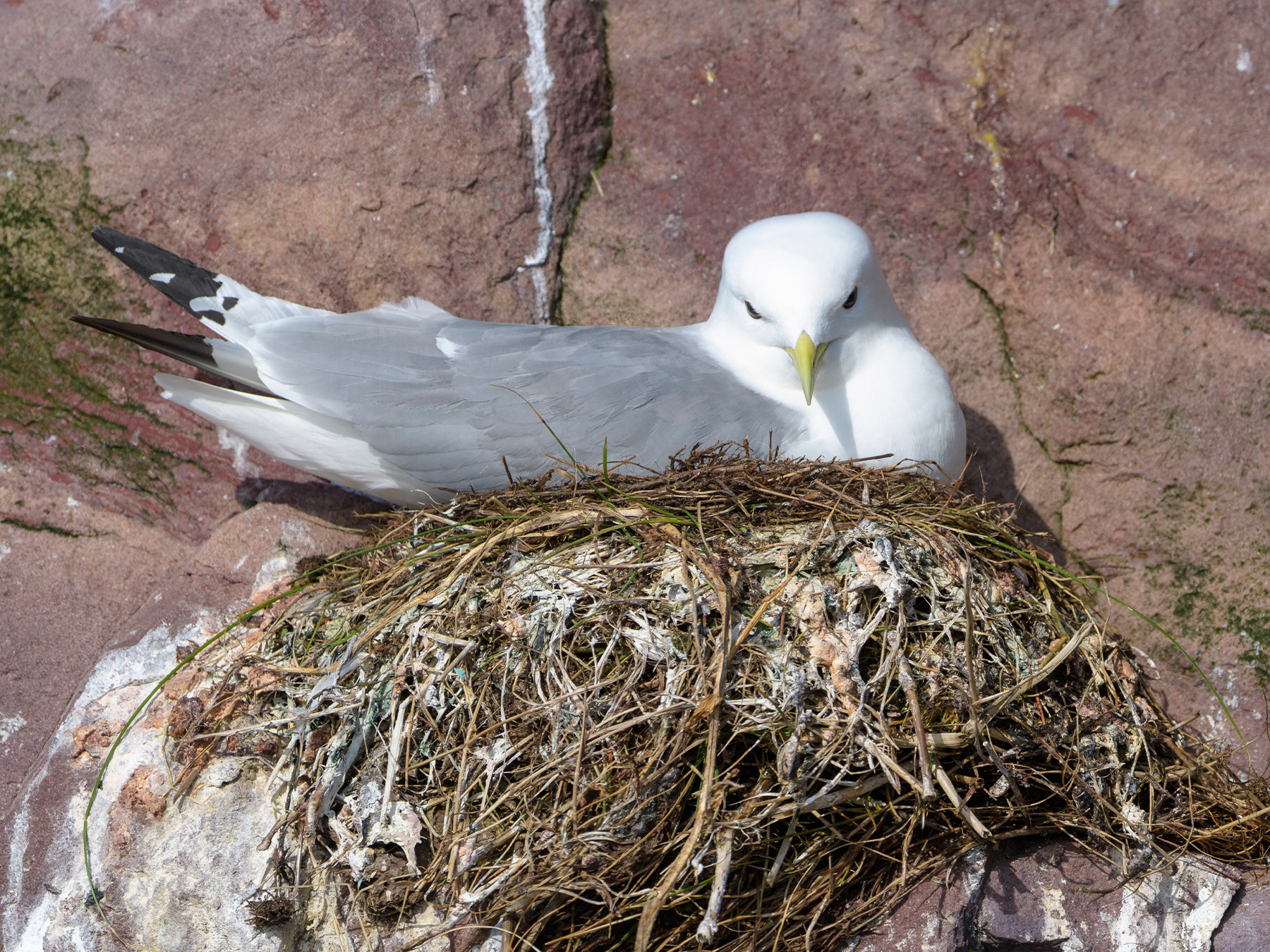
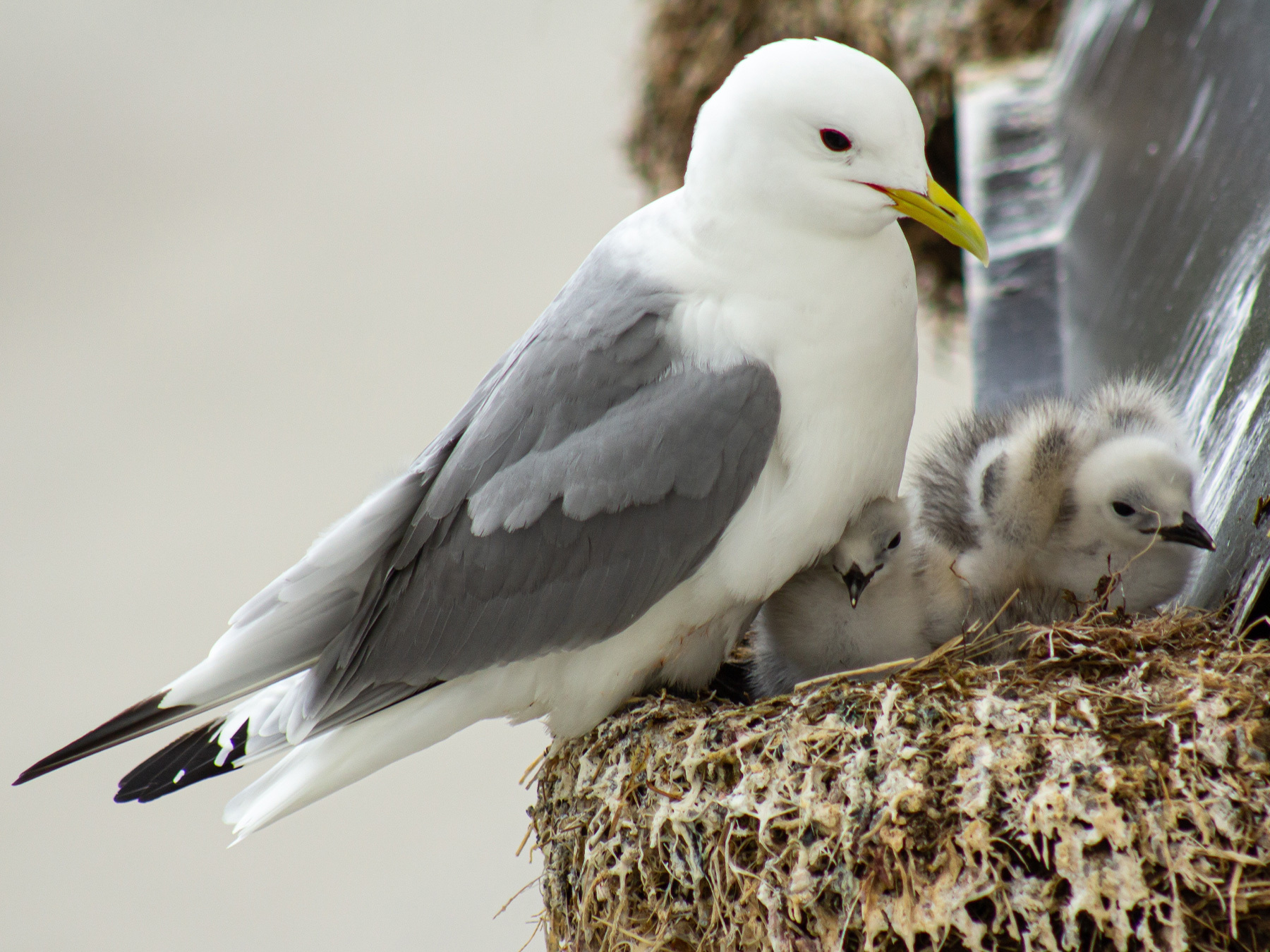
The breeding Kittiwake has a grey back, pure white head and underparts, dark eyes and a yellow bill. They have black wingtips and short black legs and feet. Their feet are webbed, and the hind toe is much reduced. This missing digit explains their scientific epithet, which means three-toed.
Non-breeding adult Kittiwakes of both sexes develop dark markings around the face and head. The top of the head and back of the neck are greyish, and there are darker marks on the nape and around the eyes.
Females and males have the same plumages at all stages of their lifecycles and are best distinguished by behavioural differences and size measurements.
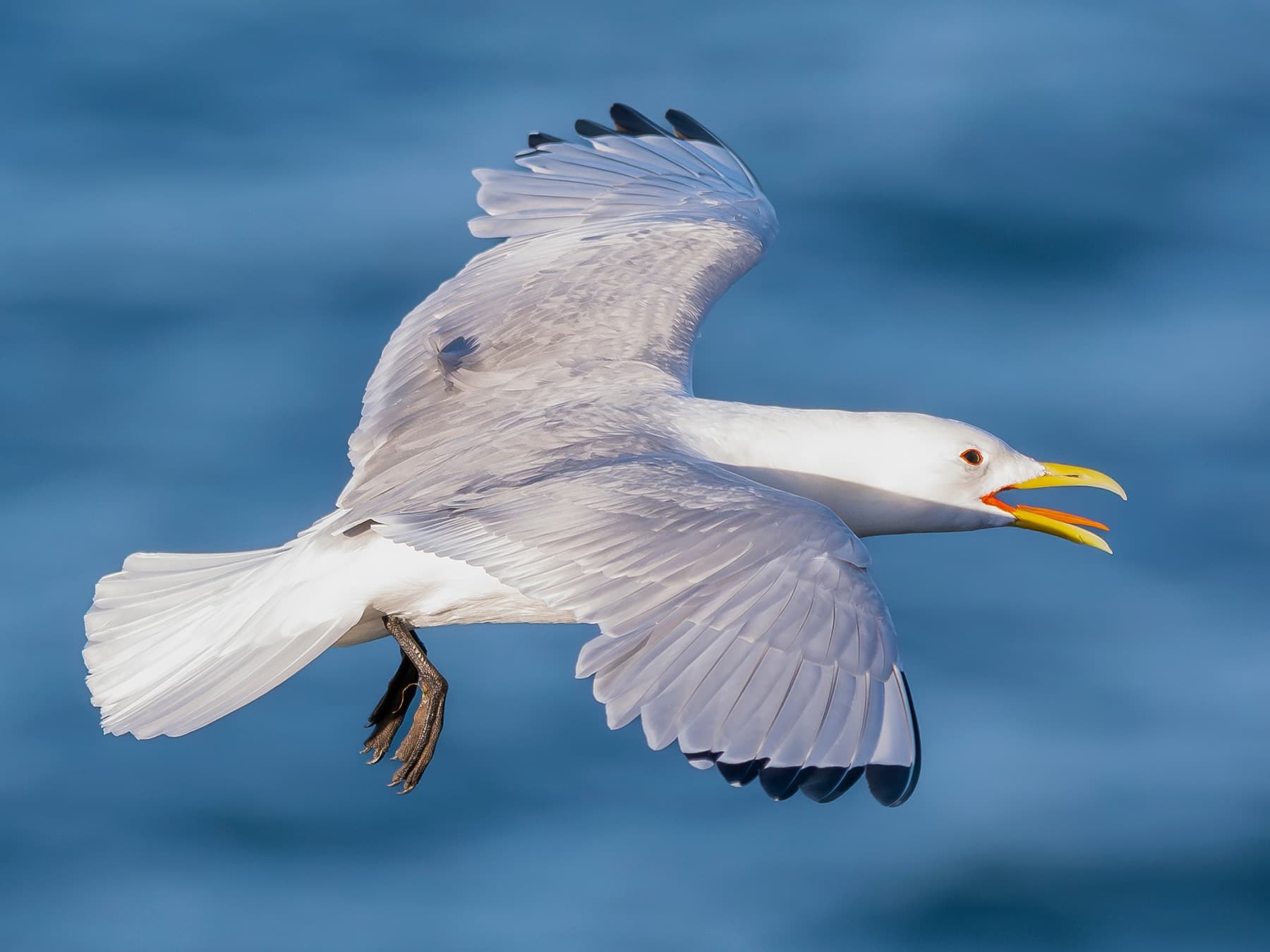
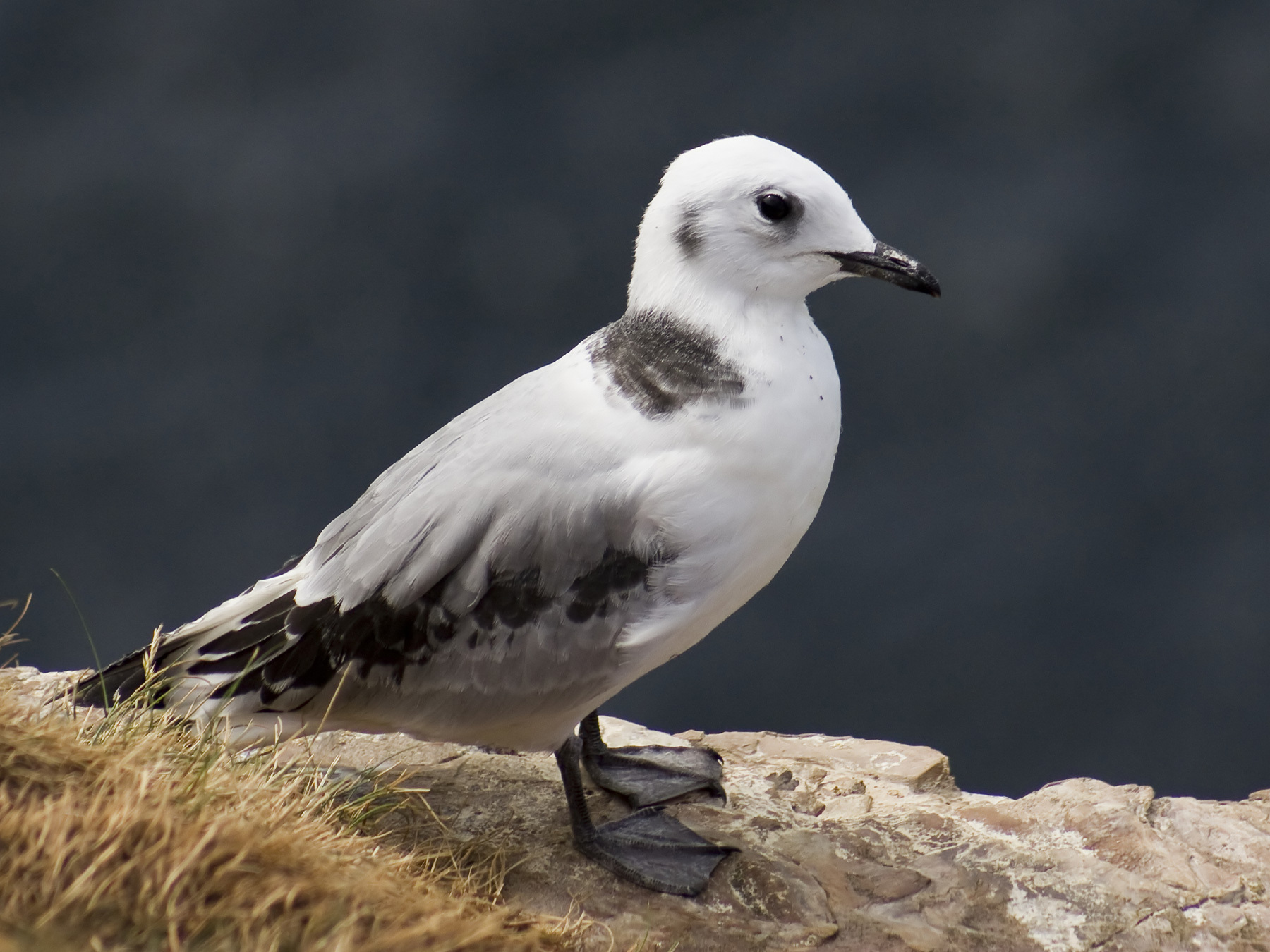
Juveniles Kittiwakes (known as Tarrocks in northern Scotland) have a black tail tip and a distinctive black W-shaped marking across their wings and back when seen in flight. At rest, they show a black bar across each wing and a black collar and bill.
Kittiwakes are most easily confused with the Common Gull. However, Common Gulls have longer, yellow legs and show white wing tips in flight.
How big are Kittiwakes?
The Kittiwake is a medium-sized gull, larger than the Black-headed Gull but much smaller than the Herring Gull.
Length
Kittiwakes have a total body length of 38 to 41 centimetres. Females are slightly shorter on average.
Weight
These stocky gulls weigh 300 to 500 grams. Males are approximately ten percent heavier than females.
Wingspan
Kittiwakes have a wingspan of 95 to 110 centimetres. Males have slightly longer wings than females.
Its size
Adults- Length
- 37–41 cm
- Wingspan
- 91–110 cm
- Weight
- 305–525 g
Its song and calls
What sound does a Kittiwake make?
The typical Kittiwake call is a nasal three-noted ‘ki-ti-WAKE’. They produce a variety of other gull-like calls when greeting each other at the nest, before leaving the nest, and in alarm.
- Call0:00 / 0:59
Recorded in Pembrokeshire, Wales
Lawrence Shove / The British Library Board · Wikimedia Commons · CC BY-SA 4.0
When and where to see it
OctoberLeaving
Most recorded in October
- 1. Pembrokeshire1.4%
- 2. Aberdeen1.2%
- 3. Orkney Islands1.0%
- 4. Sligo0.82%
- 5. Shetland Islands0.72%
Each dot is a county, state or province: the bigger and darker, the larger the bird’s share of that place’s bird records that month. Grey dots: no regular records. The ringed point is the centre of the bird’s records this month; the arrow shows how it moved since last month, and the dashed loop its path through the year. “Arrivals” colours places where it becomes regular this month (orange) or is in its last regular month (grey). GBIF eBird Observation Dataset, 2019–2024. Map data: Natural Earth, US Census Bureau; place centres © OpenStreetMap contributors.
In your area
See when the Kittiwake is recorded in your county, state or province.
How often the Kittiwake turns up in the UK, Ireland, the United States and Canada through the year, from birdwatchers' records.
United Kingdom
Resident · all year · most records in July
Ireland
Summer visitor · all year · most records in August
United States
Resident · all year · most records in June
Canada
Summer visitor · all year · most records in September
Show as a table
| Month | United Kingdom | Ireland | United States | Canada |
|---|---|---|---|---|
| January | 0.066% (regular) | 0.14% (regular) | 0.008% (regular) | 0.016% (regular) |
| February | 0.068% (regular) | 0.26% (regular) | 0.007% (regular) | 0.006% (regular) |
| March | 0.081% (regular) | 0.32% (regular) | 0.006% (regular) | 0.019% (regular) |
| April | 0.11% (regular) | 0.31% (regular) | 0.003% (regular) | 0.016% (regular) |
| May | 0.17% (regular) | 0.47% (regular) | 0.007% (regular) | 0.018% (regular) |
| June | 0.24% (regular) | 0.54% (regular) | 0.029% (regular) | 0.056% (regular) |
| July | 0.27% (regular) | 0.63% (regular) | 0.015% (regular) | 0.083% (regular) |
| August | 0.25% (regular) | 0.74% (regular) | 0.014% (regular) | 0.080% (regular) |
| September | 0.18% (regular) | 0.41% (regular) | 0.014% (regular) | 0.11% (regular) |
| October | 0.14% (regular) | 0.34% (regular) | 0.010% (regular) | 0.070% (regular) |
| November | 0.12% (regular) | 0.19% (regular) | 0.016% (regular) | 0.047% (regular) |
| December | 0.078% (regular) | 0.14% (regular) | 0.014% (regular) | 0.034% (regular) |
Recorded regularly in
Worldwide: recorded regularly in 45 countries
Countries where it was recorded in at least 3 of the 6 years 2019–2024. Linked countries have their own bird list.
Europe (31)
Africa (1)
North America (6)
Data: EOD – eBird Observation Dataset (Cornell Lab of Ornithology), accessed via GBIF.org, CC BY 4.0. Records from 2019–2024, aggregated and filtered by Birdfact. How these lists are made
What is the habitat of a Kittiwake?
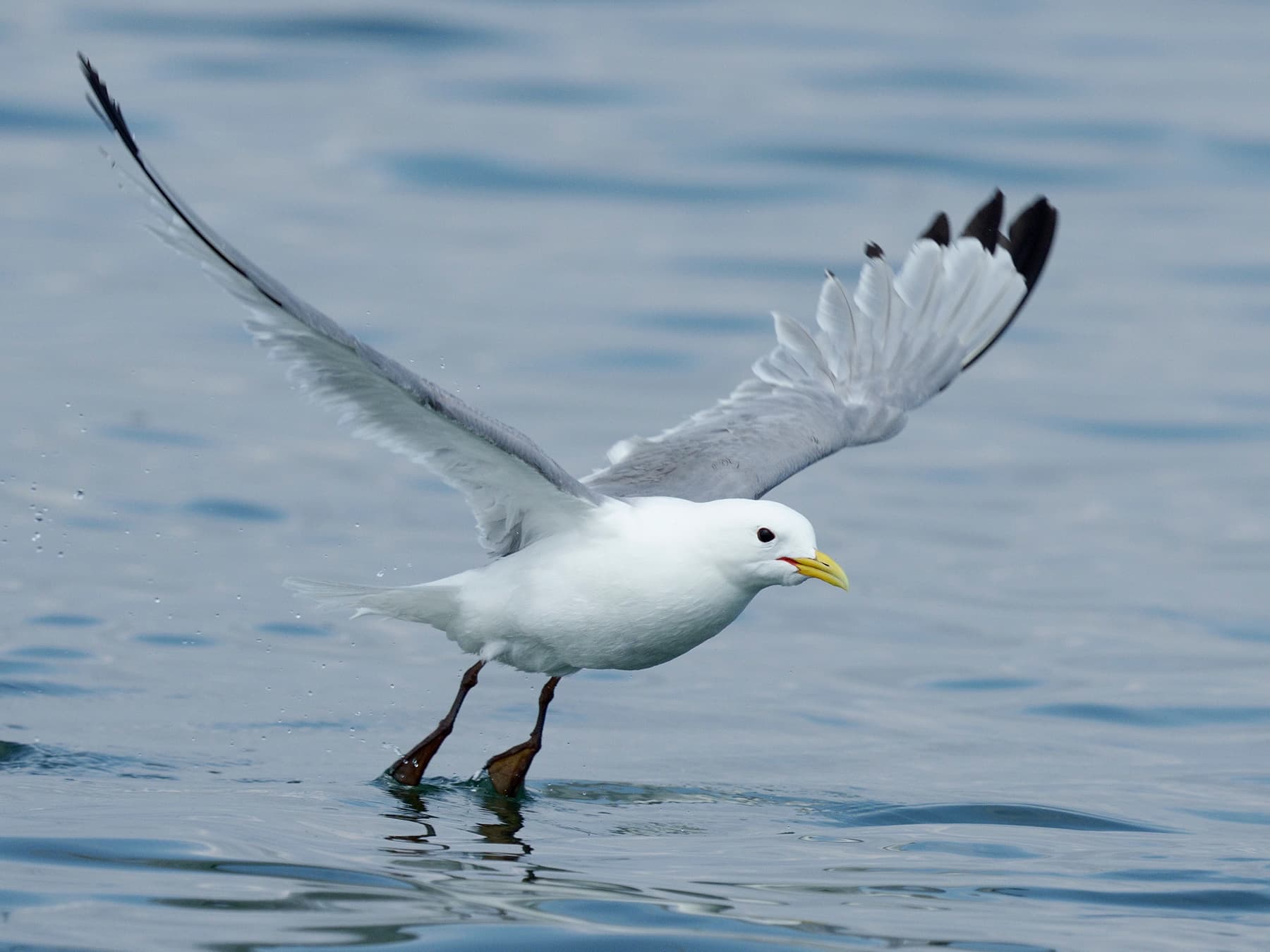
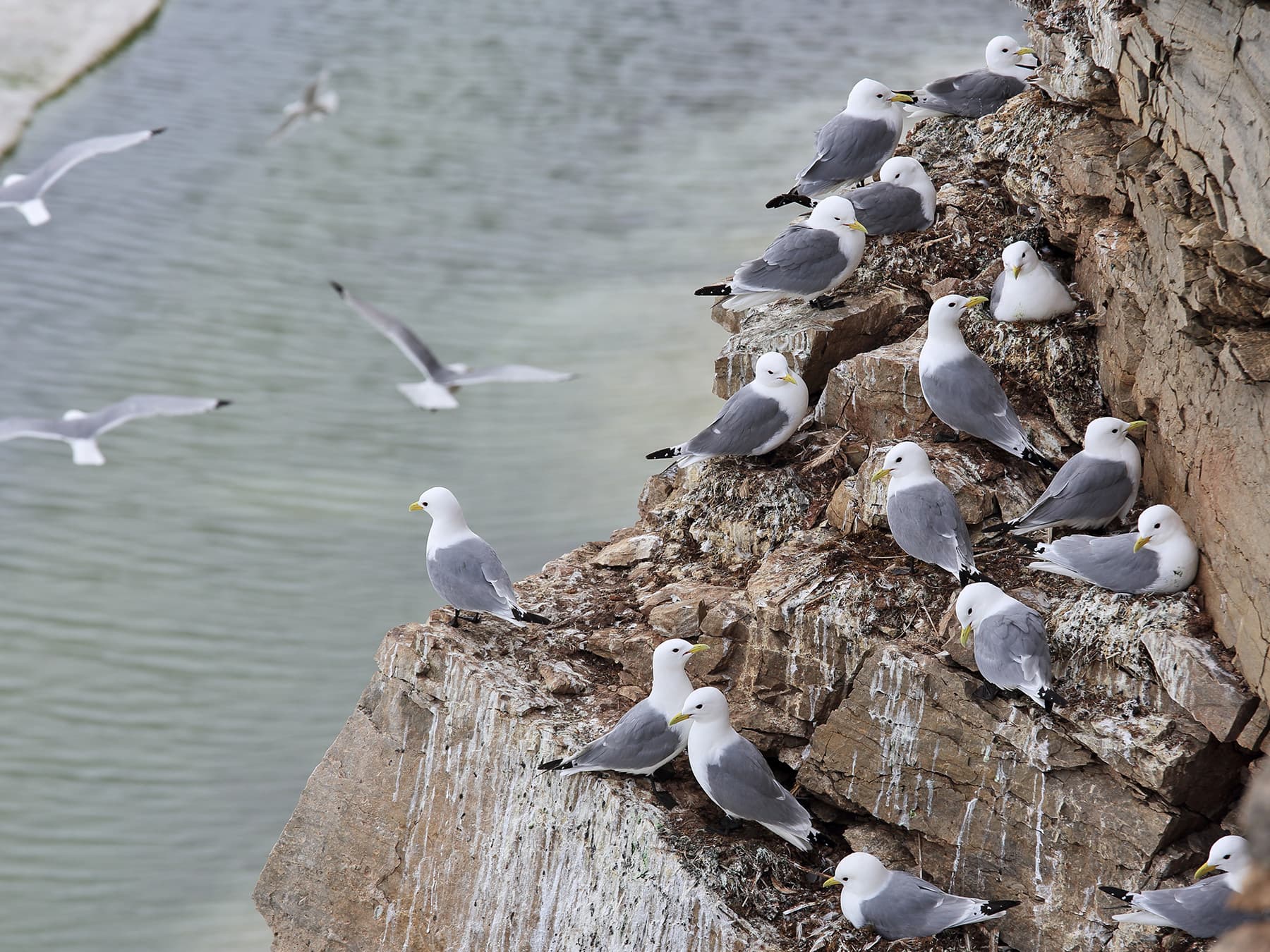
Kittiwakes are only associated with temperate and Arctic marine environments. These birds spend the winter in oceanic waters out at sea but breed at the coast on sea cliffs and some artificial structures like bridges. They forage near the shore or over the continental shelf in the breeding season.
What is the range of a Kittiwake?
The Kittiwake has a disjointed breeding range around the coast of the United Kingdom. They are most widespread in the northeast and southwest. Elsewhere the species has a scattered breeding range in coastal areas of Scandinavia, Russia, Iceland, Greenland, Canada, Alaska, and New England.
Where do Kittiwakes live?
Kittiwakes live on the coast and out to sea, so you’re unlikely to spot them around freshwater bodies and rubbish tips like some other UK gull species. These birds are comfortable on the water and in the air and stay far out to sea in the non-breeding season. The breeding season is spent between coastal waters and the rocky cliffs where they nest.
How rare are Kittiwakes?
Kittiwakes are common gulls in the United Kingdom, although their population is in a worrying decline. Their numbers have decreased drastically, and their range has contracted by about ten percent since the 1970s. There were an estimated 205,000 breeding pairs in the UK in 2015.
Where can you see Kittiwakes in the UK?
Seabird colonies between Yorkshire and Orkney, and on the northwest coast of Scotland, are the best place to look for Kittiwakes in the breeding season from February to August. However, you might see them along the coast until autumn or scan for them with your scope or binoculars from high viewpoints in the winter.
Migration
Do Kittiwakes migrate?
Kittiwakes are migratory across most of their range, although their movements are not fully understood. These birds return to the United Kingdom to nest each year but disperse out to sea to forage in the non-breeding season.
Are Kittiwakes native to the UK?
Kittiwakes are native to the United Kingdom. These wide-ranging birds have not been introduced outside of their native range.
Tips for seeing it
- Look for Kittiwakes along rocky coastlines, especially near breeding colonies
- Observe their distinctive flight pattern: light, buoyant with rapid wing beats
- Listen for their namesake call, a sharp 'kittee-wa-aaake'
- In the UK, visit coastal areas in Scotland, Northern England, or Wales for the best viewing opportunities
What it eats
What do Kittiwakes eat?
Kittiwakes feed predominantly on small fish like sand eels and herring. They also take smaller numbers of invertebrates like squid and krill. These birds catch their prey from the surface or dive to depths up to about a meter.
These birds do not feed on scraps or visit rubbish dumps like other gull species, although they occasionally feed on carrion, land animals like earthworms, and vegetable matter like grain.
What do Kittiwake chicks eat?
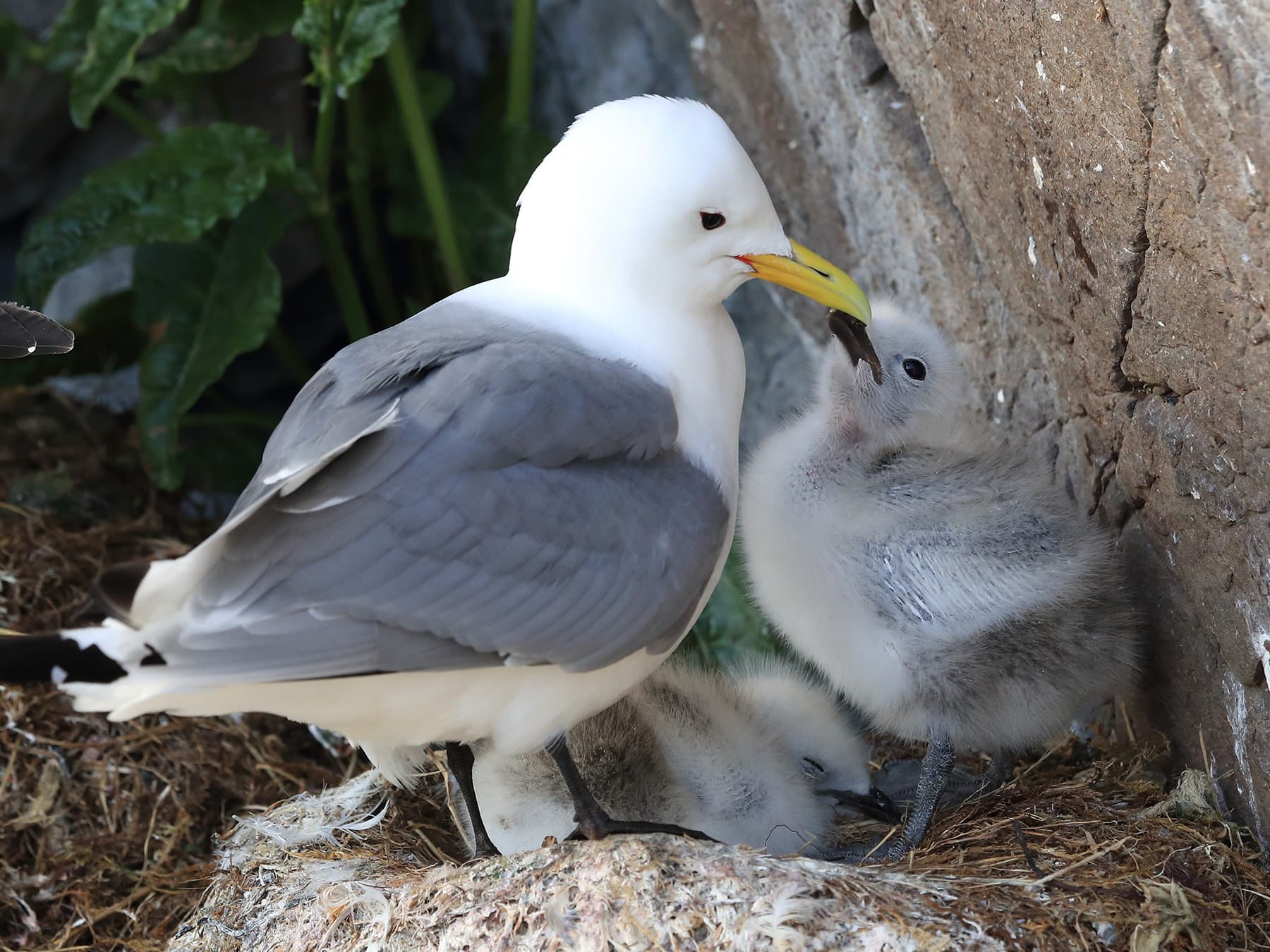
Kittiwake chicks eat small marine fish like sprats and sand eels. Both parents provide food, already softened in the crop. The young birds take the fish from their parent's throats.
Nesting and breeding
Where do Kittiwakes nest?
Kittiwakes usually nest in colonies on sea cliffs. They use the same colonies year after year, and the number of pairs varies between a few dozen and several thousand. The male chooses a spot on a ledge and attracts a female to the nest site.
The ledge is usually very narrow, and the nest they build from mud and vegetation often overhangs its edge. Some Kittiwakes nest in rather unusual places. The colony on the Tyne Bridge in Newcastle is remarkable for being so far inland.
When do Kittiwakes nest?
Most Kittiwakes nest between April and August in the United Kingdom. However, their timing varies between colonies, with birds at higher latitudes nesting later in the season.
What do Kittiwake eggs look like?
Kittiwakes lay a single brood of one to three grey and brown speckled eggs, each measuring approximately 57 millimetres long and 41 millimetres at their widest.
Do Kittiwakes mate for life?
Kittiwakes are monogamous during the nesting season but do not necessarily mate for life. Pairs often reunite for consecutive years, although divorce is common.
Behaviour
Are Kittiwakes aggressive?
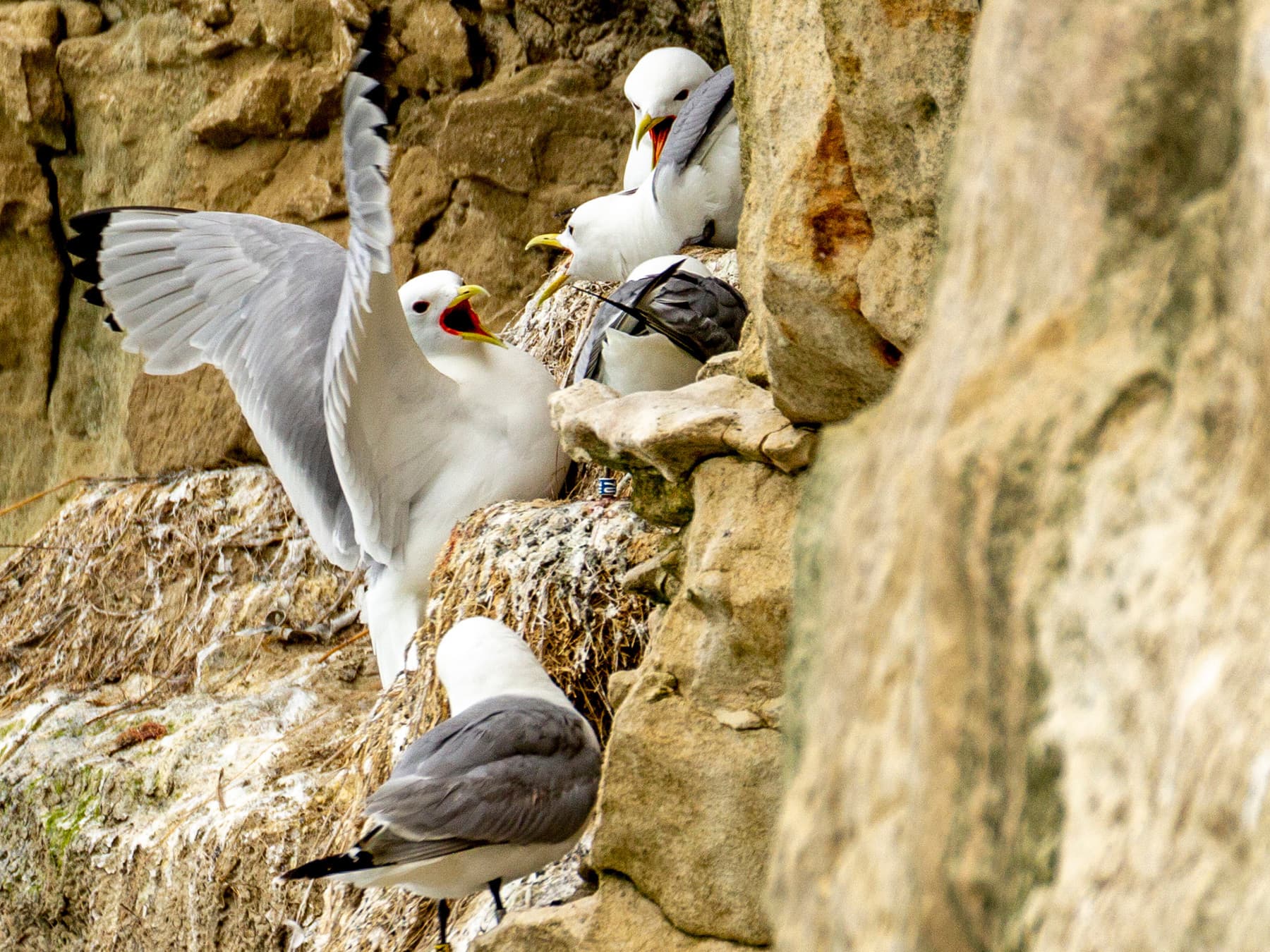
Kittiwakes exhibit various aggressive behaviours at the nesting colony. They fight by grasping each other’s bills and wrestling, sometimes tumbling to the water below. These birds are not aggressive towards humans and never attempt to steal food.
Where do Kittiwakes sleep at night?
Kittiwakes sleep on cliffs, beaches, and at their nests during the breeding season. They are mostly diurnal, although they also forage at night. In the non-breeding season, these remarkable birds spend most of their time in flight and even sleep in the air when far out to sea.
Lifespan and predators
How long do Kittiwakes live?
Wild Kittiwakes can live for over 28 years, although their typical lifespan is estimated to be about 12 years. They are a long-lived species and attain sexual maturity only after four years.
What are the predators of Kittiwakes?
Kittiwakes are vulnerable to a variety of other bird species at each stage of their lives. Peregrine Falcons and Skuas may hunt adult birds, and their eggs and chicks are vulnerable to other gulls and Ravens. Mammals rarely hunt them, although foxes may take adults, eggs, or nestlings from accessible nest sites.
Are Kittiwakes protected?
Kittiwakes are protected by the Wildlife and Countryside Act 1981.
Are Kittiwakes endangered?
The Kittiwake is not formally endangered. The species is classified as ‘Vulnerable’ due to rapid and continuing declines and has a red conservation status in the UK.
Conservation
Kittiwakes face significant threats due to climate change and overfishing, which affect their food supply. Their conservation status is Vulnerable, with populations declining in many parts of their range.
Conservation efforts focus on protecting breeding sites and managing fisheries to ensure adequate food availability.
Similar birds
Often mistaken for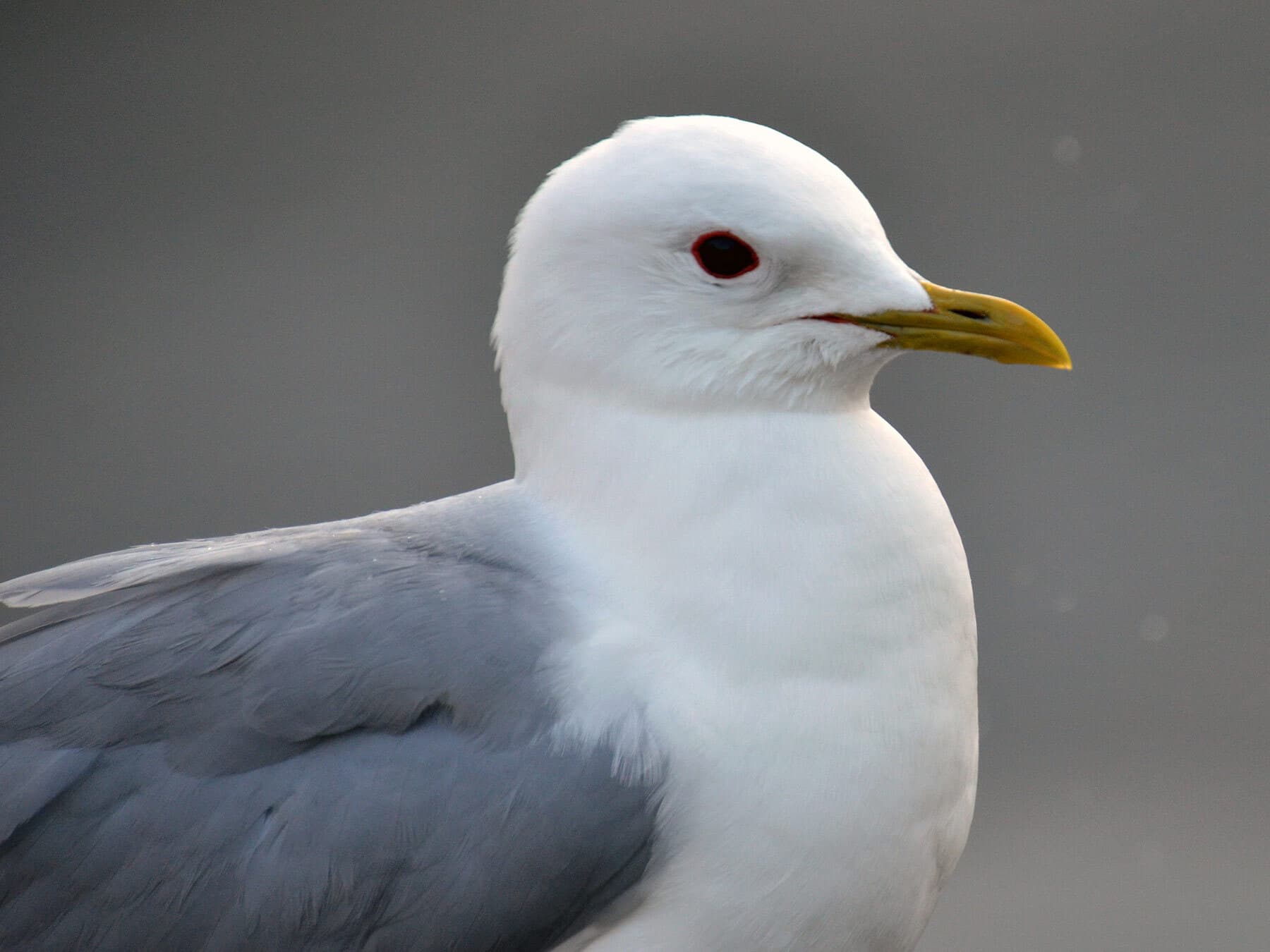
More photos
8 photos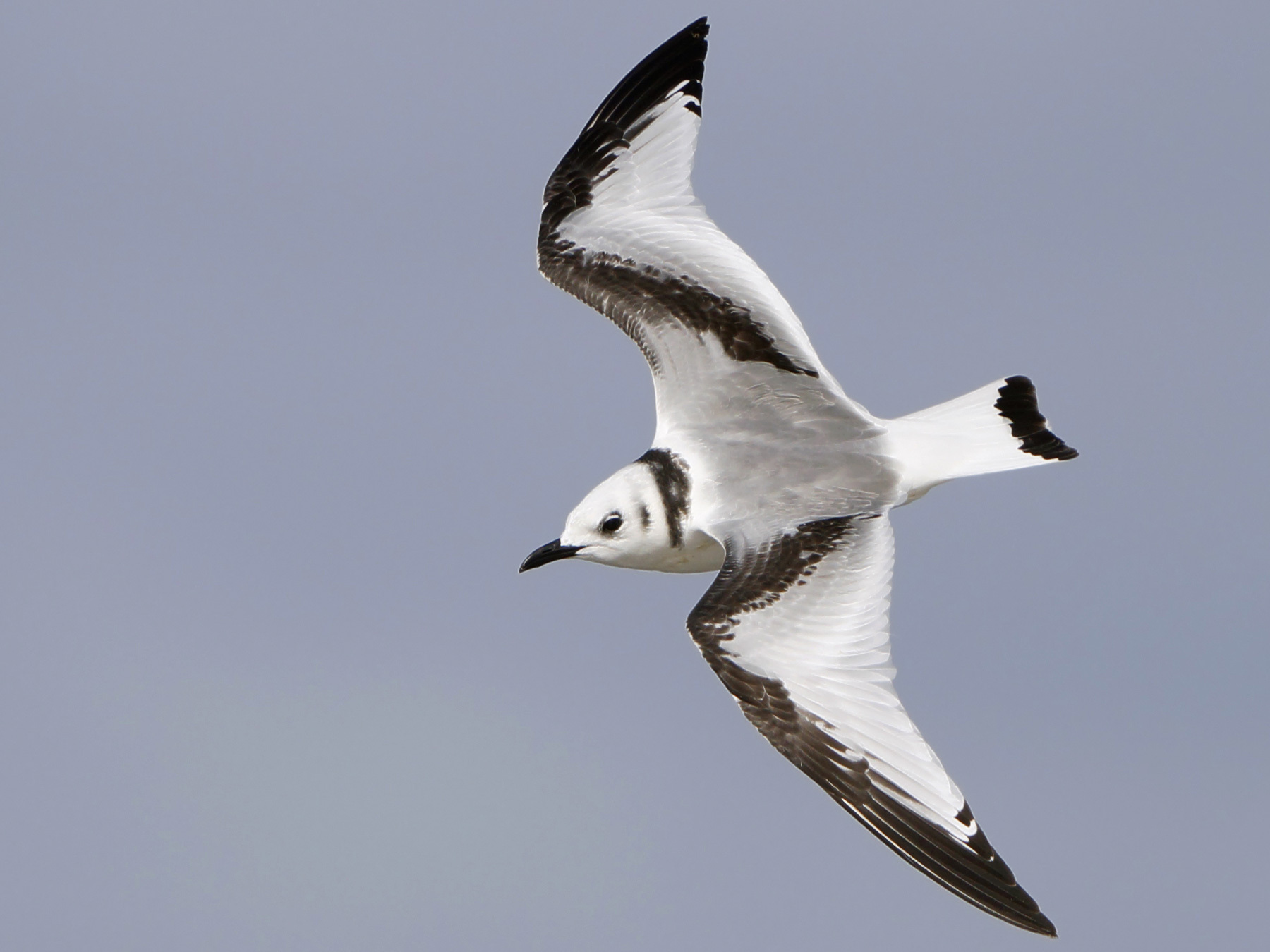
Kittiwake guides
6 guides- What Do Seagulls Actually Eat? Diet Secrets of These Clever Scavengers
- Do Seagulls Migrate? (All You Need To Know)
- Baby Seagulls: All You Need to Know (with Pictures)
- Seagull Nesting Secrets: Unveiling the Hidden Sanctuaries by the Sea
- What is a Group of Seagulls Called? (Complete List + Why?)
- How Long Do Seagulls Live?
Quick facts
- Length
- 37–41 cm
- Wingspan
- 91–110 cm
- Weight
- 305–525 g
- Lifespan
- 12–20 years
- Family
- Gulls & Terns
- Migration
- Long-distance Migrant
- Global status (IUCN)
- Vulnerable
- World population
- 14,600,000 - 15,700,000 individuals
- Population trend
- Decreasing
- Also called
- Black-legged Kittiwake
- Scientific name
- Rissa tridactyla
Questions
3What's the difference between a Kittiwake and a seagull?
Seagull is a common term for any number of gulls and does not refer to one particular species. In that sense, you could call a Kittiwake a seagull, although their common name is far more descriptive.
Why are Kittiwakes so called?
Kittiwakes take their quaint name from their typical nasal ‘ki-ti-WAKE’ call. They are noisy birds during the breeding season when large colonies gather to nest on sea cliffs.
How many Kittiwakes are in the UK?
Estimates put the breeding population of Kittiwakes in the United Kingdom at approximately 205,000 pairs in 2015. However, their population has been declining in recent decades, and this trend is likely to reflect in future surveys.
Sources
3- 1BirdLife International. 2019. Rissa tridactyla (amended version of 2018 assessment). The IUCN Red List of Threatened Species 2019: e.T22694497A155617539. Source (opens in a new tab)
- 2BirdLife International. 2019. Rissa tridactyla (amended version of 2018 assessment). The IUCN Red List of Threatened Species 2019: e.T22694497A155617539. Source (opens in a new tab)
- 3BirdLife International. 2019. Rissa tridactyla (amended version of 2018 assessment). The IUCN Red List of Threatened Species 2019: e.T22694497A155617539. Source (opens in a new tab)

Checked by
Nathan Cope, founder and editor
Nathan founded Birdfact and leads its writers and contributors in the UK, the US and Canada. He has watched and studied birds for more than ten years, and checks every article and species guide before it’s published.