


Horned Lark
Shore Lark · Eremophila alpestris
By the Birdfact teamChecked by Nathan Cope
On this page13 sections
How to recognise it
What do Horned Larks look like?
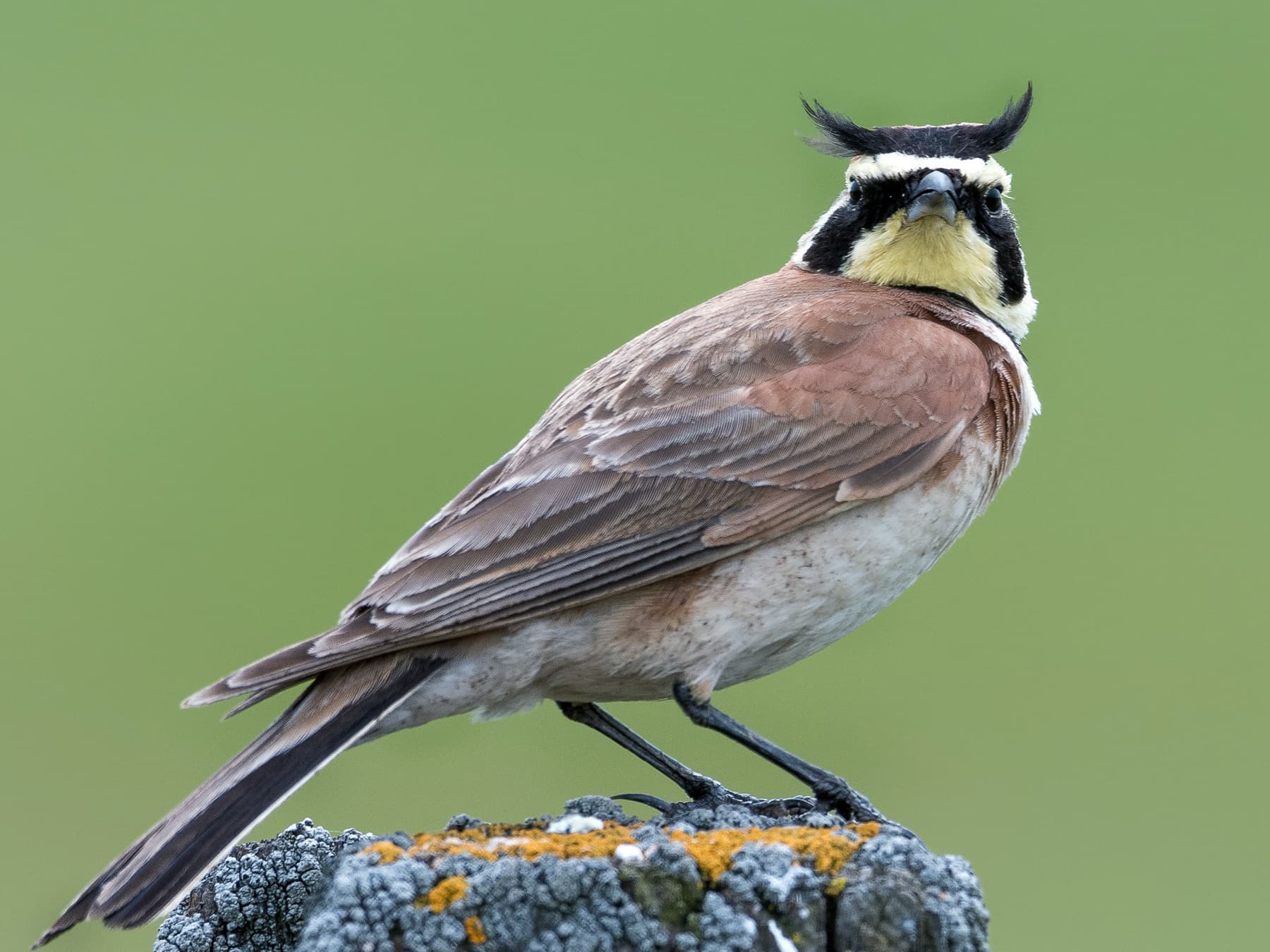
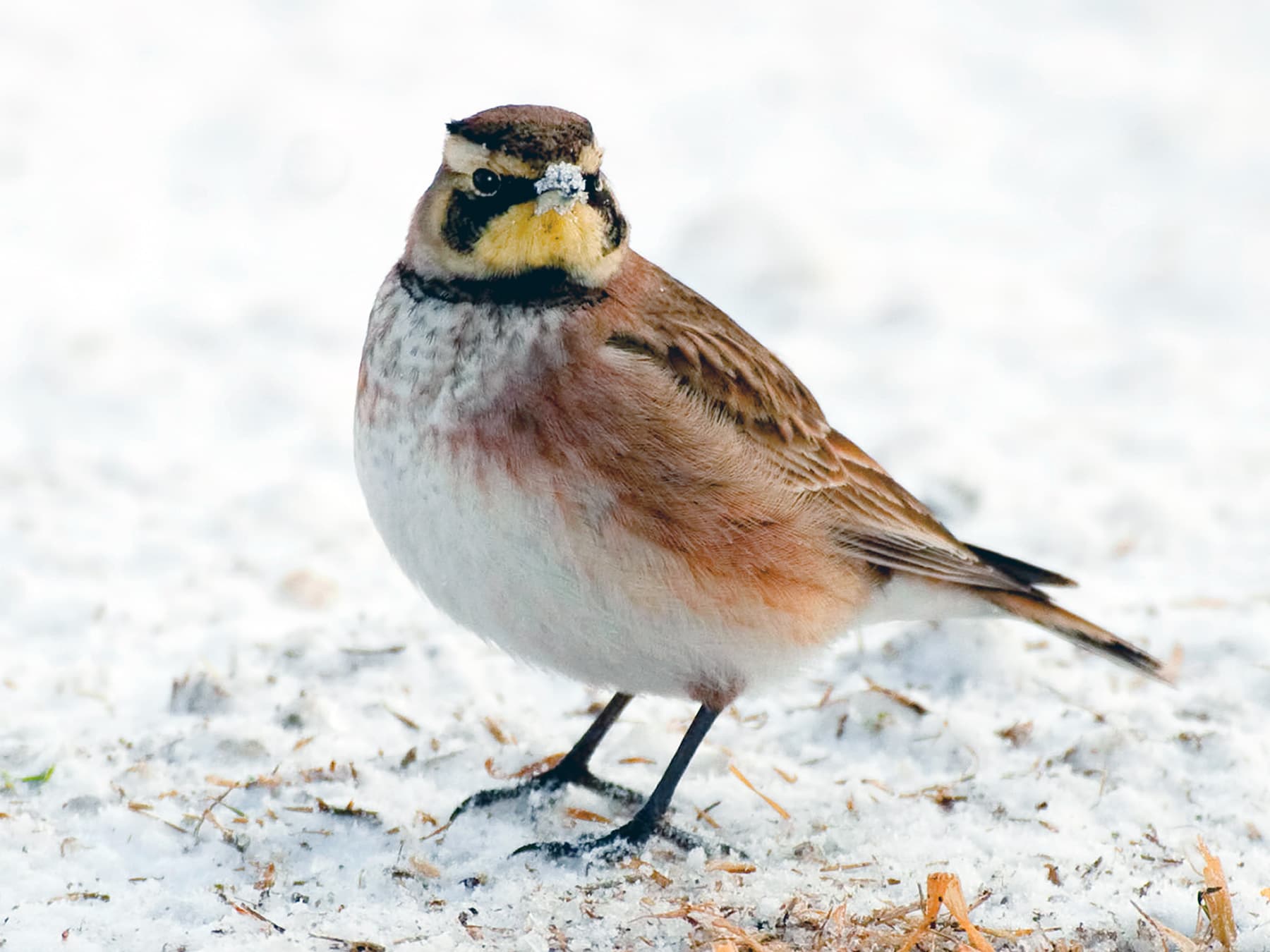
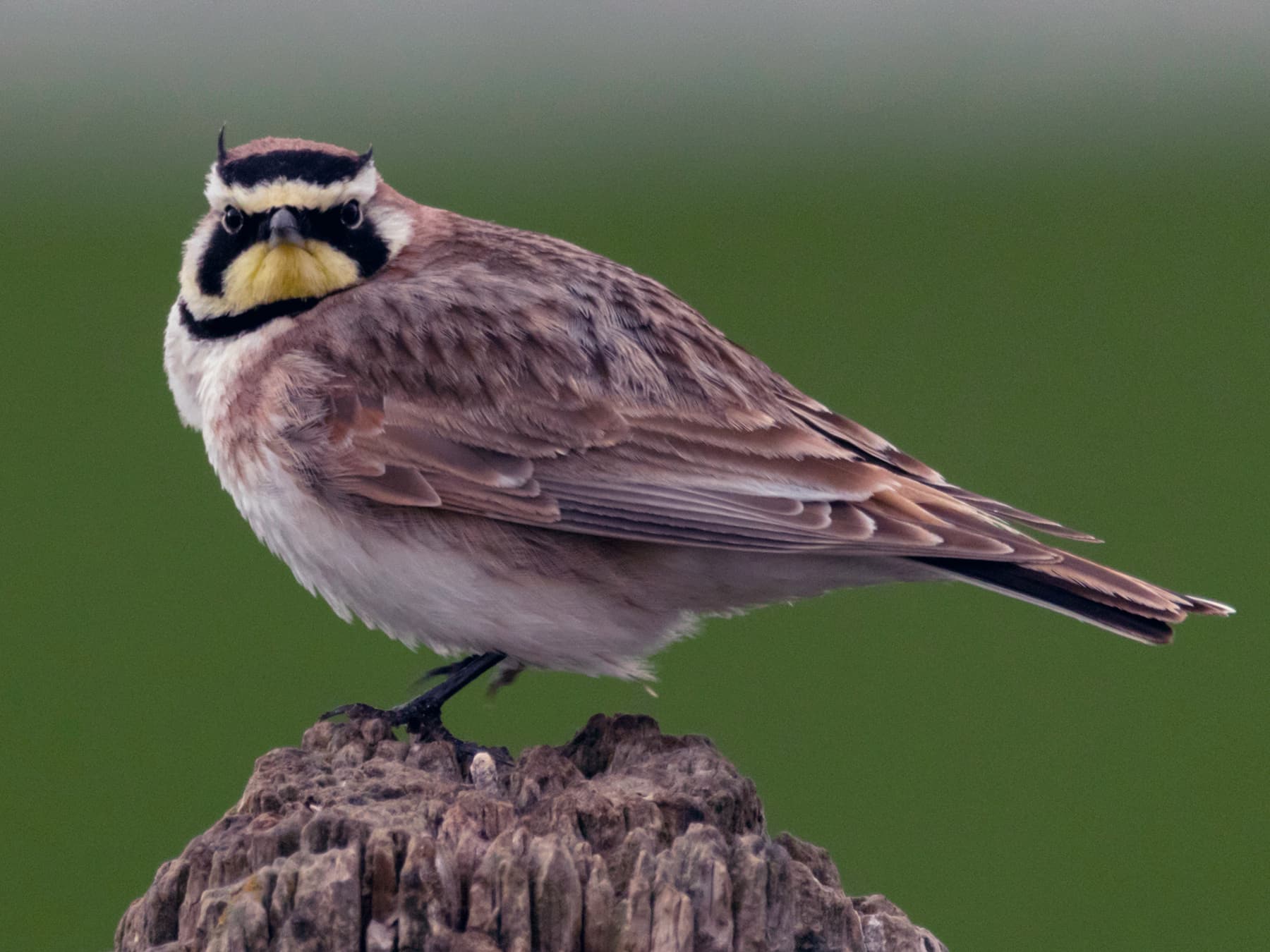
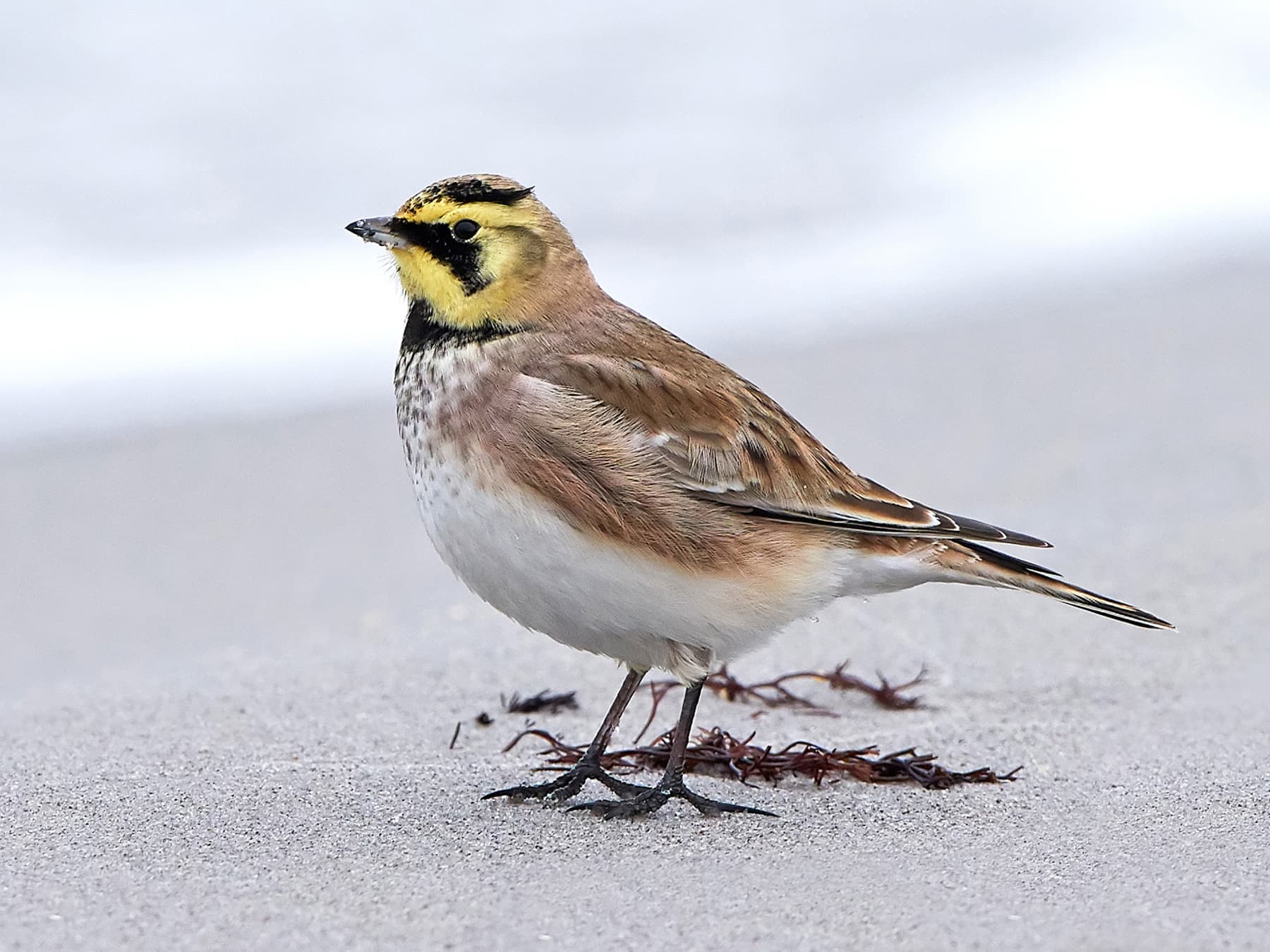
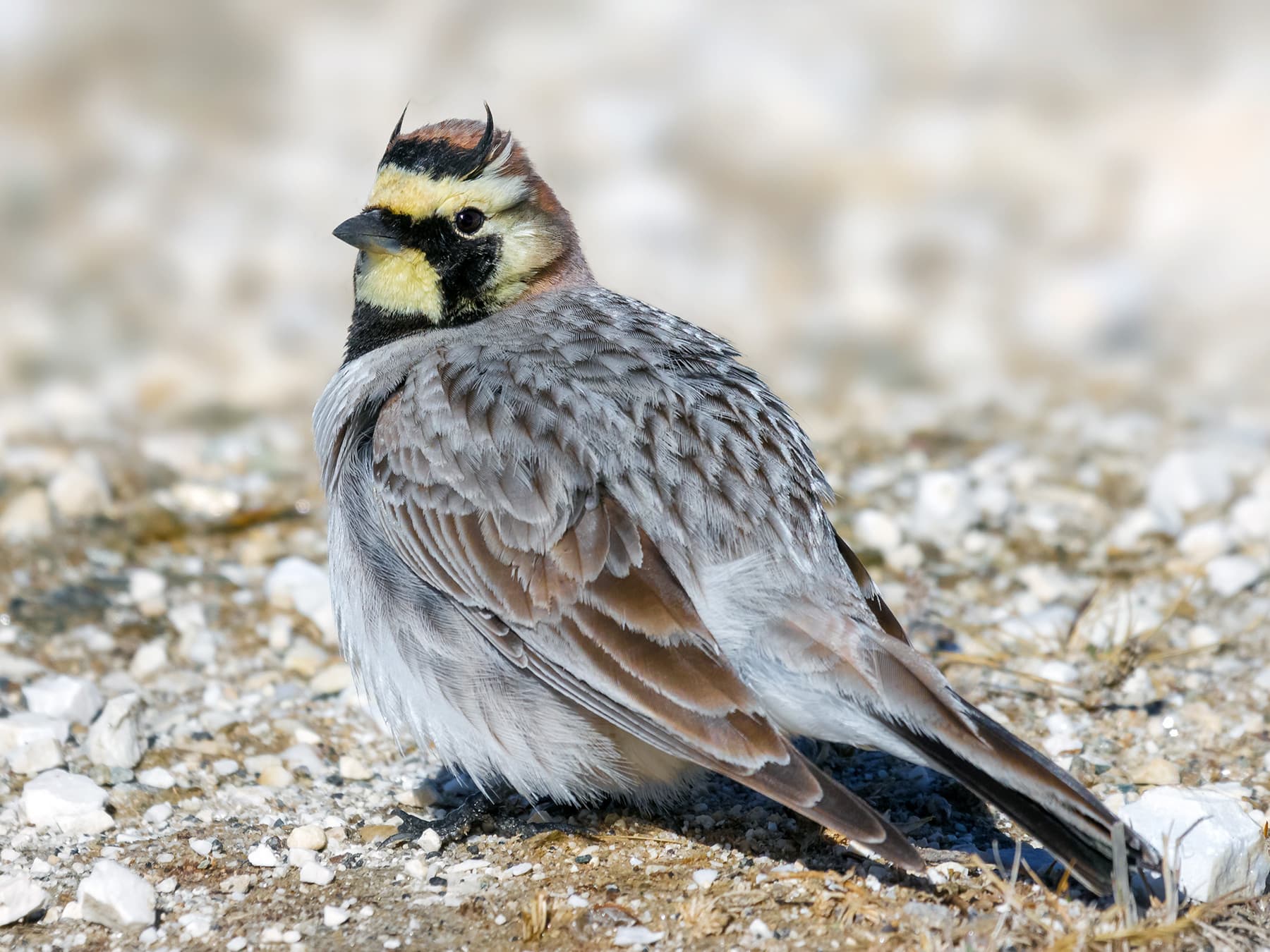
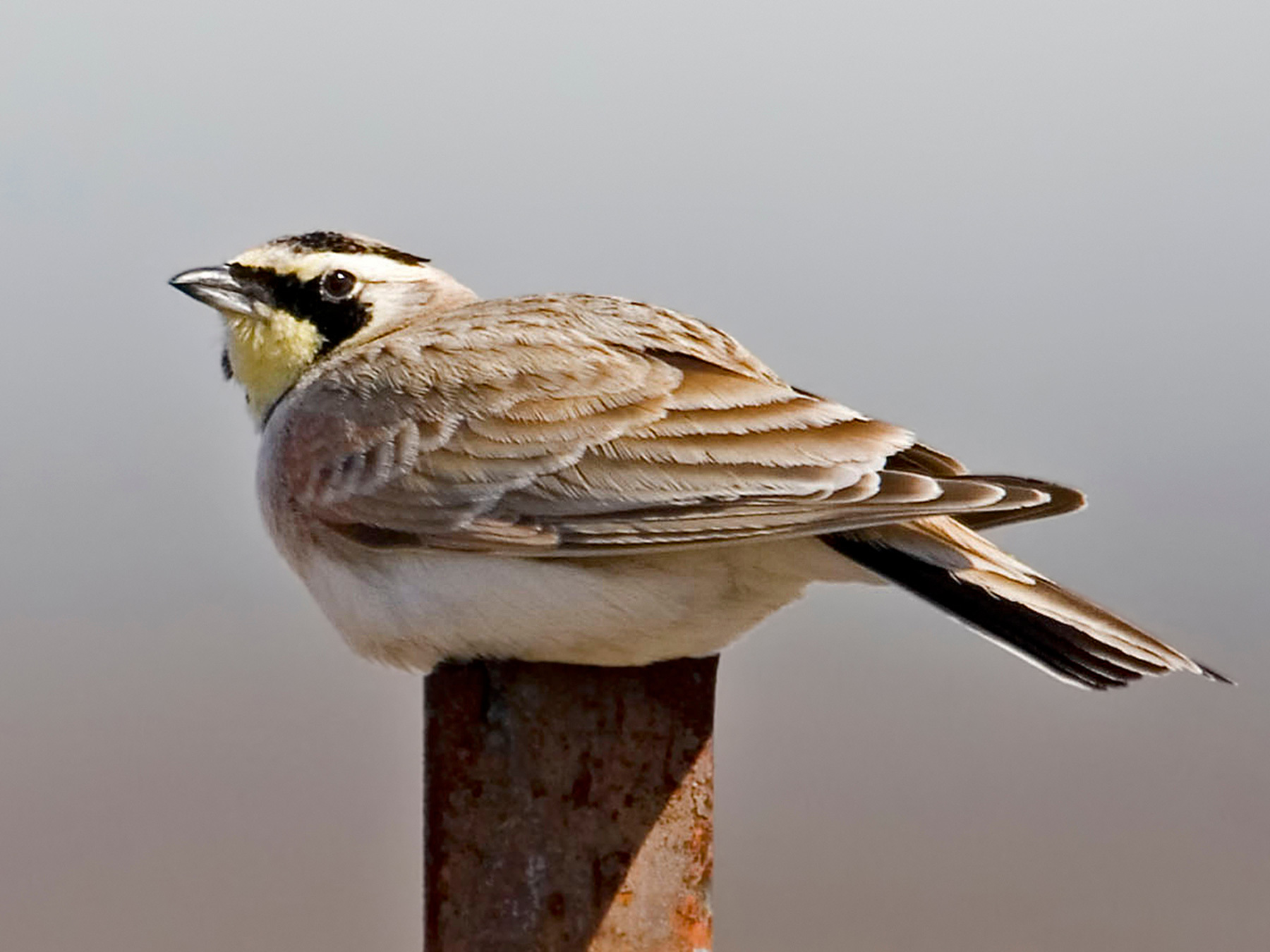
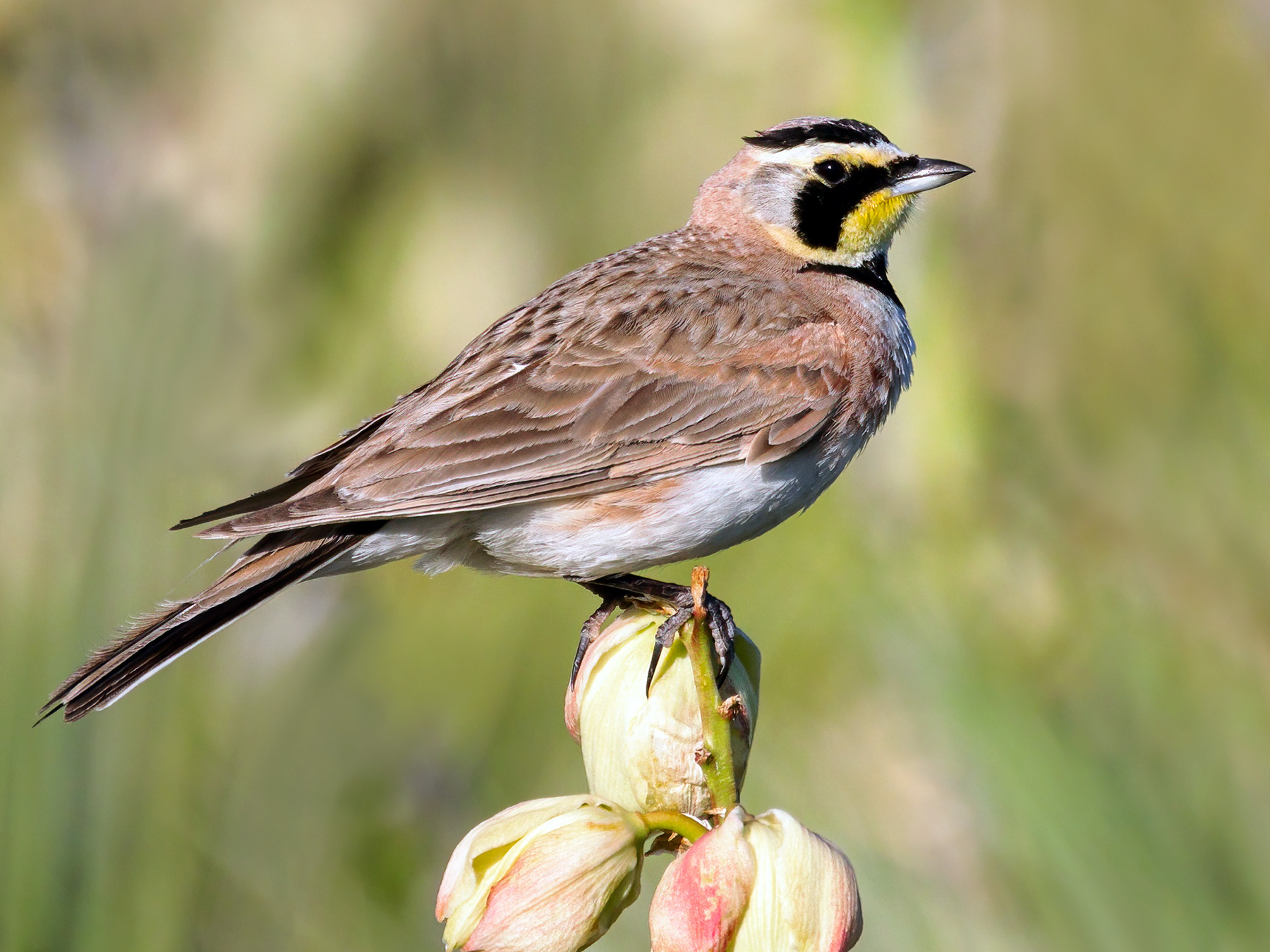
Male horned larks have distinctive markings on their head and face that make it easy to make a positive and confident identification. The black horn-like tufts on the top of their head can be raised and lowered, and are not visible when not erect, blending into the dark markings on their crown.
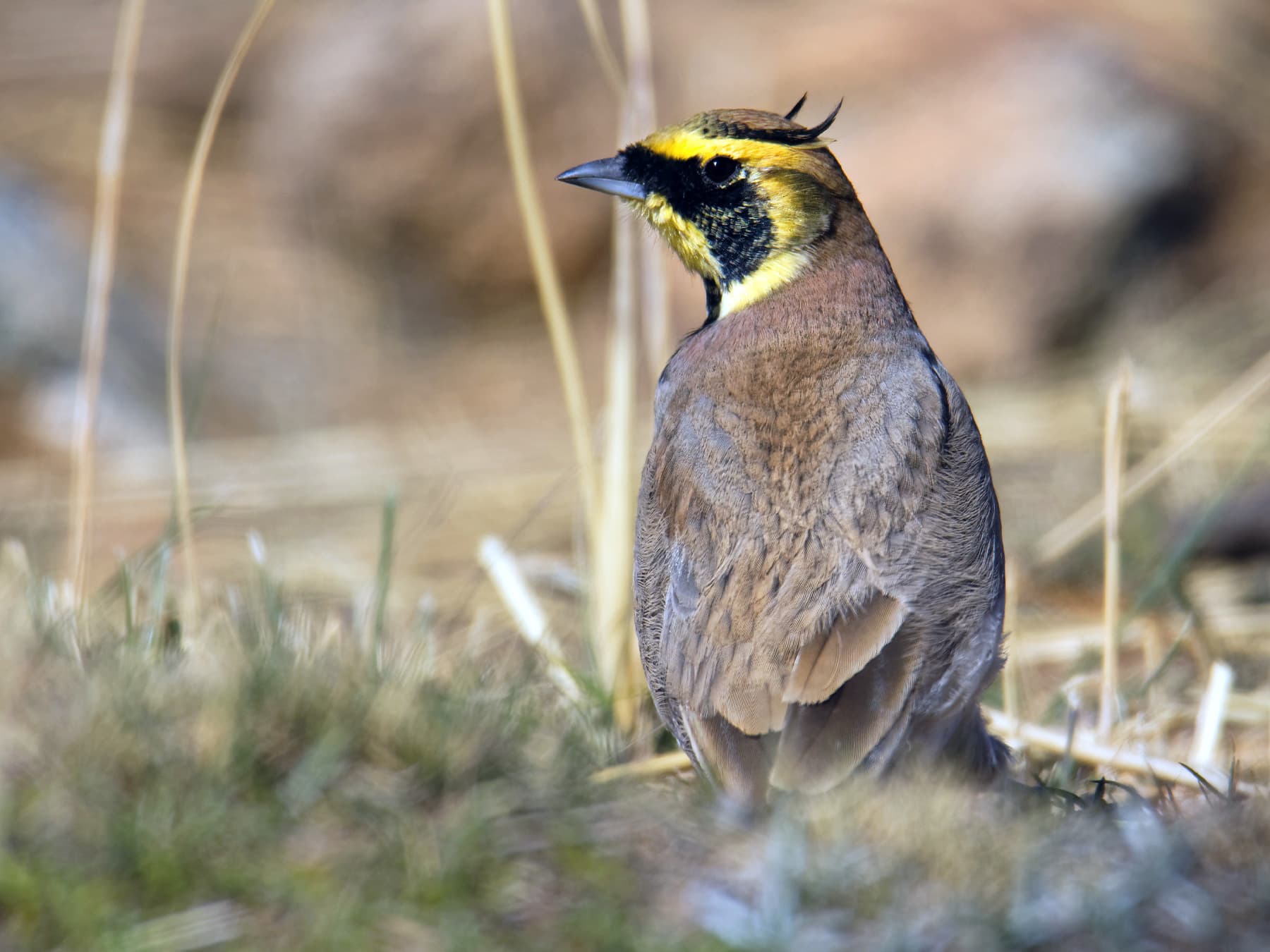
A black eye mask and wide black bib, interspersed with a yellow throat and a white-to-yellow eyebrow stripe are notable features, while the upperparts and wings are a rusty shade of brown, streaked with darker brown.
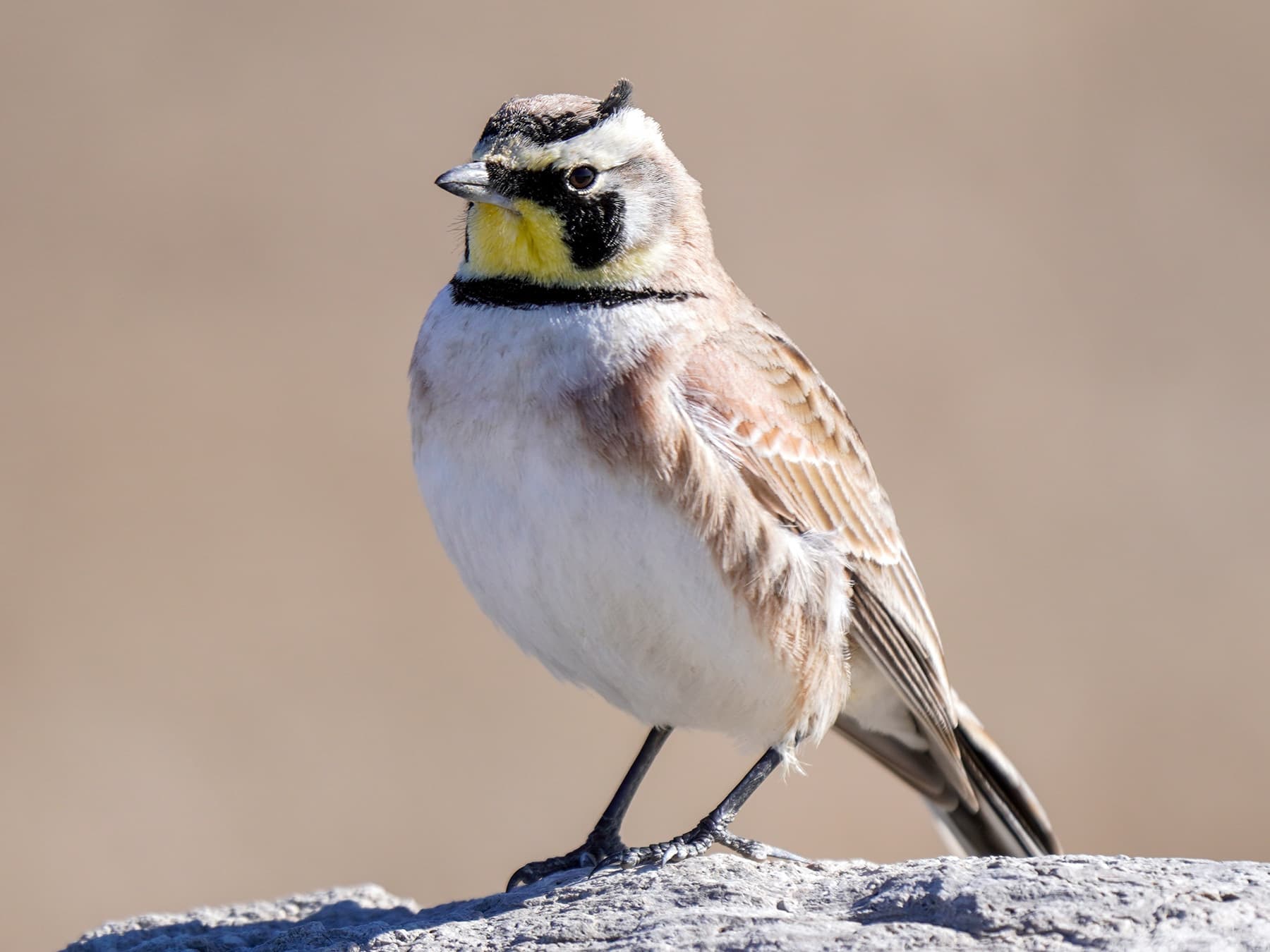
Underparts are a dusky white, with some rufous streaks. Males and females both have chestnut irises, black feet and legs, and a dark gray to black slim bill.
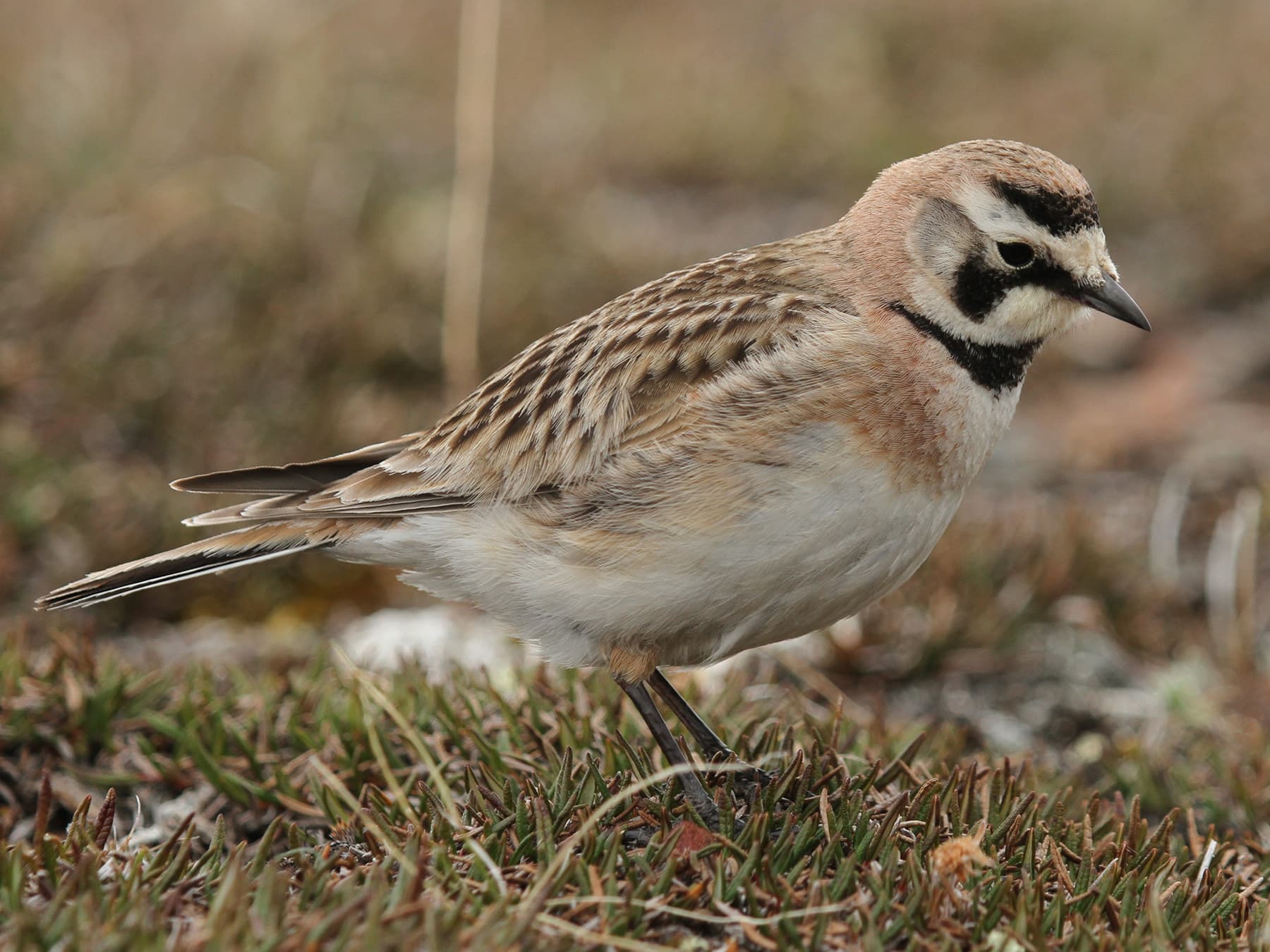
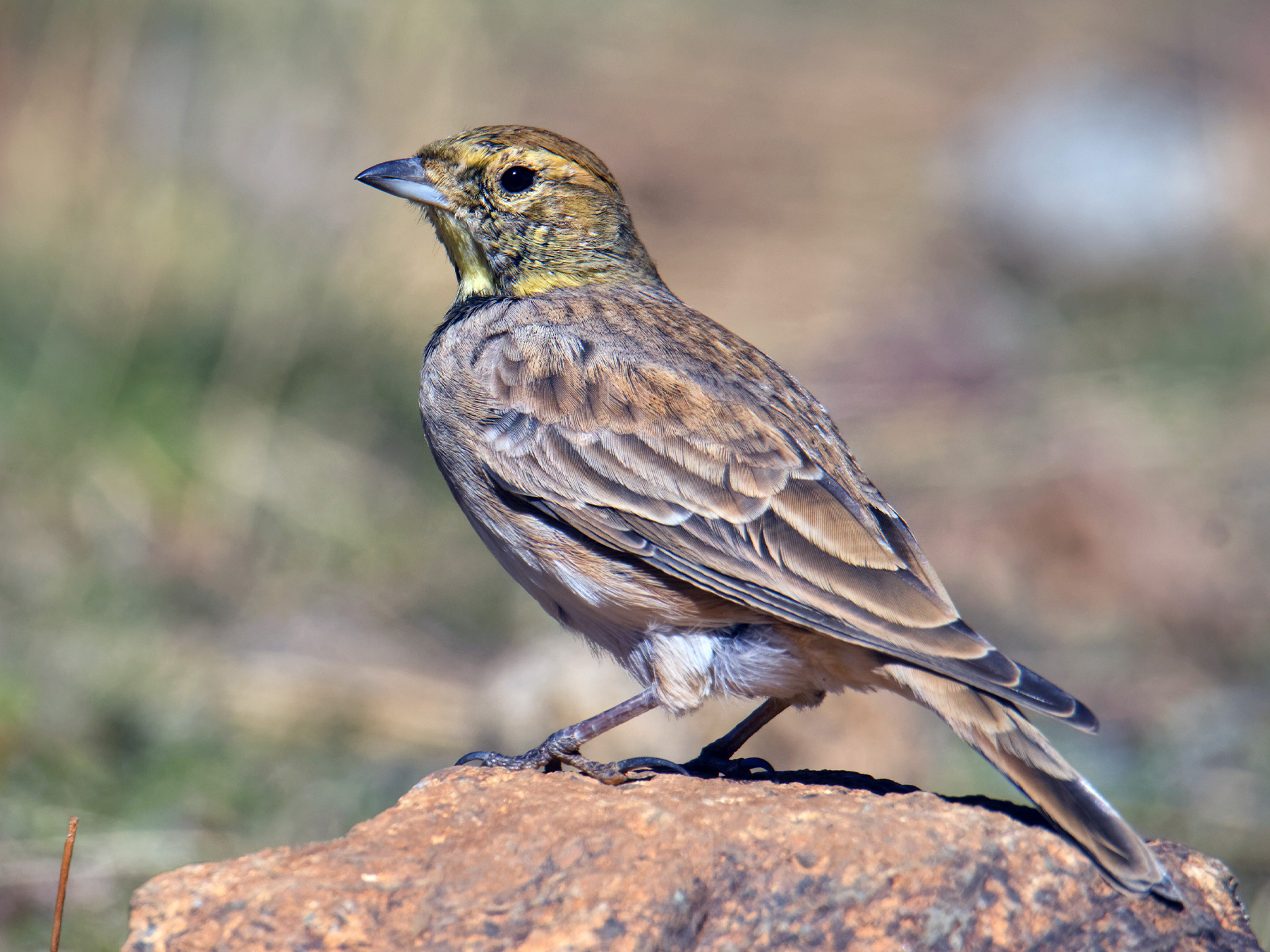
Female horned larks lack the black mask and prominent ear tufts of males, and are paler, with a smaller, dark brown bib and a faint yellowish tinge to their throat. More sparrowlike in appearance than males, female horned larks are also slightly smaller than their mates.
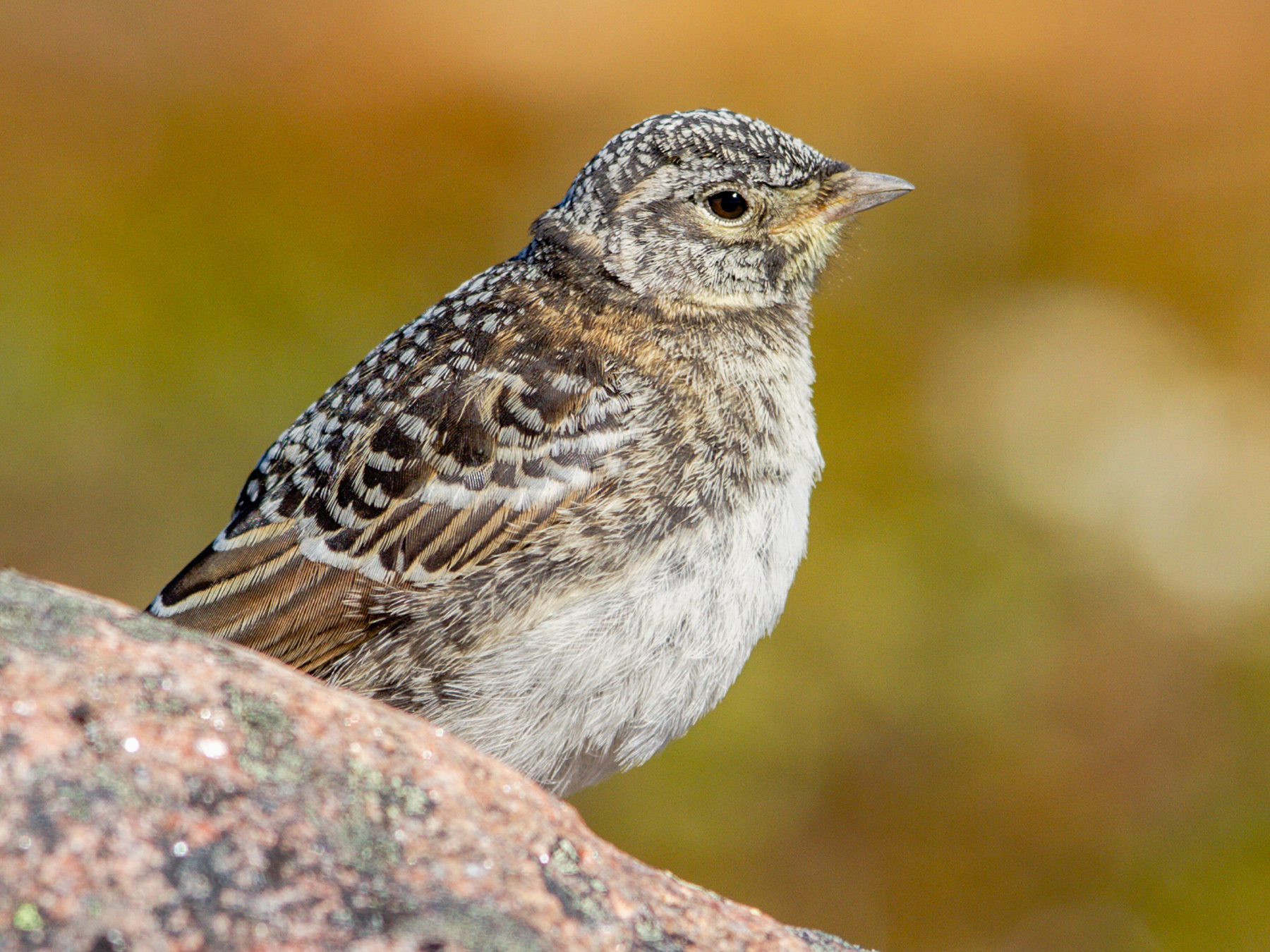
Juvenile horned larks’ plumage has a gray wash, with dusky brown facial markings and bib. The legs and feet of younger birds are pinkish and darken to a light gray as they mature.
How big are Horned Larks?
Horned larks are normally seen in a horizontal posture, with their bodies close to the ground. Males are slightly larger and heavier than females.
- Length: 14 cm to 17 cm (5.5 in to 6.7 in)
- Wingspan: 30 cm to 35 cm (11.8 in to 13.9 in)
- Weight: 35 g to 45 g (1.2 oz to 1.6 oz)
Its size
Adults- Length
- 16–20 cm
- Wingspan
- 31–35 cm
- Weight
- 28–40 g
Its song and calls
What sound does a Horned Lark make?
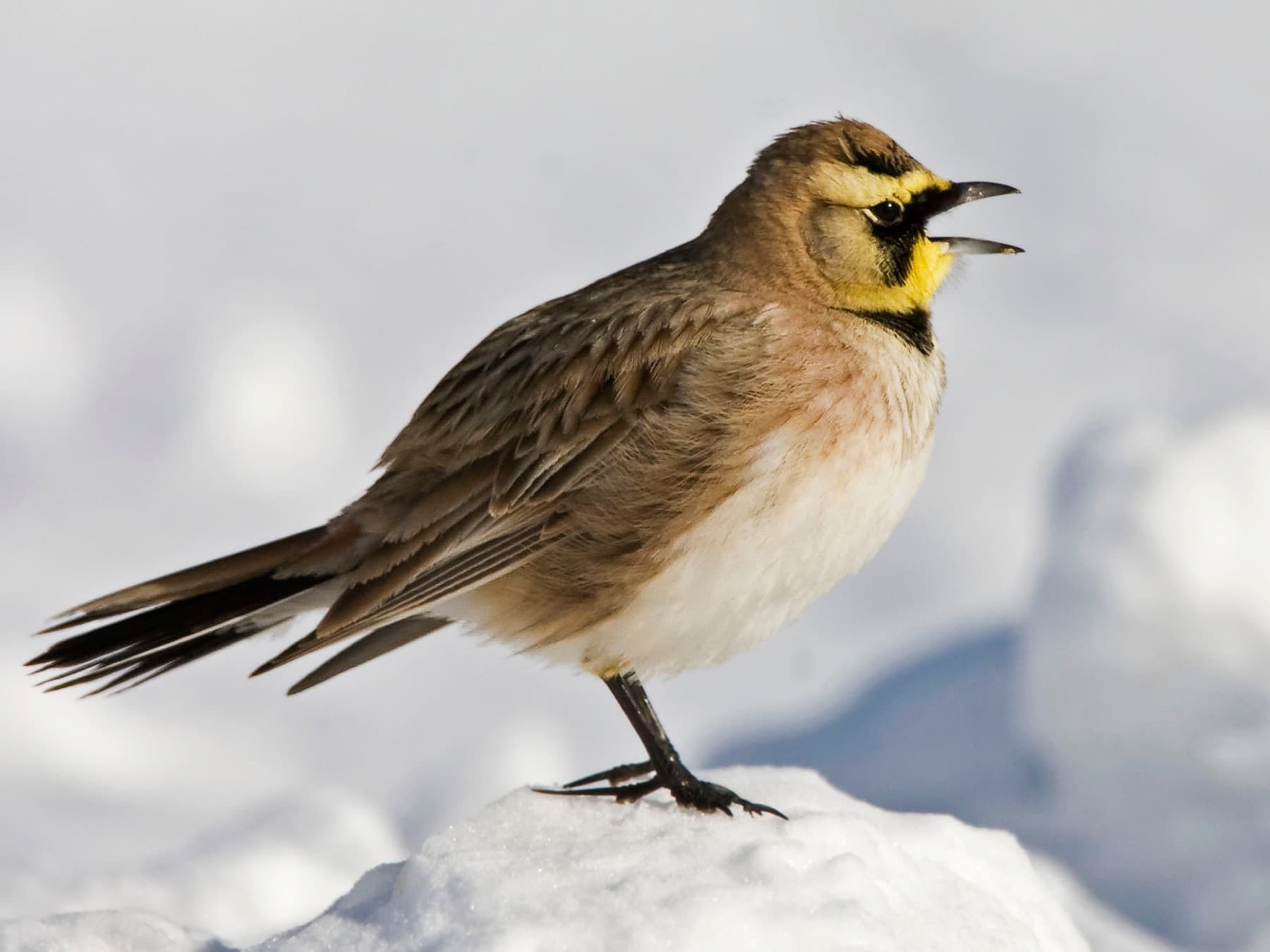
Horned larks can be heard advertising their territories with delicate, tinkling melodies from song perches. Flight songs are also common, consisting of short, chipped notes followed up with an ascending trill.
- Flight call0:00 / 0:03
Recorded in Normandie, France · November 2025
When and where to see it
OctoberArriving
Most recorded in October
- 1. Suffolk0.11%
- 2. Shetland Islandsunder 0.1%
- 3. Orkney Islandsunder 0.1%
- 4. Norfolkunder 0.1%
- 5. Scottish Bordersunder 0.1%
Each dot is a county, state or province: the bigger and darker, the larger the bird’s share of that place’s bird records that month. Grey dots: no regular records. The ringed point is the centre of the bird’s records this month; the arrow shows how it moved since last month, and the dashed loop its path through the year. “Arrivals” colours places where it becomes regular this month (orange) or is in its last regular month (grey). GBIF eBird Observation Dataset, 2019–2024. Map data: Natural Earth, US Census Bureau; place centres © OpenStreetMap contributors.
In your area
See when the Horned Lark is recorded in your county, state or province.
How often the Horned Lark turns up in the UK, the United States and Canada through the year, from birdwatchers' records.
United Kingdom
Winter visitor · regularly Oct–Apr · most records in November
United States
Resident · all year · most records in February
Canada
Resident · all year · most records in March
Show as a table
| Month | United Kingdom | United States | Canada |
|---|---|---|---|
| January | 0.016% (regular) | 0.19% (regular) | 0.18% (regular) |
| February | 0.014% (regular) | 0.21% (regular) | 0.34% (regular) |
| March | 0.004% (regular) | 0.17% (regular) | 0.36% (regular) |
| April | 0.002% (regular) | 0.12% (regular) | 0.12% (regular) |
| May | <0.001% | 0.089% (regular) | 0.072% (regular) |
| June | <0.001% | 0.13% (regular) | 0.12% (regular) |
| July | <0.001% | 0.095% (regular) | 0.085% (regular) |
| August | <0.001% | 0.083% (regular) | 0.037% (regular) |
| September | <0.001% | 0.080% (regular) | 0.13% (regular) |
| October | 0.010% (regular) | 0.10% (regular) | 0.20% (regular) |
| November | 0.018% (regular) | 0.14% (regular) | 0.14% (regular) |
| December | 0.014% (regular) | 0.13% (regular) | 0.097% (regular) |
Recorded regularly in
Worldwide: recorded regularly in 41 countries
Countries where it was recorded in at least 3 of the 6 years 2019–2024. Linked countries have their own bird list.
Europe (18)
Africa (1)
Asia (17)
- Armenia
- Azerbaijan
- China
- Georgia
- India
- Iran
- Iraq
- Israel
- Japan
- Kazakhstan
- Kyrgyzstan
- Lebanon
- Mongolia
- Nepal
- Pakistan
- Tajikistan
- Turkey
North America (4)
South America (1)
Data: EOD – eBird Observation Dataset (Cornell Lab of Ornithology), accessed via GBIF.org, CC BY 4.0. Records from 2019–2024, aggregated and filtered by Birdfact. How these lists are made
What is the habitat of a Horned Lark?
Horned larks favor open landscapes lacking trees and large shrubs. They are most commonly found on coastal grasslands and deserts, with alpine dwarf-shrub habitats a common feature. Grass cover is not necessary, with short grasses preferred to longer or denser clumps.
In winter, flocks of horned larks form in desert lowlands and other areas augmented by winter visitors, many migrating from outside the state. Beaches, sand dunes, and airport environments with cropped grass and a lack of vegetation are ideal spots for foraging.
In Europe, wintering spots are mainly coastal, along the shorelines of the North and Baltic seas.
What is the range of a Horned Lark?
The breeding range of horned larks in North America extends from Alaska in the west, across the Canadian Arctic to the east coast of Canada. The species is present as a breeding species throughout all of the US except for the far southeast.
In winter, horned larks can be found from southern Canada southwards, across the United States, and south into Mexico.
In Europe, breeding takes place from northern Norway in the west, across northern Russia into Siberian Russia in the east. Migration to southern wintering grounds occurs in autumn, with winter territories scattered across much of north-central Europe from the UK in the west to Ukraine in the east.
To the south, year-round populations are present in Greece, through Turkey and Iran into central and south Asia.
Africa’s only well-established year-round population is limited to a small region of Morocco’s Atlas Mountains.
Where do Horned Larks live?
North American populations of horned larks breed across Canada and Alaska, before moving southwards to wintering grounds that cover much of the United States.
Winter strongholds include the Canadian provinces of Alberta, Saskatchewan, and Manitoba, and the Great Plains states of Colorado, Iowa, Kansas, Minnesota, Montana, Nebraska, New Mexico, North Dakota, Oklahoma, South Dakota, Texas, and Wyoming.
In Europe, Norway, Russia, and Turkey are believed to be home to a large percentage of the continent’s shore lark pairs.
A small isolated population of shore larks live and breed in the Atlas Mountains in Morocco.
How rare are Horned Larks?
Population estimates from 2016 indicate a global population of around 140 million horned larks. No reliable population data is available for North American populations of horned larks, but the species is both widespread and common across the continent.
In Mexico, horned larks are fairly common to common birds, and the population is believed to be stable in most locations.
Around 7 million pairs of shore larks breed in Europe, where the species is considered widespread and abundant. However, shore larks are only rare visitors to the UK, and do not breed anywhere in the British Isles. Only around 110 individuals are recorded each year and are only found along the coast. Further inland, sightings become even more scarce.
Where can you see Horned Larks in North America?
Horned larks are present in all mainland states of the US, although populations have declined in recent years. Certain regions continue to support thriving populations, including rural areas of the central US, in particular Colorado, Kansas, and Utah.
Where can you see Shore Larks in the UK?
More than 100 shore larks are reported to spend winter in the UK each year, arriving in the autumn from their breeding grounds in Scandinavia.
Individual birds may frequently be spotted in migration along the Scottish coast, but settle further south, particularly in coastal regions of eastern England. Norfolk has a particularly strong trend of sightings, with Holkham and Salthouse being good spots to visit.
Migration
Do Horned Larks migrate?
The migration of horned larks varies from region to region.
In North America, breeding takes place across much of Canada and the United States. Once the breeding season ends, horned larks leave Canada, heading south for wintering grounds across the US. Within the US, some migration also occurs, with birds breeding in southern locations sometimes moving further south, into Mexico and as far as Colombia.
In Europe, shore larks have distinct breeding and overwintering territories, breeding across the Arctic tundra from northern Scandinavia to Siberian Russia. Winter habitats are found further south, patchily distributed across northern and central Europe.
Further south, into Greece, across Turkey, and into Central Asia populations tend to be sedentary, living and breeding in the same regions.
Are Horned Larks native to North America?
Horned larks are native to North America, with populations in the United States being mostly resident in the same territories all year round, while horned larks that breed in Canada tend to migrate further south at the end of the breeding season.
Some populations that breed in the southernmost regions of the US also migrate, heading into Mexico and beyond.
Are Shore Larks native to the UK?
Shore larks are winter visitors to the UK, with around 110 birds arriving from their Scandinavian breeding grounds in October, and returning north the following spring. Sightings of migratory birds in passage over Scotland are common, while winter residents are most frequently spotted along the eastern coast of England.
Tips for seeing it
- Look for Horned Larks in open, sparsely vegetated areas
- Listen for their high-pitched, tinkling song, especially during breeding season
- Observe their distinctive walking behavior on the ground
- In winter, scan for flocks in agricultural fields or along roadsides
What it eats
What do Horned Larks eat?
A horned lark’s diet mostly comprises seeds, sprouting crops (lettuce, wheat, oats, millet), some berries, and insects, including grasshoppers, earthworms, beetles, and caterpillars.
During spring and summer, insects are more important in a horned lark’s diet, offering a valuable source of protein and energy when raising young. However, during winter, invertebrate prey accounts for a much smaller share of their food intake.
What do Horned Lark chicks eat?
For much of the year, horned larks are primarily seed-eating birds, but they initially feed their young exclusively on insects, particularly caterpillars, beetles, grasshoppers, and earthworms.
Nesting and breeding
Where do Horned Larks nest?
Female horned larks choose a nest site without any intervention from their mate. Nests, located directly on the ground, often in a natural depression or a cavity they shape out themselves in the soil.
Bare land and agricultural fields are commonly chosen, and vegetation cover is not necessary, although a tussock, rock, or thicket may offer shelter to at least one side of the nest site.
Grass, roots, shredded stalks, and softer plant parts are woven into a cup, which is placed in the nest depression, and then lined with fur, feathers, hair, and rootlets.
When do Horned Larks nest?
In a typical breeding season, a horned lark pair will raise either one or two broods together. In the most southerly parts of their range, eggs are laid as early as mid-March, while further north, into Alaska and northern Canada, are not laid until mid-May. Incubation, by the female alone, lasts for 11 to 13 days.
What do Horned Lark eggs look like?
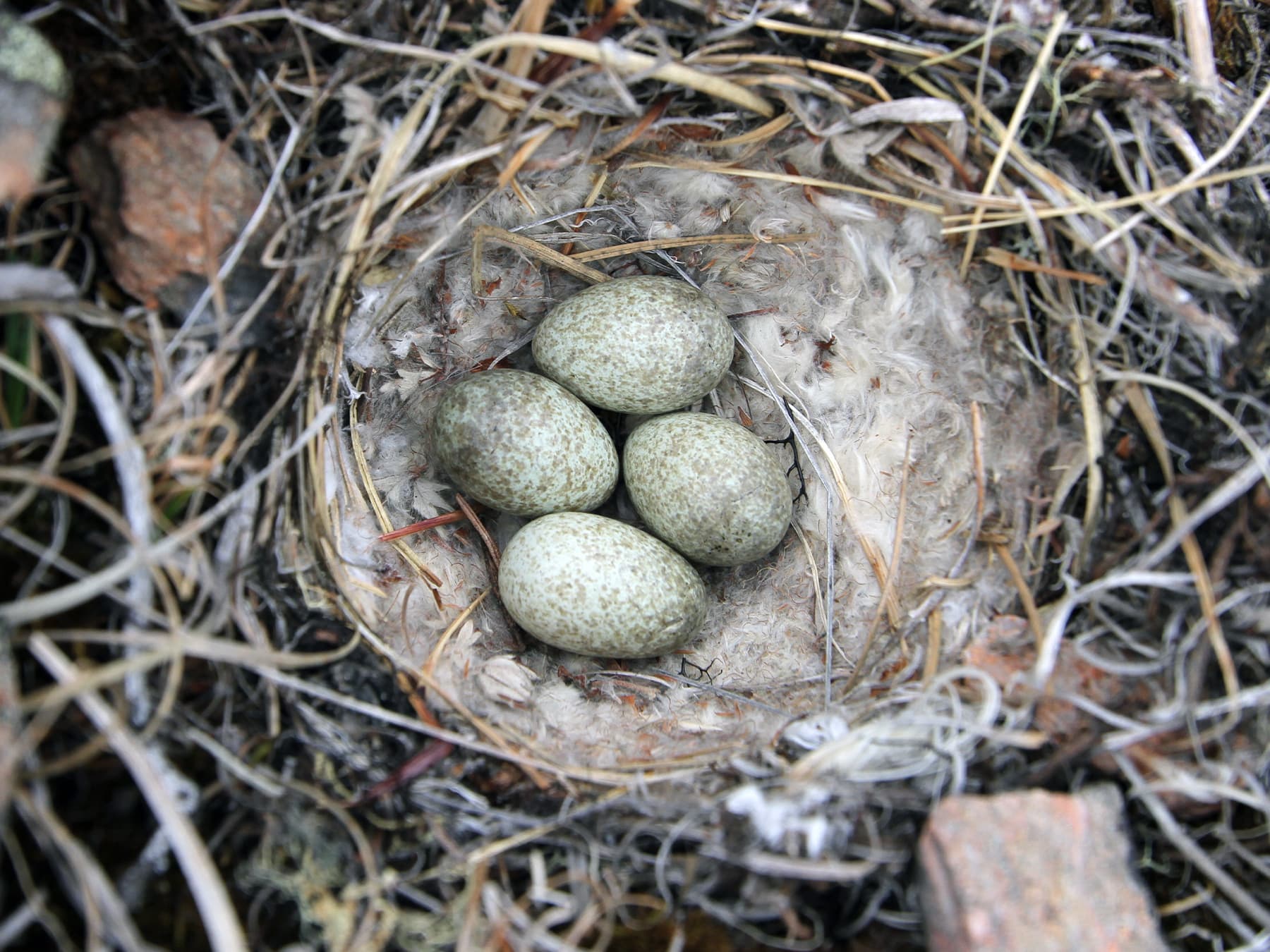
Horned larks’ eggs are a pearl-gray color, heavily spotted with brown markings all over. Eggs measure 23 mm by 16 mm (0.9 in by 0.6 in) and a typical clutch contains from two to five eggs.
Do Horned Larks mate for life?
Horned larks are a seasonally monogamous species, raising one or two broods together, but not reuniting in subsequent breeding seasons.
Behaviour
Are Horned Larks aggressive?
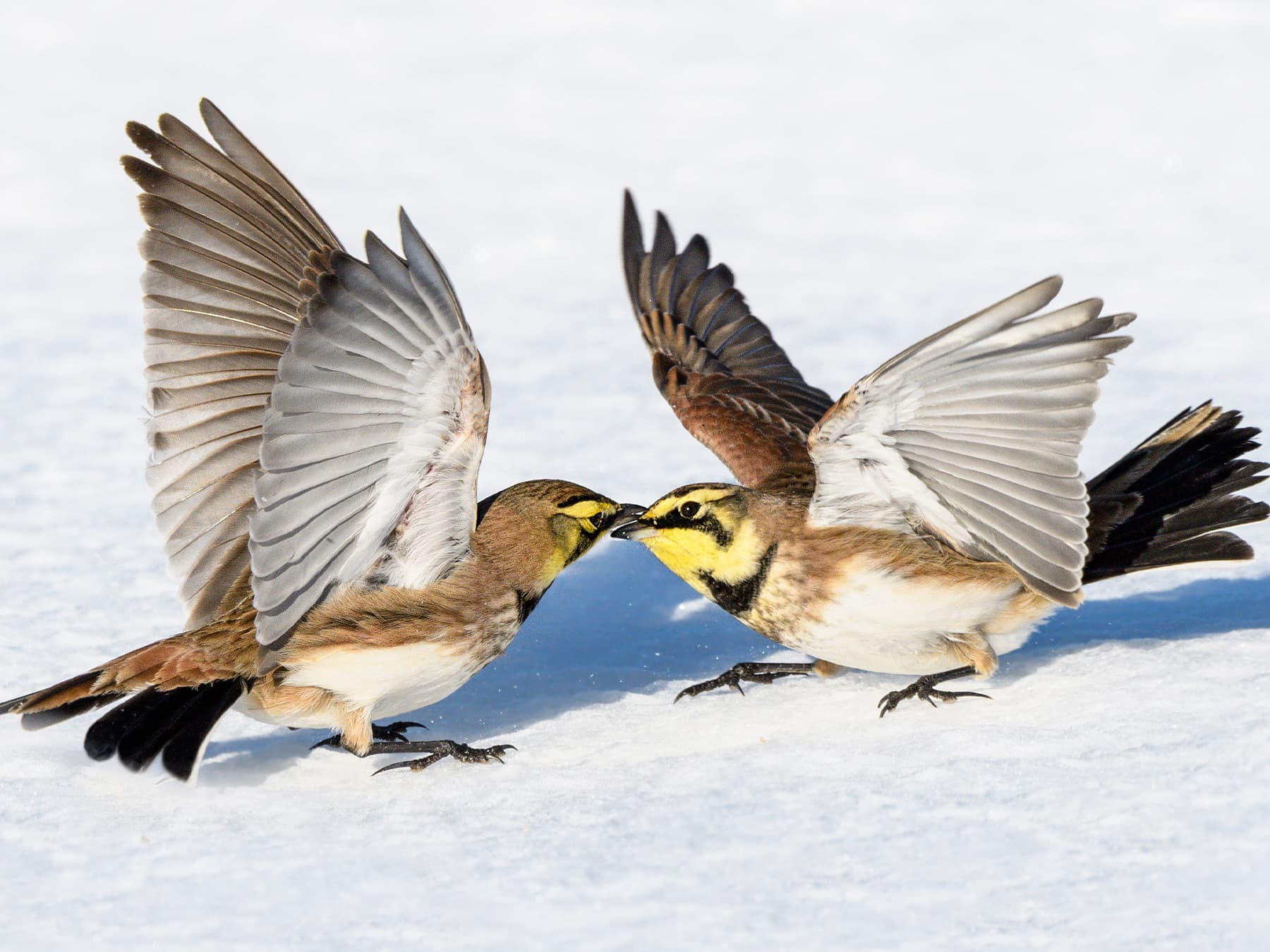
Clashes regularly occur between territorial males, with mid-air confrontations lasting for between 10 and 15 minutes while the pair fly at each other, pecking and snapping. On the ground, shorter fights occur, and the weaker party will be chased away.
Once one bird has claimed victory, it’s common for them to be observed singing loudly from a nearby songpost.
Lifespan and predators
How long do Horned Larks live?
Banding records suggest an average lifespan of around 3 years for horned larks, although individuals of at least 8 years of age have been recovered.
First-time breeding is thought to be at one year of age.
What are the predators of Horned Larks?
Falcons, owls, and shrikes are among the most common avian predators of horned larks, while weasels, skunks, squirrels, raccoons, and domestic cats prey on both adult horned larks, and their eggs and young.
Are Horned Larks protected?
In the US, horned larks are protected under the Migratory Bird Treaty Act of 1918. Due to their declining numbers, in certain regions, particularly in eastern regions, they have been classified as a species of greatest conservation need (SGCN), including New York, Maine, Connecticut, and New Jersey.
Shore larks in the UK are protected as Schedule I birds under the Wildlife and Countryside Act, of 1981. As well as it is illegal to knowingly kill, injure or capture a shore lark, it is also an offense to destroy a nest or damage their eggs.
Are Horned Larks endangered?
Globally, horned larks are classed as a species of least concern, although declines in horned lark numbers have been recorded in several parts of the United States in recent decades, with an up to 70 percent drop between 1966 and 2015.
European populations of shore larks are considered stable, although the low numbers of shore larks visiting the UK mean the species is rated with Amber status on the British Birds of Conservation Concern list.
Conservation
While globally listed as Least Concern, some regional populations of Horned Larks are declining due to habitat loss and agricultural intensification.
Conservation efforts focus on maintaining suitable grassland habitats and promoting sustainable farming practices that benefit ground-nesting birds.
More photos
5 photos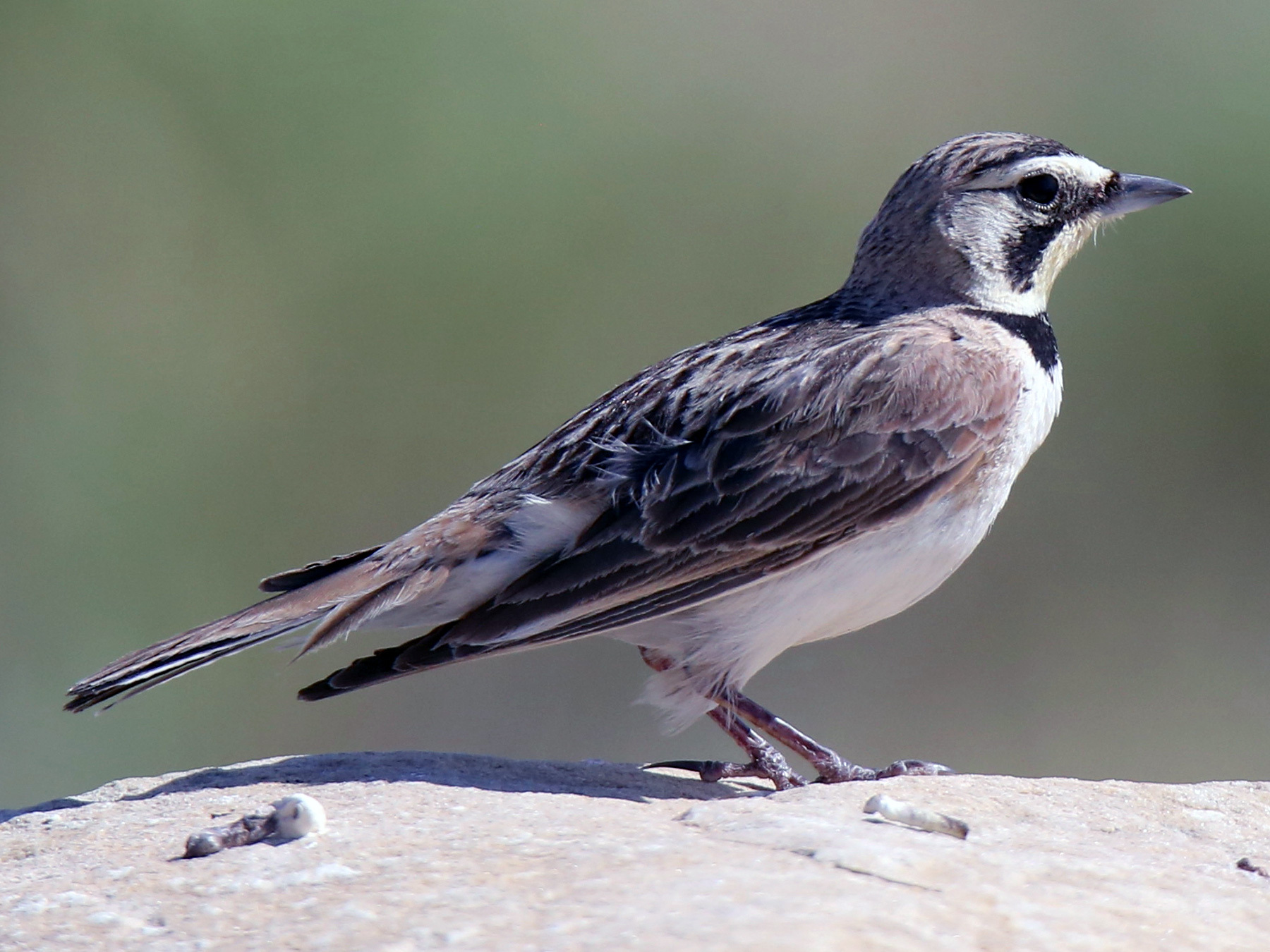
Quick facts
- Length
- 16–20 cm
- Wingspan
- 31–35 cm
- Weight
- 28–40 g
- Lifespan
- 3–5 years
- Family
- Larks
- Migration
- Partial migrant
- Global status (IUCN)
- Least Concern
- World population
- 140,000,000 mature individuals
- Population trend
- Decreasing
- Also called
- Shore Lark
- Scientific name
- Eremophila alpestris
Questions
1Is a Horned Lark a sparrow?
Horned larks belong to a different family to sparrows, although both belong to the wider suborder of songbirds, called Passeri. Horned larks are part of the Alaudidae (lark) family, while sparrows are classed as Passeridae (true sparrows).
Sources
3- 1BirdLife International. 2019. Eremophila alpestris. The IUCN Red List of Threatened Species 2019: e.T22717434A137693170. Source (opens in a new tab)
- 2North American Breeding Bird Survey [Sauer et al. 2017] (2017)
- 3Partners in Flight (2017) Source (opens in a new tab)

Checked by
Nathan Cope, founder and editor
Nathan founded Birdfact and leads its writers and contributors in the UK, the US and Canada. He has watched and studied birds for more than ten years, and checks every article and species guide before it’s published.