


Golden Plover
European Golden Plover, Eurasian Golden Plover · Pluvialis apricaria
By the Birdfact teamChecked by Nathan Cope
On this page14 sections
How to recognise it
What do Golden Plovers look like?
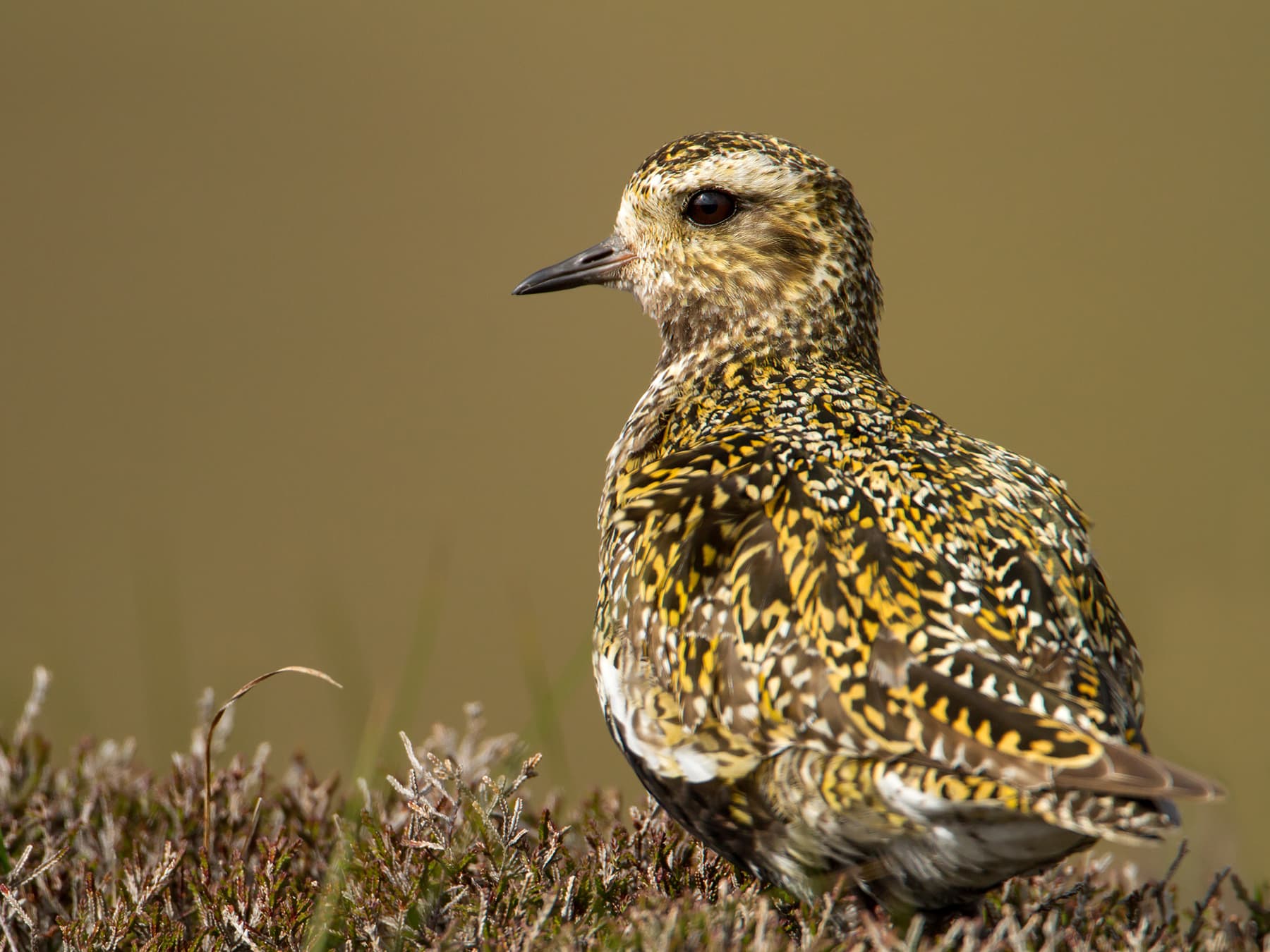
Golden plovers have two distinct plumages: during breeding and non-breeding seasons. In summer their gold and black colouring makes them easy to identify, while in winter, they moult into an altogether duller and less remarkable plumage.
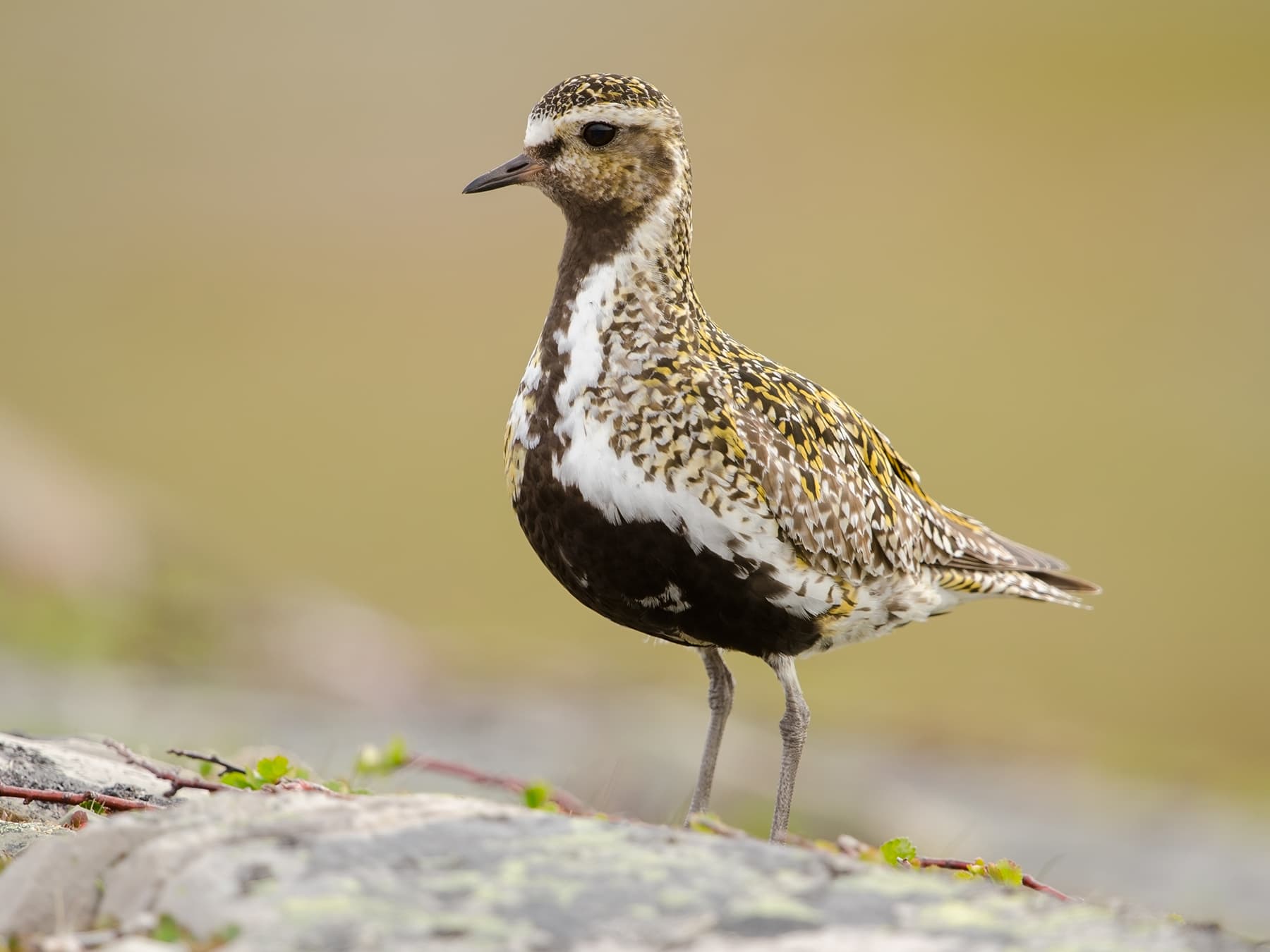
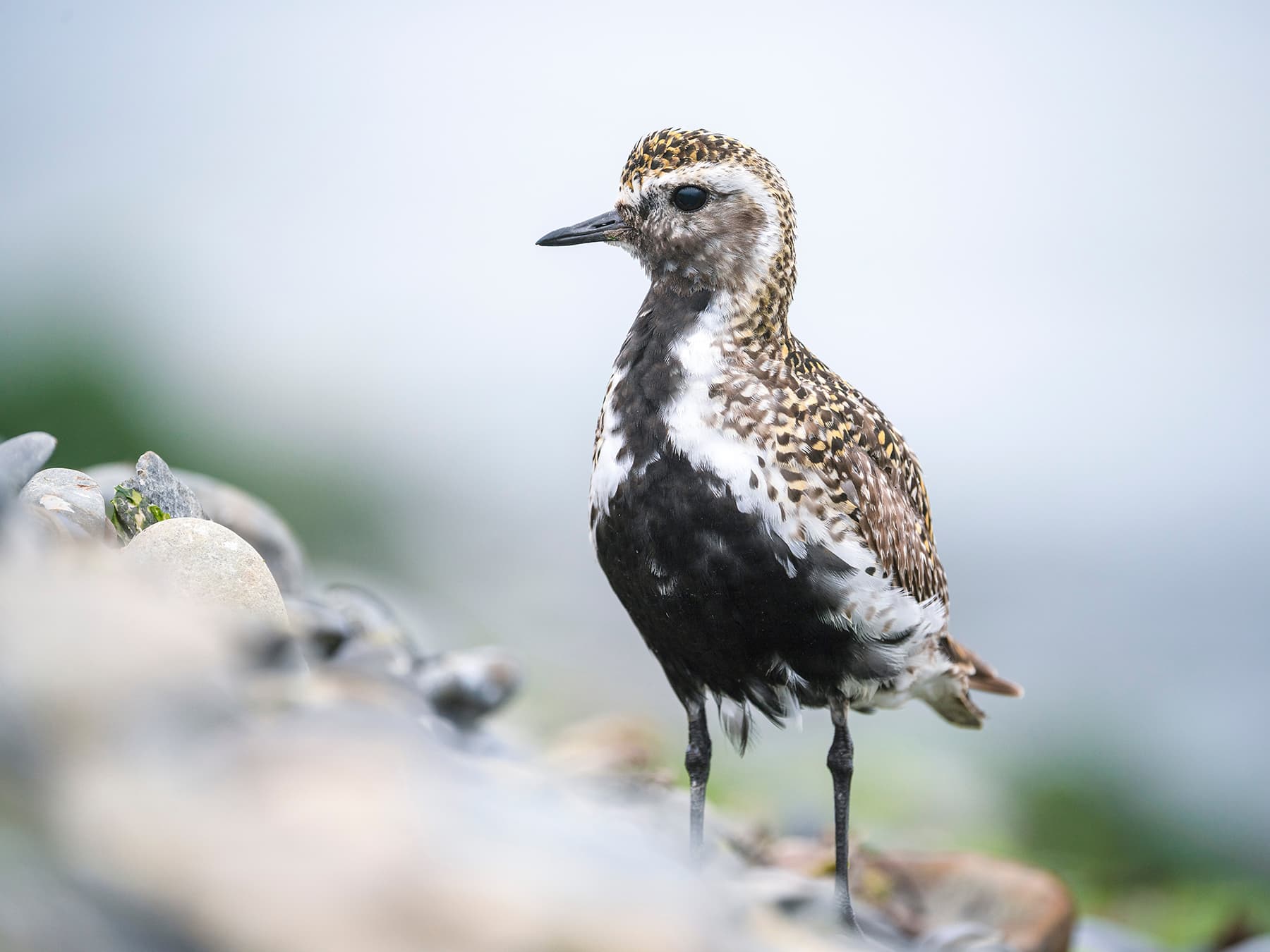
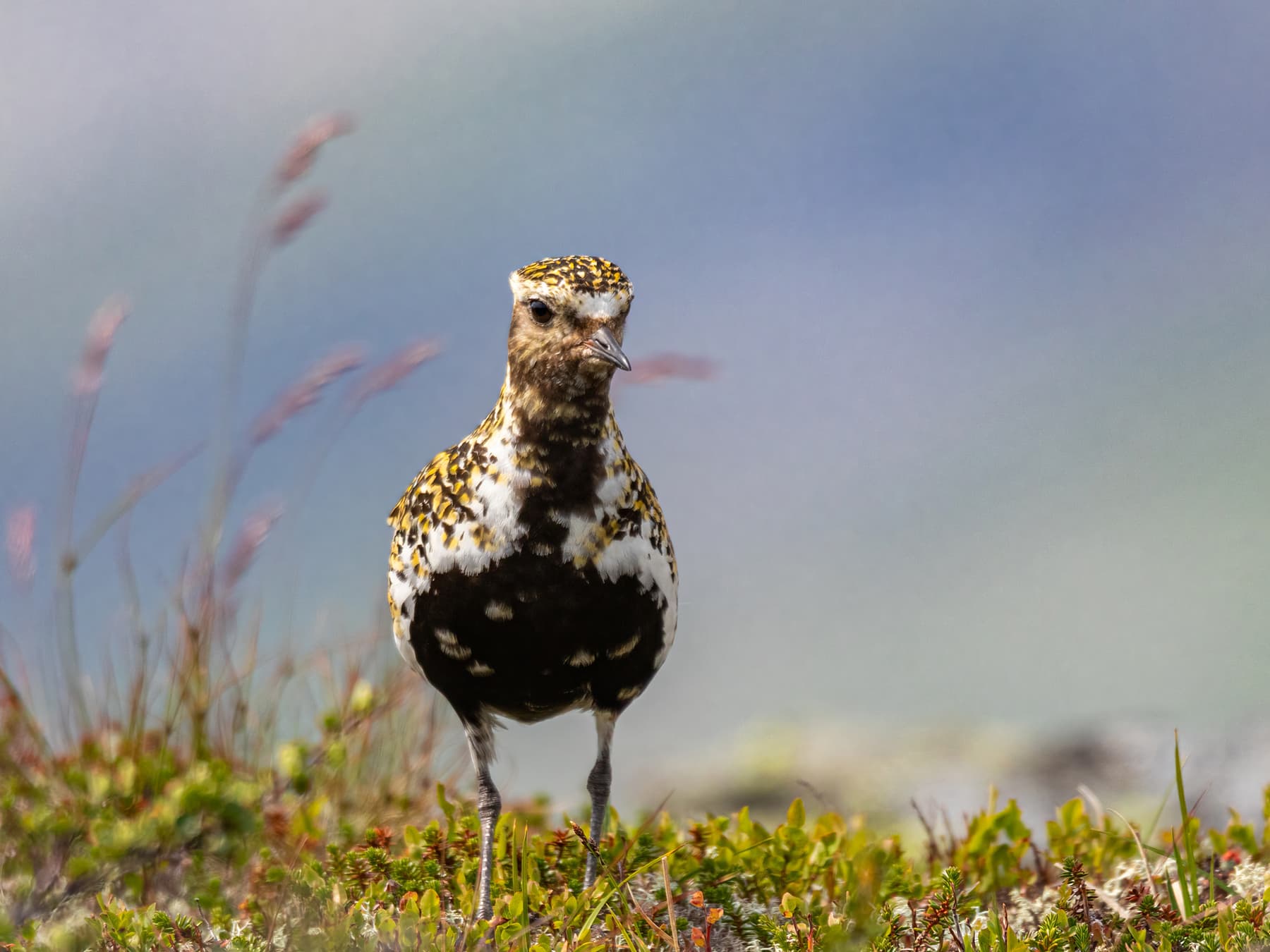
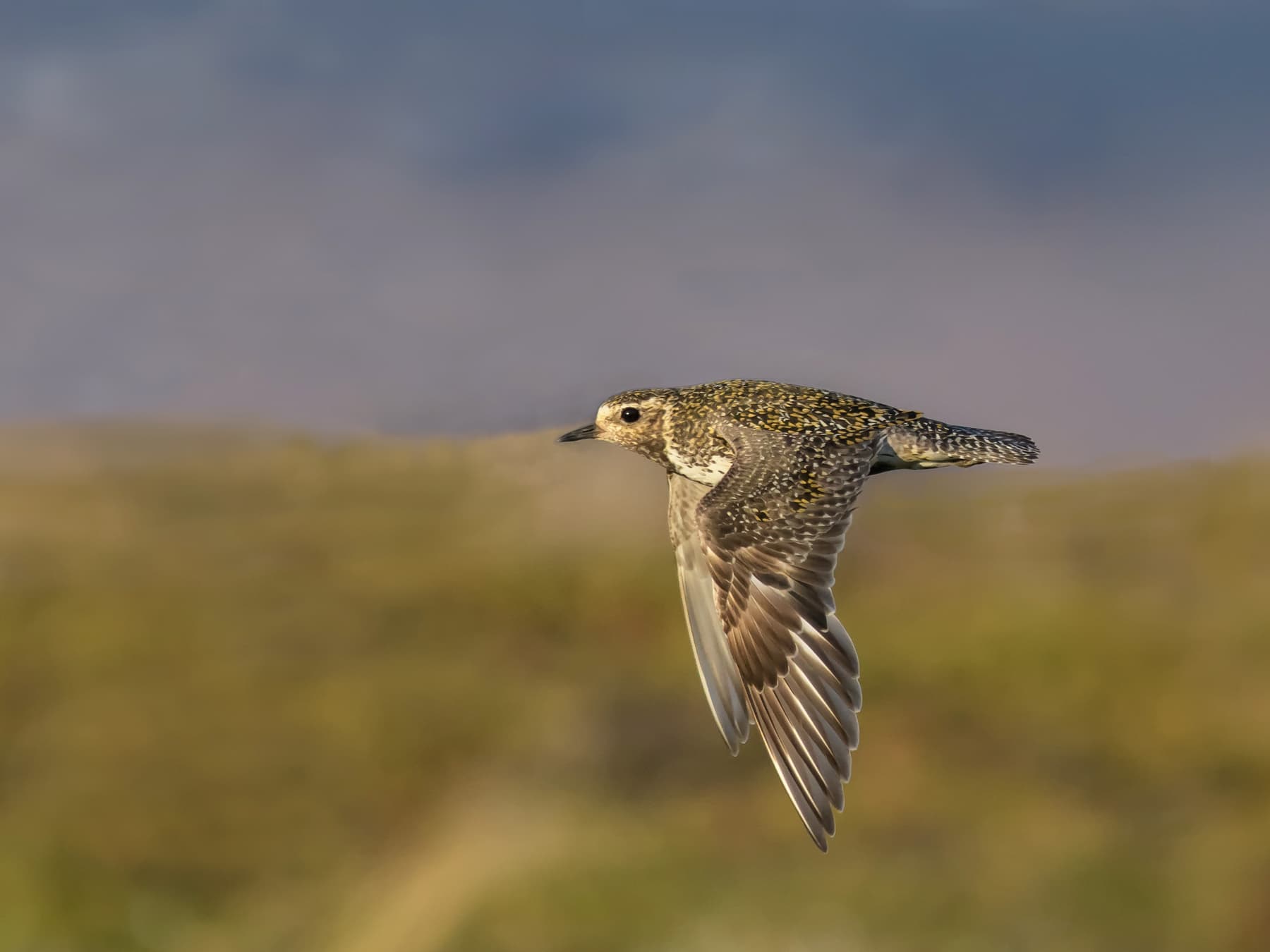
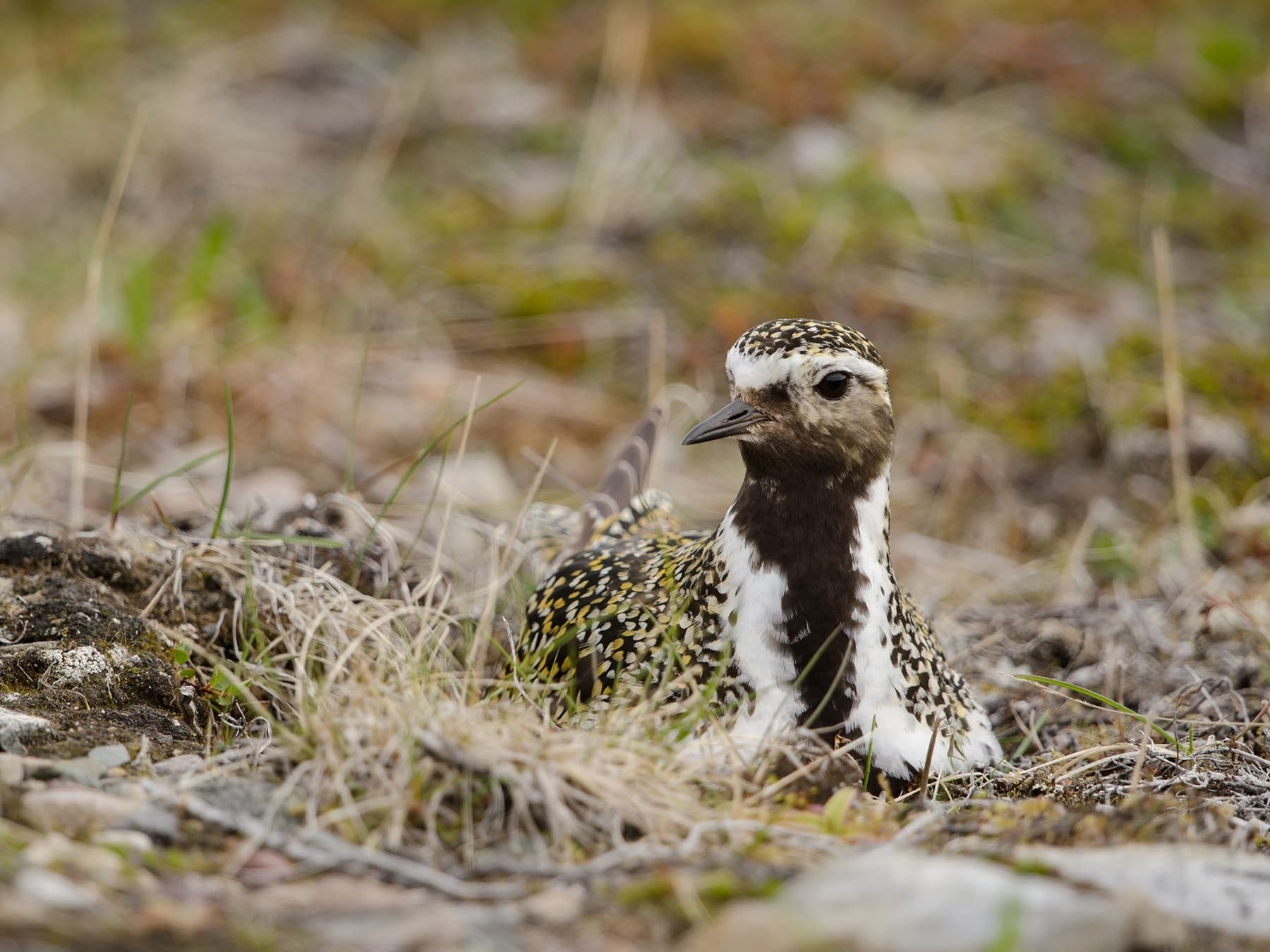
Male golden plovers have a bold black face, throat, breast and belly, surrounded by a wide white band which separates their golden speckled crown, nape, and upper wings. Their underwings are white, and their tail is speckled with the same golden brown and yellow flecked markings. Their legs are greenish-grey, and their eyes are dark brown, while their black bill is fairly short and slim.
During the breeding season, female golden plovers resemble males but may have less extensively black markings, which can have a brownish tinge on their face and underparts.
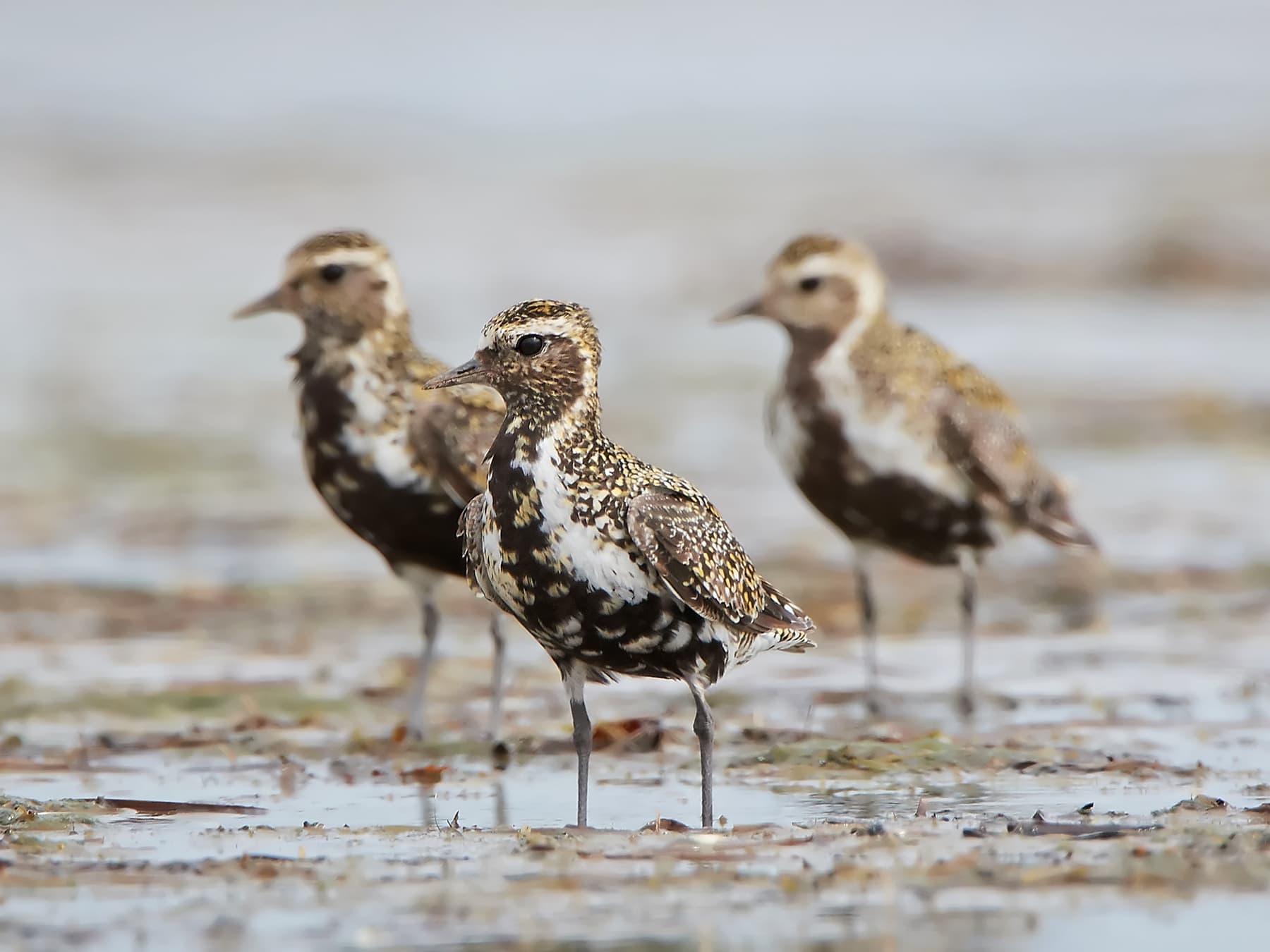
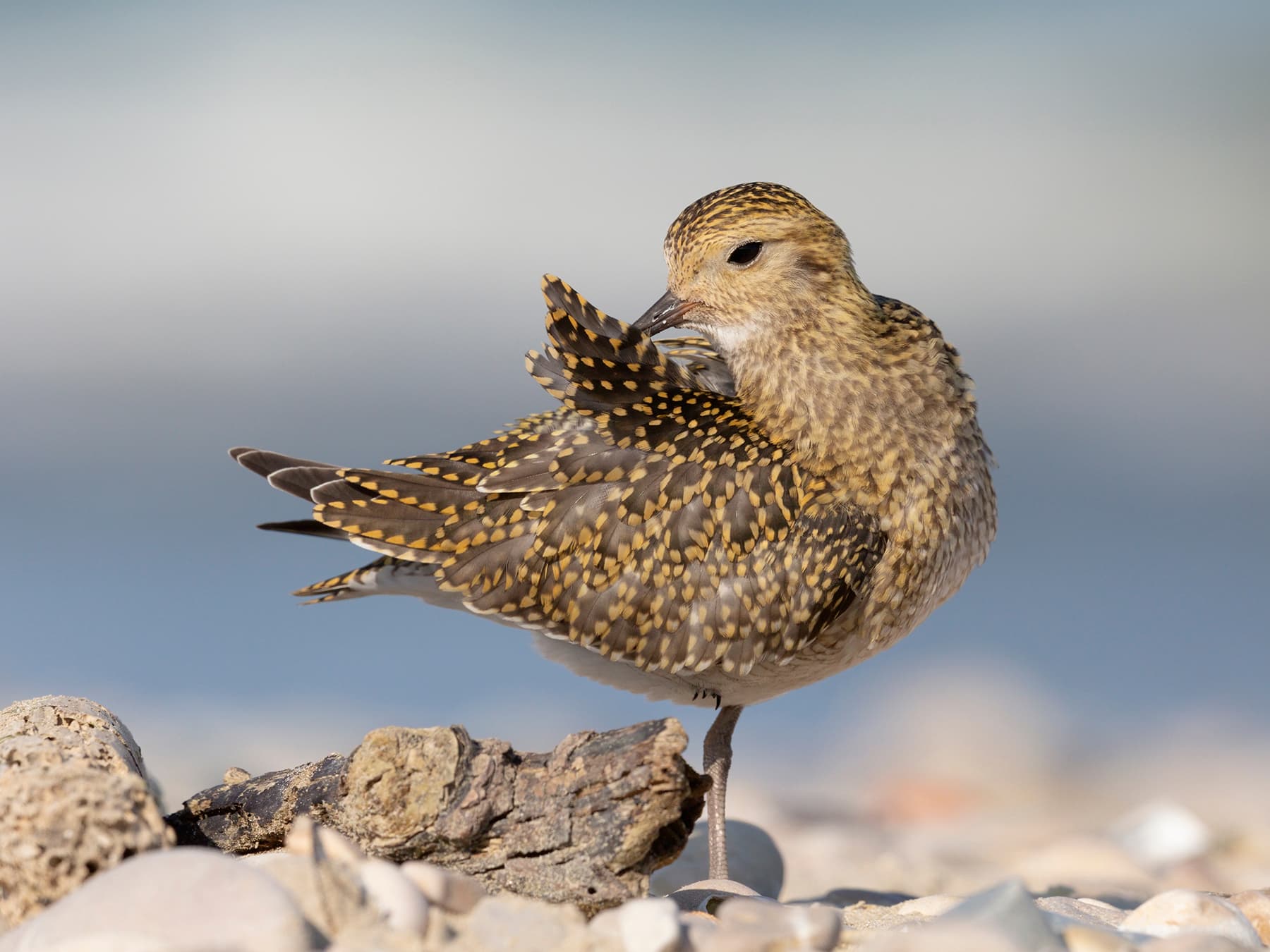
Non-breeding adult golden plovers lose their bold black markings on their face and underparts. Their upperparts become less distinctly spotted, turning a buff-yellowish colour, with an overall greyish wash to their breast and belly.
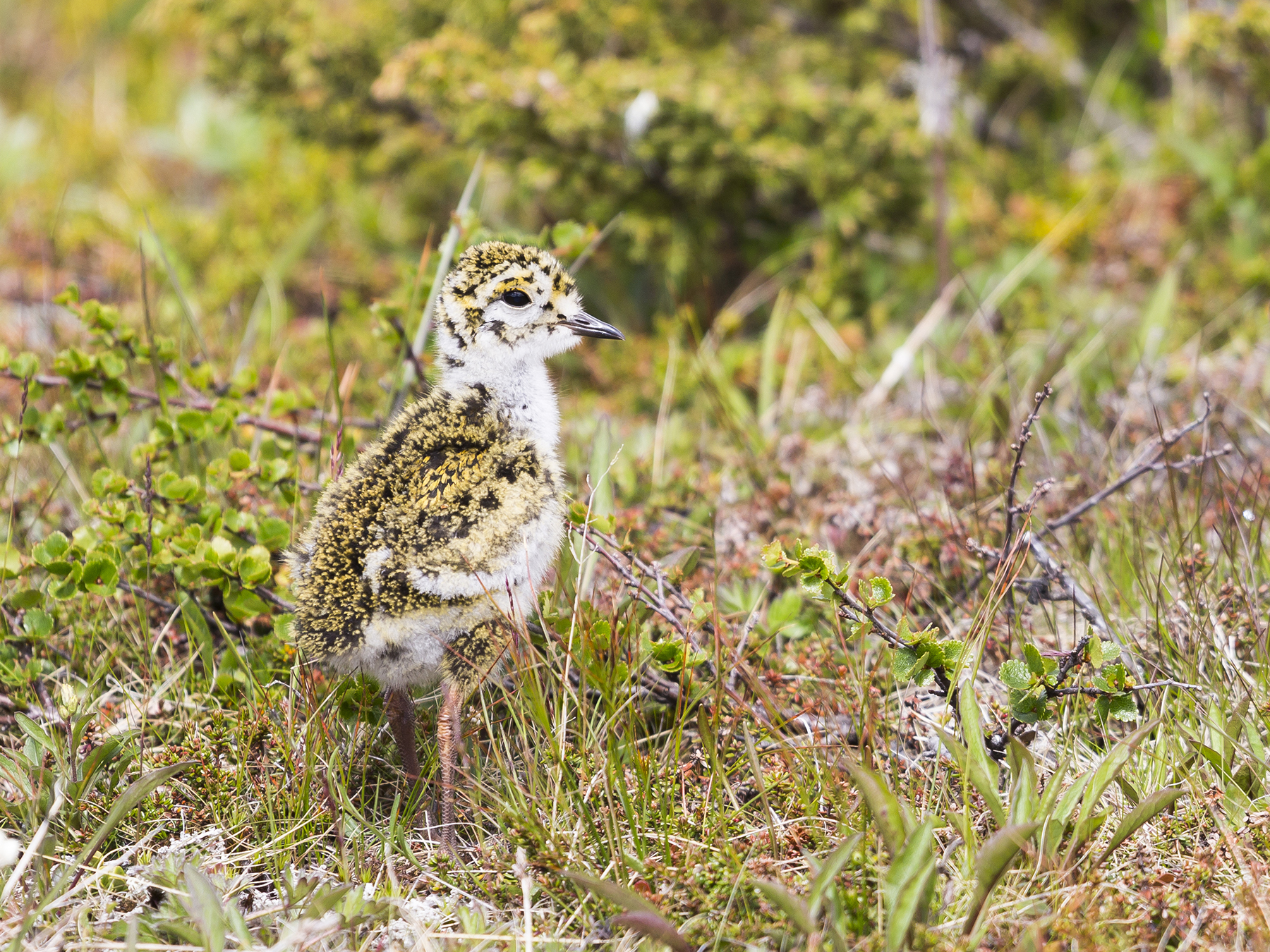
Juvenile golden plovers look the same as non-breeding adults but have lighter grey fringes to the feathers on their flanks and belly.
Its size
Adults- Length
- 26–29 cm
- Wingspan
- 67–76 cm
- Weight
- 160–280 g
Its song and calls
What sound does a Golden Plover make?
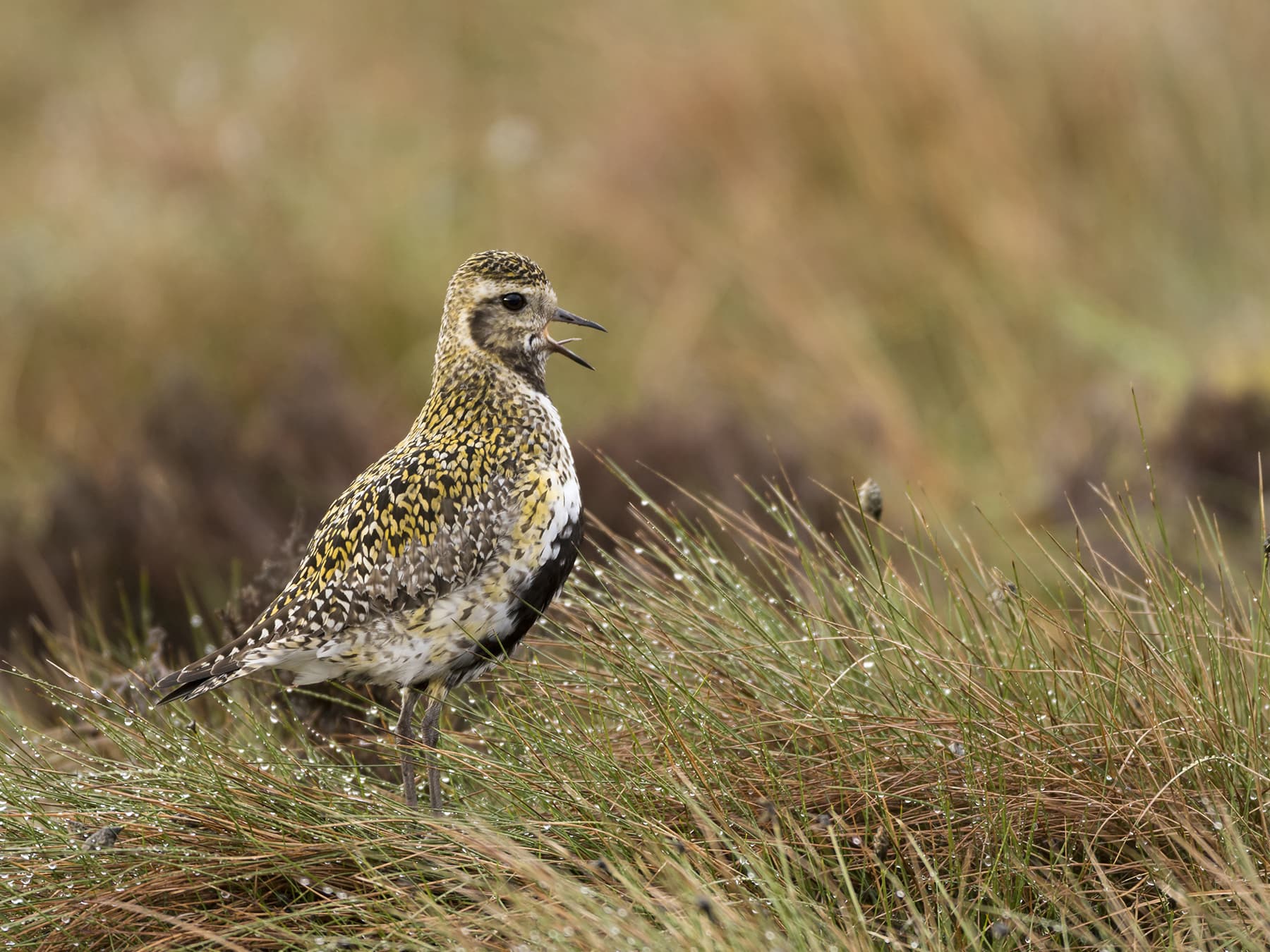
The most commonly heard call of a golden plover is a monotone ‘puuuu’ whistle, heard while foraging for food but not on breeding grounds.
During breeding, the usual call of male golden plovers is a double-note ‘puuuu-wheeeuw’ sound, which can be heard until late summer.
- Call0:00 / 0:14
Recorded in Normandie, France · September 2022
When and where to see it
OctoberPeak season
Most recorded in October
- 1. Stockton-on-Tees1.5%
- 2. Bridgend1.4%
- 3. Louth1.4%
- 4. Orkney Islands1.4%
- 5. Offaly1.3%
Each dot is a county, state or province: the bigger and darker, the larger the bird’s share of that place’s bird records that month. Grey dots: no regular records. The ringed point is the centre of the bird’s records this month; the arrow shows how it moved since last month, and the dashed loop its path through the year. “Arrivals” colours places where it becomes regular this month (orange) or is in its last regular month (grey). GBIF eBird Observation Dataset, 2019–2024. Map data: Natural Earth, US Census Bureau; place centres © OpenStreetMap contributors.
In your area
See when the Golden Plover is recorded in your county, state or province.
How often the Golden Plover turns up in the UK, Ireland and Canada through the year, from birdwatchers' records.
United Kingdom
Winter visitor · all year · most records in October
Ireland
Winter visitor · regularly Aug–Apr · most records in October
Canada
Passage migrant · regularly Apr–May · most records in April
Show as a table
| Month | United Kingdom | Ireland | Canada |
|---|---|---|---|
| January | 0.24% (regular) | 0.44% (regular) | – |
| February | 0.21% (regular) | 0.38% (regular) | – |
| March | 0.12% (regular) | 0.32% (regular) | – |
| April | 0.060% (regular) | 0.18% (regular) | 0.001% (regular) |
| May | 0.035% (regular) | 0.028% | <0.001% (regular) |
| June | 0.032% (regular) | 0.014% | <0.001% |
| July | 0.069% (regular) | 0.026% | <0.001% |
| August | 0.16% (regular) | 0.057% (regular) | – |
| September | 0.24% (regular) | 0.30% (regular) | – |
| October | 0.34% (regular) | 0.59% (regular) | – |
| November | 0.27% (regular) | 0.49% (regular) | – |
| December | 0.23% (regular) | 0.41% (regular) | – |
Recorded regularly in
Worldwide: recorded regularly in 56 countries
Countries where it was recorded in at least 3 of the 6 years 2019–2024. Linked countries have their own bird list.
Europe (41)
- Åland Islands
- Albania
- Austria
- Belarus
- Belgium
- Bulgaria
- Croatia
- Czechia
- Denmark
- Estonia
- Faroe Islands
- Finland
- France
- Germany
- Greece
- Guernsey
- Hungary
- Iceland
- Ireland
- Isle of Man
- Italy
- Jersey
- Latvia
- Lithuania
- Malta
- Montenegro
- Netherlands
- Norway
- Poland
- Portugal
- Romania
- Russia
- Serbia
- Slovakia
- Slovenia
- Spain
- Svalbard & Jan Mayen
- Sweden
- Switzerland
- Ukraine
- United Kingdom
Asia (11)
- Azerbaijan
- Cyprus
- Georgia
- Iran
- Israel
- Kazakhstan
- Lebanon
- Oman
- Palestinian Territories
- Turkey
- United Arab Emirates
North America (1)
Data: EOD – eBird Observation Dataset (Cornell Lab of Ornithology), accessed via GBIF.org, CC BY 4.0. Records from 2019–2024, aggregated and filtered by Birdfact. How these lists are made
What is the habitat of a Golden Plover?
Breeding grounds of golden plovers are typically found in tundra landscapes, as well as bogs, heathlands and peat-rich areas. In winter, agricultural pastures attract large flocks of golden plovers, as well as salt marshes, mudflats and estuaries.
What is the range of a Golden Plover?
The breeding range of golden plovers extends from Iceland and the British Isles in the west, across northern Europe and into Siberia in the east. In winter, their range reaches from Britain and northern France throughout the Mediterranean and North African coasts as far west as the Caspian Sea.
Where do Golden Plovers live?
Iceland has a large population of golden plovers, with an estimated breeding population of up to 89,000 pairs in 2014. Population estimates from the 1980s show Sweden, Norway and Finland to also have among the largest European breeding populations, with Britain, the Netherlands, Germany and Denmark being the leading winter destinations for migrating golden plovers.
How rare are Golden Plovers?
Around 32,500 to 50,500 pairs of golden plovers breed in the UK each year, and their numbers increase to 410,000 birds during winter when joined by migrants from northern Europe.
Sightings reach a peak between November and February when they gather in large flocks of up to tens of thousands.
Where can you see Golden Plovers in the UK?
In summer you’re most likely to spot golden plovers in upland moorlands in the Highlands of Scotland, as well as throughout the Western and Northern Isles. They also breed in the Peak District, North Yorkshire and parts of Wales and Devon.
In winter, your chances of a sighting increase with the influx of hundreds of thousands of migrating birds, and a shift to lower ground. Winter flocks can be seen throughout the UK, particularly between November and February.
Migration
Do Golden Plovers migrate?
Golden plovers are migratory in parts of their range but are resident in some regions where winter temperatures do not drop too dramatically.
Migration is strongly tied to climate, and occasionally flocks of golden plovers will arrive in wintering grounds only to move on again if the conditions there plunge below zero degrees.
Are Golden Plovers native to the UK?
The UK population of golden plovers are partially migratory, and remain within the British Isles all year round, but may temporarily shift to lower ground when winter approaches.
The native population of up to 50,500 birds is joined by wintering birds from Iceland and northern Scandinavia once temperatures there become too harsh to survive.
Tips for seeing it
- Look for Golden Plovers in open fields and coastal areas during migration
- Listen for their distinctive, melancholic whistle
- Observe their characteristic run-stop-tilt feeding pattern
- In the UK, watch for large flocks in upland areas during summer
What it eats
What do Golden Plovers eat?
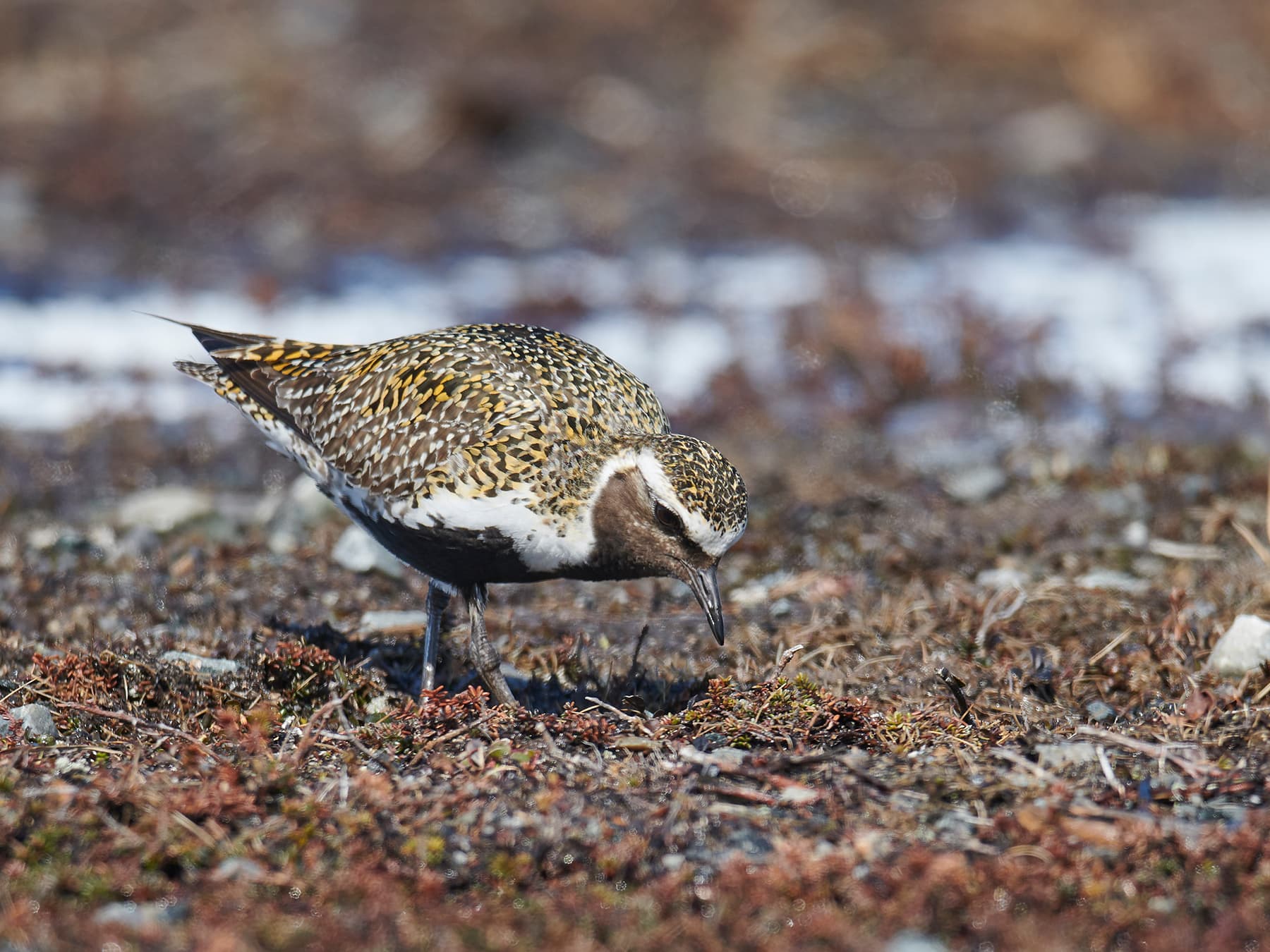
Golden plovers find food by probing beneath up to 2 cm beneath the earth’s surface, for earthworms, as well as on the ground for beetles, larvae, snails and millipedes.
They also eat some plant matter, including berries, seeds and grass. They feed at night, as well as during the day, and are thought to rely on sound as well as sight to detect food.
What do baby Golden Plovers eat?
The diet of newly hatched golden plovers consists primarily of crane flies and their larvae, while older chicks aged from 16 days upwards continue to eat crane fly larvae, but also eat a wider variety of larger invertebrates including beetles, spiders and caterpillars.
Nesting and breeding
Where do Golden Plovers nest?
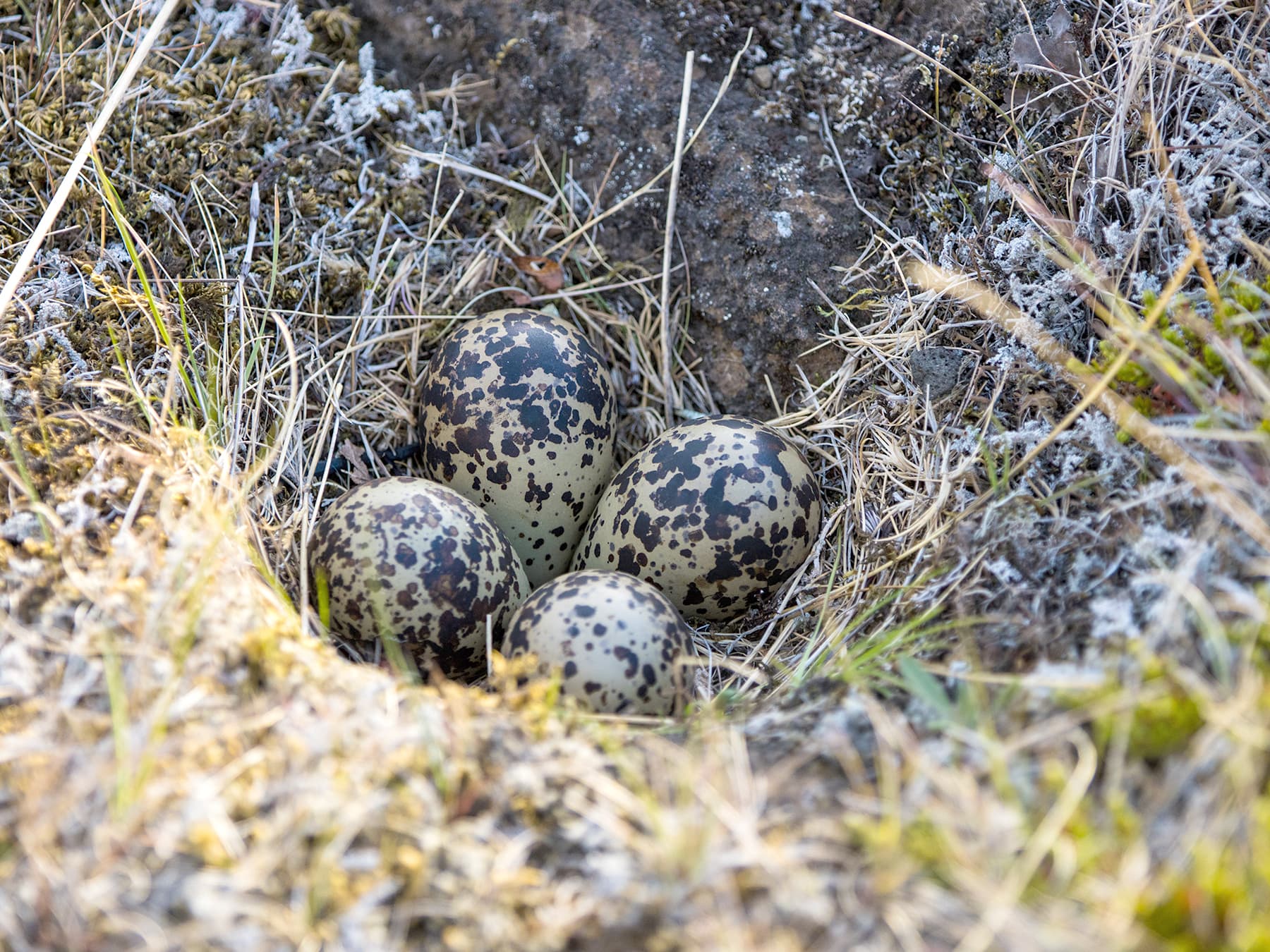
Golden plovers are ground nesters, laying their eggs in a shallow scrape in the ground.
The male builds the nest, using moss, leaves and other plant material to line the depression, which is typically situated in a flat, open area with some low-level vegetation. They are solitary and territorial when breeding, but feed in flocks away from their nest sites, taking turns to incubate while the off-duty parent feeds.
What do Golden Plover eggs look like?
Golden plovers lay between 2 and 5 eggs, which can vary from olive green to reddish brown or cream in colour. Eggs are heavily streaked with brown-black markings, and measure 52·1 mm by 35·5 mm (2.1 in by 1.4 in). Incubation lasts for 27 to 31 days and is shared between males and females.
Do Golden Plovers mate for life?
Golden plovers form long-term pair bonds which frequently do last for more than one season.
Behaviour
Are Golden Plovers aggressive?
Golden plovers are known to be territorial in defense of their nest sites but feed together in relatively small flocks during the breeding season.
Once breeding is finished, they gather in much larger flocks, sometimes with up to tens of thousands of birds foraging together. Some aggression may be shown to other nearby species when their nest site is considered to be under threat.
Lifespan and predators
How long do Golden Plovers live?
Records show that the oldest golden plover reached 12 years, but a lifespan of around 4 years is far more common for the species. Breeding occurs for the first time at 2 years.
What are the predators of Golden Plovers?
Stoats and weasels are common predators of the nests and young of golden plovers, with other opportunistic mammals such as badgers, hedgehogs, and foxes also posing some threat. The cryptic markings of adult birds offer some camouflage against predation, although hunting by birds of prey is not uncommon.
Are Golden Plovers protected?
The Wildlife and Countryside Act, of 1991, protects golden plovers from being intentionally killed, injured, or taken into captivity.
Are Golden Plovers endangered?
In the UK, golden plovers are rated as a species of least concern, although noticeable declines in numbers have been recorded in parts of Europe in recent decades.
Conservation
While currently listed as Least Concern, Golden Plovers face threats from habitat loss and climate change. Conservation efforts focus on protecting breeding grounds in northern Europe and maintaining suitable wintering habitats in western Europe and the UK.
How big are Golden Plovers?
Golden plovers are stocky, compact, and classed as medium-sized wading birds.
Males and females are the same size, falling into the measurement range below:
- Length: 26 cm to 29 cm (10.2 in to 11.4 in)
- Weight: 140 g to 312 g (4.9 oz to 11 oz)
- Wingspan: 67 cm to 76 cm (26.4 in to 29.9 in)
More photos
2 photos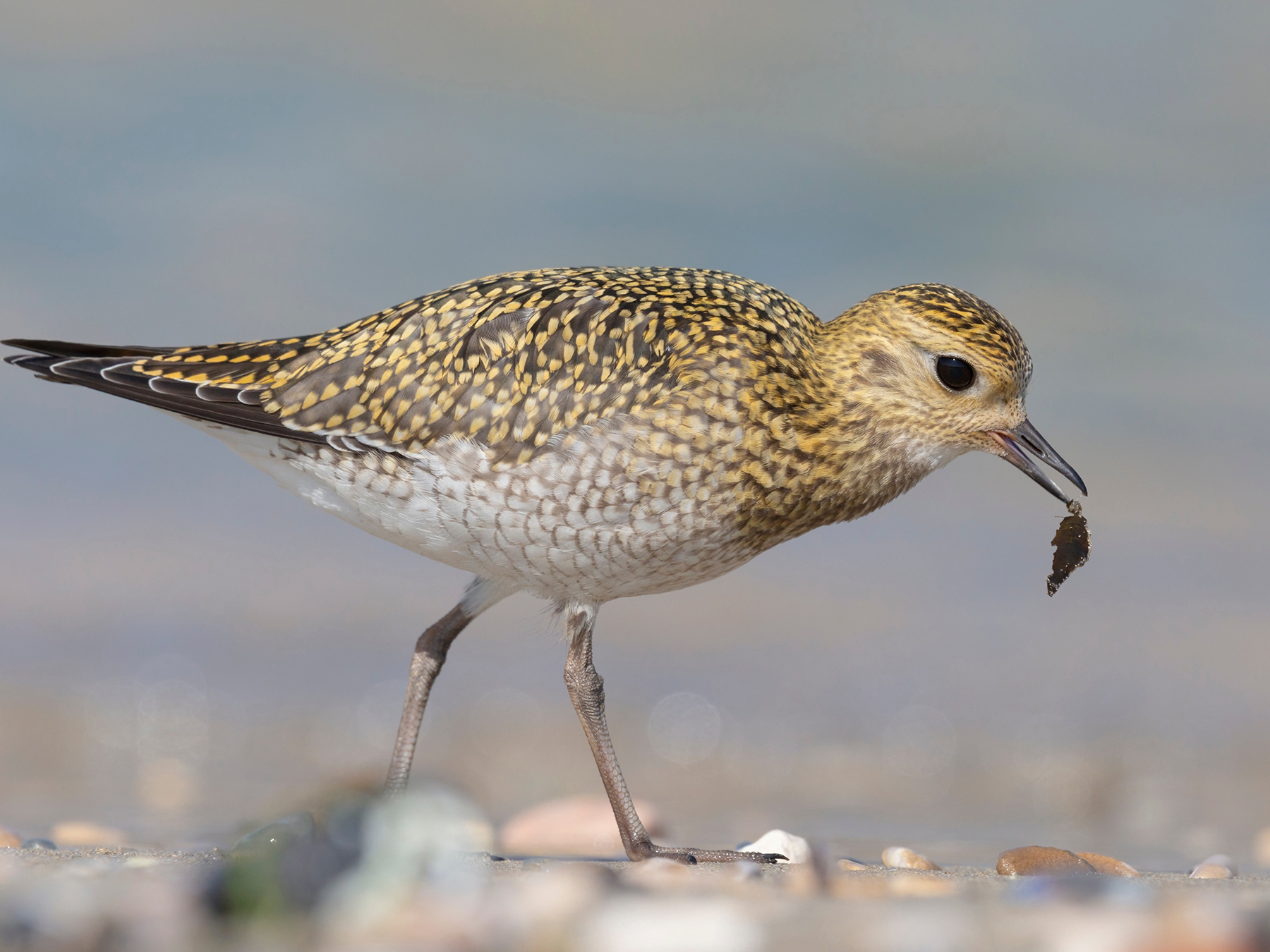
Quick facts
- Length
- 26–29 cm
- Wingspan
- 67–76 cm
- Weight
- 160–280 g
- Lifespan
- 10–15 years · oldest recorded 12 years
- Family
- Plovers & Lapwings
- Migration
- Long-distance Migrant
- Global status (IUCN)
- Least Concern
- World population
- 1,300,000 - 1,750,000 mature individuals
- Population trend
- Increasing
- Also called
- European Golden Plover, Eurasian Golden Plover
- Scientific name
- Pluvialis apricaria
Questions
3Can you eat Golden Plover?
Golden plovers are edible, although it’s not a very common choice as meat, and is something of an acquired taste.
Is a Golden Plover a game bird?
Golden plovers are classed as game birds and can be hunted for sport in the UK at certain times of the year. Hunting is particularly common in France.
Can you shoot Golden Plovers in the UK?
Golden plovers are listed under Schedule 2 Part 1 of the Wildlife and Countryside Act 1981 and the Wildlife (Northern Ireland) Order 1985, which means they can be legally shot and killed during the open season, which lasts from September 1 to January 31.
Sources
4- 1BirdLife International. 2016. Pluvialis apricaria. The IUCN Red List of Threatened Species 2016: e.T22693727A86551440. Source (opens in a new tab)
- 2BirdLife International. 2016. Pluvialis apricaria. The IUCN Red List of Threatened Species 2016: e.T22693727A86551440. Source (opens in a new tab)
- 3BirdLife International. 2016. Pluvialis apricaria. The IUCN Red List of Threatened Species 2016: e.T22693727A86551440. Source (opens in a new tab)
- 4BTO longevity records: maximum age from a ringed bird, 12 years, 29 days (set in 1978), BirdFacts: Golden Plover (1978) Source (opens in a new tab)

Checked by
Nathan Cope, founder and editor
Nathan founded Birdfact and leads its writers and contributors in the UK, the US and Canada. He has watched and studied birds for more than ten years, and checks every article and species guide before it’s published.