


Common Scoter
Melanitta nigra
By the Birdfact teamChecked by Nathan Cope
On this page14 sections
How to recognise it
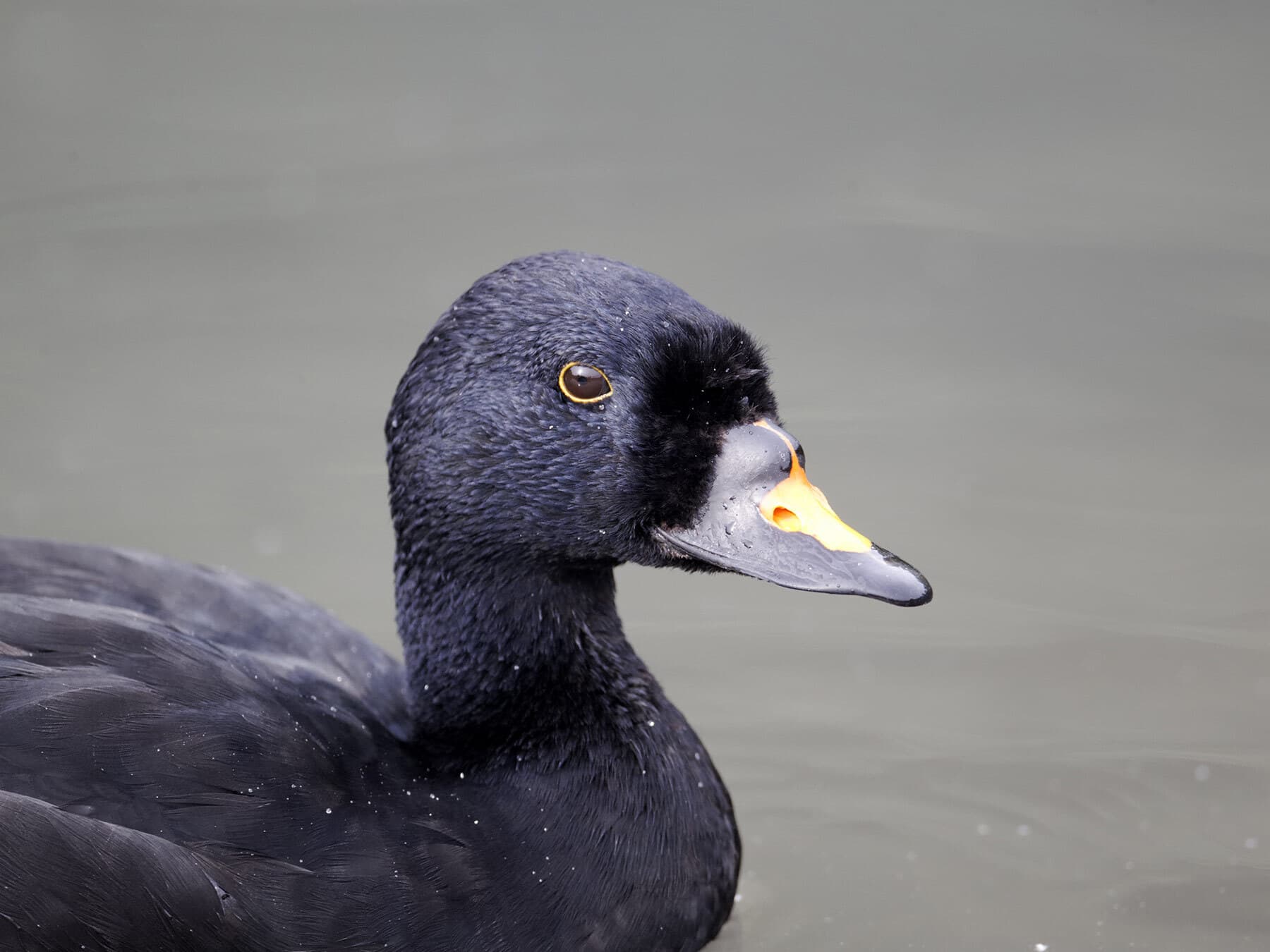
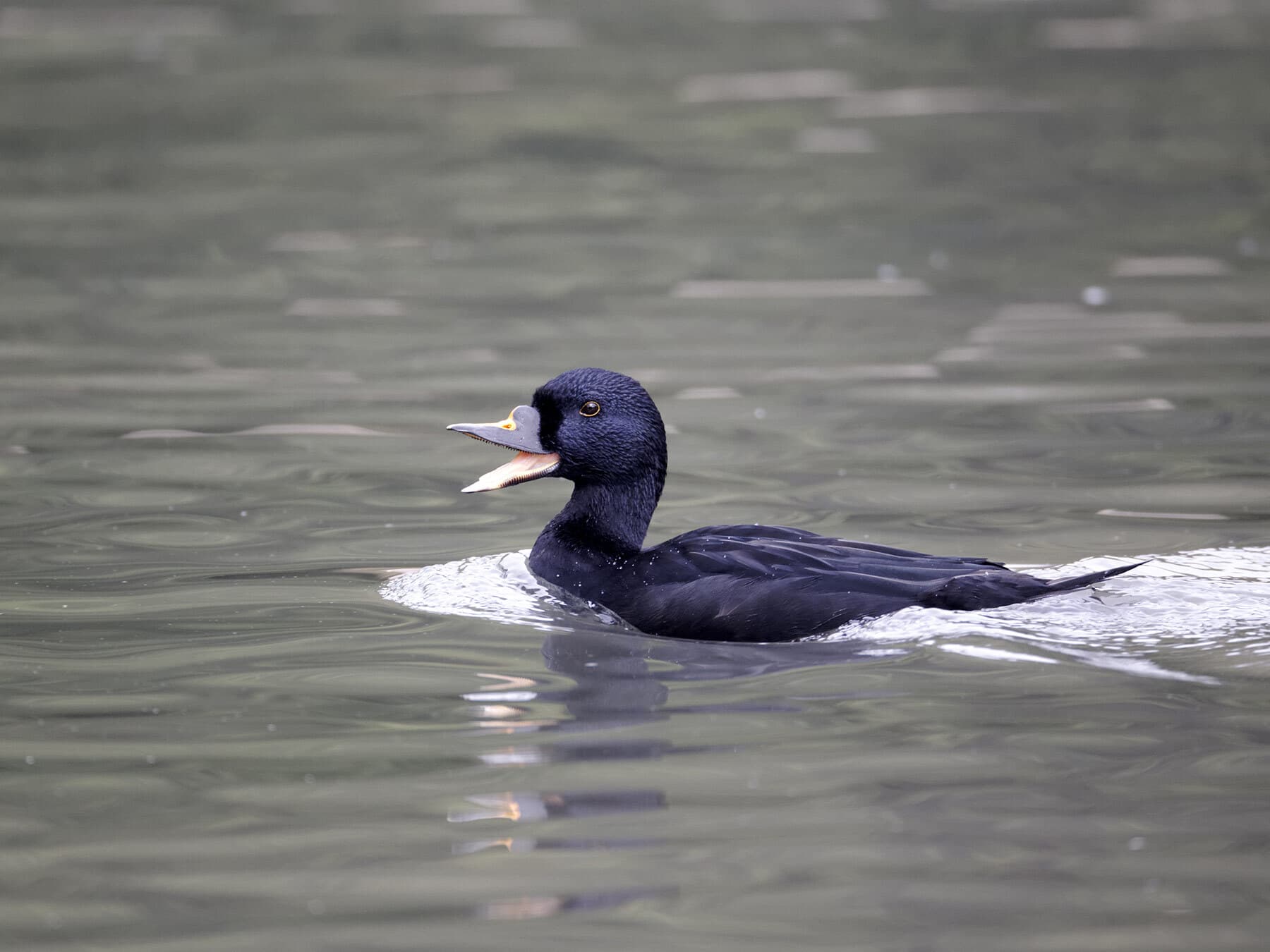
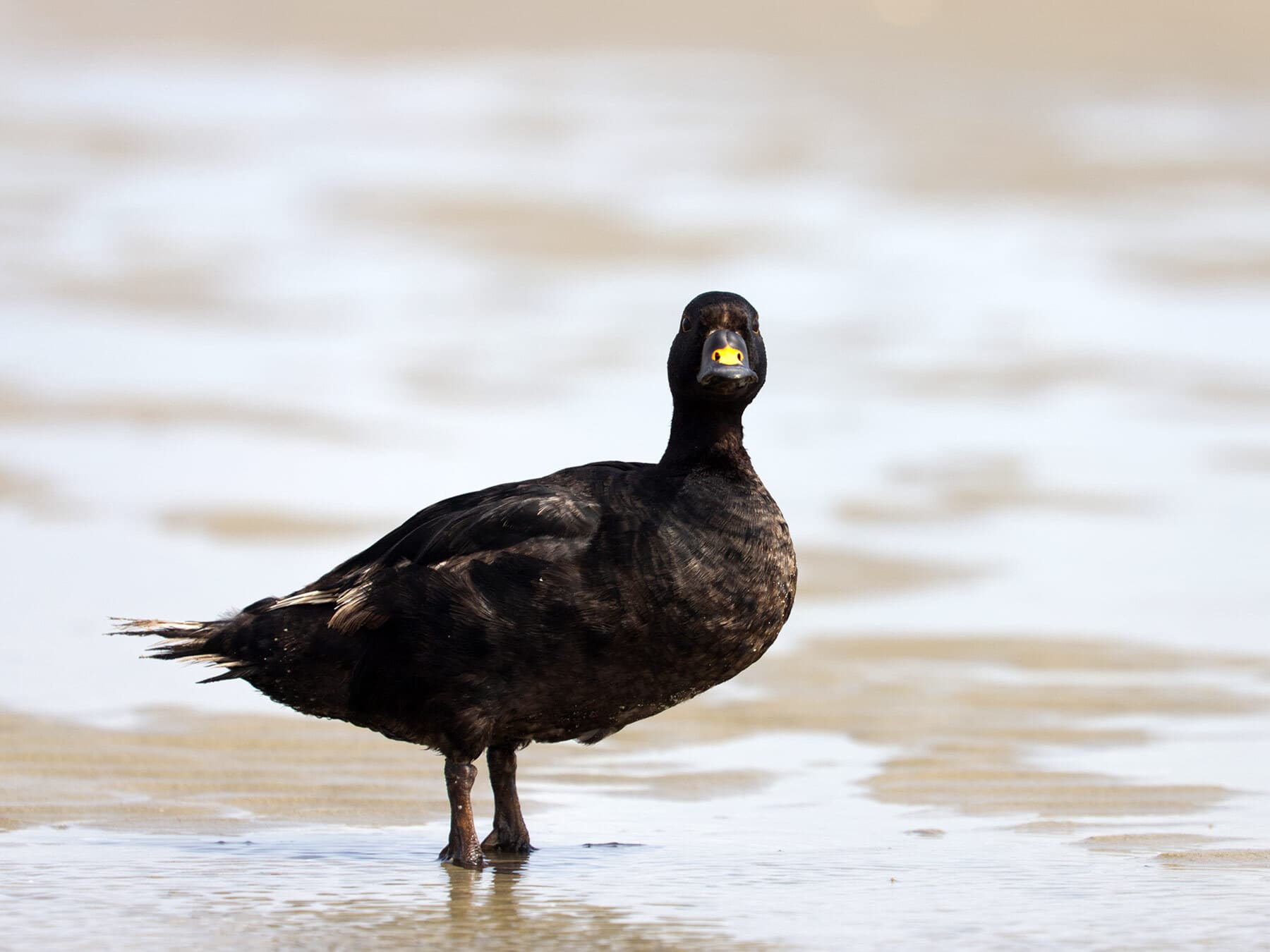
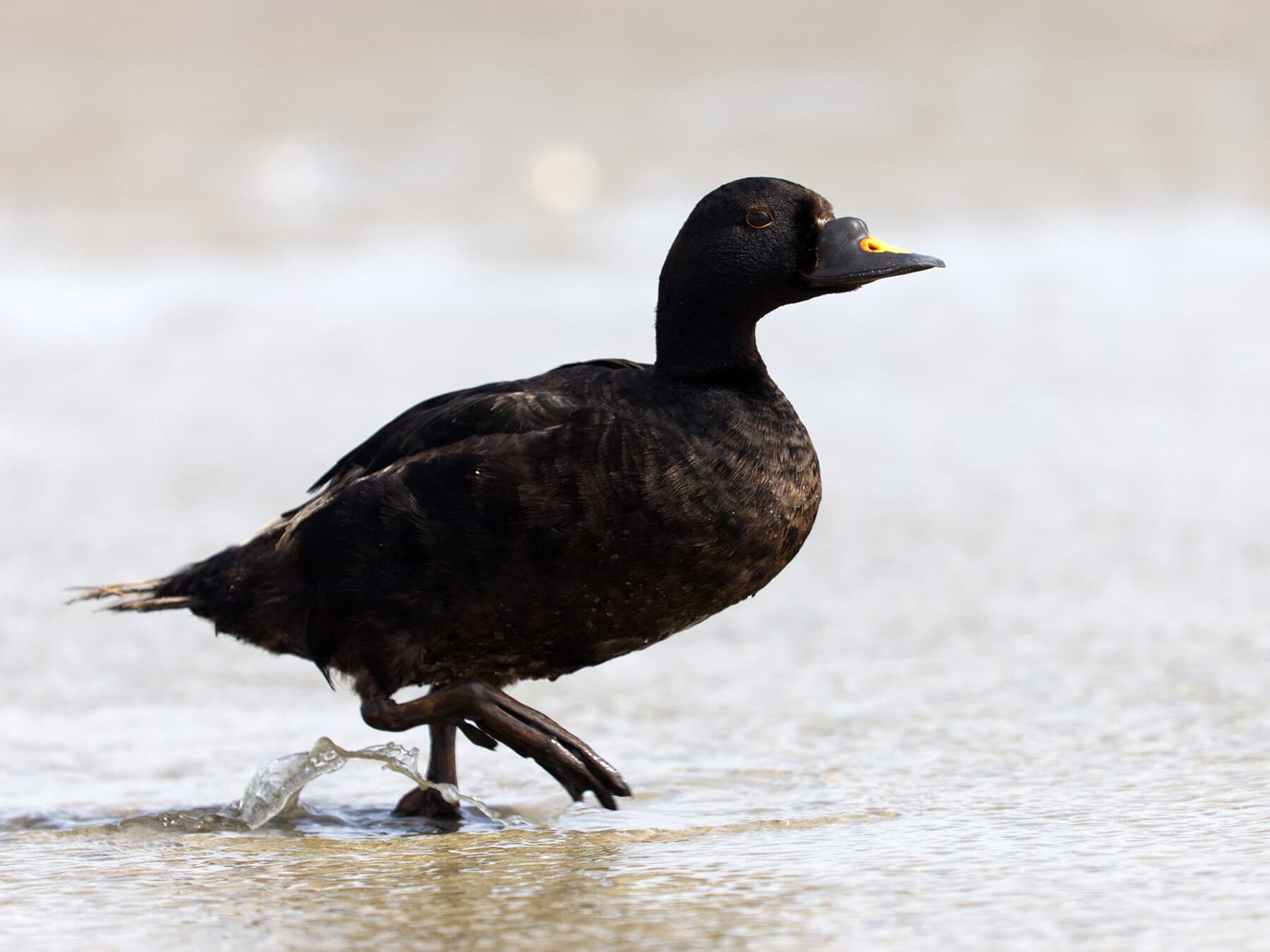
The Common Scoter is a medium-sized sea duck with a distinctive appearance. Males are entirely black with a bulbous base to their bill, which features a yellow-orange patch. Their eyes are dark, and they have a rounded head profile.
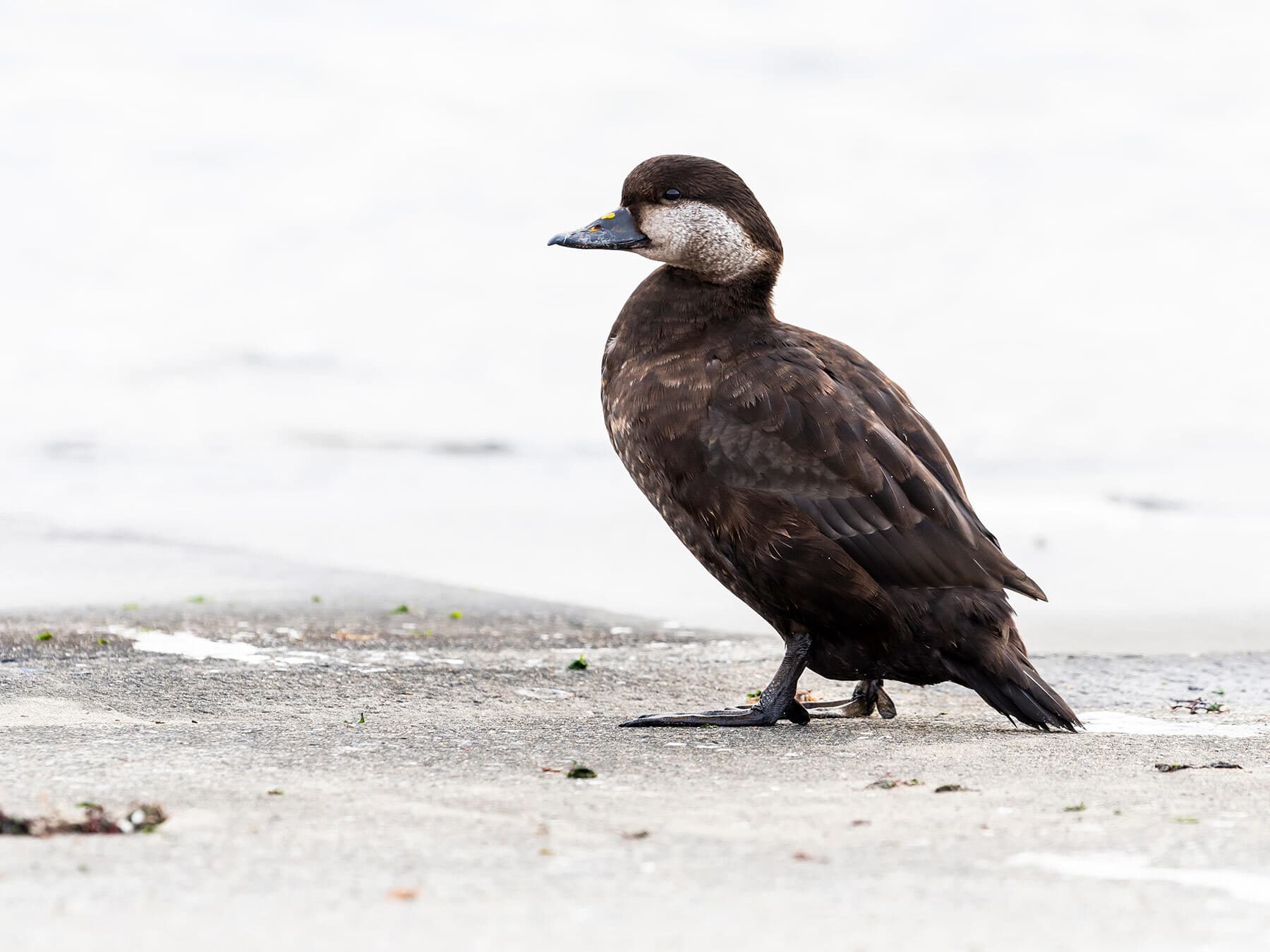
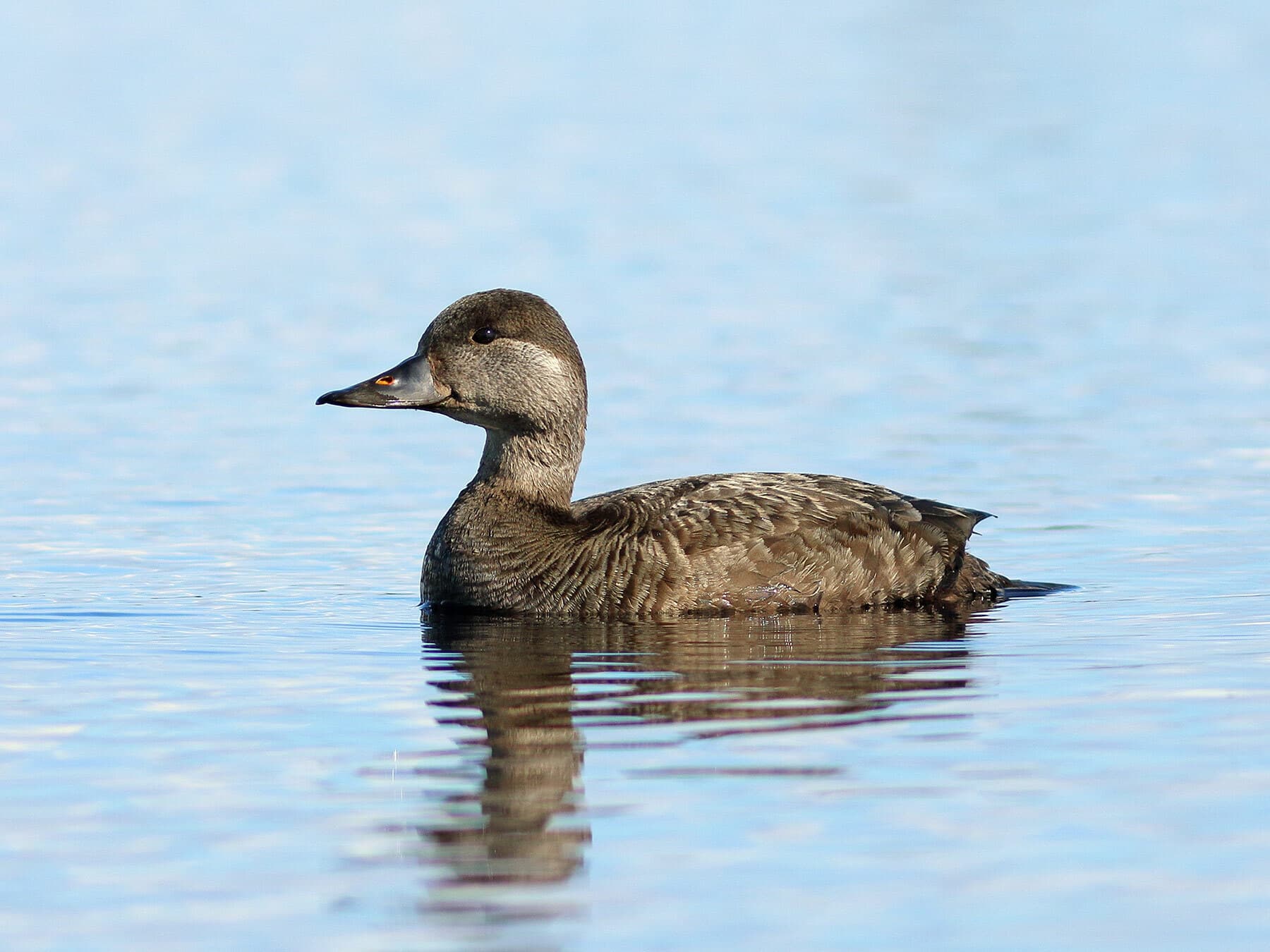
Females are predominantly dark brown with paler cheeks and throat. Juveniles resemble females but may have more mottled plumage.
Its size
Adults- Length
- 43–54 cm
- Wingspan
- 79–90 cm
- Weight
- 800–1500 g
Its song and calls
The sexes vocalise differently with the female using a deep growling or guttural noise whist the male issues a medium pitched repetitive whistle. Both birds will call with a sound similar to,’kyoo’ and large flocks will frequently vocalise together, particularly when taking off from water.
- Call0:00 / 0:18
Recorded in County Galway, Ireland · May 2026
When and where to see it
OctoberIn season
Most recorded in October
- 1. Moray1.1%
- 2. Fife0.78%
- 3. Pembrokeshire0.70%
- 4. Tyne and Wear0.60%
- 5. Northumberland0.58%
Each dot is a county, state or province: the bigger and darker, the larger the bird’s share of that place’s bird records that month. Grey dots: no regular records. The ringed point is the centre of the bird’s records this month; the arrow shows how it moved since last month, and the dashed loop its path through the year. “Arrivals” colours places where it becomes regular this month (orange) or is in its last regular month (grey). GBIF eBird Observation Dataset, 2019–2024. Map data: Natural Earth, US Census Bureau; place centres © OpenStreetMap contributors.
In your area
See when the Common Scoter is recorded in your county, state or province.
How often the Common Scoter turns up in the UK and Ireland through the year, from birdwatchers' records.
United Kingdom
Resident · all year · most records in November
Ireland
Winter visitor · all year · most records in February
Show as a table
| Month | United Kingdom | Ireland |
|---|---|---|
| January | 0.12% (regular) | 0.25% (regular) |
| February | 0.098% (regular) | 0.28% (regular) |
| March | 0.089% (regular) | 0.18% (regular) |
| April | 0.066% (regular) | 0.090% (regular) |
| May | 0.041% (regular) | 0.024% (regular) |
| June | 0.048% (regular) | 0.029% (regular) |
| July | 0.099% (regular) | 0.056% (regular) |
| August | 0.14% (regular) | 0.15% (regular) |
| September | 0.17% (regular) | 0.15% (regular) |
| October | 0.16% (regular) | 0.13% (regular) |
| November | 0.21% (regular) | 0.24% (regular) |
| December | 0.14% (regular) | 0.25% (regular) |
Recorded regularly in
Worldwide: recorded regularly in 39 countries
Countries where it was recorded in at least 3 of the 6 years 2019–2024. Linked countries have their own bird list.
Data: EOD – eBird Observation Dataset (Cornell Lab of Ornithology), accessed via GBIF.org, CC BY 4.0. Records from 2019–2024, aggregated and filtered by Birdfact. How these lists are made
Breeding takes place in Southeast Greenland, Iceland, northern regions of the United Kingdom, across Scandinavia and east as far as north central Russia. Whilst many birds will remain year round within their breeding regions others migrate south to the United Kingdom and European Atlantic coasts down as far as West Africa. Vagrants have also occasionally been recorded turning up in North America.
Signs and Spotting tips
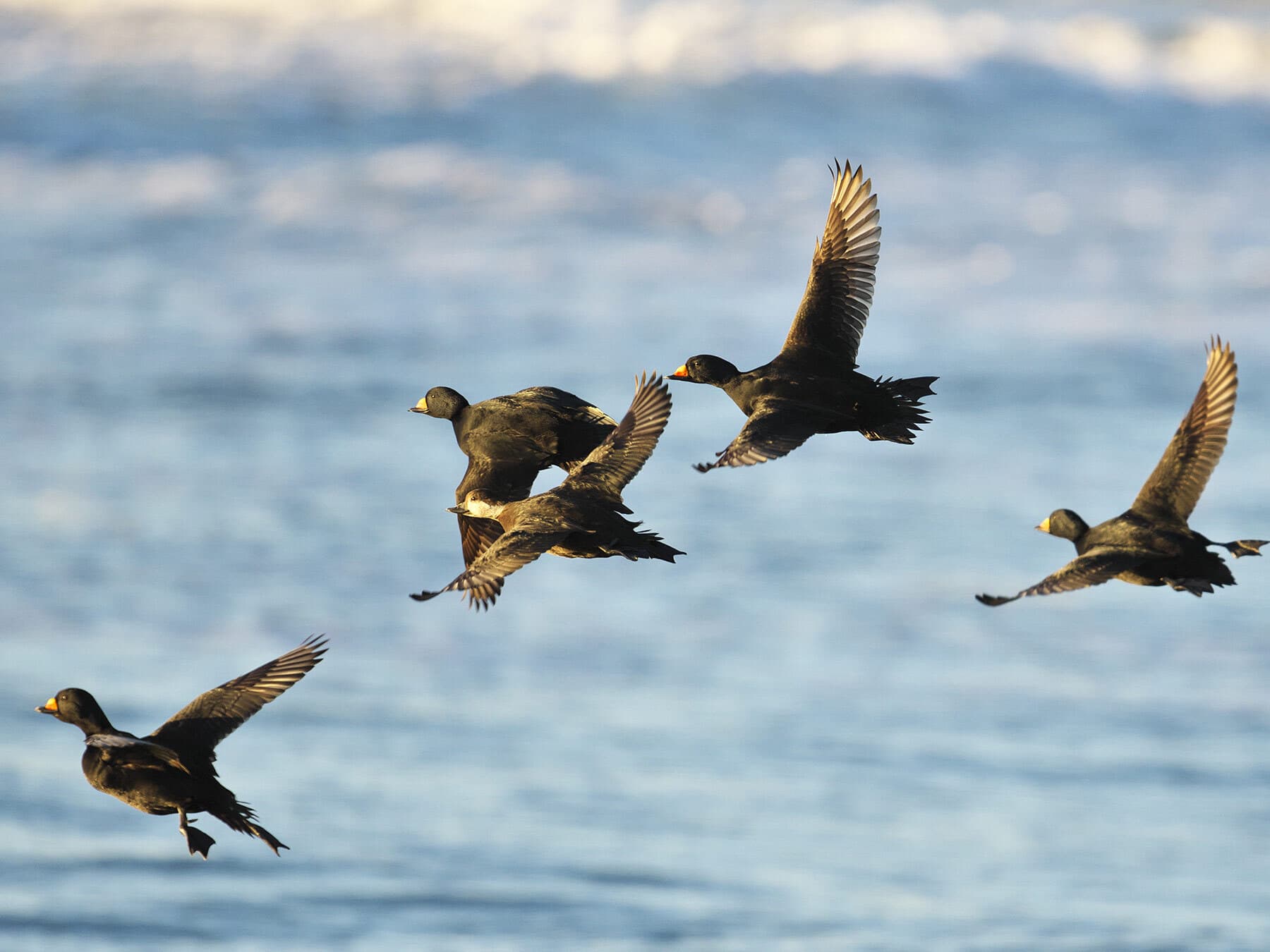
Whilst breeding takes place on land, generally close to water, the scoter can also be found in woodlands and inland treeless landscapes. Rivers and freshwater lakes will often attract a mother and ducklings but common scoters spend much of their time at sea frequently choosing sheltered bays where they can be seen riding the swells or sheltering from storms further out at sea. They are extremely social and congregate in large flocks. The male common scoter is more easily identifiable than the female being the only male species of scoters without any white markings. The large, wide yellow and black bill is also an obvious identification guide.
What it eats
Diving down from the surface of the water, common scoters eat crustaceans, molluscs, worms, shellfish, small fish and occasionally aquatic plants and insects.
Nesting and breeding
The breeding season extends from May to July and courtship often begins prior to this. Nests are hollows in the ground close to water, frequently located on islands free from predation or below overhanging undergrowth, where they are lined with vegetation and feathers. Normally the female will produce one clutch of 6 – 9 plain, cream coloured eggs, annually which she alone incubates for up to a month before hatching takes place. The male leaves the female early on during the incubation period, never to return. Fledging takes place after forty five to fifty days.
Behaviour
Common Scoters are highly social, often forming large flocks on the water. They are excellent divers, using their wings to propel themselves underwater in search of food.
During courtship, males perform elaborate displays, including head-bobbing and short flights across the water's surface.
Lifespan and predators
The life expectancy for a common scoter is between ten to fifteen years.
Conservation
While listed as Least Concern globally, Common Scoter populations are declining in some areas due to habitat loss, oil spills, and bycatch in fishing nets. Conservation efforts focus on protecting key wintering and breeding sites and reducing marine pollution.
What does a Common Scoter look like?
The common scoter is a large billed, slim necked, social, sea duck. During the non-breeding season the adult male has an all black body with a purplish hue to the upper parts and dark grey tips to the primary and secondary flight feathers. The tail is long and often seen raised whilst the bird is in the water. The head is rounded and the large pointed bill is predominantly matt black with a yellow patch on the ridge of the upper mandible, commencing behind the nostrils and extending forwards towards, but not meeting, the tip. Legs and feet are a matt black or dark grey and the eyes are a very dark brown. During the summer breeding season the upperwing areas are more brownish in colour. Adult females are a similar basic shape to the male although smaller and with a less pronounced base to the bill. They have a predominantly sooty brown coloured body with a black crown and cap extending across the forehead and to just below the eyes, ending at the nape of the neck. The cheeks, lower facial area and neck are greyish white morphing into the dark brown body mid way down the neck. The bill is slate grey and lacks the male’s yellow nasal patch. The eyes are a lighter brown than the male and both feet and legs are a dark matt grey. The plumage of juveniles is similar to the female although generally paler, particularly across the underparts.
Similar birds
Often mistaken for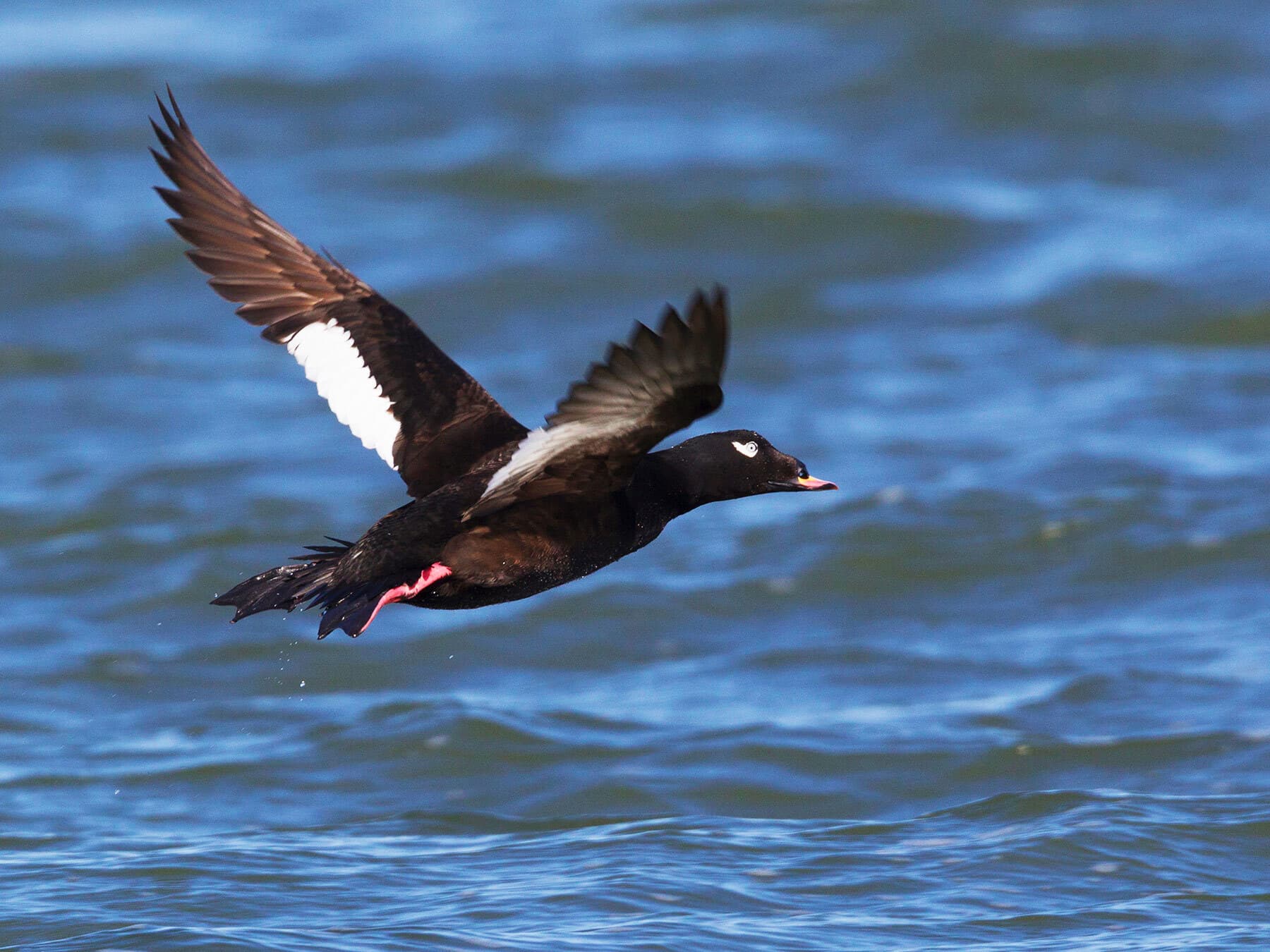
Common Scoter guides
1 guidesQuick facts
- Length
- 43–54 cm
- Wingspan
- 79–90 cm
- Weight
- 800–1500 g
- Lifespan
- 10–15 years
- Family
- Ducks, Geese & Swans
- Migration
- Long-distance Migrant
- Global status (IUCN)
- Least Concern
- World population
- 1,600,000 individuals
- Population trend
- Unknown
- Scientific name
- Melanitta nigra
Sources
2- 1BirdLife International. 2018. Melanitta nigra. The IUCN Red List of Threatened Species 2018: e.T22724879A132257623. Source (opens in a new tab)
- 2Delany and Scott (2006)

Checked by
Nathan Cope, founder and editor
Nathan founded Birdfact and leads its writers and contributors in the UK, the US and Canada. He has watched and studied birds for more than ten years, and checks every article and species guide before it’s published.