


Brent Goose
Brant Goose · Branta bernicla
By the Birdfact teamChecked by Nathan Cope
On this page14 sections
How to recognise it
What do Brent Geese look like?
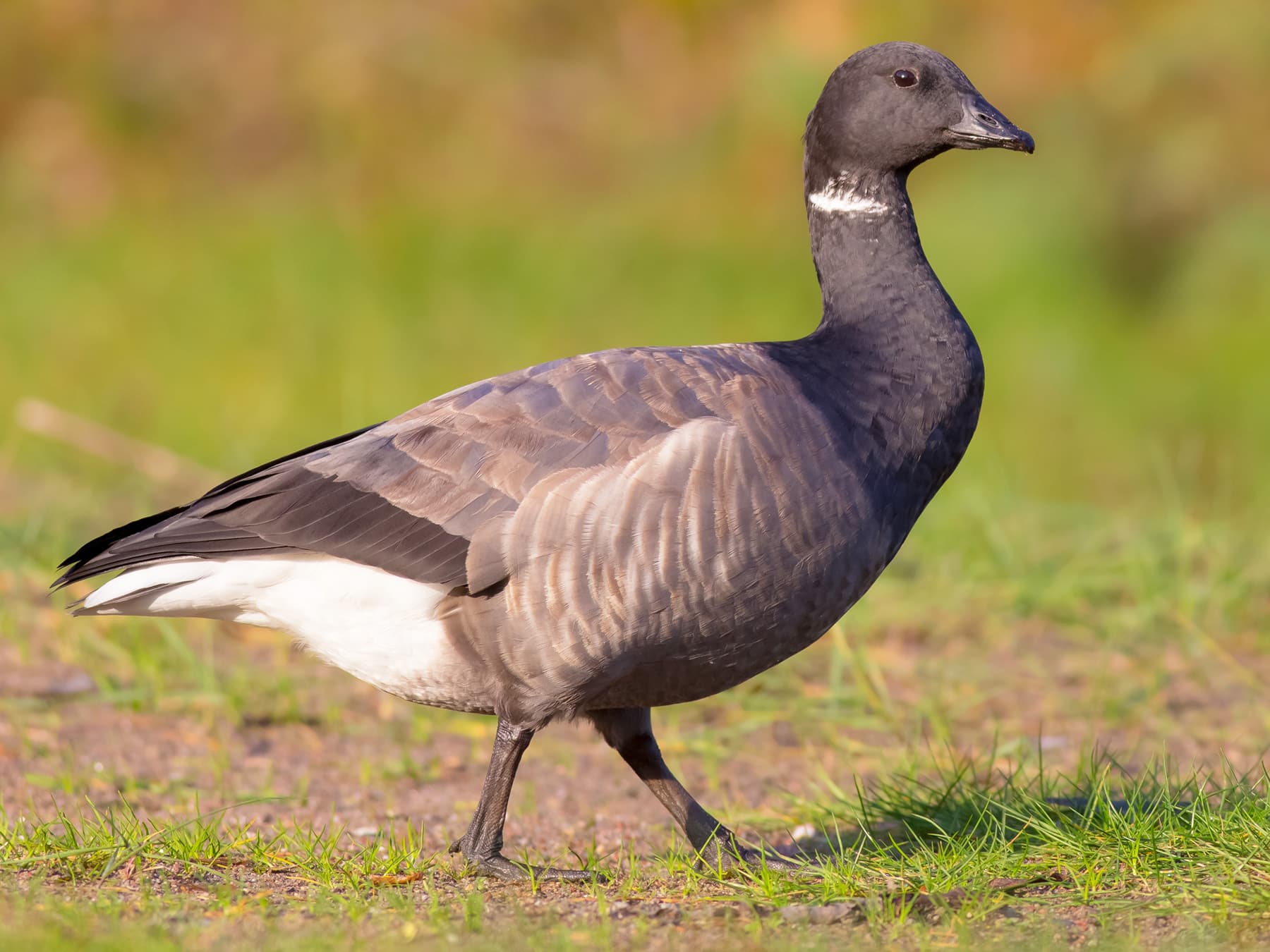
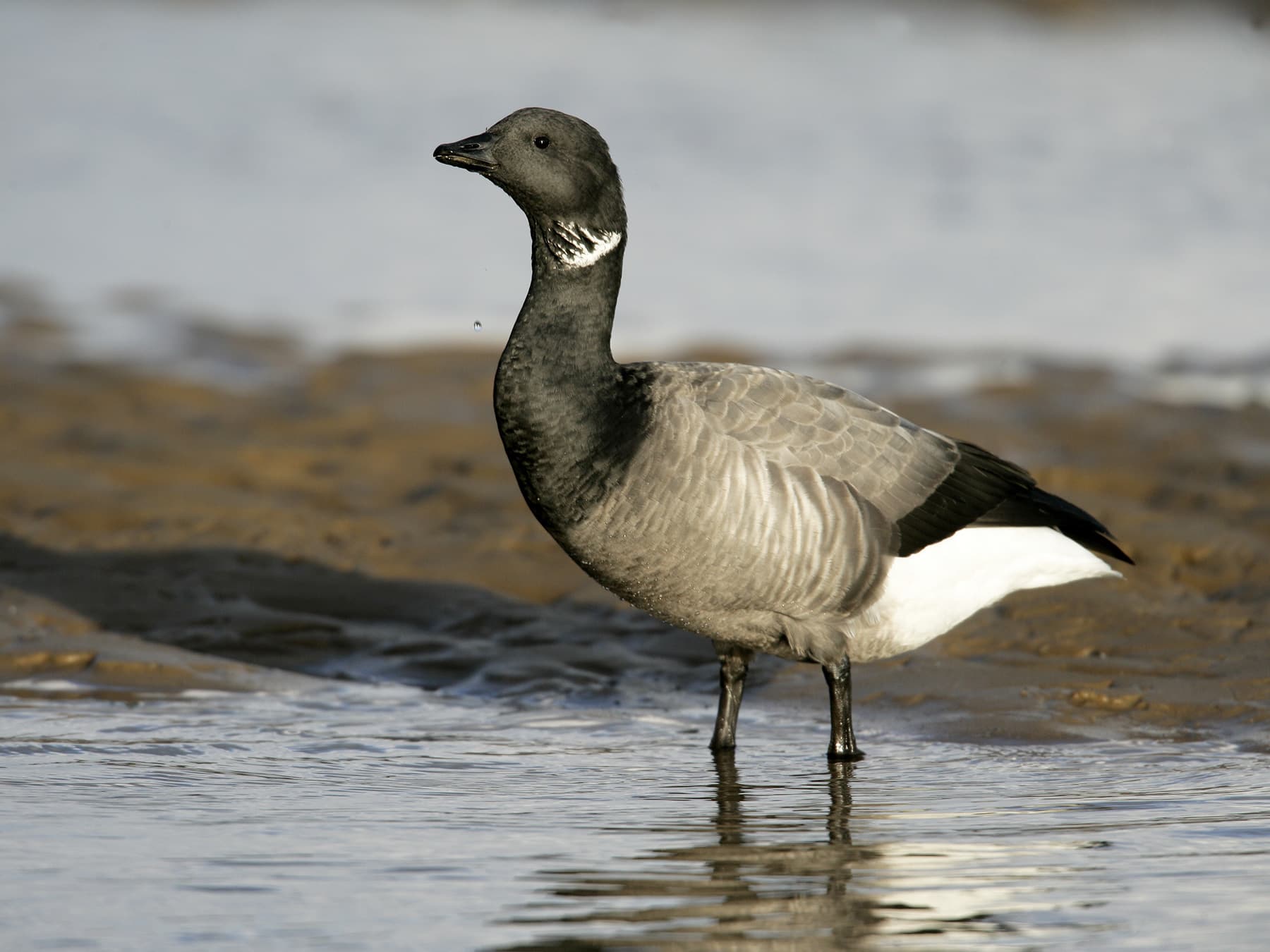
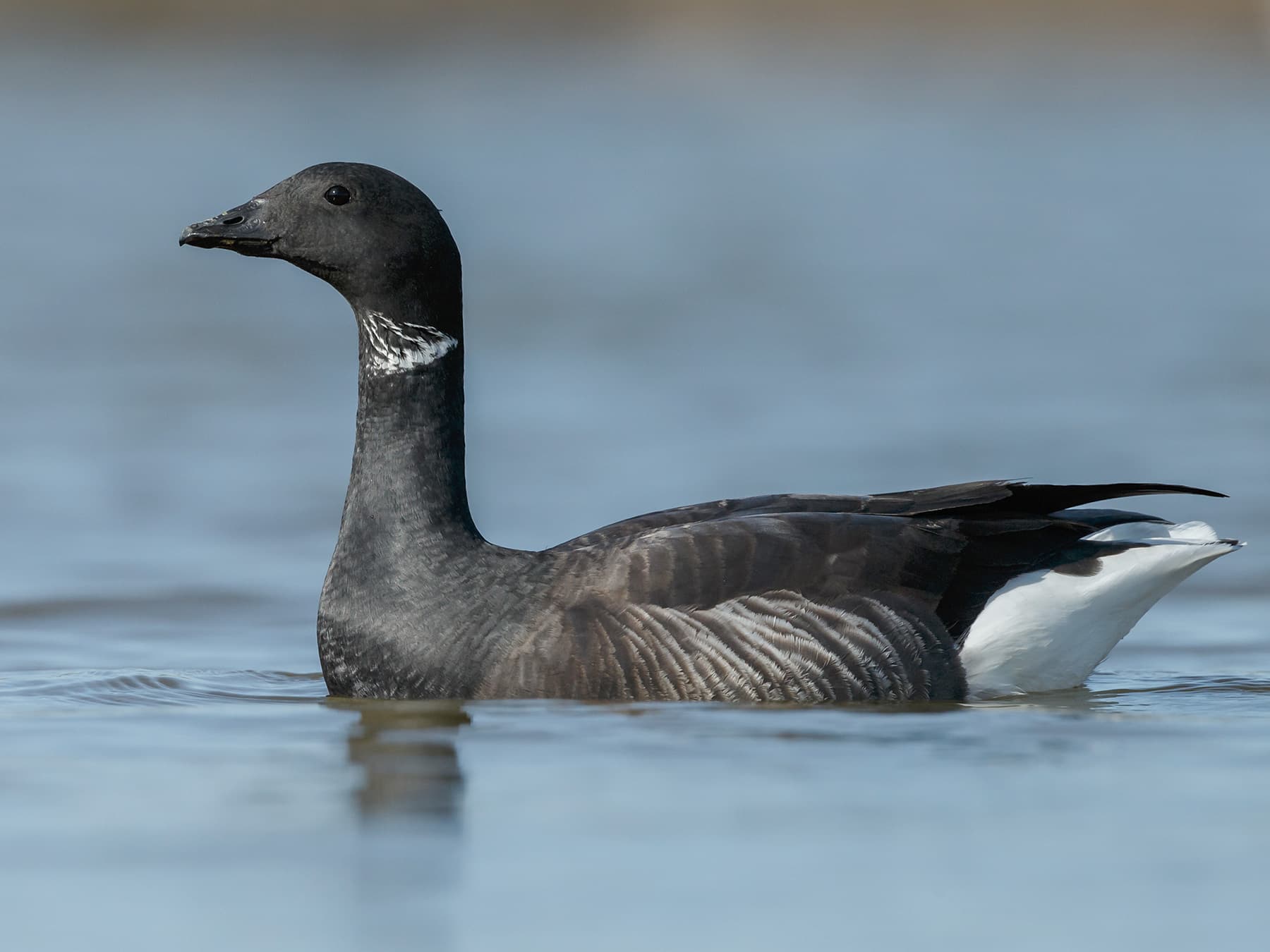
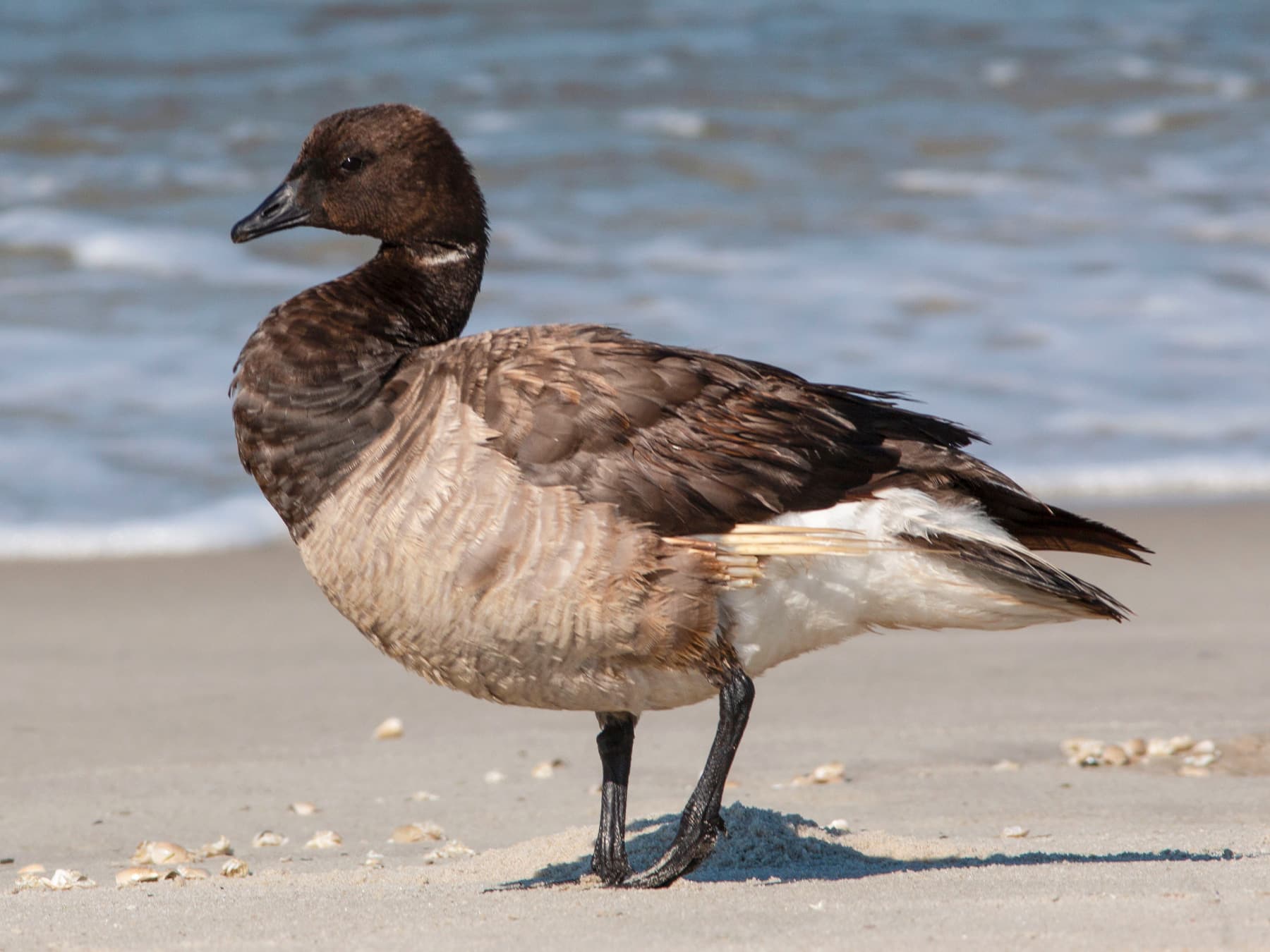
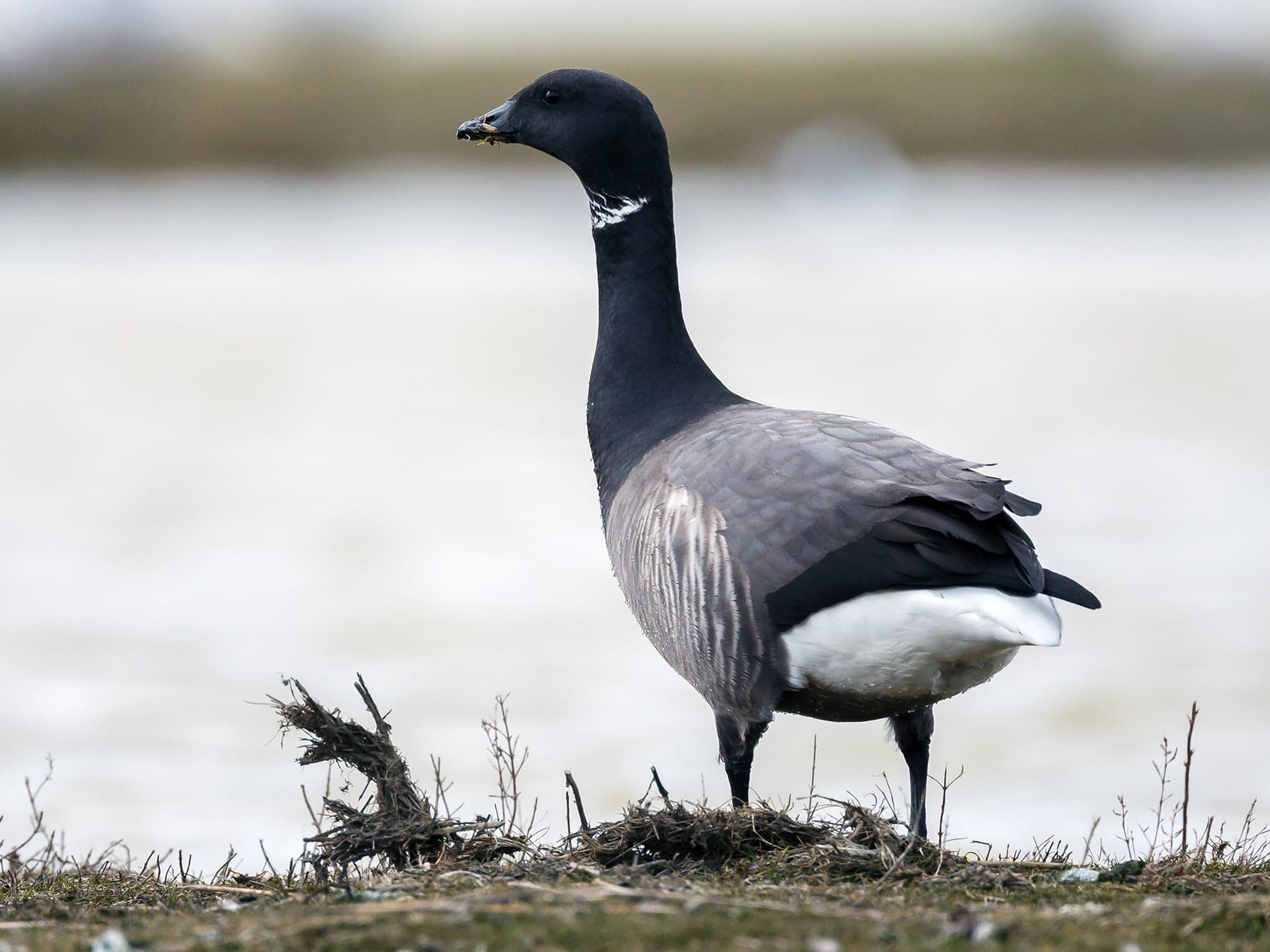
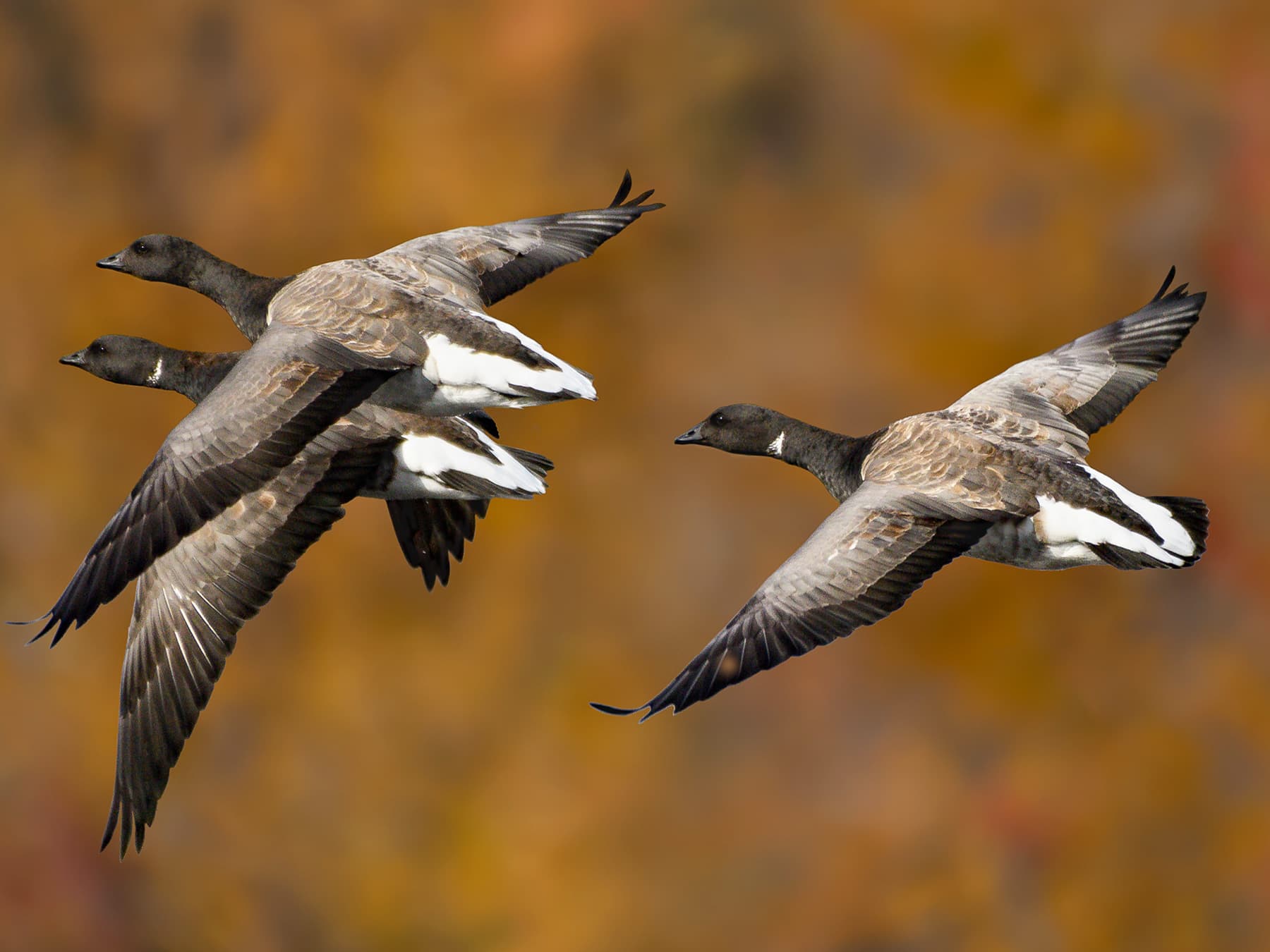
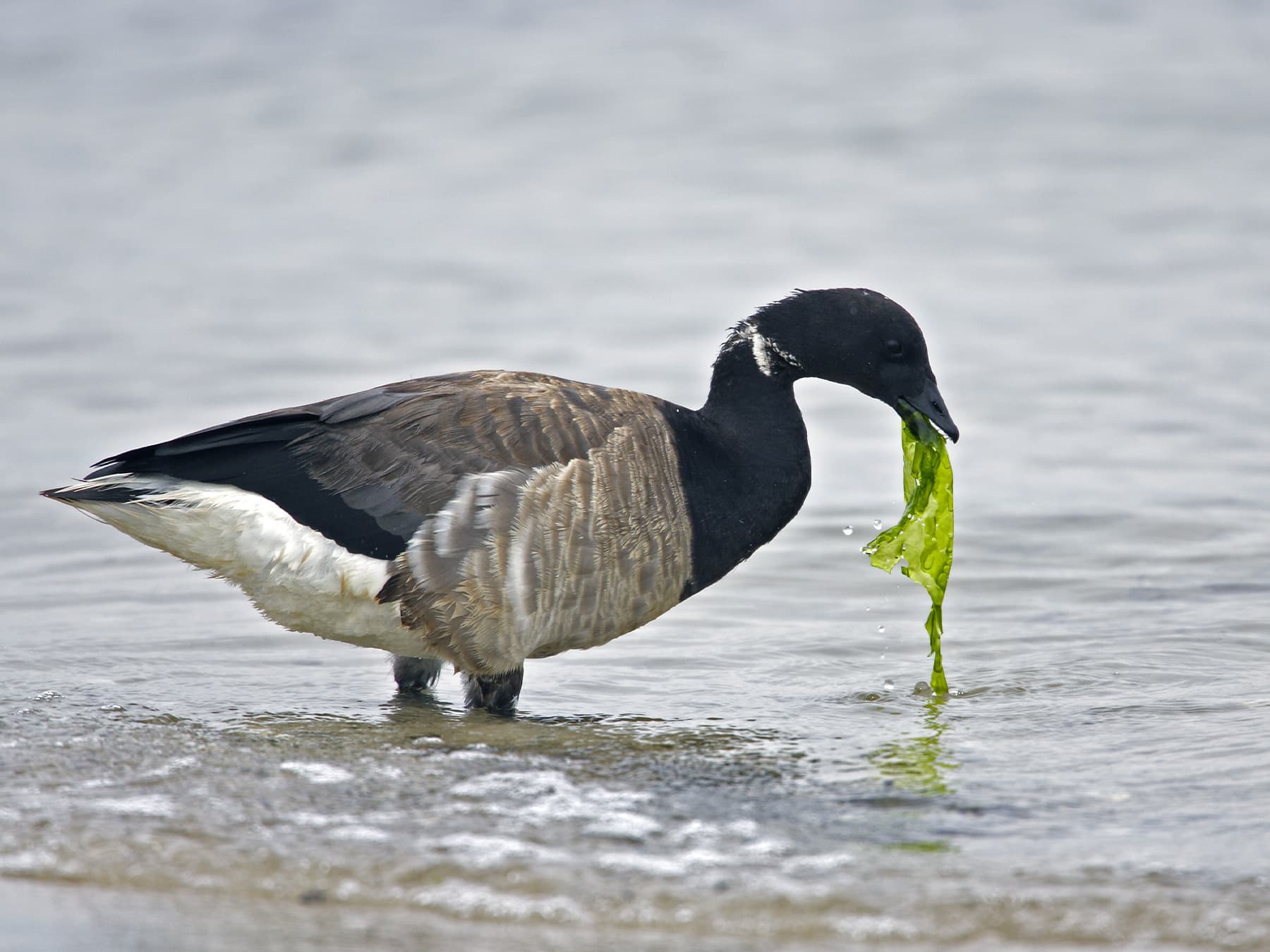
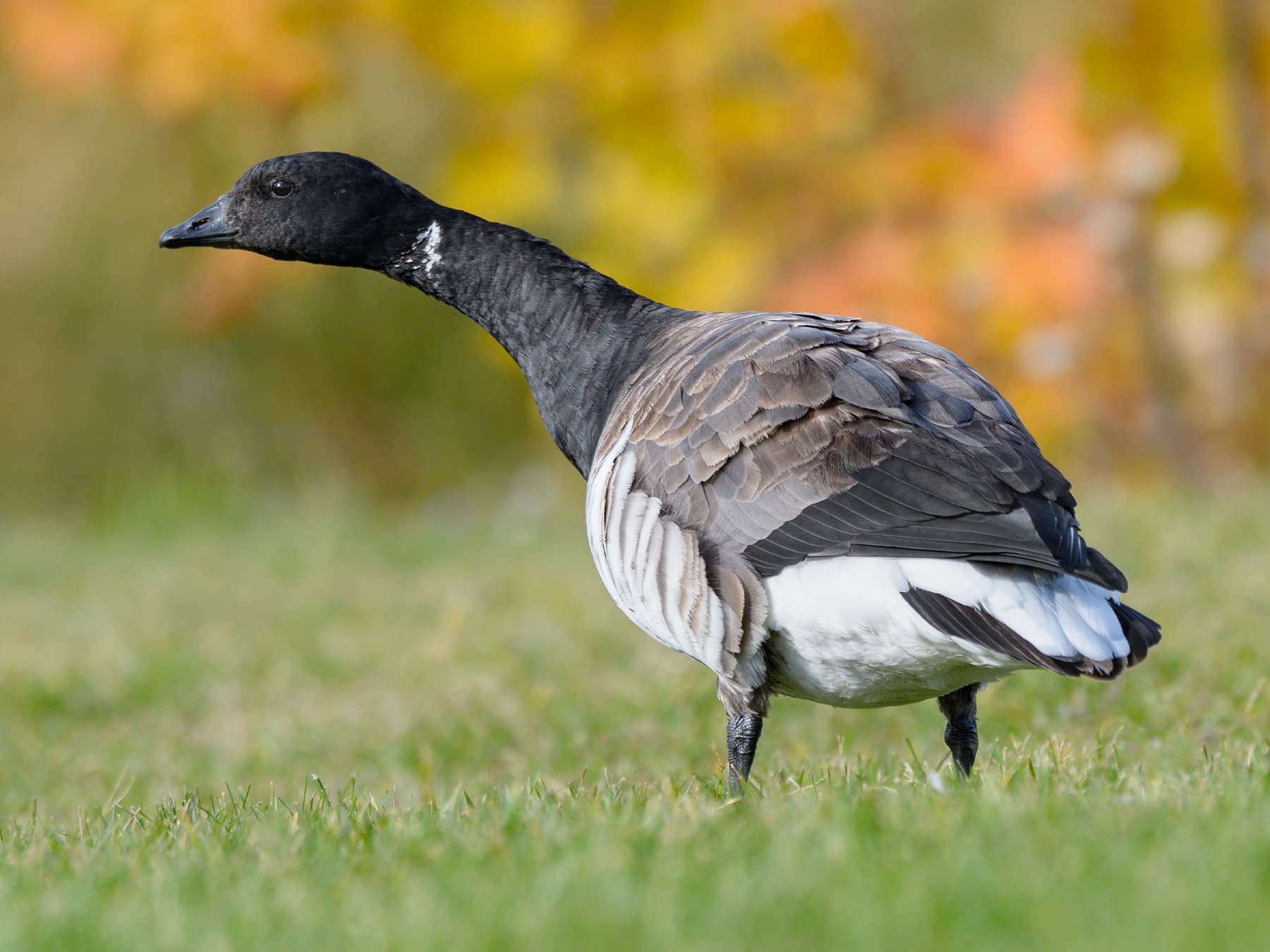
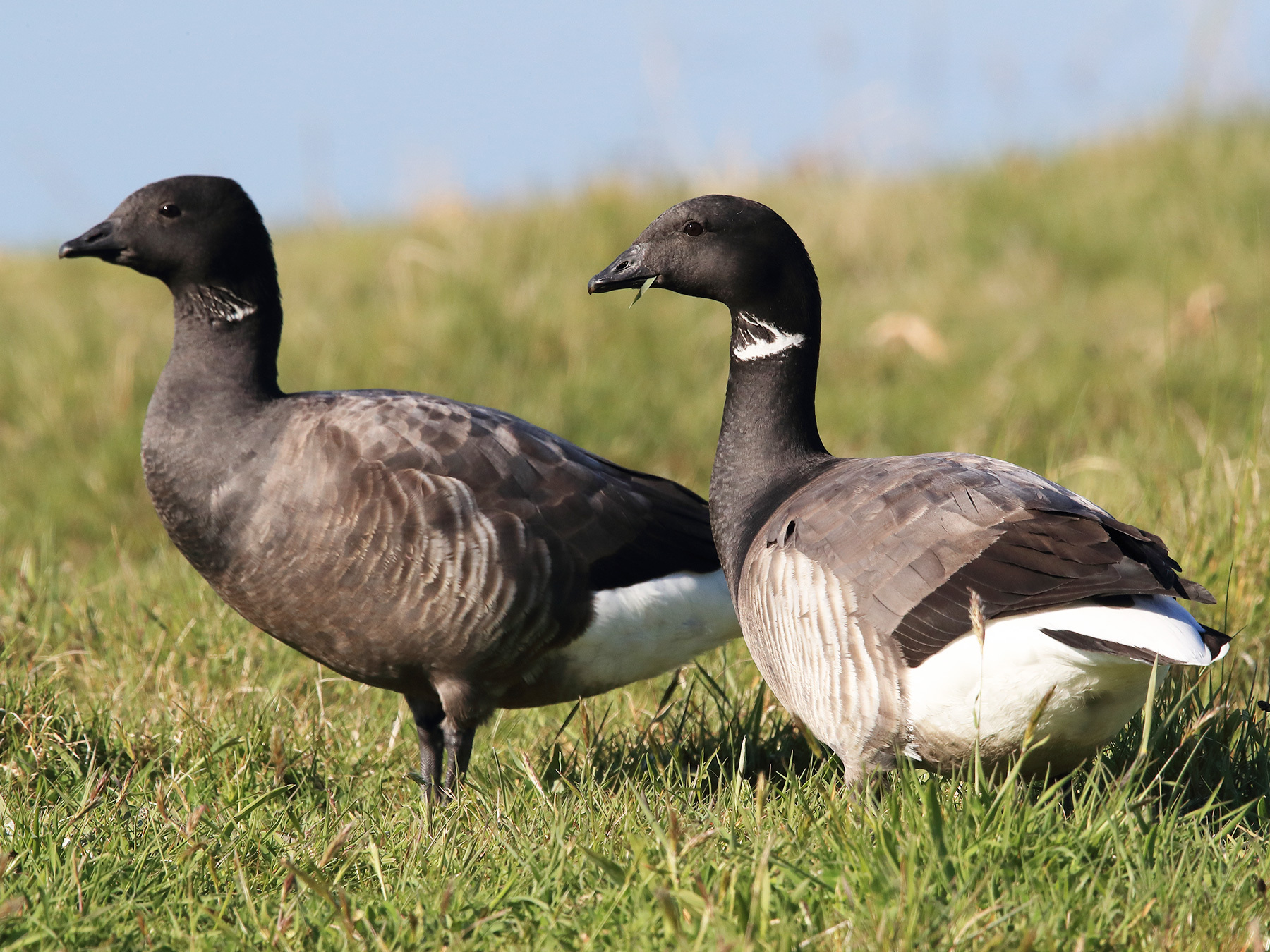
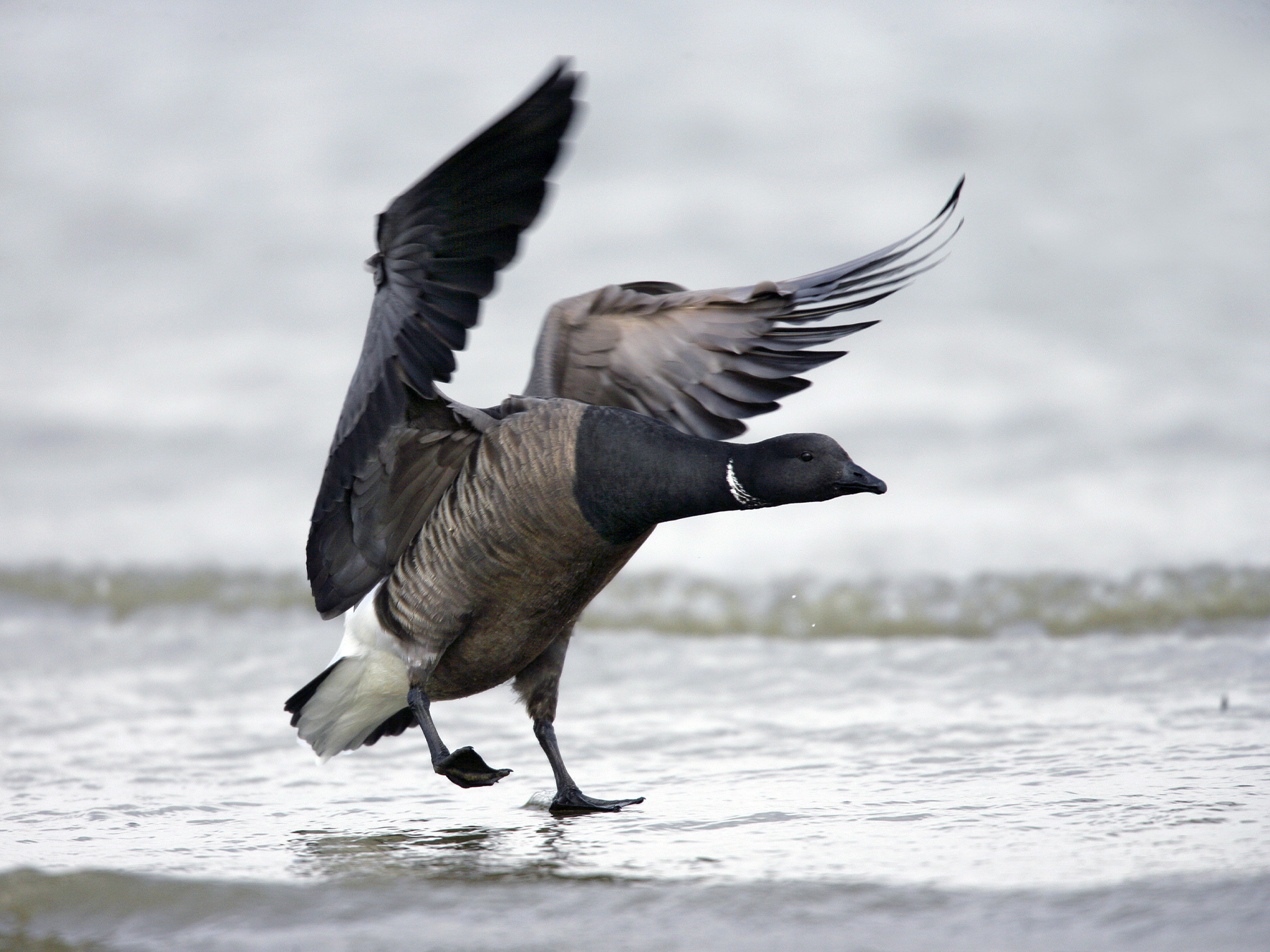
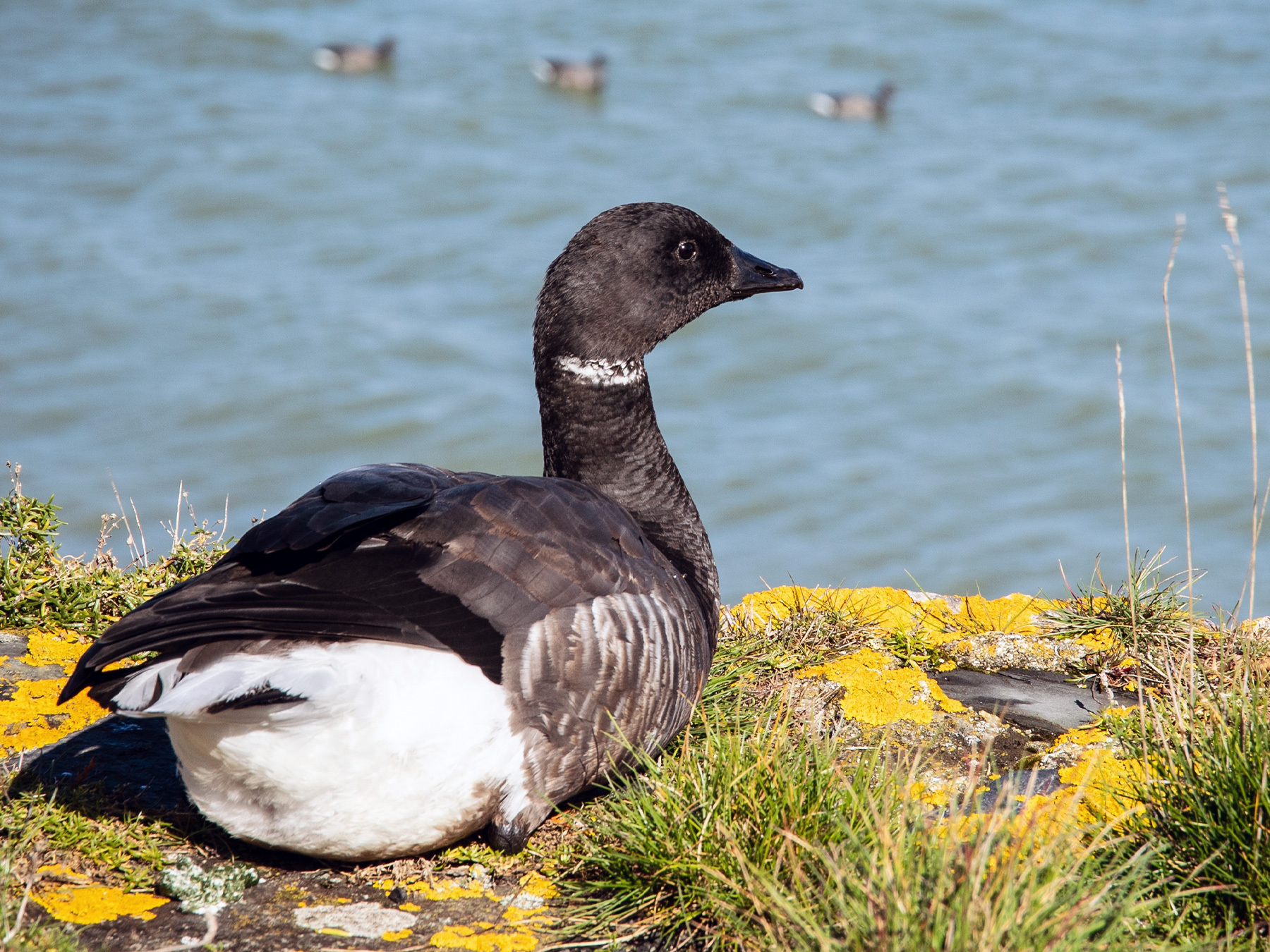
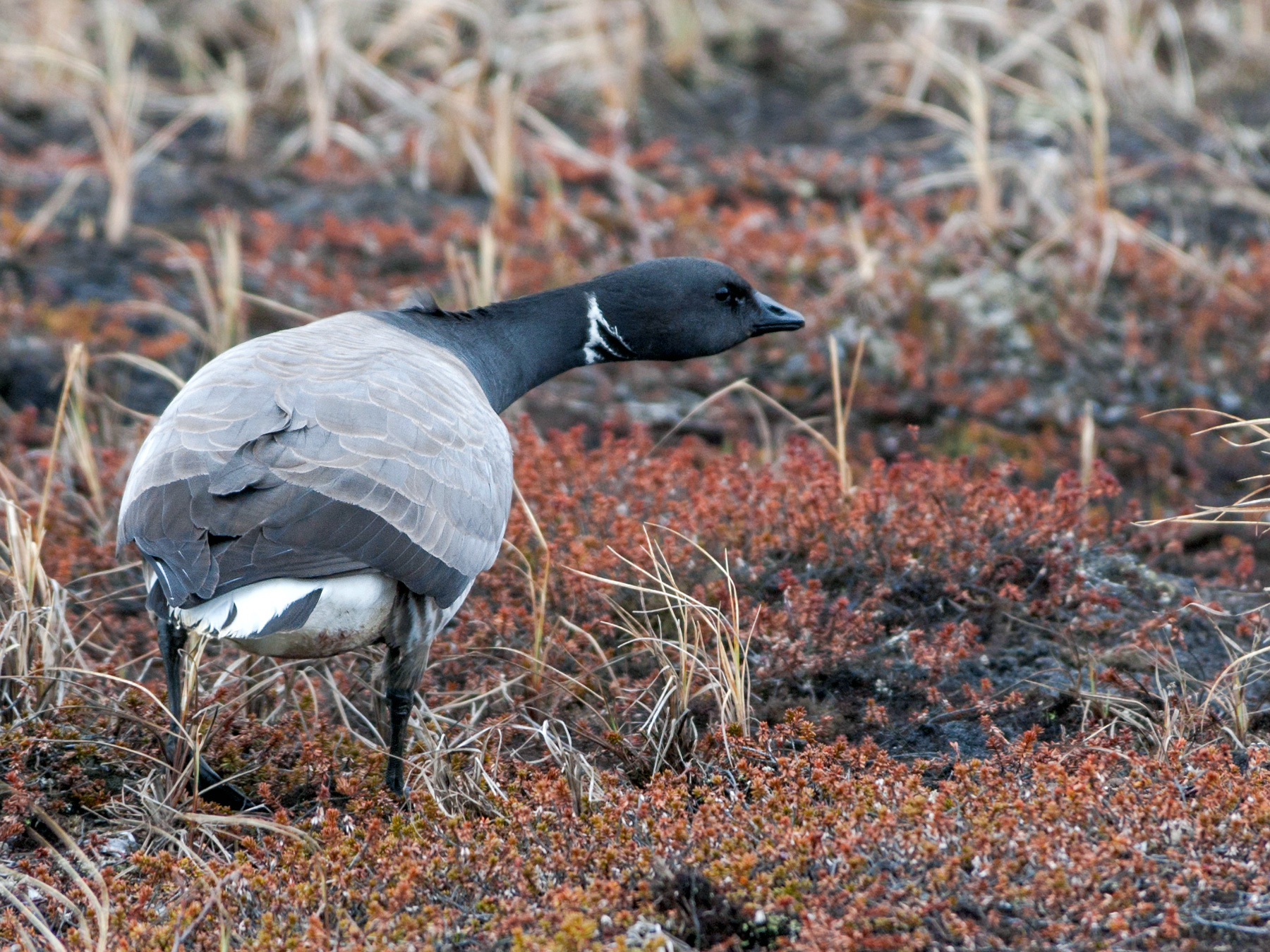
Brent geese are small, dark geese with large wings, a small head, and a short rounded bill. There are four subspecies, with minor differences in plumage according to geographical location, but all share the same black head, neck, and bill, a grayish-black back, black feet and a white rump and undertail.
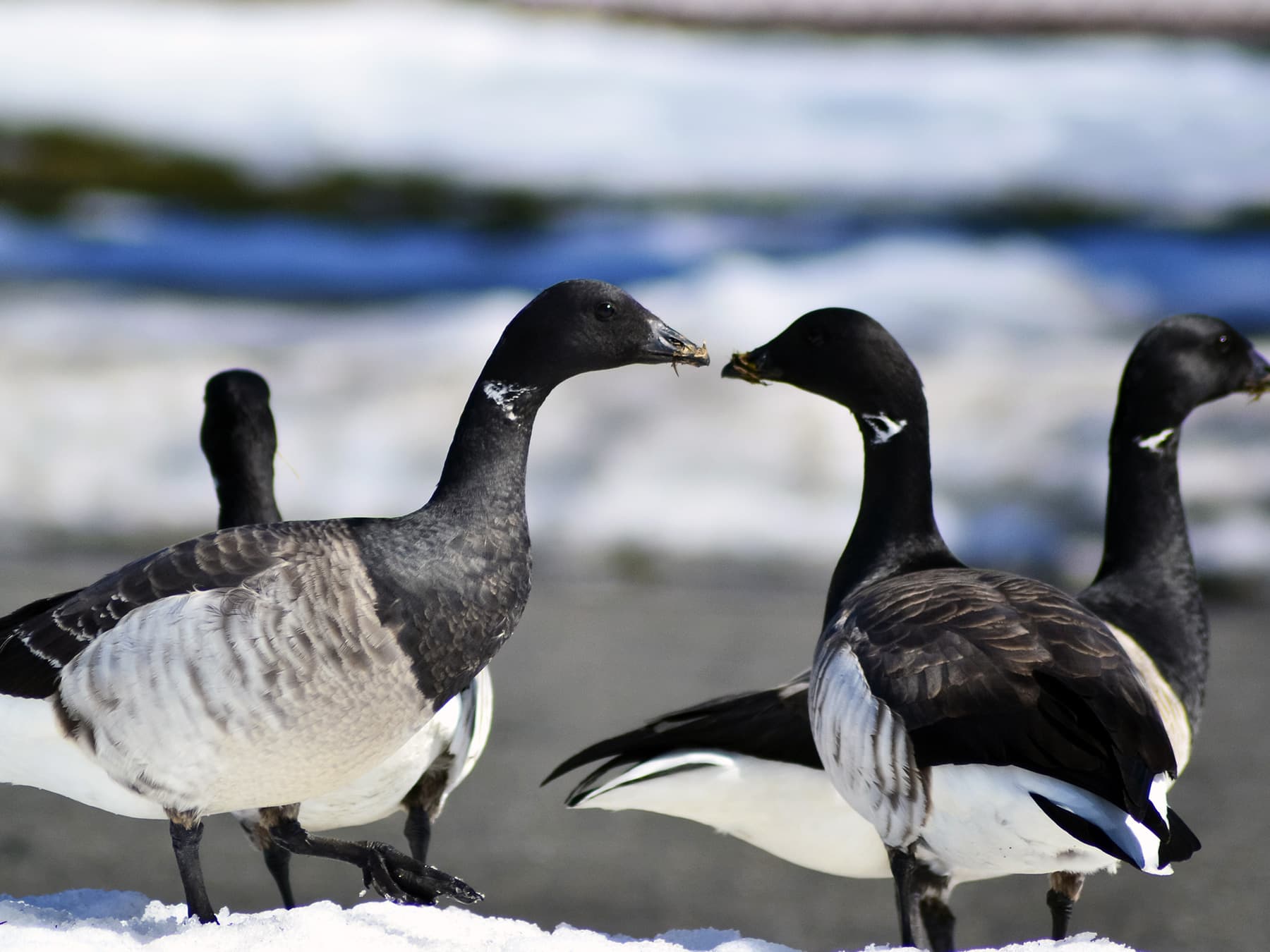
A small broken white neck ring is visible, which varies in size according to location – in western regions of the US brant have wider neck markings than in the east, although in certain parts of the North Atlantic coast, it’s more common to see brant with a full, unbroken neckband rather than the incomplete patchy markings seen in other populations.
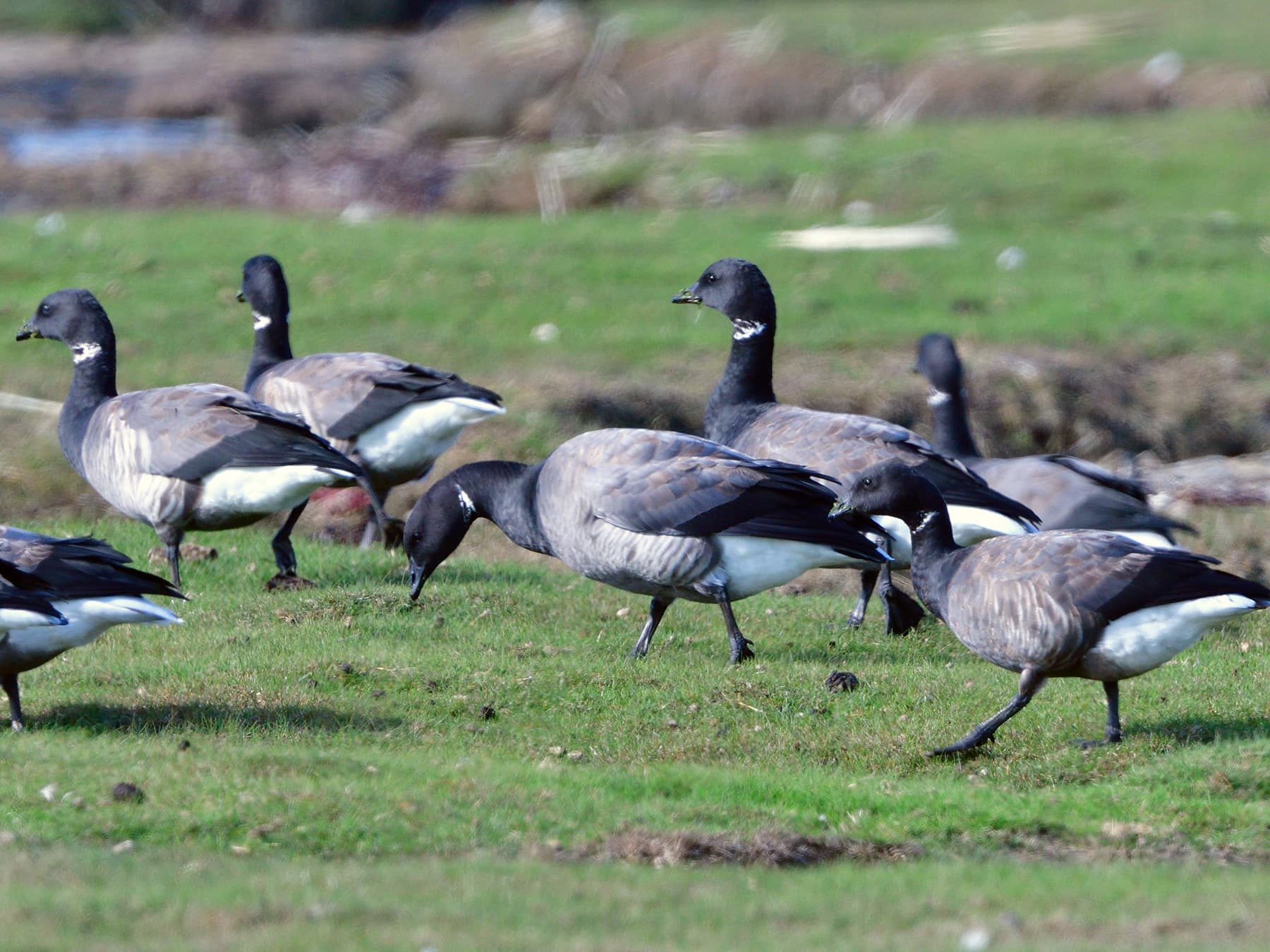
European populations have a darker gray-black belly, while for those that breed in Greenland and North America, the coloring is usually a much lighter shade of gray.
Males and females are largely alike in plumage although the neck band is typically wider and more prominent in males.
Goslings can be told apart from adults as their wing feathers are edged with white, and they frequently lack the white neck markings. By their second year, they are identical in appearance to more senior birds.
How big are Brent Geese?
Brent geese are small geese, barely larger than a mallard. Females are up to 6 percent smaller and as much as 10 percent lighter in weight than males.
- Length: 56 cm to 61 cm (22 in to 24 in)
- Wingspan: 110 cm to 120 cm (43.4 in to 47.2 in)
- Weight: 1.3 to 1.6 kg (2.9 lb to 3.5 lb)
Its size
Adults- Length
- 55–66 cm
- Wingspan
- 105–117 cm
- Weight
- 1000–2500 g
Its song and calls
What sound does a Brent Goose make?
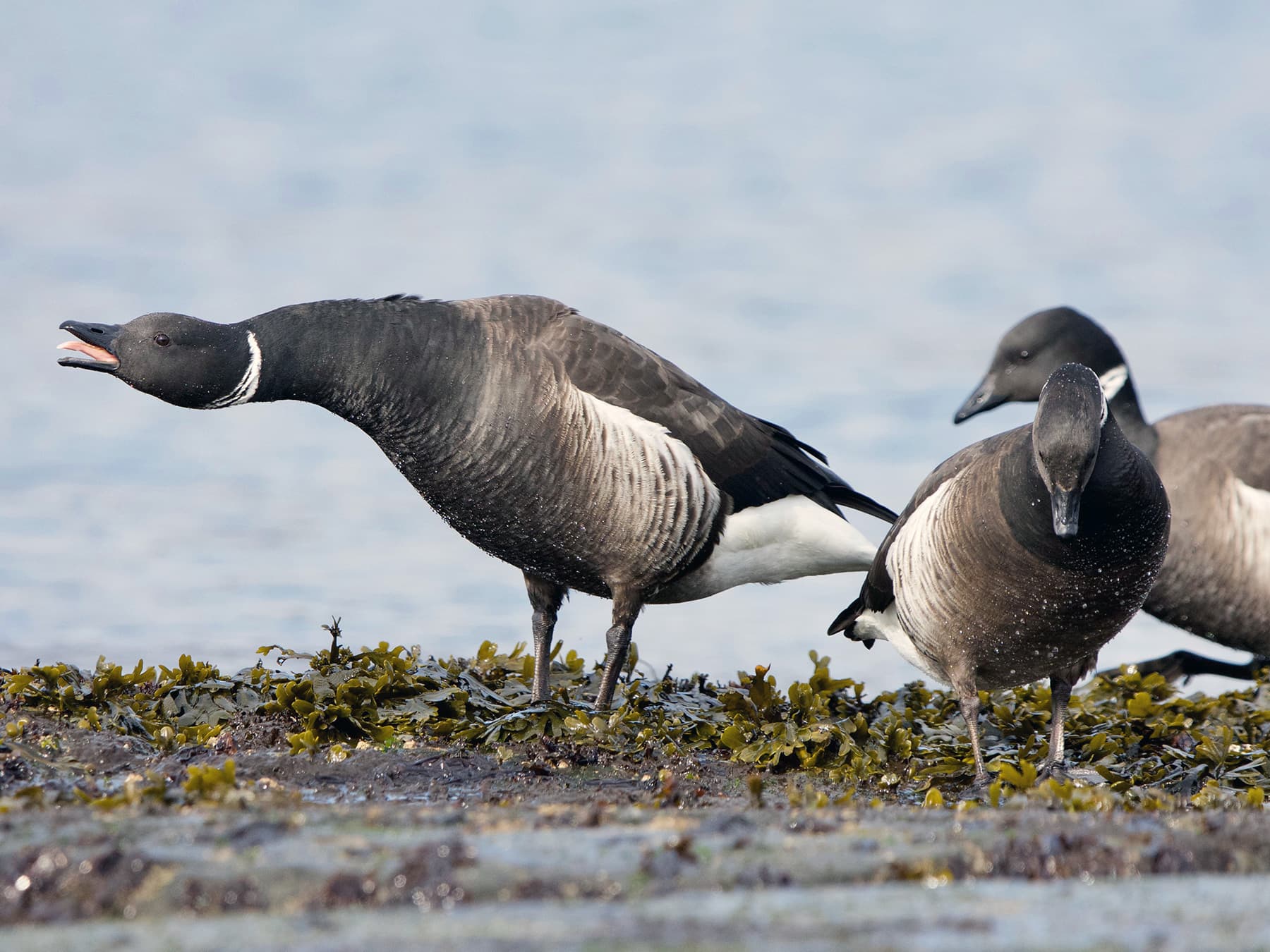
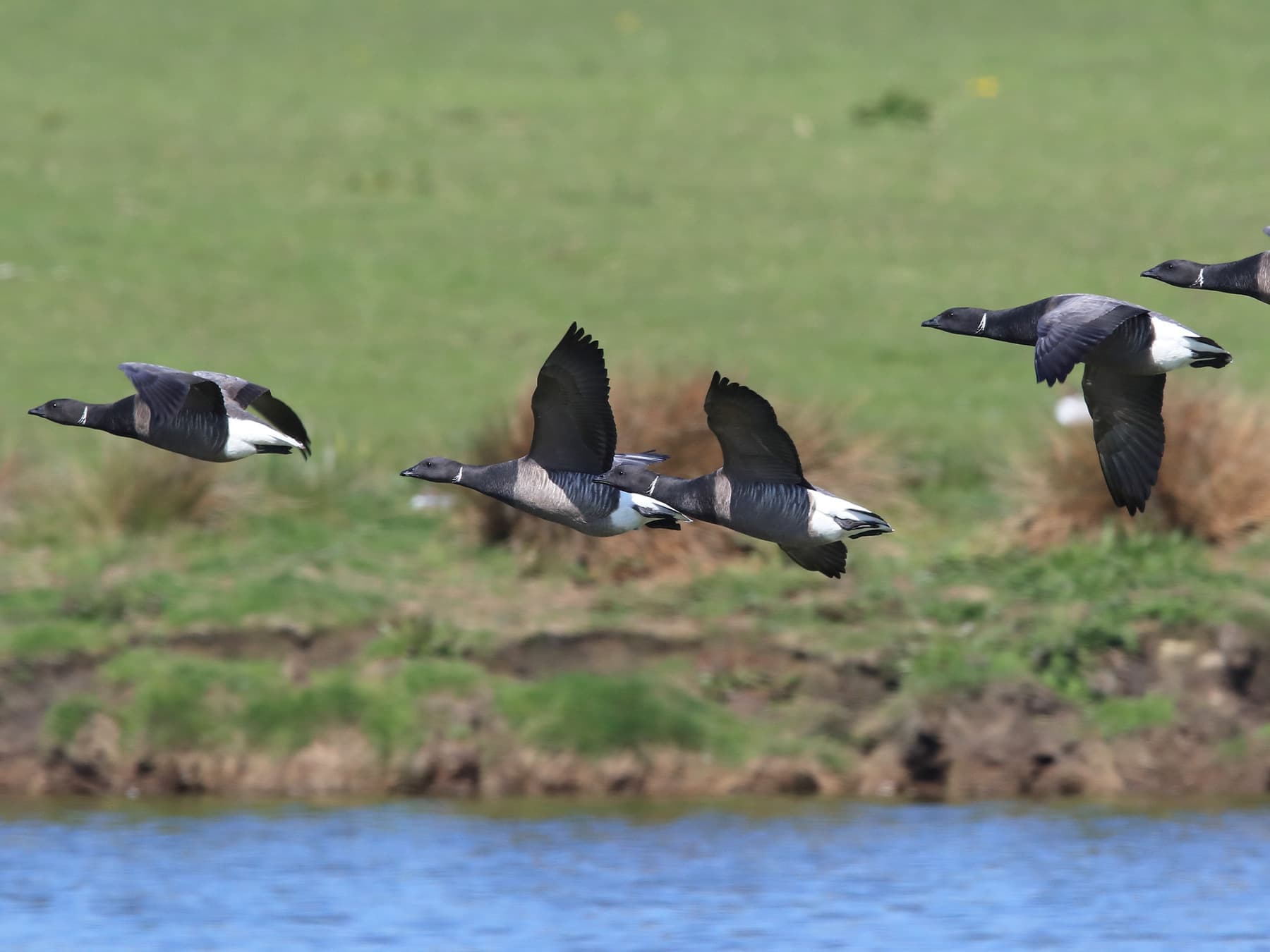
Although they are generally quite a quiet species, a hard ‘raunk’ honking sound can be heard in flight and on water, and when large flocks are vocal at the same time, the effect can become exceptionally loud.
- Call0:00 / 0:29
Recorded in Normandie, France · February 2023
When and where to see it
OctoberArriving
Most recorded in October
- 1. Louth2.2%
- 2. Sligo1.8%
- 3. Down1.4%
- 4. Norfolk1.1%
- 5. Dublin0.94%
Each dot is a county, state or province: the bigger and darker, the larger the bird’s share of that place’s bird records that month. Grey dots: no regular records. The ringed point is the centre of the bird’s records this month; the arrow shows how it moved since last month, and the dashed loop its path through the year. “Arrivals” colours places where it becomes regular this month (orange) or is in its last regular month (grey). GBIF eBird Observation Dataset, 2019–2024. Map data: Natural Earth, US Census Bureau; place centres © OpenStreetMap contributors.
In your area
See when the Brent Goose is recorded in your county, state or province.
How often the Brent Goose turns up in the UK, Ireland, the United States and Canada through the year, from birdwatchers' records.
United Kingdom
Winter visitor · regularly Aug–May · most records in November
Ireland
Winter visitor · regularly Sep–Apr · most records in March
United States
Winter visitor · regularly Oct–Jun · most records in January
Canada
Resident · regularly Oct–Jul · most records in March
Show as a table
| Month | United Kingdom | Ireland | United States | Canada |
|---|---|---|---|---|
| January | 0.29% (regular) | 1.1% (regular) | 0.11% (regular) | 0.044% (regular) |
| February | 0.26% (regular) | 1.1% (regular) | 0.094% (regular) | 0.045% (regular) |
| March | 0.19% (regular) | 1.2% (regular) | 0.077% (regular) | 0.059% (regular) |
| April | 0.11% (regular) | 0.59% (regular) | 0.045% (regular) | 0.049% (regular) |
| May | 0.080% (regular) | 0.030% | 0.029% (regular) | 0.044% (regular) |
| June | 0.012% | 0.006% | 0.019% (regular) | 0.017% (regular) |
| July | 0.011% | 0.002% | 0.005% | 0.004% (regular) |
| August | 0.018% (regular) | 0.019% | 0.005% | 0.002% |
| September | 0.11% (regular) | 0.28% (regular) | 0.004% | 0.003% |
| October | 0.32% (regular) | 0.52% (regular) | 0.033% (regular) | 0.027% (regular) |
| November | 0.35% (regular) | 0.92% (regular) | 0.084% (regular) | 0.044% (regular) |
| December | 0.30% (regular) | 1.1% (regular) | 0.080% (regular) | 0.025% (regular) |
Recorded regularly in
Worldwide: recorded regularly in 33 countries
Countries where it was recorded in at least 3 of the 6 years 2019–2024. Linked countries have their own bird list.
Europe (26)
North America (4)
- Canada
- Greenland
- Mexico
- United States
Data: EOD – eBird Observation Dataset (Cornell Lab of Ornithology), accessed via GBIF.org, CC BY 4.0. Records from 2019–2024, aggregated and filtered by Birdfact. How these lists are made
What is the habitat of a Brent Goose?
Arctic tundra landscapes and low-lying coastal meadows are ideal breeding sites for brent geese, with salt marshes offering valuable foraging grounds for pairs as they raise their goslings. Remote islands in lakes or rivers are often chosen for their protection from land predators.
During winter, preferred habitats include muddy estuaries, salt marshes, and shallow, sandy shores. In years with little spring rainfall, Brent geese may venture further inland to graze on agricultural fields ahead of migration to breeding grounds.
What is the range of a Brent Goose?
Three subspecies of brant are present in North America. The black-bellied black brant breeds in the western extremes of the Canadian Arctic and along Alaska’s coasts, and spends winters along the Pacific Coast from Alaska to Mexico.
To the east, the Atlantic brant, which has a paler grey belly, breeds in the eastern regions of Arctic Canada and throughout northern Greenland, and migrates south to the coast of the eastern US, between Massachusetts and North Carolina, and can also travel as far east as Ireland.
A third subspecies, the gray-bellied brant, have a mid-gray belly and breed in the western islands in the Canadian Arctic. Winters are spent along the Puget Sound on the coast of Washington.
In Europe, a fourth sub-species, the dark-bellied brent goose, breeds in the central Russian Arctic and migrates to north-western Europe (Britain, France, the Netherlands, Belgium, Germany, and Denmark). Further east, black Brent geese also breed in the Russian Arctic and spend winters in Korea and Japan.
Where do Brent Geese live?
Winter populations of black brant were estimated at 139,000 individuals in Baja California in 2005. Puget Sound wintering grounds, further north, record an average of 9,000 birds each winter. An estimated 245,000 dark-bellied brent geese are estimated to breed in European Russia, with almost half of these wintering around the British Isles.
How rare are Brent Geese?
Accurate and recent population counts are unavailable, but a 2011 estimate places the global number of individual brent geese at around 315,200 individual birds. Although they are not the most numerous waterfowl species in either Europe or North America, they are spotted commonly enough in winter not to be classed as a rarity.
Where can you see Brant Geese in North America?
Winter offers the best chance of brant sightings in North America, due to their spring and summer breeding grounds being located in the extreme inhospitable regions of the Canadian Arctic.
In winter, migrants gather at salt marshes, lagoons, bays, and estuaries along the Pacific coast from Alaska to Baja California and mainland Mexico, as well as on the Atlantic coast, where the largest concentrations can be seen between New Jersey and North Carolina.
Where can you see Brent Geese in the UK?
Each winter up to 105,000 brent geese arrive to spend the non-breeding season feeding around Britain’s coasts.
Two subspecies are found in UK waters: dark-bellied brent geese are frequently spotted along the eastern coast of England, for example in the Wash, the North Norfolk coastal marshes, estuaries in Essex, and the mouth of the Thames, as well as along the southern coast of England in Chichester and Langstone harbors.
Light-bellied birds belonging to the Atlantic brent goose subspecies are found in smaller numbers at Strangford Lough and Lough Foyle in Northern Ireland and are also regular visitors to Lindisfarne off the coast of Northumberland.
Migration
Do Brent Geese migrate?
Brent geese are migratory, breeding in the extreme Arctic Circle environments of northern Canada, northern Greenland, and the extreme north of Siberian Russia, and moving to warmer, more southerly latitudes when breeding is complete.
Are Brant Geese native to North America?
Brant breed in the extreme northern Arctic islands of Canada, along the coast of continental northern Canada, and along Alaska’s coasts. In winter, migration south occurs, with the Pacific coast and a section of the mid-Atlantic coast of the US welcoming migrants from the far northern reaches of North America.
Are Brent Geese native to the UK?
No breeding of brent geese takes place in Britain, but large numbers of winter migrants arrive around the coastlines of the British Isles from October onwards and remain in the UK until the following spring.
Tips for seeing it
- Look for Brent Geese in coastal areas, especially mudflats and estuaries.
- Listen for their distinctive 'rronk rronk' call, often heard before the birds are seen.
- Observe them during winter months in the UK, Ireland, and parts of coastal North America.
- Watch for their characteristic rolling feeding behaviour in large flocks.
What it eats
What do Brent Geese eat?
Brent geese follow a plant-based diet, consisting primarily of eelgrass and sea lettuce. Algae is also eaten, and in winter, grazing grounds may be expanded to include golf courses and agricultural fields, where grasses and cereal crops are eaten.
What do Brent Goose chicks eat?
Almost immediately after hatching, brent geese are led to grazing lands, where they forage for grasses, particularly the favorite eelgrasses and sea lettuce of their parents.
No parental feeding takes place, with goslings foraging independently alongside their parents as soon as they leave the nest.
Nesting and breeding
Where do Brent Geese nest?
Nesting brent geese choose sites with low-level vegetation, on grassy tundra landscapes where they have a good all-round view of the terrain. Rocky islands, exposed gravel plains, and mudflats dotted with grass are commonly chosen spots, to limit the chance of predators and offer some camouflage to protect their eggs from being noticed.
The female shapes out a shallow bowl shape on the earth’s surface and gradually shapes it as incubation progresses. Grass and down are used as a nest lining, and plant matter is used to cover eggs when they need to be left unattended.
When do Brent Geese nest?
Between late May and early June, brent geese arrive on their breeding grounds already paired. Laying begins within two weeks of the pairs’ arrival, and incubation, which is the sole responsibility of the female, lasts for 23 to 24 days.
What do Brent Goose eggs look like?
Brent geese lay between 3 and 5 eggs, which measure 75 mm by 47 mm (3 in by 1.9 in) and are plain white or creamy buff in color.
Do Brent Geese mate for life?
Once a pair bond forms between two brent geese – usually at some point during the second year – it usually lasts for many years, often only ending with the death of one mate. Females repairing after the loss of a mate are generally less successful in raising broods than with their previous mate.
Behaviour
Are Brent Geese aggressive?
Despite their small stature, brent geese are a highly territorial and aggressive species, demonstrating feisty intolerance of approaches to their nests, mates and young. Competition for feeding or roosting sites also has the potential to escalate into a physical confrontation.
Where do Brent Geese sleep at night?
Brent geese display frequent nocturnal feeding habits, with up to almost 20 percent of each night spent foraging. Roosting spots are found both on land and on water, with brent geese that have been disturbed on land, often heading out to sea to continue roosting in the safety of open water.
Lifespan and predators
How long do Brent Geese live?
On average, brent geese live for around 11 years, although much older individuals are sometimes identified, including a ringed individual found to be 28 years and 2 months in 2001.
Breeding is thought to occur for the first time at two years of age.
What are the predators of Brent Geese?
Brent geese attempt to see off most predation attempts, including those made by avian predators, such as gulls, skuas/jaegers and ravens but are unable to stand up to larger predators, including Arctic foxes, killer whales, golden eagles, snowy owls, and polar bears.
Are Brent Geese protected?
Populations of brant in North America are managed collectively by Canada, the United States, and Mexico, with hunting regulations closely tied to population estimates and limits introduced if the figures start indicating a downward trend.
In the UK, brent geese are protected under the Wildlife and Countryside Act, of 1981, which makes it an offense to kill, injure or capture an individual bird.
Are Brent Geese endangered?
Considered a species of least concern globally, there are no immediate threats to the long-term future of brant. Populations are relatively stable, although coastal habitats are potentially at risk of becoming degraded due to the recreational use of estuaries and the increase in industrial activity in coastal areas.
In the UK, brent geese are rated as an Amber species in the British Birds of Conservation Concern list, due to the large winter populations that arrive from northern Europe each autumn. Rising sea levels and the loss of coastal foraging grounds are a threat to the species’ survival in Europe.
Conservation
While currently listed as Least Concern, Brent Geese face threats from habitat loss due to coastal development and climate change.
Conservation efforts focus on protecting key wintering and staging areas, as well as their Arctic breeding grounds.
More photos
5 photos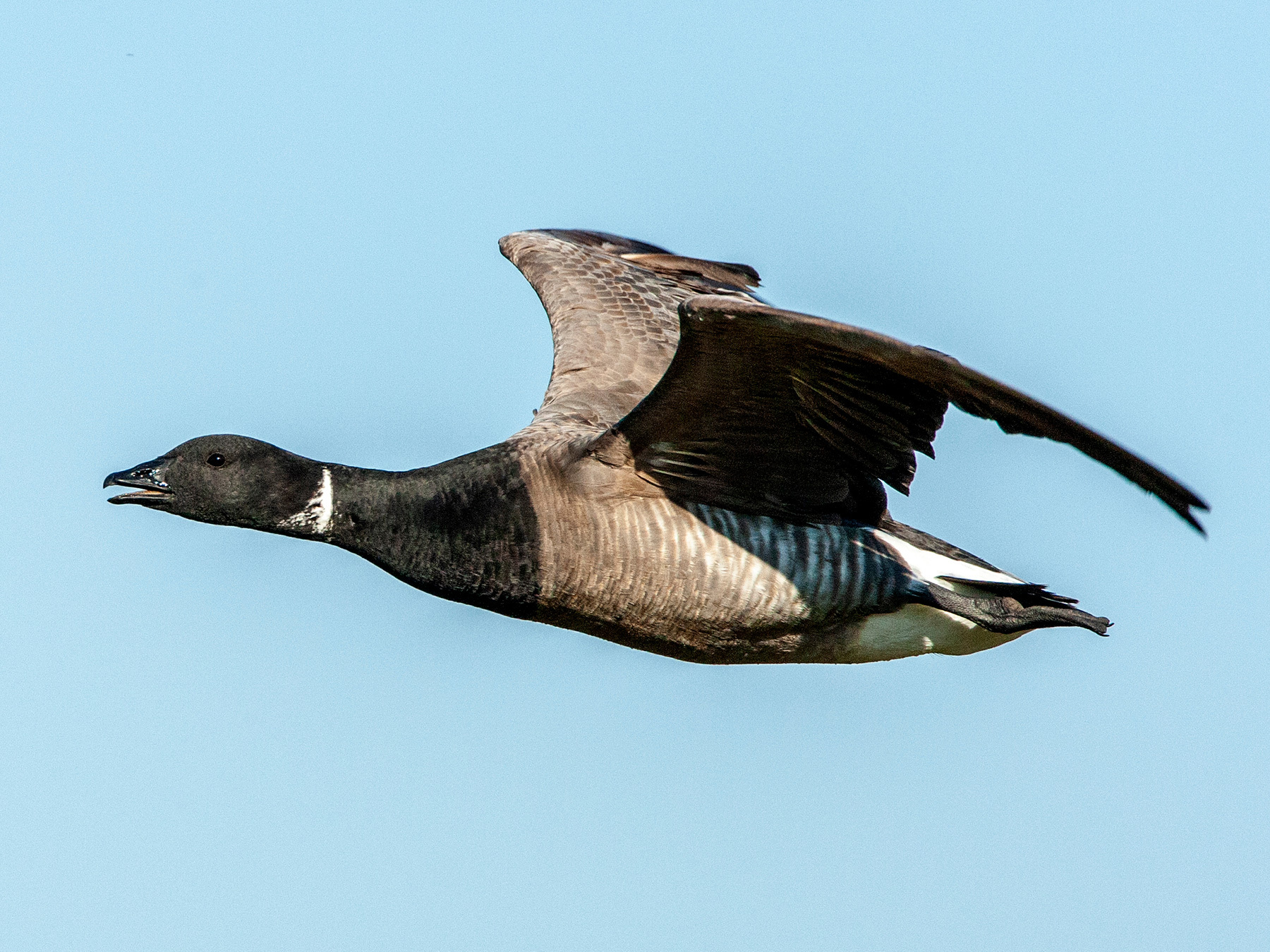
Brent Goose guides
5 guidesQuick facts
- Length
- 55–66 cm
- Wingspan
- 105–117 cm
- Weight
- 1000–2500 g
- Lifespan
- 11 years · oldest recorded 28.8 years
- Family
- Ducks, Geese & Swans
- Migration
- Long-distance Migrant
- Global status (IUCN)
- Least Concern
- World population
- 490,000 mature individuals
- Population trend
- Unknown
- Also called
- Brant Goose
- Scientific name
- Branta bernicla
Questions
3Are Brant and Brent geese the same?
Yes - Brant is the name for this species in the United States, while in the UK, they are commonly known as brent geese.
Is a Brent goose a Canada goose?
Brent geese are a different species of goose from the Canada goose and is different in size, distribution, and appearance.
How did the Brent Goose get its name?
It is thought that the brent goose’s name derives from ‘brandt’, an ancient Norse word meaning ‘burnt’, which reflects the charcoal coloring of the species.
Sources
3- 1BirdLife International. 2021. Branta bernicla. The IUCN Red List of Threatened Species 2021: e.T22679946A189780266. Source (opens in a new tab)
- 2Partners in Flight (2020)
- 3Fransson et al., EURING list of longevity records for European birds (2010) Source (opens in a new tab)

Checked by
Nathan Cope, founder and editor
Nathan founded Birdfact and leads its writers and contributors in the UK, the US and Canada. He has watched and studied birds for more than ten years, and checks every article and species guide before it’s published.