


Avocet
Pied Avocet · Recurvirostra avosetta
By the Birdfact teamChecked by Nathan Cope
On this page14 sections
How to recognise it
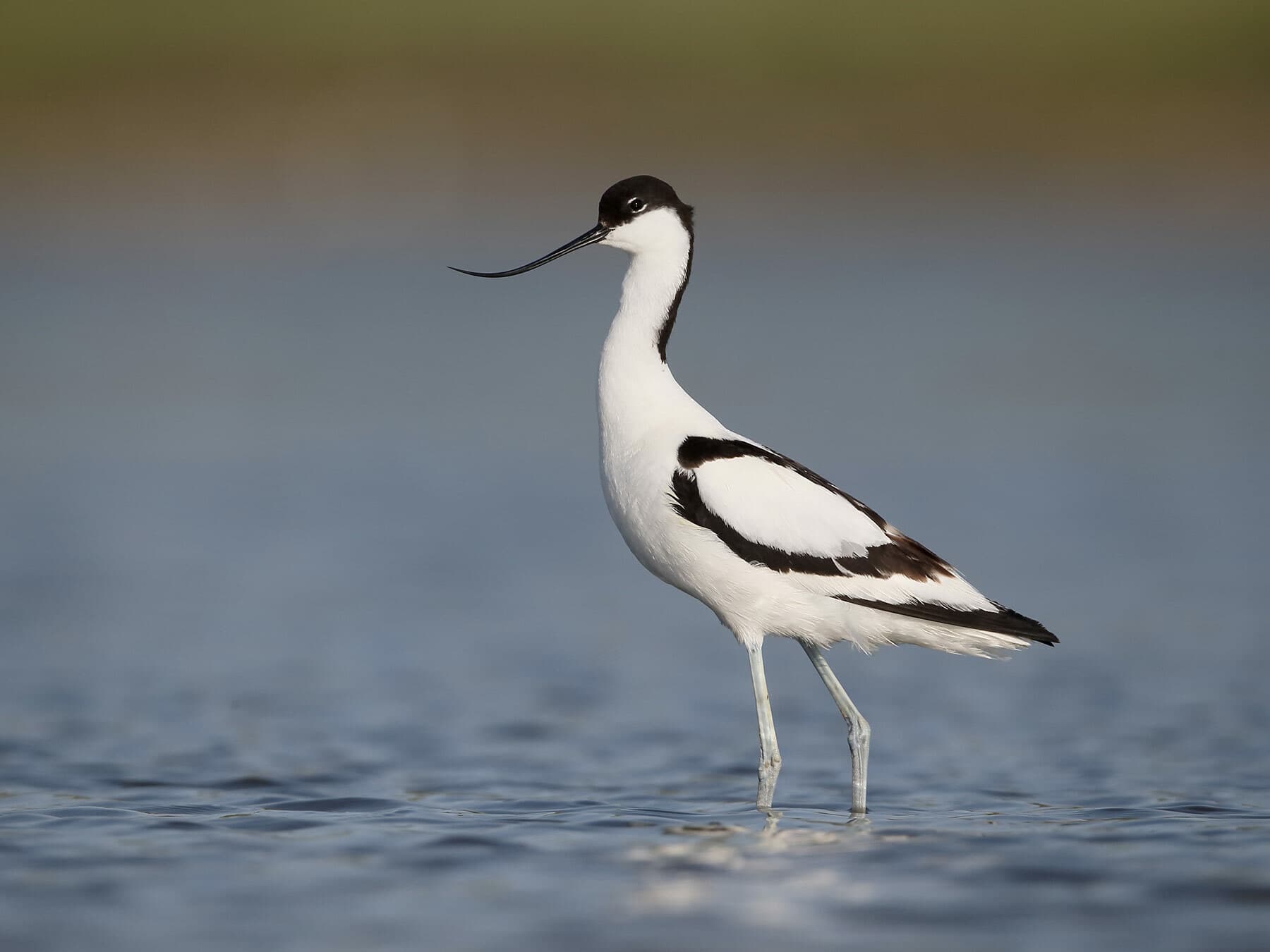
The Avocet is a striking wader, characterised by its long, slender legs and uniquely upturned bill. Its plumage is predominantly white, with bold black markings on the head, back, and wings, creating a striking contrast. The long, thin neck and compact body contribute to its elegant silhouette.
Whilst males and females are almost identical in markings, the black area of the wing tip on the male is larger than that of the female, who also has a slightly shorter bill. There are no significant seasonal changes.
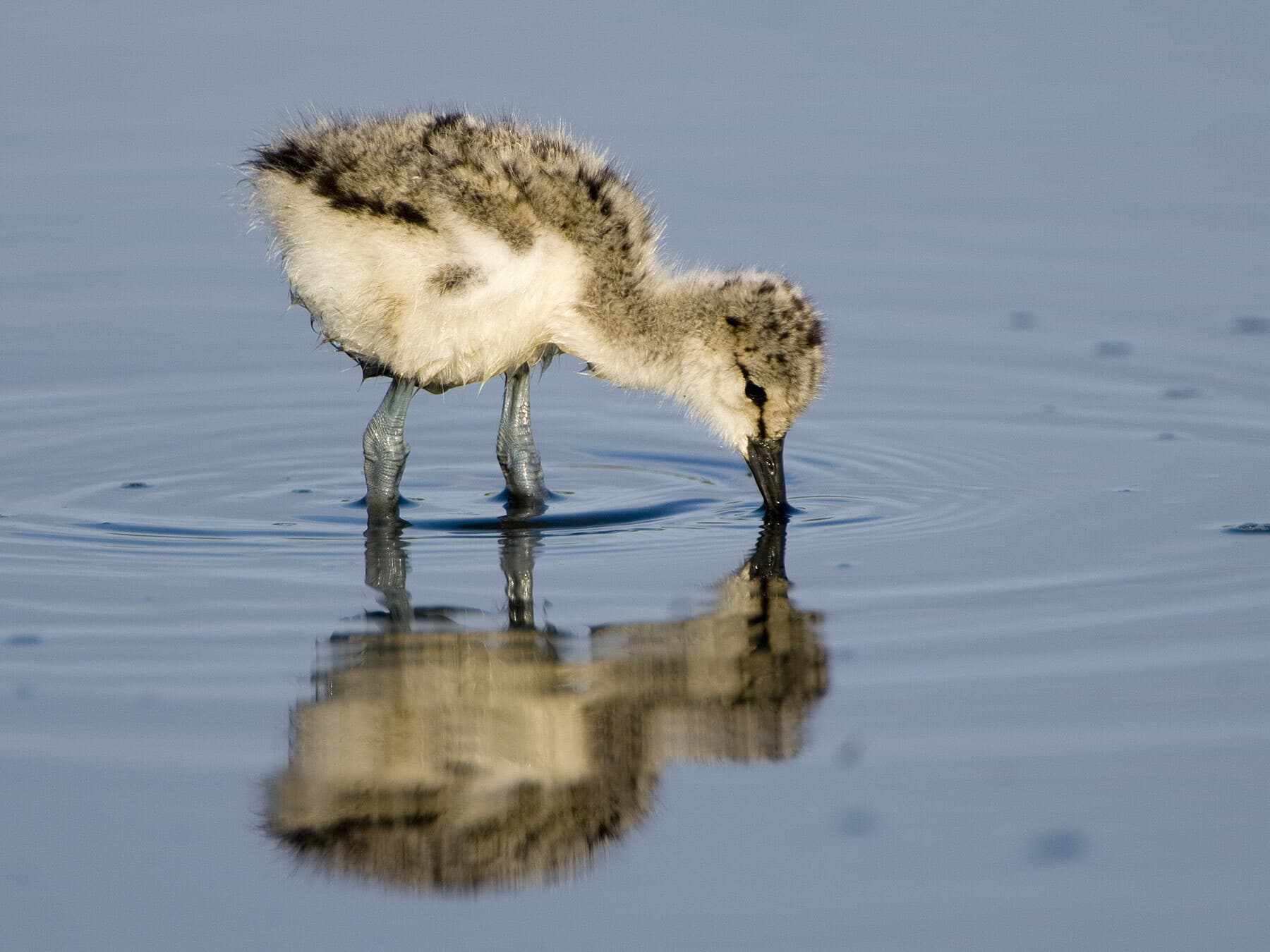
Juveniles resemble adults but have a duller, brownish-black colouration, whereas adults are black, and their bills are shorter and less curved.
Its size
Adults- Length
- 42–45 cm
- Wingspan
- 77–80 cm
- Weight
- 240–340 g
Its song and calls
The avocet has a short melodious call similar to “kloop” often repeated in quick succession. When flying in groups, the flock will often attack and dive bomb other birds shrieking loudly as they do so.
- Call0:00 / 0:50
Recorded in Suffolk, England
Lawrence Shove / The British Library Board · Wikimedia Commons · CC BY-SA 4.0
When and where to see it
OctoberLeaving
Most recorded in October
- 1. Essex0.63%
- 2. Stockton-on-Tees0.50%
- 3. Lincolnshire0.49%
- 4. Suffolk0.49%
- 5. Norfolk0.43%
Each dot is a county, state or province: the bigger and darker, the larger the bird’s share of that place’s bird records that month. Grey dots: no regular records. The ringed point is the centre of the bird’s records this month; the arrow shows how it moved since last month, and the dashed loop its path through the year. “Arrivals” colours places where it becomes regular this month (orange) or is in its last regular month (grey). GBIF eBird Observation Dataset, 2019–2024. Map data: Natural Earth, US Census Bureau; place centres © OpenStreetMap contributors.
In your area
See when the Avocet is recorded in your county, state or province.
How often the Avocet turns up in the UK and Ireland through the year, from birdwatchers' records.
United Kingdom
Resident · all year · most records in May
Ireland
Passage migrant · regularly Jan · most records in November
Show as a table
| Month | United Kingdom | Ireland |
|---|---|---|
| January | 0.14% (regular) | 0.010% (regular) |
| February | 0.15% (regular) | 0.006% |
| March | 0.21% (regular) | 0.002% |
| April | 0.26% (regular) | 0.009% |
| May | 0.33% (regular) | 0.005% |
| June | 0.30% (regular) | <0.001% |
| July | 0.31% (regular) | – |
| August | 0.25% (regular) | – |
| September | 0.19% (regular) | 0.002% |
| October | 0.14% (regular) | – |
| November | 0.12% (regular) | 0.025% |
| December | 0.12% (regular) | – |
Recorded regularly in
Worldwide: recorded regularly in 87 countries
Countries where it was recorded in at least 3 of the 6 years 2019–2024. Linked countries have their own bird list.
Europe (36)
Africa (18)
Data: EOD – eBird Observation Dataset (Cornell Lab of Ornithology), accessed via GBIF.org, CC BY 4.0. Records from 2019–2024, aggregated and filtered by Birdfact. How these lists are made
Within the UK avocets are mainly limited to wetlands along the east coast and south west of England. Those resident within the UK often summer on the east coast but move to spend their winters on the warmer south west coast.
Some however, leave our shores for the winter returning to Africa to await the arrival of the British spring. Avocets tend to gather around mud flats and brackish water of coastal lagoons although they may also congregate around lakes and reservoirs.
Signs and spotting tips
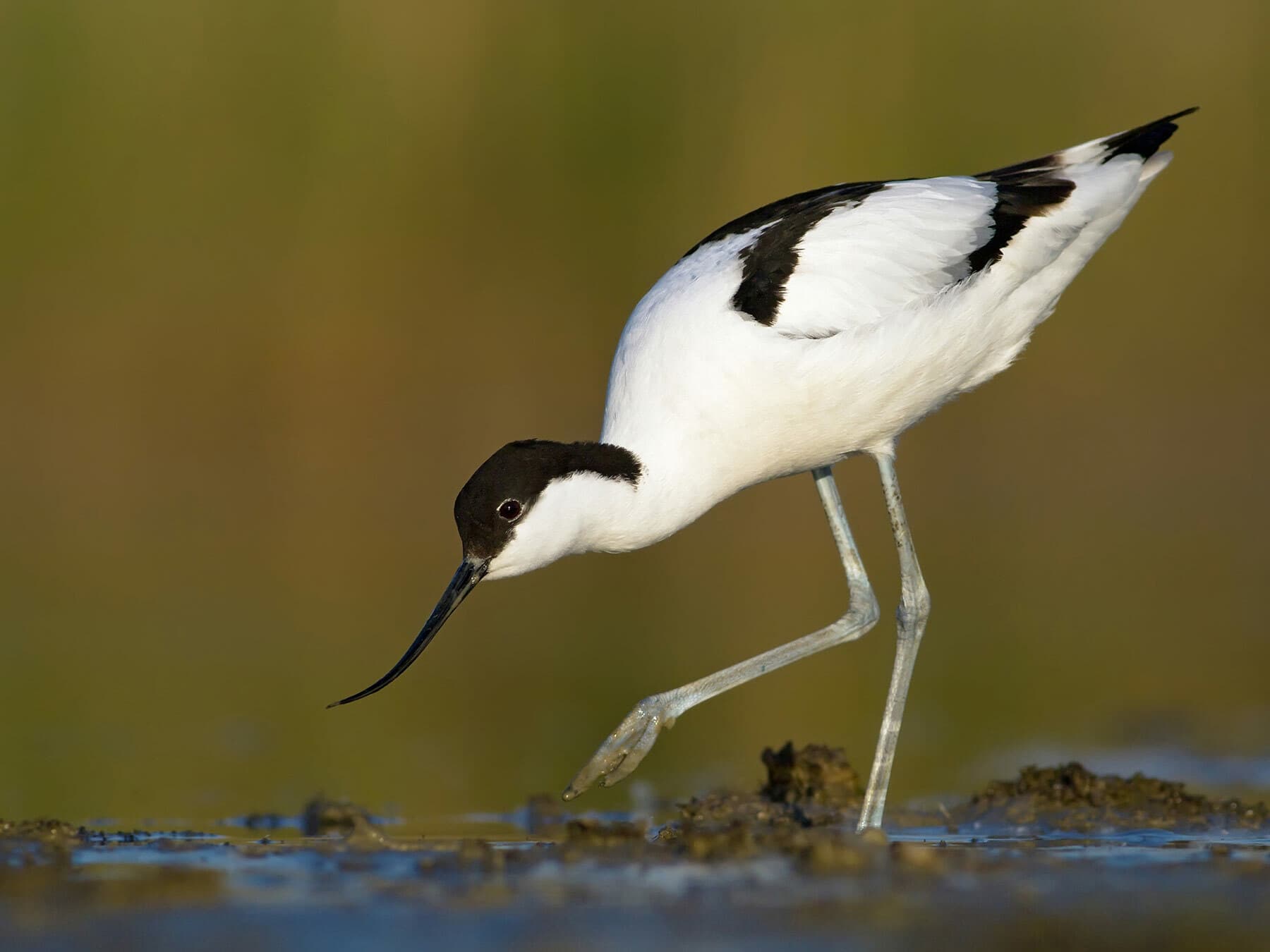
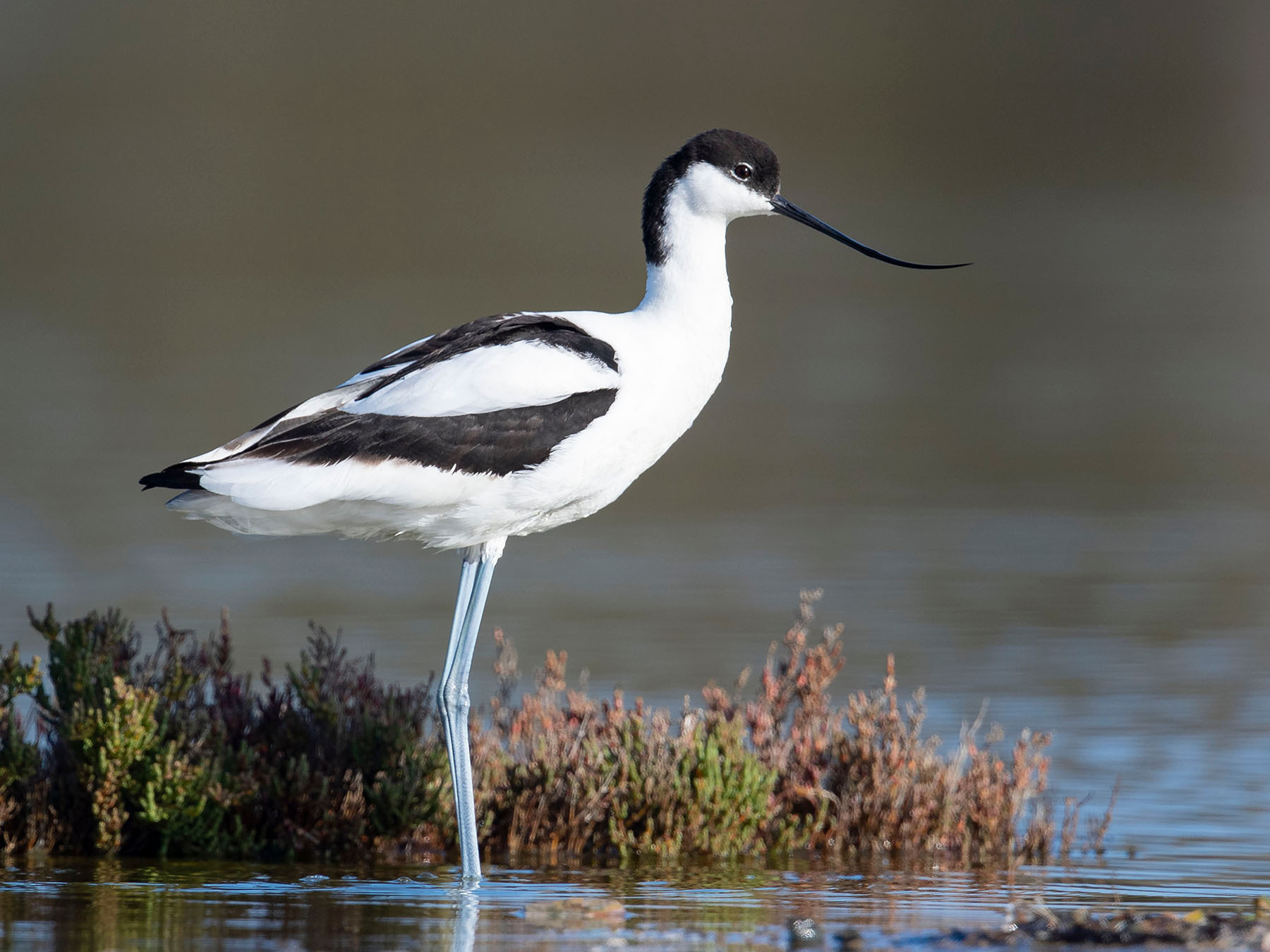
One of the most obvious ways to positively identify an avocet is by watching it feed. Not only is the movement of scything the water with its long and thin black bill a typical trait unique to the avocet, but it also adopts a forwards leaning stance as it does so.
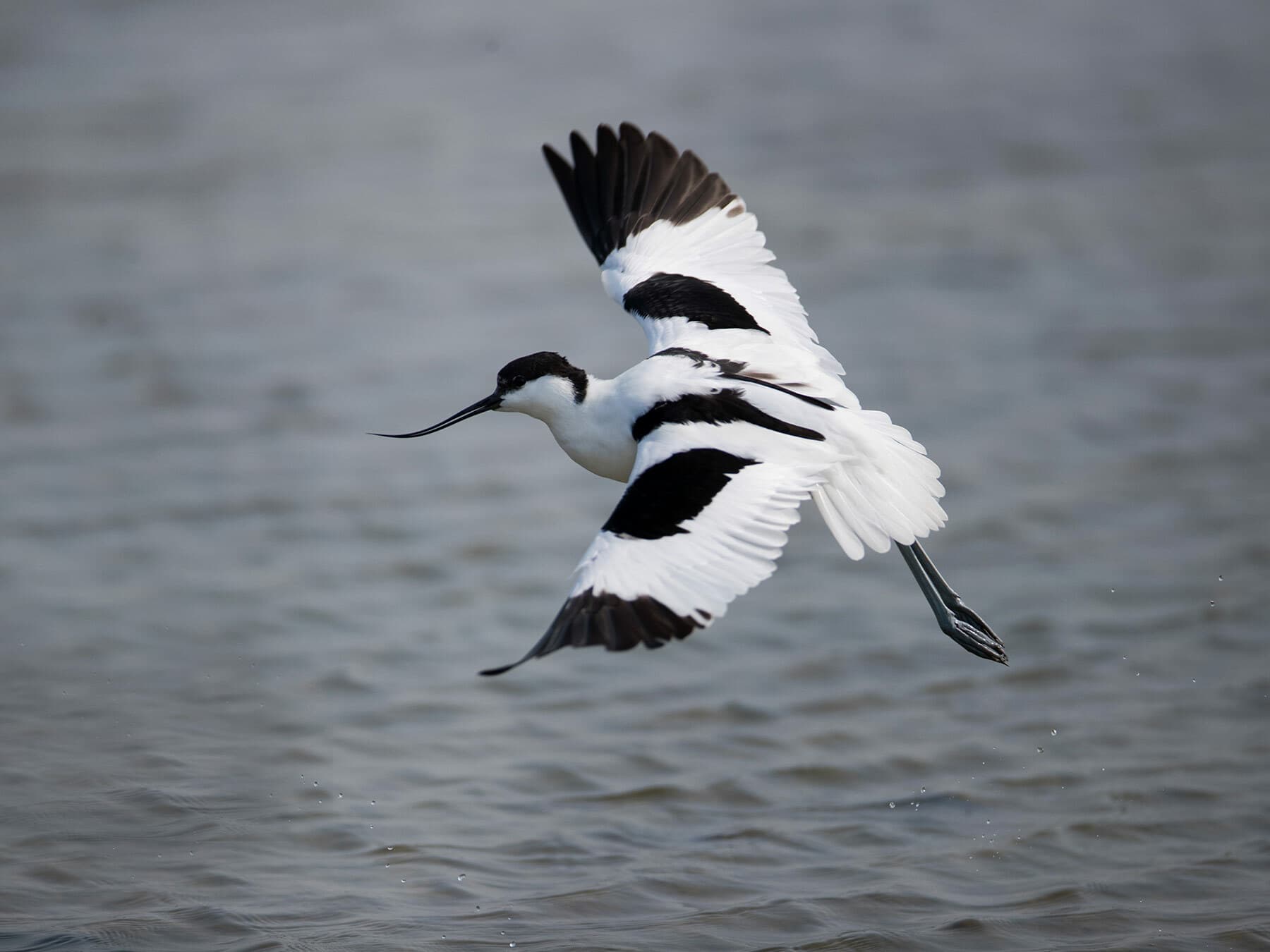
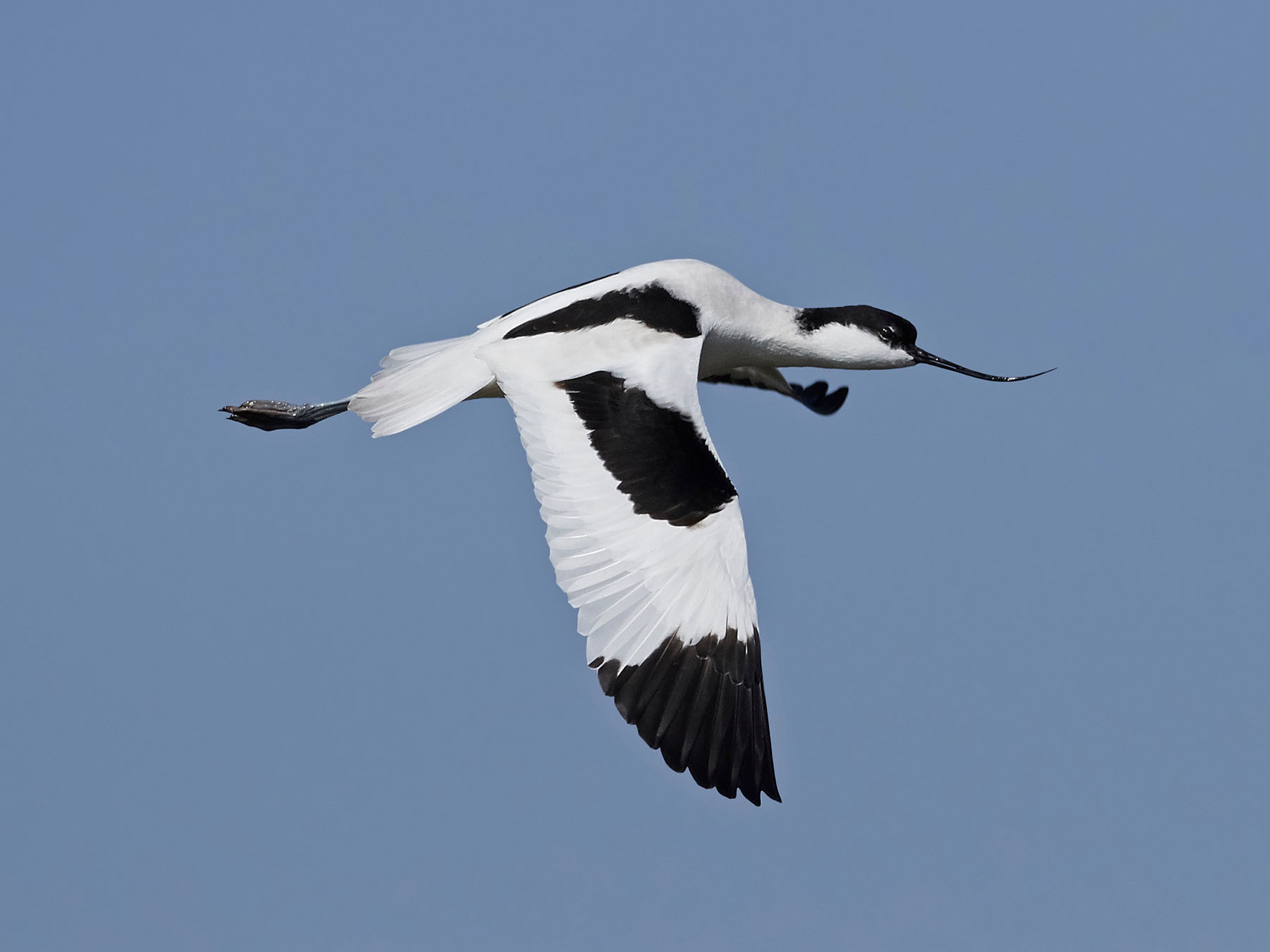
In flight the bold black and white markings of its back and wings are easy to observe.
What it eats
Avocets mainly feed on a diet of small shrimps and other crustaceans, tiny fish and waterborne insects and larvae which they catch as they methodically wade through the water whilst sweeping to and fro with their bills and dislodging food from the muddy bottom.
Nesting and breeding
Avocets nest on the ground, often in widely spread colonies and mainly on mounds of grass, dry mud or low scrapes, which are lined with dry grass or shoreline debris.
They produce one brood of 3 or 4 eggs annually between April and July. The eggs are a light buff colour with dark brown or black markings.
Behaviour
Avocets are known for their distinctive feeding technique: They sweep their upturned bills from side to side in shallow water to catch small invertebrates.
They are social birds, often seen in small flocks, and engage in synchronised swimming during courtship displays. During the breeding season, Avocets become fiercely territorial, aggressively defending their nesting areas from intruders.
Lifespan and predators
The lifespan of the pied avocet is 10 years. The British Trust for Ornithology cite one avocet on record as living to the ripe old age of 23 years and 9 months.
Conservation
While currently listed as Least Concern globally, Avocets have faced historical declines due to habitat loss. They've become a conservation success story in the UK, rebounding from near extinction in the 1940s.
Ongoing wetland protection and management are crucial for their continued success.
What does an Avocet look like?
The Pied Avocet is one of four species of avocets and the only one found in the UK. This slim, wading bird is predominantly white with black bands on its back and wings coupled with a black cap extending down the back of its neck. The underside of the wings are white.
Whilst both males and females are almost identical in markings the black area of the wing tip on the male is larger than that of the female who also has a slightly shorter bill.
They have long grey-blue legs, and most noticeably, the long black bill turned upwards at its end.
Juveniles have brown tips to their feathers. As the bird wades through shallow water it sweeps its bill from side to side below the surface in order to catch its food.
Similar birds
Often mistaken for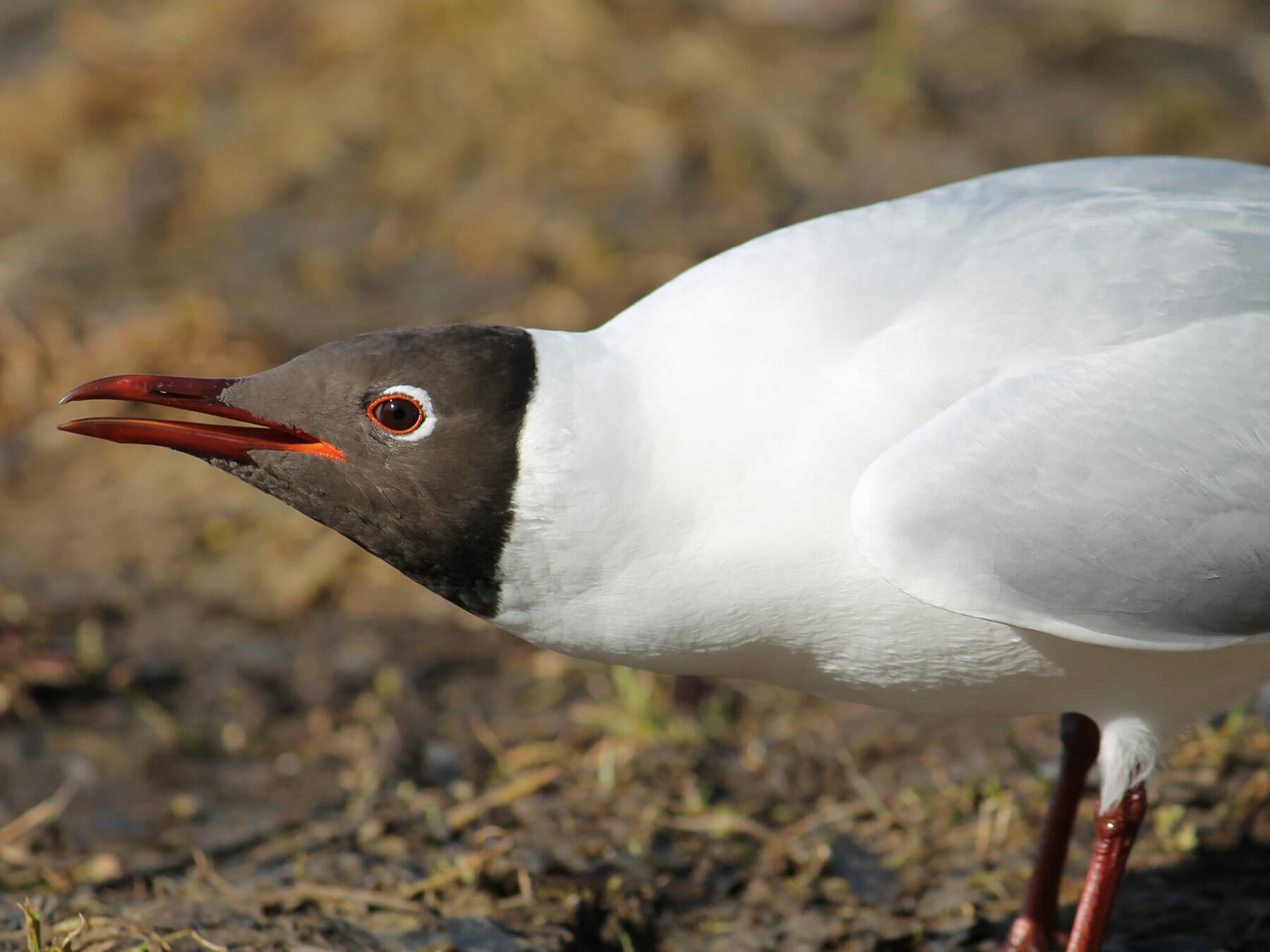
More photos
3 photos
Quick facts
- Length
- 42–45 cm
- Wingspan
- 77–80 cm
- Weight
- 240–340 g
- Lifespan
- 10 years · oldest recorded 27.8 years
- Family
- Stilts & Avocets
- Migration
- Partial migrant
- Global status (IUCN)
- Least Concern
- World population
- 280,000 - 470,000 mature individuals
- Population trend
- Unknown
- Also called
- Pied Avocet
- Scientific name
- Recurvirostra avosetta
Sources
3- 1BirdLife International. 2021. Recurvirostra avosetta. The IUCN Red List of Threatened Species 2021: e.T22693712A177125045. Source (opens in a new tab)
- 2Wetlands International (2015)
- 3Fransson et al., EURING list of longevity records for European birds (2010) Source (opens in a new tab)

Checked by
Nathan Cope, founder and editor
Nathan founded Birdfact and leads its writers and contributors in the UK, the US and Canada. He has watched and studied birds for more than ten years, and checks every article and species guide before it’s published.