


Black-headed Gull
Common Black-headed Gull · Chroicocephalus ridibundus
By the Birdfact teamChecked by Nathan Cope
On this page15 sections
How to recognise it
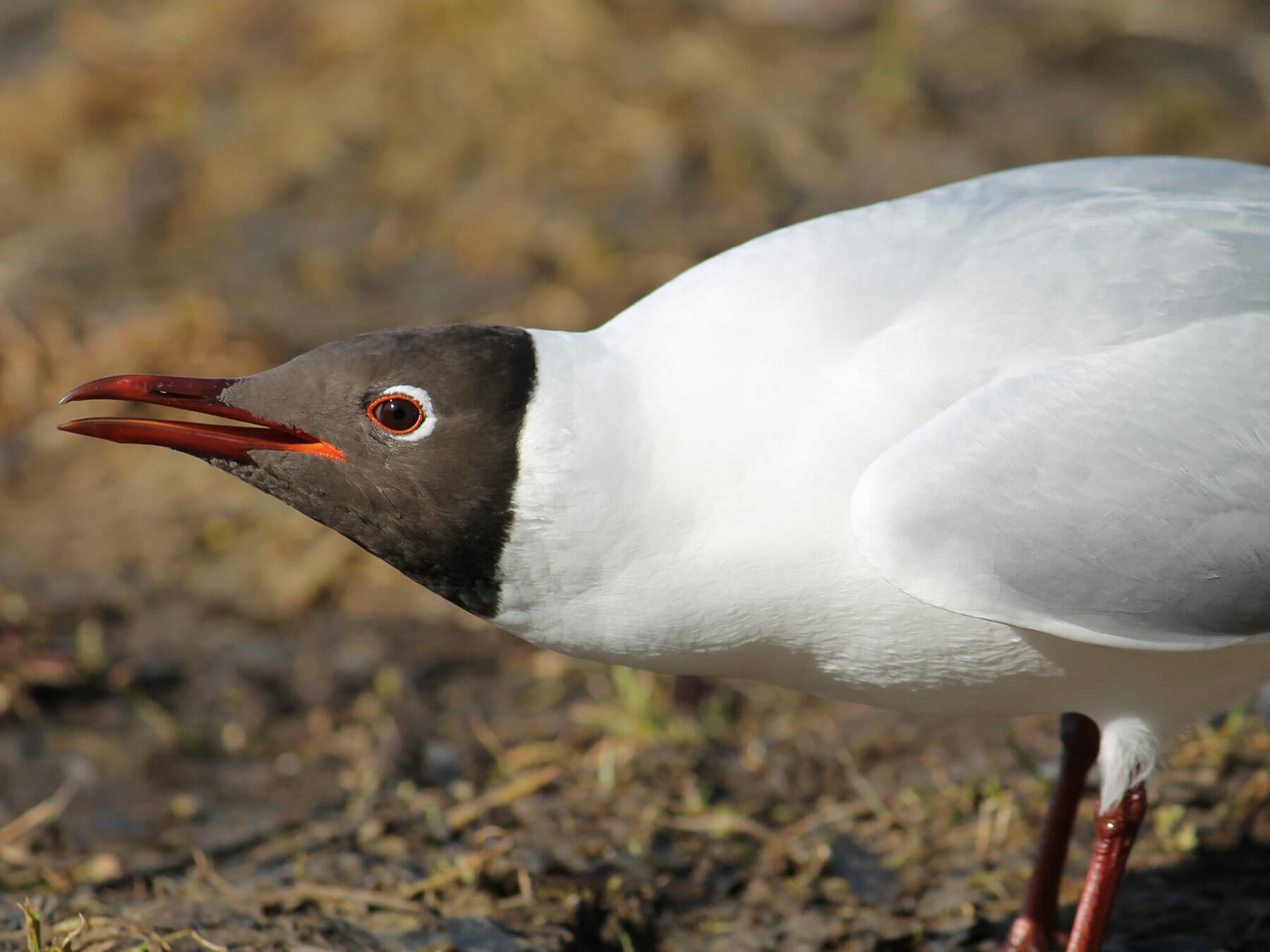
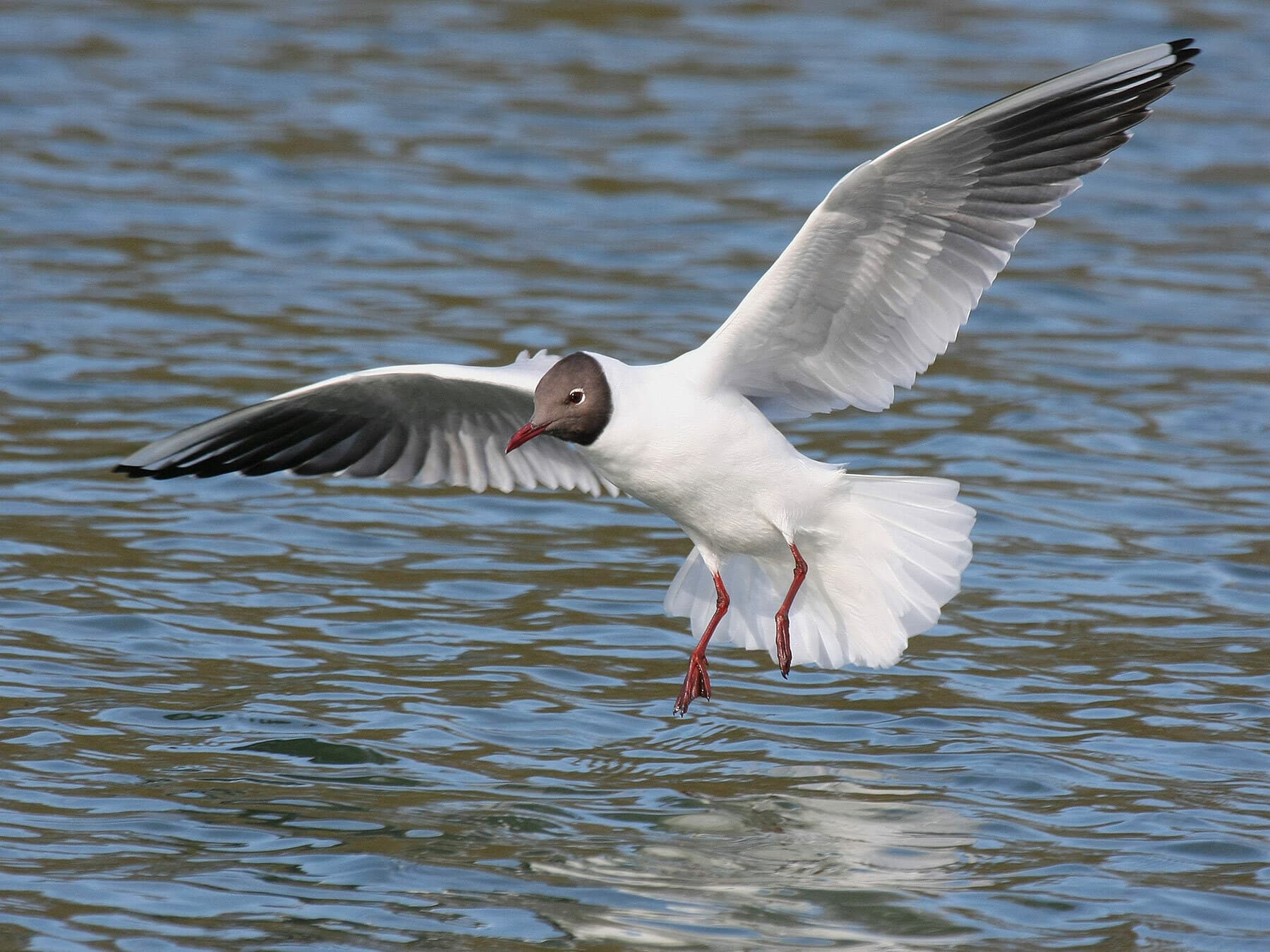
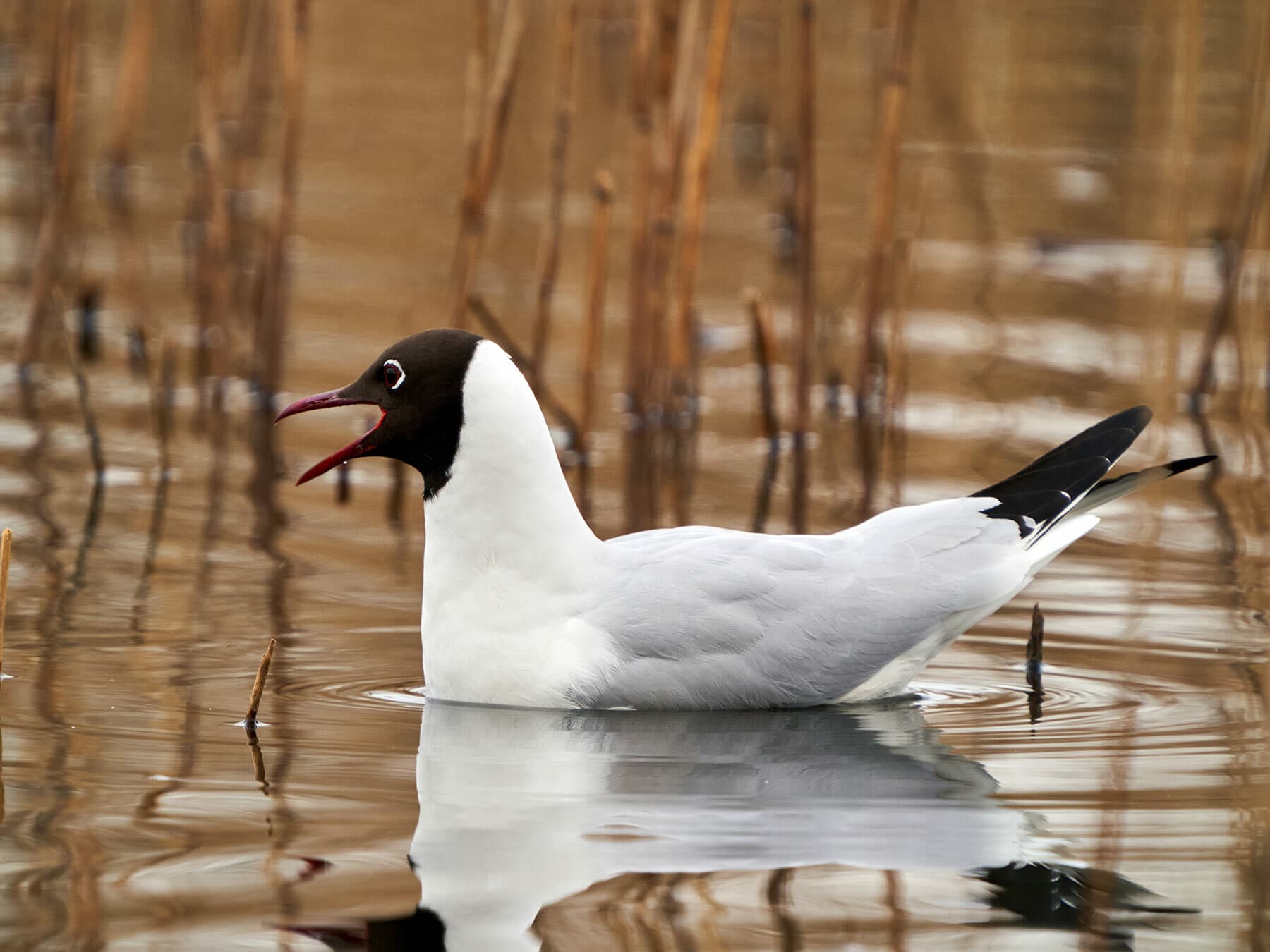
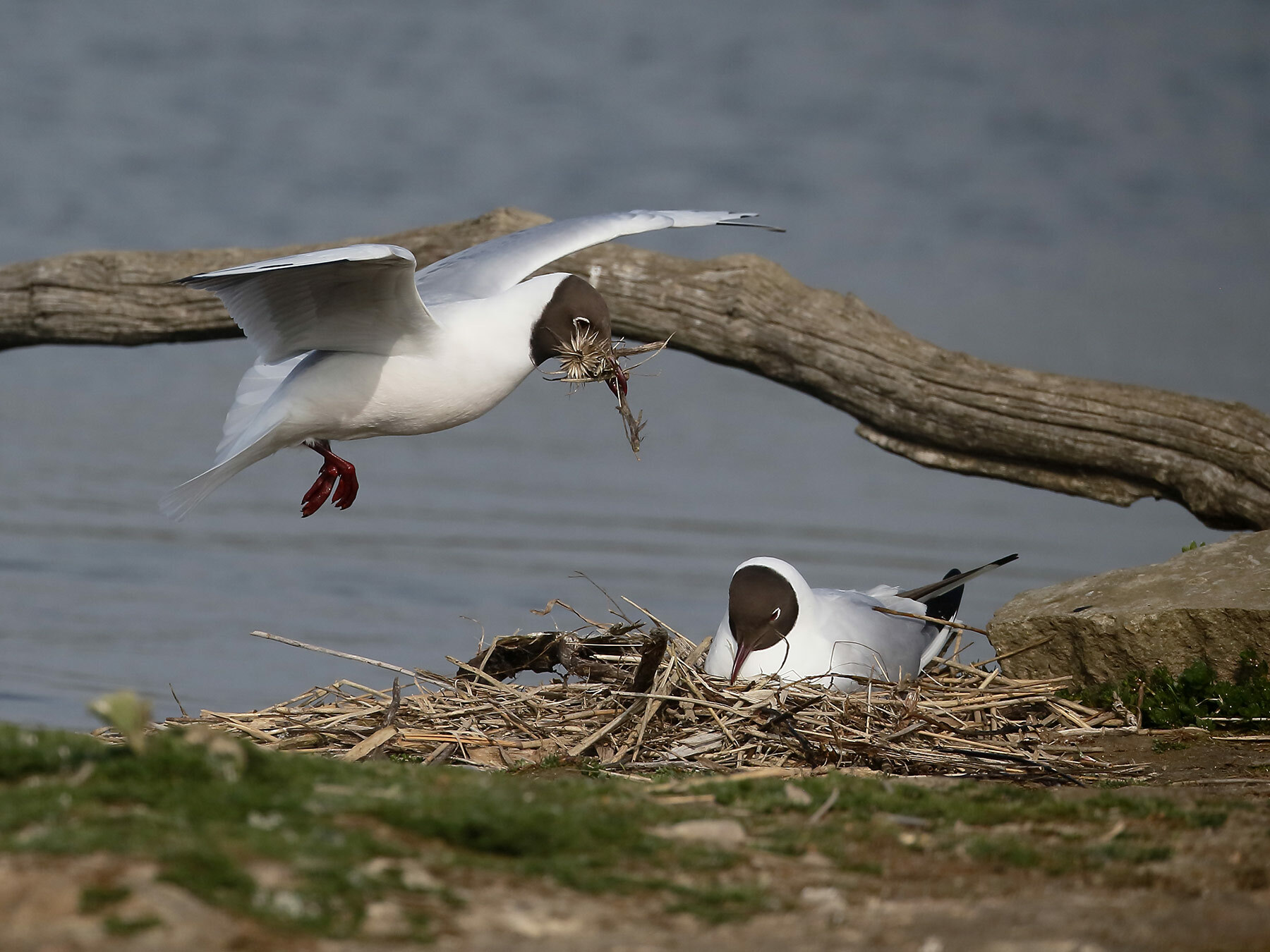
The Black-headed Gull exhibits a striking seasonal transformation. In summer, it sports a dark chocolate-brown hood, contrasting sharply with its white body, pale grey wings, bright red bill and legs. The wingtips are black, creating a distinctive pattern in flight.
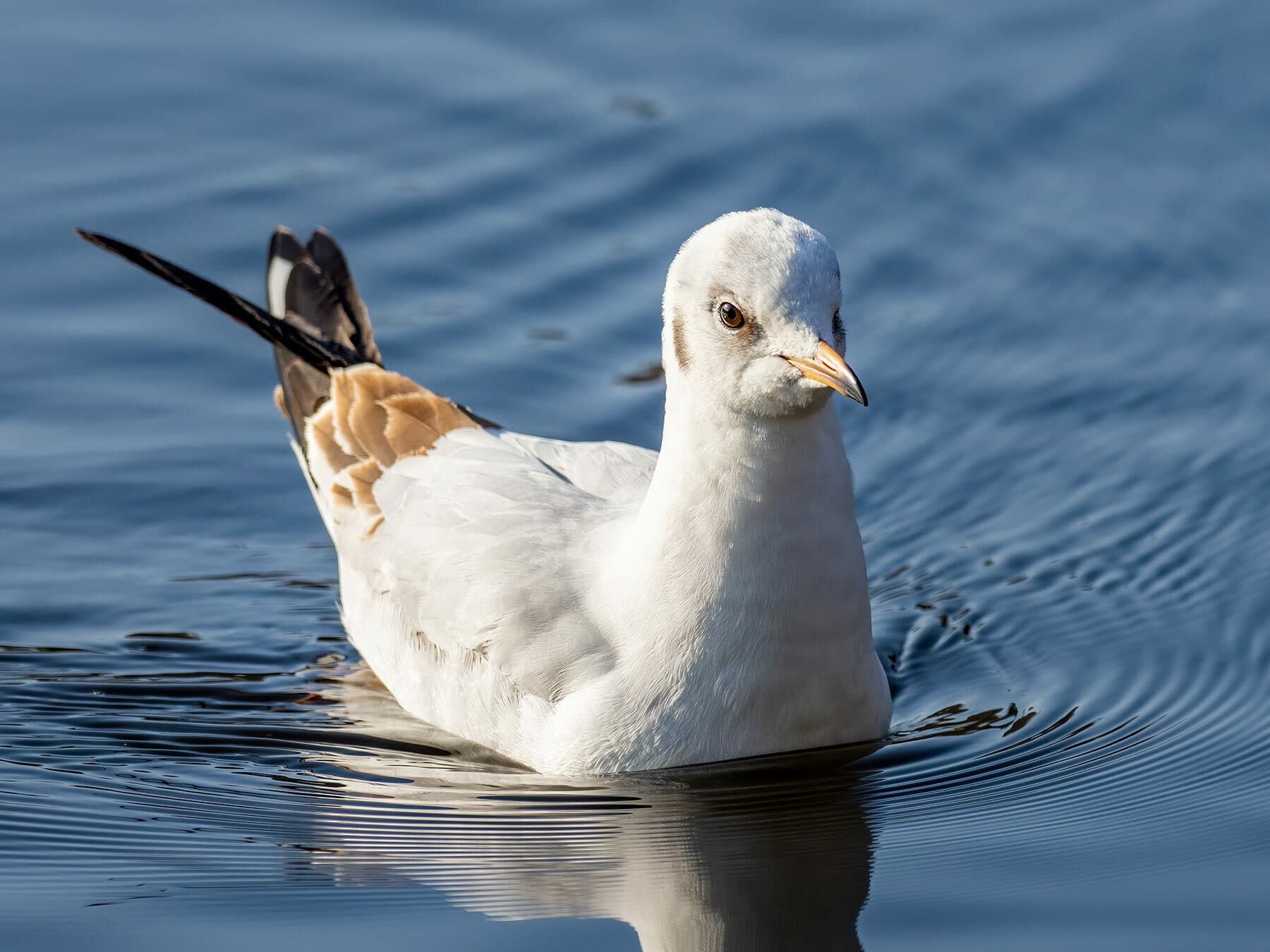
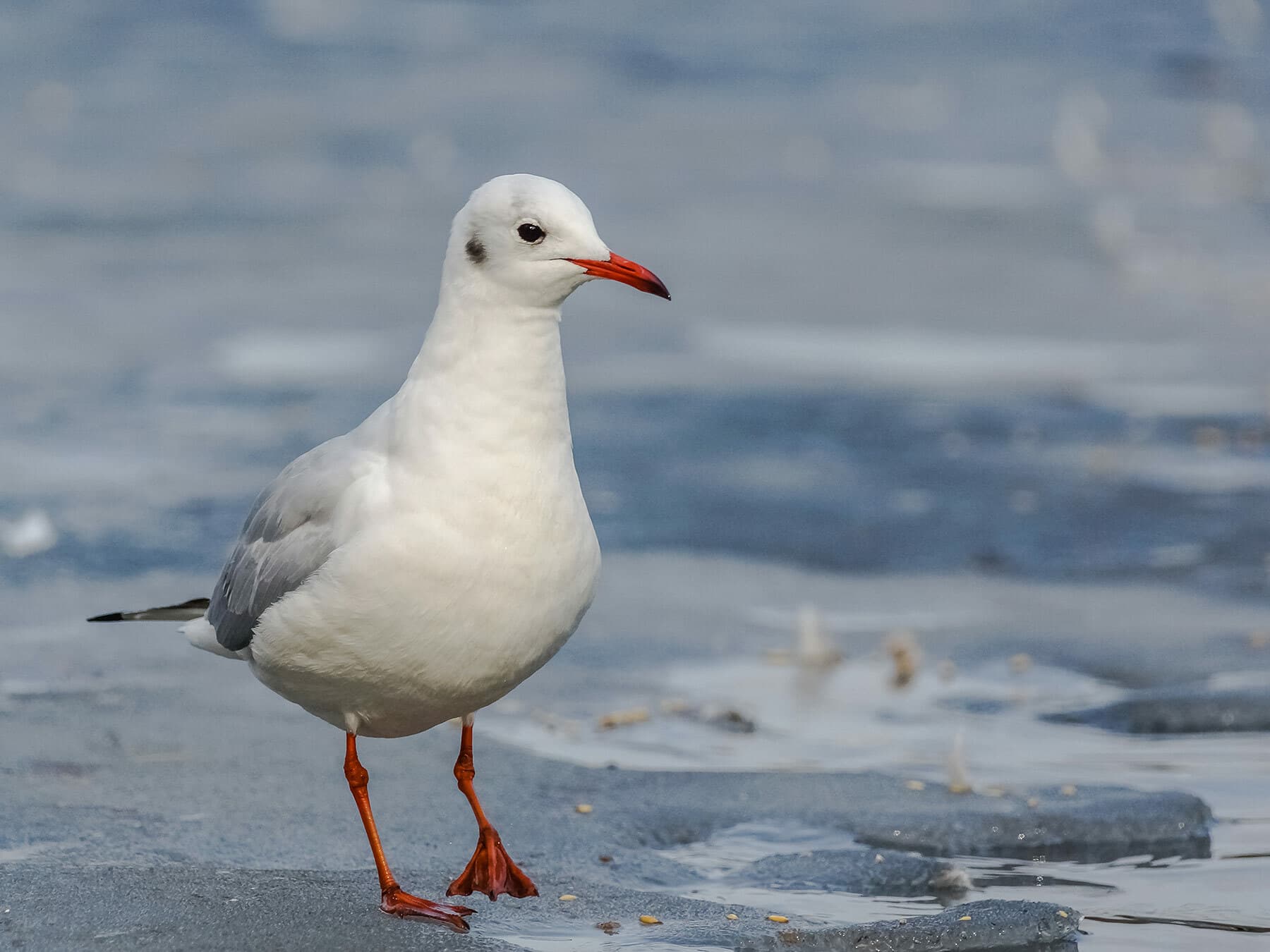
The dark hood disappears during winter, replaced by a white head with a dark ear spot. Juveniles have brown-mottled wings and a dark terminal tail band, gradually acquiring adult plumage over several years.
Its size
Adults- Length
- 38–44 cm
- Wingspan
- 94–105 cm
- Weight
- 200–400 g
Its song and calls
A relatively vociferous bird, black-headed gulls are loud to the extreme in the breeding season, using chattering and squealing calls of ‘krrrreeeeaaar’ and shorter ‘kuk – kuk – kuk’ or ‘kekek’.
- Song0:00 / 1:02
Recorded in City of Edinburgh, Scotland · July 2013
- Call0:00 / 0:16
Recorded in Île-de-France, France · December 2019
When and where to see it
OctoberIn season
Most recorded in October
- 1. Dundee3.7%
- 2. Belfast3.7%
- 3. Glasgow3.5%
- 4. Swansea3.4%
- 5. Dublin3.4%
Each dot is a county, state or province: the bigger and darker, the larger the bird’s share of that place’s bird records that month. Grey dots: no regular records. The ringed point is the centre of the bird’s records this month; the arrow shows how it moved since last month, and the dashed loop its path through the year. “Arrivals” colours places where it becomes regular this month (orange) or is in its last regular month (grey). GBIF eBird Observation Dataset, 2019–2024. Map data: Natural Earth, US Census Bureau; place centres © OpenStreetMap contributors.
In your area
See when the Black-headed Gull is recorded in your county, state or province.
How often the Black-headed Gull turns up in the UK, Ireland, the United States and Canada through the year, from birdwatchers' records.
United Kingdom
Resident · all year · most records in December
Ireland
Resident · all year · most records in January
United States
Winter visitor · all year · most records in January
Canada
Winter visitor · all year · most records in January
Show as a table
| Month | United Kingdom | Ireland | United States | Canada |
|---|---|---|---|---|
| January | 2.8% (regular) | 3.2% (regular) | 0.006% (regular) | 0.024% (regular) |
| February | 2.6% (regular) | 3.0% (regular) | 0.004% (regular) | 0.022% (regular) |
| March | 2.0% (regular) | 2.3% (regular) | 0.002% (regular) | 0.013% (regular) |
| April | 1.4% (regular) | 1.1% (regular) | <0.001% (regular) | 0.005% (regular) |
| May | 1.3% (regular) | 0.94% (regular) | <0.001% (regular) | 0.002% (regular) |
| June | 1.6% (regular) | 1.5% (regular) | <0.001% (regular) | 0.003% (regular) |
| July | 2.2% (regular) | 2.6% (regular) | <0.001% (regular) | 0.005% (regular) |
| August | 2.2% (regular) | 2.8% (regular) | <0.001% (regular) | 0.008% (regular) |
| September | 2.1% (regular) | 2.7% (regular) | <0.001% (regular) | 0.011% (regular) |
| October | 2.3% (regular) | 2.6% (regular) | <0.001% (regular) | 0.009% (regular) |
| November | 2.6% (regular) | 2.9% (regular) | <0.001% (regular) | 0.012% (regular) |
| December | 2.8% (regular) | 3.0% (regular) | 0.003% (regular) | 0.019% (regular) |
Recorded regularly in
Worldwide: recorded regularly in 112 countries
Countries where it was recorded in at least 3 of the 6 years 2019–2024. Linked countries have their own bird list.
Europe (49)
- Åland Islands
- Albania
- Austria
- Belarus
- Belgium
- Bosnia & Herzegovina
- Bulgaria
- Croatia
- Czechia
- Denmark
- Estonia
- Faroe Islands
- Finland
- France
- Germany
- Gibraltar
- Greece
- Guernsey
- Hungary
- Iceland
- Ireland
- Isle of Man
- Italy
- Jersey
- Kosovo
- Latvia
- Lithuania
- Luxembourg
- Malta
- Moldova
- Monaco
- Montenegro
- Netherlands
- North Macedonia
- Norway
- Poland
- Portugal
- Romania
- Russia
- Serbia
- Slovakia
- Slovenia
- Spain
- Svalbard & Jan Mayen
- Sweden
- Switzerland
- Ukraine
- United Kingdom
- Vatican City
Africa (14)
Asia (40)
- Armenia
- Azerbaijan
- Bahrain
- Bangladesh
- Bhutan
- Cambodia
- China
- Cyprus
- Georgia
- Hong Kong SAR China
- India
- Iran
- Iraq
- Israel
- Japan
- Jordan
- Kazakhstan
- Kuwait
- Kyrgyzstan
- Lebanon
- Macao SAR China
- Malaysia
- Mongolia
- Myanmar (Burma)
- Nepal
- Oman
- Pakistan
- Palestinian Territories
- Philippines
- Qatar
- Saudi Arabia
- Singapore
- South Korea
- Taiwan
- Tajikistan
- Thailand
- Turkey
- United Arab Emirates
- Uzbekistan
- Vietnam
North America (7)
South America (1)
- French Guiana
Oceania (1)
- Palau
Data: EOD – eBird Observation Dataset (Cornell Lab of Ornithology), accessed via GBIF.org, CC BY 4.0. Records from 2019–2024, aggregated and filtered by Birdfact. How these lists are made
The black-headed gull is monotypic and limited to the northern hemisphere where it is widespread throughout the majority of Europe including Greenland and Iceland.
It is also found across Central Asia as far as the volcanic Kamchatka Peninsula in the far east of Russia and North-eastern China. Limited numbers are also present on the East coast of North America and Southeast Canada.
During the winter months, the majority of the species migrates to sub-Saharan Africa, Southeast Asia and the Indian sub-continent whilst small numbers remain in Southwest Europe throughout the year.
Signs and Spotting tips
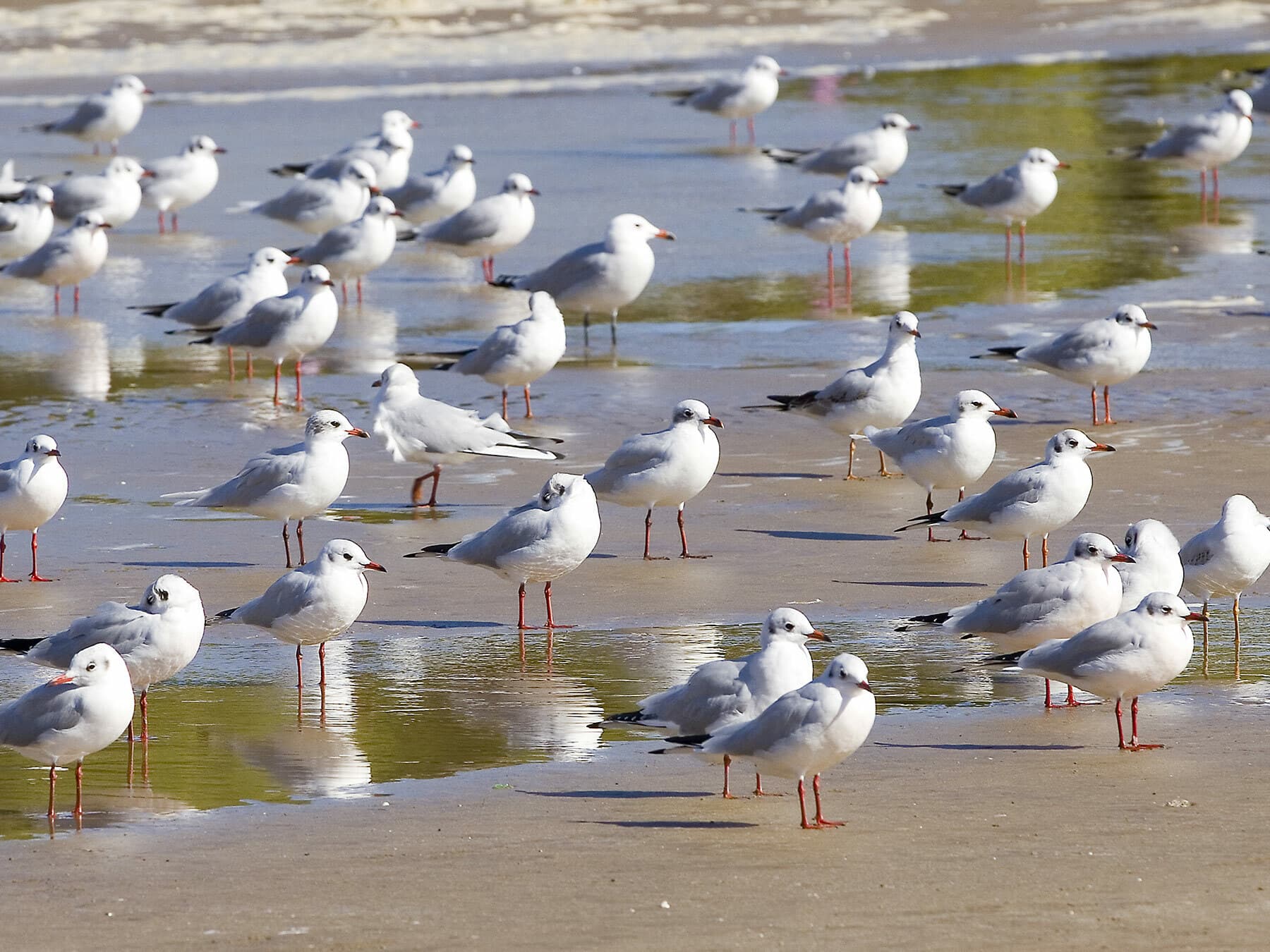
Black-headed gulls can be found in almost any environment within their range including but not limited to, marine and intertidal, salt flats and marshland, wetland, grassland, farmland, urban and suburban areas, freshwater reservoirs and gravel pits, refuse dumps, and sewage farms.
They are sociable birds often congregating in large flocks but also quarrelsome and noisy. They can frequently be seen in large numbers roosting on the grounds near food sources.
What it eats
A diet of fish, worms, insects and seeds keep coastal birds nourished whilst those venturing inland also dine on carrion and are adept at foraging in and around domestic refuse dumps.
Nesting and breeding
Large breeding colonies are often occupied from March each year and nests are constructed on the ground out of twigs and grass stems on top of marshy ground or vegetation.
Occasionally individual pairs will nest alone away from the colony. One brood of 1 – 3 eggs is produced annually between April to June and incubated for up to twenty-six days. The chicks fledge after thirty-five days.
Behaviour
Black-headed Gulls are highly social, often seen in large, noisy flocks. They exhibit remarkable agility in flight, skilfully catching insects mid-air or plucking food from the water's surface.
These adaptable birds have also become adept at urban foraging, frequenting parks and scavenging from human food sources.
Lifespan and predators
The life expectancy of the black-headed gull is between 10 to 15 years although specimens of over 30 years of age have been recorded.
Conservation
While currently listed as Least Concern, Black-headed Gulls face threats from habitat loss, particularly in coastal breeding areas. Climate change and pollution also pose risks.
Conservation efforts focus on protecting wetland habitats and managing urban interactions to ensure population stability.
What does a Black-headed Gull look like?
In breeding plumage, adults have a dark brown or chocolate brown hood which extends from the crown of the head down across the cheeks and under the chin.
There is a partial white eye ring and deep red bill and legs. The back of the bird is a pale grey whilst the neck, underparts and tail are white.
The wings are mainly mid-grey in colour with the outer primary flight feathers white, edged and tipped in black. Non-breeding adults are similar but lack the brown hood revealing a white head with a dark ear spot with some birds also showing dark splashes or shading on the forehead and nape of the neck.
Juvenile birds are predominantly brown with some ‘scale’ markings on the neck, back, upper wings and tail, which is tipped black. The bill and legs are a greyish pink in colour.
Similar birds
Often mistaken for
More photos
2 photos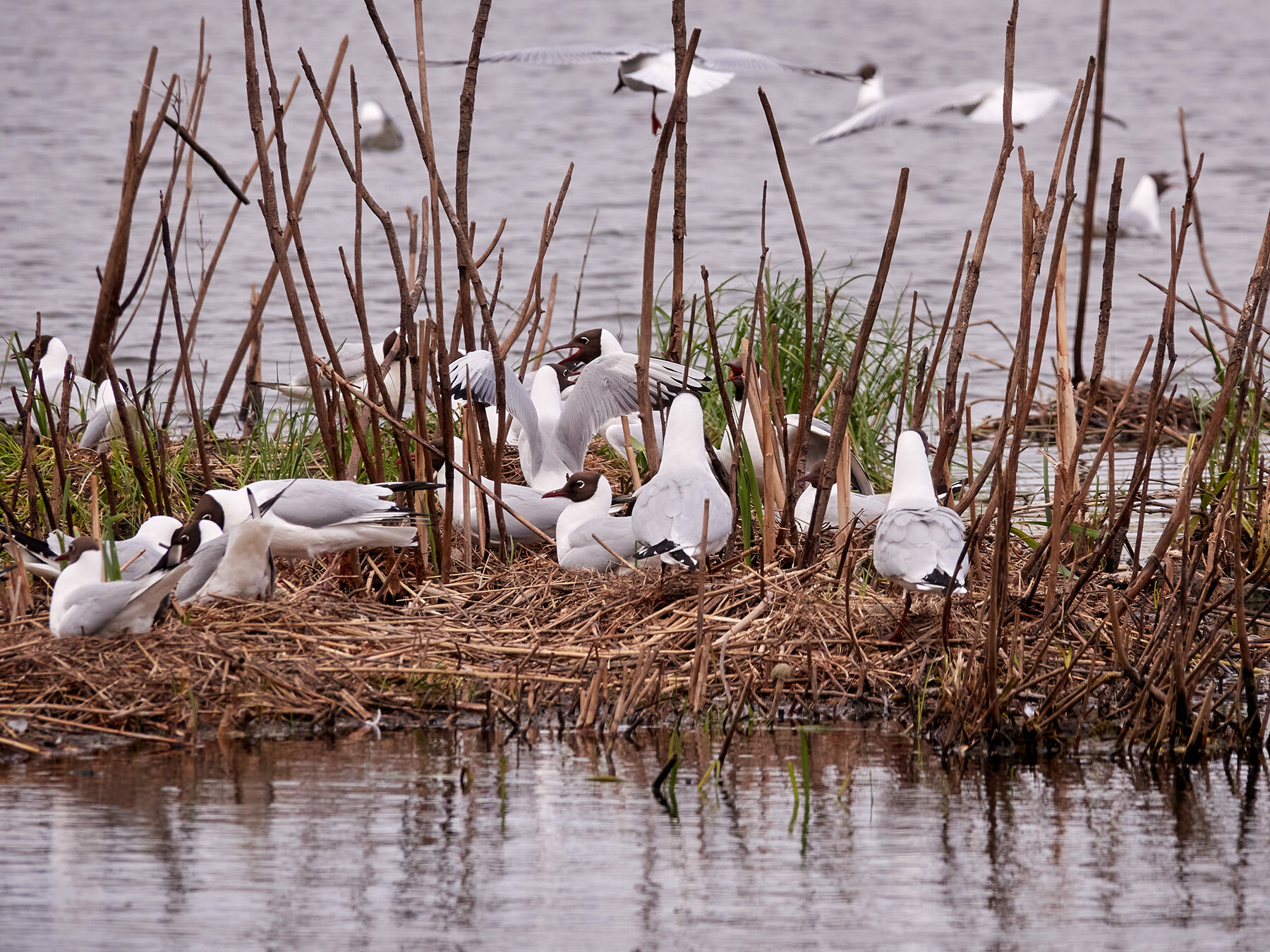
Black-headed Gull guides
6 guides- What Do Seagulls Actually Eat? Diet Secrets of These Clever Scavengers
- Do Seagulls Migrate? (All You Need To Know)
- Baby Seagulls: All You Need to Know (with Pictures)
- Seagull Nesting Secrets: Unveiling the Hidden Sanctuaries by the Sea
- What is a Group of Seagulls Called? (Complete List + Why?)
- How Long Do Seagulls Live?
Quick facts
- Length
- 38–44 cm
- Wingspan
- 94–105 cm
- Weight
- 200–400 g
- Lifespan
- 10–15 years · oldest recorded 32.9 years
- Family
- Gulls & Terns
- Migration
- Partial migrant
- Global status (IUCN)
- Least Concern
- World population
- 4,800,000 - 8,900,000 mature individuals
- Population trend
- Unknown
- Also called
- Common Black-headed Gull
- Scientific name
- Chroicocephalus ridibundus
Sources
3- 1BirdLife International. 2018. Larus ridibundus. The IUCN Red List of Threatened Species 2018: e.T22694420A132548687. Source (opens in a new tab)
- 2Wetlands International (2015)
- 3van Dijk et al., New longevity records of Black-headed Gull, with comments on wear and loss of aluminium rings, Dutch Birding, 34:20-31 (2012)

Checked by
Nathan Cope, founder and editor
Nathan founded Birdfact and leads its writers and contributors in the UK, the US and Canada. He has watched and studied birds for more than ten years, and checks every article and species guide before it’s published.