


Mediterranean Gull
Black-headed Mediterranean Gull · Ichthyaetus melanocephalus
By the Birdfact teamChecked by Nathan Cope
On this page14 sections
How to recognise it
What do Mediterranean Gulls look like?
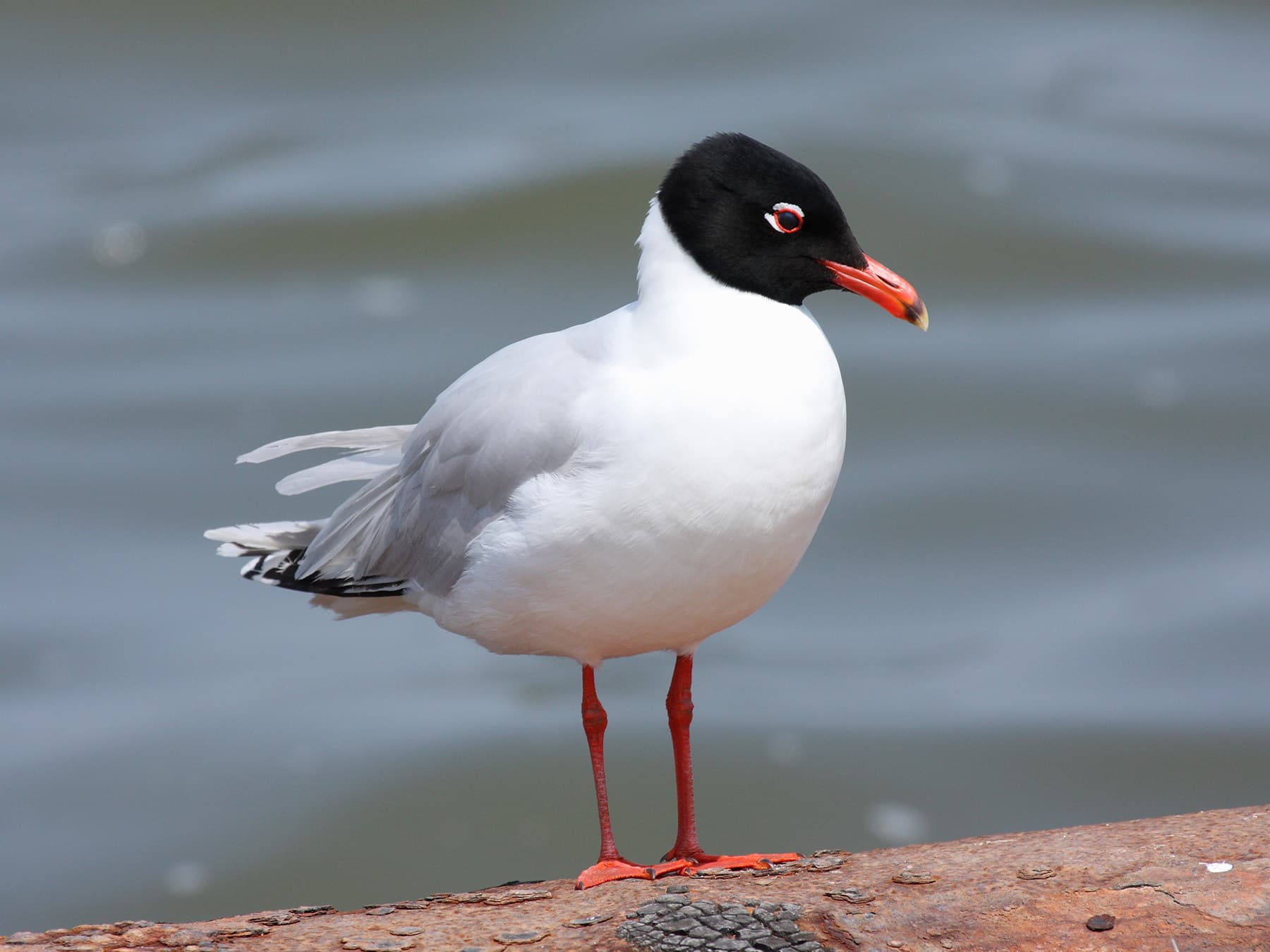
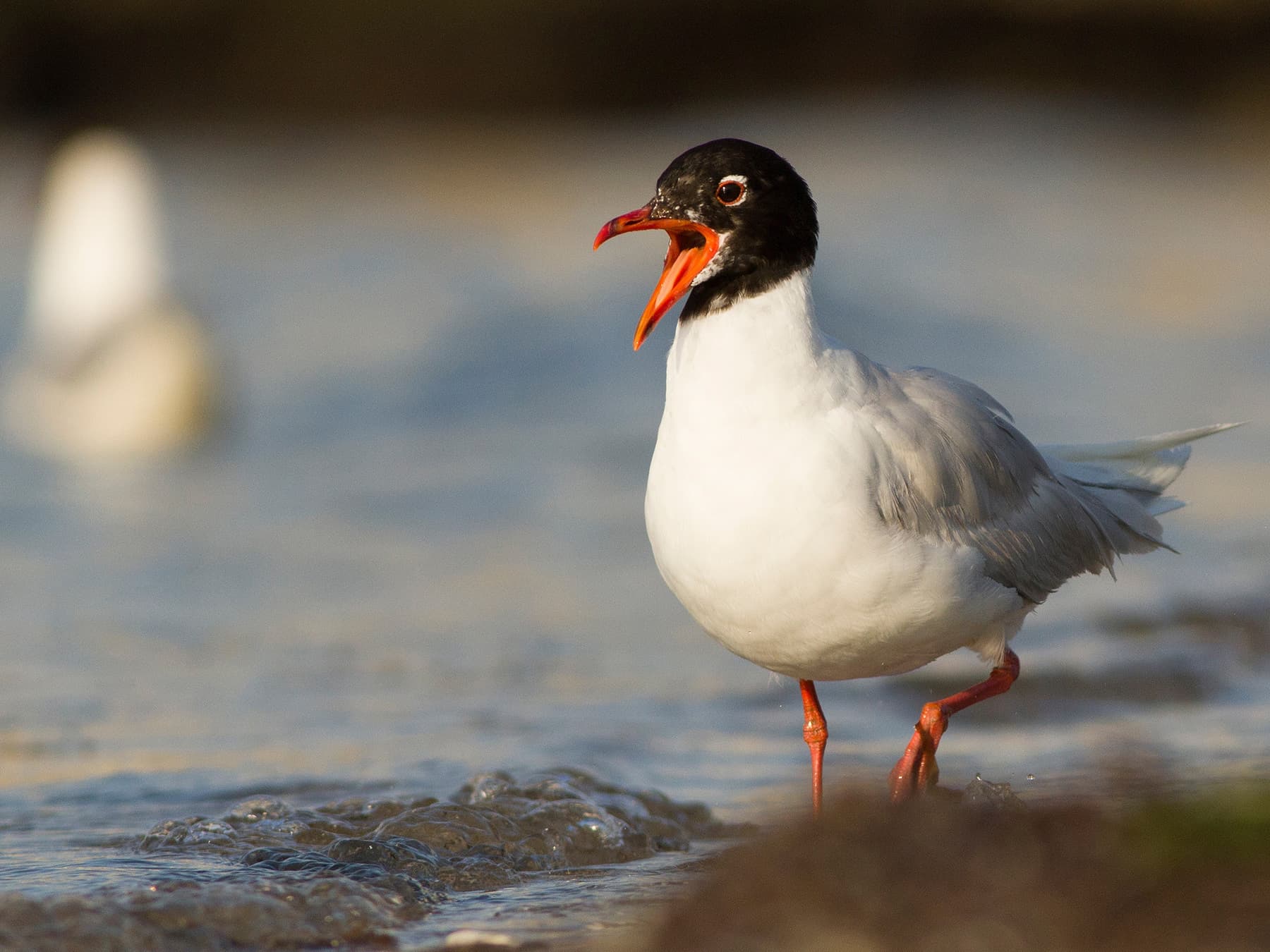
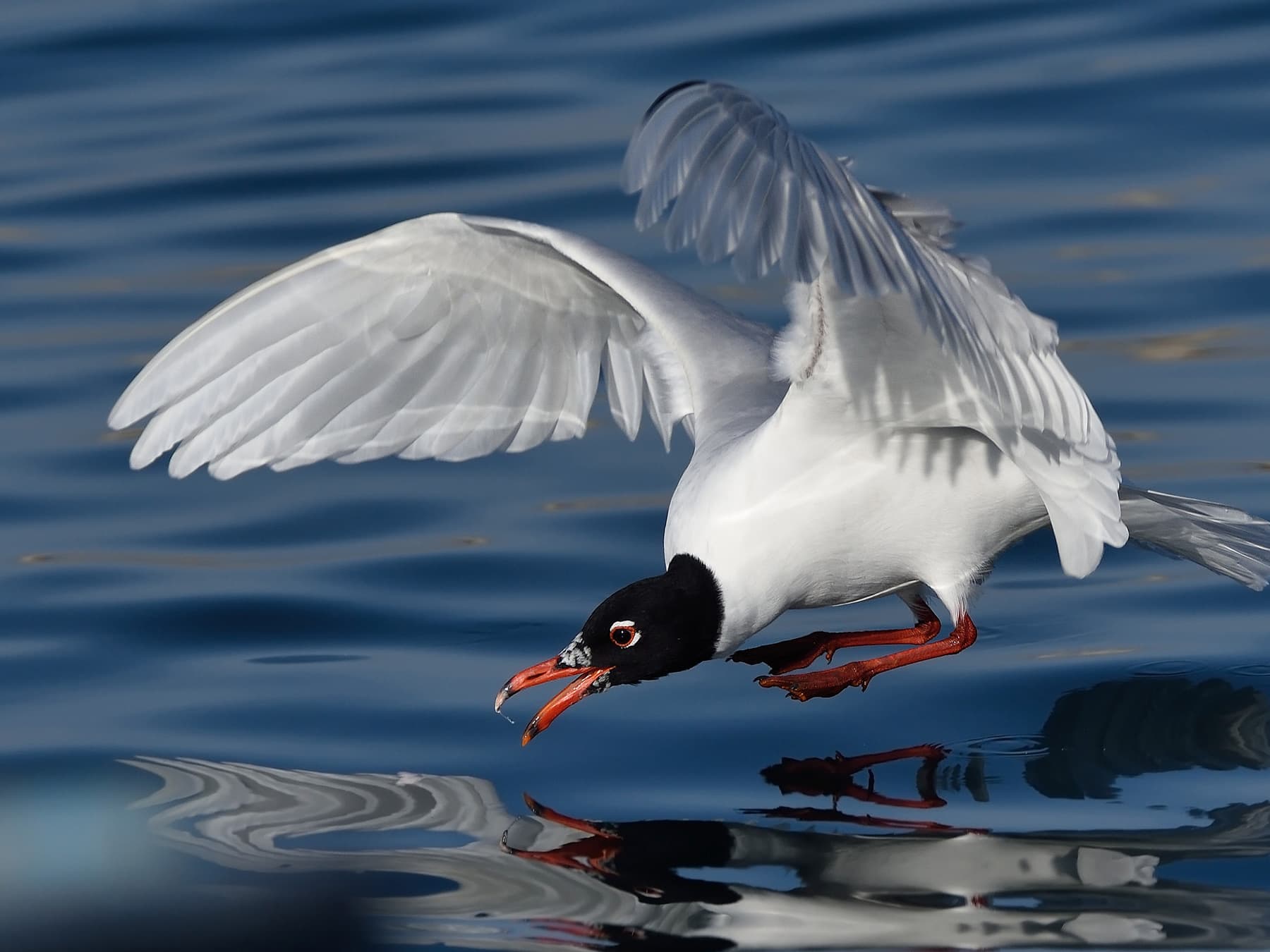
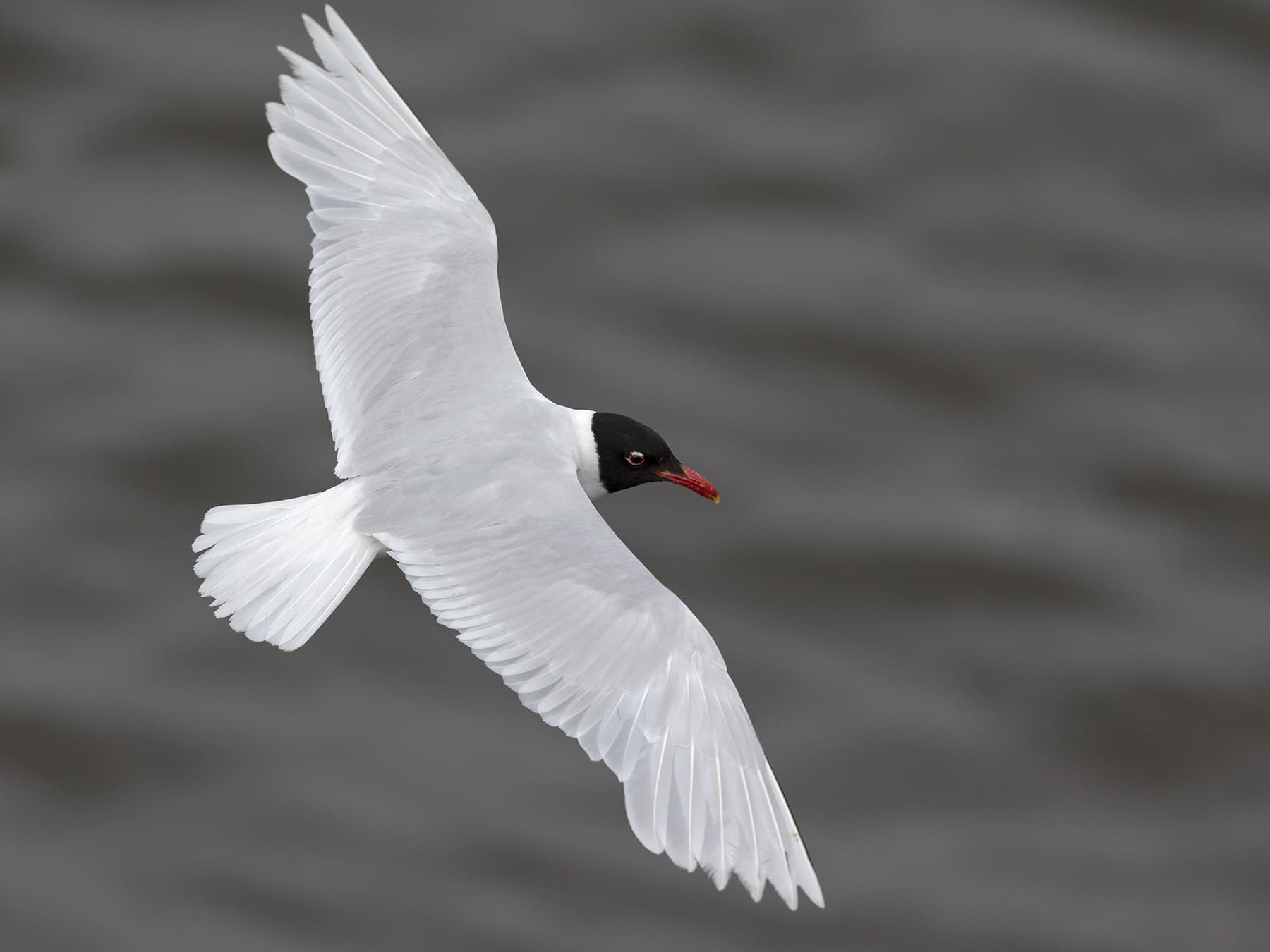
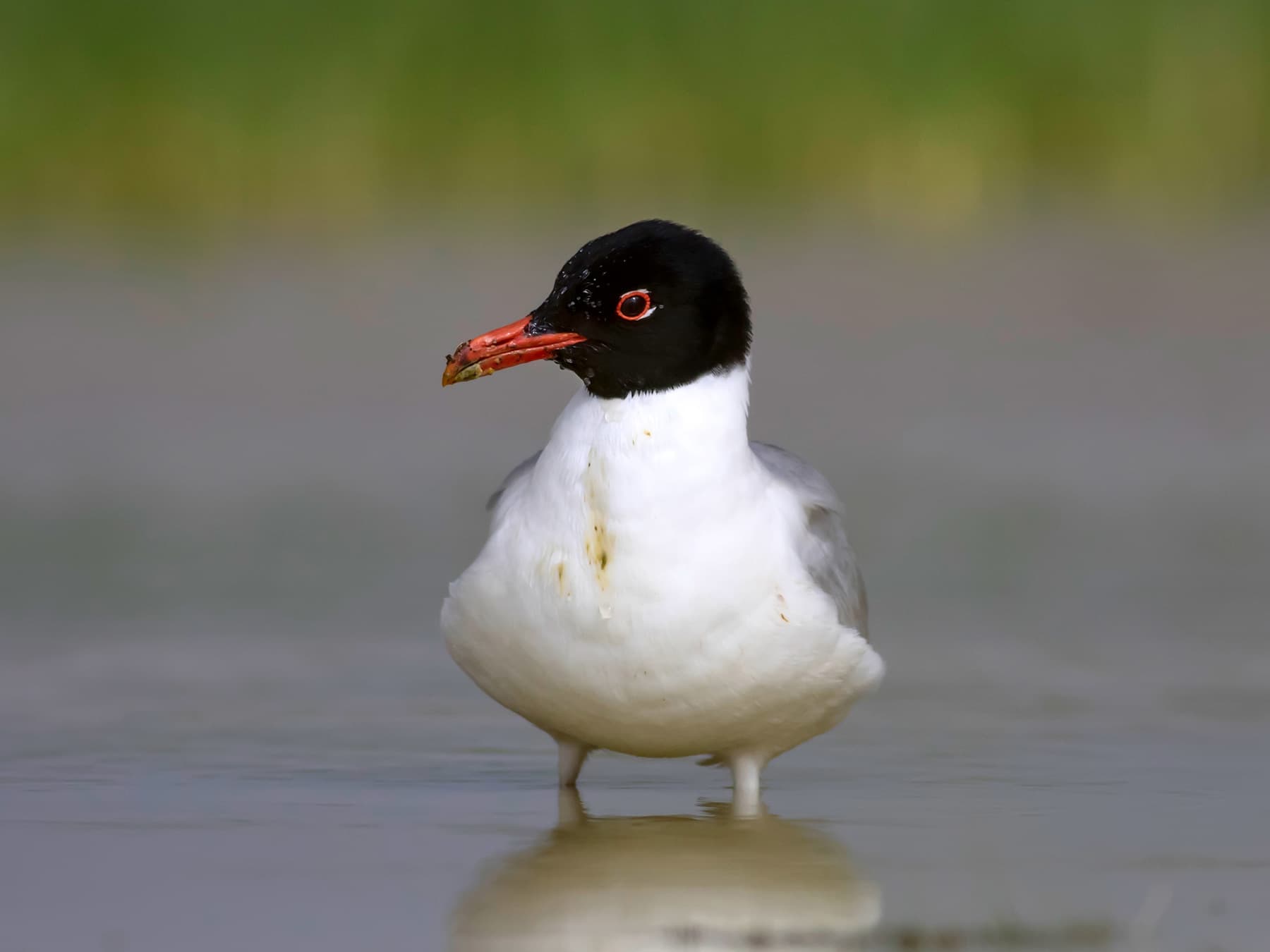
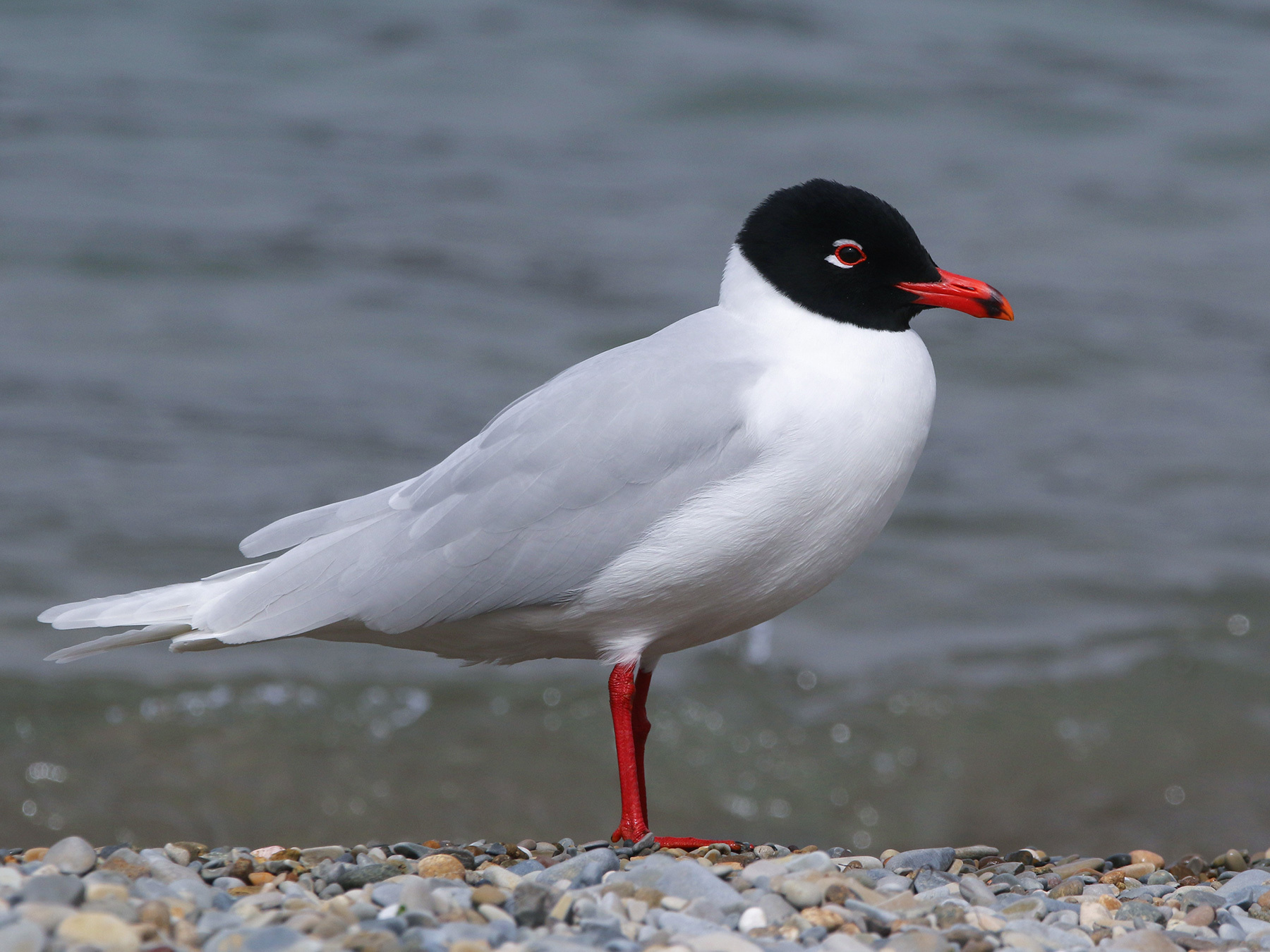
Mediterranean gulls are more distinctive and easy to identify during the breeding season than during the winter, due to their bold black head and neck, white eye rings and bright red-orange beak and legs. Their upper wings are very pale grey, while their upper back, flanks, breast and belly are white.
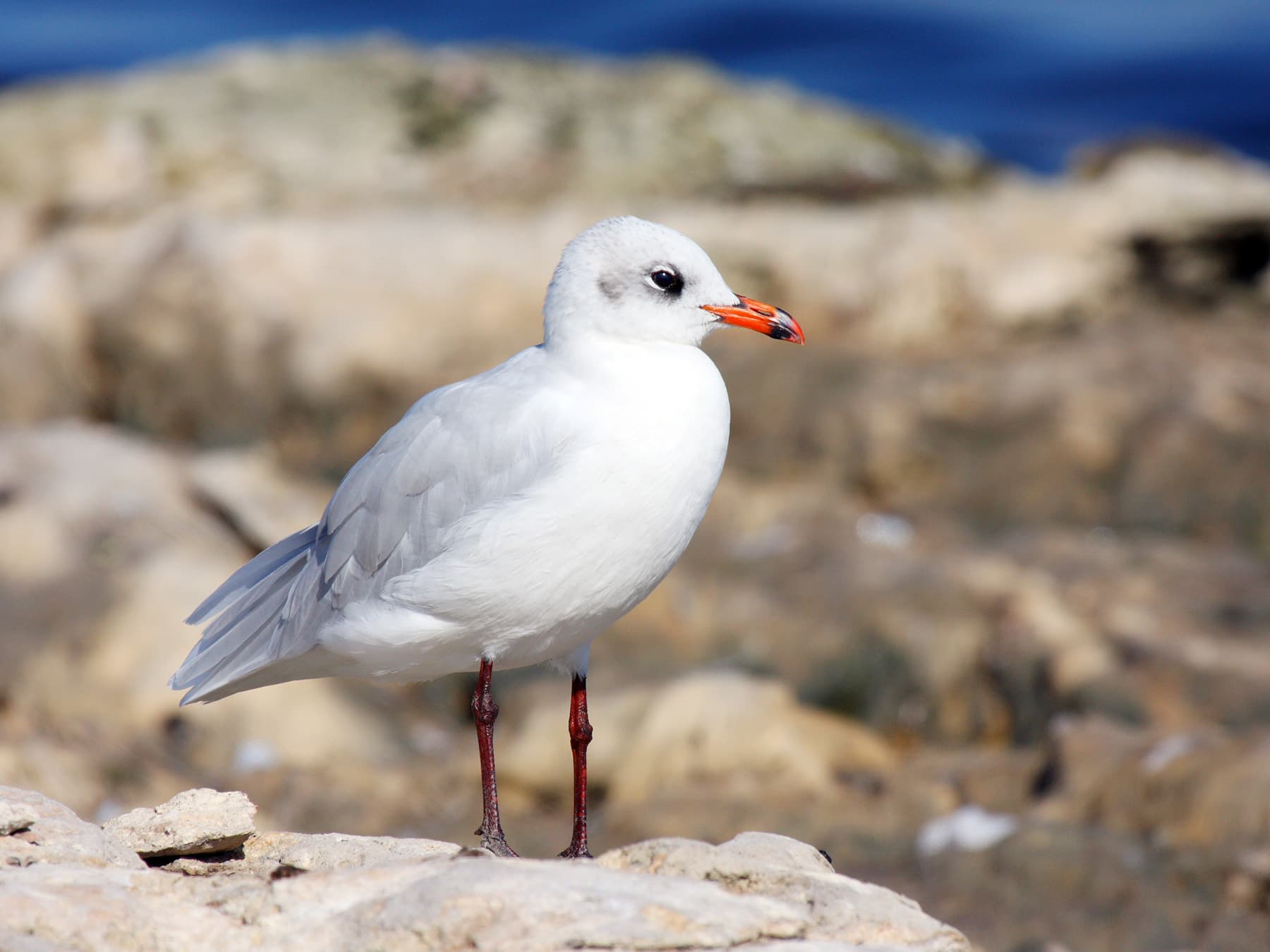
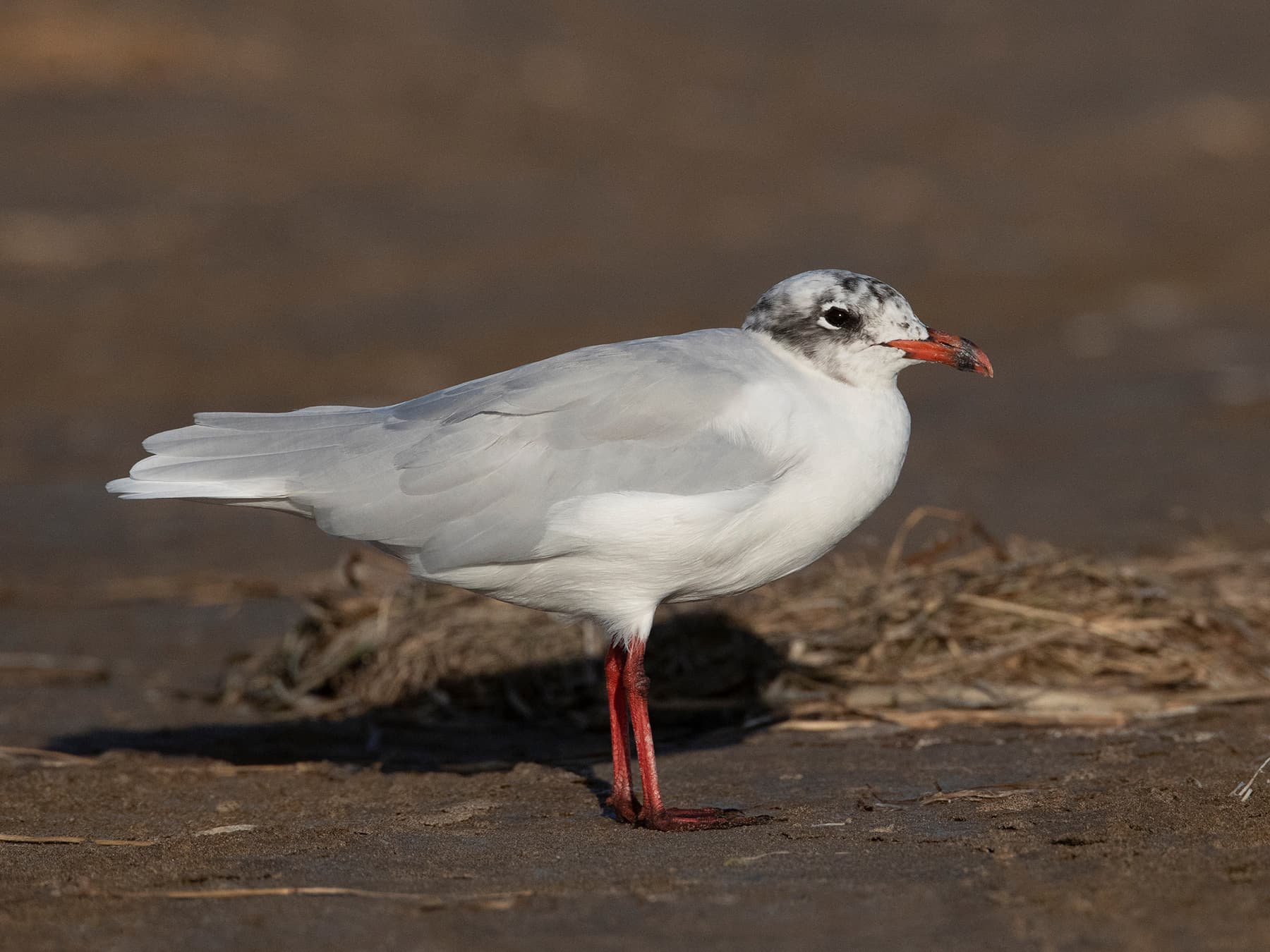
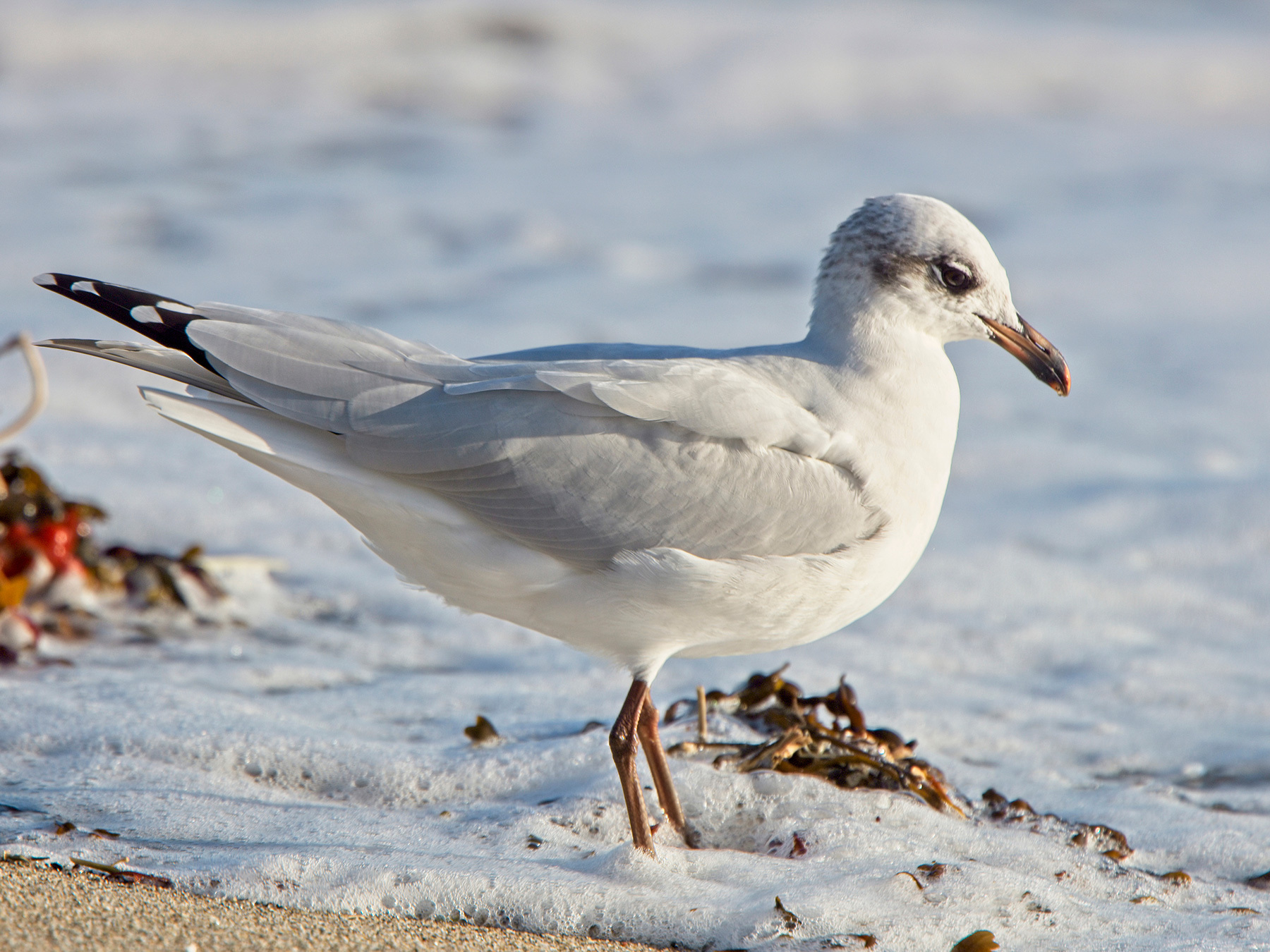
Males and females are alike, and during the non-breeding season, they moult into a less remarkable plumage, appearing from a distance to be entirely white, although at closer range, dark shadowy streaks are visible on the face, particularly around the eyes. The beak becomes a less vibrant shade of dull orange.
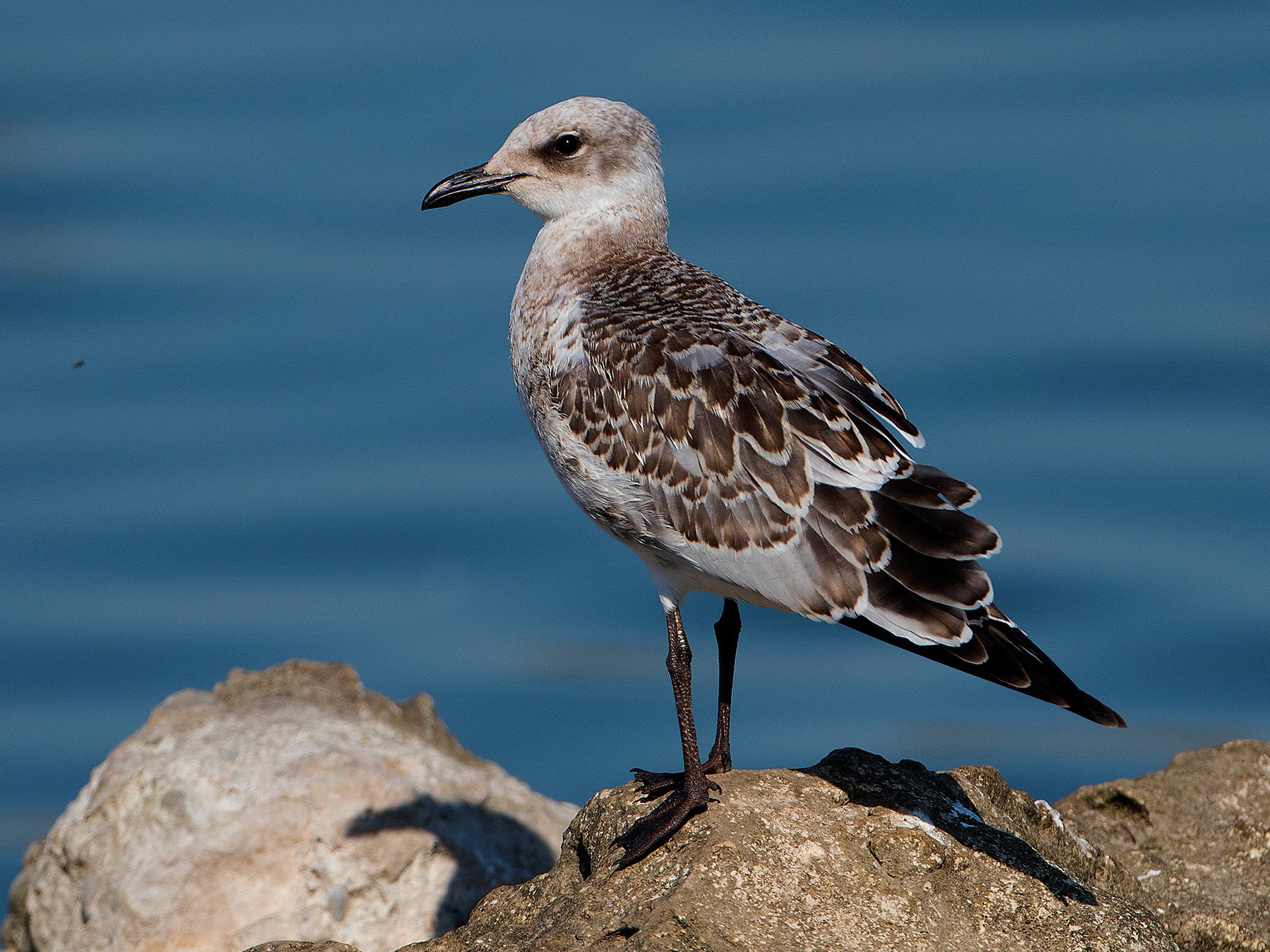
Juvenile Mediterranean gulls are distinctly different from adults, and are mottled with brownish grey and white markings on their wings, a paler whitish head and belly and greyish legs and bill. They do not acquire their full adult plumage until their second winter, when they are almost indistinguishable from mature birds, although some darker wing markings persist.
Its size
Adults- Length
- 37–40 cm
- Wingspan
- 94–102 cm
- Weight
- 220–350 g
Its song and calls
What sound does a Mediterranean Gull make?
Mediterranean gulls are not the most vocal of gull species, and their calls are not particularly remarkable or noteworthy. The most commonly heard call is a whining "yee-ah" or "ee-ar" cry, with a rising and falling pitch, heard in flight or when foraging.
- Song0:00 / 0:30
Recorded in Vaud, Switzerland · May 2023
- Flight call0:00 / 0:21
Recorded in Hauts-de-France, France · March 2026
When and where to see it
OctoberIn season
Most recorded in October
- 1. Pembrokeshire1.5%
- 2. Cornwall0.83%
- 3. Ceredigion0.75%
- 4. Bridgend0.73%
- 5. Isle of Wight0.71%
Each dot is a county, state or province: the bigger and darker, the larger the bird’s share of that place’s bird records that month. Grey dots: no regular records. The ringed point is the centre of the bird’s records this month; the arrow shows how it moved since last month, and the dashed loop its path through the year. “Arrivals” colours places where it becomes regular this month (orange) or is in its last regular month (grey). GBIF eBird Observation Dataset, 2019–2024. Map data: Natural Earth, US Census Bureau; place centres © OpenStreetMap contributors.
In your area
See when the Mediterranean Gull is recorded in your county, state or province.
How often the Mediterranean Gull turns up in the UK and Ireland through the year, from birdwatchers' records.
United Kingdom
Resident · all year · most records in July
Ireland
Resident · all year · most records in July
Show as a table
| Month | United Kingdom | Ireland |
|---|---|---|
| January | 0.10% (regular) | 0.36% (regular) |
| February | 0.14% (regular) | 0.43% (regular) |
| March | 0.17% (regular) | 0.24% (regular) |
| April | 0.19% (regular) | 0.091% (regular) |
| May | 0.12% (regular) | 0.049% (regular) |
| June | 0.16% (regular) | 0.21% (regular) |
| July | 0.30% (regular) | 0.56% (regular) |
| August | 0.24% (regular) | 0.55% (regular) |
| September | 0.20% (regular) | 0.48% (regular) |
| October | 0.20% (regular) | 0.39% (regular) |
| November | 0.13% (regular) | 0.37% (regular) |
| December | 0.095% (regular) | 0.37% (regular) |
Recorded regularly in
Worldwide: recorded regularly in 50 countries
Countries where it was recorded in at least 3 of the 6 years 2019–2024. Linked countries have their own bird list.
Data: EOD – eBird Observation Dataset (Cornell Lab of Ornithology), accessed via GBIF.org, CC BY 4.0. Records from 2019–2024, aggregated and filtered by Birdfact. How these lists are made
What is the habitat of a Mediterranean Gull?
Breeding habitats popular with Mediterranean gulls include coasts, estuaries, inland lakes and reservoirs, marshes, fields, grasslands and fields. Limited vegetation is required, and the species is well adapted to different environments, including urban landscapes as well as coastal lagoons and seashores.
In winter, inland habitats become more commonly used, with farmland, sewage works and landfill sites also frequently attracting large flocks of mixed gull species.
What is the range of a Mediterranean Gull?
While breeding was once mainly limited to coastal regions around the Black Sea, the species has spread into parts of Central Asia, and throughout western and northern Europe, from southern England in the west, to the Netherlands, Belgium and Germany in the north, and along the coasts of France, Italy, Greece and Turkey in the south.
Winters are spent mainly along Mediterranean coasts, and further across north-western Europe, and north-western Africa, although a substantial number of Mediterranean gulls remain in their Black Sea breeding grounds all year round.
Where do Mediterranean Gulls live?
The vast majority of Mediterranean gulls breed in Ukraine, with around 300,000 pairs recorded there. In western Europe, breeding populations are stable and increasing in Belgium, the Netherlands and France.
How rare are Mediterranean Gulls?
The global population of Mediterranean gulls is estimated at 300,000 to 370,000, and although they are not the most common gull species seen in the UK, sightings are not unusual, with large flocks of up to 100 birds gathering in winter on British beaches.
Until the 1950s, it was considered an extremely rare visitor, but has since become far more widespread, with 1,200 breeding pairs, and an estimated winter population of around 4,000 birds.
Where can you see Mediterranean Gulls in the UK?
Although at least 1,200 breeding pairs are present in the UK all year round, particularly at coastal colonies where they nest alongside black-headed gulls, winter is by far the best season for a sighting, with flocks of up to 100 birds visiting beaches in the east of England, in particular in Hampshire, Kent and Norfolk.
Migration
Do Mediterranean Gulls migrate?
Mediterranean gulls are largely migratory, with many birds that breed along the coastline of the Black Sea heading westwards, in particular to the Spanish region of Catalonia during winter.
Tips for seeing it
- Look for their distinctive white wingtips in flight
- Listen for their nasal 'yeouw' call, different from other gulls
- Check coastal lagoons and estuaries during the winter months
- In the UK, visit southeast coastal areas where they are increasingly common
What it eats
What do Mediterranean Gulls eat?
The main natural diet of Mediterranean gulls includes aquatic insects, small fish, beetles, worms and some small rodents.
Carrion, offal and waste scraps are also eaten in more densely populated coastal regions, and occasional reports of large flocks of foraging Mediterranean gulls at pig farms and sewage works have been recorded.
What do Mediterranean Gull chicks eat?
Until they are able to fend for themselves, young Mediterranean gulls depend on being fed regurgitated food by their parents, so their diet is identical to whatever the adult birds have found when foraging, for example small fish, insects and larvae and worms, crustaceans and molluscs.
Nesting and breeding
Where do Mediterranean Gulls nest?
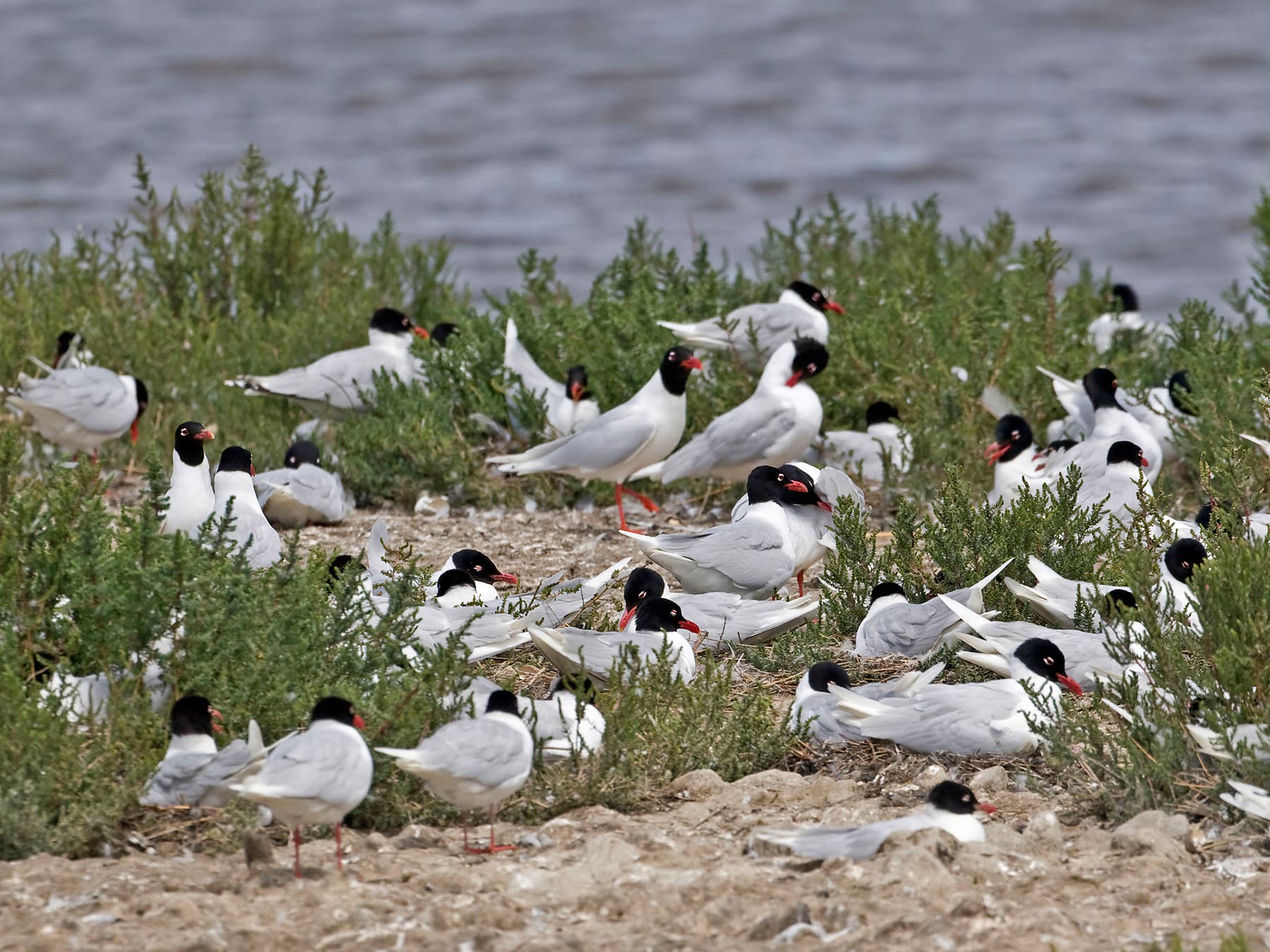
Ground-level nests are commonly constructed by Mediterranean gulls, and these are most frequently built as part of a larger colony, with up to several hundred other pairs nearby.
Nests are shallow depressions in the ground, lined with grasses or reeds, and located in sparsely vegetated terrain, on average only around 50 to 60 cm (20 in to 25 in) from another pair’s nest.
When do Mediterranean Gulls nest?
Mediterranean gulls lay their eggs in the first two weeks of May, timed in sync with other nearby nesting pairs. Incubation takes around 23 to 26 days.
What do Mediterranean Gull eggs look like?
Eggs laid by Mediterranean gulls are 54 mm by 38 mm (2.1 in by 1.5 in), and are creamy-olive in colour, marked heavily with dark brown scrawls.
A typical clutch consists of 2 to 3 eggs, which are incubated by both the male and female in turn.
Do Mediterranean Gulls mate for life?
Mediterranean gulls form lasting pair bonds, and remain together for one or more breeding season, depending on the success of their initial brood.
Behaviour
Are Mediterranean Gulls aggressive?
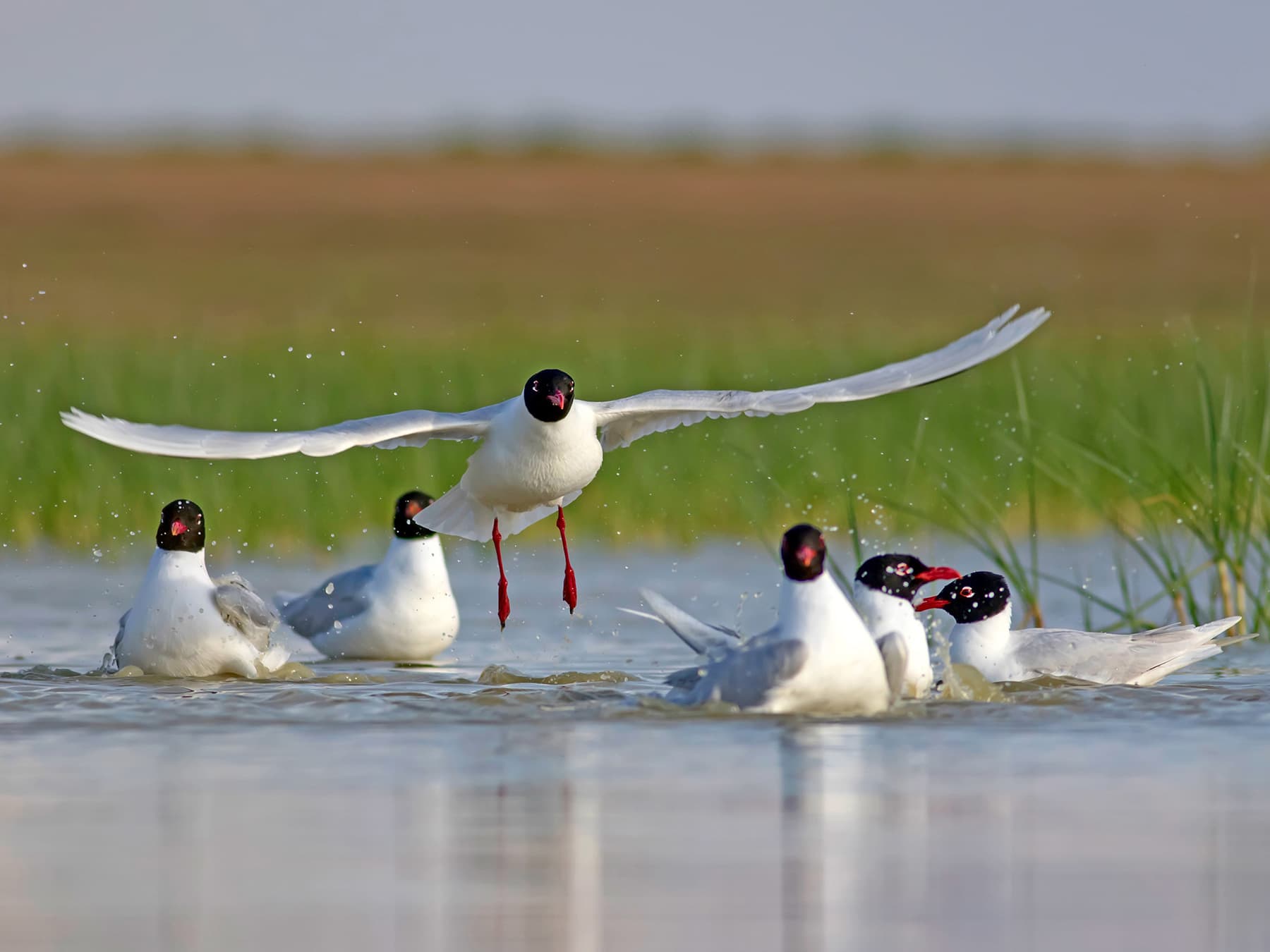
Some degree of aggression and territorial behaviour may be shown around the immediate nest site of a Mediterranean gull pair. Pairs breed in close proximity to other Mediterranean gulls, as well as a number of different seabirds, including black-headed gulls and sandwich terns, and as the larger, more dominant species, Mediterranean gulls are often seen to show aggression to the smaller birds.
Where do Mediterranean Gulls sleep at night?
Overnight roosting spots of Mediterranean gulls include on water, including inland lakes and reservoirs.
Large flocks of gulls gather together each night outside of the breeding season, with roosts on water offering protection from the threat of predatory land mammals, such as foxes, badgers and stoats.
Lifespan and predators
How long do Mediterranean Gulls live?
Around 15 years is a likely expected lifespan for a Mediterranean gull, although records of older birds exist, including one that reached 18 years and 2 months, reported in 2009.
First-time breeding is thought to be between two and three years of age.
What are the predators of Mediterranean Gulls?
Larger gull species are the chief predator of Mediterranean gulls and their eggs and young, in particular Caspian gulls and herring gulls.
Corvids and harriers are another threat to young Mediterranean gulls and the success of their breeding each season.
Are Mediterranean Gulls protected?
Mediterranean gulls are protected under the Wildlife and Countryside Act, 1981, making it illegal to kill, injure or take one into captivity.
Additionally, as Schedule 1 birds under this act, it is also an offence to disturb the nests, eggs or young of Mediterranean gulls.
Are Mediterranean Gulls endangered?
Mediterranean gulls have Amber status in the British Birds of Conservation Concern list, but are globally considered a species of least concern. Numbers in the UK are increasing steadily, and there are no immediate threats to habitat due to their ability to adapt easily to new surroundings.
Conservation
While currently listed as Least Concern, Mediterranean Gulls face threats from habitat loss and pollution in coastal areas.
Conservation efforts focus on protecting breeding sites and managing wetland habitats. Climate change may affect their distribution and breeding success in the future.
How big are Mediterranean Gulls?
Although similar in appearance to the black-headed gull, Mediterranean gulls are slightly larger, more closely comparable to the common gull, although the Mediterranean gull is stockier. Males and females are the same size, although juveniles are initially substantially larger until they acquire their adult plumage.
- Length: 36 cm to 38 cm (14.2 in to 15 in)
- Wingspan: 92 cm to 100 cm (36.2 in to 39.4 in)
- Weight: 230 g to 280 g (8.1 oz to 9.9 oz)
More photos
4 photos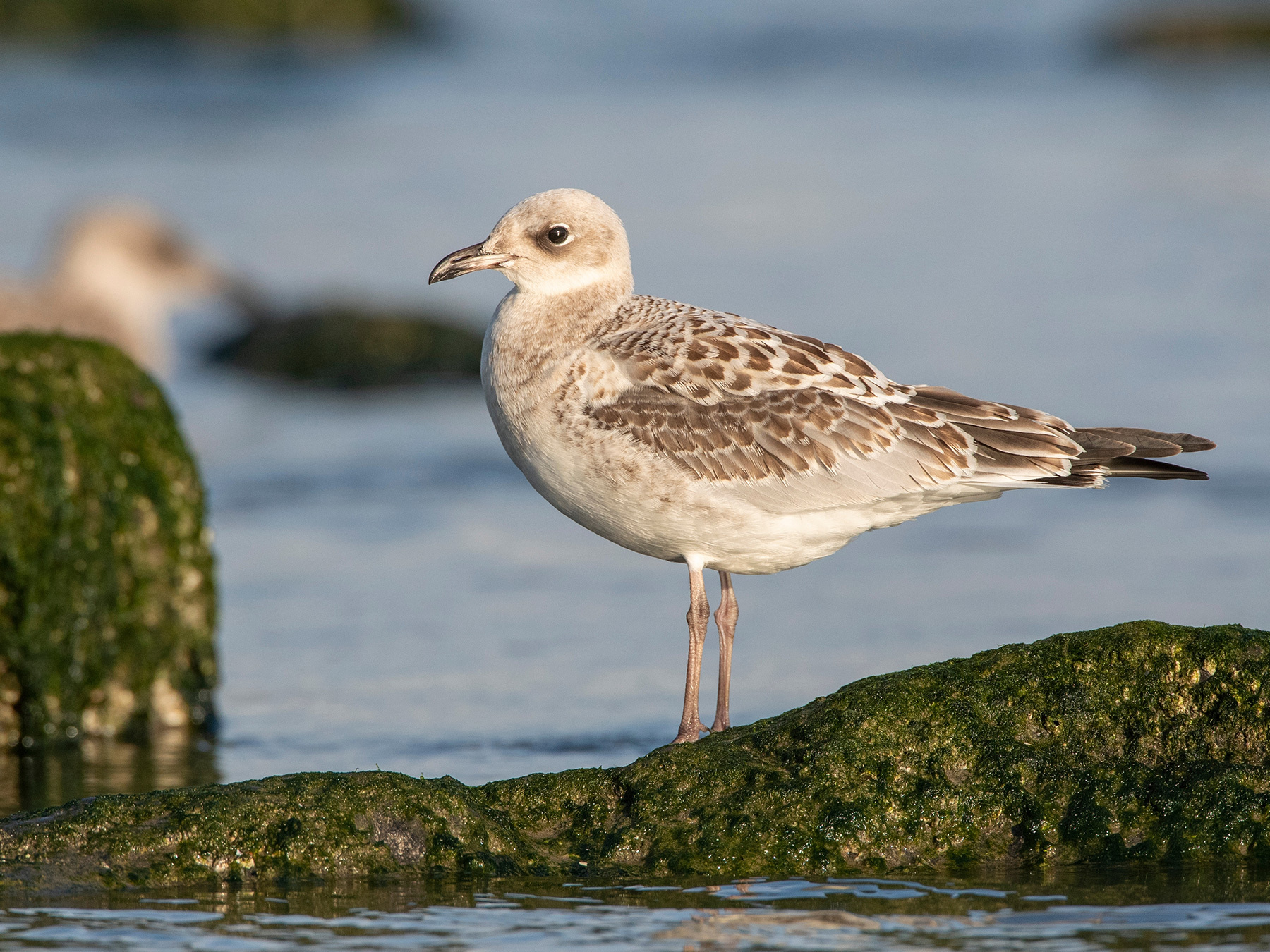
Mediterranean Gull guides
6 guides- What Do Seagulls Actually Eat? Diet Secrets of These Clever Scavengers
- Do Seagulls Migrate? (All You Need To Know)
- Baby Seagulls: All You Need to Know (with Pictures)
- Seagull Nesting Secrets: Unveiling the Hidden Sanctuaries by the Sea
- What is a Group of Seagulls Called? (Complete List + Why?)
- How Long Do Seagulls Live?
Quick facts
- Length
- 37–40 cm
- Wingspan
- 94–102 cm
- Weight
- 220–350 g
- Lifespan
- 10–15 years
- Family
- Gulls & Terns
- Migration
- Partial migrant
- Global status (IUCN)
- Least Concern
- World population
- 236,000 - 656,000 mature individuals (European population)
- Population trend
- Decreasing
- Also called
- Black-headed Mediterranean Gull
- Scientific name
- Ichthyaetus melanocephalus
Sources
3- 1BirdLife International. 2019. Larus melanocephalus. The IUCN Red List of Threatened Species 2019: e.T22694443A154572305. Source (opens in a new tab)
- 2BirdLife International. 2019. Larus melanocephalus. The IUCN Red List of Threatened Species 2019: e.T22694443A154572305. Source (opens in a new tab)
- 3BirdLife International. 2019. Larus melanocephalus. The IUCN Red List of Threatened Species 2019: e.T22694443A154572305. Source (opens in a new tab)

Checked by
Nathan Cope, founder and editor
Nathan founded Birdfact and leads its writers and contributors in the UK, the US and Canada. He has watched and studied birds for more than ten years, and checks every article and species guide before it’s published.