


Woodlark
Wood Lark · Lullula arborea
By the Birdfact teamChecked by Nathan Cope
On this page14 sections
How to recognise it
What do Woodlarks look like
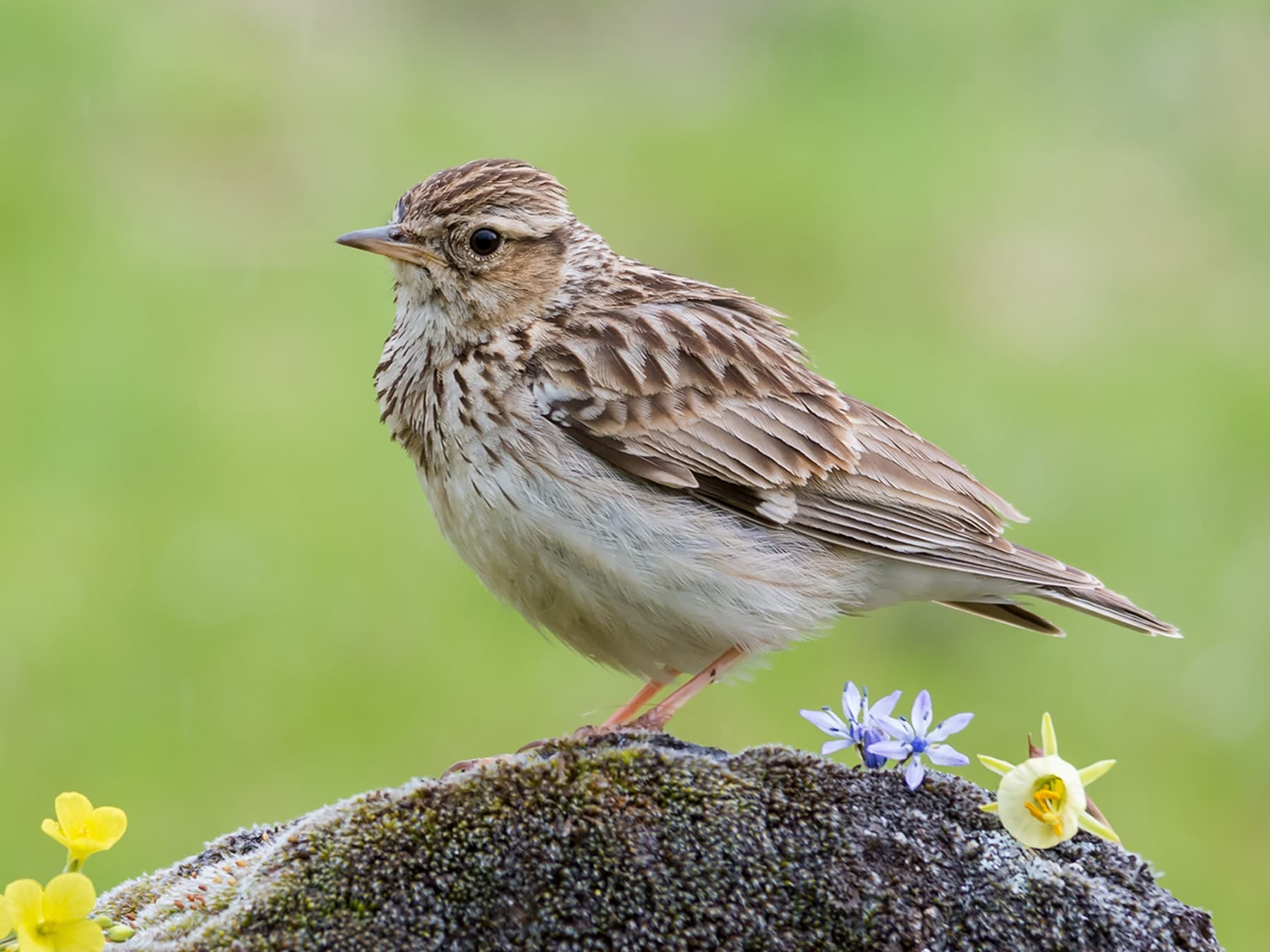
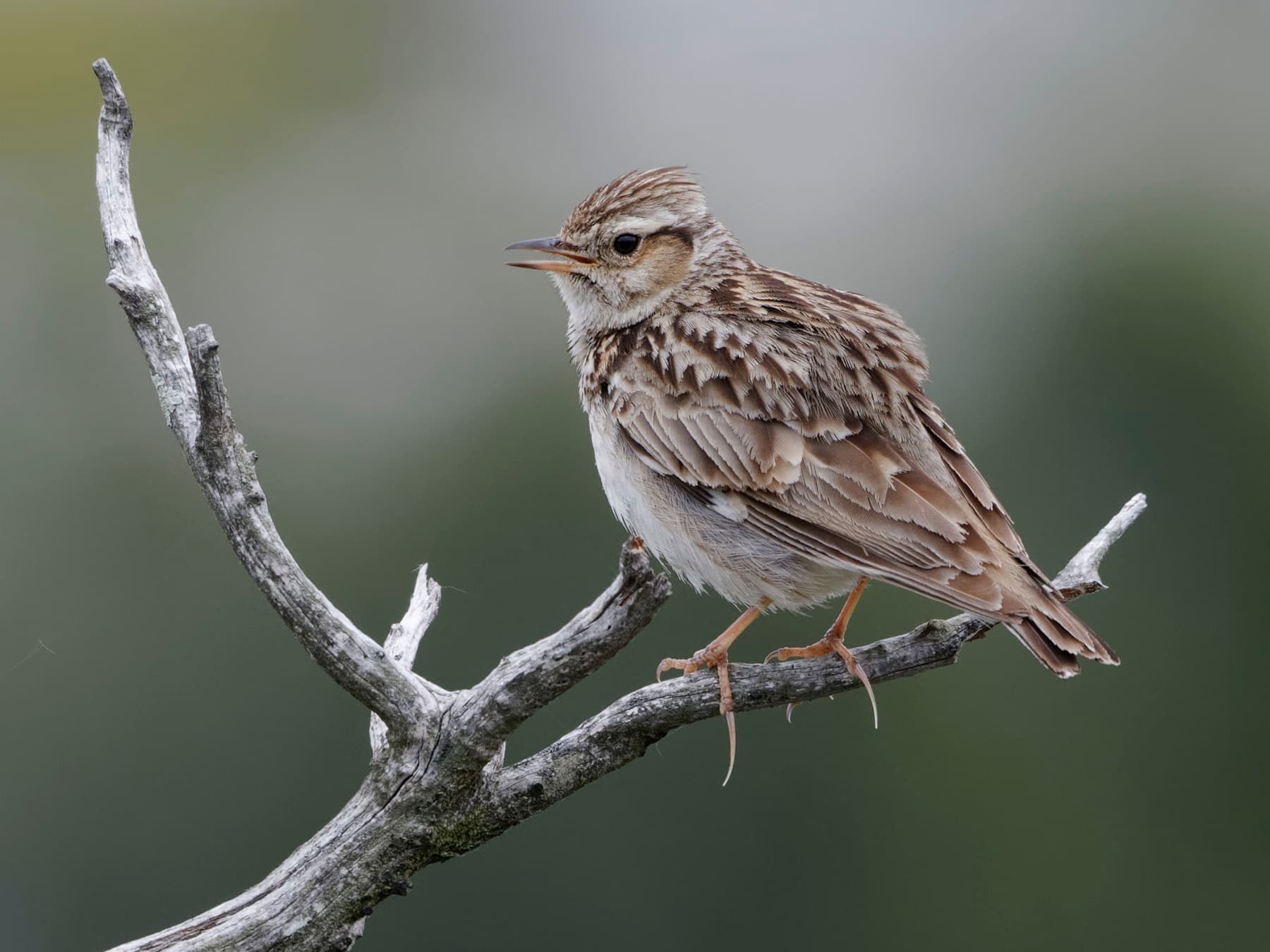
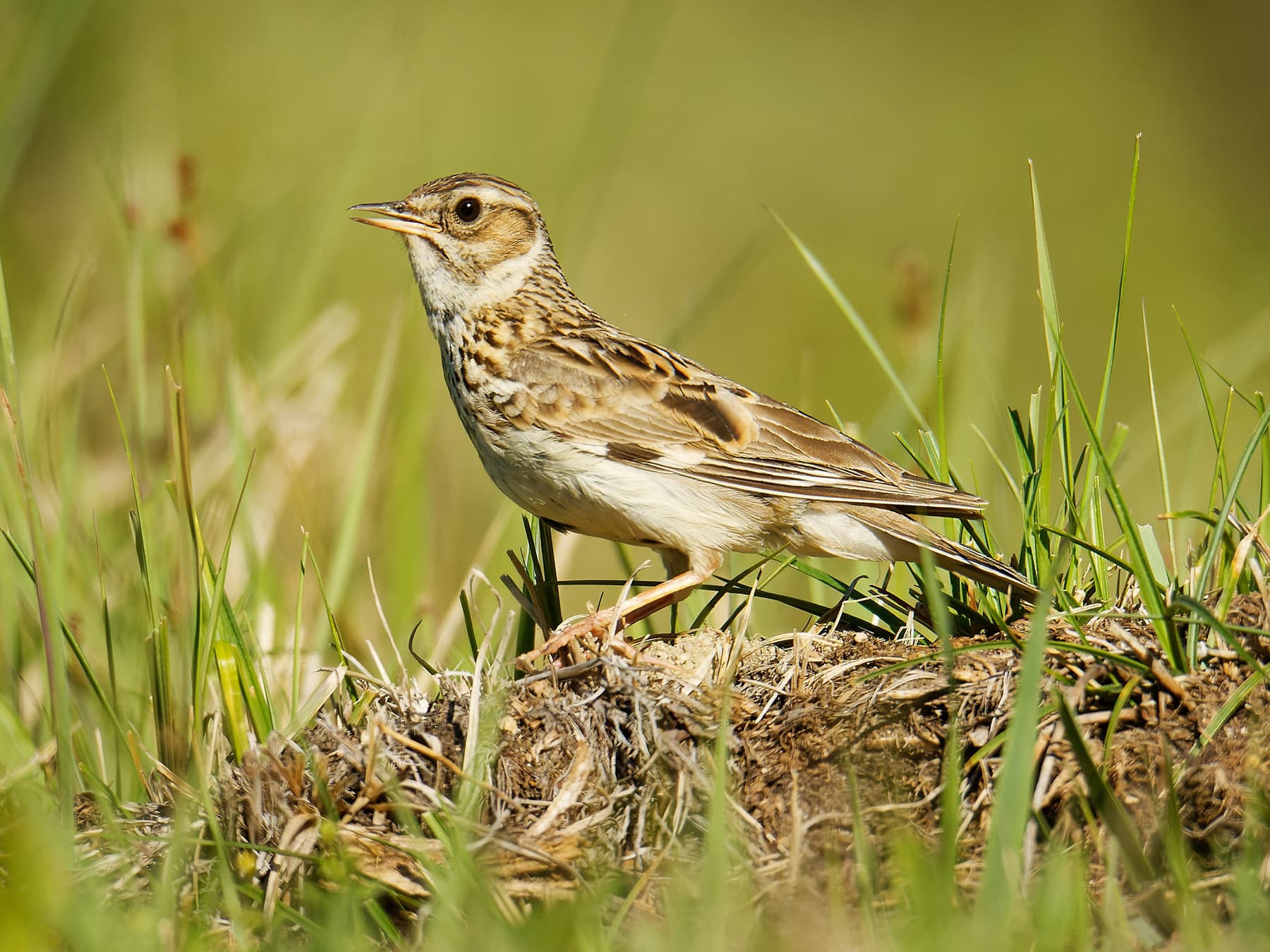
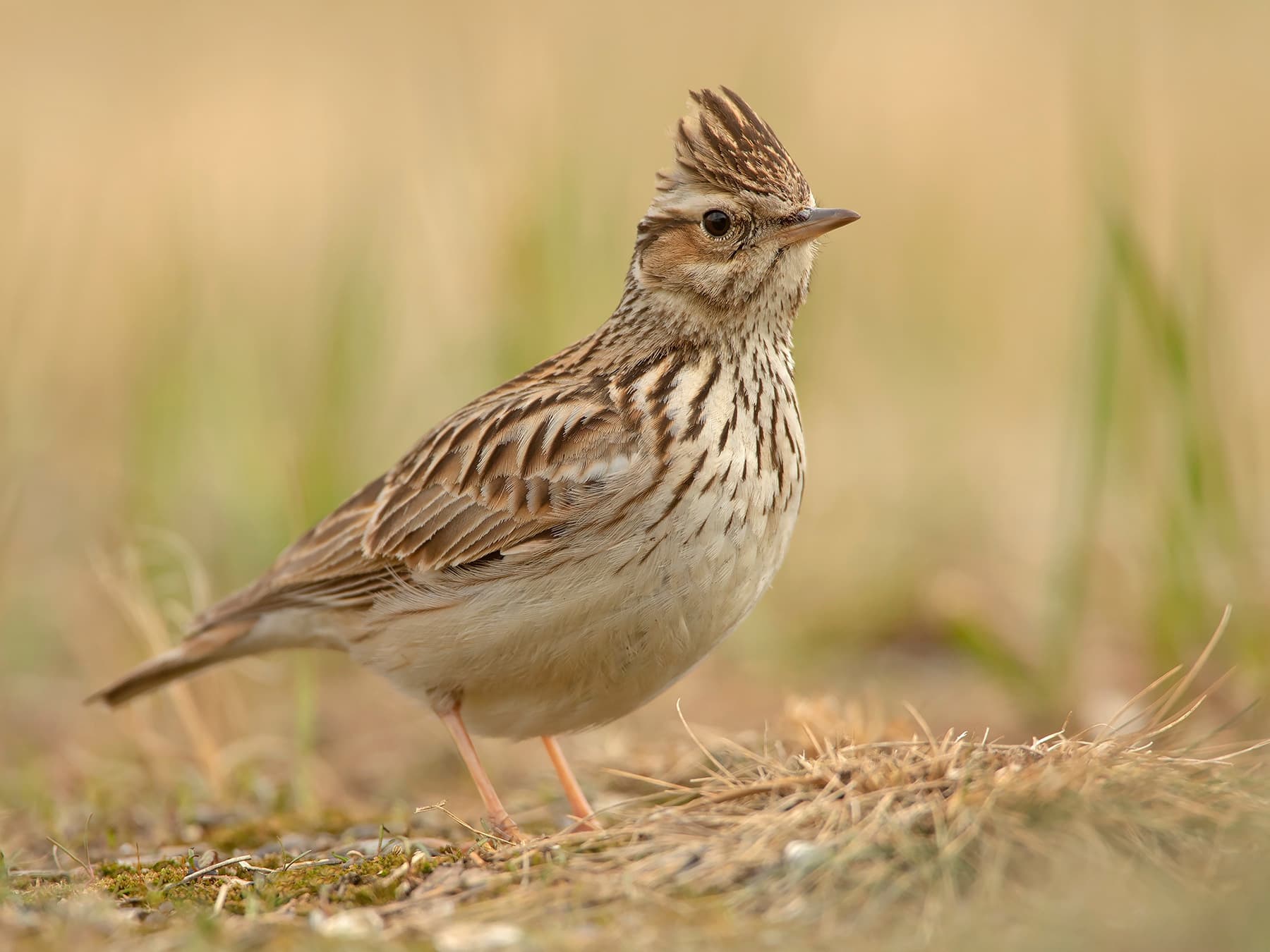
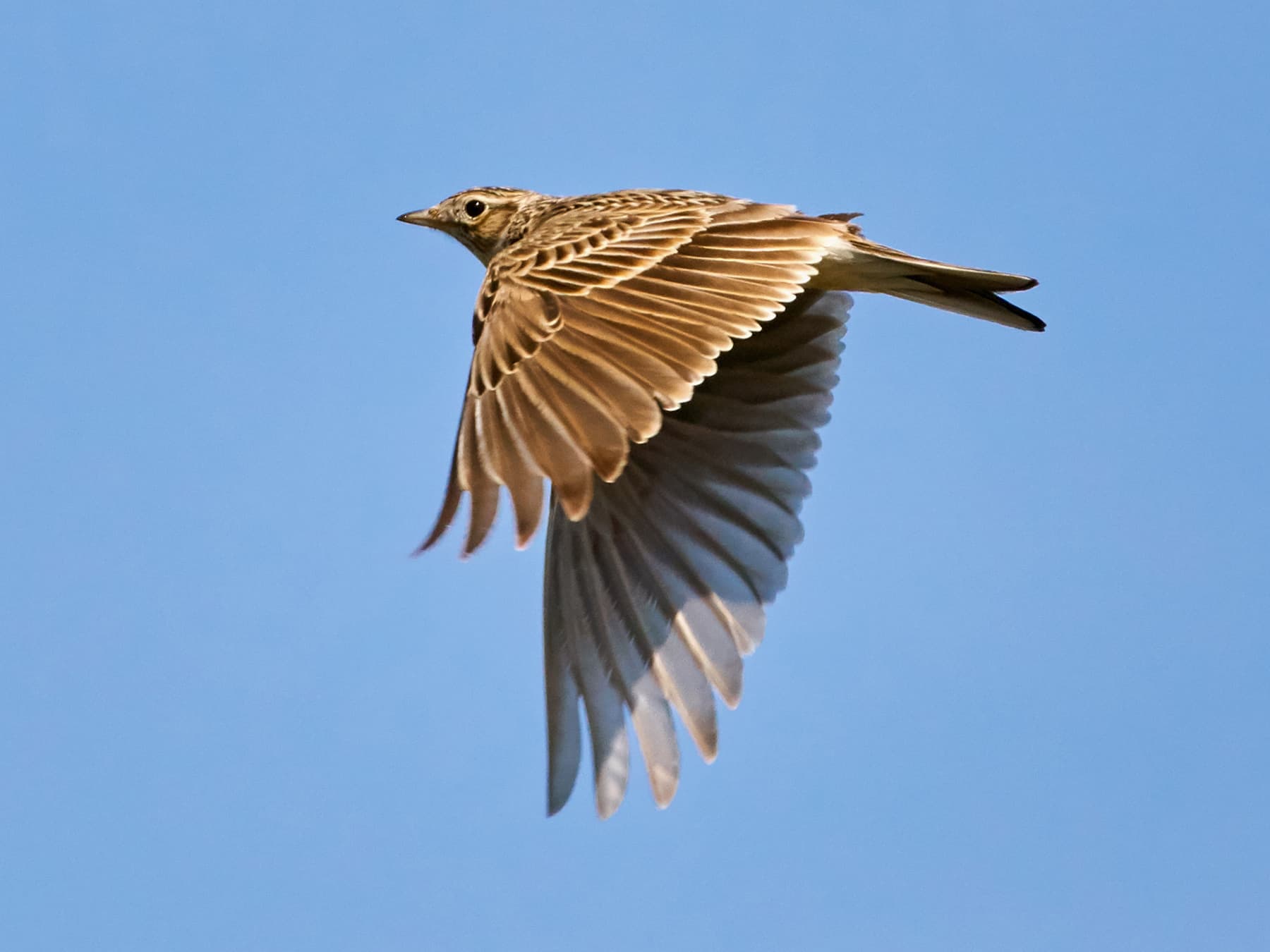
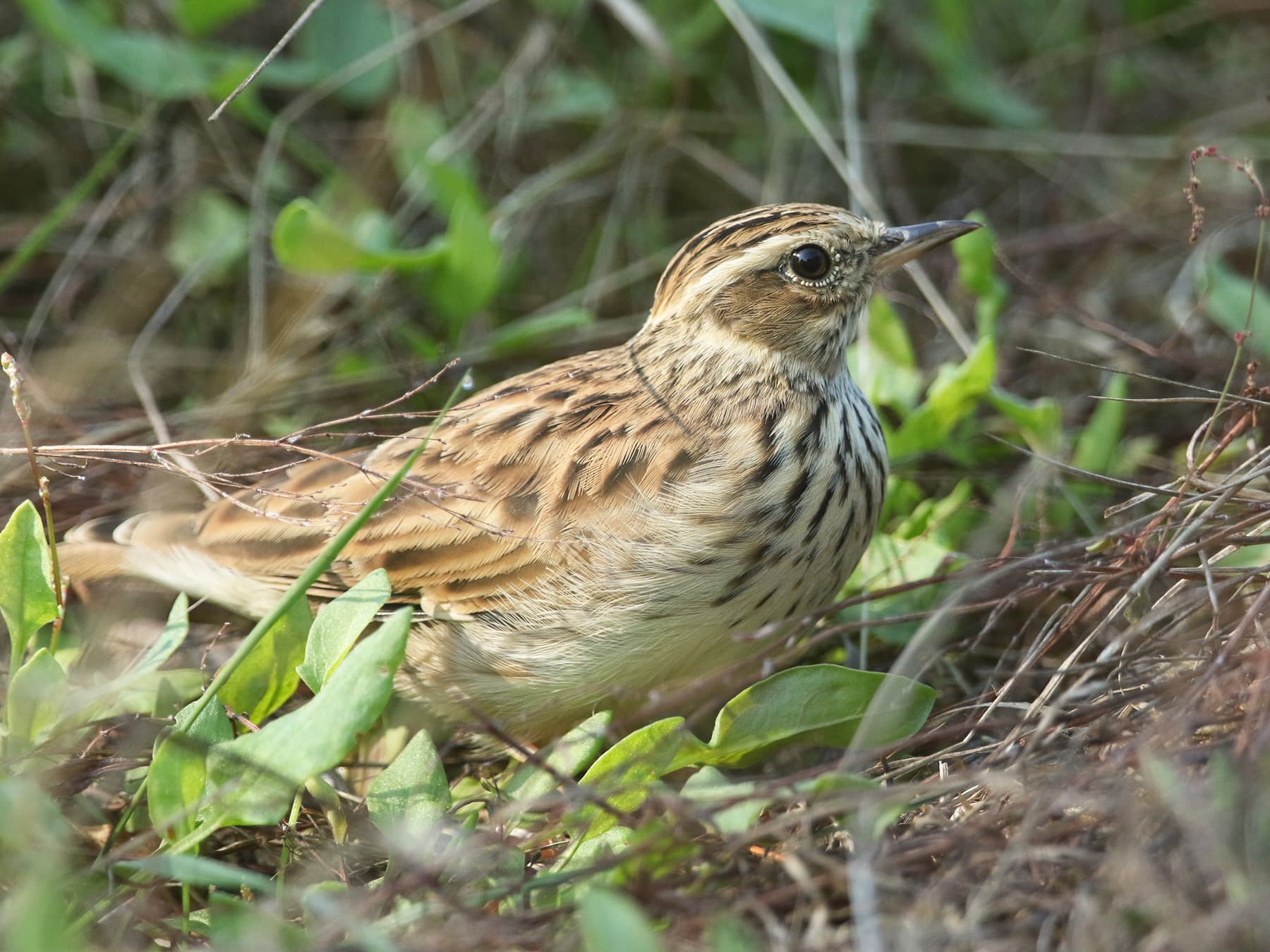
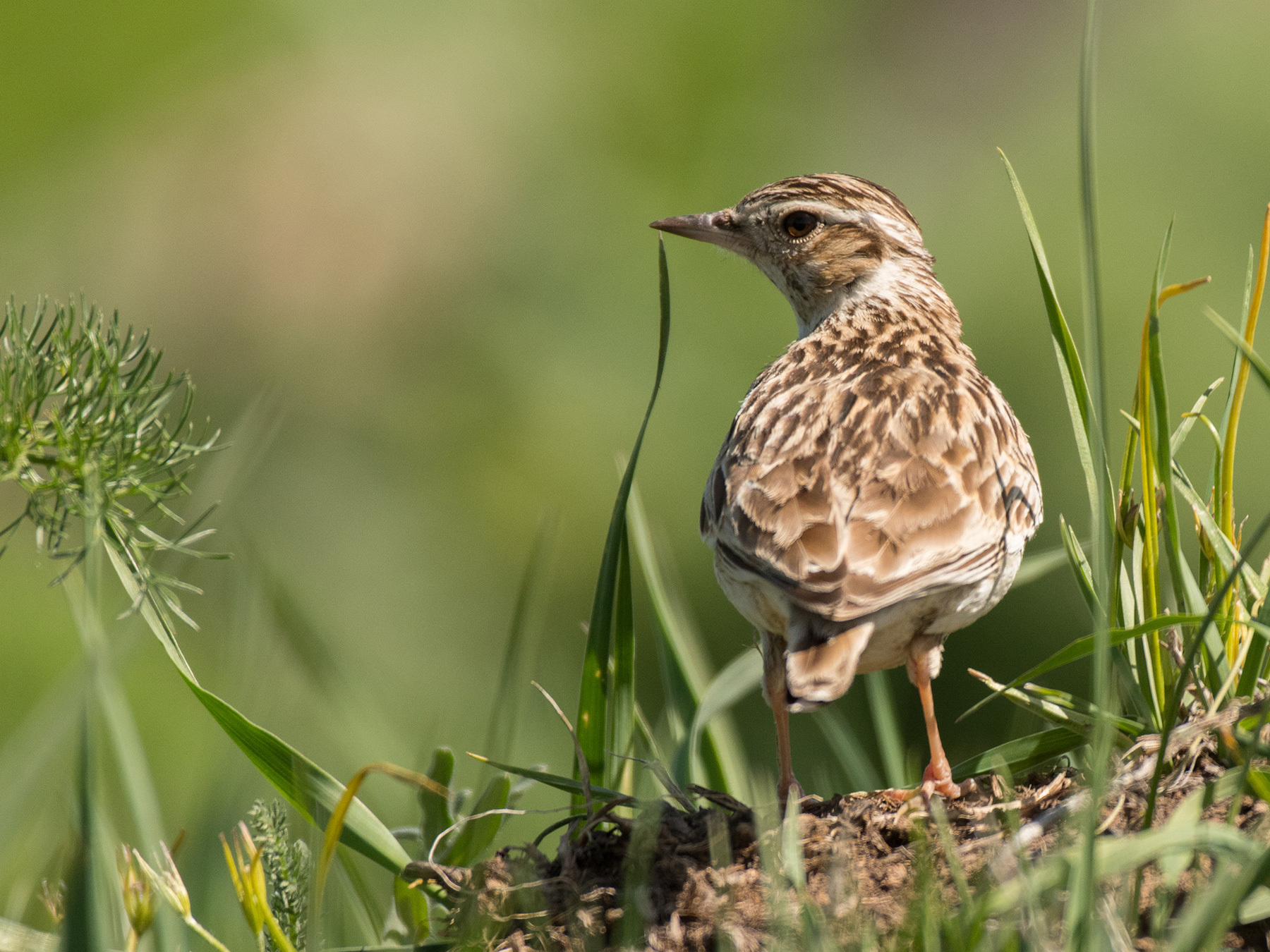
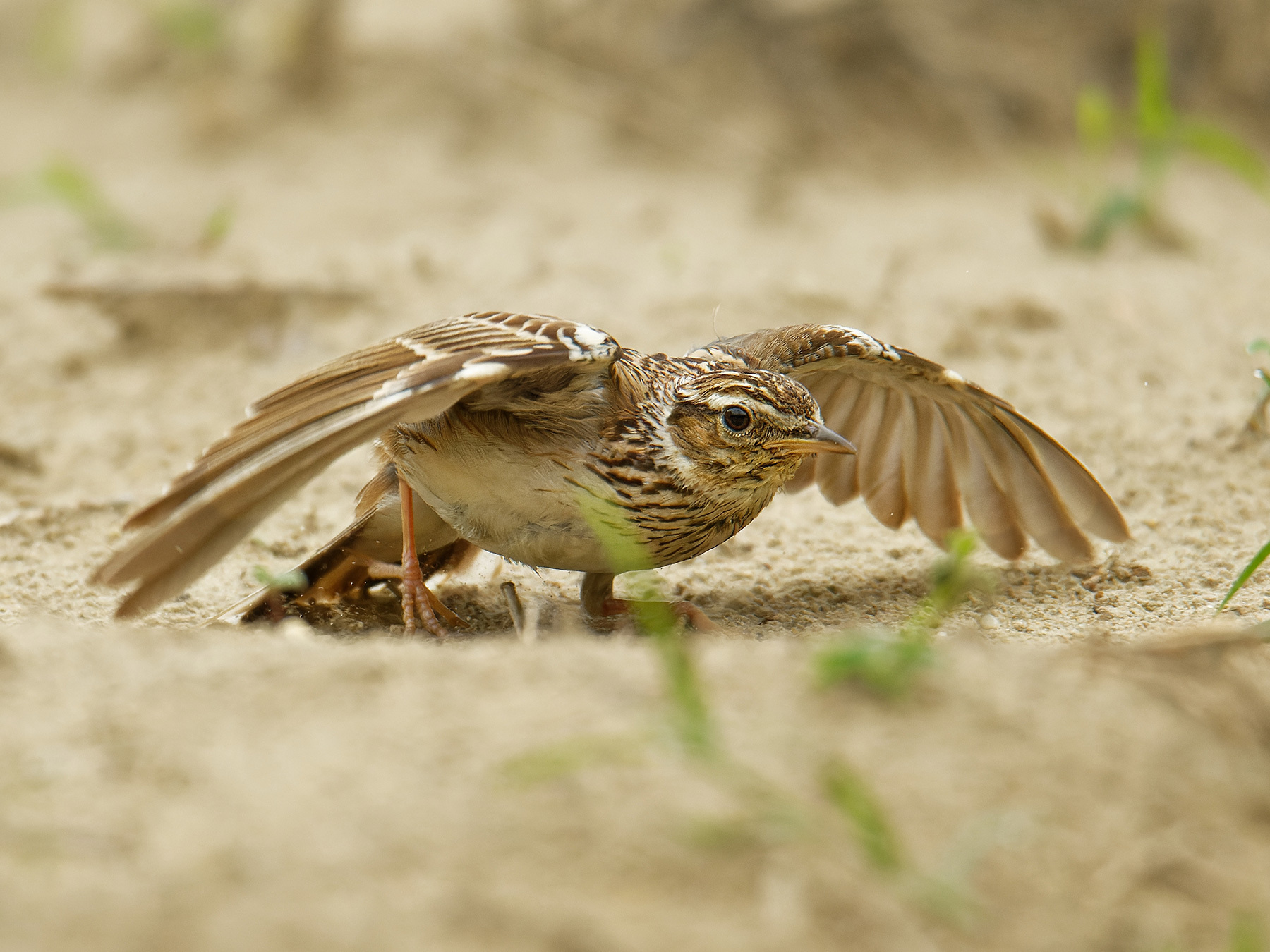
The Woodlark is a small, short-tailed species with a short crest and a prominent white eyebrow stripe (supercilium) that reaches the nape. They have pale, whitish underparts and a buff-coloured back with dark streaking. A black and white wing patch is visible in flight.
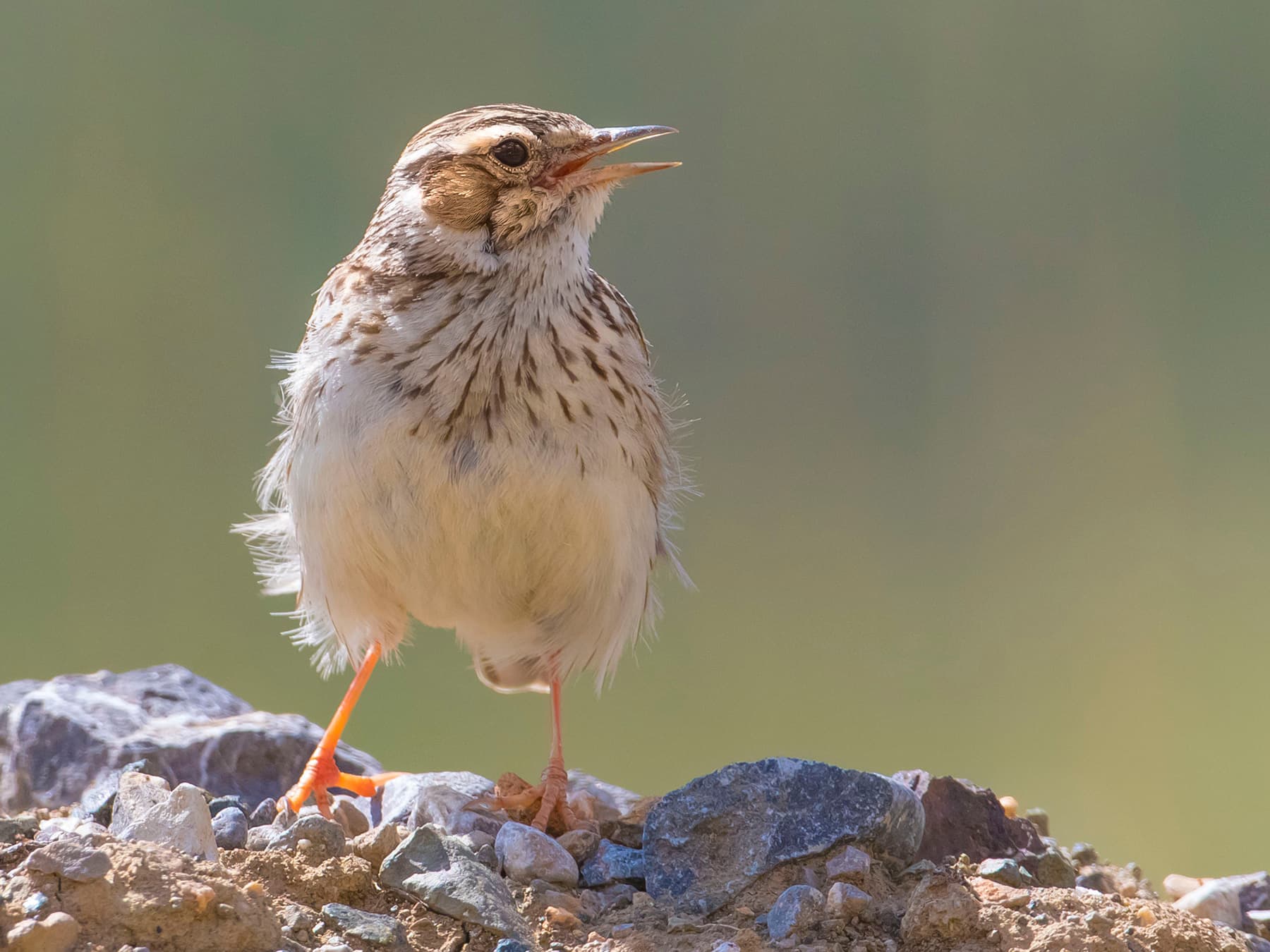
Woodlarks are stout little birds, most at home on the ground. Their legs and feet are pinkish brown and set well back toward the tail. Their straight, medium-length bill is brownish, with a pinkish base to the lower half (mandible).
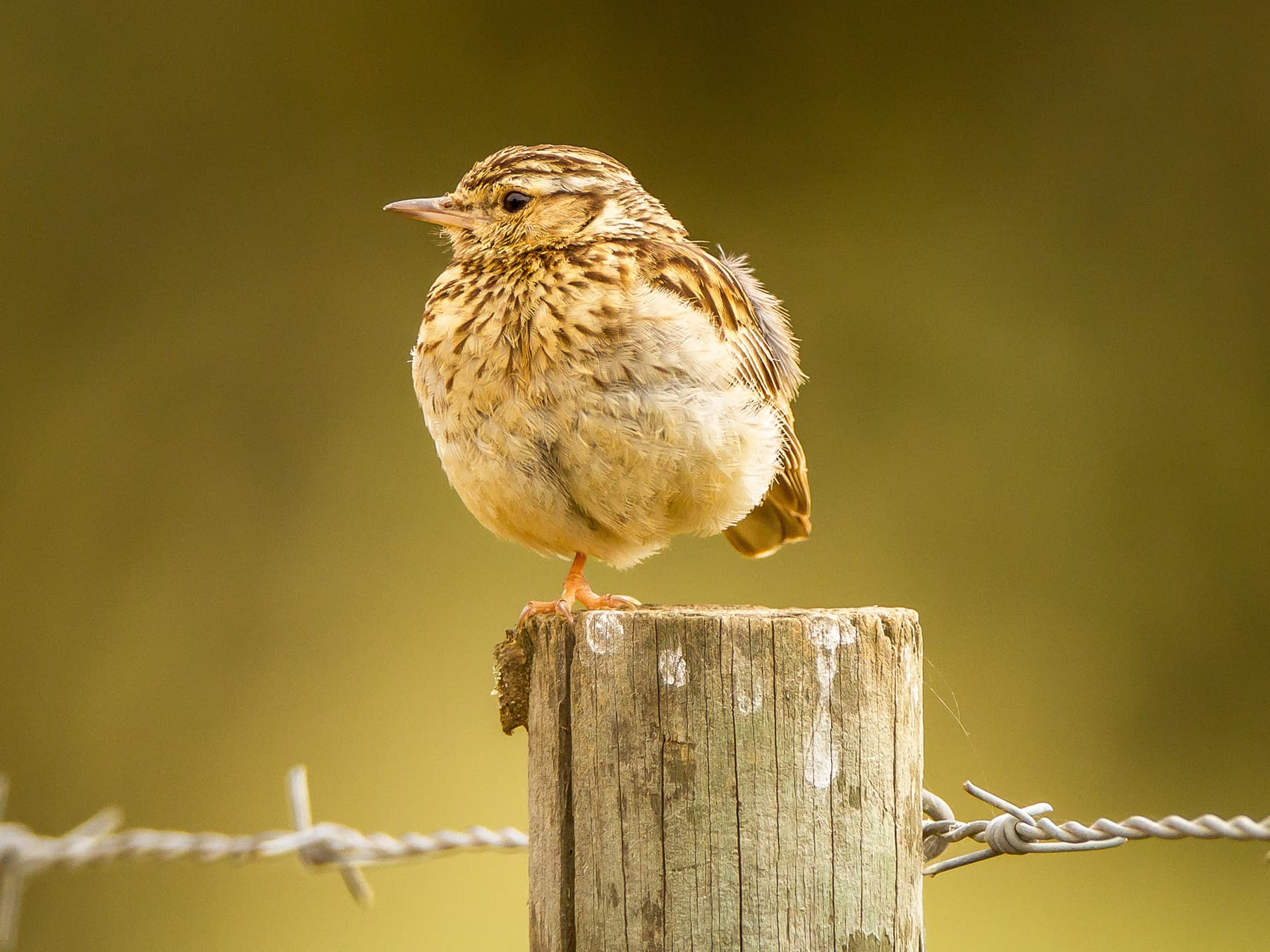
Female Woodlarks look very similar to males but tend to be slightly smaller. Juveniles can be identified by their spotted (not streaked) breast and pale-edged plumage on the back and crown. These contrasting feathers create a scalloped or scaled appearance.
The Skylark is the most similar bird you are likely to encounter in the UK, although that species is larger and longer-tailed. More differences between these larks are covered later in this article.
How big are Woodlarks
The Woodlark is a small songbird, roughly the size of a House Sparrow.
Length
Woodlarks are compact birds with noticeably short tails. Adults have a total body length of just 15 centimetres.
Weight
Adult Woodlarks weigh 23 to 35 grams.
Wingspan
These birds have relatively short and broadly rounded wings. Most adults have a wingspan of 27 to 30 centimetres.
Its size
Adults- Length
- 15–17 cm
- Wingspan
- 27–30 cm
- Weight
- 23–35 g
Its song and calls
What sound does a Woodlark make?
Woodlarks have a pleasant three-syllabled ‘t-lu-i’ call. Males produce a rising and accelerating liquid whistling song from the ground, a perch, or the air.
- Song0:00 / 1:58
Recorded in Corsica, France · April 2024
- Flight call0:00 / 0:10
Recorded in Normandie, France · October 2021
When and where to see it
OctoberArriving
Most recorded in October
- 1. Surrey0.22%
- 2. Suffolk0.18%
- 3. Vale of Glamorgan0.10%
- 4. West Sussex0.10%
- 5. Berkshireunder 0.1%
Each dot is a county, state or province: the bigger and darker, the larger the bird’s share of that place’s bird records that month. Grey dots: no regular records. The ringed point is the centre of the bird’s records this month; the arrow shows how it moved since last month, and the dashed loop its path through the year. “Arrivals” colours places where it becomes regular this month (orange) or is in its last regular month (grey). GBIF eBird Observation Dataset, 2019–2024. Map data: Natural Earth, US Census Bureau; place centres © OpenStreetMap contributors.
In your area
See when the Woodlark is recorded in your county, state or province.
How often the Woodlark turns up in the UK through the year, from birdwatchers' records.
United Kingdom
Resident · all year · most records in May
Show as a table
| Month | United Kingdom |
|---|---|
| January | 0.008% (regular) |
| February | 0.043% (regular) |
| March | 0.052% (regular) |
| April | 0.047% (regular) |
| May | 0.054% (regular) |
| June | 0.046% (regular) |
| July | 0.015% (regular) |
| August | 0.007% (regular) |
| September | 0.012% (regular) |
| October | 0.024% (regular) |
| November | 0.011% (regular) |
| December | 0.005% (regular) |
Recorded regularly in
Worldwide: recorded regularly in 51 countries
Countries where it was recorded in at least 3 of the 6 years 2019–2024. Linked countries have their own bird list.
Europe (39)
- Åland Islands
- Albania
- Andorra
- Austria
- Belarus
- Belgium
- Bosnia & Herzegovina
- Bulgaria
- Croatia
- Czechia
- Denmark
- Estonia
- Finland
- France
- Germany
- Greece
- Hungary
- Italy
- Kosovo
- Latvia
- Lithuania
- Luxembourg
- Moldova
- Montenegro
- Netherlands
- North Macedonia
- Norway
- Poland
- Portugal
- Romania
- Russia
- Serbia
- Slovakia
- Slovenia
- Spain
- Sweden
- Switzerland
- Ukraine
- United Kingdom
Asia (10)
- Armenia
- Azerbaijan
- Cyprus
- Georgia
- Iran
- Israel
- Jordan
- Lebanon
- Palestinian Territories
- Turkey
Data: EOD – eBird Observation Dataset (Cornell Lab of Ornithology), accessed via GBIF.org, CC BY 4.0. Records from 2019–2024, aggregated and filtered by Birdfact. How these lists are made
What is the habitat of a Woodlark?
Woodlarks prefer natural habitats with sandy soils over farmland and managed areas. Ideal habitats contain perching sites, bare patches of ground for foraging, and denser vegetation for nesting. Look out for them in heathlands, open woodlands, forest clearings, and woodland edges.
What is the range of a Woodlark?
Woodlarks are widespread in Europe, extending into Western Asia, the Middle East, and North Africa. They have a patchy distribution in parts of Southern and Eastern England and Northern Wales.
Where do Woodlarks live?
Woodlarks are largely terrestrial. They forage, nest, and sleep on the ground or among low vegetation. They will ascend onto prominent perches and tree limbs to sing where their voice carries further.
How rare are Woodlarks?
Woodlarks are a rare species in the United Kingdom, with a limited range and a breeding population of about 3000 pairs. Despite their scarcity, the species has recovered well from a low of about 250 pairs in the 1980s.
Where can you see Woodlarks in the UK?
Woodlarks are mostly limited to a few isolated areas of eastern and southern England. They are best known from the following sites:
- Breckland - Norfolk & Suffolk
- New Forest - Hampshire & Wiltshire
- Surrey heathlands
- RSPB Minsmere - Suffolk
- RSPB North Warren - Suffolk
Migration
Do Woodlarks migrate?
Woodlarks are mostly resident in the United Kingdom and elsewhere in Western Europe. They are migratory in the north and east of their range, with birds from Russia and Northern Europe migrating south for the winter.
Are Woodlarks native to the UK?
Woodlarks are native to the United Kingdom. In the late 1800s, they were immortalised in the poem: ‘The Woodlark’ by the English poet Gerard Manley Hopkins.
Tips for seeing it
- Listen for their melodious, flute-like song, often given in flight
- Look for them in open woodlands, heathlands, and forest edges
- Observe their distinctive short crest and white-edged tail in flight
- In the UK, visit heathlands in southern England for the best chances of spotting
What it eats
What do Woodlarks eat?
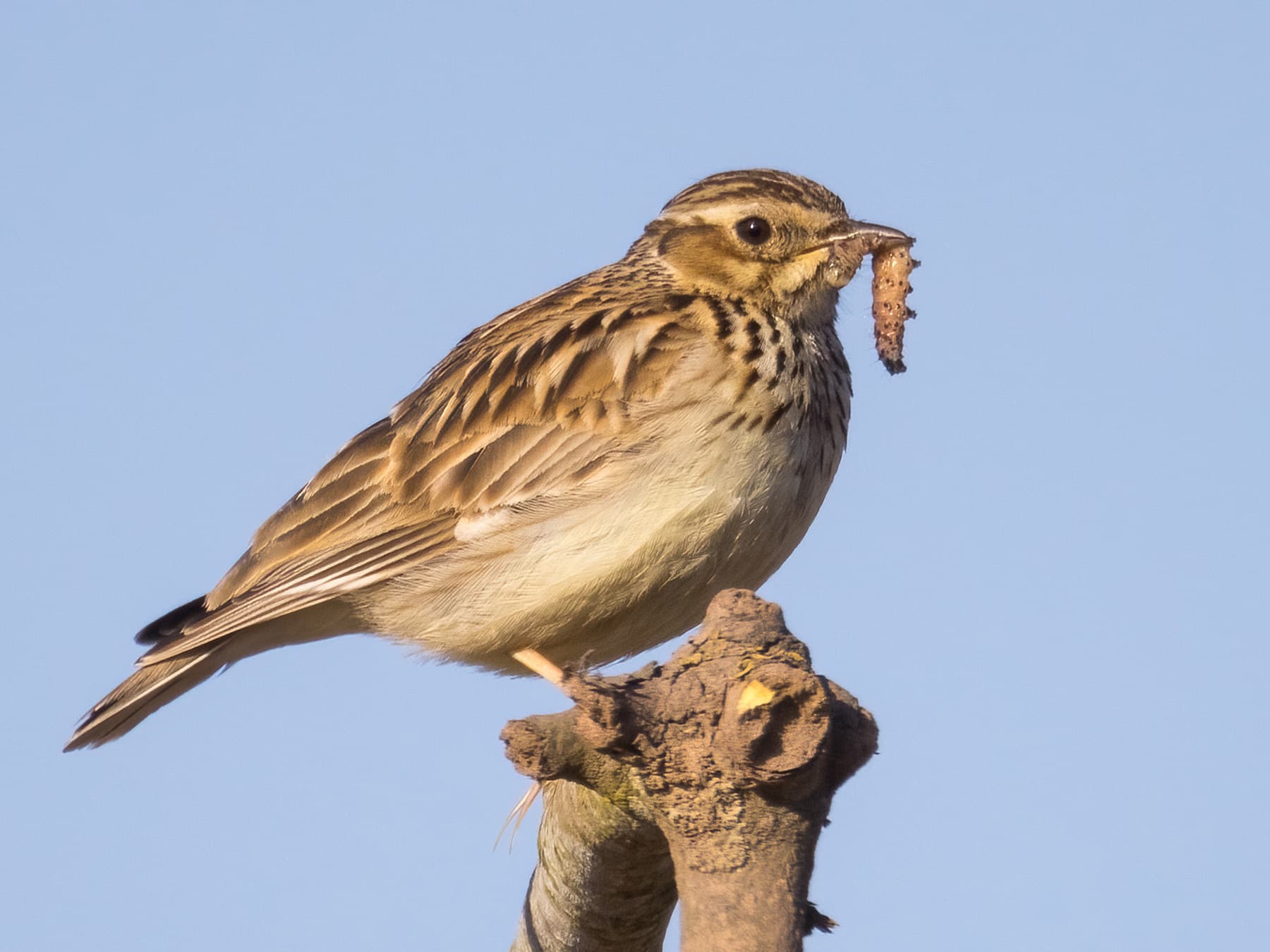
Woodlarks are omnivorous birds that forage on the ground or in low vegetation. Invertebrates like spiders, caterpillars, and beetles are dominant in the summer, and seeds and leaves are most important in the winter.
What do Woodlark chicks eat?
Woodlark chicks eat insects, especially caterpillars, beetles, and flies. These are caught within a few hundred meters of the nest and provided by both parents.
Nesting and breeding
Where do Woodlarks nest?
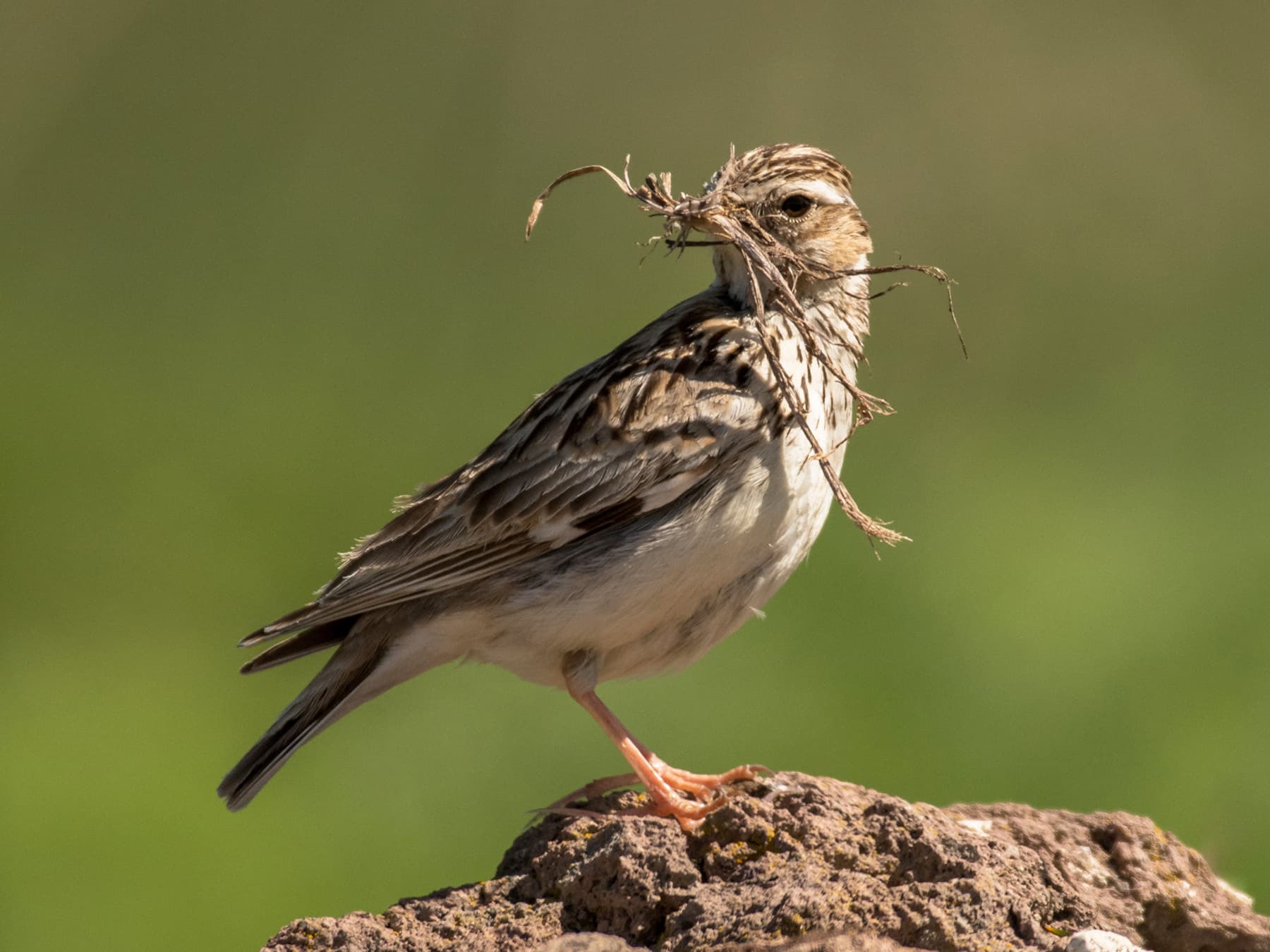
Woodlarks nest on the ground in areas with sandy soils, usually under heather or grass tussocks. The nest is a scrape, excavated by the female and lined with soft plant material like moss, grass, and leaves.
When do Woodlarks nest?
Woodlarks breed in their first year as adults. They nest between March and July, producing two or even three broods each season. The female Woodlark incubates the eggs alone for 12 to 15 days, and the chicks will begin to leave the nest about ten days later, several days before they are ready to fly.
What do Woodlark eggs look like?
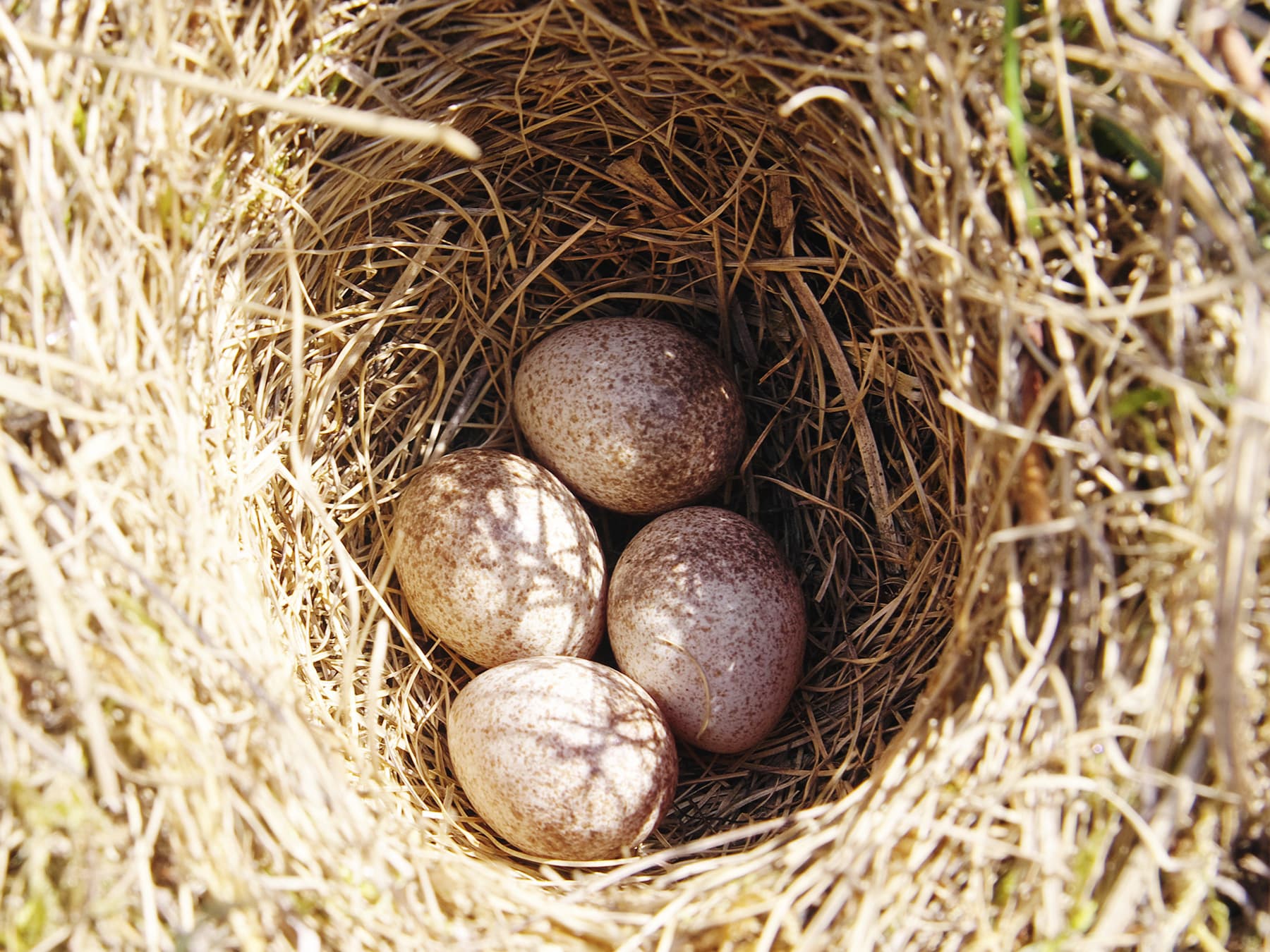
Woodlarks usually lay three to five beautifully patterned whitish eggs with reddish speckles. Each egg measures approximately 21 millimetres long and 16 millimetres wide.
Do Woodlarks mate for life?
Woodlarks are not known to mate for life. They are generally monogamous, although pair bonds last only a single season.
Behaviour
Where do Woodlarks sleep at night?
Woodlarks roost on the ground among heather and tall grass. Taller vegetation provides them with some protection from predators and shelter from bad weather.
Lifespan and predators
How long do Woodlarks live?
Woodlarks can live for at least seven years, although their average life expectancy is about three years in the wild.
What are the predators of Woodlarks?
Adult Woodlarks are most vulnerable to agile birds of prey like the Sparrowhawk. The following nest predators were recorded in studies in the United Kingdom and the Netherlands:
- Fox
- Hedgehog
- Domestic cat
- Domestic Dog
- Adder
- Jay
- Carrion Crow
Are Woodlarks protected?
Woodlarks in the United Kingdom are protected by the Wildlife and Countryside Act 1981 (Schedule 1).
Are Woodlarks endangered?
Woodlarks are not endangered. Despite their relative rarity, these birds have a green conservation status in the United Kingdom. Their world population is believed to be increasing, and they are assessed as ‘Least Concern’ species on the IUCN Red List.
Conservation
While listed as Least Concern globally, Woodlarks face local declines due to habitat loss and agricultural intensification.
Conservation efforts focus on maintaining suitable breeding habitats, particularly in Western Europe, where the species has experienced historical declines.
Similar birds
Often mistaken for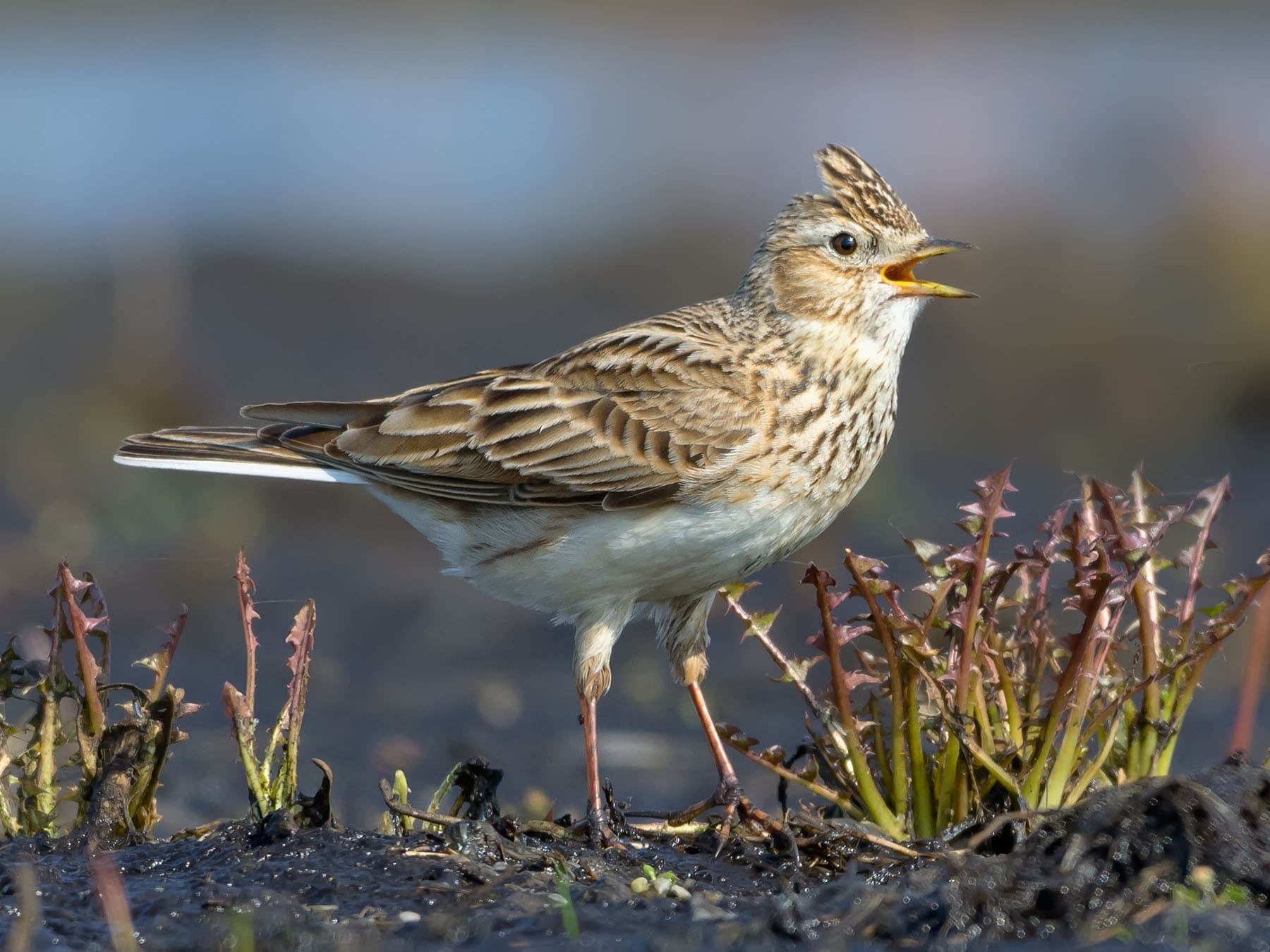
More photos
3 photos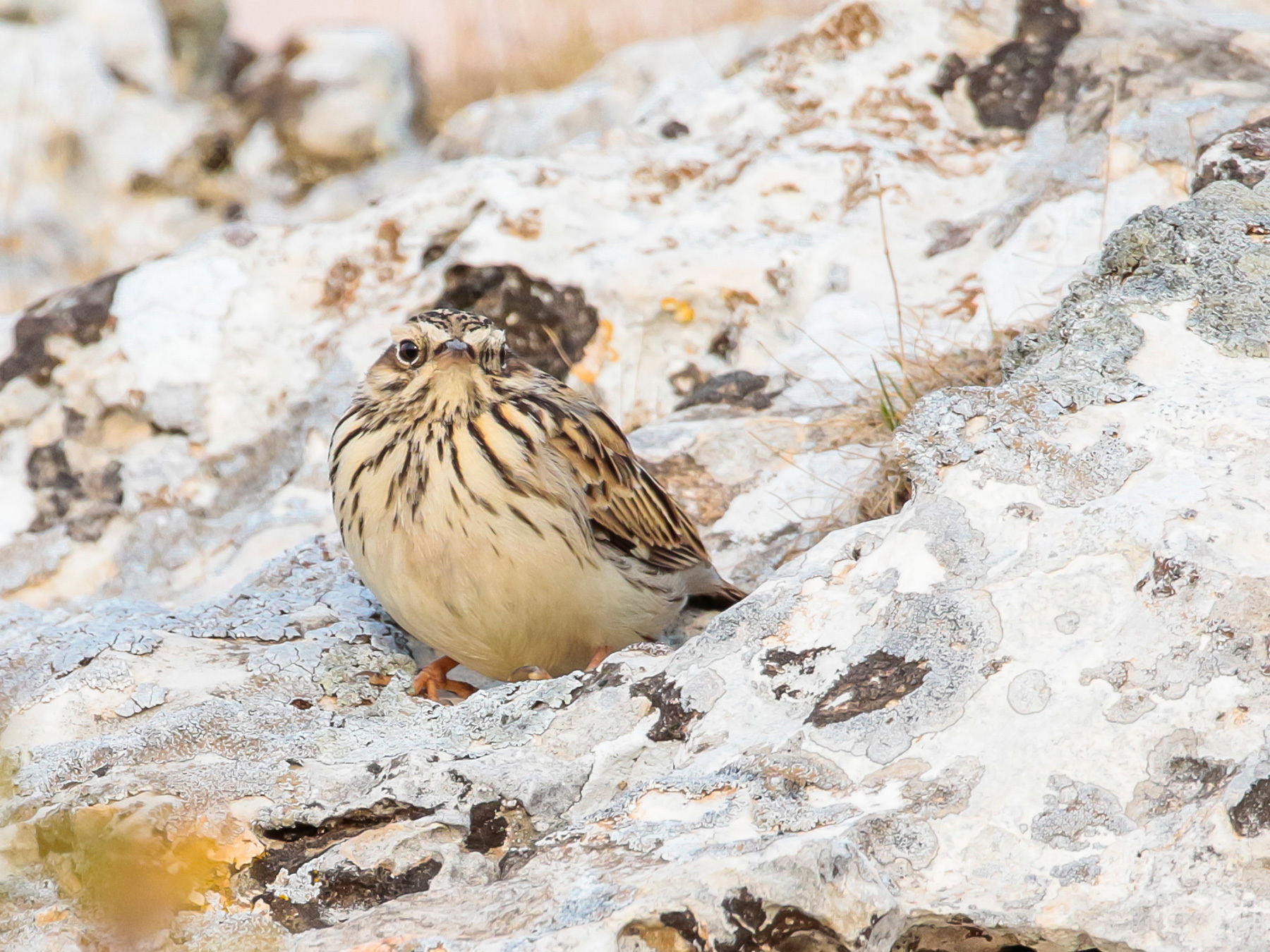
Quick facts
- Length
- 15–17 cm
- Wingspan
- 27–30 cm
- Weight
- 23–35 g
- Lifespan
- 3 years · oldest recorded 7.1 years
- Family
- Larks
- Migration
- Partial migrant
- Global status (IUCN)
- Least Concern
- World population
- 4,200,000 - 8,700,000 mature individuals
- Population trend
- Increasing
- Also called
- Wood Lark
- Scientific name
- Lullula arborea
Questions
3What is the difference between a Woodlark and a Skylark?
Woodlarks and Skylarks are very similar in appearance, although you are much likelier to spot the widespread and common Skylark in the UK than its relatively rare and localised relative. Look for the following identifying features to help distinguish between these songbirds.
- Woodlarks are significantly smaller and shorter-tailed, with a black and white marking on the wing.
- Woodlarks have a smaller, darker crest, and their white eyebrow stripes meet at the back of the head.
- Skylarks have white edges along either side of the tail, while Woodlarks have white corners on either end of the tail.
Do Woodlarks sing at night?
Woodlarks sing at all times of the day, including after dark. Early studies suggest they are most vocal on still, warm nights with bright moonlight conditions.
Do female Woodlarks sing?
Both male and female Woodlarks are known to sing. However, it is the male who performs the characteristic song flight where he ascends 100 metres or more in a spiraling, fluttering flight and then slowly descends to his perch or the ground.
Sources
4- 1BirdLife International. 2019. Lullula arborea (amended version of 2017 assessment). The IUCN Red List of Threatened Species 2019: e.T22717411A155597798. Source (opens in a new tab)
- 2EBCC (2015)
- 3BirdLife International. 2019. Lullula arborea (amended version of 2017 assessment). The IUCN Red List of Threatened Species 2019: e.T22717411A155597798. Source (opens in a new tab)
- 4BTO longevity records: maximum age from a ringed bird, 7 years, 2 months, 1 day (set in 2017), BirdFacts: Woodlark (2017) Source (opens in a new tab)

Checked by
Nathan Cope, founder and editor
Nathan founded Birdfact and leads its writers and contributors in the UK, the US and Canada. He has watched and studied birds for more than ten years, and checks every article and species guide before it’s published.