


White-tailed Sea-eagle
Sea Eagle, Erne, White-tailed Eagle, White-tailed Sea Eagle, European Sea Eagle · Haliaeetus albicilla
By the Birdfact teamChecked by Nathan Cope
On this page15 sections
How to recognise it
What do White-tailed Eagles look like?
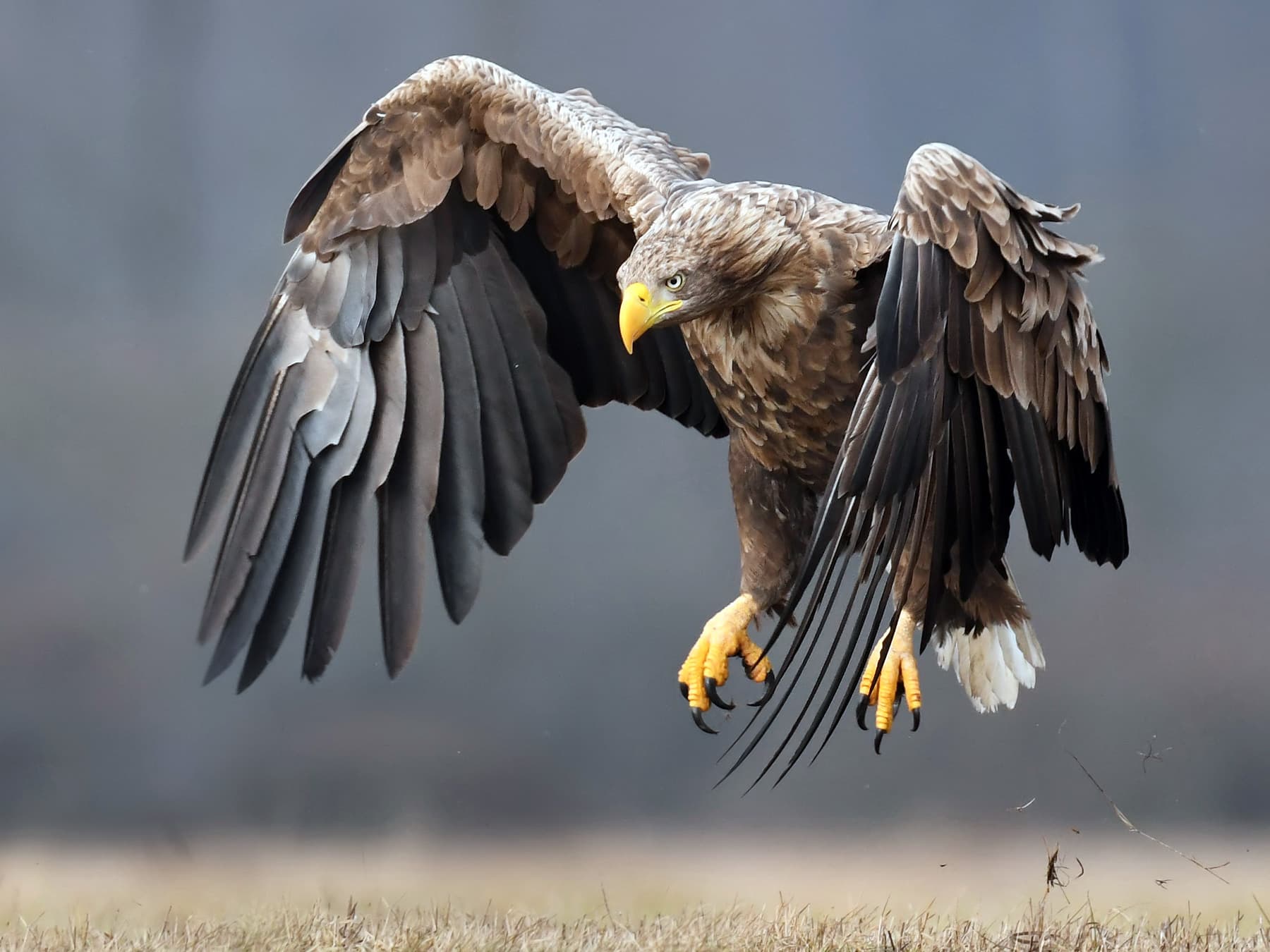
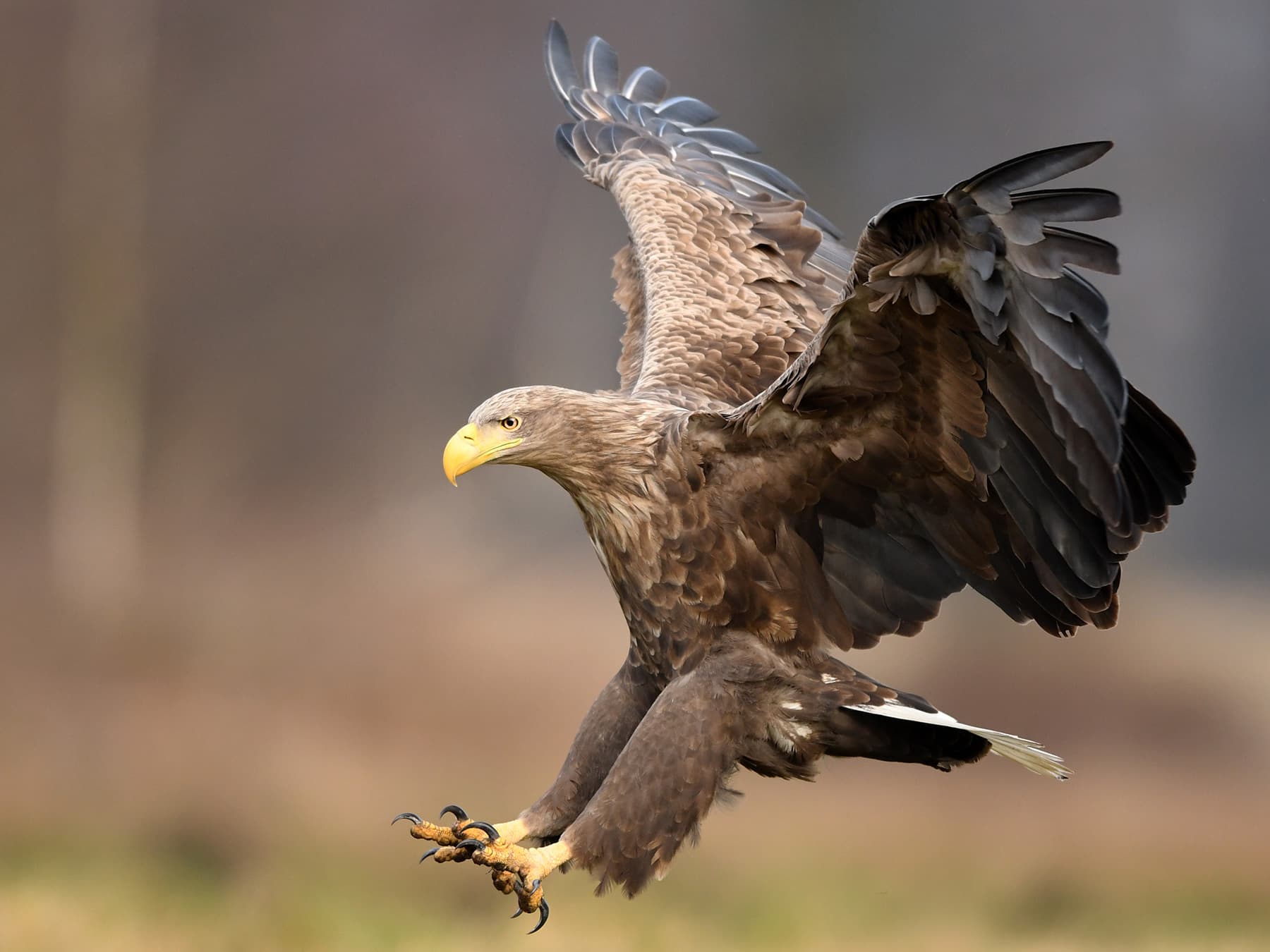
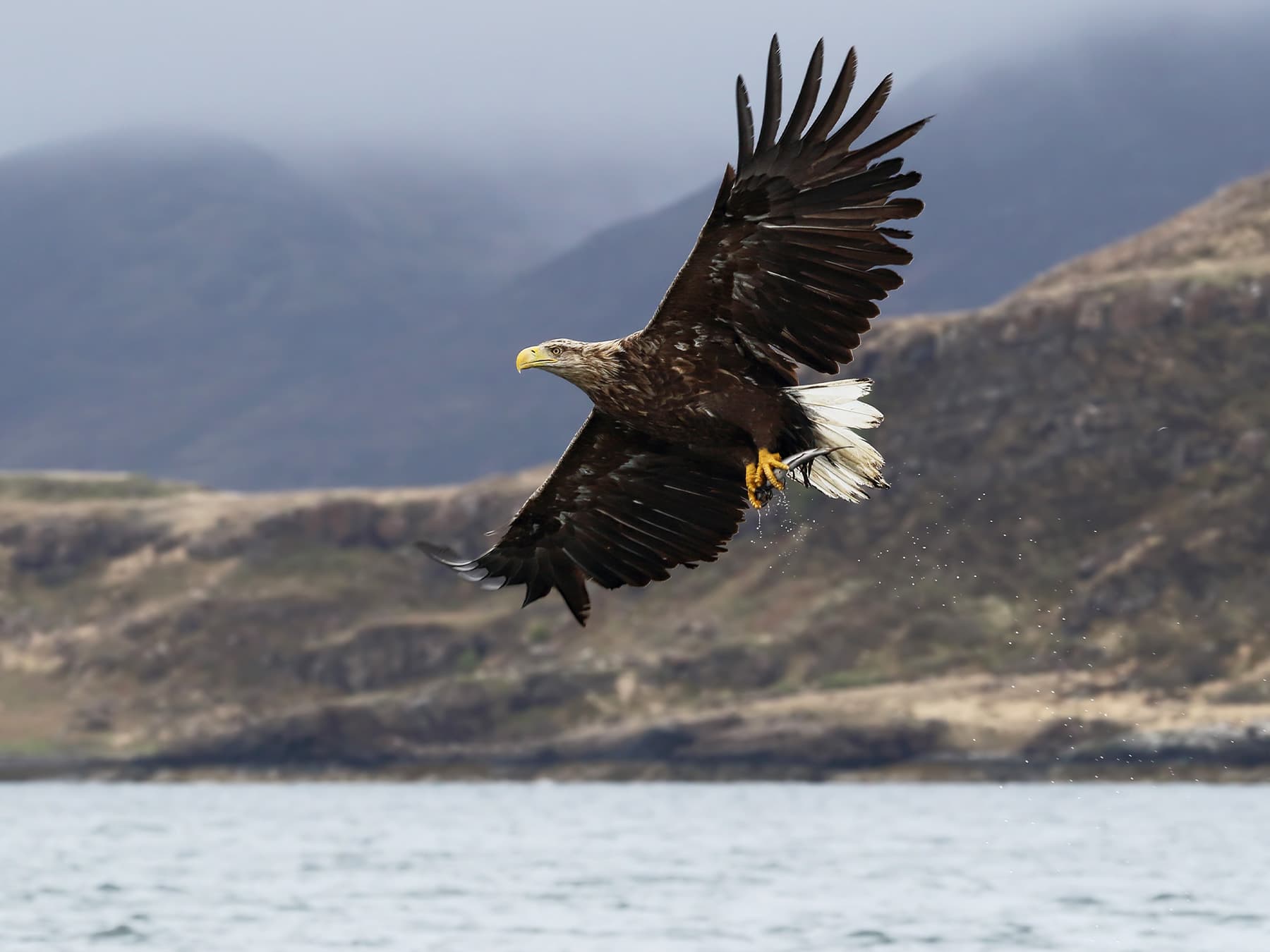
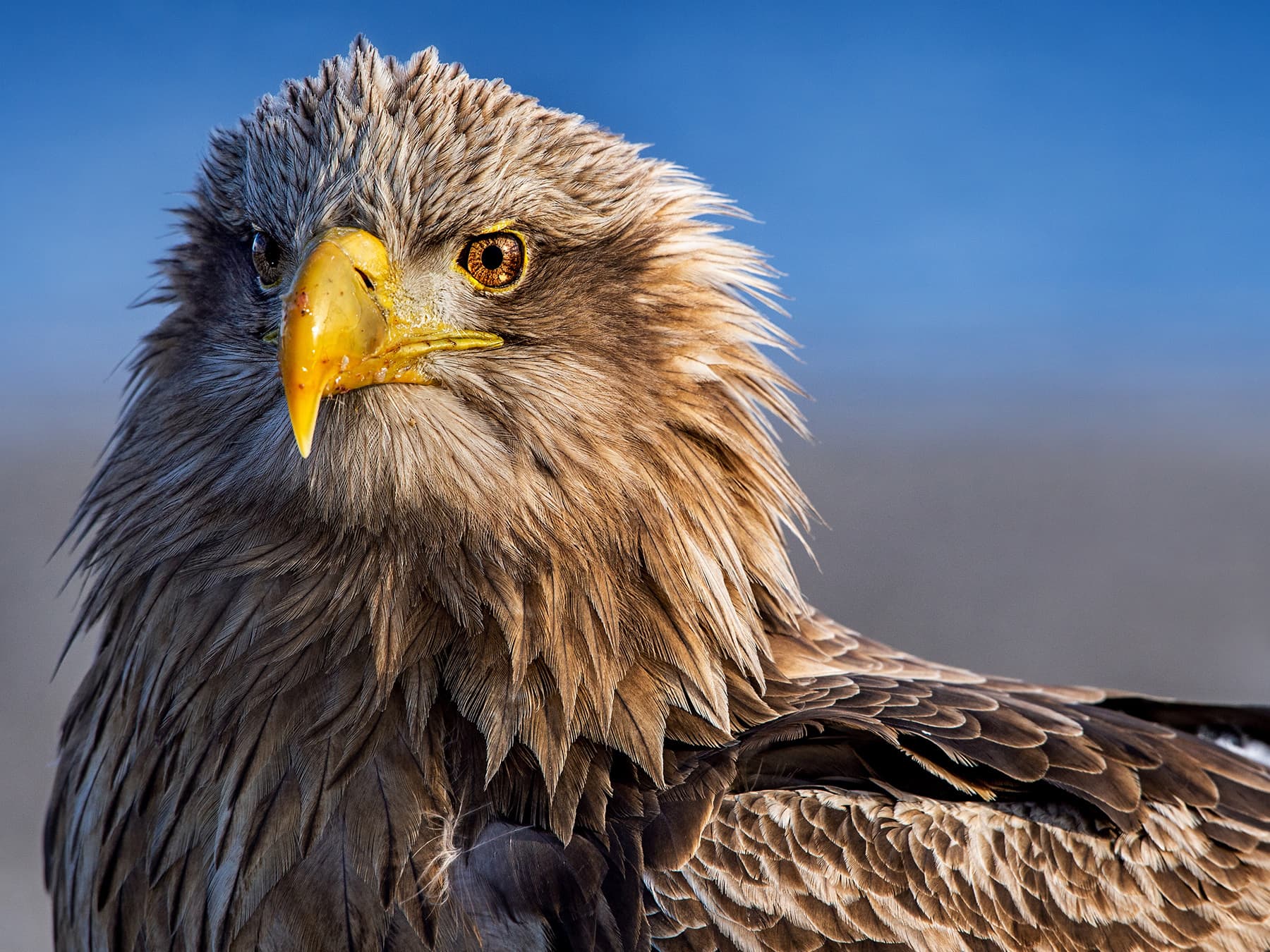
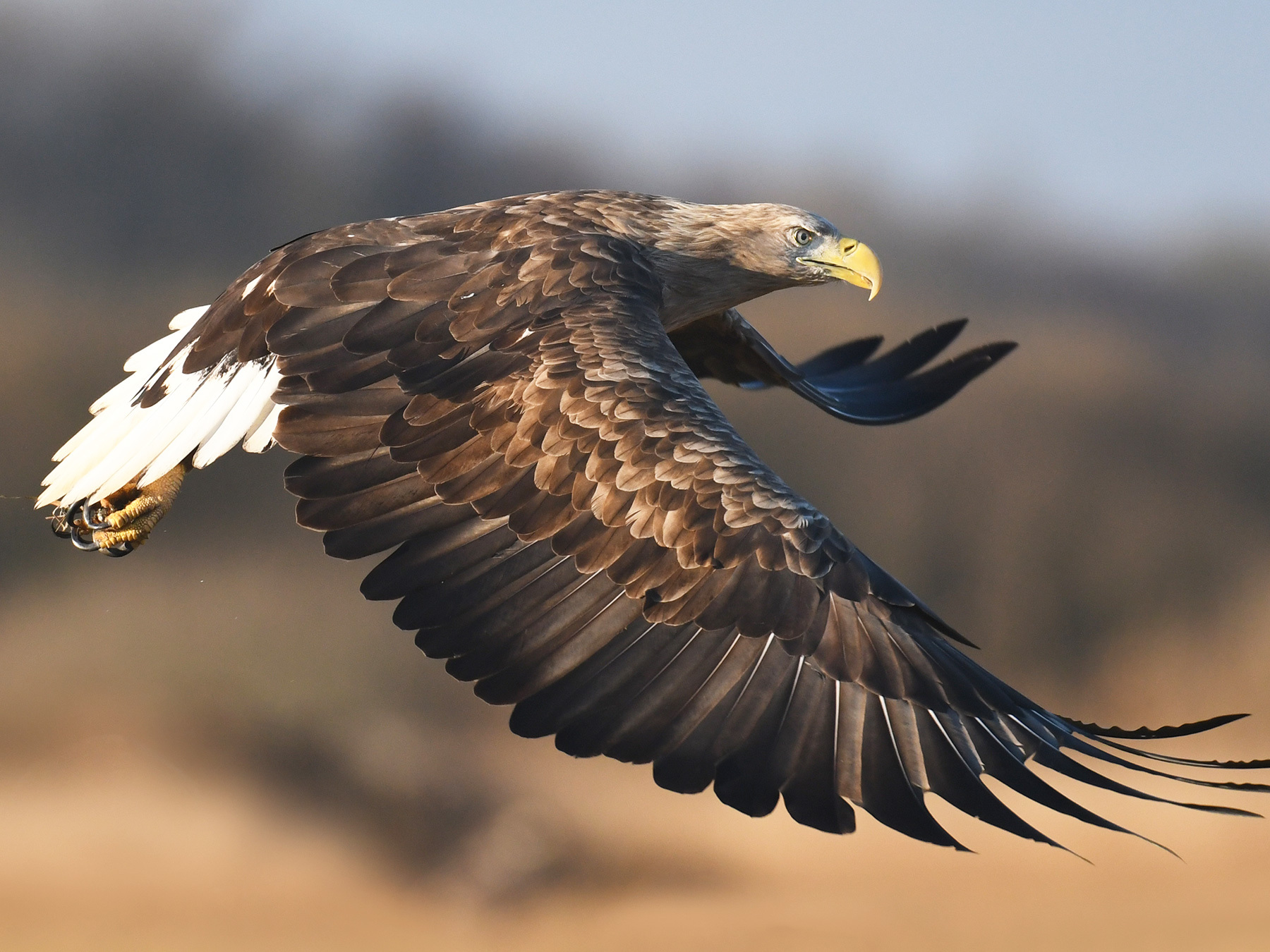
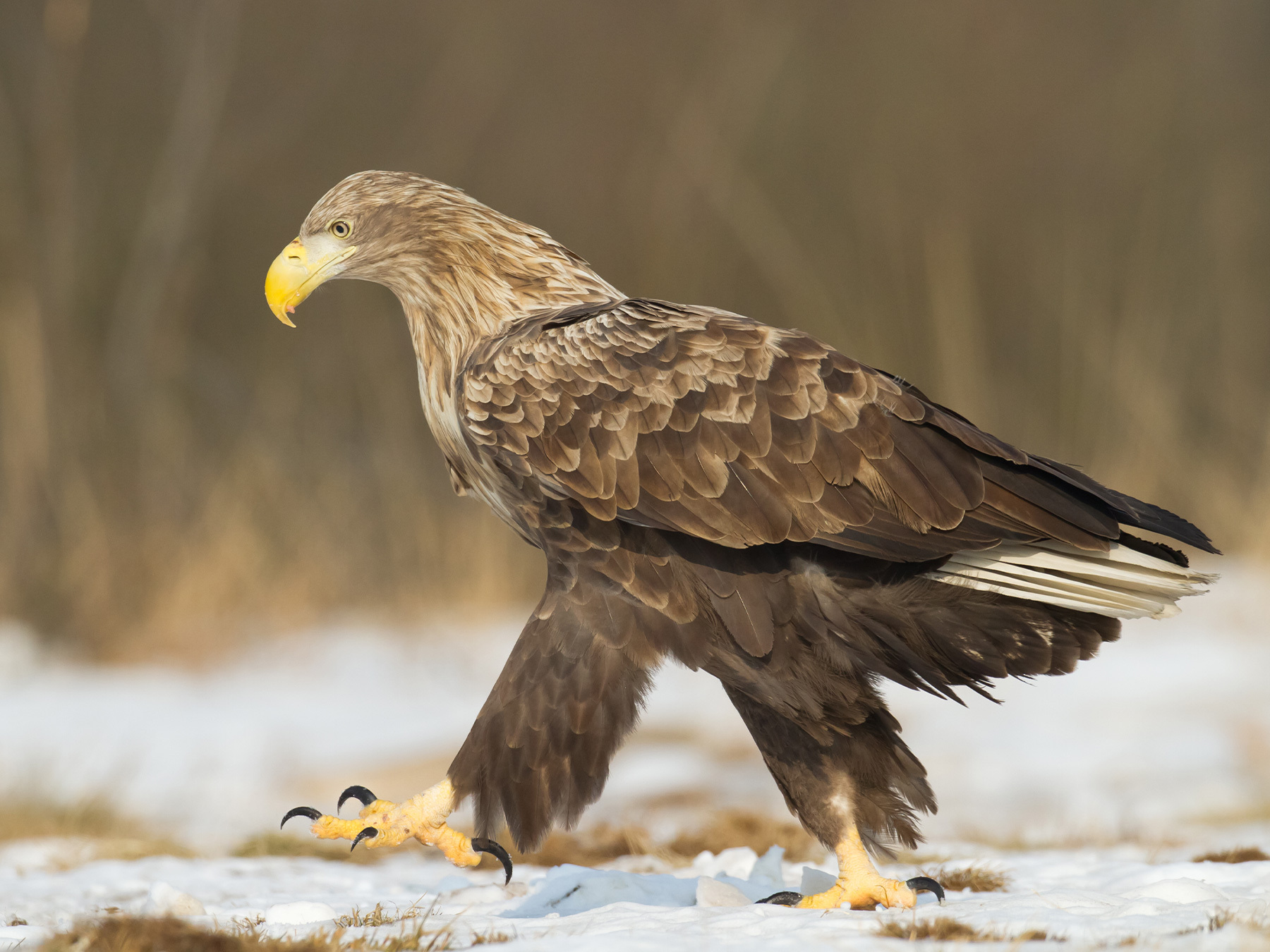
The White-tailed Eagle is a massive bird of prey with a very large yellow bill and pale yellow feet and eyes. As their name suggests, these birds have a short but distinctive wedge-shaped white tail. The rest of their plumage is chocolate brown, although the head and neck are paler.
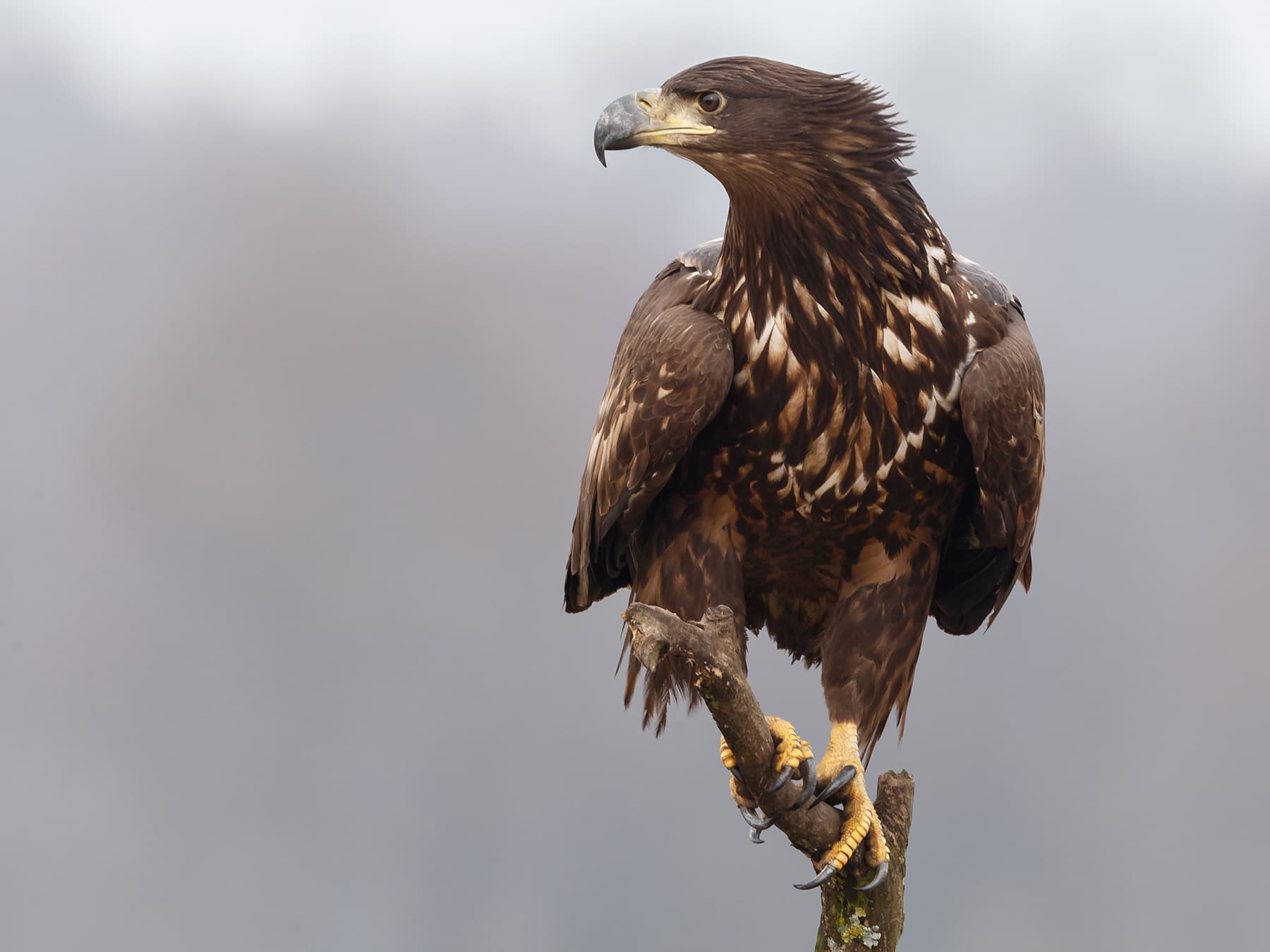
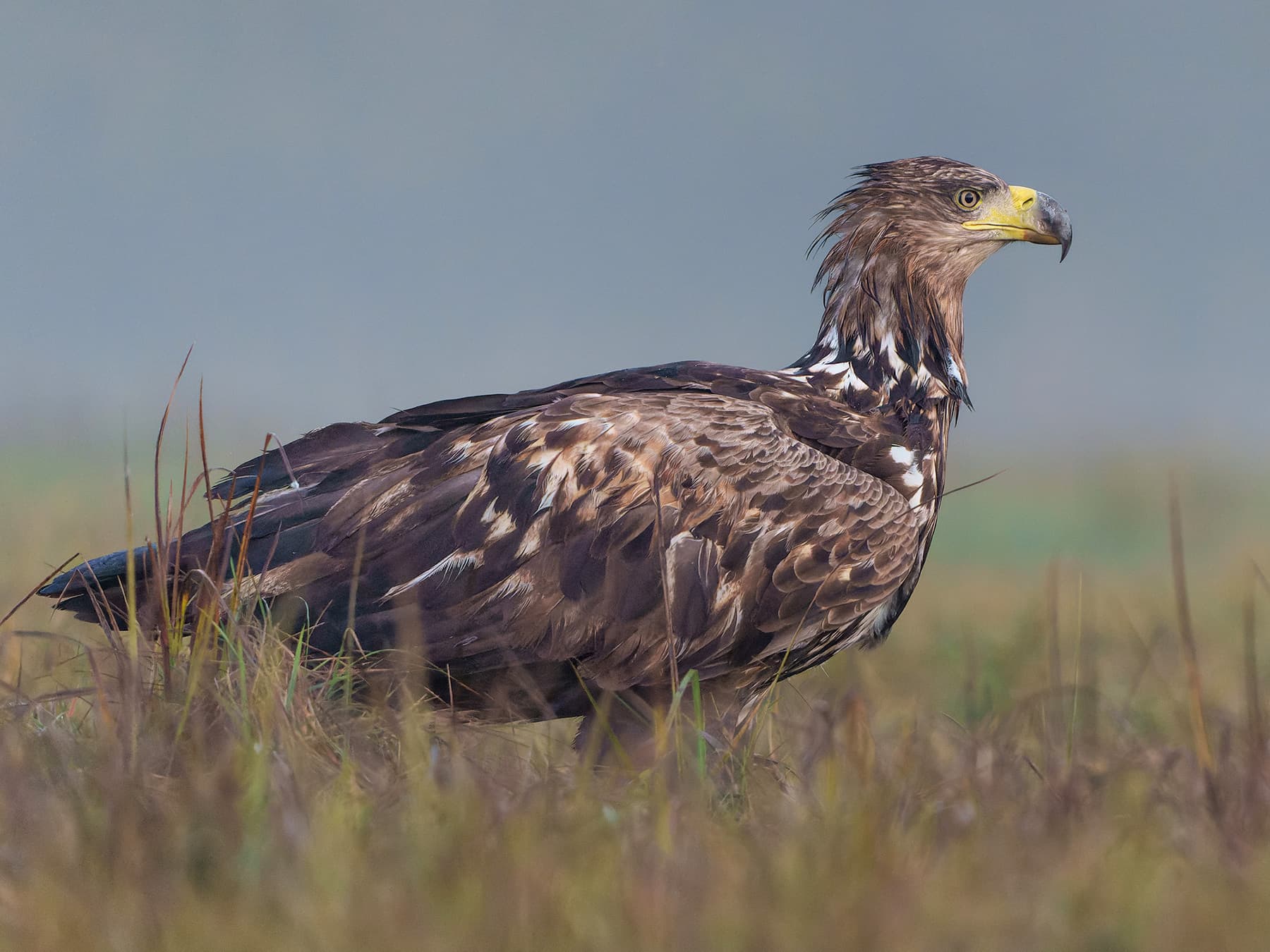
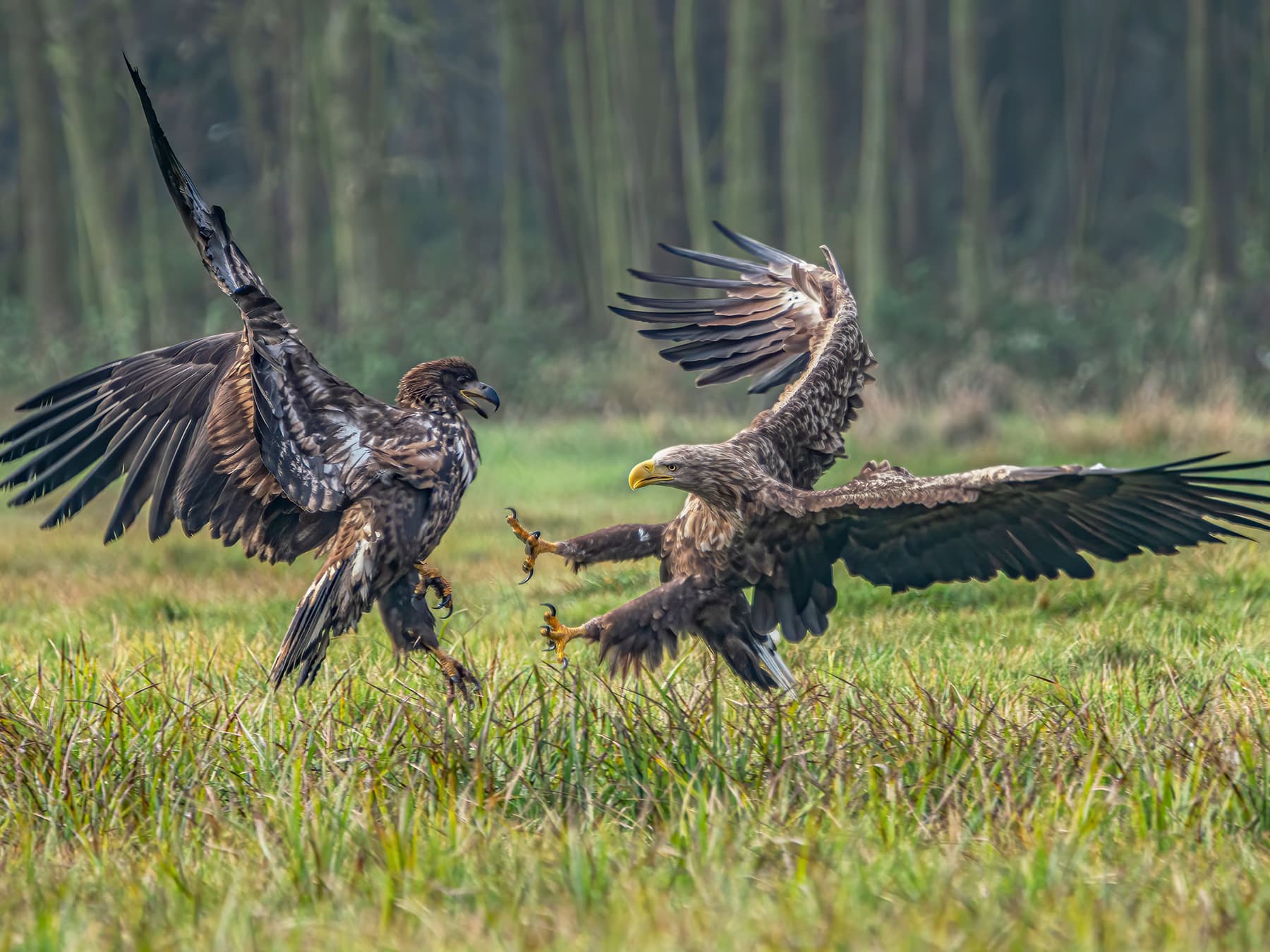
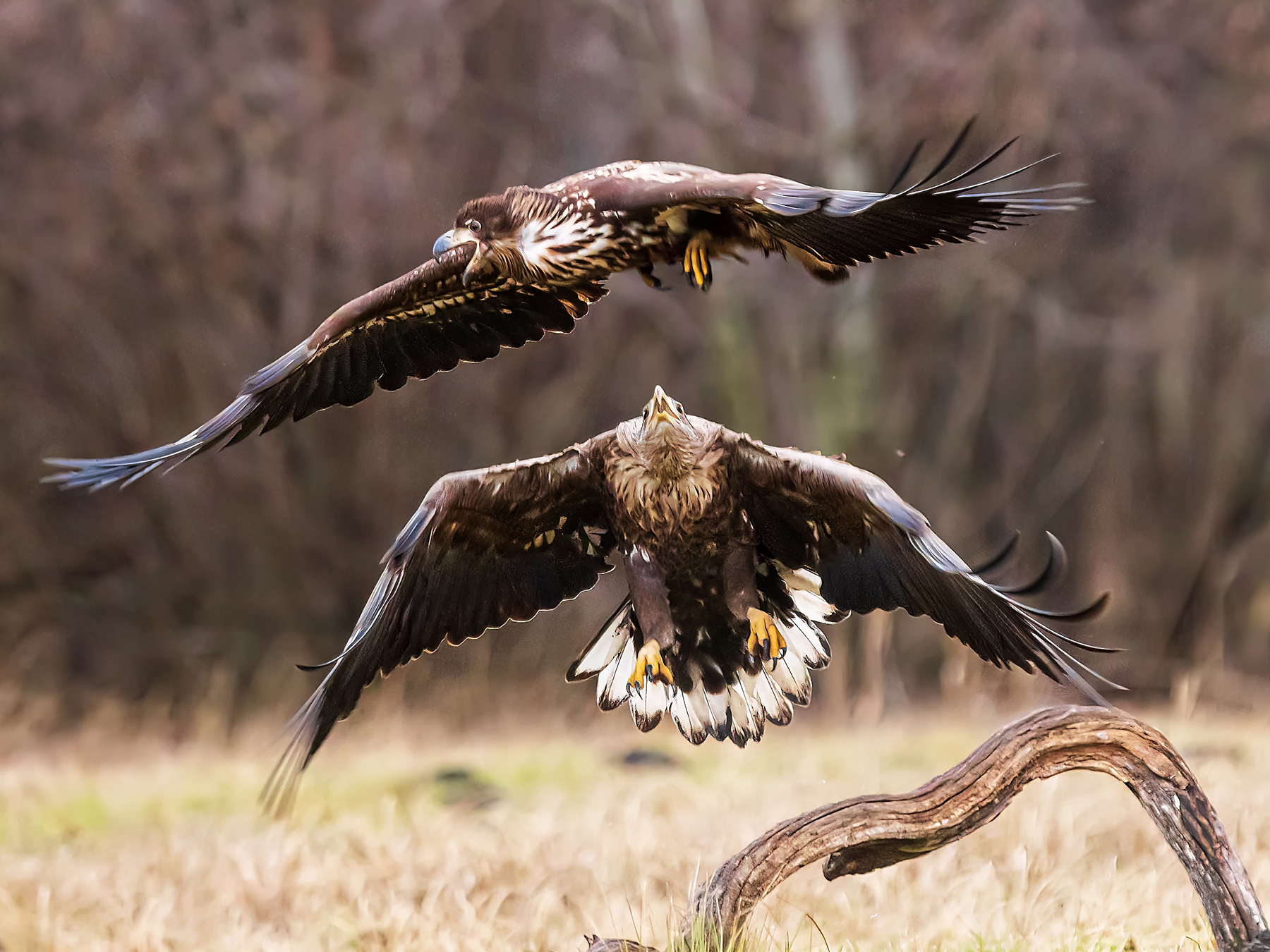
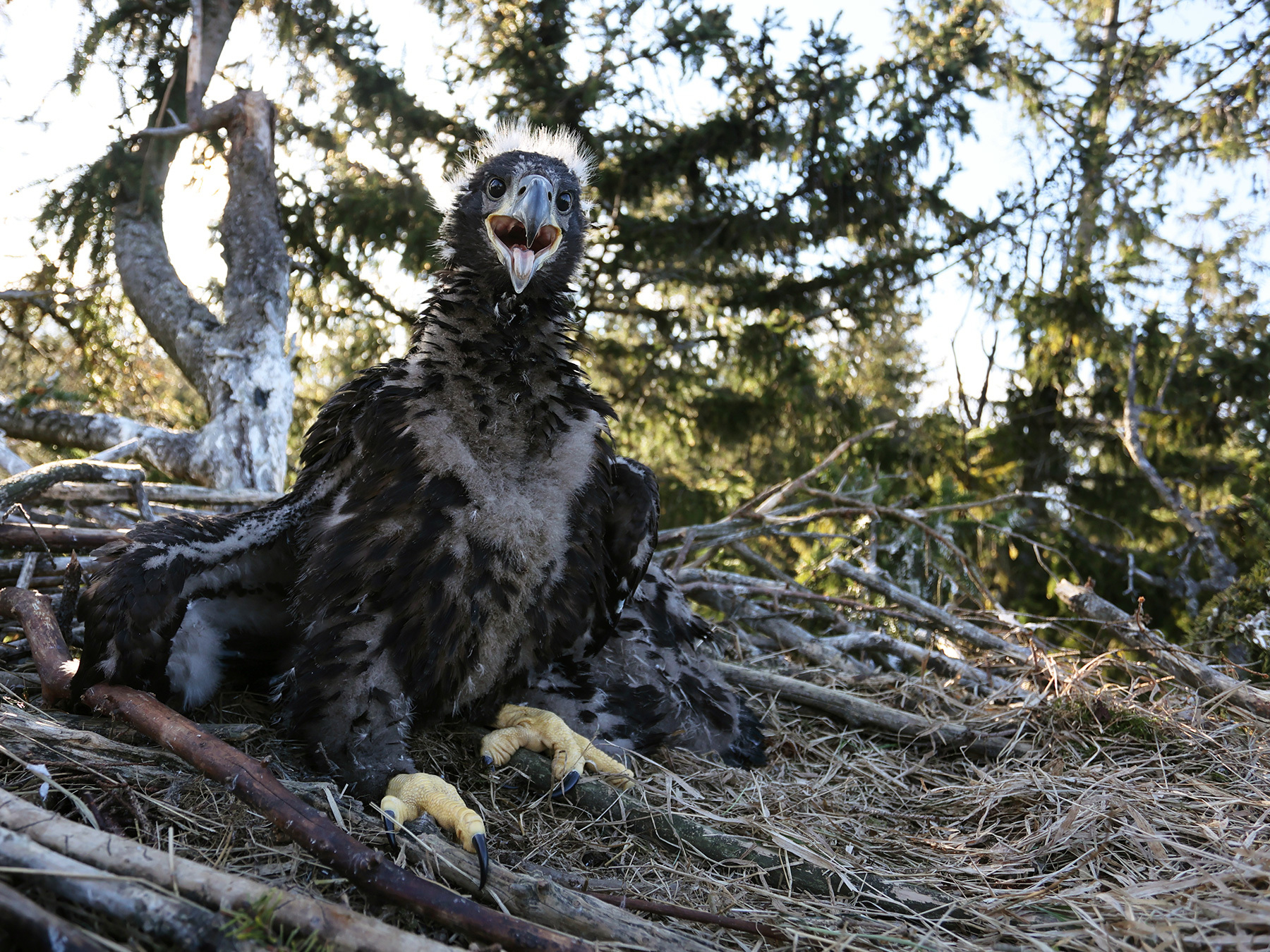
Females are significantly larger than males but otherwise difficult to distinguish. Juvenile White-tailed Eagles are relatively easy to identify by their dark bill and blackish plumage with pale armpit patches and whitish flecking. The young birds mature slowly, attaining their full adult plumage after about eight years.
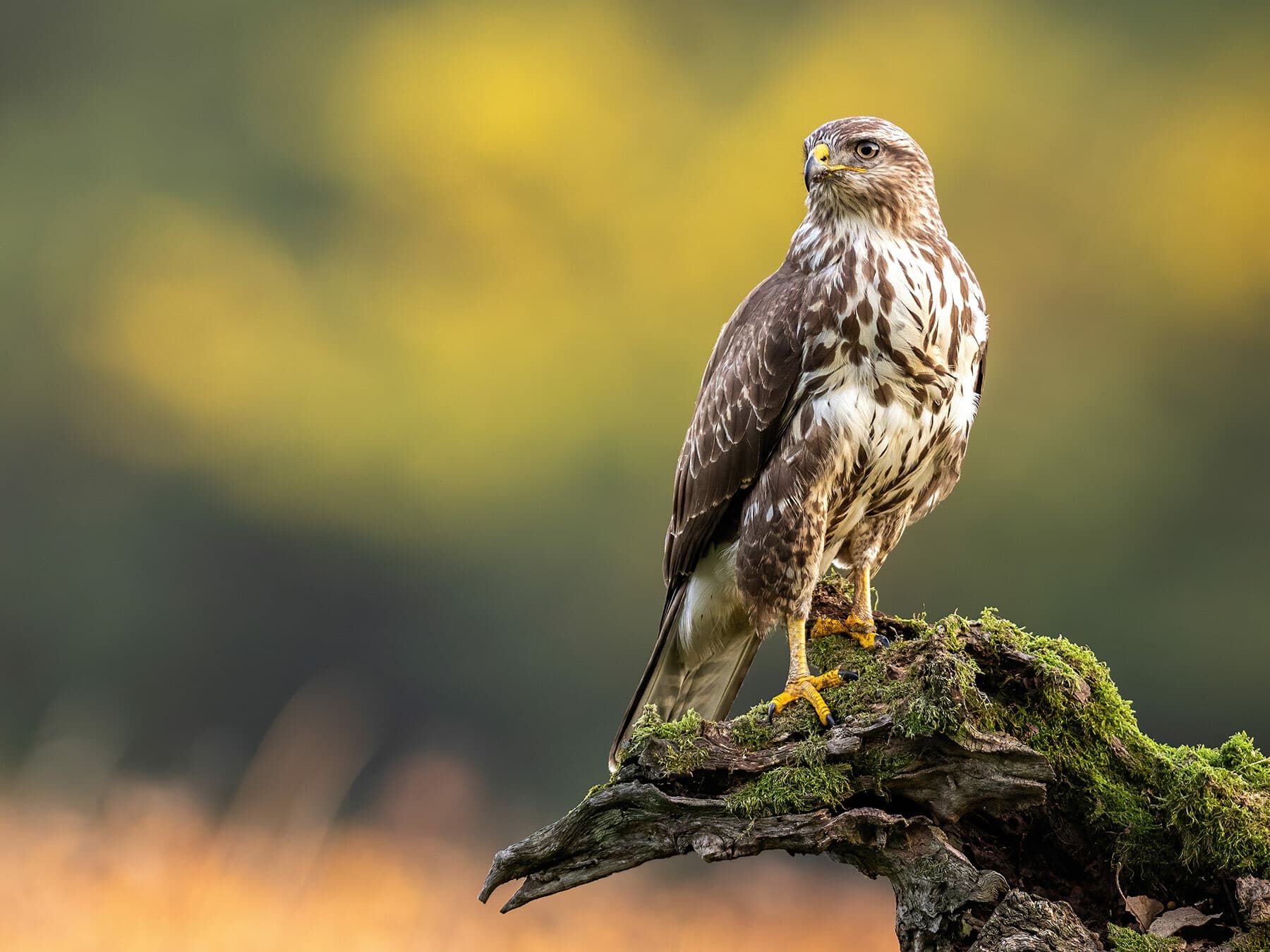
The White-tailed Eagle is only likely to be confused with the Buzzard and the Golden Eagle. Buzzards are much smaller birds, with five (not six or seven) prominent primary feathers visible at the end of each wing when soaring. The Golden Eagle is very similar-sized but more shapely and longer-tailed in flight and shows a much smaller head when perched.
How big are White-tailed Eagles?
The White-tailed Eagle is a massive bird of prey, comparable only with the Golden Eagle in the UK.
Length
White-tailed Eagles have a total length of 74 to 92 centimetres.
Weight
Female White-tailed Eagles weigh 3.7 to 6.9 kilograms. They are significantly heavier than their male counterparts, which weigh 3.1 to 5.4 kilograms.
Wingspan
The White-tailed Eagle’s broad wingspan is one of its most impressive features. These birds can measure as much as 2.44 meters (8 feet) between wing tips.
Its size
Adults- Length
- 66–94 cm
- Wingspan
- 180–240 cm
- Weight
- 3000–6900 g
Its song and calls
What sound does a White-tailed Eagle make?
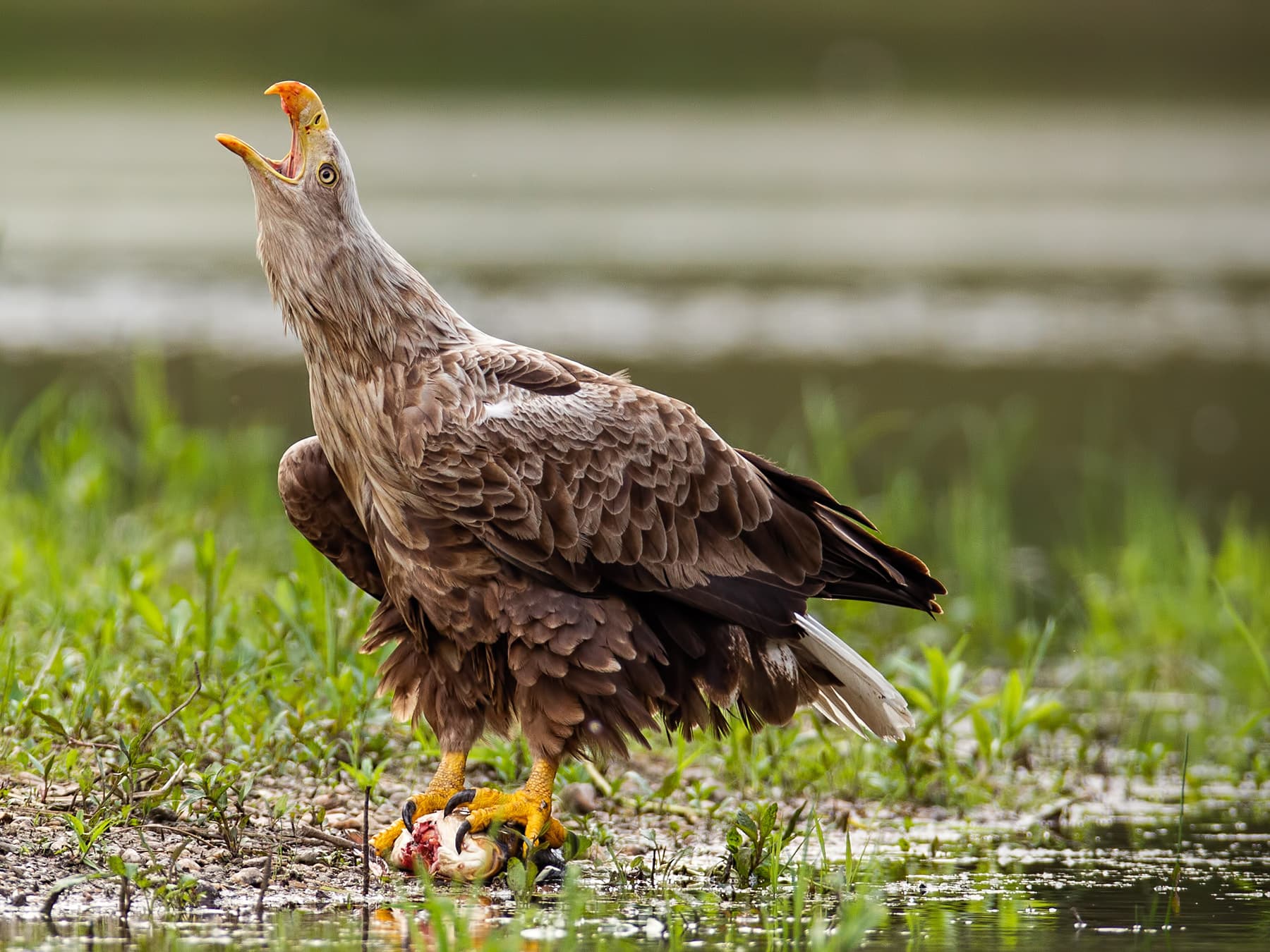
White-tailed Eagles produce a series of high-pitched notes when calling. They are most vocal in the nesting season when pairs may call together in a duet while perched or in flight.
Males and females produce different notes, and the female has a deeper voice. Apart from courtship, these birds also call in alarm or warning if their nest is approached.
When and where to see it
OctoberIn season
Most recorded in October
- 1. Argyll and Bute1.1%
- 2. Eilean Siar0.97%
- 3. Highland0.50%
- 4. Isle of Wight0.41%
- 5. West Sussex0.18%
Each dot is a county, state or province: the bigger and darker, the larger the bird’s share of that place’s bird records that month. Grey dots: no regular records. The ringed point is the centre of the bird’s records this month; the arrow shows how it moved since last month, and the dashed loop its path through the year. “Arrivals” colours places where it becomes regular this month (orange) or is in its last regular month (grey). GBIF eBird Observation Dataset, 2019–2024. Map data: Natural Earth, US Census Bureau; place centres © OpenStreetMap contributors.
In your area
See when the White-tailed Sea-eagle is recorded in your county, state or province.
How often the White-tailed Sea-eagle turns up in the UK and Ireland through the year, from birdwatchers' records.
United Kingdom
Winter visitor · all year · most records in August
Ireland
Resident · all year · most records in February
Show as a table
| Month | United Kingdom | Ireland |
|---|---|---|
| January | 0.017% (regular) | 0.024% (regular) |
| February | 0.007% (regular) | 0.036% (regular) |
| March | 0.013% (regular) | 0.020% (regular) |
| April | 0.010% (regular) | 0.017% (regular) |
| May | 0.007% (regular) | 0.027% (regular) |
| June | 0.007% (regular) | 0.026% (regular) |
| July | 0.008% (regular) | 0.013% (regular) |
| August | 0.033% (regular) | 0.025% (regular) |
| September | 0.027% (regular) | 0.036% (regular) |
| October | 0.025% (regular) | 0.020% (regular) |
| November | 0.016% (regular) | 0.027% (regular) |
| December | 0.015% (regular) | 0.025% (regular) |
Recorded regularly in
Worldwide: recorded regularly in 52 countries
Countries where it was recorded in at least 3 of the 6 years 2019–2024. Linked countries have their own bird list.
Europe (34)
Asia (17)
- Armenia
- Azerbaijan
- China
- Georgia
- India
- Iran
- Israel
- Japan
- Kazakhstan
- Kuwait
- Kyrgyzstan
- Mongolia
- Nepal
- South Korea
- Taiwan
- Turkey
- Uzbekistan
North America (1)
- Greenland
Data: EOD – eBird Observation Dataset (Cornell Lab of Ornithology), accessed via GBIF.org, CC BY 4.0. Records from 2019–2024, aggregated and filtered by Birdfact. How these lists are made
What is the habitat of a White-tailed Eagle?
The White-tailed Eagle usually lives near water, either on the coast or around larger inland lakes and rivers. They require cliffs or tall trees in forested areas for nesting.
These birds are largely restricted to the coast and lowlands of southern and eastern England but venture far inland in Scotland.
What is the range of a White-tailed Eagle?
In the UK, White-tailed eagles are most numerous and widespread in Scotland. They have been introduced to the Isle of White and are now scarce but regularly seen on England’s south and east coast. They also occur on the west coast of Ireland.
Elsewhere, they are primarily restricted to Europe and Asia, where they are widespread from Iceland in the west to eastern Russia. There is also a resident population on the southwest coast of Greenland.
Where do White-tailed Eagles live?
White Eagles live near the water. They spend most of their time perched (up to 90%), usually in an exposed position like a tree branch or rock, where they can rest and scan for prey.
How rare are White-tailed Eagles?
White-tailed Eagles remain rare in the United Kingdom, with estimates of about 150 pairs. However, this figure does not include non-breeding birds.
Where can you see White-tailed Eagles in the UK?
The West Coast of Scotland is probably the best place to see White-tailed Eagles in the United Kingdom. Look out for them in the following hotspots:
- The Isle of Mull
- The Isle of Skye
- Loch Sunart
Birders in England need not travel that far, however. White-tailed Eagles were recently reintroduced to the Isle of Wight and some continental birds may visit England’s eastern lowlands in the winter.
Migration
Do White-tailed Eagles migrate?
White-tailed Eagles are migratory in some parts of their range but sedentary in others. The population in Western Europe does not migrate, while most of the birds that nest in Western and Central Asia migrate south for the winter.
Are White-tailed Eagles native to the UK?
White-tailed Eagles are native to the United Kingdom. They became extinct as a breeding bird in England by the early 1800s and in Scotland in the early 1900s. They have since been successfully reintroduced to Scotland, Ireland, and England.
Tips for seeing it
- Look for them near large bodies of water, especially coastal areas and inland lakes.
- Scan tall trees and cliffs for perched birds.
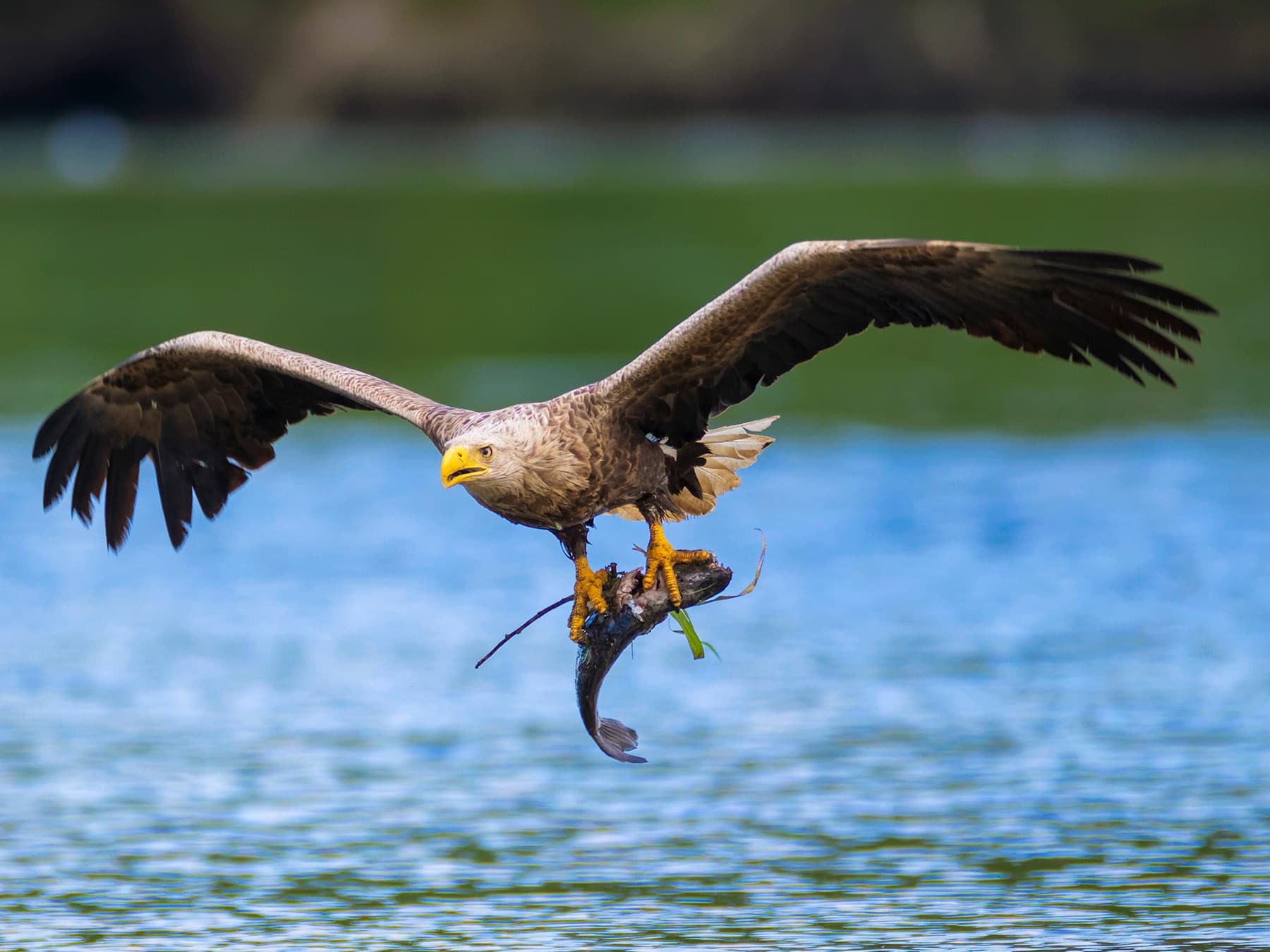
- Watch for their distinctive silhouette in flight: broad wings held flat and a short, wedge-shaped tail.
- In the UK, Scotland's west coast and islands are prime viewing locations.
- Be patient and use a spotting scope for distant observations.
- The White-tailed Eagle is only likely to be confused with the Buzzard and the Golden Eagle. Buzzards are much smaller birds, with five (not six or seven) prominent primary feathers visible at the end of each wing when soaring. The Golden Eagle is very similar-sized but more shapely and longer-tailed in flight and shows a much smaller head when perched.
What it eats
What do White-tailed Eagles eat?
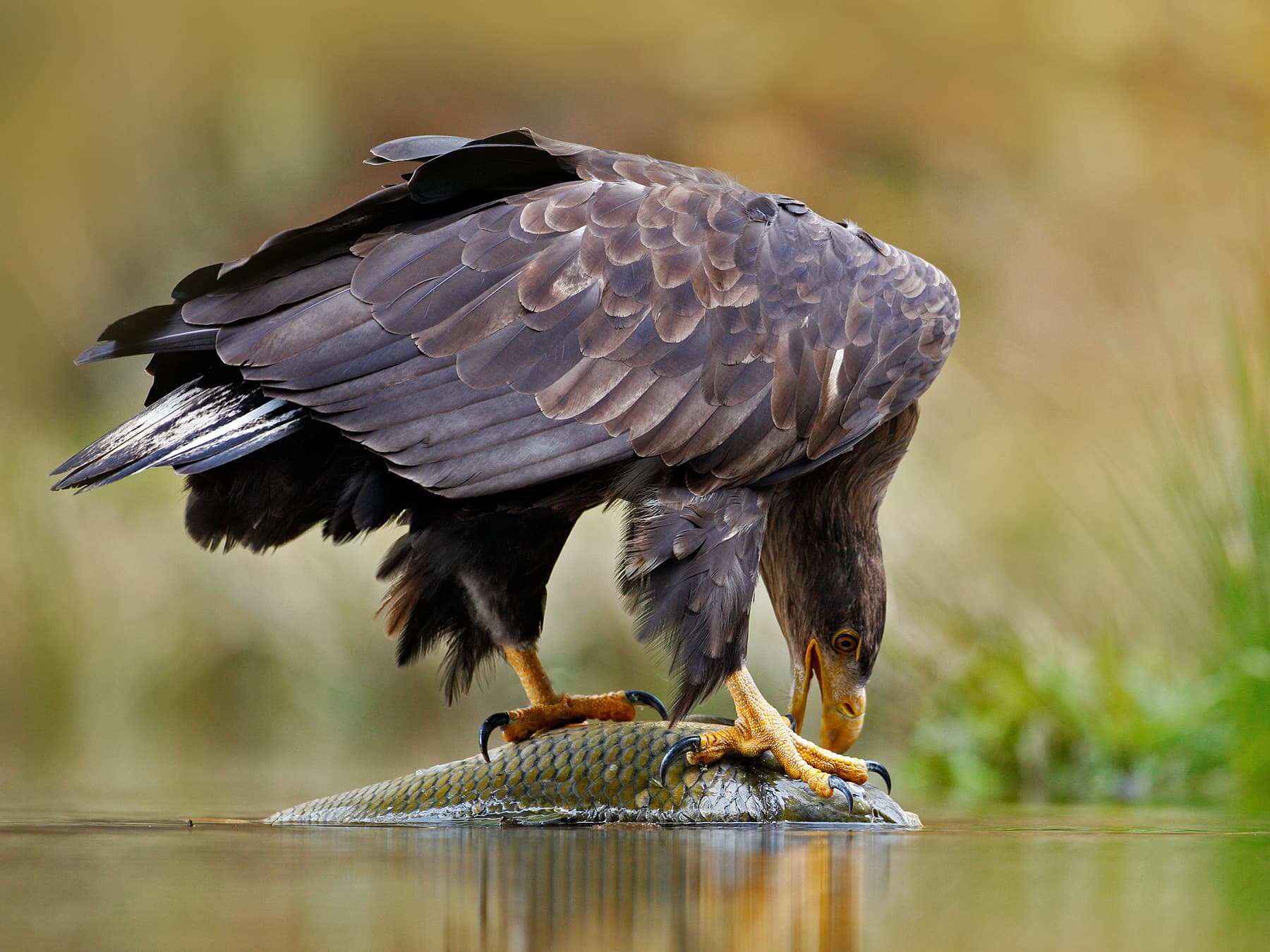
White-tailed Sea Eagles are carnivorous birds that take live prey and carrion. Fish and birds are their usual targets, although they will occasionally take small mammals. These eagles frequently swoop down to catch fish at the surface of the water, although they do not dive or immerse themselves.
They also hunt water birds and seabirds, either in flight or on the water. Eggs and chicks are taken in the breeding season, and they will also steal the prey from other fishing birds like the Osprey and Heron.
What do White-tailed Eagle chicks eat?
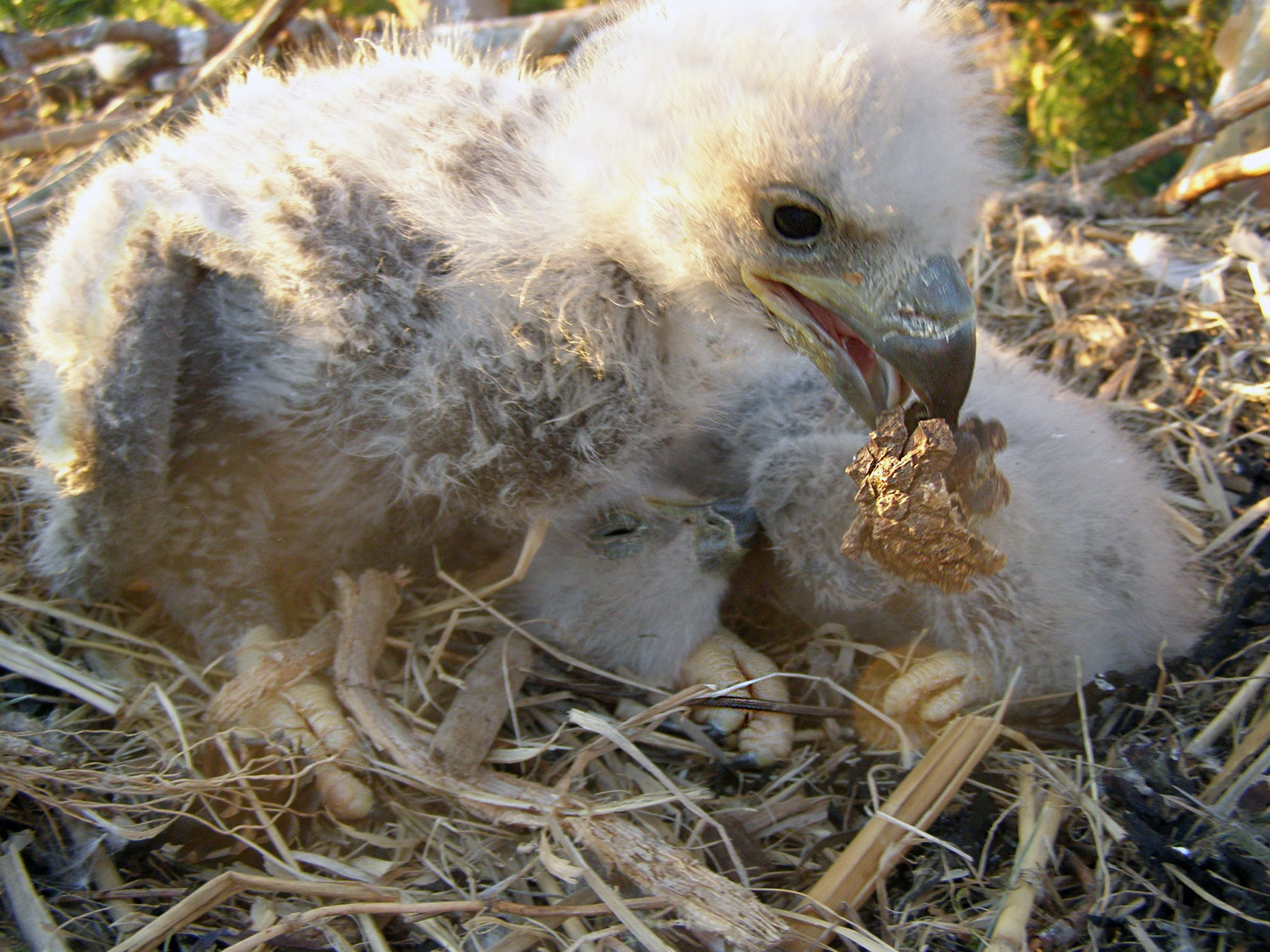
White-tailed Eagle chicks eat the same diet as their parents. A study in Lapland revealed that about two-thirds of their diet is fish, with most of the remainder being birds and a small percentage of mammals.
The chicks take up to three months to fledge the nest and rely on their parents for another month or so before they can independently feed themselves.
Nesting and breeding
Where do White-tailed Eagles nest?
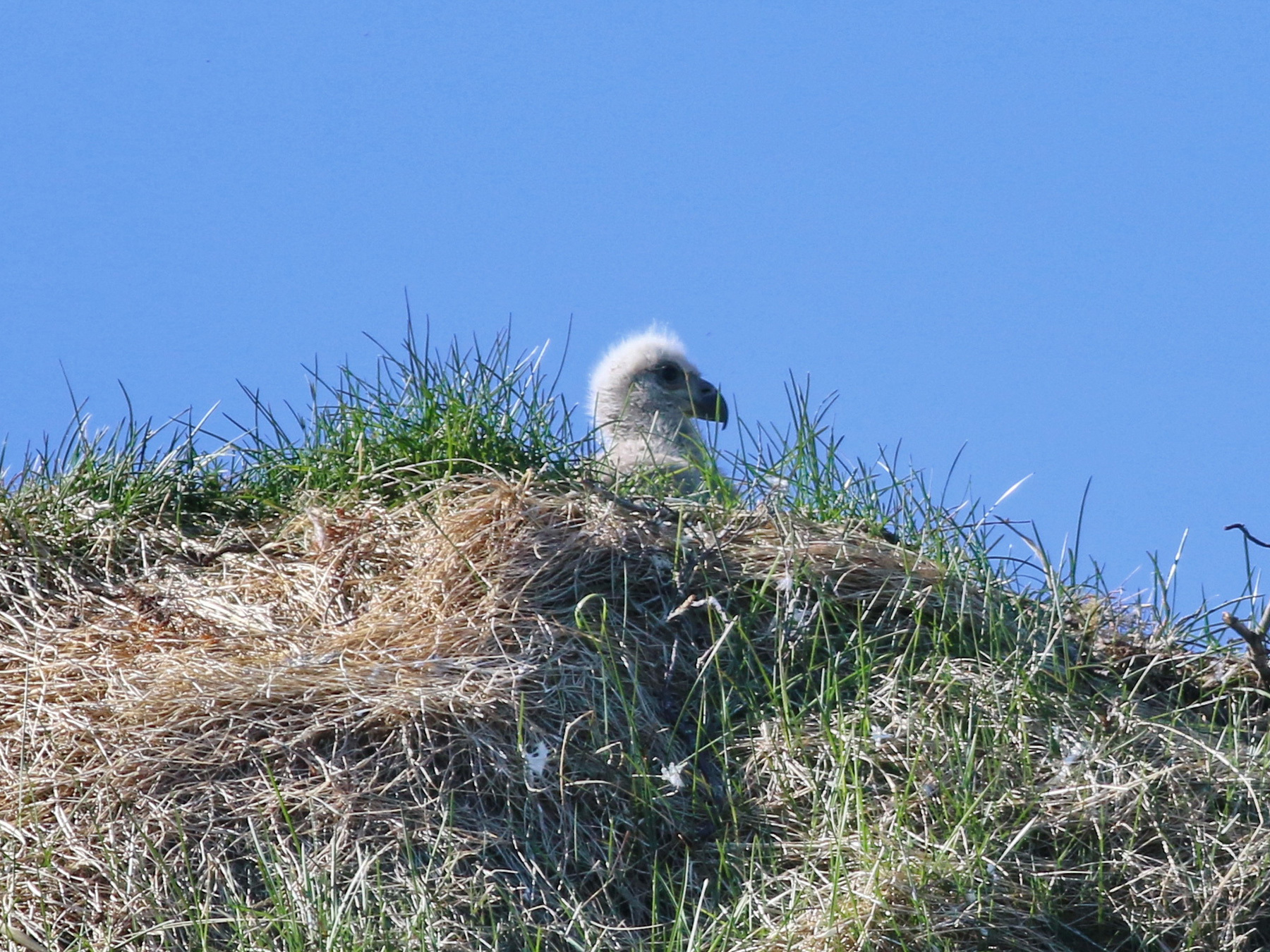
White-tailed Eagles build their nests on sea cliffs or high in large trees. Their nest are platforms made mostly from twigs but lined with softer materials like wool and grass. They add on to their nests regularly, and they can become massive structures several meters across and equally deep.
When do White-tailed Eagles nest?
White-tailed Eagles first breed when they are about five years old. In the UK, these birds lay their eggs in March and April and incubate them for about 38 days. The hatchlings spend 70 to 90 days in the nest before fledging.
What do White-tailed Eagle eggs look like?
White-tailed Eagles lay a single clutch of two plain white eggs. The eggs are large, measuring approximately 75 millimetres long and 57 millimetres wide.
Do White-tailed Eagles mate for life?
White-tailed Eagles are monogamous birds that nest with the same partner for life. Skye and Frisa are a pair of eagles that demonstrate the devotion of their species. These two birds are the oldest White-tailed Eagle couple in the United Kingdom and have been together since 1997!
Behaviour
Are White-tailed Eagles aggressive?
White-tailed Eagles are not aggressive or dangerous toward humans unless provoked. However, they are territorial toward other eagles when nesting, and intruders will be attacked, sometimes with fatal consequences.
We may think of these birds as majestic hunters, but they are not above using aggression and intimidation tactics to get a free meal. These eagles will chase and harass other birds of prey into giving up their own hard-earned food.
Where do White-tailed Eagles sleep at night?
White-tailed Eagles sleep in trees or on cliffs. Pairs often roost near their nest.
Lifespan and predators
How long do White-tailed Eagles live?
White-tailed Eagles can live for up to 42 years in captivity, although the oldest wild bird survived for 27 years. They are a naturally long-lived species that only reach sexual maturity after five years.
What are the predators of White-tailed Eagles?
Healthy adult White-tailed Eagles have no major predators, although their eggs and young could be vulnerable to corvids or other birds of prey if left unattended. Humans are their principal enemies, and these birds are particularly susceptible to shooting, intentional and accidental poisoning, and pollution.
Are White-tailed Eagles protected?
White-tailed Eagles are protected by the Wildlife and Countryside Act 1981 in the United Kingdom.
Are White-tailed Eagles endangered?
White-tailed Eagles are on the amber list in the United Kingdom, and their population is increasing thanks to reintroduction and conservation programs. The species is not considered endangered in the UK or globally and is formally assessed as a ‘Least Concern’ species according to the IUCN Red List.
Conservation
White-tailed Eagles have recovered significantly from near-extinction in much of Europe due to intensive conservation efforts.
Reintroduction programmes, particularly in the UK and Ireland, have been successful. However, they still face threats from habitat loss, pollution, and illegal persecution in some areas.
Similar birds
Often mistaken for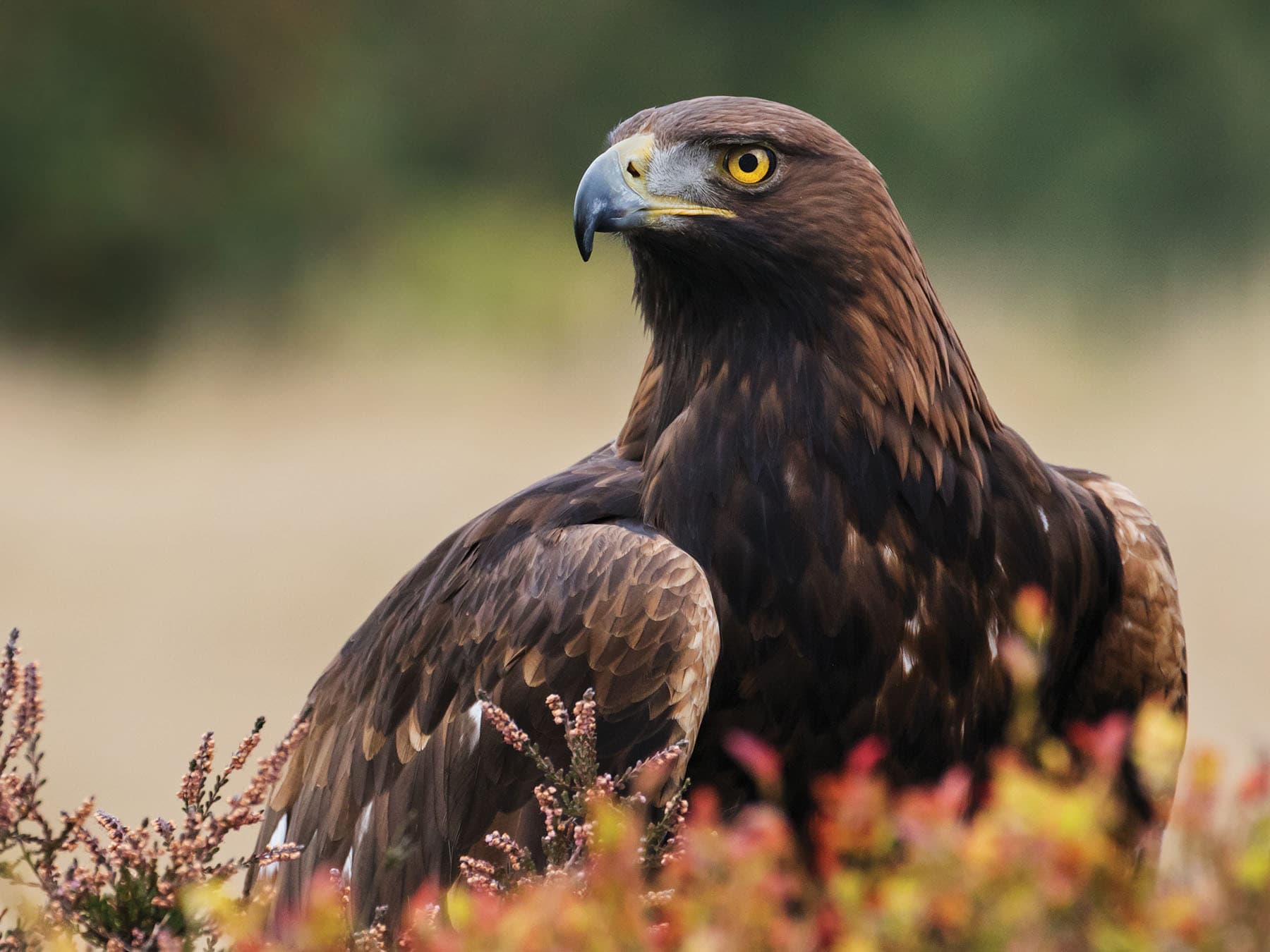
More photos
7 photos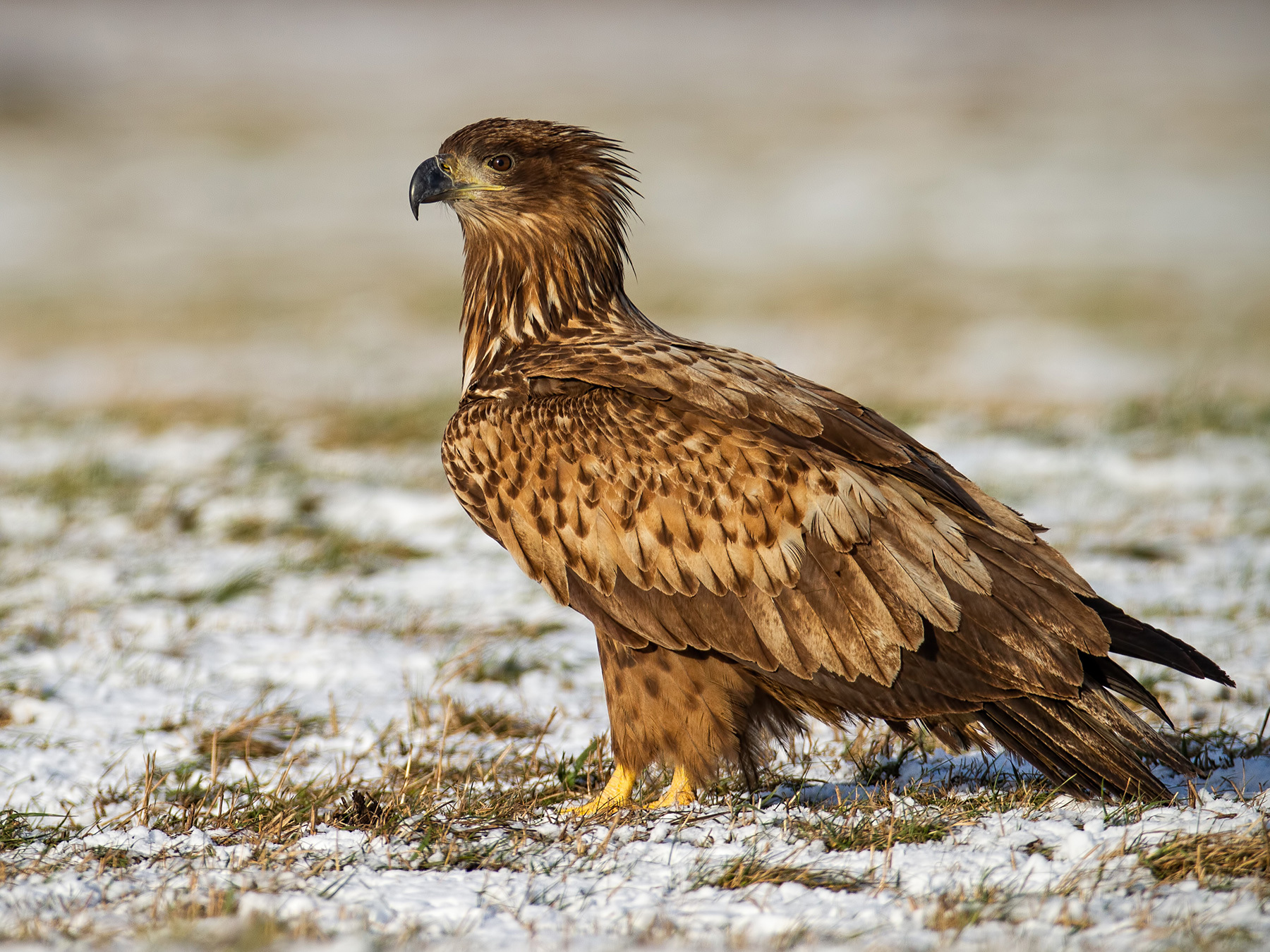
White-tailed Sea-eagle guides
3 guidesQuick facts
- Length
- 66–94 cm
- Wingspan
- 180–240 cm
- Weight
- 3000–6900 g
- Lifespan
- 20–25 years · oldest recorded 42 years
- Family
- Hawks & Eagles
- Migration
- Partial migrant
- Global status (IUCN)
- Least Concern
- World population
- 28,200 - 58,400 mature individuals
- Population trend
- Increasing
- Also called
- Sea Eagle, Erne, White-tailed Eagle, White-tailed Sea Eagle, European Sea Eagle
- Scientific name
- Haliaeetus albicilla
Questions
1Which is bigger, a bald eagle or a White-tailed eagle?
Bald Eagles are closely related to White-tailed Eagles and can be considered their New-world cousin. These two apex predators have very similar dimensions, although the White-tailed Eagle is marginally shorter and heavier.
Sources
4- 1BirdLife International. 2021. Haliaeetus albicilla. The IUCN Red List of Threatened Species 2021: e.T22695137A206723035. Source (opens in a new tab)
- 2BirdLife International. 2021. Haliaeetus albicilla. The IUCN Red List of Threatened Species 2021: e.T22695137A206723035. Source (opens in a new tab)
- 3BirdLife International. 2021. Haliaeetus albicilla. The IUCN Red List of Threatened Species 2021: e.T22695137A206723035. Source (opens in a new tab)
- 4Carey and Judge, Longevity Records: Life Spans of Mammals, Birds, Amphibians, Reptiles, and Fish (2000) Source (opens in a new tab)

Checked by
Nathan Cope, founder and editor
Nathan founded Birdfact and leads its writers and contributors in the UK, the US and Canada. He has watched and studied birds for more than ten years, and checks every article and species guide before it’s published.