


Water Pipit
Eurasian Water Pipit · Anthus spinoletta
By the Birdfact teamChecked by Nathan Cope
On this page13 sections
How to recognise it
What do Water Pipits look like?
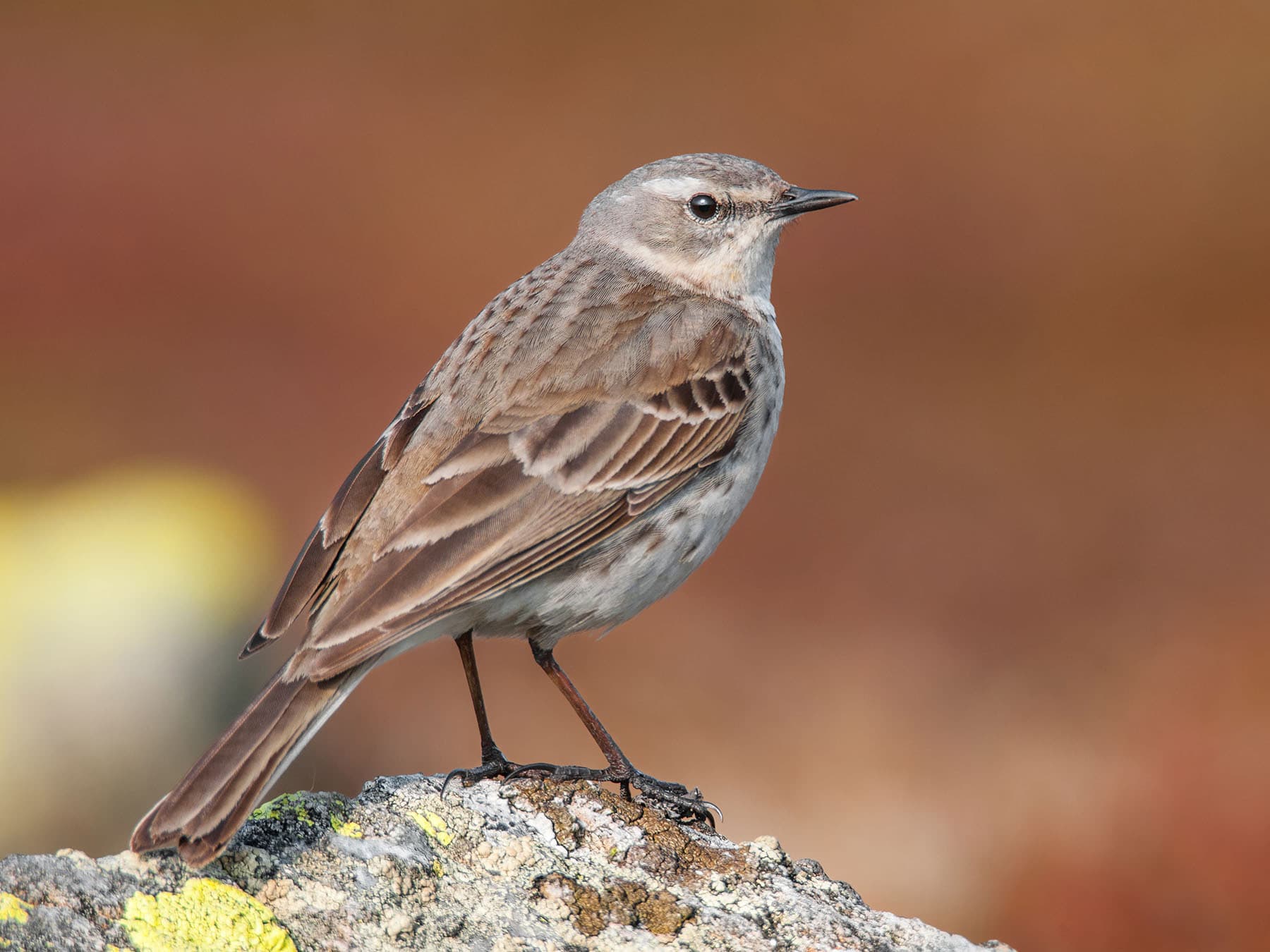
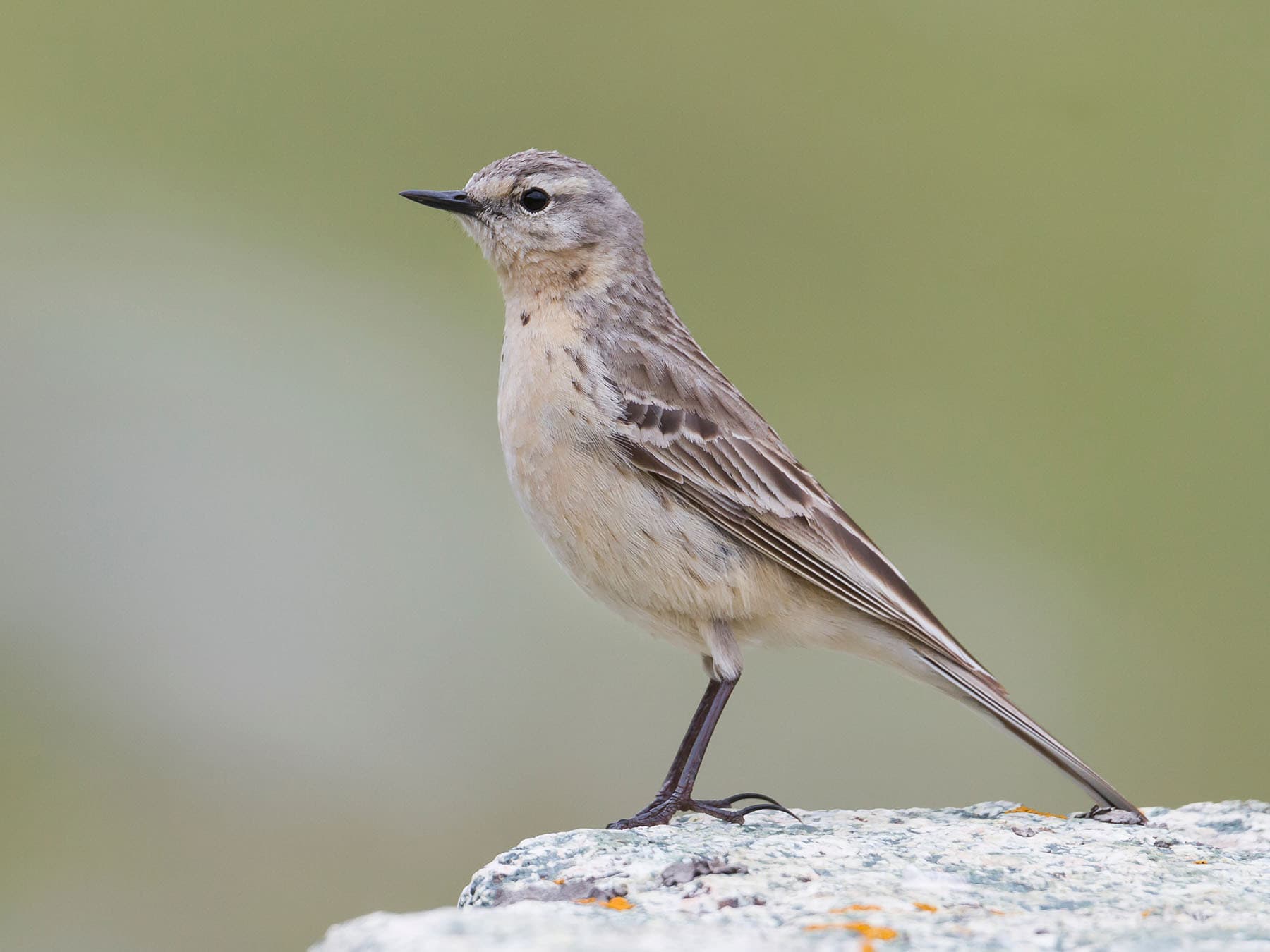
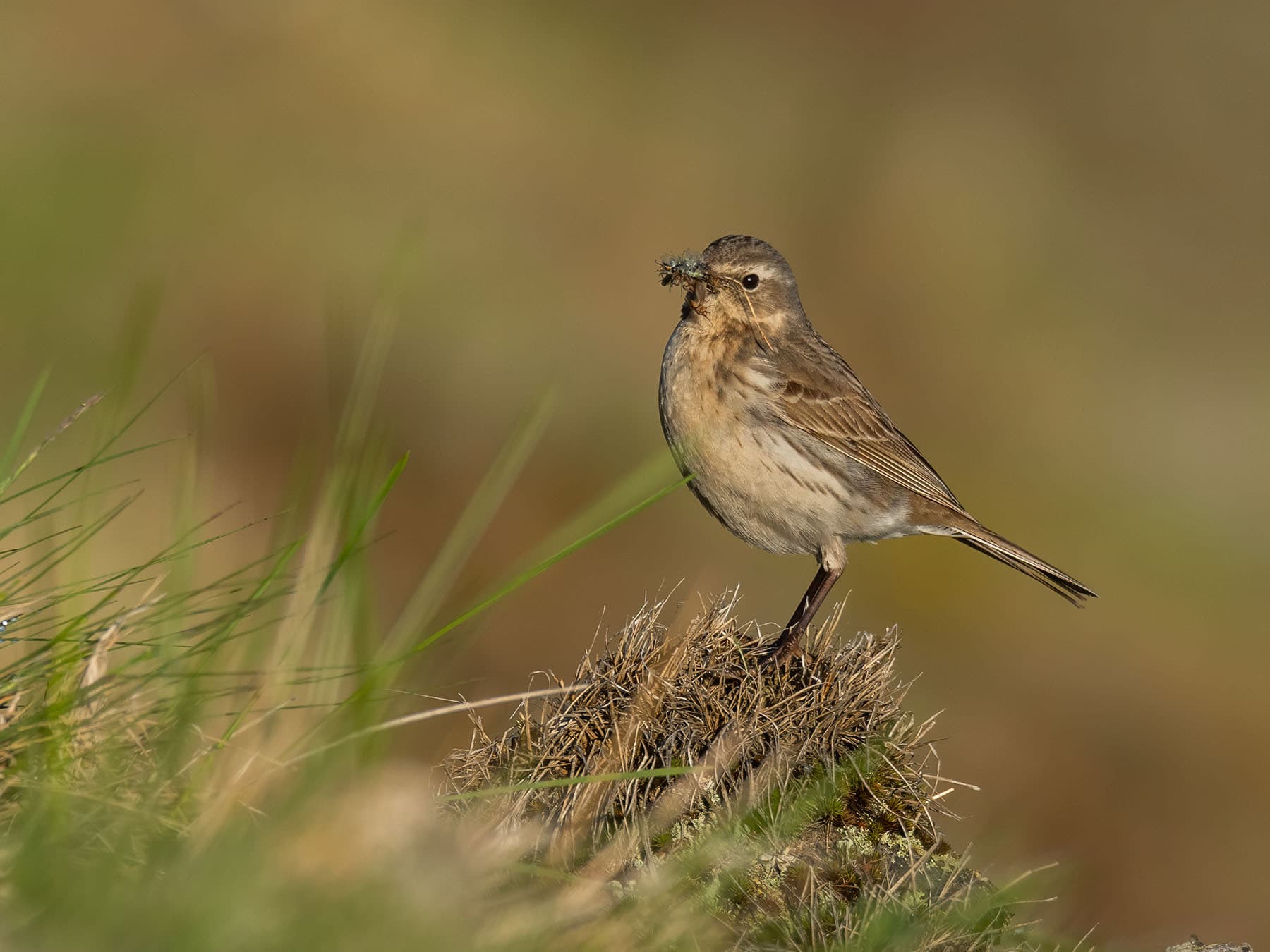
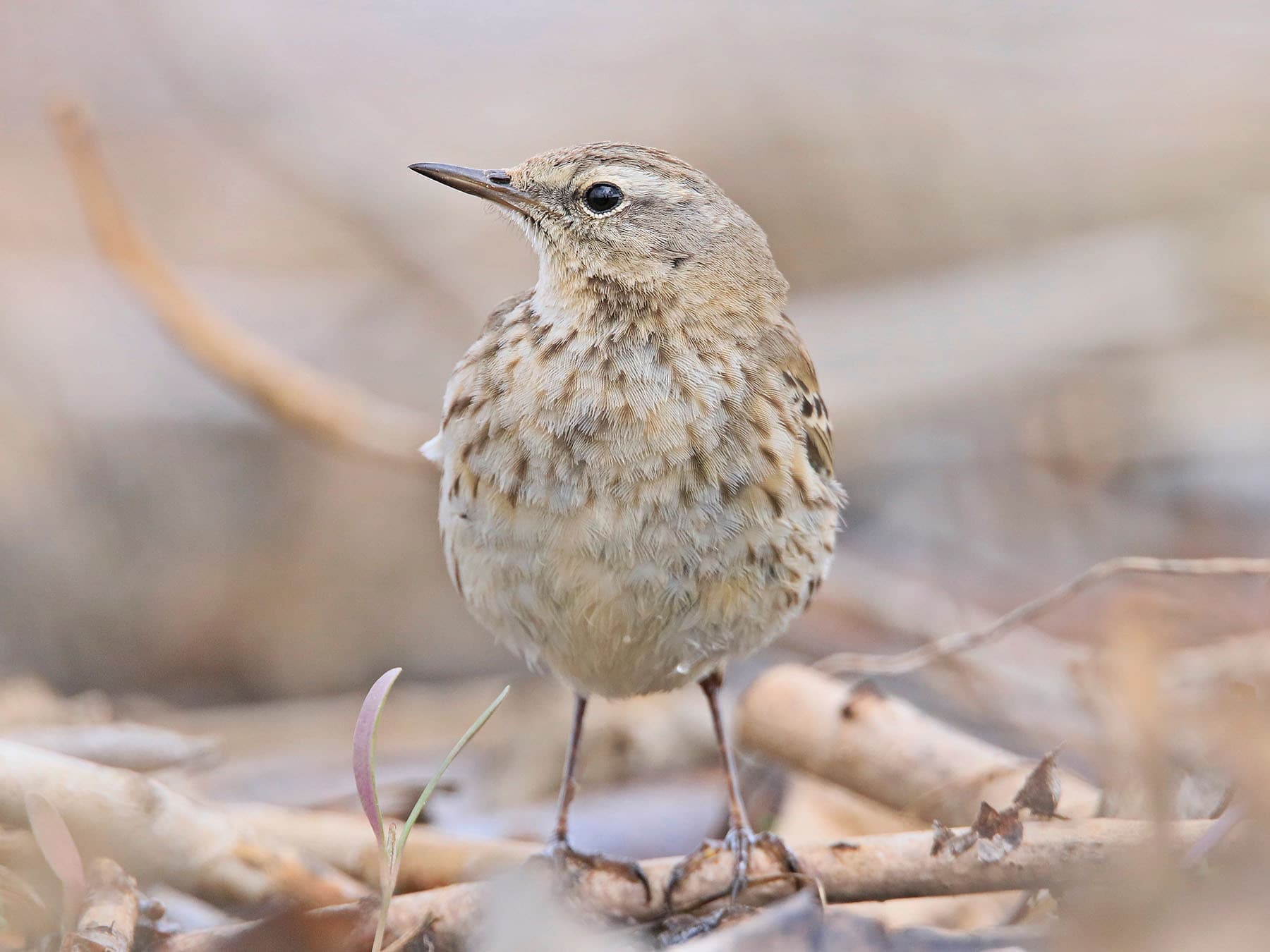
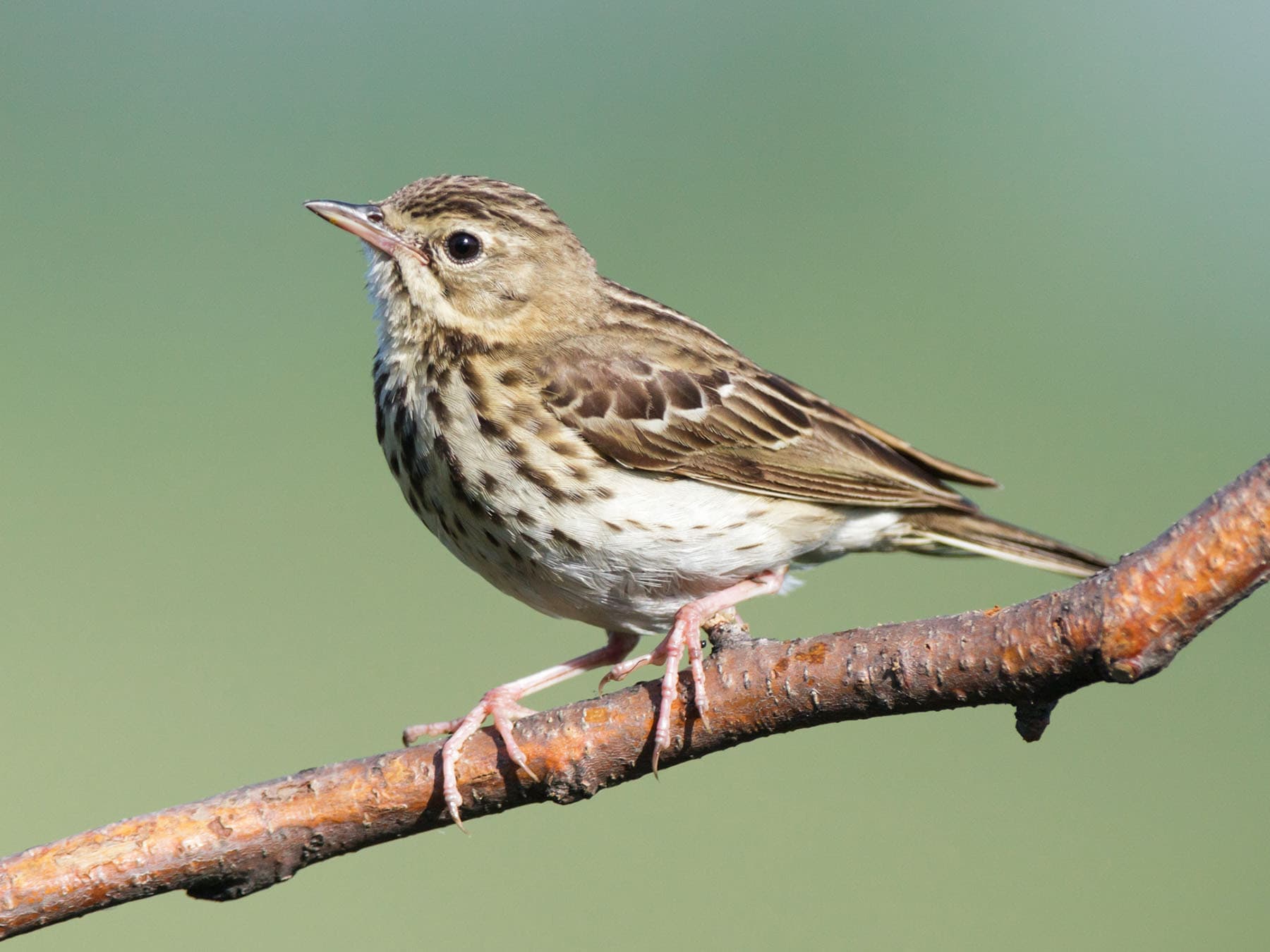
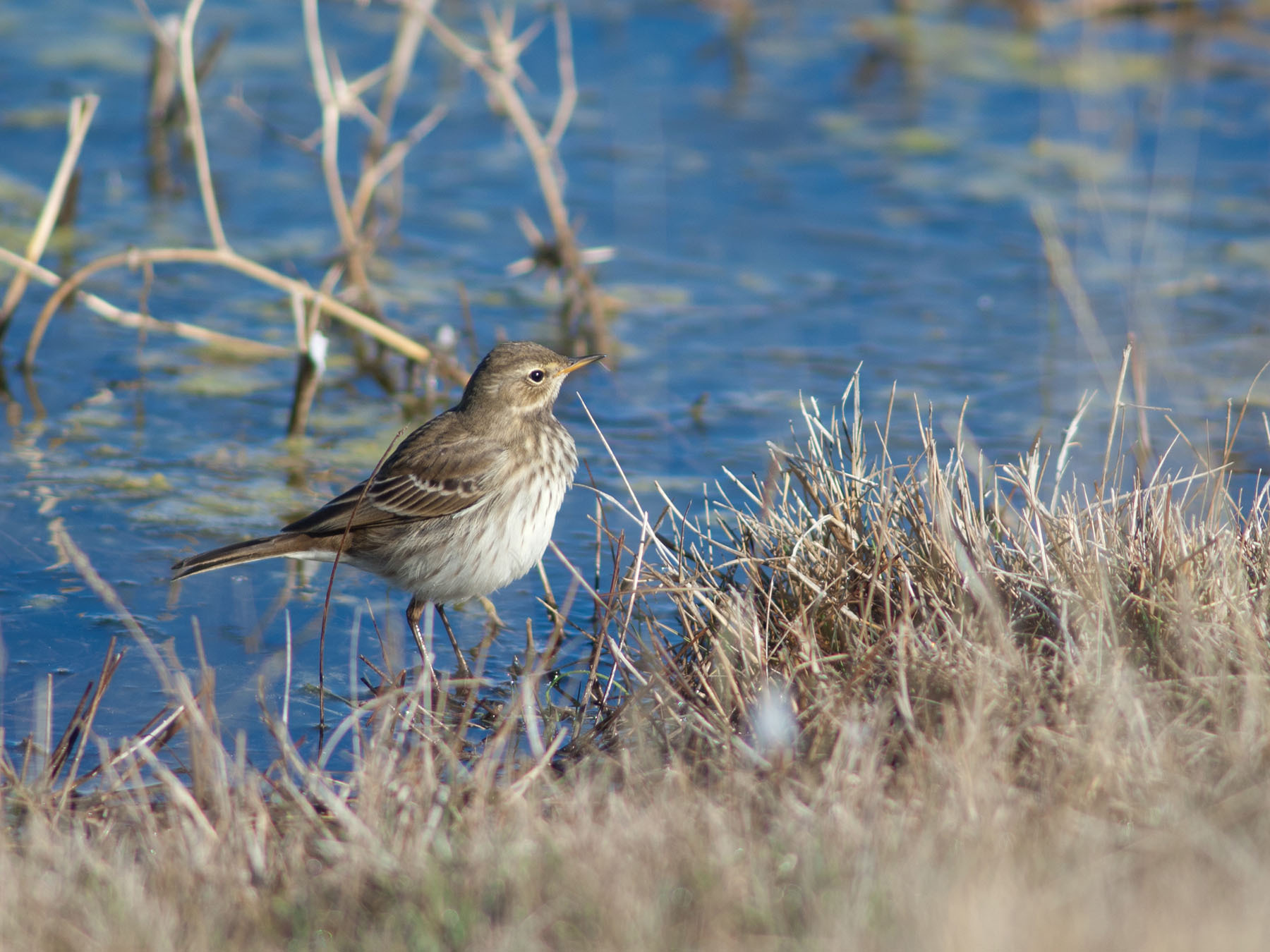
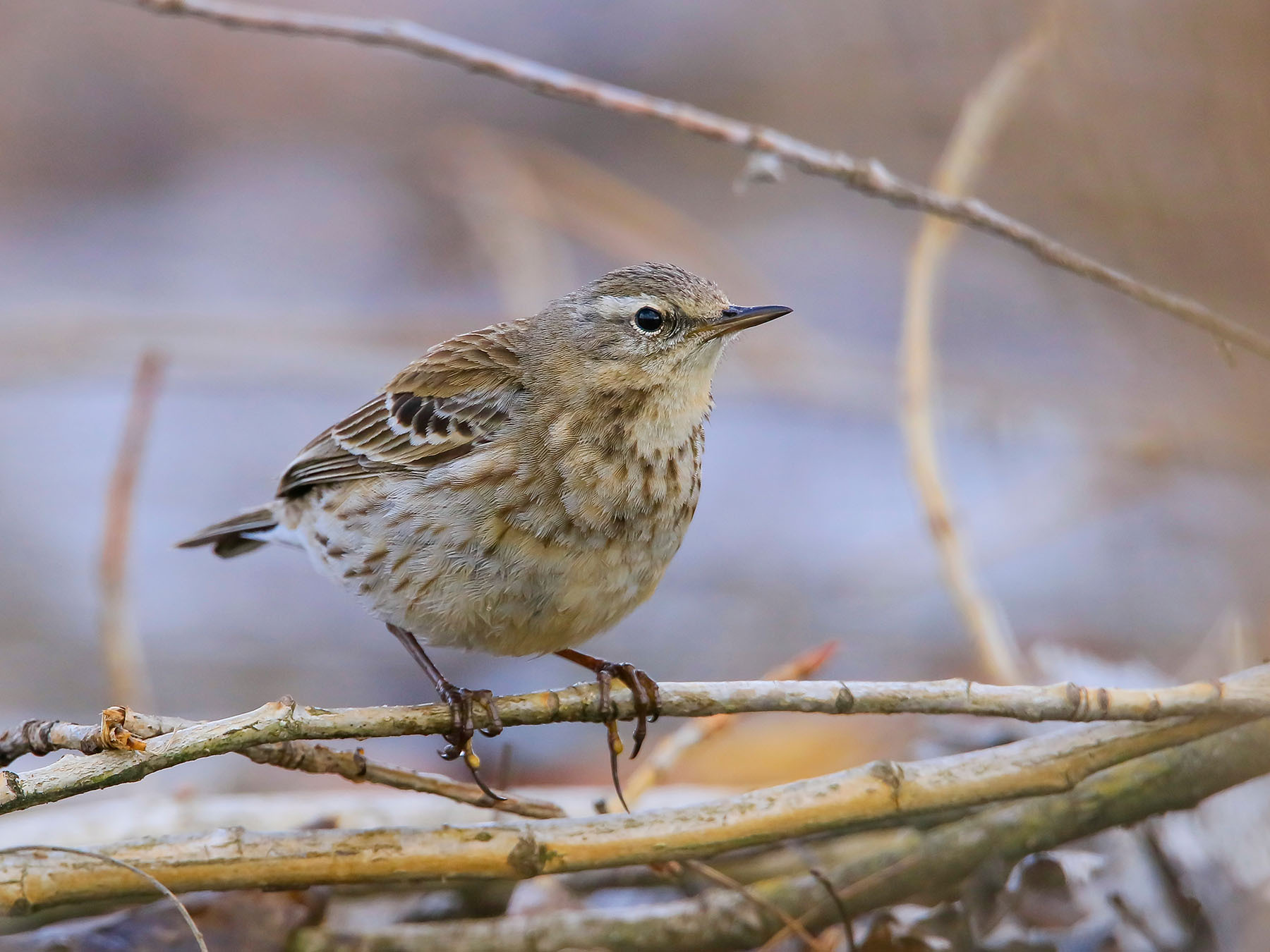
Water pipits have brownish-grey upperparts and buff underparts. It has dark, streaky markings on its breast and its tail is dark grey, lined with white. Water pipits have a pale stripe over their eye, dark legs and a long, slender yellowish-grey bill.
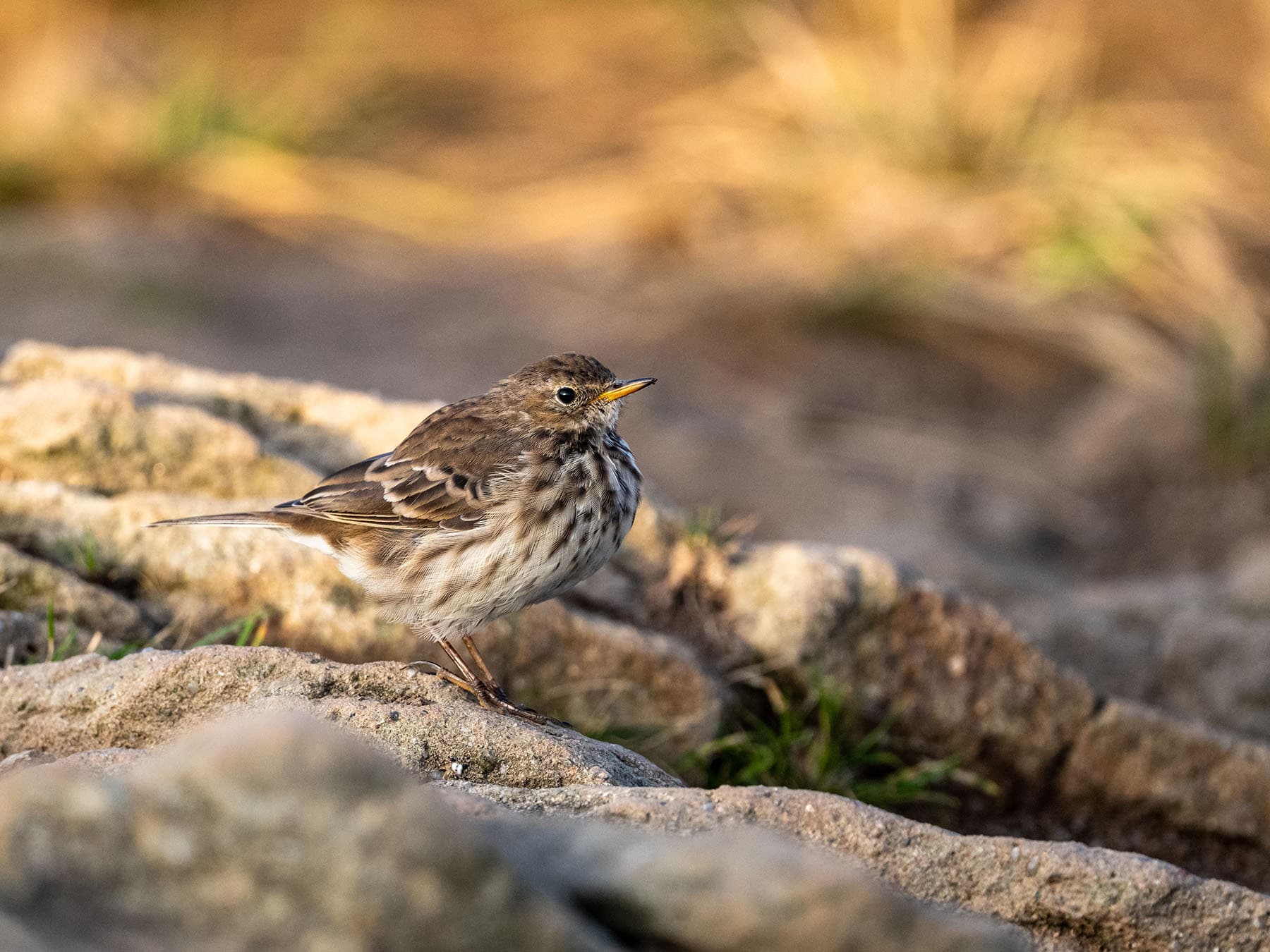
During the breeding season, these markings are more defined, with the head more grey than brown. After the breeding season, water pipits undergo a moult, when their plumage becomes browner and more streaked, and their facial markings are less clear.
Female water pipits are similar in appearance to males and there are no major differences between the sexes in plumage or size. However, females sometimes have a greyer head.
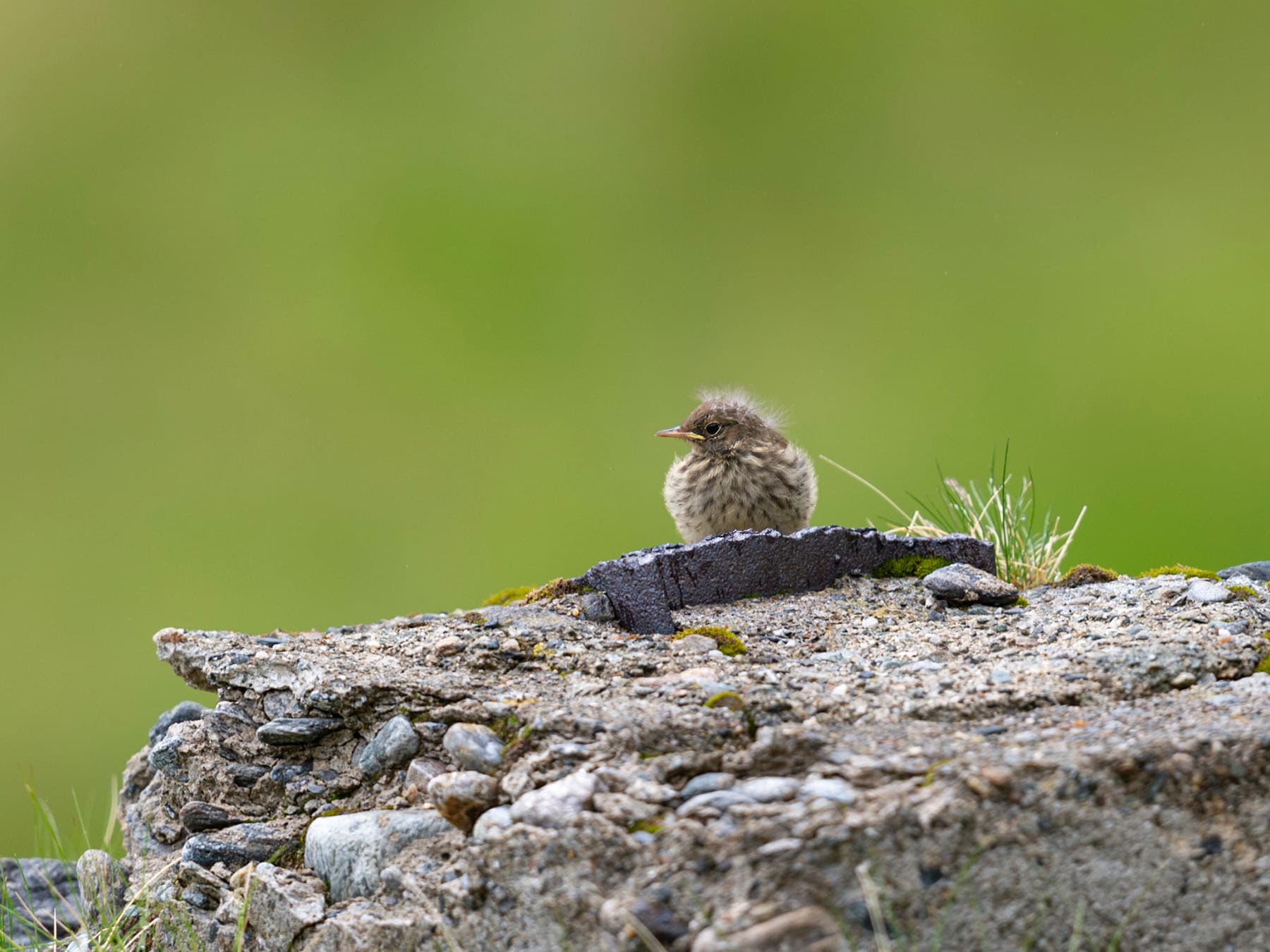
Young water pipits resemble non-breeding adults, but are darker and their plumage is distinctly more streaked, particularly on the underparts.
How big are Water Pipits?
Among the pipit and wagtail family, water pipits are considered large, stocky birds. Males and females are roughly the same size and weight.
- Length: 15 cm to 17 cm (5.9 in to 6.7 in)
- Wingspan: 22.5 cm to 28 cm (8.9 in to 11 in)
- Weight: 18.7g to 23 g (0.66–0.81 oz)
Its size
Adults- Length
- 15–17 cm
- Wingspan
- 25–28 cm
- Weight
- 18–24 g
Its song and calls
What sound does a Water Pipit make?
The song of a water pipit can be heard both in flight and from a perch, and lasts between 9 and 12 seconds, consisting of four or five different bursts, including rattling and tinkling sounds.
- Flight call0:00 / 0:06
Recorded in Normandie, France · February 2022
When and where to see it
OctoberArriving
Most recorded in October
- 1. Kentunder 0.1%
- 2. Londonunder 0.1%
- 3. Norfolkunder 0.1%
- 4. Bristolunder 0.1%
- 5. Lincolnshireunder 0.1%
Each dot is a county, state or province: the bigger and darker, the larger the bird’s share of that place’s bird records that month. Grey dots: no regular records. The ringed point is the centre of the bird’s records this month; the arrow shows how it moved since last month, and the dashed loop its path through the year. “Arrivals” colours places where it becomes regular this month (orange) or is in its last regular month (grey). GBIF eBird Observation Dataset, 2019–2024. Map data: Natural Earth, US Census Bureau; place centres © OpenStreetMap contributors.
In your area
See when the Water Pipit is recorded in your county, state or province.
How often the Water Pipit turns up in the UK and Ireland through the year, from birdwatchers' records.
United Kingdom
Winter visitor · regularly Oct–Apr · most records in January
Ireland
Winter visitor · regularly Dec–Feb · most records in January
Show as a table
| Month | United Kingdom | Ireland |
|---|---|---|
| January | 0.055% (regular) | 0.015% (regular) |
| February | 0.044% (regular) | 0.014% (regular) |
| March | 0.040% (regular) | 0.005% |
| April | 0.011% (regular) | – |
| May | <0.001% | – |
| June | – | – |
| July | – | – |
| August | – | – |
| September | <0.001% | – |
| October | 0.022% (regular) | <0.001% |
| November | 0.053% (regular) | 0.004% |
| December | 0.050% (regular) | 0.013% (regular) |
Recorded regularly in
Worldwide: recorded regularly in 68 countries
Countries where it was recorded in at least 3 of the 6 years 2019–2024. Linked countries have their own bird list.
Europe (36)
- Albania
- Andorra
- Austria
- Belgium
- Bosnia & Herzegovina
- Bulgaria
- Croatia
- Czechia
- Denmark
- France
- Germany
- Greece
- Hungary
- Ireland
- Italy
- Jersey
- Kosovo
- Liechtenstein
- Luxembourg
- Malta
- Montenegro
- Netherlands
- North Macedonia
- Norway
- Poland
- Portugal
- Romania
- Russia
- Serbia
- Slovakia
- Slovenia
- Spain
- Sweden
- Switzerland
- Ukraine
- United Kingdom
Asia (29)
- Armenia
- Azerbaijan
- Bahrain
- Bhutan
- China
- Cyprus
- Georgia
- Hong Kong SAR China
- India
- Iran
- Iraq
- Israel
- Jordan
- Kazakhstan
- Kuwait
- Kyrgyzstan
- Lebanon
- Mongolia
- Nepal
- Oman
- Pakistan
- Palestinian Territories
- Qatar
- Saudi Arabia
- South Korea
- Tajikistan
- Turkey
- United Arab Emirates
- Uzbekistan
Data: EOD – eBird Observation Dataset (Cornell Lab of Ornithology), accessed via GBIF.org, CC BY 4.0. Records from 2019–2024, aggregated and filtered by Birdfact. How these lists are made
What is the habitat of a Water Pipit?
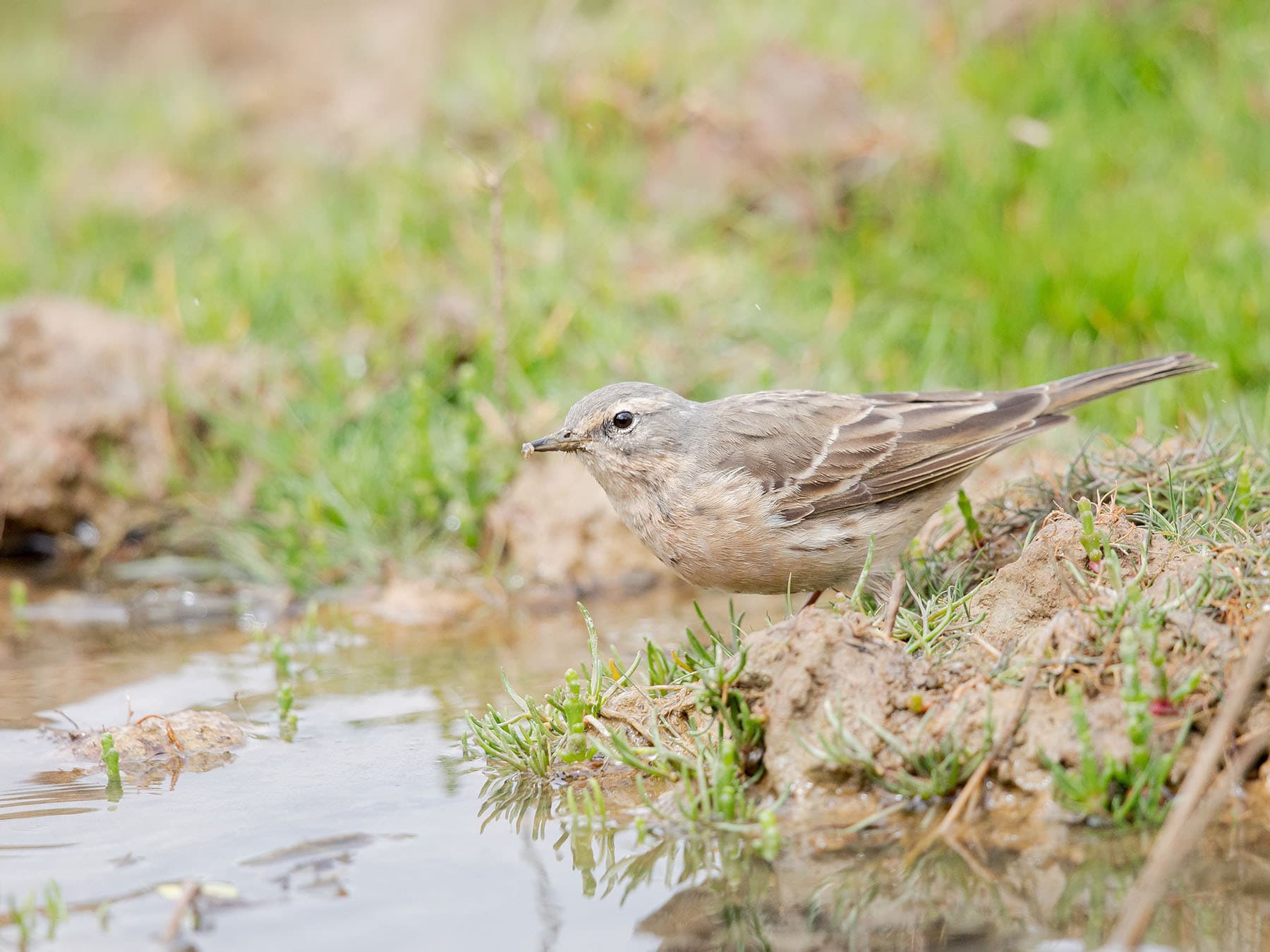
Natural breeding habitats of water pipits include the mountainous landscapes of central and southern Europe, where they are found on slopes with heather or short grass, wet meadows and streams above the treeline. They live at altitudes of between 615 m and 3,150 m (2020 ft to 10,350 ft).
Marshlands, grassy lake shores, lagoons, and irrigated farmlands offer a suitable winter habitat for visiting water pipits.
What is the range of a Water Pipit?
The summer breeding range of water pipit extends across the mountain ranges of central and southern Europe, and spreads eastwards across Central Asia, as far as China.
From late September onwards, water pipits head to their winter territories, which are found in western and southern Europe and into northwest Africa.
Where do Water Pipits live?
Water pipits are found in mountain ranges across central Europe and Asia, where they live in upland meadows scattered with rocks and thicket patches.
Winter visitors arrive on UK shores from October onwards, and have been sighted in Norfolk, Cornwall, Dorset, Merseyside, Cambridgeshire, Suffolk, Surrey and Lincolnshire among other places.
How rare are Water Pipits?
Water pipits are rare visitors to the UK during winter months and do not breed in the country.
Only around 200 birds overwinter in England, largely observed in southern and eastern regions, but also occasionally recorded in Wales and southern Scotland. With such a small visiting population, a sighting would be considered extremely uncommon.
Where can you see Water Pipits in the UK?
Between October and April, small numbers of visiting water pipits take up temporary residence at marshlands, with most sightings in eastern and southern England. The Wild Ken Hill rewilding project in Norfolk reported 14 overwintering water pipits in 2021.
Migration
Do Water Pipits migrate?
The water pipits that visit the UK each winter are migrants that breed in rocky upland meadows across western and central Europe. Migration from the Alps begins from October onwards, with overwintering visitors departing from Britain by early April.
Tips for seeing it
- Look for Water Pipits near streams, wet meadows, and alpine grasslands
- Listen for their high-pitched 'tsip' call as they fly
- Observe their characteristic tail-wagging behaviour when perched
- In the UK, watch for them in coastal areas during the winter months
What it eats
What do Water Pipits eat?
Most of a water pipit’s diet is made up of invertebrates, including crickets, grasshoppers, lacewings, cicadas, sawflies, moths, butterflies and caterpillars. Snails, worms and millipedes are also eaten.
Later in the summer, berries, algae and seeds may also be eaten, with some research showing that by late summer, algae represented around a 75 percent share of a water pipit’s diet.
What do baby Water Pipits eat?
Young water pipits are brought larvae and other insects to eat by their parents, and as they mature, will progress onto being fed whole invertebrates. In the early stages, slower-moving insects are offered, so the hatchlings develop the ability to practise catching their own prey.
Nesting and breeding
Where do Water Pipits nest?
A cup-like nest is constructed at ground level, and hidden from view by vegetation, or tucked into a crevice in a cliff. Nests are made from grass stems, moss and leaves and lined with softer materials, including hair or fur.
What do Water Pipit eggs look like?
Water pipits’ eggs are speckled grey-white, and measure around 21 mm by 16 mm (0.8 in by 0.6 in), weighing 2.7 g (0.1 oz).
A typical clutch contains between four and six eggs, which are incubated by the female for 14 to 15 days.
Fledging takes place after a further 14 to 15 days, by which point young water pipits have not mastered flight and continue to rely on their parents for food.
Do Water Pipits mate for life?
Water pipits are monogamous while they are raising young; however, a different mate may be chosen if a second brood is attempted in the same breeding season.
A later pair bond may extend into the winter, although no data is available to show whether this continues after migration.
Behaviour
Are Water Pipits aggressive?
Observations of water pipits in the UK note that they show aggression to other similar species that may be present on their wintering grounds, including meadow pipits and pied wagtails.
They are also noted to be especially cautious around humans, making study and identification at close range particularly tricky.
Lifespan and predators
How long do Water Pipits live?
There is not much data available on the typical lifespan of a wild water pipit, but based on similar species that we know more about, it’s estimated to be between 2 and 5 years. The oldest individual water pipit, a ringed bird, reached 8 years 8 months.
What are the predators of Water Pipits?
Birds of prey, including sparrowhawks and common kestrels are the leading predators of water pipits in Britain.
In their breeding range, Eleonora’s falcons are among the main species that prey on adult water pipits, while their nests are targeted by a number of predators, in particular stoats, snakes, long-tailed weasels and deer mice.
Are Water Pipits protected?
Visiting water pipits are protected under the Wildlife and Countryside Act, 1981. Any deliberate attempt to kill, injure or capture a water pipit is an offence punishable by law.
Are Water Pipits endangered?
The official IUCN status of water pipits is ‘least concern’ as their population across their breeding range is stable. However, in the UK, they are classified with Amber conservation status, meaning they have been designated as a species of moderate concern.
Conservation
While the Water Pipit is currently listed as Least Concern, it faces threats from habitat loss due to changes in agricultural practices and climate change.
Conservation efforts focus on preserving high-altitude breeding habitats and protecting wintering grounds in wetland areas.
Similar birds
Often mistaken for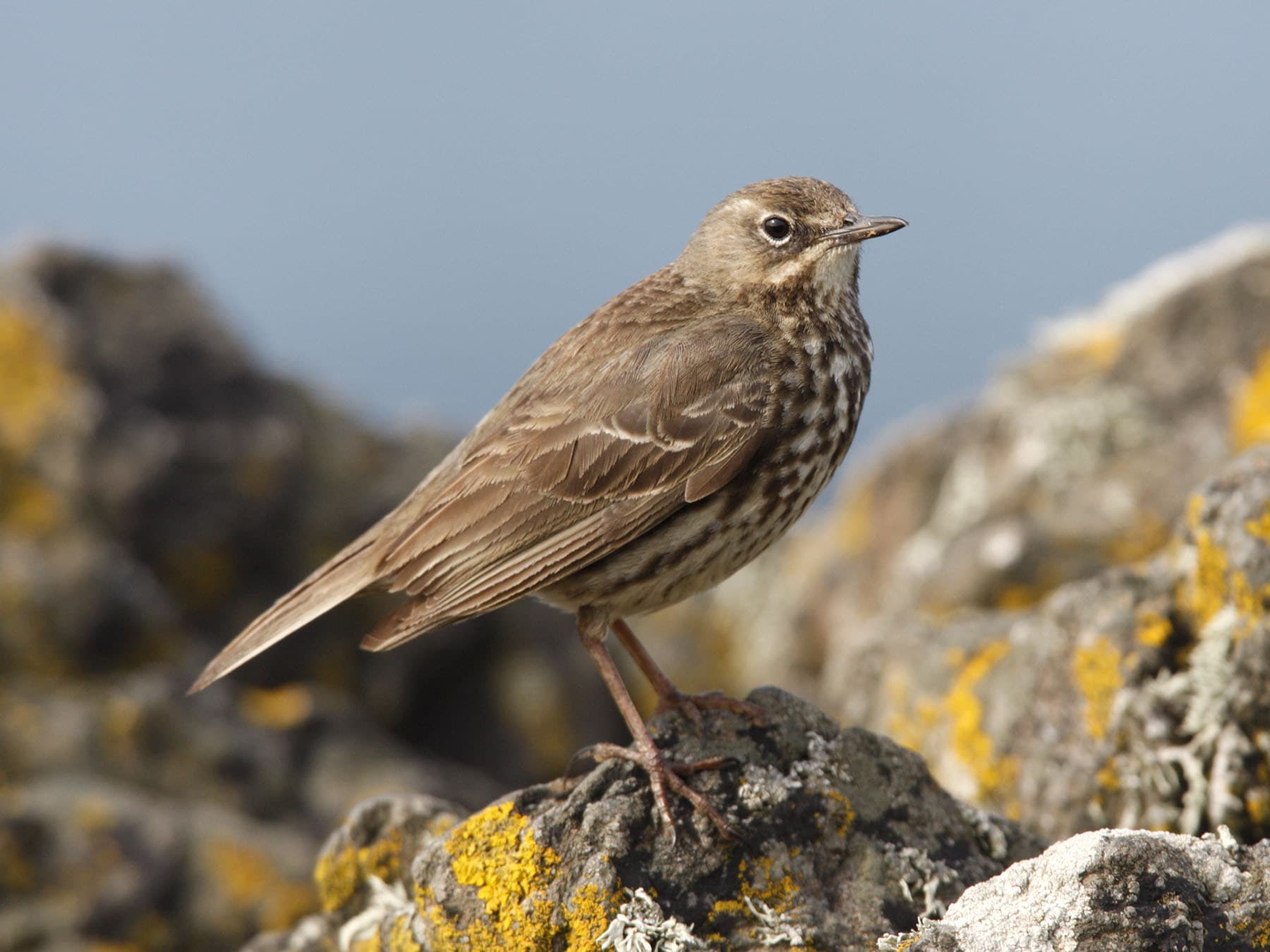
More photos
3 photos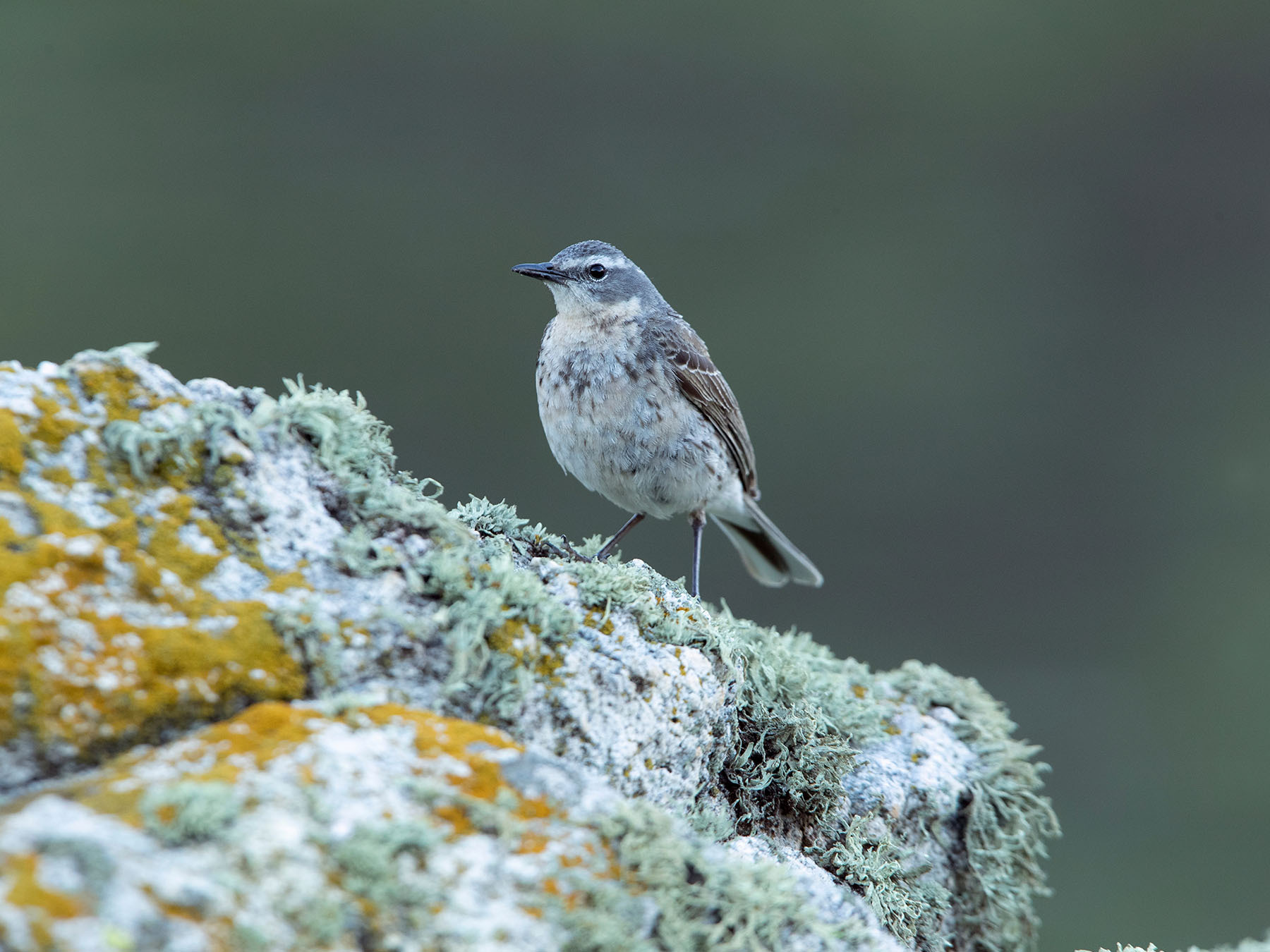
Quick facts
- Length
- 15–17 cm
- Wingspan
- 25–28 cm
- Weight
- 18–24 g
- Lifespan
- 2–5 years · oldest recorded 4.9 years
- Family
- Wagtails & Pipits
- Migration
- Partial migrant
- Global status (IUCN)
- Least Concern
- World population
- 12,920,000 - 25,280,000 mature individuals
- Population trend
- Stable
- Also called
- Eurasian Water Pipit
- Scientific name
- Anthus spinoletta
Sources
4- 1BirdLife International. 2018. Anthus spinoletta. The IUCN Red List of Threatened Species 2018: e.T22718571A131988012. Source (opens in a new tab)
- 2BirdLife International. 2018. Anthus spinoletta. The IUCN Red List of Threatened Species 2018: e.T22718571A131988012. Source (opens in a new tab)
- 3BirdLife International. 2018. Anthus spinoletta. The IUCN Red List of Threatened Species 2018: e.T22718571A131988012. Source (opens in a new tab)
- 4BTO Ringing Report (2022) Source (opens in a new tab)

Checked by
Nathan Cope, founder and editor
Nathan founded Birdfact and leads its writers and contributors in the UK, the US and Canada. He has watched and studied birds for more than ten years, and checks every article and species guide before it’s published.