


Rock Pipit
Eurasian Rock Pipit · Anthus petrosus
By the Birdfact teamChecked by Nathan Cope
On this page13 sections
How to recognise it
What do Rock Pipits look like?
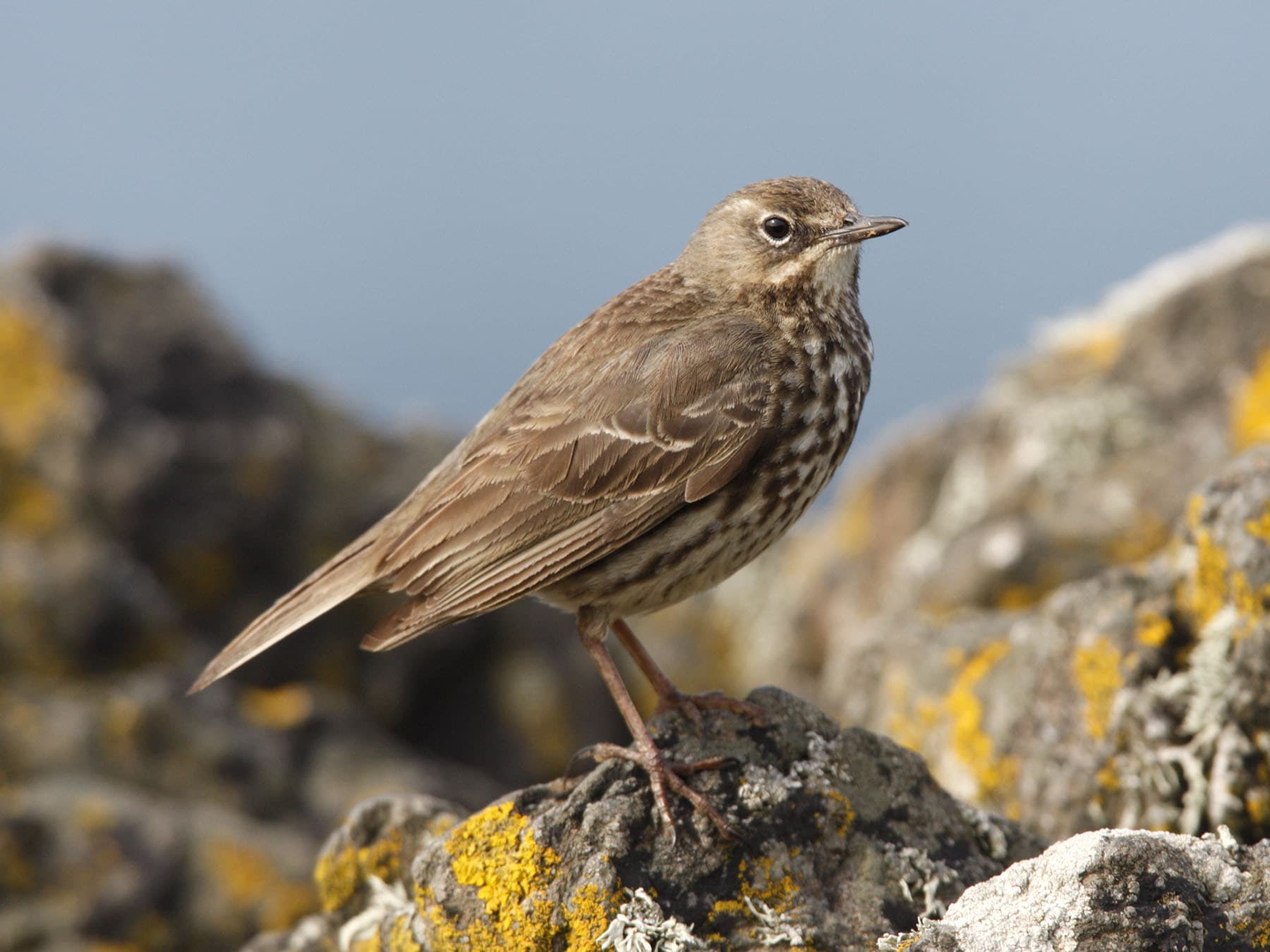
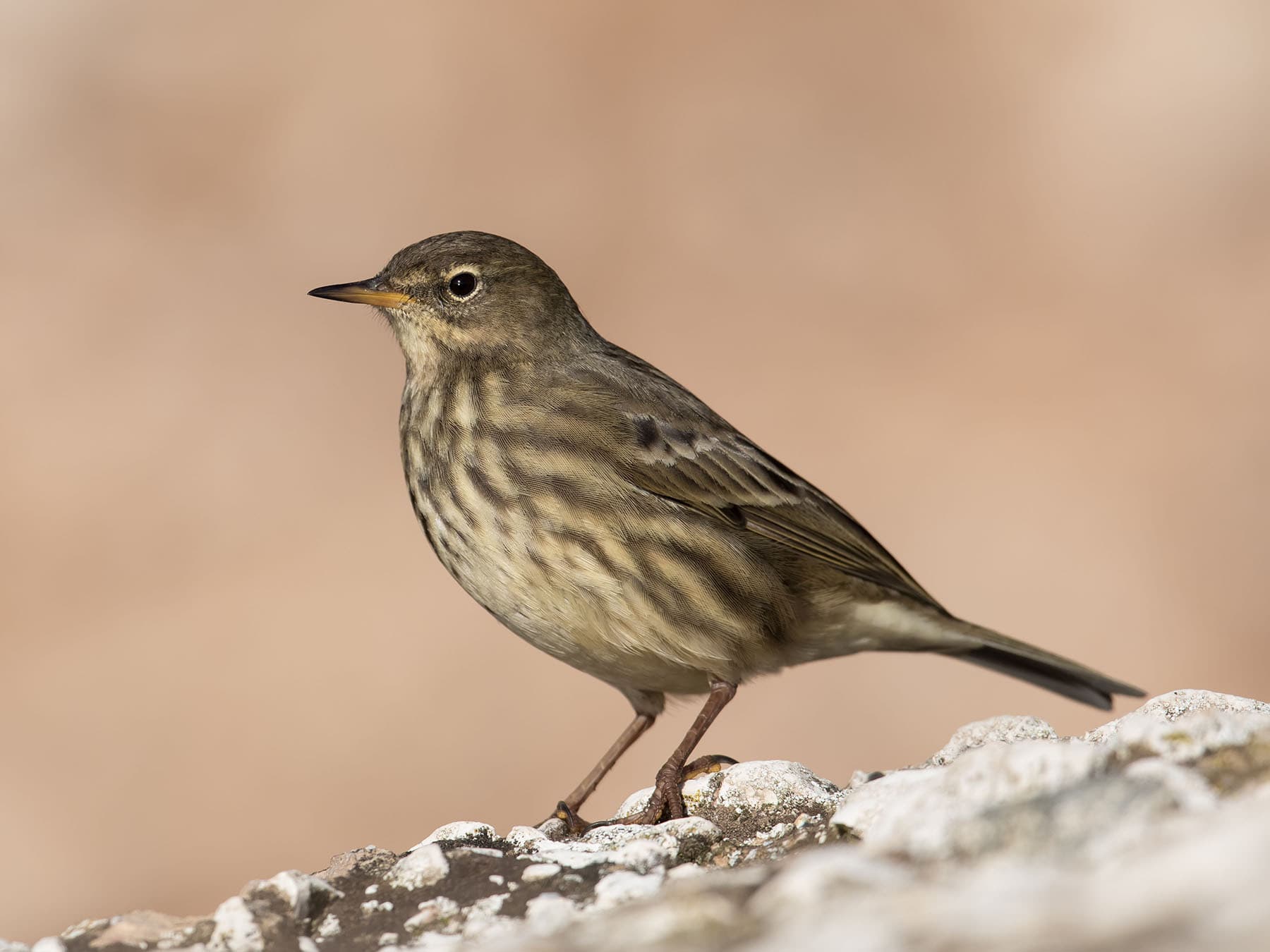
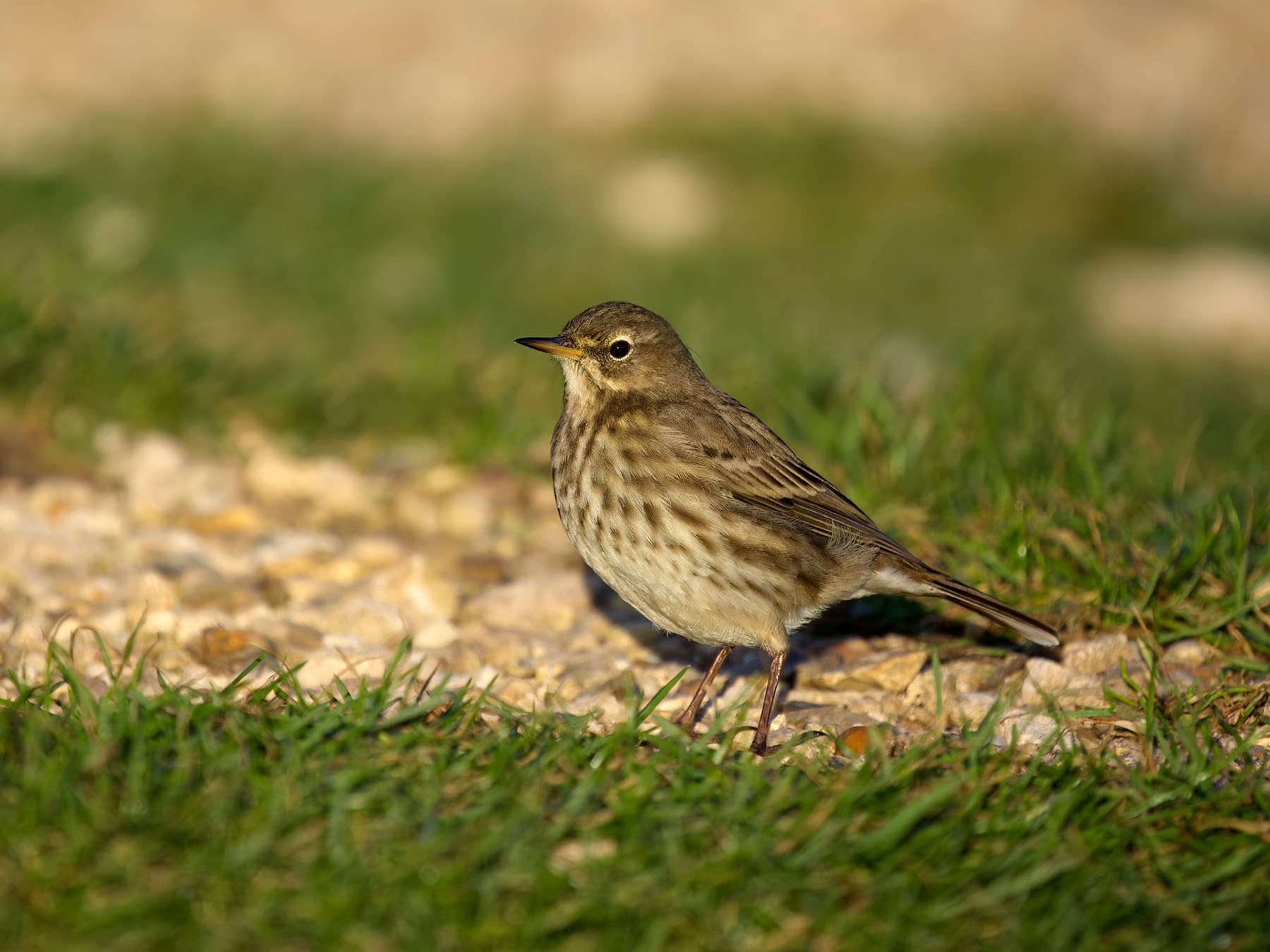
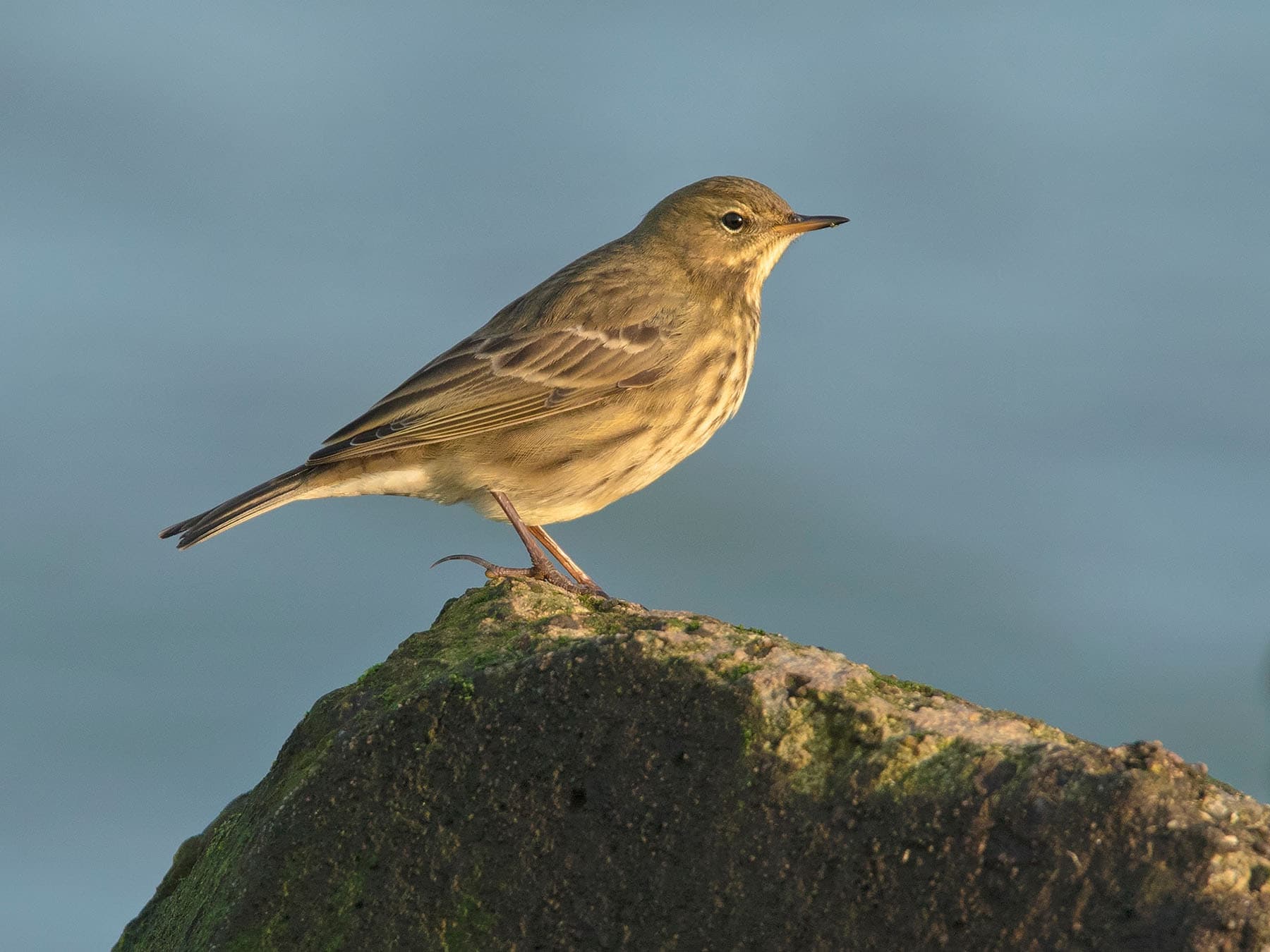
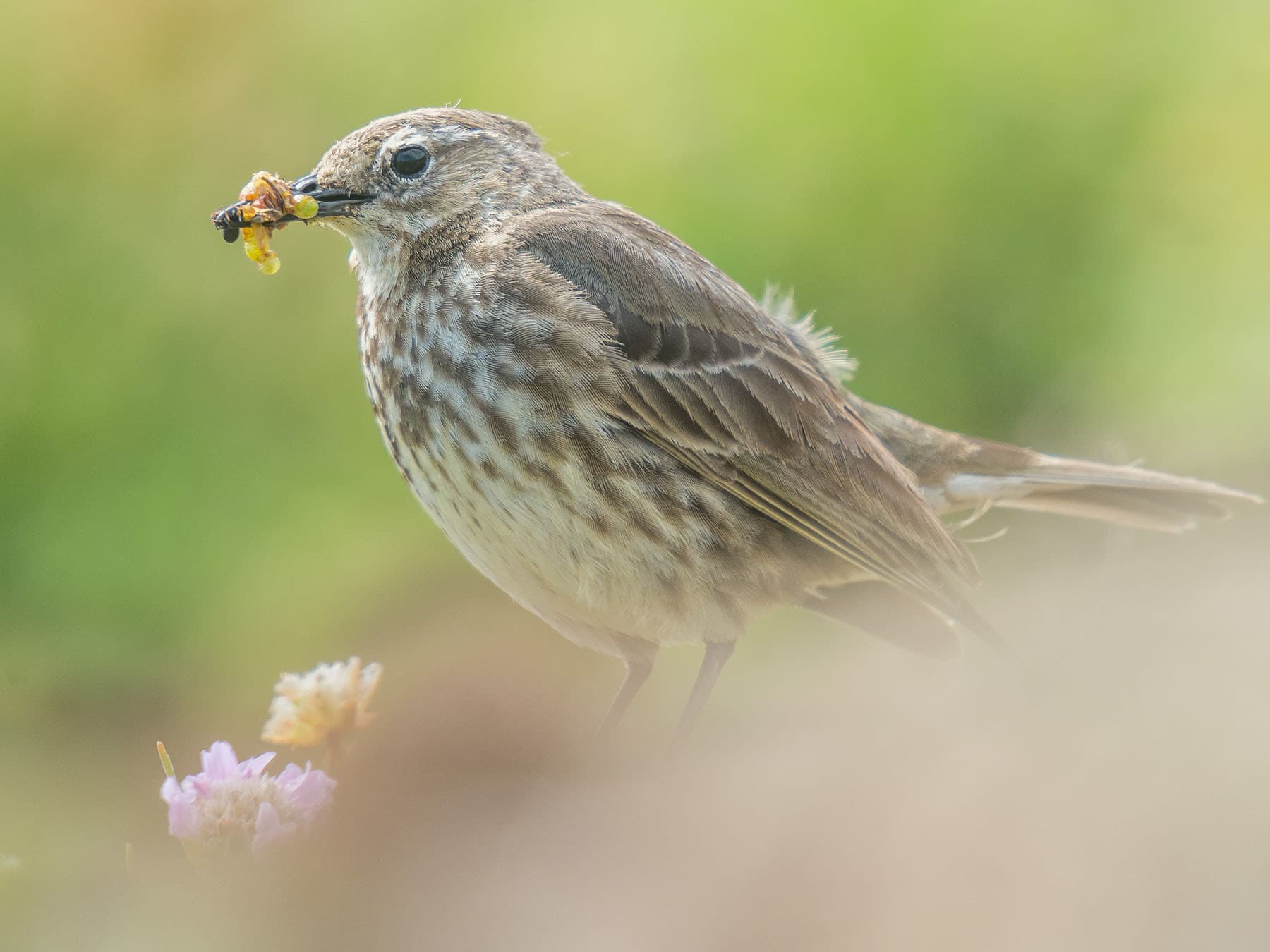
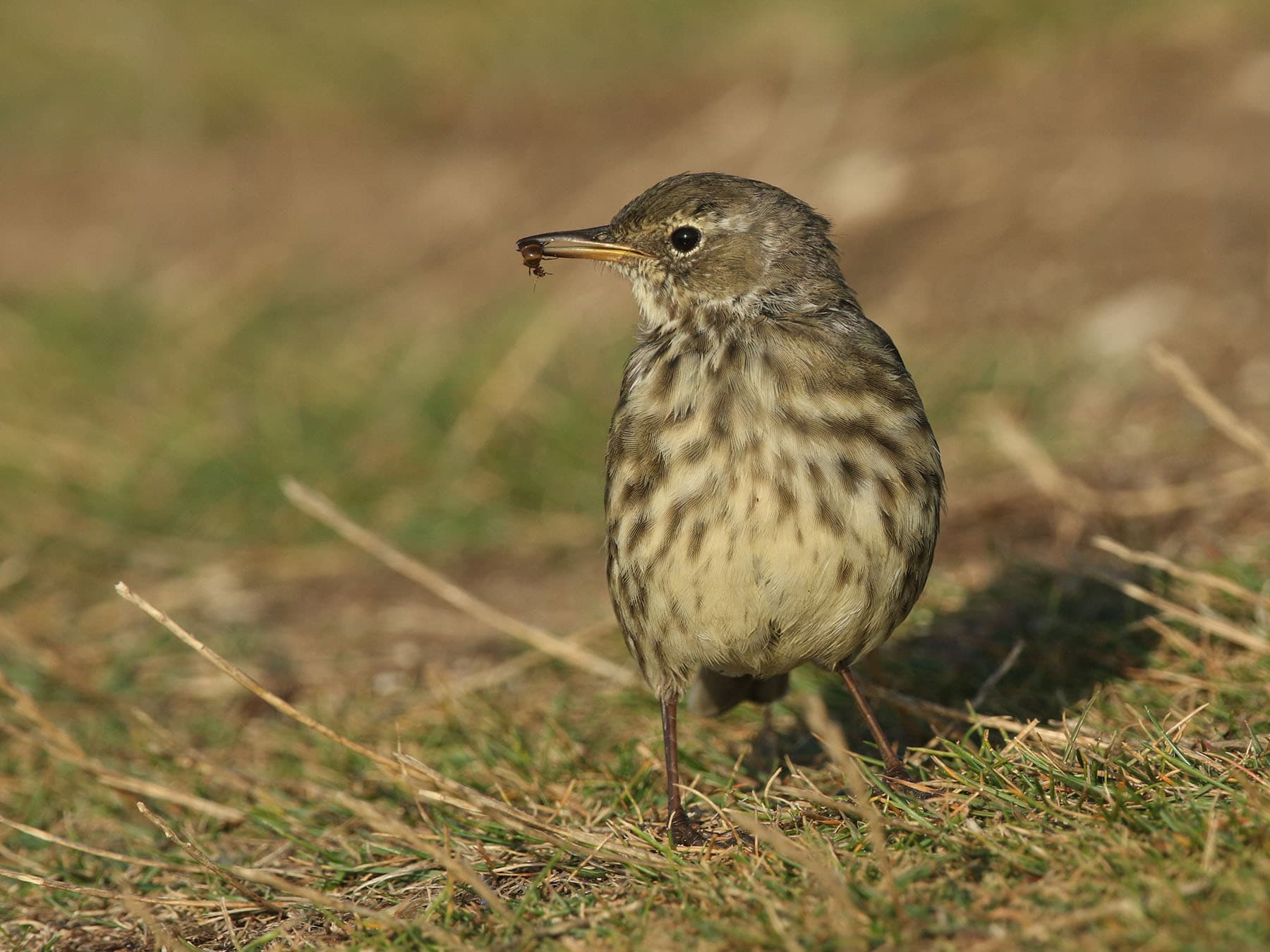
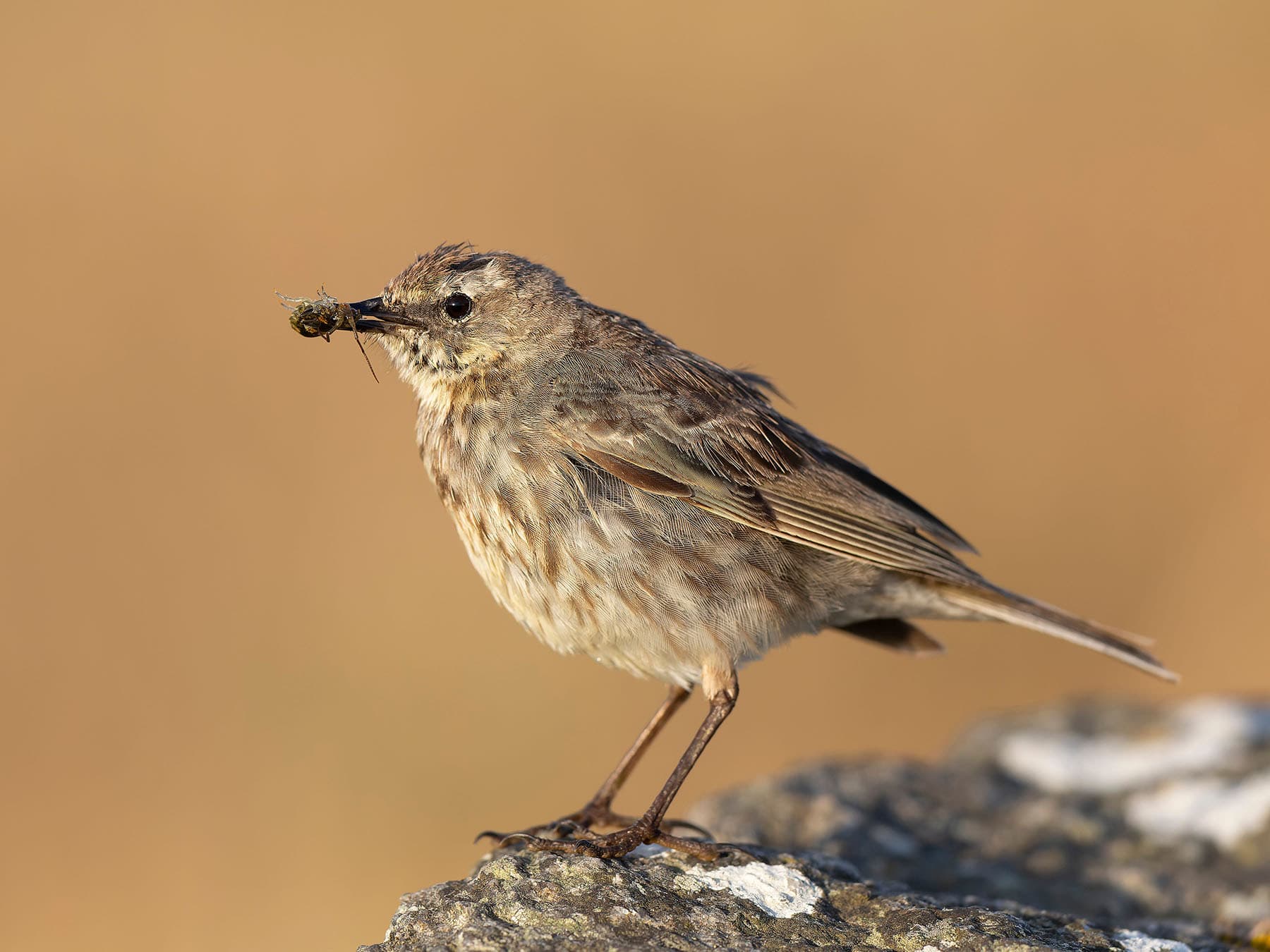
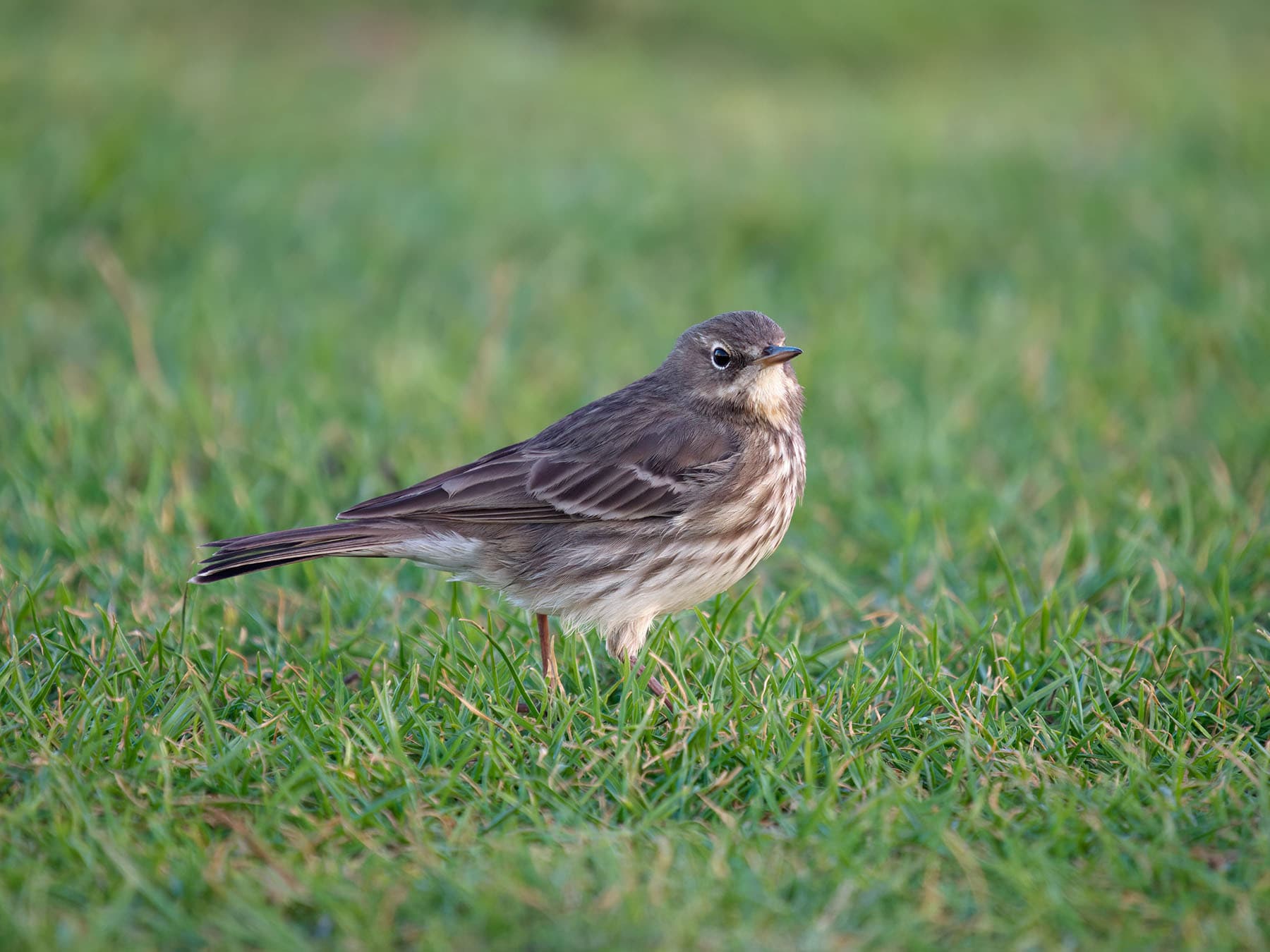
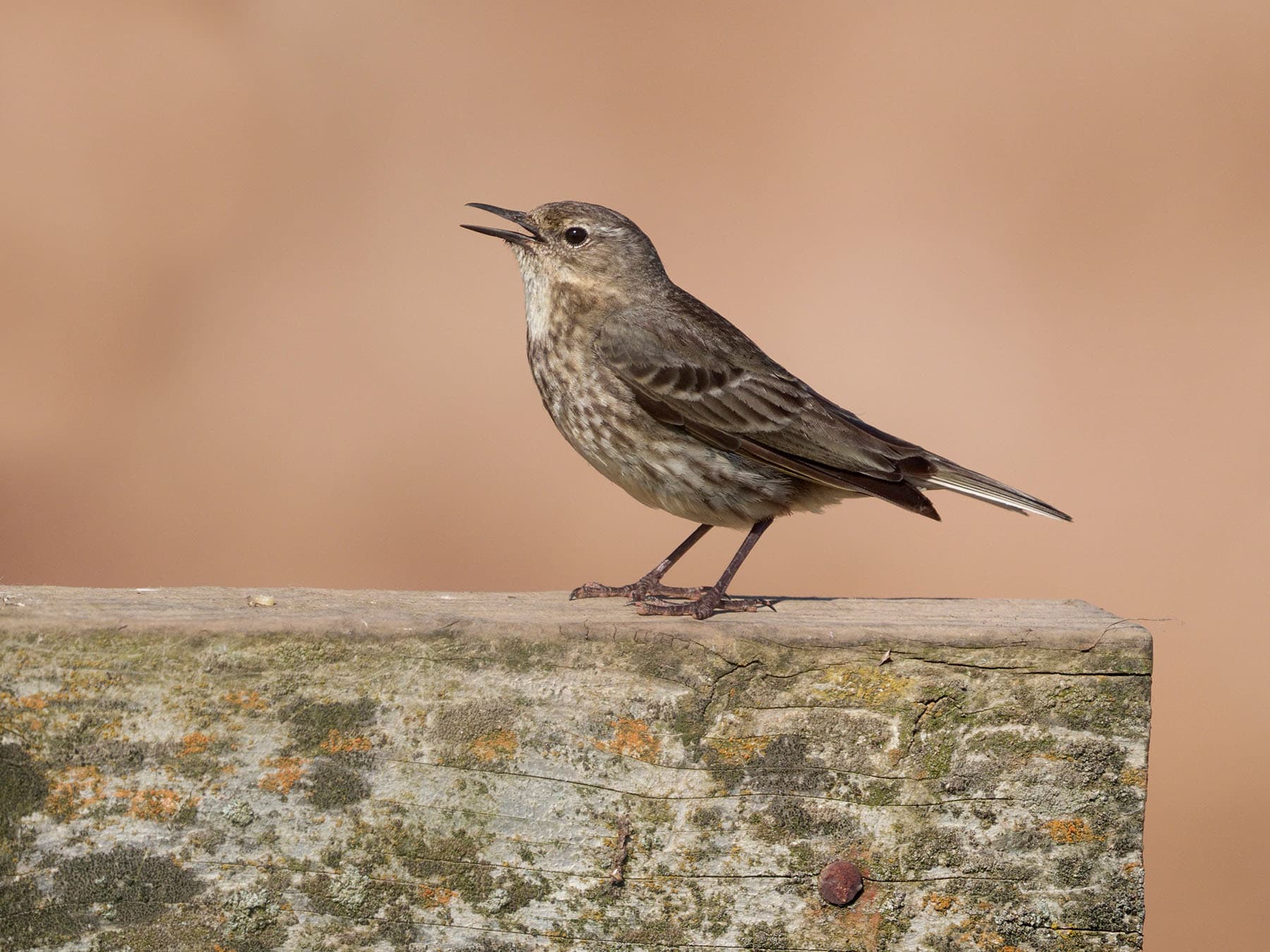
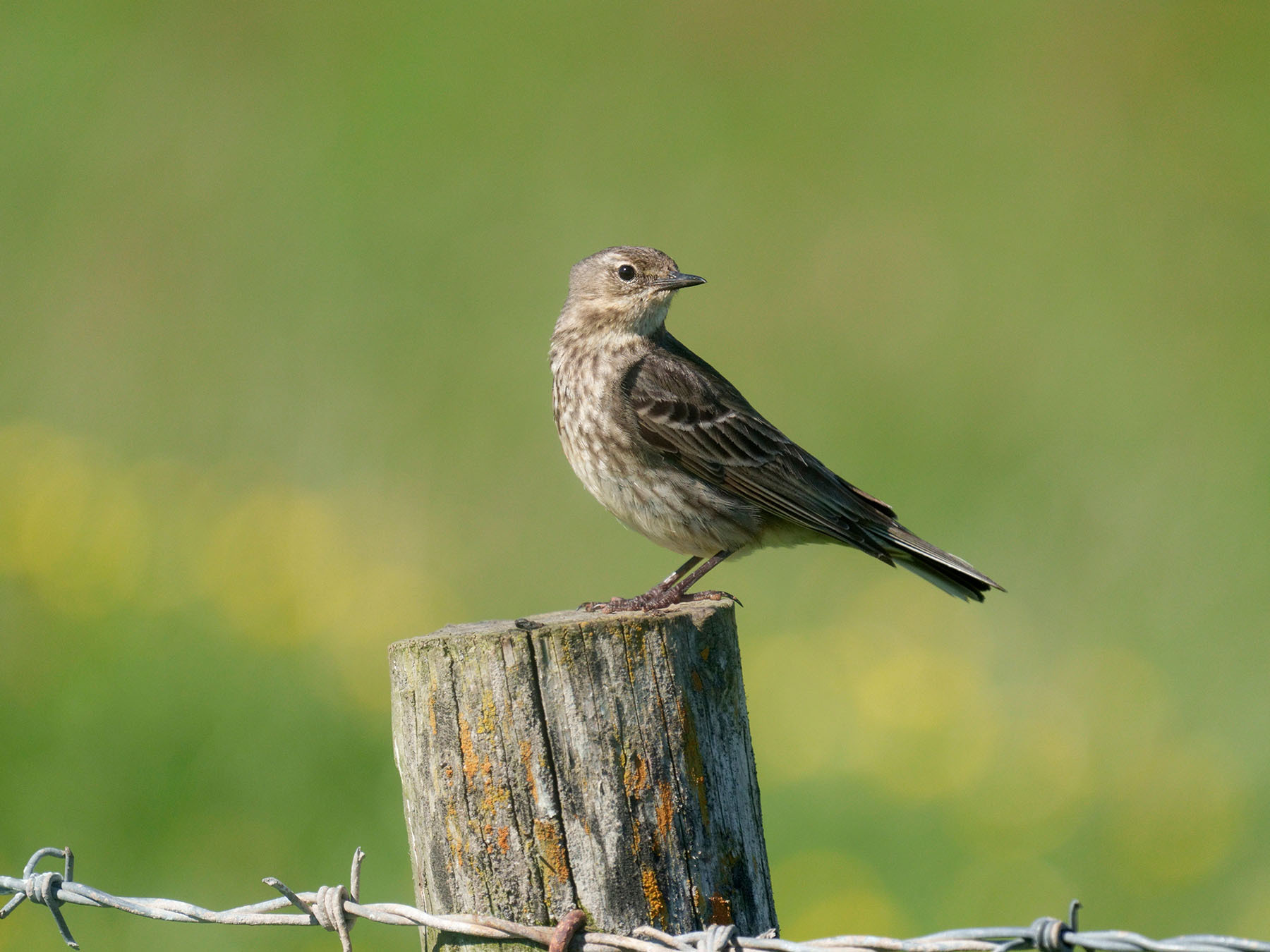
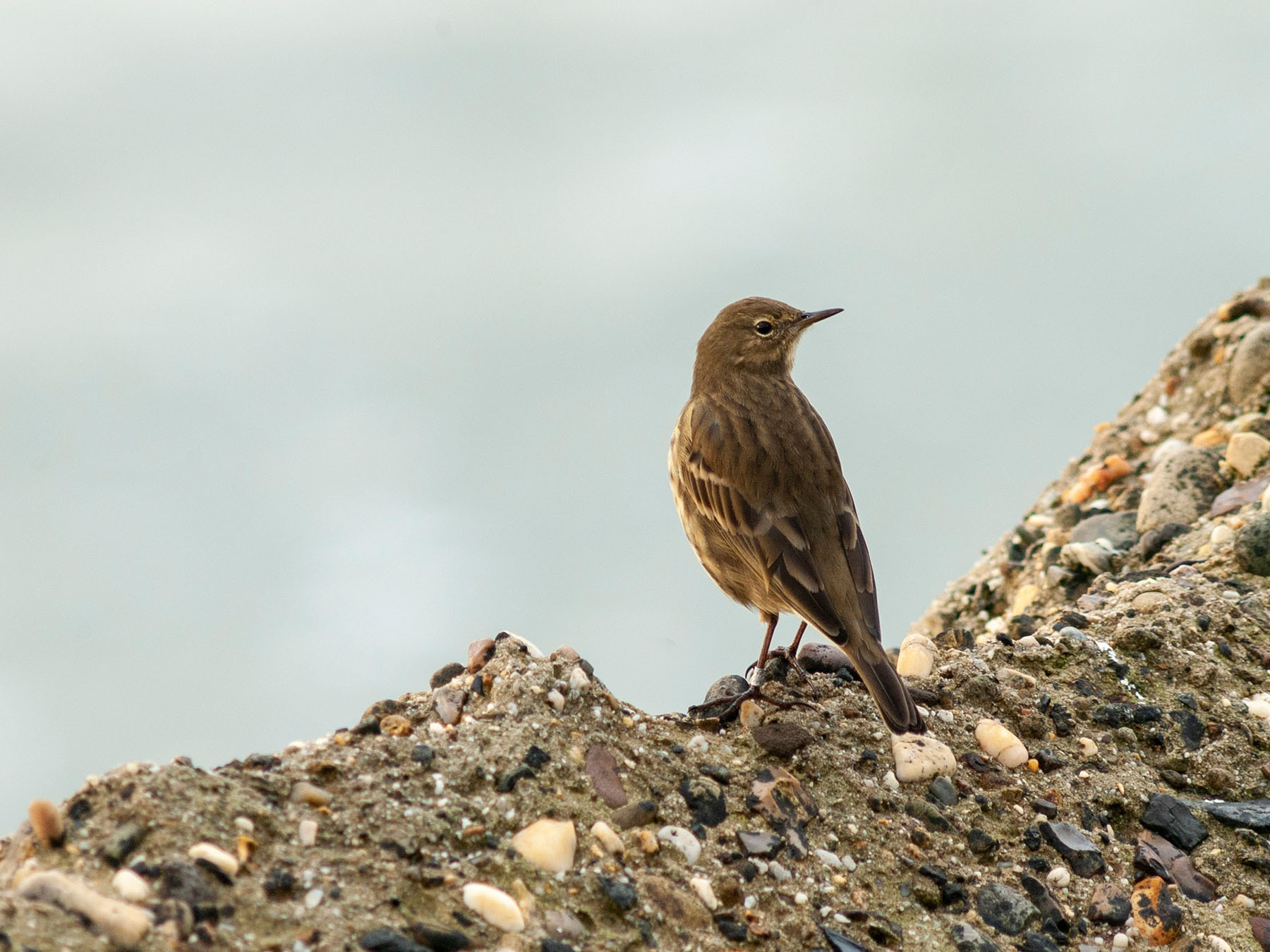
Thrush-like in appearance, the rock pipit is a stocky pipit with a long, bobbing tail. Its upper parts are a dark olive-brown to grey, while its underparts are a buffish-white colour, heavily marked with dark brown speckles.
Facial markings include heavy streaking across the crown, a pale, narrow eye ring and a lighter brown-buff stripe running across the face from near the base of the bill. Legs are dark pink, and feet have a distinctive longer hind claw.
Females and males are alike in colouring and markings, and cannot be told apart. Juvenile rock pipits are also similar to adults, but are browner and their plumage is more densely streaked.
How big are Rock Pipits?
Rock pipits are around the same size as a starling, with males and females within the same average size and weight range.
- Length: 16.5 cm (6.5 in)
- Wingspan: 23cm to 28cm (9.1 in to 11 in)
- Weight: 20g to 30g (0.7 oz to 1.1 oz)
Its size
Adults- Length
- 16–18 cm
- Wingspan
- 25–28 cm
- Weight
- 20–30 g
Its song and calls
What sound does a Rock Pipit make?
Rock pipits have a sharp, jangling song, consisting of a series of repeated musical notes. A loud, almost metallic-sounding “fiist” is used as a contact call, while the flight song consists of a rising pitch “wiist” note.
- Song0:00 / 0:16
Recorded in Pembrokeshire, Wales
Lawrence Shove / The British Library Board · Wikimedia Commons · CC BY-SA 4.0
- Call0:00 / 0:20
Recorded in Bretagne, France · October 2024
When and where to see it
OctoberPeak season
Most recorded in October
- 1. Derry3.0%
- 2. Clare2.5%
- 3. Mayo1.9%
- 4. Orkney Islands1.7%
- 5. Shetland Islands1.6%
Each dot is a county, state or province: the bigger and darker, the larger the bird’s share of that place’s bird records that month. Grey dots: no regular records. The ringed point is the centre of the bird’s records this month; the arrow shows how it moved since last month, and the dashed loop its path through the year. “Arrivals” colours places where it becomes regular this month (orange) or is in its last regular month (grey). GBIF eBird Observation Dataset, 2019–2024. Map data: Natural Earth, US Census Bureau; place centres © OpenStreetMap contributors.
In your area
See when the Rock Pipit is recorded in your county, state or province.
How often the Rock Pipit turns up in the UK and Ireland through the year, from birdwatchers' records.
United Kingdom
Resident · all year · most records in October
Ireland
Resident · all year · most records in September
Show as a table
| Month | United Kingdom | Ireland |
|---|---|---|
| January | 0.20% (regular) | 0.55% (regular) |
| February | 0.16% (regular) | 0.63% (regular) |
| March | 0.14% (regular) | 0.50% (regular) |
| April | 0.093% (regular) | 0.42% (regular) |
| May | 0.11% (regular) | 0.52% (regular) |
| June | 0.15% (regular) | 0.54% (regular) |
| July | 0.13% (regular) | 0.58% (regular) |
| August | 0.13% (regular) | 0.78% (regular) |
| September | 0.20% (regular) | 0.95% (regular) |
| October | 0.39% (regular) | 0.92% (regular) |
| November | 0.26% (regular) | 0.65% (regular) |
| December | 0.21% (regular) | 0.55% (regular) |
Recorded regularly in
Worldwide: recorded regularly in 21 countries
Countries where it was recorded in at least 3 of the 6 years 2019–2024. Linked countries have their own bird list.
Data: EOD – eBird Observation Dataset (Cornell Lab of Ornithology), accessed via GBIF.org, CC BY 4.0. Records from 2019–2024, aggregated and filtered by Birdfact. How these lists are made
What is the habitat of a Rock Pipit?
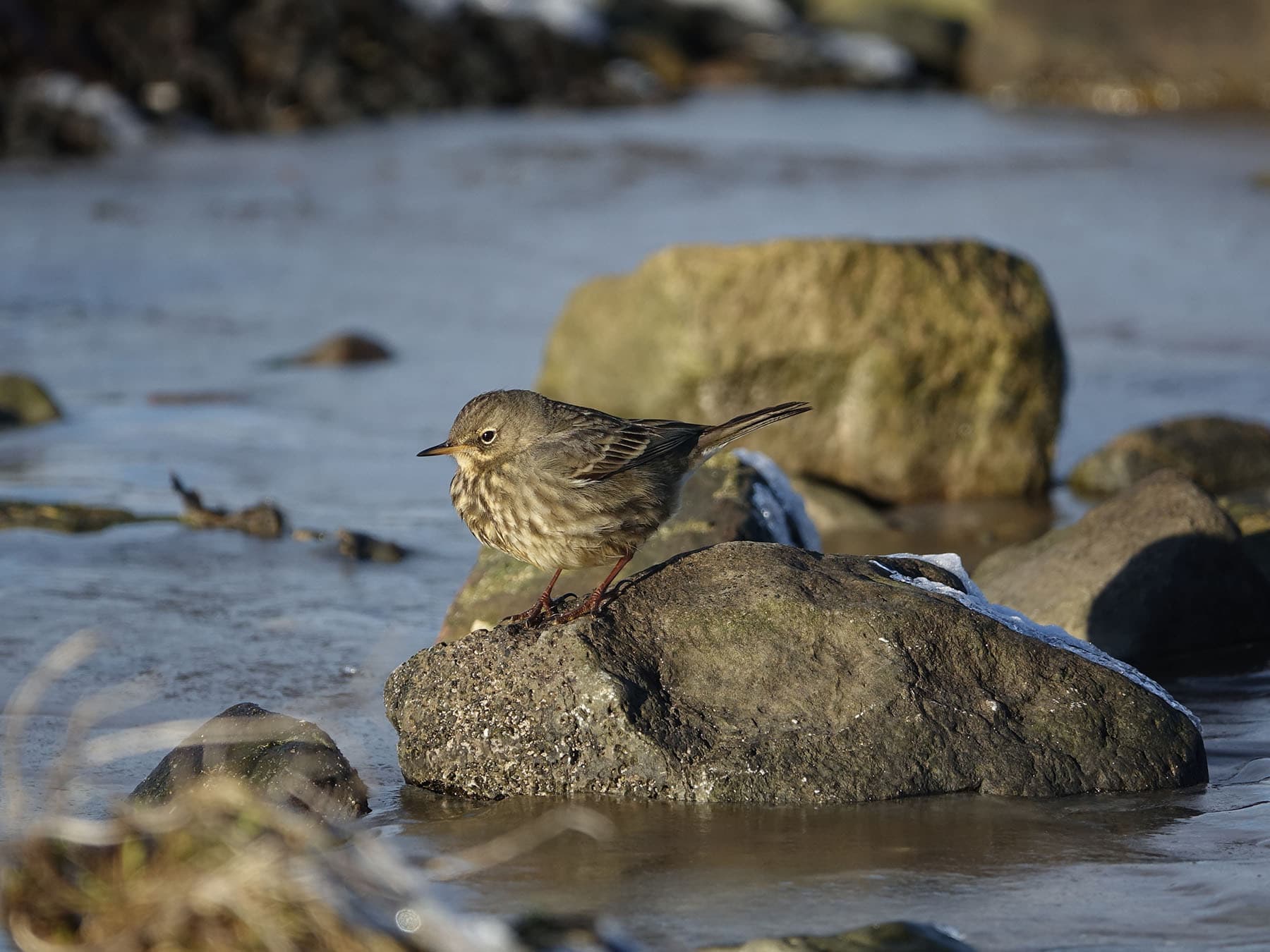
Breeding habitats favoured by rock pipits are rocky sea coasts and islands with low vegetation.
On occasion, pairs may breed further away from the coast, for example on islands in large inland lakes in Sweden or along estuaries. In the non-breeding season, less rocky coastal areas may welcome an influx of visiting migrant rock pipits.
What is the range of a Rock Pipit?
The rock pipit’s breeding range extends from the coasts of Ireland and the British Isles in the west, around the coast of northern and north-western France northwards to the extreme northern coasts of Norway, Sweden and Finland and into Arctic Russia.
In winter, the northernmost populations migrate south, with rock pipits reaching north-west Africa and western Europe.
Where do Rock Pipits live?
Of the estimated global population of rock pipits of just over 400,000, Norway has by far the highest number of resident birds, with an estimated 300,000 individuals.
How rare are Rock Pipits?
Around 36,000 pairs of rock pipits breed in the UK each year, and their range is limited to coastal areas, so they cannot be classed as a common or particularly widespread bird. The global population of rock pipits is estimated at only around 408,000.
Where can you see Rock Pipits in the UK?
Rock pipits are present around the entire coastline of the British Isles and Ireland in winter, with the arrival of migrant birds from Norway.
During the breeding season, pairs are most prevalent in rocky uplands along the north-east, south-west and western coast of England, as well along the entire Welsh, Scottish and Irish coasts. Cornwall and western Scotland regularly record relatively high densities of rock pipits.
Breeding is not established at all along the less rocky coastlines of north-west, east and south England, although rock pipits may visit these regions during winter migration.
Migration
Do Rock Pipits migrate?
Rock pipits do migrate from the northernmost extremes of their range, although the UK’s breeding population are resident all year round.
Birds that breed in the furthest northern Arctic regions of Norway, Sweden and north-west Russia move southwards once local conditions on their breeding grounds begin to deteriorate and head to south and eastern England, southern France and across the Mediterranean into Morocco and other parts of north-west Africa.
Are Rock Pipits native to the UK?
Around 38,000 rock pipits breed in the UK each year, with populations concentrated around the coasts of south-western and western England, Wales and around the entire coast of Scotland and its offshore islands. These breeding rock pipits are largely sedentary, remaining in the same locality all year round.
Tips for seeing it
- Look for Rock Pipits along rocky coastlines and sea cliffs
- Listen for their distinctive 'ist-ist' call as they fly
- Observe their characteristic tail-wagging behaviour when perched
- In the UK, check tidal areas during winter for easier spotting
What it eats
What do Rock Pipits eat?
Invertebrates form the bulk of a rock pipit’s diet, with snails, slugs, worms, crabs and crustaceans among the chief prey.
Most food is found by foraging on the ground, between stones and rocks on the seashore. Some seeds and vegetation may also be eaten, and occasionally flies are caught mid-air.
What do Rock Pipit chicks eat?
Baby rock pipits are initially fed softer prey, including worms and larvae by both parents, and parental feeding continues for several days after the young have fledged.
Nesting and breeding
Where do Rock Pipits nest?
Typical nest sites for rock pipits include on crevices in cliffs and tucked out of sight on grassy banks, thickets, or between rocks. A rough cup-shape nest is crafted by the female, using seaweed, grasses and leaves. A lining of animal fur and feathers is added before eggs are laid.
What do Rock Pipit eggs look like?
Rock pipits raise 1 to 2 broods per season, with each clutch containing 4 to 6 grey eggs, marked with brownish spots. Eggs measure 2.1 cm by 1.6 cm (0.8 in by 0.6 in).
Occasionally males take a turn at incubating, although the task is largely undertaken by the female while the male defends the nest site. Incubation lasts for around 14 to 15 days, after which both parents work to feed the young until they’re ready to fledge, at around 16 days.
Do Rock Pipits mate for life?
A seasonally monogamous species, rock pipit pairs may continue to loosely associate together on the same territory beyond the end of the breeding season, with the pair bond lasting in some cases for more than one year.
Behaviour
Are Rock Pipits aggressive?
Rock pipits are solitary, territorial birds while nesting, but may become more sociable during the non-breeding season when small groups may gather to forage together.
Males from neighbouring territories have been observed to join forces to drive off intruders, which is a particularly rare behaviour.
Lifespan and predators
How long do Rock Pipits live?
The longest-lived rock pipit recorded was reported in 2018, having reached 9 years and 4 months. The average lifespan is considerably lower, between 1 and 5 years, with breeding occurring for the first time at one year.
What are the predators of Rock Pipits?
Birds of prey, in particular sparrowhawks, frequently predate rock pipits and their nests. Cuckoos also regularly target rock pipit nests to host their eggs.
Are Rock Pipits protected?
Like the vast majority of wild birds in Britain, rock pipits are offered protection by the Wildlife and Countryside Act, 1981, which states that they cannot deliberately be killed, injured or captured.
Are Rock Pipits endangered?
Rock pipit numbers are considered to be relatively stable, with some minor contraction to their range. They are ranked as a species of least concern globally, and in the UK have Green status on the British Birds of Conservation Concern list.
Conservation
While the Rock Pipit is currently listed as Least Concern, coastal habitat degradation poses a potential threat.
Climate change and rising sea levels may impact their breeding grounds in the future. Local conservation efforts focus on preserving coastal ecosystems.
More photos
3 photos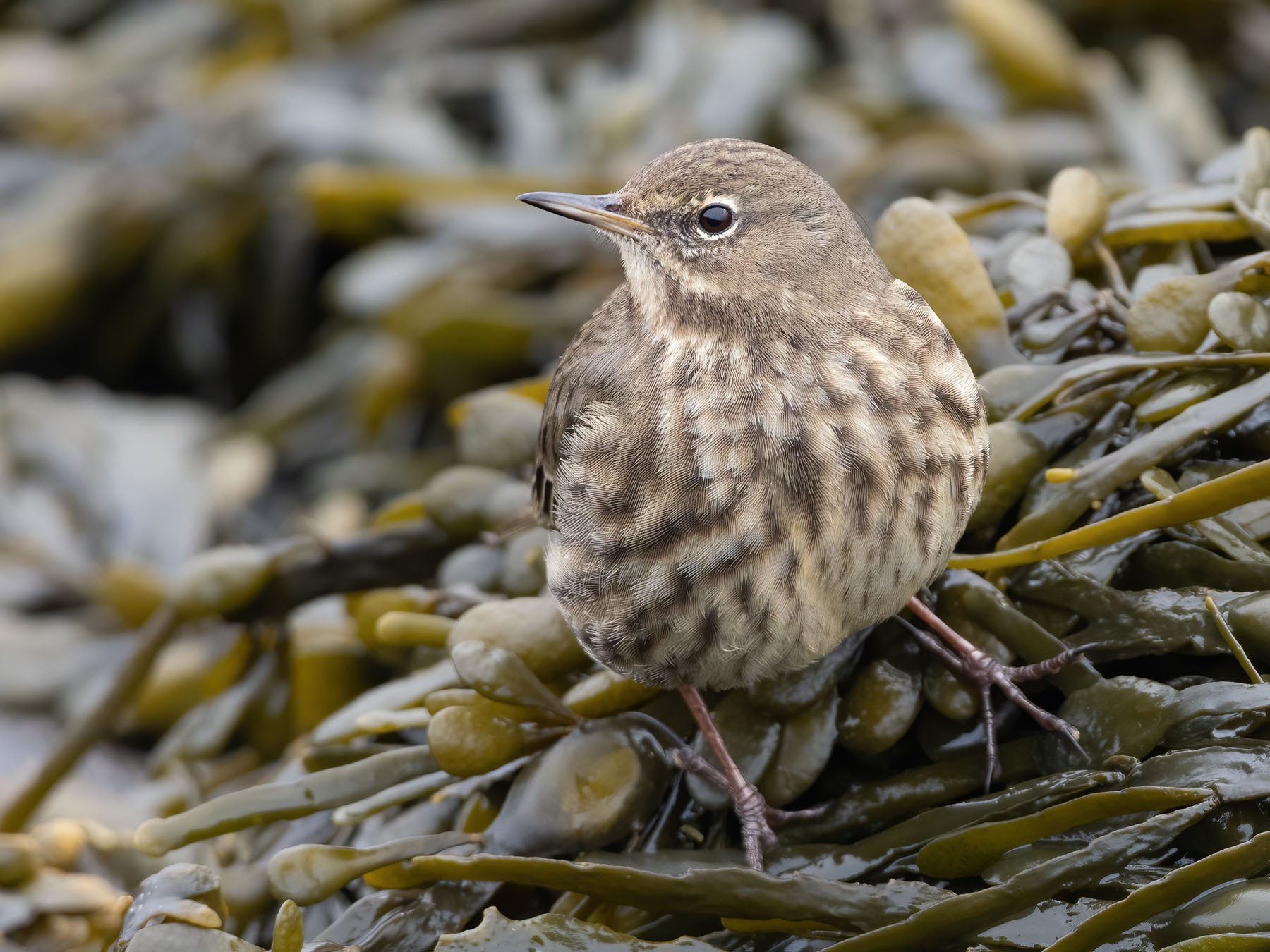
Quick facts
- Length
- 16–18 cm
- Wingspan
- 25–28 cm
- Weight
- 20–30 g
- Lifespan
- 3–5 years · oldest recorded 10.9 years
- Family
- Wagtails & Pipits
- Migration
- Partial migrant
- Global status (IUCN)
- Least Concern
- World population
- 329,000 - 562,000 mature individuals
- Population trend
- Stable
- Also called
- Eurasian Rock Pipit
- Scientific name
- Anthus petrosus
Questions
1Do Rock Pipits wag their tails?
Rock pipits are members of the same family as wagtails, and share the same tail-bobbing trait, with their tails constantly ‘wagging’ as they run or hop along the shoreline.
Sources
4- 1BirdLife International. 2018. Anthus petrosus. The IUCN Red List of Threatened Species 2018: e.T22718567A131987689. Source (opens in a new tab)
- 2BirdLife International. 2018. Anthus petrosus. The IUCN Red List of Threatened Species 2018: e.T22718567A131987689. Source (opens in a new tab)
- 3BirdLife International. 2018. Anthus petrosus. The IUCN Red List of Threatened Species 2018: e.T22718567A131987689. Source (opens in a new tab)
- 4Fransson et al., EURING list of longevity records for European birds (2010) Source (opens in a new tab)

Checked by
Nathan Cope, founder and editor
Nathan founded Birdfact and leads its writers and contributors in the UK, the US and Canada. He has watched and studied birds for more than ten years, and checks every article and species guide before it’s published.