


Snow Goose
Blue Goose · Anser caerulescens
By the Birdfact teamChecked by Nathan Cope
On this page14 sections
How to recognise it
What do Snow Geese look like?
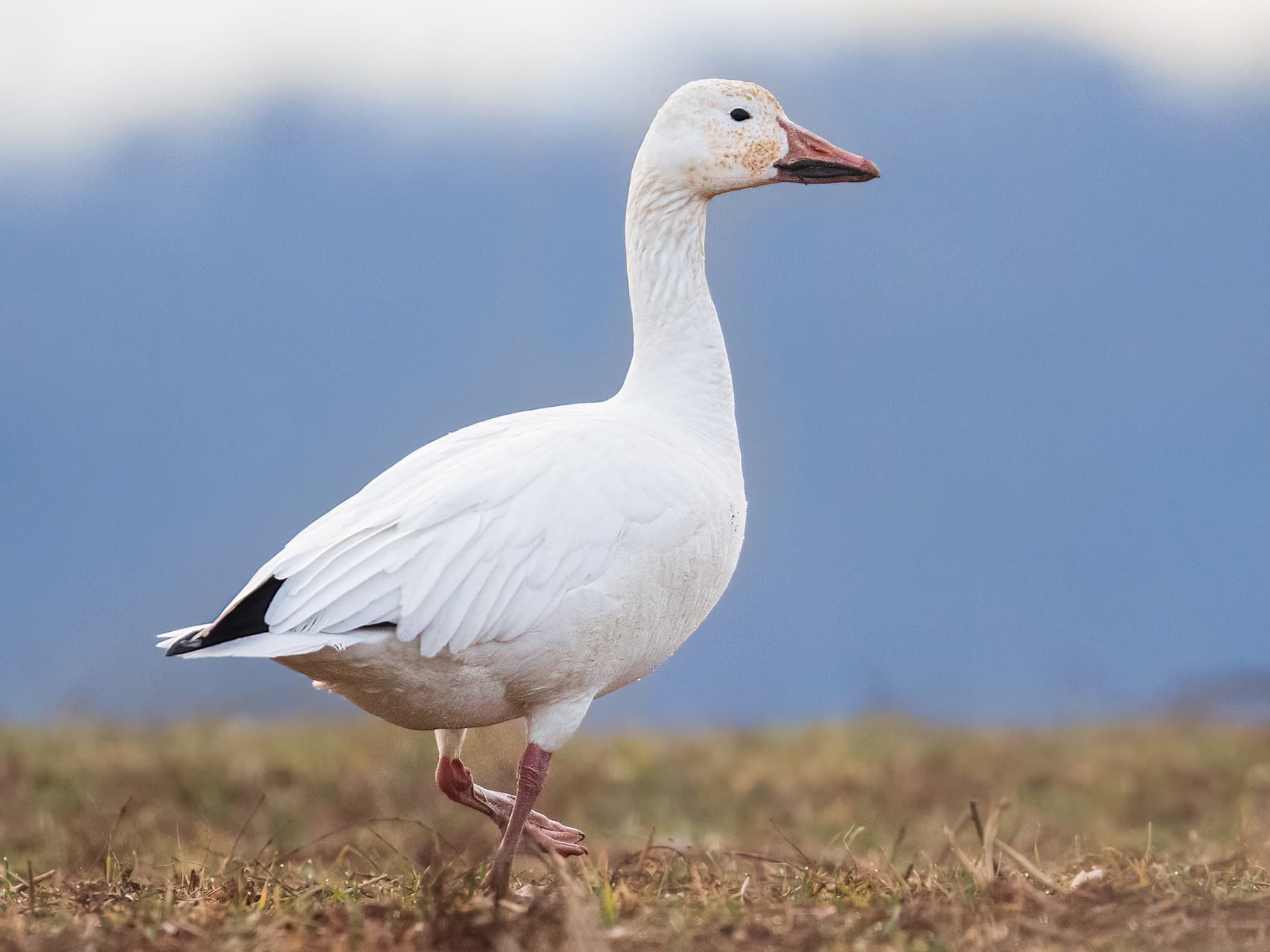
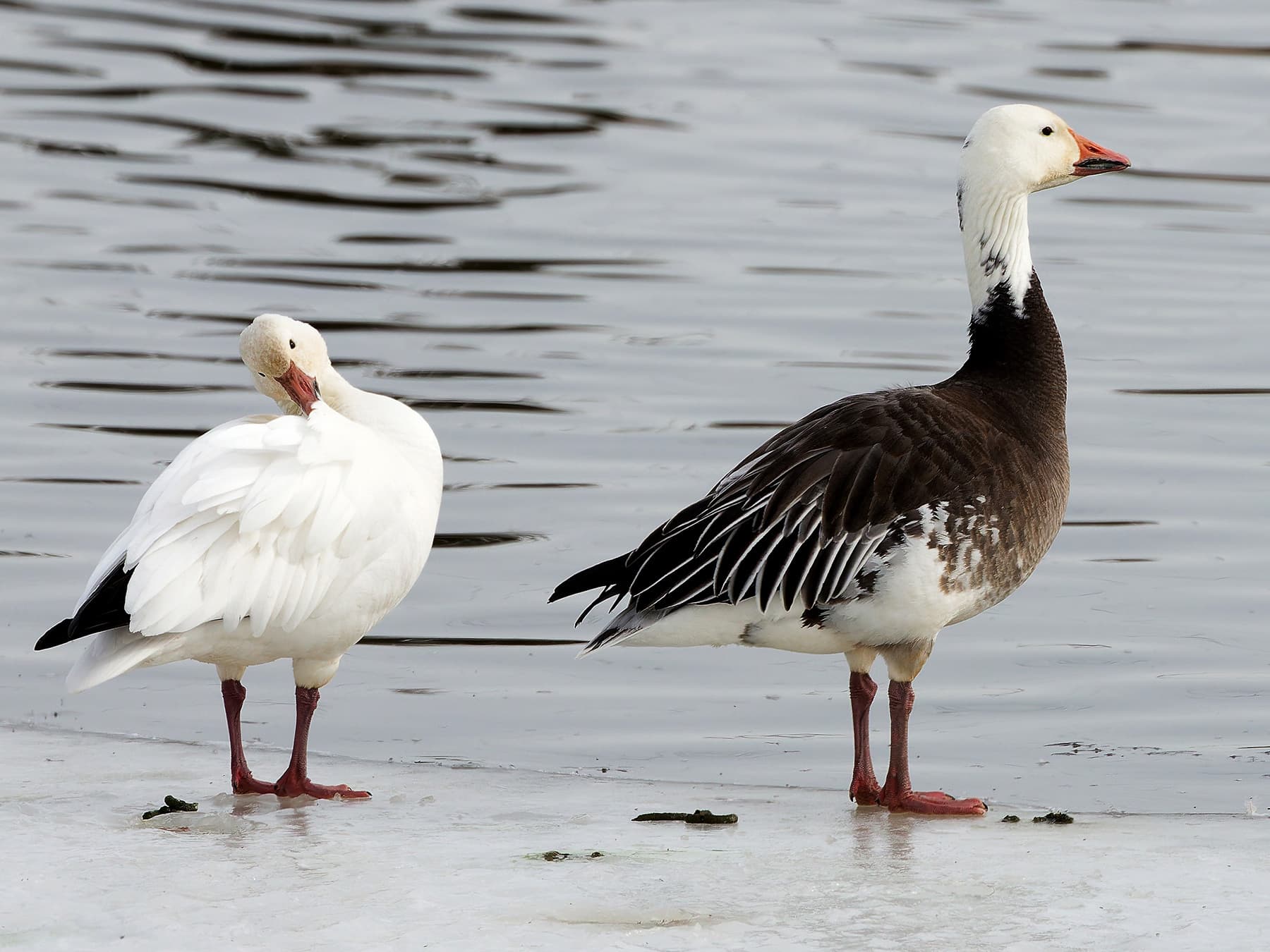
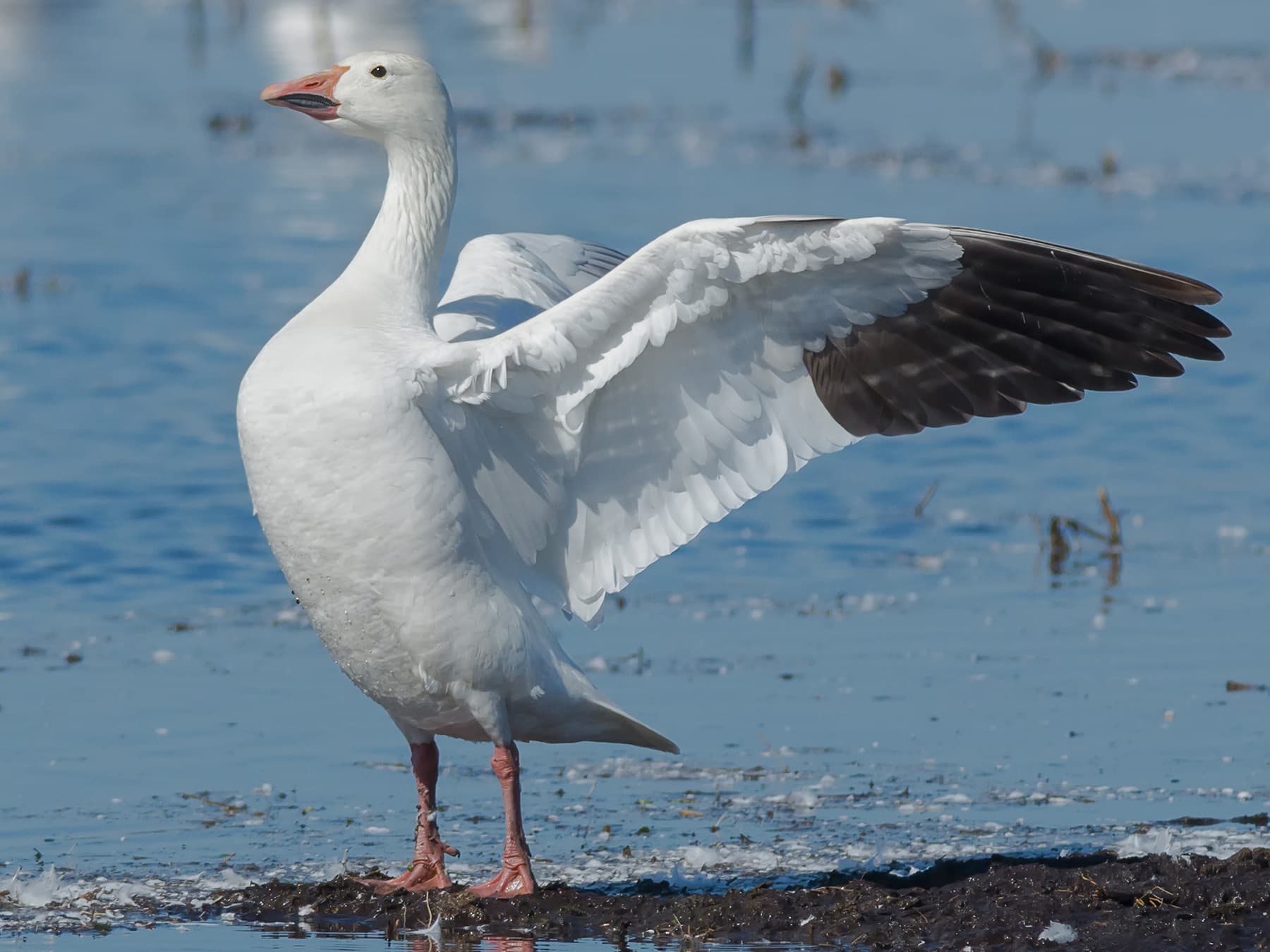
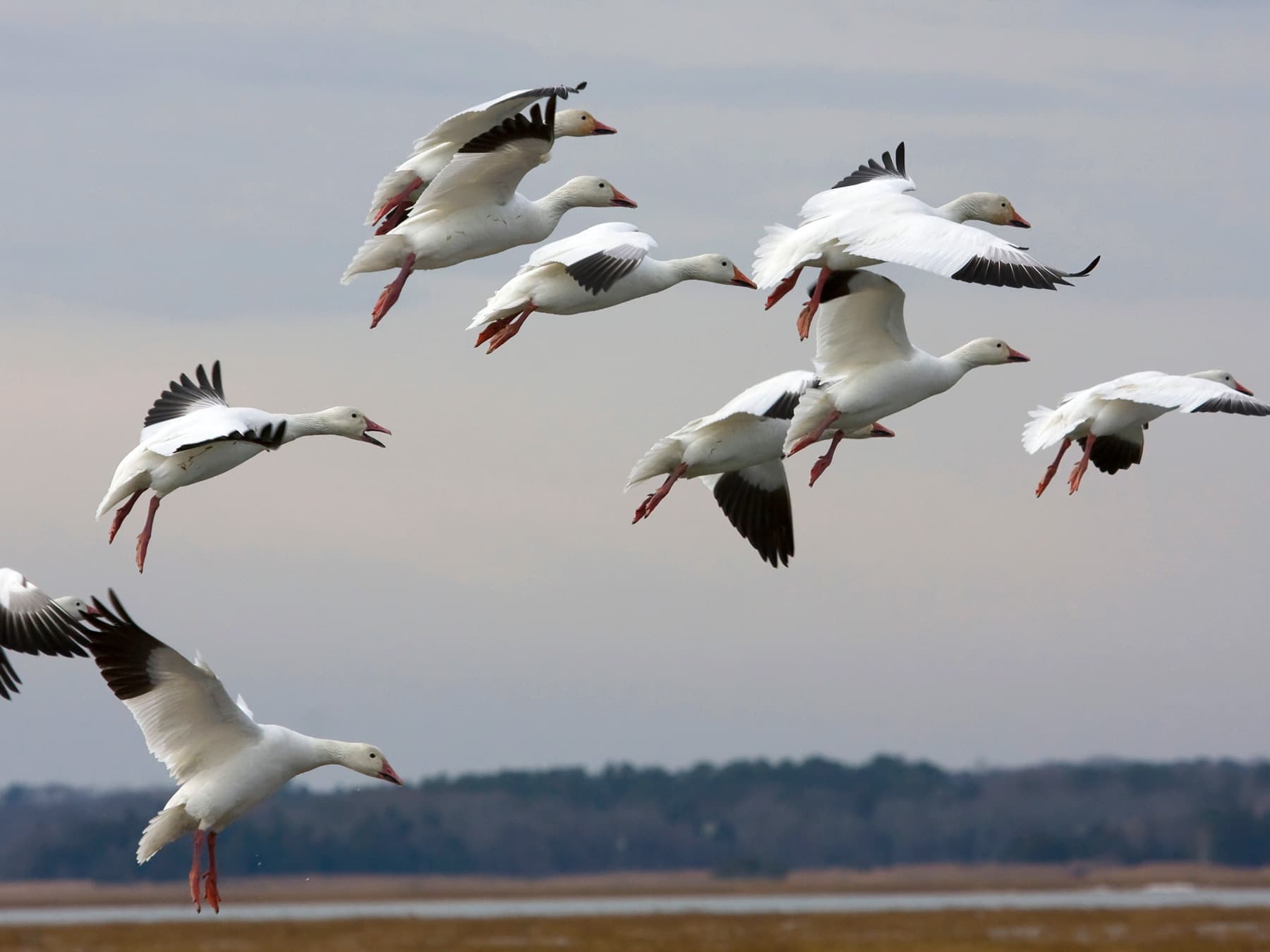
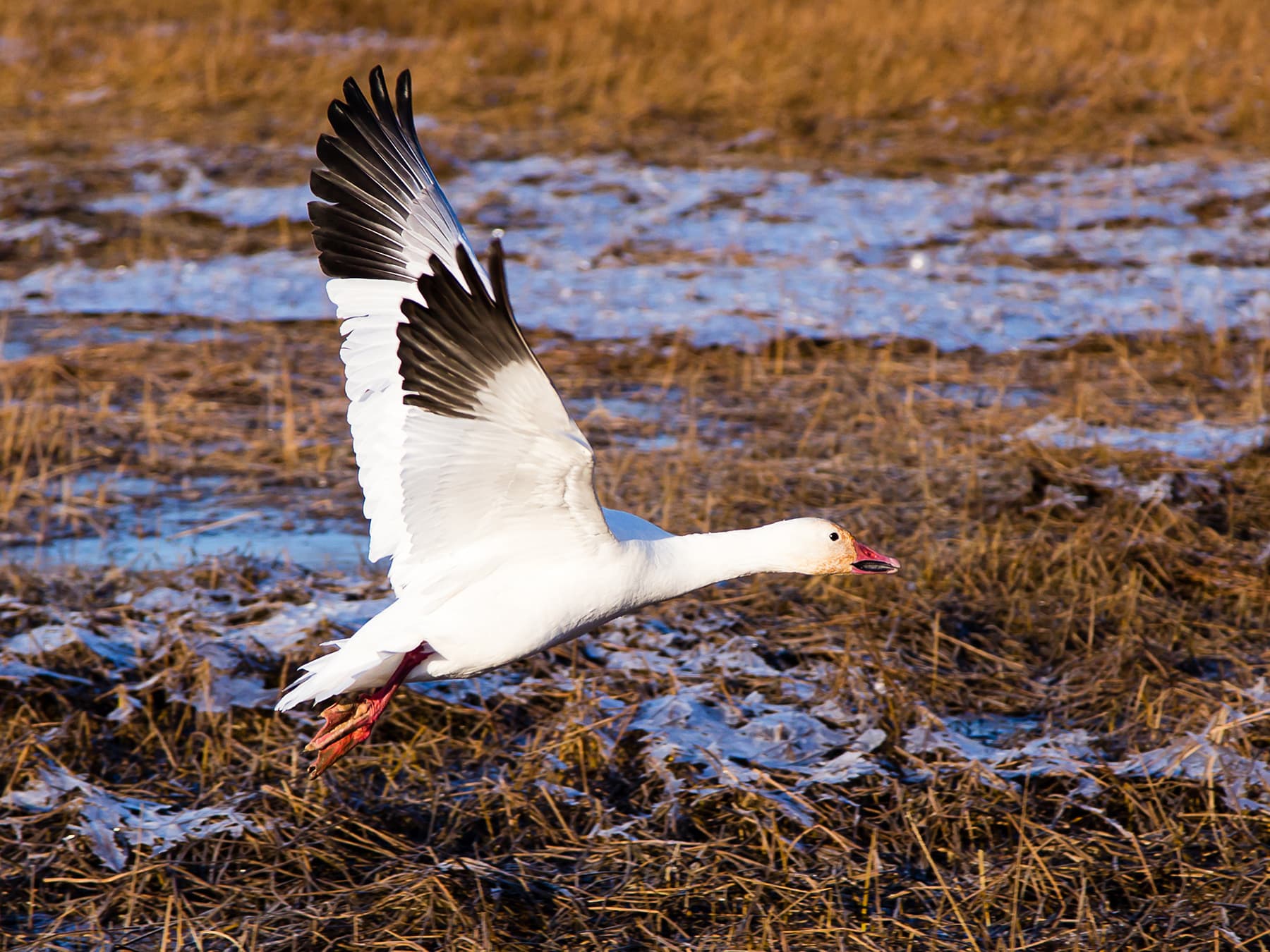
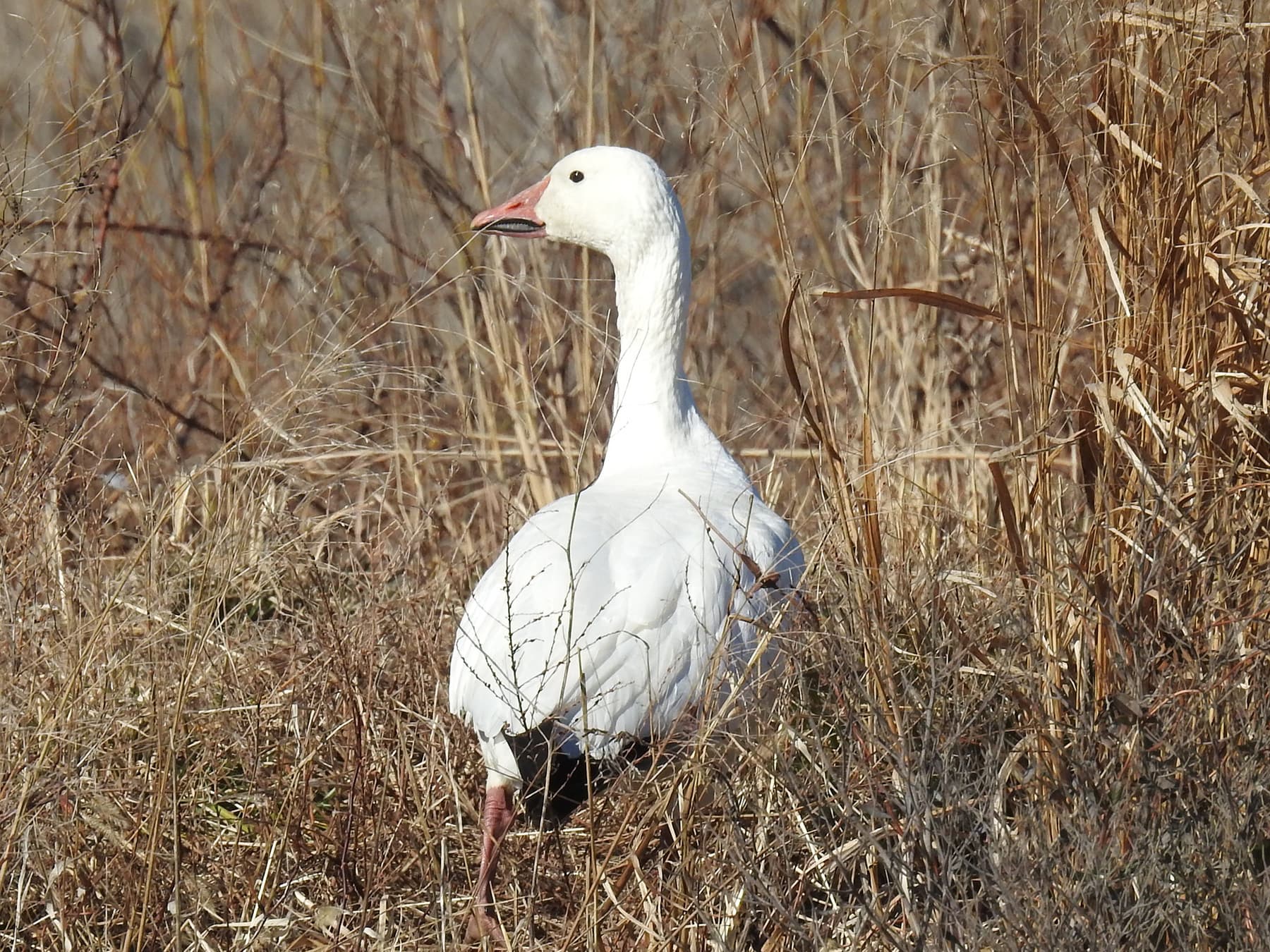
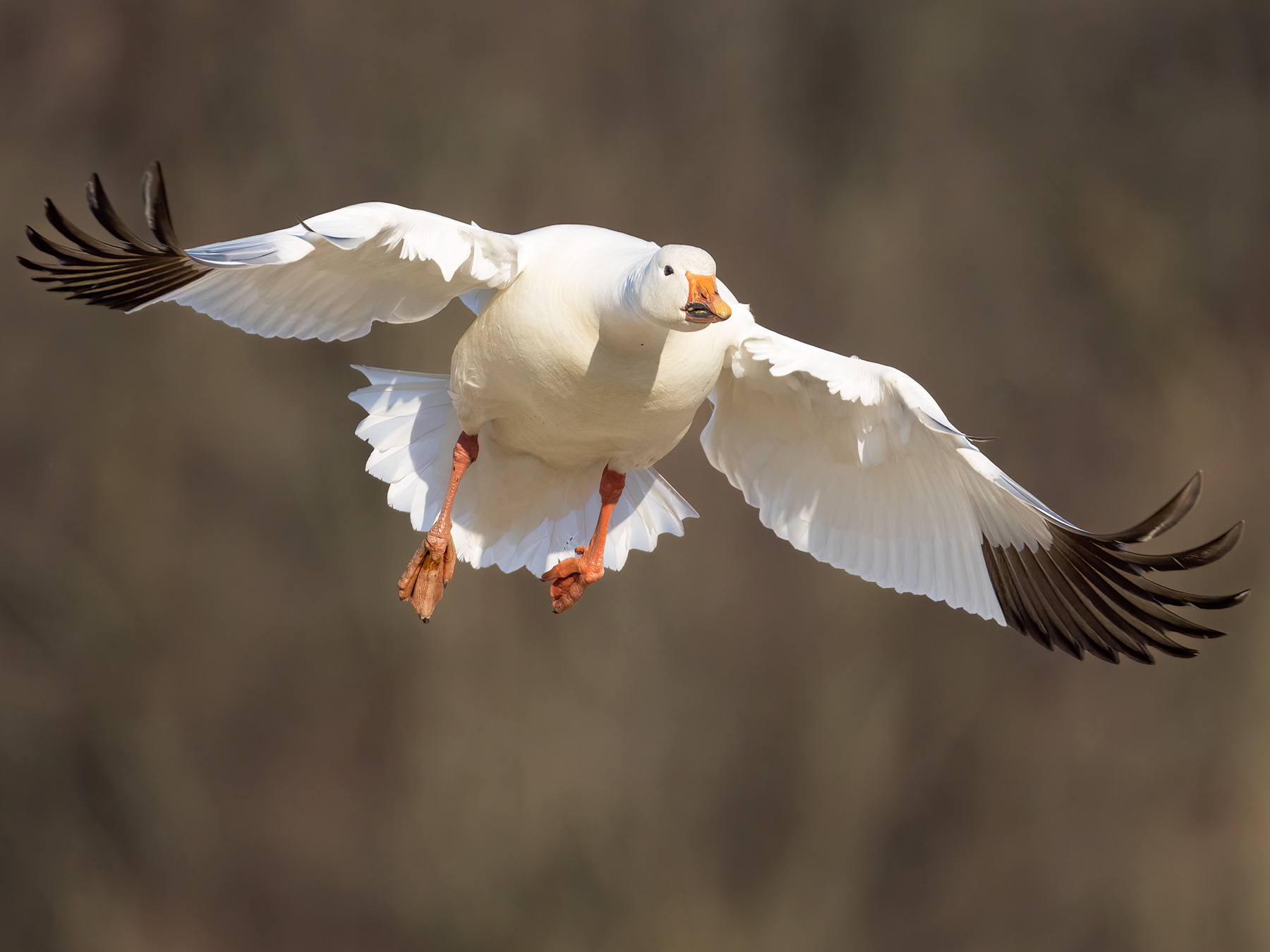
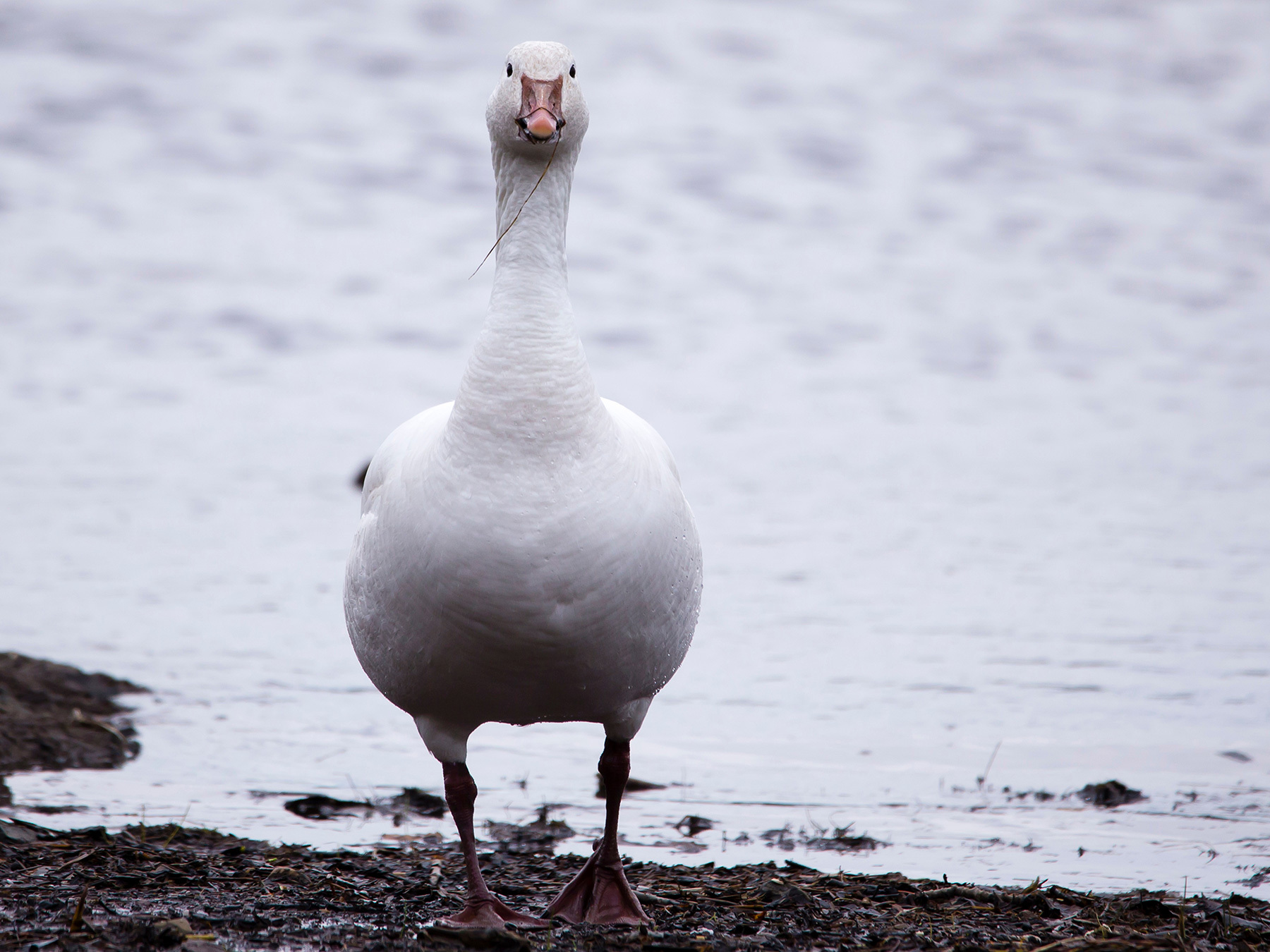
The Snow Goose is unusual in that it occurs in two distinct color morphs, namely white and blue. The more common white morph is all white except for black flight feathers on the ends of the wings, bordered by a grey wing patch. They have a pink bill and legs.
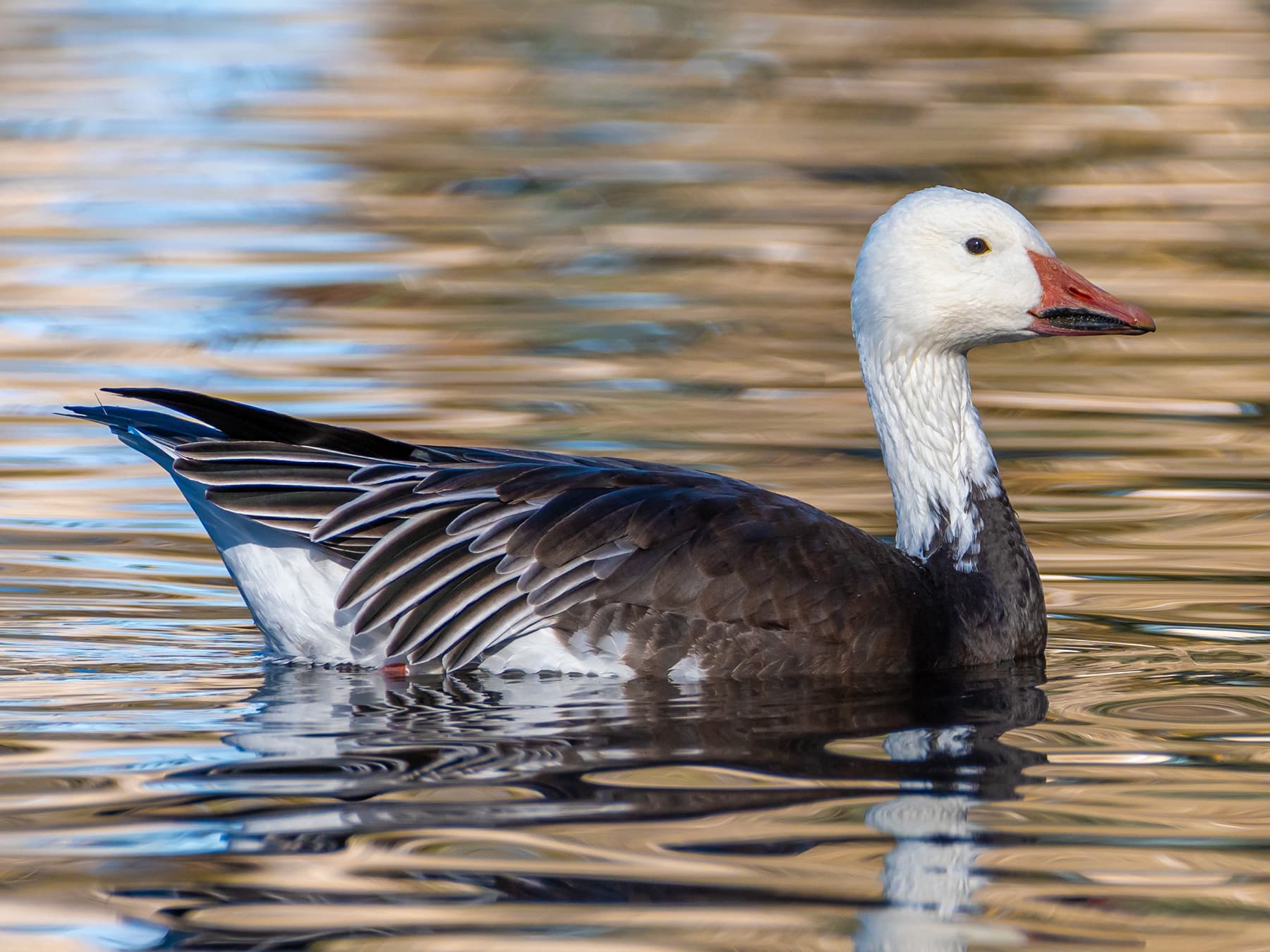
Blue Snow Geese have a somewhat misleading name. These birds have white heads and dark grey-brown bodies. Both morphs have a distinctive bill with prominent teeth-like tomia. These bill structures give the impression of a grinning bird with black teeth.
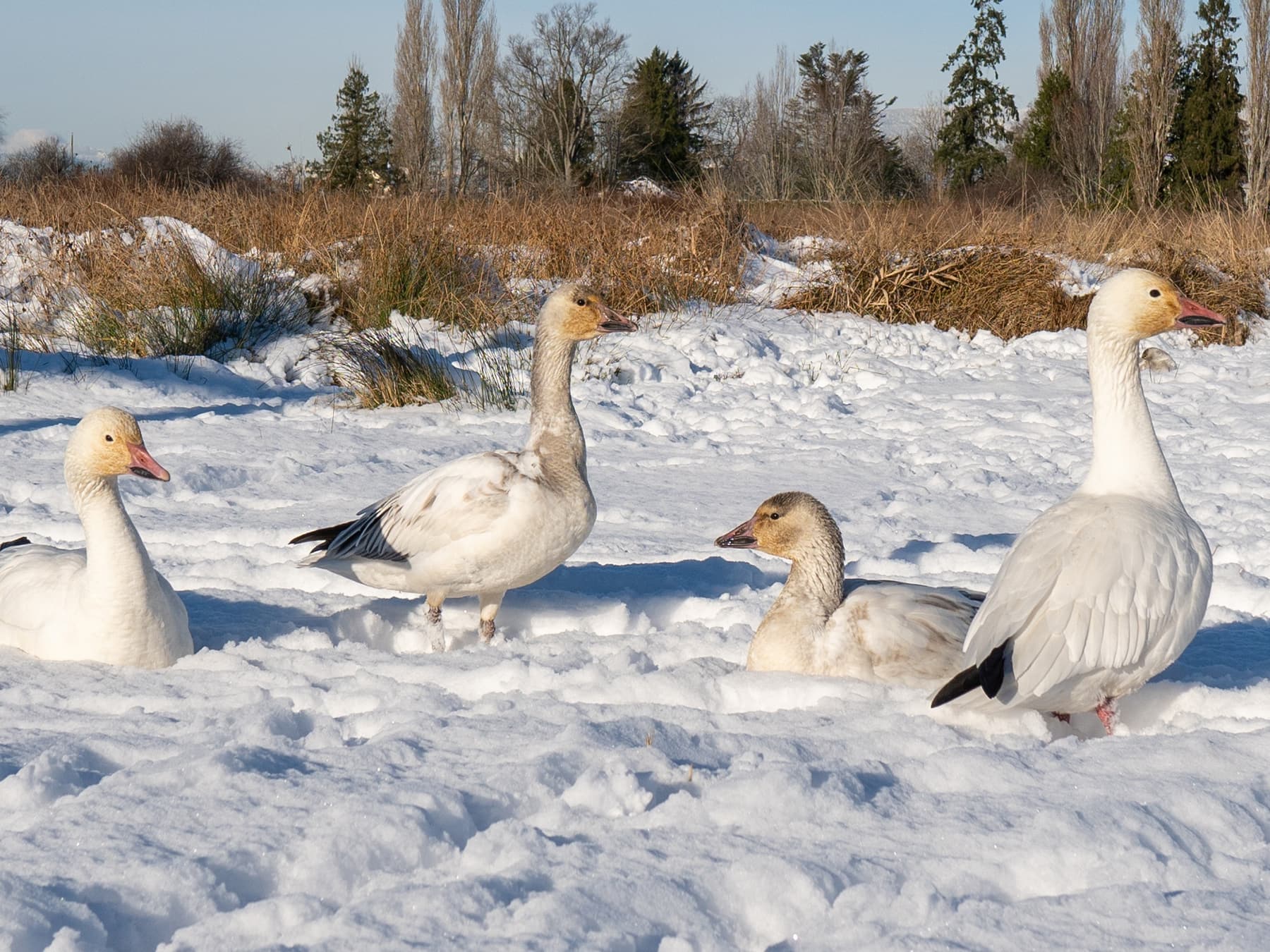
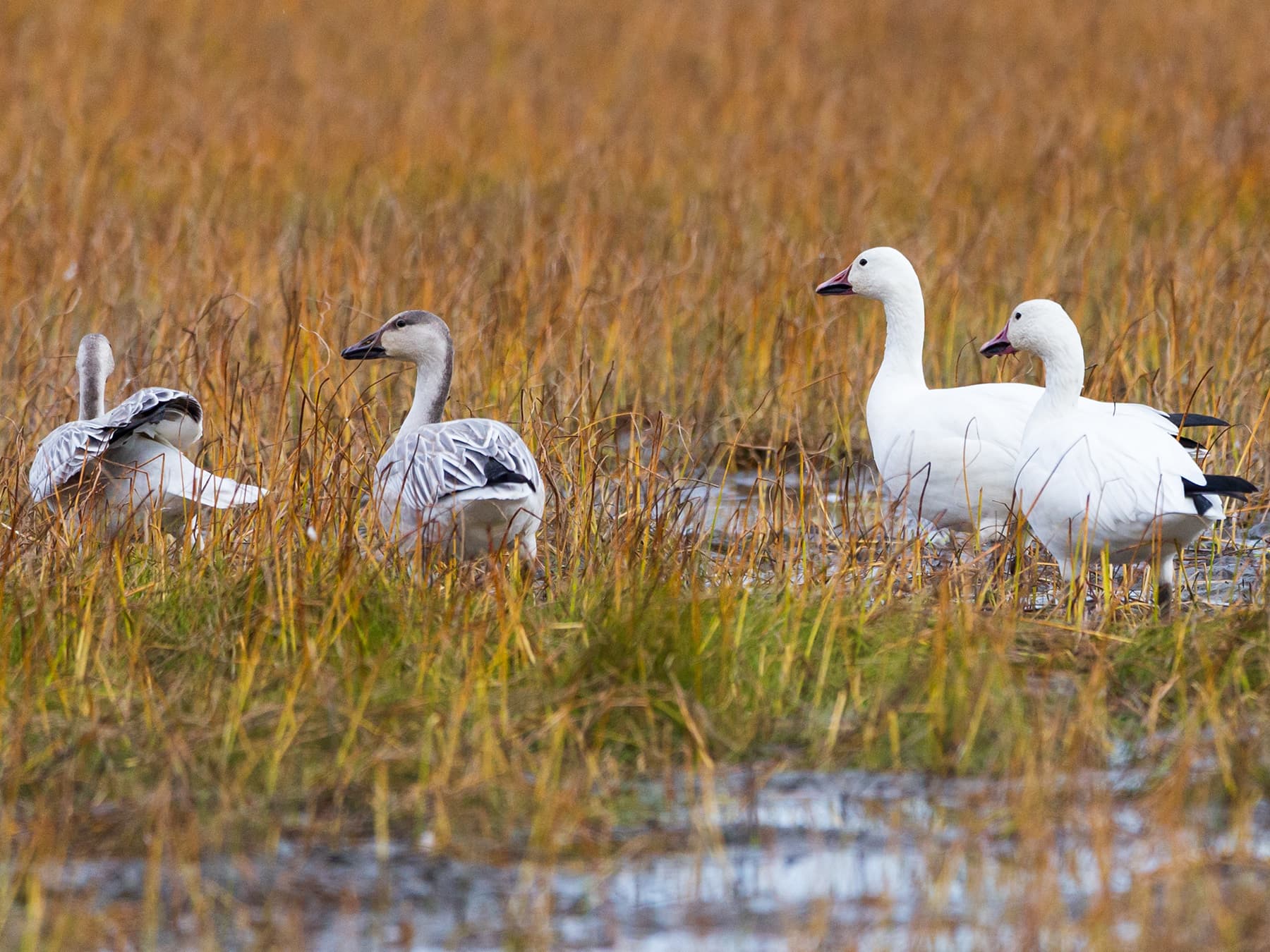
Female Snow Geese look identical to males but are generally slightly smaller. Juveniles of the white morph are easy to distinguish due to their grayer legs and bills and dusky gray plumage. Juvenile blue morph birds are entirely dark gray.
The Snow Goose could be mistaken for the Emperor Goose in the far north of Alaska or the more widespread Ross’s Goose in Alaska, Canada, and the Lower 48.
How big are Snow Geese?
The Snow Goose is a medium-sized goose, smaller than the Canada Goose but larger than the Ross’s Goose. There are two recognized sub-species that differ slightly in size. The Greater Snow Goose (A. c. caerulescens) is generally larger than the Lesser Snow Goose (A. c. atlanticus).
Length
27 to 33 inches (69 - 83cm)
Weight
3½ to 7¼ pounds (1600 - 3300 grams)
Wingspan
51 - 67 inches (1.3 - 1.7m)
Its size
Adults- Length
- 69–84 cm
- Wingspan
- 132–165 cm
- Weight
- 2050–3180 g
Its song and calls
The Snow Goose is a noisy species, often heard before it is seen. Read on to learn more about Snow Goose calls.
What sound does a Snow Goose make?
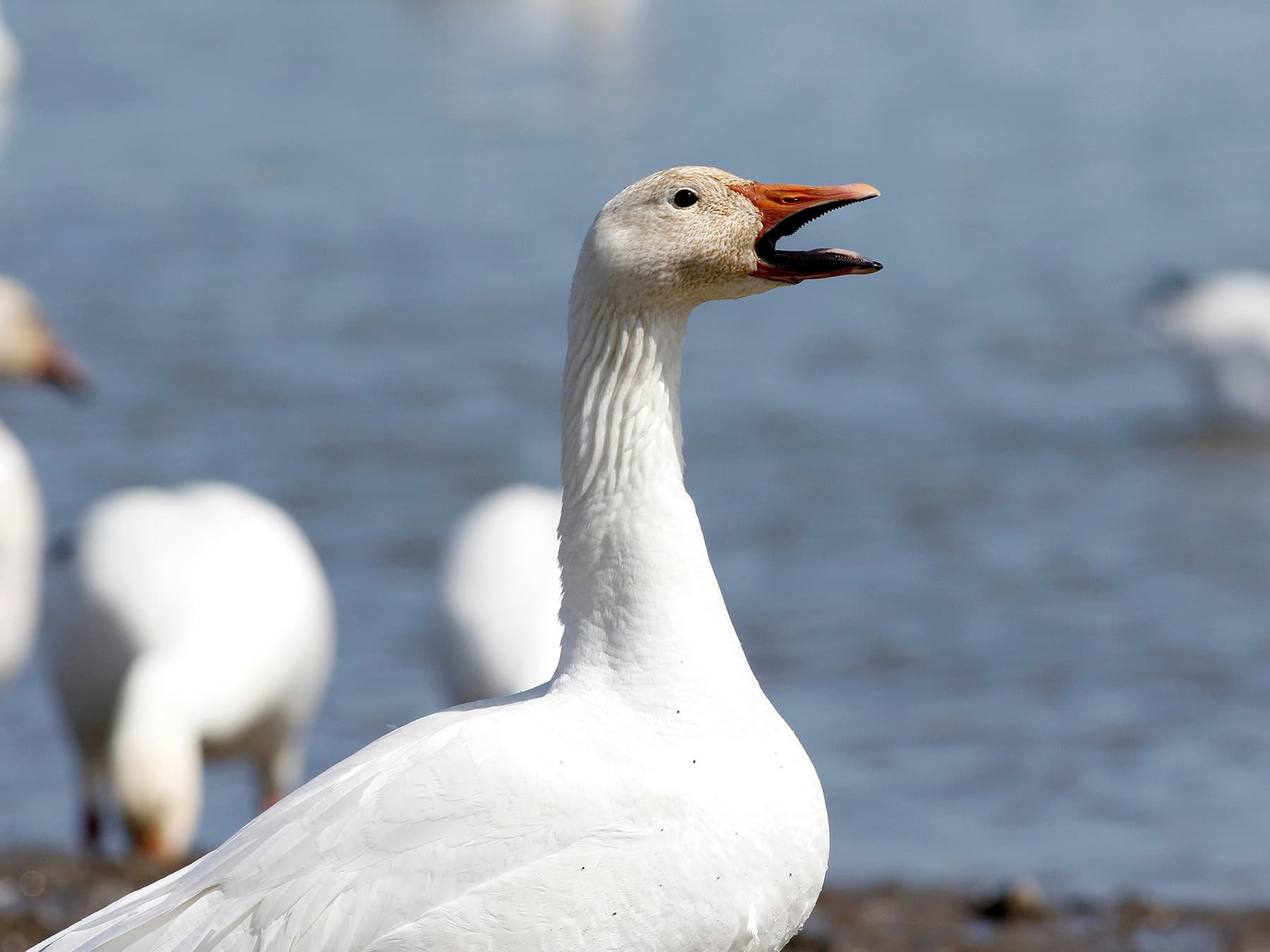
The Snow Goose has a simple, dog-like honking call that may be heard at any time of day or night. Males, females, and young birds call from the water, ground, or in flight. However, the young geese have a higher-pitched voice. These vocal birds also call to gather their young, express alarm at predators, or maintain contact with their family group.
When and where to see it
OctoberIn season
Most recorded in October
- 1. Lancashire0.11%
- 2. Oxfordshire0.11%
- 3. Gloucestershireunder 0.1%
- 4. South Lanarkshireunder 0.1%
- 5. Dumfries and Gallowayunder 0.1%
Each dot is a county, state or province: the bigger and darker, the larger the bird’s share of that place’s bird records that month. Grey dots: no regular records. The ringed point is the centre of the bird’s records this month; the arrow shows how it moved since last month, and the dashed loop its path through the year. “Arrivals” colours places where it becomes regular this month (orange) or is in its last regular month (grey). GBIF eBird Observation Dataset, 2019–2024. Map data: Natural Earth, US Census Bureau; place centres © OpenStreetMap contributors.
In your area
See when the Snow Goose is recorded in your county, state or province.
How often the Snow Goose turns up in the UK, Ireland, the United States and Canada through the year, from birdwatchers' records.
United Kingdom
Resident · all year · most records in January
Ireland
Passage migrant · regularly Nov–Mar · most records in February
United States
Winter visitor · regularly Sep–Jun · most records in January
Canada
Winter visitor · all year · most records in October
Show as a table
| Month | United Kingdom | Ireland | United States | Canada |
|---|---|---|---|---|
| January | 0.010% (regular) | 0.011% | 0.20% (regular) | 0.10% (regular) |
| February | 0.007% (regular) | 0.012% (regular) | 0.17% (regular) | 0.069% (regular) |
| March | 0.006% (regular) | 0.005% (regular) | 0.14% (regular) | 0.23% (regular) |
| April | 0.003% (regular) | – | 0.039% (regular) | 0.28% (regular) |
| May | 0.004% (regular) | – | 0.015% (regular) | 0.12% (regular) |
| June | 0.002% (regular) | – | 0.012% (regular) | 0.047% (regular) |
| July | 0.002% (regular) | – | 0.007% | 0.034% (regular) |
| August | 0.004% (regular) | – | 0.008% | 0.048% (regular) |
| September | 0.005% (regular) | – | 0.010% (regular) | 0.16% (regular) |
| October | 0.008% (regular) | 0.004% | 0.059% (regular) | 0.53% (regular) |
| November | 0.008% (regular) | 0.004% (regular) | 0.16% (regular) | 0.41% (regular) |
| December | 0.007% (regular) | 0.009% (regular) | 0.20% (regular) | 0.16% (regular) |
Recorded regularly in
Worldwide: recorded regularly in 18 countries
Countries where it was recorded in at least 3 of the 6 years 2019–2024. Linked countries have their own bird list.
North America (4)
- Canada
- Greenland
- Mexico
- United States
Data: EOD – eBird Observation Dataset (Cornell Lab of Ornithology), accessed via GBIF.org, CC BY 4.0. Records from 2019–2024, aggregated and filtered by Birdfact. How these lists are made
Snow Goose Adaptations for Arctic Tundra
The Snow Goose spends part of each year in the low and high Arctic tundra, which is a notoriously inhospitable environment. Their most effective adaptation for surviving at these latitudes is migration. By flying south in the late summer and fall, these birds can avoid the worst of the harsh winter.
However, the tundra is a tough environment to survive in, even in the summer, so they arrive late and waste little time in raising their family. To stay warm, Snow Geese rely on heavy fat stores built up in the spring. They also stand on one leg while sleeping and tuck their bill under their wing to keep these bare parts insulated by their feathers.
What is the habitat of a Snow Goose?
Snow Geese nest in open, fairly flat, or rolling terrain near the coast. They spend the winter near shallow fresh and coastal waters like marshes and bays, or inland in prairies, grasslands, and agricultural fields.
What is the range of a Snow Goose?
The Snow Goose range covers most of North America, from the south of Greenland to the east coast of Mexico, although they breed and overwinter in isolated areas. Most Snow Geese nest in Northern Alaska, around Hudson Bay in Canada, and on the many islands of the Northwest Territories and Nunavut. They also nest on Wrangel Island off the Russian coast.
Snow Geese overwinter in several disjointed areas in the Contiguous United States and neighboring Canada and Mexico. They are broadly classified as Eastern, Western, and Midcontinent populations. The various populations are most numerous in the following states:
Eastern population
- North Carolina
- Virginia
- Maryland
- Delaware
- New Jersey
Midcontinent population
- Texas
- Kansas
- Missouri
- Oklahoma
- Louisiana
Western population
- Washington
- Oregon
- California
Where do Snow Geese live?
Snow Geese spend most of their time on the ground, and they are surprisingly fast runners. They also spend time on the water and travel thousands of miles through the air each year on migration. These powerful birds can fly non-stop for several days and also spend a significant amount of time each day on the wing during the non-breeding season.
How rare are Snow Geese?
Snow Geese are very numerous and steadily increasing in number. Their population has grown immensely since the 1960s, probably the result of industrialized farming and the abundance of food it provides.
Where can you see Snow Geese in North America?
Many American Birdwatchers only ever see Snow Geese as they fly overhead in huge noisy flocks on migration. They are on the move in February/March and again in October/November. Some well-known destinations to see Snow Geese include:
- Wheat and rice farming areas in Arkansas
- Loess Bluffs National Wildlife Refuge in Missouri
- James River Valley, South Dakota
- Middle Creek Wildlife Management Area, Pennsylvania
Where can you see Snow Geese in the UK?
Wild Snow Geese are rare in the United Kingdom and less than a hundred are usually recorded each winter. They may turn up at Islay off Scotland’s west coast and the Loch of Strathberg in the northeast.
Migration
Do Snow Geese migrate?
Wild Snow Geese are highly migratory. These birds nest high up in the Arctic Circle each summer before returning to the United States for the winter. Their incredible journey can span over 3000 miles one way!
There’s much more to learn about the Snow Goose migration. Read this in-depth guide for more fascinating facts.
Are Snow Geese native to North America?
Snow Geese are a widespread native species in North America. Their numbers have increased dramatically since the mid-1900s, but they were always present on the continent.
Are Snow Geese native to the UK?
Snow Geese are not native to the United Kingdom. A small number of vagrants arrive each year from their breeding grounds in Greenland, although the majority of sightings are probably escaped ornamental birds.
Tips for seeing it
- Look for large flocks in wetlands and agricultural fields during migration
- Listen for their distinctive high-pitched, nasal honking calls
- Observe their feeding behavior in shallow water or on land
- In North America, watch for them in coastal areas and inland wetlands during winter
- The Snow Goose could be mistaken for the Emperor Goose in the far north of Alaska or the more widespread Ross’s Goose in Alaska, Canada, and the Lower 48.
What it eats
What do Snow Geese eat?
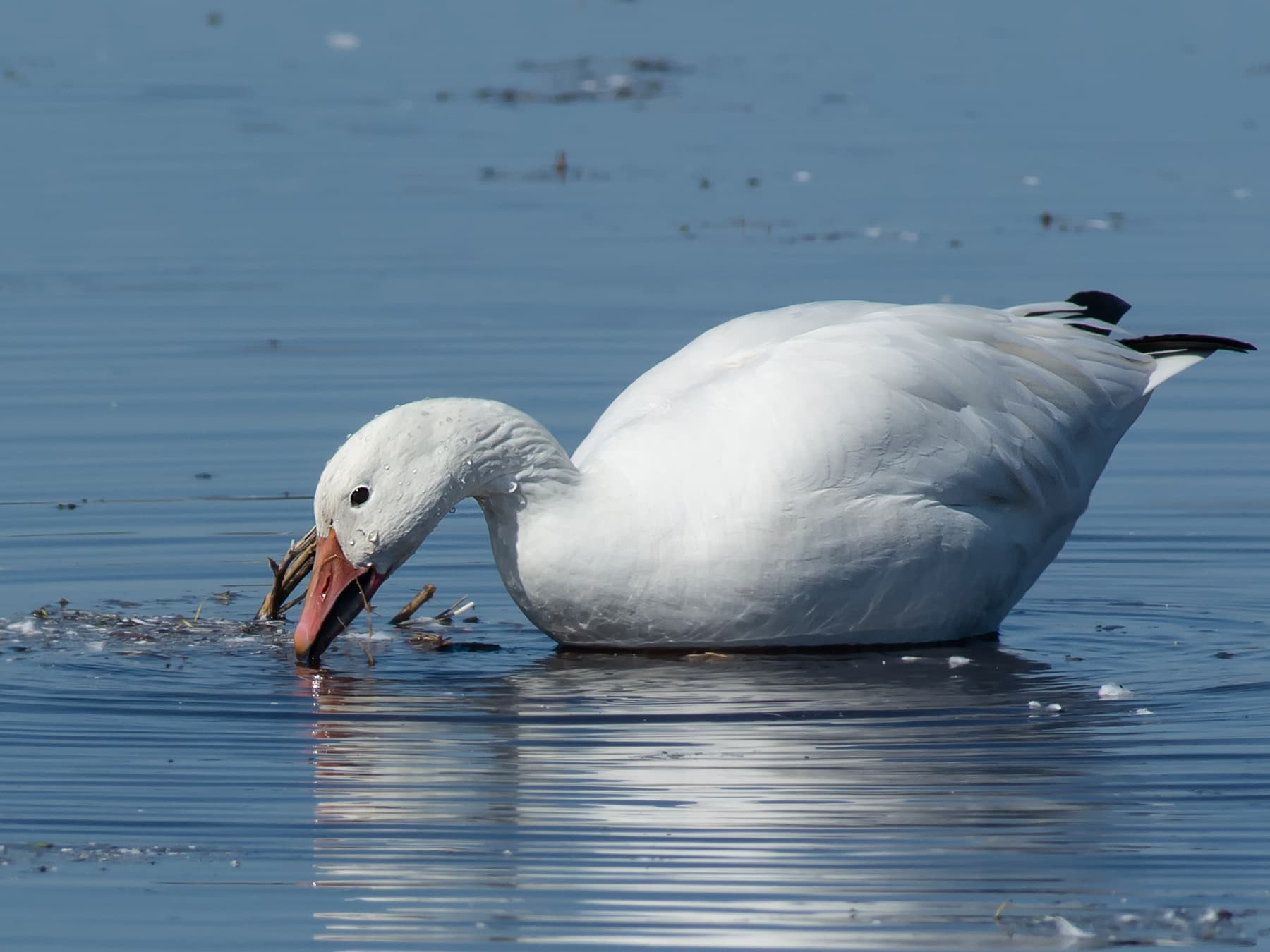
Snow Geese feed primarily on grass and similar plants like rushes and sedges. They feed on various parts of the plants, including their leaves, roots, and stems. They may supplement their diet with berries when available.
Snow Geese also feed on many cultivated plant seeds in the winter. Waste grains like soybeans, corn, wheat, and rice provide an easy, energy-rich food source.
What do Snow Goose chicks eat?
Snow Goose Goslings hatch with their eyes open and ready to explore the world. They leave the nest on their first day and forage for themselves in the company of their parents and siblings. The young birds eat grass and other vegetation like their parents but also include insects, flowers, and fruits.
Nesting and breeding
Where do Snow Geese nest?
Snow Geese nest in colonies, and females generally return to the place where they hatched. These birds nest on dry ground, usually near water but not where there is a high risk of flooding. They prefer sites with some shelter in the form of plants and rocks.
The nest starts off as a simple scrape, and the female goose will begin to lay her eggs before making many improvements. Later she lines the nest with her own feathers and various plant materials.
When do Snow Geese nest?
Snow Geese nest in the late spring and summer. They typically lay their eggs between late May and early June, right around the time when the snow begins to melt. However, arrival and laying dates vary from year to year, depending on weather conditions.
What do Snow Goose eggs look like?
Snow Geese lay a single clutch of two to six cream-white eggs, each measuring approximately 3 ⅛ inches long and 2 inches wide (80mm x 53mm).
Do Snow Geese mate for life?
Snow Geese find a partner in their second winter and remain together for the rest of their lives. However, they will pair with another bird if their partner dies.
Behaviour
Are Snow Geese aggressive?
Snow Geese defend their nesting area and their partners aggressively at the start of the nesting season. They fight by biting their opponent and striking with their wings. These fights can be severe and sometimes even end in death.
Where do Snow Geese sleep at night?
Snow Geese sleep on the ground or on water. They can sleep sitting down, floating, or standing on one leg.
Lifespan and predators
How long do Snow Geese live?
Snow Geese can live for at least 26 years, and their average lifespan is estimated at approximately six years. This is a relatively long lifespan for an avian, although many young Snow Geese succumb to starvation before reaching adulthood.
What are the predators of Snow Geese?
Golden Eagles, Bald Eagles, bears, foxes, and wolves hunt adult Snow Geese. Their eggs are vulnerable to a greater diversity of birds and mammals, including Gulls and Ravens.
Are Snow Geese protected?
Snow Geese are federally protected by the Migratory Bird Treaty Act. They are also protected in the United Kingdom by the Wildlife and Countryside Act.
Are Snow Geese endangered?
Snow Geese are a secure and increasing species. They have an estimated population of about 16 million individuals and are assessed as a ‘Least Concern’ species on the IUCN Red List.
Conservation
While Snow Geese are currently listed as Least Concern due to their large population, they face threats from habitat loss and climate change. Arctic breeding grounds are particularly vulnerable to warming temperatures.
Conservation efforts focus on protecting key wetland habitats along migration routes and wintering areas.
More photos
3 photos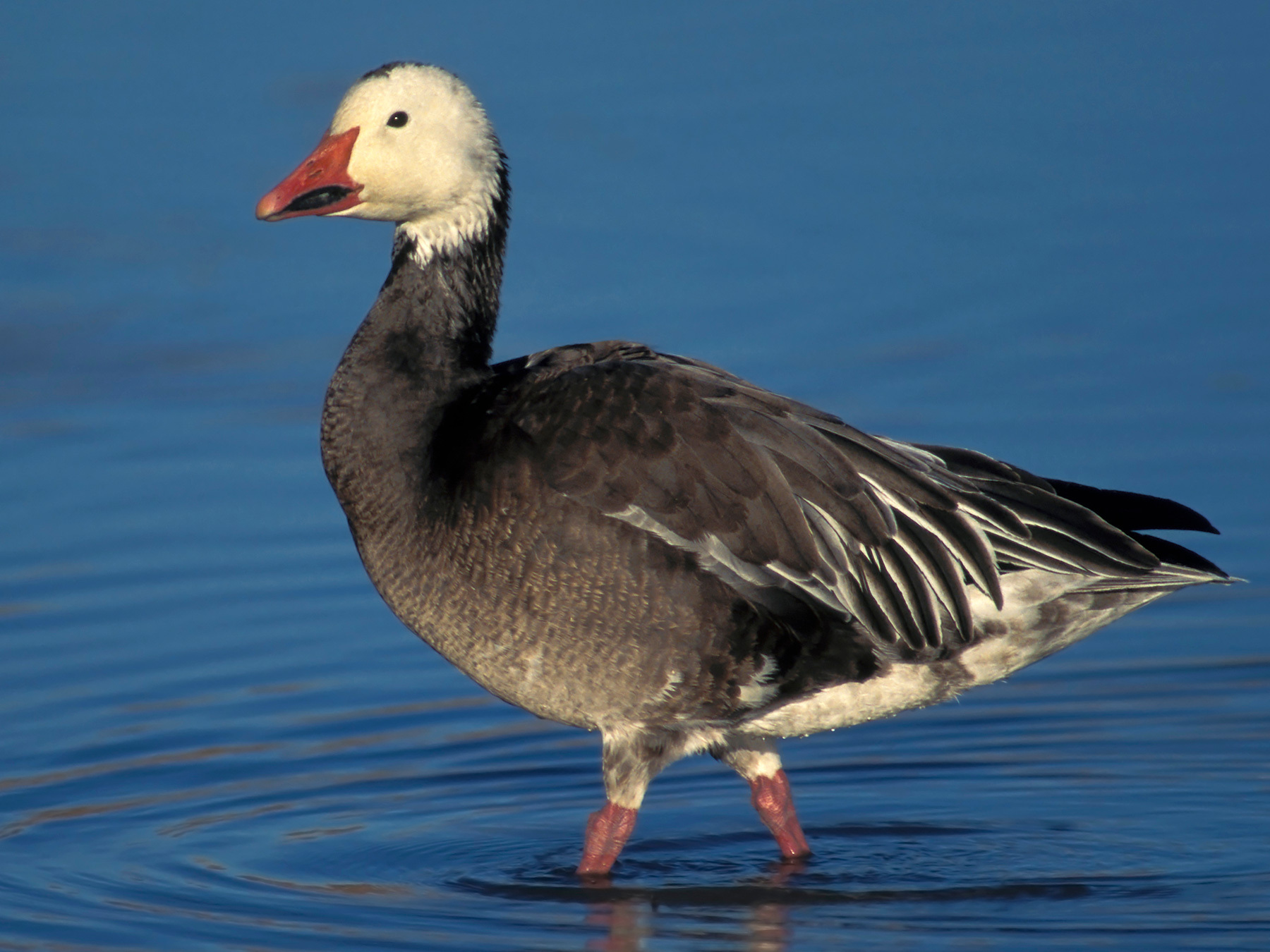
Snow Goose guides
6 guidesQuick facts
- Length
- 69–84 cm
- Wingspan
- 132–165 cm
- Weight
- 2050–3180 g
- Lifespan
- 6 years · oldest recorded 27.5 years
- Family
- Ducks, Geese & Swans
- Migration
- Long-distance Migrant
- Global status (IUCN)
- Least Concern
- World population
- 16,000,000 mature individuals
- Population trend
- Increasing
- Also called
- Blue Goose
- Scientific name
- Anser caerulescens
Questions
2Do Snow Geese fly with Canada Geese?
Birdwatchers may spot the odd Snow Goose mixed in with Canada Geese, but the two do not usually migrate together.
Is Snow Goose the same as a swan?
The Snow Goose may resemble a Swan, but they are completely different birds. Swans are from the Cygnus genus, while Snow Geese are members of the Anser genus. The two differ most obviously in size, with Swans being much larger.
Sources
4- 1BirdLife International. 2021. Anser caerulescens. The IUCN Red List of Threatened Species 2021: e.T22679896A157448765. Source (opens in a new tab)
- 2Partners in Flight; Wetlands International (2020)
- 3Partners in Flight (2022) Source (opens in a new tab)
- 4Longevity Records Of North American Birds. Version 2023.1 Source (opens in a new tab)

Checked by
Nathan Cope, founder and editor
Nathan founded Birdfact and leads its writers and contributors in the UK, the US and Canada. He has watched and studied birds for more than ten years, and checks every article and species guide before it’s published.