


European Shag
Common Shag · Gulosus aristotelis
By the Birdfact teamChecked by Nathan Cope
On this page13 sections
How to recognise it
What do Shags look like?
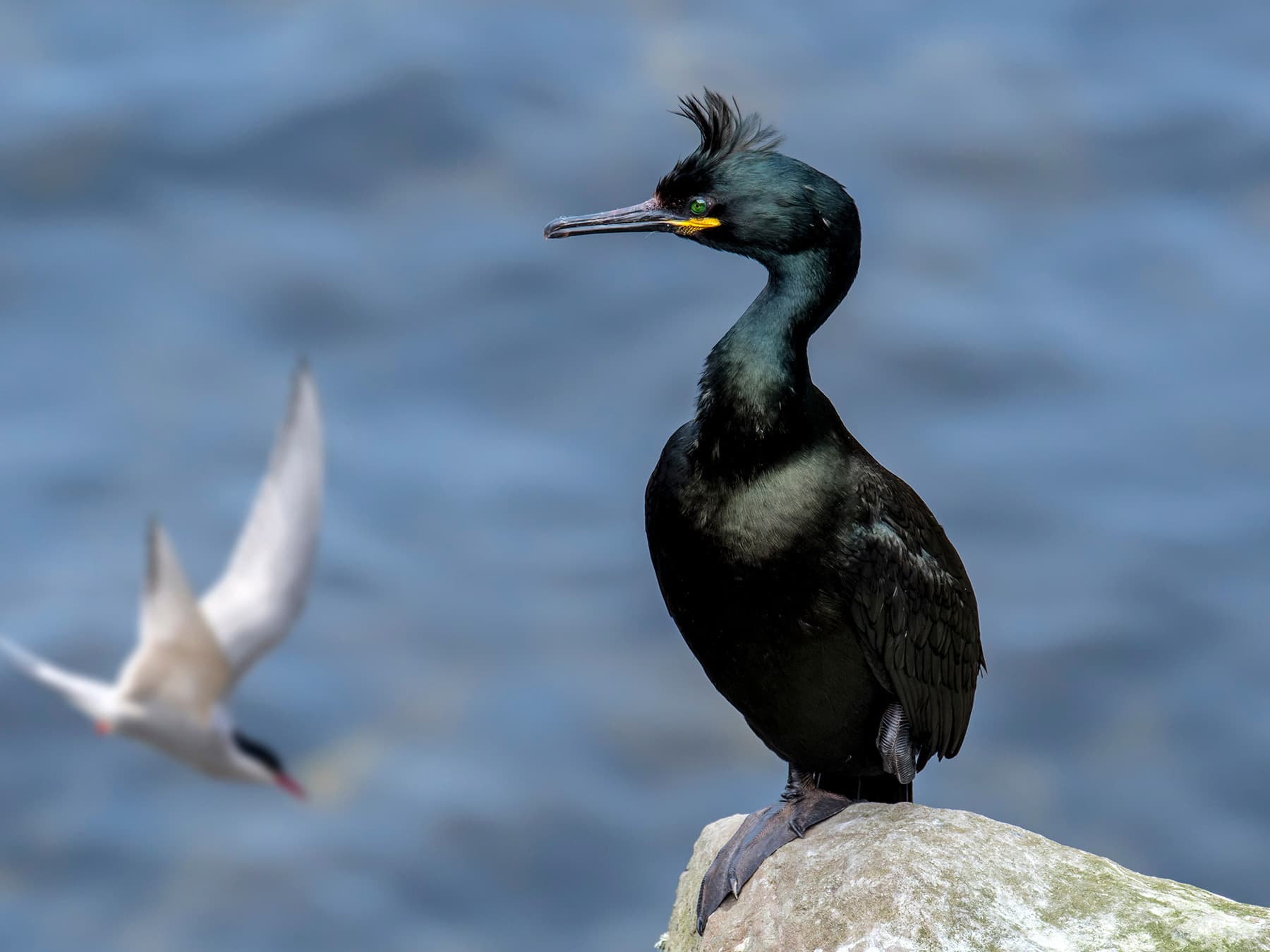
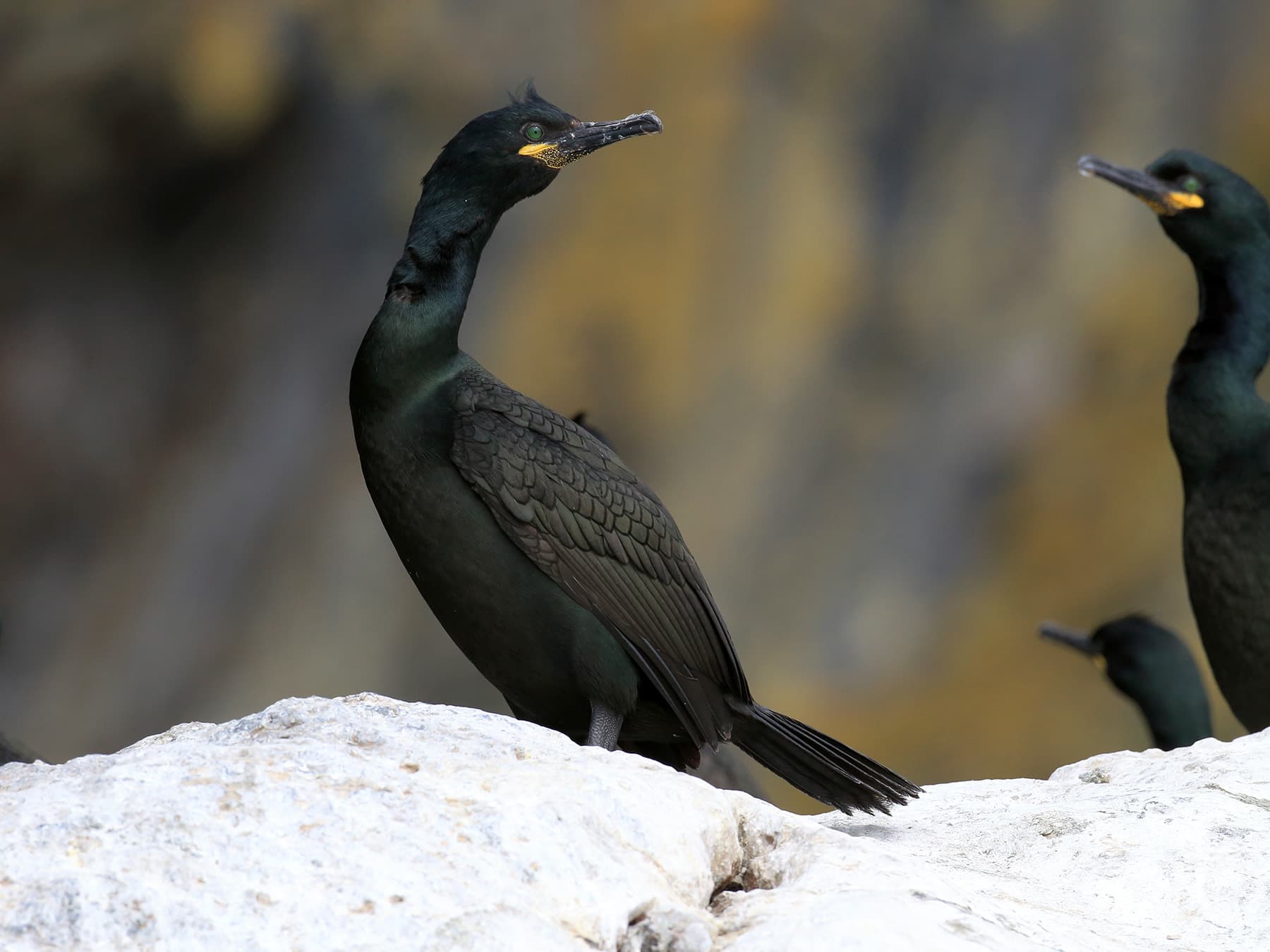
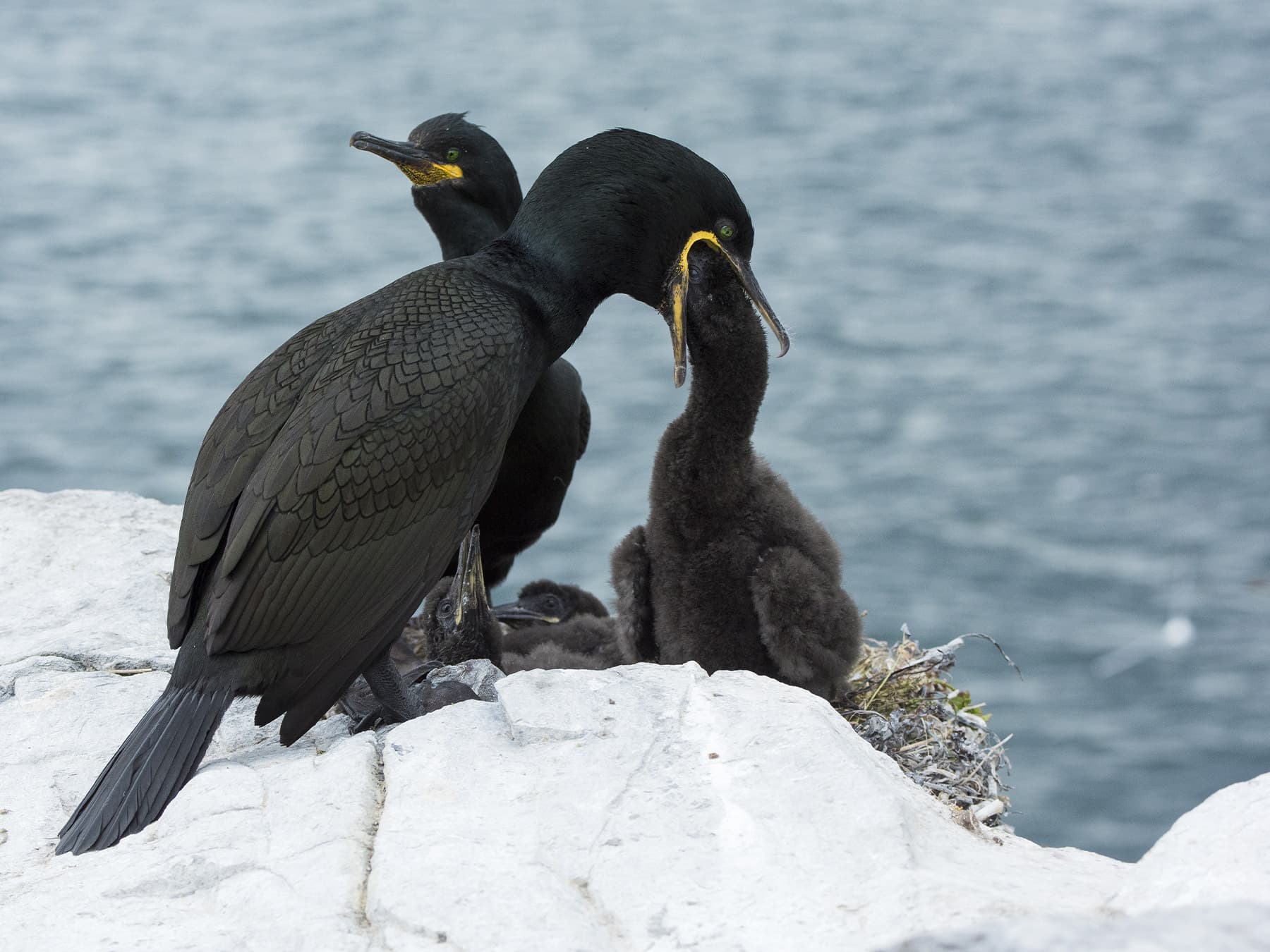
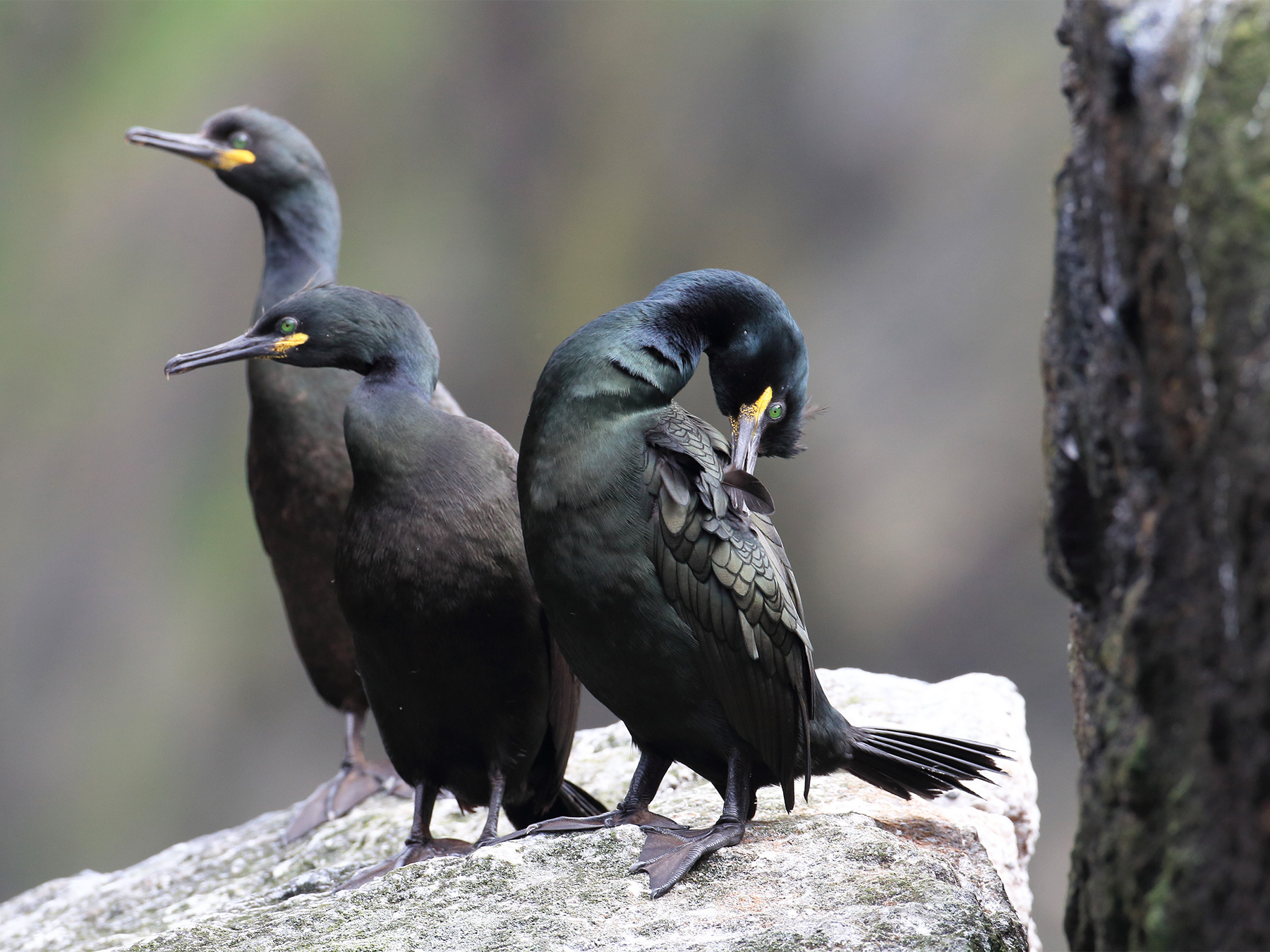
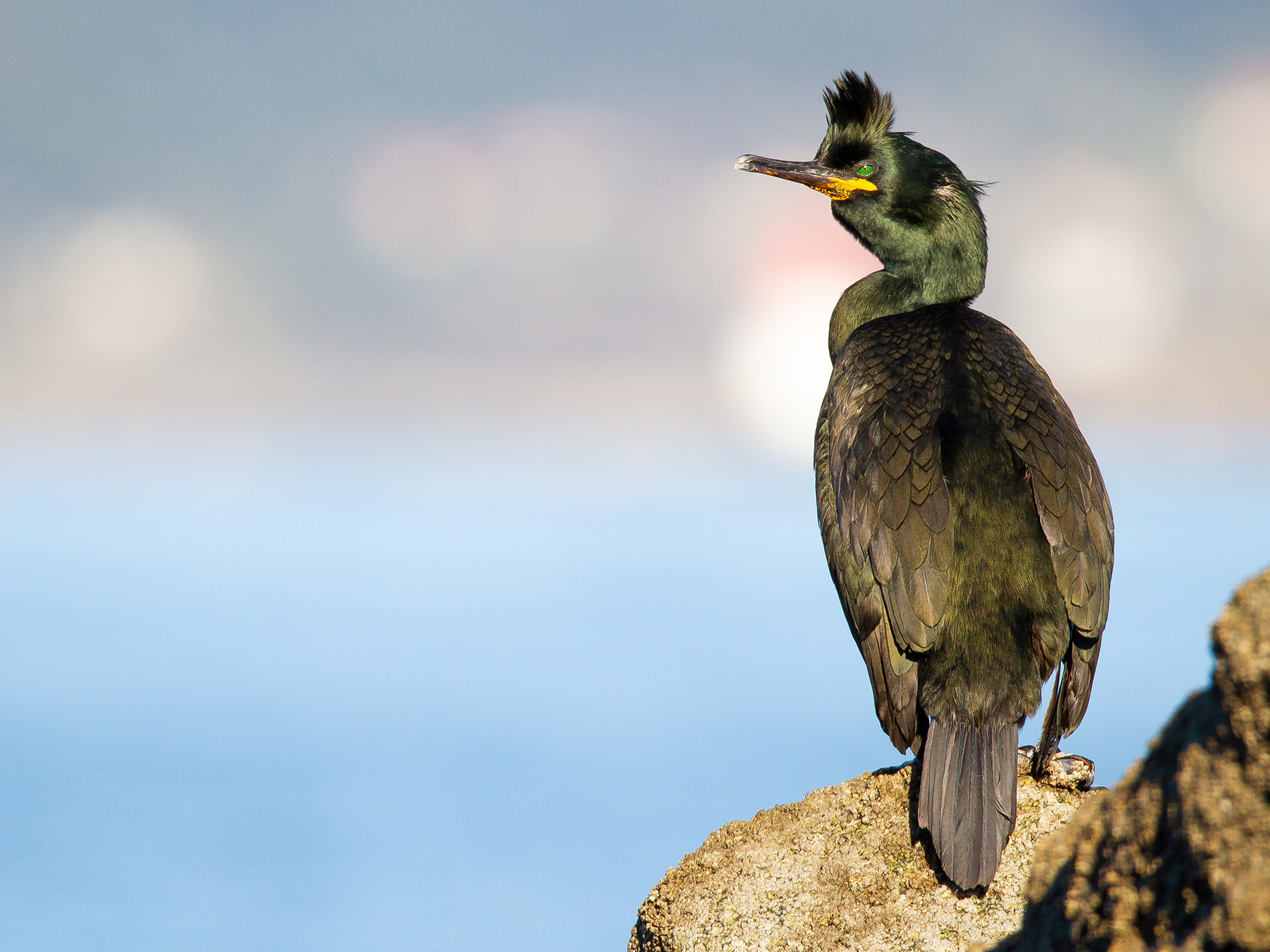
From a distance, shags appear to be a glossy black. However, at close range, a distinct greenish-blue tinge is visible across their entire plumage. During the breeding season, a prominent crest is present on the mid-crown, with upward-curving feathers. The bill is straight and narrow, with a hooked tip, and is mid-grey in colour. A yellow patch of bare skin can be seen beside the bill. Their eyes are a rich green and their legs are dark grey.
Outside of the breeding period, the shag’s crown becomes far less noticeable or is lost altogether. Non-breeding plumage is far less glossy, with a duller black-brown all-over appearance, and some white feathering on the throat. The lower bill becomes a brighter yellow, while the legs turn a fleshy-brown shade.
There are no differences in plumage between male and female shags, although males are usually marginally larger and heavier. Females also have a slimmer bill than males.
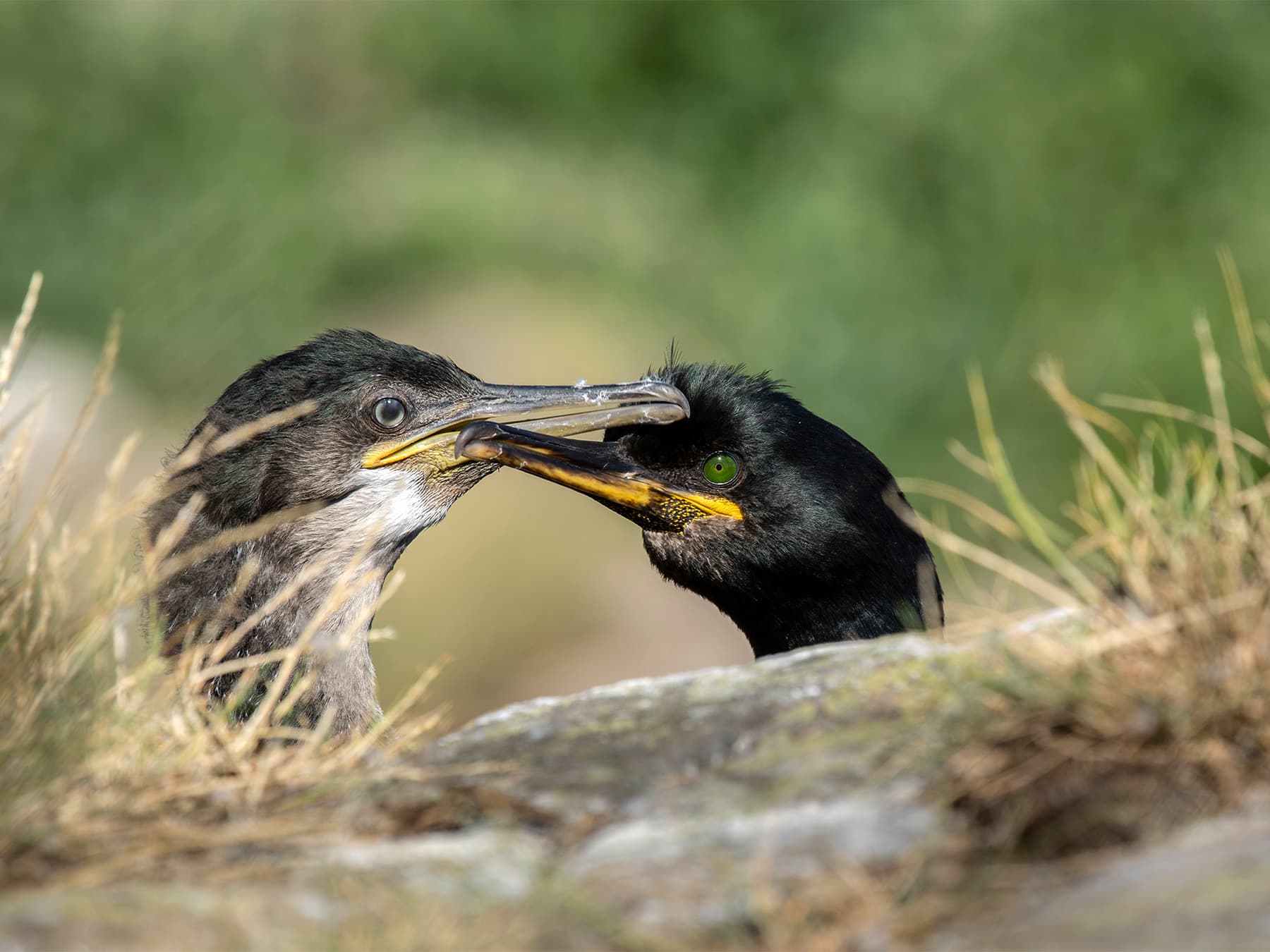
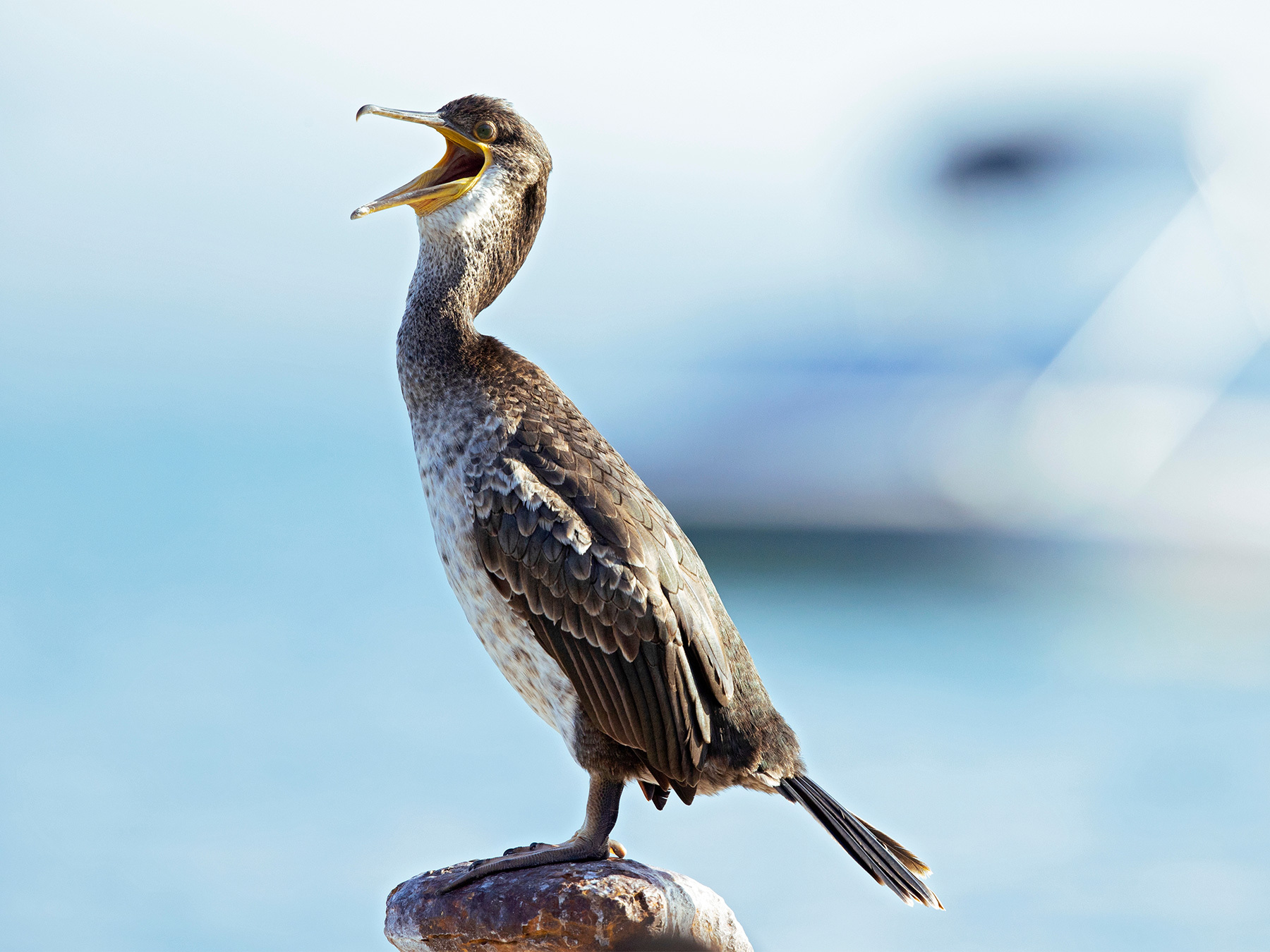
In their first winter, juvenile shags are easily distinguished from adult birds, by their size and colouring. Young shags have dark brown upperparts, wings and thighs. Their throat is pale, with whitish feathers extending into the upper breast and a patchy lighter brown plumage across their belly and underparts. Their crown is dark brown, and they do not develop a crest until they gain their final adult plumage ahead of breeding for the first time aged 3 to 4 years.
How big are Shags?
European shags are smaller and more slender than the otherwise very similar cormorant. They are described as ‘goose-sized’, with males typically heavier and slightly larger than females.
- Length: 65 cm to 80 cm (26 in to 31 in)
- Wingspan: 90 cm to 105 cm (35 in to 41 in)
- Weight: 1.75 kg to 2.25 kg (3.9 lb to 5 lb)
Its size
Adults- Length
- 65–80 cm
- Wingspan
- 90–105 cm
- Weight
- 1500–2300 g
Its song and calls
What sound does a Shag make?
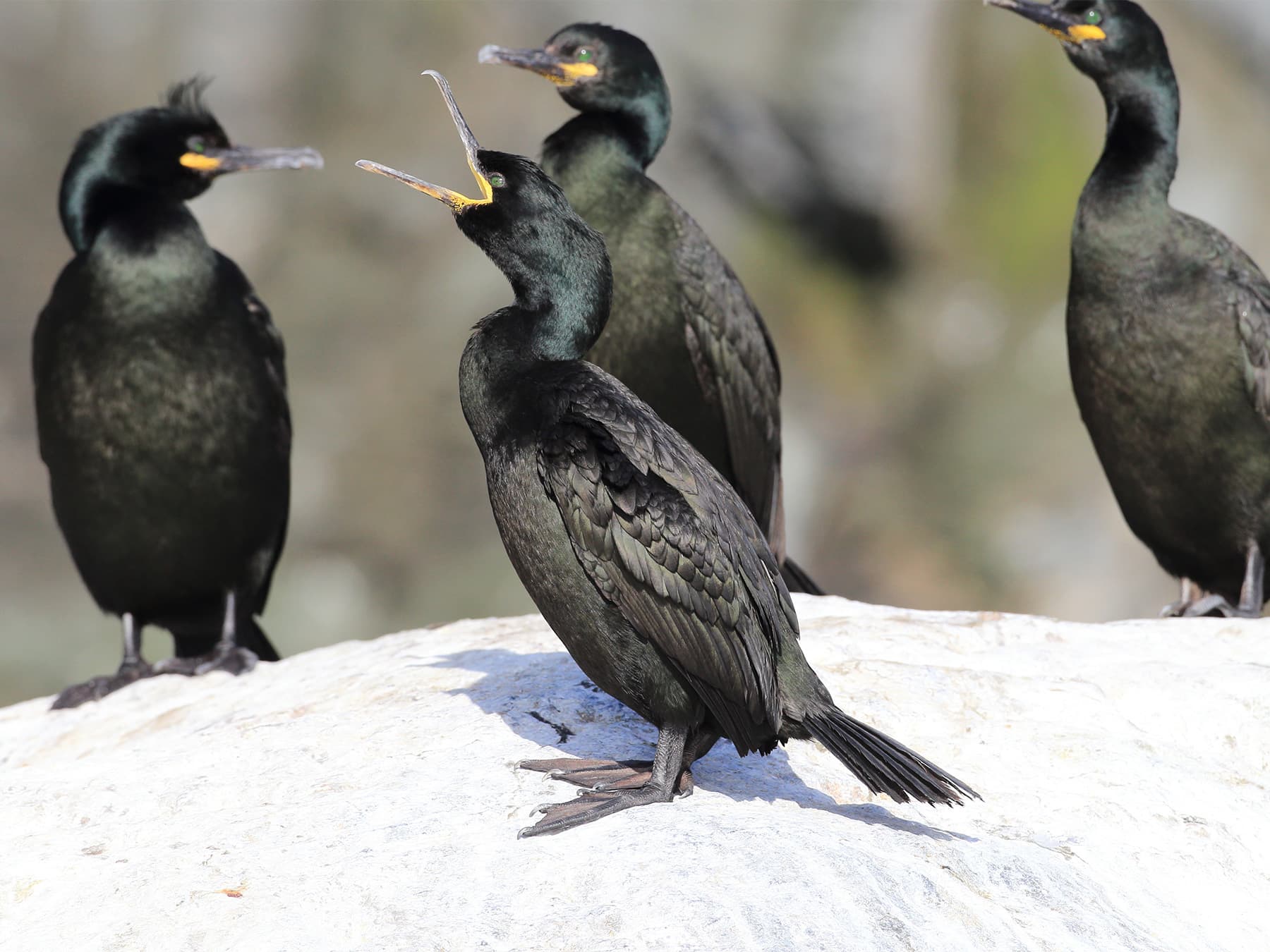
Shags are not a particularly vocal species, but any sounds they do make offer a useful method of distinguishing between males and females.
Male shags utter a low-pitched croak when around other birds. Pig-like grunts are also heard during the breeding season. Females, however, are mostly silent but may hiss if disturbed at the nest.
When and where to see it
OctoberHere all year
Most recorded in October
- 1. Derry2.6%
- 2. North Ayrshire2.0%
- 3. Shetland Islands1.8%
- 4. Eilean Siar1.8%
- 5. Orkney Islands1.8%
Each dot is a county, state or province: the bigger and darker, the larger the bird’s share of that place’s bird records that month. Grey dots: no regular records. The ringed point is the centre of the bird’s records this month; the arrow shows how it moved since last month, and the dashed loop its path through the year. “Arrivals” colours places where it becomes regular this month (orange) or is in its last regular month (grey). GBIF eBird Observation Dataset, 2019–2024. Map data: Natural Earth, US Census Bureau; place centres © OpenStreetMap contributors.
In your area
See when the European Shag is recorded in your county, state or province.
How often the European Shag turns up in the UK and Ireland through the year, from birdwatchers' records.
United Kingdom
Resident · all year · most records in October
Ireland
Resident · all year · most records in August
Show as a table
| Month | United Kingdom | Ireland |
|---|---|---|
| January | 0.16% (regular) | 0.88% (regular) |
| February | 0.15% (regular) | 0.91% (regular) |
| March | 0.14% (regular) | 0.90% (regular) |
| April | 0.13% (regular) | 0.69% (regular) |
| May | 0.18% (regular) | 0.67% (regular) |
| June | 0.23% (regular) | 0.70% (regular) |
| July | 0.24% (regular) | 0.95% (regular) |
| August | 0.28% (regular) | 1.1% (regular) |
| September | 0.27% (regular) | 0.96% (regular) |
| October | 0.31% (regular) | 0.96% (regular) |
| November | 0.19% (regular) | 0.85% (regular) |
| December | 0.18% (regular) | 0.84% (regular) |
Recorded regularly in
Worldwide: recorded regularly in 33 countries
Countries where it was recorded in at least 3 of the 6 years 2019–2024. Linked countries have their own bird list.
Data: EOD – eBird Observation Dataset (Cornell Lab of Ornithology), accessed via GBIF.org, CC BY 4.0. Records from 2019–2024, aggregated and filtered by Birdfact. How these lists are made
What is the habitat of a Shag?
Shags are coastal birds, unlike the similar cormorant, which is also a regular sight at lakes and reservoirs further inland. They are found in marine habitats, and rarely stray far from the coastline, preferring rocky coasts and islets. Foraging sites are over sandy and rocky seabeds, particularly in shallow bays and channels. Estuaries, bays, inlets, and freshwater pools are not normally used.
What is the range of a Shag?
Shags live in coastal regions of Europe, including parts of the shorelines of the Atlantic and Arctic oceans, and the North, Baltic, Mediterranean, and Black Seas.
To the north, their range extends from western Iceland around the northern coast of Scandinavia to north-western Russia. To the south, shags are found on the western and northern coasts of Morocco, along the Mediterranean coasts of Europe and North Africa, and as far east as Ukraine’s Black Sea.
Where do Shags live?
The UK is home to more than 60 percent of the global population of shags, a figure estimated at 153,000 to 157,000 mature individuals in 2015. Norway, Iceland, France, and Portugal are among the other countries with the highest shag populations in Europe. One of Europe’s largest individual colonies of shags is found on the Cíes Islands, Spain.
How rare are Shags?
Within their European coastal ranges, shags are a relatively common seabird and more numerous, although not as widespread as the cormorant that is regularly spotted further inland and across a larger geographical area. Shags are particularly common along Scotland’s coasts.
Where can you see Shags in the UK?
The largest colonies of shags are found in northern and western Scotland, on the Orkney, Shetland, and Inner Hebrides islands, and along the Firth of Forth. Shags are also common along the coast of Wales and south-western England, particularly Devon and Cornwall.
Migration
Do Shags migrate?
Most European shags are non-migratory, remaining in their nesting territories all year round. Some short-distance migration may occur with birds that nest at locations in far northern latitudes ‘sun-chasing’ – moving south in search of days with longer daylight hours, meaning extended foraging time.
Are Shags native to the UK?
The UK is home to more than 60 percent of Europe’s breeding shag population, and they are year-round residents in much of the northern and western coastal regions of Scotland, Wales, Cornwall and Devon.
Tips for seeing it
- Look for Shags on rocky coastlines, especially near cliffs
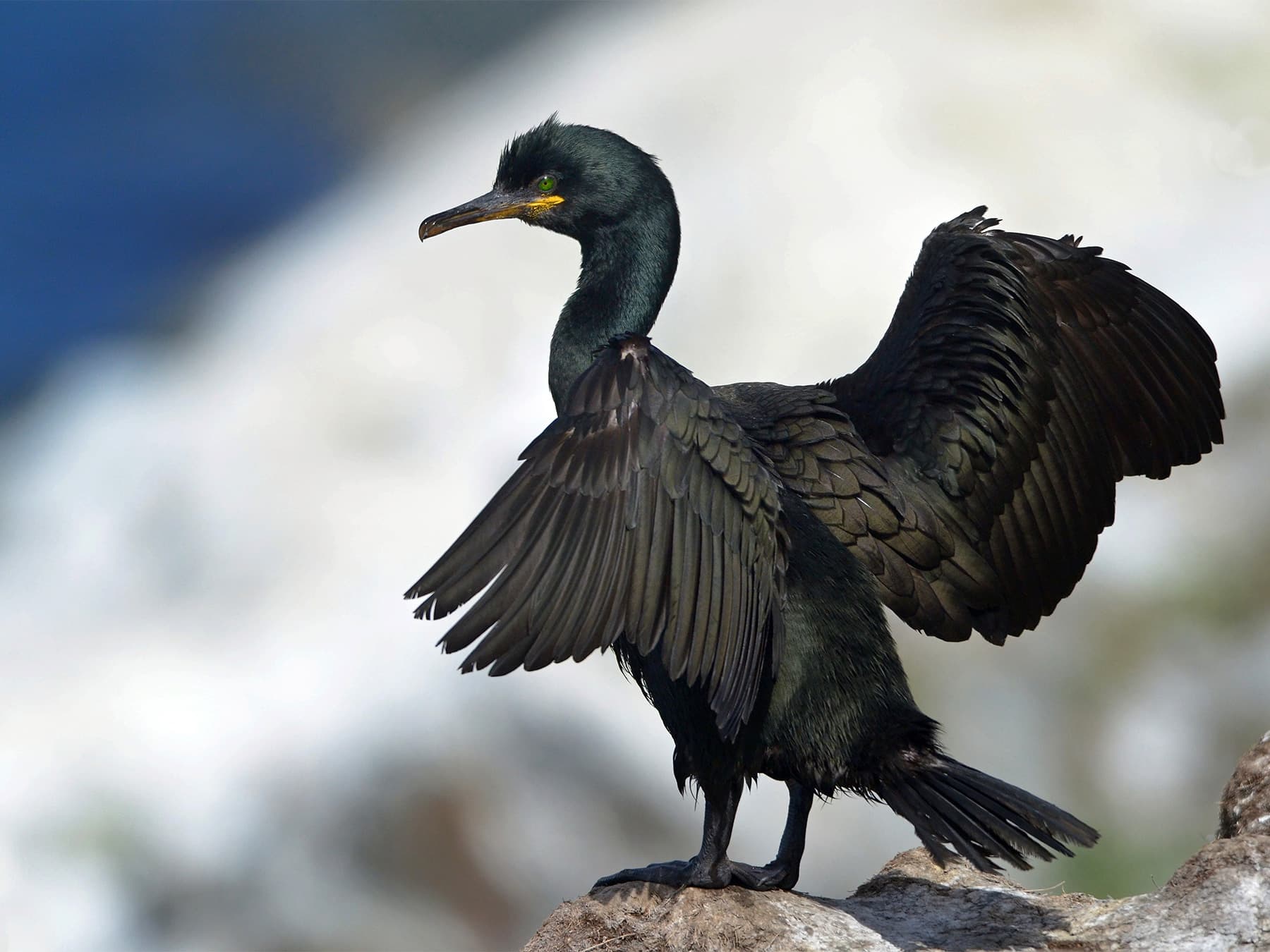
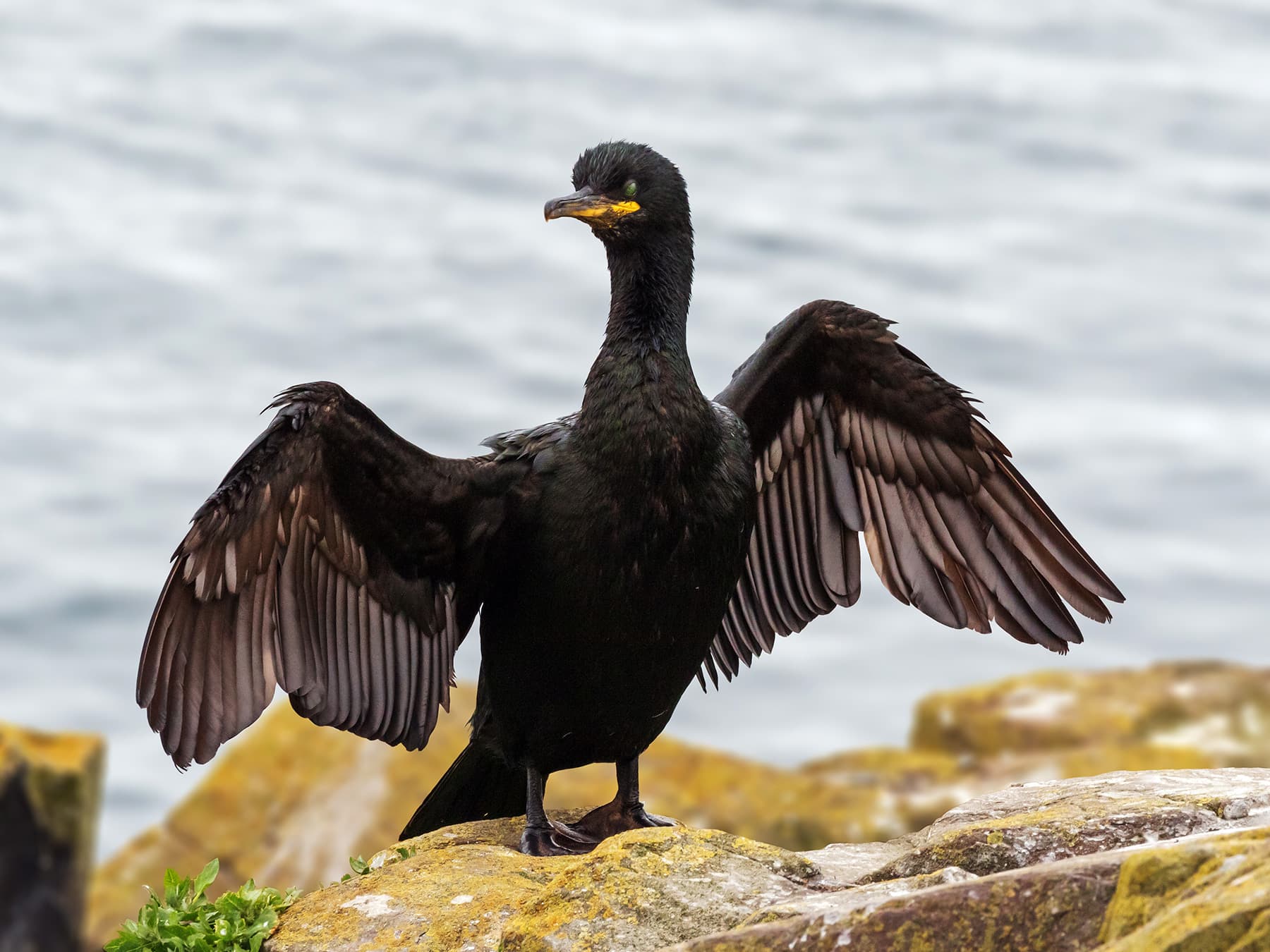
- Observe their distinctive wing-drying posture after diving
- Listen for their harsh, guttural calls near breeding colonies
- In the UK, watch for them diving in coastal waters year-round
What it eats
What do Shags eat?
Shags feed almost solely on fish, especially herring, wrasse, blenny, goby, garfish and sand-eels. Occasionally molluscs and crustaceans may also be eaten. During the breeding season, nesting shags tend to forage close to their nest sites. They pursue their prey underwater, diving into the water to depths of up to 45m.
What do Shag chicks eat?
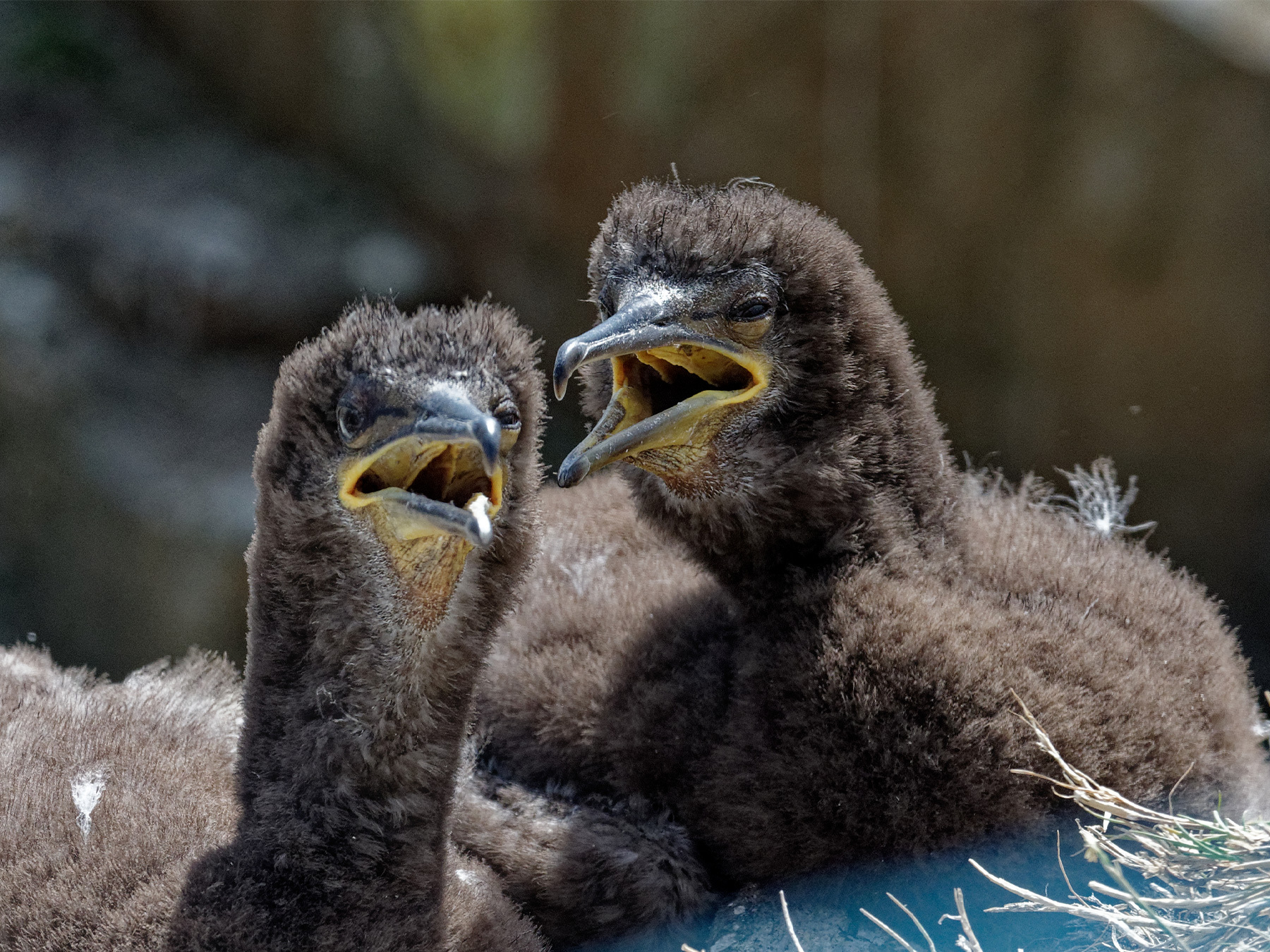
Young shags are fed by regurgitation by their parents, with partly digested fish – almost exclusively sand-eels – being passed directly into the bills of immature birds.
Nesting and breeding
Where do Shags nest?
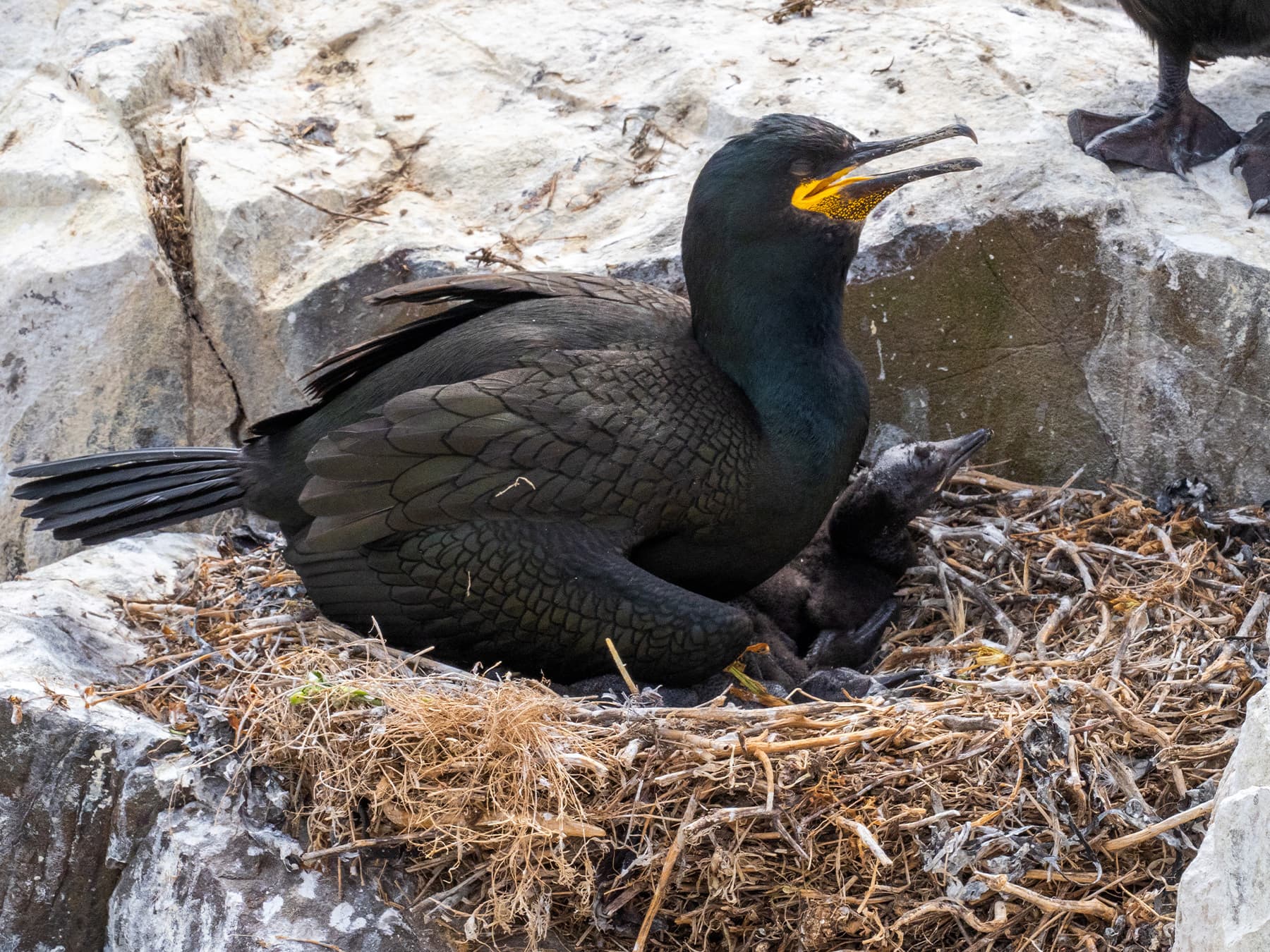
Preferred nesting spots of shags are found on bare rocky cliffs and ledges overlooking the sea, or in crevices or cracks in cliff faces. Nest sites are colonial, with several hundred pairs in close proximity not being unusual. The nest itself is constructed from a large, bulky pile of seaweed, lined with grass and other available plant matter. It’s common for a shag pair to reuse an old nest in future breeding seasons.
When do Shags nest?
Shags are one of the earliest seabirds to breed each year, laying their first eggs from early March in Atlantic colonies, and as early as November in Mediterranean regions. Peak Mediterranean laying occurs in January and February. Incubation lasts for between 30 and 31 days, with males and females sharing the task.
What do Shag eggs look like?
Shags’ eggs are pale blue and measure 63 mm by 38 mm (2.5 in by 1.5 in). A typical clutch contains up to three eggs, and one single brood is raised each year.
Do Shags mate for life?
Although shags are generally a monogamous species with strong pair bonds observed between mates, occasionally males may be polygamous and breed with more than one mate.
Behaviour
Are Shags aggressive?
Fights between shags over food sources are not uncommon and escalate quickly, with fierce biting and pecking at each others’ wings and bills. Young birds regularly clash when competing for food. Potential predators are chased off with aggressive posturing.
Where do Shags sleep at night?
A common resting pose of shags is on a rock or bank with its wings outstretched. This allows their wings to dry off after a foraging mission in the ocean’s waters. Small offshore islands or ledges on a cliff face offer safe overnight roosting spots.
Lifespan and predators
How long do Shags live?
On average, the expected lifespan of a European shag is around 12 years, with breeding occurring for the first time at either 3 or 4 years. Older individuals have been identified through ringing records, with one that was found to have reached 29 years and 10 months in 2007.
What are the predators of Shags?
One of the most common predators of shags, particularly on nesting grounds, are American mink. Their choice of inaccessible nest sites, on rocky clifftops, reduces the threat from many larger land predators, although birds of prey, corvids, and gulls may opportunistically prey on eggs and young shags.
Are Shags protected?
Shags are protected against being killed, injured or taken into captivity by the Wildlife and Countryside Act, 1981. Across the EU there are almost 100 designated protected areas for this species.
Are Shags endangered?
During the late 20th century, shags were one of the UK’s most rapidly increasing species of seabird, although, since 2000, declines have been recorded. Shags have Red status on the British Birds of Conservation Concern list, due to more than half the UK population being concentrated at fewer than 10 nesting sites. Globally they are considered a species of least concern.
Why is the Shag endangered?
Although not approaching threatened or endangered levels, shag populations have certainly experienced declines in recent years. Many factors are believed to have contributed, including climate change and the increasing frequency of severe weather events, a decrease in herring and sand-eel availability, and threats to habitat from oil spills and development in coastal regions.
Conservation
While currently listed as Least Concern globally, Shag populations face threats from oil spills, fishing net entanglement, and climate change impacts on marine ecosystems.
Local conservation efforts focus on protecting breeding sites and reducing marine pollution.
Similar birds
Often mistaken for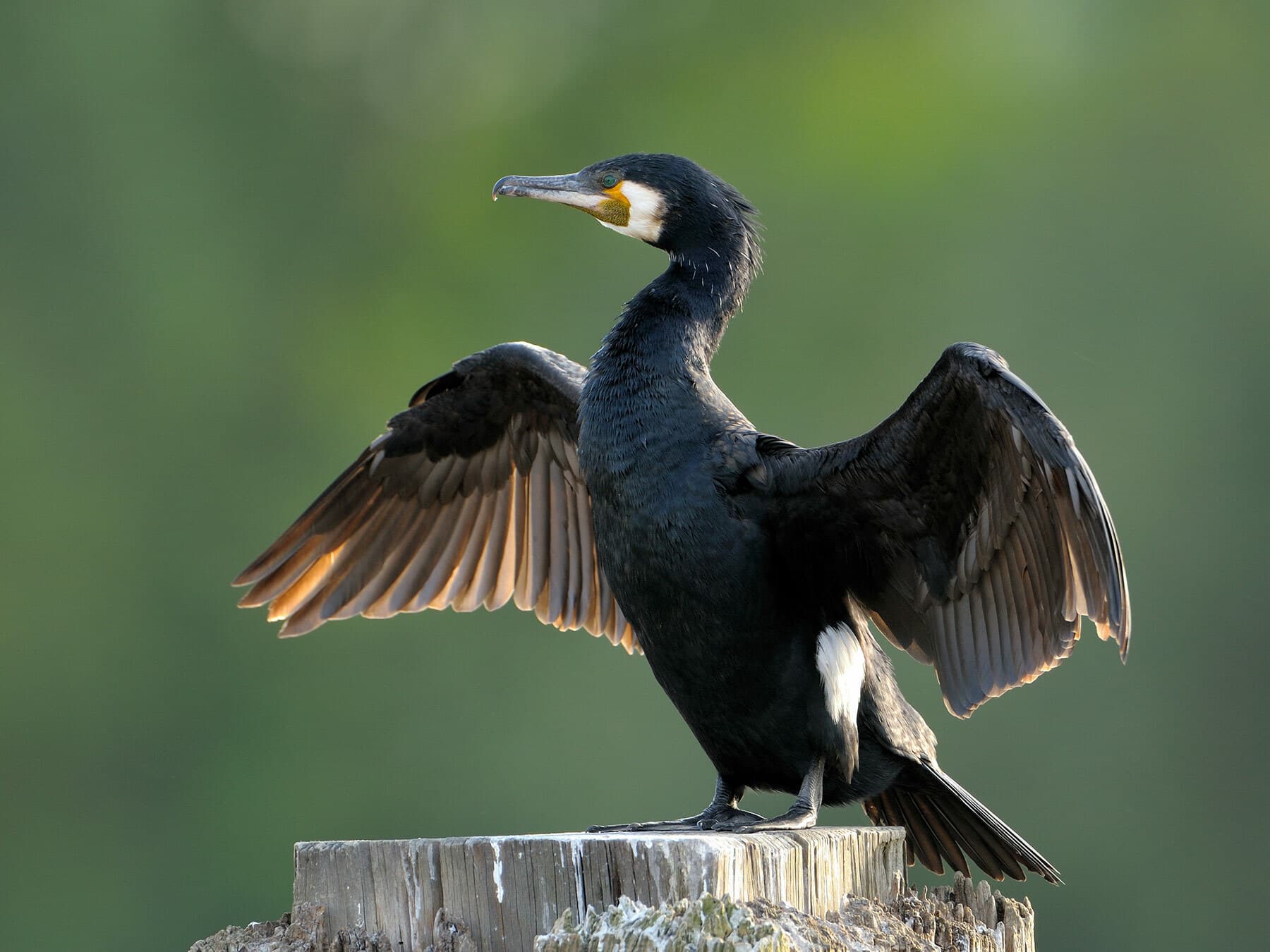
More photos
5 photos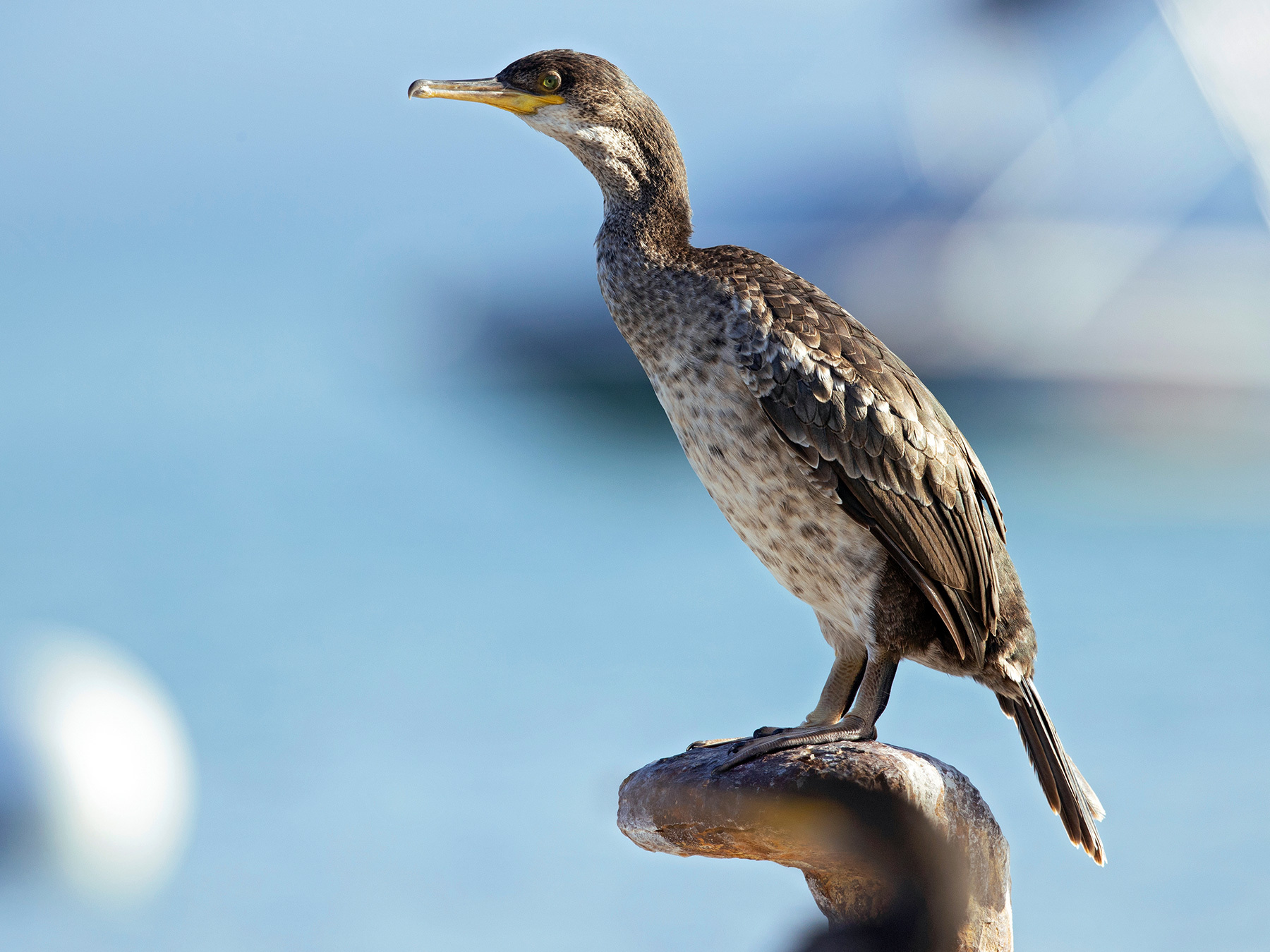
Quick facts
- Length
- 65–80 cm
- Wingspan
- 90–105 cm
- Weight
- 1500–2300 g
- Lifespan
- 12 years · oldest recorded 30.6 years
- Family
- Cormorants & Shags
- Migration
- Partial migrant
- Global status (IUCN)
- Least Concern
- World population
- 230,000 - 240,000 mature individuals
- Population trend
- Decreasing
- Also called
- Common Shag
- Scientific name
- Gulosus aristotelis
Sources
4- 1BirdLife International. 2018. Gulosus aristotelis. The IUCN Red List of Threatened Species 2018: e.T22696894A133538524. Source (opens in a new tab)
- 2Wetlands International (2015)
- 3Wetlands International (2015)
- 4Fransson et al., EURING list of longevity records for European birds (2010) Source (opens in a new tab)

Checked by
Nathan Cope, founder and editor
Nathan founded Birdfact and leads its writers and contributors in the UK, the US and Canada. He has watched and studied birds for more than ten years, and checks every article and species guide before it’s published.