


Saker Falcon
Saker · Falco cherrug
By the Birdfact teamChecked by Nathan Cope
On this page12 sections
How to recognise it
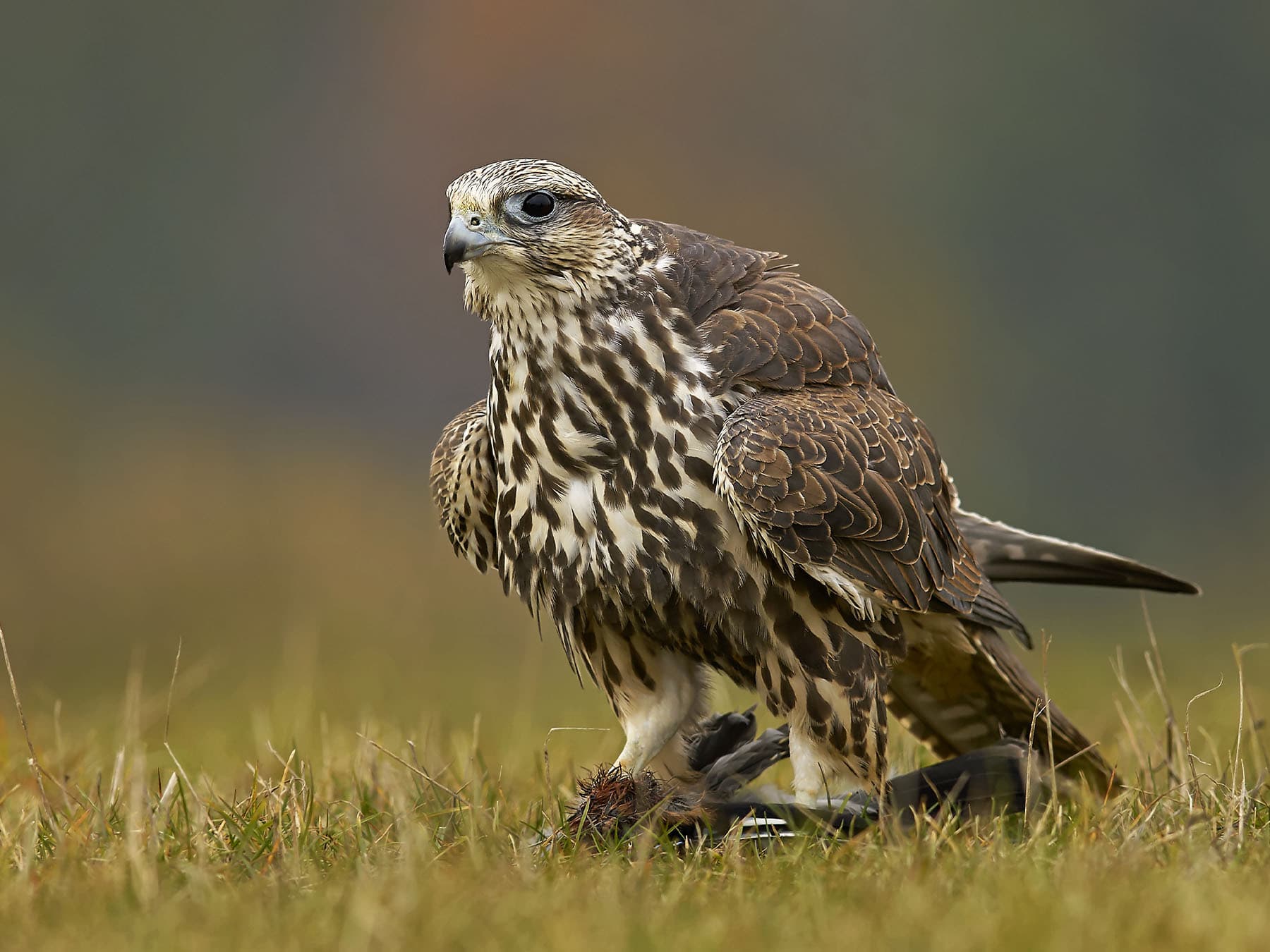
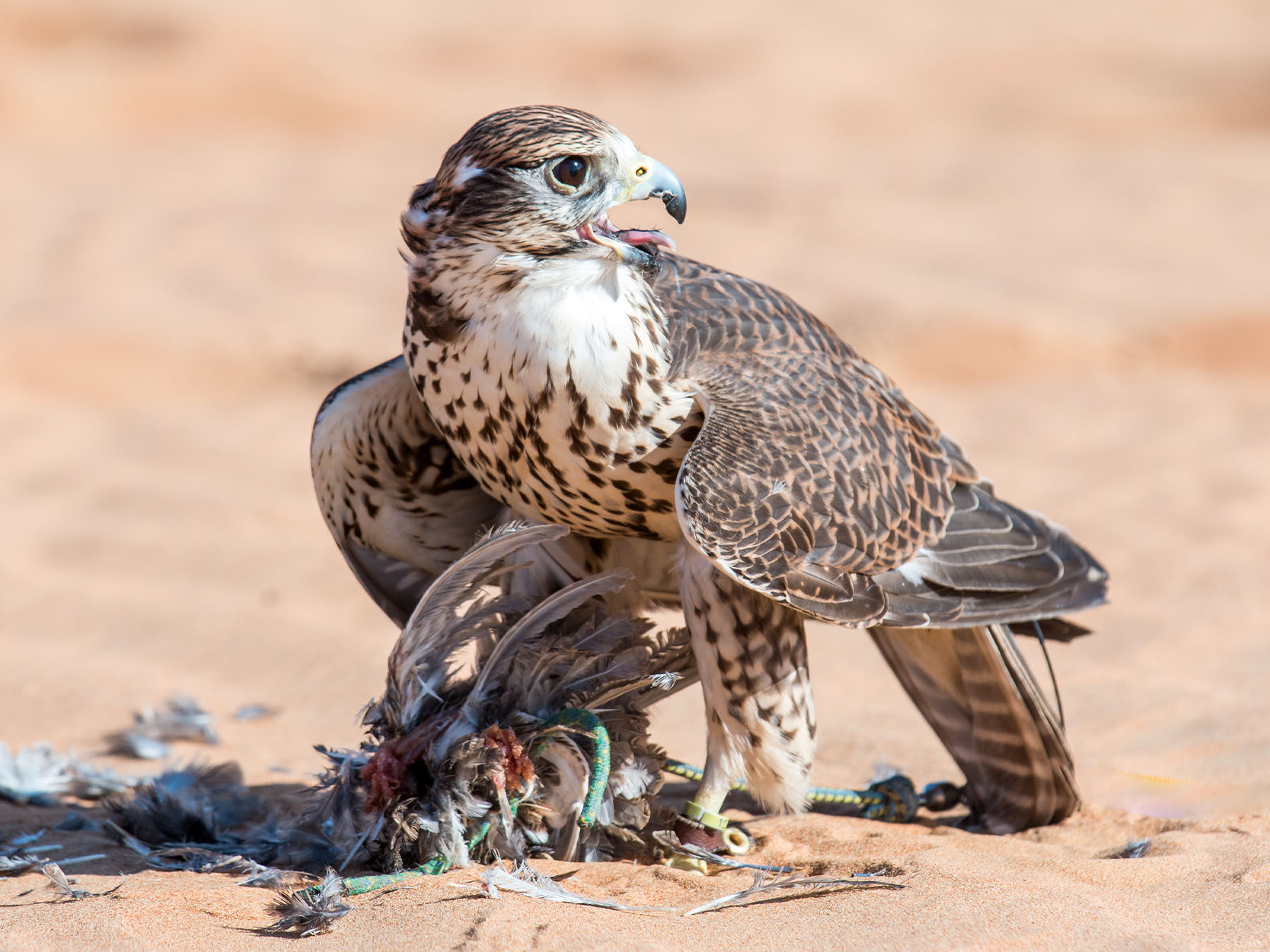
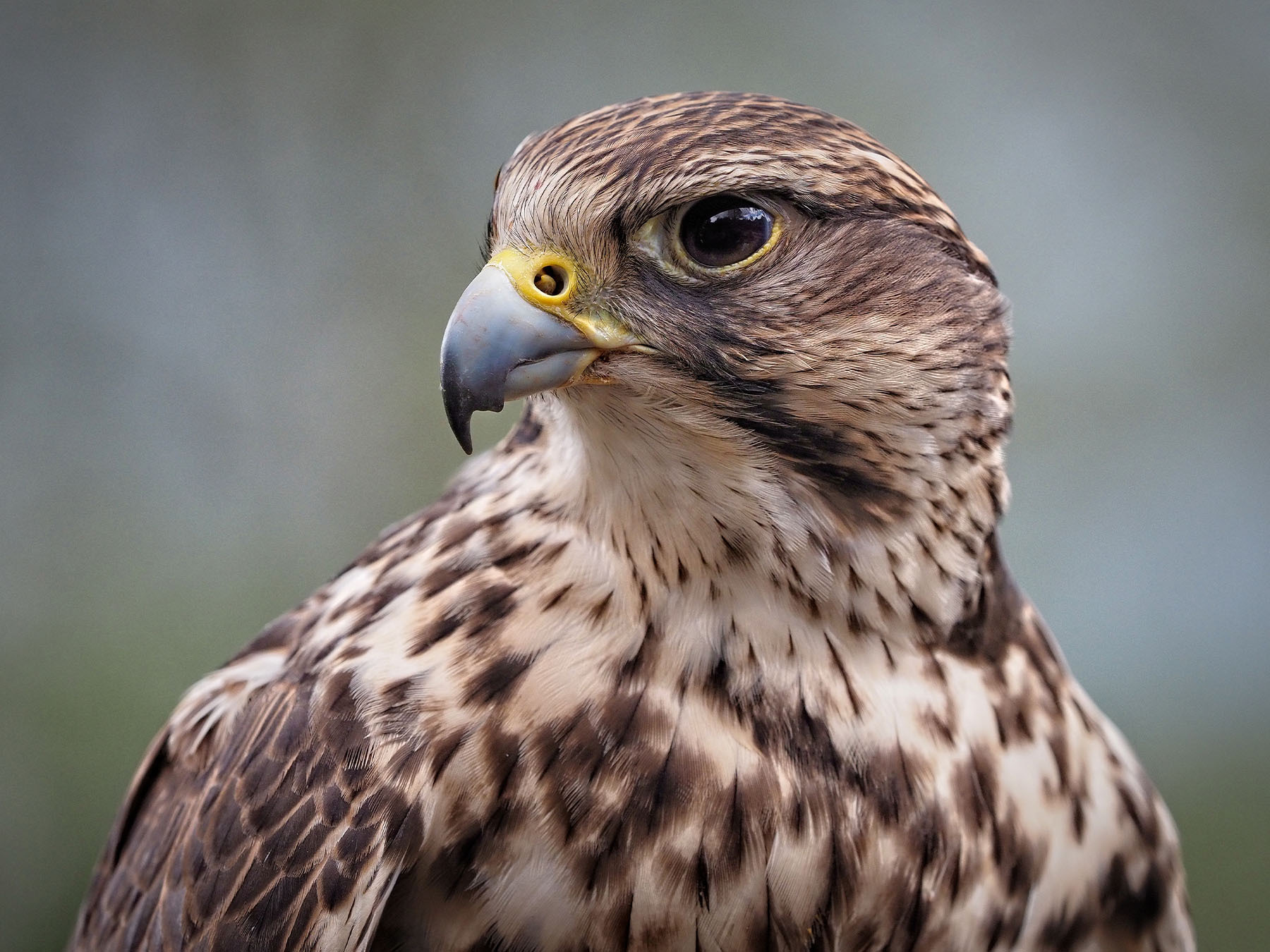
The Saker Falcon is a large, powerful raptor with a robust build. Its upper parts are predominantly brown with pale edges, while the underparts are lighter, often buff-coloured with dark streaks. The head features a pale crown and a distinctive 'moustache' marking.
Females are noticeably larger than males, with broader wings and a heavier build. Juveniles have more pronounced streaking on their underparts and a bluish cere and eye-ring, which turn yellow in adults.
Its size
Adults- Length
- 45–57 cm
- Wingspan
- 97–126 cm
- Weight
- 730–1300 g
Its song and calls
Saker Falcons are generally quiet outside the breeding season. During courtship and nesting, they produce a series of loud, harsh 'kree-kree-kree' or 'kek-kek-kek' calls. These vocalisations are often heard during territorial displays or when alarmed.
When and where to see it
Tips for seeing it
- Look for Saker Falcons in open landscapes, especially grasslands and steppes
- Observe power lines and poles, which they often use as perches
- Listen for their loud, raspy calls during breeding season
- Watch for their distinctive hunting behaviour close to the ground
What it eats
Saker Falcons primarily feed on small to medium-sized mammals, particularly ground squirrels and hares. They also hunt birds, including pigeons and partridges.
These falcons employ a combination of high-speed chases and surprise attacks to catch their prey, often pursuing them close to the ground.
Nesting and breeding
Saker Falcons typically breed between March and June. They form monogamous pairs and often reuse nesting sites from previous years. These falcons do not build their own nests but utilise abandoned nests of other large birds or cliff ledges.
Females lay 3-5 eggs, which are creamy-white with reddish-brown markings. The eggs are incubated primarily by the female for about 30-32 days while the male provides food.
Chicks fledge after 45-50 days but remain dependent on their parents for several weeks afterwards, gradually developing their hunting skills.
Behaviour
Saker Falcons are known for their swift, powerful flight and impressive aerial hunting skills. They often hunt close to the ground, using their speed and agility to catch prey.
During the breeding season, pairs engage in spectacular aerial displays, including high-speed chases and mock attacks.
Conservation
The Saker Falcon faces significant threats due to habitat loss, electrocution on power lines, and illegal capture for falconry.
Conservation efforts focus on habitat protection, artificial nest provision, and stricter trade regulation. Captive breeding programs aim to bolster wild populations in some regions.
Similar birds
Often mistaken for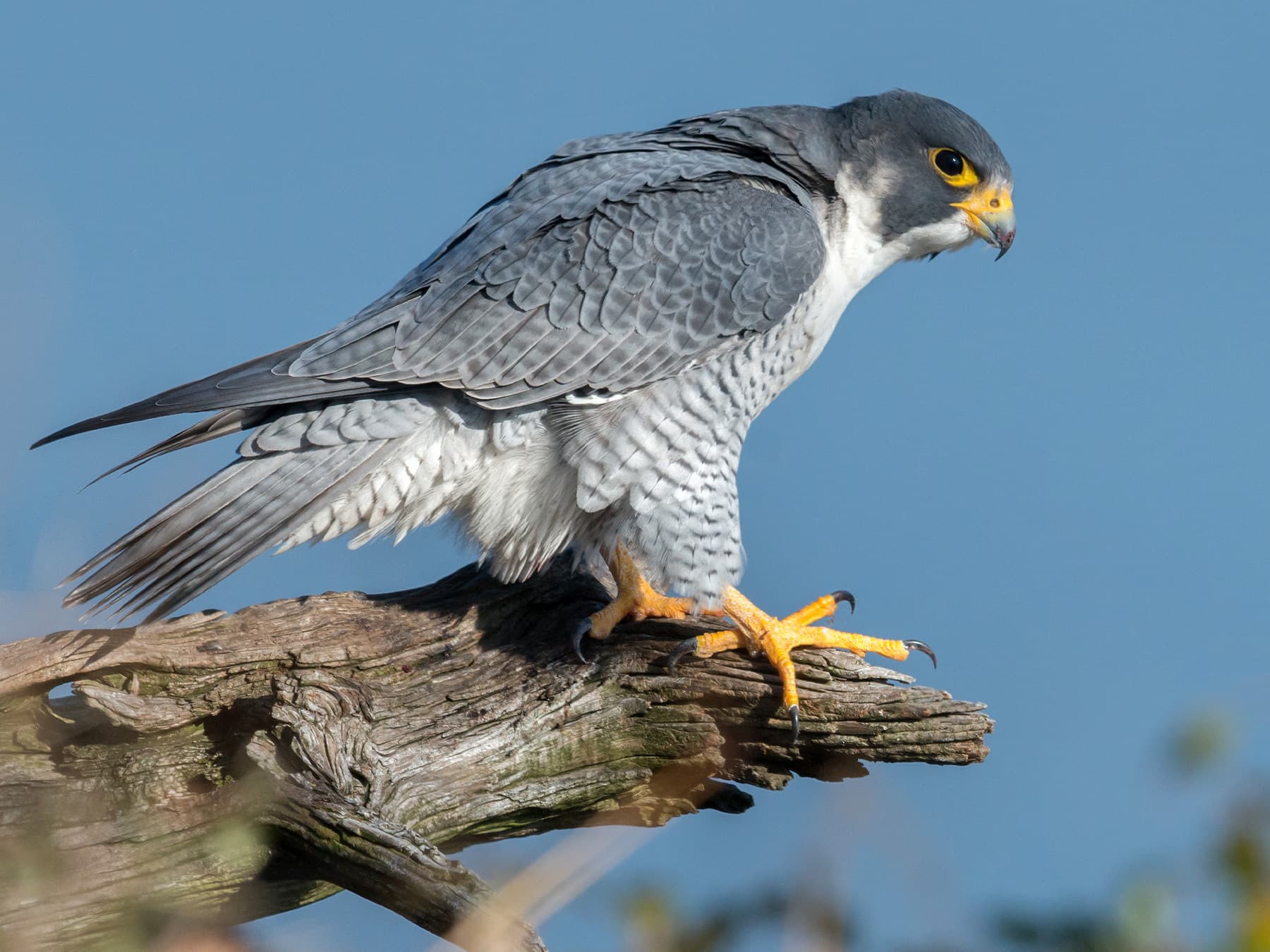
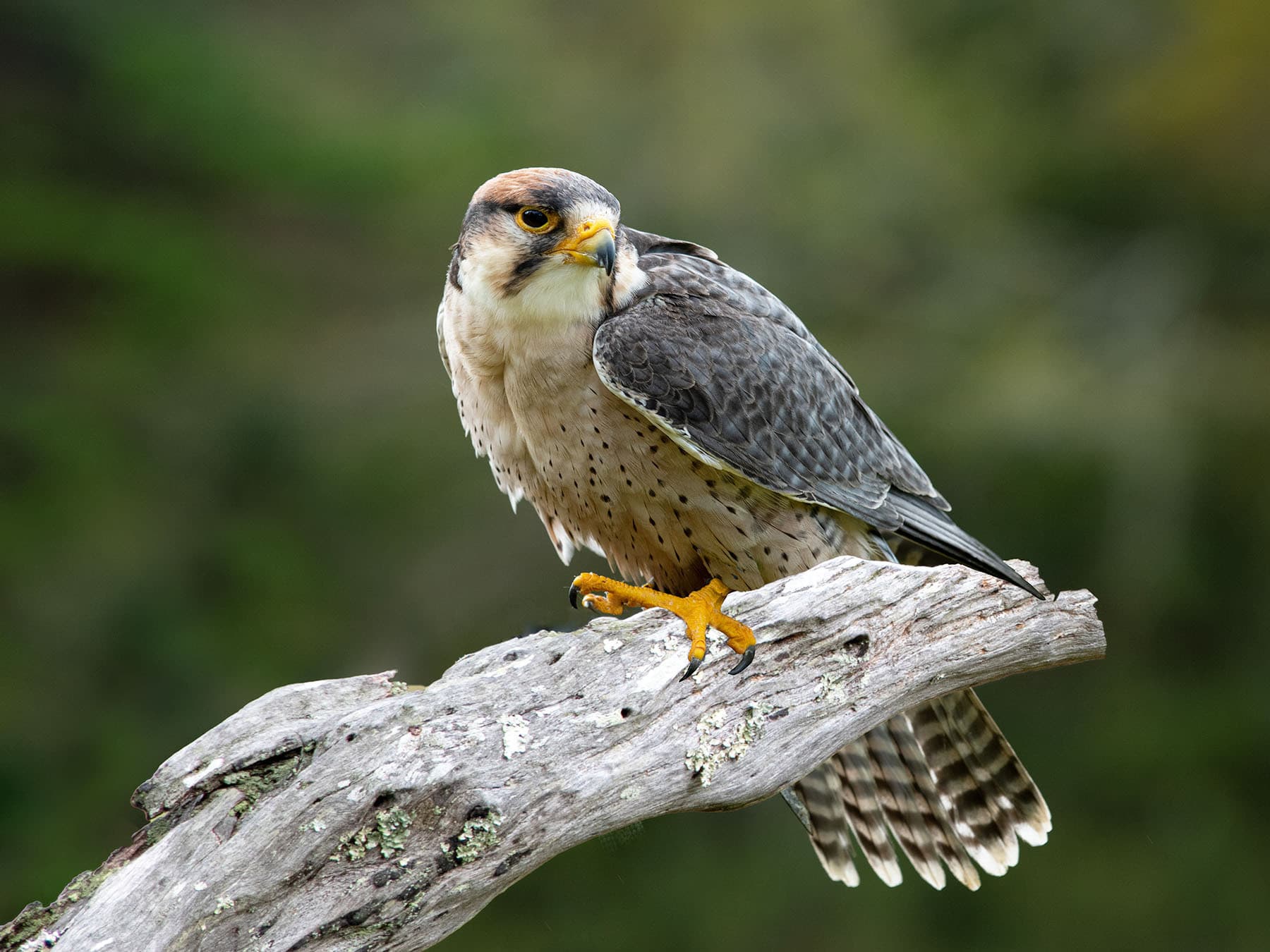
More photos
3 photos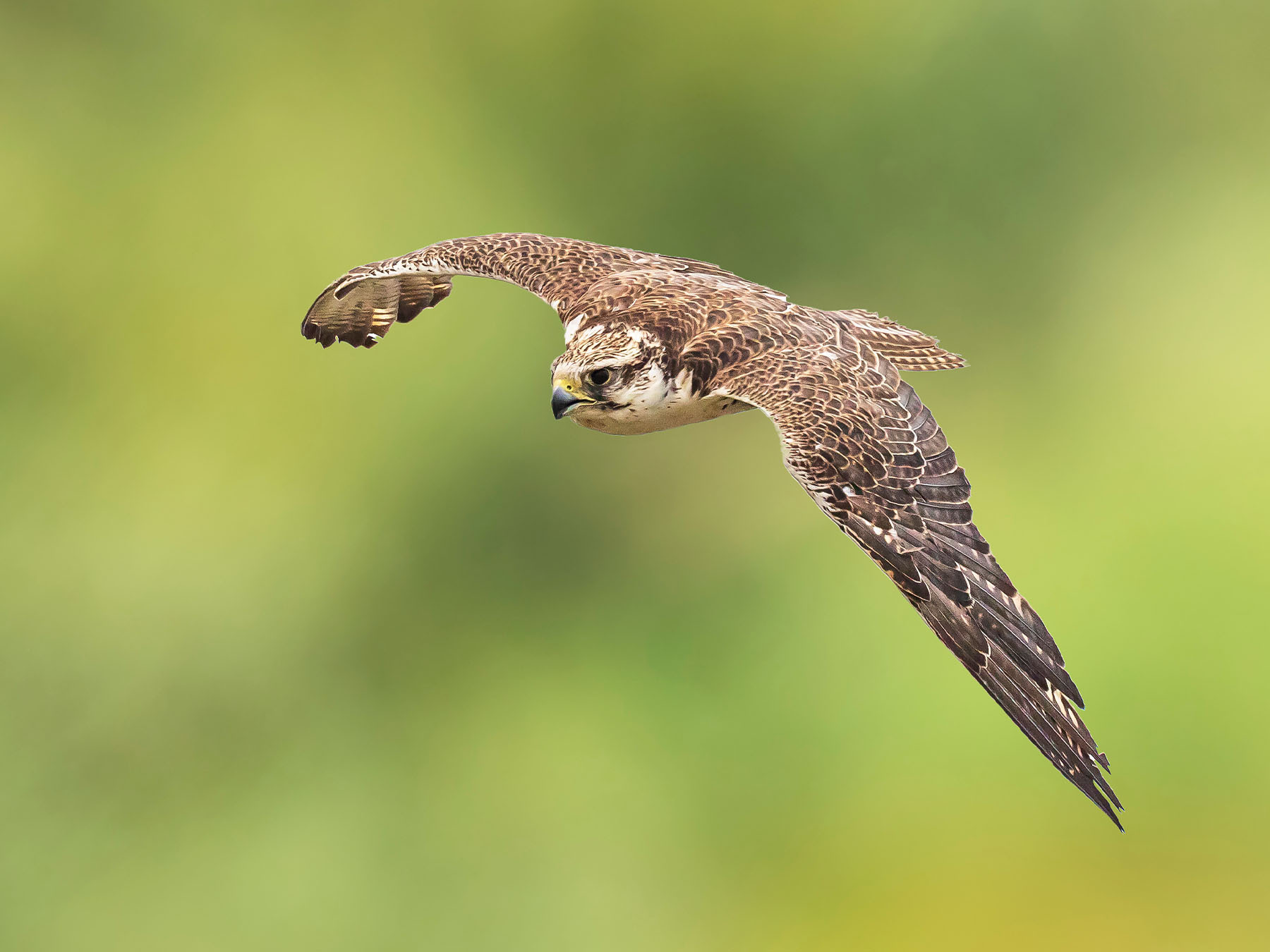
Quick facts
- Length
- 45–57 cm
- Wingspan
- 97–126 cm
- Weight
- 730–1300 g
- Lifespan
- 5–7 years · oldest recorded 15.9 years
- Family
- Falcons
- Migration
- Partial migrant
- Global status (IUCN)
- Endangered
- World population
- 12,200 - 29,800 mature individuals
- Population trend
- Population decreasing due to threats
- Also called
- Saker
- Scientific name
- Falco cherrug
Sources
4- 1BirdLife International. 2021. Falco cherrug. The IUCN Red List of Threatened Species 2021: e.T22696495A204182473. Source (opens in a new tab)
- 2BirdLife International. 2021. Falco cherrug. The IUCN Red List of Threatened Species 2021: e.T22696495A204182473. Source (opens in a new tab)
- 3Saker Falcon Action Plan, Kovács et al. (2014)
- 4Fransson et al., EURING list of longevity records for European birds (2010) Source (opens in a new tab)

Checked by
Nathan Cope, founder and editor
Nathan founded Birdfact and leads its writers and contributors in the UK, the US and Canada. He has watched and studied birds for more than ten years, and checks every article and species guide before it’s published.