


Lanner Falcon
Lanner · Falco biarmicus
By the Birdfact teamChecked by Nathan Cope
On this page12 sections
How to recognise it
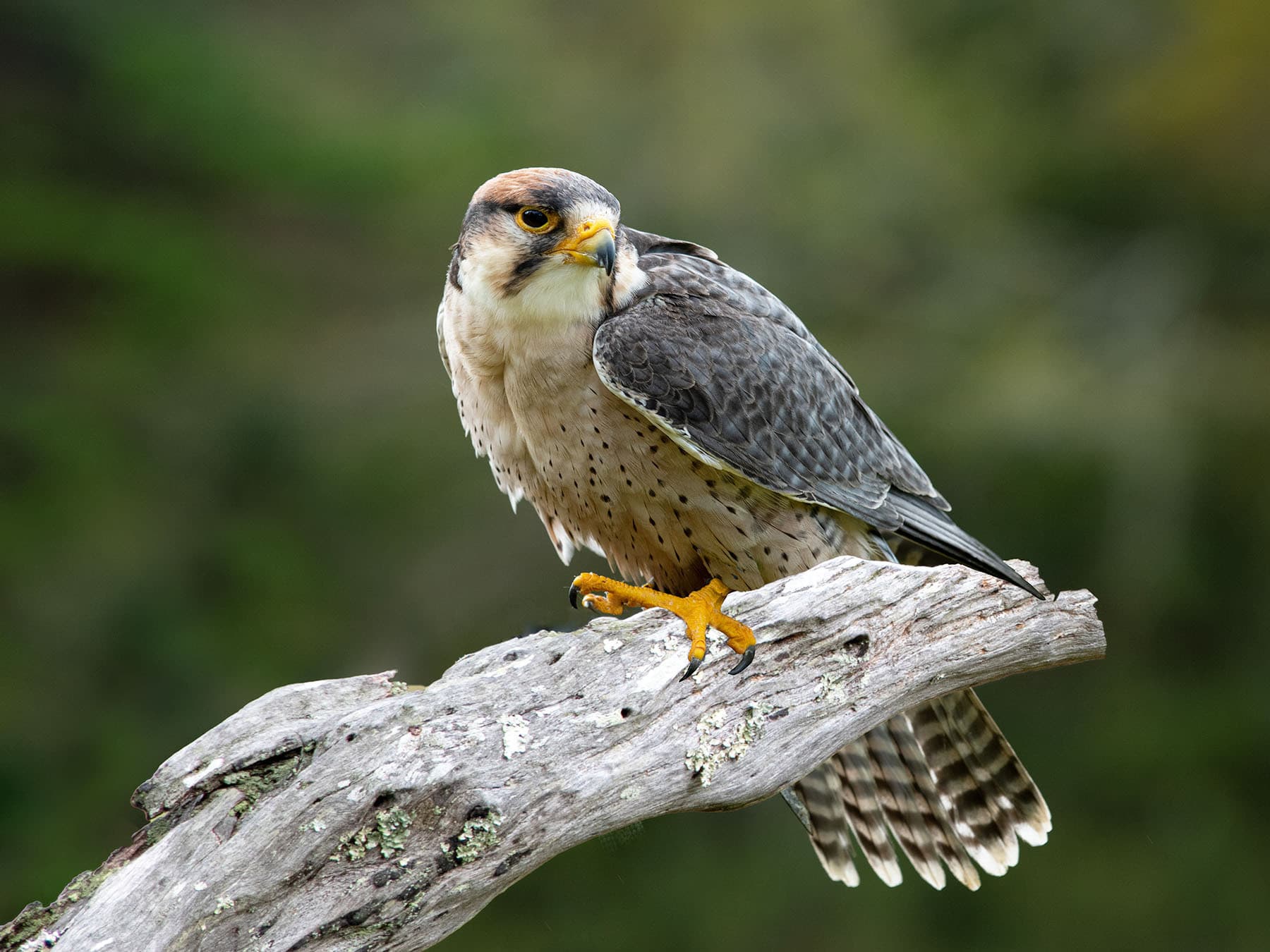
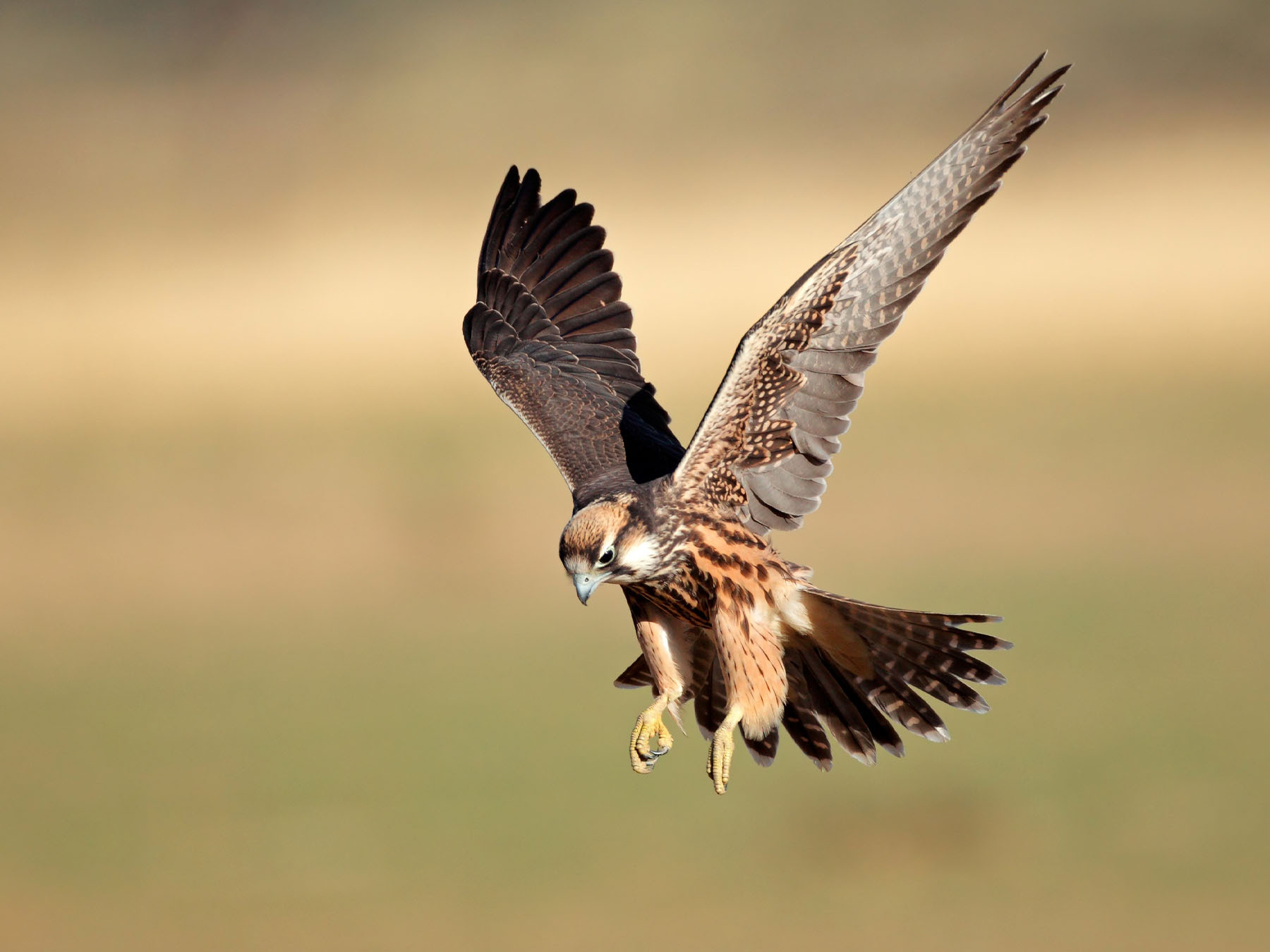
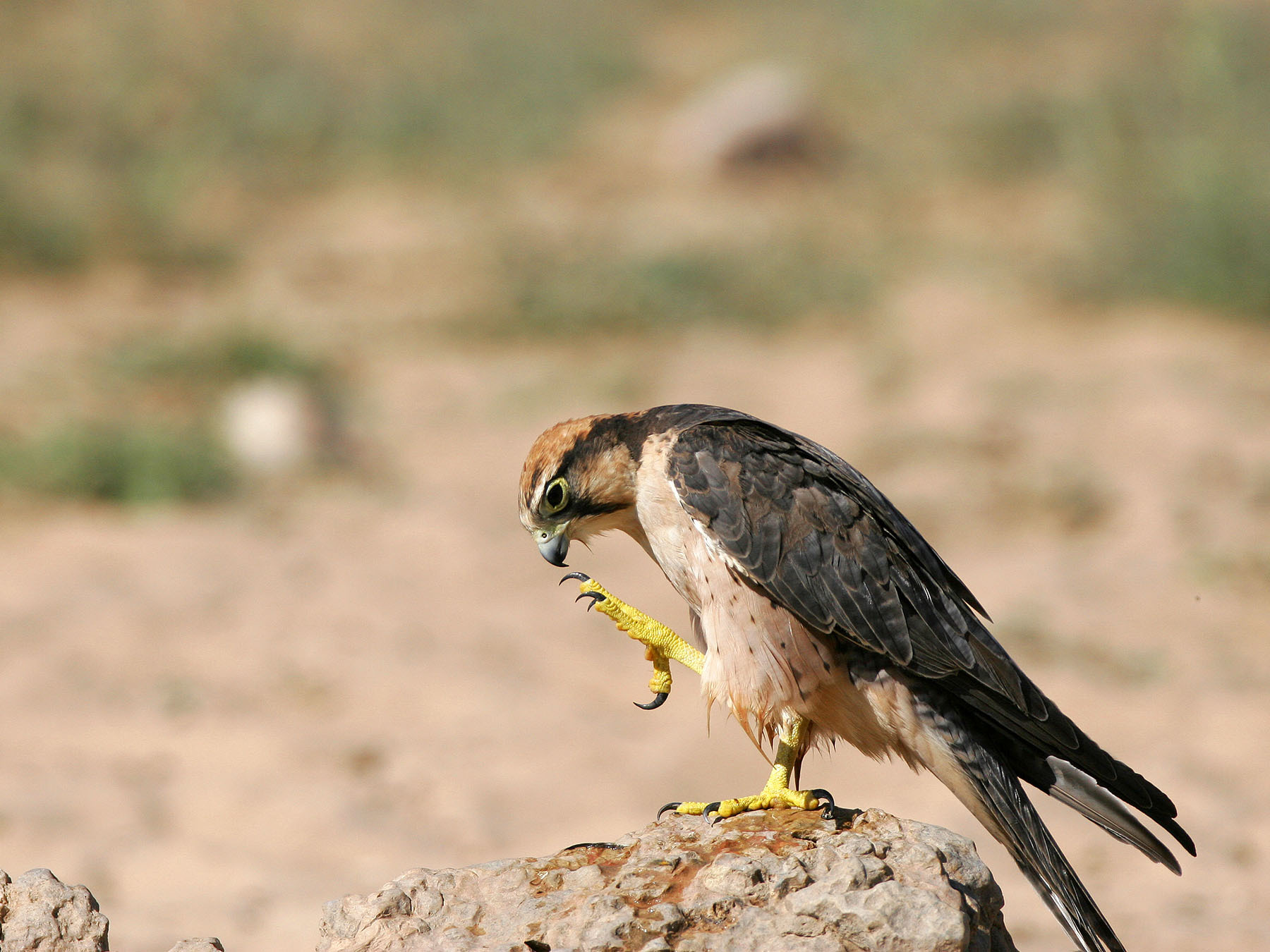
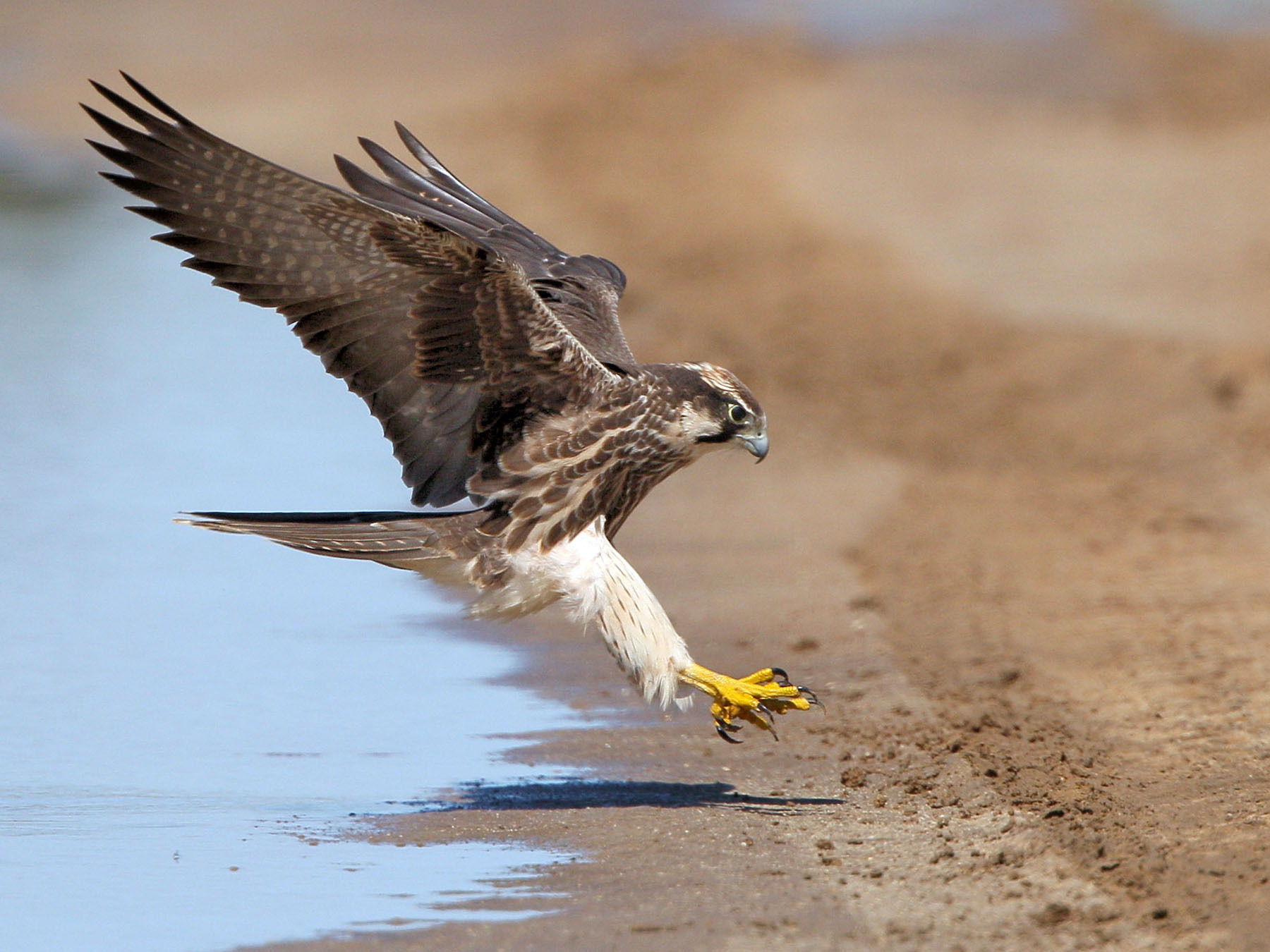
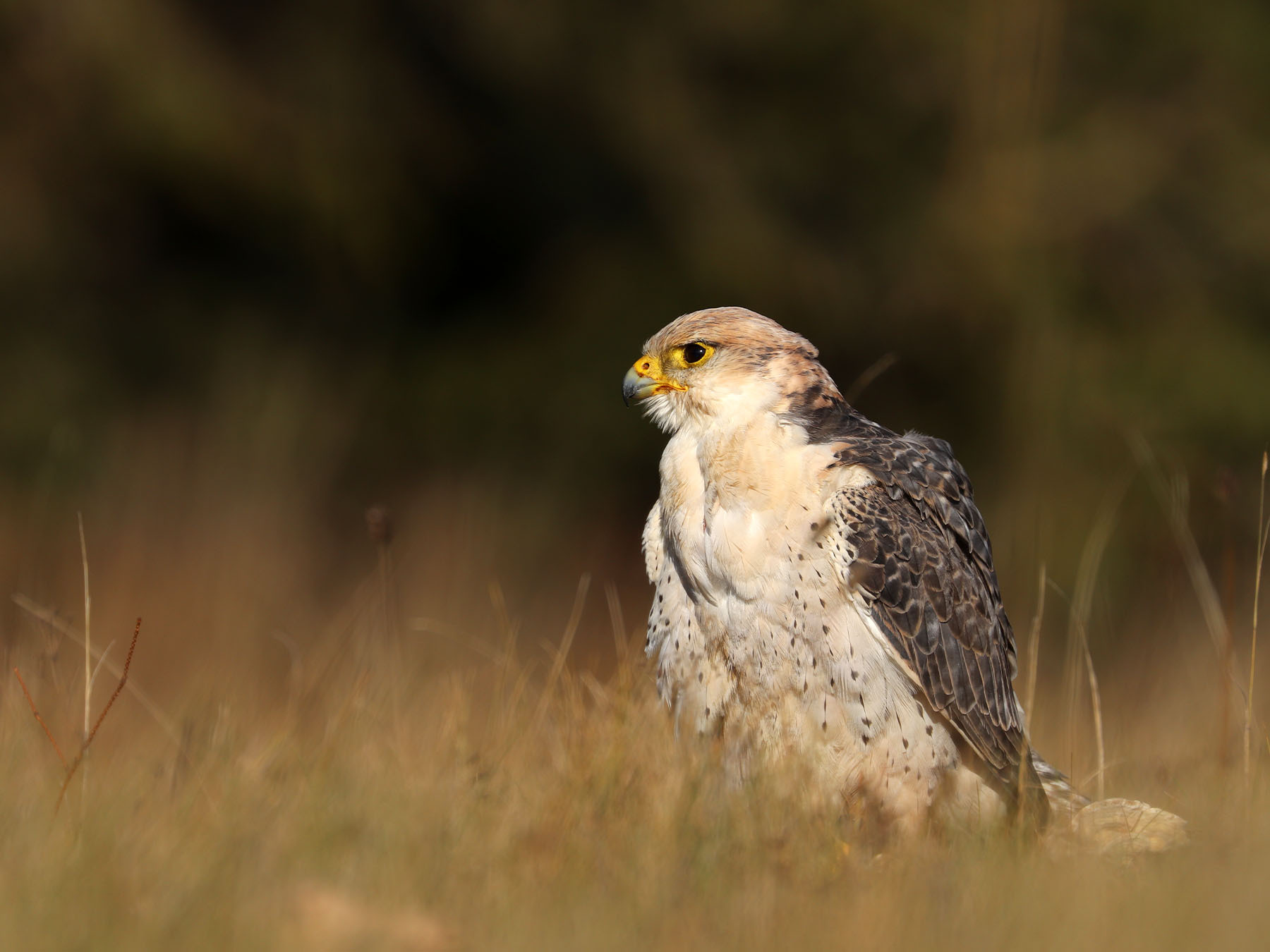
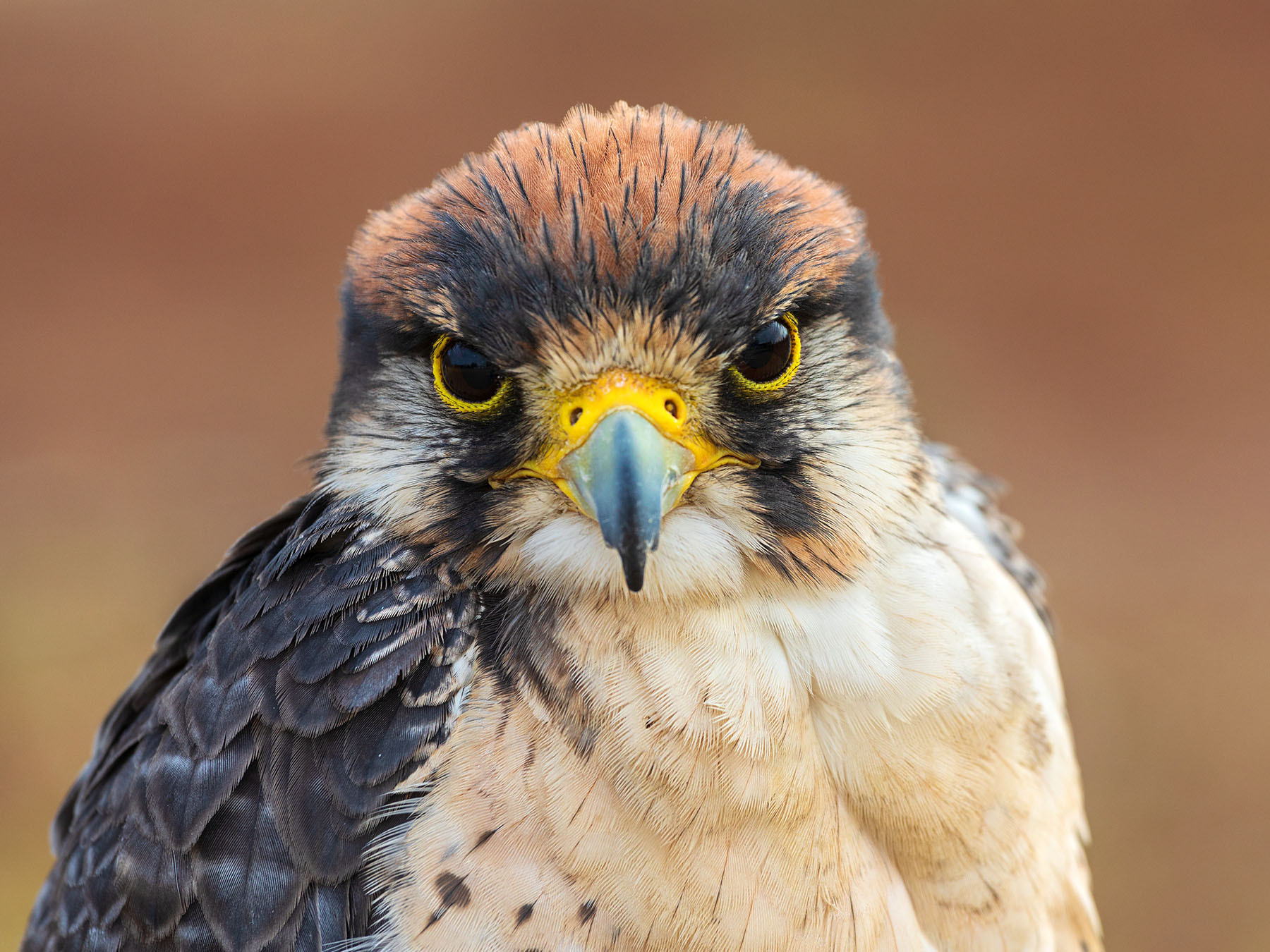
The Lanner Falcon is a medium-sized raptor with a sleek, streamlined body. It features a brown-grey back, pale underparts with dark spotting, and a distinctive 'moustache' marking on its face. The wings are long and pointed, ideal for high-speed flight.
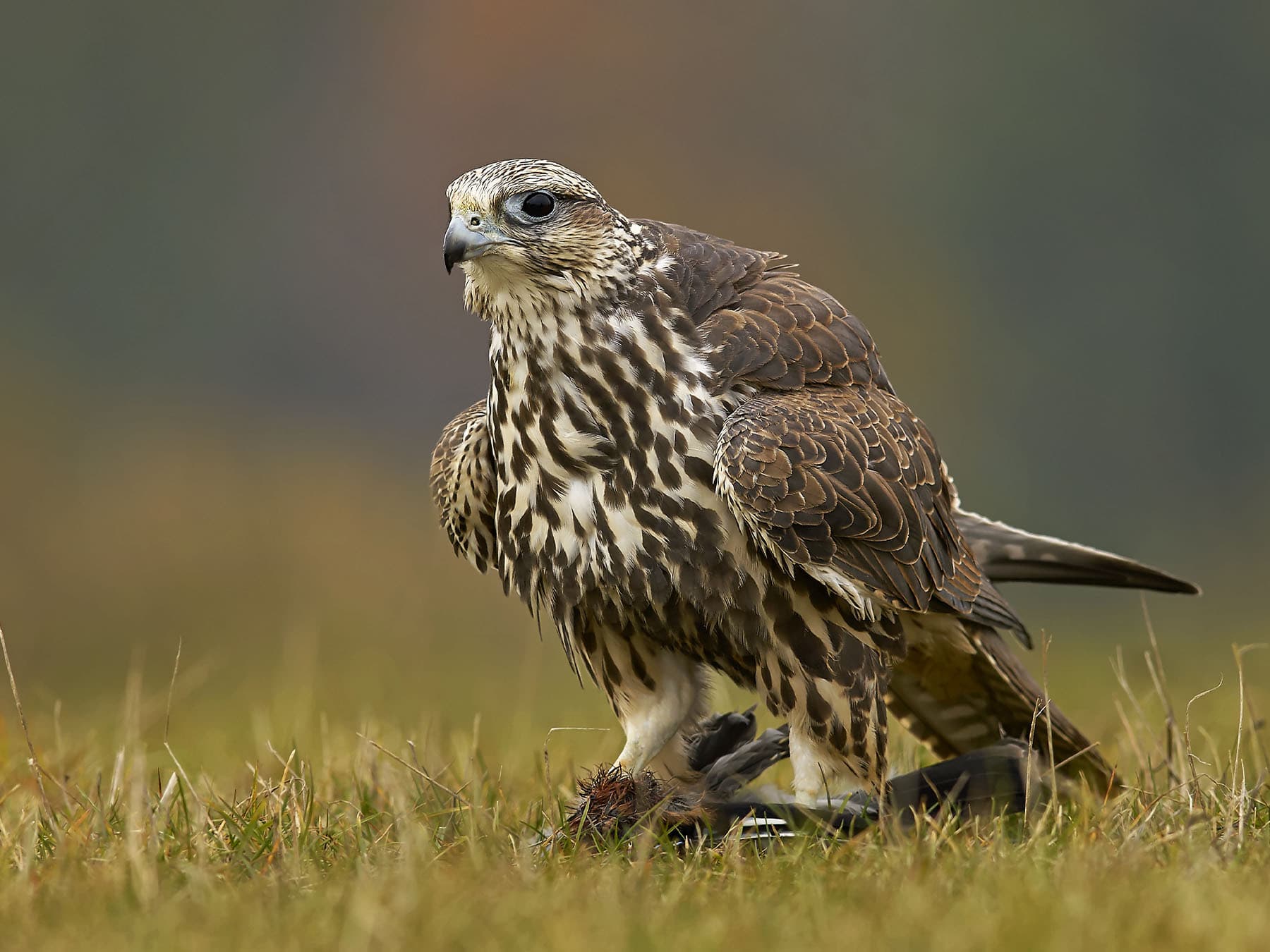
Females are noticeably larger and heavier than males, with darker overall plumage. Juveniles have a more streaked appearance, with brownish upperparts and heavily marked underparts. The distinctive facial pattern develops as they mature.
Its size
Adults- Length
- 43–50 cm
- Wingspan
- 95–105 cm
- Weight
- 500–900 g
Its song and calls
Lanner Falcons have a range of vocalisations, with the most common being a sharp, repetitive 'kak-kak-kak' or 'kek-kek-kek'.
During courtship and territorial displays, they may produce a softer, more musical 'wichew' call. Their vocalisations are generally less frequent and less varied than other falcon species.
When and where to see it
The Lanner Falcon is not recorded regularly in the UK, Ireland, the United States or Canada.
United States: recorded in 1 of the 6 years; United Kingdom: recorded in 1 of the 6 years. Too few years to count as a regular visitor.
Worldwide: recorded regularly in 30 countries
Countries where it was recorded in at least 3 of the 6 years 2019–2024. Linked countries have their own bird list.
Data: EOD – eBird Observation Dataset (Cornell Lab of Ornithology), accessed via GBIF.org, CC BY 4.0. Records from 2019–2024, aggregated and filtered by Birdfact. How these lists are made
Tips for seeing it
- Look for Lanner Falcons soaring over open landscapes or perched on high vantage points.
- Listen for their sharp, repeated 'kak-kak-kak' calls, especially during breeding season.
- Observe their distinctive hunting behaviour, which often involves fast, low flights over open ground.
- In areas where they overlap with Peregrine Falcons, note the Lanner's slightly larger size and more rufous crown.
What it eats
Lanner Falcons primarily hunt birds, ranging from small passerines to medium-sized species like pigeons and waterfowl. They also prey on bats, rodents, and large insects.
These falcons often hunt in pairs, with one bird flushing prey while the other makes the capture, demonstrating their adaptability and cooperative hunting skills.
Nesting and breeding
Breeding pairs of Lanner Falcons form strong, often lifelong bonds. The breeding season varies by region but typically occurs between February and June. These falcons do not build their own nests, instead utilising cliff ledges, old nests of other large birds, or occasionally man-made structures.
Females usually lay 3-4 eggs, which are creamy-white with reddish-brown spots. The eggs are incubated primarily by the female for about 32-35 days while the male provides food.
Chicks fledge after 40-45 days but remain dependent on their parents for several weeks, gradually developing their hunting skills before becoming fully independent.
Behaviour
Lanner Falcons are known for their agile and swift flight, often performing spectacular aerial displays during courtship. They hunt with impressive speed and agility, pursuing prey in level flight or stooping from great heights.
These falcons are generally solitary but may form loose pairs or small family groups outside the breeding season.
Conservation
While listed as Least Concern globally, Lanner Falcon populations face localised threats. Habitat loss, pesticide use, and illegal falconry trade impact some populations.
Conservation efforts focus on habitat protection and reducing human-wildlife conflicts, particularly in areas where the species is declining.
Similar birds
Often mistaken for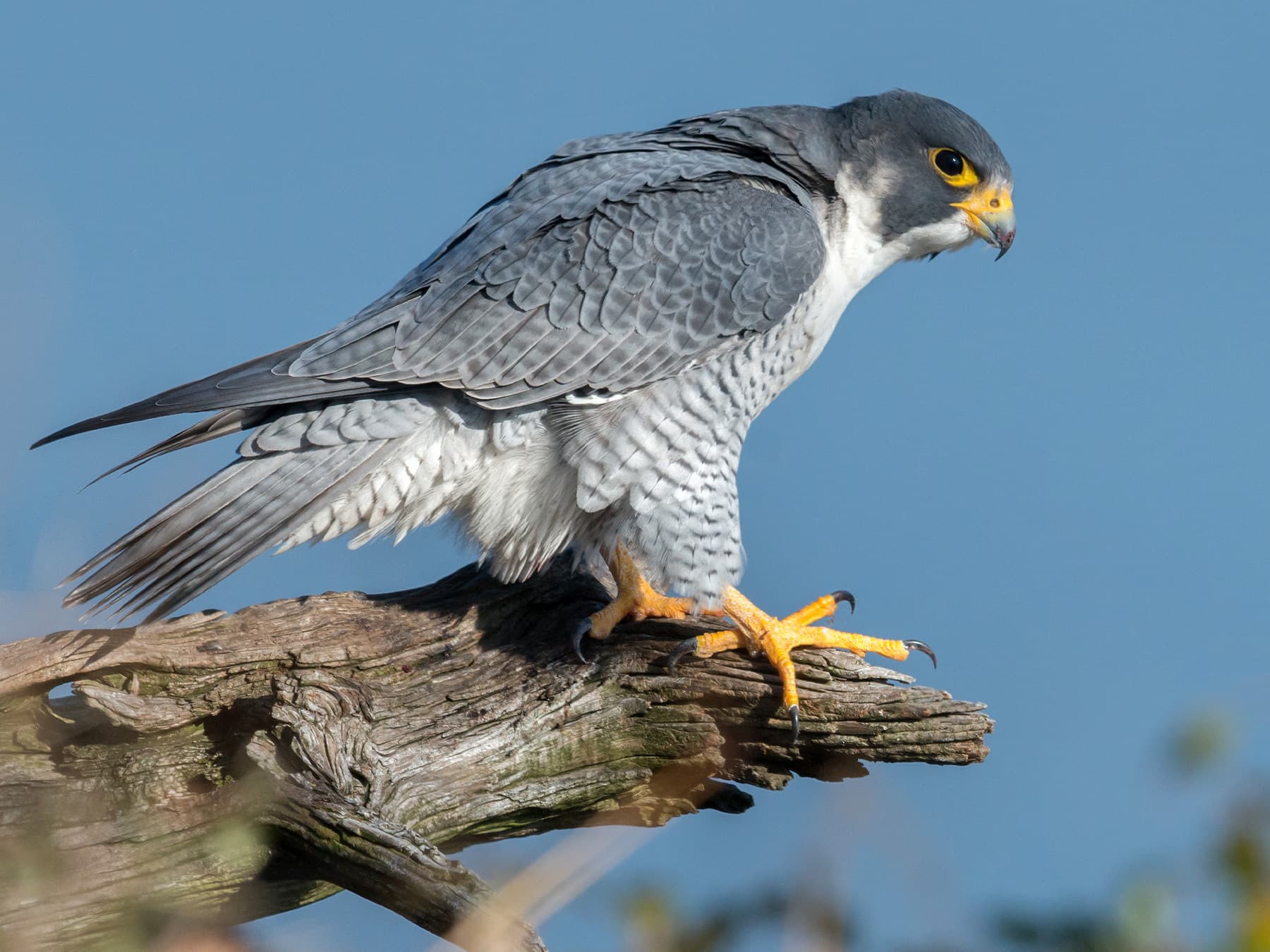
More photos
6 photos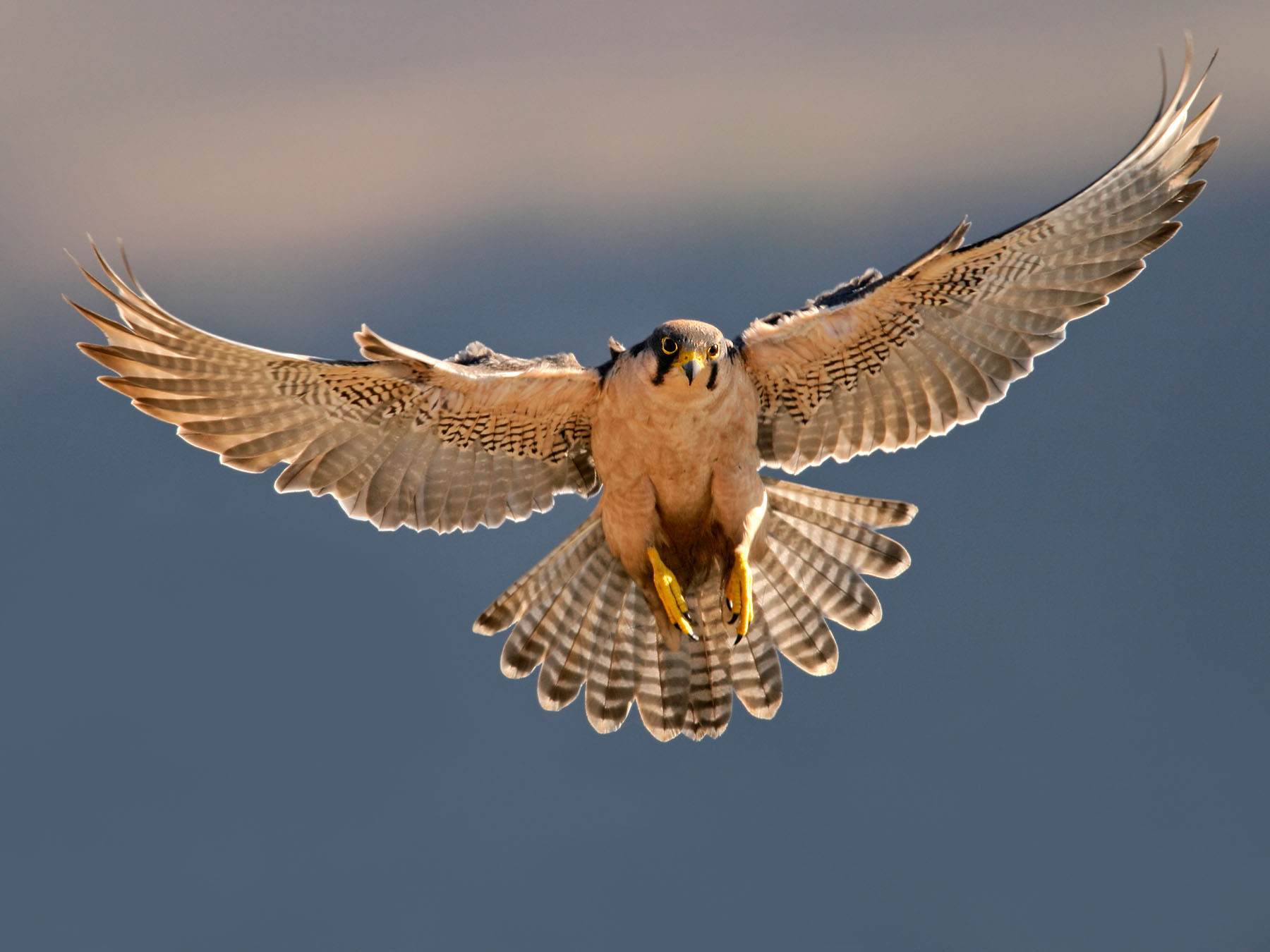
Quick facts
- Length
- 43–50 cm
- Wingspan
- 95–105 cm
- Weight
- 500–900 g
- Lifespan
- 10–15 years
- Family
- Falcons
- Migration
- Partial migrant
- Global status (IUCN)
- Least Concern
- World population
- 67,000 - 670,000 mature individuals
- Population trend
- Population slightly decreasing, due to hunting
- Also called
- Lanner
- Scientific name
- Falco biarmicus
Sources
3- 1BirdLife International. 2021. Falco biarmicus. The IUCN Red List of Threatened Species 2021: e.T22696487A200013311. Source (opens in a new tab)
- 2Ferguson-Lees and Christie (2001)
- 3Ferguson-Lees and Christie 2001; De Rosa 2019; Keller et al. 2020

Checked by
Nathan Cope, founder and editor
Nathan founded Birdfact and leads its writers and contributors in the UK, the US and Canada. He has watched and studied birds for more than ten years, and checks every article and species guide before it’s published.