


Razorbill
Razor-billed Auk · Alca torda
By the Birdfact teamChecked by Nathan Cope
On this page14 sections
How to recognise it
What do Razorbills look like?
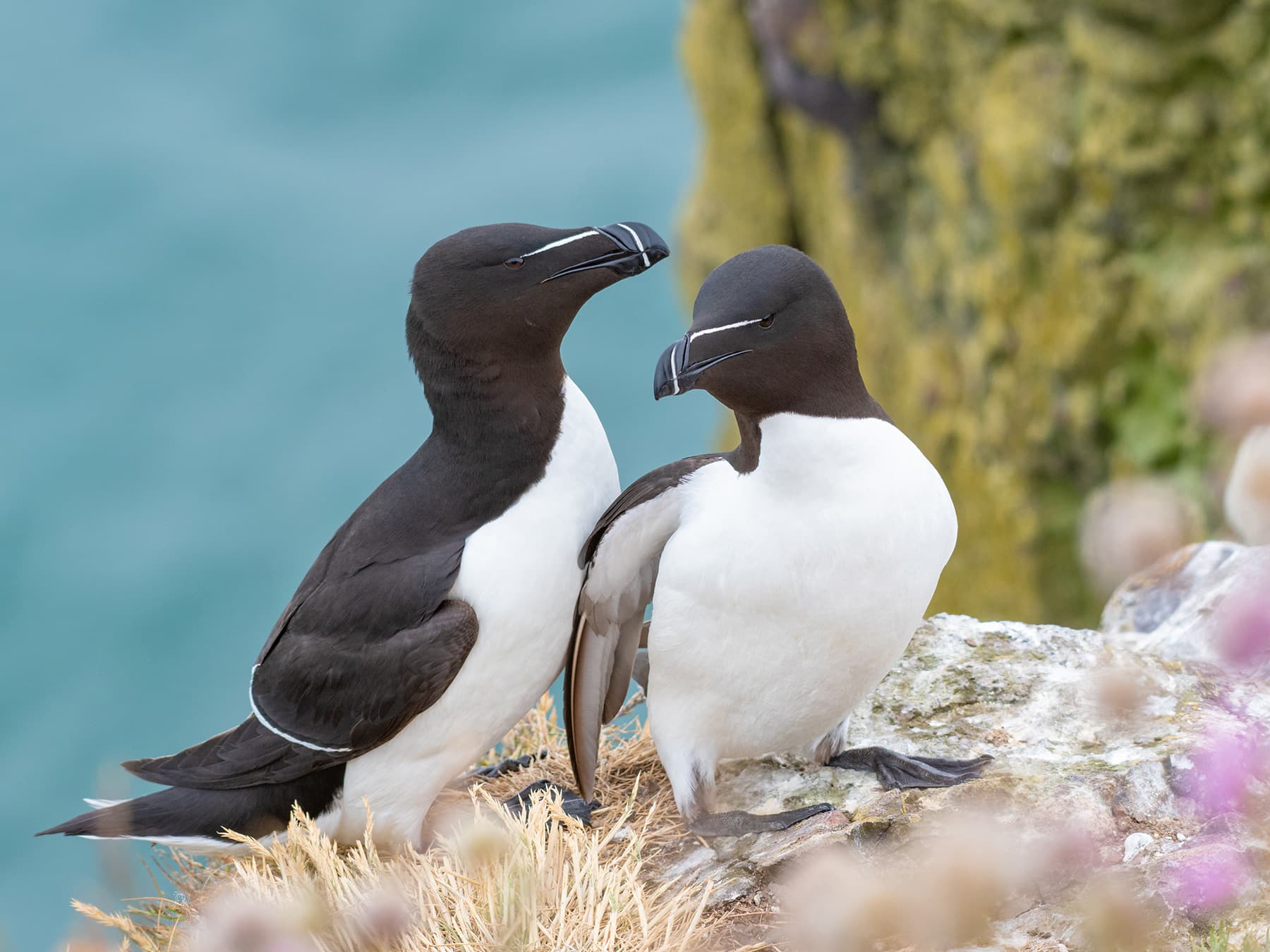
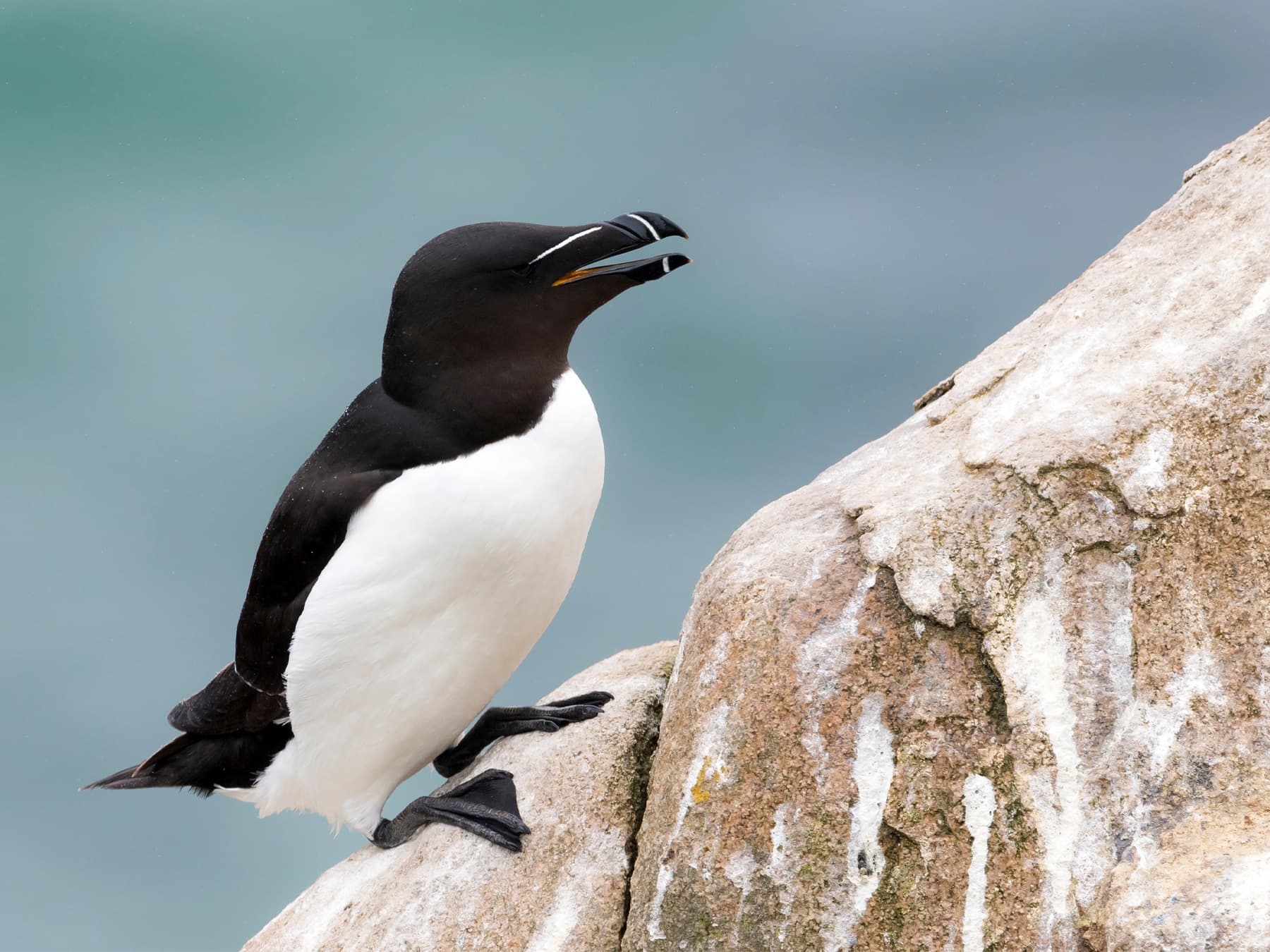
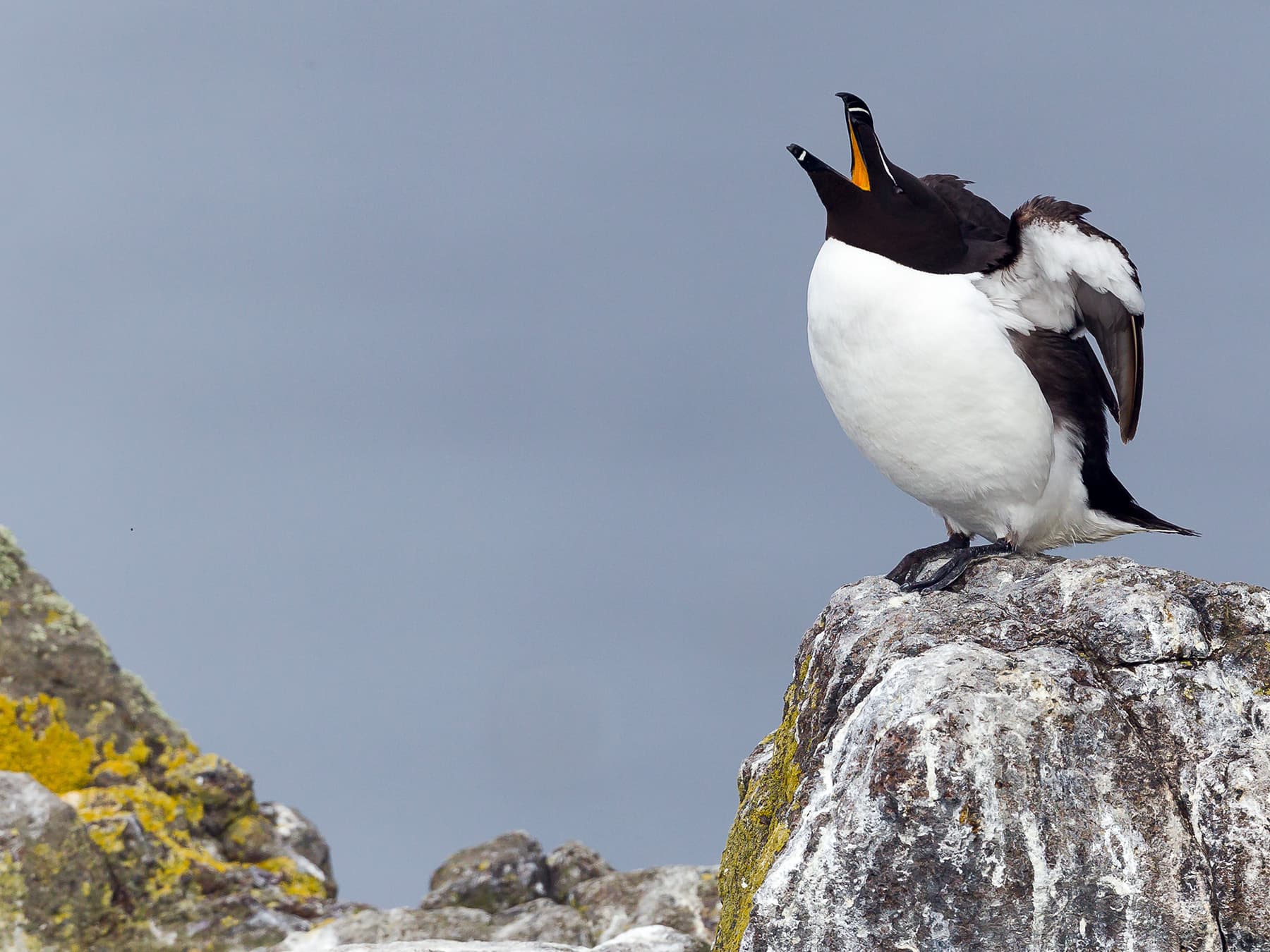
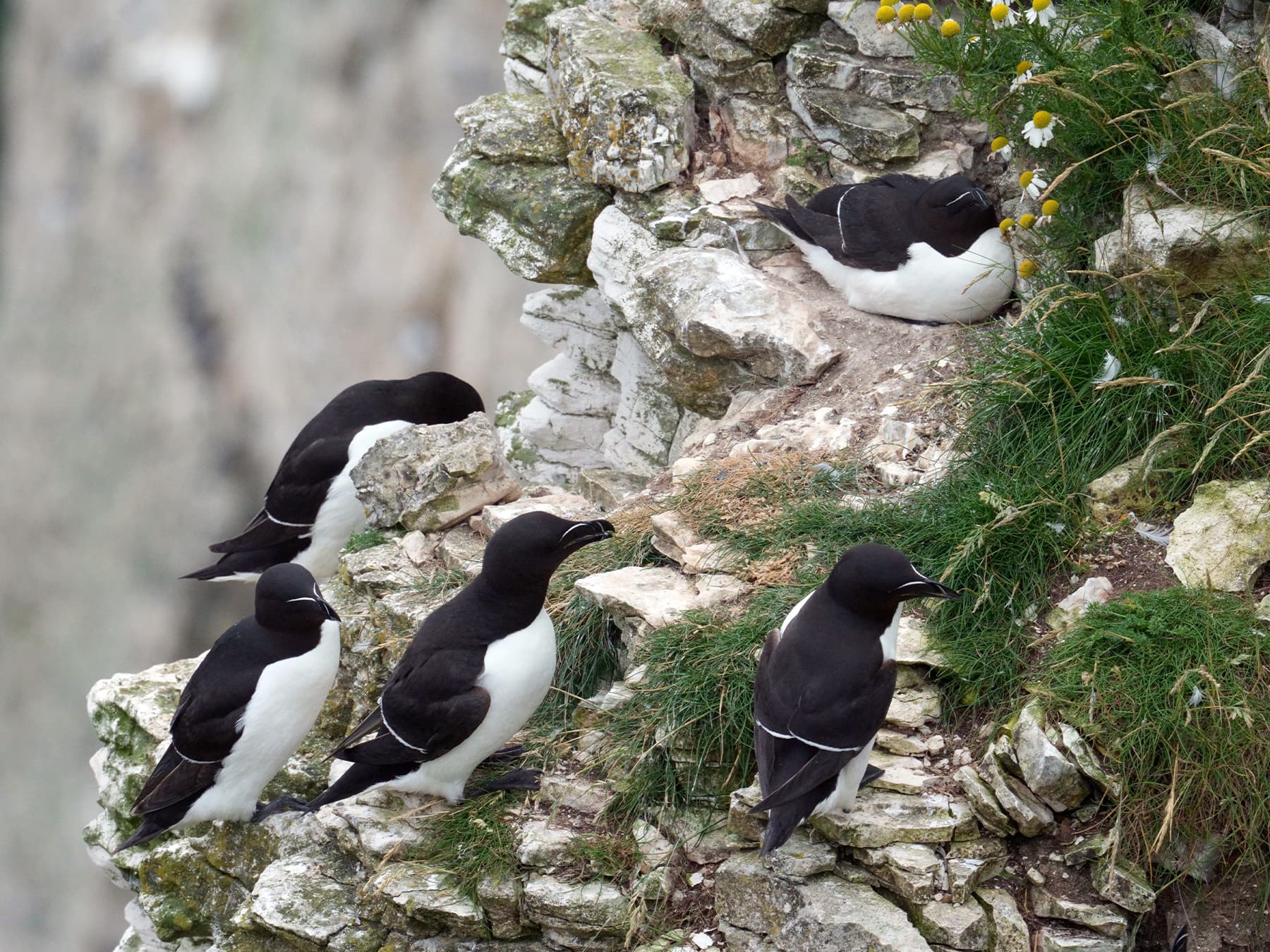
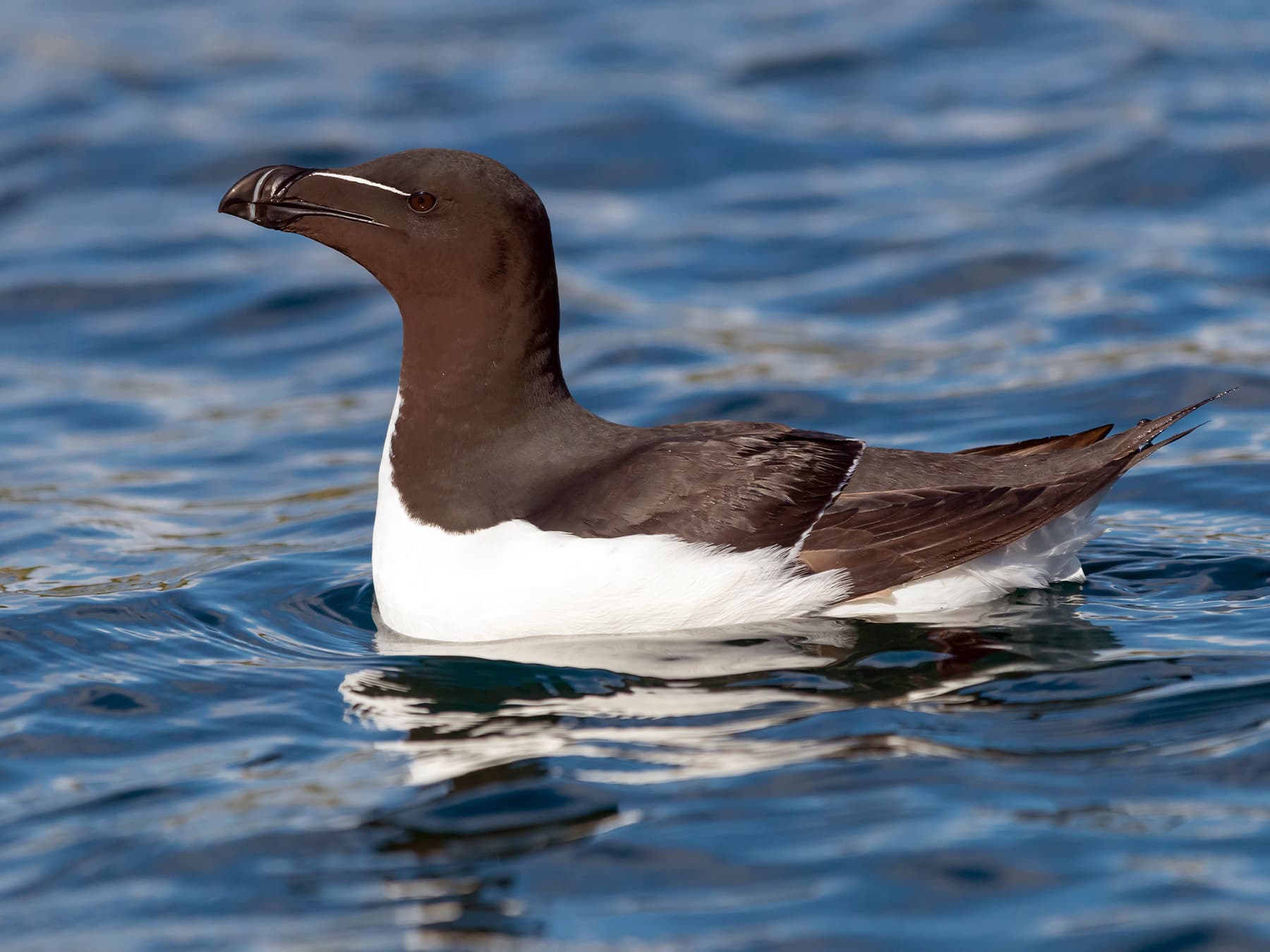
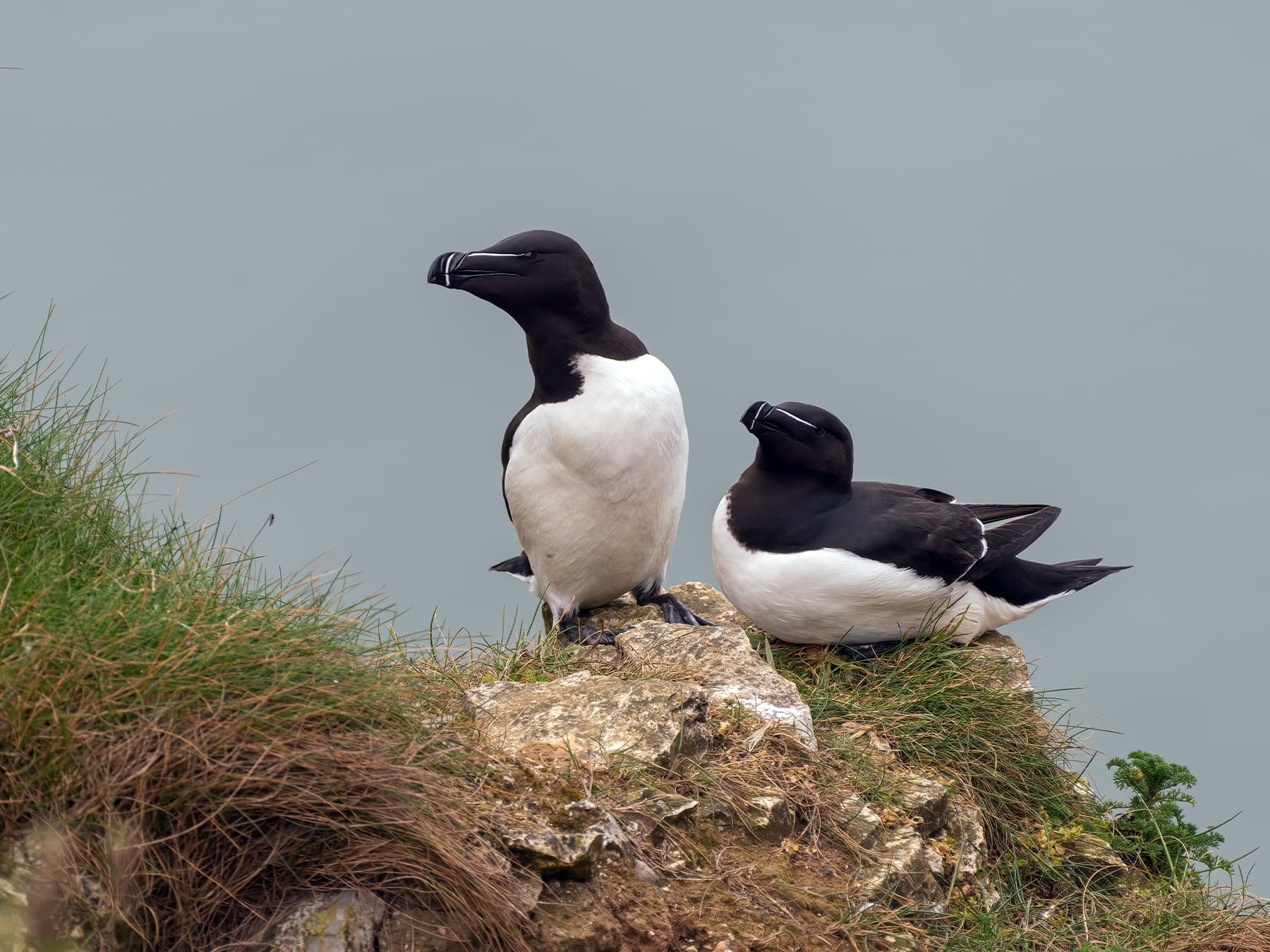
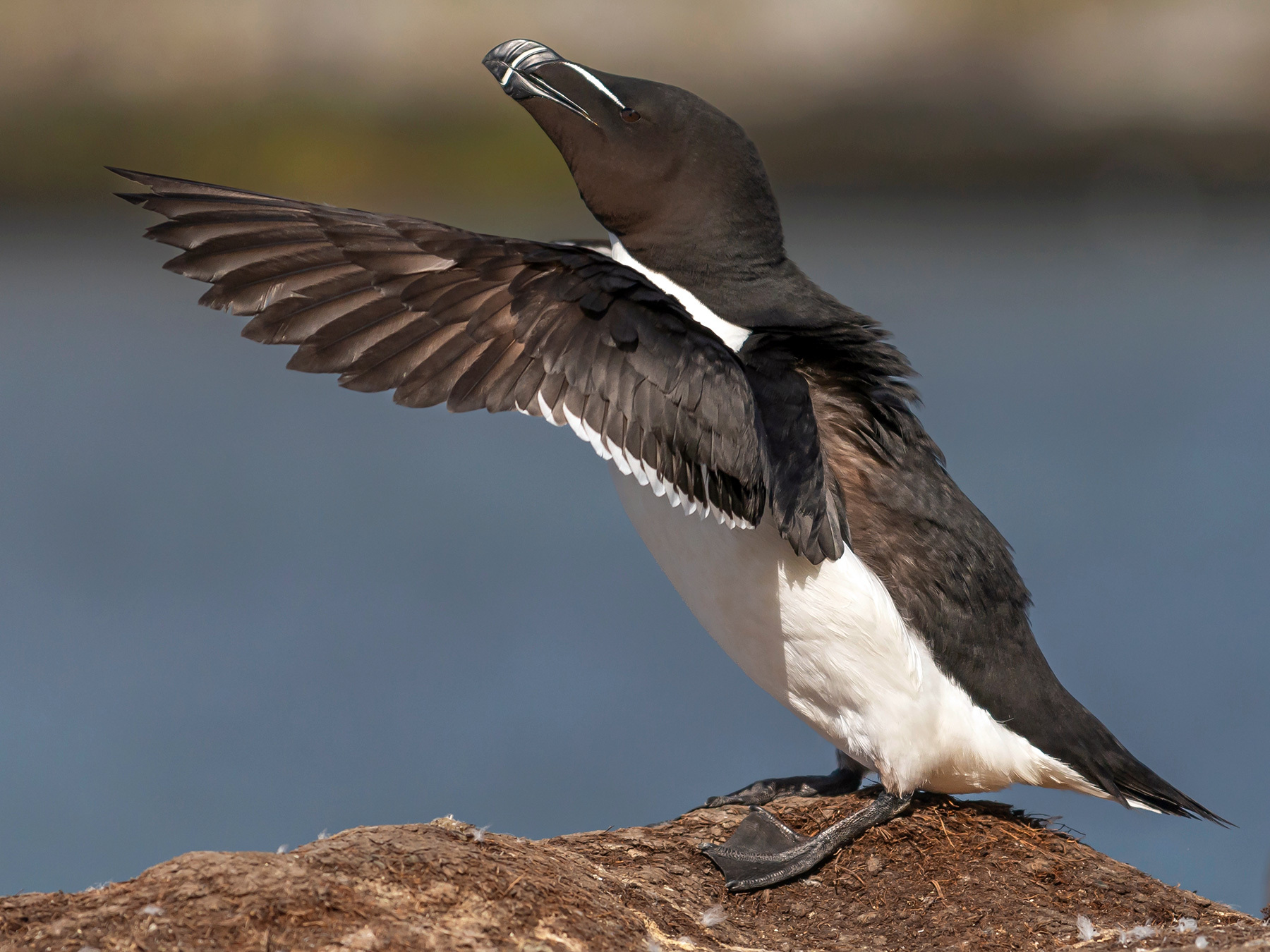
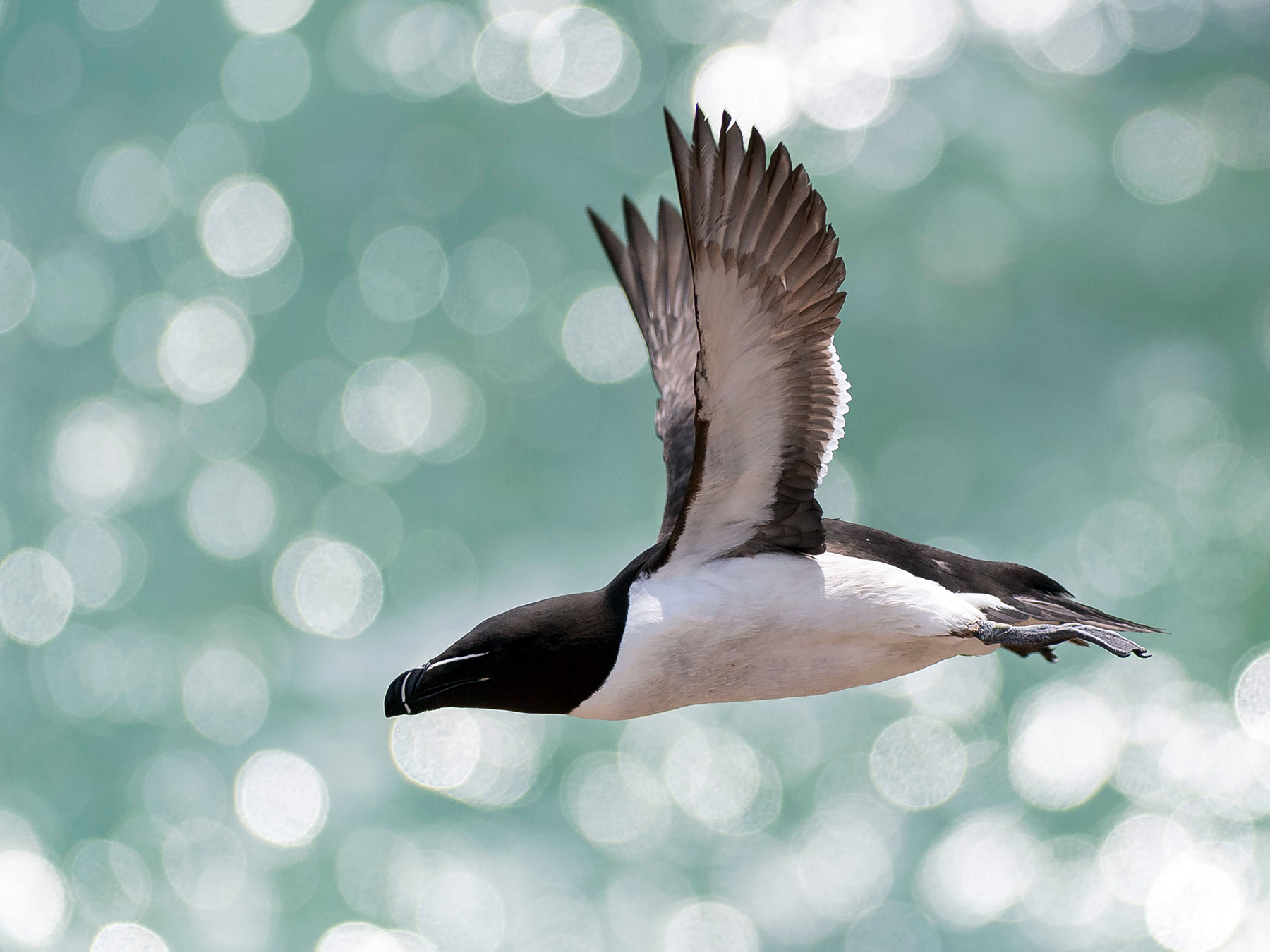
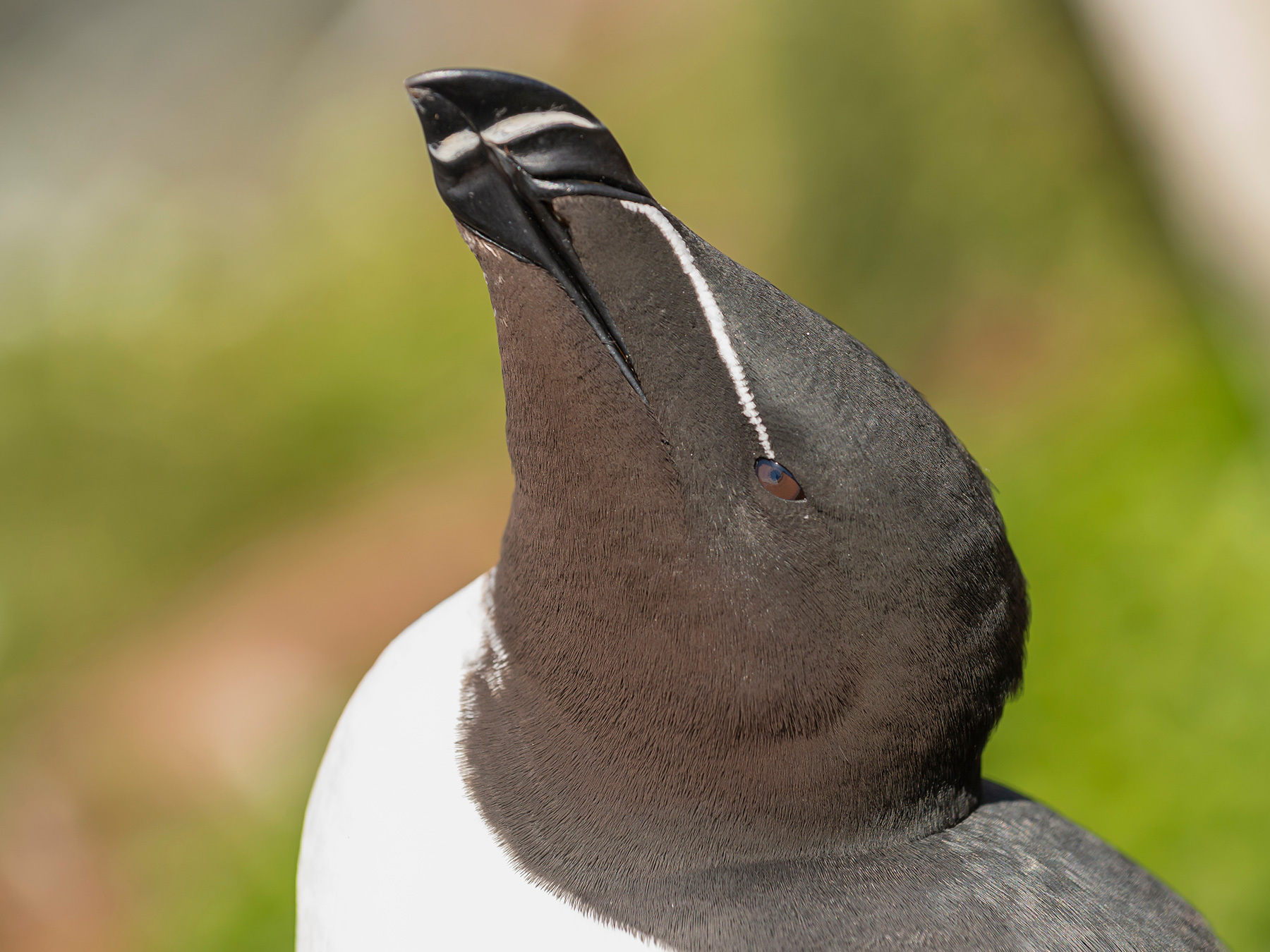
The Razorbill is a medium-sized Auk with black upperparts and wings, white underparts, and a characteristic large and flattened bill. Their bill has a yellow interior and a vertical white bar toward the tip. In summer plumage, they have a white line between the top of the bill and the eye.
Razorbills have a completely black head, throat, and back in the breeding season. White-tipped secondary feathers create a white line across the wing at rest. Winter plumage is similar, although their face becomes white, leaving a black crown. These birds stand very upright on land, on large black webbed feet.
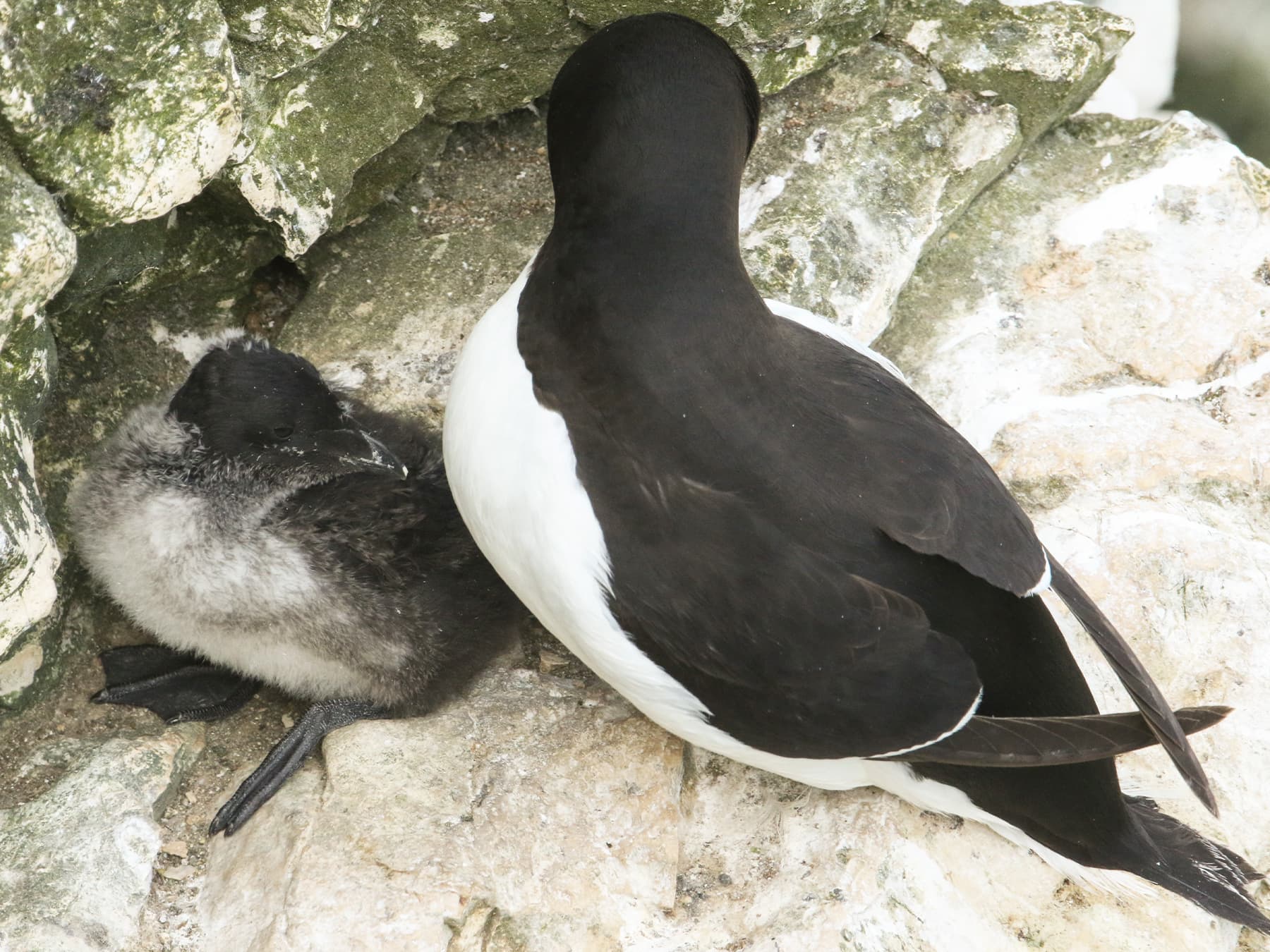
Females and males look alike, although males are slightly larger. Juveniles are less than a third of their adult size when they leave the nest. They appear similar to an adult in winter plumage but have dark streaks around the breast and throat.
Razorbills are easily identified at close range but can be confused with the Common Guillemot (Common Murre) or even Manx Shearwater when seen at a distance.
How big are Razorbills?
Razorbills are medium-sized seabirds, similar in size to the Kittiwake, which often nests nearby.
Length
Razorbills have a total length of 37 to 39 centimetres or 14½ to 15⅓ inches.
Weight
They weigh 505 to 890 grams or 18 to 31 ounces.
Wingspan
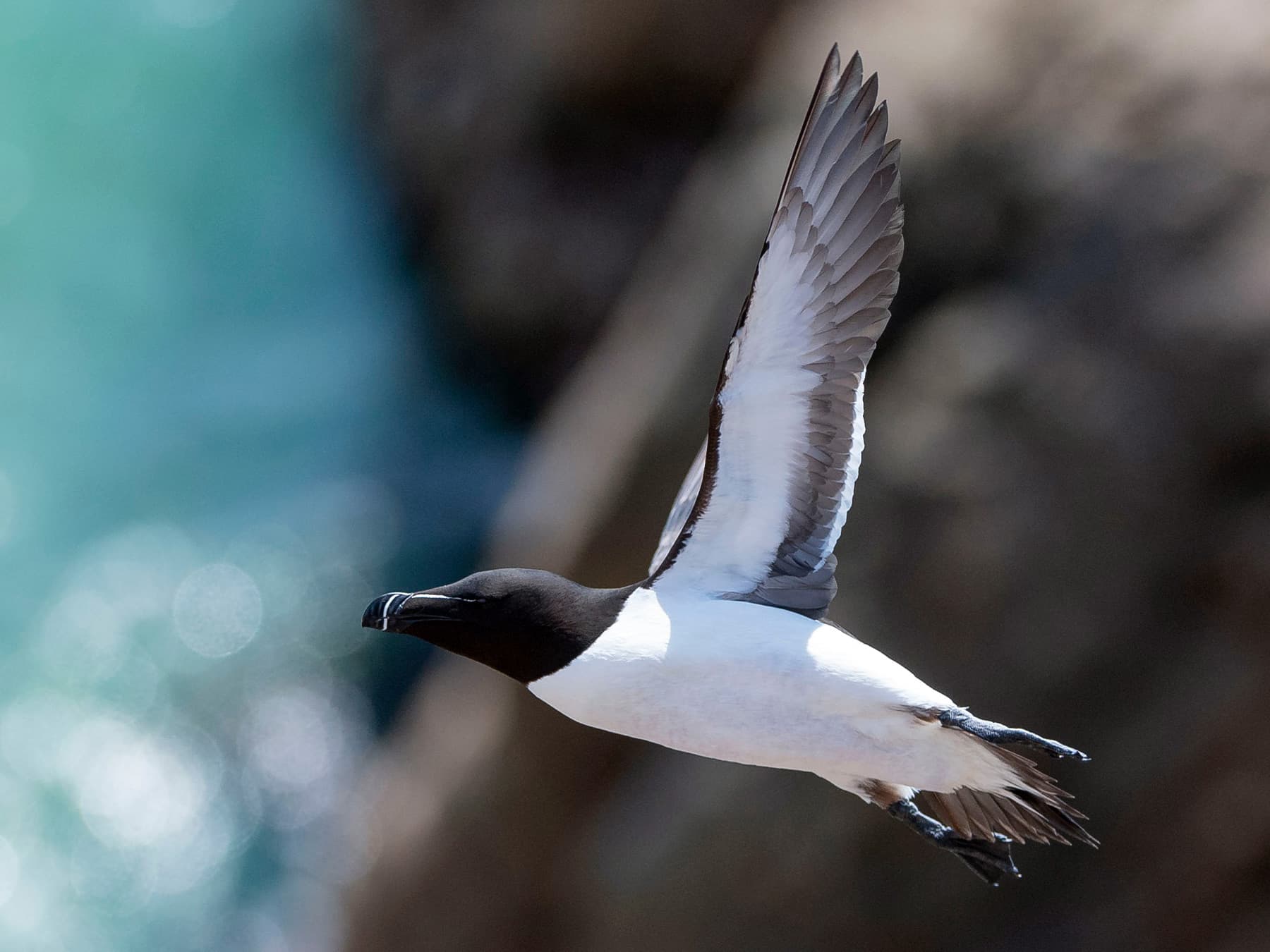
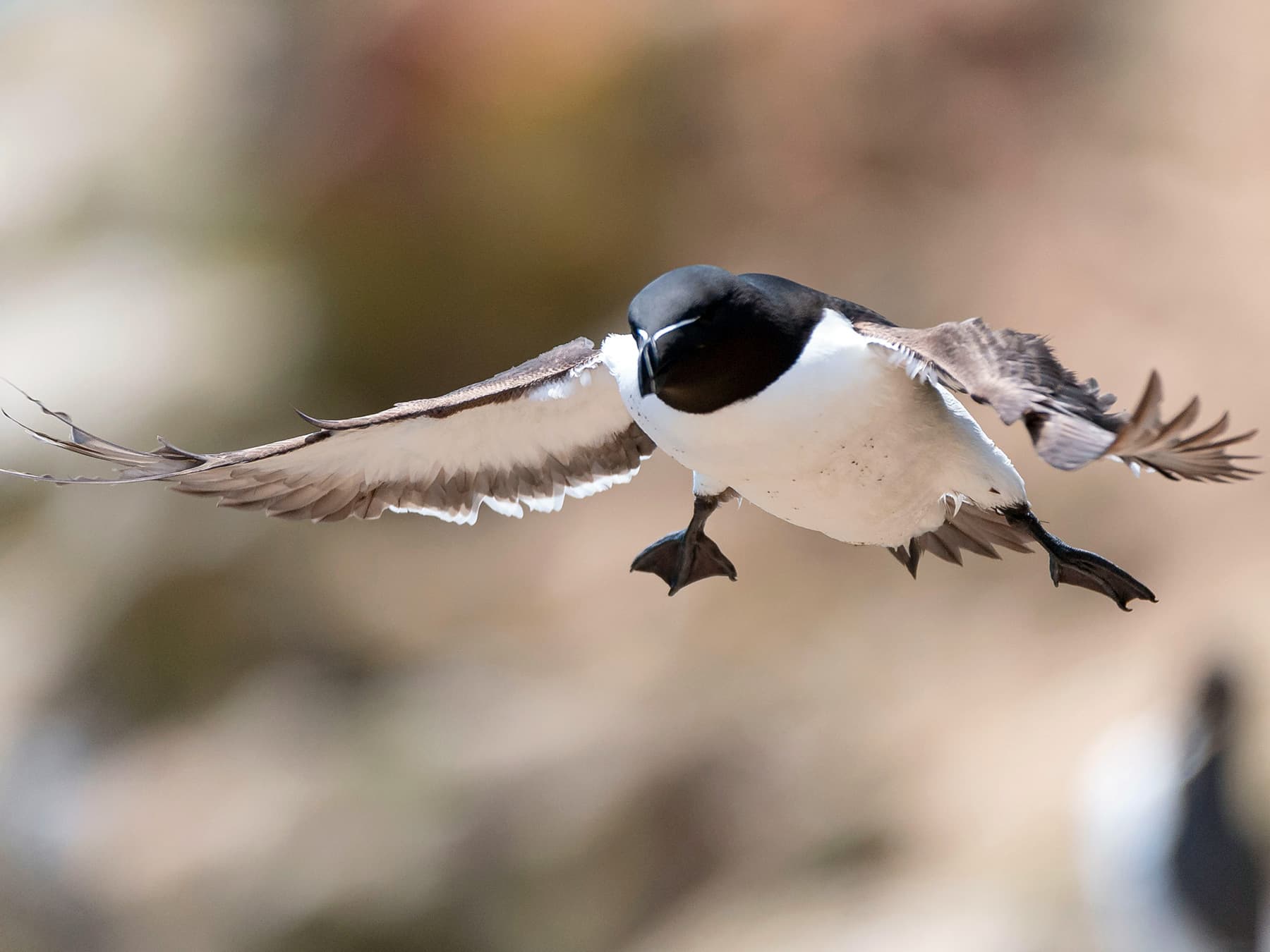
They have a 63 to 68- centimetre (25 - 27in) wingspan but are swift and agile in flight despite their short wings.
Its size
Adults- Length
- 38–43 cm
- Wingspan
- 60–69 cm
- Weight
- 590–890 g
Its song and calls
What sound does a Razorbill make?
Razorbills produce a deep, machine-like croak and various grunts and growls when nesting.
- Call0:00 / 2:03
Recorded in Pembrokeshire, Wales
Lawrence Shove / The British Library Board · Wikimedia Commons · CC BY-SA 4.0
When and where to see it
OctoberIn season
Most recorded in October
- 1. Moray1.3%
- 2. Orkney Islands0.70%
- 3. Pembrokeshire0.69%
- 4. Fife0.68%
- 5. Tyne and Wear0.65%
Each dot is a county, state or province: the bigger and darker, the larger the bird’s share of that place’s bird records that month. Grey dots: no regular records. The ringed point is the centre of the bird’s records this month; the arrow shows how it moved since last month, and the dashed loop its path through the year. “Arrivals” colours places where it becomes regular this month (orange) or is in its last regular month (grey). GBIF eBird Observation Dataset, 2019–2024. Map data: Natural Earth, US Census Bureau; place centres © OpenStreetMap contributors.
In your area
See when the Razorbill is recorded in your county, state or province.
How often the Razorbill turns up in the UK, Ireland, the United States and Canada through the year, from birdwatchers' records.
United Kingdom
Resident · all year · most records in June
Ireland
Resident · all year · most records in June
United States
Winter visitor · regularly Nov–Jul · most records in January
Canada
Summer visitor · regularly Apr–Jan · most records in September
Show as a table
| Month | United Kingdom | Ireland | United States | Canada |
|---|---|---|---|---|
| January | 0.063% (regular) | 0.21% (regular) | 0.035% (regular) | 0.014% (regular) |
| February | 0.063% (regular) | 0.22% (regular) | 0.031% (regular) | 0.004% |
| March | 0.065% (regular) | 0.22% (regular) | 0.009% (regular) | 0.004% |
| April | 0.089% (regular) | 0.29% (regular) | <0.001% | 0.011% (regular) |
| May | 0.13% (regular) | 0.38% (regular) | 0.002% | 0.018% (regular) |
| June | 0.21% (regular) | 0.47% (regular) | 0.007% (regular) | 0.048% (regular) |
| July | 0.18% (regular) | 0.45% (regular) | 0.006% (regular) | 0.065% (regular) |
| August | 0.090% (regular) | 0.38% (regular) | 0.001% | 0.042% (regular) |
| September | 0.15% (regular) | 0.34% (regular) | 0.001% | 0.096% (regular) |
| October | 0.15% (regular) | 0.33% (regular) | 0.002% | 0.083% (regular) |
| November | 0.10% (regular) | 0.20% (regular) | 0.008% (regular) | 0.043% (regular) |
| December | 0.068% (regular) | 0.17% (regular) | 0.021% (regular) | 0.028% (regular) |
Recorded regularly in
Worldwide: recorded regularly in 31 countries
Countries where it was recorded in at least 3 of the 6 years 2019–2024. Linked countries have their own bird list.
Europe (26)
Africa (1)
North America (4)
Data: EOD – eBird Observation Dataset (Cornell Lab of Ornithology), accessed via GBIF.org, CC BY 4.0. Records from 2019–2024, aggregated and filtered by Birdfact. How these lists are made
What is the habitat of a Razorbill?
Razorbills are marine birds that usually feed in waters 20 - 55 meters (65 - 180 ft) deep. They inhabit rocky coastal areas near nesting colonies in the breeding season, foraging up to about 50 kilometres (31 mi) away. Winters are spent offshore of breeding areas or further south in waters without ice. They may forage far from the shore but remain within the shallow waters of the continental shelf.
What is the range of a Razorbill?
Razorbills inhabit the North Atlantic waters from the Arctic to as far south as North Africa. They breed around the British Isles, Scandinavia, and east to Russia’s White Sea. To the west, they occur around Iceland, southern and western Greenland, and the northeast coast of the United States and Canada.
Where do Razorbills live?
Razorbills are marine birds that spend most of their lives in the water, although they nest near the shore. These birds have amazing diving abilities, ‘flying’ through the water to depths of up to 140m and staying down for over a minute.
How rare are Razorbills?
Razorbills are not rare, although you are unlikely to spot them unless you visit a nesting colony or spend time out at sea in the winter. The world population is estimated at 1.2 - 2.5 million individuals.
Where can you see Razorbills in the UK?
Razorbills are widespread around the United Kingdom’s coast in the winter but rather scarce inshore. They are best seen in the breeding season around nesting sites like Skomer Island in Wales, The Farne Islands off Northumberland, and Bempton Cliffs, Yorkshire.
Where can you see Razorbills in the US?
The most reliable way to spot Razorbills in the USA is to take a birdwatching tour by boat in the Gulf of Maine, where about 300 pairs nest. However, these birds wander as far south as Massachusetts in the non-breeding season.
Where can you see Razorbills in Canada?
Razorbills are widespread breeding birds on the east coast of Canada. The estuary and Gulf of St. Lawrence in Quebec offer some of the most accessible sites for spotting these seabirds.
Migration
Do Razorbills migrate?
Razorbills are short to medium-distance migrants. They may migrate considerable distances or simply disperse offshore from their nesting grounds.
Why do Razorbills migrate?
Razorbills migrate between their summer breeding colonies and ice-free winter fishing grounds. They must return to specific nesting sites to raise their chicks in relative safety, but they move offshore to find the best feeding grounds for the rest of the year.
Are Razorbills native to the UK?
Razorbills are native to the United Kingdom.
Are Razorbills native to the US?
Razorbills are native to the USA, reaching their southerly distribution limits off the northeast coast.
Are Razorbills native to Canada?
Razorbills are native breeding birds along much of Canada’s east coast and in the Hudson Strait and Bay. They also gather from further north to overwinter off the southeast coast.
Tips for seeing it
- Look for Razorbills near rocky coasts and offshore islands
- Best observed from coastal viewpoints or boat trips
- Identify by their distinctive black and white plumage and thick, blunt bill
- In the UK, visit breeding colonies in Scotland, Wales, and northern England from April to July
What it eats
What do Razorbills eat?
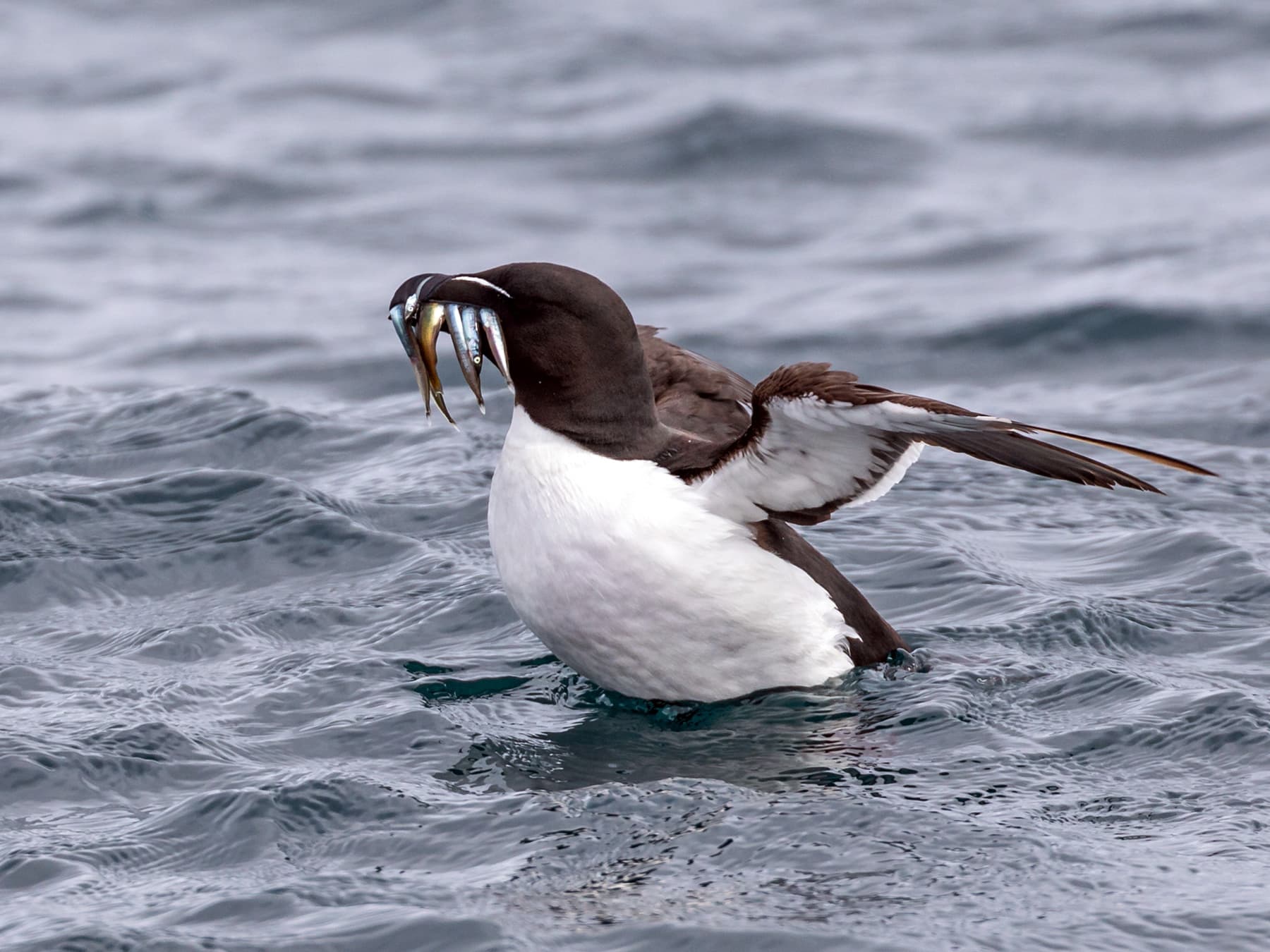
Razorbills are primarily piscivorous, hunting schooling fish like sand eels and herring. They also take crustaceans and marine worms that they catch by diving. They are accomplished hunters and can catch multiple fish on a single dive, although they also steal from other seabirds like Puffins.
What do Razorbill chicks eat?
Razorbill chicks eat whole fish like sprats, sand eels, and herring, delivered by their parents, often several at a time. The young birds leave the nest long before they are ready for independence, and their father will continue to feed them at sea for about two months.
Nesting and breeding
Where do Razorbills nest?
Razorbills nest on coastal cliffs and rocky islands in the North Atlantic region. More than half of the world population breeds in Iceland, but about 165,000 pairs nest at several sites along the coastlines of England, Wales, Scotland, and Northern Ireland.
Razorbills may not be expert nest builders, but females will prepare a rudimentary nest for their eggs. They excavate a shallow depression in soft ground or construct a simple nest of stones, seashells, plant material and feathers on bare rock.
When do Razorbills nest?
Razorbills first breed when they are four or five years old. They nest between mid-May and mid-June, beginning earliest in the south of their range. Their eggs hatch after 35 days, and chicks leap into the ocean below after 16 to 22 days.
What do Razorbill eggs look like?
Razorbills lay just one very large (75 x 48mm) egg each year. The egg has a whitish, yellowish, or greenish background colour and is finely to heavily speckled and blotched in brown or black.
Do Razorbills mate for life?
Razorbills generally mate for life, and pairs return to nest at the same sea cliffs and rocky islands each year.
Behaviour
Are Razorbills aggressive?
Razorbills show aggressive behaviours on land and in the water when guarding their mate and defending their nest site. Males also fight each other for the chance of mating with another female. Conflict can escalate from posturing to pecking and even wrestling and wing-striking, and some fights end fatally.
Where do Razorbills sleep at night?
Razorbills sleep out at sea when they’re not sitting on eggs.
Lifespan and predators
How long do Razorbills live?
Razorbills can live for at least 41 years in the wild, although the average bird has a life expectancy of about 13 years.
What are the predators of Razorbills?
Gulls, ravens, and foxes eat Razorbill eggs and chicks. Adults are vulnerable to Arctic Fox, Polar Bears, Peregrine Falcons, Bald Eagles, Great Black-backed Gulls and Grey Seals. Historically, humans have been major predators and harvested them for their feathers, eggs and meat. They are still hunted in Iceland.
Are Razorbills protected?
Razorbills are protected in the United Kingdom by the Wildlife and Countryside Act, by the Migratory Bird Treaty Act in the United States, and in Canada by the Migratory Birds Convention Act.
Are Razorbills endangered?
Razorbills are not endangered. They are a ‘Least Concern’ species on the IUCN Red List and have a stable or increasing population trend.
Conservation
While currently listed as Least Concern, Razorbills face threats from oil spills, fishing net entanglement, and climate change impacts on their prey species.
Conservation efforts focus on protecting breeding colonies and marine habitats, as well as reducing pollution in their range.
Similar birds
Often mistaken for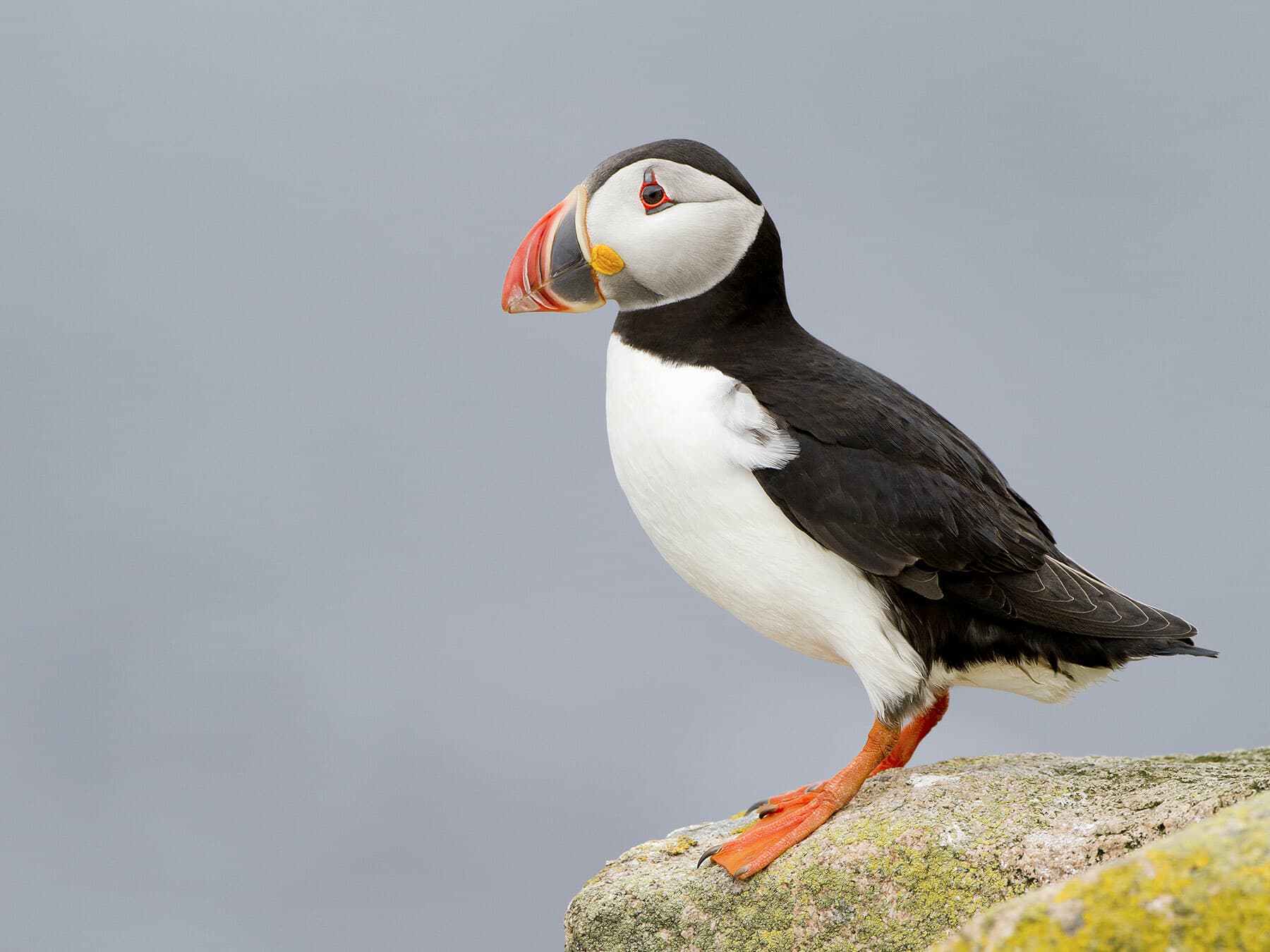
More photos
4 photos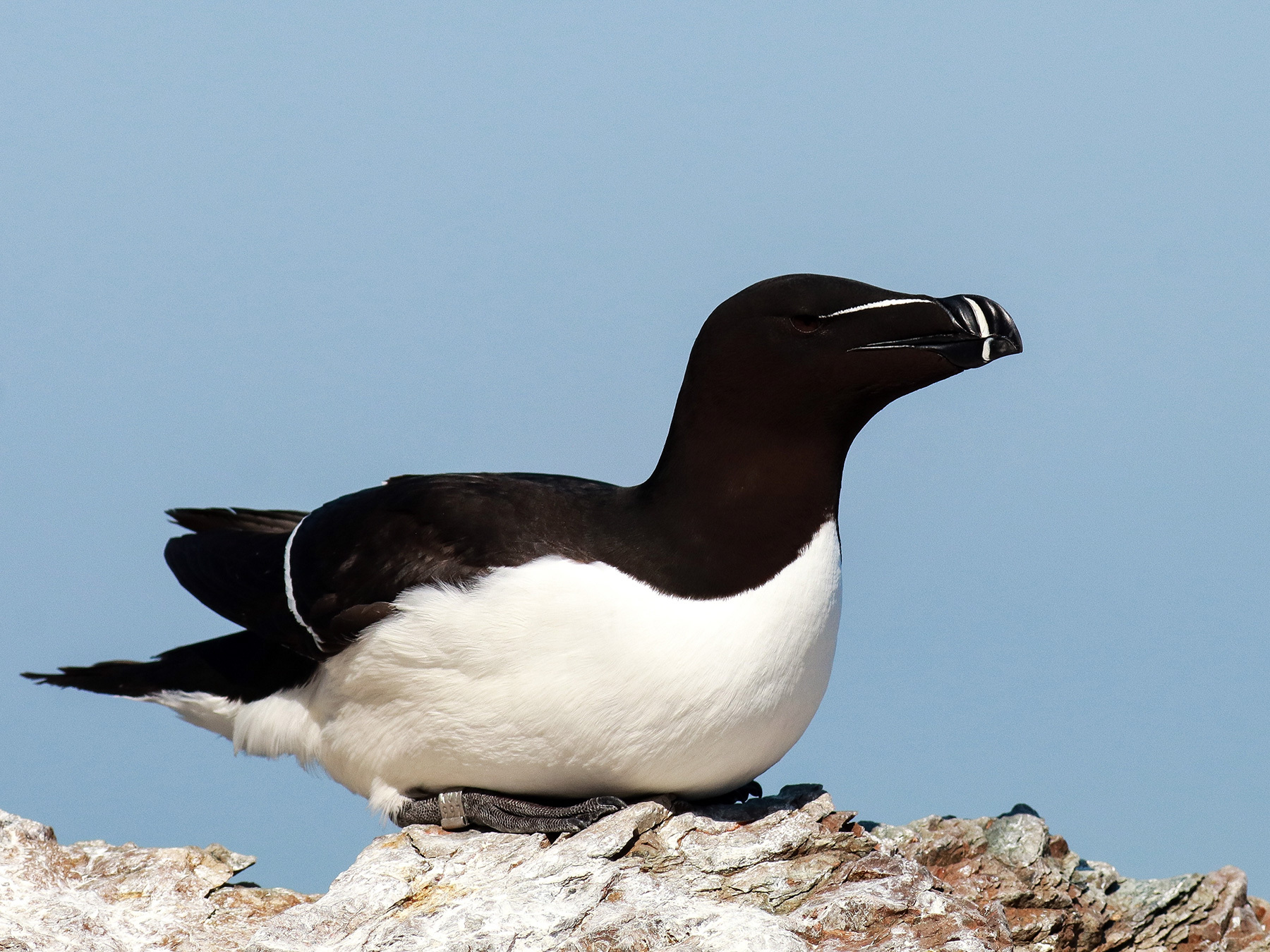
Quick facts
- Length
- 38–43 cm
- Wingspan
- 60–69 cm
- Weight
- 590–890 g
- Lifespan
- 13 years · oldest recorded 42 years
- Family
- Auks & Puffins
- Migration
- Short-distance migrant
- Global status (IUCN)
- Least Concern
- World population
- 838,000 – 1,660,000 mature individuals
- Population trend
- Increasing
- Also called
- Razor-billed Auk
- Scientific name
- Alca torda
Questions
2Is the Razorbill a penguin?
Despite their upright posture and black and white plumage, Penguins and Razorbills are only distantly related. Razorbills are flying birds of the Alcidae family of the Northern Hemisphere, while Penguins are flightless Southern Hemisphere birds from the Spheniscidae family.
Check out this article to learn more about where Penguins live.
Is Razorbill a marine bird?
Razorbills are true seabirds that only come to land to nest. Some colonies nest around large estuaries and brackish water systems, but they rarely visit freshwater habitats.
Sources
4- 1BirdLife International. 2021. Alca torda (errata version published in 2023). The IUCN Red List of Threatened Species 2021: e.T22694852A228697220. Source (opens in a new tab)
- 2Kolbeinsson & Poraninsson, Olsson & Hentati-Sundberg (2017)
- 3Wetlands International (2021)
- 4Fransson et al., EURING list of longevity records for European birds (2010) Source (opens in a new tab)

Checked by
Nathan Cope, founder and editor
Nathan founded Birdfact and leads its writers and contributors in the UK, the US and Canada. He has watched and studied birds for more than ten years, and checks every article and species guide before it’s published.