


European Pied Flycatcher
Pied Flycatcher · Ficedula hypoleuca
By the Birdfact teamChecked by Nathan Cope
On this page13 sections
How to recognise it
What do Pied Flycatchers look like?
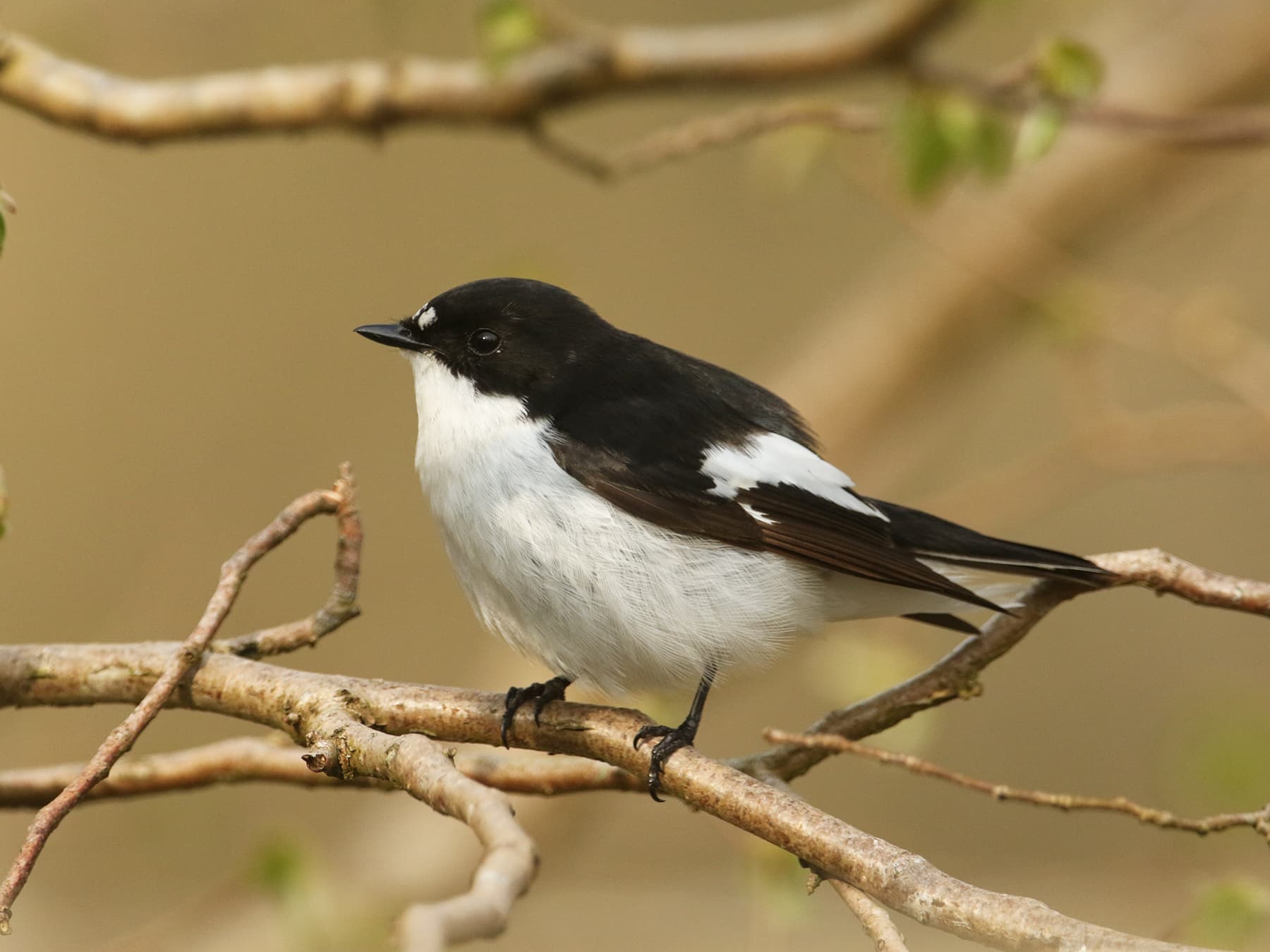
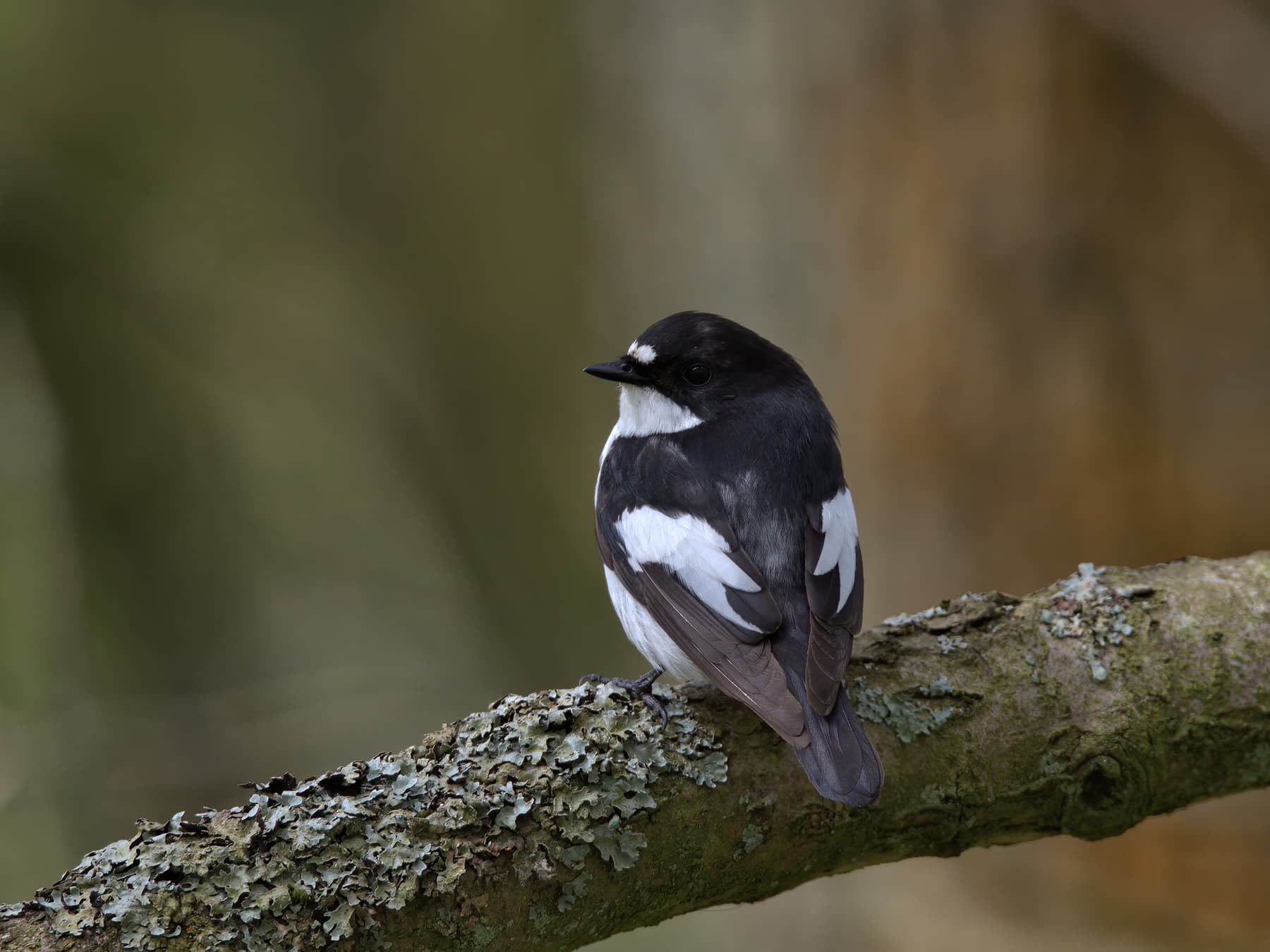
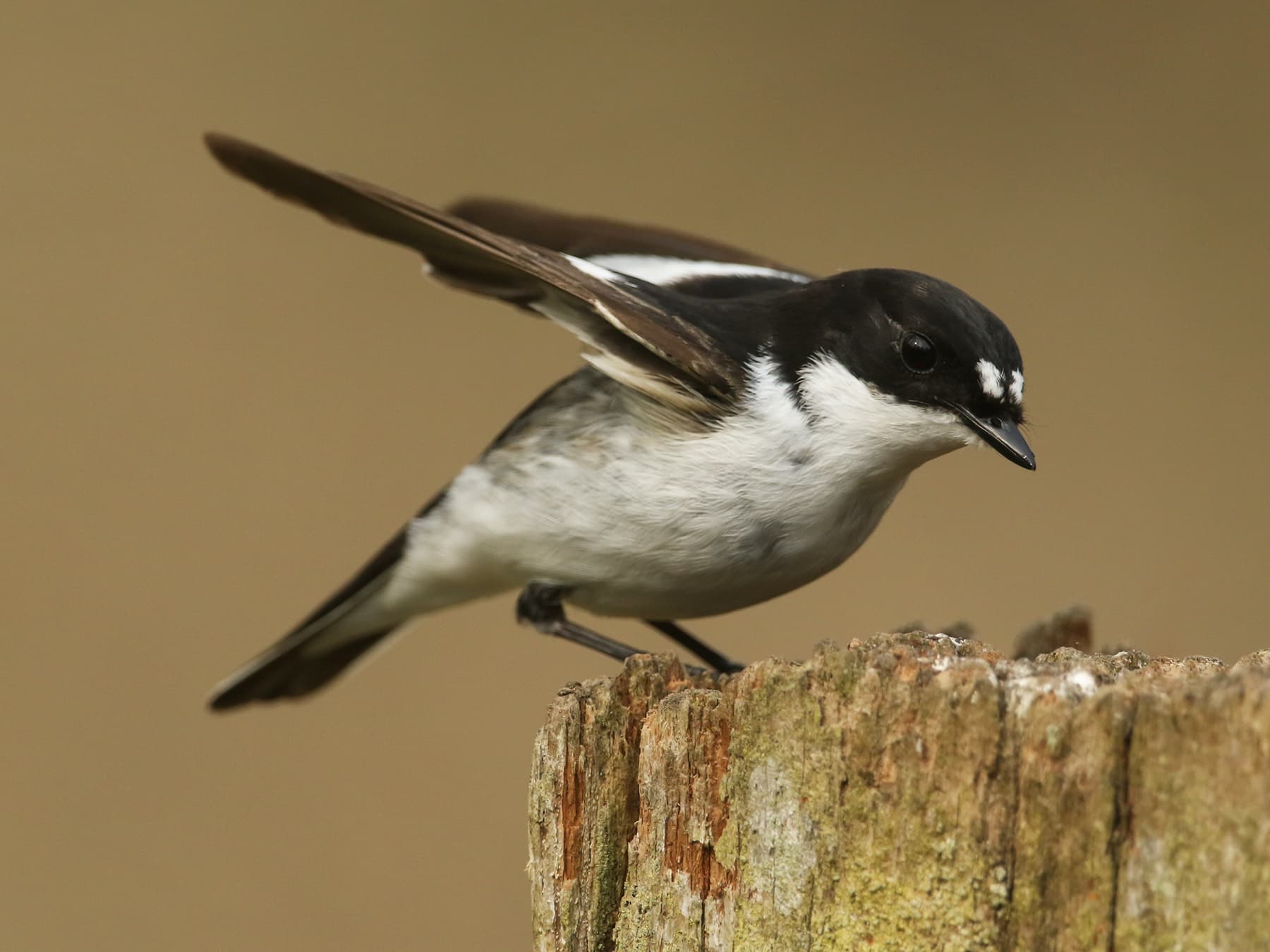
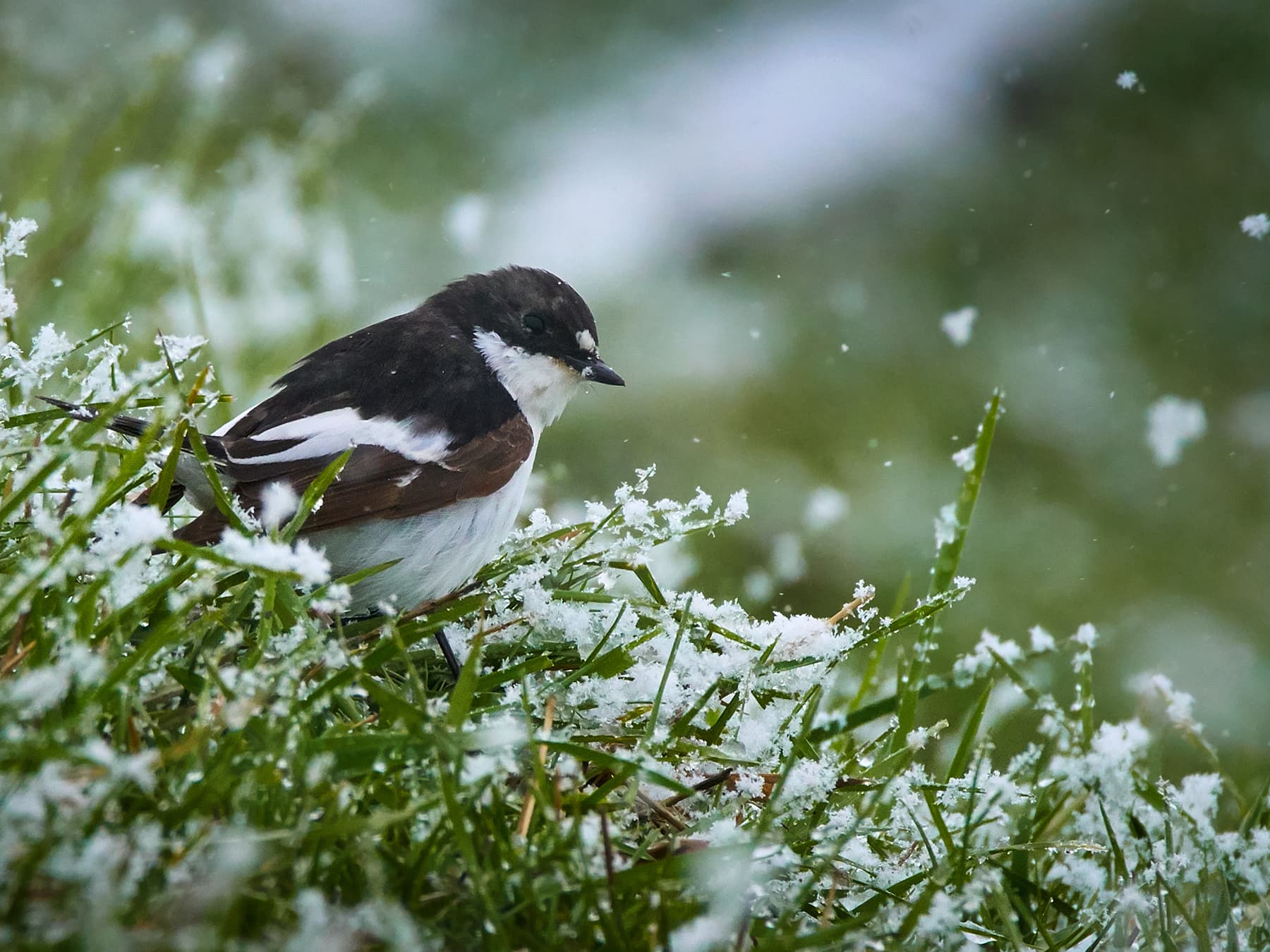
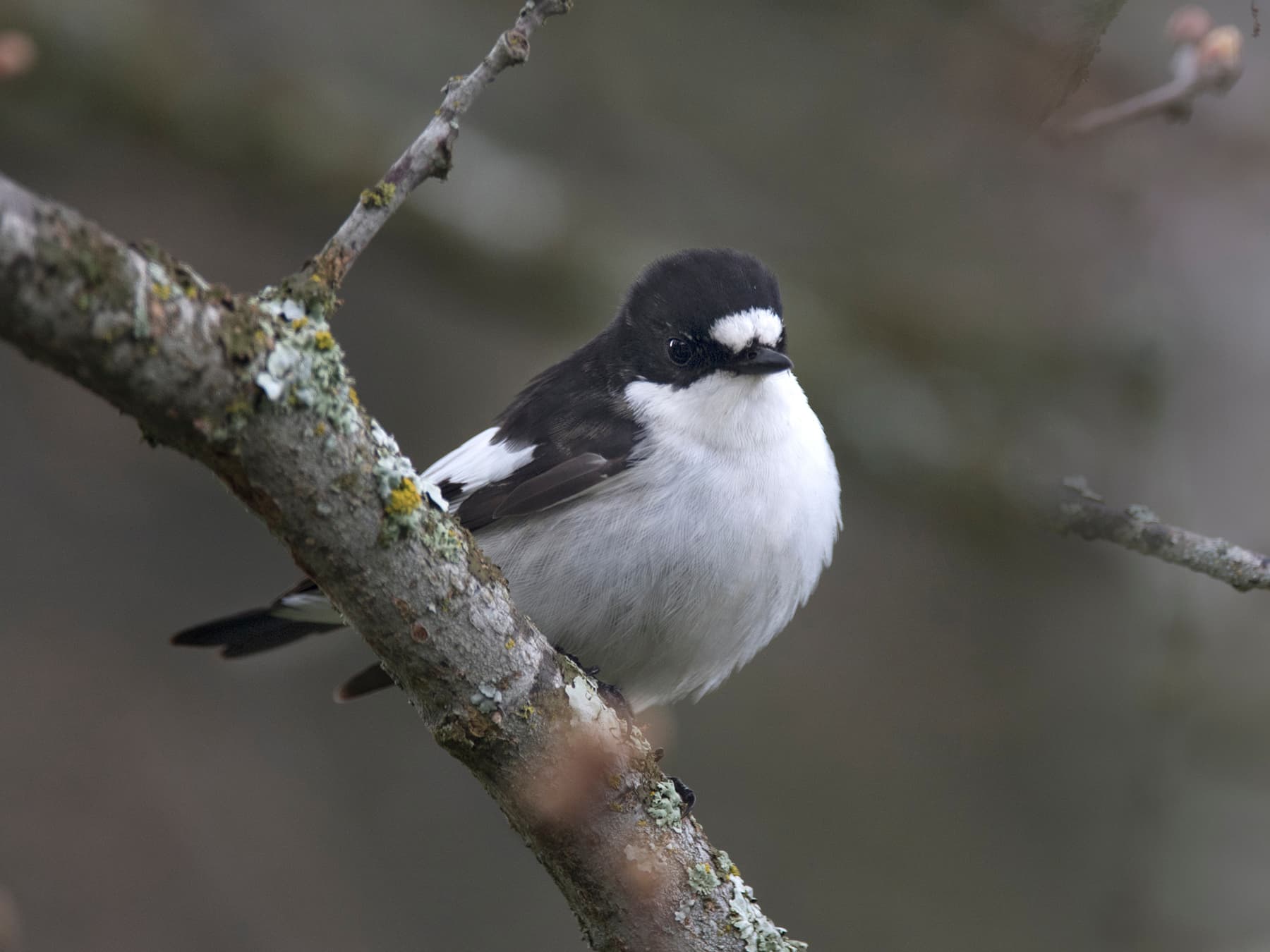
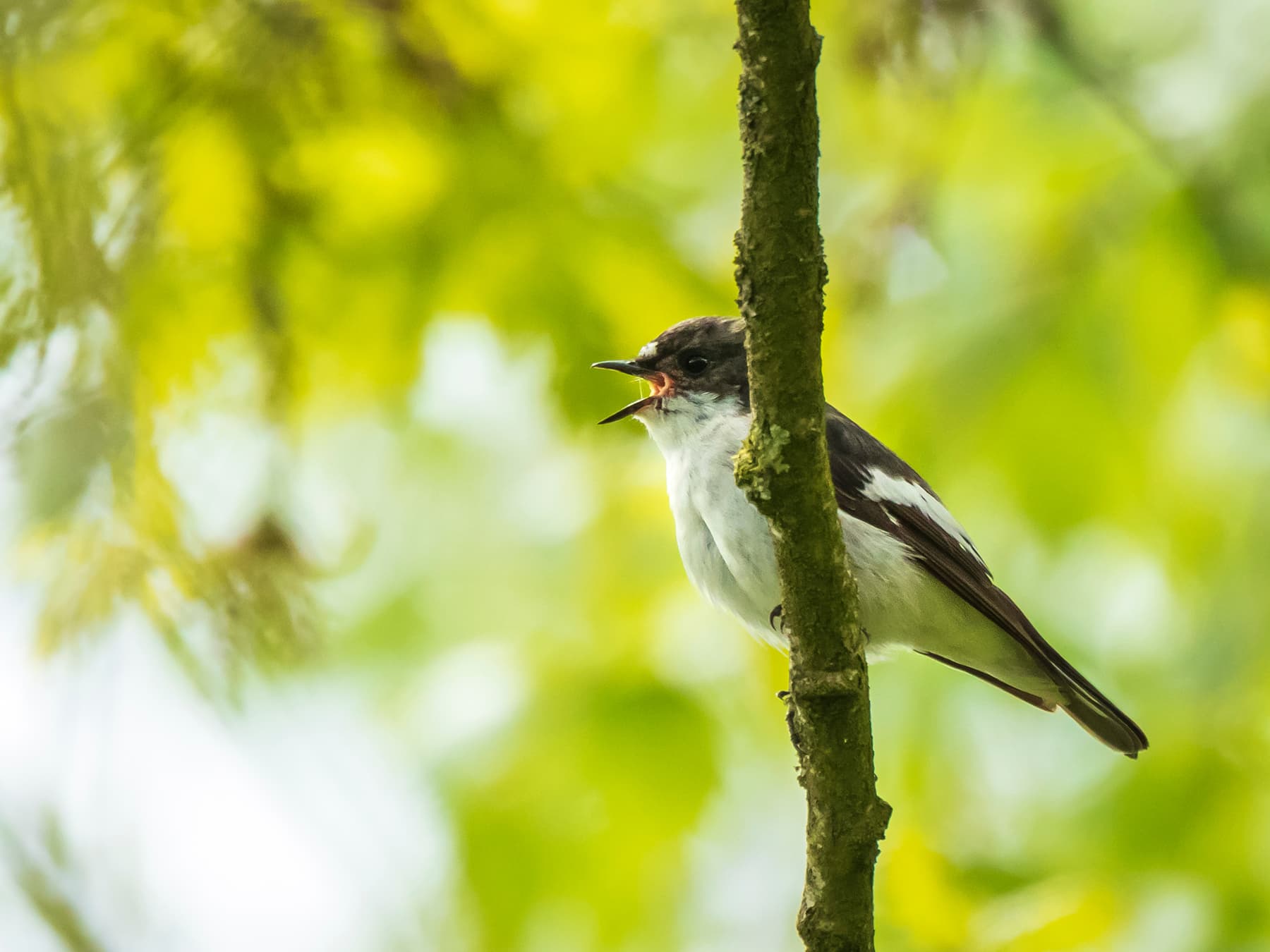
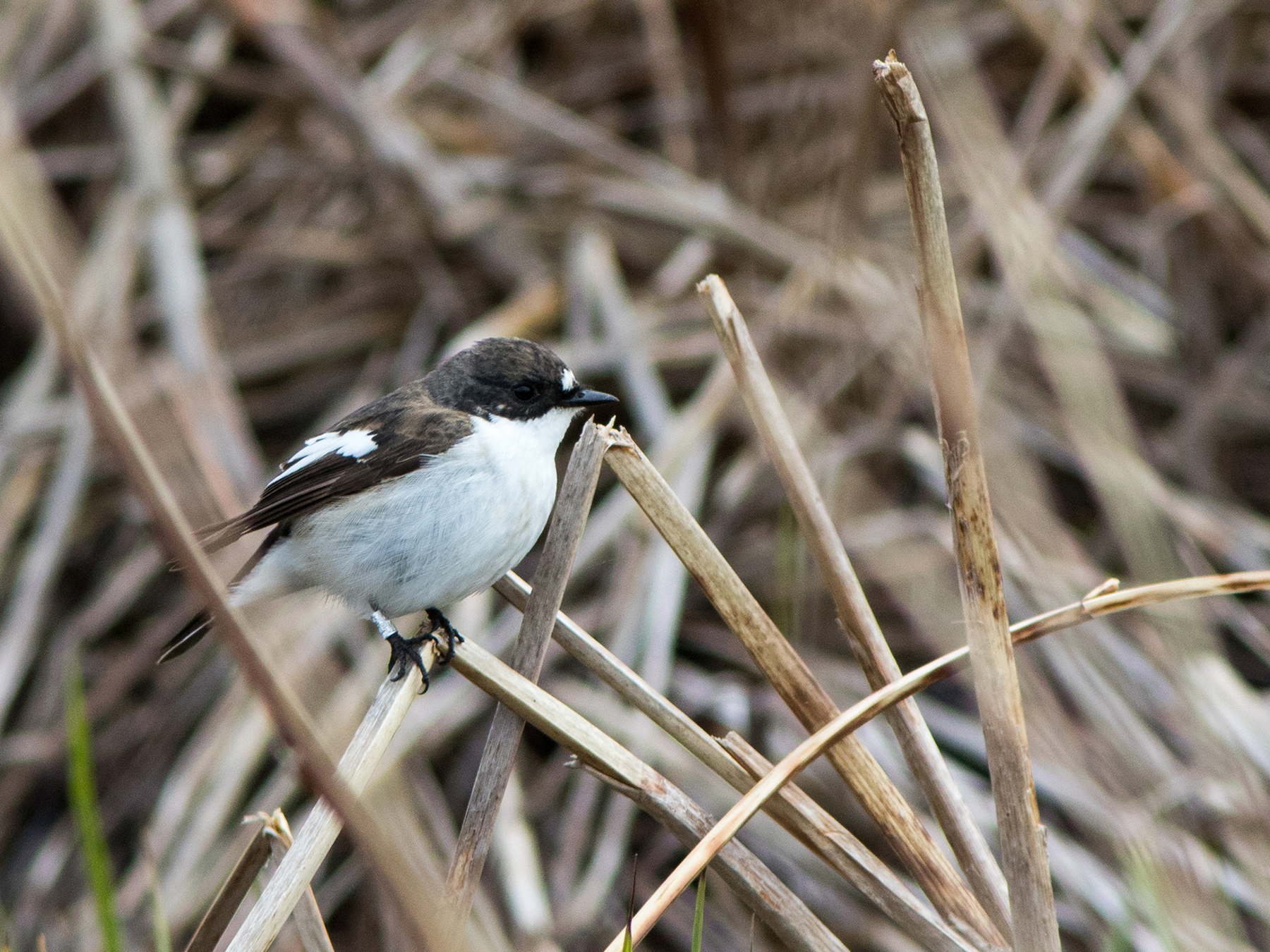
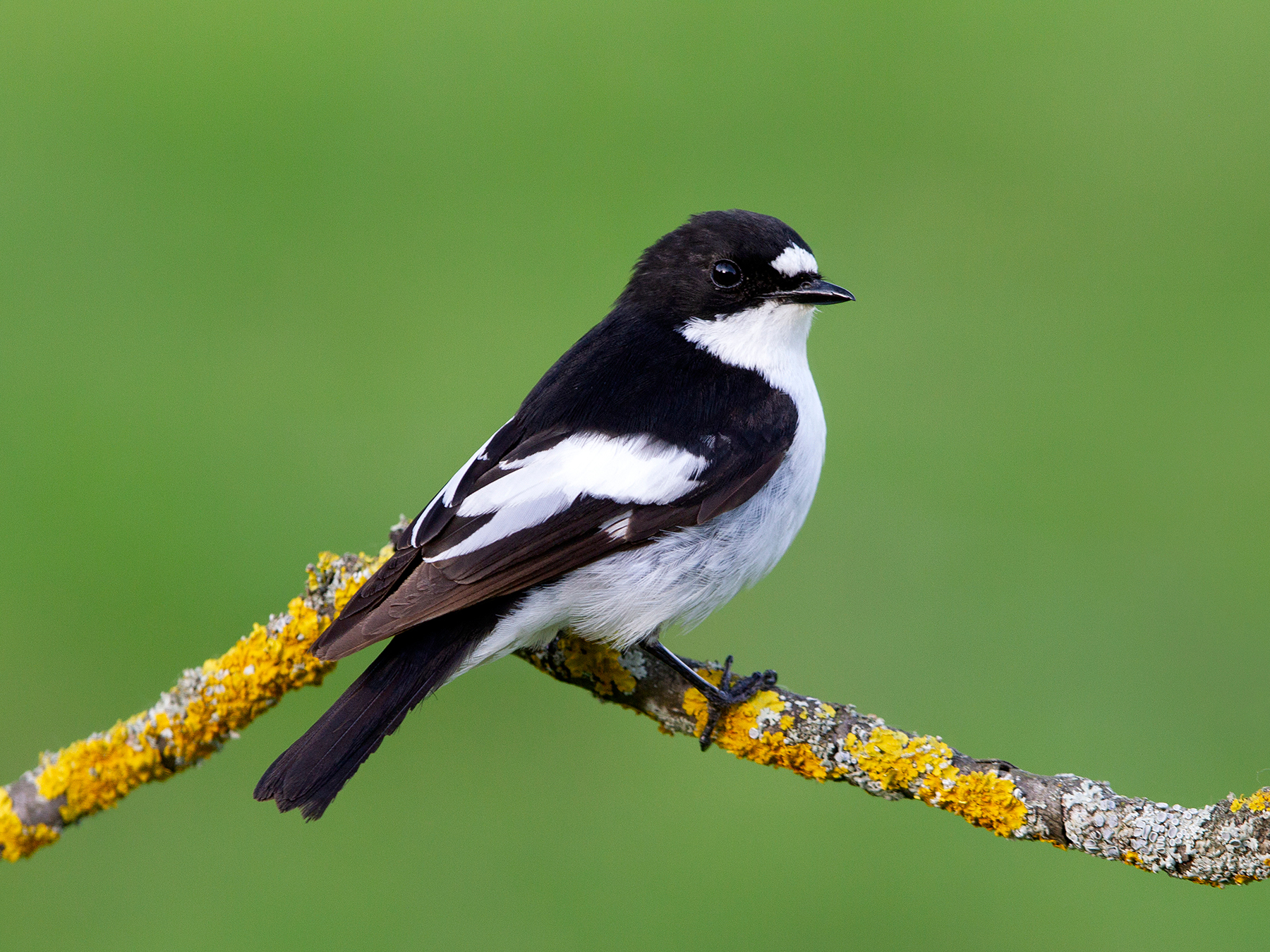
Male pied flycatchers have bold, contrasting black and white markings. Their face is black, with a distinctive divided white patch just above the bill. Their chin, throat, breast and underparts are white, while their upper parts are largely solid glossy black, with wide white wing bars that are visible when folded. In some birds, the black may have a darker brownish-charcoal wash on closer inspection.
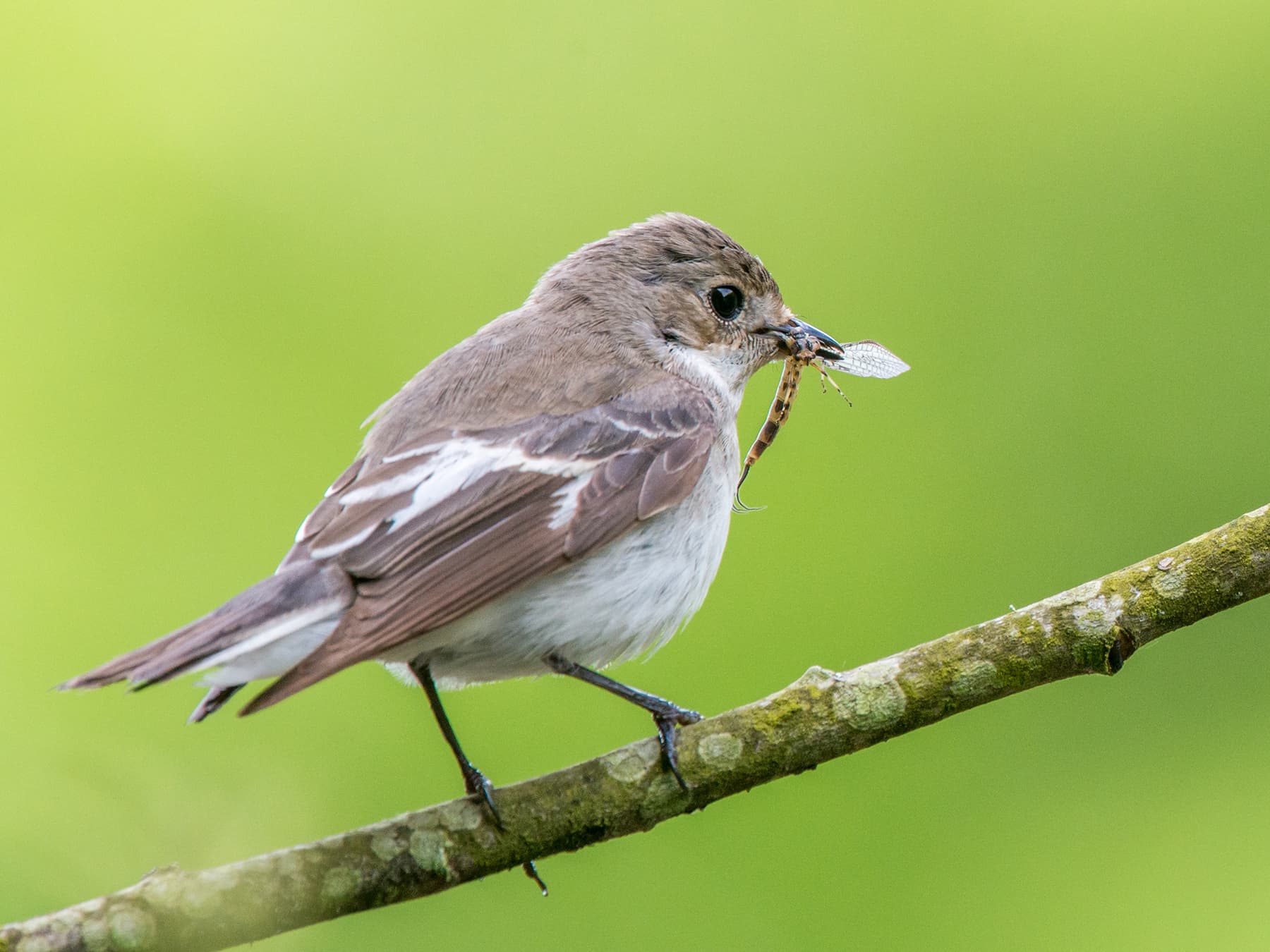
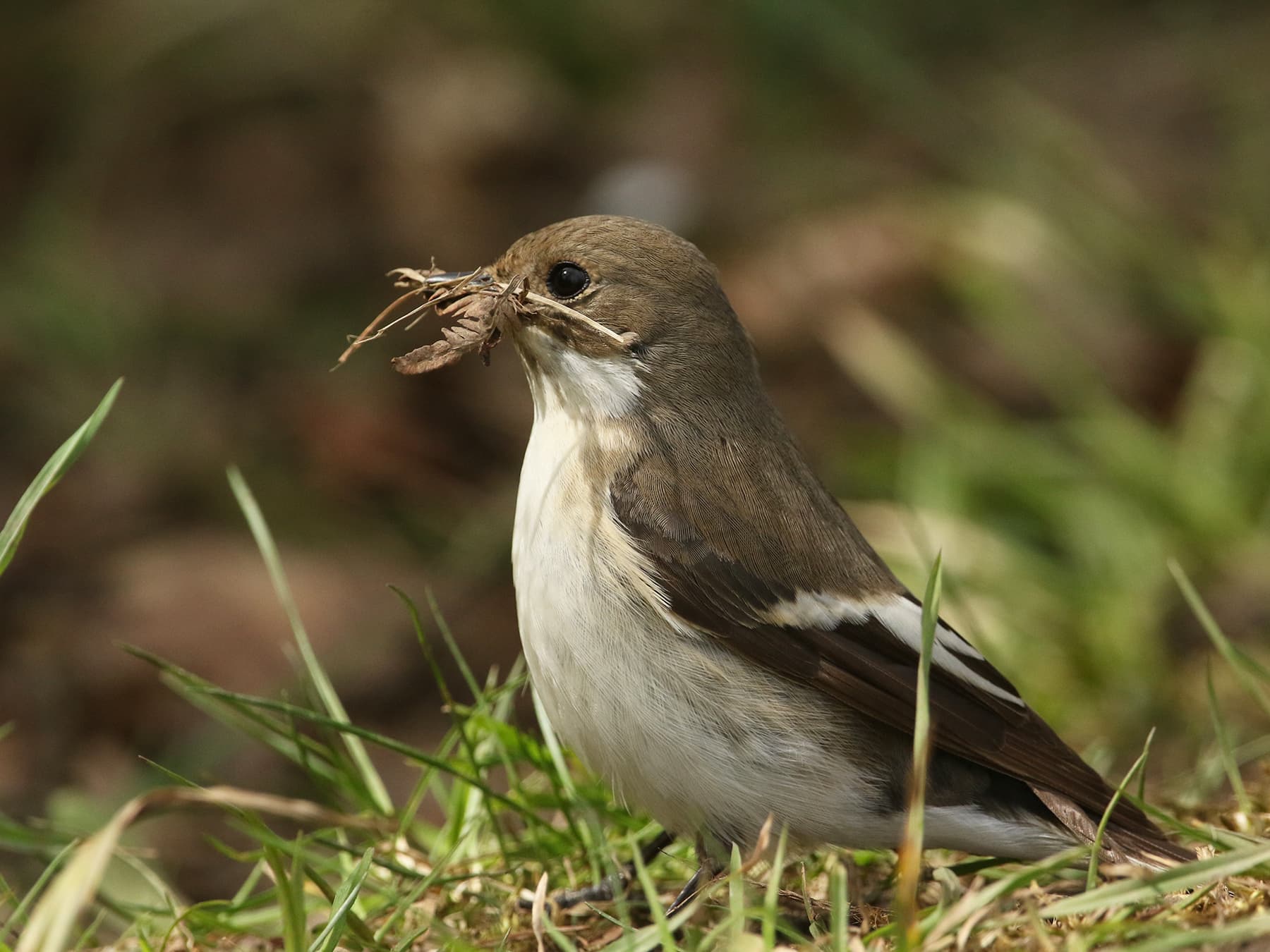
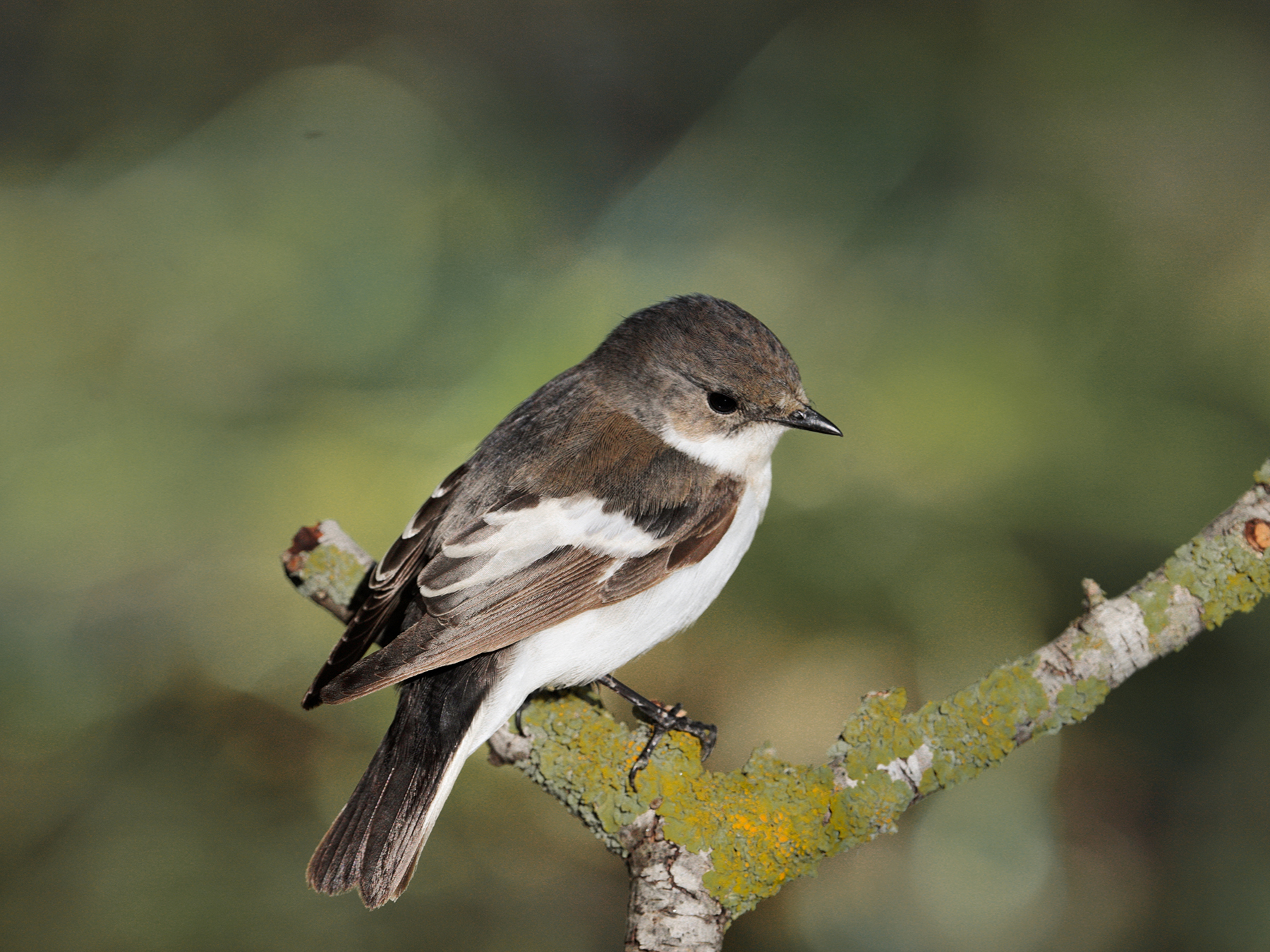
Female pied flycatchers have similar markings to males, but are a darkish olive brown rather than glossy black, with creamy white throat, breast and underparts that are streaked with buff. The forehead patch seen on male pied wagtails is also absent. On female pied wagtails, white wing bars are also visible, but not as wide or obvious as those of the male. Both sexes have black irises, a short black bill, and black-brown legs.
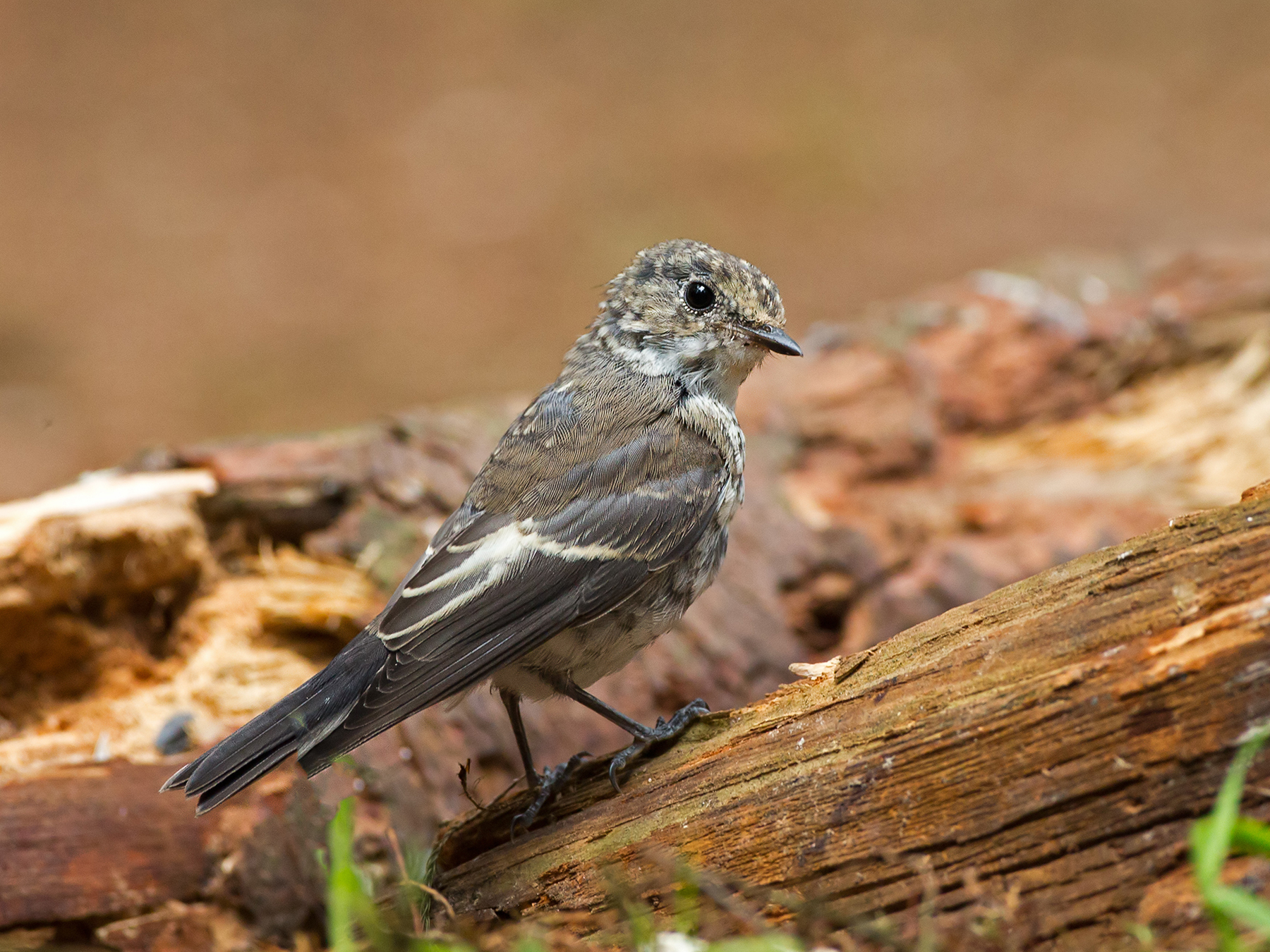
Juvenile pied flycatchers have dark brown upperparts and are streaked buff-white below. They develop their full adult plumage by their first summer, although first-year adult males retain a brownish tinge.
How big are Pied Flycatchers?
Pied flycatchers are slightly smaller in size than house sparrows, with no difference between males and females in length, weight or wingspan.
- Length: 13 cm (5.1 in)
- Wingspan: 21 cm to 24 cm (8.3 in to 9.4 in)
- Weight: 12 g to 15 g (0.4 oz to 0.5 oz)
Its size
Adults- Length
- 12–13.5 cm
- Wingspan
- 21–24 cm
- Weight
- 9–17 g
Its song and calls
What sound does a Pied Flycatcher make?
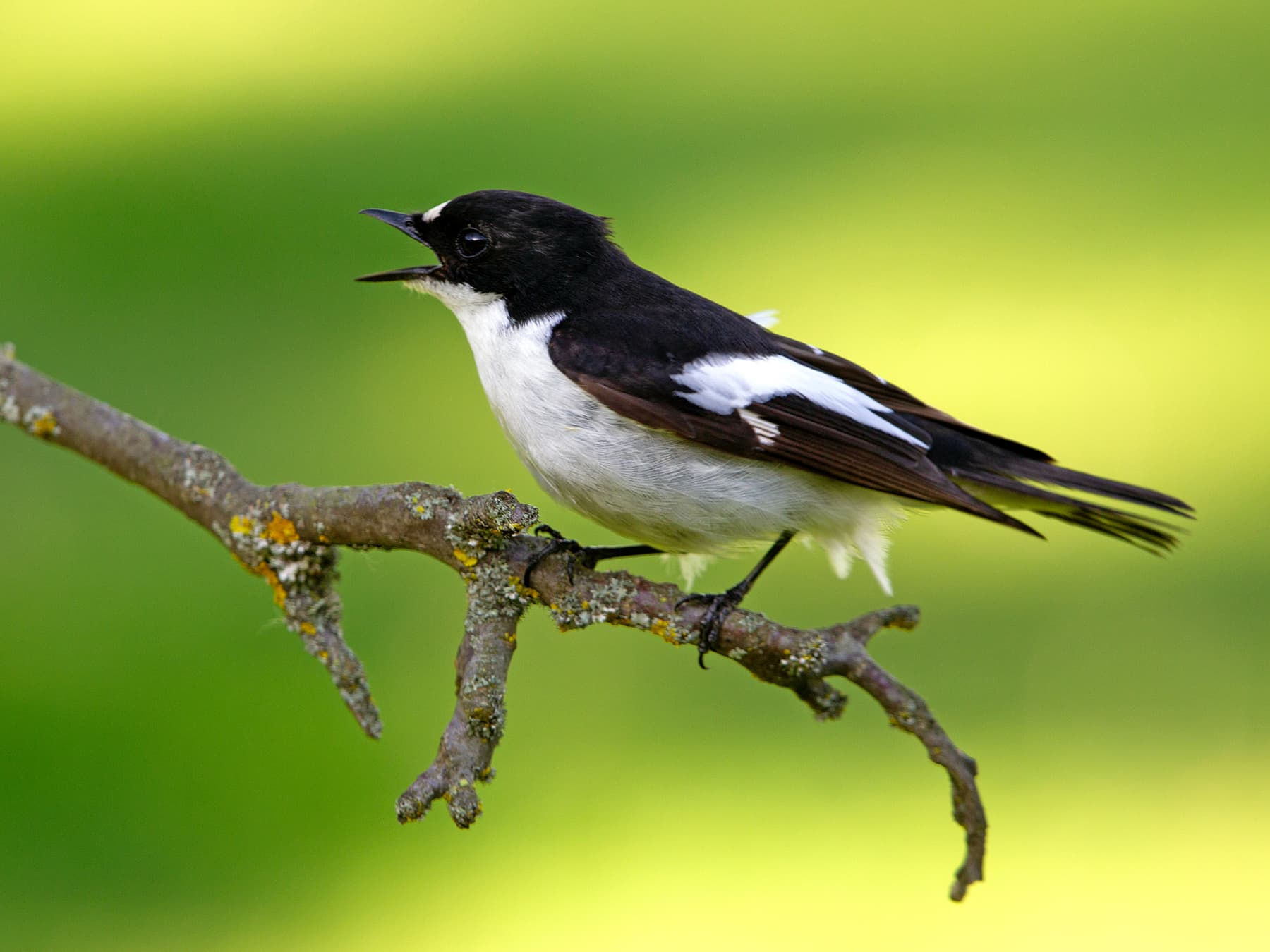
The trilled song of a pied flycatcher consists of a string of up to 15 notes with varied pitches and may be followed or preceded by a series of high-pitched whistles.
The alarm call is a harsh ‘whit’ or ‘tik’ sound, used to alert other nearby birds of a threat to nest sites.
- Song0:00 / 0:49
Recorded in Devon, England
Lawrence Shove / The British Library Board · Wikimedia Commons · CC BY-SA 4.0
- Call0:00 / 0:14
Recorded in Hauts-de-France, France · September 2025
When and where to see it
OctoberLeaving
Most recorded in October
- 1. Cork0.18%
- 2. Shetland Islands0.16%
- 3. Cornwall0.14%
- 4. Eilean Siarunder 0.1%
- 5. Pembrokeshireunder 0.1%
Each dot is a county, state or province: the bigger and darker, the larger the bird’s share of that place’s bird records that month. Grey dots: no regular records. The ringed point is the centre of the bird’s records this month; the arrow shows how it moved since last month, and the dashed loop its path through the year. “Arrivals” colours places where it becomes regular this month (orange) or is in its last regular month (grey). GBIF eBird Observation Dataset, 2019–2024. Map data: Natural Earth, US Census Bureau; place centres © OpenStreetMap contributors.
In your area
See when the European Pied Flycatcher is recorded in your county, state or province.
How often the European Pied Flycatcher turns up in the UK and Ireland through the year, from birdwatchers' records.
United Kingdom
Summer visitor · regularly Apr–Oct · most records in September
Ireland
Passage migrant · regularly Sep–Oct · most records in October
Show as a table
| Month | United Kingdom | Ireland |
|---|---|---|
| January | – | – |
| February | – | – |
| March | <0.001% | – |
| April | 0.034% (regular) | – |
| May | 0.065% (regular) | <0.001% |
| June | 0.032% (regular) | – |
| July | 0.007% (regular) | – |
| August | 0.082% (regular) | 0.003% |
| September | 0.10% (regular) | 0.028% (regular) |
| October | 0.019% (regular) | 0.030% (regular) |
| November | <0.001% | – |
| December | – | – |
Recorded regularly in
Worldwide: recorded regularly in 70 countries
Countries where it was recorded in at least 3 of the 6 years 2019–2024. Linked countries have their own bird list.
Europe (43)
- Åland Islands
- Albania
- Andorra
- Austria
- Belarus
- Belgium
- Bosnia & Herzegovina
- Bulgaria
- Croatia
- Czechia
- Denmark
- Estonia
- Faroe Islands
- Finland
- France
- Germany
- Gibraltar
- Greece
- Hungary
- Iceland
- Ireland
- Italy
- Kosovo
- Latvia
- Lithuania
- Luxembourg
- Malta
- Moldova
- Montenegro
- Netherlands
- Norway
- Poland
- Portugal
- Romania
- Russia
- Serbia
- Slovakia
- Slovenia
- Spain
- Sweden
- Switzerland
- Ukraine
- United Kingdom
Africa (16)
Asia (11)
- Armenia
- Cyprus
- Georgia
- Israel
- Jordan
- Kazakhstan
- Lebanon
- Mongolia
- Oman
- Palestinian Territories
- Turkey
Data: EOD – eBird Observation Dataset (Cornell Lab of Ornithology), accessed via GBIF.org, CC BY 4.0. Records from 2019–2024, aggregated and filtered by Birdfact. How these lists are made
What is the habitat of a Pied Flycatcher?
Woodlands and forests offer ideal breeding and foraging grounds for pied flycatchers. As cavity nesters, the availability of suitable nest sites is key. These are usually found in mature deciduous woodlands, as well as occasionally in orchards, parks and gardens.
Non-breeding habitats include citrus groves, lowland open forests, and wooded mountain slopes. Bushy areas may be visited during their migrations flights to and from European breeding grounds.
What is the range of a Pied Flycatcher?
Pied flycatchers breed in northern, western and central Europe, from the British Isles in the west, Scandinavia in the north, across to western Russia and south as far as France, northern Italy, Romania and Ukraine.
Winters are spent exclusively in Africa, with wintering grounds concentrated mainly in Senegal and the Gambia, but stretching as far east as the Central African Republic and the Democratic Republic of Congo on occasion.
Where do Pied Flycatchers live?
The European population of pied flycatchers is estimated at around 5.25 million pairs, with a further 3 million pairs in Russia. Other countries with the largest populations of breeding pied flycatchers include Finland, Sweden, Norway, Latvia, Lithuania and Estonia.
How rare are Pied Flycatchers?
Pied flycatchers are summer visitors to the UK, and chances of a sighting are possible between April and October.
With up to 25,000 breeding pairs, they are not a highly uncommon bird, but their breeding grounds are restricted mainly to the west of England, Wales, and isolated regions of western Scotland.
Where can you see Pied Flycatchers in the UK?
Breeding pied flycatchers are limited to western England, Wales and parts of south-west Scotland, but passage sightings are commonly reported along the entire eastern coast of England, and in the Isle of Man.
The species is a regular and common visitor to Welsh valleys and hillsides, and the RSPB Nagshead reserve in Gloucestershire is known to be a well-established breeding ground each year.
Migration
Do Pied Flycatchers migrate?
All pied flycatchers are migratory, with breeding taking place across Europe, and winters spent in West Africa.
No territories exist where pied flycatchers are year-round residents, and by October, the entire European breeding population will have dispersed.
Are Pied Flycatchers native to the UK?
Pied flycatchers breed in the UK, but are not present all year round.
Arrivals begin from April onwards ahead of breeding which most commonly begins in May. By October, the last birds will have set off for their wintering grounds in West Africa. Migrating birds are frequently seen in passage along the eastern and south-eastern coasts of England.
Tips for seeing it
- Look for them in deciduous and mixed woodlands, especially near the edges
- Listen for their distinctive 'pik' call and short, sweet, warbling song
- Watch for their characteristic fly catching behaviour from prominent perches
- In the UK, visit oak woodlands in western and northern areas during spring and summer
What it eats
What do Pied Flycatchers eat?
It’ll probably come as no surprise that flies make up a large component of a pied flycatchers’ diet, with birds catching flies, dragonflies and mayflies from perches, using a technique known as sallying. Prey may also be caught on the ground or picked from leaves or tree trunks.
Other insects, including earwigs, grasshoppers, beetles, and cockroaches are widely eaten. Caterpillars, millipedes, woodlice and snails are also popular prey, with observations of pied flycatchers smashing snail shells against the ground in order to eat them.
In autumn, fruit and berries are also frequently eaten, plucked from bushes in flight, in particular currants, elder and figs.
What do Pied Flycatcher chicks eat?
Caterpillars, larvae and other small insects are the initial food provided to young pied flycatchers, with both parents feeding their young in the nest and for a further week after fledging.
Nesting and breeding
Where do Pied Flycatchers nest?
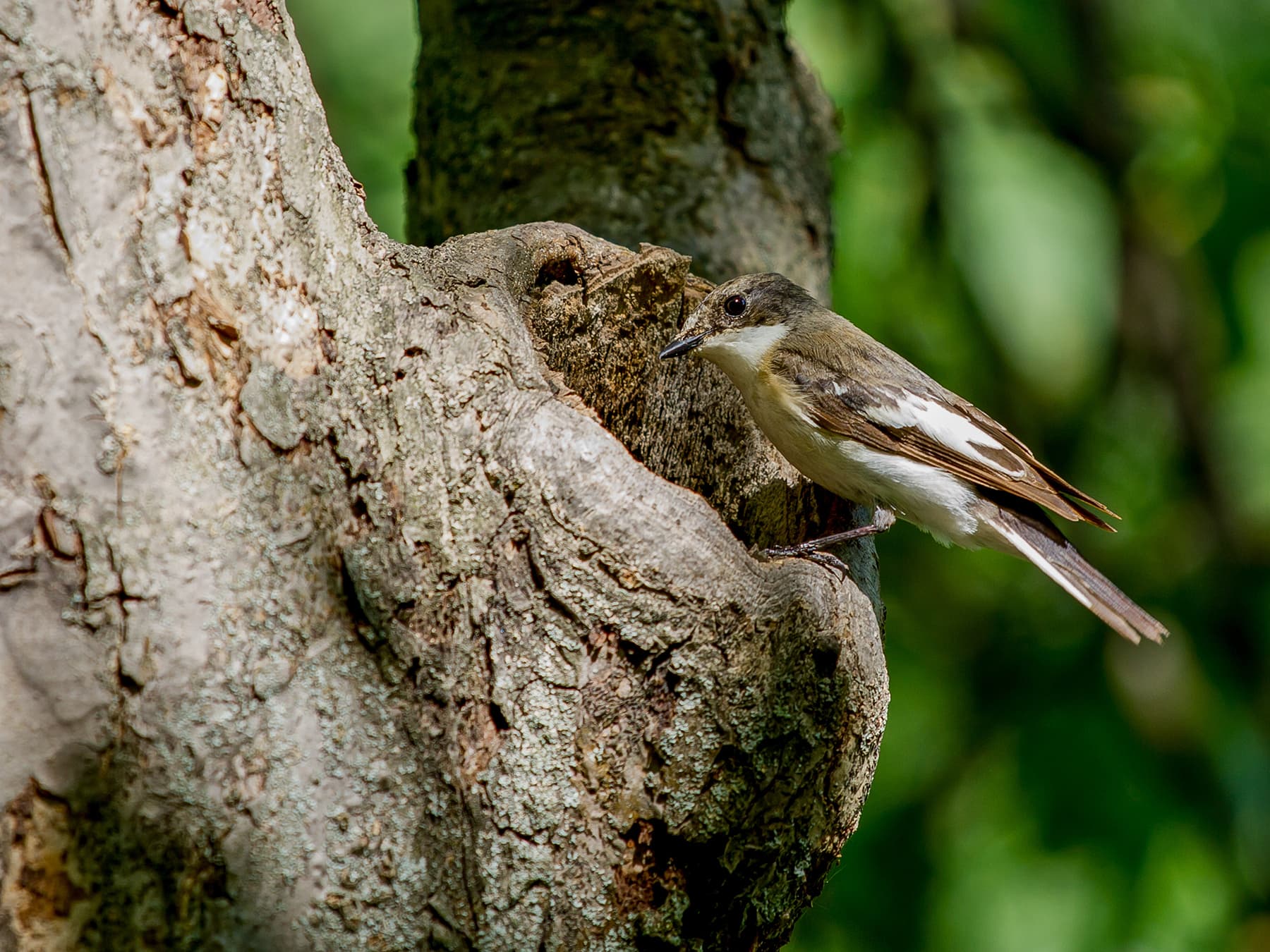
Pied flycatchers are cavity nesters, and raise their young in hollows in trees, walls or other crevices, between 1.8 m and 10 m (5.9 ft and 33 ft) above the ground. Nest boxes are also used, with high levels of success.
Males arrive on their breeding territories first and find a suitable cavity, which they defend until the female decides on her preferred mate. A loose cup of leaves, stems and moss is crafted by the female at the base of the cavity, which is then lined with softer materials including grasses, fur and sometimes feathers.
When do Pied Flycatchers nest?
Breeding lasts from April to July, with May and June being the peak laying months.
What do Pied Flycatcher eggs look like?
The eggs of a pied flycatcher are blue-green in colour, and measure 17 mm by 13 mm (0.7 in by 0.5 in). Up to 10 eggs may be laid in a single clutch although 6 to 7 is more usual. One brood per season is typical but occasionally a second may be attempted if the initial attempt fails. Incubation, by the female alone, lasts for 13 to 15 days, with hatchlings then fed by both parents.
Do Pied Flycatchers mate for life?
Pied flycatchers may be monogamous for the duration of a breeding season, but some males, especially older ones, may breed with two females in the same year, maintaining two separate territories at the same time. Pair bonds dissolve at the end of the season and do not last through winter months.
Behaviour
Are Pied Flycatchers aggressive?
Mobbing is a particularly common behavior of pied flycatchers, who use a ‘tik’ alarm call to summon other nearby birds to help deal with an imminent threat.
On hearing the call, any nearby pied flycatchers may decide to join the mobbing effort, noisily divebombing a potential predator en masse in an attempt to drive it away.
Lifespan and predators
How long do Pied Flycatchers live?
The average lifespan of a pied flycatcher is around 2 years, with first time breeding at one year of age.
The oldest recorded pied flycatcher is a ringed individual that reached 10 years 11 months (data from 2005).
What are the predators of Pied Flycatchers?
Stoats, weasels and martens are common nest predators of pied flycatcher cavities. Adult birds are well-practiced at the art of ‘mobbing’ to see off predators, and an alert call will raise the alarm among other nearby flycatchers of the threat, with birds swooping en-masse to see off the intruder.
Goshawks, sparrowhawks and tawny owls are common predators of adult pied flycatchers as well as their young.
Are Pied Flycatchers protected?
Pied flycatchers are covered by the Wildlife and Countryside Act, 1981, which offers them protection against being knowingly killed, injured or caught and taken into captivity.
Are Pied Flycatchers endangered?
Globally, pied flycatchers are rated as a species of least concern, with a secure population of at least 8 million breeding pairs. In the UK pied flycatchers are classified with Amber status on the British Birds of Conservation Concern list.
Conservation
While currently listed as Least Concern, European Pied Flycatchers face threats from habitat loss and climate change. Their reliance on specific woodland habitats and long-distance migration makes them vulnerable to environmental changes.
Conservation efforts focus on preserving suitable breeding habitats and studying their migration patterns.
More photos
5 photos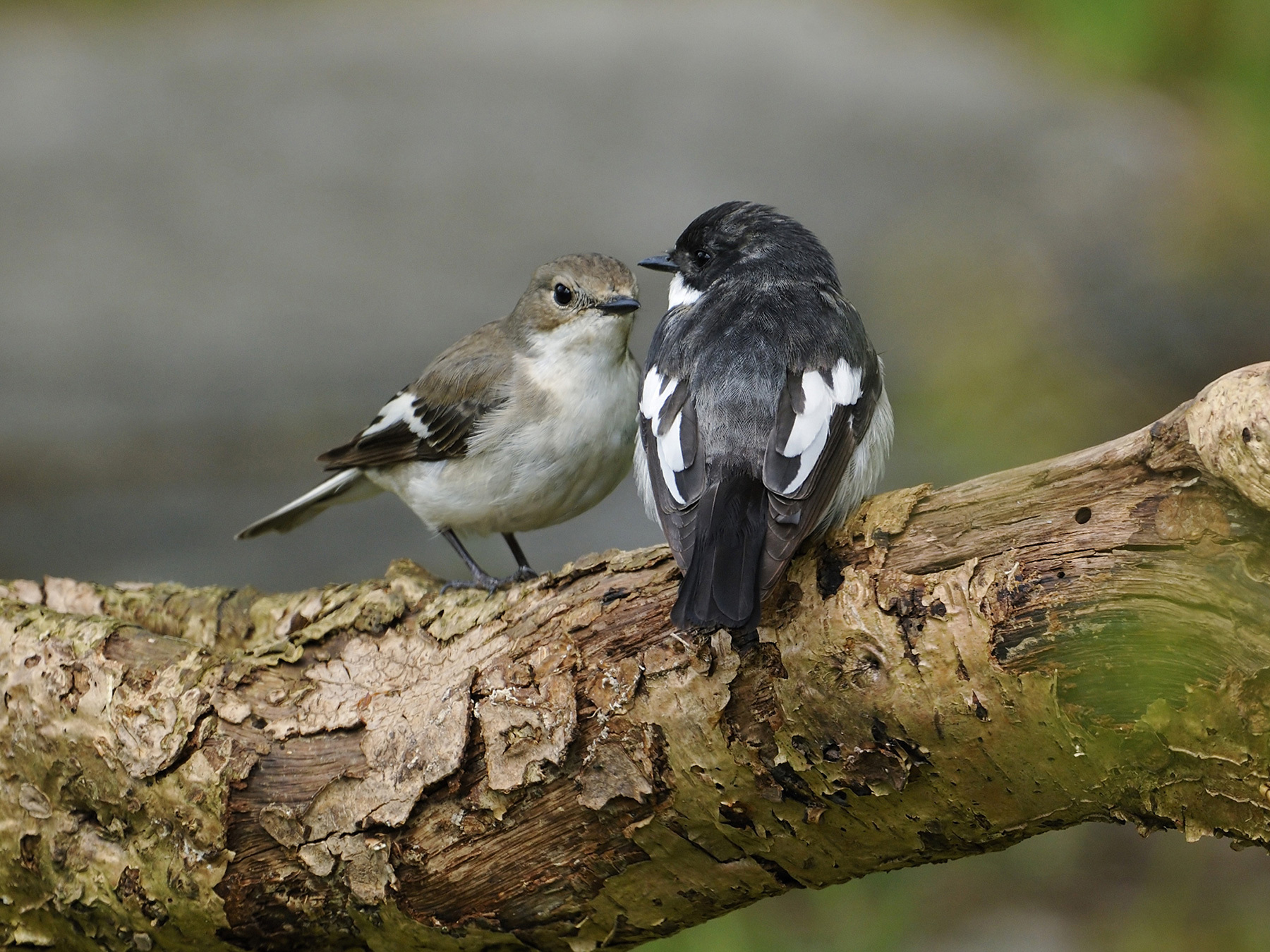
Quick facts
- Length
- 12–13.5 cm
- Wingspan
- 21–24 cm
- Weight
- 9–17 g
- Lifespan
- 2–5 years · oldest recorded 15 years
- Family
- Old World Flycatchers
- Migration
- Long-distance Migrant
- Global status (IUCN)
- Least Concern
- World population
- 33,000,000 - 52,000,000 mature individuals
- Population trend
- Decreasing
- Also called
- Pied Flycatcher
- Scientific name
- Ficedula hypoleuca
Questions
1Where do Pied Flycatchers from the UK go in winter?
Pied flycatchers that breed in the UK head to West Africa in late summer where they spend each winter before returning the following spring.
Wintering grounds of pied flycatchers extend across western Africa as far as the centre of the continent and are mainly concentrated from Senegal and the Gambia eastwards into Cameroon.
Sources
4- 1Moller, Sociality, age at first reproduction and senescence: comparative analyses of birds (2006)
- 2BirdLife International. 2018. Ficedula hypoleuca. The IUCN Red List of Threatened Species 2018: e.T22709308A131952521. Source (opens in a new tab)
- 3BirdLife International. 2018. Ficedula hypoleuca. The IUCN Red List of Threatened Species 2018: e.T22709308A131952521. Source (opens in a new tab)
- 4EBCC (2015)

Checked by
Nathan Cope, founder and editor
Nathan founded Birdfact and leads its writers and contributors in the UK, the US and Canada. He has watched and studied birds for more than ten years, and checks every article and species guide before it’s published.