


Philippine Eagle
Monkey-eating Eagle, Great Philippine Eagle · Pithecophaga jefferyi
By the Birdfact teamChecked by Nathan Cope
On this page13 sections
How to recognise it
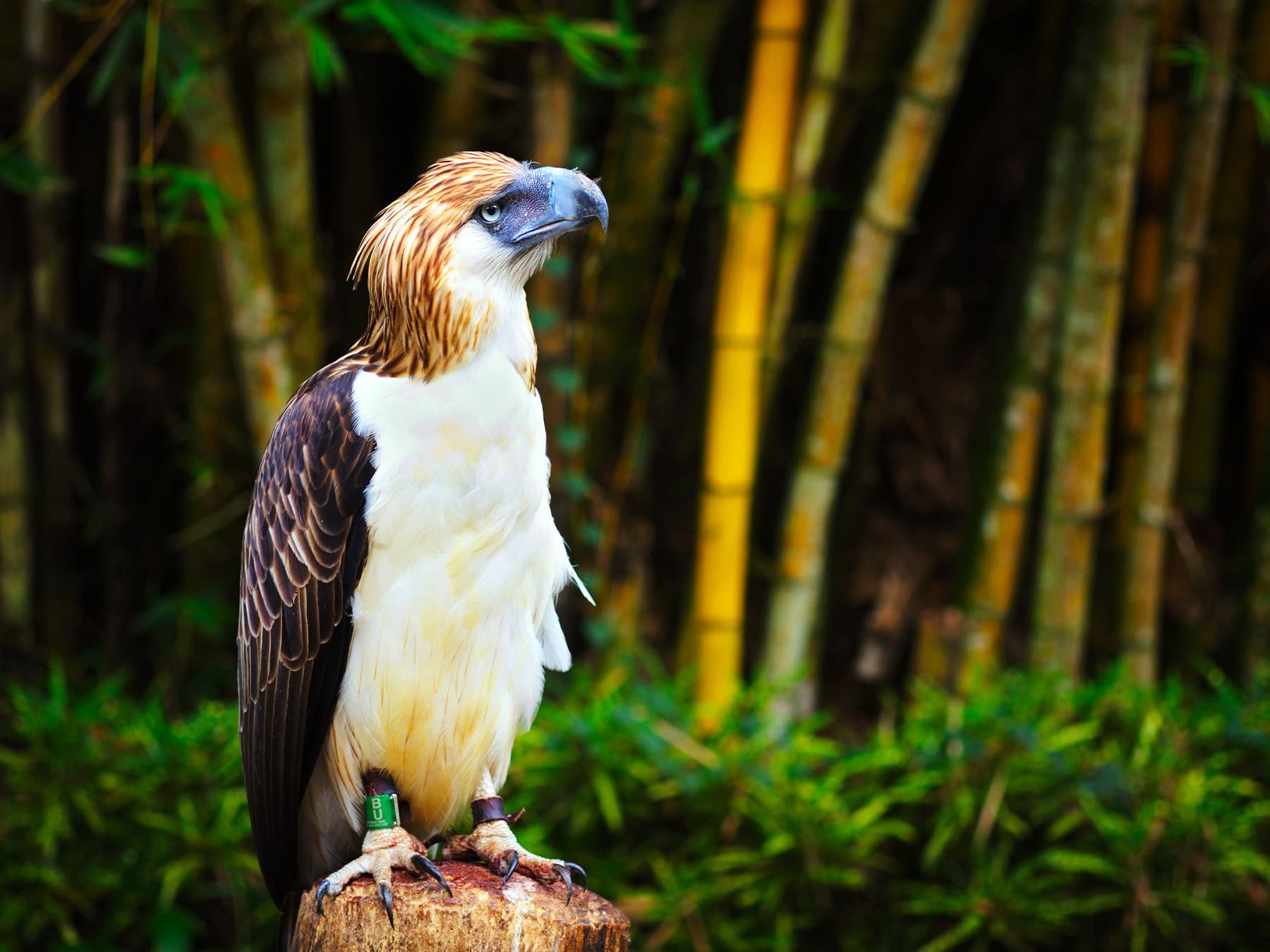
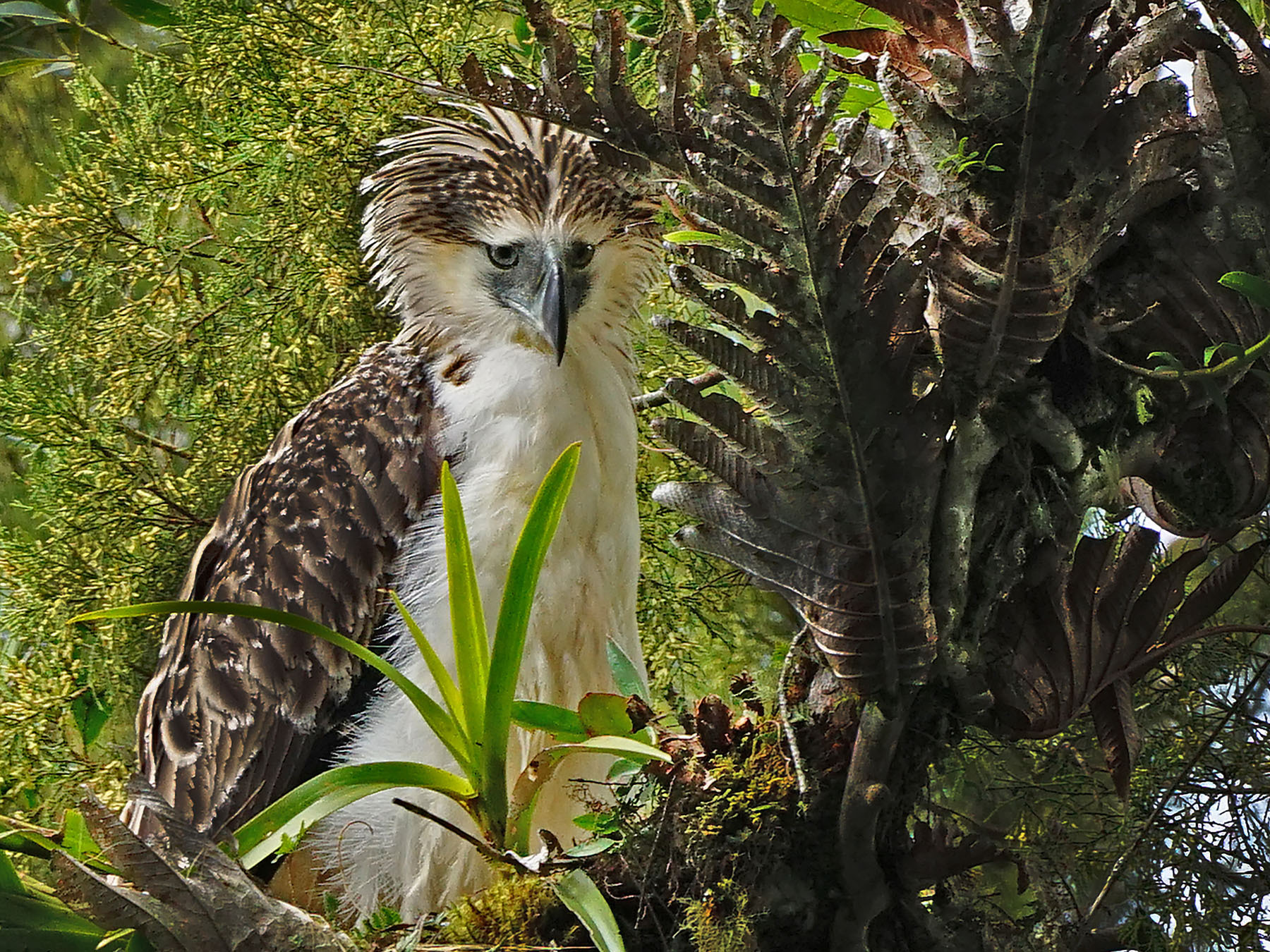
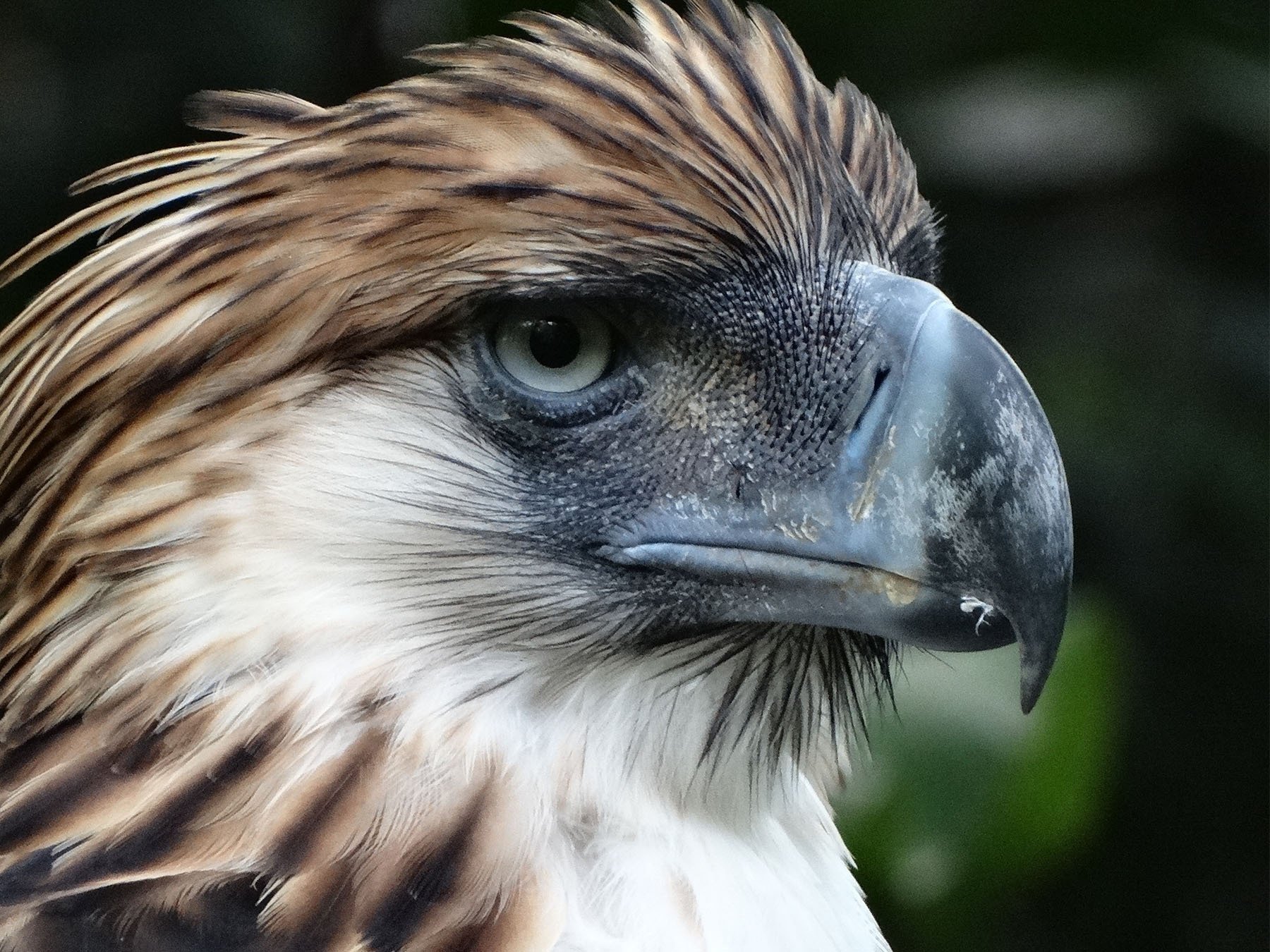
The Philippine Eagle is a massive raptor with a dark face, pale brown nape, and creamy-white underparts.
Its most striking feature is a shaggy crest of long, brown feathers that gives it a distinctive silhouette. The powerful hooked beak and large yellow talons are adapted for hunting.
Adults have similar plumage, with no significant differences between sexes. Juveniles are paler overall, with a white-edged brown crest and less defined facial markings. The bird's plumage remains consistent year-round.
Its size
Adults- Length
- 86–102 cm
- Wingspan
- 184–220 cm
- Weight
- 4040–8000 g
Its song and calls
Philippine Eagles have a range of vocalisations, including high-pitched whistles and a distinctive whinnying call that sounds like 'wee-ahh, wee-ahh.'
During the breeding season, pairs engage in duets, with males producing rapid, staccato notes and females responding with longer, drawn-out calls.
When and where to see it
Tips for seeing it
- Look for them in primary lowland and montane forests
- Scan the canopy and emergent trees for perched individuals
- Listen for their high-pitched whistles and whinnying calls
- Be patient and quiet, as these eagles are easily disturbed by human presence
- Use high-powered binoculars or a spotting scope for better viewing
What it eats
Philippine Eagles primarily hunt mammals, including flying lemurs, monkeys, and palm civets. They also prey on other birds, snakes, and lizards.
These versatile hunters use their powerful talons to snatch prey from trees or the ground, often carrying large animals back to their nests.
Nesting and breeding
Philippine Eagles form monogamous pairs that mate for life. The breeding season typically begins in September and can last until February. Courtship involves aerial displays and vocalisations to strengthen pair bonds.
Nests are massive structures built high in emergent trees, often over 30 meters above the ground. The female lays a single white egg, which both parents incubate for about 60 days.
After hatching, the chick remains in the nest for 4-5 months before fledging. Parents continue to care for the young eagle for up to 17 months, one of the longest dependency periods among birds.
Behaviour
Philippine Eagles are solitary and territorial, with pairs maintaining large home ranges. They soar gracefully on thermals, using their keen eyesight to spot prey.
These birds are known for their silent, stealthy hunting technique, often perching motionless for hours before swooping down on unsuspecting prey.
Conservation
The Philippine Eagle faces critical endangerment due to habitat loss from deforestation and hunting.
Conservation efforts focus on habitat protection, captive breeding programs, and community education to reduce human-wildlife conflict. Strict laws now protect this species, but enforcement remains challenging in remote areas.
Similar birds
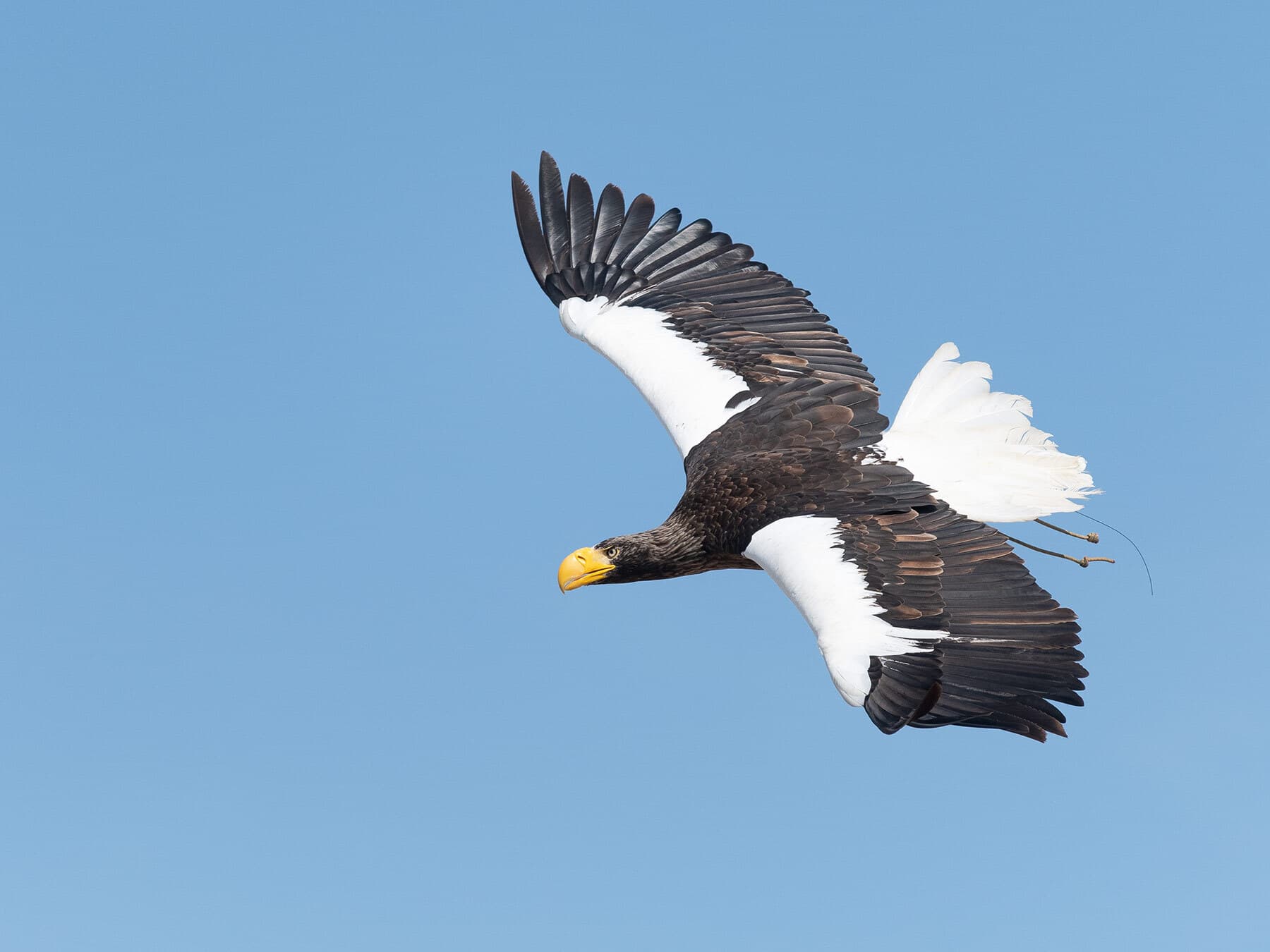
Often mistaken for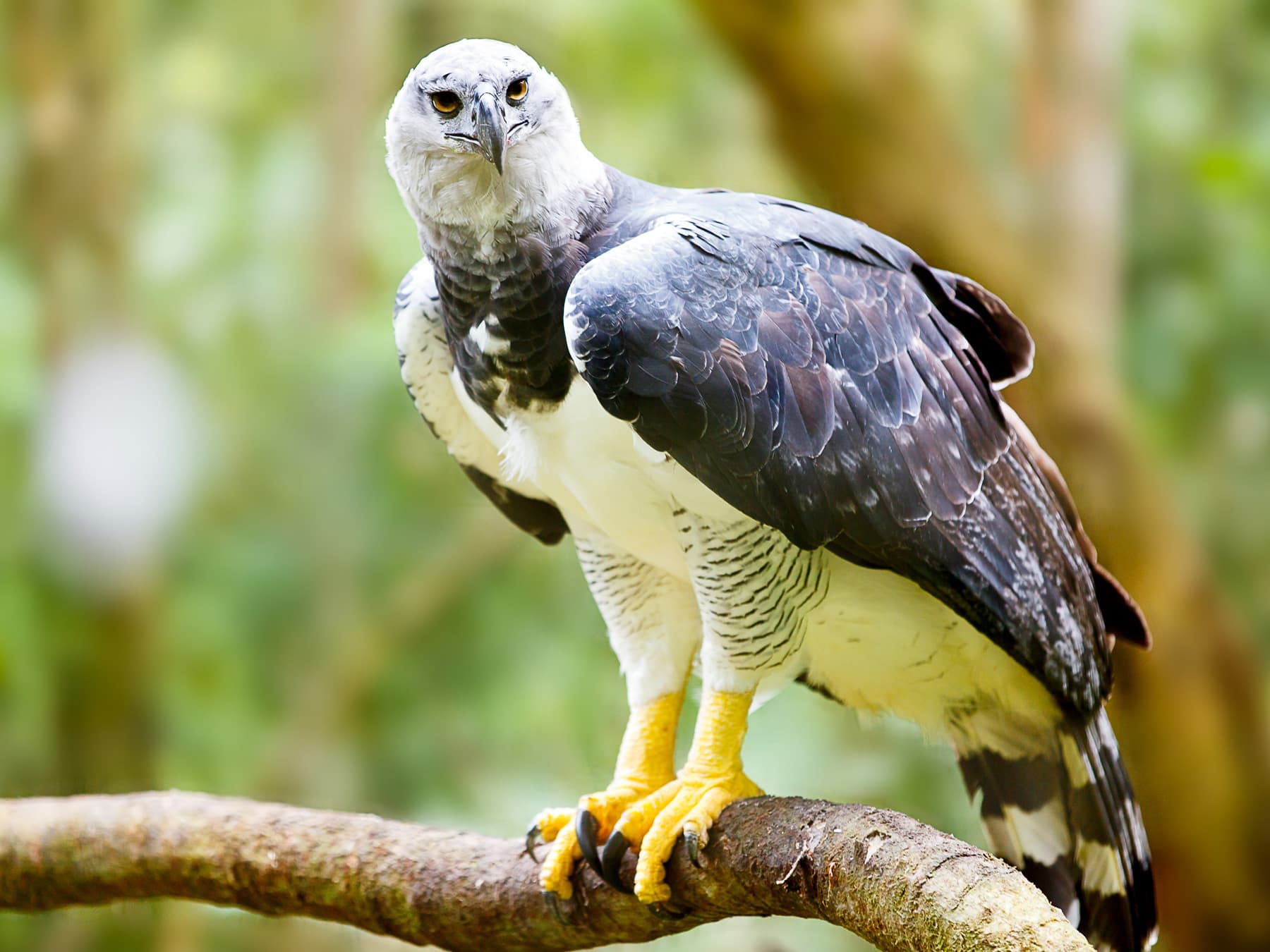
More photos
3 photos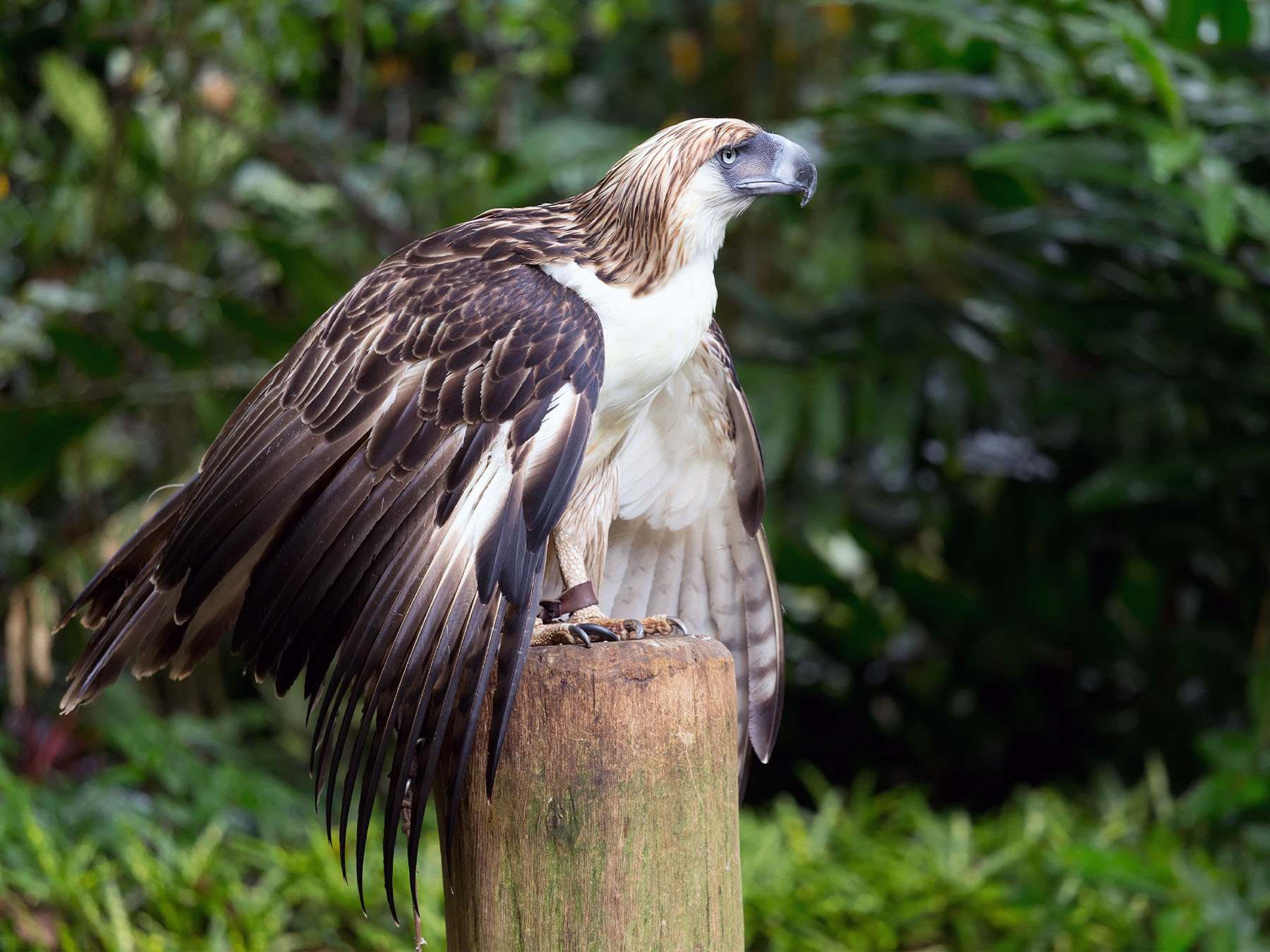
Philippine Eagle guides
1 guidesQuick facts
- Length
- 86–102 cm
- Wingspan
- 184–220 cm
- Weight
- 4040–8000 g
- Lifespan
- 30–60 years · oldest recorded 46 years
- Family
- Hawks & Eagles
- Migration
- Resident
- Global status (IUCN)
- Critically Endangered
- World population
- 180 - 500 mature individuals
- Population trend
- Continued threats from habitat loss and hunting
- Also called
- Monkey-eating Eagle, Great Philippine Eagle
- Scientific name
- Pithecophaga jefferyi
Sources
4- 1Ibanez, Jayson. "The King is dead, Long live the King!". SunStar Davao. (2016) Source (opens in a new tab)
- 2BirdLife International. 2018. Pithecophaga jefferyi (amended version of 2017 assessment). The IUCN Red List of Threatened Species 2018: e.T22696012A129595746. Source (opens in a new tab)
- 3BirdLife International. 2018. Pithecophaga jefferyi (amended version of 2017 assessment). The IUCN Red List of Threatened Species 2018: e.T22696012A129595746. Source (opens in a new tab)
- 4BirdLife International. 2018. Pithecophaga jefferyi (amended version of 2017 assessment). The IUCN Red List of Threatened Species 2018: e.T22696012A129595746. Source (opens in a new tab)

Checked by
Nathan Cope, founder and editor
Nathan founded Birdfact and leads its writers and contributors in the UK, the US and Canada. He has watched and studied birds for more than ten years, and checks every article and species guide before it’s published.