


Monk Parakeet
Quaker Parrot, Quaker Parakeet · Myiopsitta monachus
By the Birdfact teamChecked by Nathan Cope
On this page12 sections
How to recognise it
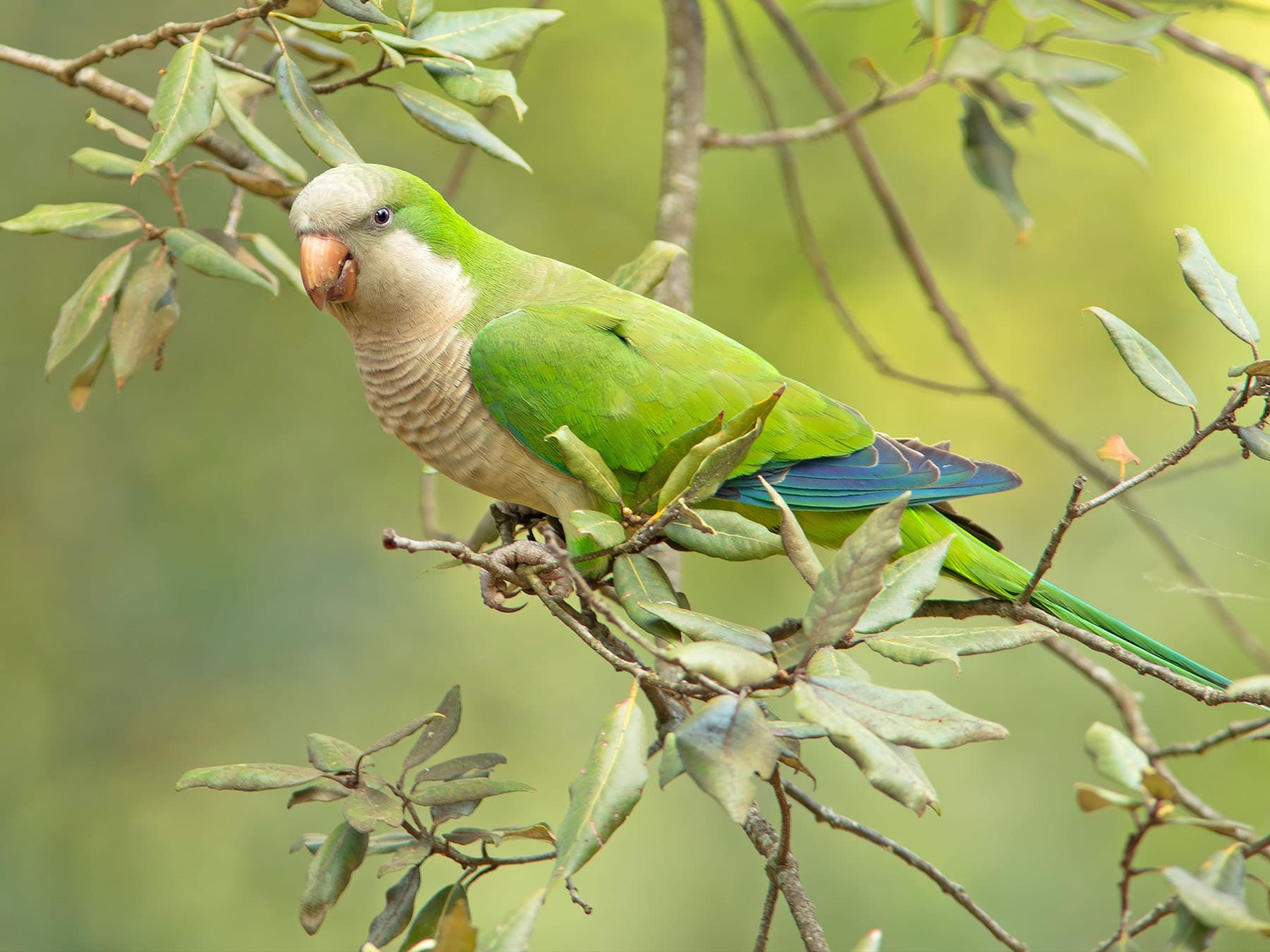
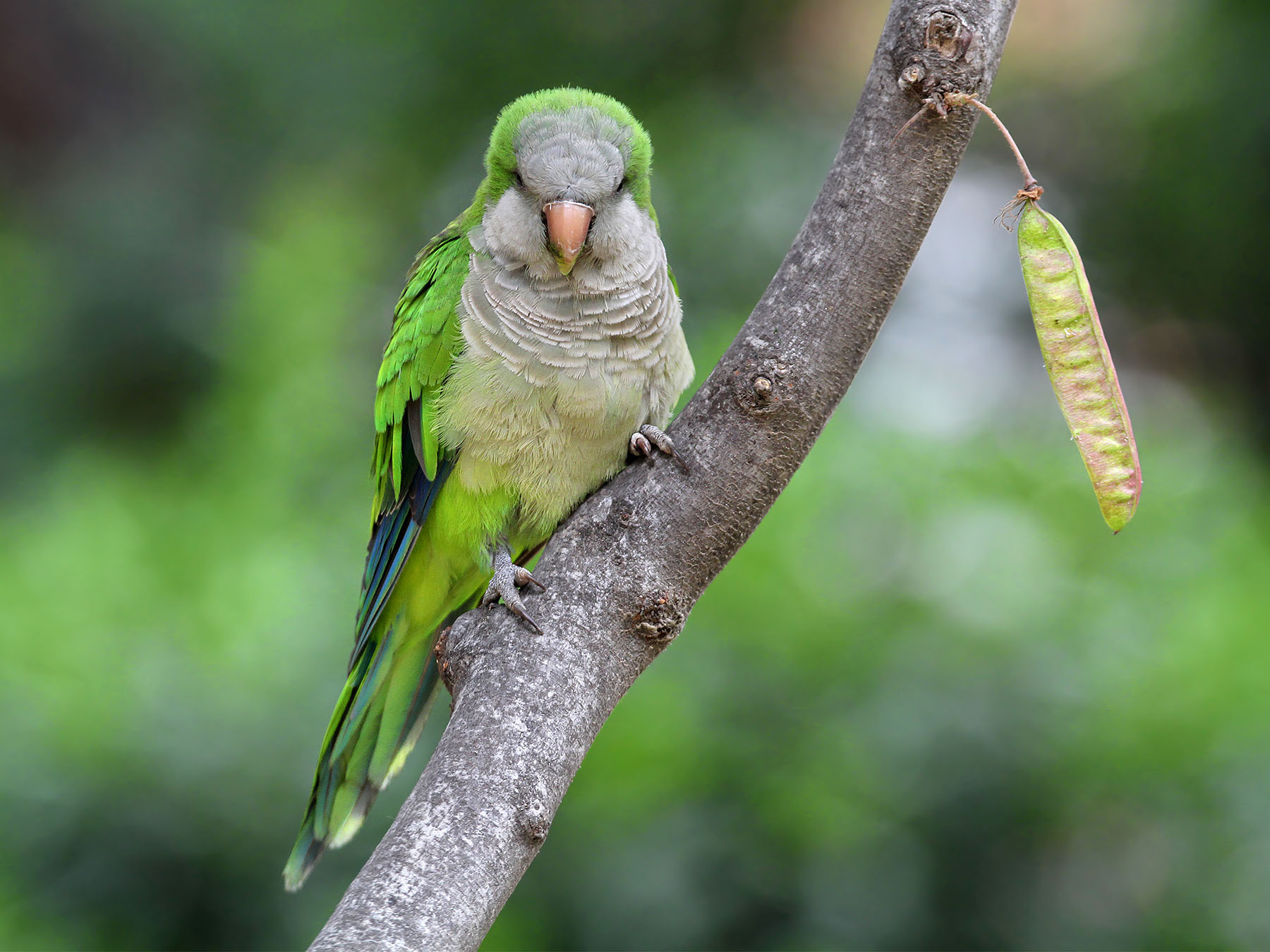
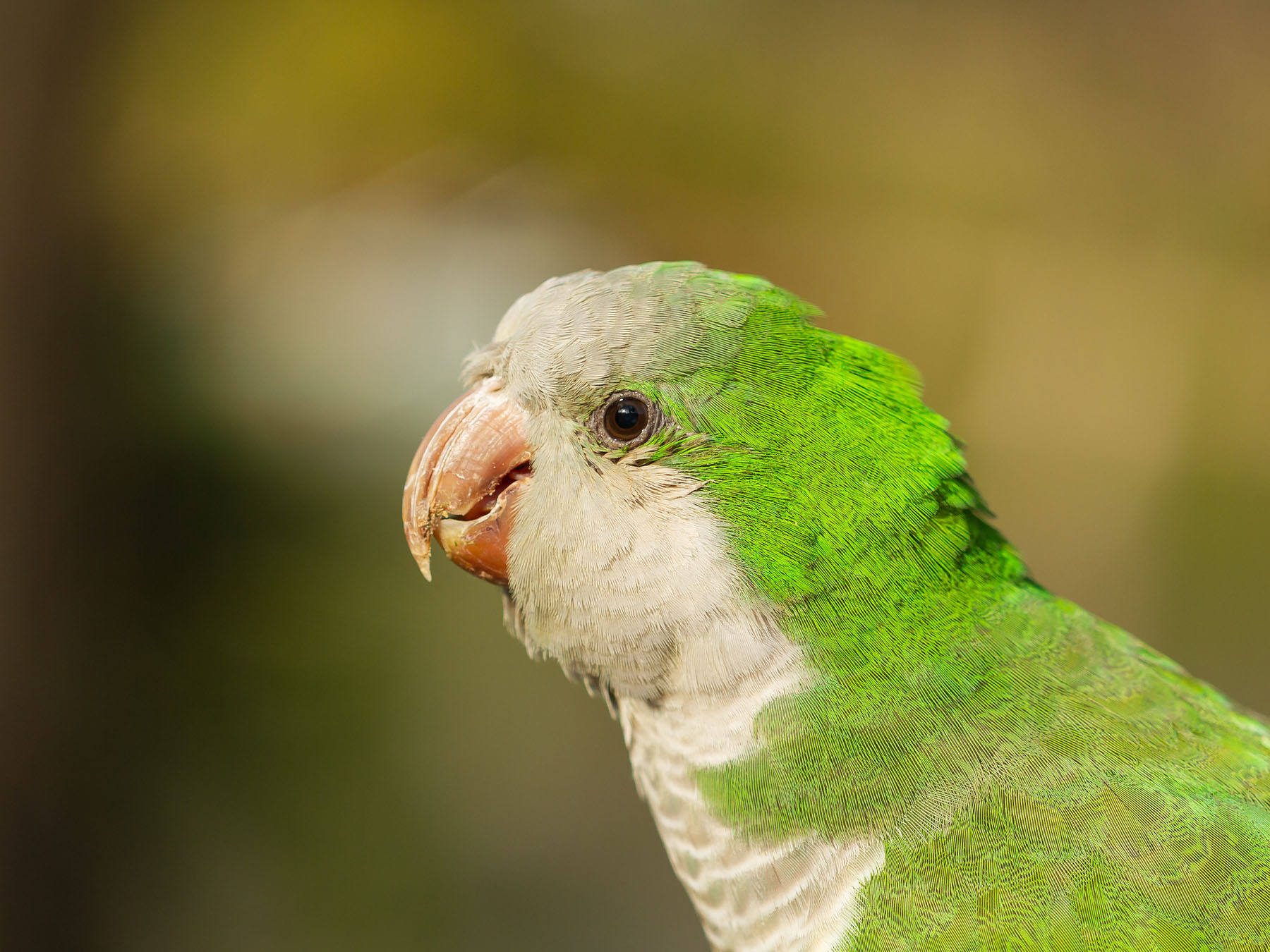
The Monk Parakeet is a small, vibrant parrot with predominantly bright green plumage. Its forehead, cheeks, and throat are pale grey, contrasting with a blue wash on its flight feathers and tail. The bird has a stout, orange beak and grey legs.
Both males and females share identical colouration, making visual sex determination challenging. Juveniles resemble adults but may have slightly duller plumage and darker eyes.
Its size
Adults- Length
- 29–31 cm
- Wingspan
- 48–53 cm
- Weight
- 90–120 g
Its song and calls
Monk Parakeets are known for their loud, raucous vocalisations. Their most common call is a sharp, metallic 'kik-kik' or 'quak-quak' sound, often repeated in rapid succession.
They also produce softer chirps and chatters when communicating within their flock, creating a constant background noise in areas where they're abundant.
When and where to see it
OctoberIn season
Most recorded in October
- 1. Florida0.10%
- 2. Texasunder 0.1%
- 3. New Yorkunder 0.1%
- 4. Louisianaunder 0.1%
- 5. Connecticutunder 0.1%
Each dot is a county, state or province: the bigger and darker, the larger the bird’s share of that place’s bird records that month. Grey dots: no regular records. The ringed point is the centre of the bird’s records this month; the arrow shows how it moved since last month, and the dashed loop its path through the year. “Arrivals” colours places where it becomes regular this month (orange) or is in its last regular month (grey). GBIF eBird Observation Dataset, 2019–2024. Map data: Natural Earth, US Census Bureau; place centres © OpenStreetMap contributors.
In your area
See when the Monk Parakeet is recorded in your county, state or province.
How often the Monk Parakeet turns up in the United States through the year, from birdwatchers' records.
United States
Resident · all year · most records in January
Show as a table
| Month | United States |
|---|---|
| January | 0.023% (regular) |
| February | 0.020% (regular) |
| March | 0.018% (regular) |
| April | 0.012% (regular) |
| May | 0.007% (regular) |
| June | 0.009% (regular) |
| July | 0.012% (regular) |
| August | 0.012% (regular) |
| September | 0.014% (regular) |
| October | 0.017% (regular) |
| November | 0.022% (regular) |
| December | 0.022% (regular) |
Worldwide: recorded regularly in 24 countries
Countries where it was recorded in at least 3 of the 6 years 2019–2024. Linked countries have their own bird list.
Africa (1)
North America (4)
Data: EOD – eBird Observation Dataset (Cornell Lab of Ornithology), accessed via GBIF.org, CC BY 4.0. Records from 2019–2024, aggregated and filtered by Birdfact. How these lists are made
Tips for seeing it
- Look for large stick nests in trees or on man-made structures
- Listen for their loud, squawking calls, especially at dawn and dusk
- Search in urban parks, gardens, and near bird feeders in areas where they've been introduced
- Observe their gregarious behaviour in small to large flocks
What it eats
Monk Parakeets are primarily herbivorous, feeding on various seeds, fruits, berries, and buds. They show a particular fondness for sunflower seeds and corn.
In urban areas, they readily visit bird feeders and may consume a wider range of foods, including bread and other human-provided items.
Nesting and breeding
Monk Parakeets are unique among parrots for their communal nesting habits. Breeding pairs typically form in spring, with courtship involving mutual preening and feeding.
They construct large, elaborate stick nests, often weighing over 200 pounds, which can house multiple breeding pairs. These nests are frequently built on tall structures like trees, utility poles, or buildings.
Females lay 5-8 white eggs, which are incubated for about 24 days. Both parents participate in incubation and care for the chicks, which fledge after approximately 6-7 weeks but may remain near the nest for several months.
Behaviour
Monk Parakeets are highly social birds, often seen in noisy flocks. They are known for their acrobatic flying skills, frequently performing swift, undulating flights between feeding and roosting sites.
These parakeets are also remarkable for their nest-building behaviour, constructing large, communal stick nests that can house multiple pairs.
Conservation
While the Monk Parakeet is listed as Least Concern globally, it faces challenges in its native range due to habitat loss and capture for the pet trade.
In introduced areas, particularly in the United States and Europe, it is sometimes considered an invasive species, leading to control measures in some regions.
Similar birds
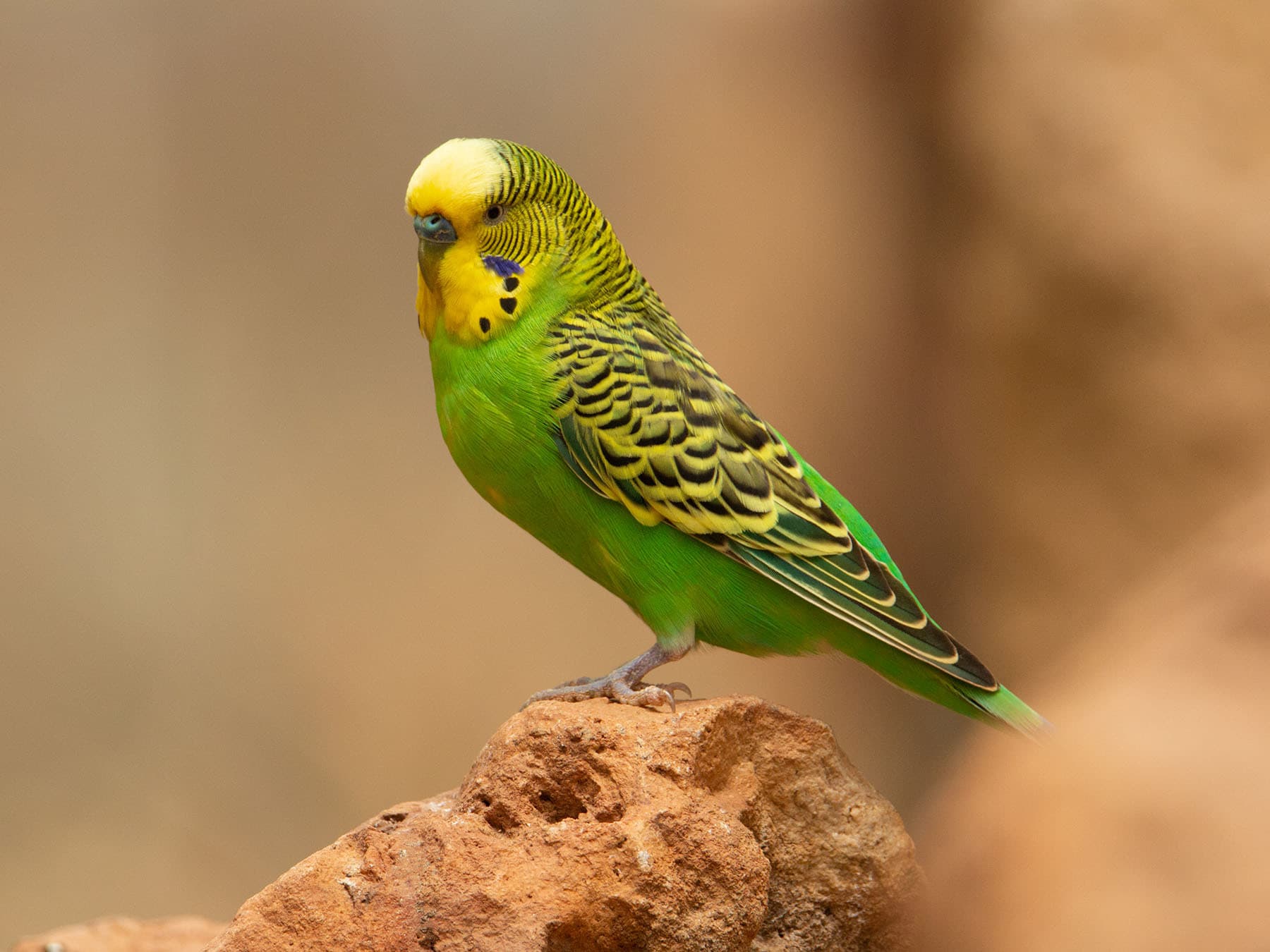
Often mistaken for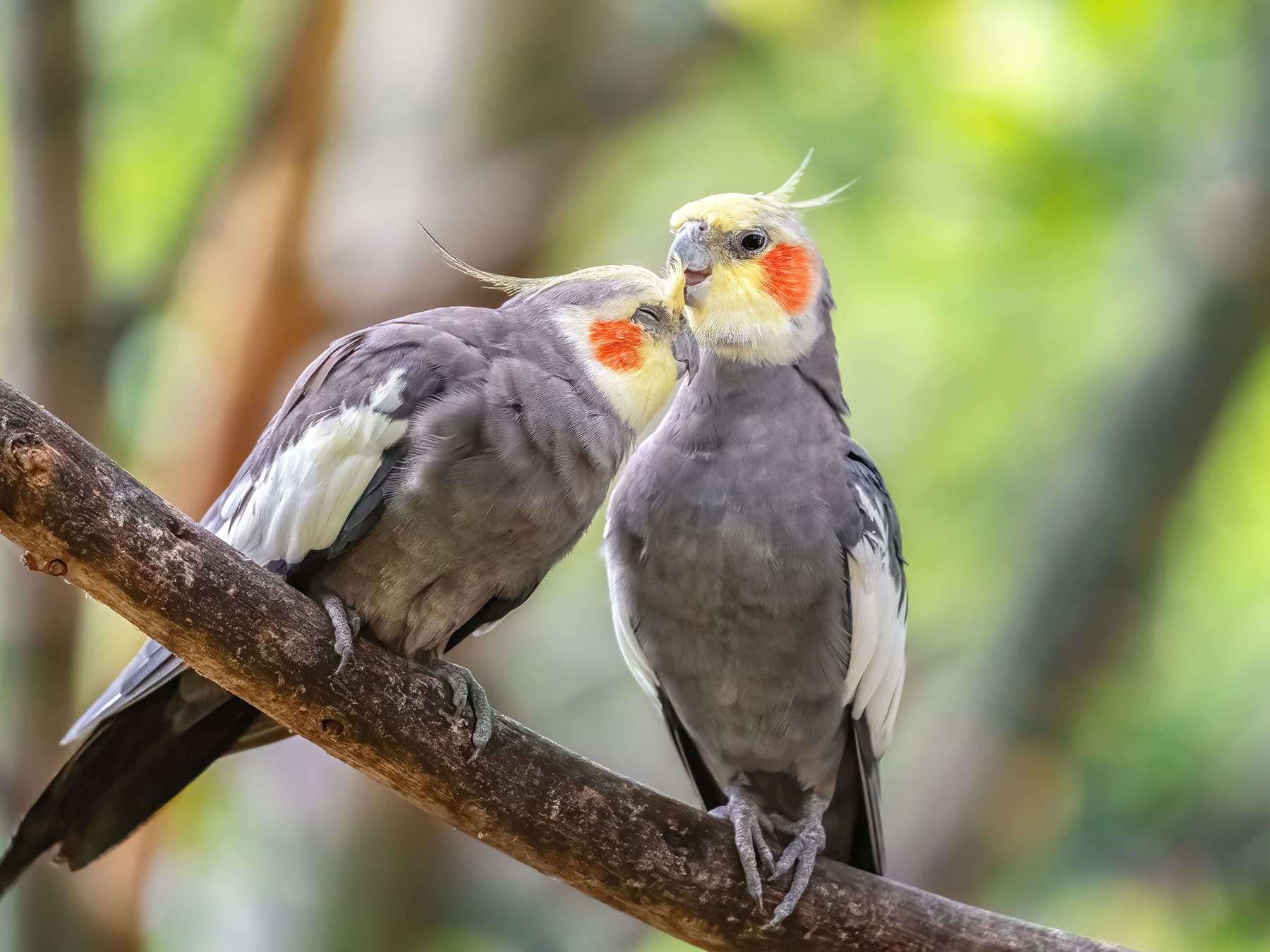
More photos
4 photos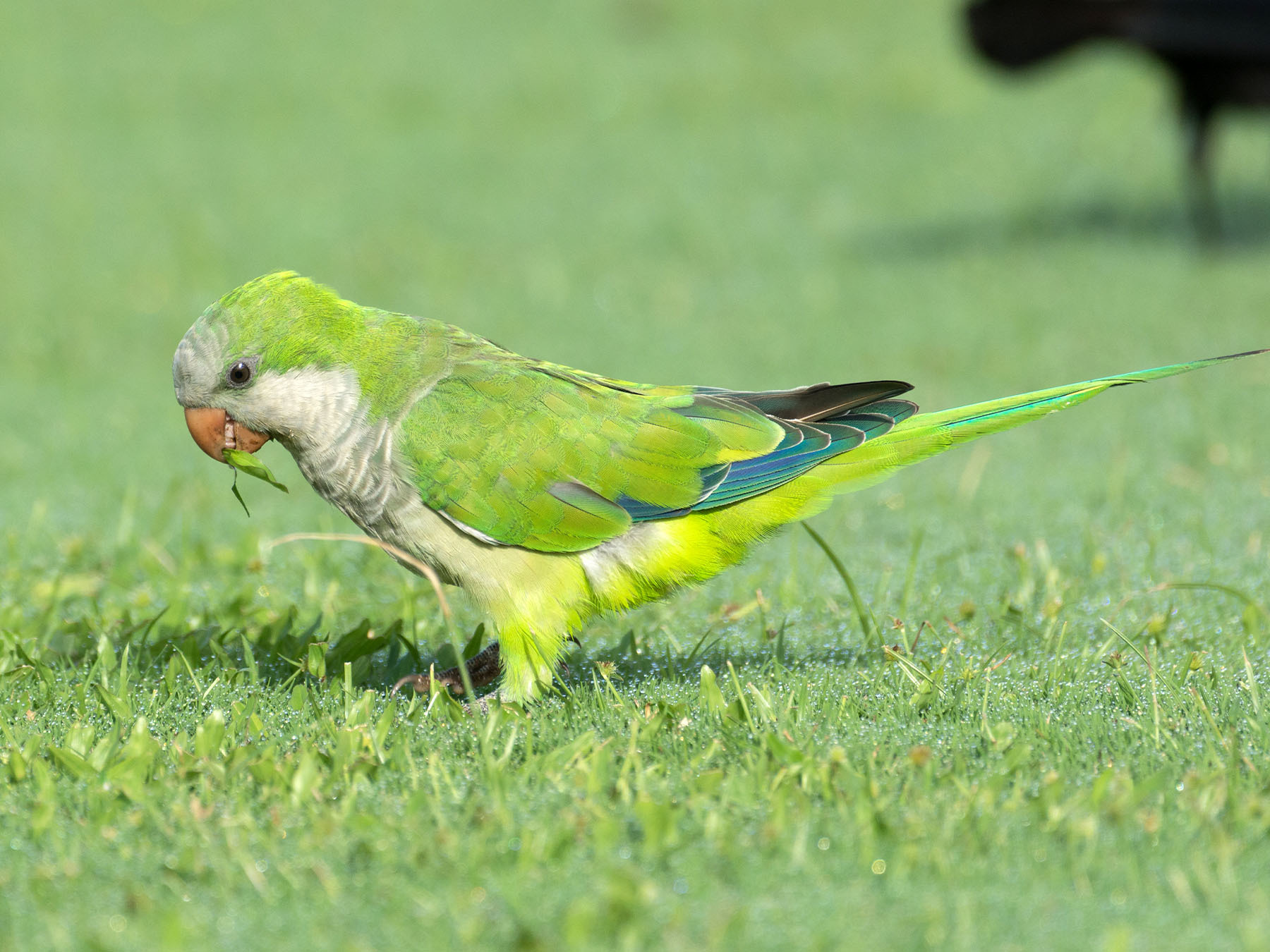

Quick facts
- Length
- 29–31 cm
- Wingspan
- 48–53 cm
- Weight
- 90–120 g
- Lifespan
- 15–20 years
- Family
- Parrots
- Migration
- Resident
- Global status (IUCN)
- Least Concern
- World population
- Not quanitified, but 'common to abundant'
- Population trend
- Population increasing due to establishment in non-native areas
- Also called
- Quaker Parrot, Quaker Parakeet
- Scientific name
- Myiopsitta monachus
Sources
3- 1BirdLife International. 2018. Myiopsitta monachus. The IUCN Red List of Threatened Species 2018: e.T45427277A132189848. Source (opens in a new tab)
- 2del Hoyo et al. (1997)
- 3del Hoyo et al. (1997)

Checked by
Nathan Cope, founder and editor
Nathan founded Birdfact and leads its writers and contributors in the UK, the US and Canada. He has watched and studied birds for more than ten years, and checks every article and species guide before it’s published.