


Iceland Gull
White-winged Gull, Kumlien's Gull · Larus glaucoides
By the Birdfact teamChecked by Nathan Cope
On this page14 sections
How to recognise it
What do Iceland Gulls look like?
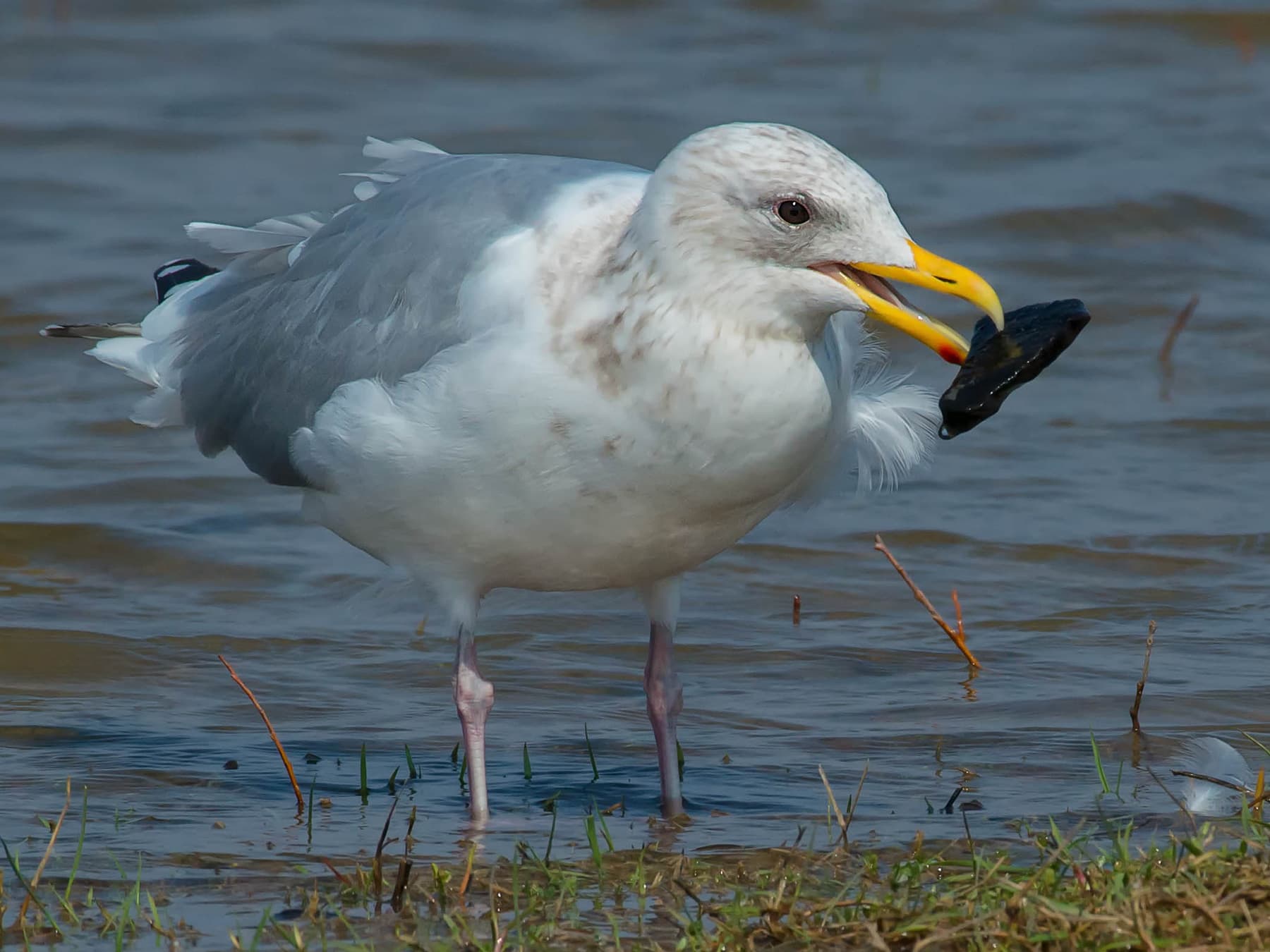
Sometimes known as white-winged gulls, Iceland gulls are pale in plumage but have a few key features that help with identification.
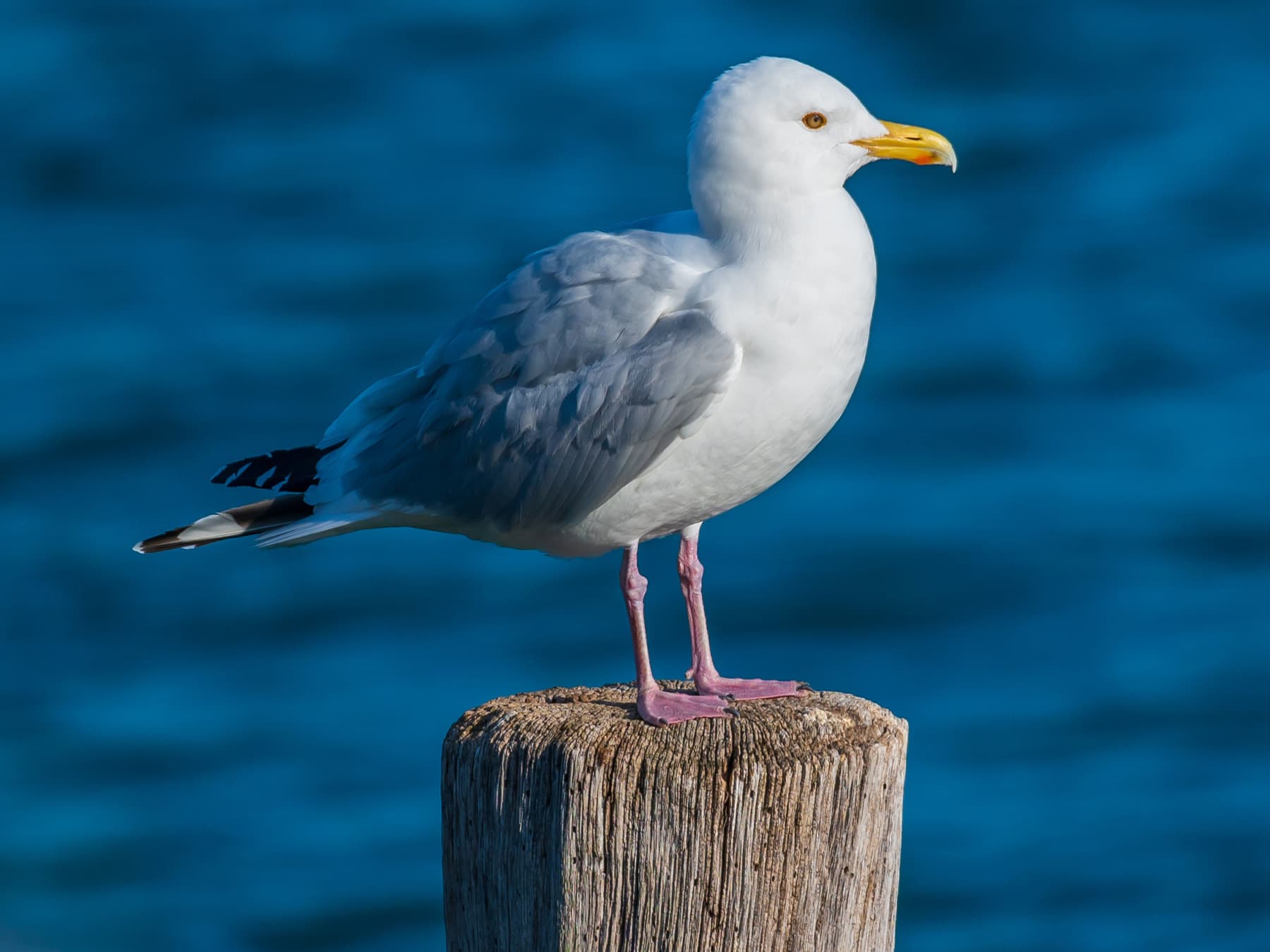
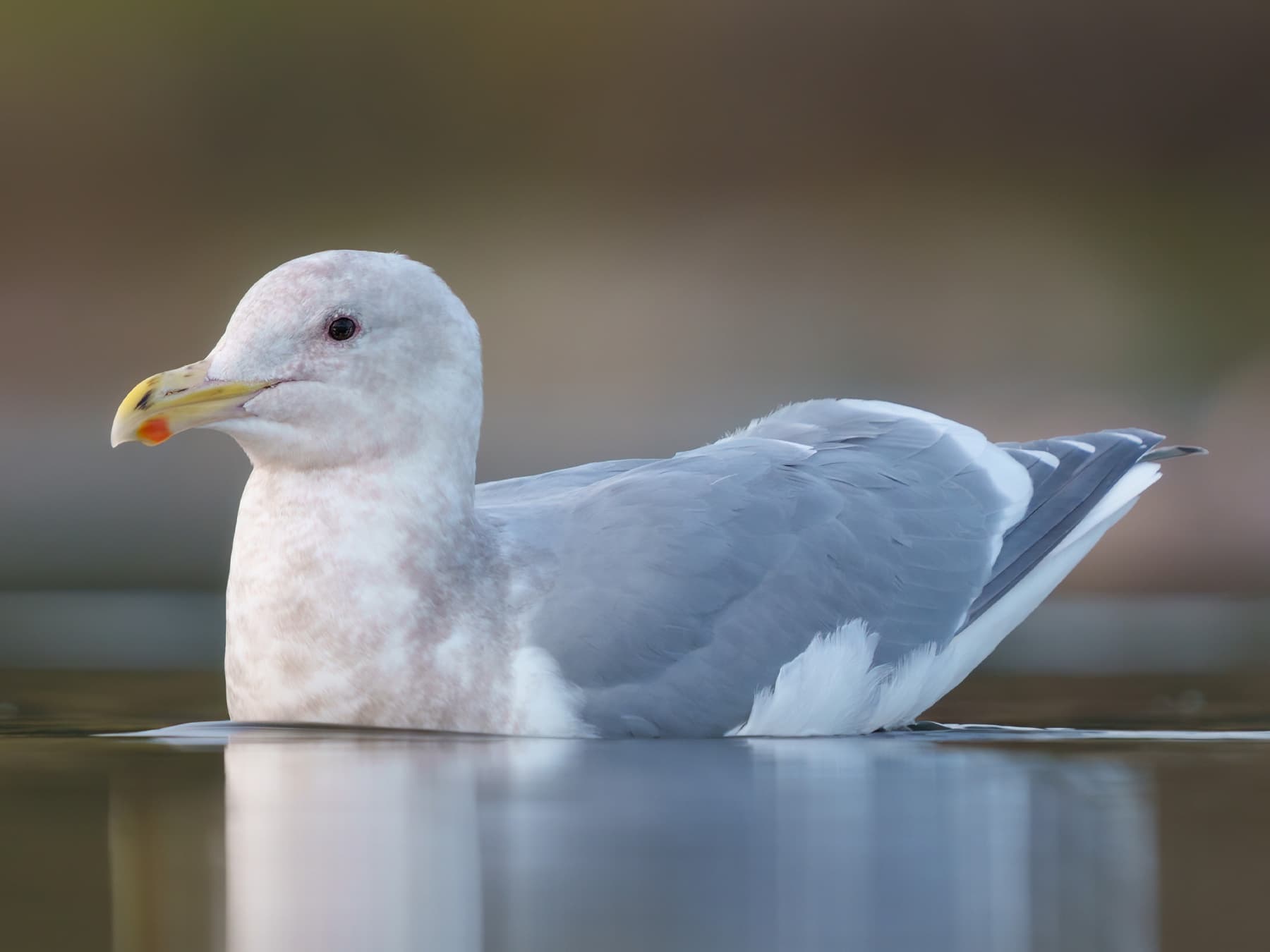
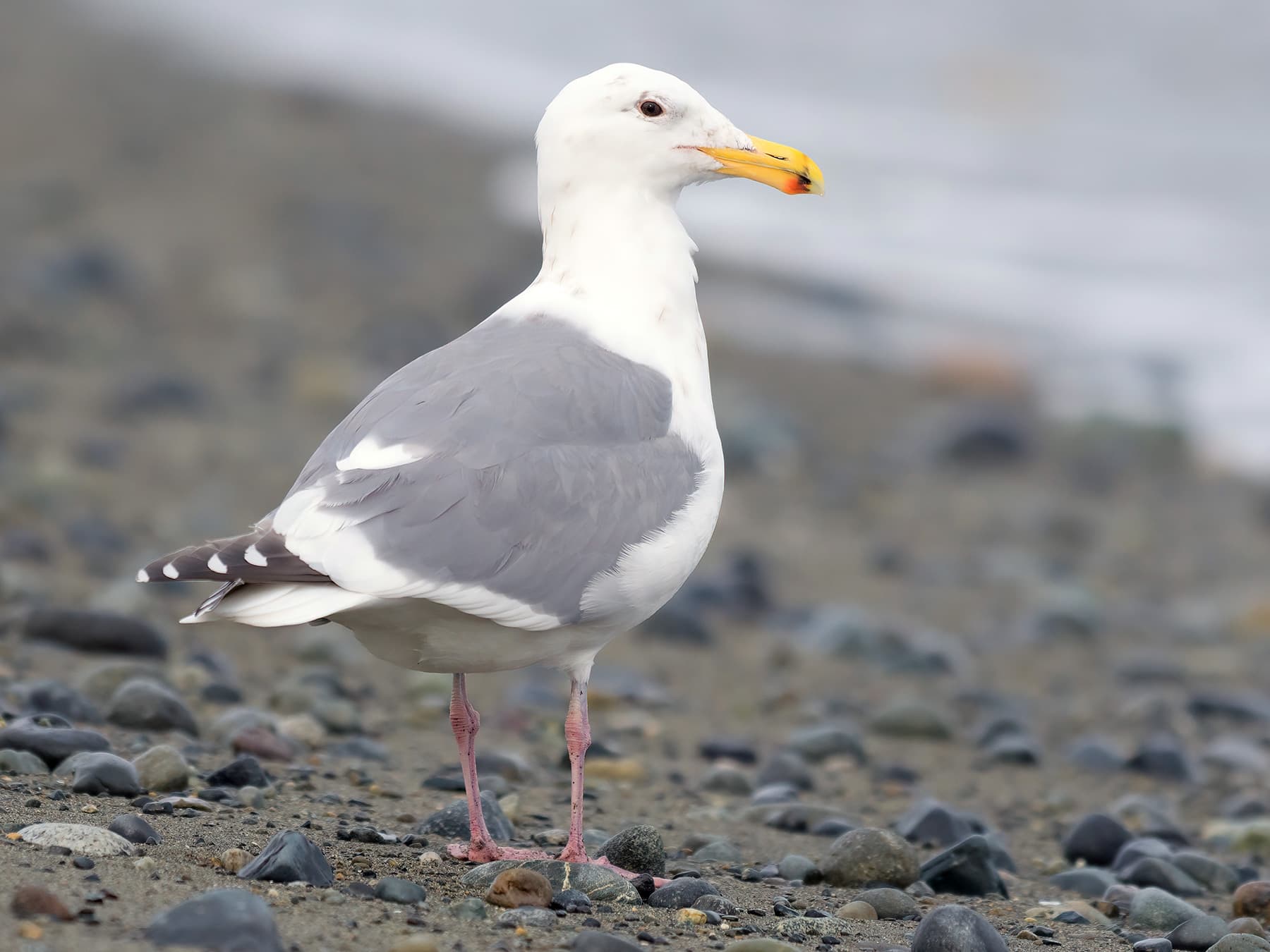
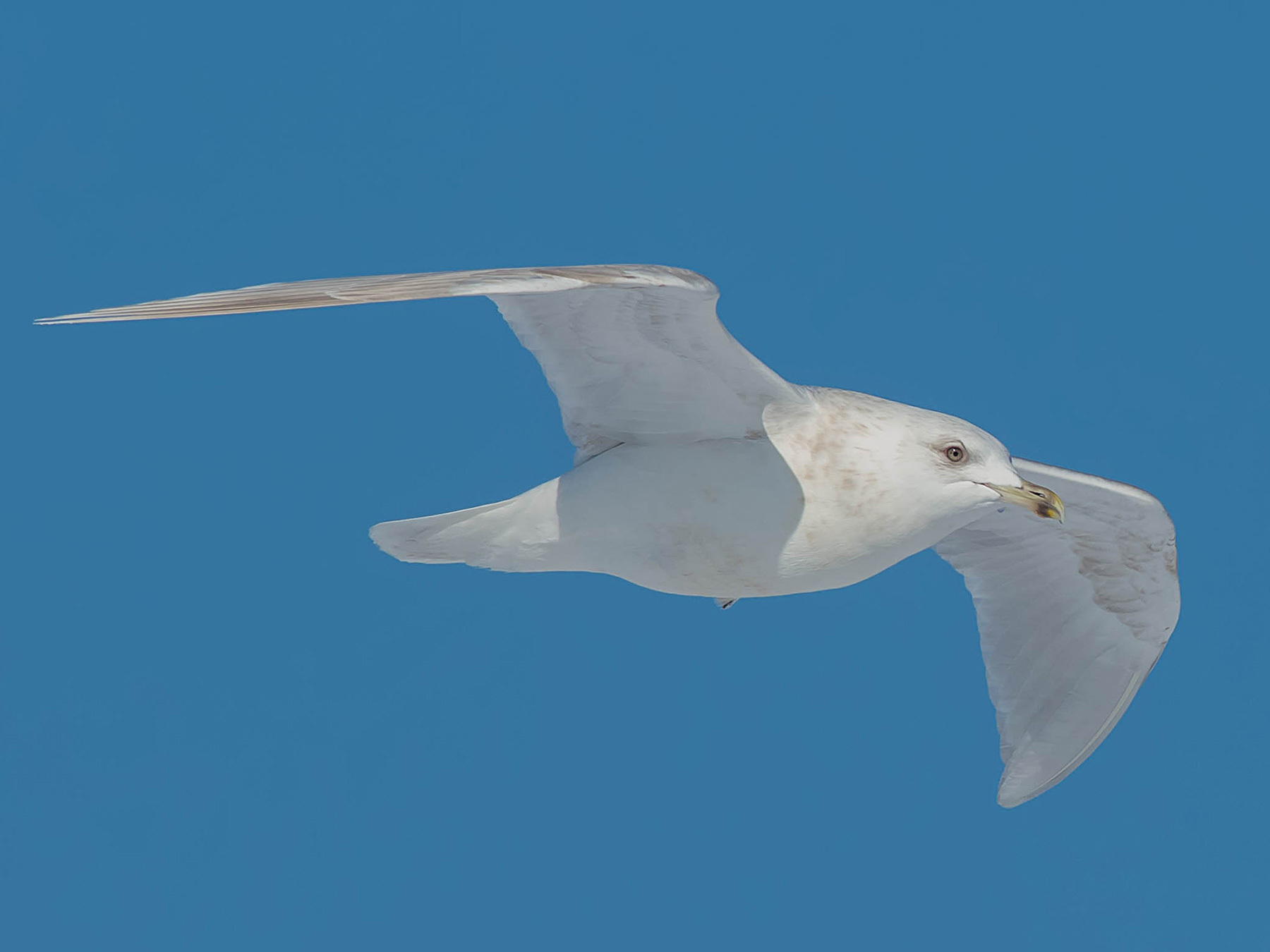
In breeding plumage, male and female Iceland gulls have a rounded white head, white neck, and body, with pale gray wings that have a visible white bar which can be seen both in flight and when folded. A reddish-purple ring is visible around the eyes, and the bill is greenish-yellow, with a vivid red spot towards the tip. Legs can be greyish, pink, or a dull brown-salmon color.
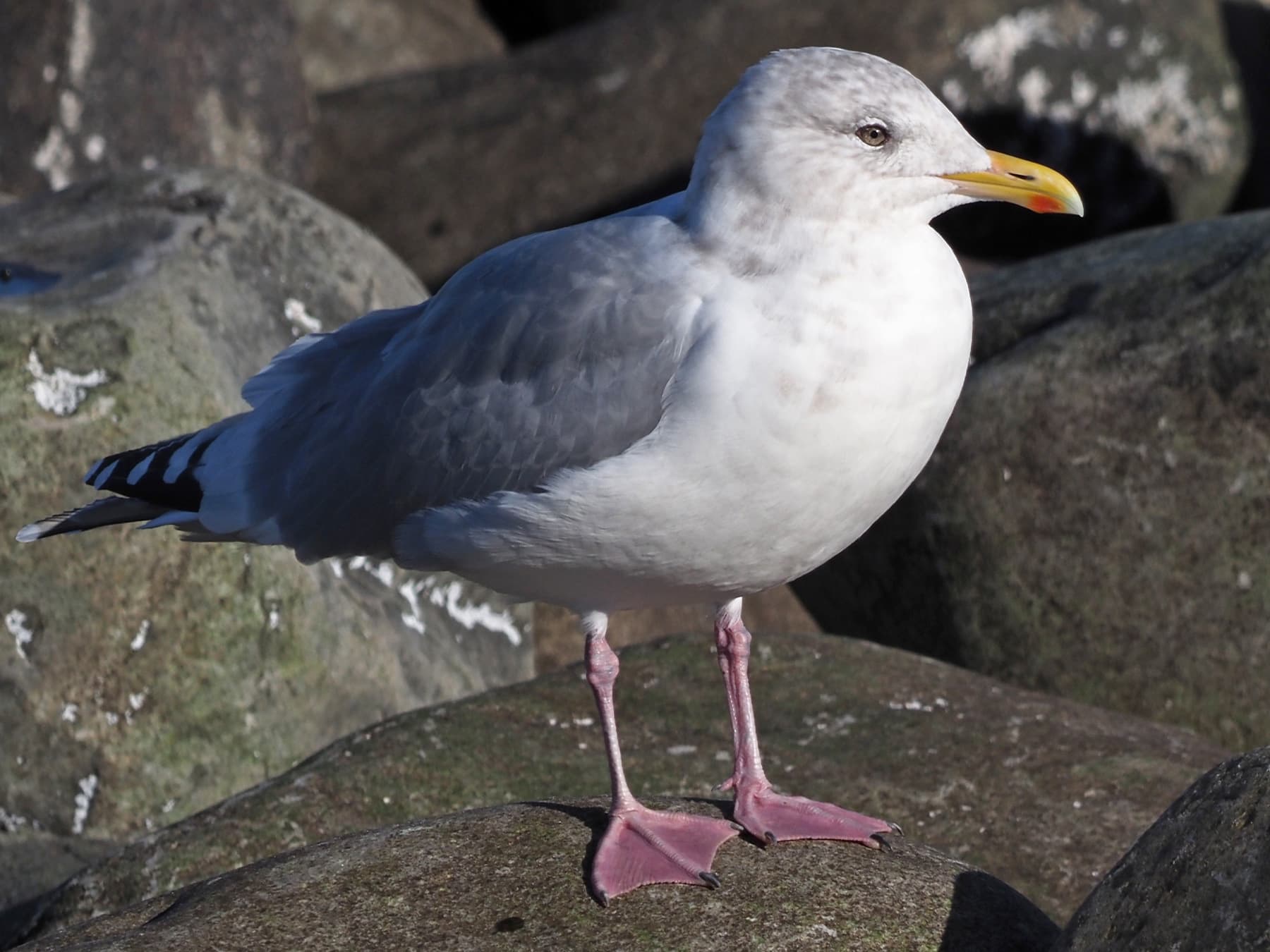
Once breeding is complete, Iceland gulls molt into their winter plumage, featuring streaky brown markings across their crown, face, and throat, and the upper breast is also often faintly lined with brown.
By February, most of the mottling has faded and the solid white head markings are visible. During winter, an Iceland gull’s feet, eyes, and bill are less vibrant than in summer months.
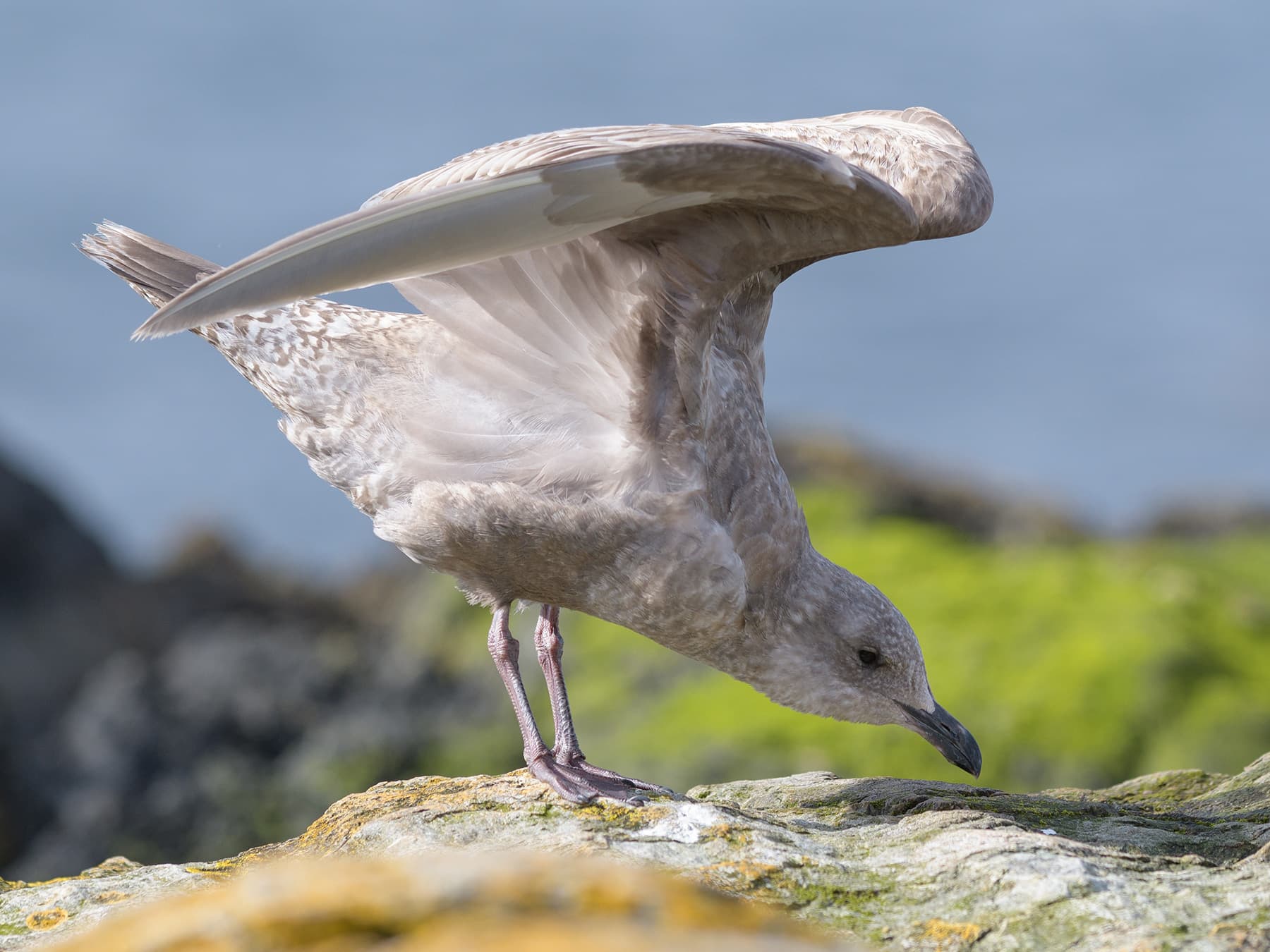
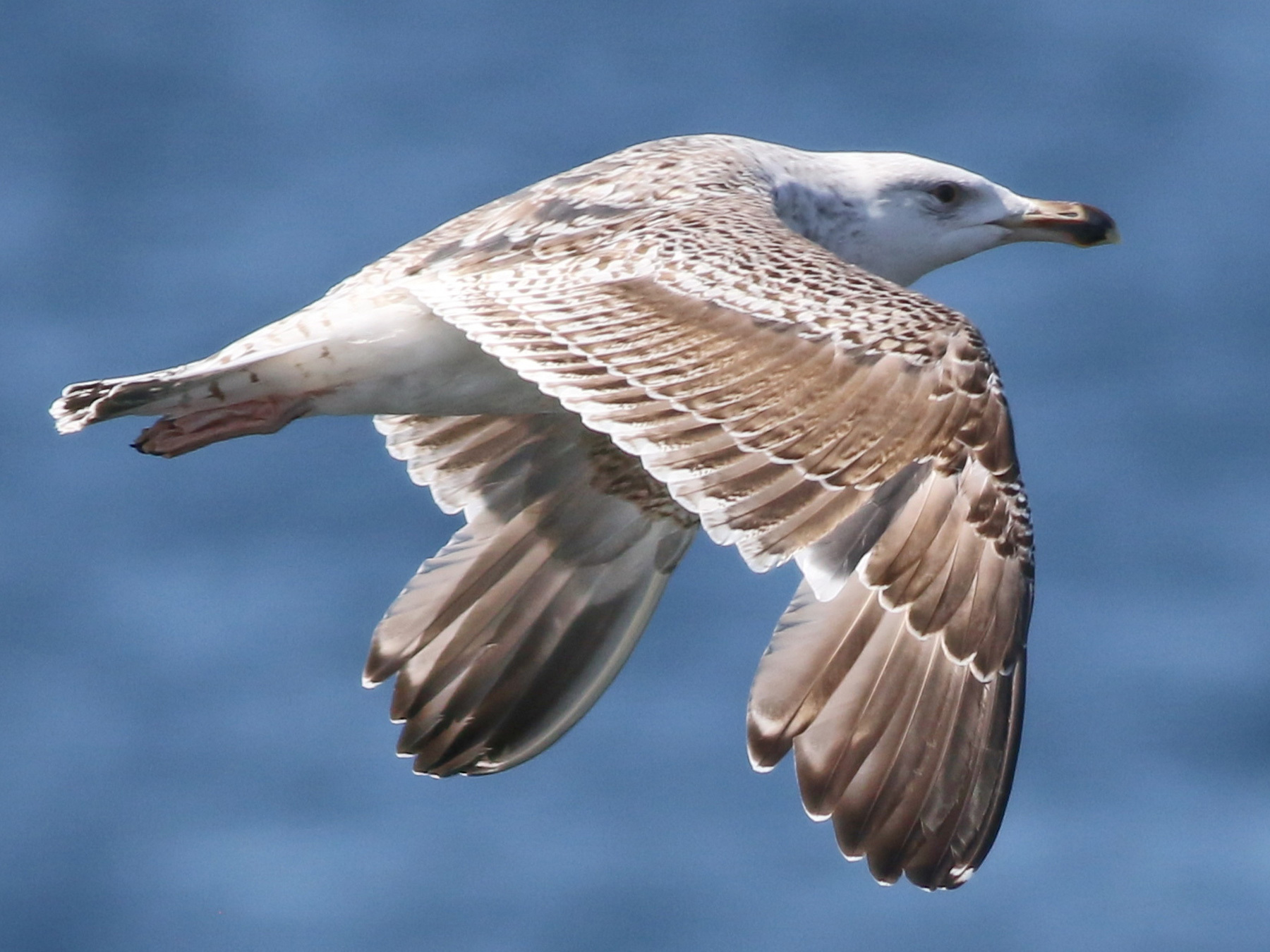
First-winter juveniles are mottled white and pale brown, with wavy arrowhead markings. Their bill is pale pink, with a dark tip, eyes are dark and legs are pink. By the second winter, plumage may have lightened to a more overall white appearance, although birds with some degree of brown mottling are not unusual.
How big are Iceland Gulls?
Iceland gulls are medium-sized gulls, smaller than herring gulls, but larger than common gulls. Females are typically slightly smaller than males.
- Length: 52 cm to 60 cm (20.5 in to 23.6 in)
- Wingspan: 130 cm to 158 cm (51.2 in to 62.2 in)
- Weight: 750 g (26.5 oz)
Its size
Adults- Length
- 52–60 cm
- Wingspan
- 130–150 cm
- Weight
- 750–1100 g
Its song and calls
What sound does an Iceland Gull make?
At sea, Iceland gulls are relatively silent; when breeding they have no song, and their most commonly heard vocalizations are squealing one-note cries, similar to those of herring gulls.
When and where to see it
OctoberMostly absent
Most recorded in October
- 1. Donegalunder 0.1%
- 2. Eilean Siarunder 0.1%
- 3. Antrimunder 0.1%
- 4. Argyll and Buteunder 0.1%
- 5. Northumberlandunder 0.1%
Each dot is a county, state or province: the bigger and darker, the larger the bird’s share of that place’s bird records that month. Grey dots: no regular records. The ringed point is the centre of the bird’s records this month; the arrow shows how it moved since last month, and the dashed loop its path through the year. “Arrivals” colours places where it becomes regular this month (orange) or is in its last regular month (grey). GBIF eBird Observation Dataset, 2019–2024. Map data: Natural Earth, US Census Bureau; place centres © OpenStreetMap contributors.
In your area
See when the Iceland Gull is recorded in your county, state or province.
How often the Iceland Gull turns up in the UK, Ireland, the United States and Canada through the year, from birdwatchers' records.
United Kingdom
Winter visitor · regularly Nov–May · most records in February
Ireland
Winter visitor · regularly Nov–Apr · most records in February
United States
Winter visitor · regularly Oct–Apr · most records in January
Canada
Winter visitor · regularly Oct–May · most records in January
Show as a table
| Month | United Kingdom | Ireland | United States | Canada |
|---|---|---|---|---|
| January | 0.024% (regular) | 0.052% (regular) | 0.050% (regular) | 0.43% (regular) |
| February | 0.028% (regular) | 0.12% (regular) | 0.043% (regular) | 0.32% (regular) |
| March | 0.017% (regular) | 0.063% (regular) | 0.019% (regular) | 0.23% (regular) |
| April | 0.009% (regular) | 0.021% (regular) | 0.005% (regular) | 0.12% (regular) |
| May | 0.004% (regular) | 0.002% | 0.002% | 0.039% (regular) |
| June | 0.001% | 0.002% | <0.001% | 0.012% |
| July | <0.001% | – | <0.001% | 0.004% |
| August | <0.001% | – | <0.001% | 0.003% |
| September | <0.001% | 0.004% | 0.002% | 0.020% |
| October | 0.001% | <0.001% | 0.010% (regular) | 0.063% (regular) |
| November | 0.007% (regular) | 0.012% (regular) | 0.030% (regular) | 0.24% (regular) |
| December | 0.016% (regular) | 0.025% (regular) | 0.041% (regular) | 0.40% (regular) |
Recorded regularly in
Worldwide: recorded regularly in 19 countries
Countries where it was recorded in at least 3 of the 6 years 2019–2024. Linked countries have their own bird list.
Europe (13)
Asia (1)
North America (5)
Data: EOD – eBird Observation Dataset (Cornell Lab of Ornithology), accessed via GBIF.org, CC BY 4.0. Records from 2019–2024, aggregated and filtered by Birdfact. How these lists are made
What is the habitat of an Iceland Gull?
During the nesting season, Iceland gulls live communally, alongside 50 to 100 breeding pairs in remote colonies. Clifftops, fjords, and uninhabited rocky islets offer an ideal nesting landscape, undisturbed by humans or land mammals.
Sometimes breeding sites may be chosen a short distance inland, although coastal colonies are by far the most common.
Iceland gulls spend winter months in coastal regions where they forage close to shore, feeding on beaches, agricultural fields, sewage farms, and garbage dumps.
What is the range of an Iceland Gull?
Despite their name, Iceland gulls do not actually breed in Iceland but can be seen around the country’s coast as a winter visitor. Breeding takes place across Canada’s Arctic islands and around the coast of Greenland.
To avoid subzero winter temperatures, migration south begins in the fall, with occasional reports of Iceland gulls arriving at wintering grounds along the Atlantic coast of the US, sometimes as far south as North Carolina.
Some populations also head west, and can be spotted along the Pacific coast of British Columbia, and as casual visitors along the coasts of Washington, Oregon, and California, and occasionally as far as Baja California.
The most common winter migrations of Iceland gulls take place eastwards, with wintering populations of Iceland gulls spending up to six months on the coasts of Iceland and the British Isles and as far east as Germany, Denmark, southern Norway, and southern Sweden.
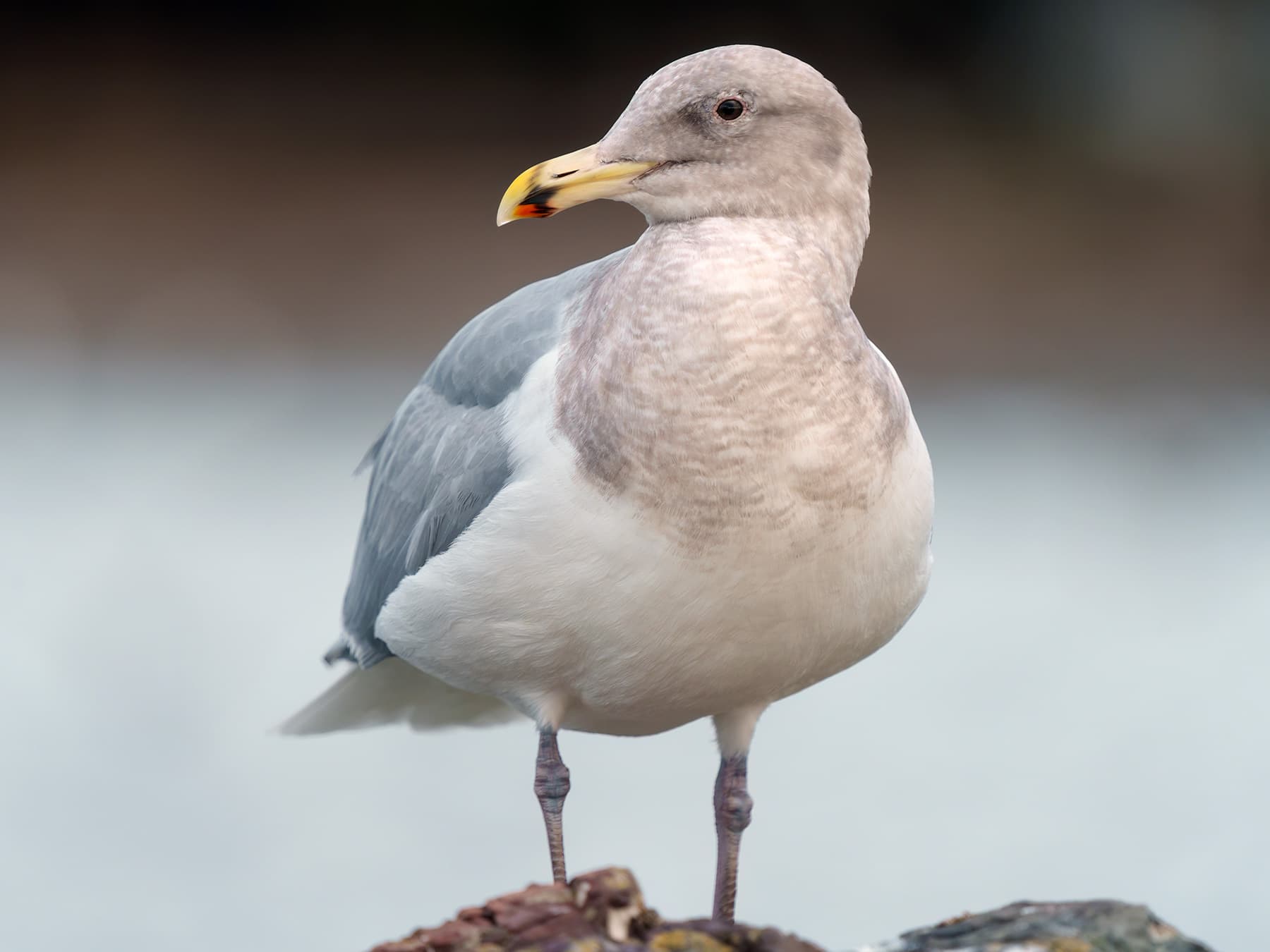
Where do Icelandic Gulls live?
Population estimates for Iceland gulls in their different breeding and wintering locations are almost impossible to determine.
The Greenland breeding population is believed to be the most important, in terms of size, and is estimated at between 50,000 and 100,000 pairs. Winter data is equally scarce, but Christmas bird counts in the US estimate around 20,000 individuals, mainly located along the Pacific coast of North America.
How rare are Iceland Gulls?
Little data exists to confirm global population figures for Iceland gulls. Observation visits by researchers to remote Arctic colonies are not regularly undertaken and it’s almost impossible to estimate an accurate figure.
Sightings are not uncommon during winter months in northern Europe and North America but are considered regular and unpredictable rather than numerous or widespread.
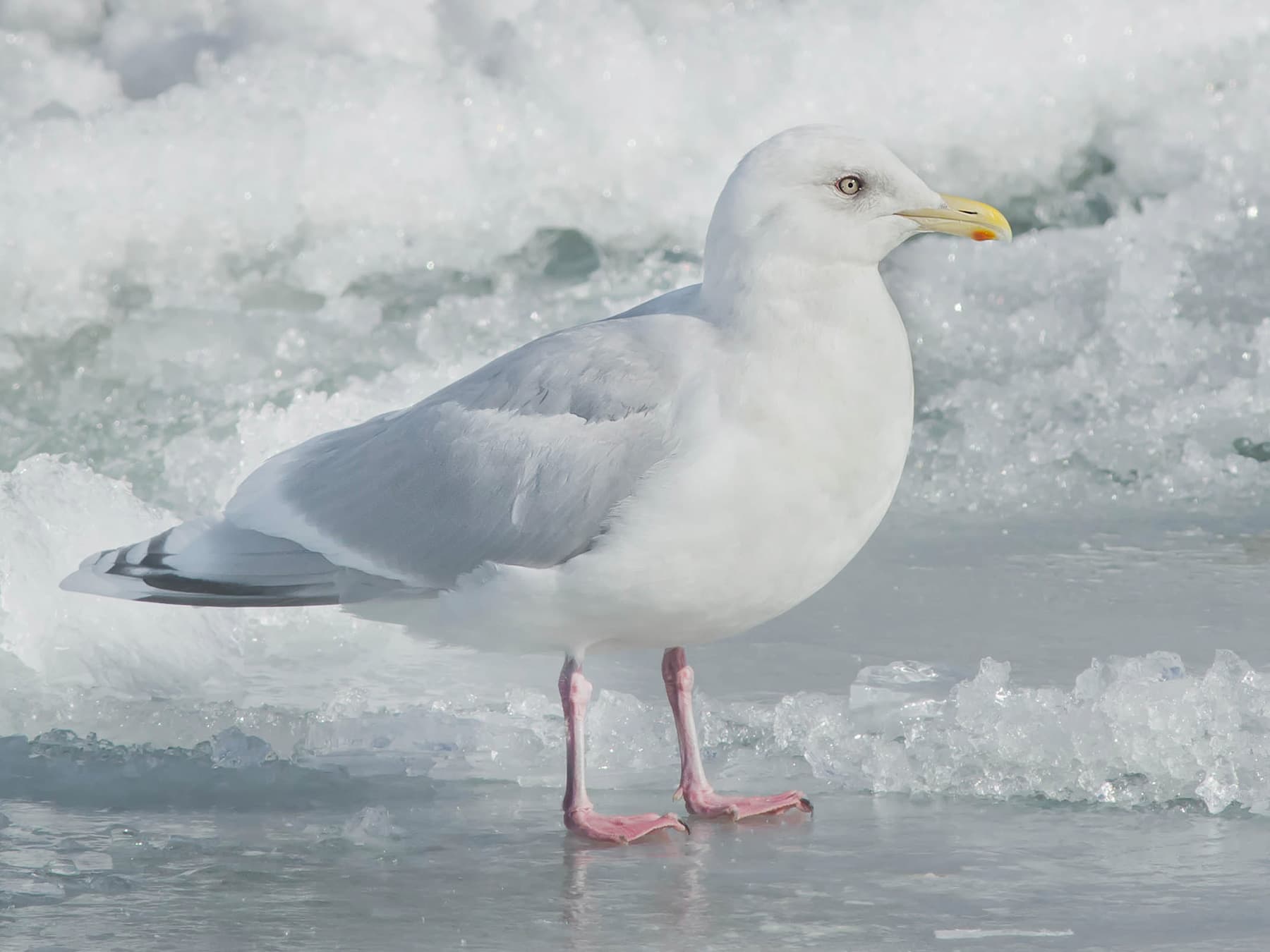
Where can you see Iceland Gulls in North America?
Breeding territories of Iceland gulls are particularly bleak and remote, so a better chance of a sighting comes during migration passage or in winter months.
Passage sightings are most common along the east coast of Canada, from Newfoundland and Labrador, Prince Edward Island, and Nova Scotia.
Where can you see Iceland Gulls in the UK?
Each autumn, more than 350 Iceland gulls arrive in coastal regions of the British Isles, with concentrations particularly strong in the west. Scotland’s Shetland Isles offers regular sightings each winter.
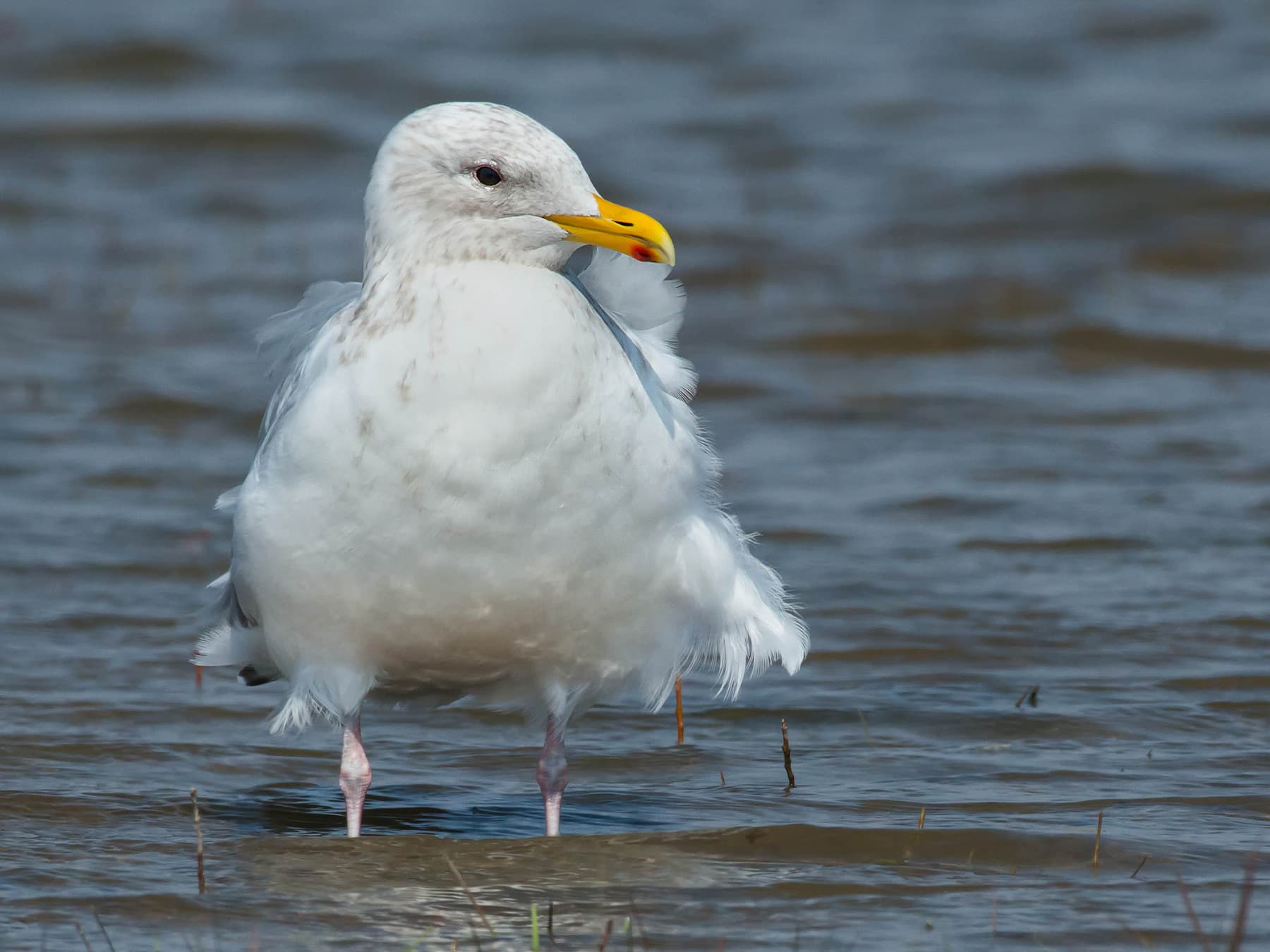
Migration
Do Icelandic Gulls migrate?
Iceland gulls are fully migratory breeding across Arctic Canada and coastal Greenland, before migrating southwards into northern Europe, along the Pacific and Atlantic coasts of North America.
Are Icelandic Gulls native to North America?
Iceland gulls breed throughout Canada’s Arctic Circle islands. Although many individuals migrate to northern Europe after breeding, a number do remain in North America all year round, spending winters further south along the west and east coasts of the US and in the Caribbean Sea.
Are Icelandic Gull native to the UK?
Around 355 sightings of Iceland gulls are recorded annually in the UK each winter, but no individuals remain in the British Isles to breed.
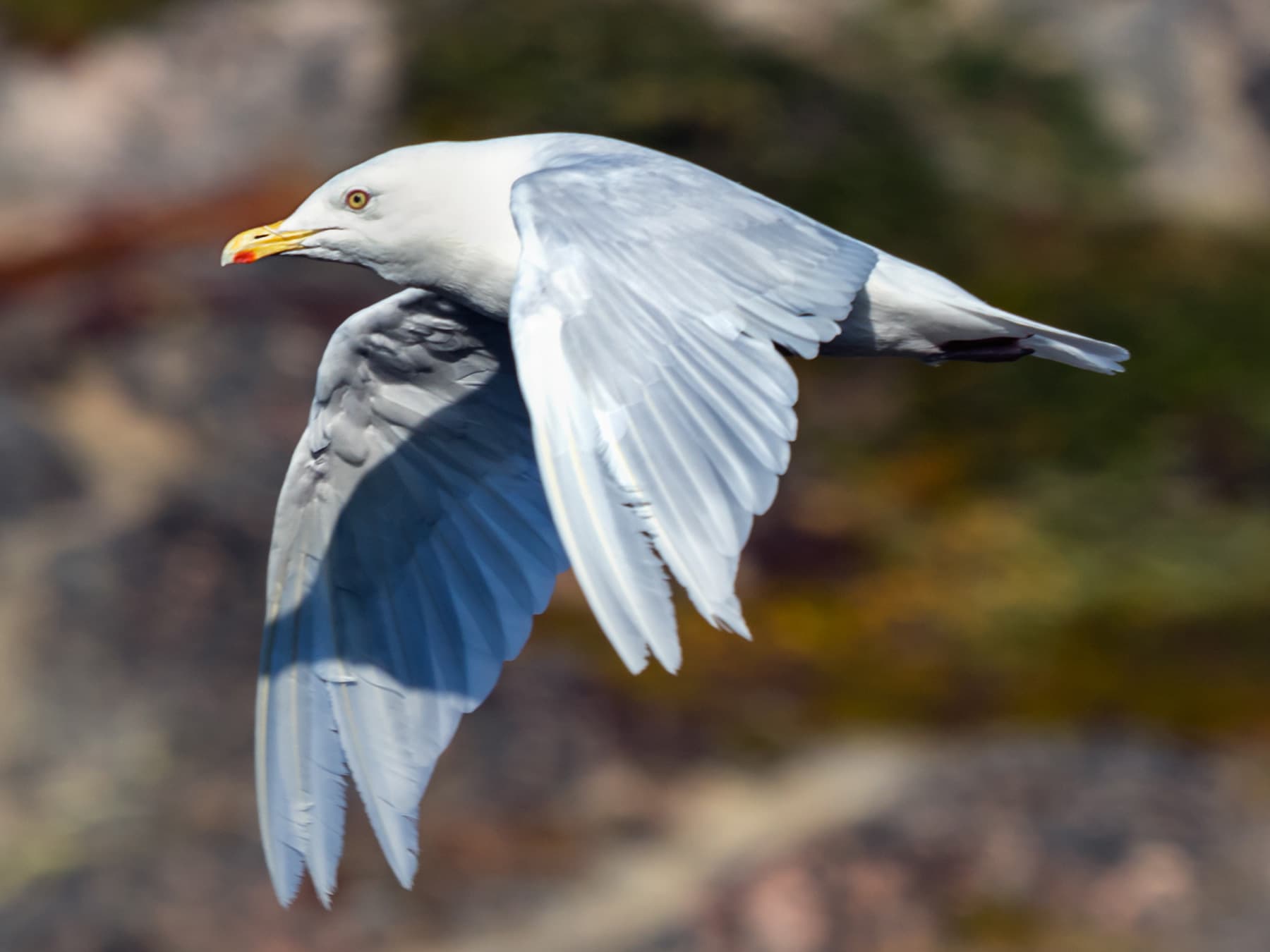
Tips for seeing it
- Look for Iceland Gulls in coastal areas, especially during winter in North America and Europe
- Observe their pale plumage and lack of black wingtips to distinguish them from similar species
- Check for their slightly smaller size and more delicate build compared to Herring Gulls
- Listen for their high-pitched, mewing calls
What it eats
What do Iceland Gulls eat?
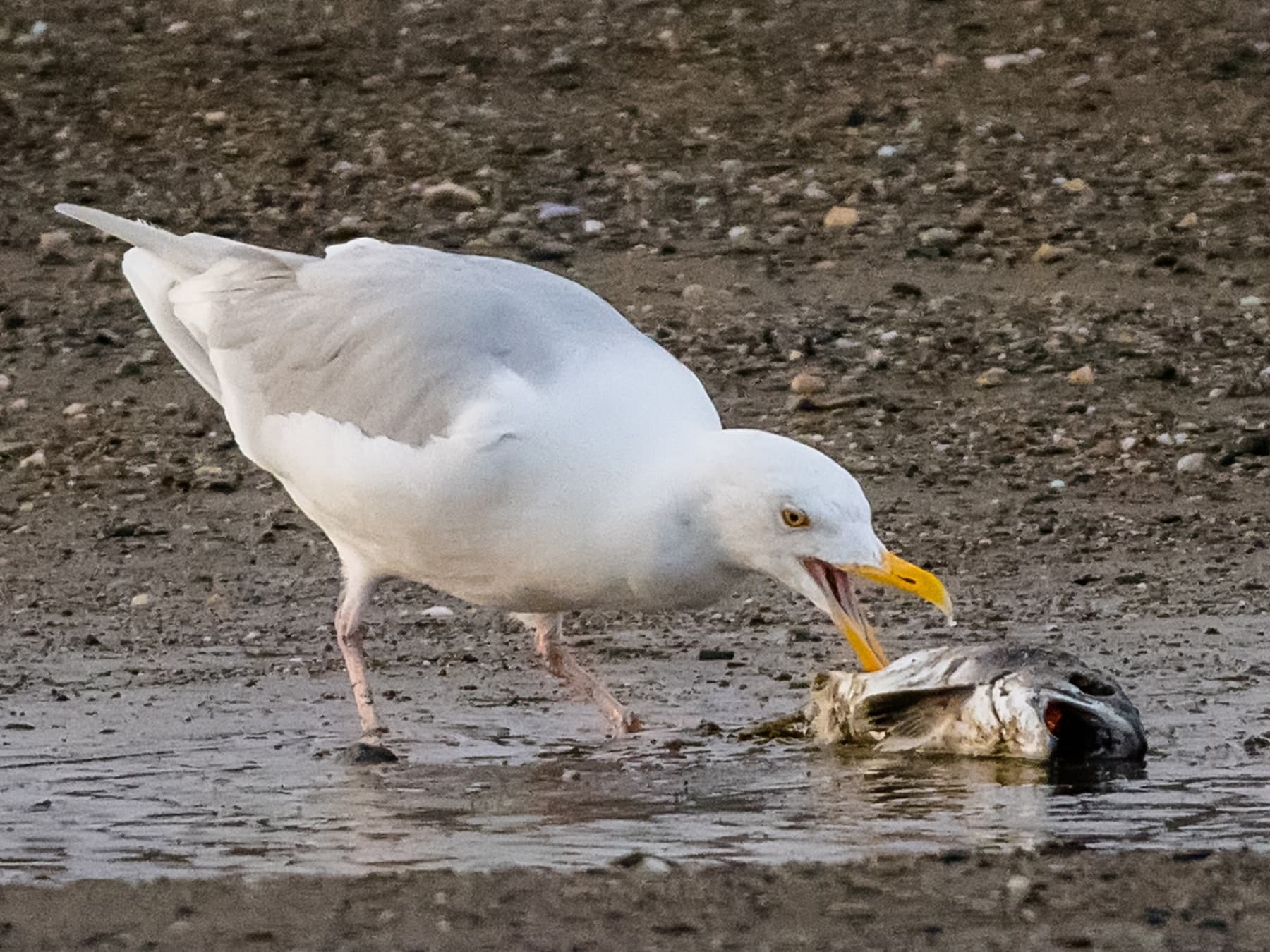
Iceland gulls are omnivores, surviving mainly on a diet of fish, molluscs, offal, eggs, and other scraps. They are also known as scavengers, foraging at garbage dumps, sewage farms, and harborside's where fish are cleaned when brought in by trawlers. In late summer, berries, algae, and terrestrial plants may also be eaten.
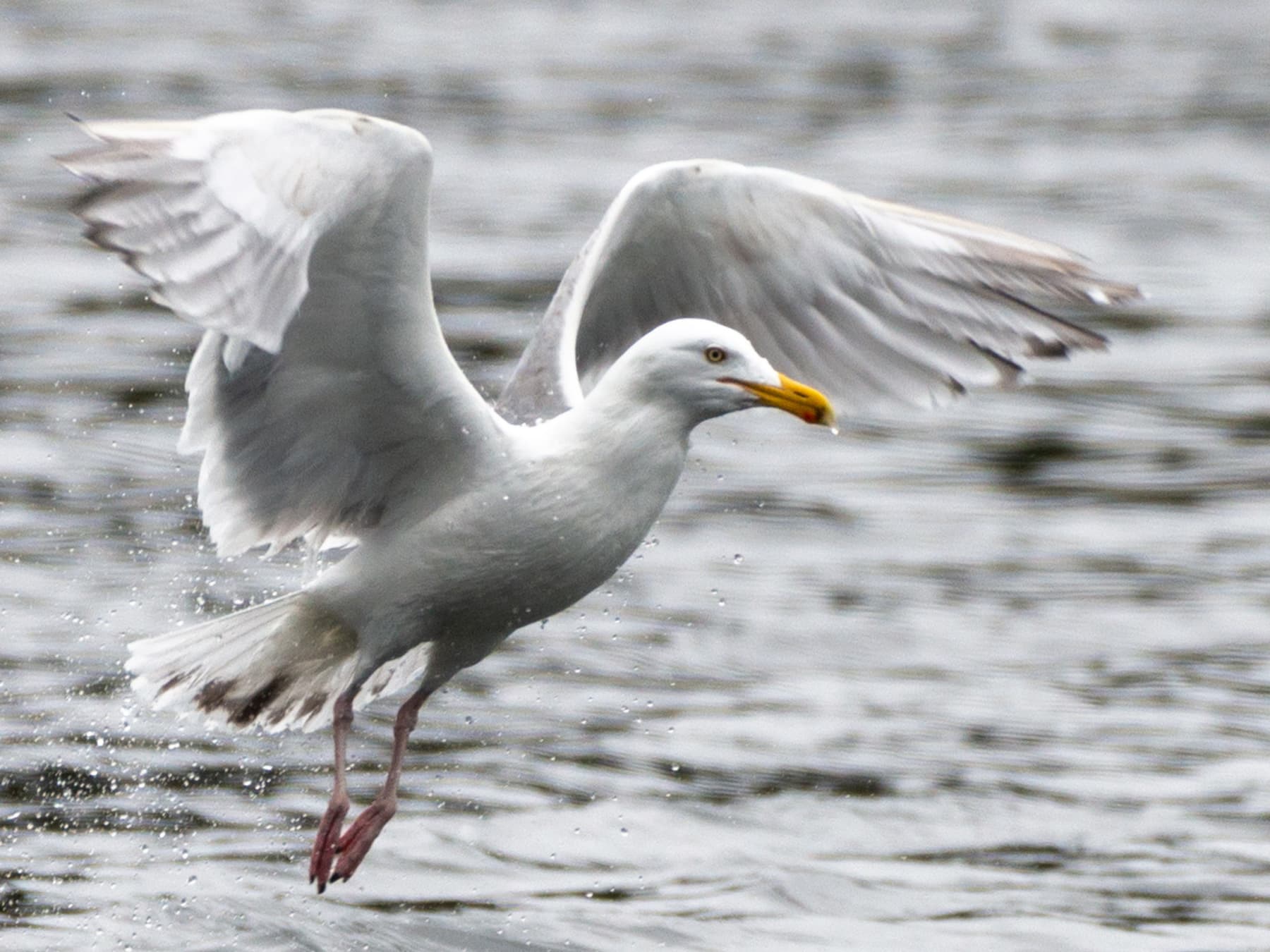
Food is commonly taken in flight, with gulls dipping down to pluck fish directly from the ocean’s surface.
What do Iceland Gull chicks eat?
Until they are able to forage for themselves, Iceland gull chicks are dependent on their parents for food. Parents regurgitate softened foods they have scavenged for directly into the bills of their young, for at least two months after hatching.
Nesting and breeding
Where do Iceland Gulls nest?
Iceland gulls prefer nest sites on rocky coastal cliffs, frequently forming colonies with other Iceland gulls, glaucous gulls, and common ravens. Where possible, narrow cliff ledges are favoured, where there is minimal chance of being disturbed by humans or predators.
Nests are bulky structures, made from grasses, and moss, and either on the ground at the base of cliffs or on rocky ledges or clifftops, up to around 100 m above sea level. In busier areas, higher sites are chosen, rarely more than 300 m above the ground.
When do Iceland Gulls nest?
Iceland gulls arrive on breeding grounds from late April to early May, with the earliest eggs being laid in mid-May. Only one clutch is laid each year, with the latest laying dates reported in June.
What do Iceland Gull eggs look like?
A typical clutch laid by an Iceland gull consists of two or three buff, gray or olive-brown eggs, heavily marked with brown blotches. Eggs measure 69 mm by 48 mm ( in by in) and are incubated for 24 to 26 days, with both parents, in turn, sharing incubation.
Do Icelandic Gulls mate for life?
Little research exists into pair bonds of Iceland gulls, but it is believed that, like many other gulls, they are monogamous. It’s unclear whether pairings continue through winter migrations or whether a new mate is found each year.
Behaviour
Are Iceland Gulls aggressive?
Few studies exist on the behavior of Iceland gulls. Research indicates that they are relatively placid and do not actively pursue confrontations or get involved in physically aggressive displays with other birds. Colonially nesting means that pairs raise their young in close proximity to one another, frequently alongside common ravens and herring gulls.
Lifespan and predators
How long do Iceland Gulls live?
The oldest recorded Iceland gull reached 33 years in the wild, while average lifespan estimates range from 5 years to 23 years. Breeding occurs for the first time at 4 years of age.
What are the predators of Iceland Gulls?
Due to their preference for nesting in colonies on inaccessible cliffs, Iceland gulls are not frequently victims of land predators, with Arctic foxes only raiding low-level nests they can reach. Gyrfalcons and common ravens are among the leading predators of Iceland gulls’ eggs and young.
Are Iceland Gulls protected?
Iceland gulls, their eggs, and their young are protected in the US under the Migratory Bird Treaty Act of 1918. Similar legislation in the UK, the Wildlife and Countryside Act, of 1981, offers Iceland gulls protection against being killed, injured, or taken into captivity.
Are Iceland Gulls endangered?
Although considered a species of least concern globally, Iceland gull populations in Greenland are affected by extensive hunting. However little information exists on the overall global population and it’s hard to assess the wider overall population status.
In the UK, Iceland gulls have Amber status on the British Birds of Conservation Concern list.
Conservation
While the Iceland Gull is currently listed as Least Concern, it faces threats from climate change affecting its Arctic breeding grounds. Oil spills and marine pollution also pose risks to this species. Continued monitoring of population trends is essential for its long-term conservation.
More photos
3 photos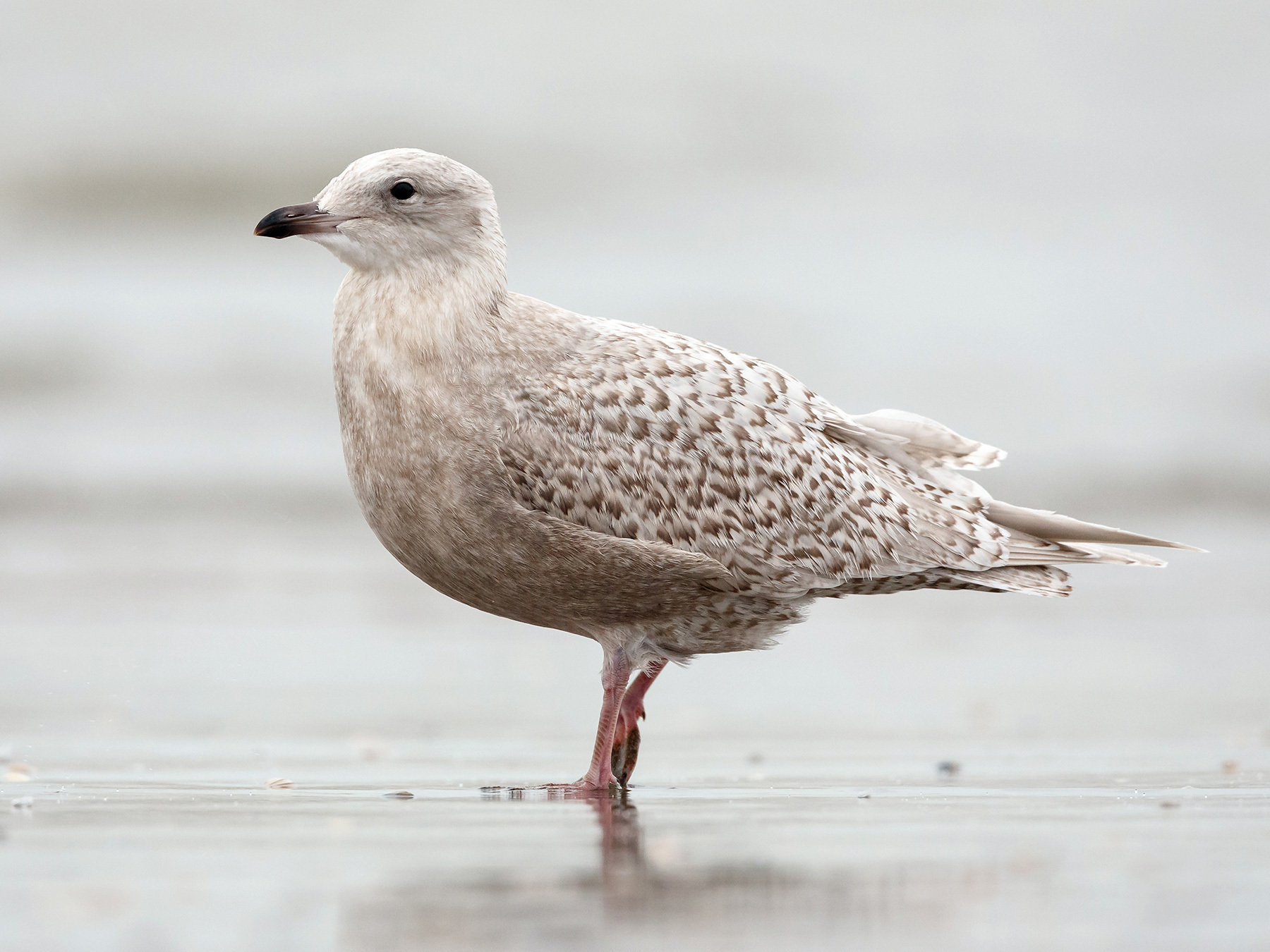
Iceland Gull guides
6 guides- What Do Seagulls Actually Eat? Diet Secrets of These Clever Scavengers
- Do Seagulls Migrate? (All You Need To Know)
- Baby Seagulls: All You Need to Know (with Pictures)
- Seagull Nesting Secrets: Unveiling the Hidden Sanctuaries by the Sea
- What is a Group of Seagulls Called? (Complete List + Why?)
- How Long Do Seagulls Live?
Quick facts
- Length
- 52–60 cm
- Wingspan
- 130–150 cm
- Weight
- 750–1100 g
- Lifespan
- 15–20 years
- Family
- Gulls & Terns
- Migration
- Long-distance Migrant
- Global status (IUCN)
- Least Concern
- World population
- 190,000 - 400,000 individuals
- Population trend
- Stable
- Also called
- White-winged Gull, Kumlien's Gull
- Scientific name
- Larus glaucoides
Questions
1How can you tell the difference between an Iceland gull vs herring gull?
There are some key differences between Iceland gulls and herring gulls that make it relatively simple to accurately distinguish between the two species.
Herring gulls are larger than Iceland gulls and have darker upperparts and black wingtips. Iceland gulls have a red ring around their eye during breeding, and a shorter, finer bill.
Sources
3- 1BirdLife International. 2019. Larus glaucoides (amended version of 2018 assessment). The IUCN Red List of Threatened Species 2019: e.T22729877A155595584. Source (opens in a new tab)
- 2Wetlands International (2015)
- 3Wetlands International (2015)

Checked by
Nathan Cope, founder and editor
Nathan founded Birdfact and leads its writers and contributors in the UK, the US and Canada. He has watched and studied birds for more than ten years, and checks every article and species guide before it’s published.