


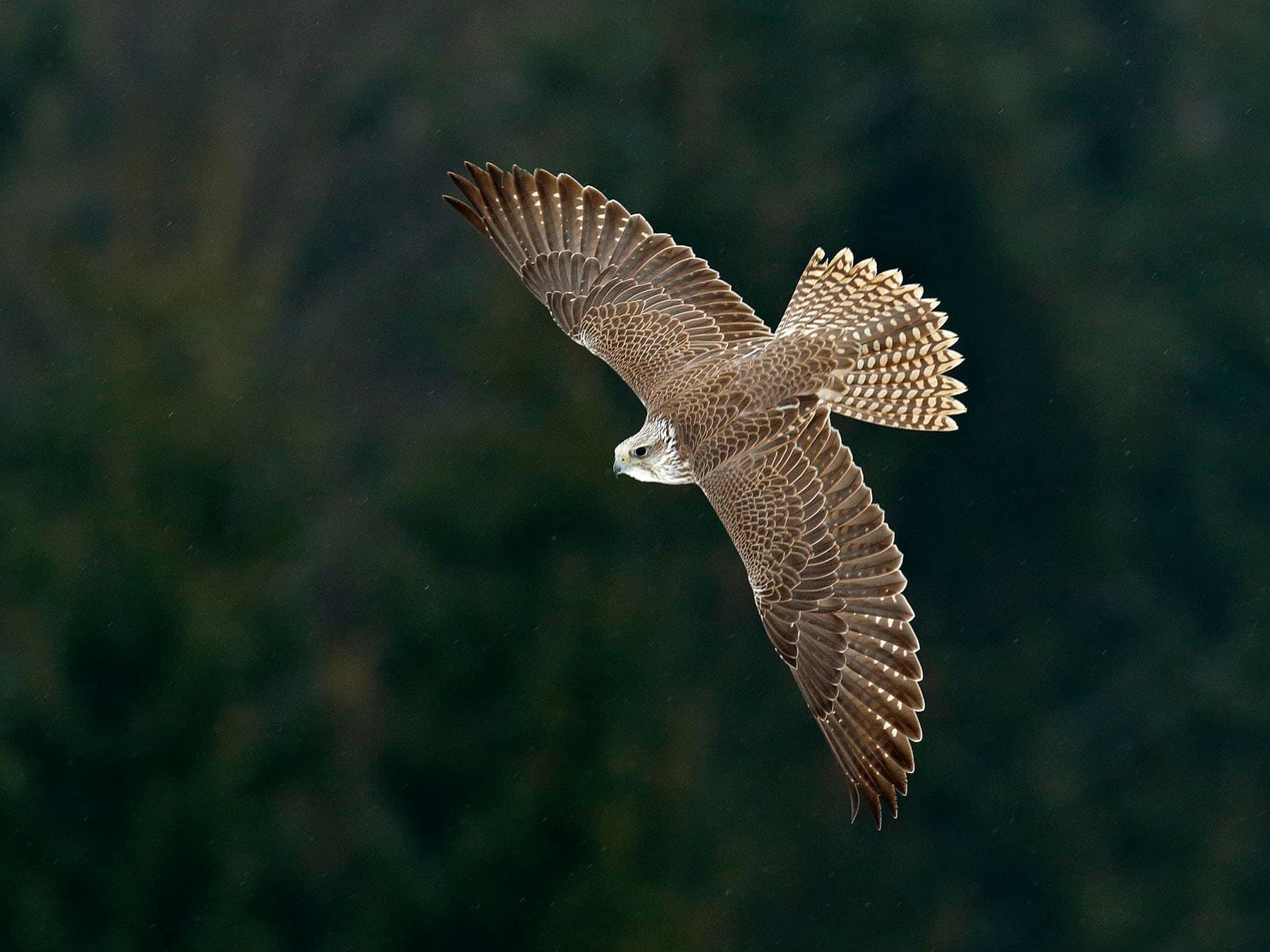
Gyrfalcon
Gyr, Gyr Falcon · Falco rusticolus
By the Birdfact teamChecked by Nathan Cope
On this page12 sections
How to recognise it
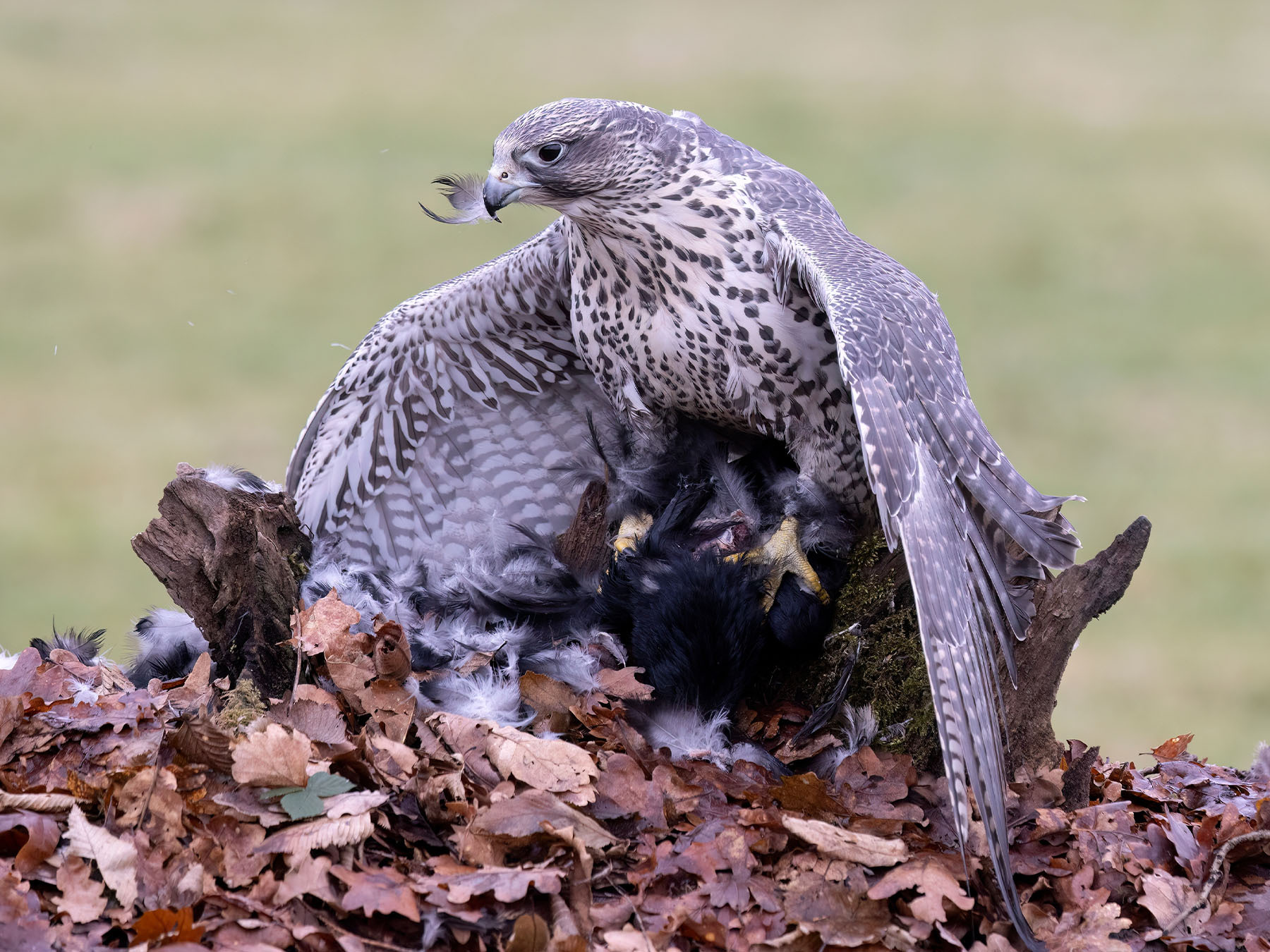
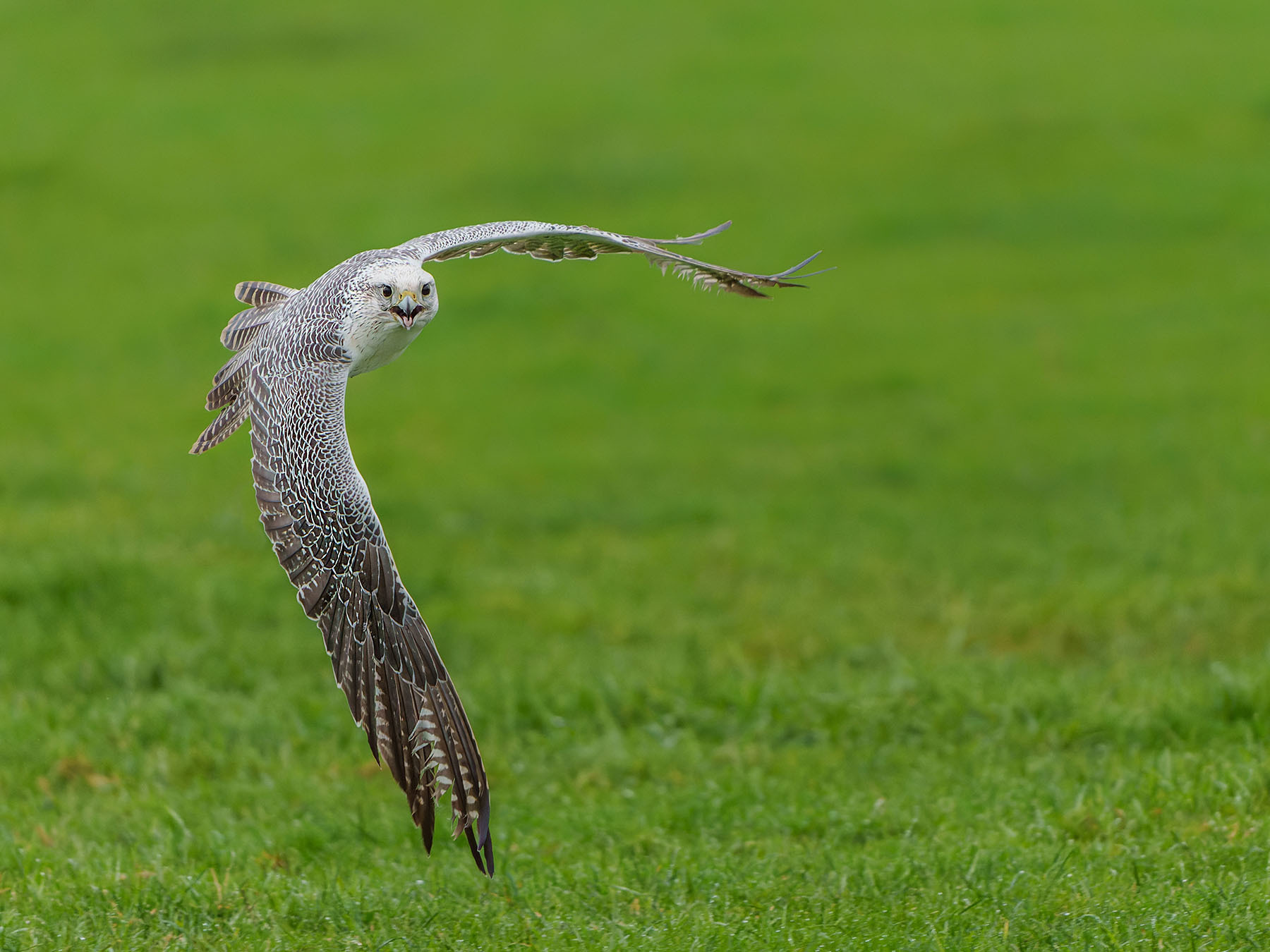
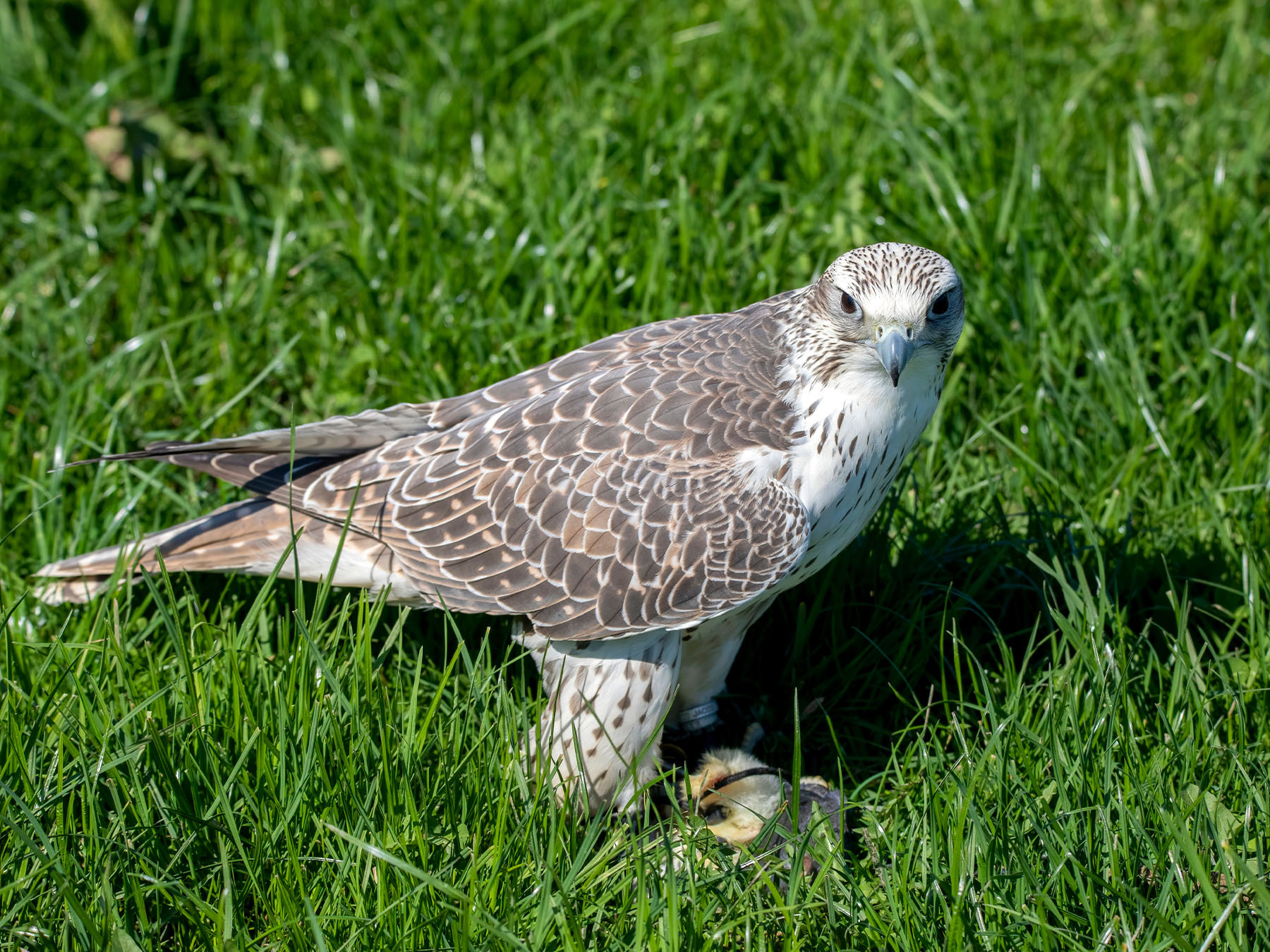
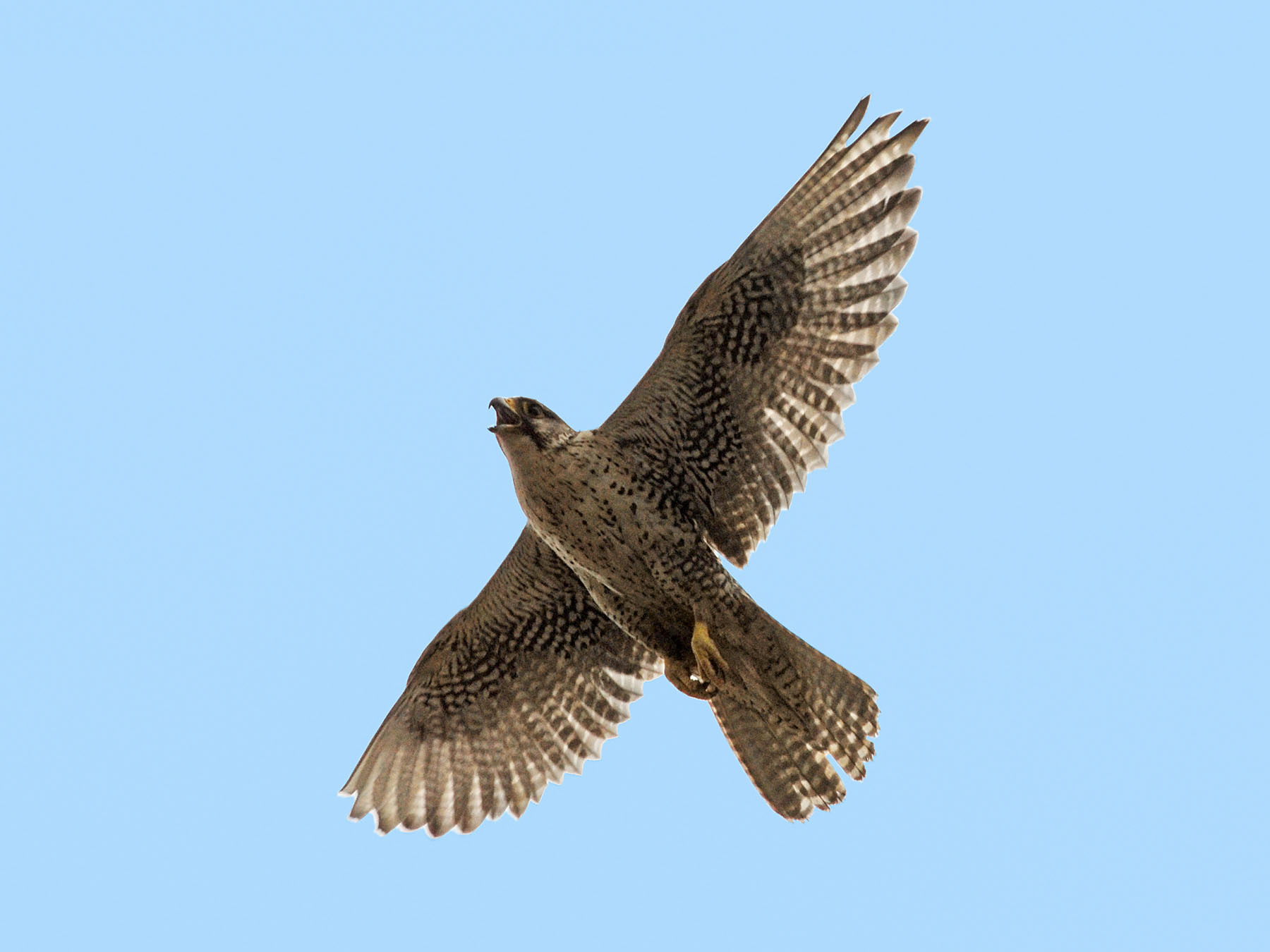
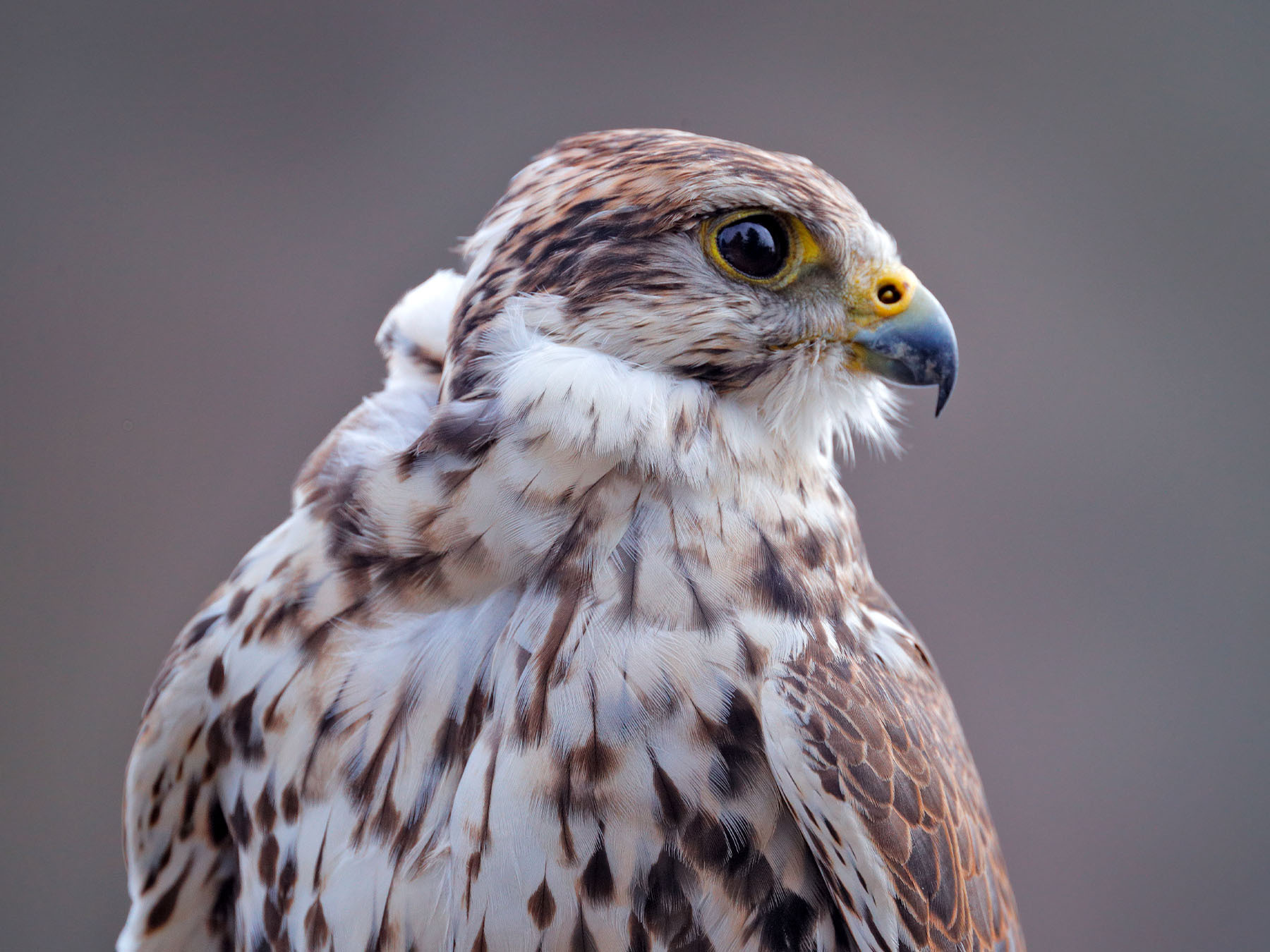
The Gyrfalcon is the largest falcon species, with a robust build and broad, pointed wings. Its plumage varies from nearly pure white to dark grey, often with barring or streaking. The head features a distinctive 'moustache' mark and a hooked beak.
Females are noticeably larger and often darker than males. Juveniles typically show more brown colouration and heavier streaking compared to adults. Plumage colour remains consistent year-round.
Its size
Adults- Length
- 48–61 cm
- Wingspan
- 110–130 cm
- Weight
- 800–2100 g
Its song and calls
Gyrfalcons have a range of vocalisations, including a loud, repeated 'kak-kak-kak' call used during territorial disputes and breeding. They also produce softer chirps and wails during courtship. Their calls are generally deeper and more powerful than those of other falcon species.
- Call0:00 / 0:04
When and where to see it
Tips for seeing it
- Look for Gyrfalcons in open tundra or mountainous areas
- Scan cliff faces and rocky outcrops for perched birds
- Observe for distinctive, powerful flight pattern
- Listen for their loud, repetitive calls during breeding season
- In North America, watch for them in coastal areas during winter
What it eats
Gyrfalcons primarily hunt medium-sized birds, with ptarmigan and seabirds forming a significant part of their diet. They also take Arctic hares and lemmings. These falcons employ high-speed chases and powerful strikes to capture prey in flight or on the ground.
Nesting and breeding
Gyrfalcons form monogamous pairs and begin courtship in late winter. They typically nest on cliff ledges or rocky outcrops, sometimes using old nests of other large birds.
Females lay 2-5 eggs, which are pale cream with reddish-brown spots. The eggs are incubated primarily by the female for about 35 days.
Chicks fledge after 7-8 weeks but remain dependent on their parents for several more weeks, learning hunting skills before becoming fully independent.
Behaviour
Gyrfalcons are powerful and agile flyers, capable of high-speed pursuits and impressive aerial manoeuvres. They often perch on prominent rocks or cliffs, scanning for prey. During breeding season, pairs engage in spectacular courtship flights, performing intricate aerial displays.
Conservation
While listed as Least Concern globally, Gyrfalcons face threats from climate change affecting their Arctic habitats. Illegal capture for falconry and disturbance at nesting sites are ongoing concerns. Conservation efforts focus on habitat protection and monitoring population trends.
Similar birds
Often mistaken for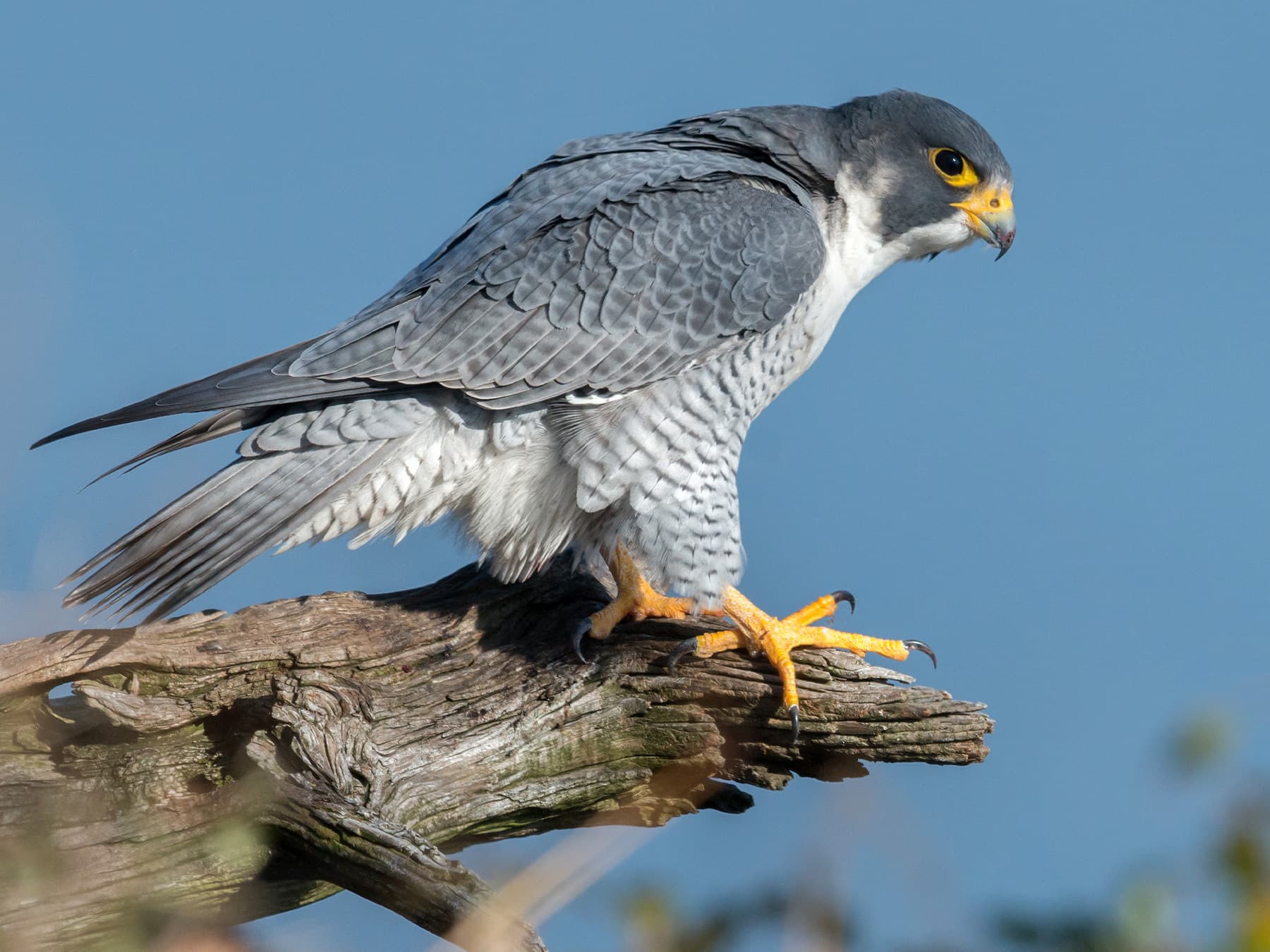
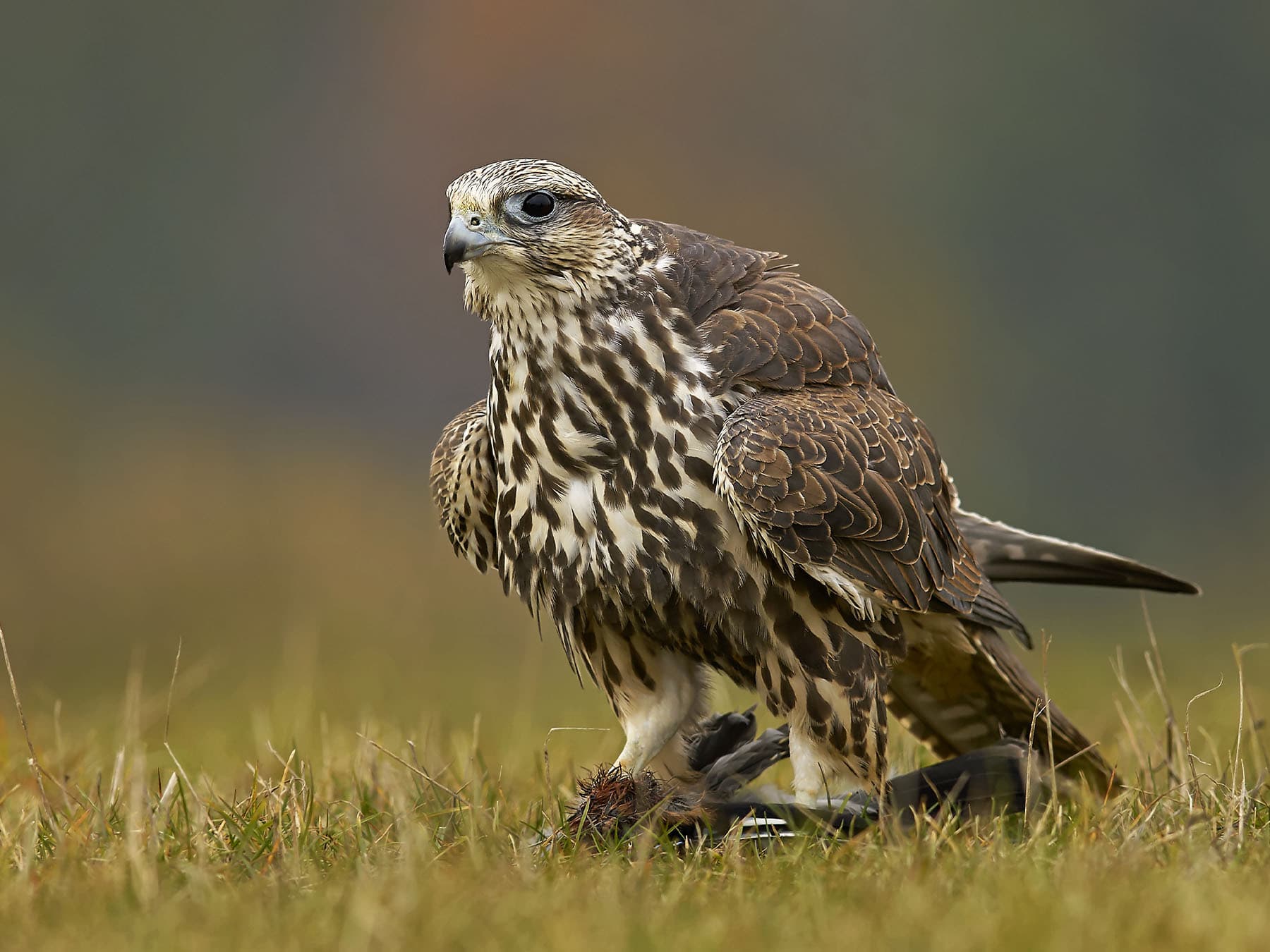
More photos
6 photos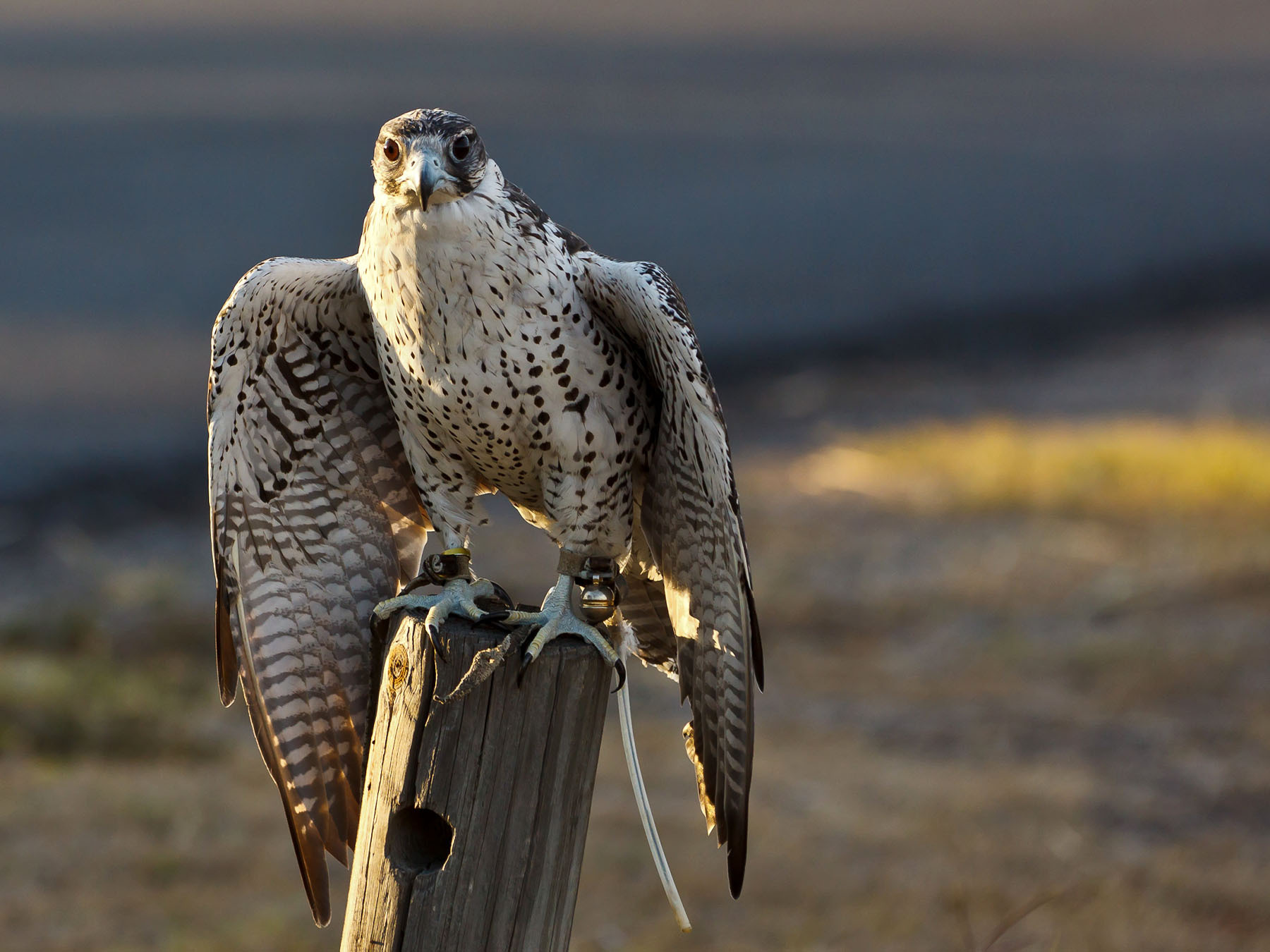
Quick facts
- Length
- 48–61 cm
- Wingspan
- 110–130 cm
- Weight
- 800–2100 g
- Lifespan
- 12–20 years
- Family
- Falcons
- Migration
- Partial migrant
- Global status (IUCN)
- Least Concern
- World population
- 12,600 - 55,300 mature individuals
- Population trend
- Overall population is stable, with some local fluctuations
- Also called
- Gyr, Gyr Falcon
- Scientific name
- Falco rusticolus
Sources
3- 1BirdLife International. 2021. Falco rusticolus. The IUCN Red List of Threatened Species 2021: e.T22696500A206261845. Source (opens in a new tab)
- 2Franke et al. (2019)
- 3BirdLife International. 2021. Falco rusticolus. The IUCN Red List of Threatened Species 2021: e.T22696500A206261845. Source (opens in a new tab)

Checked by
Nathan Cope, founder and editor
Nathan founded Birdfact and leads its writers and contributors in the UK, the US and Canada. He has watched and studied birds for more than ten years, and checks every article and species guide before it’s published.