


Greater White-fronted Goose
Specklebelly, Whitefront · Anser albifrons
By the Birdfact teamChecked by Nathan Cope
On this page13 sections
How to recognise it
What do Greater White-fronted Geese look like?
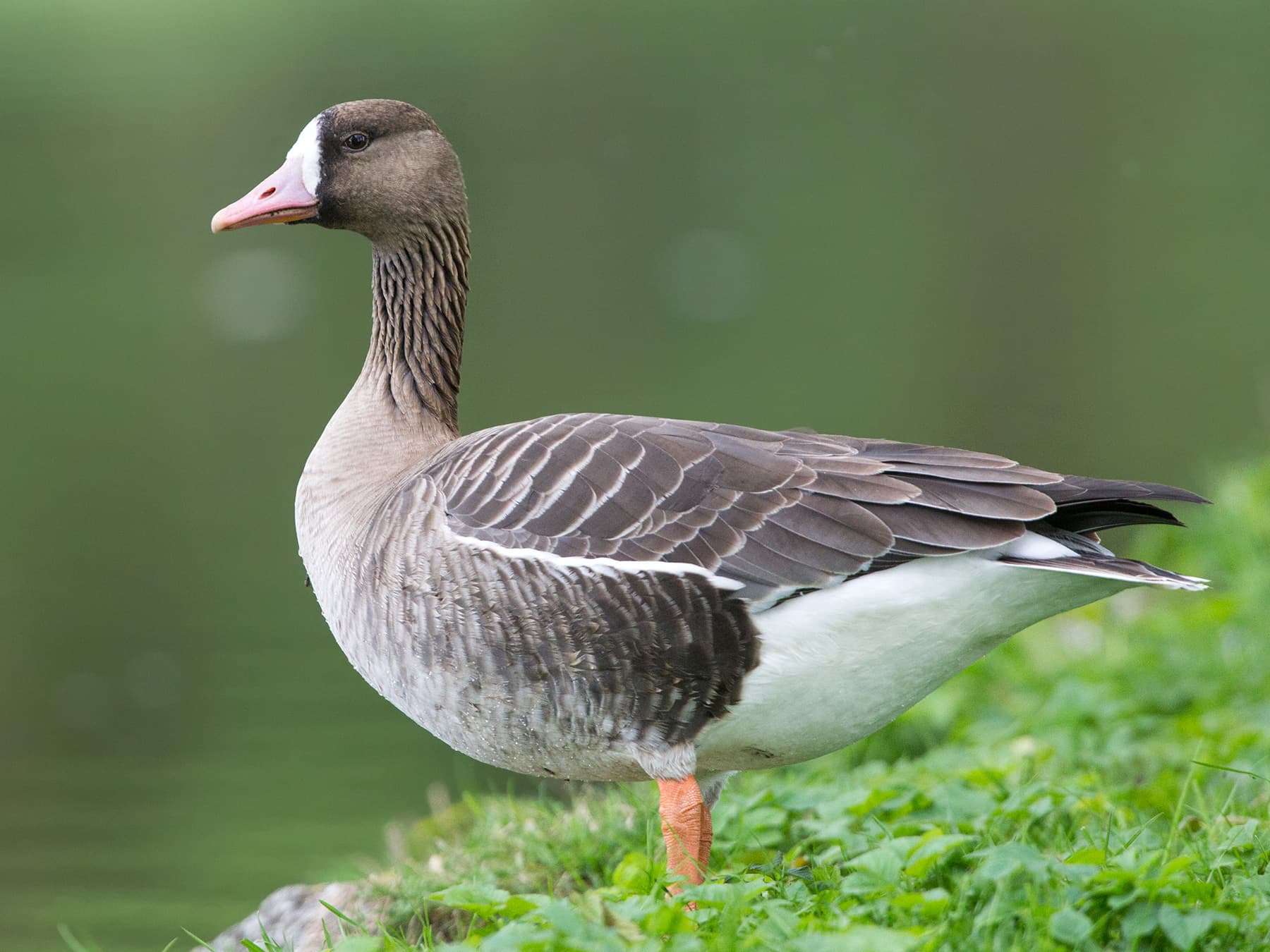
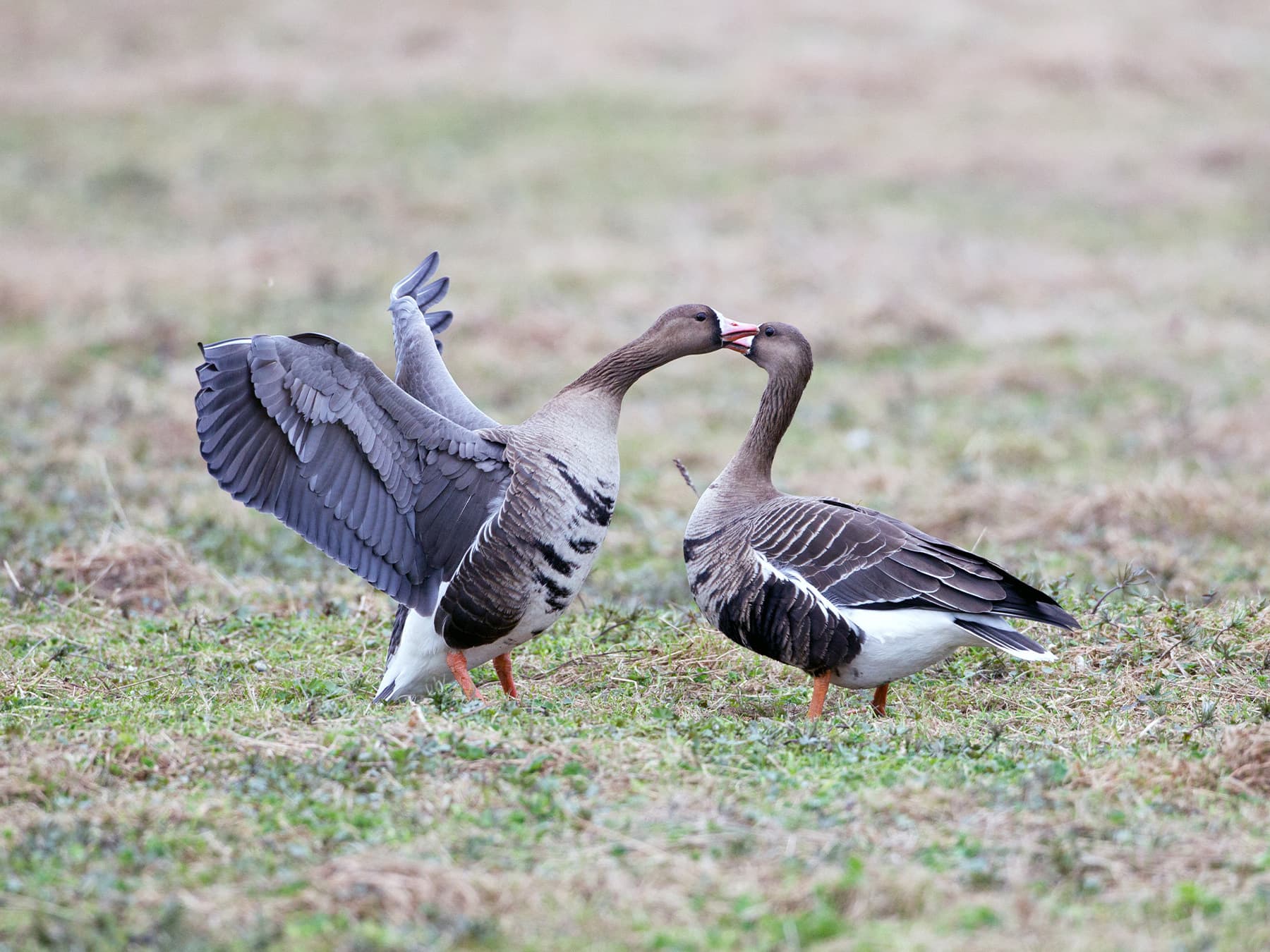
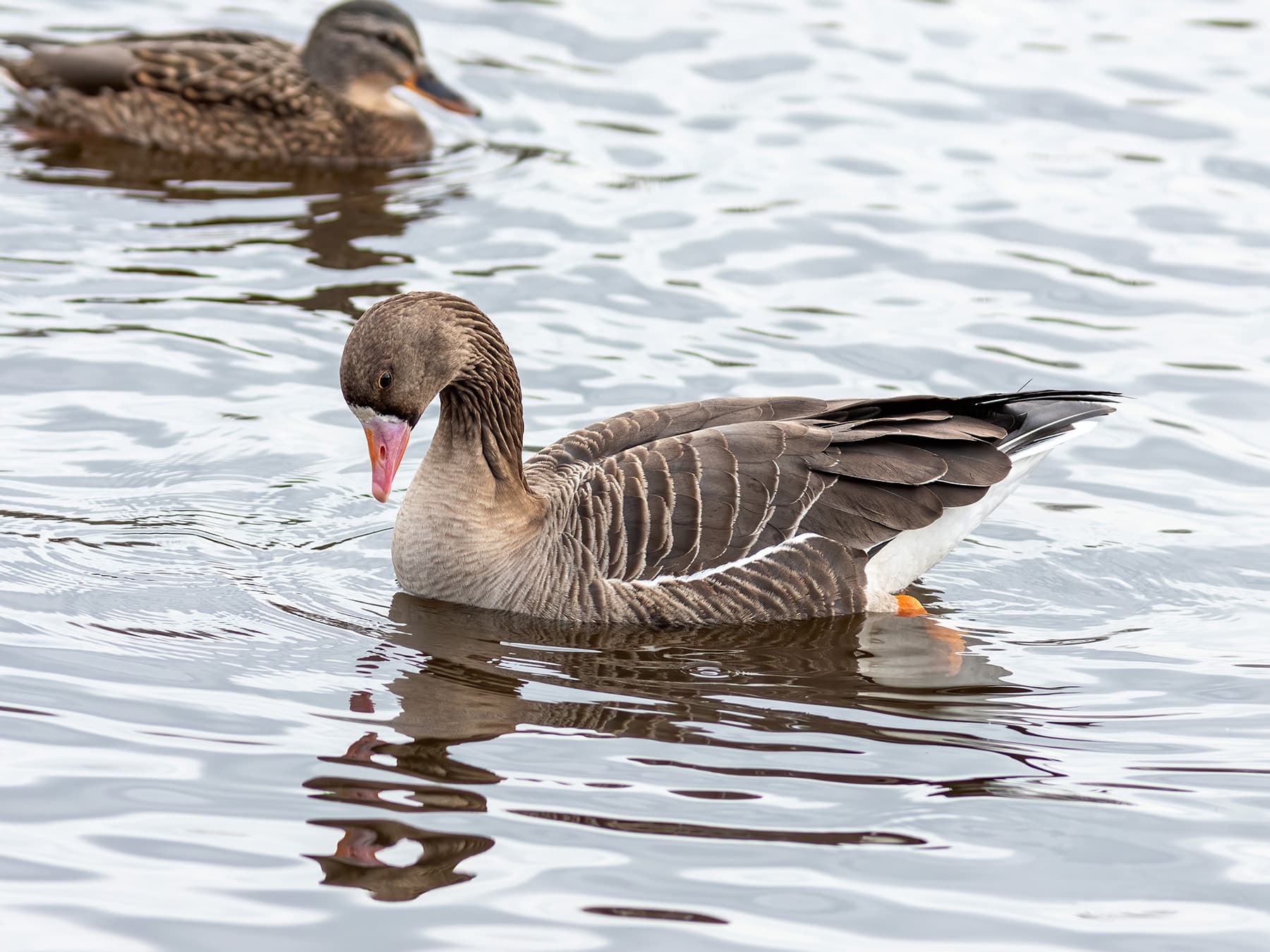
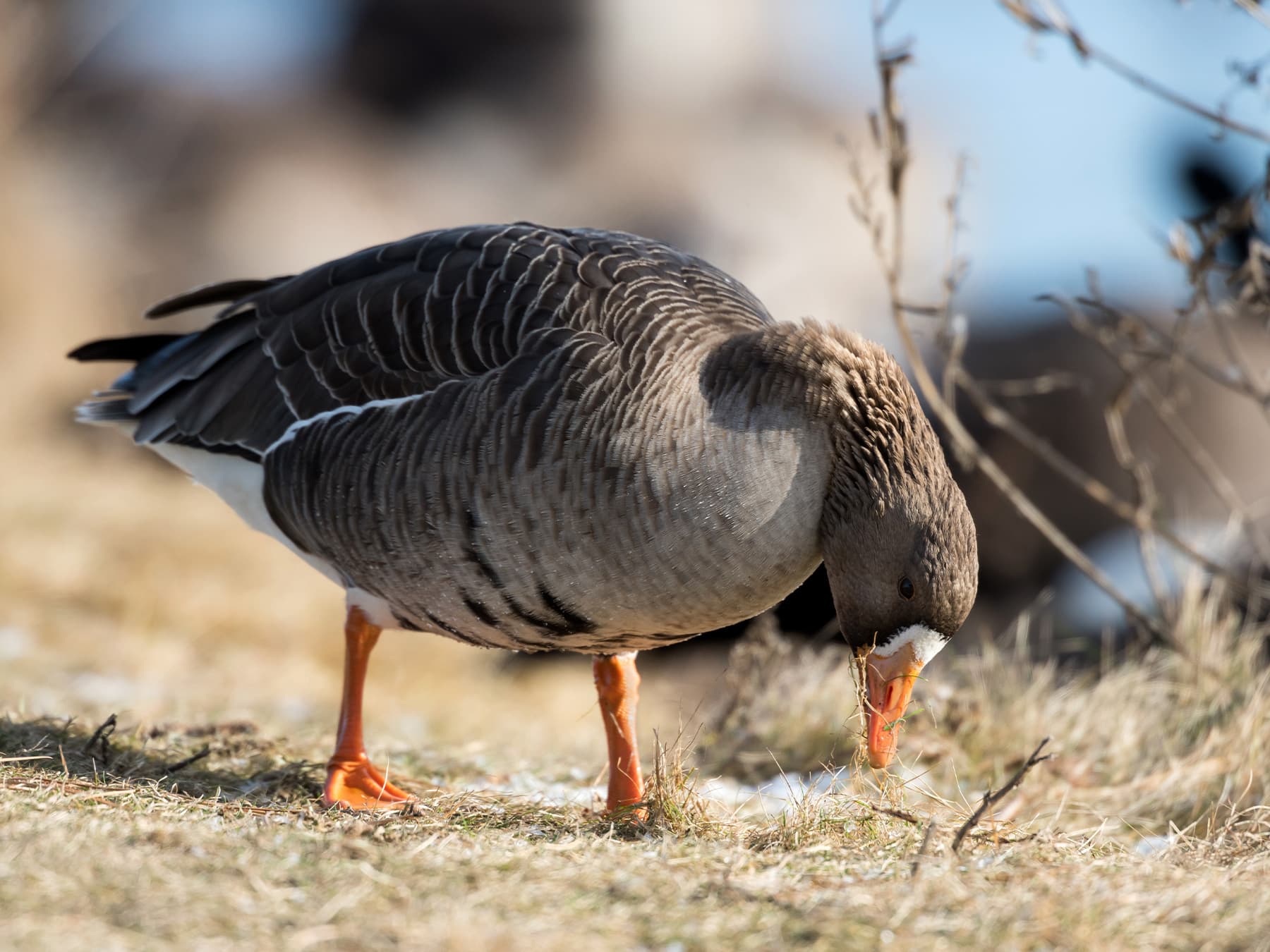
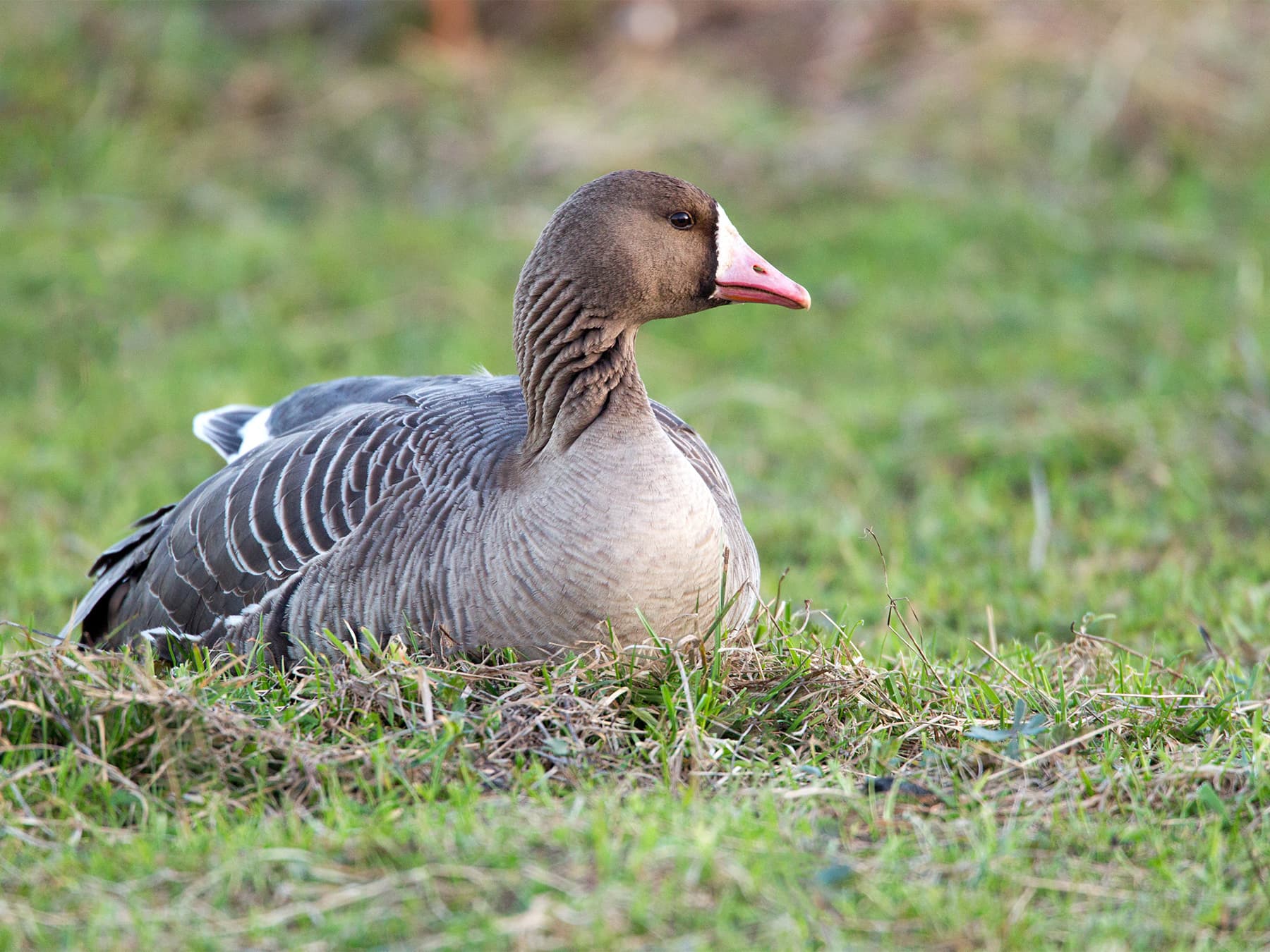
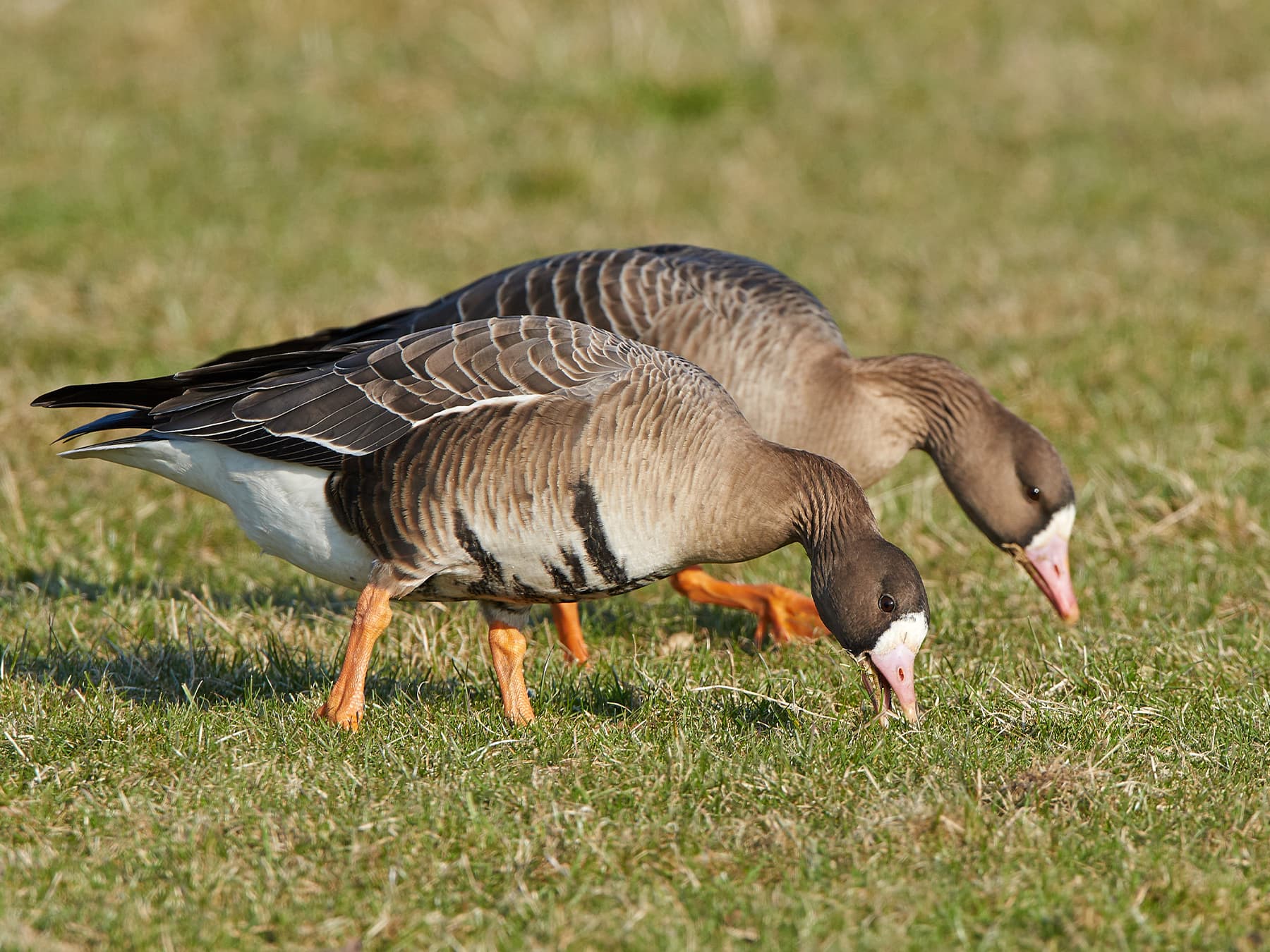
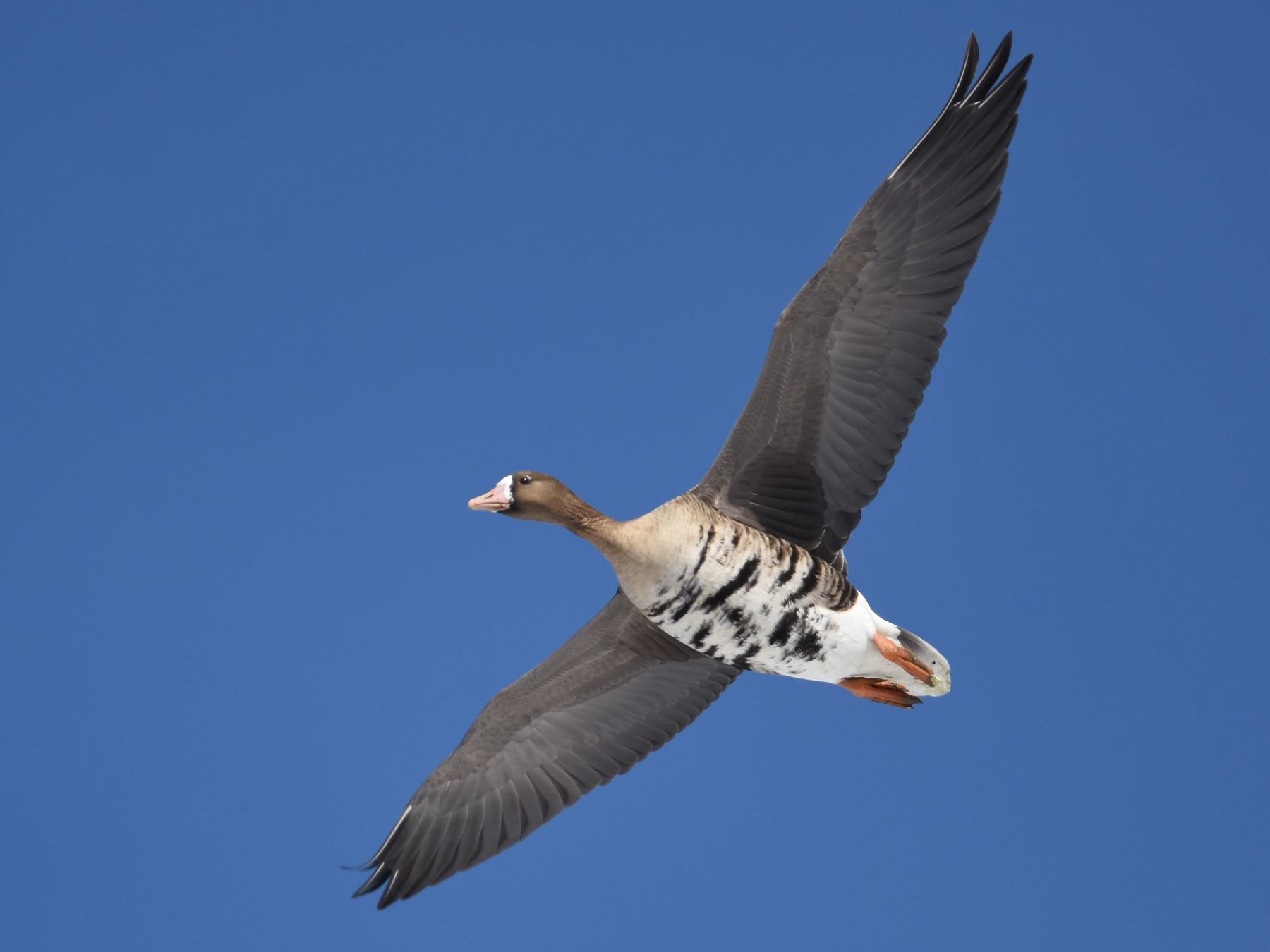
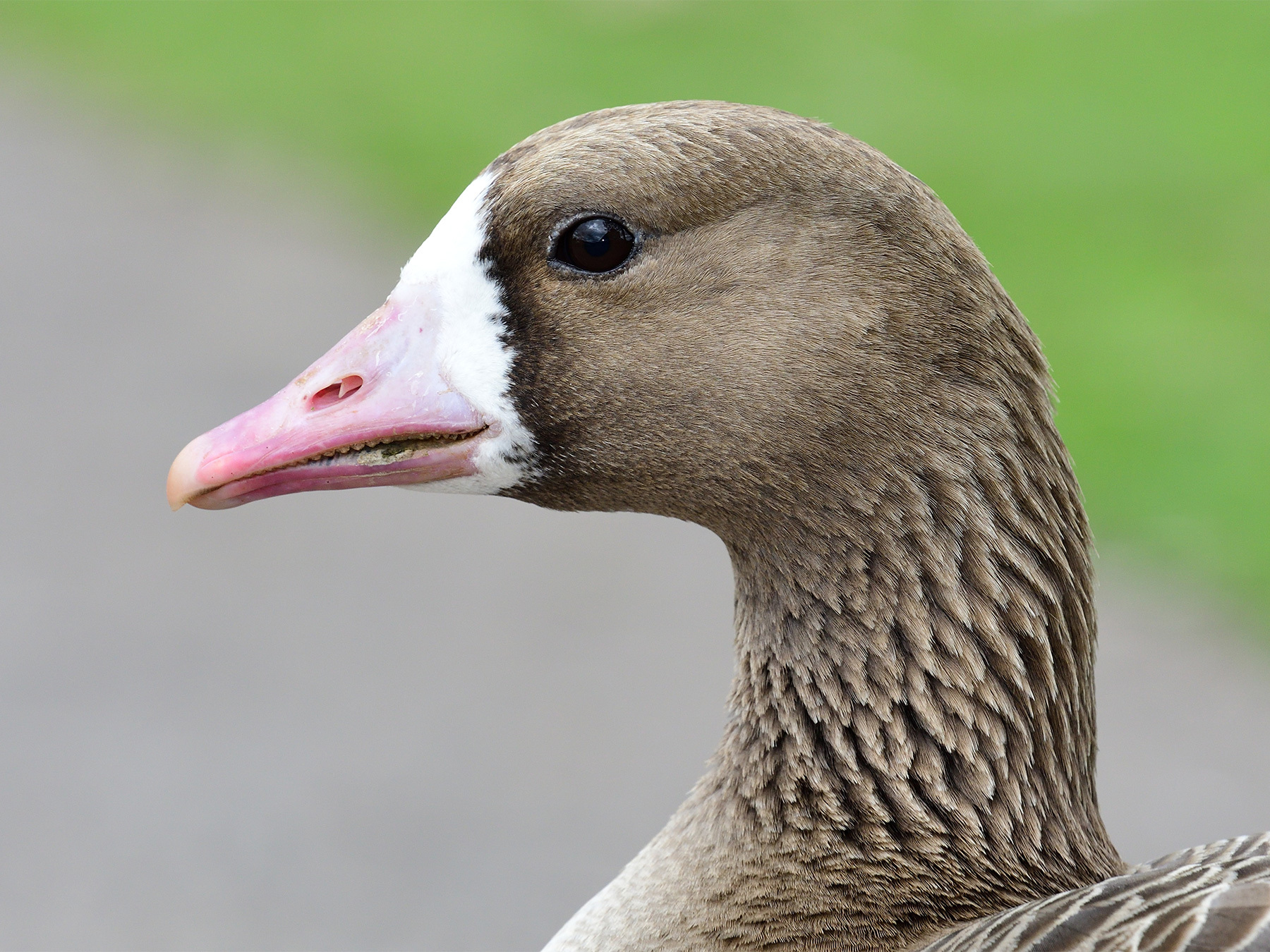
The Greater White-fronted Goose is a medium-sized, solidly built waterfowl with an orange/pink bill and legs and mostly brown plumage. Their most notable feature is a patch of white feathers on the forehead and around the base of the bill. The area under the tail is white, and they have varying amounts of black barring on the breast and belly, leading to their other common name of Speckle-belly Goose.
Females are similar to males, although ganders are generally the larger sex. Juveniles are uniformly brown with dull legs and bills. They have whitish feathers under the tail but lack the white forehead and dark belly ‘speckles’ of adults.
This species is most likely to be confused with the Greylag Goose in the United States, but European birdwatchers should also compare the following similar species:
- Lesser White-fronted Goose
- Pink-footed Goose
- Tundra Bean-Goose
- Taiga Bean-Goose
How big are Greater White-fronted Geese?
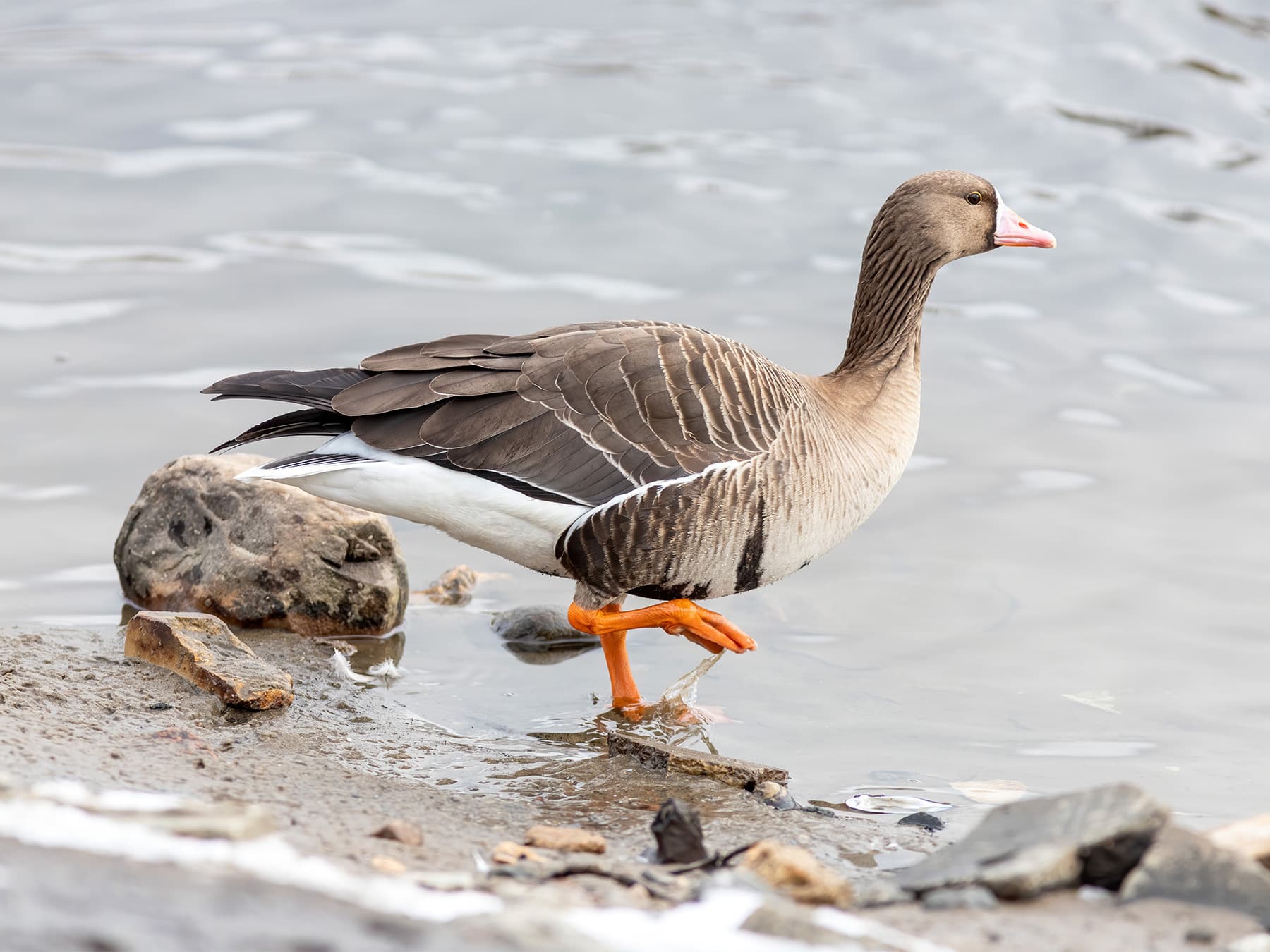
The Greater White-fronted Goose is a medium-sized wildfowl species, intermediate between the Mallard and the Canada Goose.
Length
Most adults measure approximately 25 to 32 inches or 64 to 81 centimeters. Males are generally larger than females.
Weight
These heavyset wildfowl weigh 4⅕ to 7¼ pounds or 1.9 to 3.3 kilograms.
Wingspan
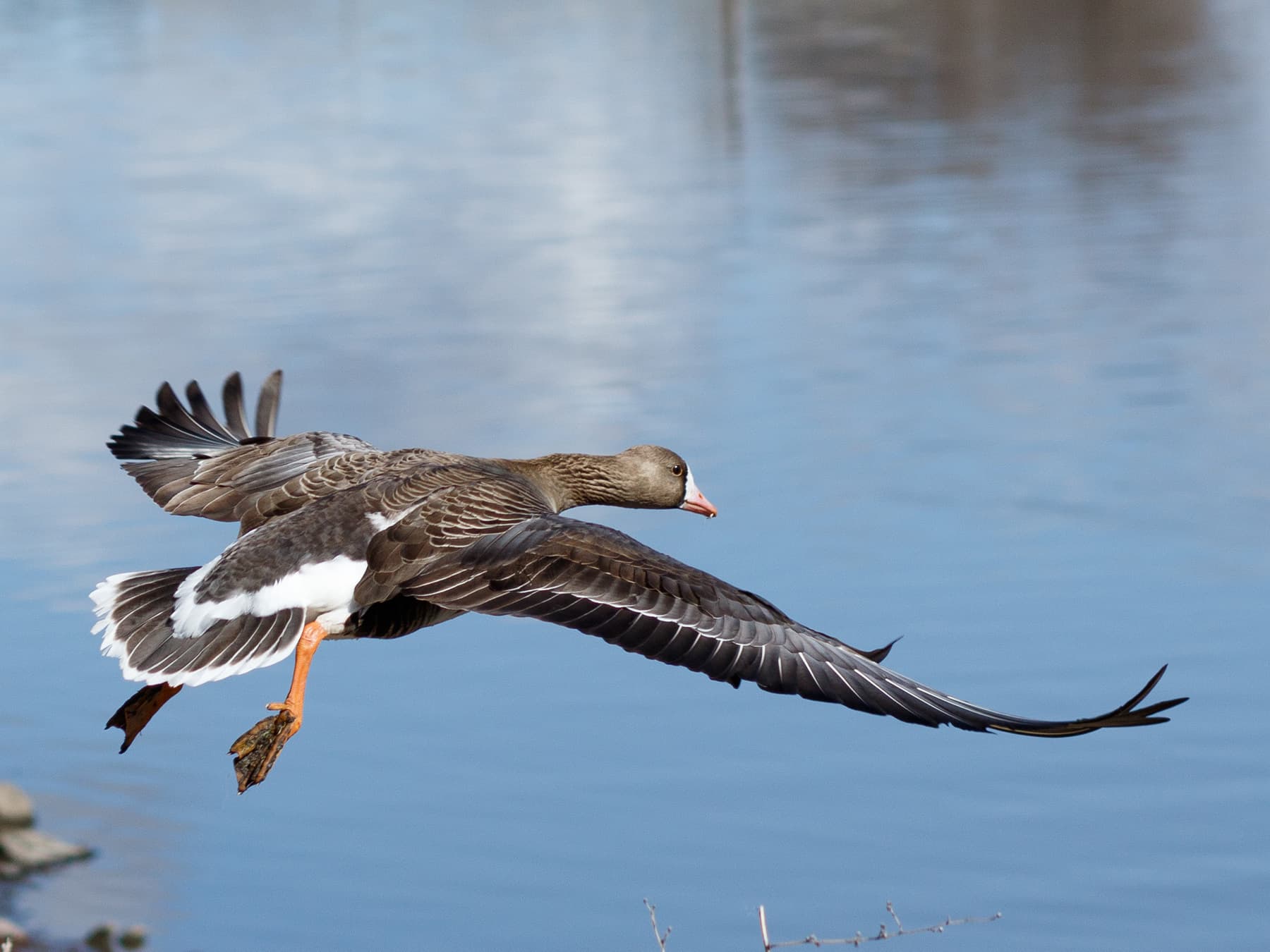
Adults have a wingspan of 51 to 65 inches or 1.3 to 1.65 meters.
Its size
Adults- Length
- 64–81 cm
- Wingspan
- 130–165 cm
- Weight
- 1800–3300 g
Its song and calls
What sound does a Greater White-fronted Goose make?
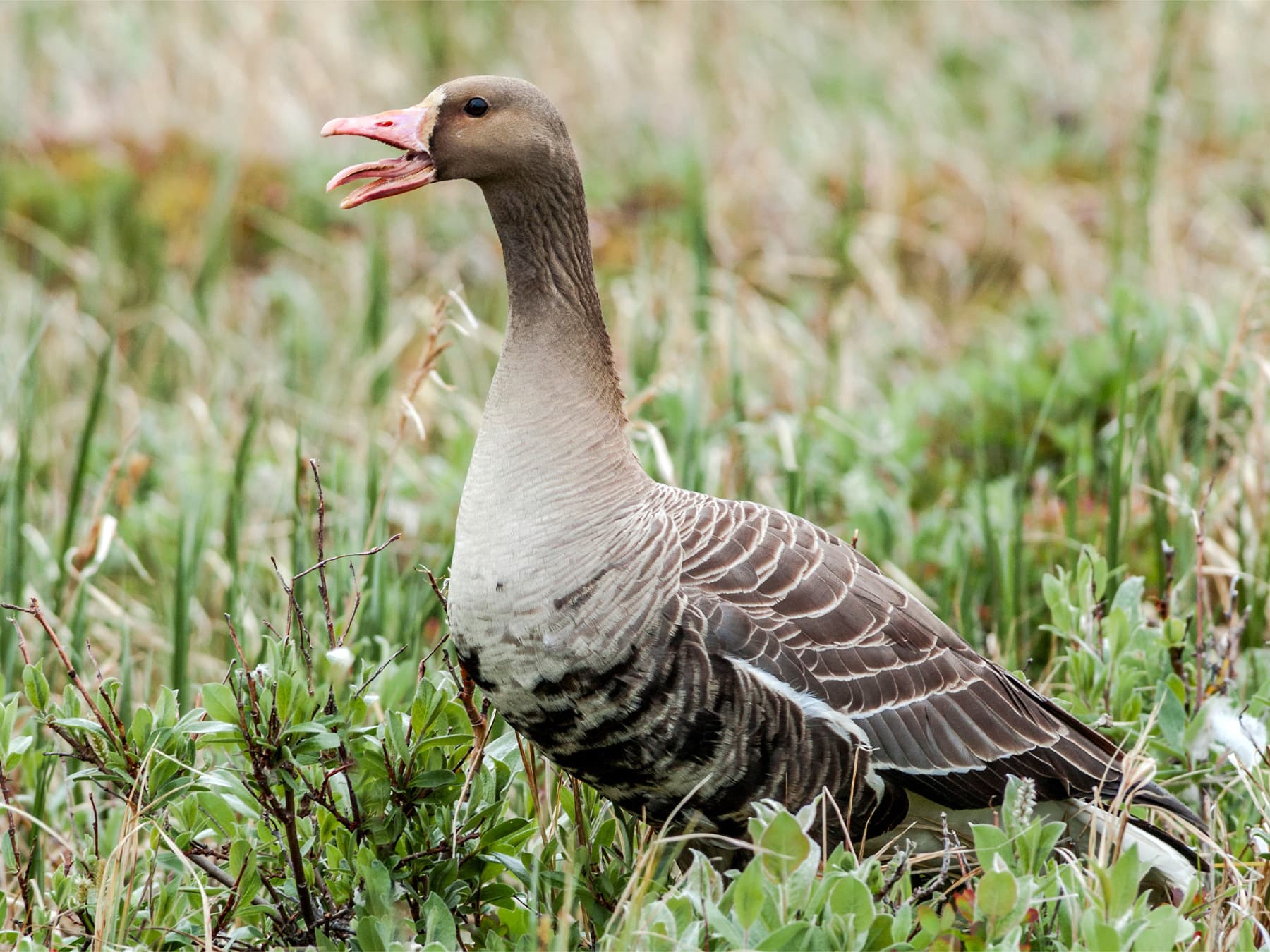
Greater White-fronted Geese are very vocal when flocking, producing a musical laugh-like honking call. The call has a squeaky, high-pitched quality and consists of two or three syllables. They are most often heard as flocks fly over, calling to maintain contact with each other.
- Call0:00 / 0:47
Recorded in Bretagne, France · February 2026
When and where to see it
OctoberIn season
Most recorded in October
- 1. Argyll and Bute0.64%
- 2. Gloucestershire0.25%
- 3. Wexford0.18%
- 4. Antrim0.13%
- 5. Donegal0.11%
Each dot is a county, state or province: the bigger and darker, the larger the bird’s share of that place’s bird records that month. Grey dots: no regular records. The ringed point is the centre of the bird’s records this month; the arrow shows how it moved since last month, and the dashed loop its path through the year. “Arrivals” colours places where it becomes regular this month (orange) or is in its last regular month (grey). GBIF eBird Observation Dataset, 2019–2024. Map data: Natural Earth, US Census Bureau; place centres © OpenStreetMap contributors.
In your area
See when the Greater White-fronted Goose is recorded in your county, state or province.
How often the Greater White-fronted Goose turns up in the UK, Ireland, the United States and Canada through the year, from birdwatchers' records.
United Kingdom
Winter visitor · regularly Oct–Apr · most records in January
Ireland
Winter visitor · regularly Oct–Mar · most records in February
United States
Winter visitor · regularly Aug–Jun · most records in January
Canada
Winter visitor · all year · most records in October
Show as a table
| Month | United Kingdom | Ireland | United States | Canada |
|---|---|---|---|---|
| January | 0.085% (regular) | 0.10% (regular) | 0.11% (regular) | 0.029% (regular) |
| February | 0.066% (regular) | 0.12% (regular) | 0.100% (regular) | 0.025% (regular) |
| March | 0.041% (regular) | 0.068% (regular) | 0.080% (regular) | 0.045% (regular) |
| April | 0.010% (regular) | 0.004% | 0.034% (regular) | 0.067% (regular) |
| May | 0.004% | 0.003% | 0.012% (regular) | 0.021% (regular) |
| June | <0.001% | 0.003% | 0.020% (regular) | 0.008% (regular) |
| July | <0.001% | – | 0.005% | 0.007% (regular) |
| August | <0.001% | – | 0.007% (regular) | 0.011% (regular) |
| September | 0.002% | 0.003% | 0.025% (regular) | 0.073% (regular) |
| October | 0.017% (regular) | 0.037% (regular) | 0.065% (regular) | 0.11% (regular) |
| November | 0.040% (regular) | 0.088% (regular) | 0.083% (regular) | 0.058% (regular) |
| December | 0.080% (regular) | 0.092% (regular) | 0.088% (regular) | 0.030% (regular) |
Recorded regularly in
Worldwide: recorded regularly in 61 countries
Countries where it was recorded in at least 3 of the 6 years 2019–2024. Linked countries have their own bird list.
Europe (36)
Asia (20)
- Azerbaijan
- Bangladesh
- China
- Cyprus
- Hong Kong SAR China
- India
- Iran
- Israel
- Japan
- Kazakhstan
- Mongolia
- Nepal
- Oman
- Philippines
- South Korea
- Taiwan
- Thailand
- Turkey
- United Arab Emirates
- Uzbekistan
North America (4)
- Canada
- Greenland
- Mexico
- United States
Oceania (1)
- US Outlying Islands
Data: EOD – eBird Observation Dataset (Cornell Lab of Ornithology), accessed via GBIF.org, CC BY 4.0. Records from 2019–2024, aggregated and filtered by Birdfact. How these lists are made
What is the habitat of a Greater White-fronted Goose?
Greater White-fronted Geese inhabit open tundra habitats with short vegetation near water during the summer breeding season. They spend the winter foraging in agricultural lands, meadows, marshes, and other open habitats but roost around shallow lakes and wetlands.
What is the range of a Greater White-fronted Goose?
Greater White-fronted Geese breed across Alaska, Northern Canada, Greenland, and Russia. The North American populations winter west of the Rocky Mountains, around the Gulf Coast, and in Mexico. In the Old World, these wildfowl overwinter in isolated areas from the United Kingdom in the west to Japan in the east.
Where do Greater White-fronted Geese live?
Greater White-fronted Geese live in open habitats, feeding in fields and on the water. These robust birds are comfortable on land, powerful in flight, and strong swimmers.
How rare are Greater White-fronted Geese?
Greater White-fronted Geese are a common species with a wide distribution in the Northern Hemisphere. They have increased significantly in North America since the late 1900s, although numbers have declined drastically in the United Kingdom over a similar period.
Where can you see Greater White-fronted Geese in the US?
Greater White-fronted Geese overwinter in two distinct areas of the United States. The Pacific population, which nests in Alaska, migrates along the West Coast to overwinter west of the Rocky Mountains from Washington to California. The Mid-continent population nests in Northern Canada and migrates via the Central Flyway to spend the winter in Texas, Louisiana, and other Gulf Coast states.
Where can you see Greater White-fronted Geese in Canada?
Greater White-fronted Geese nest across the far north of Canada from the Yukon to the western shores of Hudson Bay in Nunavut. They can also be seen further south on migration when they stage in the Canadian prairie provinces of Saskatchewan and Alberta. Some stay to overwinter on Vancouver Island in British Columbia.
Where can you see Greater White-fronted Geese in the UK?
Greater White-fronted Geese visit the United Kingdom each winter from two separate breeding populations. The more numerous visitors from Greenland (Anser albifrons flavirostris) overwinter in Ireland and Scotland, while the scarcer Russian visitors (A. a. albifrons) winter in the south of England, particularly on large estuaries like the River Severn.
Migration
Do Greater White-fronted Geese migrate?
Greater White-fronted Geese are long-distance migrants. They breed within and near the Arctic Circle of North America and Asia but migrate south to spend the winter in temperate regions of Asia, Europe, and North America.
Are Greater White-fronted Geese native to North America?
Greater White-fronted Geese are native to North America. These migratory wildfowl breed in Alaska and Canada and overwinter in the contiguous United States and Mexico.
Are White-fronted Geese native to the UK?
White-fronted Geese are native to the United Kingdom, although they do not breed there. Most of the overwintering population breeds in Greenland but one or two thousand visit from Russia each year.
Tips for seeing it
- Look for large flocks in agricultural fields during migration seasons
- Listen for their distinctive high-pitched, laughing calls
- Observe their unique white forehead patch and black belly barring to distinguish them from other geese
- In North America, check wetlands and farmlands in the Central Valley of California during winter
What it eats
What do Greater White-fronted Geese eat?
Greater White-fronted Geese are vegetarian grazers that feed on a variety of plant matter, including grass, seeds, bulbs, and berries. They take advantage of grain and other food crops like corn, wheat, soybean, and rice in the winter and on migration.
What do Greater White-fronted Goose chicks eat?
Goslings graze and eat small insects. The young birds follow their parents and feed themselves from the start, although their egg-yolk reserves sustain them for their first two days.
Nesting and breeding
Where do Greater White-fronted Geese nest?
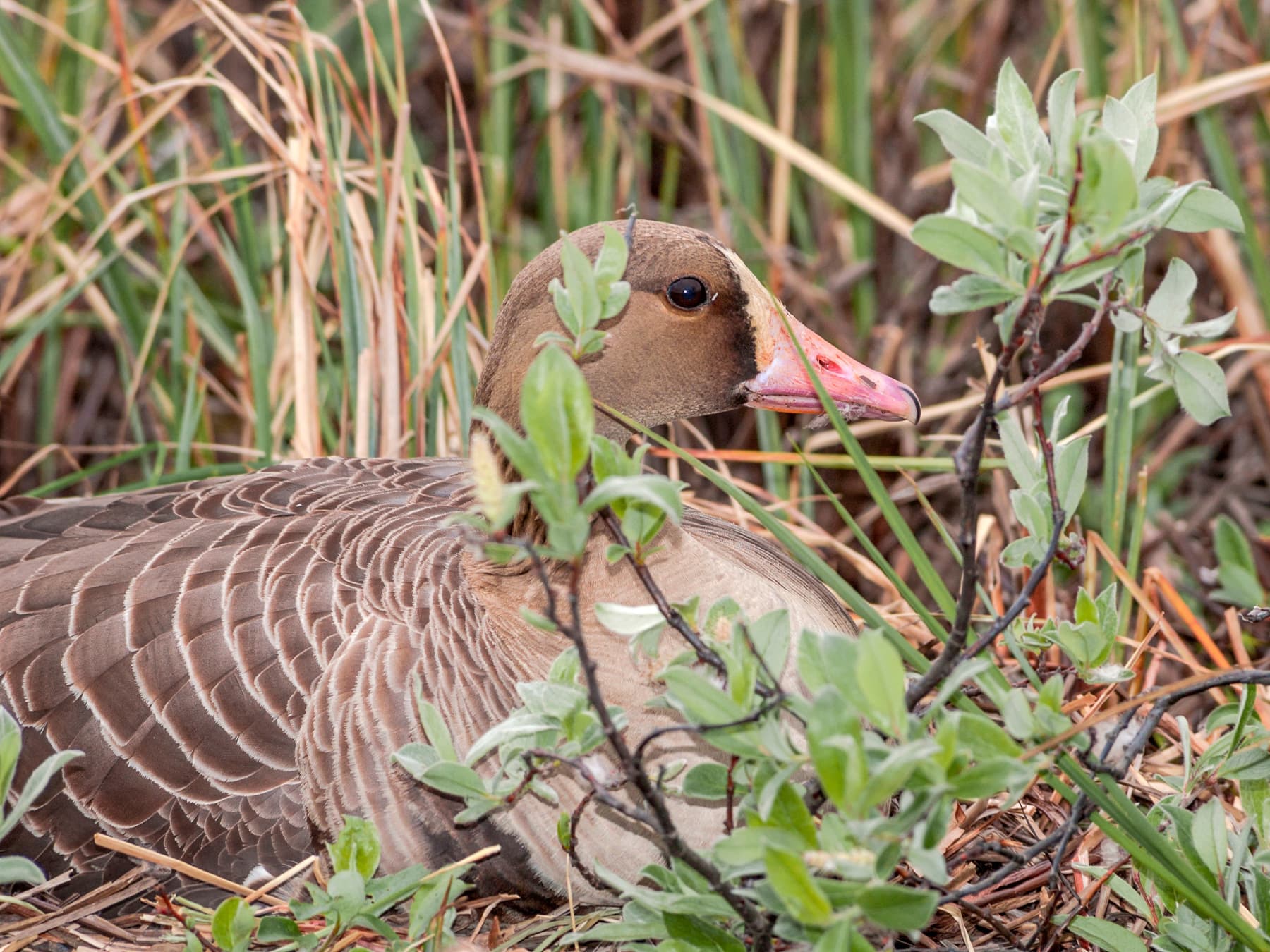
Greater White-fronted Geese nest on the ground in Tundra and Taiga habitats near water. Females start by digging out a shallow scrape and then build a nest with nearby grass and other vegetation, finally lining it with down feathers.
When do Greater White-fronted Geese nest?
Greater White-fronted Geese breed in spring and summer, with egg-laying in May and June. Incubation takes three or four weeks, and the precocial goslings leave the nest soon after. The young can fly after six or seven weeks, although they will remain together as a family for a year or more.
What do Greater White-fronted Goose eggs look like?
Greater White-fronted Geese usually lay four or five cream-colored eggs, each measuring approximately 79 millimeters long and 54 millimeters wide.
Do Greater White-fronted Geese mate for life?
These birds form long-lasting pair bonds, although they will seek a new partner if they lose a mate.
Behaviour
Are Greater White-fronted Geese aggressive?
Greater White-fronted Geese use aggressive displays to defend feeding areas in the winter. Posturing is usually enough to settle disputes, but they may resort to physical conflict, grasping each other by the neck or shoulder and striking out with their wings.
Where do Greater White-fronted Geese sleep at night?
Greater White-fronted Geese sleep at night and around midday, either on the water or on islands and other predator-safe spots.
Lifespan and predators
How long do Greater White-fronted Geese live?
Greater White-fronted Geese have a typical lifespan of about six years, although they can live for at least 22 years in the wild. Captive specimens have survived for well over 40 years.
What are the predators of Greater White-fronted Geese?
Greater White-fronted Geese are vulnerable to predators at each stage of their lifecycle. Golden Eagles, Bald Eagles, Gyrfalcons, and Arctic Foxes are capable of hunting adults, while Ravens, larger Gulls, and Jaegers may take eggs and goslings.
Are Greater White-fronted Geese protected?
Greater White-fronted Geese are a popular hunting target in the United States, although their harvest is regulated, and they are protected by the Migratory Bird Treaty Act of 1918. Overwintering populations in the UK are protected by the Wildlife and Countryside Act 1981.
Are Greater White-fronted Geese endangered?
These widespread and common wildfowl are listed as a ‘Least Concern’ species on the IUCN Red List.
Conservation
While currently listed as Least Concern, the Greater White-fronted Goose faces threats from habitat loss, particularly in its breeding grounds due to climate change. Conservation efforts focus on protecting key wetland habitats and managing hunting to ensure sustainable populations.
More photos
3 photos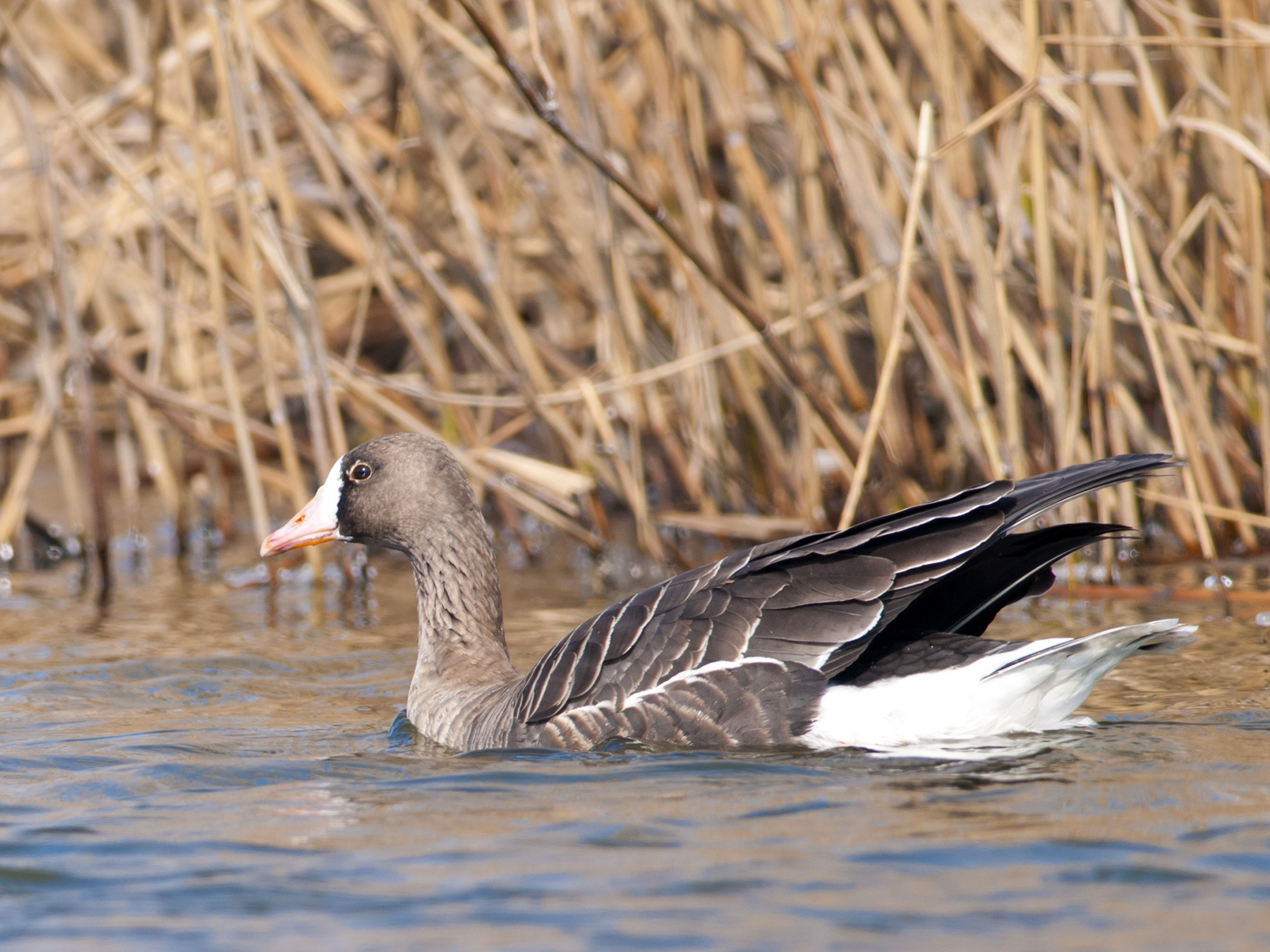
Greater White-fronted Goose guides
4 guidesQuick facts
- Length
- 64–81 cm
- Wingspan
- 130–165 cm
- Weight
- 1800–3300 g
- Lifespan
- 12–20 years
- Family
- Ducks, Geese & Swans
- Migration
- Long-distance Migrant
- Global status (IUCN)
- Least Concern
- World population
- 5,000,000 - 5,999,999 mature individuals
- Population trend
- Unknown
- Also called
- Specklebelly, Whitefront
- Scientific name
- Anser albifrons
Sources
2- 1BirdLife International. 2022. Anser albifrons. The IUCN Red List of Threatened Species 2022: e.T22679881A213839615. Source (opens in a new tab)
- 2Wetlands International (2022)

Checked by
Nathan Cope, founder and editor
Nathan founded Birdfact and leads its writers and contributors in the UK, the US and Canada. He has watched and studied birds for more than ten years, and checks every article and species guide before it’s published.