


Firecrest
Common Firecrest · Regulus ignicapilla
By the Birdfact teamChecked by Nathan Cope
On this page14 sections
How to recognise it
What do Firecrests look like?
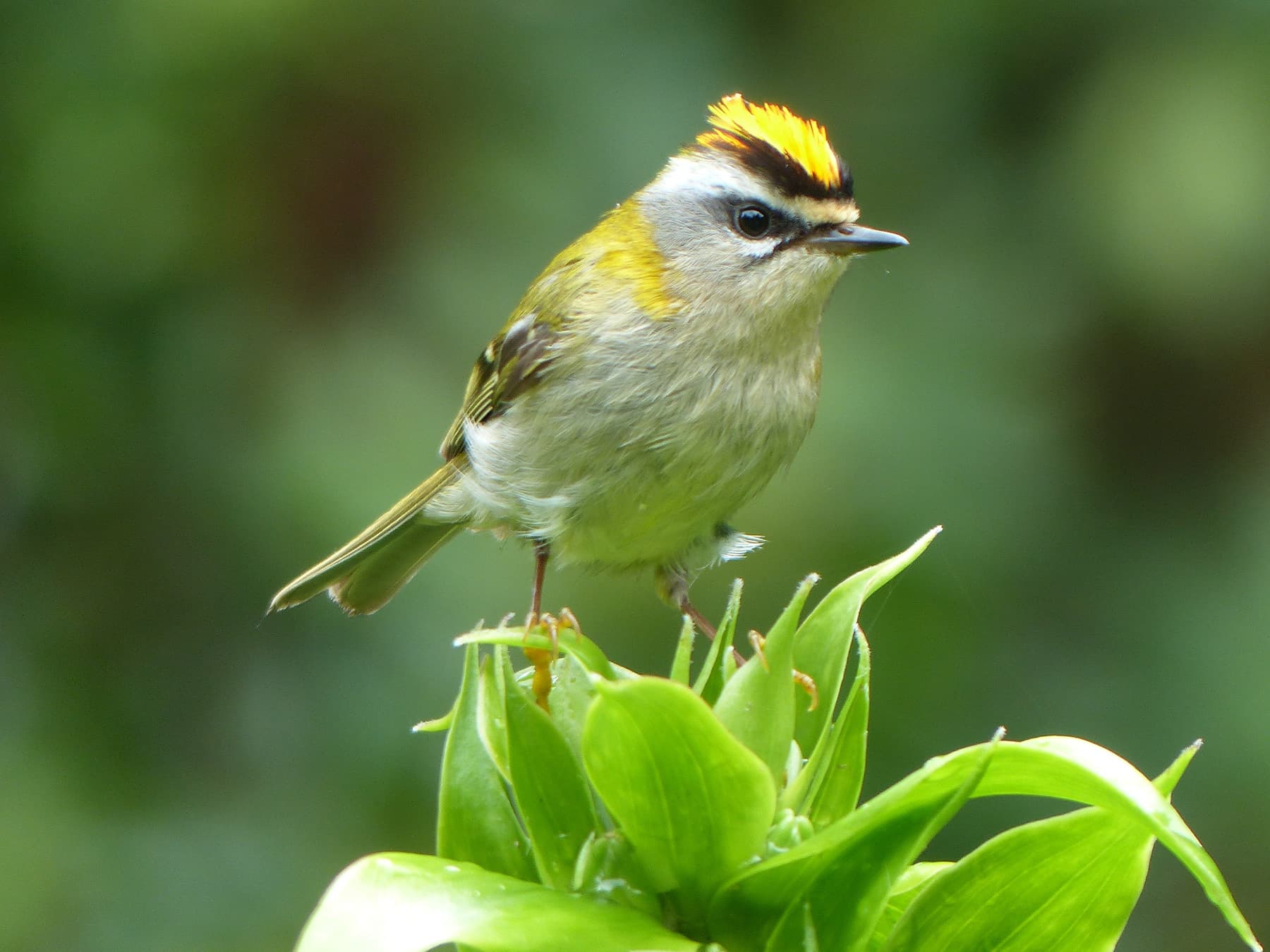
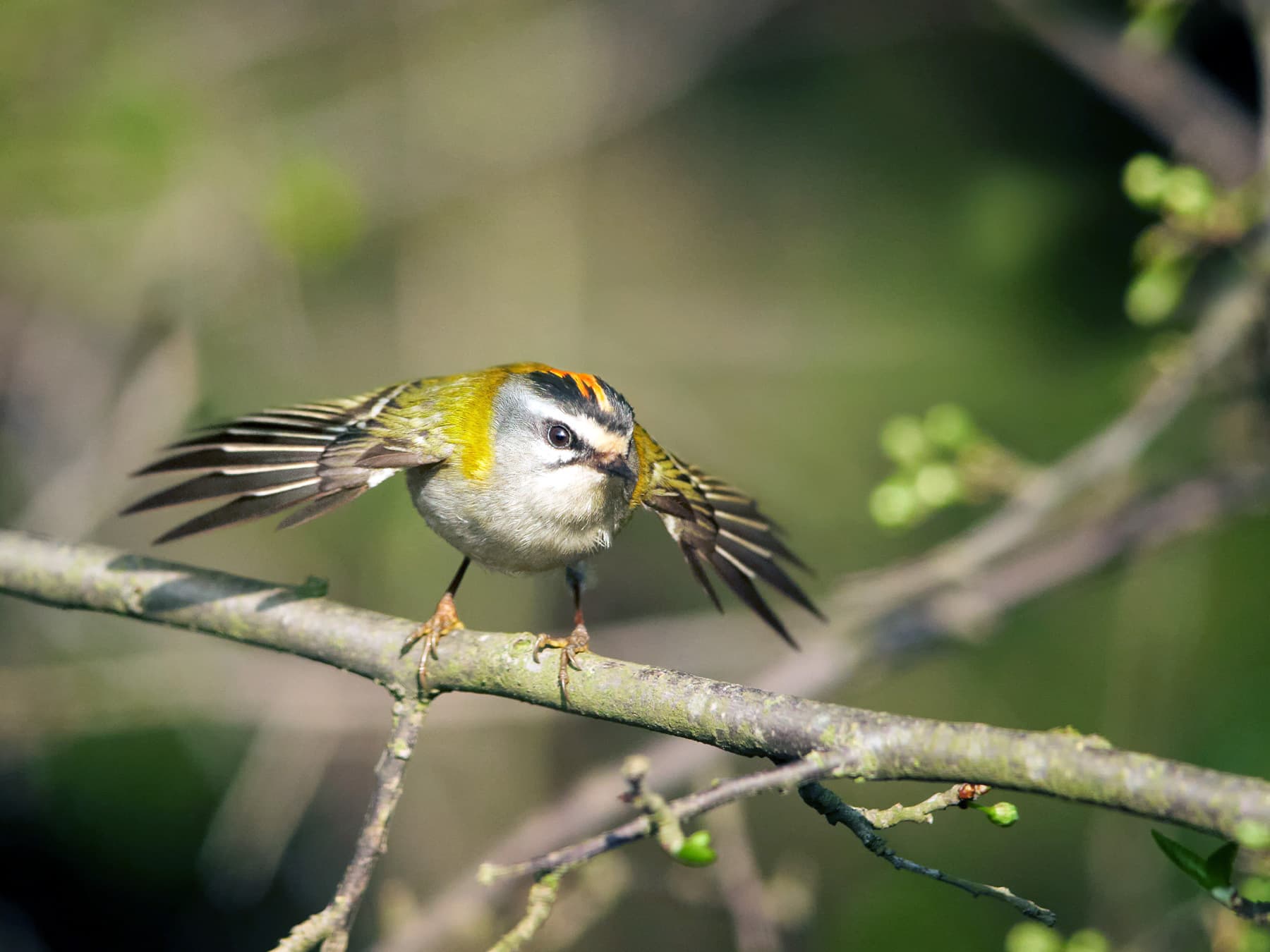
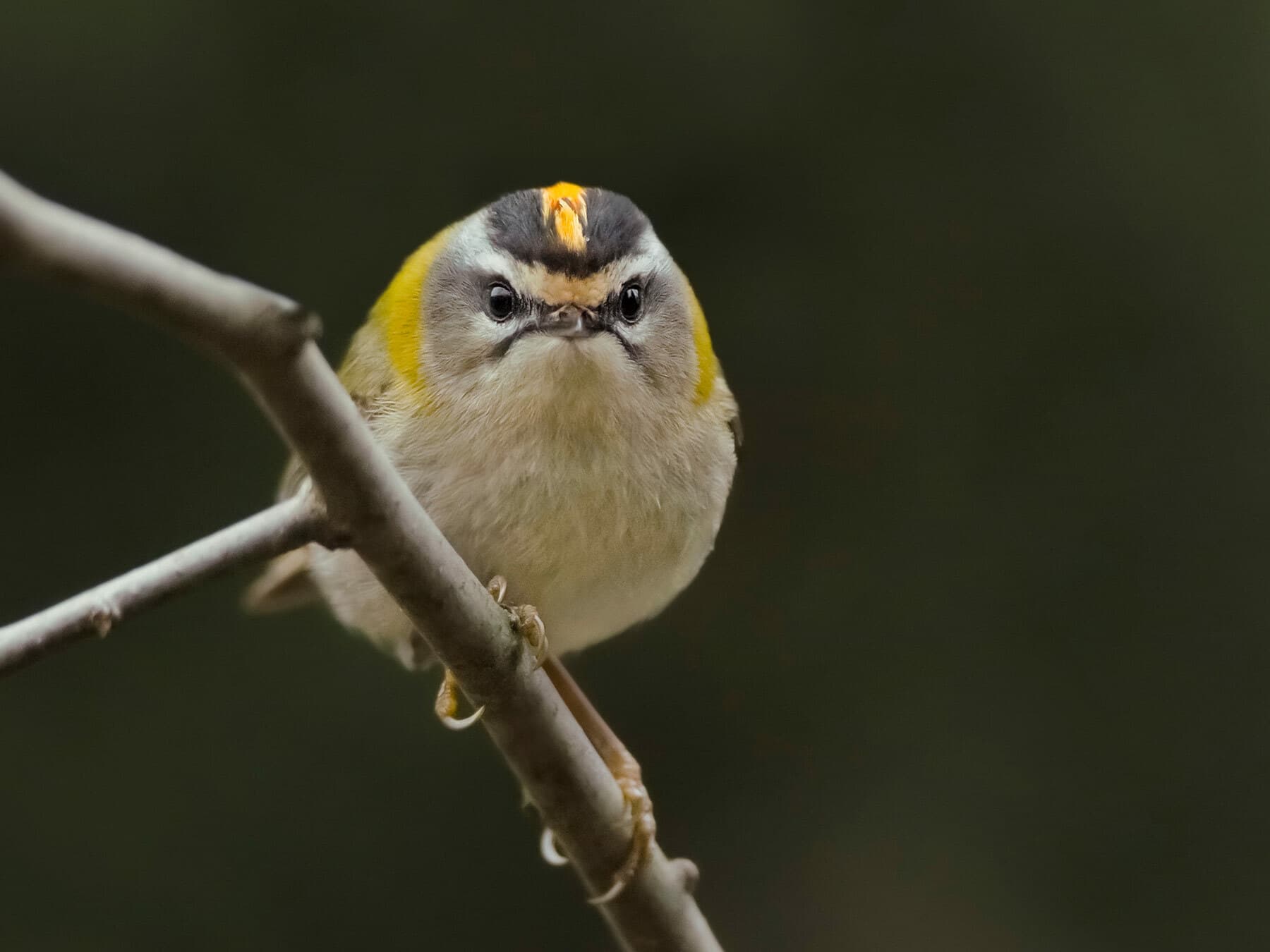
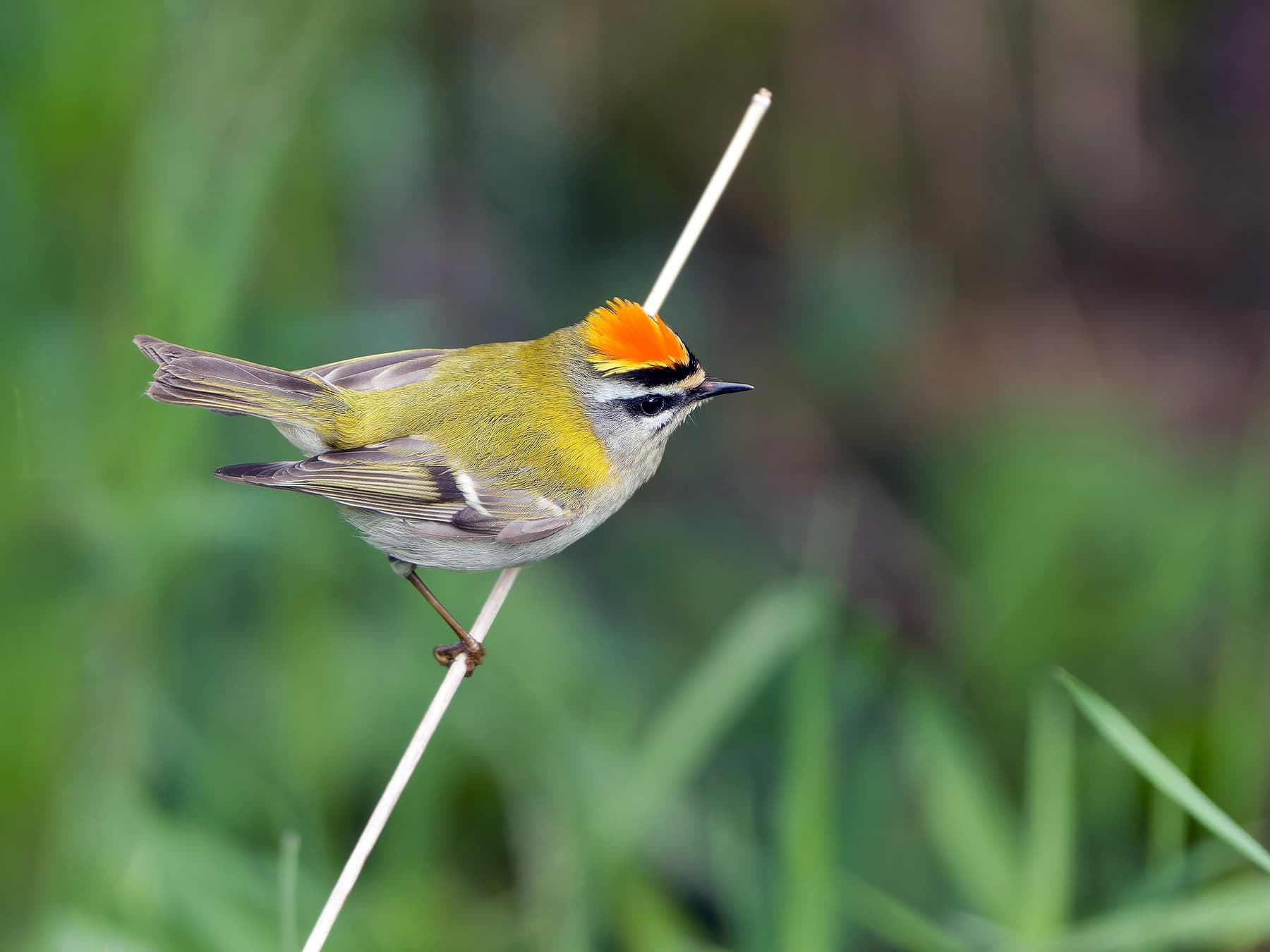
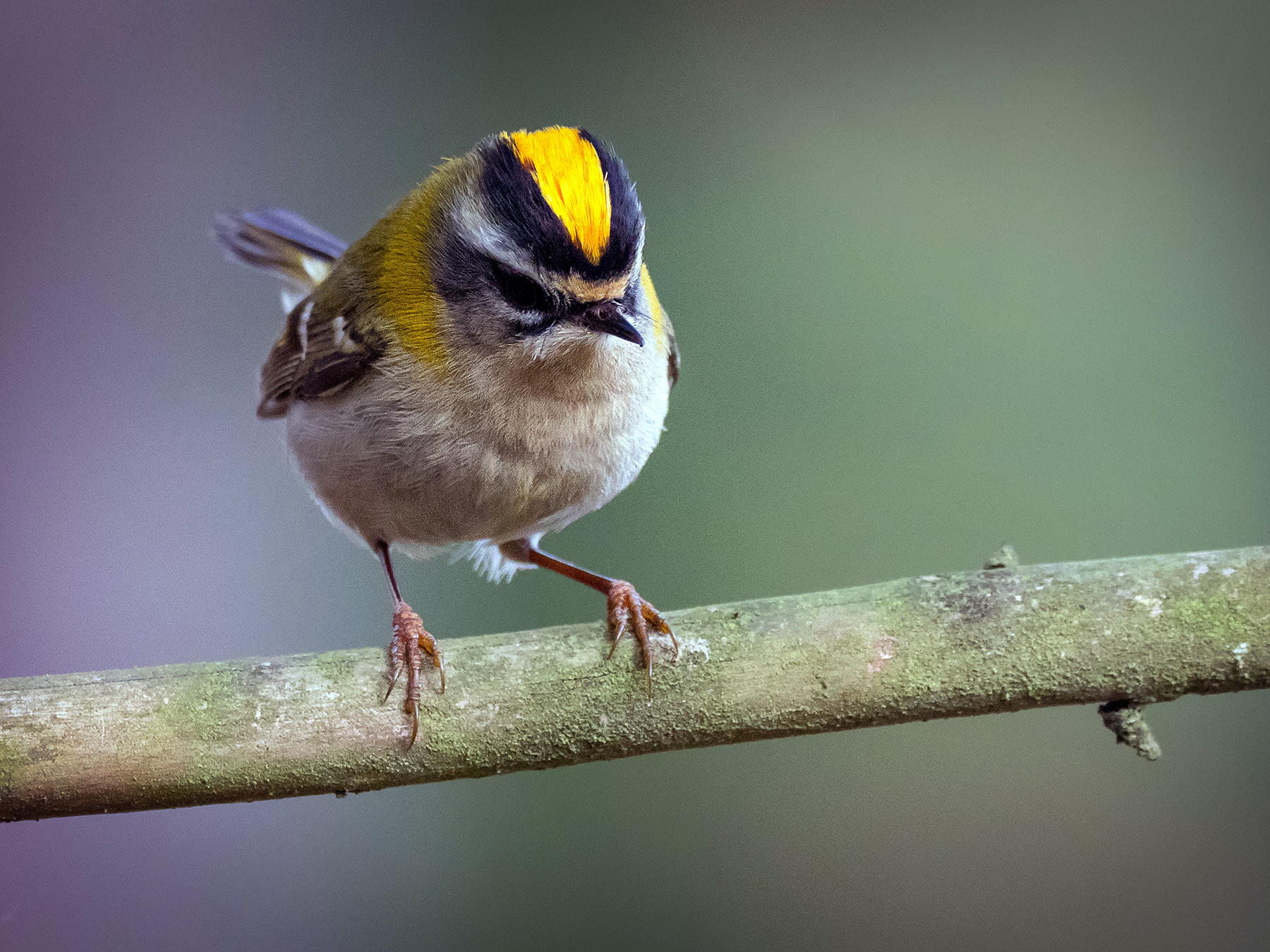
Firecrests are beautiful little birds that combine golden-green, fiery yellow, and contrasting black and white markings. Adults have a dumpy appearance, with a large head that merges directly into their bodies. They are named for the bright yellow and orange crown feathers that they can raise at will.
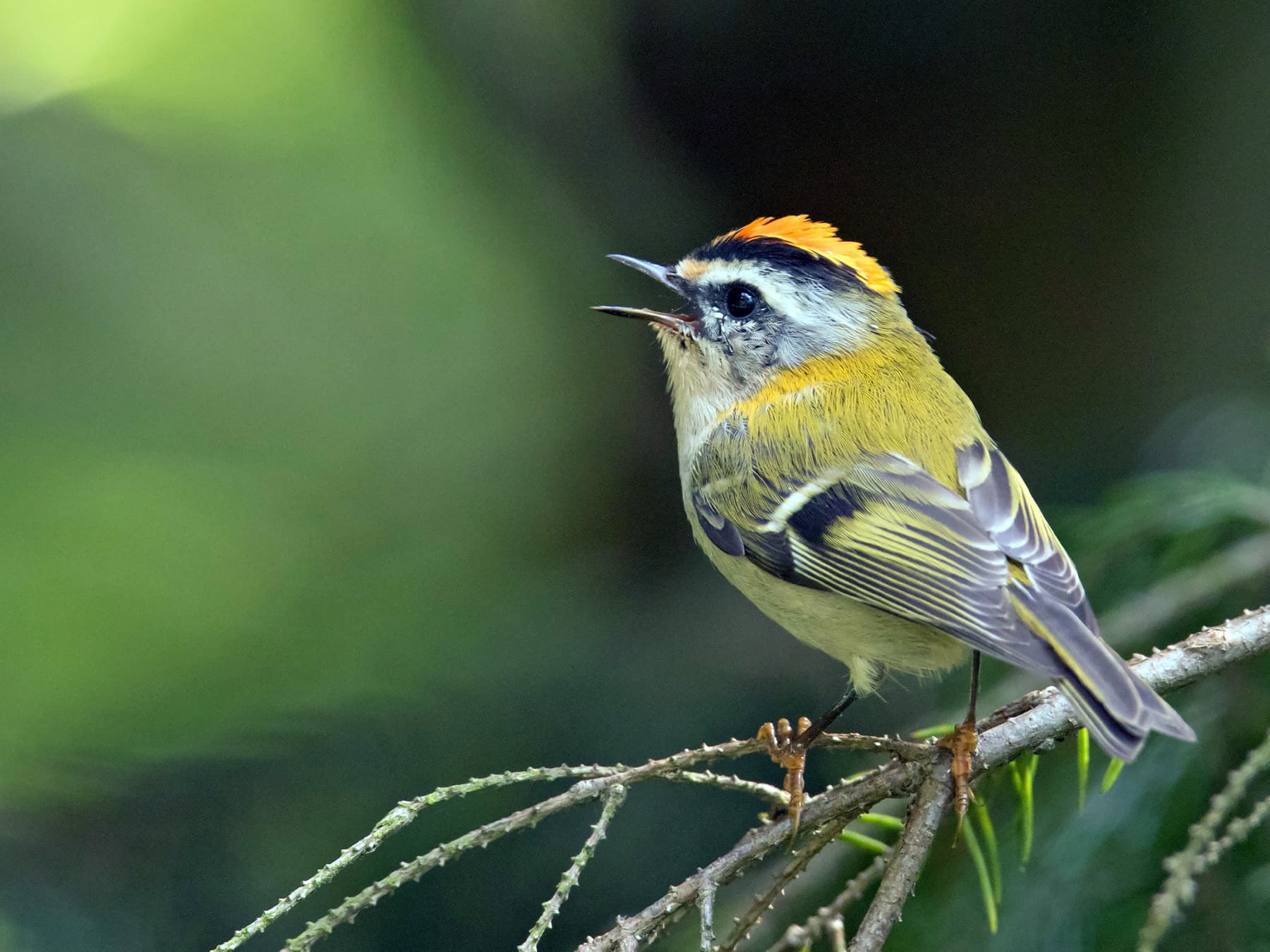
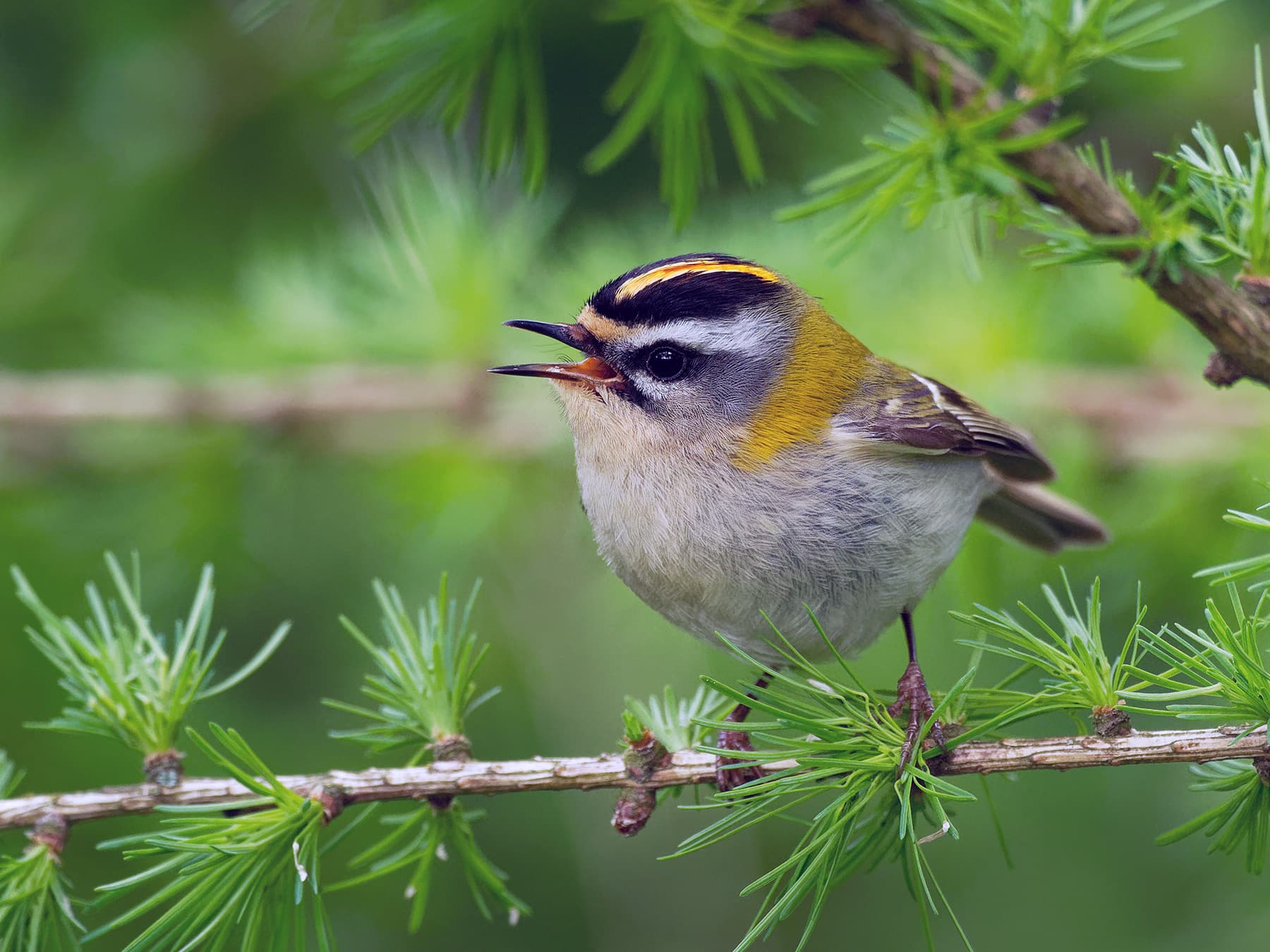
More visible than the colourful crown is the greenish-yellow back and sides of the neck and the boldly striped face. They have a thin, black bill that merges with a black stripe through each eye and a shorter black moustache stripe. A bold white stripe is visible above each eye, and a black ring surrounds their colourful crest.
A pair of white bars are visible on each wing in flight, and their tail is greyer than the rest of their upperparts. Their underparts are pale whitish, becoming warm buffy brown toward the throat, and their legs are a warm brownish or yellowish shade.
Females & Juveniles
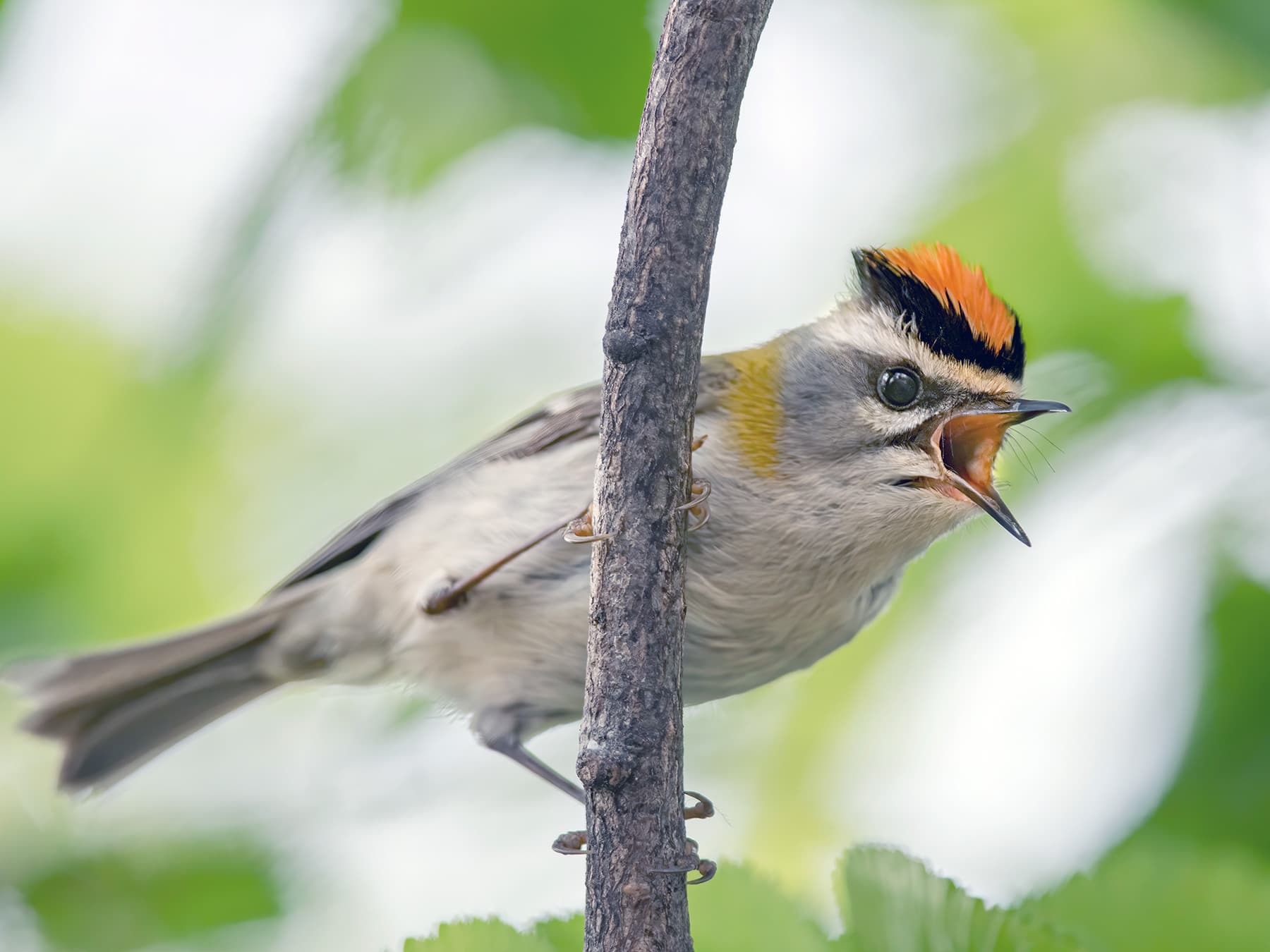
Female Firecrests are very similar to males but can be separated by their crest colour. They have yellow crowns, while males have an orange centre to their yellow crest feathers. Juveniles are duller than adults and lack colourful crests. They also have weakly striped faces, although a pale eyebrow and dark eyestripe may be visible.
Similar Species
These birds are most easily confused with the much commoner Goldcrest. While similar in size, the Goldcrest has a more compact appearance and lacks the contrasting facial stripes of the adult Firecrest.
Check out this handy guide for more information on identifying the two smallest birds in the United Kingdom.
How big are Firecrests?
The Firecrest shares the title of the UK's smallest bird with the Goldcrest: BTO ringers' records put adult Firecrests at 5.4 g on average and Goldcrests at 5.3 g, though the RSPB describes the Firecrest as slightly larger. A Firecrest weighs about half as much as a Wren, which averages 9.9 g.
Length
Adults measure just 9 centimetres from bill to tail-tip.
Weight
Weights range between about 4.6 and 6.5 grams. Females are slightly smaller than males.
Wingspan
These diminutive birds have a 13 to 16 centimetre wingspan.
Its size
Adults- Length
- 9–10 cm
- Wingspan
- 13–16 cm
- Weight
- 4–7 g
Its song and calls
What sound does a Firecrest make?
Firecrests are vocal little birds with a simple high-pitched ‘sip seep seeep’ song that lasts a few seconds and increases in volume. It is similar but faster and less rhythmic than the call of the Goldcrest.
- Song0:00 / 0:19
Recorded in Hampshire, United Kingdom · June 2021
- Call0:00 / 0:12
Recorded in Normandie, France · October 2021
When and where to see it
OctoberPeak season
Most recorded in October
- 1. Cornwall0.54%
- 2. East Sussex0.42%
- 3. Dorset0.38%
- 4. Hampshire0.36%
- 5. Neath Port Talbot0.36%
Each dot is a county, state or province: the bigger and darker, the larger the bird’s share of that place’s bird records that month. Grey dots: no regular records. The ringed point is the centre of the bird’s records this month; the arrow shows how it moved since last month, and the dashed loop its path through the year. “Arrivals” colours places where it becomes regular this month (orange) or is in its last regular month (grey). GBIF eBird Observation Dataset, 2019–2024. Map data: Natural Earth, US Census Bureau; place centres © OpenStreetMap contributors.
In your area
See when the Firecrest is recorded in your county, state or province.
How often the Firecrest turns up in the UK and Ireland through the year, from birdwatchers' records.
United Kingdom
Resident · all year · most records in October
Ireland
Passage migrant · regularly Oct–Jan · most records in October
Show as a table
| Month | United Kingdom | Ireland |
|---|---|---|
| January | 0.059% (regular) | 0.005% (regular) |
| February | 0.067% (regular) | – |
| March | 0.071% (regular) | <0.001% |
| April | 0.049% (regular) | – |
| May | 0.050% (regular) | 0.001% |
| June | 0.040% (regular) | – |
| July | 0.020% (regular) | – |
| August | 0.025% (regular) | – |
| September | 0.049% (regular) | – |
| October | 0.11% (regular) | 0.031% (regular) |
| November | 0.083% (regular) | 0.001% |
| December | 0.069% (regular) | – |
Recorded regularly in
Worldwide: recorded regularly in 51 countries
Countries where it was recorded in at least 3 of the 6 years 2019–2024. Linked countries have their own bird list.
Europe (45)
- Albania
- Andorra
- Austria
- Belarus
- Belgium
- Bosnia & Herzegovina
- Bulgaria
- Croatia
- Czechia
- Denmark
- Estonia
- Finland
- France
- Germany
- Greece
- Guernsey
- Hungary
- Ireland
- Italy
- Jersey
- Kosovo
- Latvia
- Liechtenstein
- Lithuania
- Luxembourg
- Malta
- Monaco
- Montenegro
- Netherlands
- North Macedonia
- Norway
- Poland
- Portugal
- Romania
- Russia
- San Marino
- Serbia
- Slovakia
- Slovenia
- Spain
- Sweden
- Switzerland
- Ukraine
- United Kingdom
- Vatican City
Asia (3)
- Georgia
- Israel
- Turkey
Data: EOD – eBird Observation Dataset (Cornell Lab of Ornithology), accessed via GBIF.org, CC BY 4.0. Records from 2019–2024, aggregated and filtered by Birdfact. How these lists are made
What is the habitat of a Firecrest?
Firecrests are woodland and forest birds that inhabit coniferous, mixed, and deciduous habitats. They also visit hedges and trees in well-wooded gardens, although you’re unlikely to spot these insect-eaters at a bird feeder.
What is the range of a Firecrest?
The Firecrest range centres around Europe, although they reach Morocco, Algeria, and Tunisia in North Africa, and west to Turkey in the Middle East. They occur across most of Central, Southern, and Western Europe, reaching Wales and England in the United Kingdom.
Where do Firecrests live?
Firecrests live among the foliage in trees and bushes where they restlessly search for food, even hanging upside down at times. They are elusive birds that keep to dense vegetation and rarely descend to the ground.
How rare are Firecrests?
Firecrests are still pretty rare in the United Kingdom, with breeding records beginning as late as the 1960s. They appear to be increasing and expanding their range, although they are still very localised in the breeding season, with an estimated population of 2000 to 4000 pairs.
Where can you see Firecrests in the UK?
Firecrests are most widespread in the winter, particularly in coastal areas of England and Wales. The south of England holds the greatest numbers, particularly in Hampshire and Norfolk, while Gloucestershire and Southern Wales are also good areas to look for this sought-after species.
Migration
Do Firecrests migrate?
Firecrests are generally migratory, although they are resident in some parts of their range. They relatively recently began nesting in the UK, although most of the winter population are visitors from continental Europe.
Are Firecrests native to the UK?
The Firecrest is a regular winter visitor, passage migrant, and summer breeder in the United Kingdom.
Tips for seeing it
- Look for quick movements in the upper canopy of coniferous and mixed woodlands
- Listen for their high-pitched, thin 'zee-zee-zee' call
- Observe their habit of hovering briefly while foraging
- In the UK, check evergreen trees in parks and gardens during winter
What it eats
What do Firecrests eat?
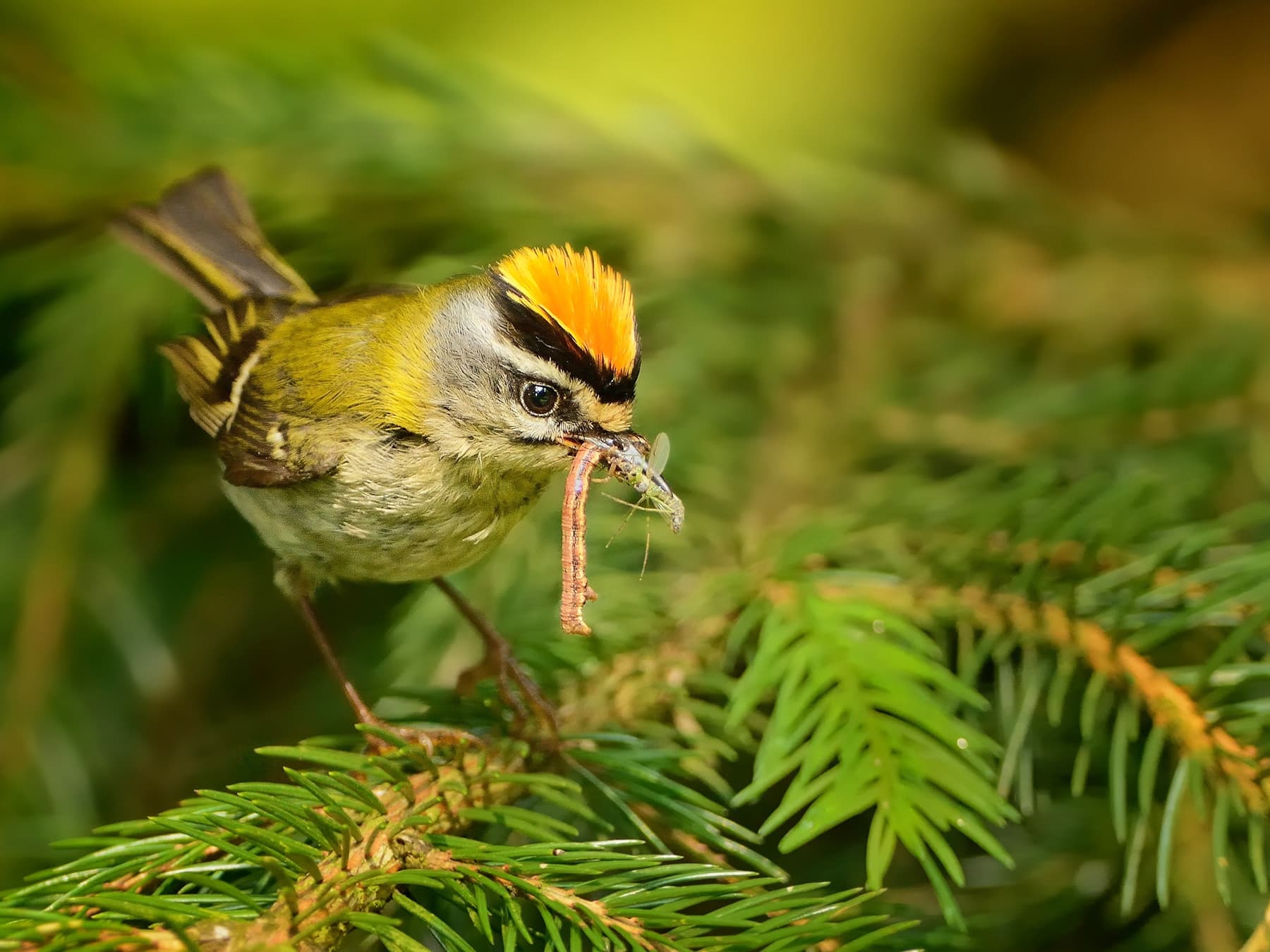
Firecrests are predators that hunt for small insects and other invertebrates. These busy little birds catch their prey on the leaves and branches of vegetation, sometimes hovering to snatch a meal.
What do Firecrest chicks eat?
Firecrest chicks eat small insects delivered by both parents. The young birds fledge the nest after three weeks but will continue to be fed for a further fortnight before gaining independence.
Nesting and breeding
Where do Firecrests nest?
Firecrests nest in deciduous trees, conifers, or ivy. The female builds a deep, three-layered cup lined with comfortable feathers, and her nest is suspended from a hanging branchlet, usually several meters (up to 20m) above the ground.
When do Firecrests nest?
Firecrests nest in spring and summer, usually between the months of April and August. Incubation and chick-rearing take about five weeks, and two broods per season are the norm.
What do Firecrest eggs look like?
Firecrests lay clutches of six to thirteen pinkish eggs with light speckling. Their tiny eggs measure just 10 millimetres wide and 14 millimetres long.
Do Firecrests mate for life?
Firescrests are monogamous during the nesting season. Whether these birds form long-lasting pair bonds is unclear, but with a typical lifespan of just two years, many individuals will have just one partner in their lifetime.
Behaviour
Firecrests are highly active, constantly flitting through foliage in search of insects. They often hang upside down from branches, probing for prey.
During the breeding season, males perform elaborate courtship displays, fanning their colourful crests to attract females.
Lifespan and predators
How long do Firecrests live?
Firecrests have been known to live for up to four years, although the average adult probably lives for just two years.
What are the predators of Firecrests?
Firecrests are most vulnerable to the Sparrowhawk, a prolific predator of small woodland birds. However, they could fall prey to a variety of small birds of prey and mammals.
Are Firecrests protected?
Firecrests in the United Kingdom are protected by the Wildlife and Countryside Act.
Are Firecrests endangered?
Although scarce in the UK, Firecrests are a green-list species. Elsewhere they are secure, with a stable population trend and a ‘Least Concern’ status on the IUCN Red List.
Conservation
While currently listed as Least Concern, Firecrests face threats from habitat loss due to deforestation and climate change. Conservation efforts focus on preserving mature woodlands and promoting sustainable forestry practices to maintain suitable habitats.
Similar birds
Often mistaken for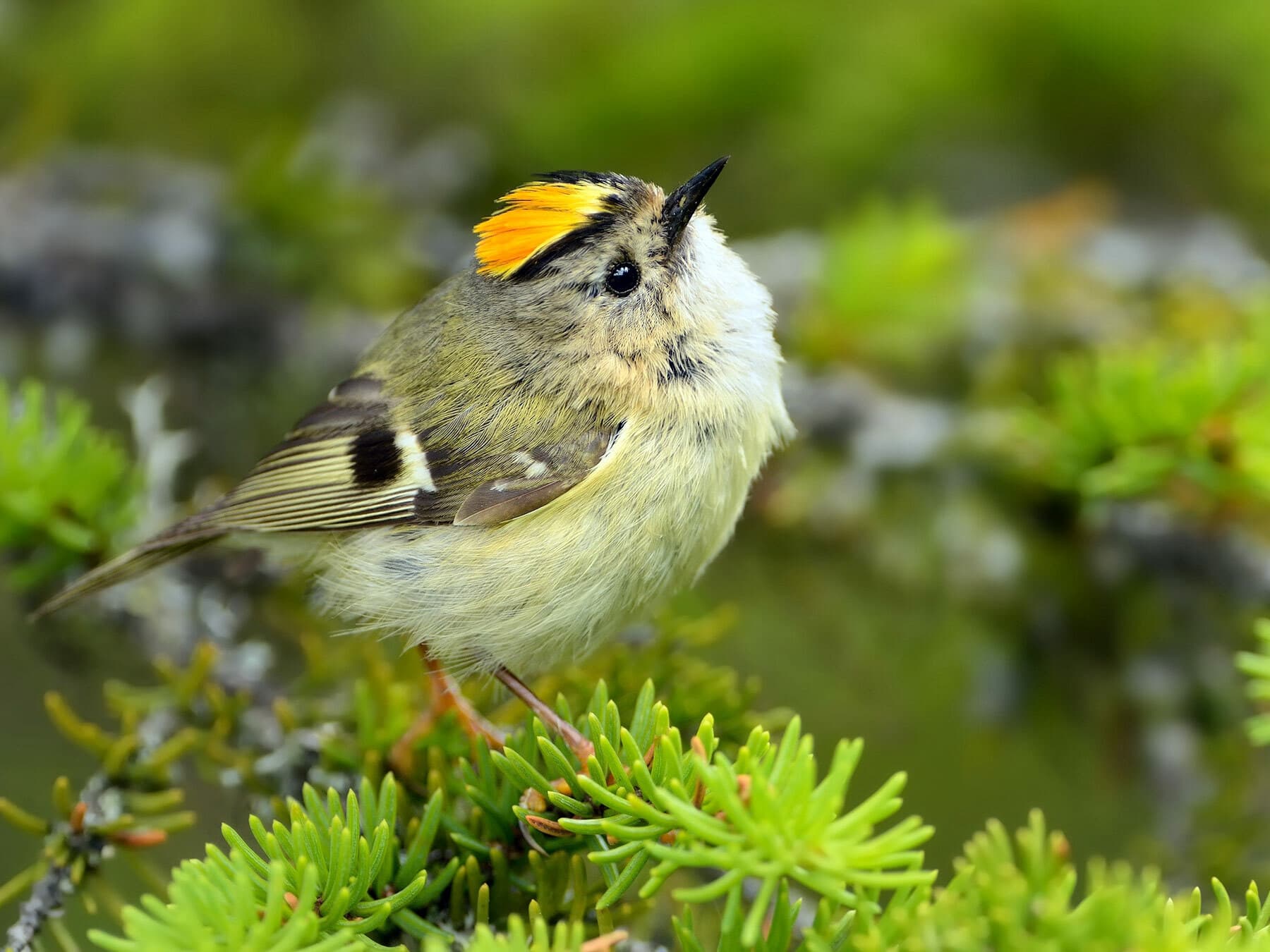
More photos
2 photos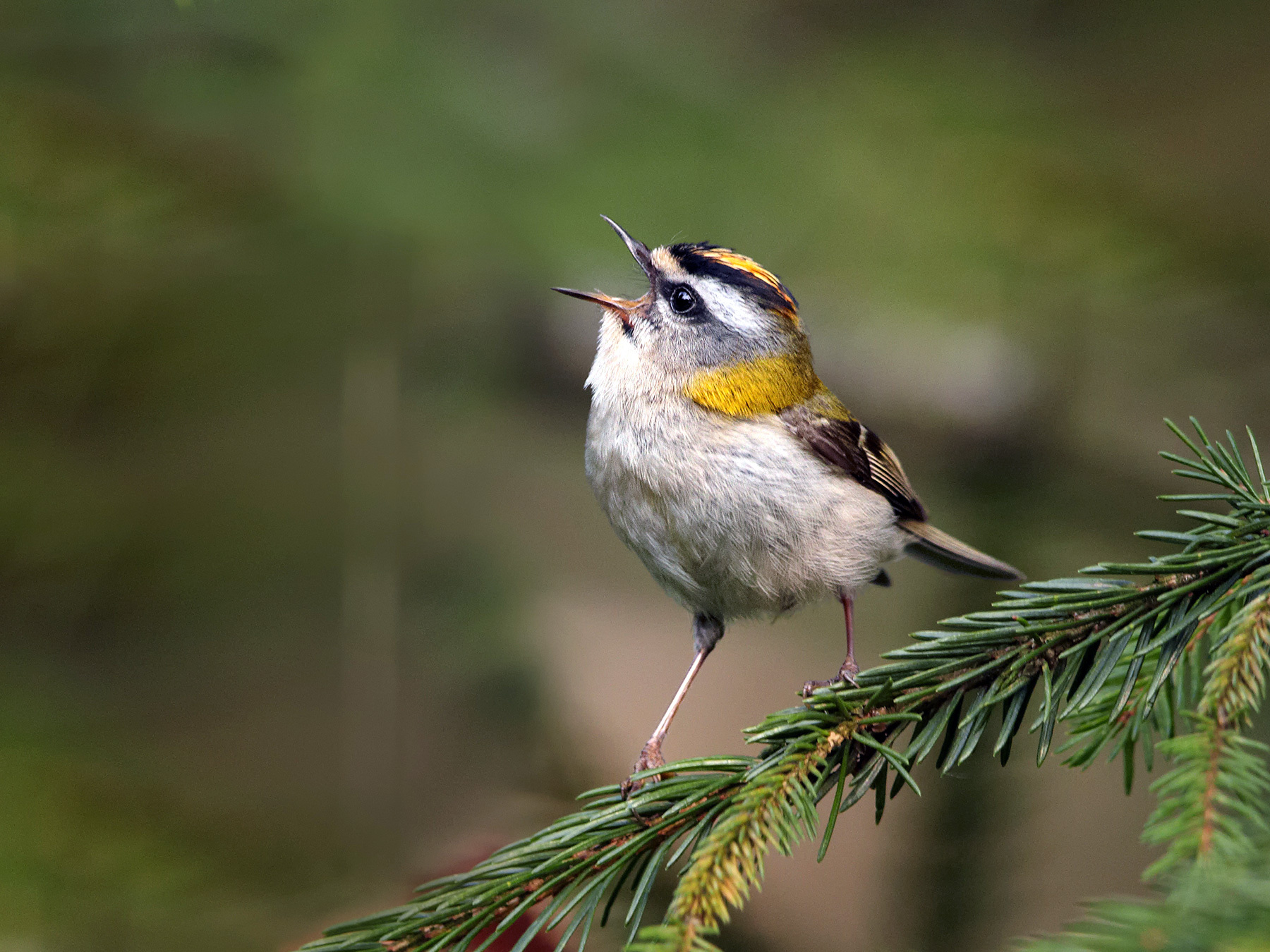
Firecrest guides
2 guidesQuick facts
- Length
- 9–10 cm
- Wingspan
- 13–16 cm
- Weight
- 4–7 g
- Lifespan
- 2–3 years · oldest recorded 4 years
- Family
- Goldcrests & Kinglets
- Migration
- Partial migrant
- Global status (IUCN)
- Least Concern
- World population
- 8,800,000 - 14,950,000 mature individuals
- Population trend
- Stable
- Also called
- Common Firecrest
- Scientific name
- Regulus ignicapilla
Sources
4- 1BirdLife International. 2016. Regulus ignicapilla. The IUCN Red List of Threatened Species 2016: e.T22735002A87781502. Source (opens in a new tab)
- 2EBCC (2015)
- 3BirdLife International. 2016. Regulus ignicapilla. The IUCN Red List of Threatened Species 2016: e.T22735002A87781502. Source (opens in a new tab)
- 4BTO longevity records: maximum age from a ringed bird, 4 years, 1 month, 1 day (set in 2018), BirdFacts: Firecrest (2018) Source (opens in a new tab)

Checked by
Nathan Cope, founder and editor
Nathan founded Birdfact and leads its writers and contributors in the UK, the US and Canada. He has watched and studied birds for more than ten years, and checks every article and species guide before it’s published.