
Eleonora's Falcon
Eleonora's Hawk · Falco eleonorae
By the Birdfact teamChecked by Nathan Cope
On this page13 sections
How to recognise it
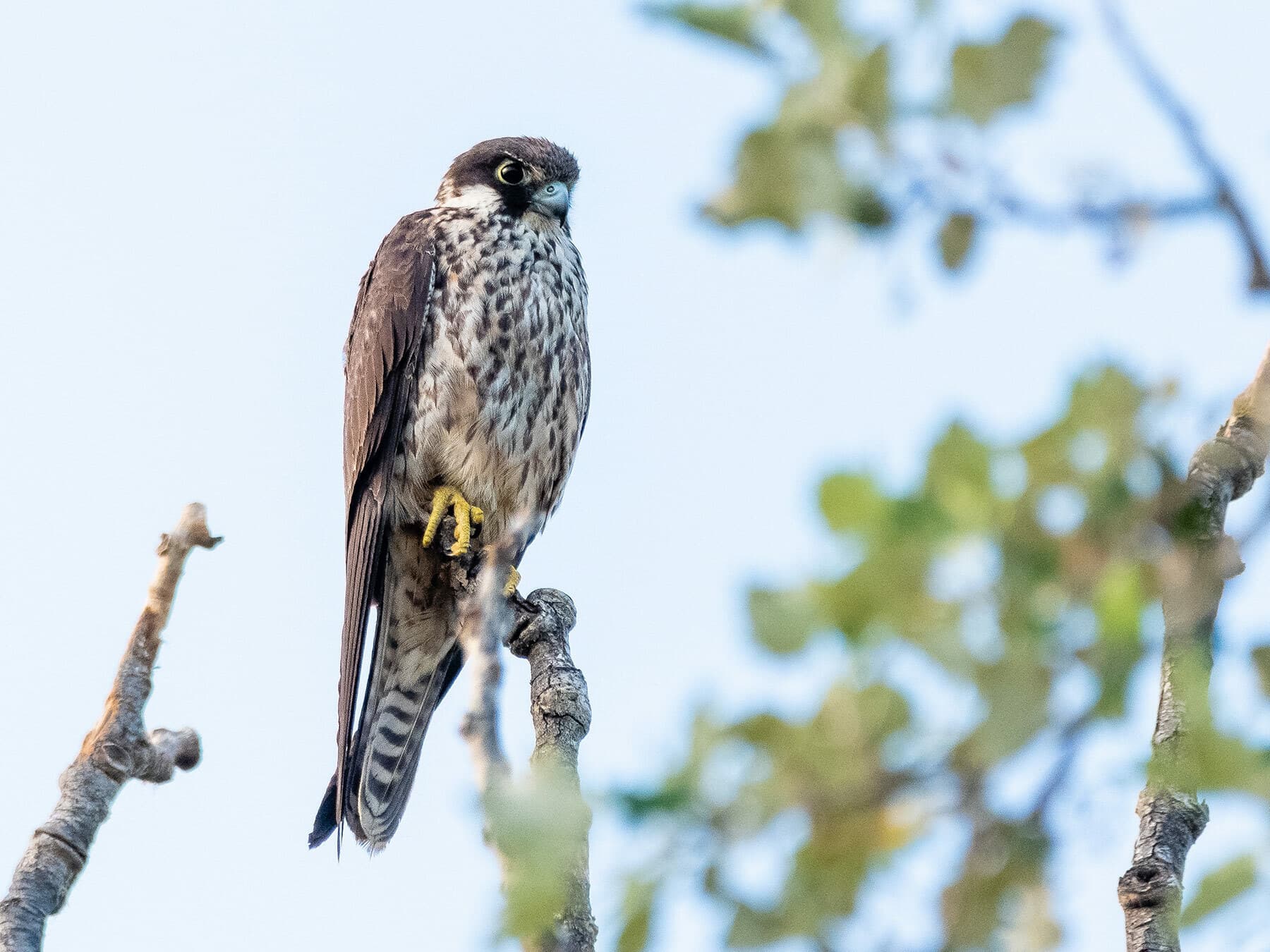
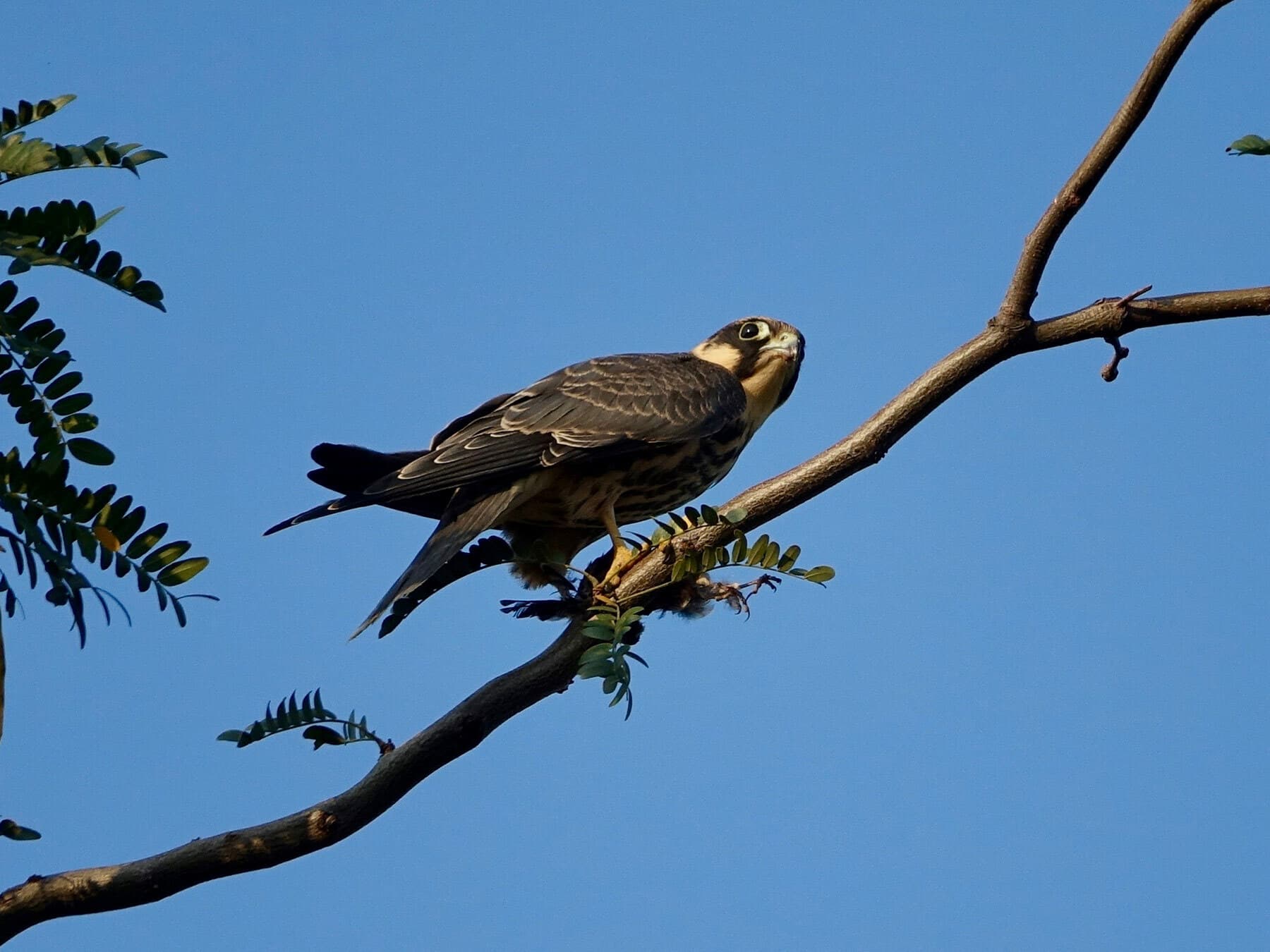
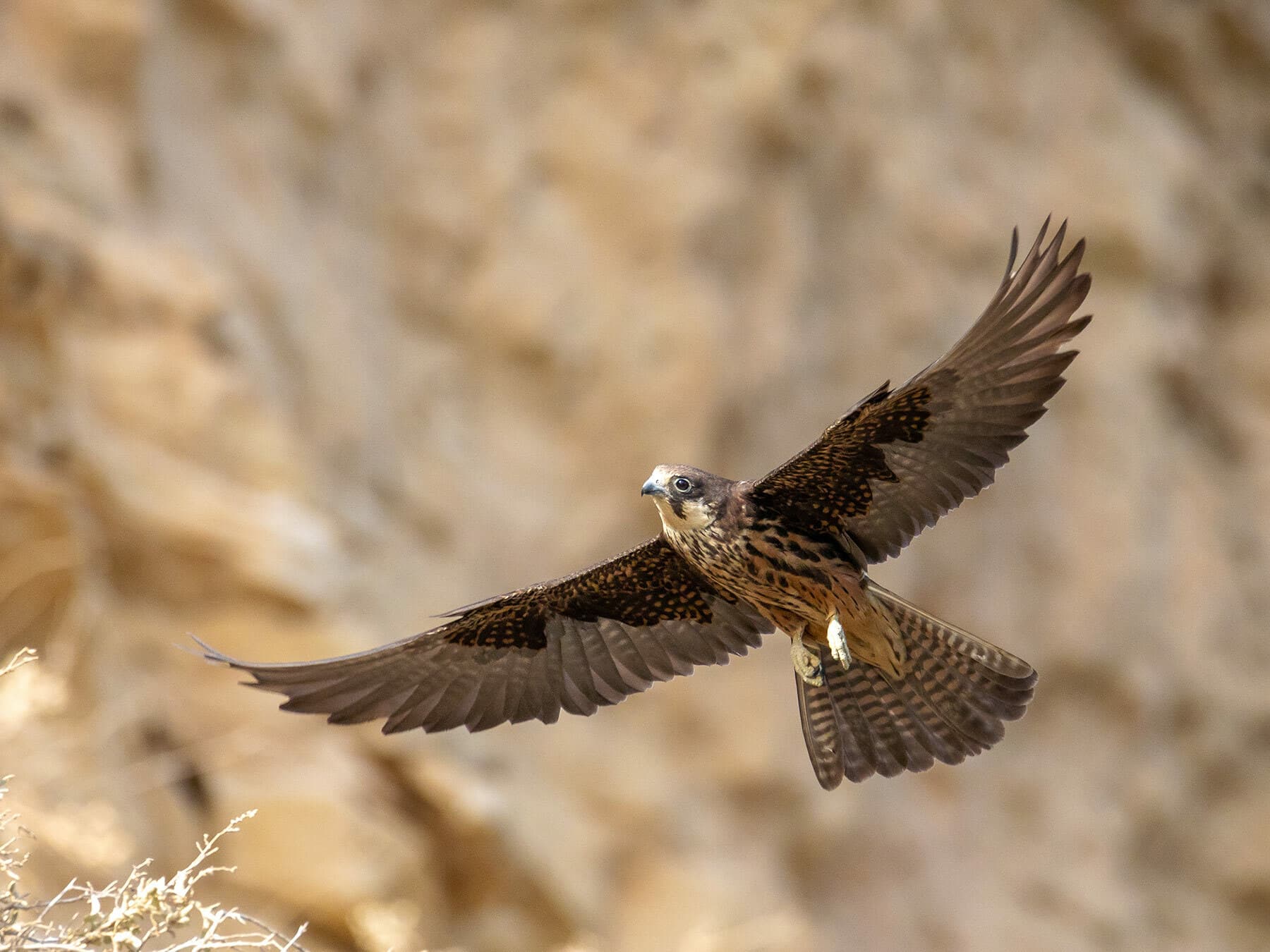
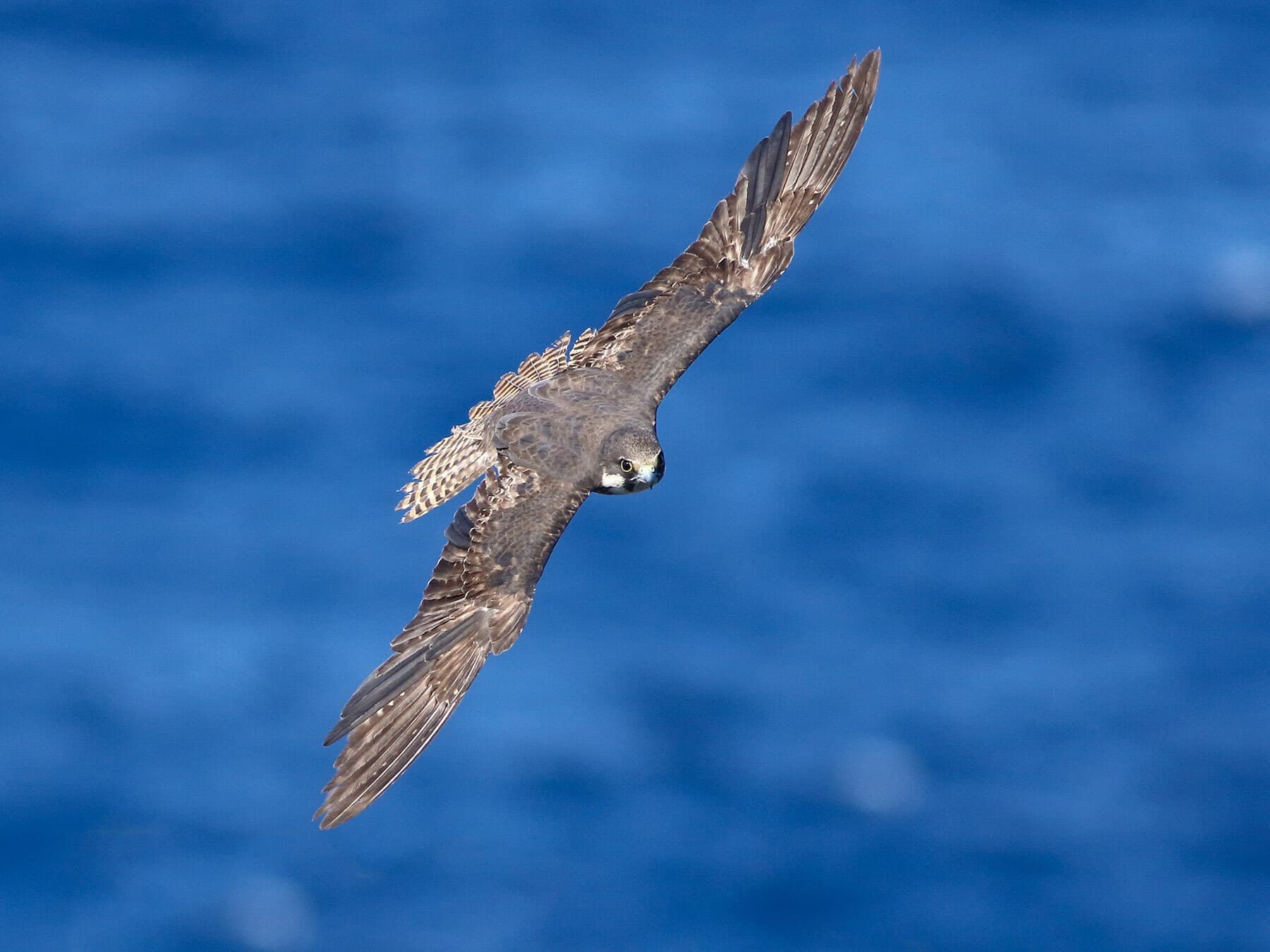
Eleonora's Falcon is a sleek, medium-sized raptor with long, pointed wings and a long tail. Its plumage varies, with two colour morphs: dark and light.
The dark morph is uniformly dark brown, while the light morph has a grey-brown back and white underparts with dark barring.
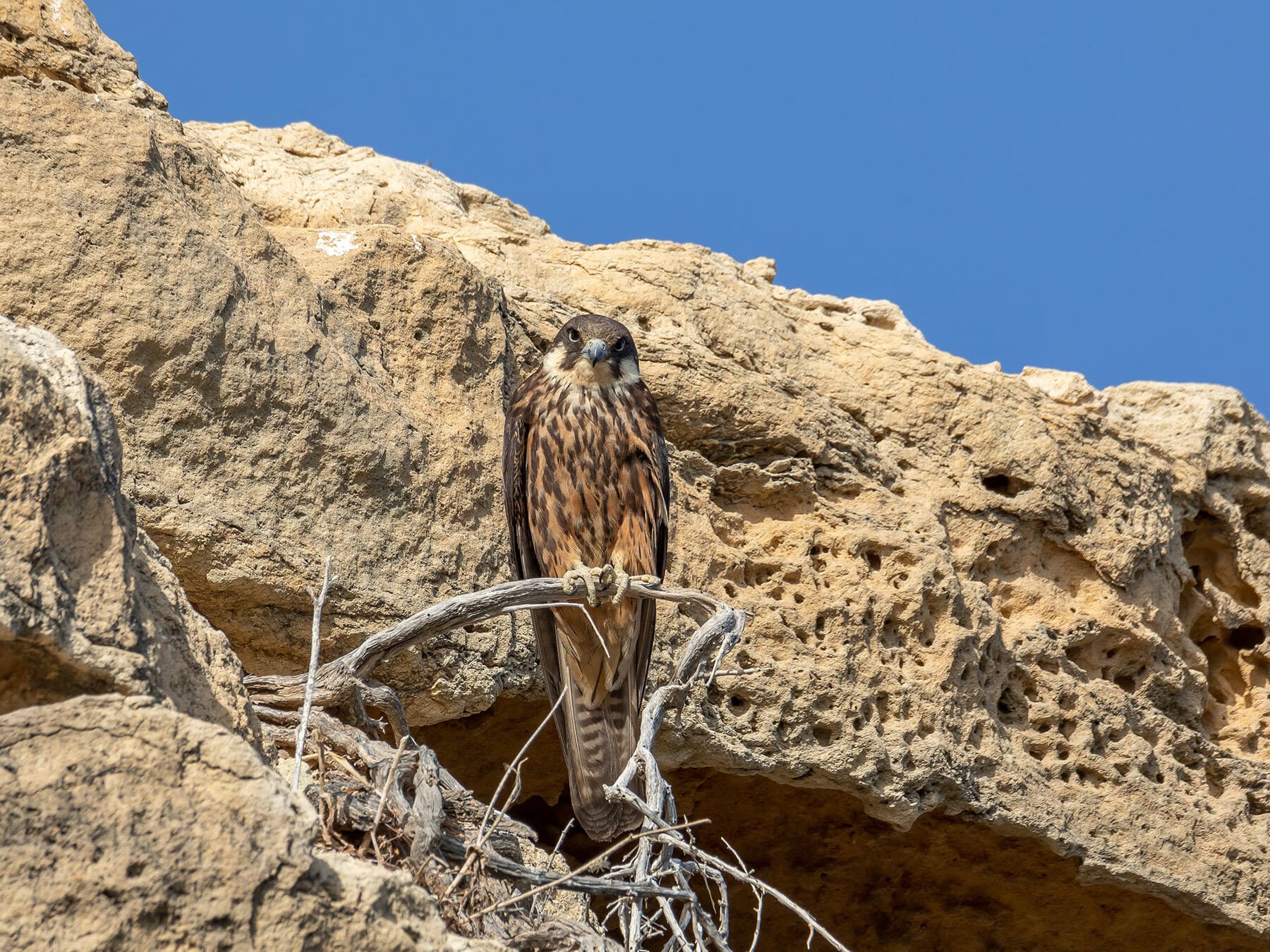
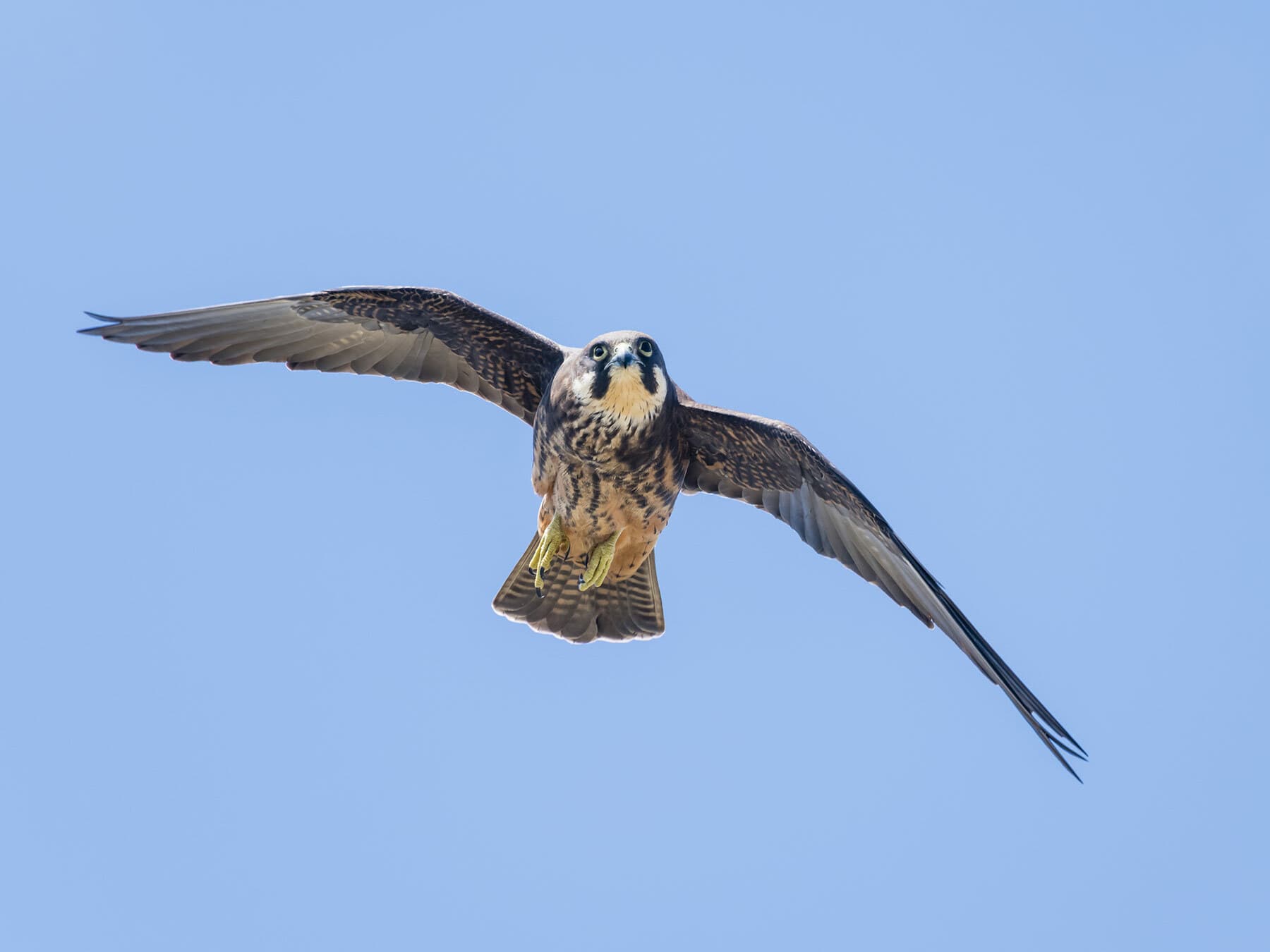
Both morphs have a dark 'moustache' stripe and yellow eye-ring. Juveniles resemble light morphs but have buff-tinged underparts and a blue-grey cere.
Its size
Adults- Length
- 36–42 cm
- Wingspan
- 87–104 cm
- Weight
- 350–450 g
Its song and calls
Eleonora’s falcons vocalise using an often repeated nasal chattering sound with an alarm call similar to many other falcons of ‘kek- kek- kek’.
When and where to see it
The Eleonora's Falcon is not recorded regularly in the UK, Ireland, the United States or Canada.
United Kingdom: recorded in 1 of the 6 years. Too few years to count as a regular visitor.
Worldwide: recorded regularly in 22 countries
Countries where it was recorded in at least 3 of the 6 years 2019–2024. Linked countries have their own bird list.
Data: EOD – eBird Observation Dataset (Cornell Lab of Ornithology), accessed via GBIF.org, CC BY 4.0. Records from 2019–2024, aggregated and filtered by Birdfact. How these lists are made
The Eleonora’s falcon is found in the main on the Canaries and distributed around Mediterranean islands including Mallorca, Ibiza, Crete, Sardinia, Cyprus and many Greek islands in the Aegean Sea forming part of the Dodecanese group. They also inhabit regions of north Africa including Morocco and Algeria. The birds over winter in Madagascar and occasionally Mauritius, Reunion and the Seychelles.
Signs and Spotting tips
Within its breeding territories, predominantly along the Mediterranean the bird can be spotted from late April/early May until it ventures south for the winter in late October, early November. It prefers to nest on small, quiet, often sparsely populated islands located on the migration routes of small birds, its preferred prey. Eleonora’s falcons frequently nest in colonies and will also hunt in pairs. Occasionally it can be seen hunting on mainland areas but seldom nests away from the coast. Eighty per cent of the total population of Eleonora’s falcons breed within the region of the Greek islands.
What it eats
Larger insects such as dragonflies, butterflies, moths, locusts and flying beetles are caught mid-flight and eaten by the falcons on the wing. The preferred diet of small birds including swifts, shrikes and warblers and other fledglings and the occasional bat, may be stored in a larder and eaten later or shared with its young at the nest.
Nesting and breeding
Nesting on the ground, in small caves or on cliff ledges often in close proximity to other Eleonora’s nests, one brood averaging two or three pinky white eggs, with brown spotting, is laid between July and August. The female alone incubates the eggs which hatch up to thirty three days after laying. Fledging takes place between four and five weeks later and whilst in the nest the young are fed solely by the male. The reason for the late breeding season is to coincide with the migration of smaller birds thus ensuring a constant supply of food for both adult and young falcons alike.
Behaviour
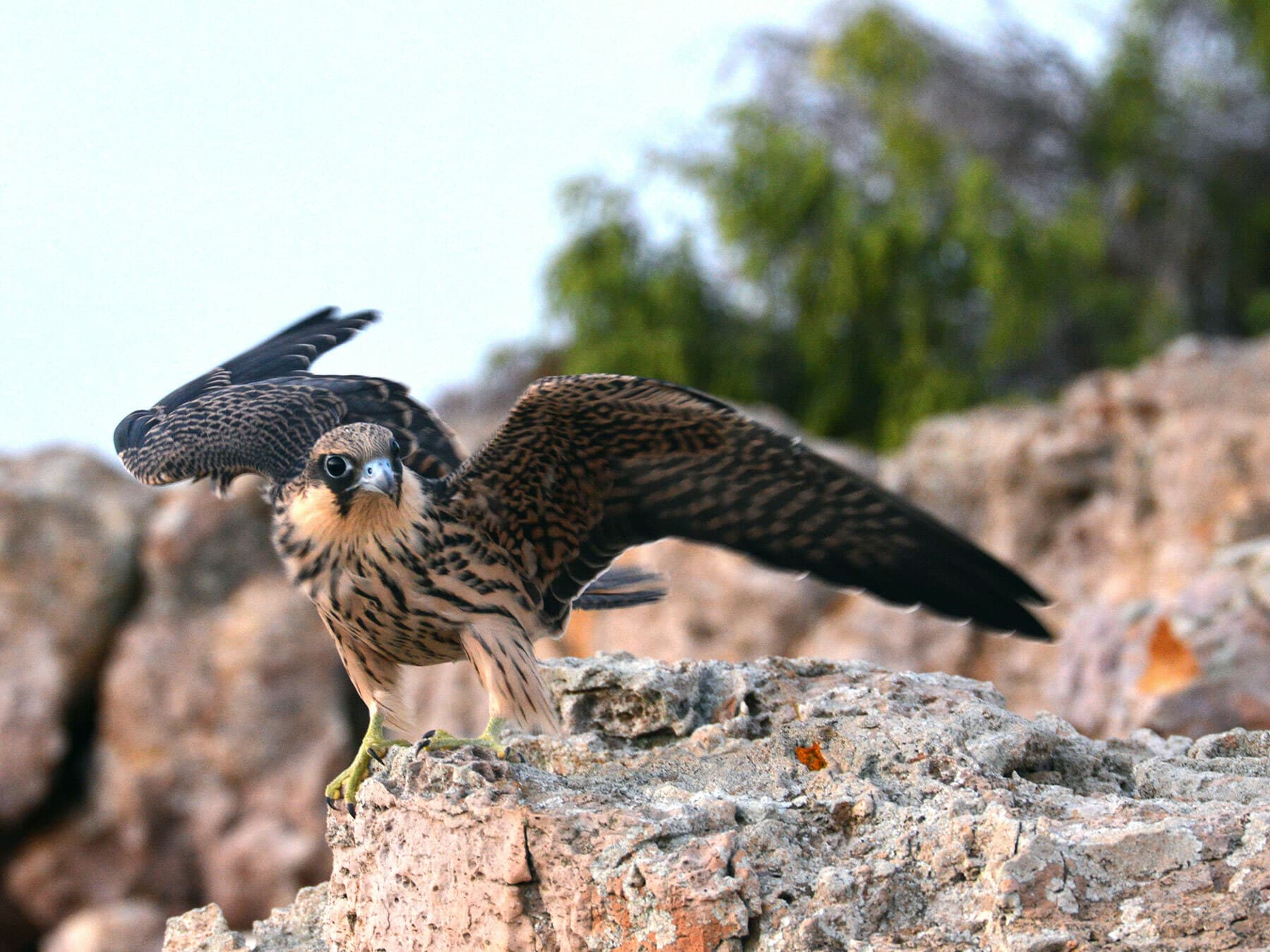
Eleonora's Falcon is known for its unique breeding strategy, which is timing reproduction to coincide with autumn bird migrations. It is highly aerial, spending much of its time soaring and hunting in flight. These falcons are social, often nesting in colonies and engaging in cooperative hunting behaviours.
Lifespan and predators
The lifespan of the Eleonora’s falcon averages ten years.
Conservation
While currently listed as Least Concern, Eleonora's Falcon faces threats from habitat loss and degradation on its breeding islands. Climate change may affect its prey availability and breeding success. Conservation efforts focus on protecting breeding sites and monitoring population trends.
What does an Eleonora’s Falcon look like?
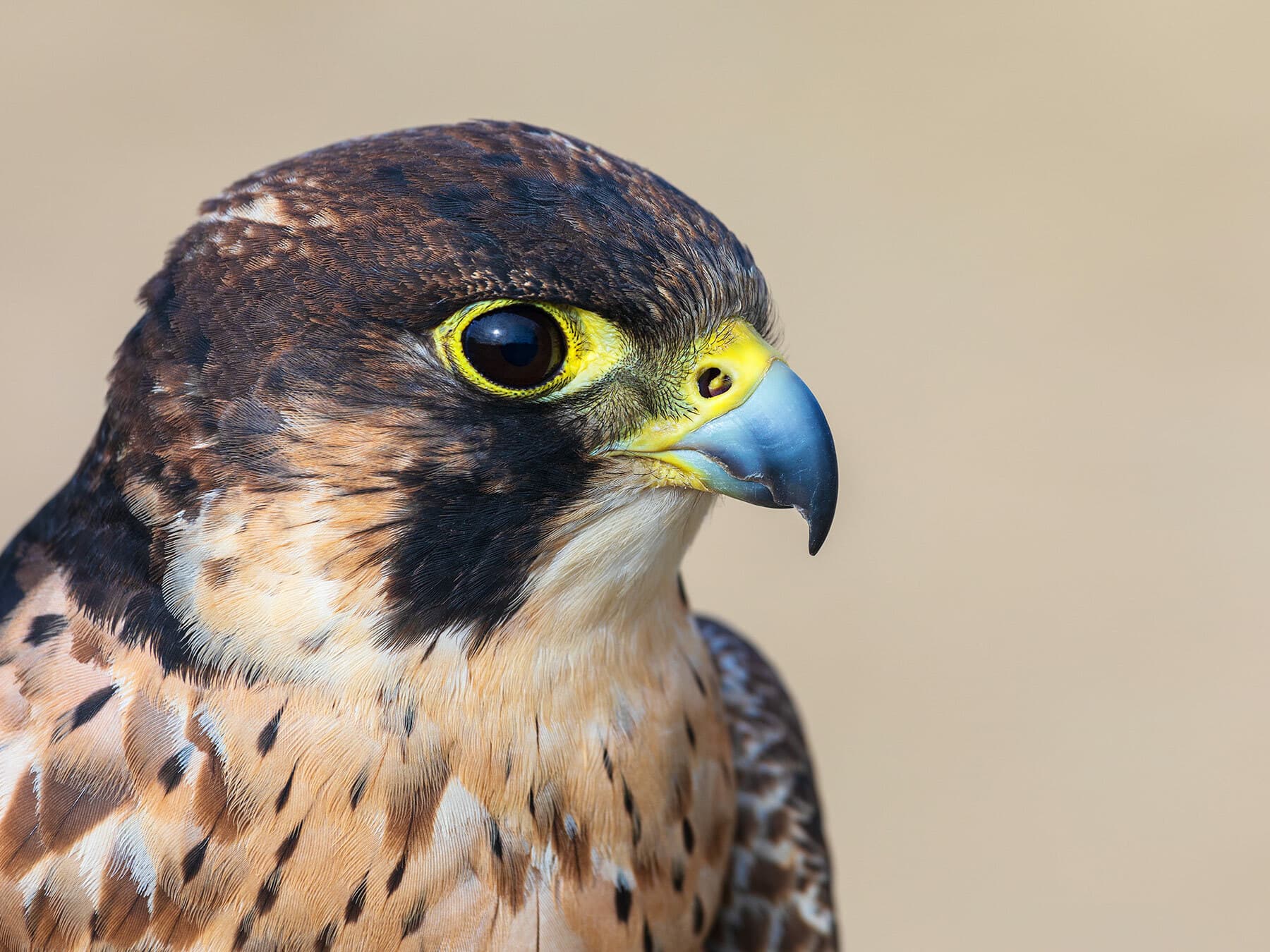
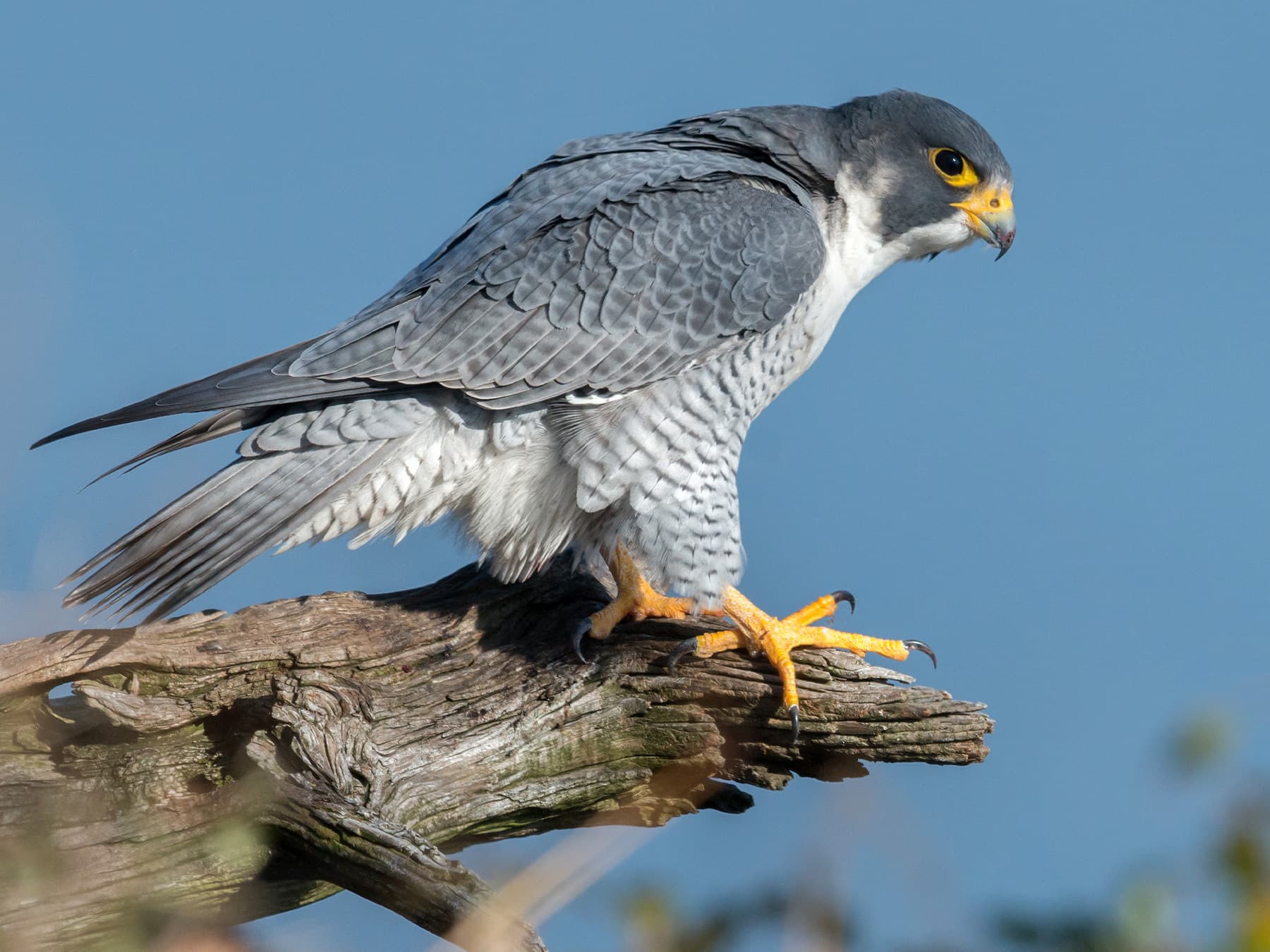
A medium sized bird of prey similar in shape to a peregrine falcon with a long tail and pointed wings. The two varieties of colour and patternation within adults are quite distinct from each other, one being very dark overall and the other with white and rufous markings. The dark form is the less common variant and appears as a very dark brown to black colour with paler flight feathers and prominent deep black underwing coverts. The bill is grey and in males the cere (fleshy covering at the base of the bill on the upper mandible) is yellow as is the eye ring (orbital ring) which is the area of bare skin immediately surrounding the eye itself. The eye colour is dark brown. Females with the dark form are almost identical to the male although slightly larger in size with a blue cere and eye ring. Both sexes have yellow feet. The pale variant of the bird displays a whitish throat, cheeks and side of the neck. There is a black bar extending down from the area of the ceres to the base of the side of the throat, bisecting the white of the cheeks and the throat like a droopy moustache. The breast and belly are a rufous or cream shade with short black streaks. In the lighter variant the colour differences between the sexes on the ceres and orbital rings are as those on the dark form. Juveniles mimic either adult variant although they are generally more brown and have a pale fringe to the feathers on their backs.
Similar birds
Often mistaken for
Quick facts
- Length
- 36–42 cm
- Wingspan
- 87–104 cm
- Weight
- 350–450 g
- Lifespan
- 16–20 years
- Family
- Falcons
- Migration
- Long-distance Migrant
- Global status (IUCN)
- Least Concern
- World population
- 32,400 - 33,300 mature individuals
- Population trend
- Increasing
- Also called
- Eleonora's Hawk
- Scientific name
- Falco eleonorae
Sources
3- 1BirdLife International. 2021. Falco eleonorae. The IUCN Red List of Threatened Species 2021: e.T22696442A205714571. Source (opens in a new tab)
- 2BirdLife International. 2021. Falco eleonorae. The IUCN Red List of Threatened Species 2021: e.T22696442A205714571. Source (opens in a new tab)
- 3BirdLife International. 2021. Falco eleonorae. The IUCN Red List of Threatened Species 2021: e.T22696442A205714571. Source (opens in a new tab)

Checked by
Nathan Cope, founder and editor
Nathan founded Birdfact and leads its writers and contributors in the UK, the US and Canada. He has watched and studied birds for more than ten years, and checks every article and species guide before it’s published.