


Dusky Thrush
Turdus eunomus
By the Birdfact teamChecked by Nathan Cope
On this page13 sections
How to recognise it
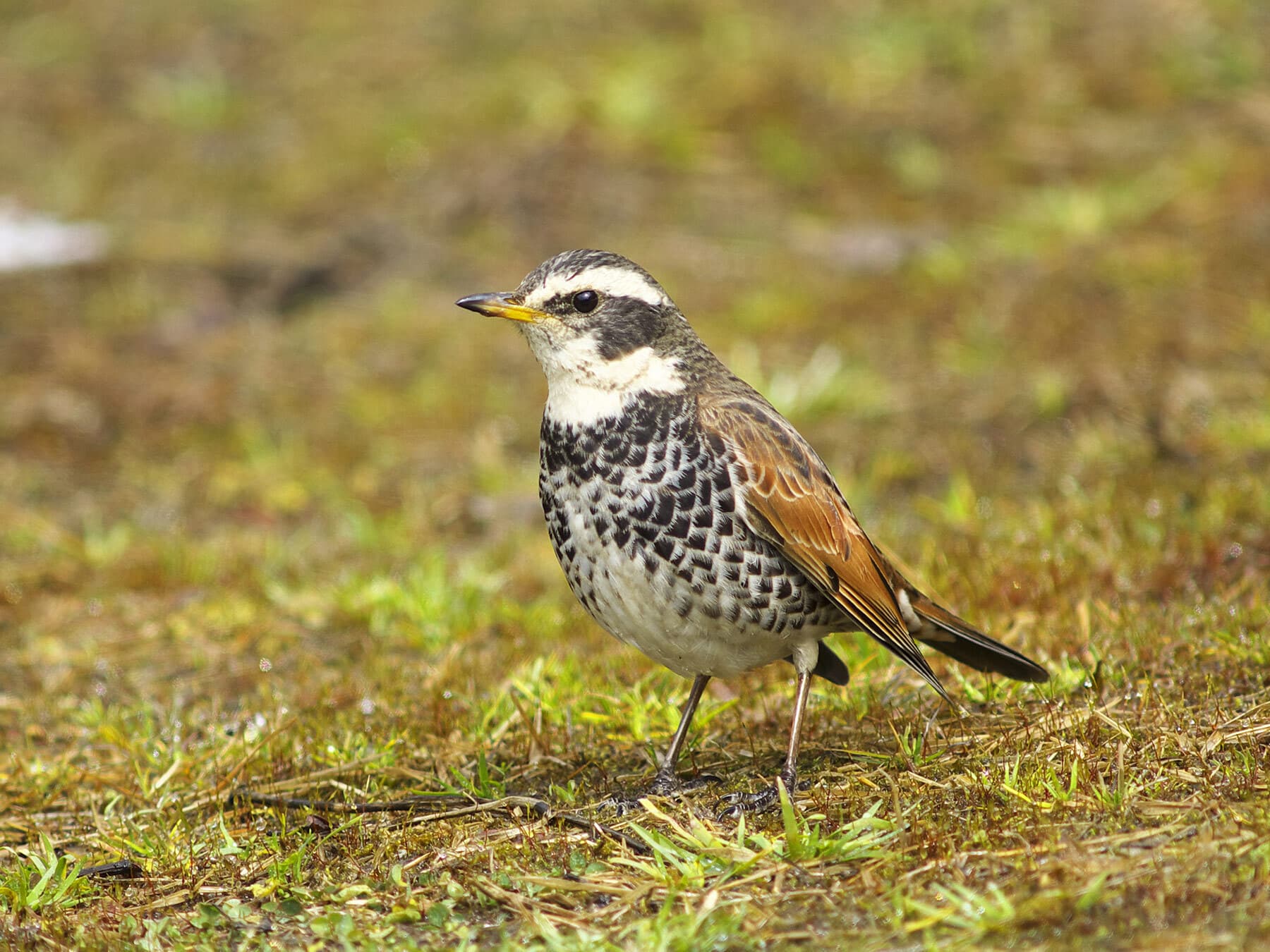
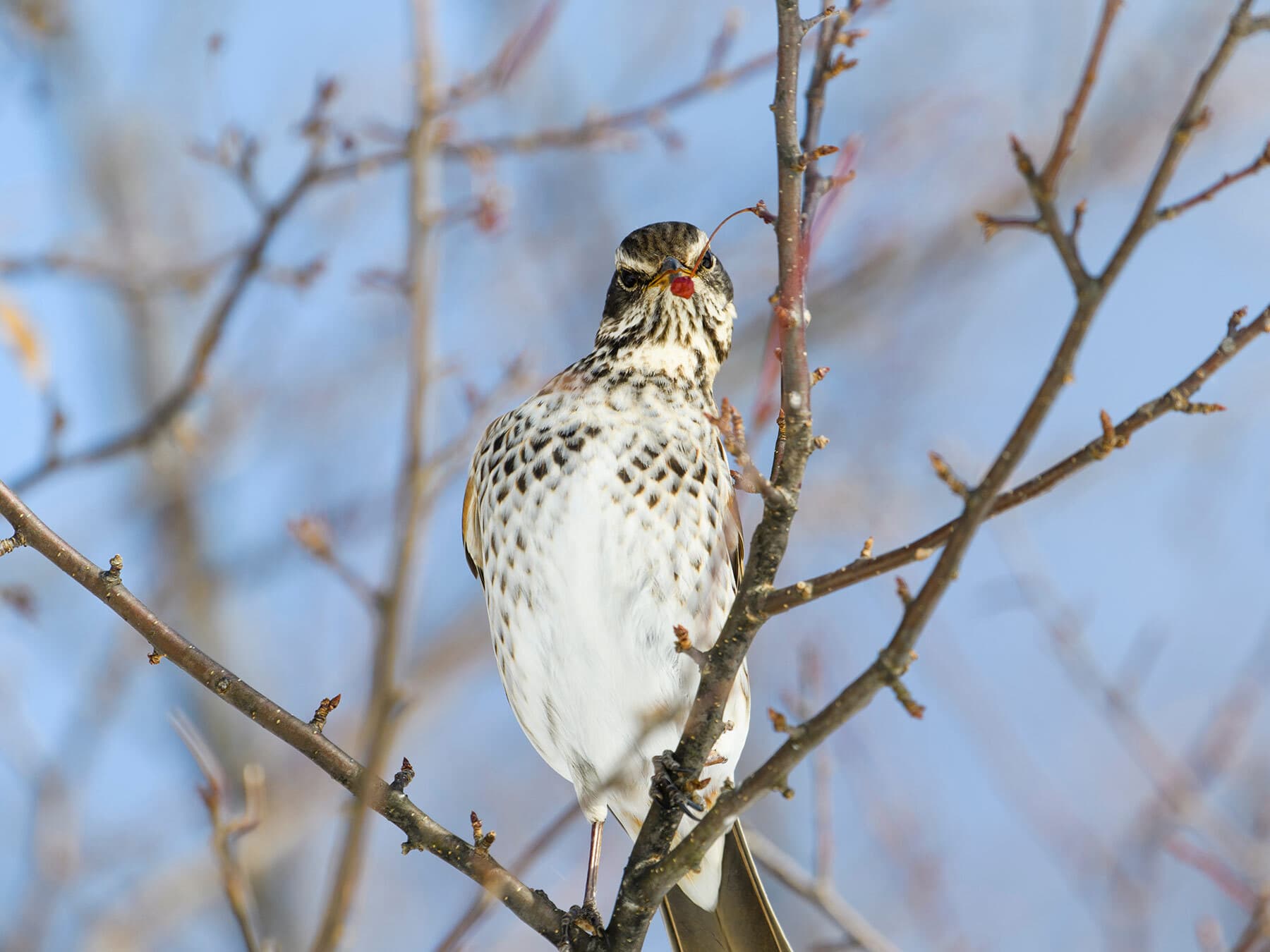
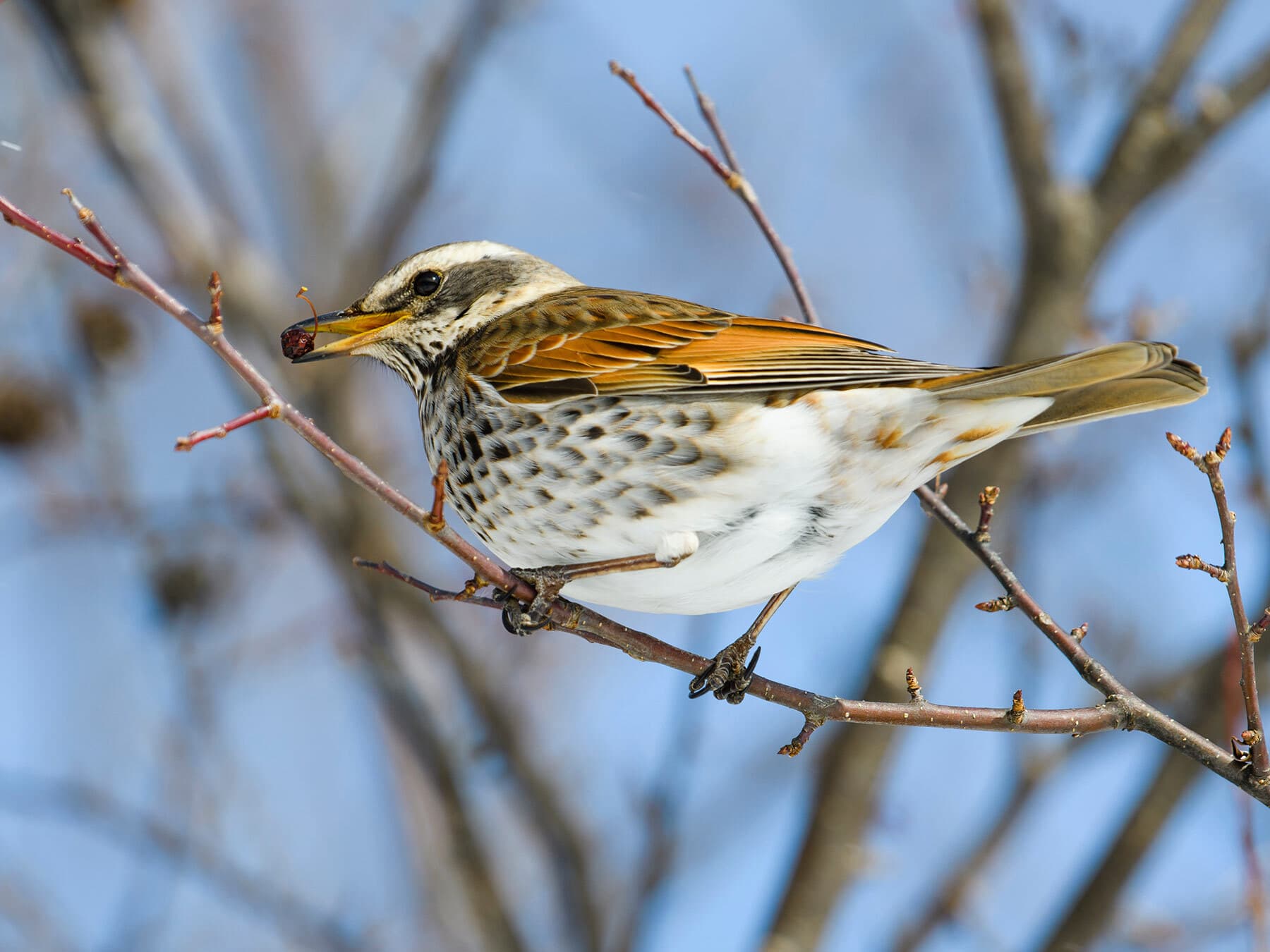
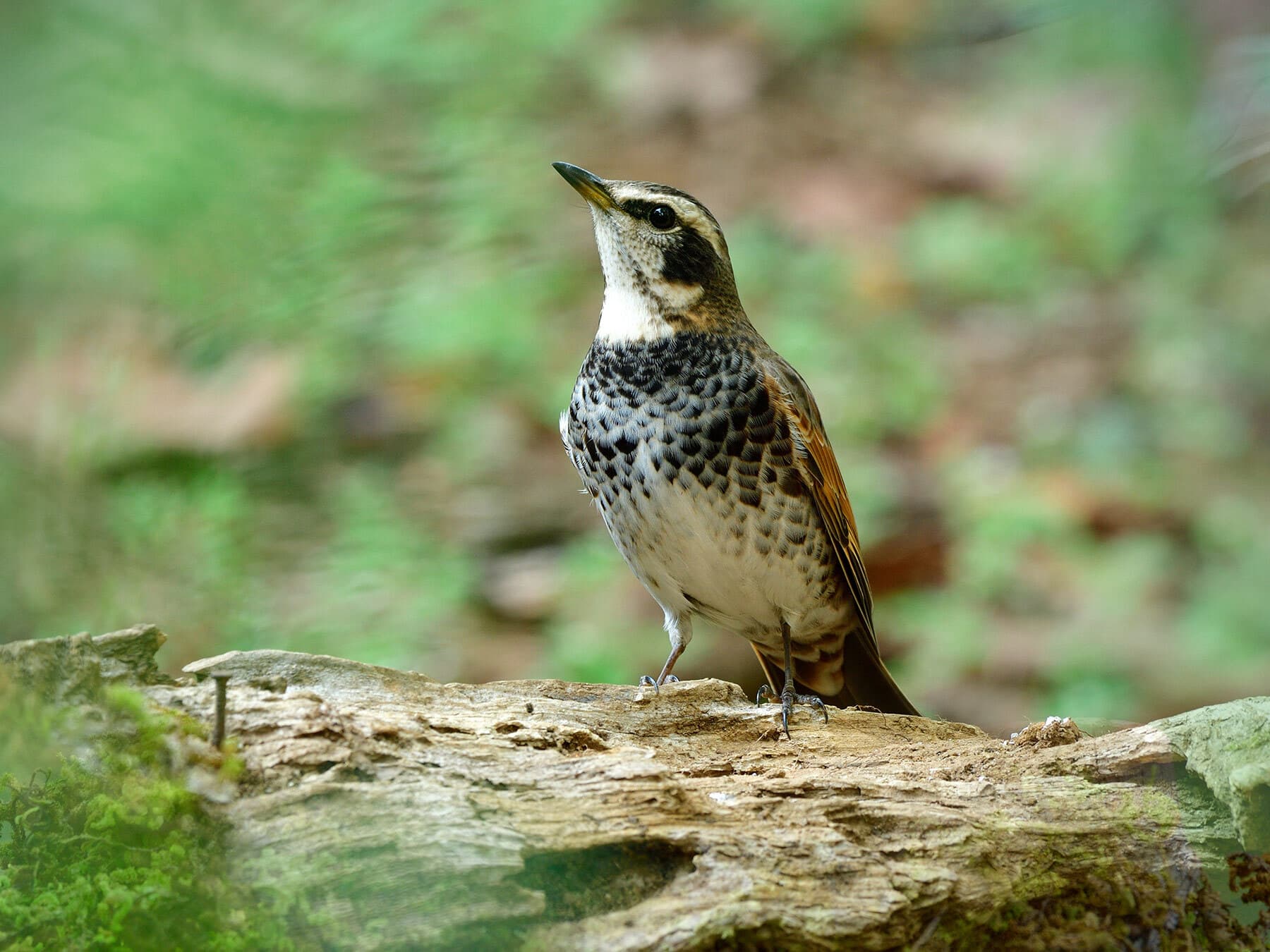
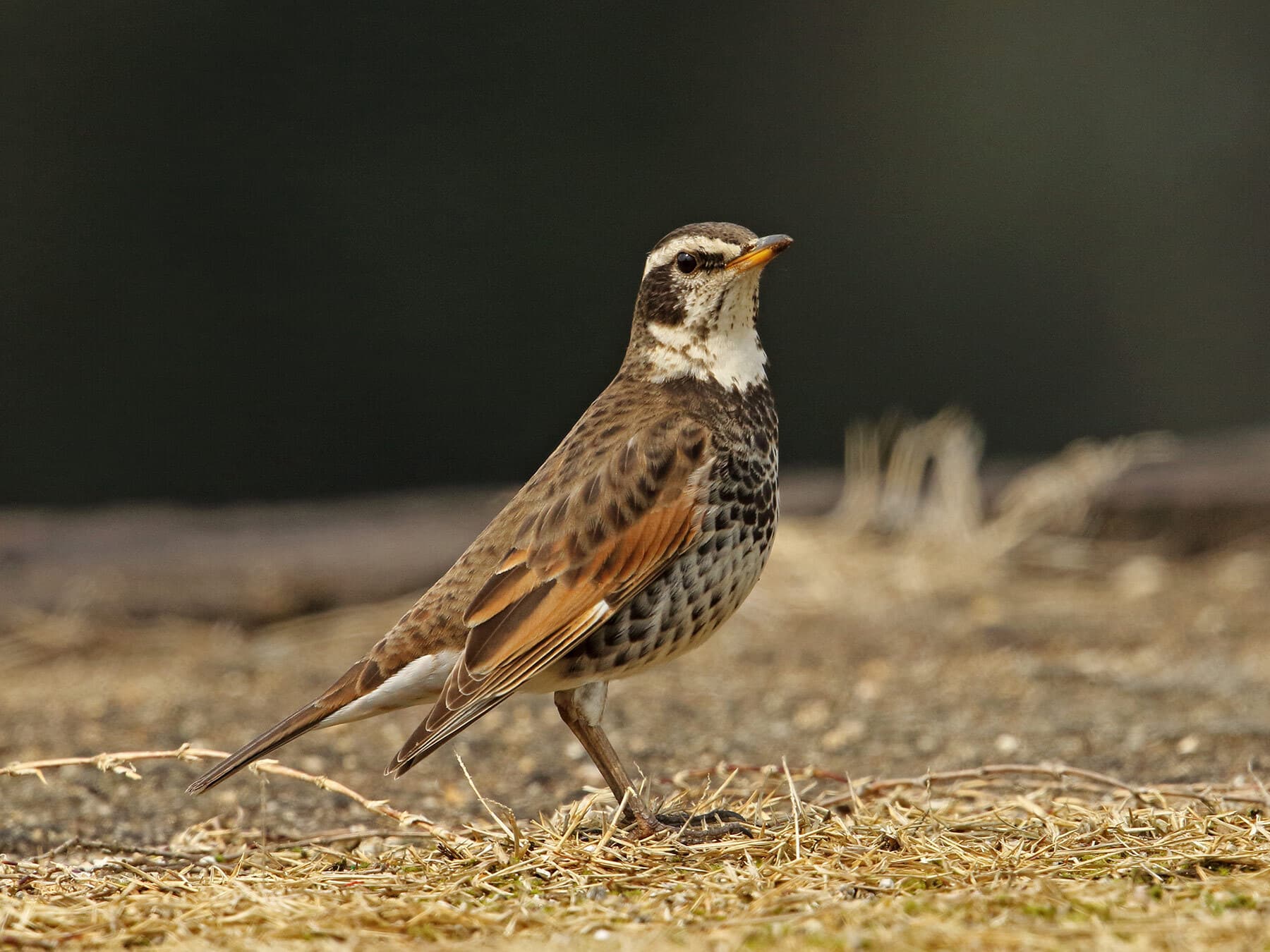
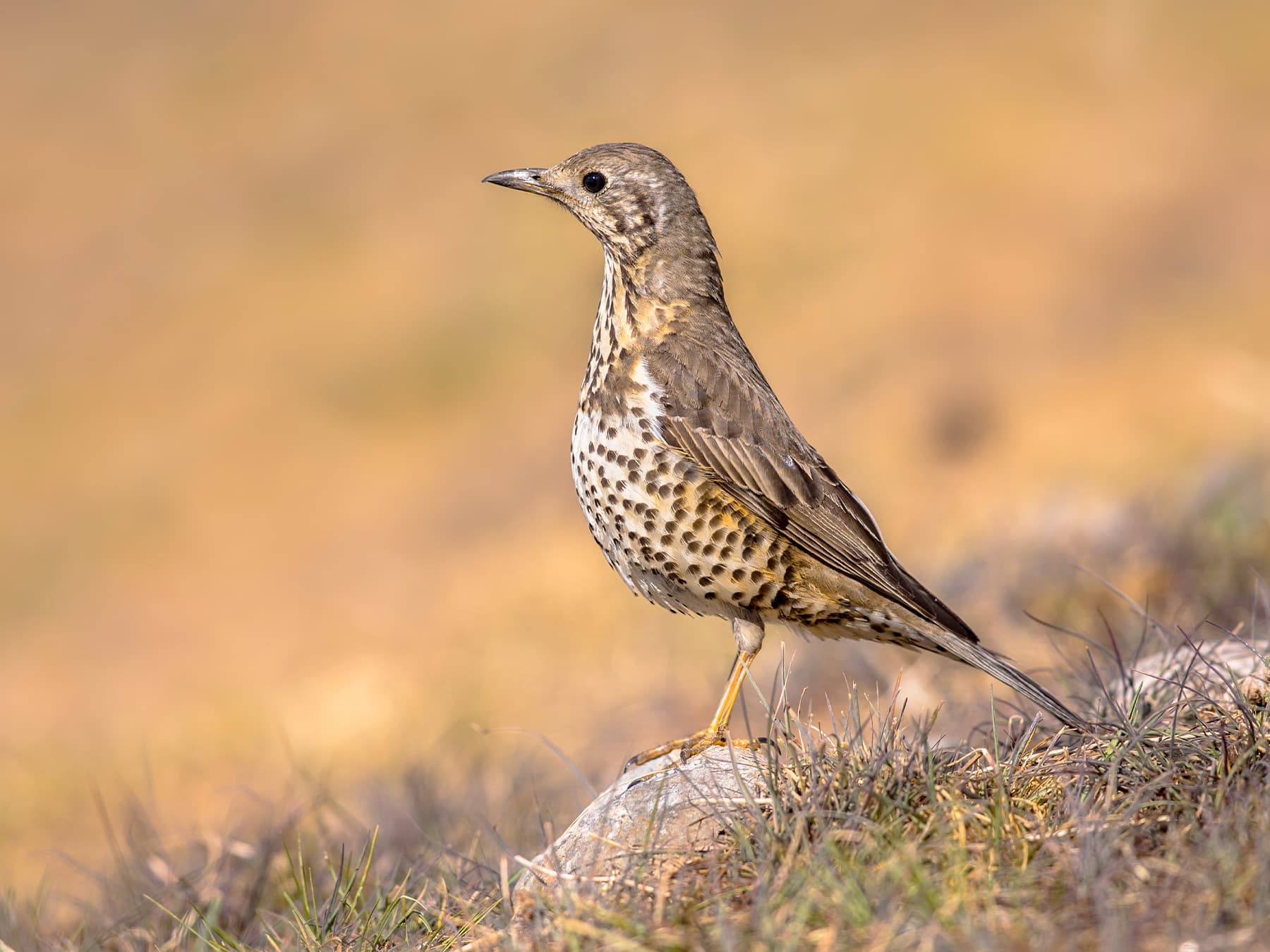
The Dusky Thrush is a medium-sized bird with distinctive plumage. Its upperparts are dark brown, contrasting with a white eyebrow and black-streaked white underparts. The sides of the breast and flanks are marked with bold black crescents.
Both sexes have similar plumage, though females may be slightly duller. Juveniles are browner overall with less distinct markings. In winter, adults develop buff-tipped feathers, giving them a slightly scaly appearance.
Its size
Adults- Length
- 23–25 cm
- Wingspan
- 36–40 cm
- Weight
- 65–90 g
Its song and calls
Alarm calls of ‘chuck’ or ‘chek – chek – chek’ which have a sharp resonance are not uncommon with this shy bird. The song of the male is musical and melancholy consisting of short whistles and trills.
When and where to see it
OctoberMostly absent
Not regularly recorded in October
Each dot is a county, state or province: the bigger and darker, the larger the bird’s share of that place’s bird records that month. Grey dots: no regular records. The ringed point is the centre of the bird’s records this month; the arrow shows how it moved since last month, and the dashed loop its path through the year. “Arrivals” colours places where it becomes regular this month (orange) or is in its last regular month (grey). GBIF eBird Observation Dataset, 2019–2024. Map data: Natural Earth, US Census Bureau; place centres © OpenStreetMap contributors.
In your area
See when the Dusky Thrush is recorded in your county, state or province.
The Dusky Thrush is not recorded regularly in the UK, Ireland, the United States or Canada.
United States: recorded in 3 of the 6 years; Canada: recorded in 1 of the 6 years; United Kingdom: recorded in 1 of the 6 years. Too few years to count as a regular visitor.
Worldwide: recorded regularly in 11 countries
Countries where it was recorded in at least 3 of the 6 years 2019–2024. Linked countries have their own bird list.
Data: EOD – eBird Observation Dataset (Cornell Lab of Ornithology), accessed via GBIF.org, CC BY 4.0. Records from 2019–2024, aggregated and filtered by Birdfact. How these lists are made
The breeding range of the dusky thrush is across central Asia from north central Siberia eastwards through western Siberia into Kamchatka and the Kamchatka Peninsula on Russia’s Pacific coast. Their range is generally considered to encompass areas of sub-arctic open coniferous forest also known as ‘Taiga’, although the species is also known to use mixed coniferous woodland which includes poplar and birch and lowland tundra. During the autumn migration the birds fly south to China’s southeast and eastern regions, Japan, Korea, Taiwan, North Vietnam and westwards into Northeast India. There are rare sightings of vagrants in the Middle East, Europe and northwest North America.
Signs and Spotting tips
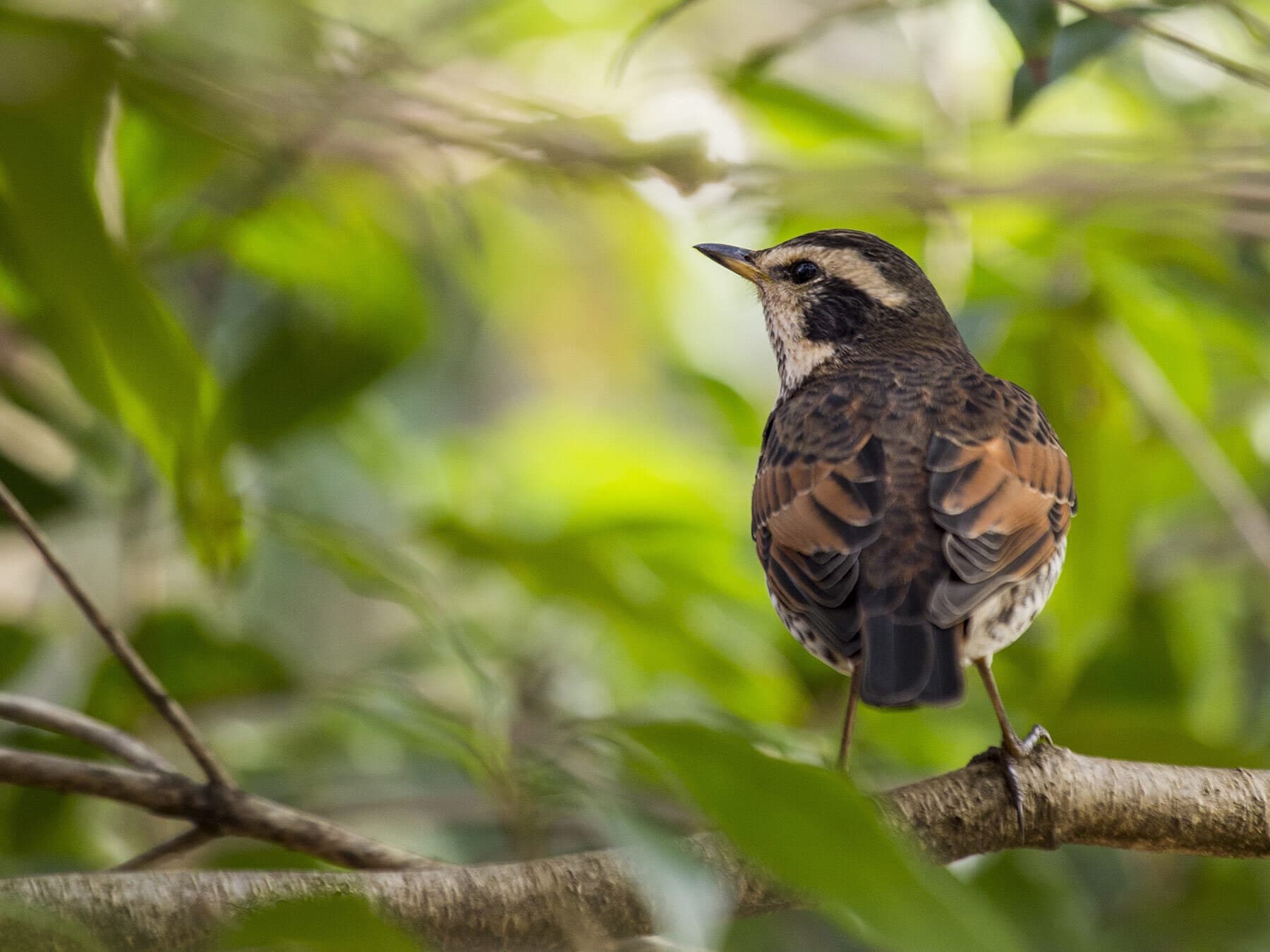
Dusky thrushes are, particularly during the breeding season, solitary birds. The male generally chooses a territory whilst its partner selects the actual nesting site. In order to preserve and protect its nest area the male will often sing for prolonged periods, thereby announcing his ownership of the area. Until recently the Naumann’s Thrush (Turdus naumanni) was considered to be conspecific with the dusky thrush although they are now classified as two distinct monotypic species. Both birds share breeding grounds across Siberia and will often be seen together. The patternation and colour of the dusky thrush enables it to stand out from other thrushes, particularly with regards to its facial markings.
What it eats
The dusky thrush is an omnivorous ground forager with a varied diet of earthworms, beetles, spiders, insect larvae, locusts, ants, buds, fruits and seeds.
Nesting and breeding
Migration north to the breeding grounds occurs between the months of March and May. The female constructs a cup shaped nest from twigs, moss and grass which she lines with mud and locates within a tree or low down in a bush. The breeding season extends from May to August during which time one clutch of between 4 – 6 blue green dark speckled eggs are produced annually and incubated by the female alone for approximately two weeks.
Behaviour
Dusky Thrushes are often seen foraging on the ground, hopping and running in short bursts while searching for food. During the non-breeding season, they are generally solitary or found in small groups. When alarmed, they often perch upright on exposed branches, bobbing their tails and giving sharp alarm calls.
Lifespan and predators
There is little information regarding life expectancy although it is known that premature death is commonplace due to predation by humans in addition to natural enemies of the species. In rural areas of China, where the dusky thrush migrates for the winter, they are widely hunted for food. It is believed, although not confirmed, that average life expectancy is up to two years.
Conservation
While the Dusky Thrush is currently listed as Least Concern, habitat loss in its breeding and wintering grounds poses a potential threat. Climate change may also affect its migration patterns and breeding success. Ongoing monitoring is crucial to detect any population changes.
What does a Dusky Thrush look like?
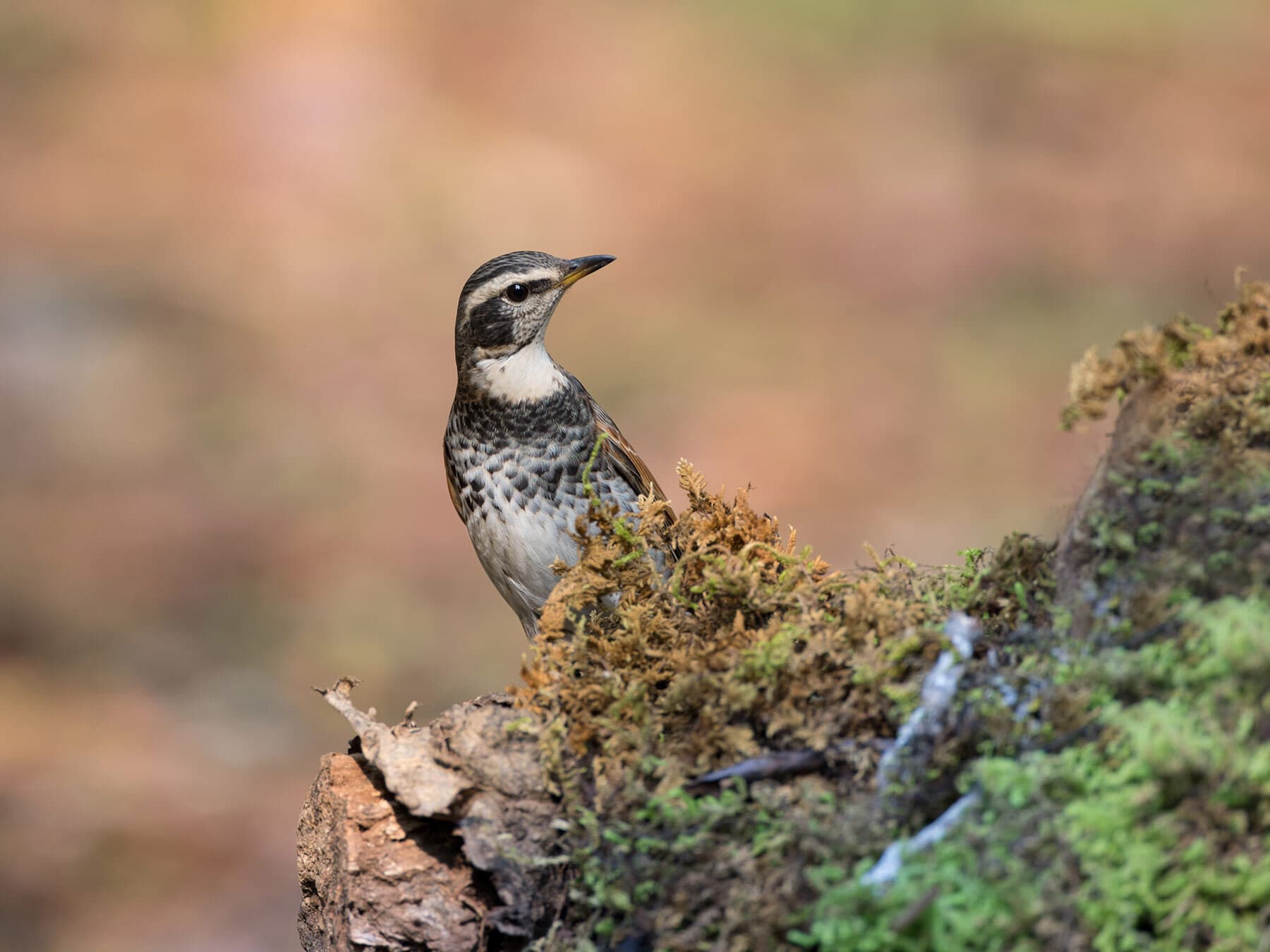
The adult male has dark upperparts scalloped in brown, which is to say that the tips of the plumage are a brown colour appearing to outline scales on the bird’s back. The rounded wings are rufous brown. Head, face and cheeks are black with a wide white supercilium from the base of the upper mandible extending towards the area of the ear coverts. The chin and throat are white with an upper breast band of white across the malar area towards the nape. Underparts are predominantly white spotted black from the mid breast to lower belly and across the flanks. The underwing area is browny grey. The bill is tipped black extending along the upper mandible with a pale yellow lower mandible. Legs and feet are a buff brown. The female is similar to the male although she lacks the rufous upperwing colouration and the head and upper parts are shaded brown. The white area to the throat is reduced in size. Juveniles have heavily buff spotted upperparts and are predominantly dark grey to black on the underparts, otherwise they are similar to the adult bird.
Similar birds
Often mistaken for
Quick facts
- Length
- 23–25 cm
- Wingspan
- 36–40 cm
- Weight
- 65–90 g
- Lifespan
- 5–10 years
- Family
- Thrushes
- Migration
- Long-distance Migrant
- Global status (IUCN)
- Least Concern
- World population
- Unknown
- Population trend
- Unknown
- Scientific name
- Turdus eunomus
Sources
1- 1BirdLife International. 2016. Turdus eunomus. The IUCN Red List of Threatened Species 2016: e.T22736111A104201968. Source (opens in a new tab)

Checked by
Nathan Cope, founder and editor
Nathan founded Birdfact and leads its writers and contributors in the UK, the US and Canada. He has watched and studied birds for more than ten years, and checks every article and species guide before it’s published.