


Brambling
Mountain Finch · Fringilla montifringilla
By the Birdfact teamChecked by Nathan Cope
On this page14 sections
How to recognise it
What do Bramblings look like?
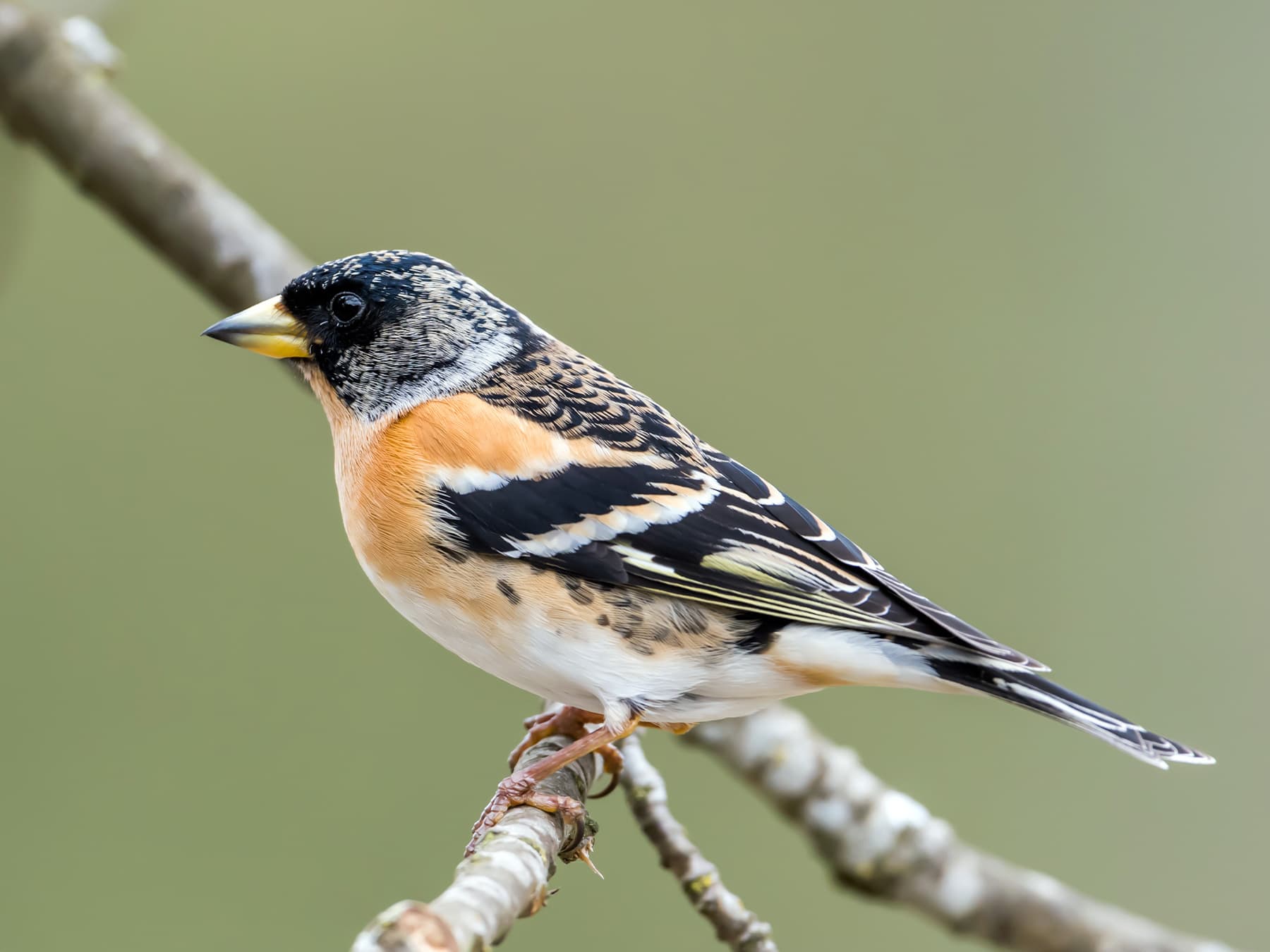
A brambling’s plumage varies during the year, with distinct differences between colouring in the breeding and non-breeding seasons. Males and females can easily be told apart visually at all times of the year.
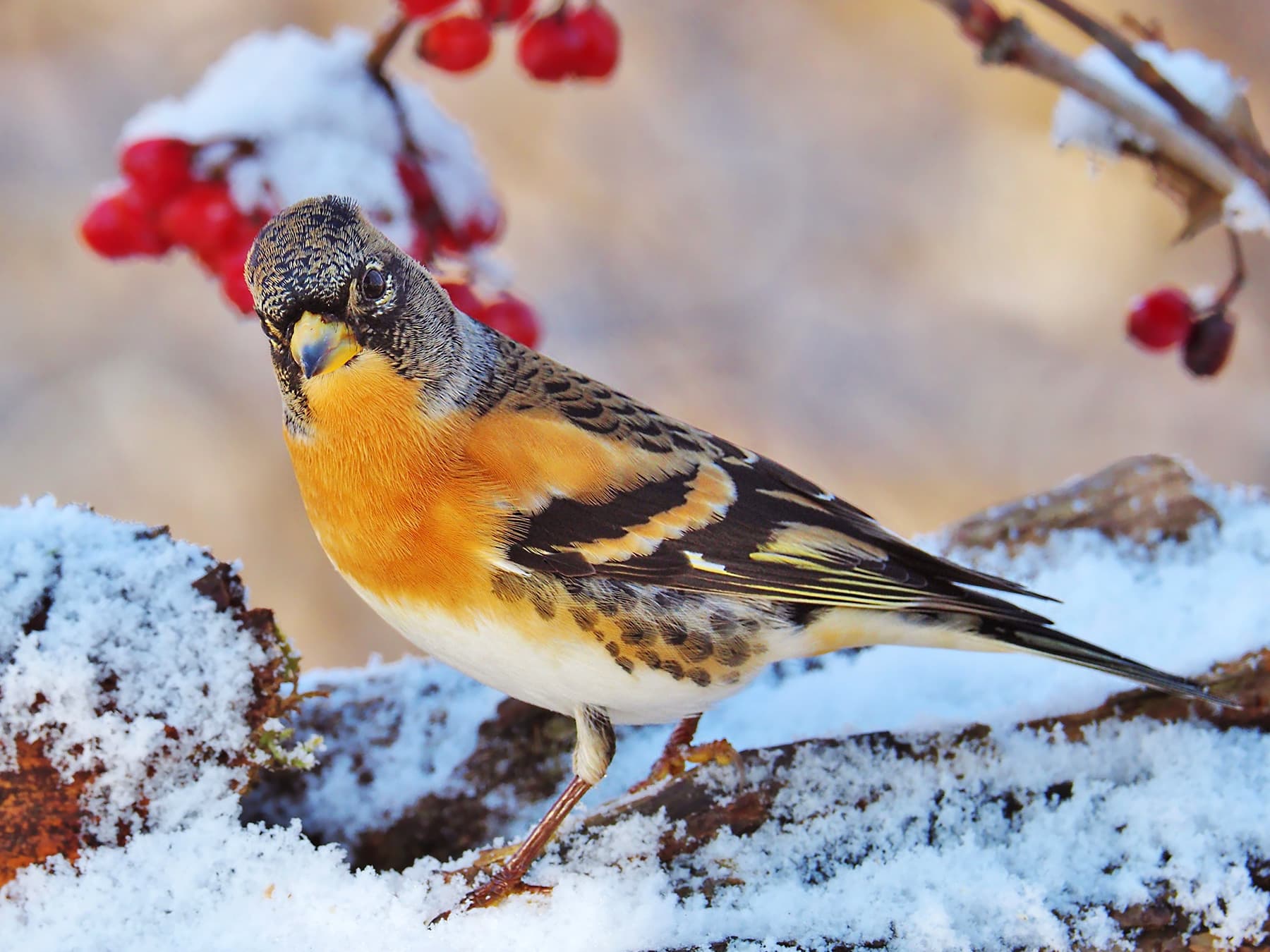
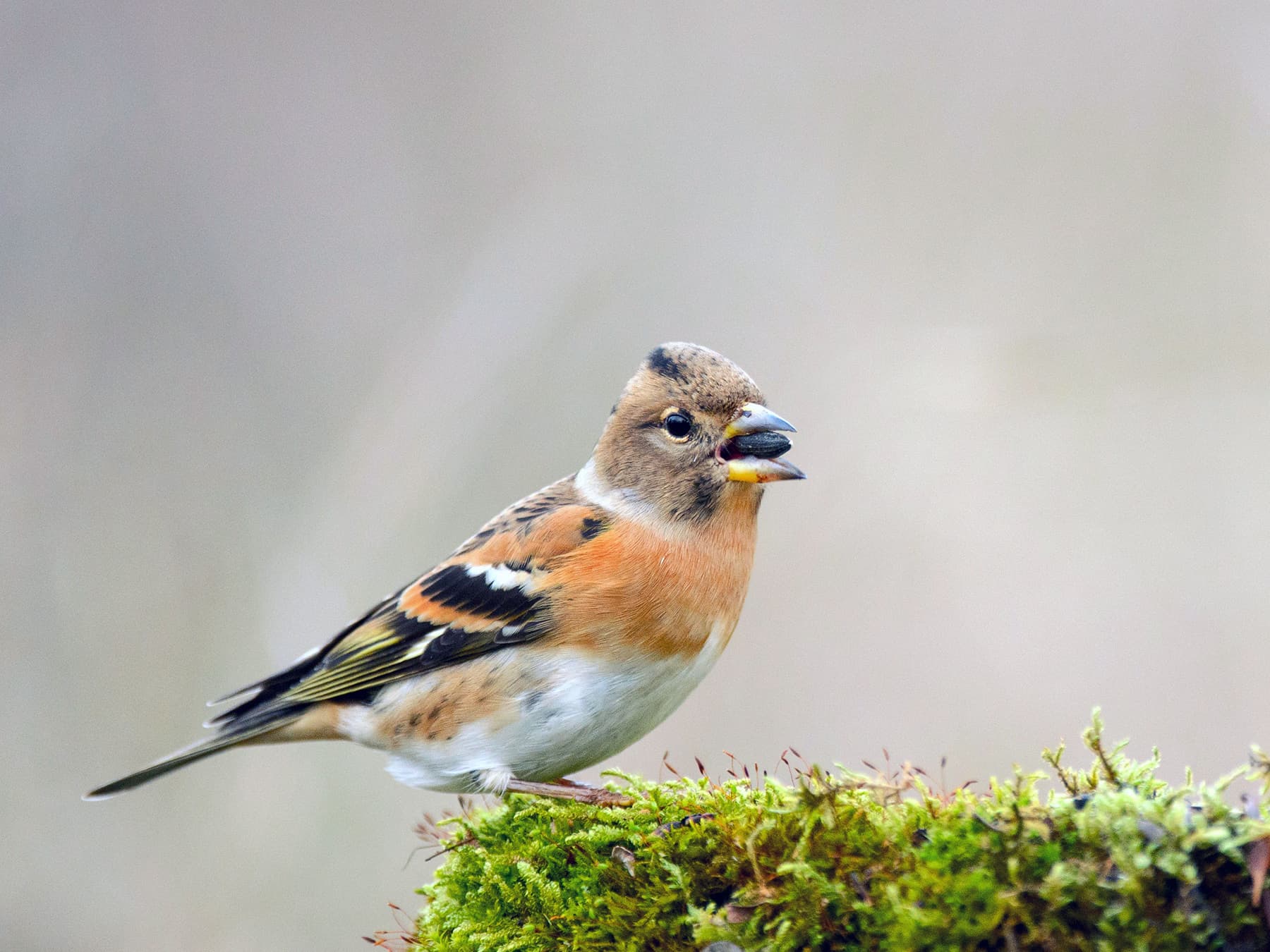
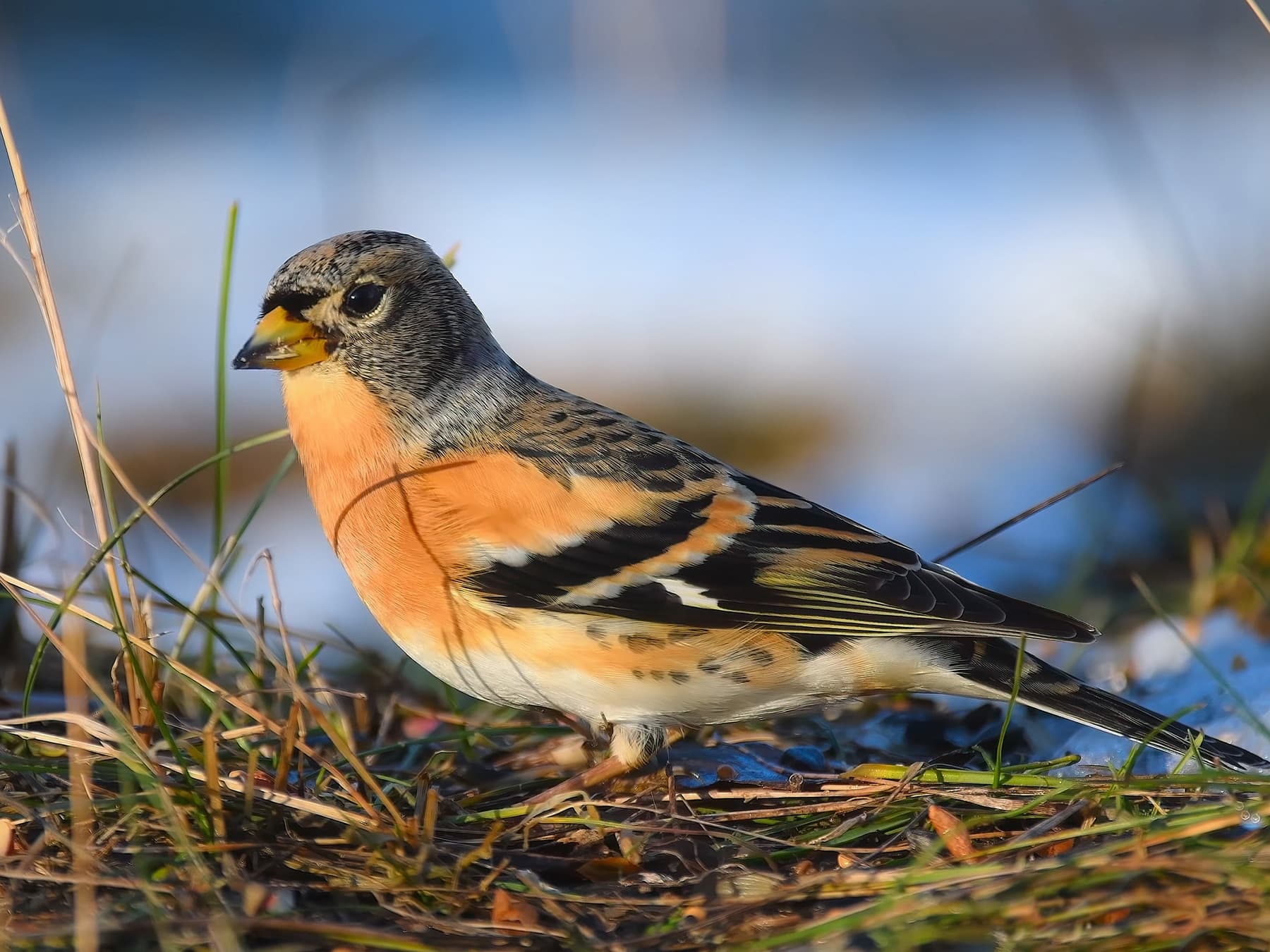
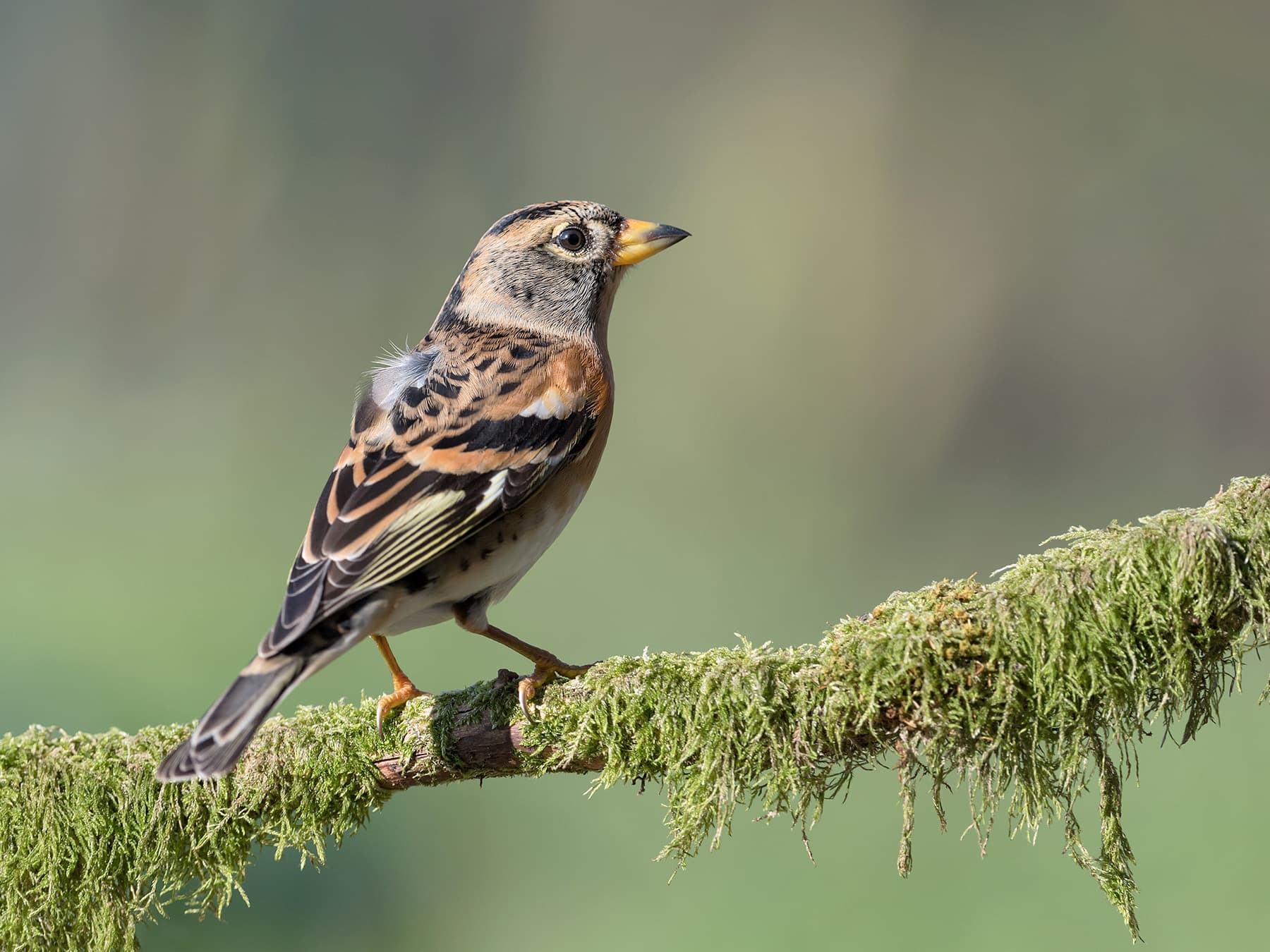
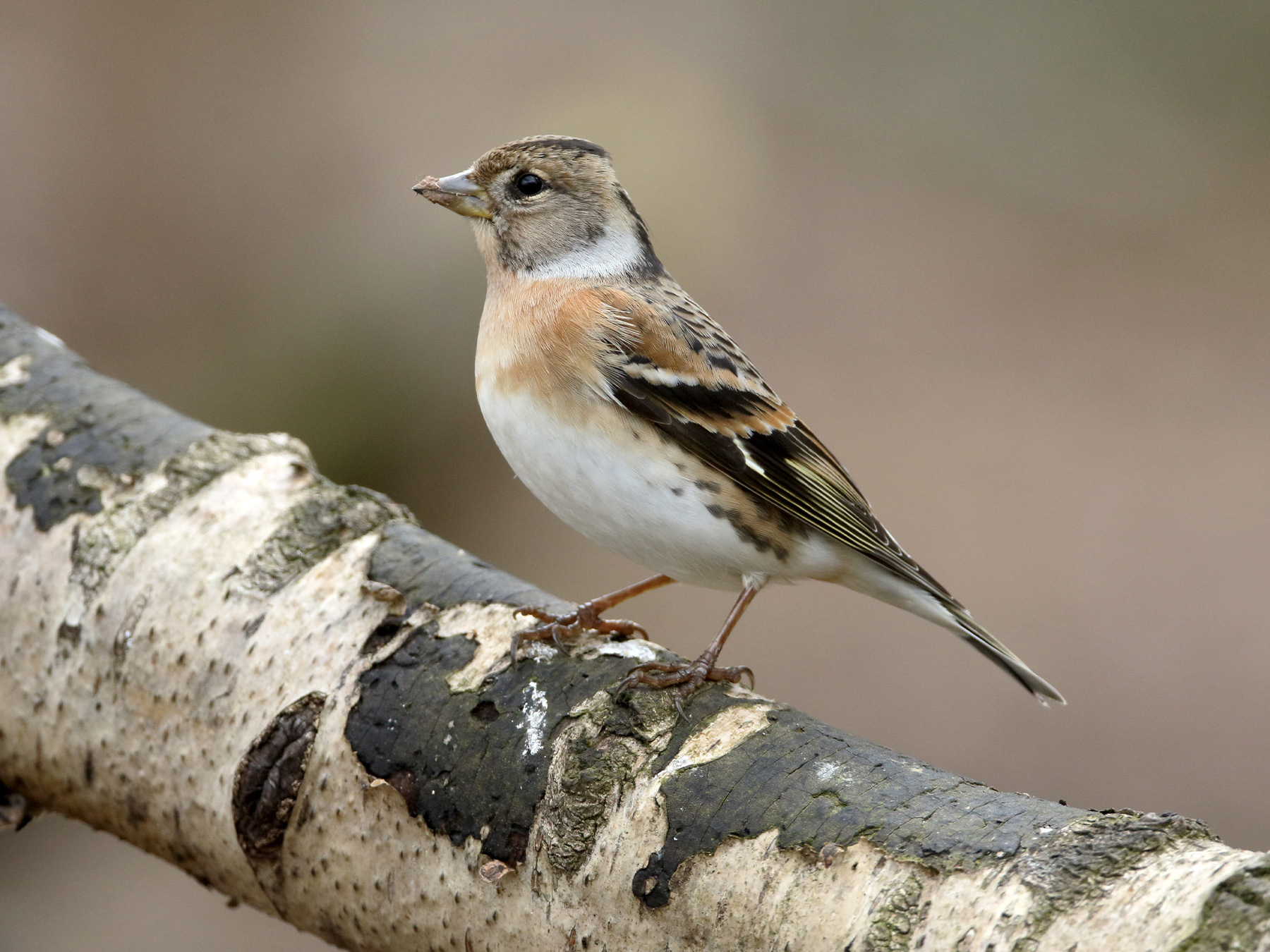
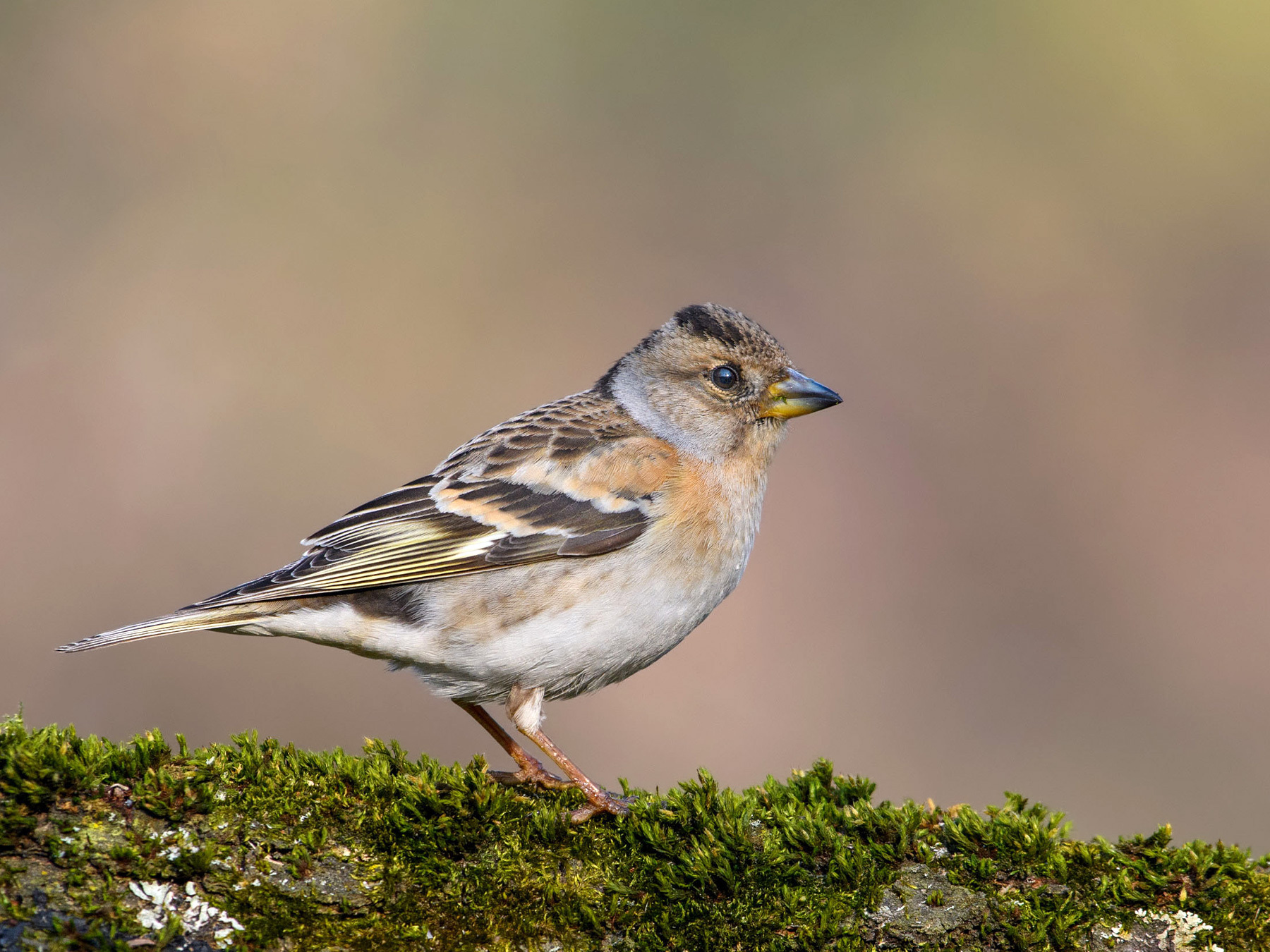
In the UK, most bramblings we see are in non-breeding plumage, which features a mottled dark brownish-black head and back, dark wings with pale fringes and pale orange-white wing bars. The upper wings, throat and breast are also a pale orange, fading to a whitish belly and underparts, with some speckling on the flanks. On the back of the neck is a paler grey patch and a white rump is visible in flight. The bill is triangular and yellow, with a dark tip.
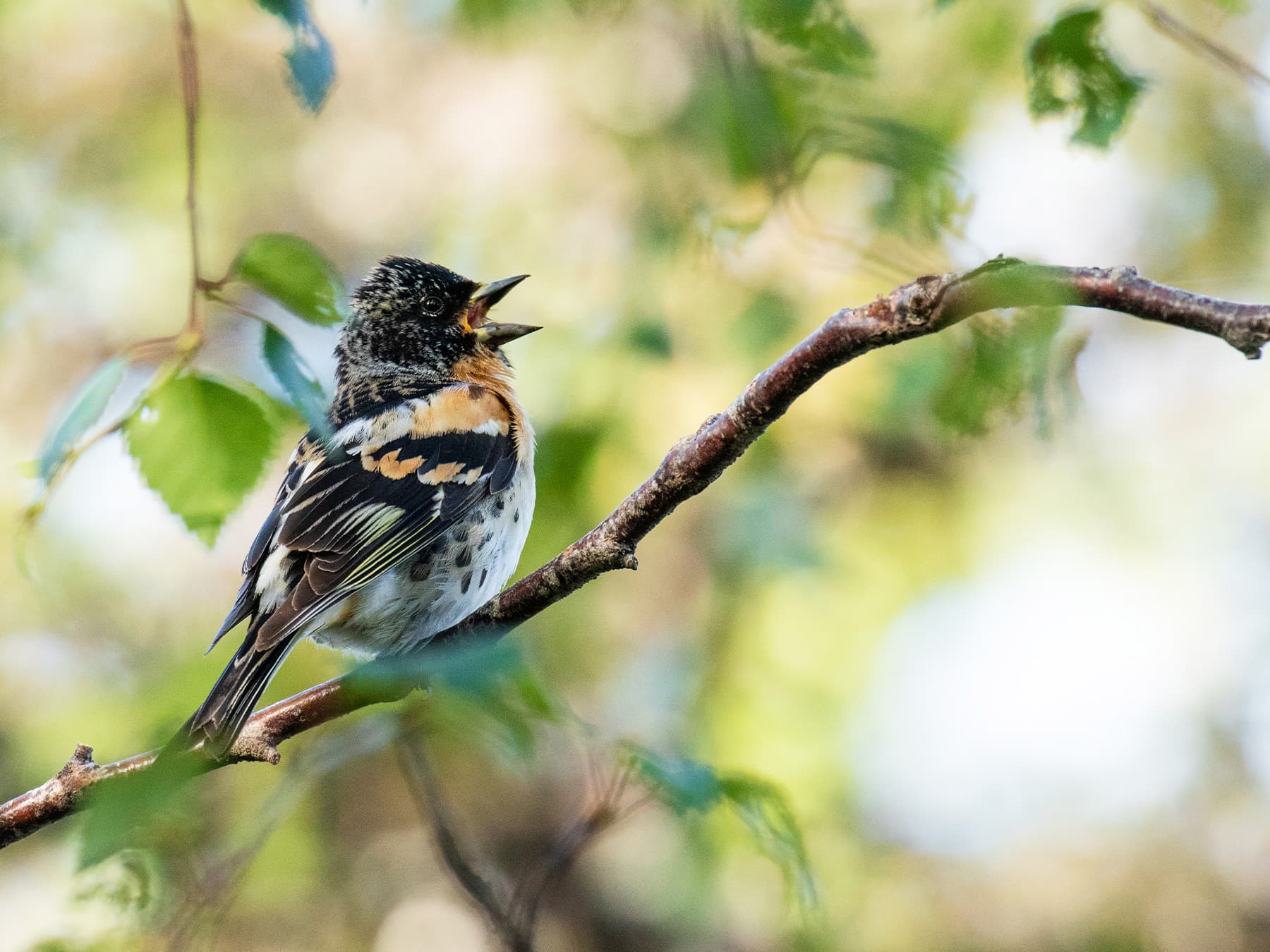
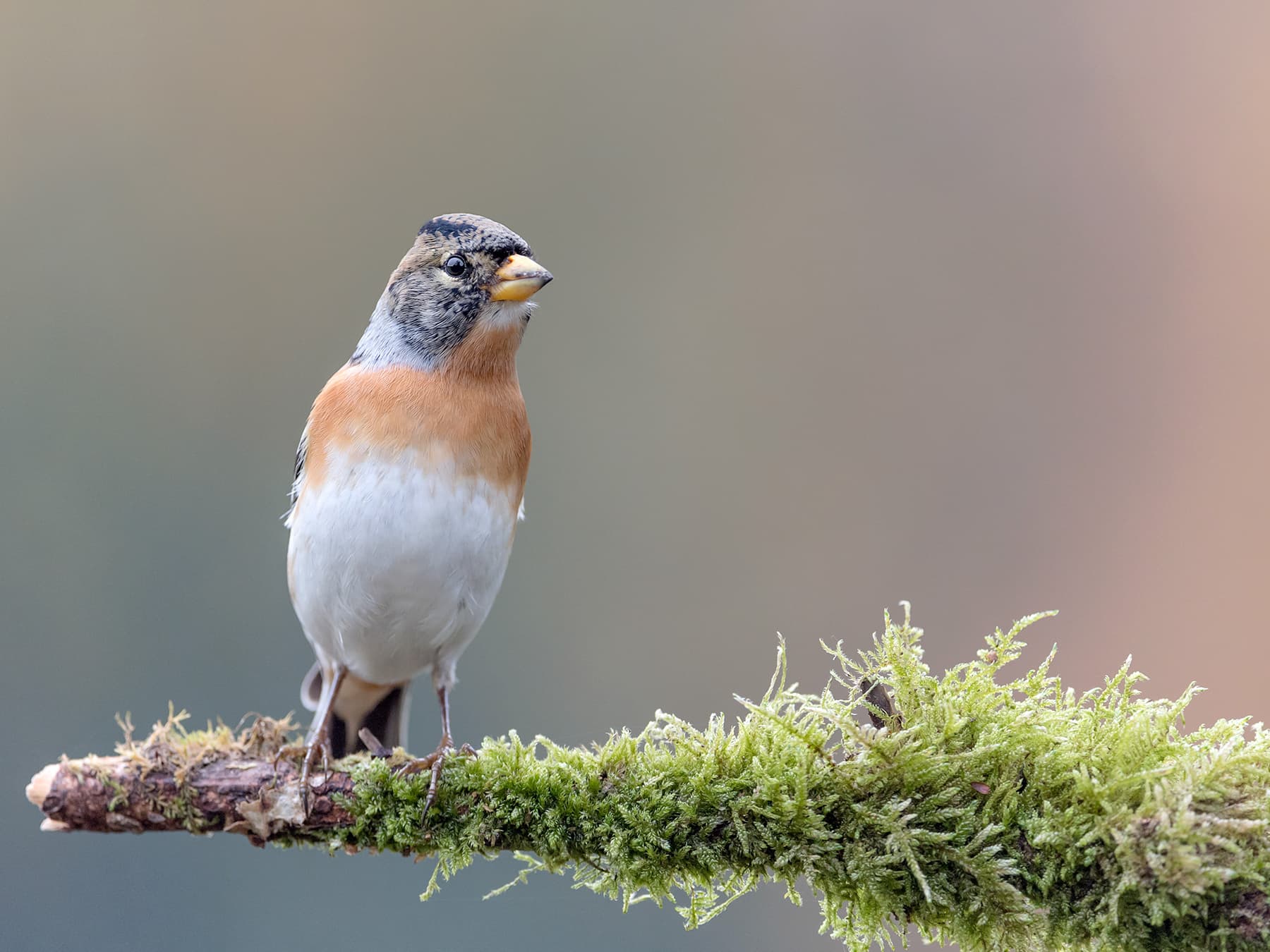
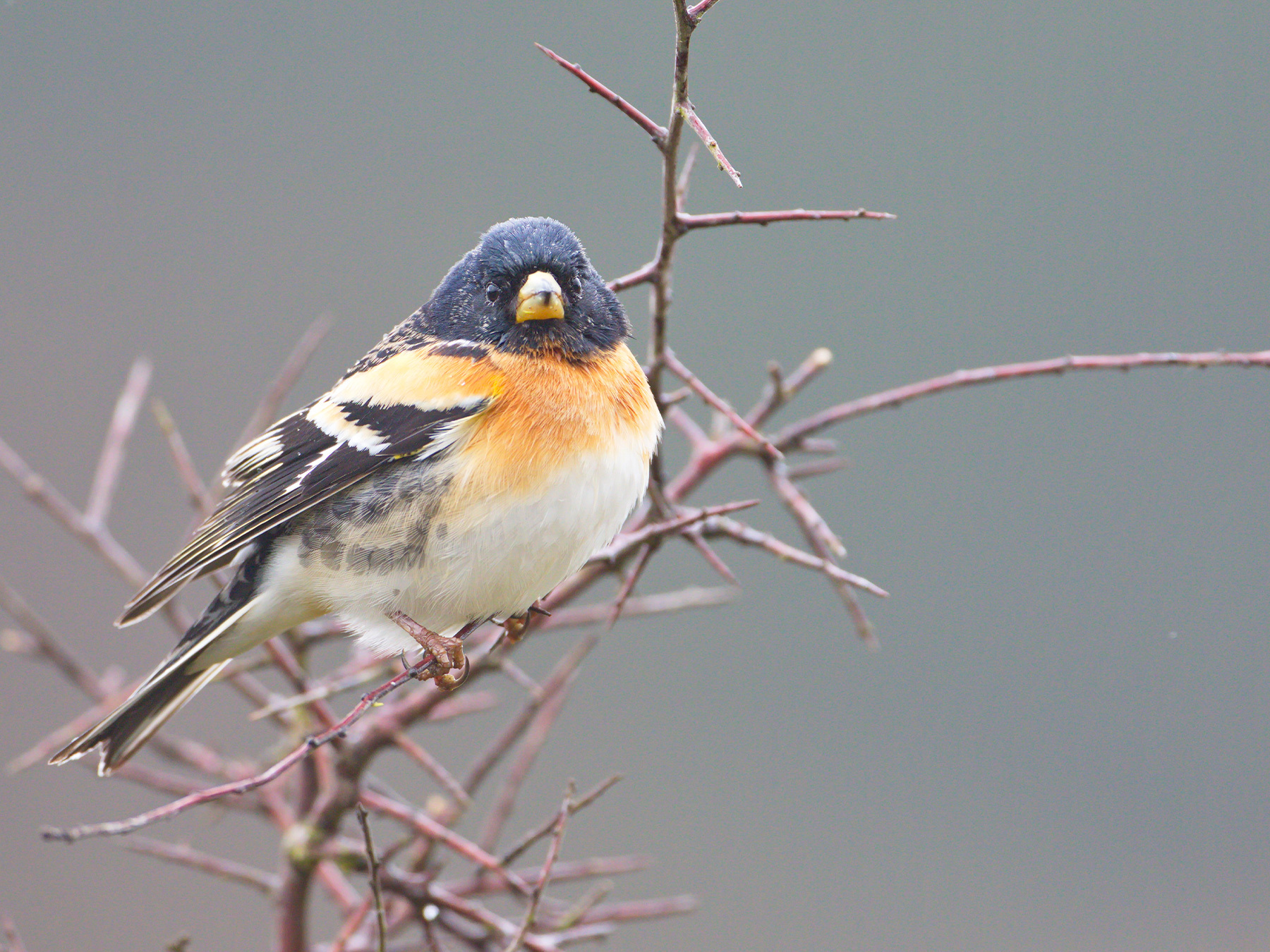
A breeding male’s plumage is similar to its basic winter colouring, with the exception of the head, which begins to darken to a rich black as the winter progresses. By the time they arrive on breeding grounds, their entire face, upper neck and back are a deep, solid black.
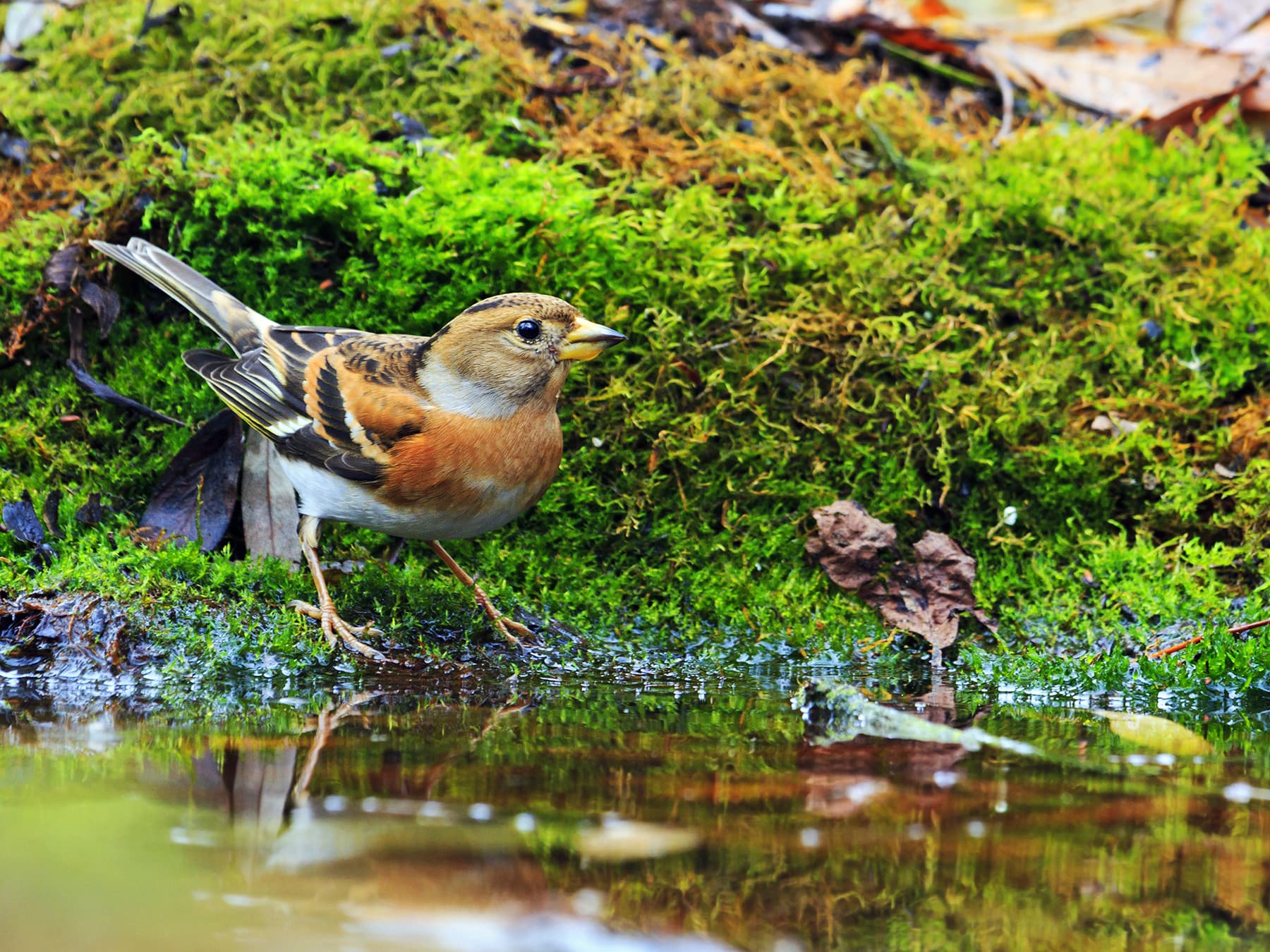
Females are similarly marked to males in both plumages, but their colouring is more muted and washed out, with greyish brown replacing the darker black. The back of a female is a lighter brown, with a clearer pale edging to wing feathers, interspersed with the same orange hue seen on males. Female bramblings’ facial markings are a paler greyish-brown and speckling on their flanks is less obvious.
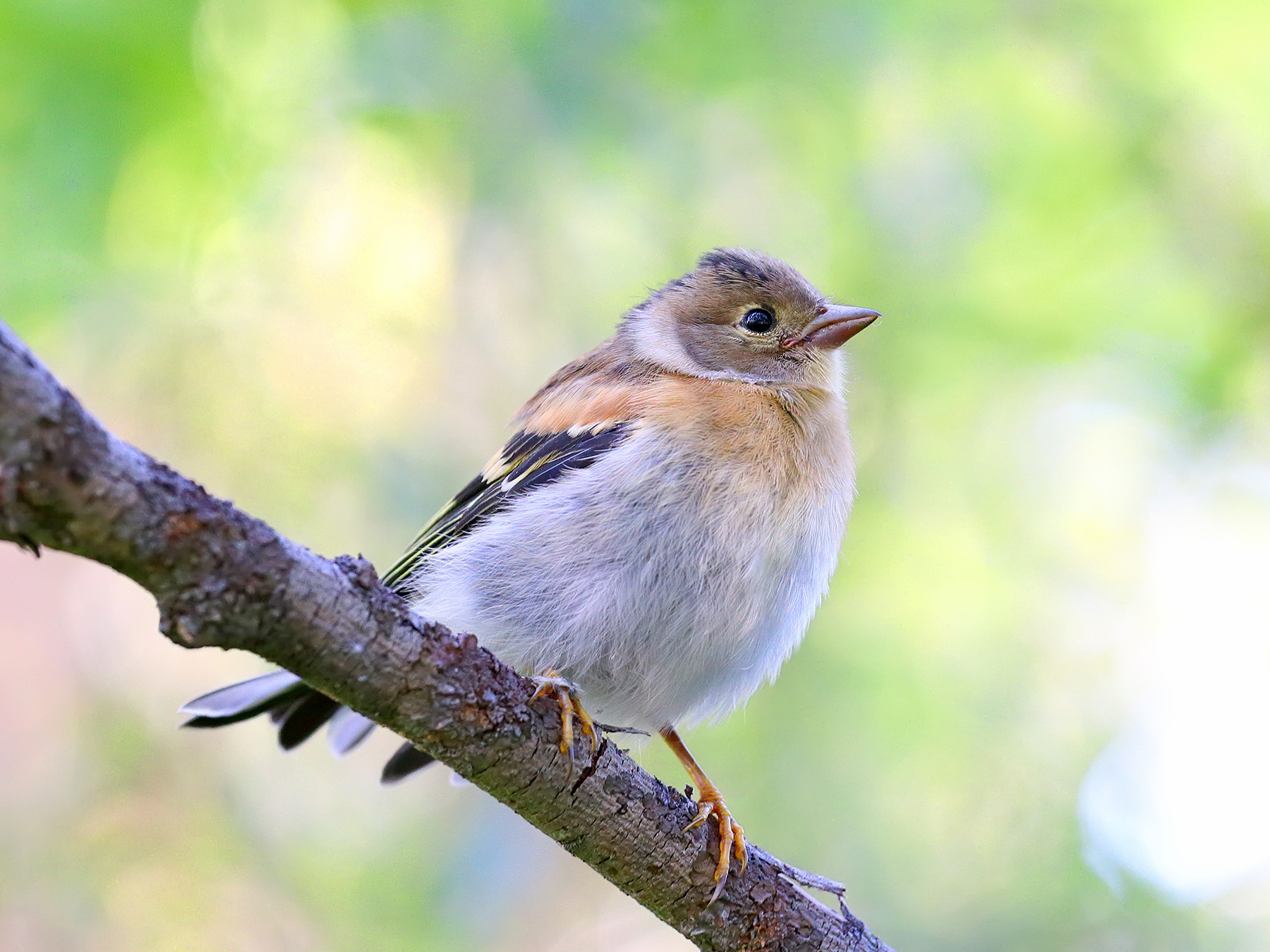
Juvenile bramblings are similar to non-breeding adults but with duller, more muted shades and brownish-rusty tips to wing feathers.
How big are Bramblings?
Bramblings are medium-sized finches, similar in dimensions and shape to a chaffinch. There is no difference in size between males and females.
- Length: 14 cm to 15 cm (5.5 in to 5.9 in)
- Wingspan: 25 cm to 26 cm (9.8 in to 10.2 in)
- Weight: 24 g (0.8 oz)
Its size
Adults- Length
- 14–16 cm
- Wingspan
- 23–26 cm
- Weight
- 18–29 g
Its song and calls
What sound does a Brambling make?
In winter, bramblings are largely silent, and their song is not usually heard away from breeding grounds, where they make a series of buzzing notes, lively chirps, and softer twitters. Their most common call is a wheezy ‘jseeerp’, often heard among groups of males ahead of spring migration.
- Song0:00 / 0:13
- Call0:00 / 0:23
Recorded in Normandy, France · March 2026
When and where to see it
OctoberIn season
Most recorded in October
- 1. Shetland Islands1.3%
- 2. Orkney Islands0.98%
- 3. East Riding of Yorkshire0.81%
- 4. Scottish Borders0.56%
- 5. Antrim0.45%
Each dot is a county, state or province: the bigger and darker, the larger the bird’s share of that place’s bird records that month. Grey dots: no regular records. The ringed point is the centre of the bird’s records this month; the arrow shows how it moved since last month, and the dashed loop its path through the year. “Arrivals” colours places where it becomes regular this month (orange) or is in its last regular month (grey). GBIF eBird Observation Dataset, 2019–2024. Map data: Natural Earth, US Census Bureau; place centres © OpenStreetMap contributors.
In your area
See when the Brambling is recorded in your county, state or province.
How often the Brambling turns up in the UK, Ireland, the United States and Canada through the year, from birdwatchers' records.
United Kingdom
Winter visitor · regularly Sep–Apr · most records in October
Ireland
Winter visitor · regularly Oct–Mar · most records in February
United States
Winter visitor · regularly Sep–Jun · most records in May
Canada
Winter visitor · regularly Dec–Apr · most records in January
Show as a table
| Month | United Kingdom | Ireland | United States | Canada |
|---|---|---|---|---|
| January | 0.10% (regular) | 0.017% (regular) | <0.001% (regular) | 0.004% (regular) |
| February | 0.10% (regular) | 0.024% (regular) | <0.001% (regular) | <0.001% (regular) |
| March | 0.099% (regular) | 0.022% (regular) | <0.001% (regular) | <0.001% |
| April | 0.055% (regular) | 0.003% | <0.001% | <0.001% (regular) |
| May | 0.001% | – | 0.001% (regular) | <0.001% |
| June | <0.001% | – | <0.001% (regular) | – |
| July | – | – | <0.001% | – |
| August | <0.001% | – | – | – |
| September | 0.020% (regular) | – | <0.001% (regular) | – |
| October | 0.23% (regular) | 0.012% (regular) | <0.001% (regular) | <0.001% |
| November | 0.13% (regular) | 0.020% (regular) | <0.001% (regular) | <0.001% |
| December | 0.061% (regular) | 0.015% (regular) | <0.001% (regular) | 0.002% (regular) |
Recorded regularly in
Worldwide: recorded regularly in 67 countries
Countries where it was recorded in at least 3 of the 6 years 2019–2024. Linked countries have their own bird list.
Europe (41)
- Åland Islands
- Austria
- Belarus
- Belgium
- Bosnia & Herzegovina
- Bulgaria
- Croatia
- Czechia
- Denmark
- Estonia
- Faroe Islands
- Finland
- France
- Germany
- Greece
- Hungary
- Iceland
- Ireland
- Isle of Man
- Italy
- Jersey
- Kosovo
- Latvia
- Lithuania
- Luxembourg
- Moldova
- Netherlands
- North Macedonia
- Norway
- Poland
- Portugal
- Romania
- Russia
- Serbia
- Slovakia
- Slovenia
- Spain
- Sweden
- Switzerland
- Ukraine
- United Kingdom
Africa (1)
Asia (23)
- Armenia
- Azerbaijan
- China
- Cyprus
- Georgia
- Hong Kong SAR China
- India
- Iran
- Israel
- Japan
- Kazakhstan
- Kyrgyzstan
- Lebanon
- Mongolia
- Nepal
- Palestinian Territories
- Philippines
- South Korea
- Taiwan
- Tajikistan
- Turkey
- Uzbekistan
- Vietnam
North America (2)
Data: EOD – eBird Observation Dataset (Cornell Lab of Ornithology), accessed via GBIF.org, CC BY 4.0. Records from 2019–2024, aggregated and filtered by Birdfact. How these lists are made
What is the habitat of a Brambling?
Woodland habitats are preferred by bramblings throughout the year. In the breeding season, they are usually found in coniferous forests, mixed wooded landscapes, and small copses with birch, willow and alder.
Outside of the breeding season, beech woodlands are particularly favoured, as well as pastureland, parks and gardens.
What is the range of a Brambling?
Bramblings breed across the northern and north-eastern regions of Europe, from Norway, through much of northern Sweden, Finland, and into Estonia, and Russia, extending into northern Kazakhstan and western Mongolia.
In winter, bramblings move south spreading across much of western and southern Europe, from the UK as far south as northern Morocco. Some coastal populations in Norway are year-round residents, while further south they are present from southern Sweden and Denmark, through Greece, Turkey, and around the southern coasts of the Black Sea.
In Asia, winter migrants arrive in Pakistan, northern India, eastern China, Japan, and parts of South East Asia.
Where do Bramblings live?
Between 15.2 and 24 million brambling pairs breed in Europe each year, the majority of which live in Russia, Sweden, Finland and Norway. The European population accounts for around 25 percent of the global population for this species, with an overall estimate of between 121.2 and 192 million mature individuals.
How rare are Bramblings?
In the UK, bramblings are a common and widespread winter visitor, with up to 1.8 million arrivals each autumn. Occasionally a pair or two will remain throughout the year and rare reports of breeding exist. In Europe, they are abundant, with between 13 and 22 million breeding pairs.
Where can you see Bramblings in the UK?
Bramblings are mainly winter visitors to the UK, arriving post-breeding from September onwards. They are present throughout much of the country, although are absent from localised regions near the Scottish border, and into the Highlands of Scotland.
The best chances of a sighting are in beech forests, in farmland and parkland, and among flocks of mixed finches.
Migration
Do Bramblings migrate?
Bramblings are a mostly migratory species, although populations that breed in the northern reaches of Scandinavia and on the Russian tundras move south in winter in search of more abundant food crops when local supplies begin to dwindle.
When do Bramblings migrate?
Post-breeding migration begins in late September, with females leaving their nesting territories ahead of males and juveniles. Migration flights usually take place during daylight hours, but passage over water is mostly by night. Spring arrivals on breeding grounds begin from late February onwards.
Are Bramblings native to the UK?
Up to 1.8 million bramblings are present in Britain during the winter months, and although on occasion some may stay on after migration to northern breeding grounds is underway, only a handful of successful breeding records exist from recent years.
Tips for seeing it
- Look for Bramblings in mixed finch flocks during winter
- Listen for their nasal 'tsweee' call, which is often the first sign of their presence
- Check beech woods in autumn, where they feed on fallen beech mast
- In the UK, scan garden bird feeders during cold snaps for visiting Bramblings
What it eats
What do Bramblings eat?
Bramblings are mainly seed-eaters, with a strong preference for beech seeds. The abundance of beech seeds influences the timing of migrations, with movement south and west once local supplies on breeding grounds begin to run out. Other seeds and berries in their diet include birch, pine, spruce, apple and elder. Grasses, cereals, and grains may also be eaten.
In the spring and summer months, bramblings also forage for invertebrates, including springtails, aphids, bugs, earwigs, bees, ants, wasps and spiders. In summer, prey is found in foliage or picked from bark and leaves, while in the autumn and winter, it’s more common to see bramblings foraging on the ground for fallen seeds.
What do Brambling chicks eat?
The early diet of newly hatched brambling chicks mainly consists of moth larvae and small caterpillars.
Nesting and breeding
Where do Bramblings nest?
Bramblings often build their nests high up in the fork of a tree or close to the trunk. Occasionally lower level nest sites may be chosen, low down in scrubland or even on the ground.
Cup-shaped nests are crafted using heather, strips of bark from juniper or birch trees, grasses, moss and lichens. Soft plant parts, animal fur, feathers, and cobwebs are added as a lining.
When do Bramblings nest?
The breeding season for bramblings lasts from May until early August. In most parts of their range they have just one brood per year, although in parts of Siberia and north-west Russia, a second may be successfully raised.
Male bramblings bring food to the nest while the female incubates, with eggs hatching after between 11 and 12 days. Both parents feed young, which fledge after 13 to 14 days.
What do Brambling eggs look like?
Bramblings’ eggs vary in base colour, from a light blue to a darker olive brown, and are marked with light or heavy pink-to-brown speckles. A typical clutch contains between 5 to 7 eggs, which measure 19 mm by 14 mm (0.7 mm by 0.6 mm).
Do Bramblings mate for life?
Bramblings form monogamous pairs at the start of the breeding season and remain together until they have raised their young. Pair bonds do not last through the winter and new mates are found the next time they breed.
Behaviour
Are Bramblings aggressive?
During the breeding season, bramblings live mostly as solitary pairs and defend their mate against threats when nesting. Once their young have fledged, they become a far more social species, flying in large flocks with other bramblings as well as different finches, particularly chaffinches.
Where do Bramblings sleep at night?
Giant roosts of bramblings may gather at dusk during autumn and winter, including one example in Slovenia, where at least 2 million individuals flocked in 2019 to spend nights huddled together in the branches of trees.
Lifespan and predators
How long do Bramblings live?
On average, bramblings are expected to live for between 2 and 5 years, with the older individuals occasionally identified through ringing schemes, including one that reached 8 years and 7 months. Bramblings breed for the first time at one year of age.
What are the predators of Bramblings?
Sparrowhawks and falcons may opportunistically prey on adult bramblings, while corvids, in particular crows and jays, may attack nests and young birds.
Are Bramblings protected?
Under the Wildlife and Countryside Act, 1981, bramblings in the UK are protected from being killed, injured, or taken into captivity. As a Schedule 1 species, they have additional protection during the nesting season, stating that it is an offence to disturb a nest site and destroy or damage a brambling’s nest, eggs and young.
Are Bramblings endangered?
Across their global range, bramblings are widespread and abundant and are classified as a species of least concern. In the UK they have Green status on the British Birds of Conservation Concern list and there are no immediate fears for their future survival.
Conservation
Similar birds
Often mistaken for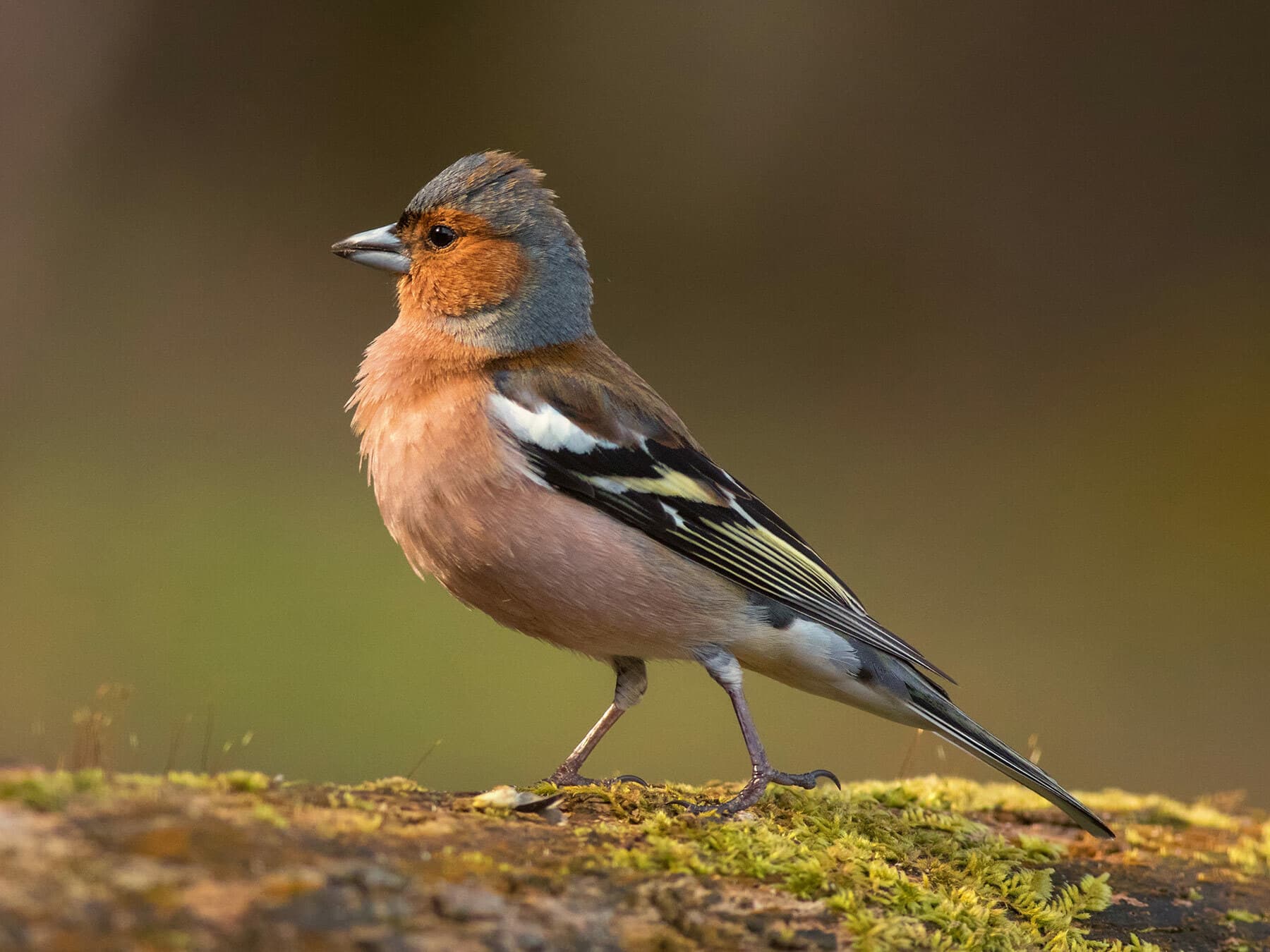
More photos
5 photos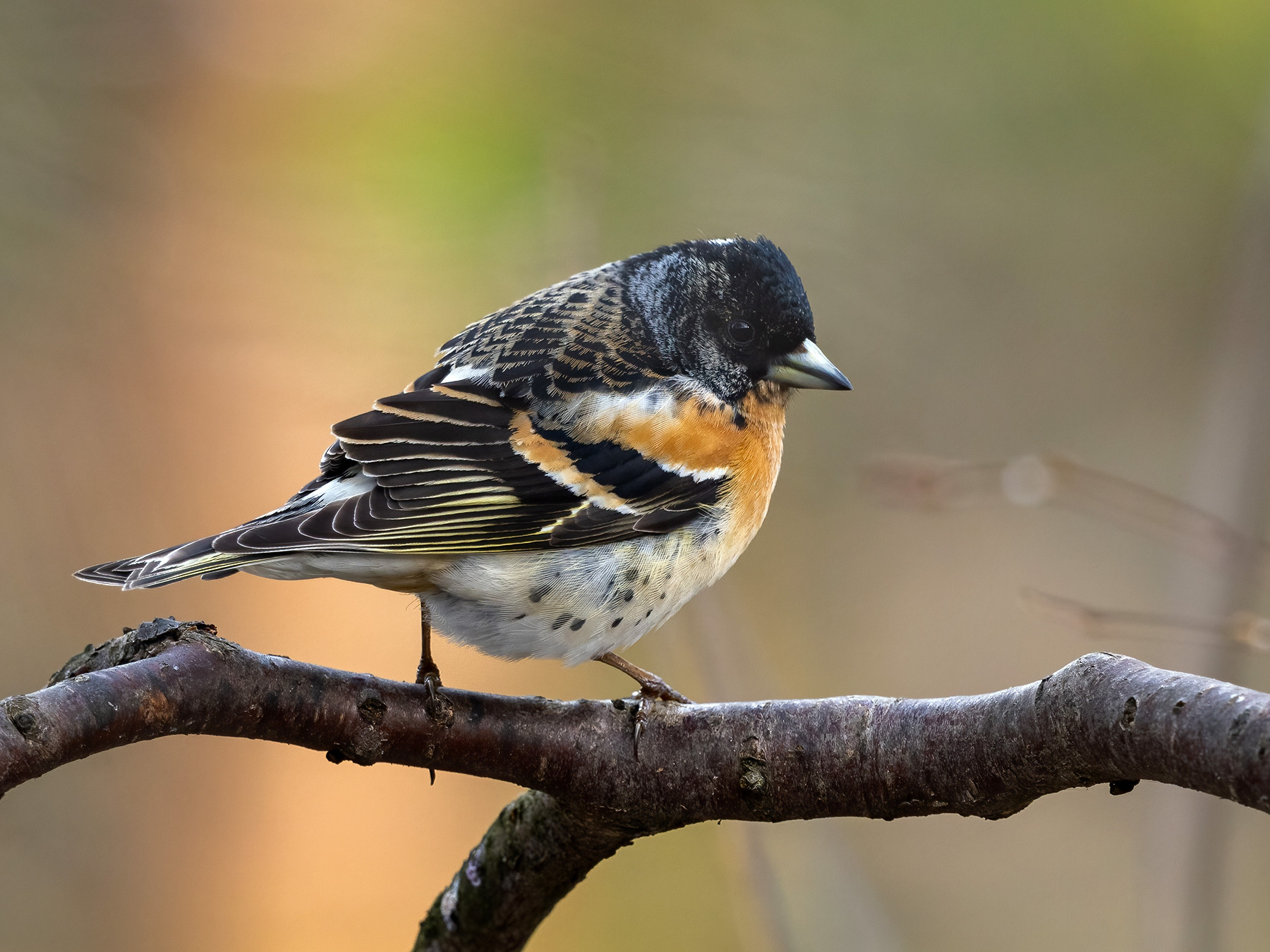
Brambling guides
1 guidesQuick facts
- Length
- 14–16 cm
- Wingspan
- 23–26 cm
- Weight
- 18–29 g
- Lifespan
- 2–5 years · oldest recorded 8.6 years
- Family
- Finches
- Migration
- Long-distance Migrant
- Global status (IUCN)
- Least Concern
- World population
- 120,000,000 - 199,999,999 mature individuals
- Population trend
- Decreasing
- Also called
- Mountain Finch
- Scientific name
- Fringilla montifringilla
Sources
4- 1BirdLife International. 2016. Fringilla montifringilla. The IUCN Red List of Threatened Species 2016: e.T22720041A88203665. Source (opens in a new tab)
- 2EBCC (2015)
- 3BirdLife International. 2016. Fringilla montifringilla. The IUCN Red List of Threatened Species 2016: e.T22720041A88203665. Source (opens in a new tab)
- 4BTO longevity records: maximum age from a ringed bird, 8 years, 7 months, 16 days (set in 1983), BirdFacts: Brambling (1983) Source (opens in a new tab)

Checked by
Nathan Cope, founder and editor
Nathan founded Birdfact and leads its writers and contributors in the UK, the US and Canada. He has watched and studied birds for more than ten years, and checks every article and species guide before it’s published.