


Bonelli's Eagle
Bonelli's Hawk-eagle · Aquila fasciata
By the Birdfact teamChecked by Nathan Cope
On this page15 sections
How to recognise it
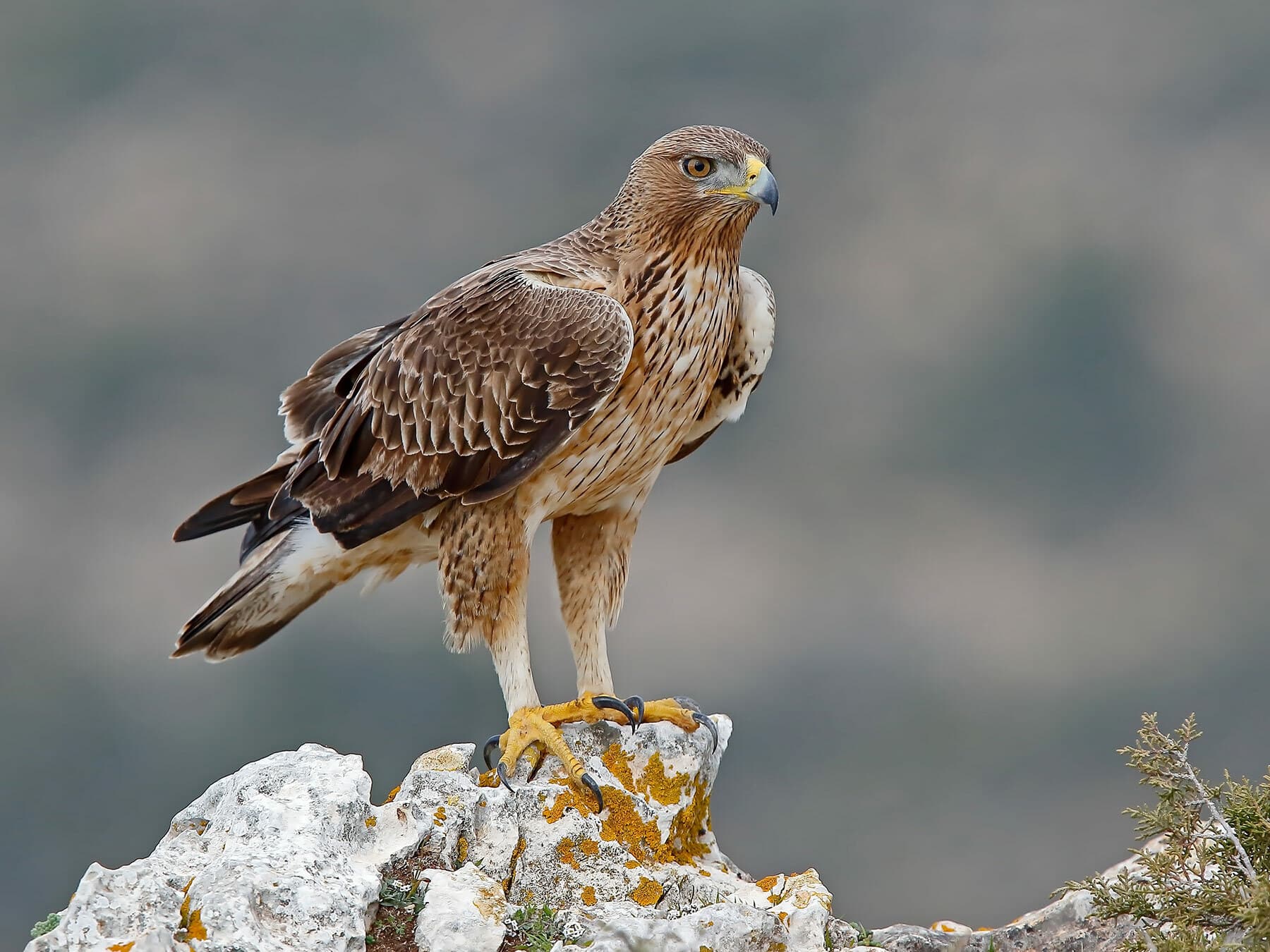
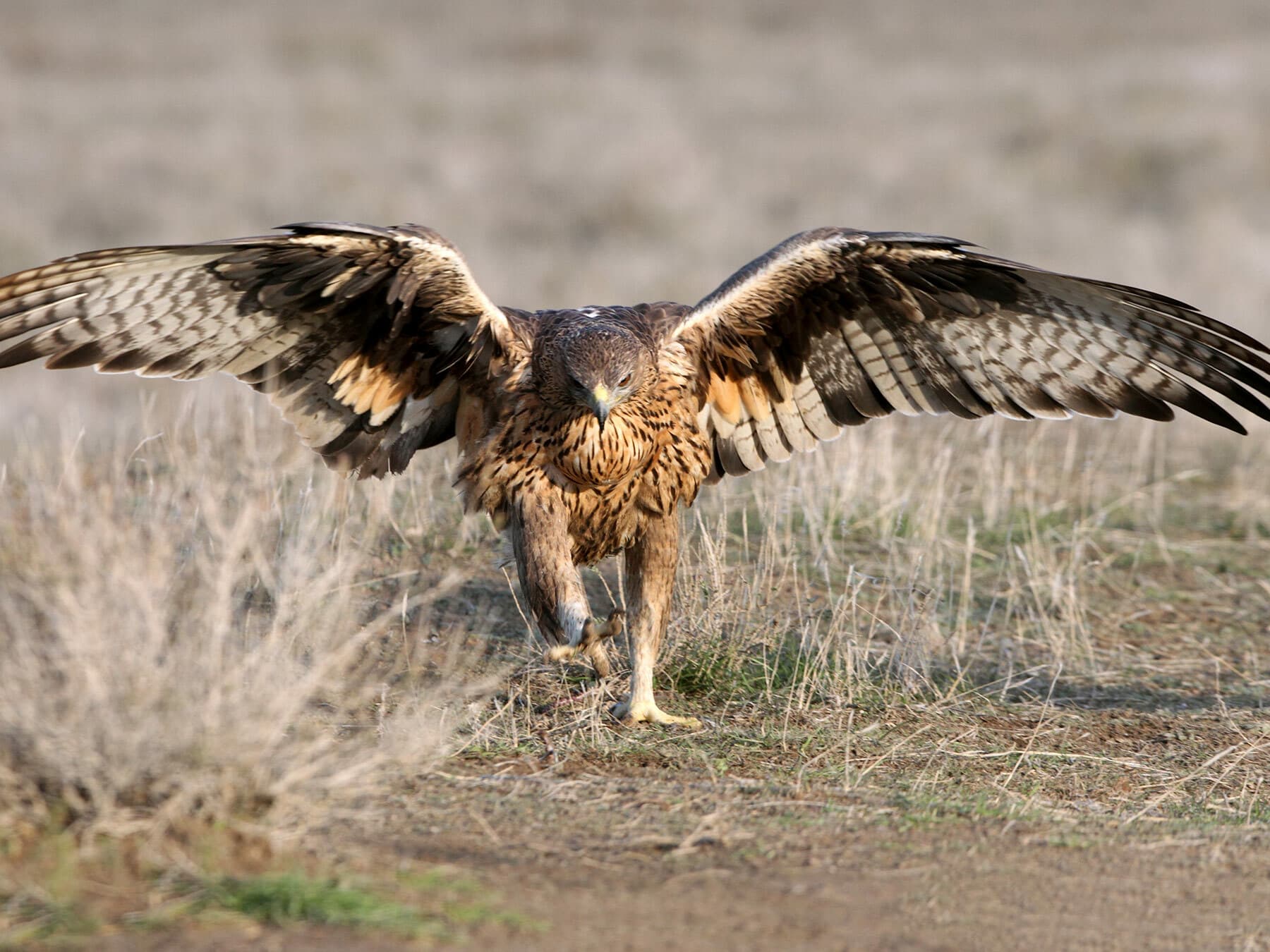
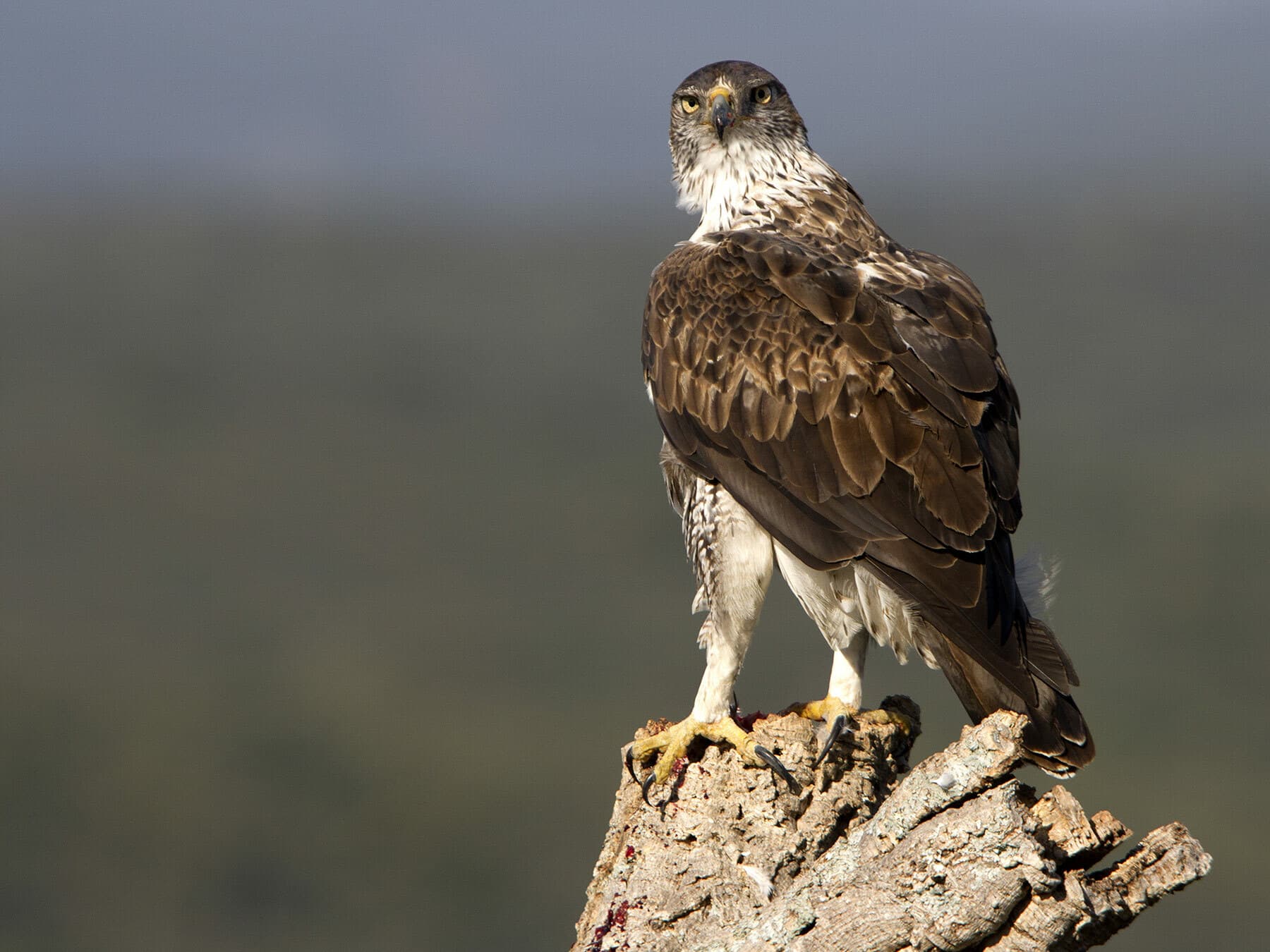
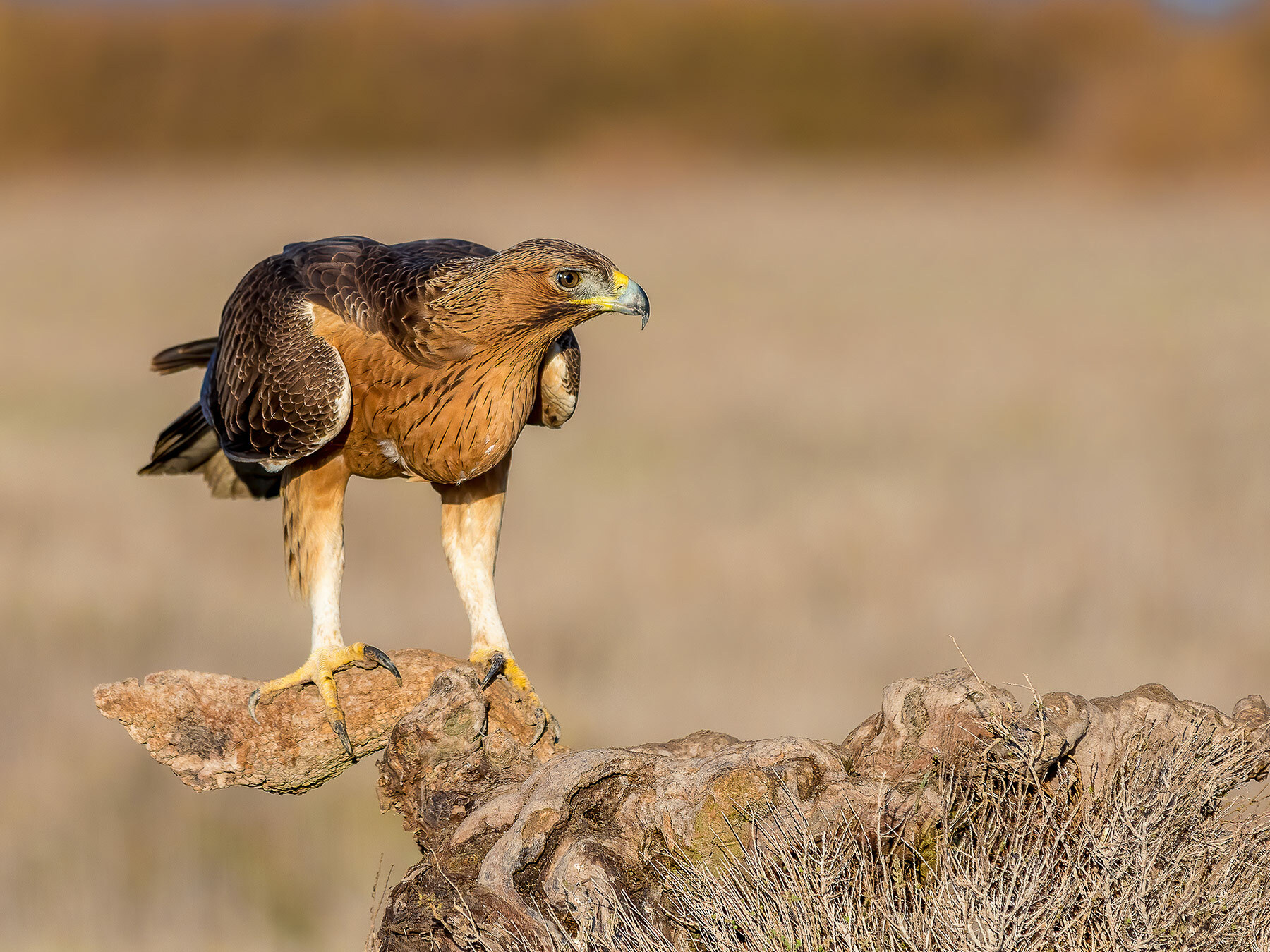
The Bonelli's Eagle is a large, powerful raptor with a distinctive appearance. Adults display dark brown upperparts contrasting with a white underside, often streaked with black. The long, broad wings and barred tail are characteristic features, while the head shows a pale throat and dark 'moustache' markings.
Females are noticeably larger than males but share similar plumage. Juveniles have rufous-brown upperparts and buff underparts, gradually acquiring adult plumage over several years.
Its size
Adults- Length
- 65–72 cm
- Wingspan
- 150–180 cm
- Weight
- 1600–2400 g
Its song and calls
Although mainly silent birds, during the breeding season they will become more vocal with a series of barks or yelps similar to ‘eeyou – eeyou’. Their alarm call is a repetitive ‘ki – ki – ki’.
When and where to see it
The Bonelli's Eagle is not recorded regularly in the UK, Ireland, the United States or Canada.
Worldwide: recorded regularly in 29 countries
Countries where it was recorded in at least 3 of the 6 years 2019–2024. Linked countries have their own bird list.
Data: EOD – eBird Observation Dataset (Cornell Lab of Ornithology), accessed via GBIF.org, CC BY 4.0. Records from 2019–2024, aggregated and filtered by Birdfact. How these lists are made
Bonelli’s are generally non migratory, occupying their habitats year-round. Within Europe the greatest number are to be found in Spain including Mallorca, where the birds have been reintroduced. Breeding pairs are also to be found as far west as Portugal extending along the Mediterranean coast through southern France and the Balkans to Turkey. Whilst European numbers have been in decline for some time populations are strong in other parts of the range of the Bonelli’s eagle which extends through north west Africa, Senegal, Israel, Syria, the Arabian Peninsula, Saudi Arabia and the UAE, Afghanistan, Pakistan and Bangladesh, the Indian sub-continent, Thailand through to Indonesia and on to southern China.
Signs and Spotting tips
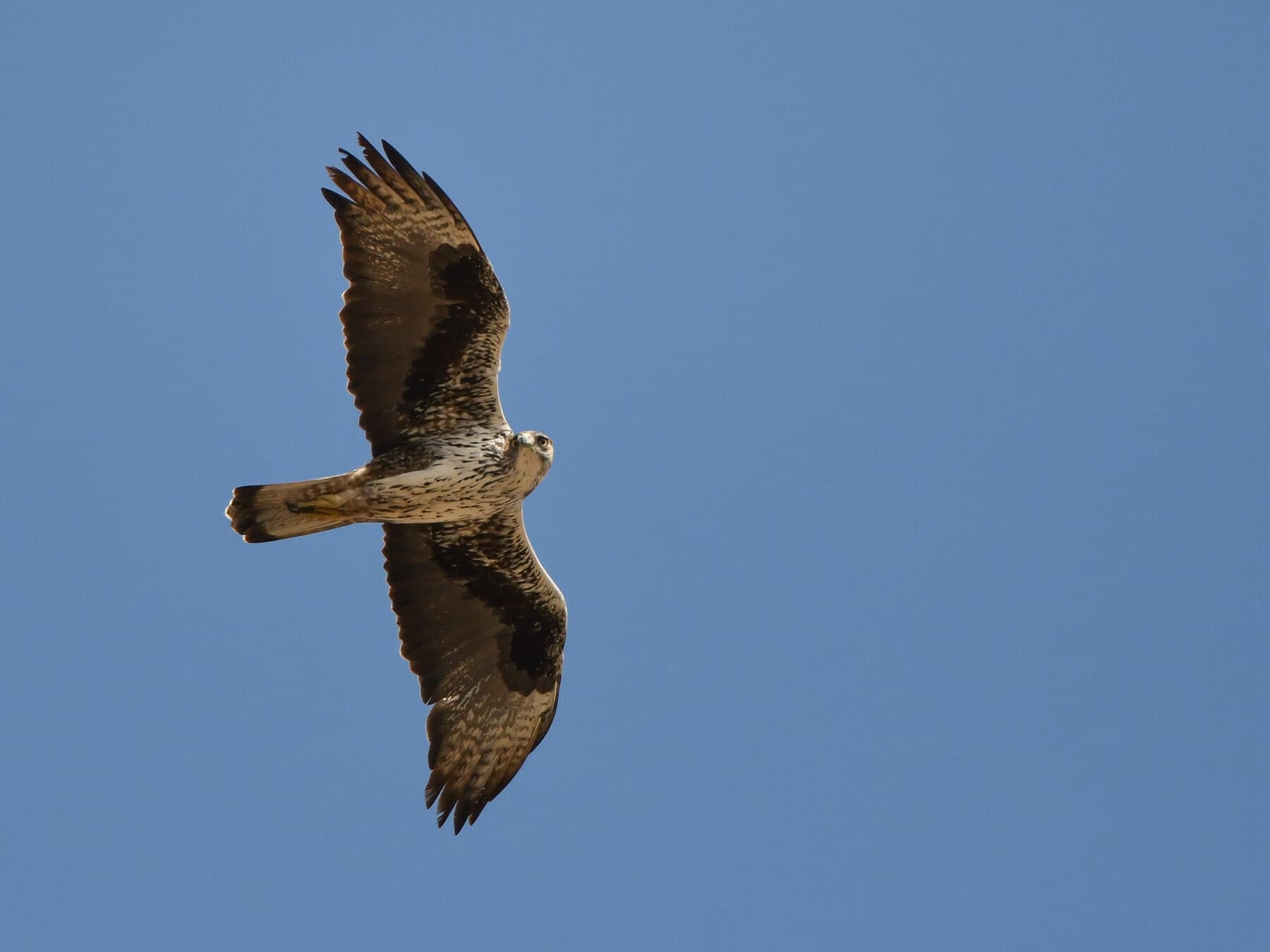
Mainly frequenting sunny, often arid regions, sightings are more common in mountainous and rocky areas or along cliffs or river gorges where they can be viewed gliding or soaring on flattened wings generally low to the ground searching for prey. Bonelli’s eagles are extremely territorial and whilst they will occupy areas of arable land and limited vegetation, they are unlikely to be found in heavily forested or highly overgrown regions which would afford admirable cover for their prey. They are seldom seen in company with others of their own species apart from its mate or family members.
What it eats
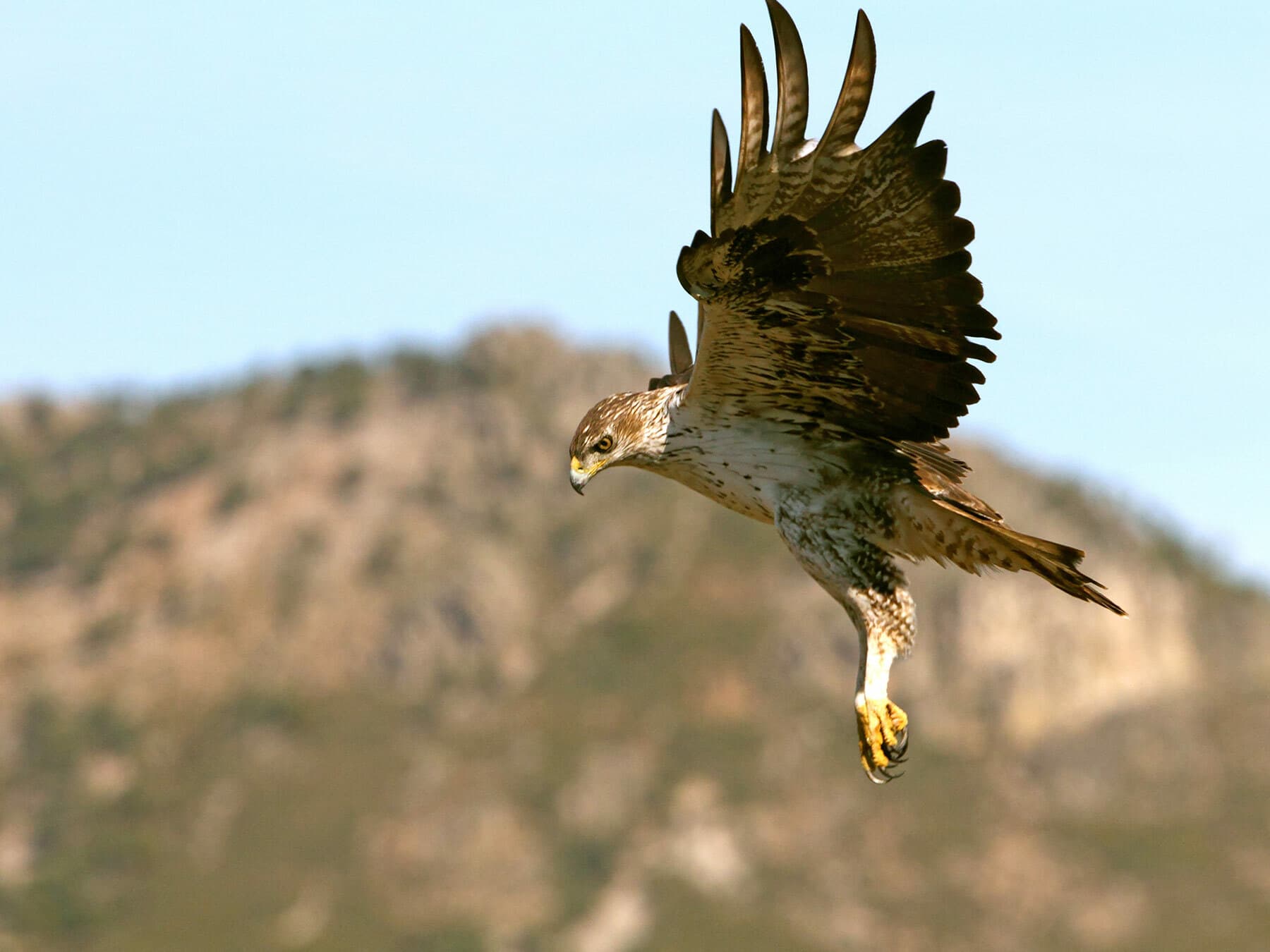
Bonelli’s eagles survive on a diet of mainly medium sized birds similar to pigeons or partridges, occasionally caught in flight, or more usually mammals, including rabbits and squirrels. Sometimes hunting in pairs and following surprise ground attacks they have been known to take foxes.
Nesting and breeding
Dependant upon location, breeding takes place between February to April in Europe and around the Mediterranean, January in north Africa and December to April across the Indian sub- continent. Nests are usually constructed out of large sticks and sited in caves, on steep ledges or occasionally in trees. One brood of normally two pale cream or white eggs with pale brown spotting is laid and incubated, predominantly by the female, for up to forty one days in Europe and up to 45 on the Indian sub-continent. Fledging starts around fifty six days of age up to a maximum of seventy days.
Behaviour
Bonelli's Eagles are known for their spectacular aerial displays during courtship, performing steep dives and loop-the-loops. They are territorial birds, often seen soaring high over their domain with slow, powerful wingbeats.
These eagles hunt cooperatively in pairs, demonstrating remarkable coordination when pursuing agile prey.
Lifespan and predators
The life expectancy of a Bonelli’s eagle is generally regarded as being up to a maximum of fifteen years.
Conservation
While listed as Least Concern globally, Bonelli's Eagle faces regional threats. Habitat loss, electrocution from power lines, and illegal shooting are primary concerns.
Conservation efforts focus on habitat protection, nest site management, and reducing human-wildlife conflicts.
What does a Bonelli’s Eagle look like?
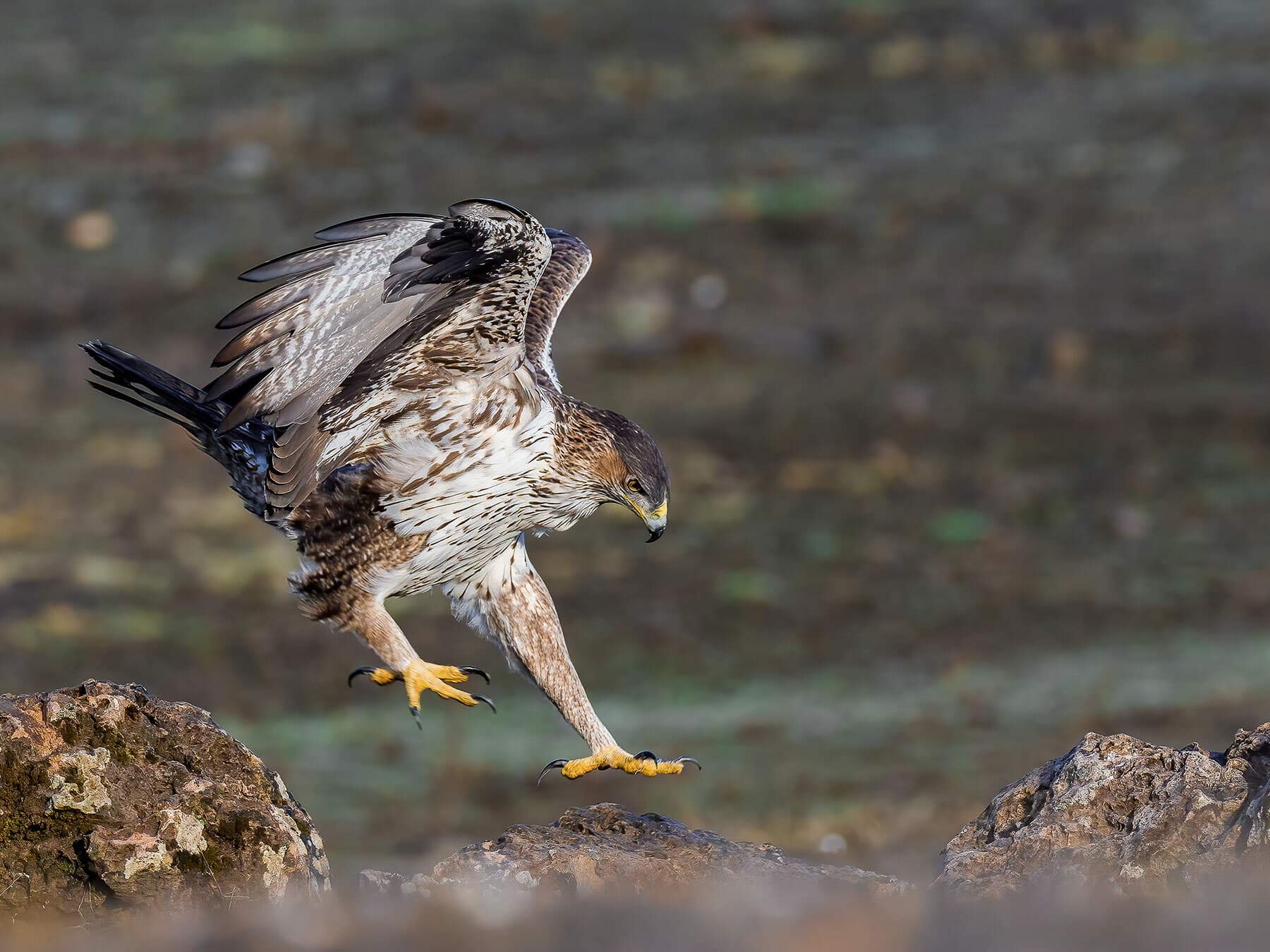
The Bonelli’s eagle is a medium sized eagle with elongated legs, large yellow feet and strong black talons. Adult males are predominantly dark brown above with a white mantle patch below the nape stretching towards the upper back and a long narrow grey tail tipped with black. The head is dark brown with a brown and white streaked neck and white throat. Breast and underbody are white streaked with dark brown with a white undertail tipped dark and brown underwings. There is a very dark black band along the edge of the underwing median coverts and a pale, almost white hue, to the leading edge of the underwing from the bastard wing extending to the body. Eyes are yellow and the hooked bill is grey to dark grey with a yellow cere from the base of the upper mandible to the nostrils. The feathered legs are mainly brown on the outer half and white with minimum streaking on the inside. Adult females tend to be up to 10% larger than males with heavier streaking to the underparts and darker overall. Juveniles have dark upperparts and are a light brown or tawny shade below, extending to the underwing coverts. Full adult plumage is reached at approximately four years of age.
Similar birds
Often mistaken for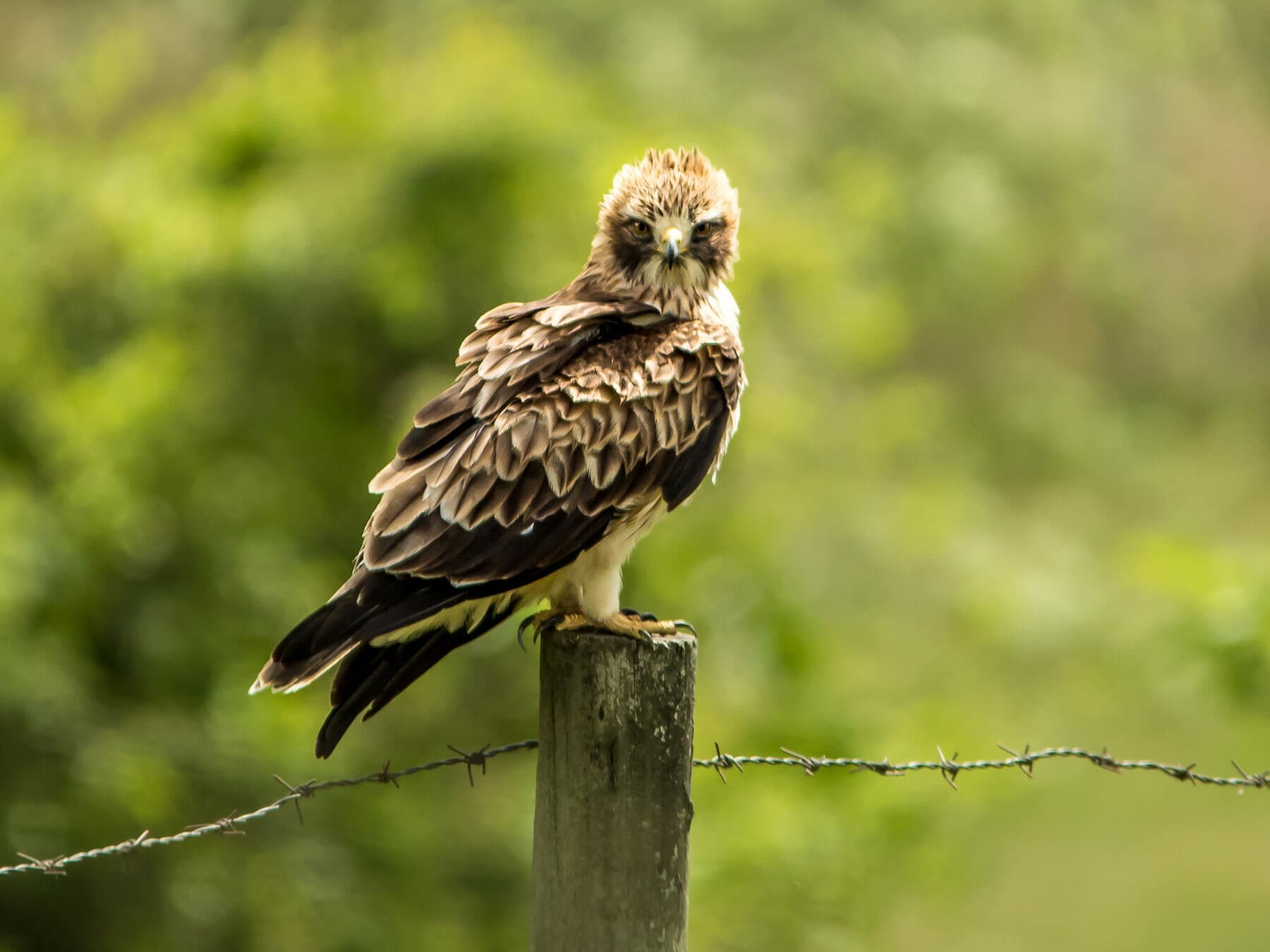
More photos
2 photos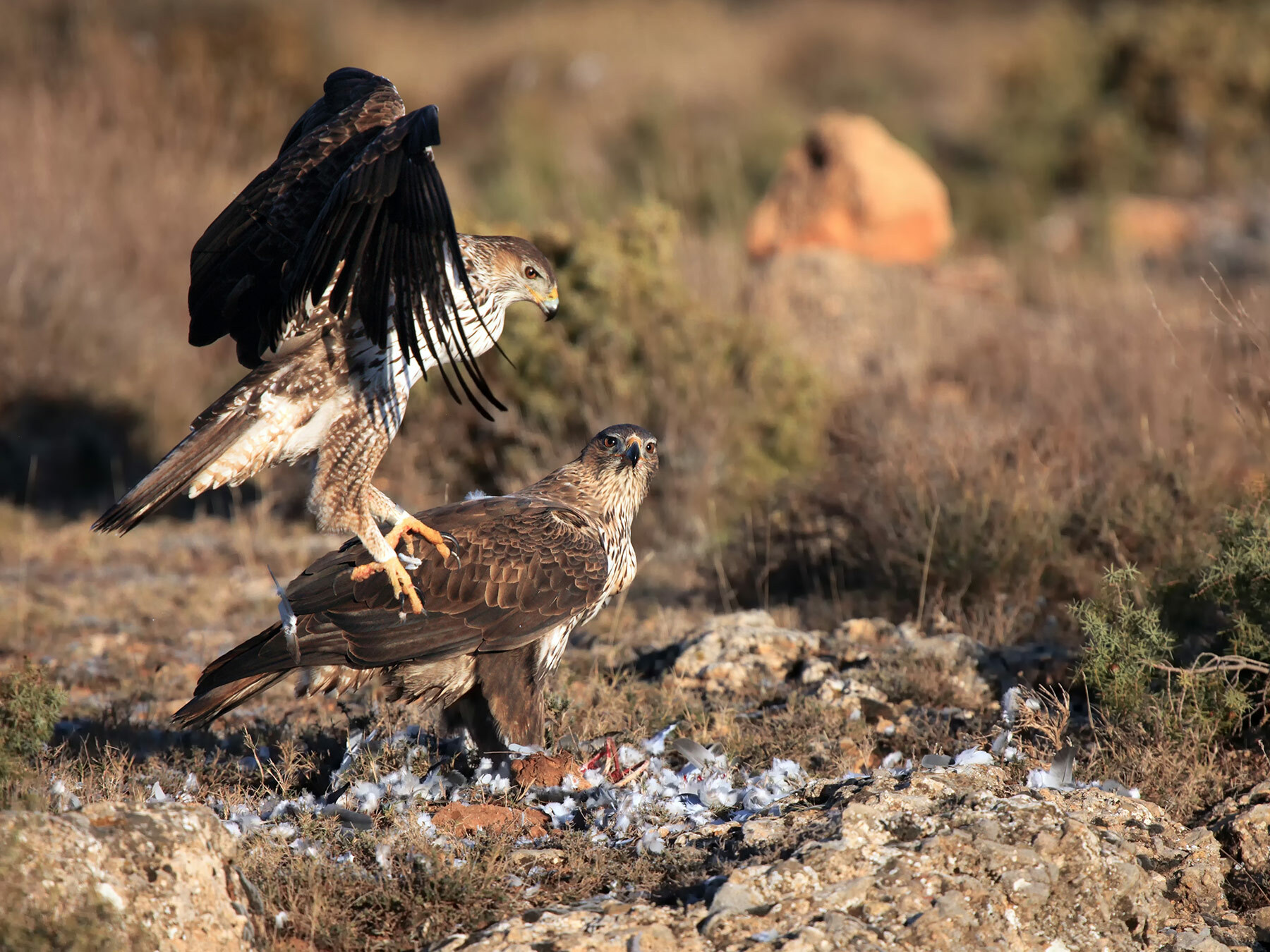
Bonelli's Eagle guides
1 guidesQuick facts
- Length
- 65–72 cm
- Wingspan
- 150–180 cm
- Weight
- 1600–2400 g
- Lifespan
- 15 years · oldest recorded 20 years
- Family
- Hawks & Eagles
- Migration
- Partial migrant
- Global status (IUCN)
- Least Concern
- World population
- 20,000 - 49,999 mature individuals
- Population trend
- Decreasing
- Also called
- Bonelli's Hawk-eagle
- Scientific name
- Aquila fasciata
Sources
4- 1BirdLife International. 2019. Aquila fasciata (amended version of 2016 assessment). The IUCN Red List of Threatened Species 2019: e.T22696076A155464015. Source (opens in a new tab)
- 2BirdLife International. 2019. Aquila fasciata (amended version of 2016 assessment). The IUCN Red List of Threatened Species 2019: e.T22696076A155464015. Source (opens in a new tab)
- 3BirdLife International. 2019. Aquila fasciata (amended version of 2016 assessment). The IUCN Red List of Threatened Species 2019: e.T22696076A155464015. Source (opens in a new tab)
- 4Carey and Judge, Longevity Records: Life Spans of Mammals, Birds, Amphibians, Reptiles, and Fish (2000) Source (opens in a new tab)

Checked by
Nathan Cope, founder and editor
Nathan founded Birdfact and leads its writers and contributors in the UK, the US and Canada. He has watched and studied birds for more than ten years, and checks every article and species guide before it’s published.