


Northern Goshawk
Goshawk, Eurasian Goshawk · Astur gentilis
By the Birdfact teamChecked by Nathan Cope
On this page15 sections
How to recognise it
What do Goshawks look like?
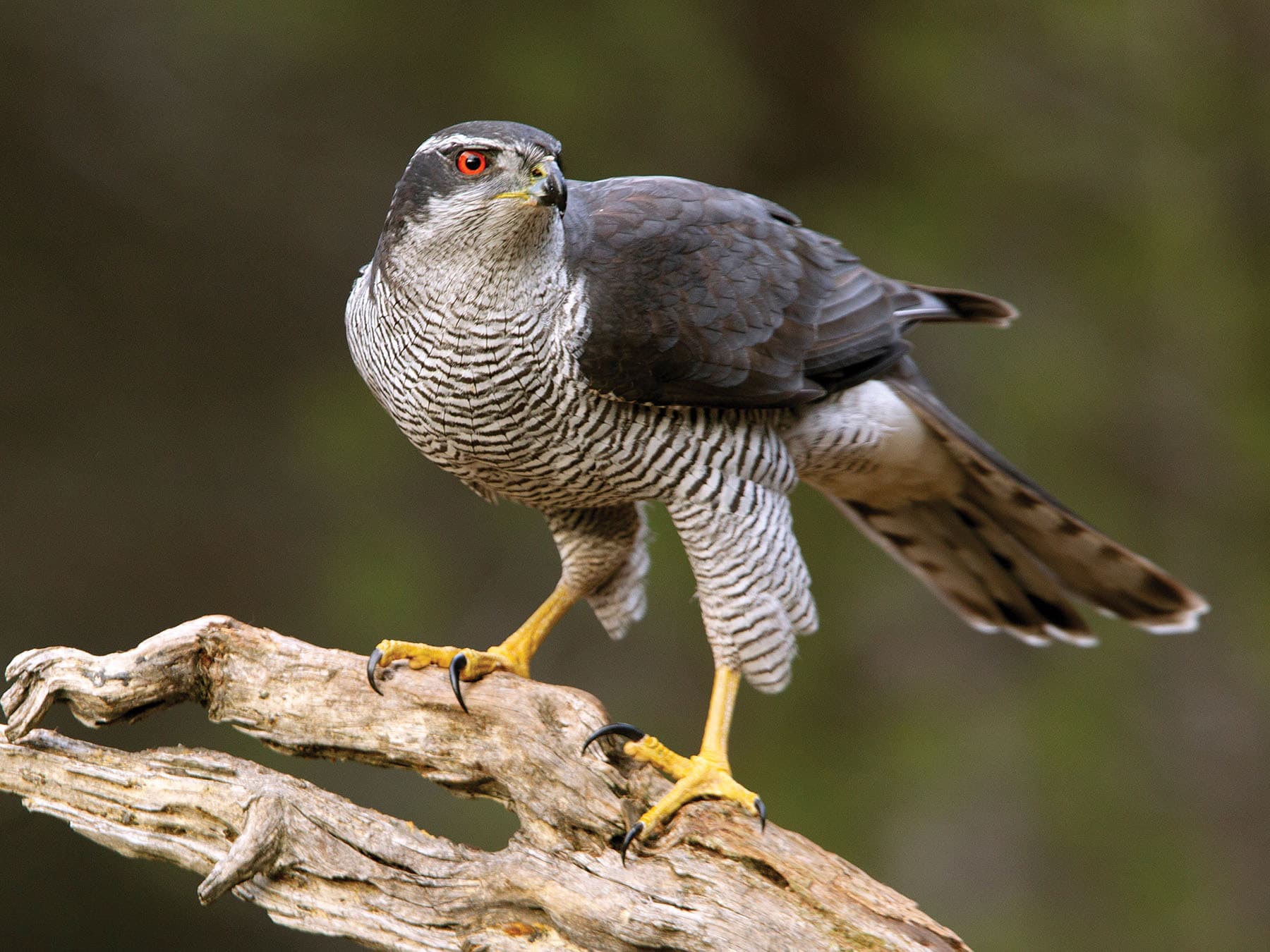
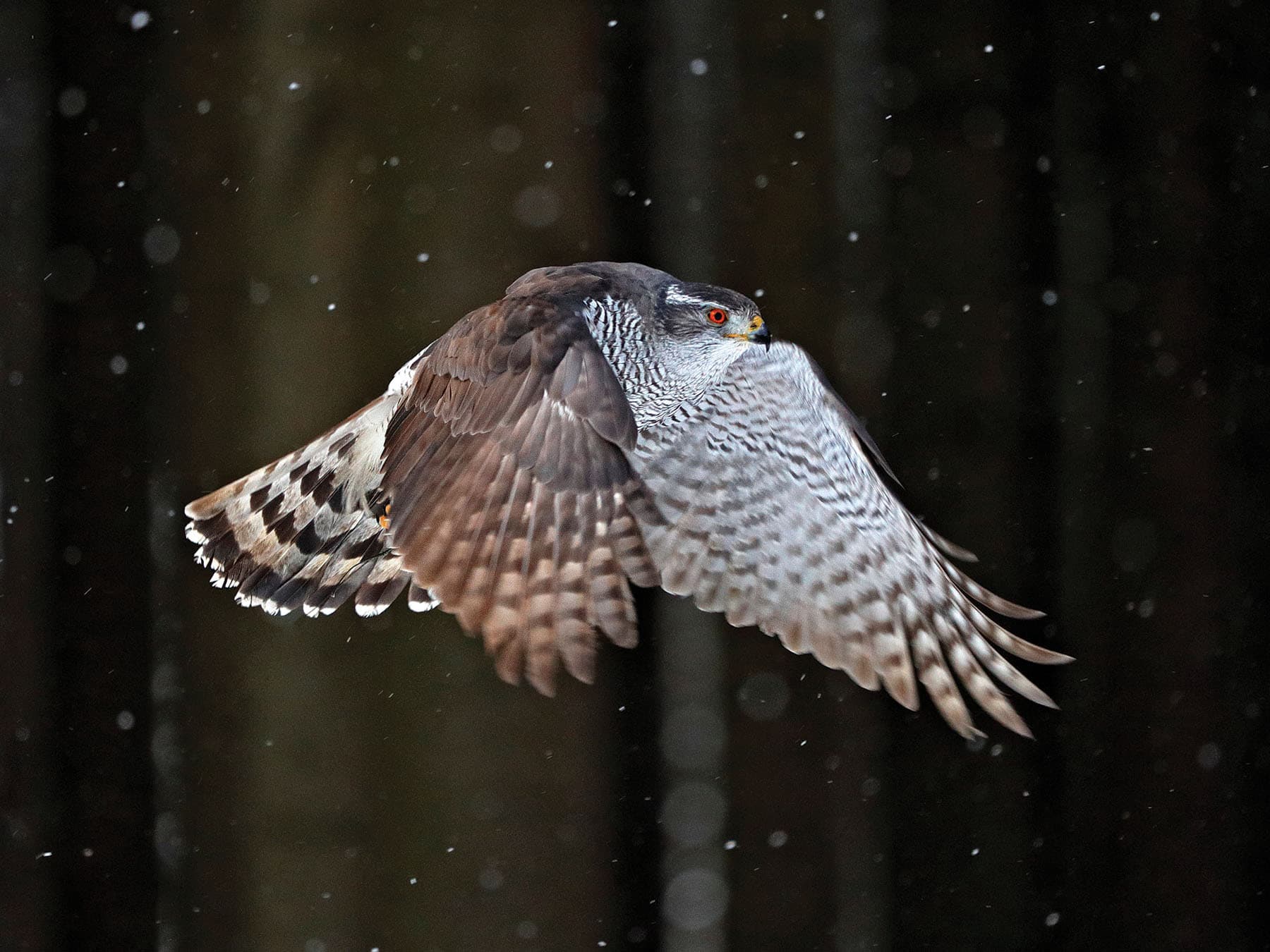
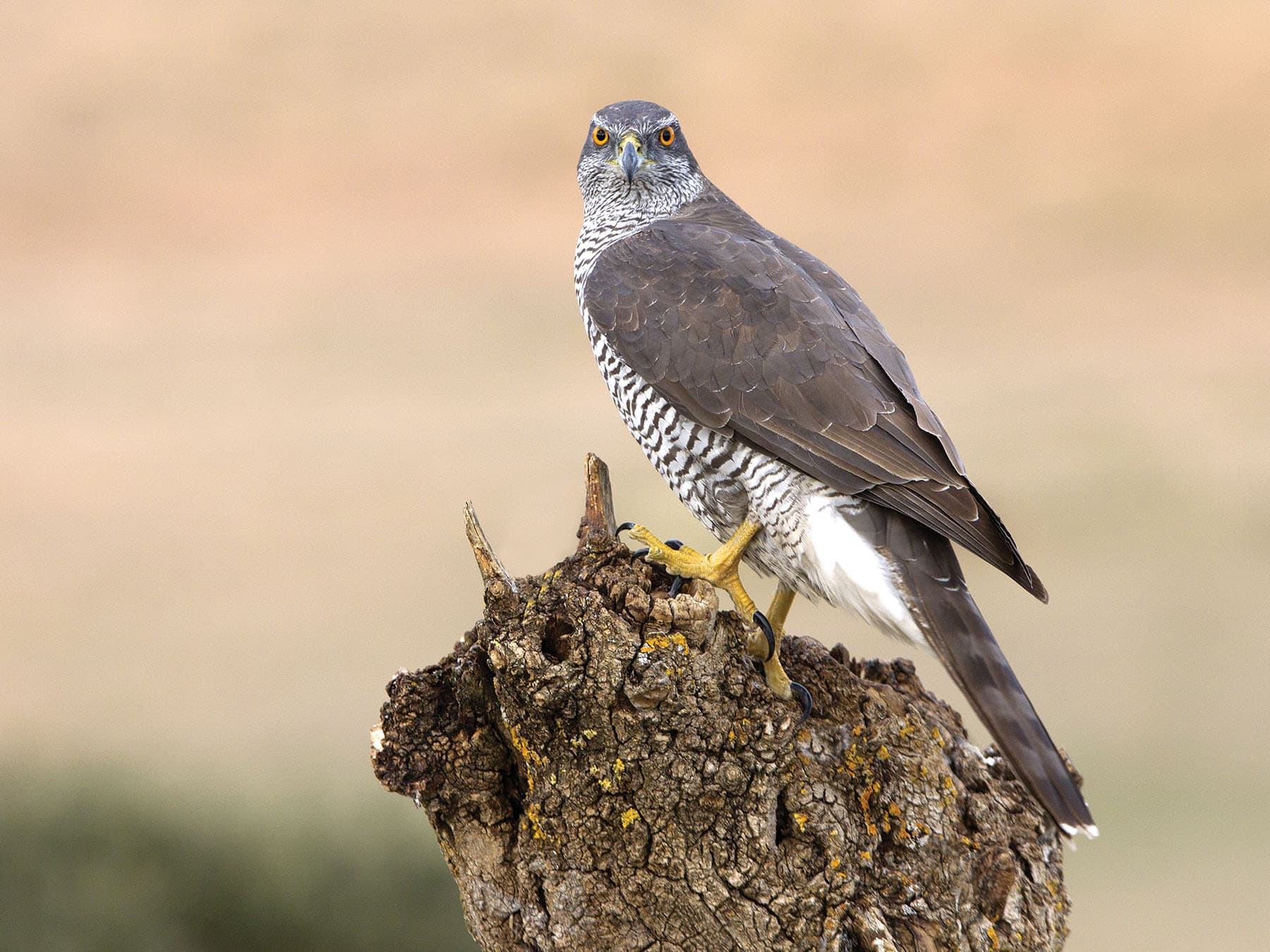
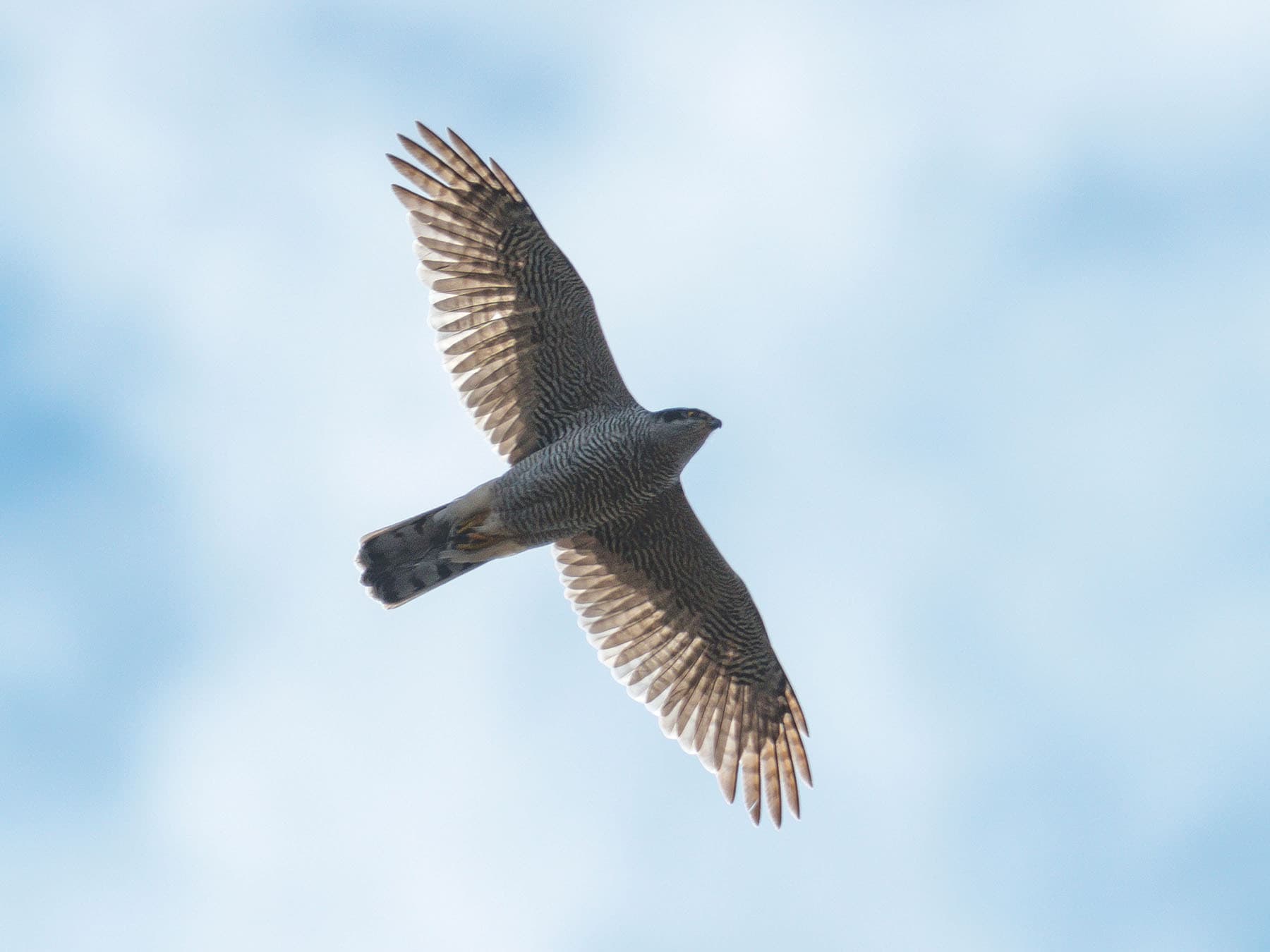
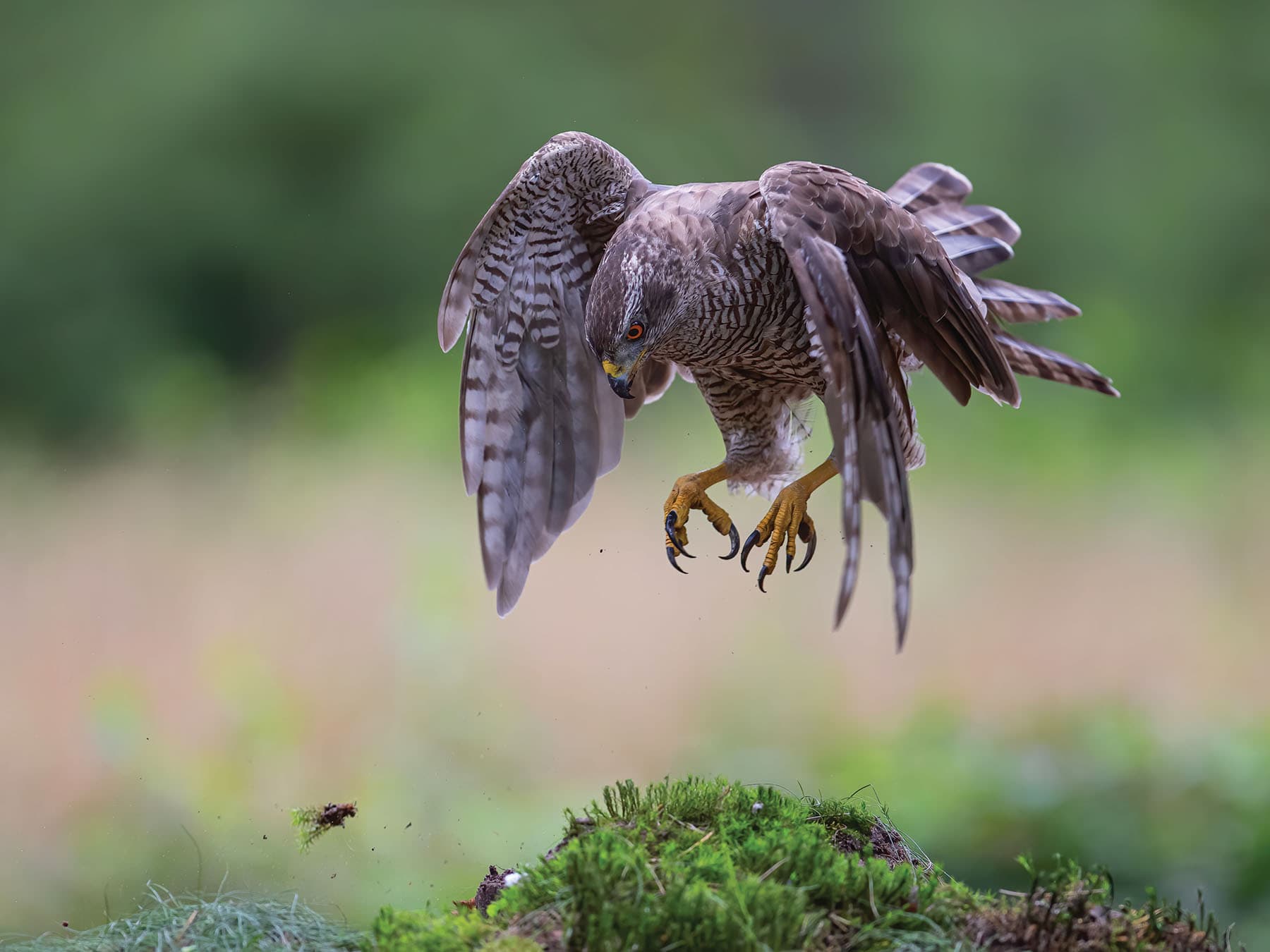
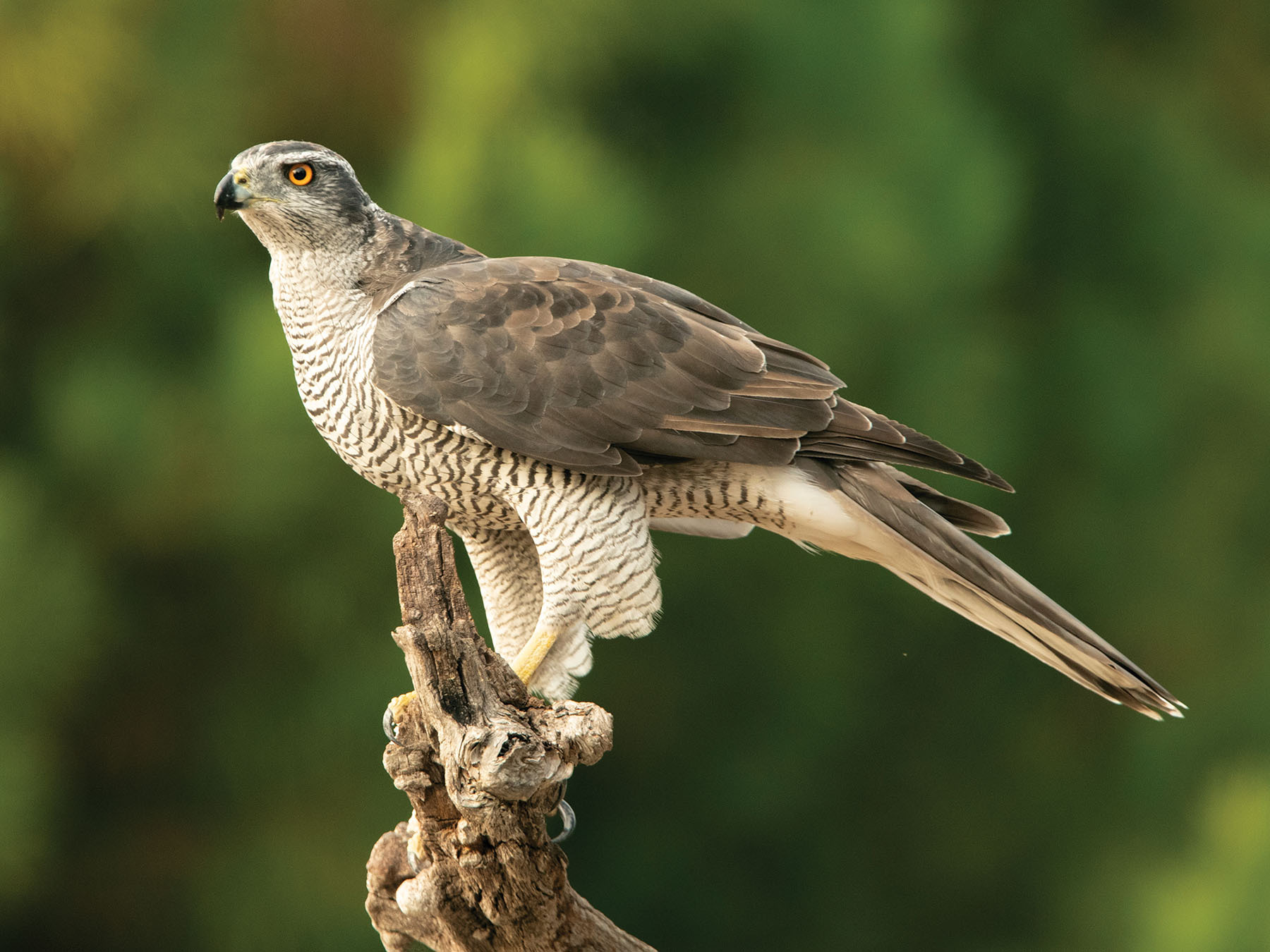
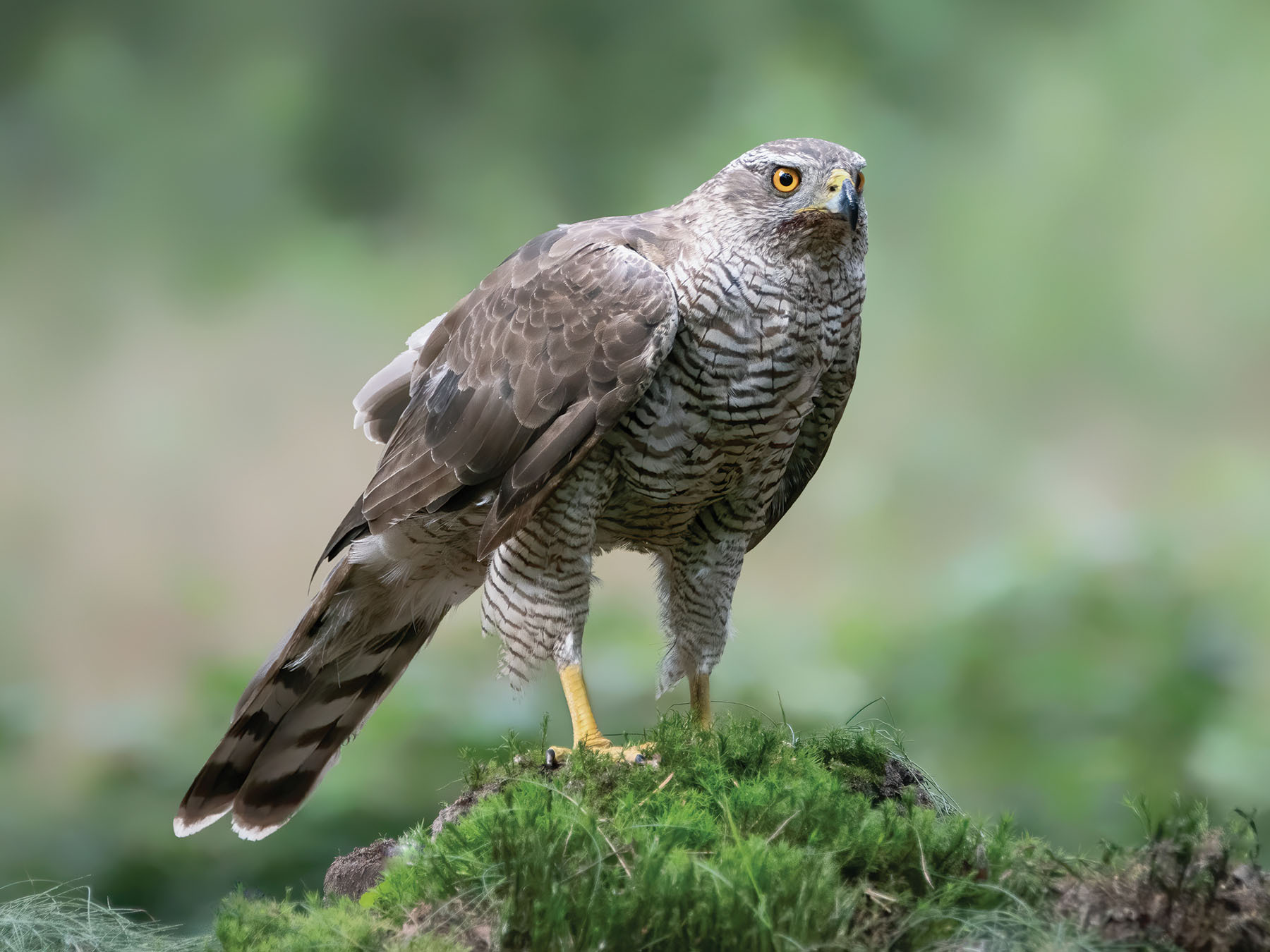
Goshawks have slate gray upperparts that may have a brownish tinge. They have a darker charcoal cap, and a bold white eyebrow stripe above their orange-red iris, dark gray cheeks and a pale lower face and throat. Their underparts are grayish-white, marked with some darker barring, and their long gray tail is barred with wide black markings.
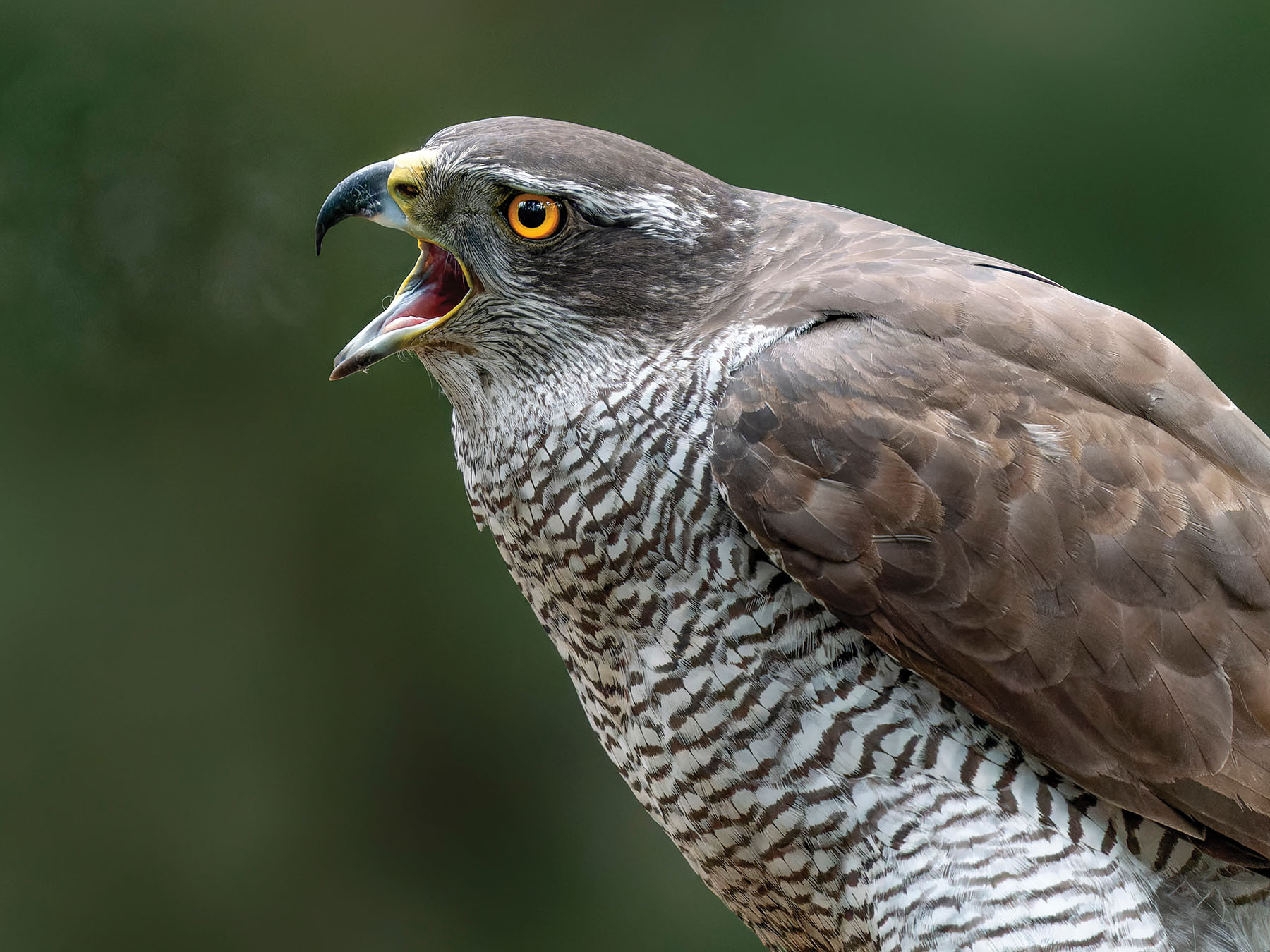
A goshawk’s legs are yellow, and its bill is powerful and hooked, and dark gray-blue with a yellow cere.
Females and males are alike in appearance, although females might appear slightly browner and have more heavily pronounced markings that may look barred across their breast and belly.
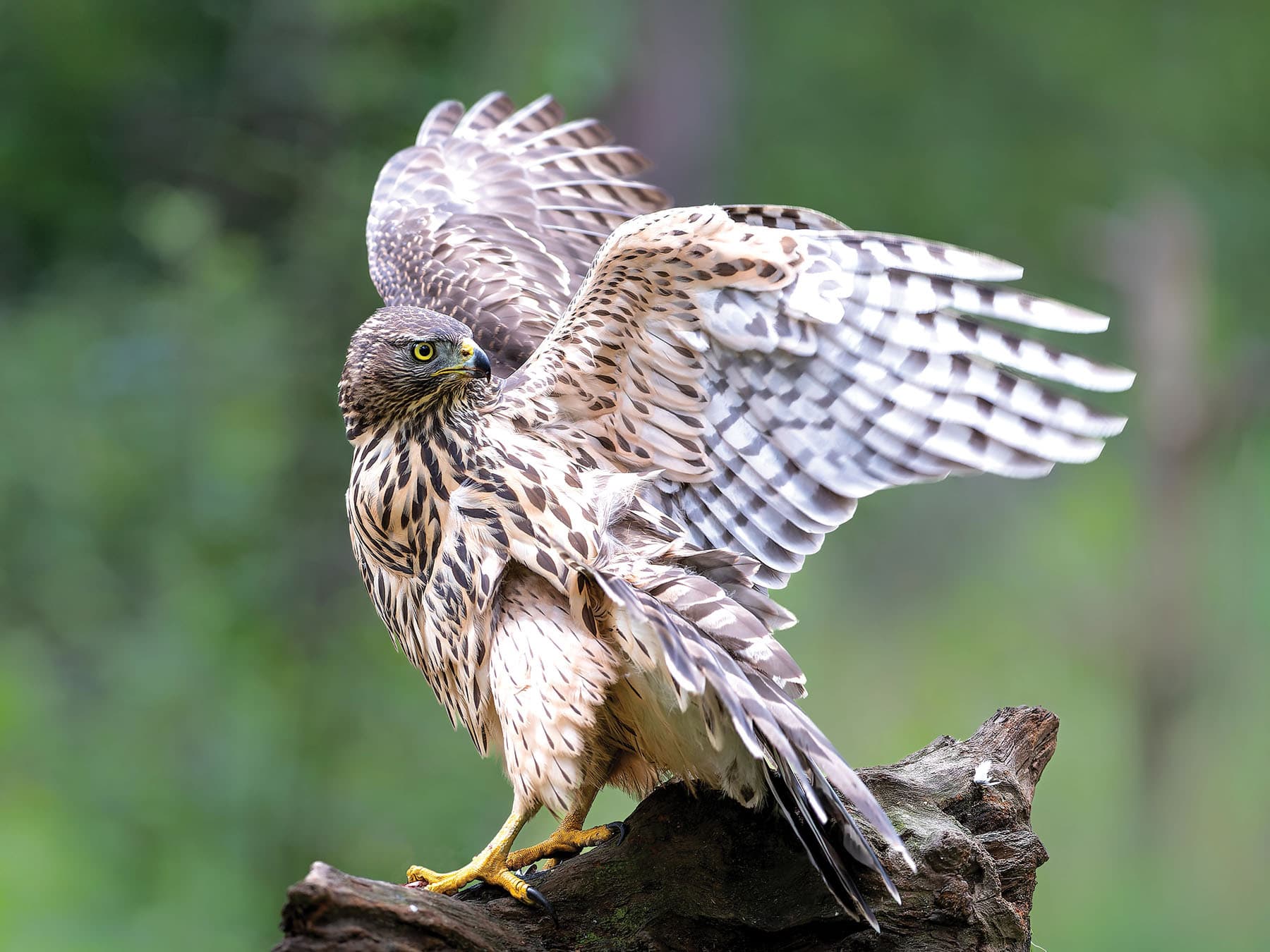
Juveniles are brown rather than gray, and may have some noticeable streaking on their upperparts as well as their breast and belly. Their eyes remain pale yellow until their second year, when they darken to the red-orange shade seen in adult goshawks.
How big are Goshawks?
Female goshawks are noticeably larger and heavier than males, reaching almost double the weight of their male counterparts by the time they reach maturity.
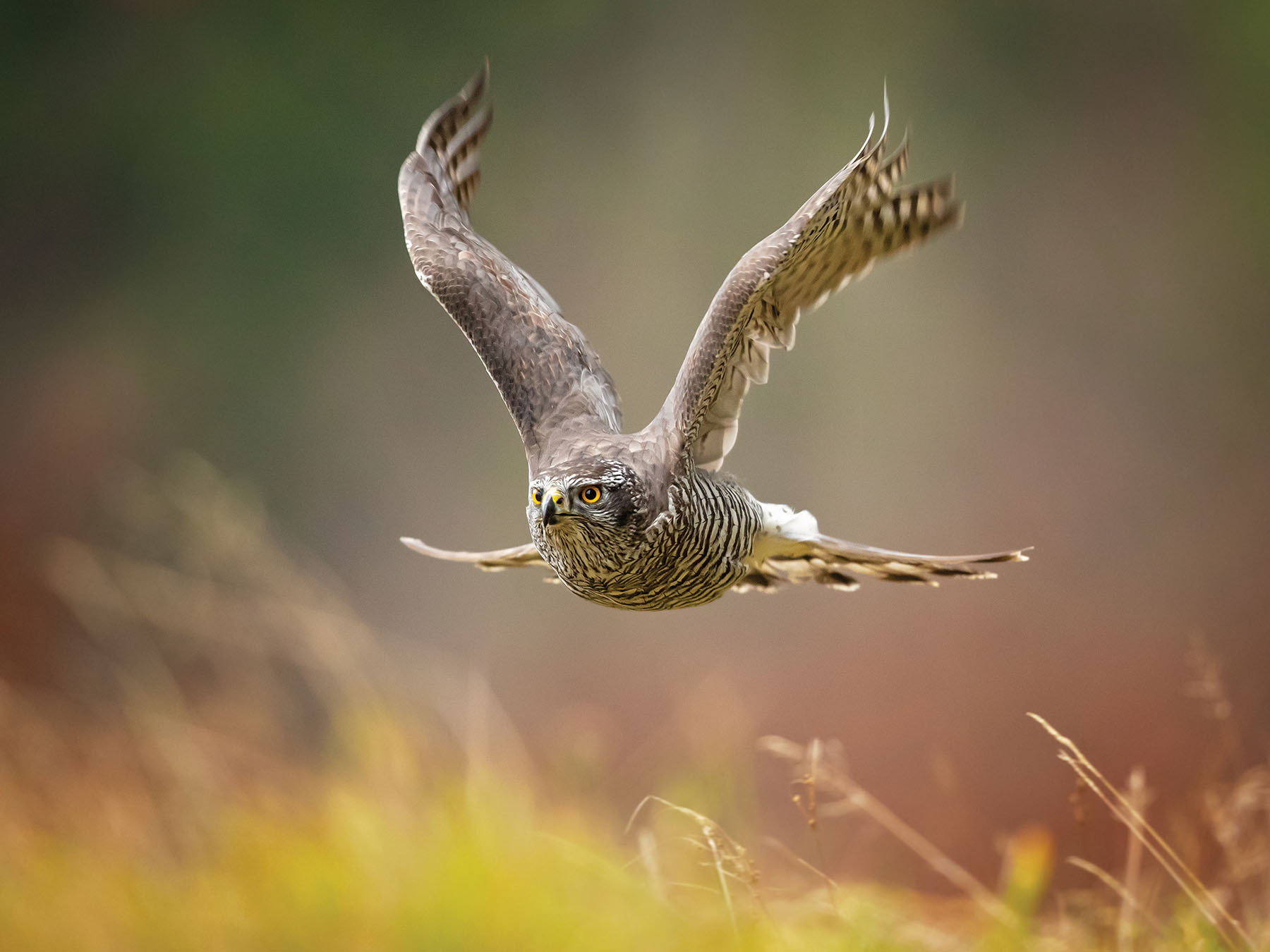
The largest females are almost the size of a buzzard, but despite their size, they are capable of streamlined flight and high-speed acceleration.
- Length: 48 cm to 62 cm (19 in to 24 in)
- Wingspan: 135 cm to 165 cm (53 in to 65 in)
- Weight (male): - 600 g to 1,100 g (21 oz to oz)
- Weight (female): 900 g to 2,000g (32 oz to 70 oz)
Its size
Adults- Length
- 46–61 cm
- Wingspan
- 98–127 cm
- Weight
- 630–2000 g
Its song and calls
What sound does a Goshawk make?
The alarm call of a male goshawk is a rapid ‘kak-kak-kak’ sound, heard in flight when mobbing a predator or defending their nest. In females, the pitch is lower and more rasping.
Wailing contact calls between mates can also be heard in a variety of situations, including food transfer and a recognition greeting.
- Call0:00 / 1:25
Recorded in Brandenburg, Germany · July 2017
When and where to see it
OctoberIn season
Most recorded in October
- 1. Midlothian0.18%
- 2. West Lothian0.12%
- 3. Powys0.12%
- 4. Falkirk0.11%
- 5. Herefordshire0.10%
Each dot is a county, state or province: the bigger and darker, the larger the bird’s share of that place’s bird records that month. Grey dots: no regular records. The ringed point is the centre of the bird’s records this month; the arrow shows how it moved since last month, and the dashed loop its path through the year. “Arrivals” colours places where it becomes regular this month (orange) or is in its last regular month (grey). GBIF eBird Observation Dataset, 2019–2024. Map data: Natural Earth, US Census Bureau; place centres © OpenStreetMap contributors.
In your area
See when the Northern Goshawk is recorded in your county, state or province.
How often the Northern Goshawk turns up in the UK through the year, from birdwatchers' records.
Recorded in United Kingdom, but eBird withholds many records of this sensitive species to protect it, so no months are shown.
Worldwide: recorded regularly in 58 countries
Countries where it was recorded in at least 3 of the 6 years 2019–2024. Linked countries have their own bird list.
Europe (38)
- Åland Islands
- Albania
- Austria
- Belarus
- Belgium
- Bosnia & Herzegovina
- Bulgaria
- Croatia
- Czechia
- Denmark
- Estonia
- Finland
- France
- Germany
- Greece
- Hungary
- Italy
- Kosovo
- Latvia
- Lithuania
- Luxembourg
- Moldova
- Montenegro
- Netherlands
- North Macedonia
- Norway
- Poland
- Portugal
- Romania
- Russia
- Serbia
- Slovakia
- Slovenia
- Spain
- Sweden
- Switzerland
- Ukraine
- United Kingdom
Africa (1)
Data: EOD – eBird Observation Dataset (Cornell Lab of Ornithology), accessed via GBIF.org, CC BY 4.0. Records from 2019–2024, aggregated and filtered by Birdfact. How these lists are made
What is the habitat of a Goshawk?
Goshawks are ambush predators and require dense tree cover from which to swoop on their prey. Deciduous and coniferous forests are both used, with nests built in a range of tree species, including beech, maple, birch, aspen and oak.
They can tolerate high altitudes, up to the tree line, but during winter months, lower ground is preferred.
What is the range of a Goshawk?
In Europe and Asia, goshawks are present from the British Isles in the west throughout Scandinavia and eastwards into northern Russia and Siberia.
In the south, the range extends across the Mediterranean region, the Middle East, Iran, the Himalaya mountains and eastwards as far as eastern China and Japan.
In North America, goshawks are resident all year round across central and southern Canada, and across the extreme eastern and western regions of the U.S. with some breeding also occurring in western Mexico.
Once the breeding season ends, some southward migration occurs, with goshawks spreading eastwards and southwards into almost all of the United States, except the far southeastern region.
Where do Goshawks live?
Only approximate figures exist for the goshawk populations of individual countries, with Russia leading the table, with up to 110,000 pairs, and Romania, Germany and Fennoscandia estimated to have numbers in the tens of thousands.
In the US, it’s thought that western regions have higher densities of goshawks than eastern areas.
How rare are Goshawks?
In the UK, goshawks are fairly rare, with top estimates of around 600 breeding pairs. However, this is a vast improvement on their status around 100 years ago, as the species was extinct in England and Wales by the mid 19th century, and in Scotland by the start of the 20th century.
The population experienced a dramatic population revival after goshawks were released (or in some cases escaped) from captivity, so although rare today, they are far less so than they once were.
In the US, goshawks are widespread, but also far from common, and in certain eastern states, including Maryland and Pennsylvania sightings are becoming rarer each year.
Where can you see Goshawks in North America?
Goshawks can frequently be seen perched at high altitude on tree tops, scouring the landscape for their next meal.
They are active during daylight hours, and can be spotted in flight between perches and are most broadly found in the western United States, including Alaska, and western Canada, and are particularly visible in wooded foothills of mountainous landscapes.
Hawk Mountain Sanctuary, in Kempton, PA, is a traditional goshawk-spotting hotspot.
Where can you see Goshawks in the UK?
Top locations for spotting goshawks in the UK include Northamptonshire’s Kielder Forest, the Forest of Dean in Gloucestershire and Hampshire’s New Forest National Park.
Migration
Do Goshawks migrate?
Across most of their range in North America and Europe, goshawks are year-round residents and breed and spend winters in the same territories.
However, birds that breed in the northern extremes of Russia, Finland, Norway, Sweden and northern Canada migrate southwards when conditions make survival more challenging.
Are Goshawks native to North America?
Goshawks are native to North America, breeding across central and southern Canada, and into the extreme northeastern and much of the western United States. During winter, the species becomes more widespread across the US, but tends to avoid the southeastern corner.
Are Goshawks native to the UK?
Goshawks are resident in the UK all year round, but are relatively scarce, with only an estimated 600 breeding pairs remaining.
Tips for seeing it
- Look for them in mature forests with open understories
- Listen for their distinctive 'ki-ki-ki' call, especially during breeding season
- Observe hunting behaviour near forest edges or clearings
- Be cautious when approaching nesting areas, as they can be aggressive
What it eats
What do Goshawks eat?
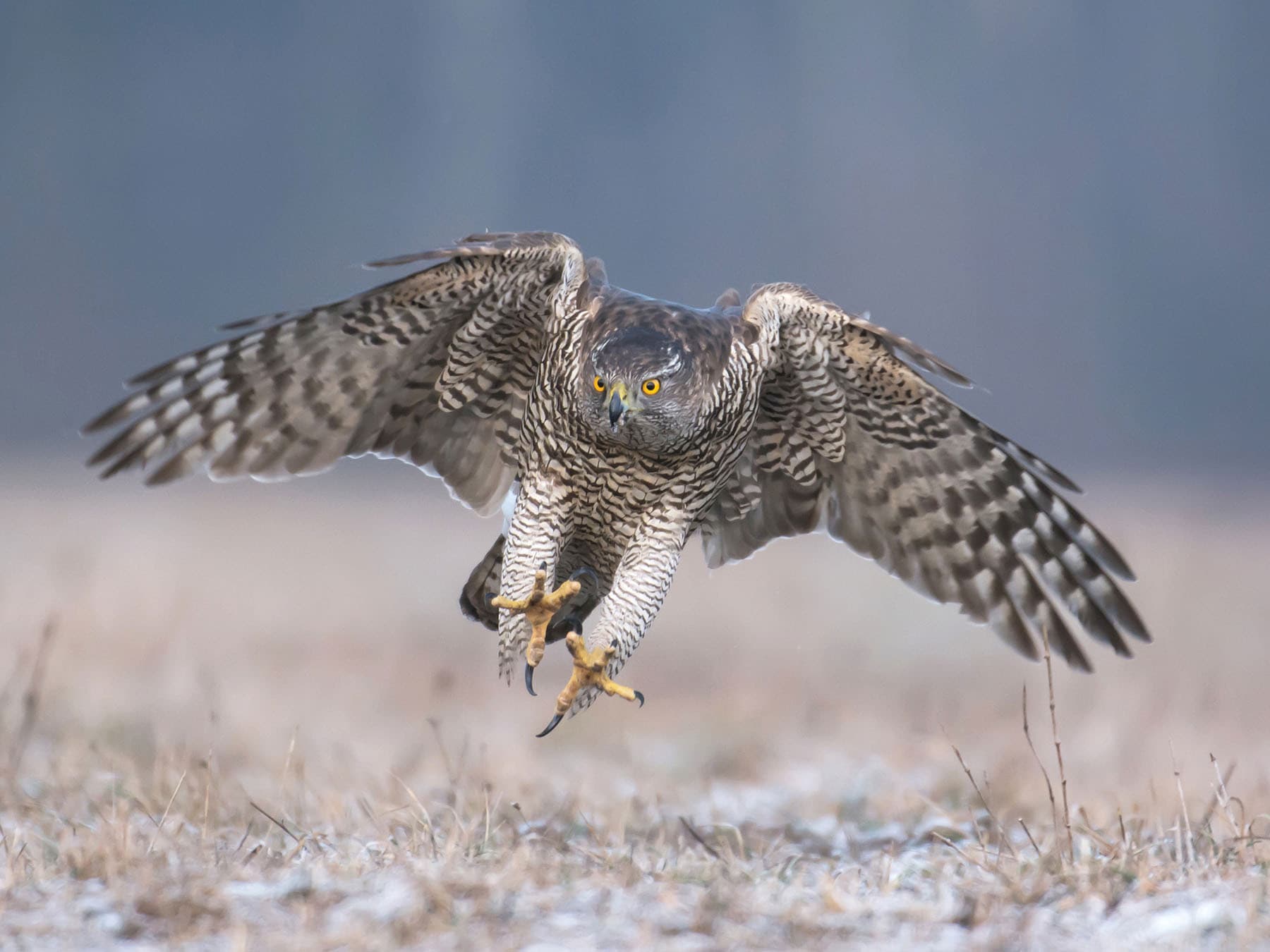
Goshawks are opportunistic hunters and will catch and eat whatever is available from day to day. This might be mammals, birds or reptiles, including squirrels, rabbits, hares, bats, woodpeckers, game birds and lizards.
Prey may be cached for a future meal, and goshawks are regularly observed to take their catch to a plucking post where they remove any feathers or fur before eating.
What do Goshawk chicks eat?
The early diet of goshawk nestlings consists of smaller songbirds, or other prey that passes near to their nest site. Any larger prey items are torn into smaller pieces by the parents’ strong beach and talons.
Nesting and breeding
Where do Goshawks nest?
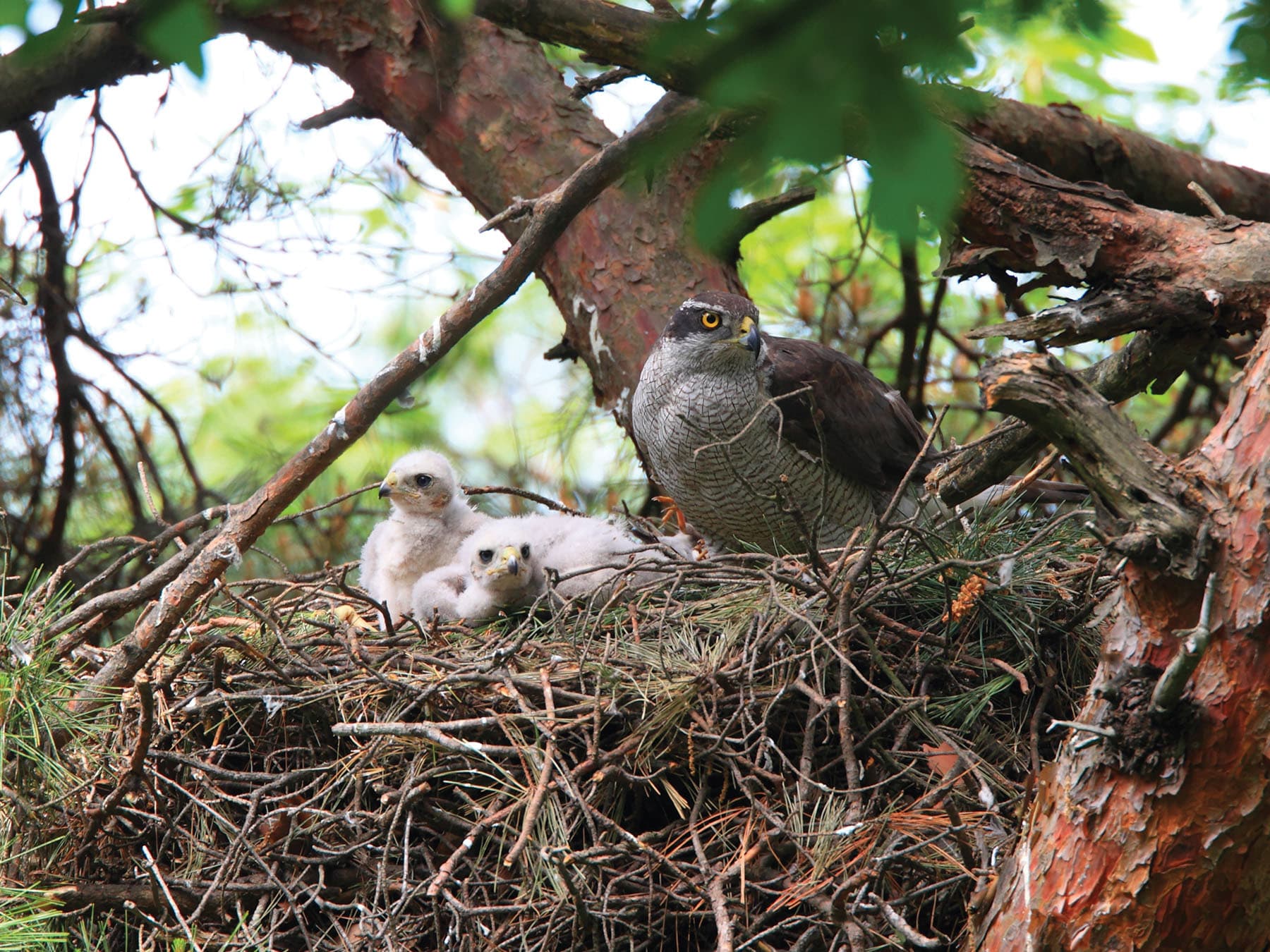
Nests are built in mature trees just below the tree line level. Little documentation exists of the nest-building process, but it’s thought that females build the nest, with occasional assistance from her mate.
Sticks are collected from around their chosen tree, and old nests may be repaired and reused in subsequent years.
The nest itself is a bulky platform of twigs, sticks and larger branches, with the inner bowl lined with bark and grasses.
What do Goshawk eggs look like?
Typical clutch size for goshawks is between 2 and 4 eggs. Eggs are rough and either pale blue to off-white, and do not have any patterns or markings.
Females undertake the majority of incubation, while males are observed to occasionally take a turn. After 28 to 37 days, the young hatch and remain in the nest for between 42 and 45 days before fledging.
Do Goshawks mate for life?
Goshawks breed for the first time at either 1 or 2 years old, and remain bonded with the same mate throughout their life. Pairs spend winters apart, but reunite on breeding grounds the following spring.
Behaviour
Are Goshawks aggressive?
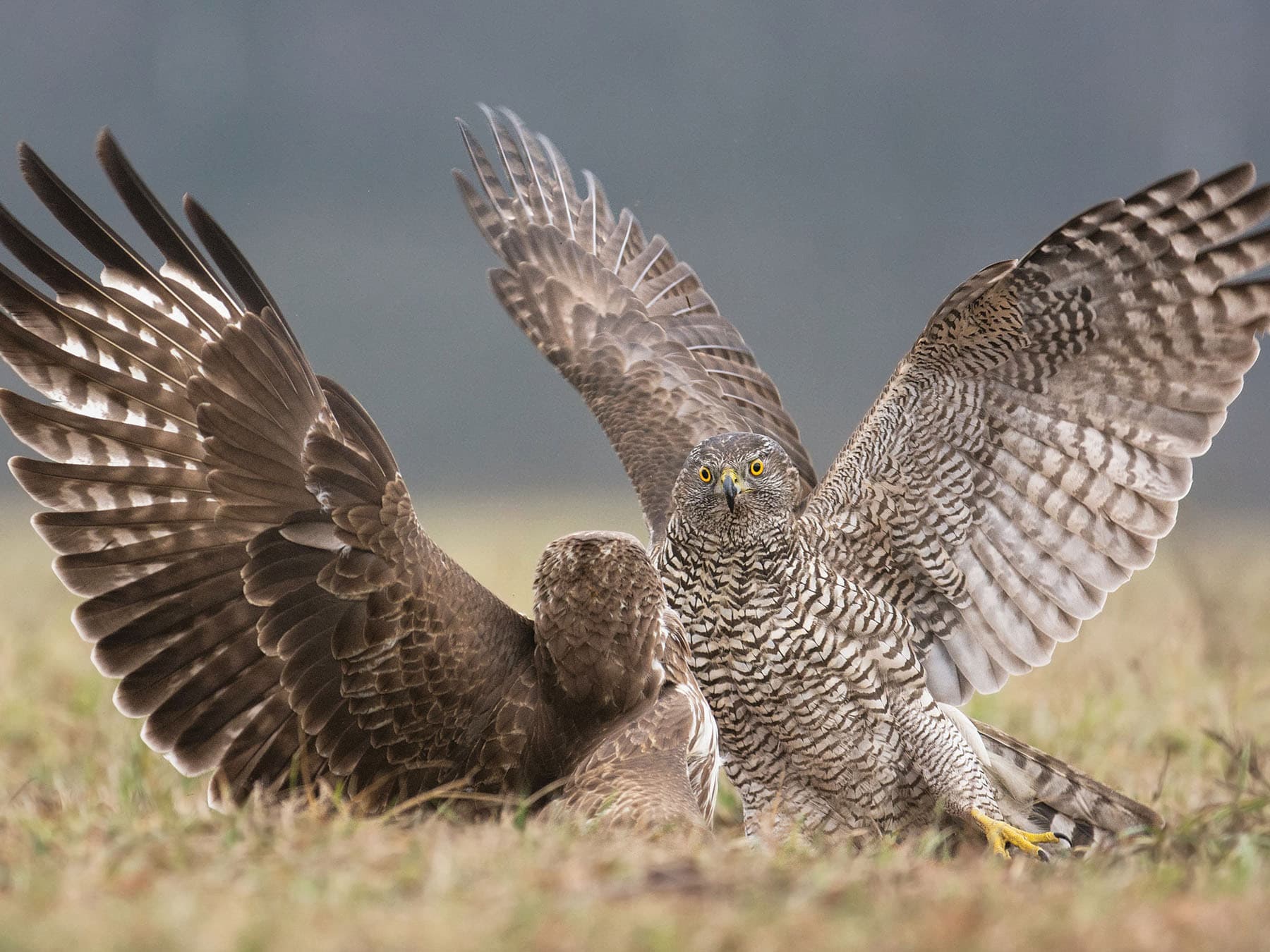
At the outset of the breeding season, highly aggressive and territorial behavior is seen in male goshawks, challenging intruders and circling over the nest site to warn off any potential threats.
The aggressive nest defense peaks shortly after hatchlings become more active and start gaining independence.
Where do Goshawks sleep at night?
Goshawks roost alone in the upper branches of the woodland canopy. During the breeding season, females will brood the young on the nest at night for up to 24 days.
Lifespan and predators
How long do Goshawks live?
Goshawks have an average lifespan of around 11 years, although data from ringing schemes shows the oldest recorded individual bird found was 19 years old.
What are the predators of Goshawks?
Being a fearsome predator themselves, goshawks do not have many natural predators that are higher up the food chain than themselves.
In North America, great horned owls prey on both adult and juvenile goshawks, while in Europe, eagle owls will target nestlings. Other occasional predators include eagles, martens and wolverines.
Are Goshawks protected?
In the UK, goshawks are protected as Schedule 1 birds under the Wildlife and Countryside Act, 1981, meaning that as well as being safeguarded against being killed, injured or captured, their eggs, young and nest sites are also given additional protection.
In the US, goshawks, their nests, young, eggs, and feathers are protected under the Migratory Bird Treaty Act of 1918.
Are Goshawks endangered?
Globally, goshawks are categorized as a species of least concern. In the UK, they are listed as a green species in the British Birds of Conservation Concern list.
Population declines in parts of the US have led to the goshawk being listed as a species of concern in Washington, Idaho and Michigan, where special conservation efforts are ongoing to encourage population stability.
Conservation
While listed as Least Concern globally, Northern Goshawks face regional threats from habitat loss due to deforestation and fragmentation. In some areas, they are also affected by human persecution and climate change. Conservation efforts focus on protecting mature forest habitats and monitoring populations.
Similar birds
Often mistaken for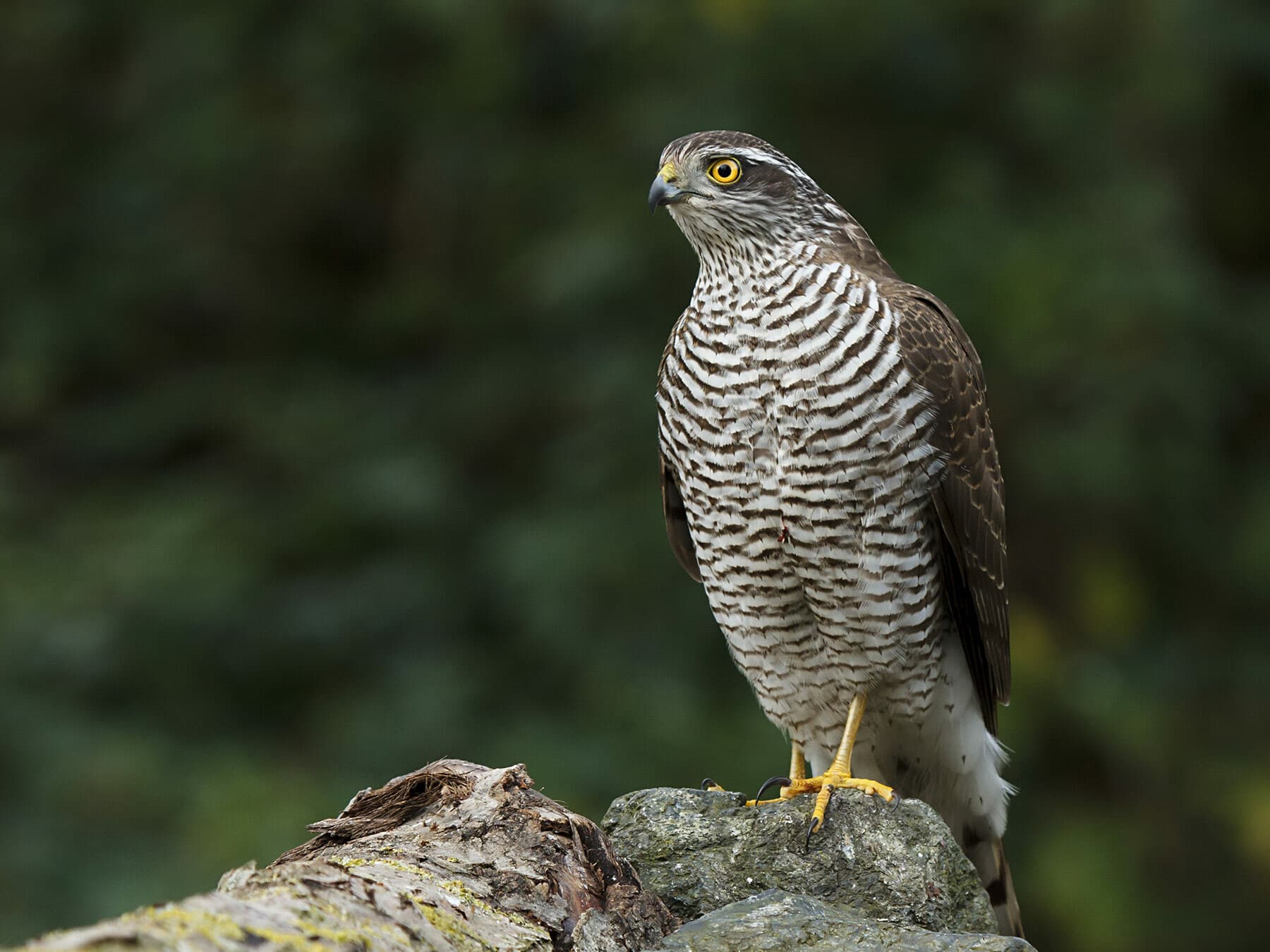
More photos
5 photos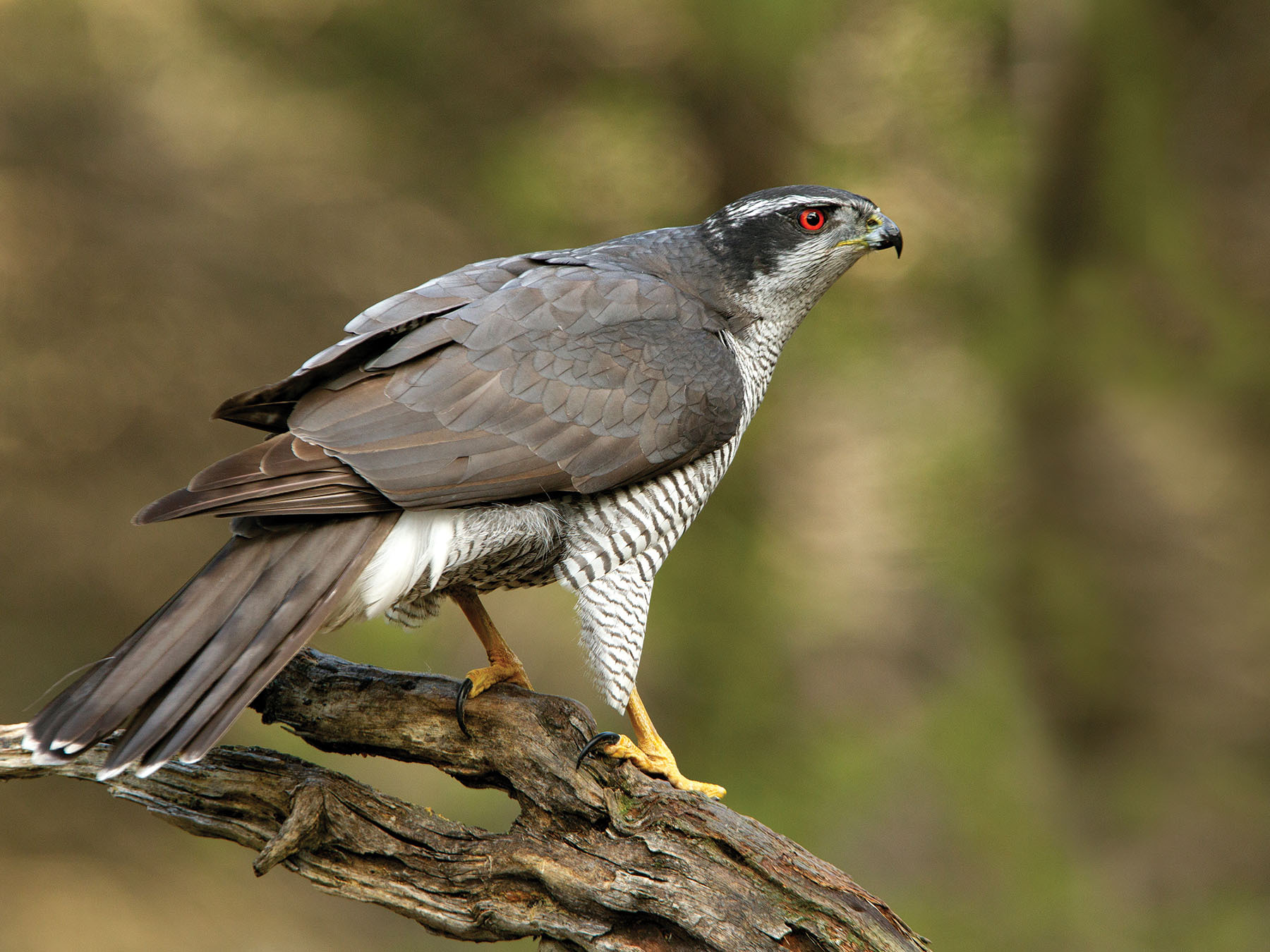
Northern Goshawk guides
1 guidesQuick facts
- Length
- 46–61 cm
- Wingspan
- 98–127 cm
- Weight
- 630–2000 g
- Lifespan
- 7 years · oldest recorded 18.7 years
- Family
- Hawks & Eagles
- Migration
- Partial migrant
- Global status (IUCN)
- Least Concern
- World population
- 1,000,000 - 2,499,999 mature individuals
- Population trend
- Unknown
- Also called
- Goshawk, Eurasian Goshawk
- Scientific name
- Astur gentilis
Questions
1How many Northern Goshawks are left?
In the UK, between 300 and 620 pairs of goshawks are resident breeders. The global population was estimated at 490,000 in 2004, with around 50 percent of this figure resident in North America.
Sources
3- 1BirdLife International. 2021. Accipiter gentilis. The IUCN Red List of Threatened Species 2021: e.T22695683A198505113. Source (opens in a new tab)
- 2BirdLife International. 2021. Accipiter gentilis. The IUCN Red List of Threatened Species 2021: e.T22695683A198505113. Source (opens in a new tab)
- 3BTO longevity records: maximum age from a ringed bird, 18 years, 8 months, 27 days (set in 2009), BirdFacts: Goshawk (2009) Source (opens in a new tab)

Checked by
Nathan Cope, founder and editor
Nathan founded Birdfact and leads its writers and contributors in the UK, the US and Canada. He has watched and studied birds for more than ten years, and checks every article and species guide before it’s published.