


Booted Eagle
Booted Hawk-Eagle · Hieraaetus pennatus
By the Birdfact teamChecked by Nathan Cope
On this page15 sections
How to recognise it
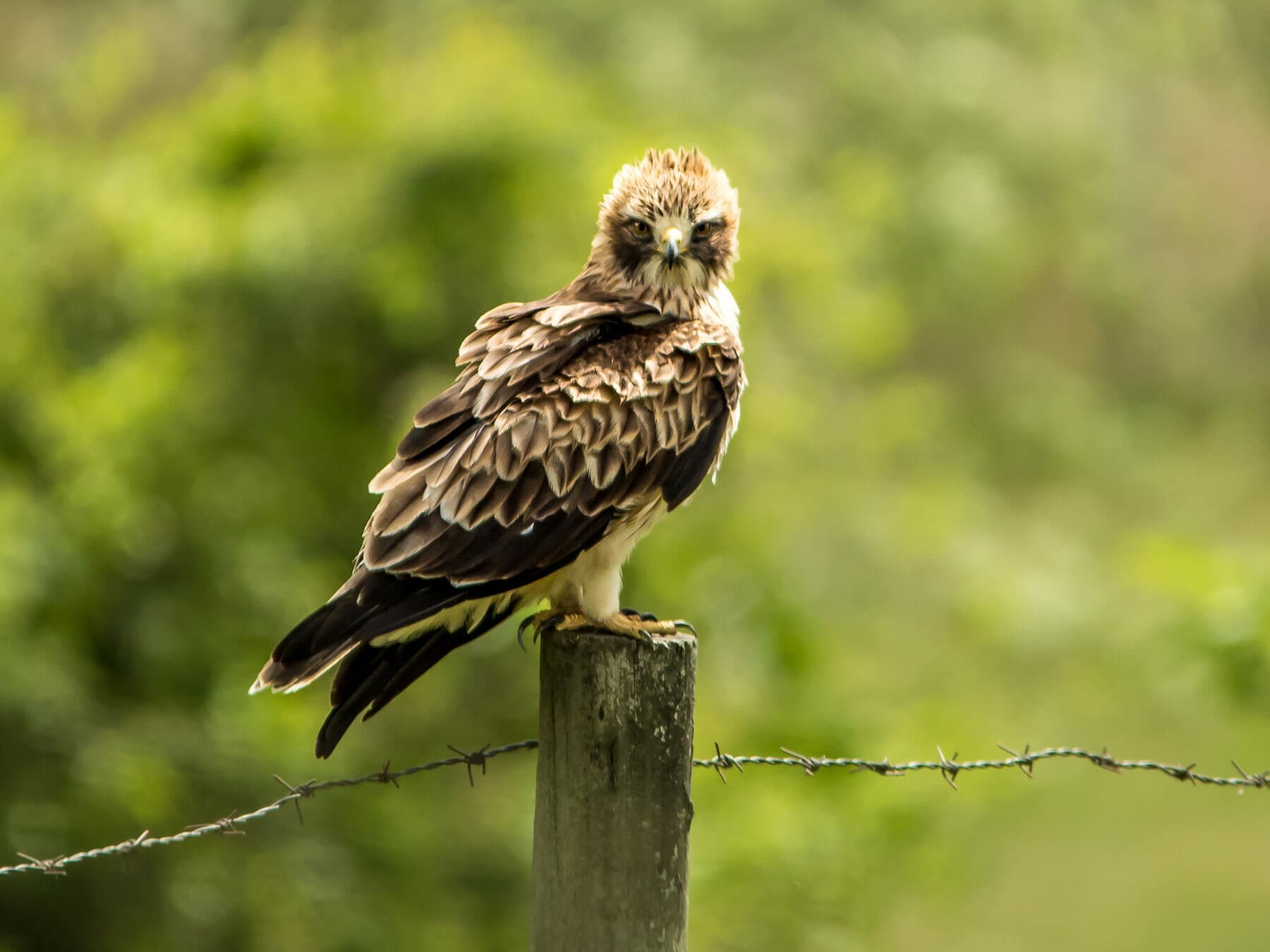
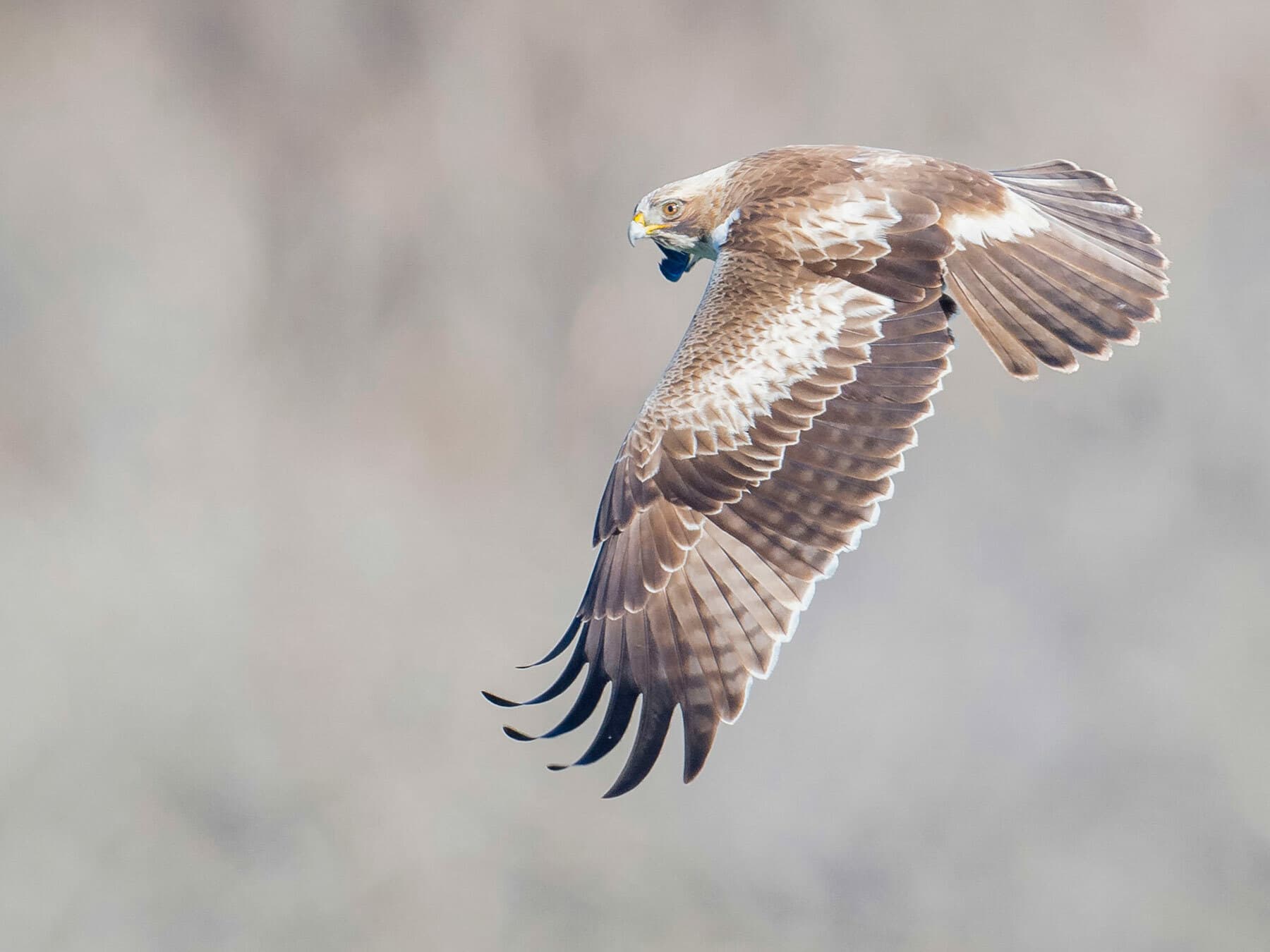
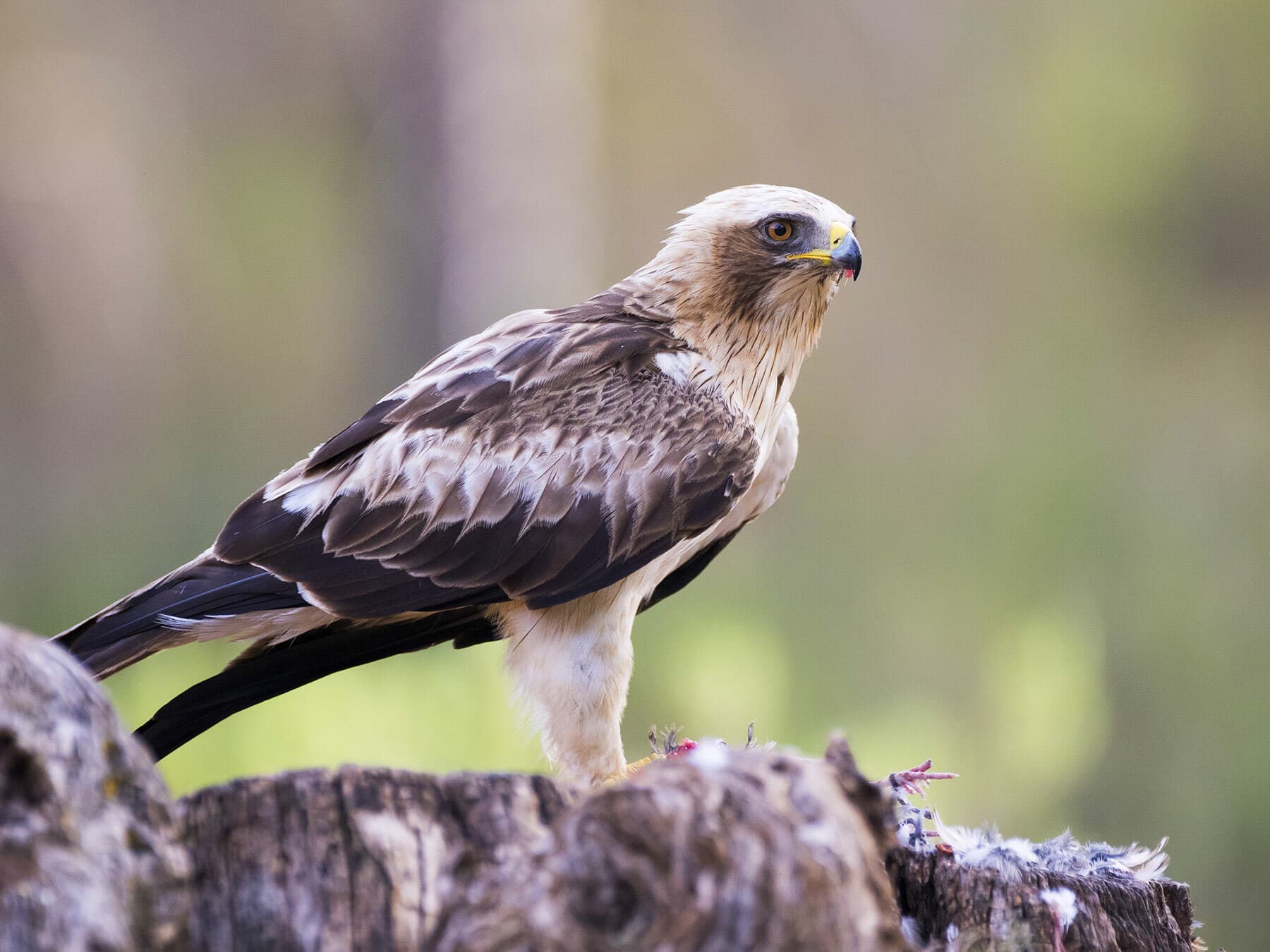
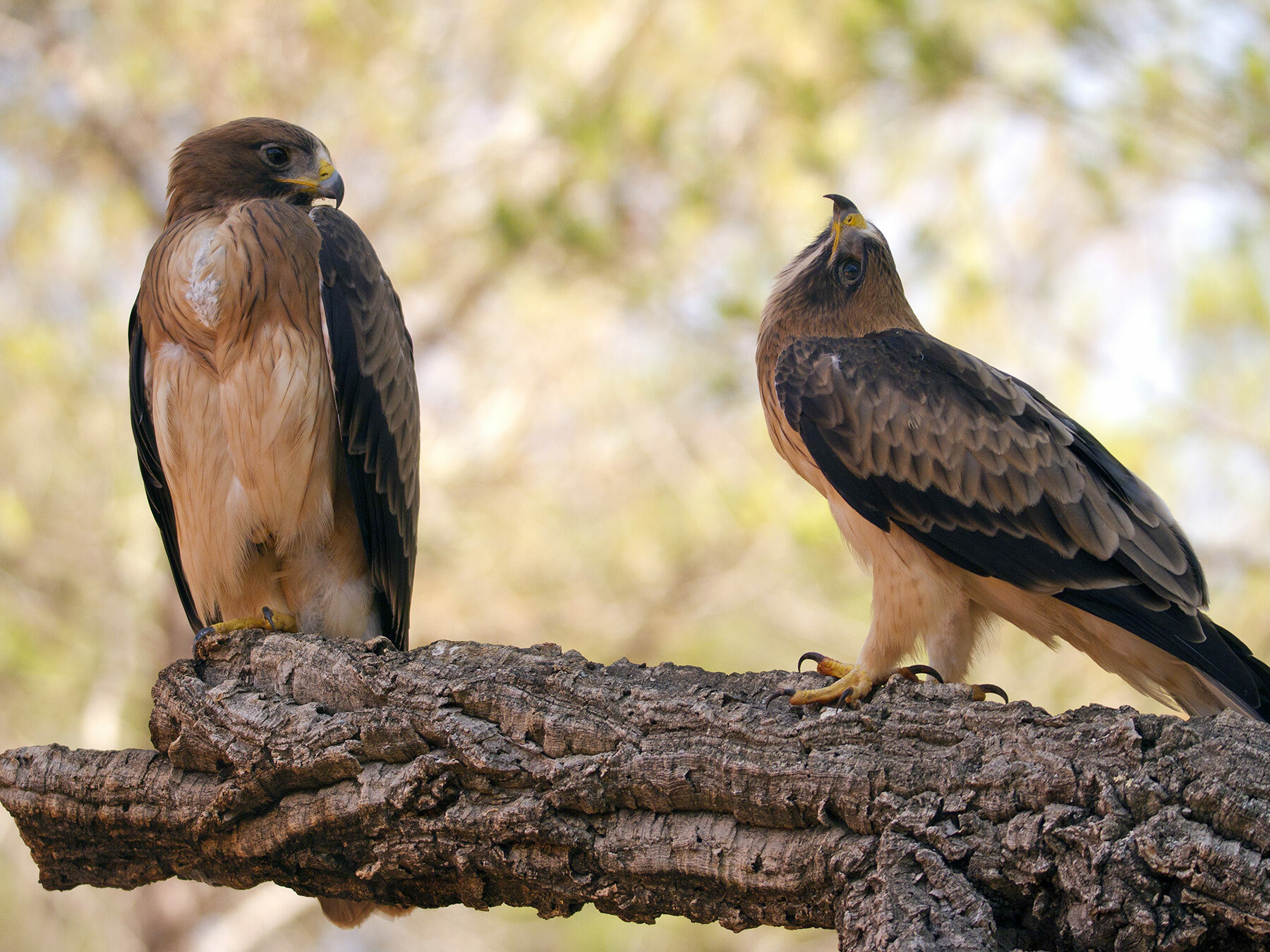
The Booted Eagle exhibits two distinct colour morphs: pale and dark. The pale morph displays white underparts with dark flight feathers, while the dark morph is uniformly brown. Both forms share a distinctive white 'landing lights' patch on the upper wing coverts.
Females are noticeably larger than males, but plumage is similar. Juveniles resemble adults but may show more rufous tones on the underparts and a less defined wing pattern.
Its size
Adults- Length
- 42–51 cm
- Wingspan
- 110–132 cm
- Weight
- 510–1340 g
Its song and calls
A repeated and loud medium pitched ‘kli – kli – kli’ is often used in display although the booted eagle is more commonly a silent predator.
- Alarm call0:00 / 0:14
Recorded in Centre-Val de Loire, France · April 2024
When and where to see it
The Booted Eagle is not recorded regularly in the UK, Ireland, the United States or Canada.
United Kingdom: recorded in 1 of the 6 years. Too few years to count as a regular visitor.
Worldwide: recorded regularly in 73 countries
Countries where it was recorded in at least 3 of the 6 years 2019–2024. Linked countries have their own bird list.
Europe (18)
Africa (23)
Asia (32)
- Armenia
- Azerbaijan
- Bangladesh
- Bhutan
- Cambodia
- China
- Cyprus
- Georgia
- India
- Iran
- Iraq
- Israel
- Jordan
- Kazakhstan
- Kuwait
- Kyrgyzstan
- Lebanon
- Malaysia
- Mongolia
- Myanmar (Burma)
- Nepal
- Oman
- Pakistan
- Palestinian Territories
- Saudi Arabia
- Singapore
- Sri Lanka
- Tajikistan
- Thailand
- Turkey
- United Arab Emirates
- Uzbekistan
Data: EOD – eBird Observation Dataset (Cornell Lab of Ornithology), accessed via GBIF.org, CC BY 4.0. Records from 2019–2024, aggregated and filtered by Birdfact. How these lists are made
The booted eagle breeds in southern Europe, particularly along the Mediterranean coastline including Gibraltar and the Balearic Islands. Then eastwards through Greece and Israel into the Caucuses, Iran and the Middle East and across to the Himalayas. South of the Mediterranean they also breed in Morocco, Algeria, Tunisia and down into South Africa. During the winter months the majority of the species breeding within Europe migrate into sub-Saharan Africa, southern Asia and the Indian sub-continent.
Signs and Spotting tips
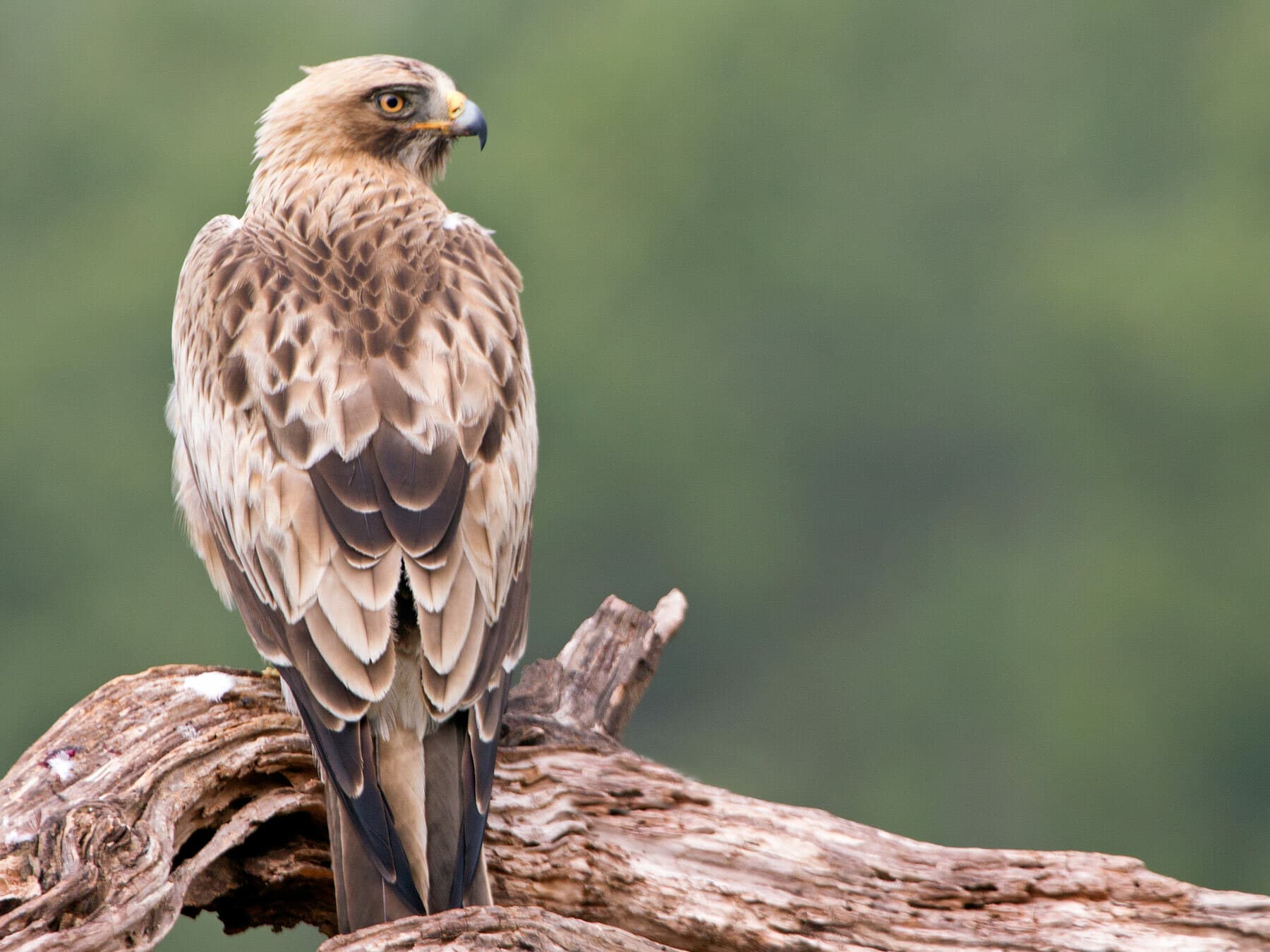
The adult female can be up to twice the size of the male and is thus easy to spot if seen as a pair together. Booted eagles settle in a variety of habitats including open woodlands, semi desert and deserts, mountain areas, open scrubland and grass plains. Rarely seen in areas with other birds of prey and usually solitary or with a mate. They often perch in the tops of dead trees close to their nest whilst scanning the nearby ground for prey. In flight, from above or head on, both morphs can be identified by the distinctive bright white spots on top of the wing at the shoulder.
What it eats
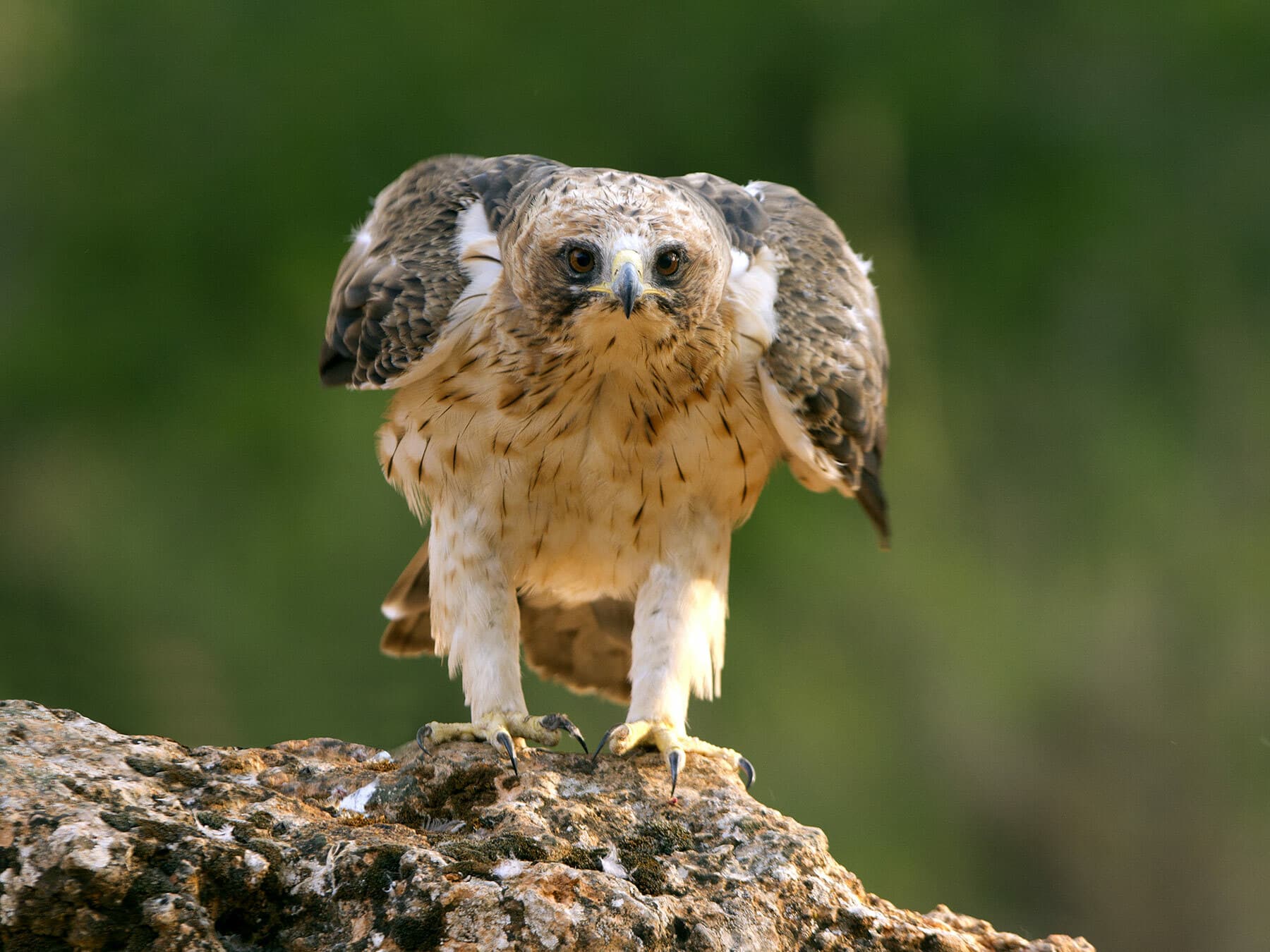
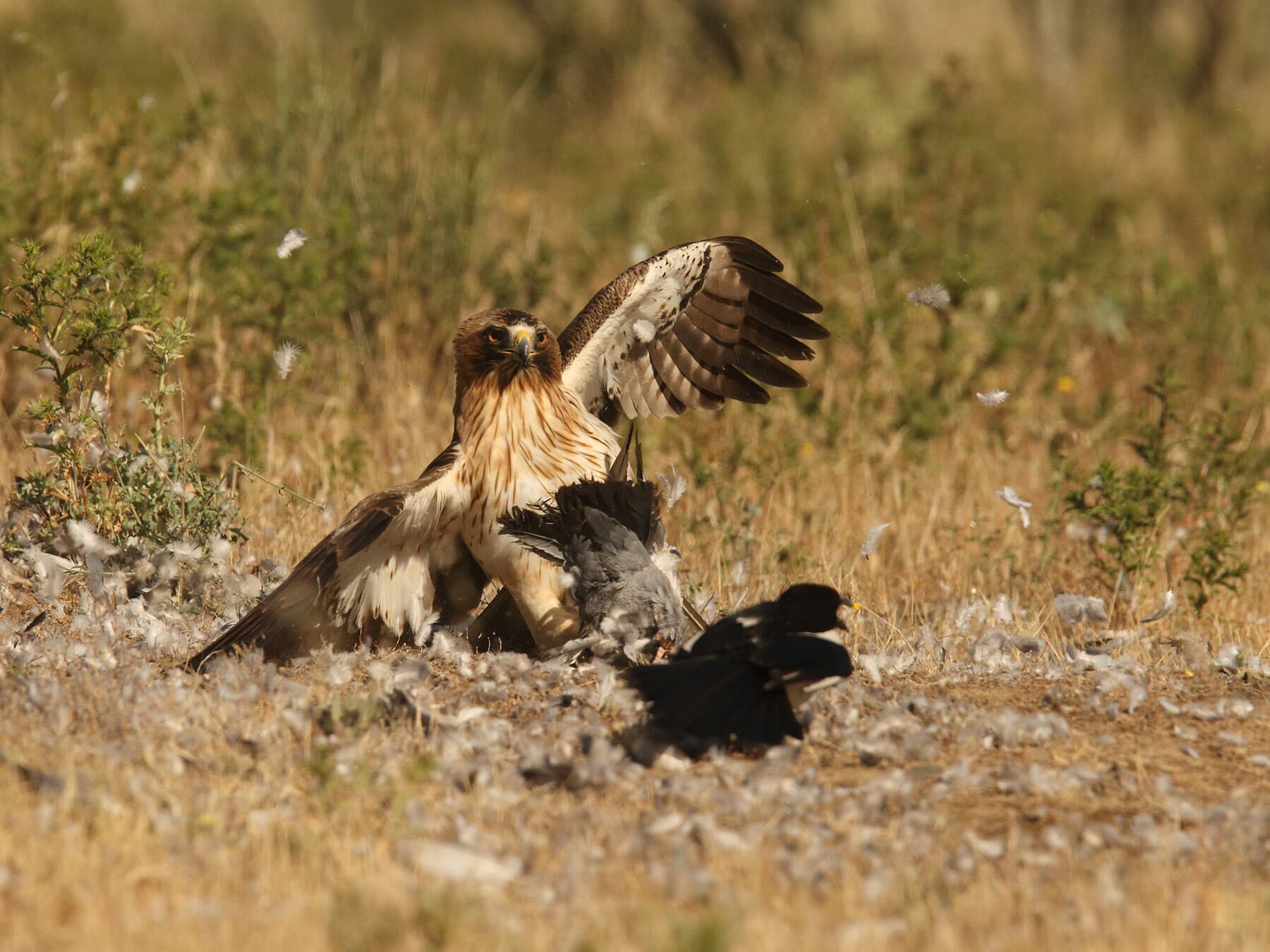
Whilst larger insects such as locusts form part of the diet, more commonly a variety of birds, reptiles and mammals are selected even up to the size of rabbits. Prey is frequently located whilst the eagle is perched nearby and can be caught from a fast almost vertical swoop from above.
Nesting and breeding
Nests are usually built of large twigs and sticks lined with leaves and located in trees or occasionally on cliff ledges, although old nests from other species may also be utilised. One clutch averaging two white, green tinted, eggs is laid annually between March to May, dependent upon location and incubated mainly by the female for between thirty six to thirty eight days. Fledging normally occurs approximately fifty four days after hatching and the young may stay with the parents for a further five to seven weeks.
Behaviour
Booted Eagles are known for their spectacular aerial displays during courtship, performing steep dives and loop-the-loops. They are generally solitary or found in pairs, fiercely defending their territory against intruders.
These birds often hunt by soaring high and then swooping down on prey with remarkable speed and precision.
Lifespan and predators
The expected lifespan of a booted eagle is up to fifteen years in the wild although there have been examples of ringed birds exceeding twenty years of age.
Conservation
While listed as Least Concern globally, Booted Eagles face localised threats from habitat loss and illegal shooting during migration.
Conservation efforts focus on protecting breeding habitats and migration routes, particularly in Europe and North Africa.
What does a Booted Eagle look like?
The booted eagle is a polymorphic medium build bird of prey similar in size to a common buzzard. The two colour morphs are distinct and mainly confined to the bird’s underparts with the pale form being the most common. The upper parts of both forms including the upper wing and tail are similar with dark grey flight feathers (primaries and secondaries) and lighter brownish coverts fading to a paler almost white at the tips, forming a diagonal pale band. The rump has a white crescent and there are two distinct bright white spots on the shoulders immediately next to the neck. Upper tail coverts are also a pale brown and the trailing edges of both the wings and the tail are almost white and appear as translucent, which is particularly obvious in flight. The pale morph has white underparts and underwing coverts with white feathered legs and a grey brown head. Underwing flight feathers are a dark grey and brown and the wing tips are distinctively well fingered. The fan shaped under tail feathers and coverts are white. The dark form bird is a dull brown overall across the underparts with a pale patch running from the base of the fingered wingtips to the edge of the primaries where they meet the secondary flight feathers. Under tail feathers and coverts are similarly pale. The feet of both forms are yellow as is the cere with the rest of the hooked bill being dark grey to black. Eyes vary in colour from a yellowy brown to a reddish brown and juvenile birds are similar to the adults and are also polymorphic.
Similar birds
Often mistaken for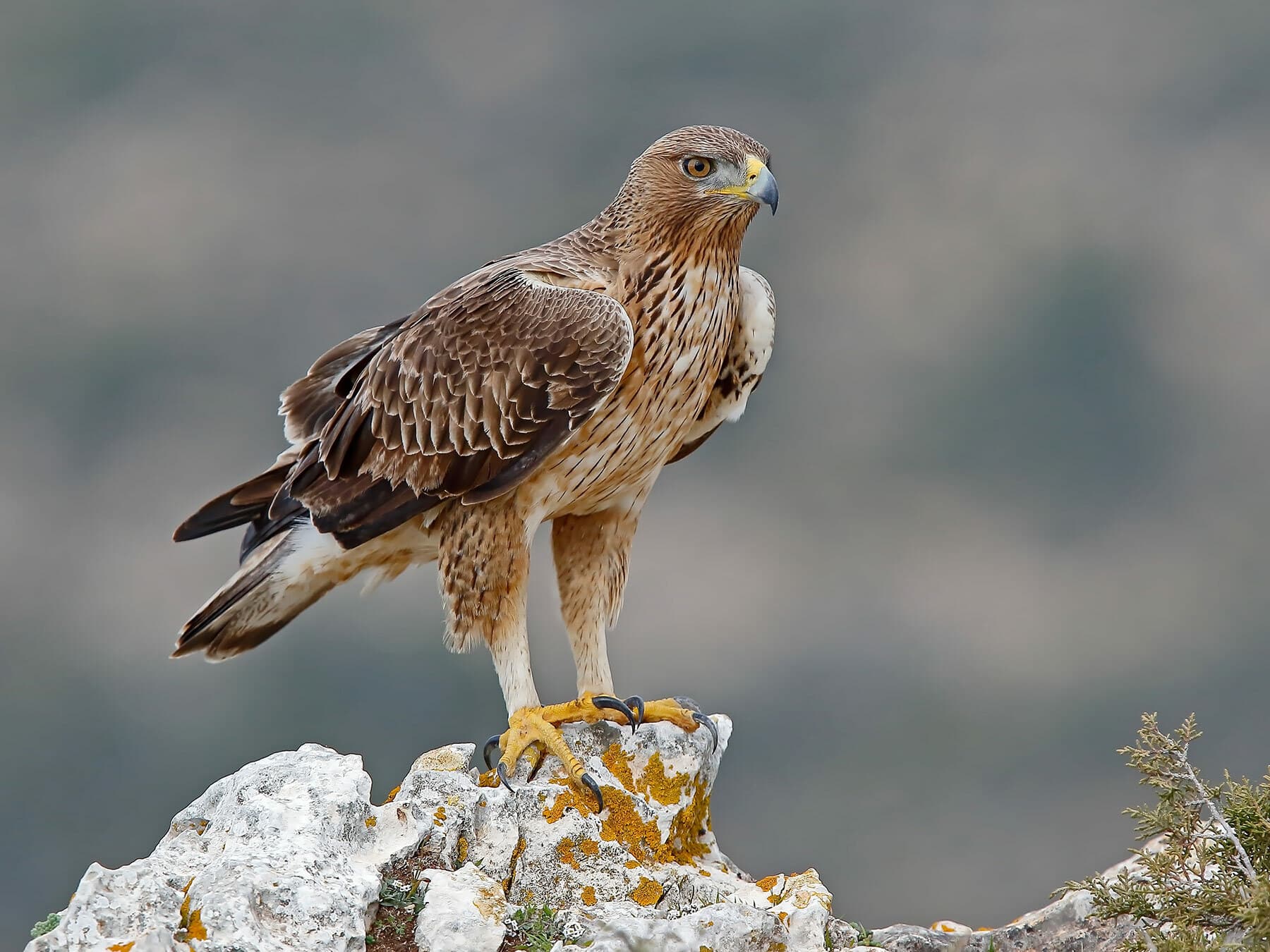
More photos
2 photos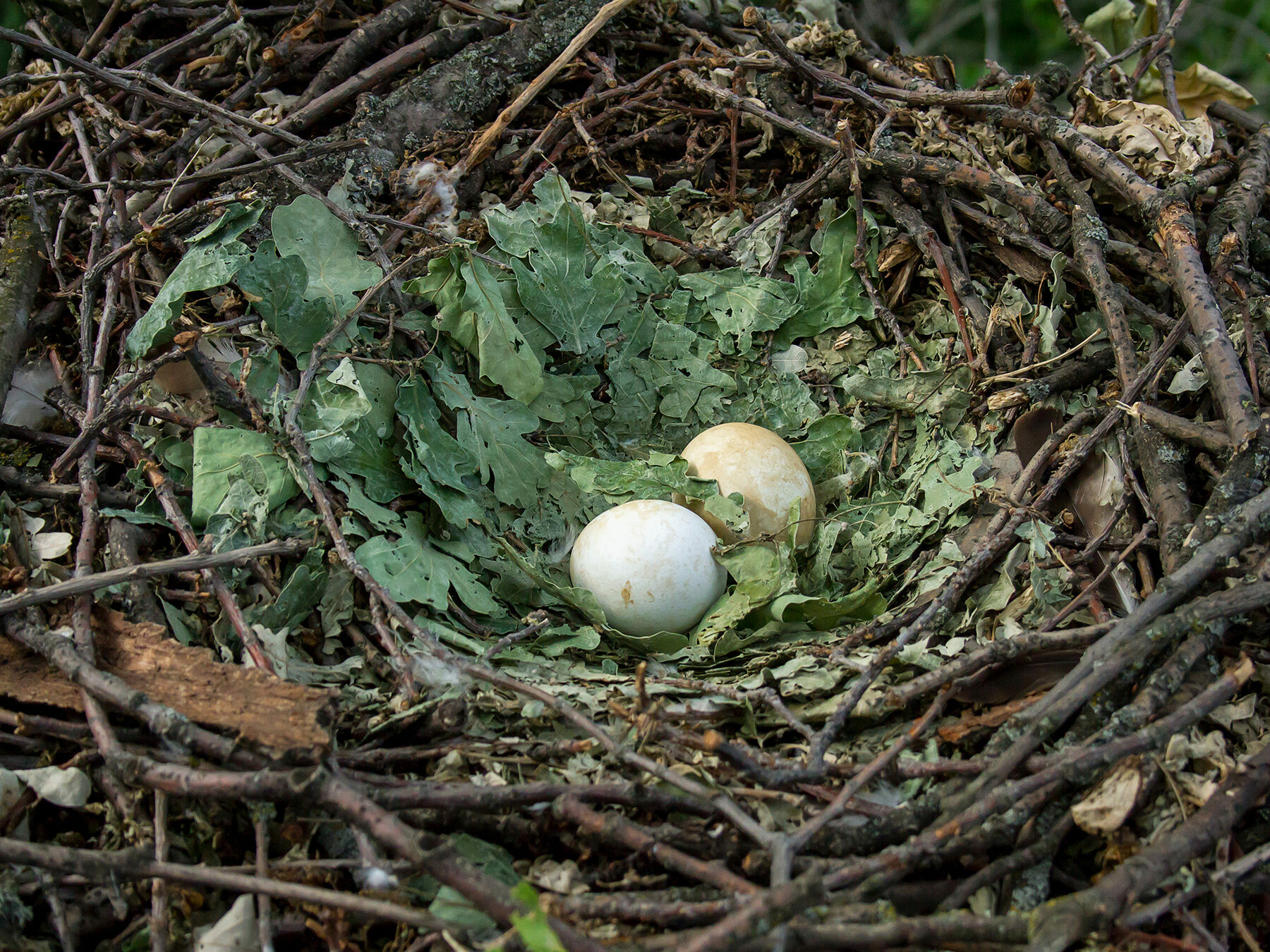
Booted Eagle guides
1 guidesQuick facts
- Length
- 42–51 cm
- Wingspan
- 110–132 cm
- Weight
- 510–1340 g
- Lifespan
- 15–20 years
- Family
- Hawks & Eagles
- Migration
- Long-distance Migrant
- Global status (IUCN)
- Least Concern
- World population
- 150,000 - 195,000 mature individuals
- Population trend
- Stable
- Also called
- Booted Hawk-Eagle
- Scientific name
- Hieraaetus pennatus
Sources
3- 1BirdLife International. 2021. Hieraaetus pennatus. The IUCN Red List of Threatened Species 2021: e.T22696092A206456835. Source (opens in a new tab)
- 2BirdLife International. 2021. Hieraaetus pennatus. The IUCN Red List of Threatened Species 2021: e.T22696092A206456835. Source (opens in a new tab)
- 3BirdLife International. 2021. Hieraaetus pennatus. The IUCN Red List of Threatened Species 2021: e.T22696092A206456835. Source (opens in a new tab)

Checked by
Nathan Cope, founder and editor
Nathan founded Birdfact and leads its writers and contributors in the UK, the US and Canada. He has watched and studied birds for more than ten years, and checks every article and species guide before it’s published.