


Bluethroat
Arctic Bluethroat, Red-spotted Bluethroat, Cyanecula svecica · Luscinia svecica
By the Birdfact teamChecked by Nathan Cope
On this page13 sections
How to recognise it
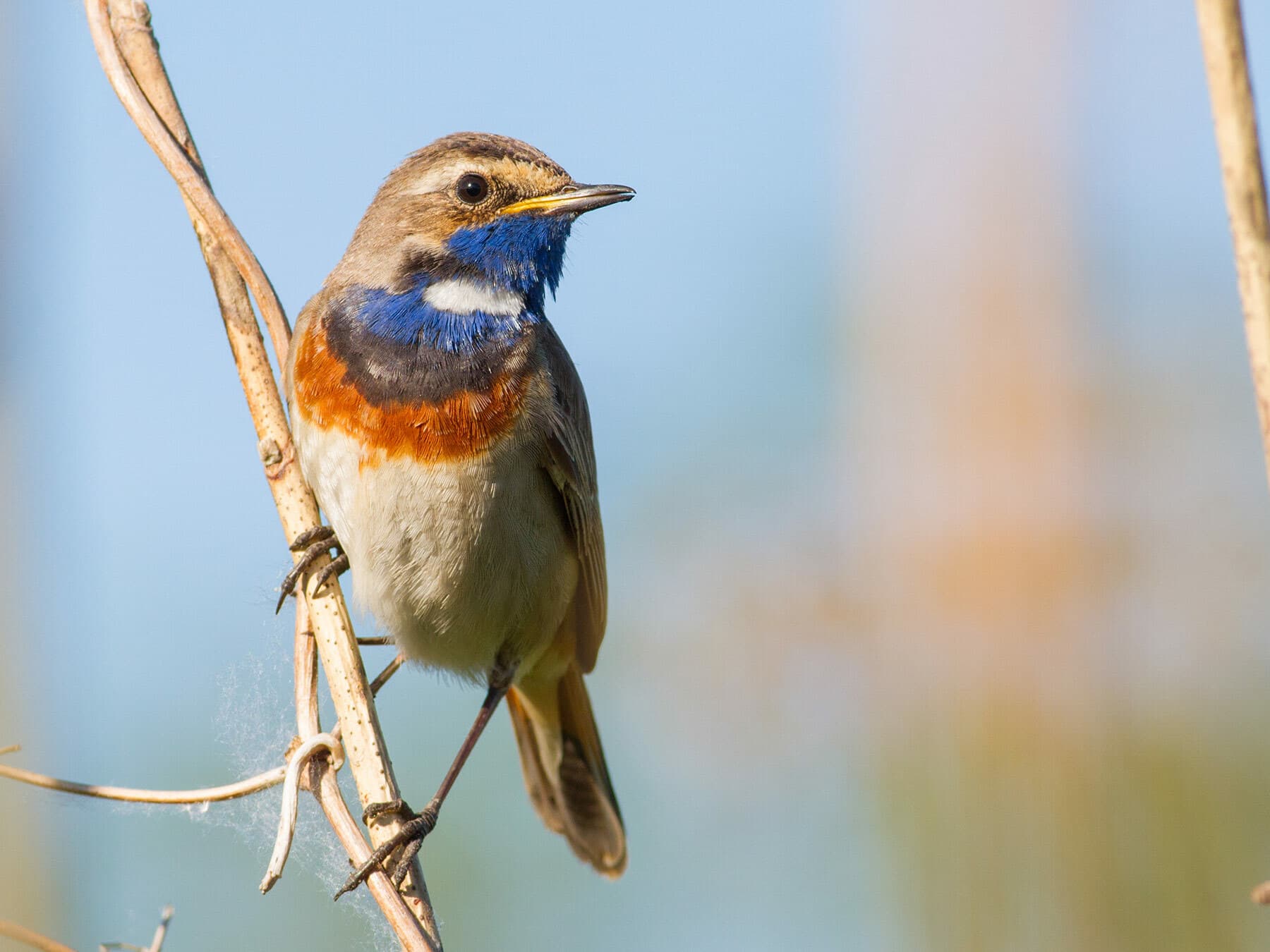
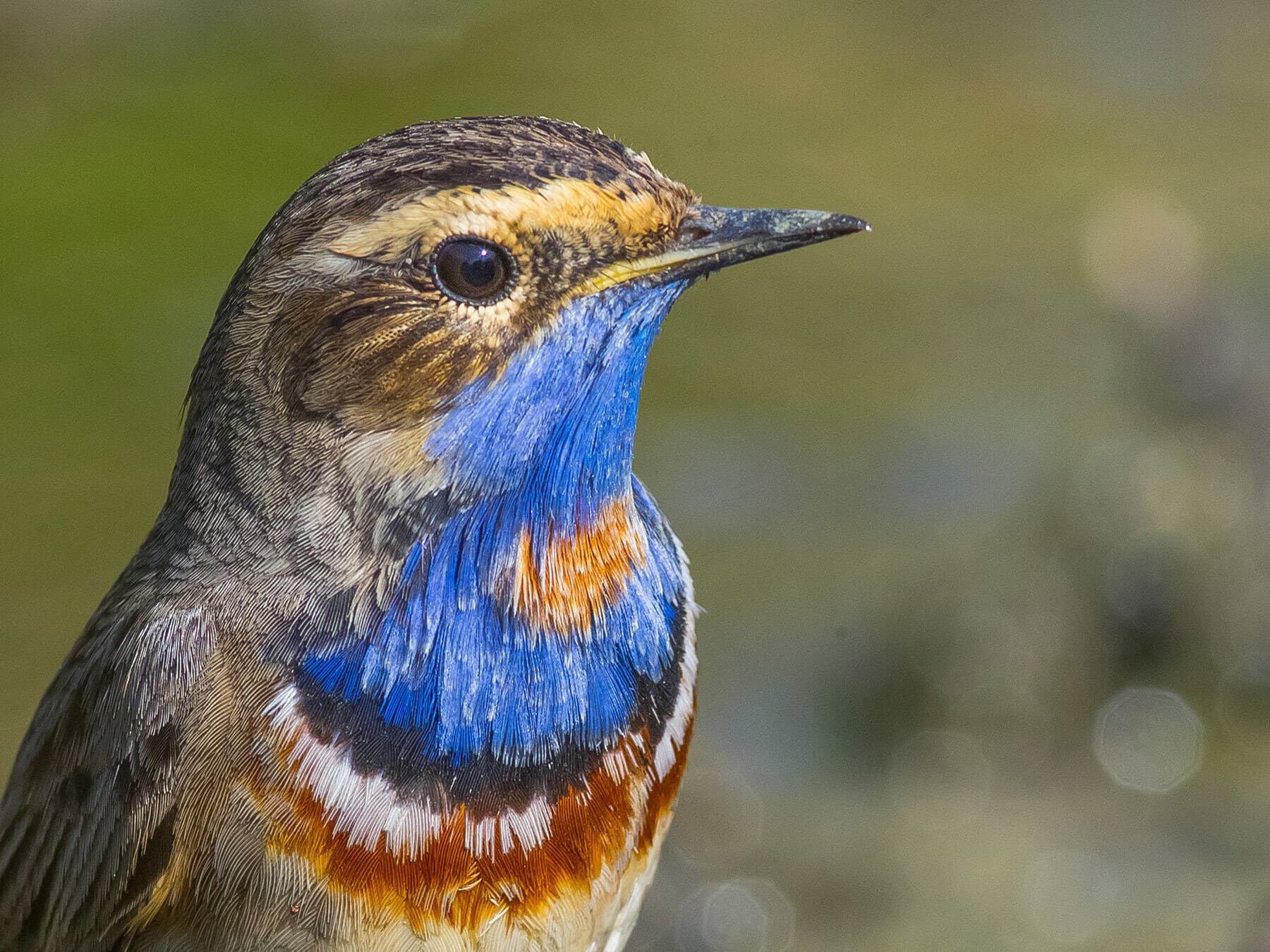
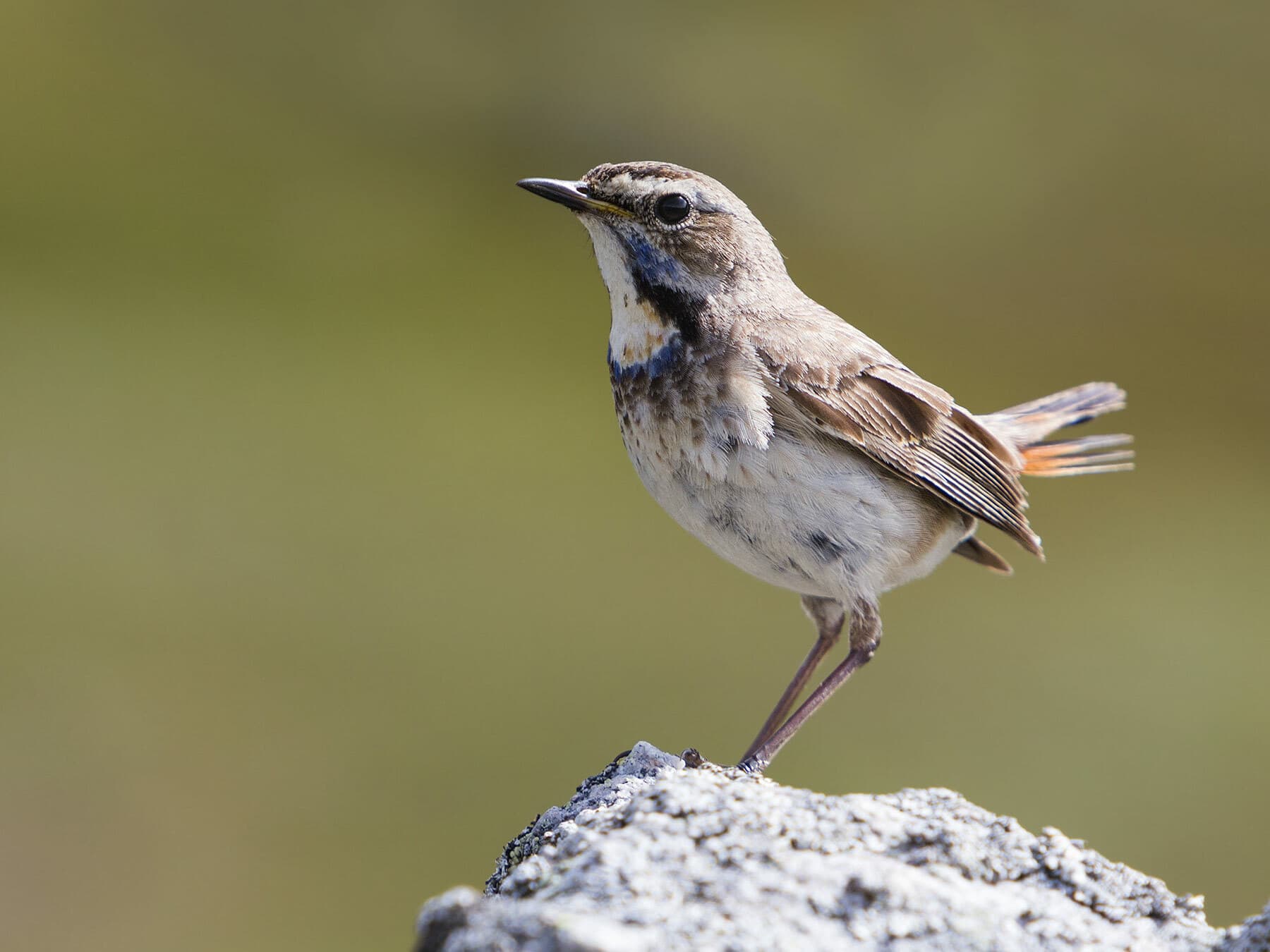
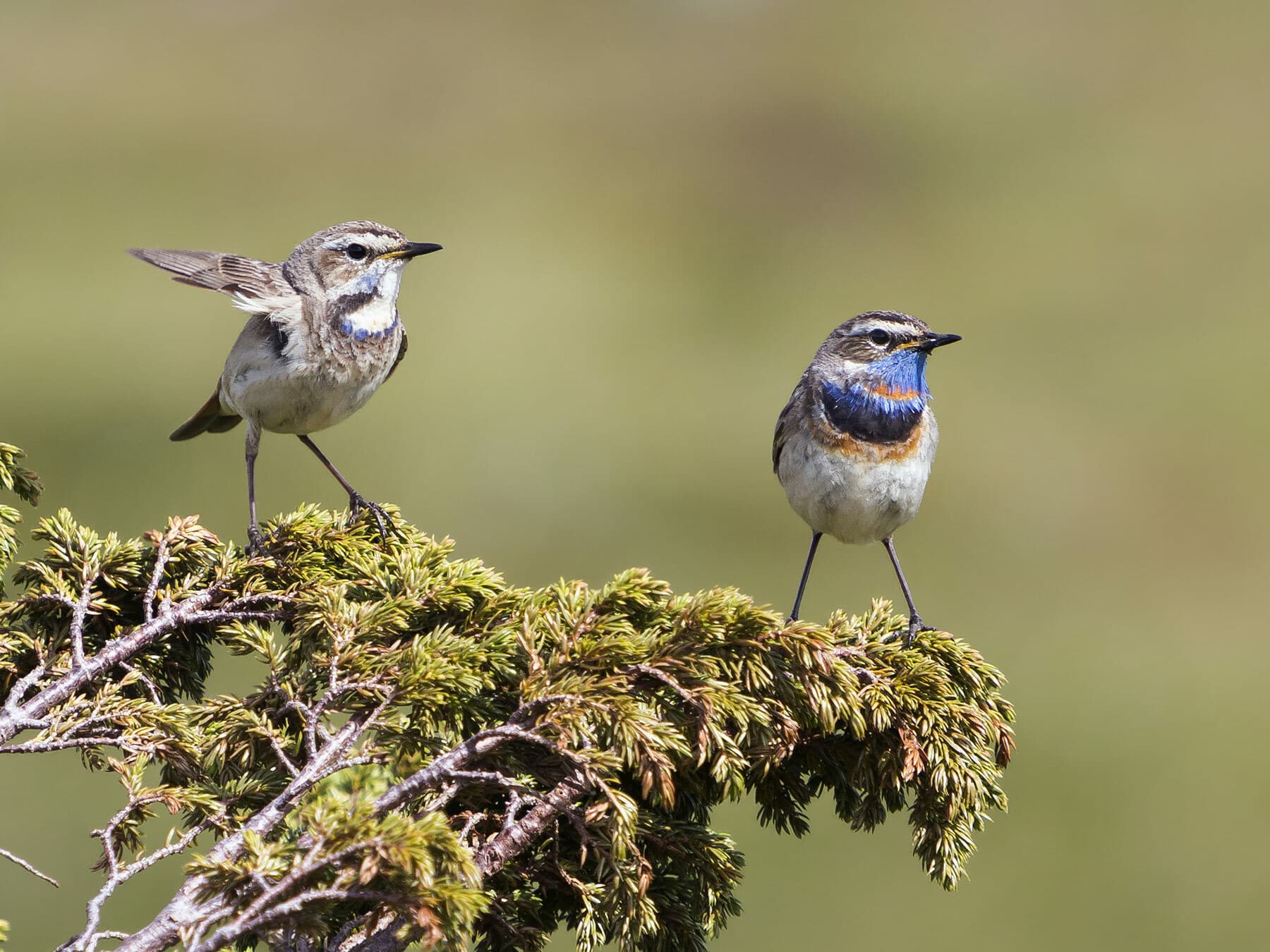
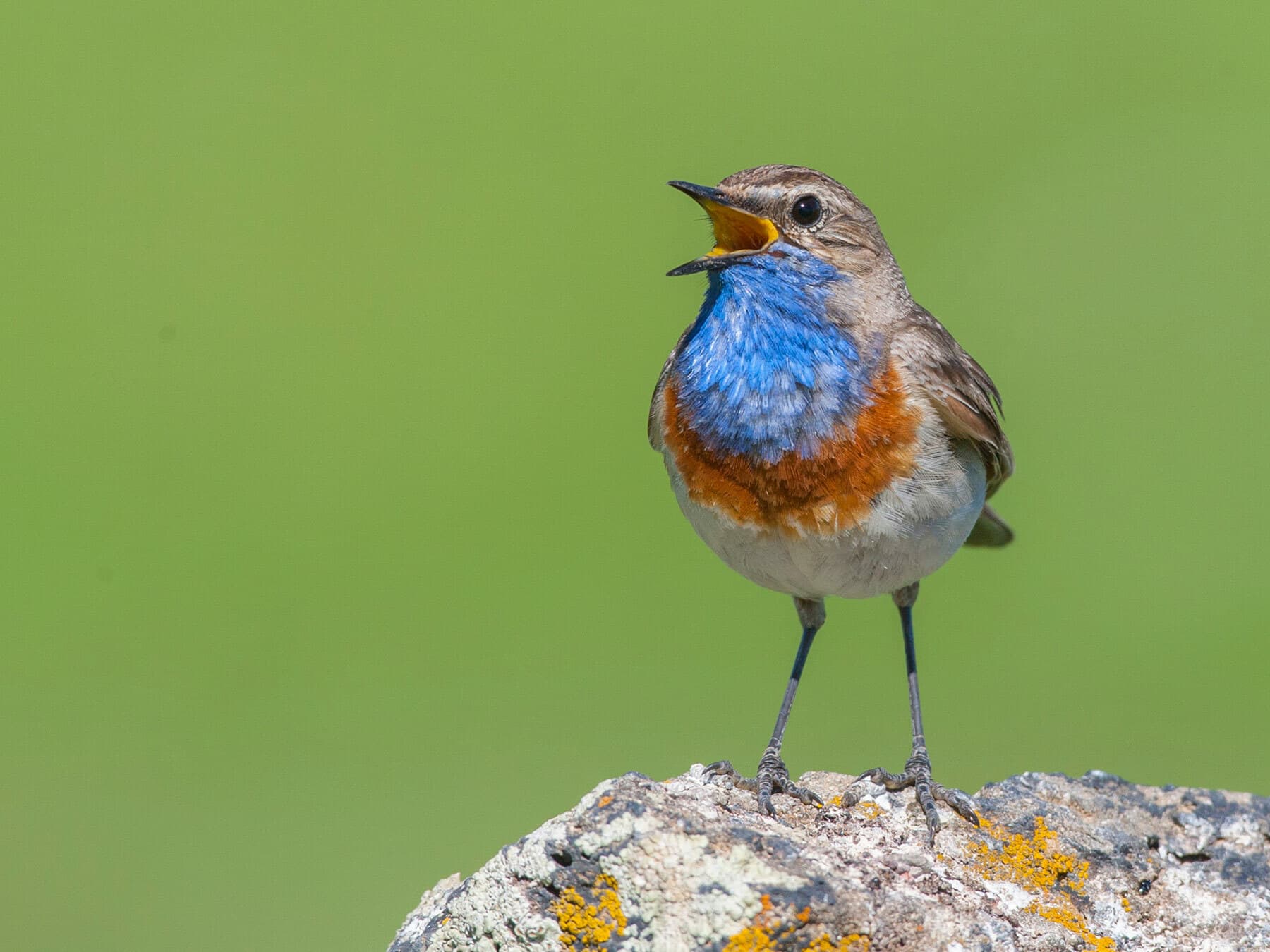
The Bluethroat is a small, robin-sized bird with a distinctive appearance. Males have brilliant blue throats and breasts, bordered by bands of black, white, and rusty orange. The upperparts are brown, contrasting with a white eyebrow and reddish tail sides.
Females lack the blue throat. Instead, they have a pale throat and breast with dark spotting. Juveniles are similar to females but with additional spotting on the upperparts.
Its size
Adults- Length
- 13–14 cm
- Wingspan
- 20–22 cm
- Weight
- 16–22 g
Its song and calls
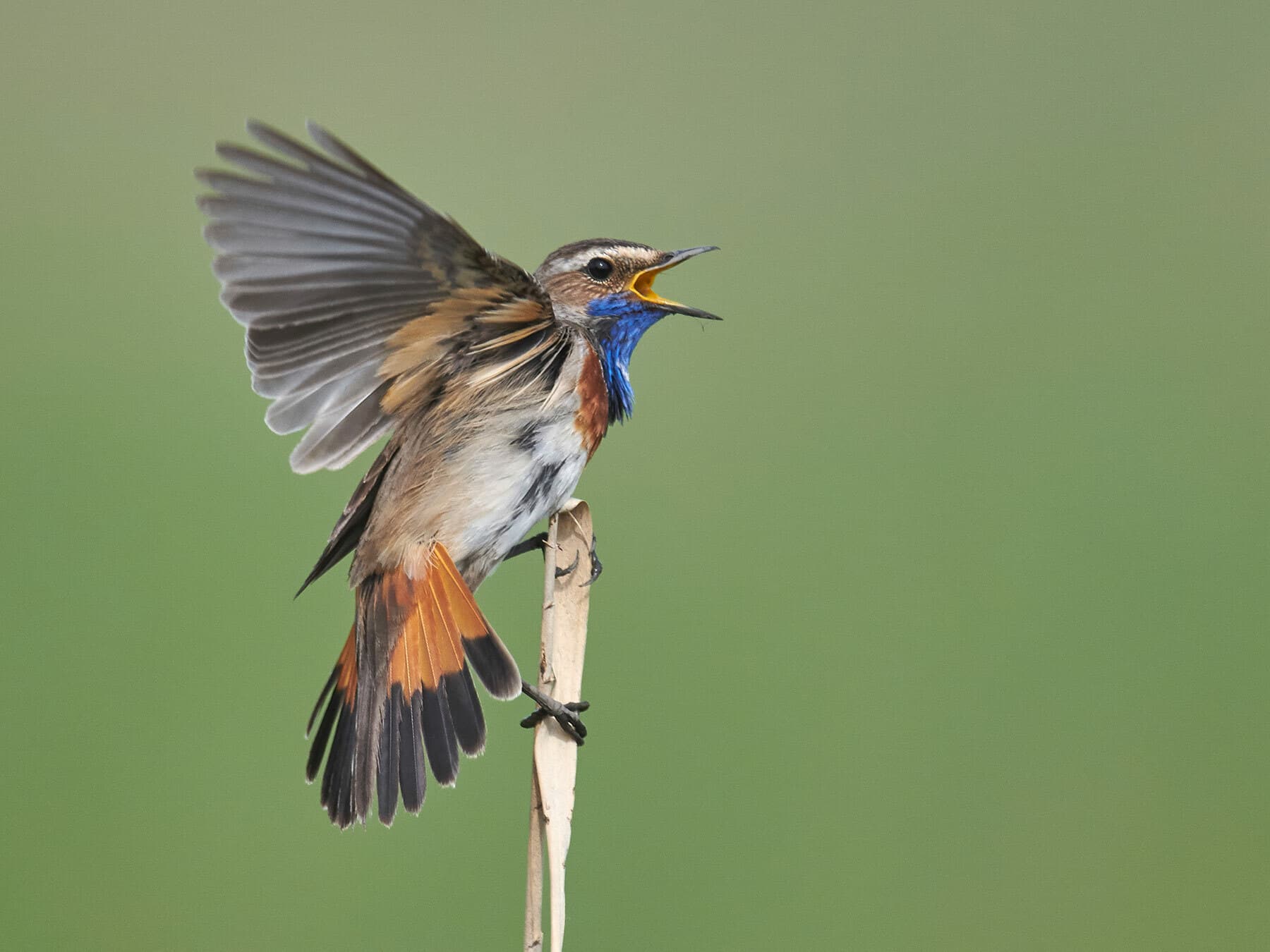
A master at mimicry the bluethroat has a powerful and melodious song often repeated and interspersed with short notes and softer lengthened trills. It frequently mimics other species of bird resident within its immediate area.
- Song0:00 / 0:57
Recorded in Normandie, France · June 2021
- Call0:00 / 0:07
Recorded in Normandy, France · August 2025
When and where to see it
OctoberLeaving
Most recorded in October
- 1. Shetland Islands0.13%
- 2. Orkney Islandsunder 0.1%
- 3. Pembrokeshireunder 0.1%
- 4. East Riding of Yorkshireunder 0.1%
- 5. Cornwallunder 0.1%
Each dot is a county, state or province: the bigger and darker, the larger the bird’s share of that place’s bird records that month. Grey dots: no regular records. The ringed point is the centre of the bird’s records this month; the arrow shows how it moved since last month, and the dashed loop its path through the year. “Arrivals” colours places where it becomes regular this month (orange) or is in its last regular month (grey). GBIF eBird Observation Dataset, 2019–2024. Map data: Natural Earth, US Census Bureau; place centres © OpenStreetMap contributors.
In your area
See when the Bluethroat is recorded in your county, state or province.
How often the Bluethroat turns up in the UK and the United States through the year, from birdwatchers' records.
United Kingdom
Summer visitor · regularly Apr–Oct · most records in June
United States
Summer visitor · regularly May–Sep · most records in June
Show as a table
| Month | United Kingdom | United States |
|---|---|---|
| January | – | – |
| February | – | – |
| March | – | – |
| April | <0.001% (regular) | – |
| May | 0.006% (regular) | <0.001% (regular) |
| June | 0.007% (regular) | 0.004% (regular) |
| July | <0.001% (regular) | <0.001% (regular) |
| August | <0.001% | <0.001% (regular) |
| September | 0.006% (regular) | <0.001% (regular) |
| October | 0.005% (regular) | <0.001% |
| November | <0.001% | – |
| December | – | – |
Recorded regularly in
Worldwide: recorded regularly in 79 countries
Countries where it was recorded in at least 3 of the 6 years 2019–2024. Linked countries have their own bird list.
Europe (35)
Asia (36)
- Armenia
- Azerbaijan
- Bahrain
- Bangladesh
- Bhutan
- Cambodia
- China
- Cyprus
- Georgia
- Hong Kong SAR China
- India
- Iran
- Iraq
- Israel
- Jordan
- Kazakhstan
- Kuwait
- Kyrgyzstan
- Laos
- Lebanon
- Mongolia
- Myanmar (Burma)
- Nepal
- Oman
- Pakistan
- Palestinian Territories
- Qatar
- Saudi Arabia
- South Korea
- Taiwan
- Tajikistan
- Thailand
- Turkey
- United Arab Emirates
- Uzbekistan
- Vietnam
North America (1)
Data: EOD – eBird Observation Dataset (Cornell Lab of Ornithology), accessed via GBIF.org, CC BY 4.0. Records from 2019–2024, aggregated and filtered by Birdfact. How these lists are made
The bluethroat breeds across the north of the palearctic region in northern Europe and Asia from Scandinavia right across to the Russian Far East and south into China. During the winter months they migrate south to Africa, the Arabian Peninsula, South and East Asia, the Indian sub-continent and Southern Europe. A small population also breeds in North West Alaska. There are twelve subspecies that generally differ in plumage and patternation confined only to the throat colour varying from red or rufous crescent shaped throat spots, to white spots or no throat spots at all and the throat being entirely blue. The subspecies variously breed in territories across the north of the palearctic through Russia including Siberia through to the Kamchatka Peninsula on the Russian Pacific coast and into Mongolia and Central China. The migrate in the Northern winter to sub-Saharan Africa, the Arabian Peninsula, the Indian sub-continent and through to Myanmar and Thailand.
Signs and Spotting tips
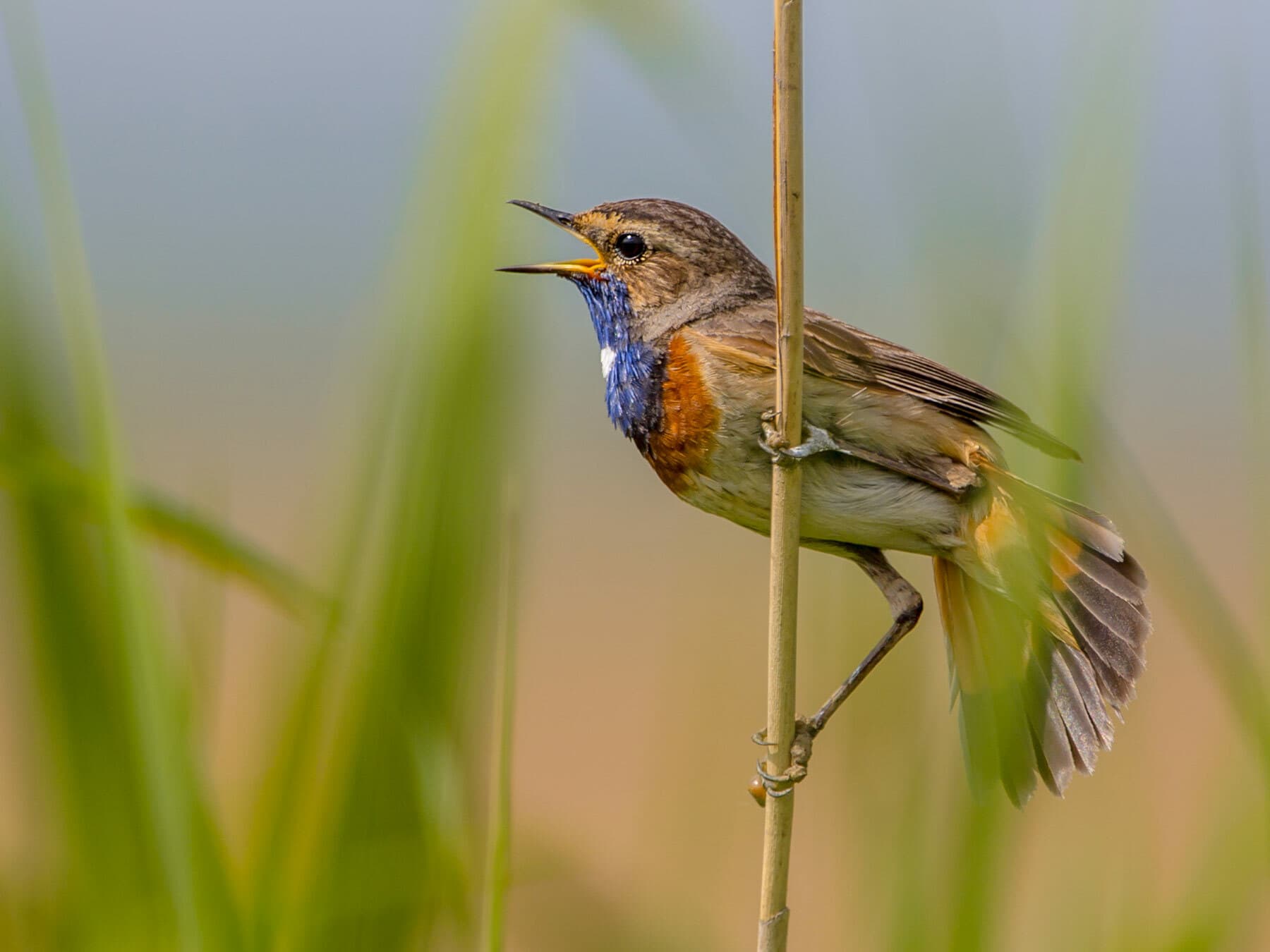
Often found in reedbeds and swampy ground the bluethroat prefers damp and wet habitats including moist woods and heaths. Similar in size, shape and weight to the European Robin the male’s summer, otherwise known as his breeding plumage, is distinct even accounting for the differences within the sub-species. It has a low, fast, flitting flight, generally over short distances between patches of cover.
What it eats
The bluethroat forages on the ground, usually under dense cover and amongst leave litter to feed on small insects, caterpillars, spiders and insect larvae but also takes seeds and berries, although mainly in the autumn.
Nesting and breeding
Dependant upon location, breeding takes place from April through to July when one clutch of between 5 – 7 pale green, brown speckled, eggs is produced and normally incubated by the female alone for around thirteen days before hatching takes place. Fledging usually occurs approximately two weeks later. Some European populations produce two broods annually. The deep, cup shaped nests are often built around tussock grass or wet scrubland, predominantly by the female.
Behaviour
Bluethroats are known for their secretive nature. They often skulk in dense vegetation. They forage on the ground, darting quickly between cover.
During the breeding season, males perform elaborate flight displays, singing vigorously to attract mates and defend territories.
Lifespan and predators
Life expectancy for the bluethroat is up to five years.
Conservation
While currently listed as Least Concern globally, Bluethroats face localised threats from habitat loss and climate change. Conservation efforts focus on protecting wetland breeding habitats and stopover sites along migration routes.
What does a Bluethroat look like?
The bluethroat is a small, slim songbird. In breeding plumage the adult male has predominantly dark brown upper parts with much lighter greyish brown underparts. Wings are a plain mid brown in colour and the upper tail is dark grey bordered by a rufous patch at either side of the uppertail. A bold white stripe extends across the supercilium over the eye. Immediately below the lower mandible the chin and throat is a deep blue with a rufous red upward turned crescent shape, dividing the blue patch in the region of the upper breast. At the base of the blue patch there is a thin black and white band with a further rufous or orange brown area below morphing to the light grey of the remaining underparts. The legs are long and thin and coloured dark brown to black. The eyes are a dark brown and the bill black. In the non breeding plumage the adult male is similar although the distinct blue and rufous throat and coloured upper breast are far less obvious, being obscured by the pale tips of feathers. In general, the adult female replicates the non breeding colours of the male with the addition of white cheeks, a pale throat and with a dark breast band frequently spotted blue. Juveniles are mainly a dark brown on the upperparts, head and breast, streaked with buff to rufous markings and remaining underparts a pale grey. The rump and base of the tail is shaded rust red.
Similar birds
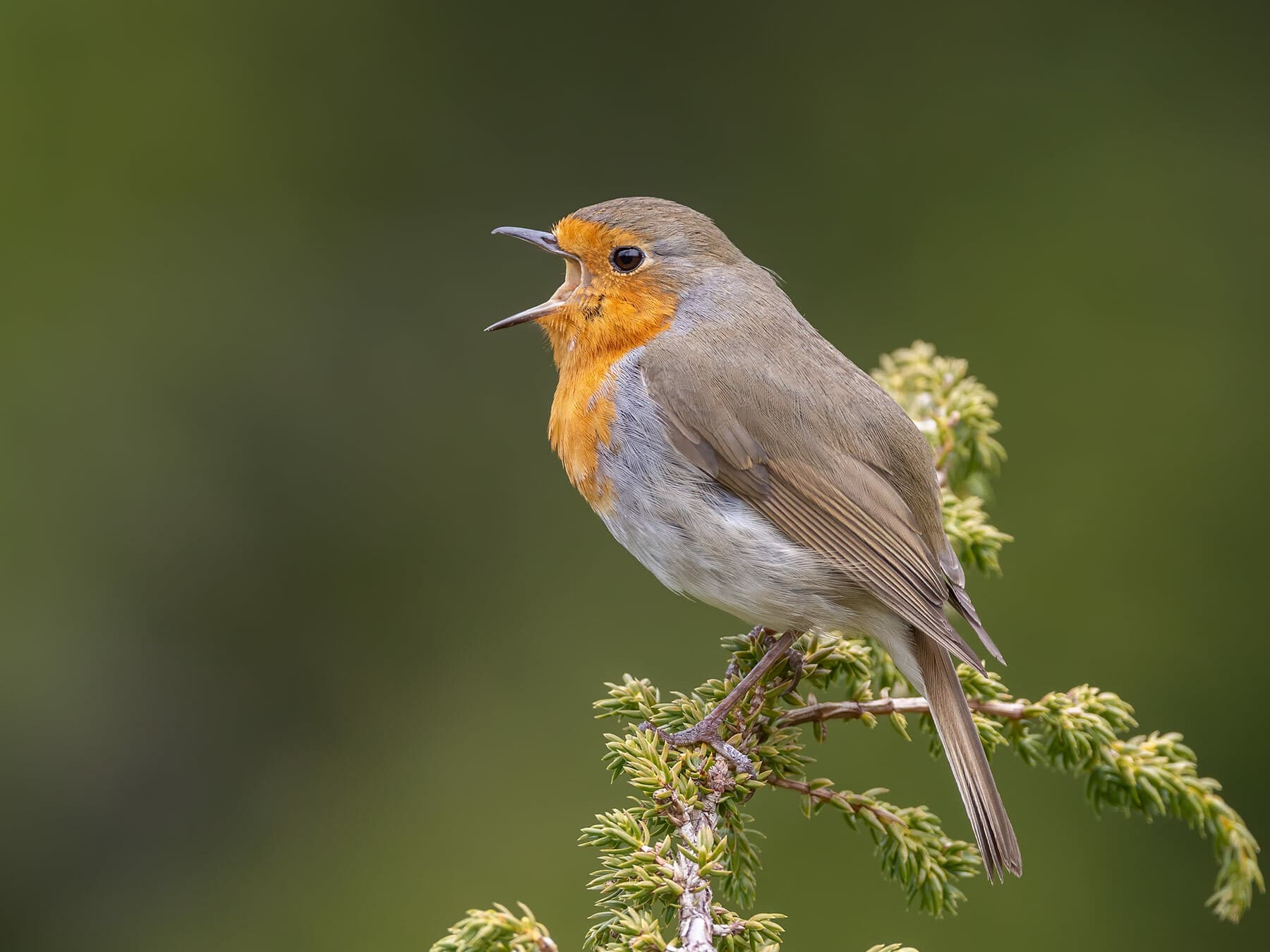
Often mistaken for
Quick facts
- Length
- 13–14 cm
- Wingspan
- 20–22 cm
- Weight
- 16–22 g
- Lifespan
- 3–5 years · oldest recorded 11.4 years
- Family
- Old World Flycatchers
- Migration
- Long-distance Migrant
- Global status (IUCN)
- Least Concern
- World population
- 35,720,000 - 62,000,000 mature individuals
- Population trend
- Stable
- Also called
- Arctic Bluethroat, Red-spotted Bluethroat, Cyanecula svecica
- Scientific name
- Luscinia svecica
Sources
4- 1BirdLife International. 2019. Cyanecula svecica. The IUCN Red List of Threatened Species 2019: e.T22709707A137567006. Source (opens in a new tab)
- 2BirdLife International. 2019. Cyanecula svecica. The IUCN Red List of Threatened Species 2019: e.T22709707A137567006. Source (opens in a new tab)
- 3BirdLife International. 2019. Cyanecula svecica. The IUCN Red List of Threatened Species 2019: e.T22709707A137567006. Source (opens in a new tab)
- 4Fransson et al., EURING list of longevity records for European birds (2010) Source (opens in a new tab)

Checked by
Nathan Cope, founder and editor
Nathan founded Birdfact and leads its writers and contributors in the UK, the US and Canada. He has watched and studied birds for more than ten years, and checks every article and species guide before it’s published.