


Balearic Warbler
Balearic Subalpine Warbler · Curruca balearica
By the Birdfact teamChecked by Nathan Cope
On this page13 sections
How to recognise it
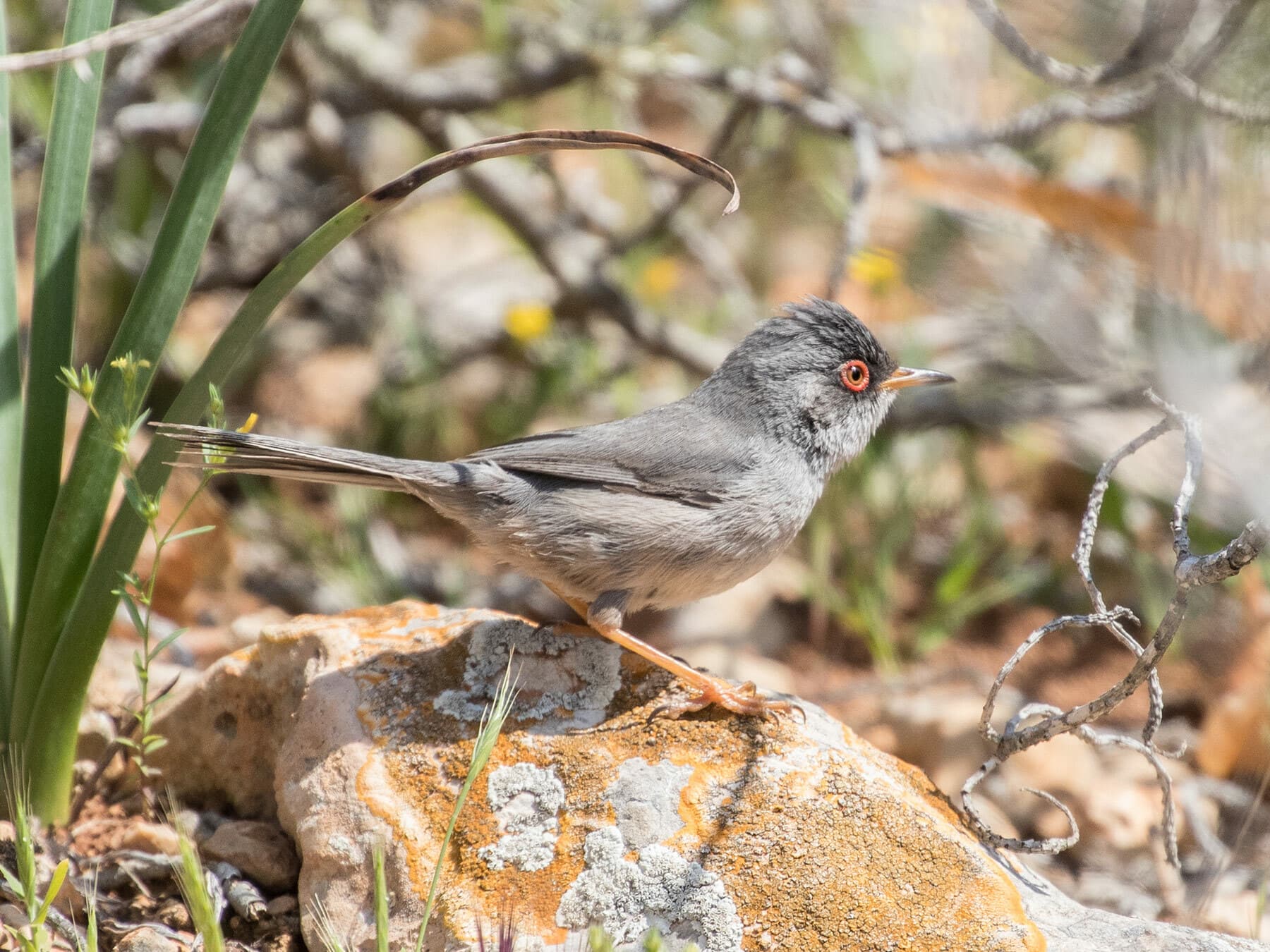
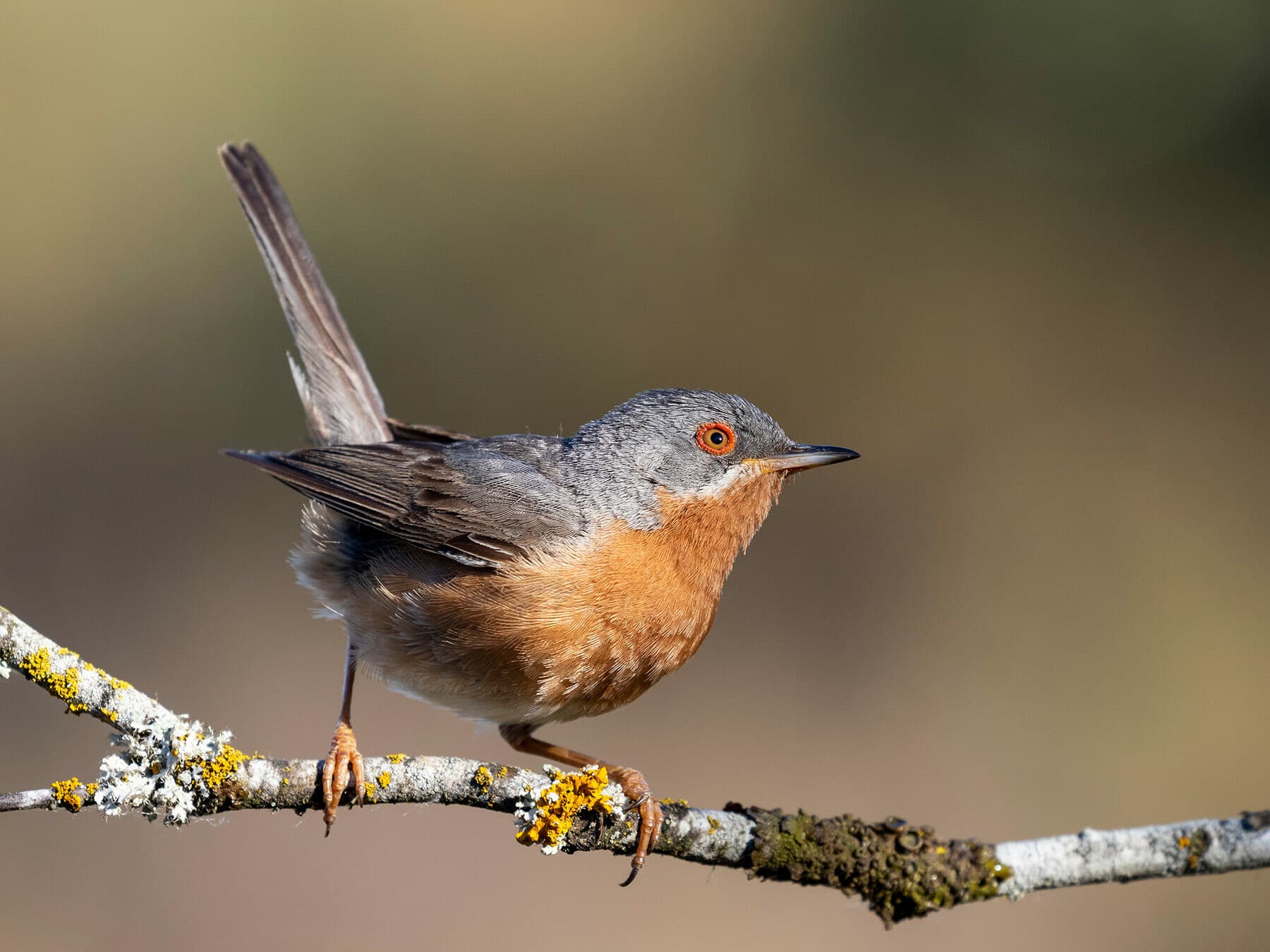
The Balearic Warbler is a small, slender bird with distinctive plumage. Males have a blue-grey head and upperparts, contrasting with a white throat and pinkish-brown underparts. Their tails are long and often held cocked.
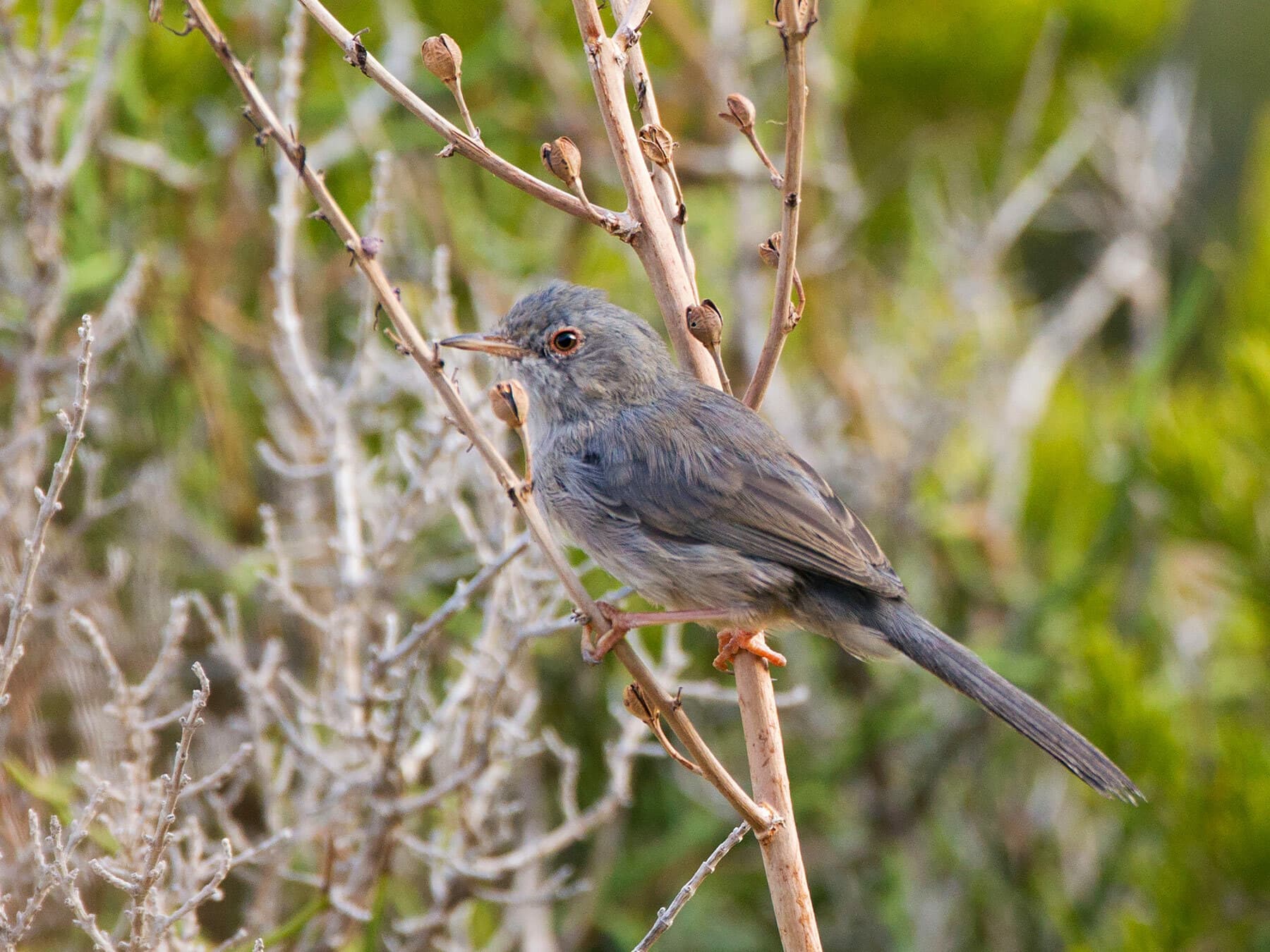
Females are more subdued in colouration, lacking the blue-grey tones and appearing overall browner. Both sexes have a thin black bill, pink legs, and a prominent red eye ring, which becomes more vibrant during the breeding season.
Its size
Adults- Length
- 11–12 cm
- Wingspan
- 15–17 cm
- Weight
- 8–12 g
Its song and calls
The call is a short medium pitched ‘chru – chru’ sound repeated often whilst the song is typically a series of warbles generally ending with a multi pitched trilling.
When and where to see it
The Balearic Warbler is not recorded regularly in the UK, Ireland, the United States or Canada.
Worldwide: recorded regularly in 1 country
Countries where it was recorded in at least 3 of the 6 years 2019–2024. Linked countries have their own bird list.
Europe (1)
Data: EOD – eBird Observation Dataset (Cornell Lab of Ornithology), accessed via GBIF.org, CC BY 4.0. Records from 2019–2024, aggregated and filtered by Birdfact. How these lists are made
This bird is monotypic and endemic to the Balearic archipelago off the east coast of the Iberian Peninsula, which includes the islands of Mallorca, Ibiza, Cabrera and Formentera. It is not found on the island of Menorca, the second largest island of the group.
Signs and Spotting tips
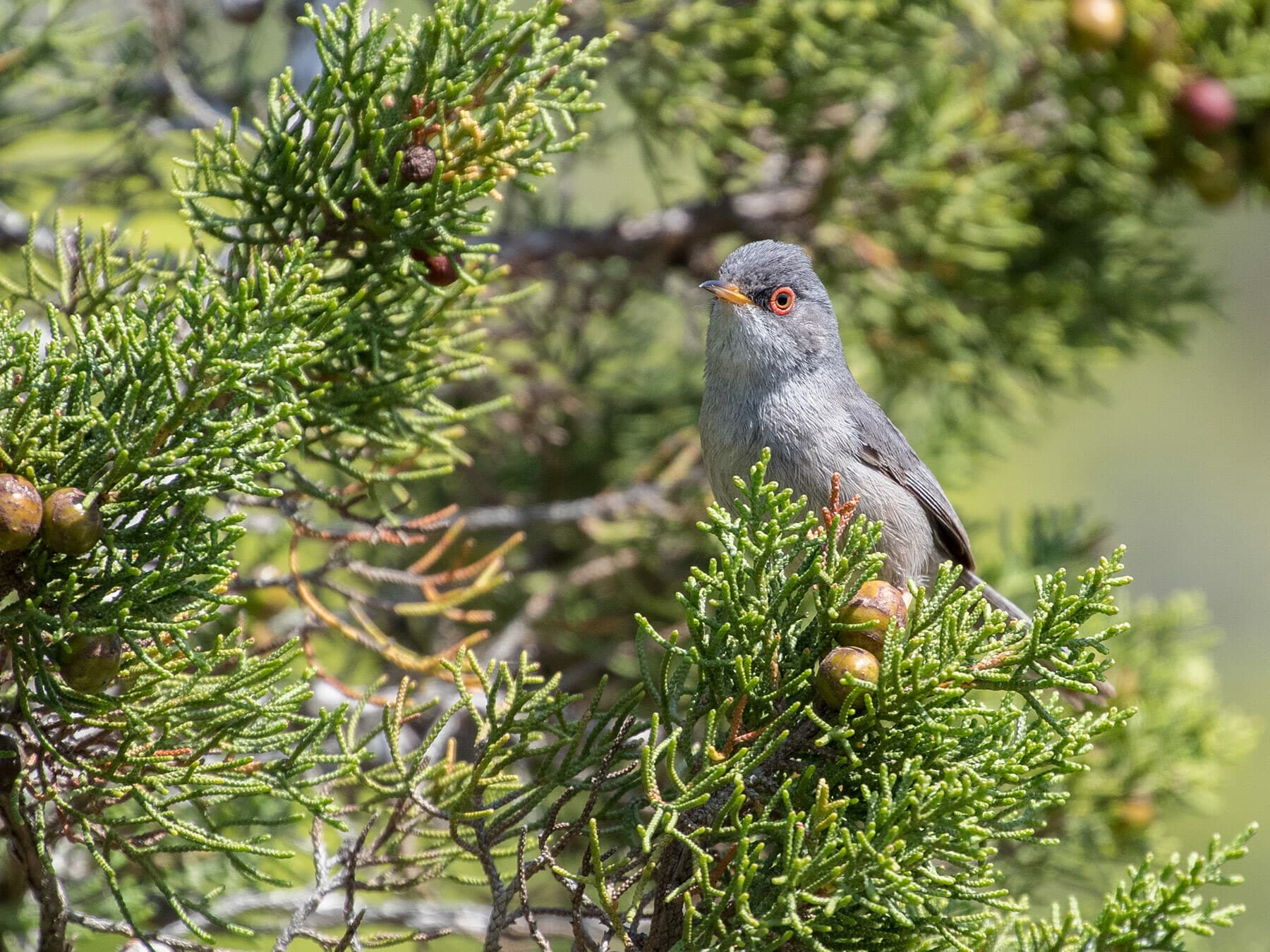
Whilst mainly occupying areas of dry scrubland, pine forests and juniper trees are also favoured by this small, solitary, but pretty bird. Whilst its markings are similar in part to the Marmora’s Warbler and even the Dartford Warbler, it is widespread throughout its range and its blue grey head, orange iris and bold red orbital ring aids positive identification. It can often be seen singing at the top of a bush or tree top. The bird is resident within its range and is a common site in the Boquer Valley in the north of Mallorca.
What it eats
The Balearic warbler survives mainly on a diet of insects and spiders which it takes during ground foraging of from branches and leaves on low scrub and bushes. It will also take flies in flight and seasonally will supplement its diet with fruits.
Nesting and breeding
At the start of the breeding season which runs from March through to June both parents construct a cup shaped nest lined with fine grasses and hair which is located in low lying scrub approximately half a metre above ground level. Two broods, each of between 2 – 4 eggs, are produced annually during the season and are incubated by both parents for up to two weeks. Fledging occurs some twelve days later.
Behaviour
Balearic Warblers are active and restless birds. They constantly flit through dense vegetation, foraging low in shrubs, often with their tails raised.
During the breeding season, males become more conspicuous, perching prominently to deliver their melodious songs.
Lifespan and predators
The lifespan of the Balearic Warbler is up to five years.
Conservation
The Balearic Warbler is classified as Least Concern, but it does face issues because of its restricted range and vulnerability to habitat loss.
Conservation efforts focus on protecting and managing its scrubland habitat, particularly from urbanisation and intensive agriculture in the Balearic Islands.
What does a Balearic Warbler look like?
The adult male in breeding plumage is predominantly grey above and pale grey below, with a blue grey head and a pronounced red orbital ring surrounding a dark orange iris. There is a darker grey area forming a mask from the base of the top of the beak extending around the top of the eye. The flight feathers are a dark grey almost black with lighter edges and the bastard wing (alula) is black, fringed white. The long tail is black, fringed grey with white tips. Chin and throat are a pale grey morphing to an almost white breast, belly and vent. The flanks are a dirty white or light buff colour. The bill is a pinky orange with a black tip, particularly across the upper mandible and the legs are pinkish light brown. In non breeding plumage the upperparts and wing coverts of the adult male have more of a brownish hue and the dark face mask is less obvious. The underparts are more buff coloured than white whilst the area around the throat loses its grey colouration and becomes white. The plumage of the breeding female is similar to the non breeding plumage of the male but lacks the blue hue and overall is more of a brownish shade. Non breeding females have brown upperparts and white underparts.
Similar birds
Often mistaken for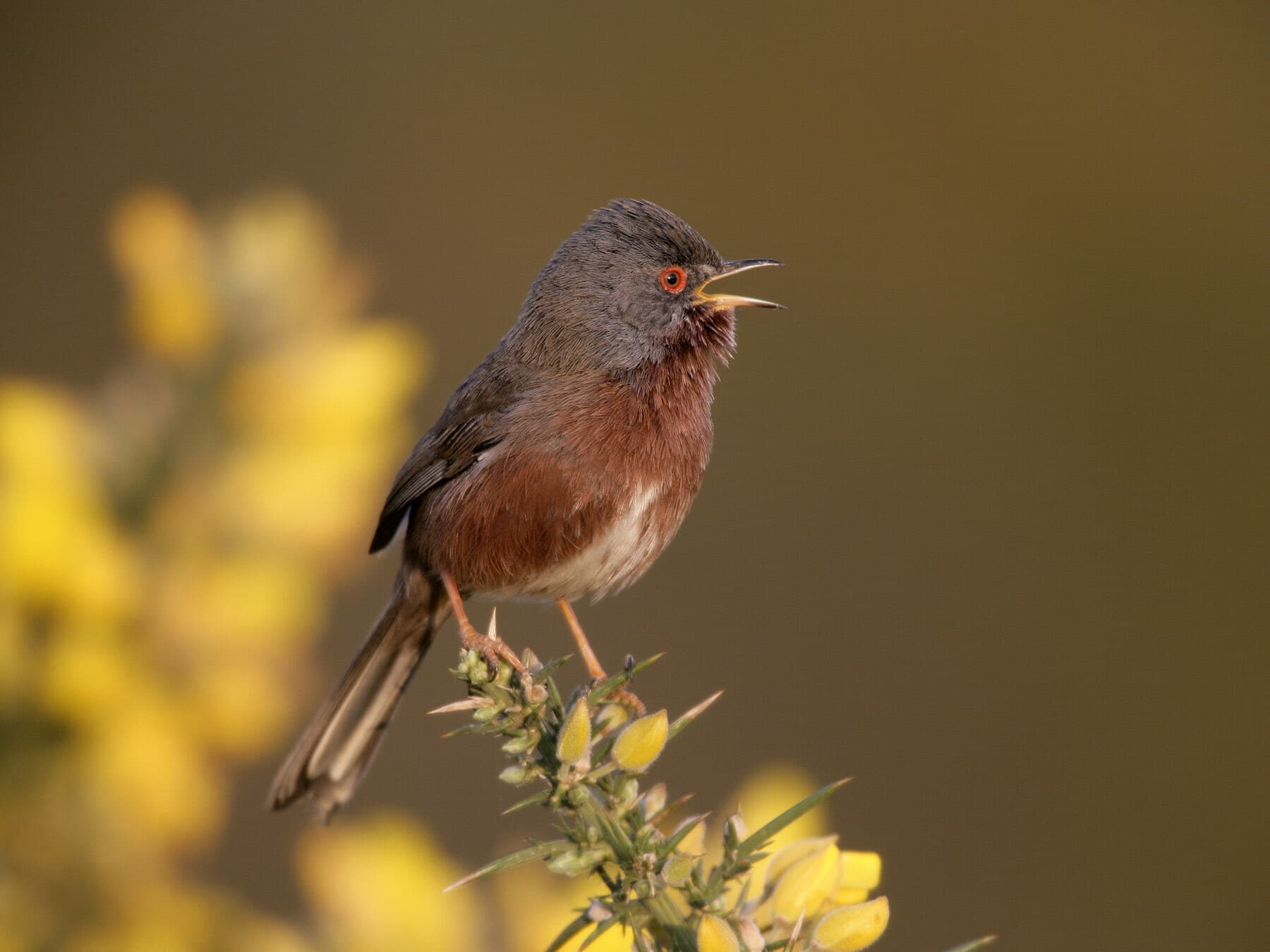
Quick facts
- Length
- 11–12 cm
- Wingspan
- 15–17 cm
- Weight
- 8–12 g
- Lifespan
- 3–5 years
- Family
- Sylviid Warblers
- Migration
- Resident
- Global status (IUCN)
- Least Concern
- World population
- 20,000 - 49,999 mature individuals
- Population trend
- Stable
- Also called
- Balearic Subalpine Warbler
- Scientific name
- Curruca balearica
Sources
3- 1BirdLife International. 2017. Sylvia balearica (amended version of 2016 assessment). The IUCN Red List of Threatened Species 2017: e.T22734798A113119361. Source (opens in a new tab)
- 2BirdLife International. 2017. Sylvia balearica (amended version of 2016 assessment). The IUCN Red List of Threatened Species 2017: e.T22734798A113119361. Source (opens in a new tab)
- 3BirdLife International. 2017. Sylvia balearica (amended version of 2016 assessment). The IUCN Red List of Threatened Species 2017: e.T22734798A113119361. Source (opens in a new tab)

Checked by
Nathan Cope, founder and editor
Nathan founded Birdfact and leads its writers and contributors in the UK, the US and Canada. He has watched and studied birds for more than ten years, and checks every article and species guide before it’s published.