


Audouin's Gull
Ichthyaetus audouinii
By the Birdfact teamChecked by Nathan Cope
On this page15 sections
How to recognise it
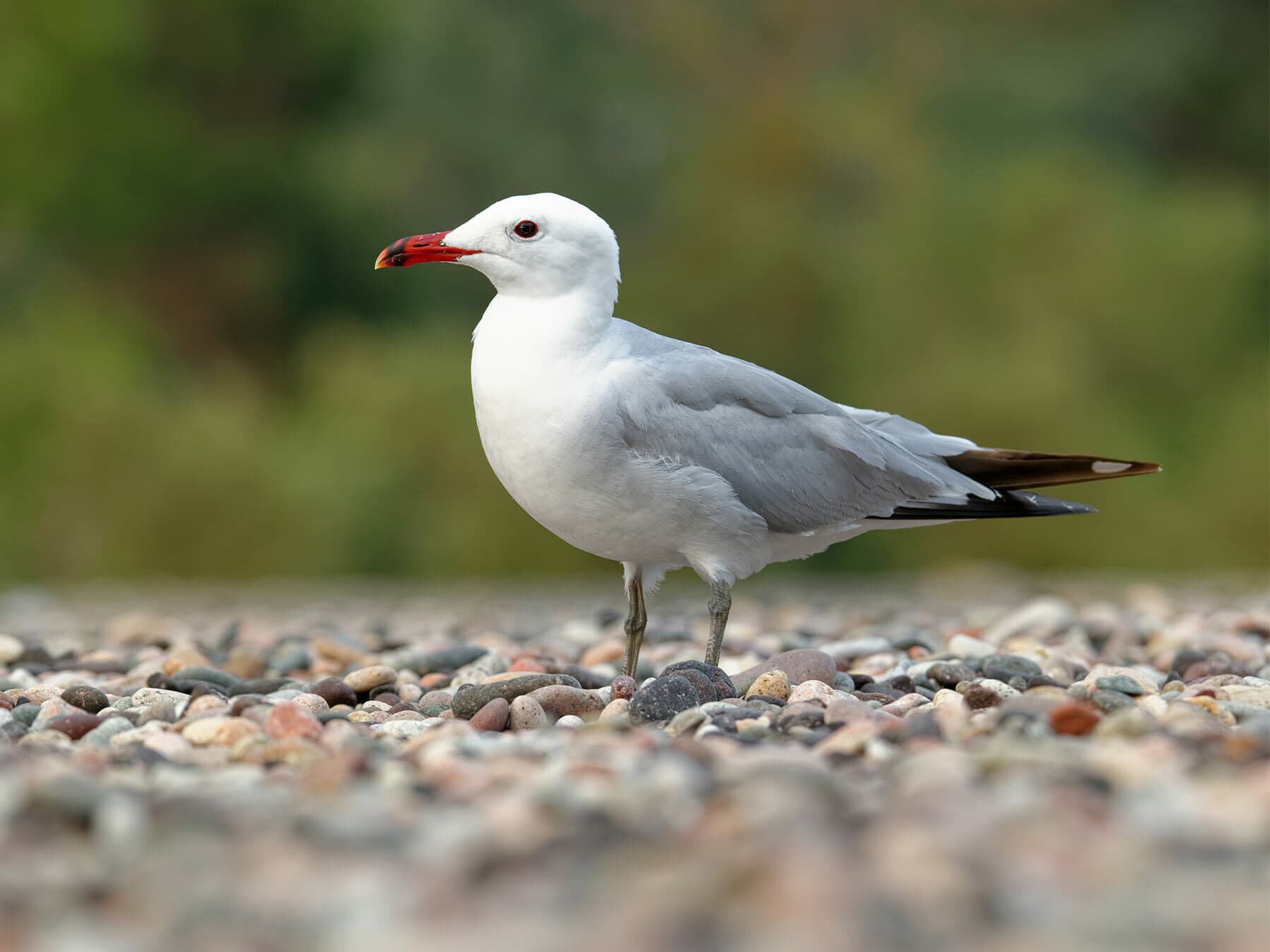
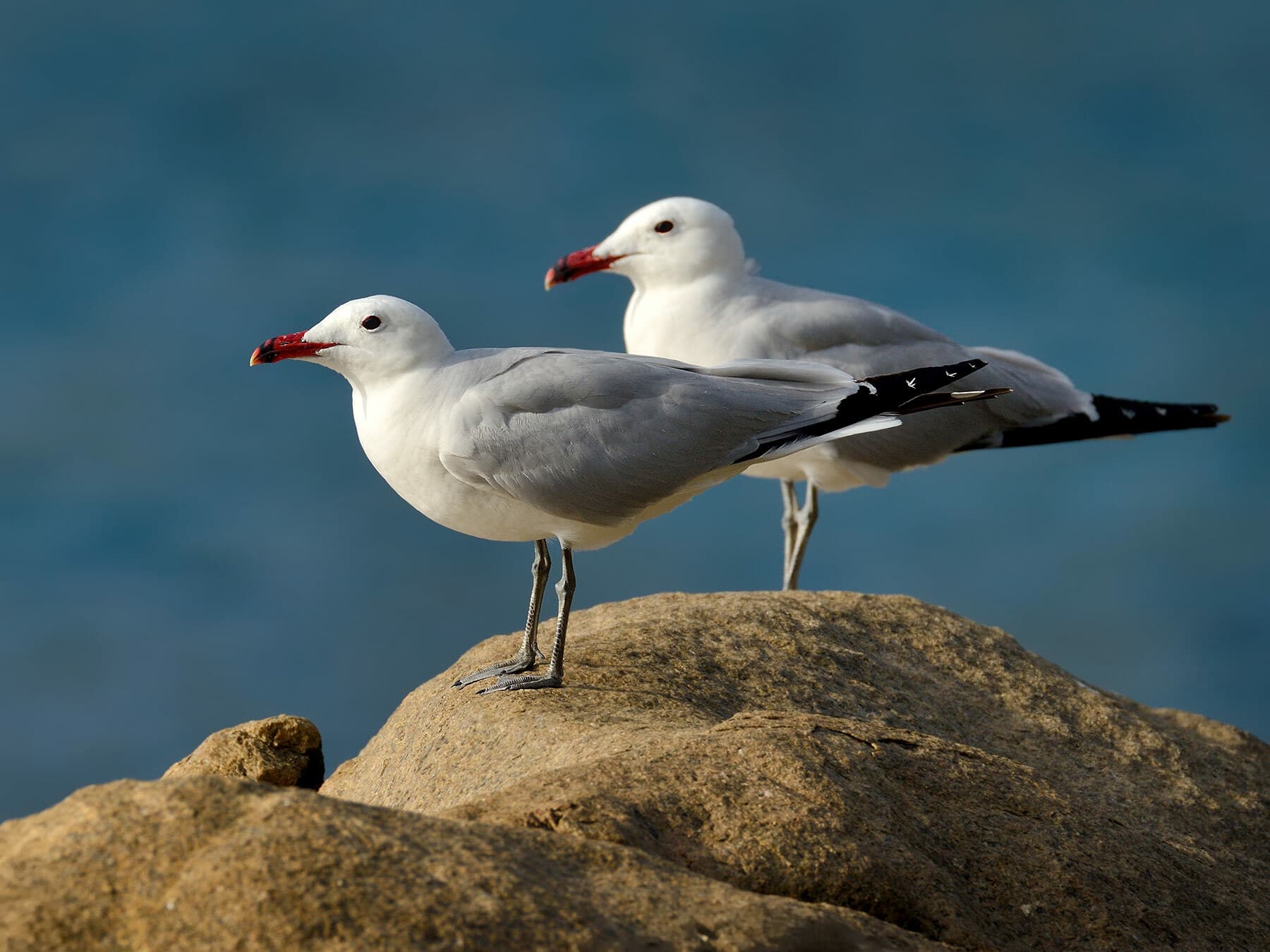
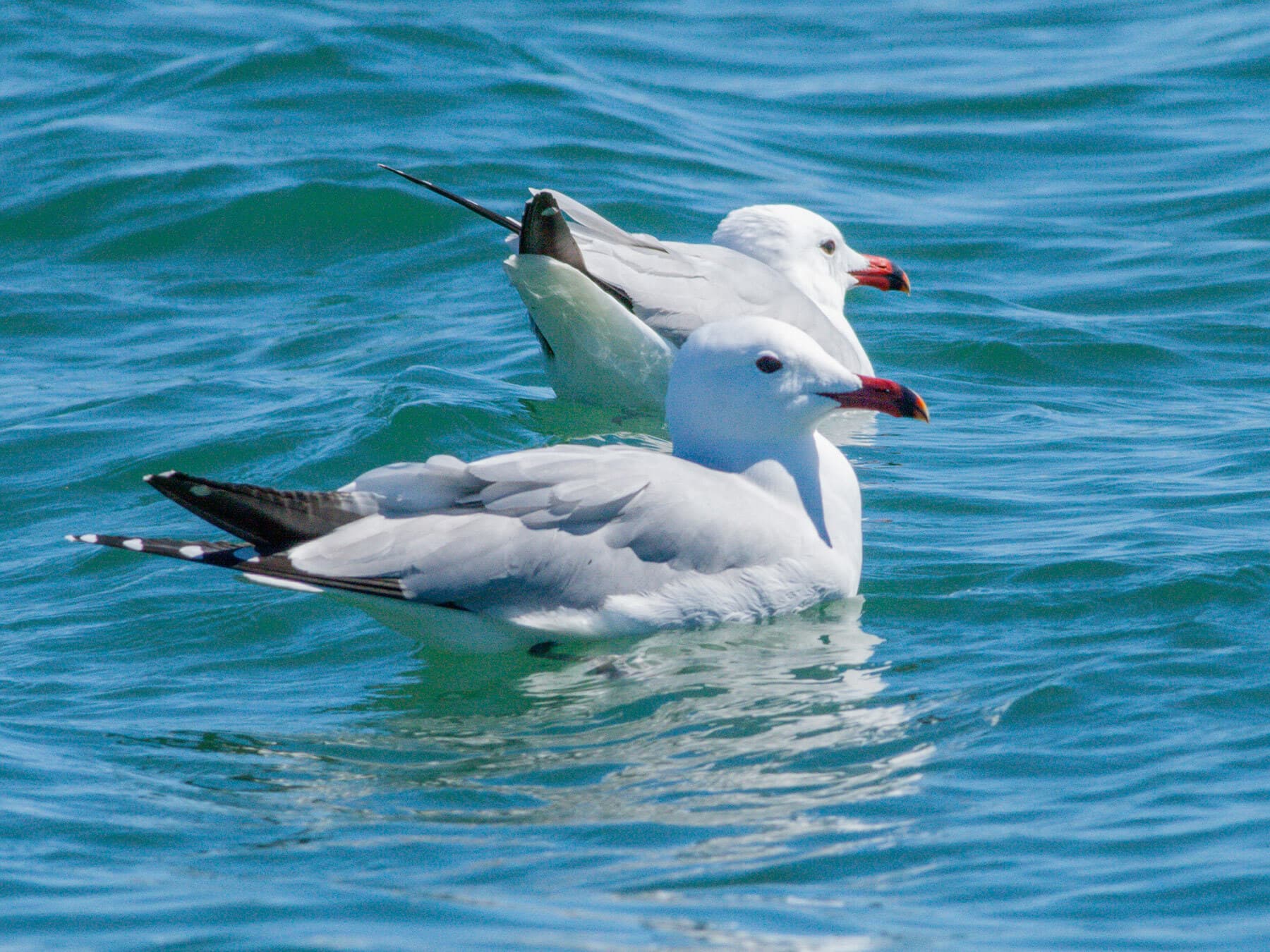
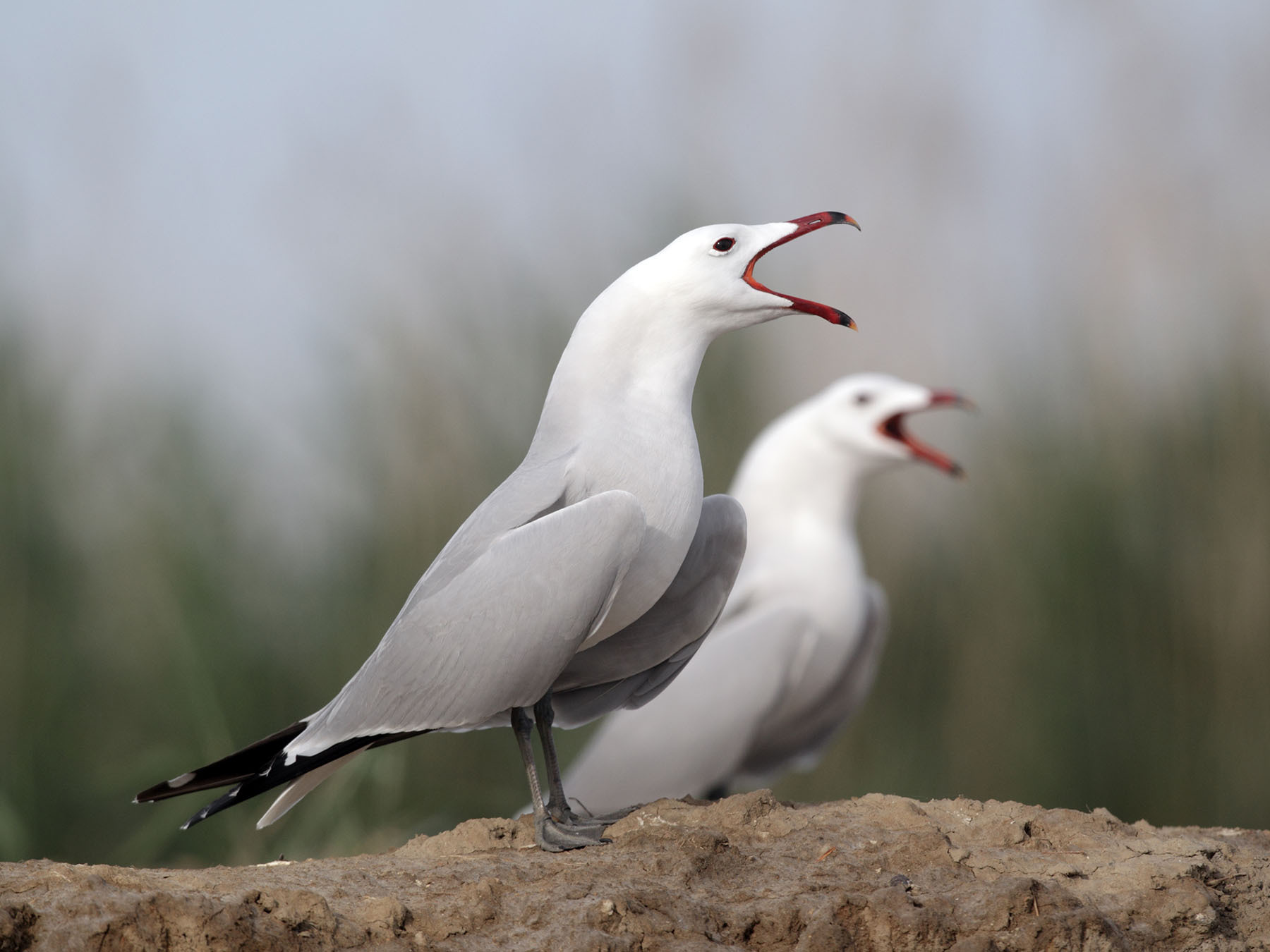
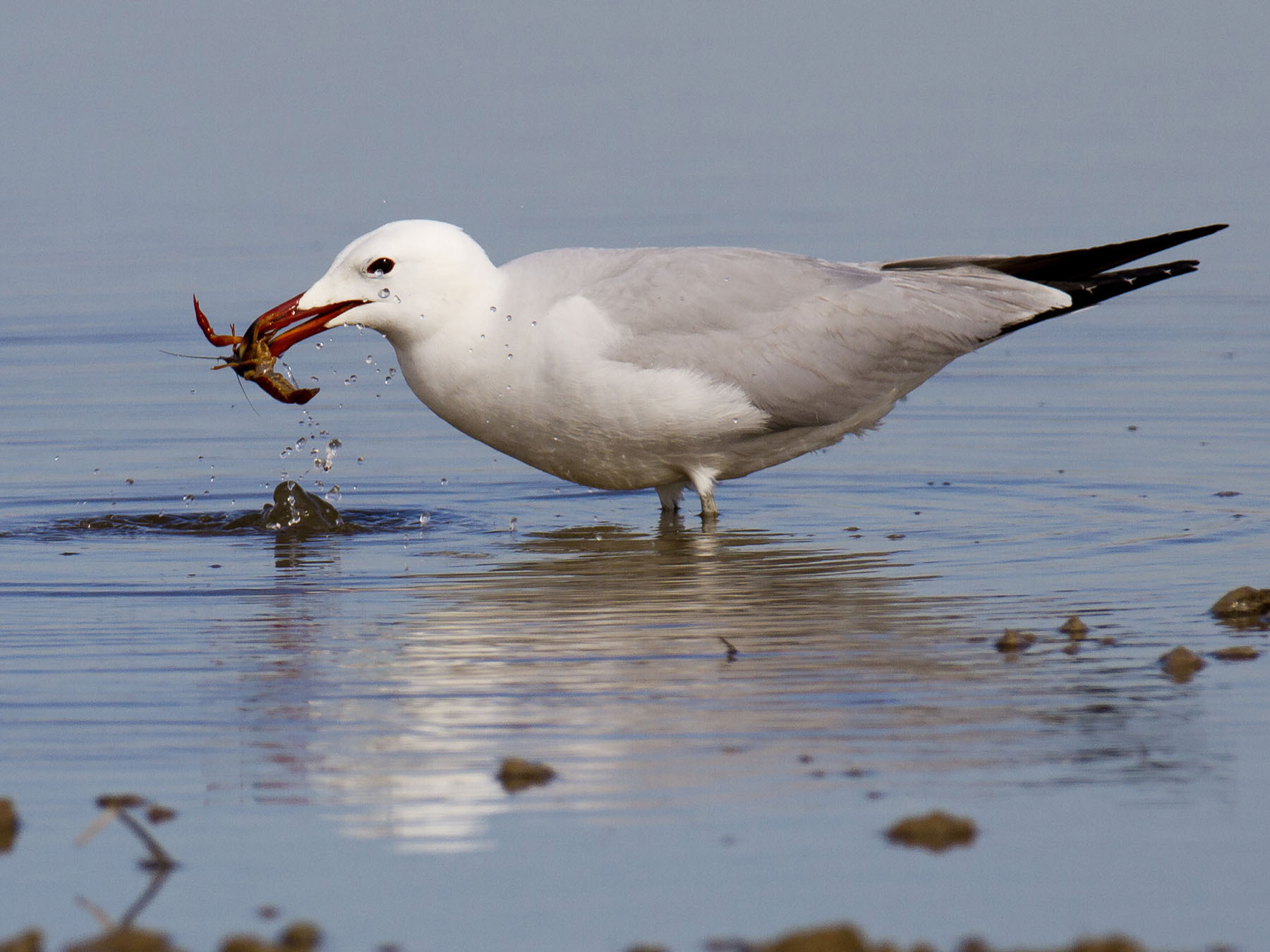
The Audouin's Gull is a striking seabird. Its pristine white head and underparts contrast beautifully with its pale grey back and wings. Its most distinctive feature is the long, coral-red bill, often tipped with black and yellow. The dark eyes are surrounded by a red orbital ring.
Adults display a similar appearance year-round, with slightly duller colours in winter. Juveniles have brown mottling on their backs and wings, gradually acquiring adult plumage over three years.
Its size
Adults- Length
- 48–52 cm
- Wingspan
- 117–128 cm
- Weight
- 550–770 g
Its song and calls
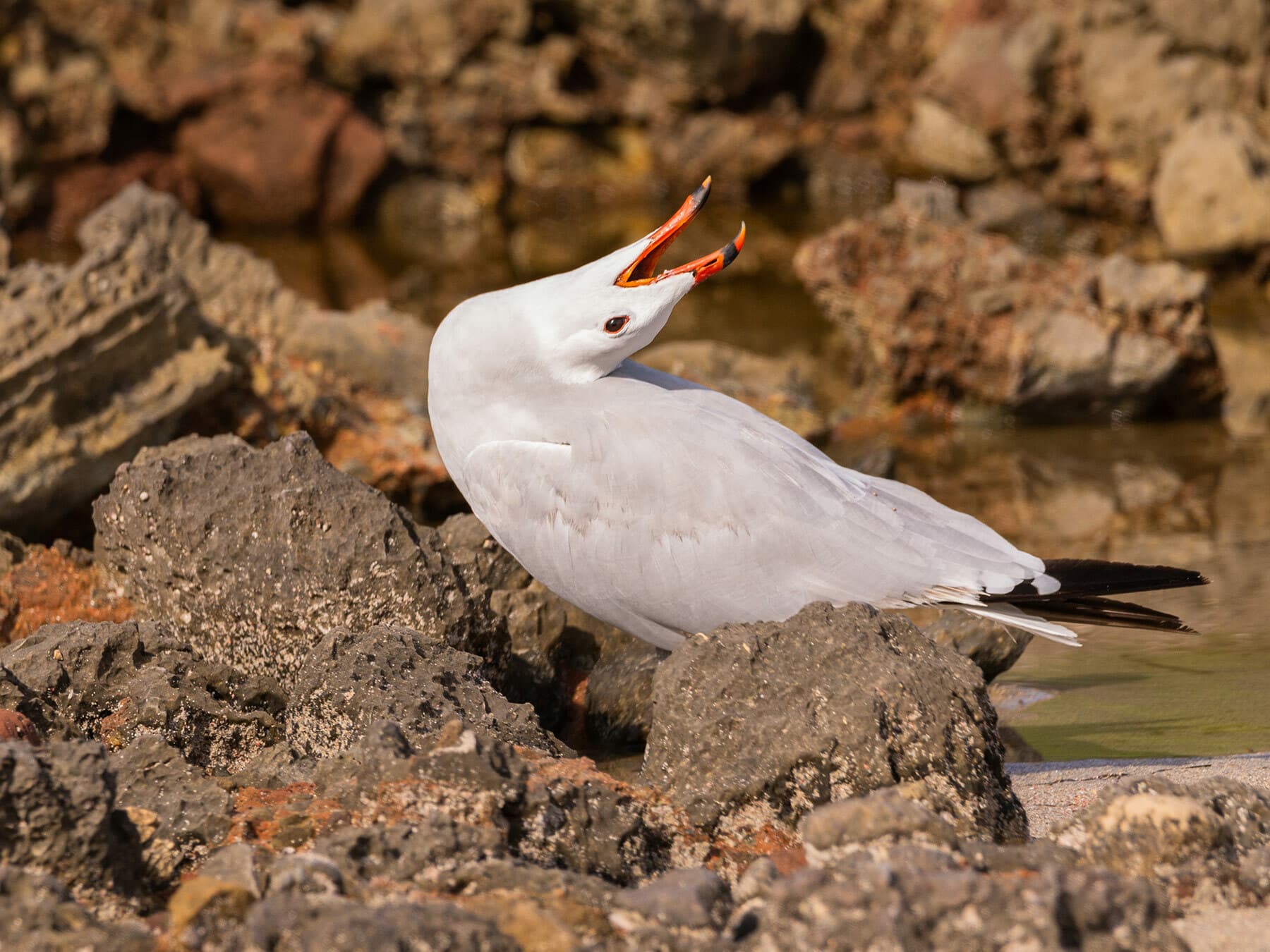
A long, low to medium-pitched nasally braying call, is used by both sexes with a ‘ga – ga – ga’ alarm call.
When and where to see it
The Audouin's Gull is not recorded regularly in the UK, Ireland, the United States or Canada.
Worldwide: recorded regularly in 18 countries
Countries where it was recorded in at least 3 of the 6 years 2019–2024. Linked countries have their own bird list.
Data: EOD – eBird Observation Dataset (Cornell Lab of Ornithology), accessed via GBIF.org, CC BY 4.0. Records from 2019–2024, aggregated and filtered by Birdfact. How these lists are made
Audouin’s gulls’ breeding areas are mainly confined to the east coast of mainland Spain, the Balearics, other Mediterranean and Aegean islands, southern Turkey and Morocco’s north coast.
They may also occasionally venture into the Atlantic and breed on the Canary Islands. They normally migrate to North West Africa’s Saharan coast but will also over winter in the Aegean and Turkey.
Signs and Spotting tips
Due to its propensity for fresh fish, the Audouin’s gull does not venture inland and limits its territory to the open sea and coastal waters, choosing to roost in coastal marshes, rocky coves and sandy beaches.
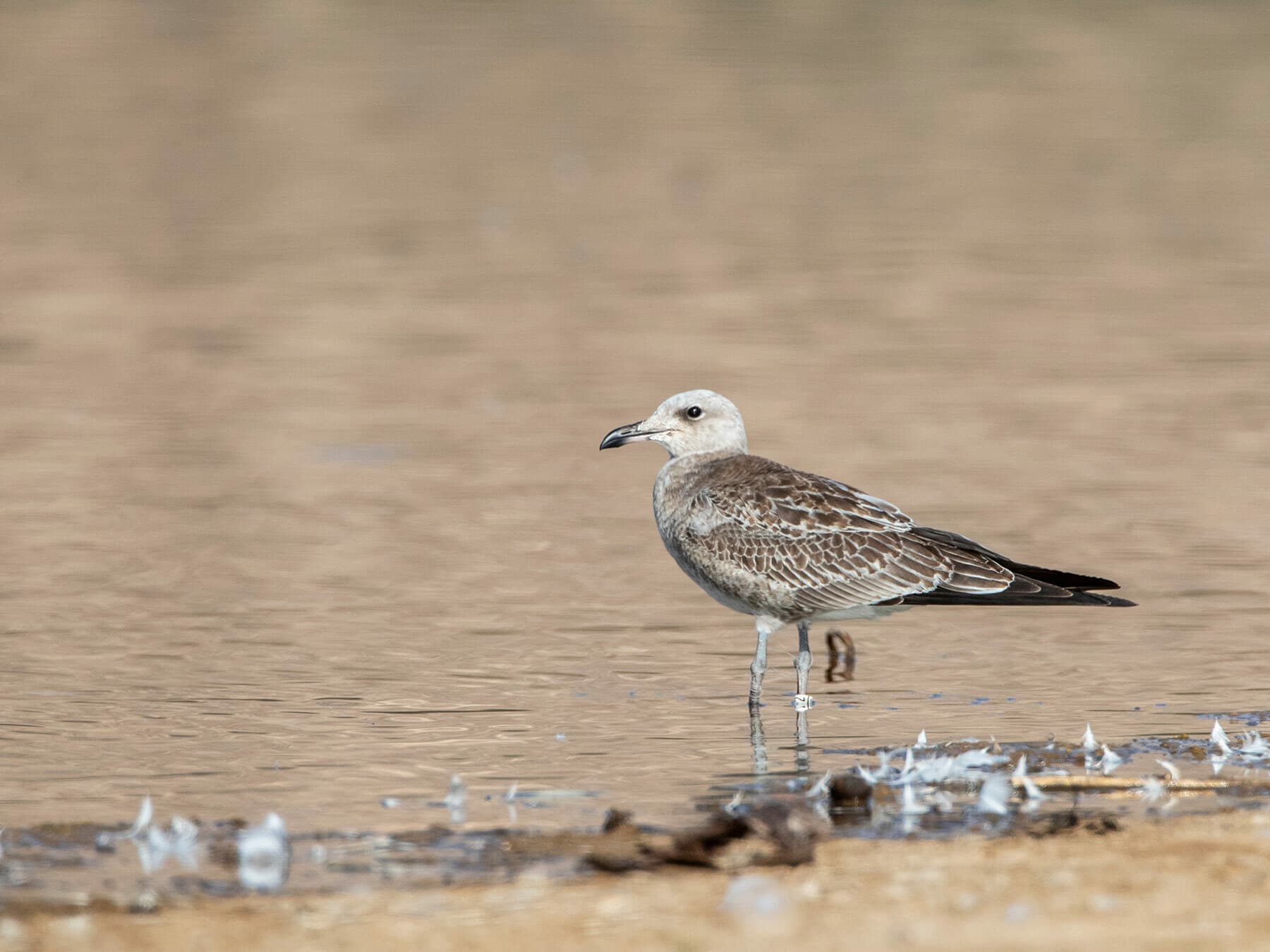
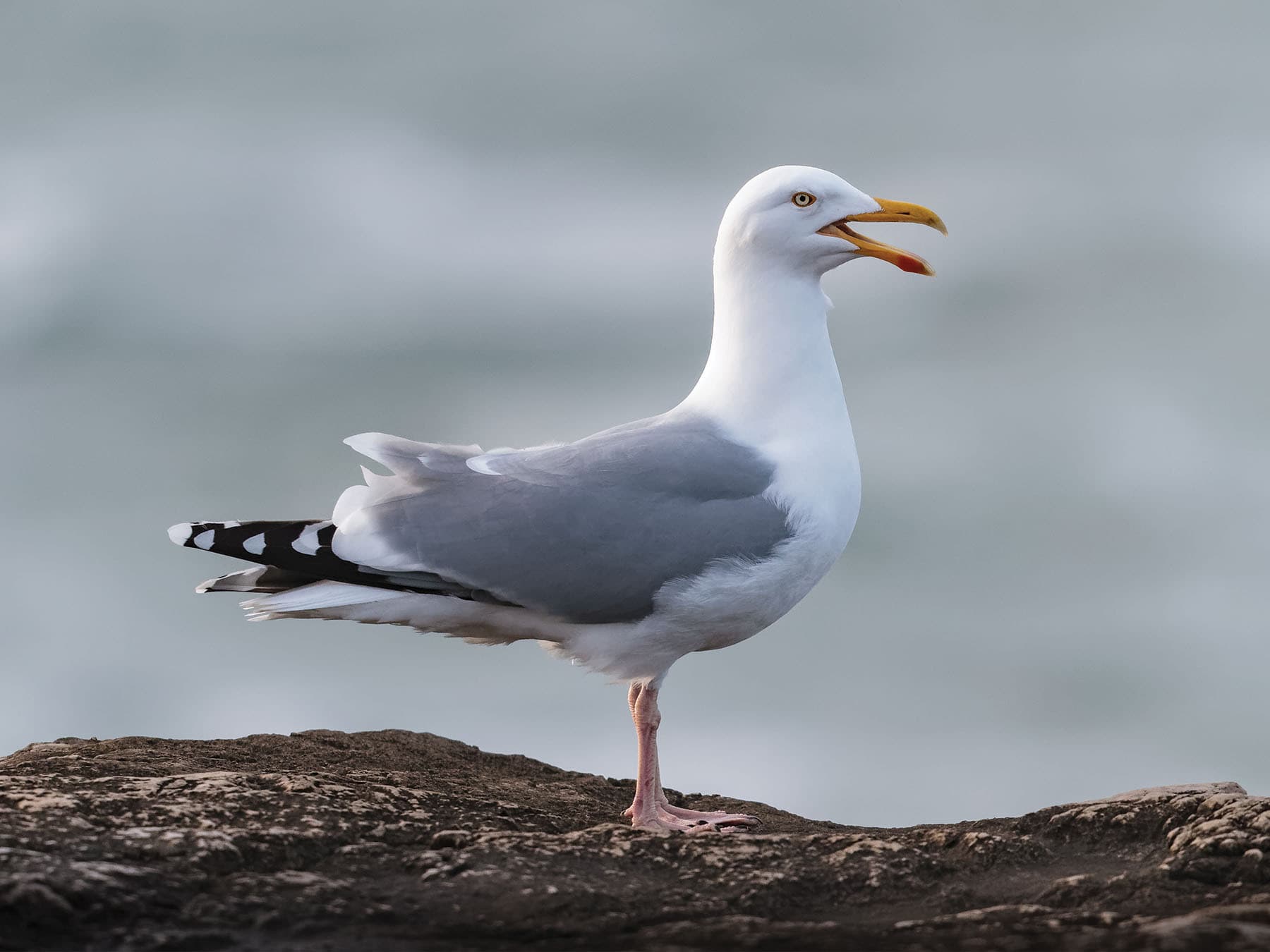
The juvenile is more difficult to identify than the adult, particularly during its first year when it is not dissimilar to the European Herring Gull.
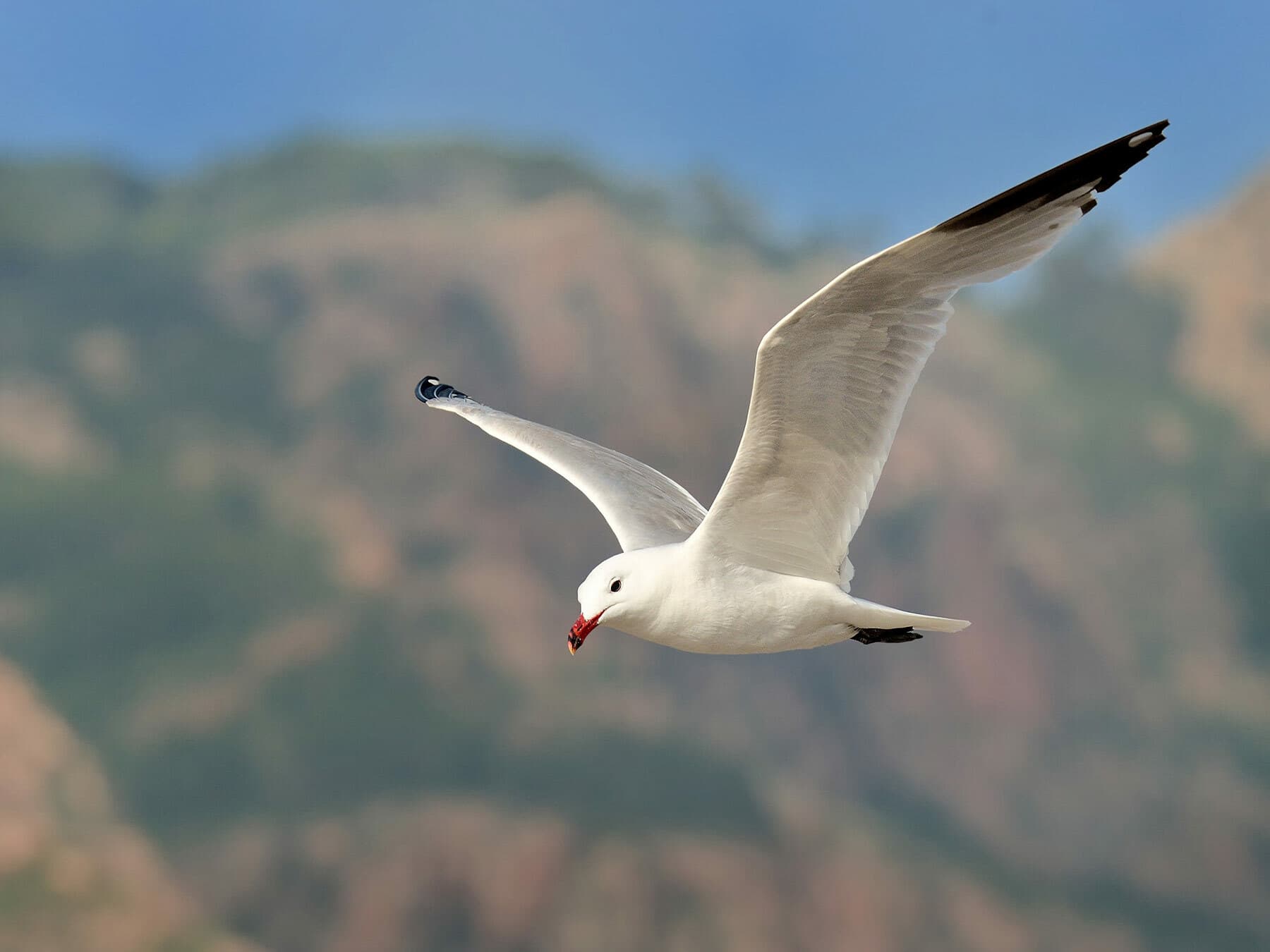
However, identification of the adult is easy due to its stubby tri-coloured bill, grey-green legs and black outer primary flight feathers tipped in white.
What it eats
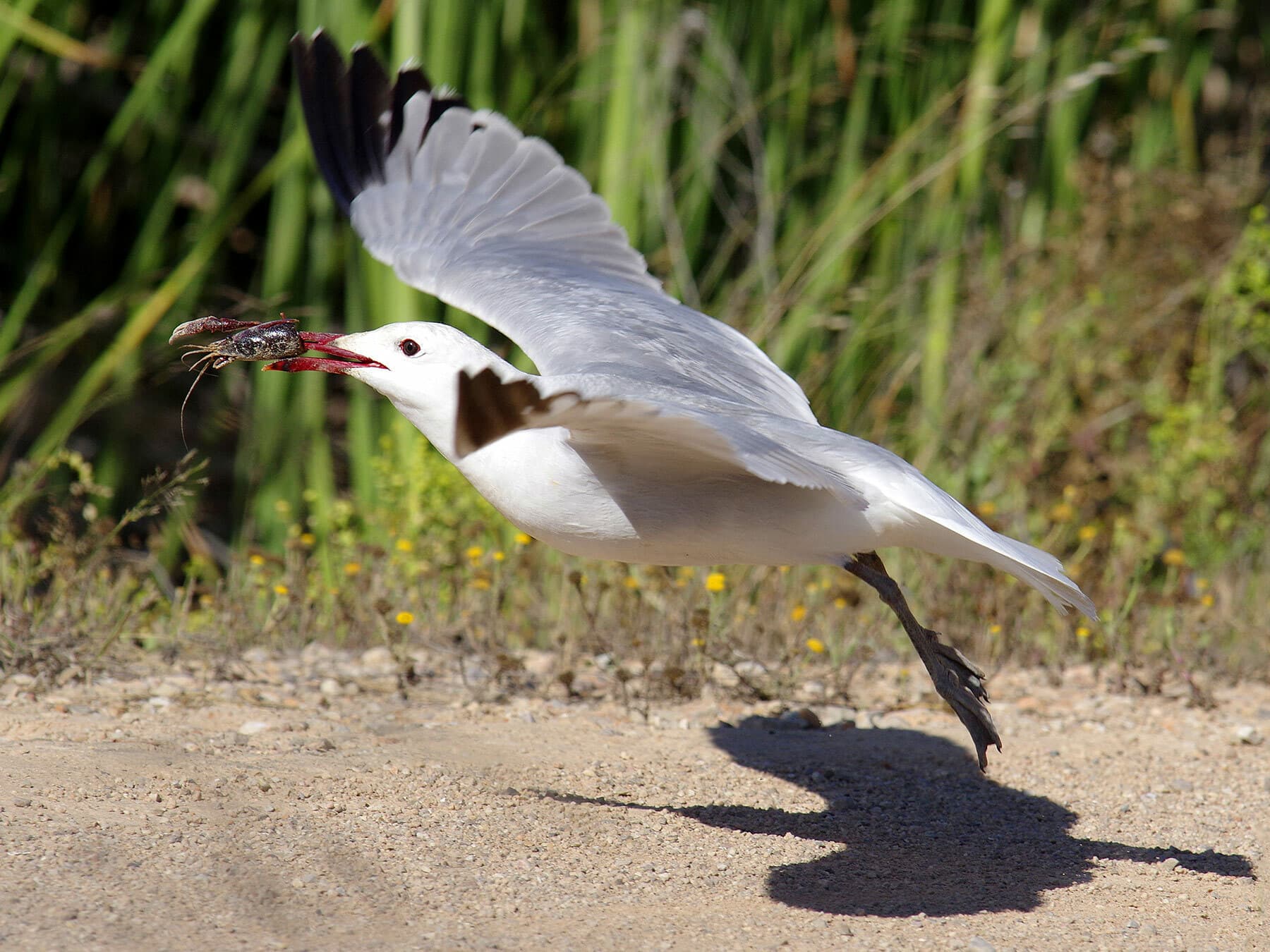
Whilst many gulls are scavengers, the Audouin’s gull tends not to be and is predominantly a fish eater, in fact its species Greek name, Ichthyaetus, translates as ‘fish eagle’.
Audouin’s Gulls prefer a diet of herrings, sardines and anchovies, which it frequently hunts and catches at night by swooping down and taking from just below the water’s surface.
They will also forage on land and have been observed taking small mammals and lizards as well as raiding olive groves.
Nesting and breeding
The breeding season is from March to August, during which time a simple nest is constructed in a hollow amongst rocks or vegetation, often located on small islands. Pairs will nest alone or, more commonly, in large colonies.
One clutch of 2-3 dark-spotted, cream-coloured eggs, is laid annually and incubated for up to twenty-eight days. Fledging takes place some eight weeks later.
Behaviour
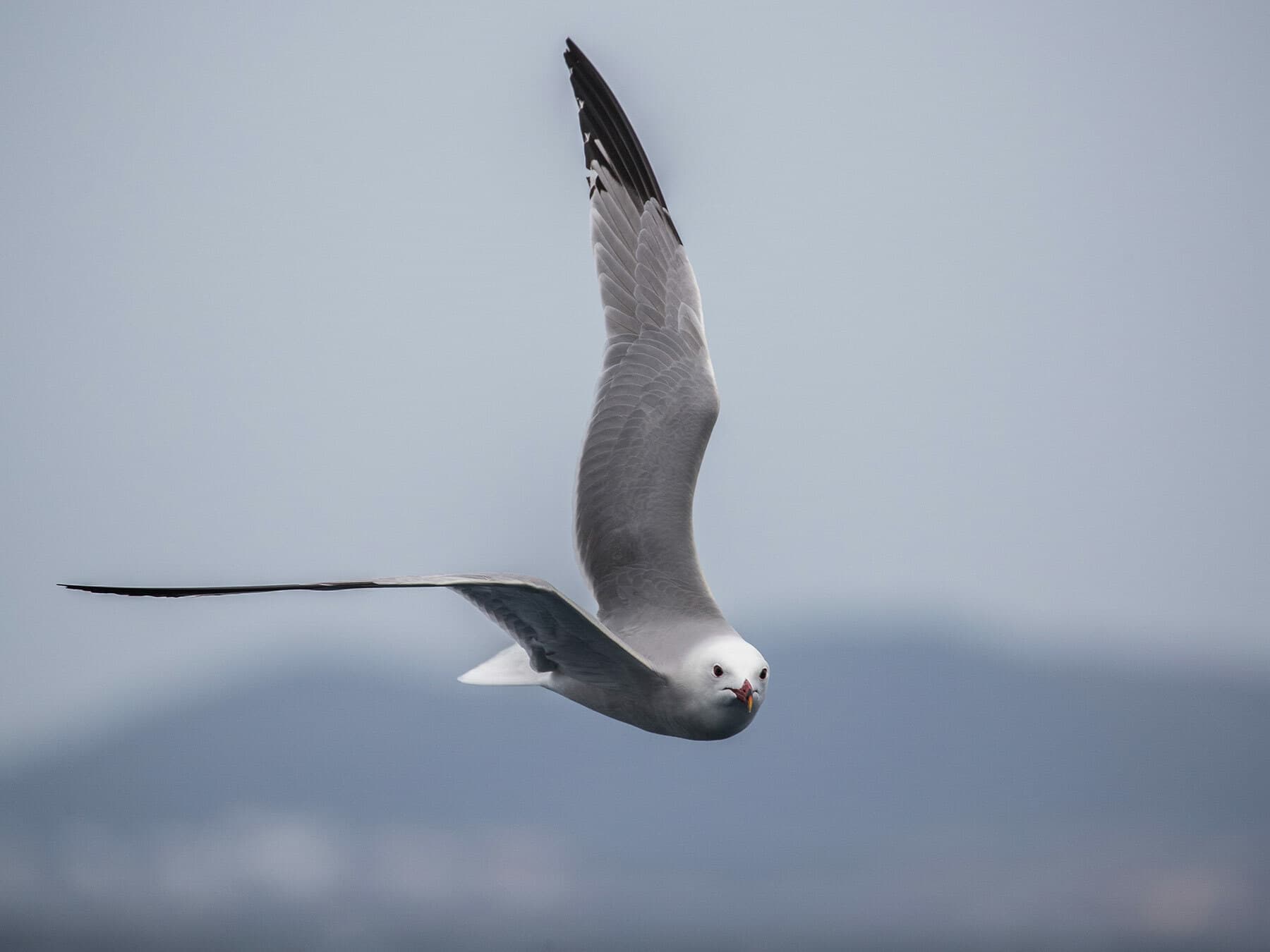
Audouin's Gulls are graceful flyers, often seen gliding low over coastal waters in search of prey. Compared to other gulls, they are less aggressive and more specialised in their feeding habits.
These birds are generally quiet and prefer roosting in remote, flat areas near the shore.
Lifespan and predators
Ringed birds have been recorded as attaining the age of twenty one years.
Conservation
Once critically endangered, Audouin's Gull has seen a remarkable recovery thanks to conservation efforts but is still listed as Vulnerable.
Protection of breeding sites, particularly in Spain's Ebro Delta, has been crucial. However, the species still faces threats from habitat loss, overfishing, and climate change.
What does an Audouin’s Gull look like?
The adult male Audouin’s gull is predominantly white overall, with a very pale grey mantle and upper wing. The outermost primary flight feathers are coloured black, as are small areas of the primary coverts extending almost to the alula.
The tips of the black primary feathers are spotted white. The bird has a long white face and sloping forehead with a prominent dark crimson hooked bill, which is tipped with a dark yellow.
Immediately behind this yellow colouring is a black band which circles both the upper and lower mandible. The eye is very dark, almost black and surrounded by a deep red thin orbital ring. The legs are a greyish-green shade.
The adult female is similar to the male. Juveniles have a much darker grey-brown body with black brown upper wings and a black tail tinged white at its base across the uppertail coverts. The head and face is grey and the bill is black.
It takes three years until the juvenile resembles the fully grown adult with colour and patternation morphing occurring annually.
Similar birds
Often mistaken for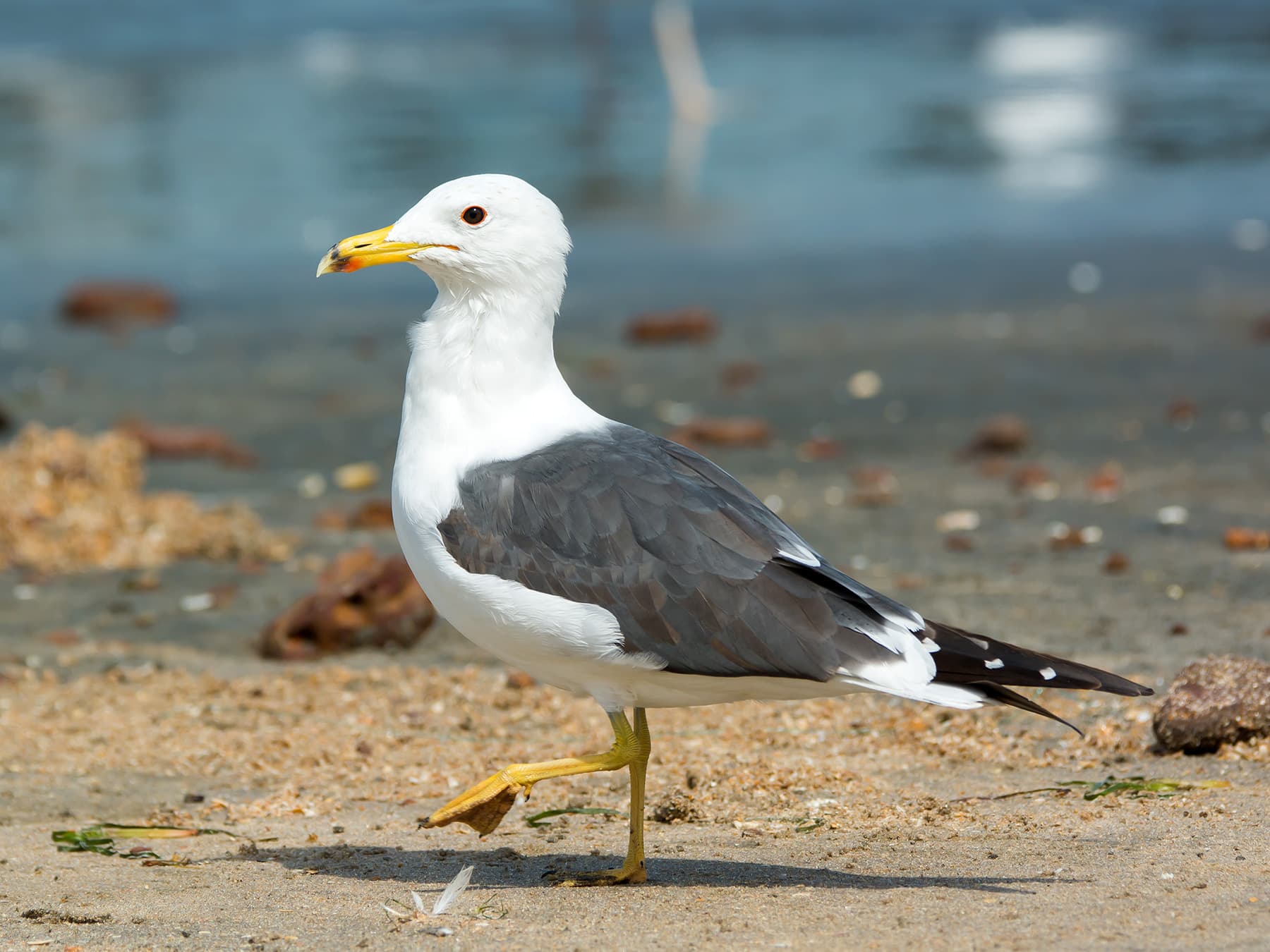
More photos
3 photos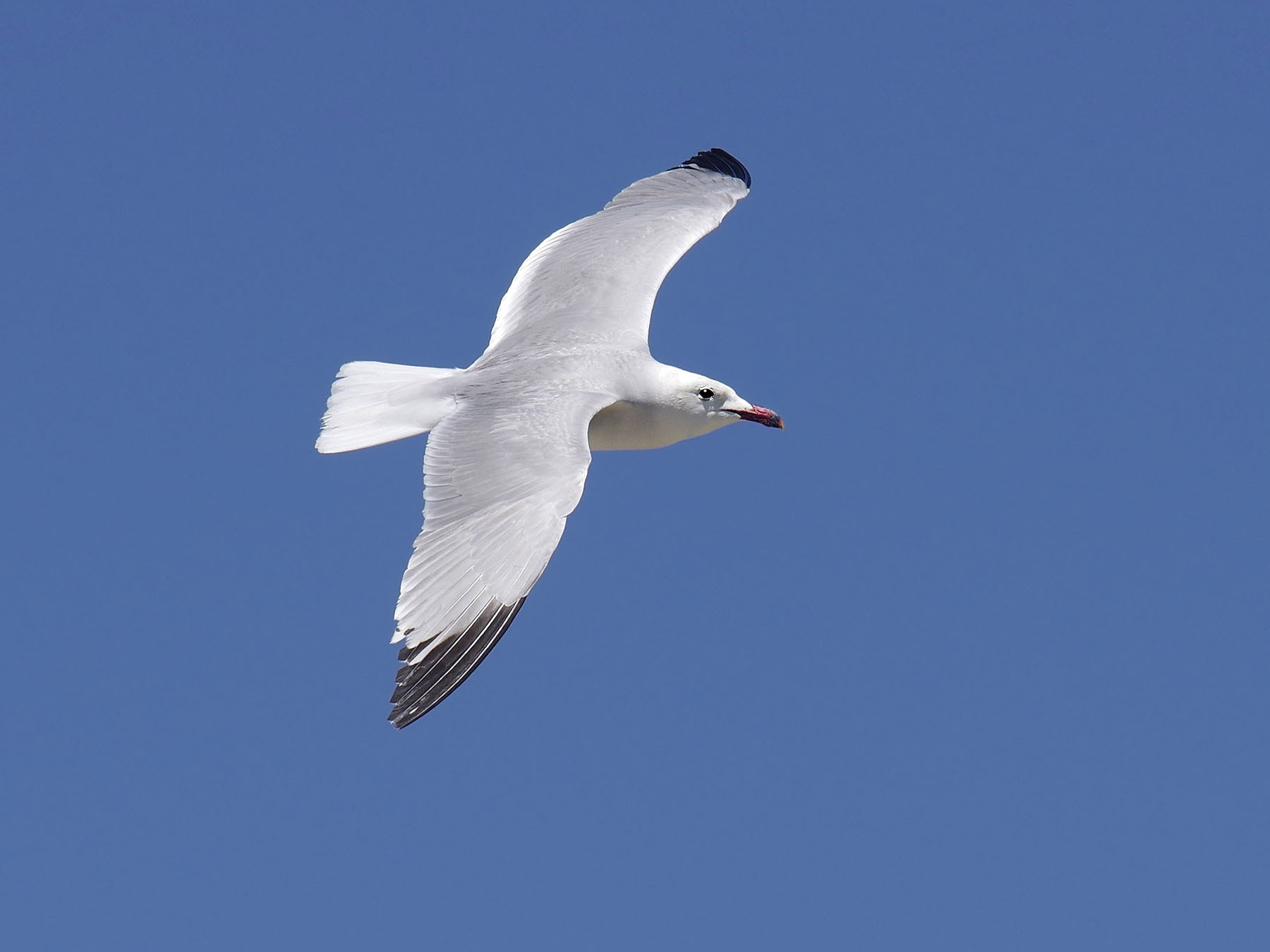
Audouin's Gull guides
6 guides- What Do Seagulls Actually Eat? Diet Secrets of These Clever Scavengers
- Do Seagulls Migrate? (All You Need To Know)
- Baby Seagulls: All You Need to Know (with Pictures)
- Seagull Nesting Secrets: Unveiling the Hidden Sanctuaries by the Sea
- What is a Group of Seagulls Called? (Complete List + Why?)
- How Long Do Seagulls Live?
Quick facts
- Length
- 48–52 cm
- Wingspan
- 117–128 cm
- Weight
- 550–770 g
- Lifespan
- 15–20 years · oldest recorded 25 years
- Family
- Gulls & Terns
- Migration
- Partial migrant
- Global status (IUCN)
- Vulnerable
- World population
- 33,000 - 46,000 mature individuals
- Population trend
- Decreasing
- Scientific name
- Ichthyaetus audouinii
Sources
4- 1BirdLife International. 2020. Larus audouinii. The IUCN Red List of Threatened Species 2020: e.T22694313A183584708. Source (opens in a new tab)
- 2BirdLife International. 2020. Larus audouinii. The IUCN Red List of Threatened Species 2020: e.T22694313A183584708. Source (opens in a new tab)
- 3BirdLife International. 2020. Larus audouinii. The IUCN Red List of Threatened Species 2020: e.T22694313A183584708. Source (opens in a new tab)
- 4Fransson et al., EURING list of longevity records for European birds (2010) Source (opens in a new tab)

Checked by
Nathan Cope, founder and editor
Nathan founded Birdfact and leads its writers and contributors in the UK, the US and Canada. He has watched and studied birds for more than ten years, and checks every article and species guide before it’s published.